



Buzzfeed reports: “This is the news of the millennium!” said the story on WorldPoliticus.com. Citing unnamed FBI sources, it claimed Hillary Clinton will be indicted in 2017 for crimes related to her email scandal.
“Your Prayers Have Been Answered,” declared the headline.
For Trump supporters, that certainly seemed to be the case. They helped the baseless story generate over 140,000 shares, reactions, and comments on Facebook.
Meanwhile, roughly 6,000 miles away in a small Macedonian town, a young man watched as money began trickling into his Google AdSense account.
Over the past year, the Macedonian town of Veles (population 45,000) has experienced a digital gold rush as locals launched at least 140 US politics websites. These sites have American-sounding domain names such as WorldPoliticus.com, TrumpVision365.com, USConservativeToday.com, DonaldTrumpNews.co, and USADailyPolitics.com. They almost all publish aggressively pro-Trump content aimed at conservatives and Trump supporters in the US. [Continue reading…]
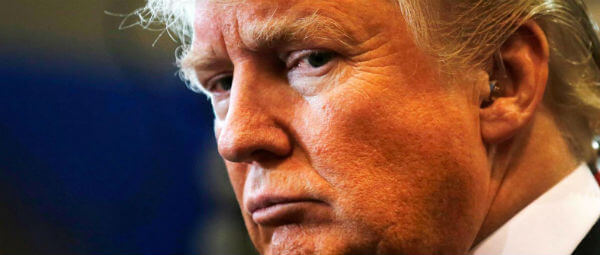
Charles M Blow writes: Donald Trump is a lowlife degenerate with the temperament of a 10-year-old and the moral compass of a severely wayward teen.
There is no way to make a vote for him feel like an act of principle or responsibility. You can’t make it right. You can’t say yes to Trump and yes to common decency. Those two things do not together abide.
If you are voting for Trump, you are voting for coarseness, corruption and moral corrosion. Period. And if you are not actively voting against him, you are abetting his attempt to hijack American greatness and sink it with his egotism.
On Election Day, America faces a choice, and it’s not a tough one, but a stark one. It is the difference between tolerance and intolerance. It is the difference between respect and disrespect. It is the difference between a politician with some flaws and a flaw threatening our politics.
Donald Trump is America’s existential threat. On Tuesday, America has an opportunity to defend itself. [Continue reading…]

ThinkProgress reports: The FBI has launched an internal investigation into one of its own Twitter accounts.
The account at issue, @FBIRecordsVault, had been dormant for more than a year. Then on October 30 at 4 a.m., the account released a flood of documents, including one describing Donald Trump’s father Fred Trump as a “philanthropist.”Fred C. Trump: Fred C. Trump (1905-1999) was a real estate developer and philanthropist. This release consists of… https://t.co/21KgtPpmzk
— FBI Records Vault (@FBIRecordsVault) October 30, 2016
But it wasn’t until two days later, when the account tweeted documents regarding President Clinton’s controversial pardon of Marc Rich that the account began to attract significant attention.William J. Clinton Foundation: This initial release consists of material from the FBI's files related to the Will… https://t.co/Y4nz3aRSmG
— FBI Records Vault (@FBIRecordsVault) November 1, 2016
The account has not been active since that tweet.
ThinkProgress has learned that the FBI’s Inspection Division will undertake an investigation of the account. [Continue reading…]
Natalie Nougayrède writes: Lenin once said: “The capitalists will sell us the rope with which we will hang them.” Vladimir Putin is no Lenin, nor can his regime – run by an elite that enjoys offshore accounts and oligarchic privileges – quite be described as anti-capitalist. Yet in Russia’s new confrontation with the west, the Kremlin’s strategy is to exploit western weaknesses and confusion as much as it is geared towards showing a bellicose face, whether in Ukraine, Syria or cyberspace. Perhaps this is why the head of MI5 has warned of the need to fend off Russia’s hostile interference.
Lenin is not Putin’s ideological guru. Foreigners, whether public officials or investors, who have at length met with Putin sometimes point to his particular brand of pragmatism (even if Angela Merkel once said he “lives in another world”). If he senses strong pushback, he adapts. If he detects gaps, he strikes at the Achilles heel.
There is little doubt Russian power is on the offensive. Since 2014, when it deployed its troops in Ukraine and annexed territory there, and since its policies in Syria have been analysed as overtly hostile to western endeavours, “Russian aggressiveness” has become a mainstay of the west’s official political discourse. But beyond boasting about Russia’s nuclear forces, demonstrating its new conventional military capacities and activating an army of internet trollers (none of which should be minimised), Putin’s regime is banking on the hope that western democracies will falter and be unable to offer up genuine resistance.
He’s essentially waiting for that rope to be handed over. Brexit is one section of it, because in Russian eyes it has the potential to divide the west. The growth of national-populist movements in Europe and elsewhere is another, because it echoes the Kremlin’s illiberal narrative and produces useful allies. Radical leftwing anti-Americanism also fits handily into the picture, as it did decades ago when pacifists demonstrated in the west while missiles were being deployed by the eastern bloc during the cold war. [Continue reading…]
Nadette De Visser writes: In Europe as well as the United States the political arena has shifted to the fringes. Measured, moderate stands on issues of national and international importance are zapped by high-voltage soundbites, obliterated by incendiary one-liners.
Anger is the coveted political currency of the moment—anger fueled by fear of foreigners, by fears for the future — anger fueled by populist politicians at home and abroad. And even little Switzerland, the Continent’s hoary paradigm of democracy, has not been immune.
Until this year, in fact, it seemed all but certain that the right-wing populists of the SVP (the Schweizer Volkspartei) would push through a referendum calling for the expulsion of “immigrants,” even second or third generation Swiss born, if they were found guilty of a legal offense as minor as two parking tickets.
(Donald Trump has made essentially the same idea part of his 10-point immigration plan: “Zero tolerance for criminal aliens,” he proclaims. “We will issue detainers for all illegal immigrants who are arrested for any crime whatsoever, and they will be placed into immediate removal proceedings.”)
But in Switzerland, the SVP populists found themselves up against a new grass roots movement, Operation Libero, that seemed to come from nowhere. The SVP referendum lost badly, and all of a sudden all eyes turned to a political newcomer—26-year-old driven, committed, and comely Flavia Kleiner, the movement’s co-president. [Continue reading…]
By David Farrier, Aeon, October 31, 2016
Late one summer night in 1949, the British archaeologist Jacquetta Hawkes went out into her small back garden in north London, and lay down. She sensed the bedrock covered by its thin layer of soil, and felt the hard ground pressing her flesh against her bones. Shimmering through the leaves and out beyond the black lines of her neighbours’ chimney pots were the stars, beacons ‘whose light left them long before there were eyes on this planet to receive it’, as she put it in A Land (1951), her classic book of imaginative nature writing.
We are accustomed to the idea of geology and astronomy speaking the secrets of ‘deep time’, the immense arc of non-human history that shaped the world as we perceive it. Hawkes’s lyrical meditation mingles the intimate and the eternal, the biological and the inanimate, the domestic with a sense of deep time that is very much of its time. The state of the topsoil was a matter of genuine concern in a country wearied by wartime rationing, while land itself rises into focus just as Britain is rethinking its place in the world. But in lying down in her garden, Hawkes also lies on the far side of a fundamental boundary. A Land was written at the cusp of the Holocene; we, on the other hand, read it in the Anthropocene.
The Anthropocene, or era of the human, denotes how industrial civilisation has changed the Earth in ways that are comparable with deep-time processes. The planet’s carbon and nitrogen cycles, ocean chemistry and biodiversity – each one the product of millions of years of slow evolution – have been radically and permanently disrupted by human activity. The development of agriculture 10,000 years ago, and the Industrial Revolution in the middle of the 19th century, have both been proposed as start dates for the Anthropocene. But a consensus has gathered around the Great Acceleration – the sudden and dramatic jump in consumption that began around 1950, followed by a huge rise in global population, an explosion in the use of plastics, and the collapse of agricultural diversity.

Steven Heydemann writes: The Obama administration’s Syria policy has collapsed under the weight of a brutal assault on Aleppo by the forces of President Bashar al-Assad and Russia. Shrugging off global condemnation, Russia and Mr. Assad have dispatched their aircraft to attack schools and hospitals, singling out civilian targets to make the city uninhabitable and force its remaining population to flee.
Secretary of State John Kerry and other world leaders are now calling for Russia and the Assad government to be investigated for war crimes. But for the past year, Mr. Kerry had held firm to the belief that only through cooperation with Russia could the United States pressure the Assad government, reduce violence in Syria and move the country toward a political transition. The United States is now struggling to respond to the reality that Russia has little interest in a political settlement.
With an election days away, the Obama administration is reluctant to do anything that might tie the next president’s hands. Mr. Obama himself remains as resistant as ever to increasing involvement in Syria’s war. But continuing his hands-off approach will have crippling effects on his successor’s ability to make diplomatic progress.
Two steps are needed to advance America’s Syria policy. The first is to move beyond a discussion limited to no-fly zones or increased support to the armed opposition; the second is a cleareyed, fact-based assessment of just how risky further American involvement might be. Both are possible between now and when the next president takes office. [Continue reading…]
The Associated Press reports: Israeli planning authorities issued building permits for 181 new homes in east Jerusalem Wednesday, drawing a harsh rebuke from the United States.
Jerusalem spokeswoman Brachie Sprung said plans in the Gilo area were first approved in 2012 and that Wednesday’s approvals were for “technical details of plot distribution.”
She said more detailed building permits will be required before the units are built. But the approval nonetheless raised hackles in the U.S. State Department.
“We strongly oppose settlement activity,” spokesman John Kirby told reporters, accusing Israel of actions that “risk entrenching a one-state reality” and raise serious questions about the Jewish state’s commitment to a negotiated settlement with the Palestinians. [Continue reading…]
Politico reports: Neo-Nazi leader Andrew Anglin plans to muster thousands of poll watchers across all 50 states. His partners at the alt-right website “the Right Stuff” are touting plans to set up hidden cameras at polling places in Philadelphia and hand out liquor and marijuana in the city’s “ghetto” on Election Day to induce residents to stay home. The National Socialist Movement, various factions of the Ku Klux Klan and the white nationalist American Freedom Party all are deploying members to watch polls, either “informally” or, they say, through the Trump campaign.
The Oath Keepers, a group of former law enforcement and military members that often shows up in public heavily armed, is advising members to go undercover and conduct “intelligence-gathering” at polling places, and Donald Trump ally Roger Stone is organizing his own exit polling, aiming to monitor thousands of precincts across the country.
Energized by Trump’s candidacy and alarmed by his warnings of a “rigged election,” white nationalist, alt-right and militia movement groups are planning to come out in full force on Tuesday, creating the potential for conflict at the close of an already turbulent campaign season. [Continue reading…]
Michael Isikoff reports: A newly uncovered video appears to contradict Donald Trump’s claim that he never knew a high-stakes gambler who was banned from New Jersey casinos for alleged ties to organized crime.
The reputed mob figure, Robert LiButti, can be seen standing alongside Trump in the front row of a 1988 “WrestleMania” match in Atlantic City, N.J. LiButti wasn’t there by accident, according to his daughter, Edith Creamer, who also attended the event. “We were his guests,” she told Yahoo News in a text message this week.
The video was given to Yahoo News by a confidential source who discovered it in the online archives of World Wrestling Entertainment, the sponsor of “WrestleMania.”
The video appears to lend new support to assertions Trump once had close relations with LiButti, who was banned from the state’s casinos in 1991 because of his ties to Mafia boss John Gotti, then the chief of the Gambino crime syndicate. Separately, the New Jersey Casino Control Commission that same year levied $650,000 in fines against the Trump Plaza hotel over its dealings with LiButti, who gambled huge sums at the hotel’s casino. LiButti died in 2014. [Continue reading…]
The Guardian reports: A key confidante of Donald Trump has provided new details about the “mutual friend” of Julian Assange who served as a back channel to give him broad tips in advance about WikiLeaks’ releases of emails to and from key allies of Hillary Clinton.
Roger Stone, a longtime unofficial adviser to the Republican presidential nominee, was briefed in general terms in advance about the sensitive and embarrassing leaked Democratic emails by an American libertarian who works in the media on the “opinion side”, he told the Guardian in an interview.
Stone claims his American source, whom he declined to identify, has met with Assange, the WikiLeaks founder, in London and is a “mutual friend” of Stone and Assange. The WikiLeaks source, Stone said, is not tied in any way to the Trump campaign but has served as a back channel for Stone, who is an outside adviser to the Republican presidential candidate, allowing the adviser to tweet and comment very broadly prior to some key WikiLeaks disclosures.
A source close to Trump Tower also told the Guardian that Stone once boasted to him of meeting with Assange himself and told the source, who is active in GOP political circles, that WikiLeaks would be “coming down like a ton of bricks” on Clinton. Stone adamantly denied meeting with Assange (“Your source is bullshitting u” he wrote in an email) or having any direct contact with Assange or anyone with WikiLeaks.
Despite Stone’s advance tweets and comments about some major WikiLeaks disclosures – including recent ones in October relating to Clinton campaign chair John Podesta and the Clinton Foundation – the self-styled “rabble rouser” and onetime Watergate dirty tricks operative said the FBI had not contacted him in its investigation into the illegal computer hacking of private Democratic emails, and he was not worried. [Continue reading…]
On October 12, CBSMiami reported: “I do have a back-channel communication with Assange, because we have a good mutual friend,” Stone told CBS4 News Wednesday evening. “That friend travels back and forth from the United States to London and we talk. I had dinner with him last Monday.” [Continue reading…]
In 2008, Jeffrey Toobin wrote: [Stone] was just nineteen when he played a bit part in the Watergate scandals. He adopted the pseudonym Jason Rainier and made contributions in the name of the Young Socialist Alliance to the campaign of Pete McCloskey, who was challenging Nixon for the Republican nomination in 1972. Stone then sent a receipt to the Manchester Union Leader, to “prove” that Nixon’s adversary was a left-wing stooge. Stone hired another Republican operative, who was given the pseudonym Sedan Chair II, to infiltrate the McGovern campaign. Stone’s Watergate high jinks were revealed during congressional hearings in 1973, and the news cost Stone his job on the staff of Senator Robert Dole. [Continue reading…]
The New York Times reports: The F.B.I. and Justice Department faced a hard decision in two investigations this past summer that had the potential to rock the presidential election. The first case involved Donald J. Trump’s campaign chairman, Paul Manafort, and secretive business dealings in Ukraine. The second focused on Hillary Clinton’s relationships with donors to her family foundation.
At the urging of the Justice Department, the F.B.I. agreed not to issue subpoenas or take other steps that would make the cases public so close to the election, according to federal law enforcement officials.
Against this backdrop, the decision of the F.B.I. director, James B. Comey, to send a letter to Congress last week about a renewed inquiry concerning Mrs. Clinton’s emails is not just a departure from longstanding policy; it has plunged the F.B.I. and the Justice Department directly into the election, precisely what Justice officials were trying to avoid.
Mr. Comey’s letter, which he sent over the objections of the Justice Department, stirred outrage across party lines. It unleashed a torrent of news that laid bare the government’s internal deliberations and exposed the infighting and occasional mistrust between rank-and-file F.B.I. agents and senior department officials.
Since Mr. Comey’s revelation, the F.B.I. has hurried to analyze a cache of emails belonging to one of Mrs. Clinton’s aides, Huma Abedin. It is increasingly unlikely that the review will be complete by Election Day, F.B.I. officials said, although they said there was a chance they could offer updates before Nov. 8.
The mood at the F.B.I. is dark, and nobody is willing to predict what the coming days will bring, particularly if agents and analysts do not complete their review of Ms. Abedin’s emails by Election Day. Officials said it would take something extraordinary to change the conclusion that nobody should be charged. But the absence of information has allowed festering speculation that the emails must be significant. [Continue reading…]
ThinkProgress reports: Tuesday afternoon, the FBI Records Vault Twitter account abruptly shared records “from the FBI’s files related to the William J. Clinton Foundation” on Twitter. The 129 pages of heavily redacted documents appear to pertain mostly to “a 2001 FBI investigation into the pardon of Marc Rich,” which was closed in 2005 without any finding of wrongdoing.
Though some of the records portray Bill Clinton in a less than flattering light, the documents released Tuesday reportedly contain little new information. Eyebrows were raised, however, by the Bureau’s decision to share them just seven days before Election Day and at the same time controversy is swirling around FBI Director James Comey’s decision to resurrect the Hillary Clinton email case. (Though he was appointed by President Obama, Comey told Congress this summer that he has been a registered Republican “for most of his adult life.”) [Continue reading…]
The New York Times reports: The Taliban’s internal debate over whether and how to negotiate with the Afghan government is playing out in the open, even as there have been renewed attempts to restart talks.
Breaking with nearly 15 years of public silence, Sayed Muhammad Tayeb Agha, who until recently was the Taliban’s chief negotiator and head of their political commission, issued a letter about peace talks to the insurgency’s supreme leader over the summer and discussed reconciliation efforts in an interview with The New York Times in recent days, his first on the record with a Western publication in years.
In the letter, a copy of which was obtained by The Times and appeared in the Afghan news media, Mr. Agha supported the idea of talks, and said the insurgency should be urgently trying to position itself as an Afghan political movement independent from the influence of Pakistani intelligence officials who have sheltered, and at times manipulated, the Taliban since 2001.
Mr. Agha led efforts to open the Taliban’s political office in Qatar in 2011, and he was instrumental in negotiations that led to the release of the last known American prisoner of war held by the Taliban, Sgt. Bowe Bergdahl, in exchange for the release of five Taliban detainees from the American prison camp at Guantánamo Bay. But he became disgruntled over the internal power struggle that broke out in 2015 after the death of the movement’s founder, Mullah Muhammad Omar, for whom he was a trusted aide. He remains in exile abroad. [Continue reading…]
Financial Times reports: UK-based insurer Admiral has come up with a way to crunch through social media posts to work out who deserves a lower premium. People who seem cautious and deliberate in their choice of words are likely to pay a lot less than those with overconfident remarks. [Continue reading…]
CNBC reports: FBI Director James Comey argued privately that it was too close to Election Day for the United States government to name Russia as meddling in the U.S. election and ultimately ensured that the FBI’s name was not on the document that the U.S. government put out, a former bureau official tells CNBC.
The official said some government insiders are perplexed as to why Comey would have election timing concerns with the Russian disclosure but not with the Huma Abedin email discovery disclosure he made Friday.
In the end, the Department of Homeland Security and The Office of the Director of National Intelligence issued the statement on Oct. 7, saying: “The U.S. intelligence community is confident that the Russian Government directed the recent compromises of emails from U.S. persons and institutions, including from U.S. political organizations. … These thefts and disclosures are intended to interfere with the U.S. election process.”
An FBI spokesperson declined to comment on Comey’s role in the decision-making surrounding the Oct. 7 statement.
According to the former official, Comey agreed with the conclusion the intelligence community came to: “A foreign power was trying to undermine the election. He believed it to be true, but was against putting it out before the election.” Comey’s position, this official said, was “if it is said, it shouldn’t come from the FBI, which as you’ll recall it did not.”
Comey took a different approach toward releasing information about the discovery of emails on a laptop that was used by former congressman Anthony Weiner and his estranged wife Huma Abedin, the official said.“By doing a press conference, and personally testifying and giving his opinion about the conduct, he made this about James Comey and his credibility,” the official said. “You can see why he did it, from his perspective, once he had had that press conference.”
The official said FBI investigators can get a “preliminary read” of the newly discovered emails within a couple of days and come to an initial conclusion about whether there is classified material in the files. “The questions is whether they will decide to share that read or not,” the official said. “Normally in the FBI we would not, but we’re not in normal land anymore.” [Continue reading…]
The Washington Post reports: In December 2014, it was the FBI that publicly pointed the finger at North Korea for hacking Sony Pictures Entertainment and damaging its computers. That was because the attribution to Pyongyang was based on the FBI investigation, said a senior administration official. In the Russian case, the attribution was based on a fusion of intelligence from intelligence agencies, the bureau and private-sector cyber experts, the official said. “So it made sense that the people who were responsible for integrating all of that information” — the ODNI — should be part of the announcement, he said.
DHS joined the attribution because it is the agency responsible for working with state and local governments in protecting election systems.
The announcement did not mention the White House, which also had been very concerned about appearing to influence the election. [Continue reading…]
Not that Barack and Michelle Obama’s speeches at Hillary Clinton campaign rallies might create such an appearance… I guess they just tell their staffers they’ll be out on golfing or shopping excursions, but just by chance, along the way, happen to find themselves behind a podium or a few.
The New York Times reports: For much of the summer, the F.B.I. pursued a widening investigation into a Russian role in the American presidential campaign. Agents scrutinized advisers close to Donald J. Trump, looked for financial connections with Russian financial figures, searched for those involved in hacking the computers of Democrats, and even chased a lead — which they ultimately came to doubt — about a possible secret channel of email communication from the Trump Organization to a Russian bank.
Law enforcement officials say that none of the investigations so far have found any conclusive or direct link between Mr. Trump and the Russian government. And even the hacking into Democratic emails, F.B.I. and intelligence officials now believe, was aimed at disrupting the presidential election rather than electing Mr. Trump.
Hillary Clinton’s supporters, angry over what they regard as a lack of scrutiny of Mr. Trump by law enforcement officials, pushed for these investigations. In recent days they have also demanded that James B. Comey, the director of the F.B.I., discuss them publicly, as he did last week when he announced that a new batch of emails possibly connected to Mrs. Clinton had been discovered.
Supporters of Mrs. Clinton have argued that Mr. Trump’s evident affinity for Russia’s president, Vladimir V. Putin — Mr. Trump has called him a great leader and echoed his policies toward NATO, Ukraine and the war in Syria — and the hacks of leading Democrats like John D. Podesta, the chairman of the Clinton campaign, are clear indications that Russia has taken sides in the presidential race and that voters should know what the F.B.I. has found.
The F.B.I.’s inquiries into Russia’s possible role continue, as does the investigation into the emails involving Mrs. Clinton’s top aide, Huma Abedin, on a computer she shared with her estranged husband, Anthony D. Weiner. Mrs. Clinton’s supporters argue that voters have as much right to know what the F.B.I. has found in Mr. Trump’s case, even if the findings are not yet conclusive. [Continue reading…]