Category Archives: Issues

Russia/Syria: Extensive recent use of cluster munitions

Human Rights Watch reports: The military offensive that the Russian and Syrian government forces opened against armed groups opposed to the government on September 30, 2015, has included extensive use of cluster munitions – inherently indiscriminate and internationally banned weapons.

The use violates United Nations resolution 2139 of February 22, 2014, which demanded that all parties involved in Syria end “indiscriminate employment of weapons in populated areas,” Human Rights Watch said. It also contradicts a statement issued by the Syrian Ministry of Foreign Affairs and Expatriates on November 9, 2015, in which it insisted that the Syrian Arab Armed Forces do not and will not use indiscriminate weapons.

“Syria’s promises on indiscriminate weapons ring hollow when cluster munitions keep hitting civilians in many parts of the country,” said Ole Solvang, deputy emergencies director. “The UN Security Council should get serious about its commitment to protect Syria’s civilians by publicly demanding that all sides stop the use of cluster munitions.” [Continue reading…]

Facebooktwittermail

Fear of terrorism may cause more physical harm than terrorism itself

shadow16

Melissa Dahl reports: On Tuesday morning, kids all over Los Angeles arrived at school only to be told to turn around and go back home. Every last school in the Los Angeles Unified School District was closed on Tuesday as a result of a bomb threat that warned of an impending attack on “not one school, but many schools in the district,” superintendent Ramon Cortines said.

The threat is now thought to have been a hoax, something New York authorities — who received a similar message — had already suspected. “These threats are made to promote fear … we can not allow us to raise the levels of fear,” Police Commissioner William Bratton said. But in some ways, whether or not the threat was real is almost beside the point. Either way, the fear is real, and that alone can be dangerous. The latest medical research suggests that, over the years, simply being afraid of terror — even if you never actually witness any sort of attack — may be enough to trigger measurable, physiological harm.

That finding comes from a study published late last year in the journal Proceedings of the National Academy of Sciences, led by a team of physicians at the Hebrew University of Jerusalem. The researchers gathered 11 years’ worth of data from more than 17,000 healthy Israeli adults, who had completed multiple physical health tests as well as surveys measuring their fear of terror. (For example, they were asked how strongly they worried about a terror strike harming themselves or their family, and how tense they felt when in a crowd.)

Their results showed that those who feared terror the most were also most likely to show signs of poorer cardiovascular health — specifically, a resting heart rate that increased over the years. A person’s resting heart rate — their pulse, in other words — typically decreases with age, and a heart that beats 60 times per minute is considered normal. In contrast, some of the people in this study who feared terrorism the most had a resting heart rate as high as 80 beats per minute. An increased heart rate signals a higher risk for cardiac problems, like heart attacks or strokes, and as the Washington Post noted, previous research has found that people “whose resting heart rate rose by 15 beats per minute were 90 percent more likely to die” over the course of a two-year study. And here’s another striking part of this research: These people in the survey suffered real, physical damage because of their anxiety over terrorism, even though none of them had ever actually witnessed an act of terrorism themselves. [Continue reading…]

Facebooktwittermail

Israeli killings and raids make for a dark Christmas at Bethlehem refugee camp

The National reports: This Christmas season in Bethlehem, death, depression and anger are in the air at Aida refugee camp, three kilometres from Nativity Church.

Aida, wedged between Israel’s West Bank separation barrier and an army checkpoint, has been a major flashpoint of clashes during the two-and-a-half-month-old wave of violence known in the Palestinian media as the haba shaabiya or popular rising.

At least 126 Palestinians and 19 Israelis have been killed since the beginning of October, according to the Palestinian Maan news agency.

Five of the Palestinian dead were from the Bethlehem area and two from Aida camp, including Abdul Rahman Shadi Obeidallah, 13, who camp residents say was killed by a sniper on October 5 as he stood in the street with friends. [Continue reading…]

Facebooktwittermail

The West in the Arab world and the flight from complexity

Peter Harling and Alex Simon write: To outsiders, the Middle East usually is an intellectual object — a place on a map onto which they project their fears, fantasies and interests. But to many it is a home to live and despair in, to flee and to cling to, to loath and to love. When writing for the truly concerned, commentary has become futile: what is there to say that they do not already know? The ideals and hopes we could once believe in have disintegrated as a bewildering array of players wrought destruction, seemingly teaming up in the region’s devastation rather than fighting each other as they claim—let alone seeking solutions.

With suffering and complexity relentlessly on the uptick, even well-intentioned observers are tempted to simplify what we cannot fully understand, focusing excessively on the distraction of daily news and drifting toward some convenient intellectual extreme. It is a constant struggle to rebalance one’s positions, resume analysis of meaningful, underlying trends, and attempt to contribute responsibly. At the heart of this ambition is a need for honesty and humility rather than partisan hackery and hubris — acknowledging our failures and our limitations and our inability to fully comprehend, let alone effectively correct, the course of events in the Middle East. From there we may step back and appraise how best to play a positive rather than destructive role in shaping the region’s trajectory.

The dominant trend, however, has been in the opposite direction. Most conversations are self-centered and reductive. This reality is starkest in the debate about the Islamic State (hereafter “Daesh”) and the Iran nuclear deal, but the tendency is pervasive: the Russian intervention in Syria, a mushrooming refugee crisis, pulverizing wars in Libya and Yemen, only enter the discussion inasmuch as they disturb our “national interests” as we narrowly and shortsightedly define them. In Washington, the brutal execution of one American journalist has approximately the same galvanizing potential as the large-scale persecution and enslavement of Iraq’s Yazidi minority. Both are more compelling than the arrival of several hundred thousand refugees on the shores of Europe, who are in turn of far greater concern than the millions more stranded in their own countries and those throughout the region who are routinely bombed into nothingness.

More than well-defined interests, the Western response to a given Middle Eastern tragedy is often dictated by knee-jerk, emotional factors — cultural affinities (or lack thereof) with the victims, an enduring obsession with “terrorism”, and sheer visual potency (whether Daesh’s horror-movie barbarism or the occasional heart-wrenching image of a drowned child) are but a few. While understandable, these are not a basis for strategy.

The United States, of course, is not the lone culprit. Key players across the board are acting less on the basis of interest than obsession, pursuing ad hoc and reactive means in support of amorphous and ill-defined ends. While Washington proposes to destroy the mind-bogglingly complex socio-economic-political-military entity that is Daesh through airstrikes (and a dash of social media evangelism and tepid support to whomever appears willing to pitch in), Moscow seeks to restore its prestige and cut Obama down to size by pummeling what remains of Syria’s non-jihadist opposition; Tehran works its way to regional leadership by pumping more weapons, money and hubris into whichever proxy is most expedient at a given moment in a given country; Riyadh clambers to head off presumed Persian scheming by whatever means necessary, while Cairo does the same toward the Muslim Brotherhood bogeyman. And so on and so forth.

Behind of all this posturing are incoherent binaries of good versus evil—typically euphemized in the language of “stability versus terrorism” — whereby states attempt to reduce the pandemonium to one or two irreconcilable enemies, one or two overarching goals and however many direct or proxy wars appear necessary to suppress the former and achieve the latter. In other words, keep it simple: pick your mania, ignore all else, and it will finally make sense. [Continue reading…]

Facebooktwittermail

What next after Paris? Time to listen to those most at risk from climate change

By James Dyke, University of Southampton

Pick any day over the past few weeks and the mainstream media would have told you that the COP21 Paris climate change negotiations were crucial and productive, an irrelevant sideshow, doomed to failure, or even humanity’s last ditch attempt to avoid climate catastrophe.

Dig a little deeper into the internet and you will discover that such United Nations events are in fact an attempt to establish a world government, replete with eye-watering taxes.

Conspiracy theories aside, what actually happened in Paris is that humans came up with an agreed plan to put a brake on climate change. We won’t reverse global warming but we should slow it down.

If we don’t come to our collective senses and rapidly reduce carbon emissions, then we will have to revert to drastic geoengineering to rein in further warming. There is no guarantee that such climate brakes will work. If they fail, our civilisation will be on a collision course with a hotter planet.

Continue reading

Facebooktwittermail

How Trump and ISIS help each other

Dominic Tierney writes: At first glance, Donald Trump looks like Islamic extremism’s worst nightmare. Trump said he would ban the billion-plus Muslims around the world from visiting the U.S. He would send the medieval ISIS back to the proverbial Stone Age: “Bomb the shit outta them.” In Tuesday’s Republican debate, Trump underscored his previously stated desire to deliberately kill the families of ISIS members. “I would be very, very firm with families. Frankly, that will make people think because they may not care much about their lives, but they do care, believe it or not, about their families’ lives.”

From another angle, however, Trump and ISIS are effectively, if not intentionally, helping each other. They don’t communicate. There’s no moral equivalence between them. Nevertheless, Trump and ISIS aid each other’s agendas in a strange combination of the coiffured and the caliphate. Even in a Republican Party that has drifted closer to Islamophobia in recent years, Trump stands out for his polarizing rhetoric, which poses a threat to openness and tolerance in the United States. “Terrorists like ISIL are trying to divide us along lines of religion and background,” as President Obama warned recently. “Prejudice and discrimination helps ISIL and it undermines our national security.”

The Trump-ISIS symbiosis reveals a bigger story. International politics often looks like a contest between opposing countries, terrorist groups, and insurgencies. But the hardliners on all sides may be working together—deliberately or inadvertently. In other words, there’s a global confederation of extremists.

“Hardliner” refers to an uncompromising mentality, which lumps enemies together; sees the world in black-and-white, “good-versus-evil” terms; and backs extreme responses to perceived threats. Today, hardliners are often found on the populist right, preying on economic insecurity and fears of terrorism: Trump in the United States, Marine Le Pen’s National Front in France, or Viktor Orban’s “illiberal state” in Hungary. But there are also plenty of hardliners in communist countries as well as in the Islamic world. The ultras — whether they’re in Raqqa, Tehran, Washington, or Tel Aviv — can form a symbiotic relationship. Like tango dancers, the hardliners move in a close embrace, taking steps that facilitate the actions of the other. [Continue reading…]

Facebooktwittermail

America’s gun problem has everything to do with America’s masculinity problem

Elizabeth Winkler writes: After US president Obama’s call for restrictions on assault weapons on Dec. 6, Americans went gun shopping.

That Monday, The New York Times reports that stock prices for gun makers Smith & Wesson and Ruger soared. Guns sold well on Black Friday, too, the day after three people were shot dead at a Planned Parenthood clinic in Colorado and just two weeks after terrorists killed more than one hundred in coordinated attacks in Paris. In fact, gun sales have been rising steadily all year, as though determined to keep pace with the growing frequency of high-profile shootings.

But who exactly are America’s gun owners?

According to a Pew survey conducted in 2014, Republicans are twice as likely as Democrats to be members of a gun-owning household. Gun owners are also geographically spread out: They’re just as likely to live in the Midwestern US (38%) as they are to live in on the West Coast (35%), or the South (34%), debunking the myth that gun ownership is more prevalent in southern states. (In the Northeast, by contrast, gun ownership is lower, at around 27%.)

Above all, though, gun owners are men. It is true that gun sales are rising among women, but a substantial gender gap persists: In 2013, men are around three times as likely as women to own a gun. [Continue reading…]

Facebooktwittermail

Crimes against Muslim Americans and mosques rise sharply

The New York Times reports: Hate crimes against Muslim Americans and mosques across the United States have tripled in the wake of the terrorist attacks in Paris and San Bernardino, Calif., with dozens occurring within just a month, according to new data.

The spike includes assaults on hijab-wearing students; arsons and vandalism at mosques; and shootings and death threats at Islamic-owned businesses, an analysis by a California State University research group has found.

President Obama and civil rights leaders have warned about anecdotal evidence of a recent Muslim backlash, particularly in California. But the analysis is the first to document the rise, amid a crescendo of anti-Islamic statements from politicians.

“The terrorist attacks, coupled with the ubiquity of these anti-Muslim stereotypes seeping into the mainstream, have emboldened people to act upon this fear and anger,” said Brian Levin, a criminologist at California State University, San Bernardino. [Continue reading…]

Facebooktwittermail

Raqqa tribes challenge Syria Kurds

NOW reports: A group of tribes in Syria’s Raqqa province have warned the Kurdish People’s Protection Units (YPG) against entering areas it controls, in the latest sign of simmering tensions between ethnic Arabs and Kurds in the province where ISIS maintains its de-facto capital.

“No one from the YPG may enter the Arab areas where are our fighters are present,” the Collective of Raqqa Tribes said in a statement issued Tuesday.

The group further called on the Kurdish militia to “hand over” the flashpoint Tal Abyad, a strategic Raqqa border area populated by ethnic Arabs and Turkmen that the Kurdish Democratic Union Party (PYD) has joined to its Democratic Self-Rule Administration. [Continue reading…]

Facebooktwittermail

As Poland lurches to the right, many in Europe look on in alarm

The New York Times reports: In the few weeks since Poland’s new right-wing government took over, its leaders have alarmed the domestic opposition and moderate parties throughout Europe by taking a series of unilateral actions that one critic labeled “Putinist.”

Under their undisputed leader, Jaroslaw Kaczynski, they pardoned the notorious head of the security services, who was appealing a three-year sentence for abuse of his office from their previous years in power; tried to halt the production of a play they deemed “pornographic”; threatened to impose controls on the news media; and declared, repeatedly and emphatically, that they would overrule the previous government’s promise to accept refugees pouring into Europe.

But the largest flash point, so far, has been a series of questionable parliamentary maneuvers by the government and the opposition that has allowed a dispute over who should sit on the country’s powerful Constitutional Tribunal to metastasize into a full-blown constitutional crisis — with thousands of protesters from all sides taking to the streets.

Countries across Europe have seen nationalist movements rise in popularity, particularly in the wake of the refugee crisis and the terrorist attacks in Paris. But Poland’s rightward lurch under the newly empowered Law and Justice Party is unsettling what had been the region’s strongest economy and a model for the struggling post-Soviet states of Eastern Europe. [Continue reading…]

Bloomberg reports: Poland’s government replaced the head of NATO members’ training facility in Warsaw after Defense Ministry officials and military police entered its provisional office after midnight on Friday.

The Counter Intelligence Center of Excellence was staffed with officials who weren’t supported by the Polish government, Deputy Defense Minister Bartosz Kownacki told RMF radio. The ministry appointed Colonel Robert Bala as the acting director of the center, which hasn’t yet been accredited by NATO, an alliance official said. [Continue reading…]

On November 12, AFP reported: Tens of thousands of protesters poured into Warsaw’s streets on Wednesday for a demonstration organised by the far right, marching under the slogan “Poland for the Polish” and burning an EU flag.

Police said 25,000 people joined the march, which marked the anniversary of Poland’s return to independence after the First World War, while organisers put the numbers at 50,000.

“God, honour, homeland,” chanted the protesters as they marched under a sea of red-and-white Polish flags.

Demonstrators trampled and burned a European Union flag at one point, while a banner added to the anti-EU theme with the slogan “EU macht frei” (“Work makes you free” in German), a reference to the slogan over the gates at Auschwitz.

“Yesterday it was Moscow, today it’s Brussels which takes away our freedom,” chanted one group of protesters.
Other banners read “Great Catholic Poland” and “Stop Islamisation”. [Continue reading…]

Ivan Krastev writes: The new government has pushed forward three staggering changes. The man chosen to oversee police and intelligence agencies is a party stalwart who received a three-year suspended sentence for abusing power in his previous role as head of the anti-corruption office, signaling that political loyalty is above the law.

The government has purged European Union flags from government press briefings, demonstrating that it sees Polish national interests in opposition to European values.

And it has weakened the country’s separation of powers by rejecting the previous Parliament’s nominees to the constitutional court — and instead appointed its own candidates, provoking a constitutional crisis.

Why has Poland, the poster child of post-Communist success and Europe’s best economic performer of the last decade, suddenly taken an illiberal turn? Why, despite the profound public mistrust of politicians, are people ready to elect parties eager to dismantle any constraints on government’s power?

For one thing, the Law and Justice Party bet on a form of illiberal democracy because it succeeded in Hungary. The Orban model of rebuking the European Union while accepting billions in aid money has worked. So have Mr. Orban’s efforts to consolidate power by demonizing his political opponents. Hungary’s economy has not collapsed as critics predicted; nor did Mr. Orban’s party lose at the ballot box. [Continue reading…]

Facebooktwittermail

Russia’s family business

Reuters reports on the rewards Kirill Shamalov gained after marrying Vladimir Putin’s daughter, Katerina, in February, 2013: Within 18 months, Kirill acquired a large chunk of shares in a major Russian oil and petrochemical processor called Sibur – a stake now worth an estimated $2.85 billion, based on the value of recent share deals. He also quit his job as a business manager and set up a company to run his personal investments.

How did such a young businessman go so far, so fast? A Reuters examination of Shamalov’s career shows that in the summer of 2013, months after he married Putin’s daughter, Kirill opened discussions about buying shares in Sibur from one of the president’s wealthiest friends.

A year later, he was able to borrow more than $1 billion, judging by the published accounts of his investment company. The loan came from a bank headed by another longtime associate of Putin, and where Shamalov’s brother holds a senior position. The money was used to make an investment in Sibur that within months proved highly profitable for Kirill.

Asked about his business deals and the wedding, Kirill Shamalov and Sibur declined to comment.

The trajectory of Kirill’s fortunes sheds new light on how people close to Putin have taken commanding positions in key companies – and how such opportunities are now being extended to a new generation. [Continue reading…]

Facebooktwittermail

Pete Seeger’s FBI file reveals how the folk legend first became a target of the feds

David Corn writes: From the 1940s through the early 1970s, the US government spied on singer-songwriter Pete Seeger because of his political views and associations. According to documents in Seeger’s extensive FBI file—which runs to nearly 1,800 pages (with 90 pages withheld) and was obtained by Mother Jones under the Freedom of Information Act—the bureau’s initial interest in Seeger was triggered in 1943 after Seeger, as an Army private, wrote a letter protesting a proposal to deport all Japanese American citizens and residents when World War II ended.

Seeger, a champion of folk music and progressive causes—and the writer, performer, or promoter of now-classic songs, including as “If I Had a Hammer,” “Where Have All the Flowers Gone?,” Turn! Turn! Turn!,” “Kisses Sweeter Than Wine,” “Goodnight, Irene,” and “This Land Is Your Land”—was a member of the Communist Party for several years in the 1940s, as he subsequently acknowledged. (He later said he should have left earlier.) His FBI file shows that Seeger, who died in early 2014, was for decades hounded by the FBI, which kept trying to tie him to the Communist Party, and the first investigation in the file illustrates the absurd excesses of the paranoid security establishment of that era. [Continue reading…]

Facebooktwittermail

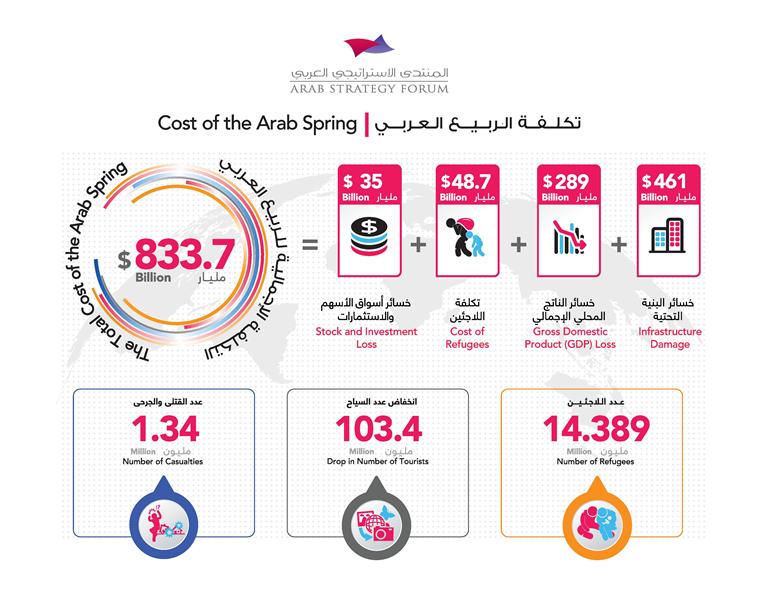
The cost of the suppression of the Arab Spring

How many mass movements in search of political rights would have been pronounced failures if success had to be established in just five years?

The quest for women’s rights has continued throughout human history and continues today.

Palestinians, Kurds, Tibetans, Kashmiris, and numerous other groups of indigenous peoples have for many decades campaigned and fought for their rights, often with very limited success.

But when it comes to the Arab Spring, those who stand to lose most from the expansion of political rights across the region, are now — not surprisingly — only too eager to pronounce it an expensive failure.

The idea that it might have been better to stay home and stay quiet, will all too easily resonate among the millions of people who have suffered the effects of the suppression of the Arab Spring.

As some of the region’s autocratic rulers and their advisers gathered in Dubai this week and soberly measured the “cost of the Arab Spring,” they should also — had they been honest — have been celebrating the rise of ISIS.

From Dubai to Tehran and from Riyadh to Cairo, it has been ISIS that has saved the day. The Arab Strategy Forum should have invited Abu Bakr al-Baghdadi as their guest of honor.

Don’t get me wrong. I’m not promoting any of the conspiracy theories about ISIS being the creation of a foreign government (be that the Saudis, the Turks, the Israelis, or the Americans — which of those being the culprit would depend merely on who the proponent such a theory sees as the worst enemy).

ISIS saved the day through its savagery by convincing nearly everyone else that political stability is worth more than any kind of political freedom.

Much as it will often be repeated that the need to destroy ISIS has never been more urgent, those whose rule is currently being legitimized by ISIS’s existence will be quite content for this war to be a valiant fight that sees no end.

And those blinkered by the conviction that the U.S. government is the architect of all the world’s afflictions, need to recognize that conflict in the Middle East is now being driven from many engine rooms — in Damascus, Moscow, Tehran, Jerusalem, Ankara, Riyadh, Cairo, Abu Dhabi, Doha, Beirut, Raqqa and elsewhere — in pursuit of incompatible agendas.

Among those costs, the greatest are not measured in dollars — the numbers of casualties and refugees. And these are not costs of the Arab Spring; they are, above all, the cost of the Assad regime’s refusal to respect the rights of the Syrian people.

Facebooktwittermail

Conspiracy America — where Trump already rules

Ben Judah writes: Trump is a son and hero to Conspiracy America, a country where academic studies show 40 per cent of citizens believe the US government is covering up the cure for cancer, a republic where 25 per cent believe the “Birther” conspiracy he helped to create, and nearly 20 per cent believe the “Truther” conspiracy that al-Qaeda fanatics were not responsible for the 2001 attack on the Twin Towers. Why do so many Americans believe such fabrications? This is the most urgent question for America today.

The paranoia fuelling Trump’s rise is the curse of the Bush era. Conspiracy America is a delayed reaction to the twin Bush disasters: the War on Terror and the banking collapse. History warns us that fear of demonic plots builds slowly after confusing, traumatic events. And once a conspiracy theory is born – The Protocols of the Elders of Zion, for example, or the power of the Freemasons – it is nearly impossible to kill.

Conspiracies about the Kennedy assassination built slowly, peaking in the 1980s. Germany’s “stab-in-the-back” myth grew only slowly after the Treaty of Versailles, peaking in the 1930s. History warns that paranoia about plots thrives in states which are being delegitimised: whenever they are unable to fulfil their promises – of empire, welfare, or the American Dream – the pattern of history is those losing out see plots, not systems, stealing what was theirs.

America’s shifting racial structure and social-media addiction may be far less to blame for Trump’s popularity than the rightists of Washington would like to admit. Conspiracy theories are able to thrive in atmospheres where the government has embraced the rhetoric of “us and them” – just as the War on Terror produced. Above all, the history books tell us, conspiracy theorists such as Trump thrive in societies that are growing poorer, weaker, more unequal, and where their citizens do not understand why that is happening. And that is America today. [Continue reading…]

Facebooktwittermail

We are all Muslim

FROM: Michael Moore
TO: Donald J. Trump

Dear Donald Trump:

You may remember (you do, after all, have a “perfect memory!”), that we met back in November of 1998 in the green room of a talk show where we were both scheduled to appear one afternoon. But just before going on, I was pulled aside by a producer from the show who said that you were “nervous” about being on the set with me. She said you didn’t want to be “ripped apart” and you wanted to be reassured I wouldn’t “go after you.”

“Does he think I’m going to tackle him and put him in a choke hold?” I asked, bewildered.

“No,” the producer replied, “he just seems all jittery about you.”

“Huh. I’ve never met the guy. There’s no reason for him to be scared,” I said. “I really don’t know much about him other than he seems to like his name on stuff. I’ll talk to him if you want me to.”

And so, as you may remember, I did. I went up and introduced myself to you. “The producer says you’re worried I might say or do something to you during the show. Hey, no offense, but I barely know who you are. I’m from Michigan. Please don’t worry — we’re gonna get along just fine!”

You seemed relieved, then leaned in and said to me, “I just didn’t want any trouble out there and I just wanted to make sure that, you know, you and I got along. That you weren’t going to pick on me for something ridiculous.”

“Pick on” you? I thought, where are we, in 3rd grade? I was struck by how you, a self-described tough guy from Queens, seemed like such a fraidey-cat.

You and I went on to do the show. Nothing untoward happened between us. I didn’t pull on your hair, didn’t put gum on your seat. “What a wuss,” was all I remember thinking as I left the set.

And now, here we are in 2015 and, like many other angry white guys, you are frightened by a bogeyman who is out to get you. That bogeyman, in your mind, are all Muslims. Not just the ones who have killed, but ALL MUSLIMS.

Fortunately, Donald, you and your supporters no longer look like what America actually is today. We are not a country of angry white guys. Here’s a statistic that is going to make your hair spin: Eighty-one percent of the electorate who will pick the president next year are either female, people of color, or young people between the ages of 18 and 35. In other words, not you. And not the people who want you leading their country.

So, in desperation and insanity, you call for a ban on all Muslims entering this country. I was raised to believe that we are all each other’s brother and sister, regardless of race, creed or color. That means if you want to ban Muslims, you are first going to have to ban me. And everyone else.

We are all Muslim.

Just as we are all Mexican, we are all Catholic and Jewish and white and black and every shade in between. We are all children of God (or nature or whatever you believe in), part of the human family, and nothing you say or do can change that fact one iota. If you don’t like living by these American rules, then you need to go to the time-out room in any one of your Towers, sit there, and think about what you’ve said.

And then leave the rest of us alone so we can elect a real president who is both compassionate and strong — at least strong enough not to be all whiny and scared of some guy in a ballcap from Michigan sitting next to him on a talk show couch. You’re not so tough, Donny, and I’m glad I got to see the real you up close and personal all those years ago.

We are all Muslim. Deal with it.

All my best,
Michael Moore

P.S. I’m asking everyone who reads this letter to go here and sign the following statement: “WE ARE ALL MUSLIM” — and then send post a photo of yourself holding a homemade sign saying “WE ARE ALL MUSLIM” on Twitter, Facebook, or Instagram using the hashtag #WeAreAllMuslim. I will post all the photos on my site and send them to you, Mr. Trump. Feel free to join us.

Facebooktwittermail

Pentagon officers: We will quit if Trump wins

The Daily Beast reports: Republican presidential candidate and business mogul Donald Trump has repeatedly vowed to build up the U.S. military if elected president.

But it is not clear he will have the experienced commanders within the ranks to do it.

In the halls of the Pentagon, there is a different plan afoot for the Trump presidency. Here, officers are privately contemplating what they would do should Trump become their commander-in-chief. And more often than not, they proclaim they will leave.

“By 2016 I will have my 20 years in and can get out of here,” one military official said, referring to the amount of time a service member needs to collect retirement pay.

Spend enough time with a service member, and the topic of Trump comes up, always unsolicited. It is far less political than it sounds. Trump’s attack plans for the so-called Islamic State widely known as ISIS — his call to ban Muslims from the United States, his suggestions that cutting off the flow of information through the Internet can protect the homeland — many said, are an affront to the values they vowed to die to defend. [Continue reading…]

Facebooktwittermail

Donald Trump gets strong endorsement from Vladimir Putin

CNN reports: Donald Trump has said that he would “get along very well” with Russian President Vladimir Putin.

The feeling is apparently mutual.

Putin offered high praise for the billionaire businessman-turned-Republican presidential front-runner on Thursday during an annual news conference with reporters.

“He is a bright and talented person without any doubt,” Putin said, adding that Trump is “an outstanding and talented personality.”

And in remarks closely mirroring Trump’s assessment of the campaign, the Russian leader called Trump “the absolute leader of the presidential race,” according to the Russian TASS news agency. [Continue reading…]

Facebooktwittermail

Five years after Bouazizi, the Arab Spring isn’t over

Faisal Al Yafai writes: Without a doubt no one expected this. Five years ago this week, when Mohamed Bouazizi set himself on fire in a small Tunisian town, no one, absolutely no one, could have imagined the Middle East would look like it does today.

The Middle East has been living with the reality of the Arab Spring and, in some countries, the post-Arab Spring for nearly half a decade, to the point where it has become the new normal. It can be hard to remember what it was like before.

Hardly surprising, then, that the Arab Spring divides opinion. The progression of the revolutions in each of the five countries have gone in very different directions. Some, like Egypt, have found themselves back on track. Tunisia, where it started, is doing well. Libya, Yemen and Syria, much less so.

In situations of such cruelty and complexity, it is easy to imagine that what existed before was better. That the revolutions, as some would have it, “failed”.

And, certainly, looking at the dire situation for ordinary Syrians, watching as ISIL attacks Kurds and Yazidis, or as ordinary Libyans and Yemenis suffer in countries without the rule of law, looking back to a period of stability is seductive.

But it is worth recalling that the Arab Spring wasn’t an event. It wasn’t a single, static moment. It was months and years of decisions, of responses, of actions and reactions.

If the Arab Spring revolutions didn’t always turn out better for the people, that isn’t the fault of those who revolted for a better world. It’s often the fault of those who spent money, manpower and bullets to prevent that world coming about. [Continue reading…]

Facebooktwittermail