Category Archives: Issues

US should exercise green power

Kevin Gallagher writes:

To kick off 2011, the Obama administration has had the audacity to file suit at the World Trade Organisation (WTO) against China’s policies to build green technologies.

This action is deeply flawed. The US should not try to beat China down, but should pursue its own green jobs policy and reform the WTO, so the rules allow countries to combat climate change.

The United States and China are the world’s largest emitters of the greenhouse gases. Together and separately, each nation should be doing all it can to develop clean technologies to mitigate and adapt to climate change.

That is not how the Obama administration has seen it. Repeatedly, at United Nations climate negotiations, the US has said that it will do little to combat climate change unless China does. Moreover, the US has stated it will not provide any financial assistance to China to help reduce emissions. With no US support, China was left to its own devices.

Fortunately, the government rose to the challenge. In 2009, China added more wind power than any other country, including the United States. China already has the largest solar thermal capacity in the world and now leads the world in installed renewable energy capacity.

Facebooktwittermail

Turks see US as biggest external threat, poll results show

Hürriyet Daily News reports:

Some 43 percent of Turks perceive the United States as the country’s biggest threat, followed by Israel, according to a broad survey carried out in December.

“This the highest ratio ever on the external threat question among our surveys,” Professor Özer Sencar, chairman of Ankara-based MetroPOLL Strategic and Social Research Center, told the Hürriyet Daily News & Economic Review on Wednesday.

“The U.S. foreign politics since the Iraqi invasion, the hood incident [the U.S. detention of Turkish soldiers during the Iraq war], the war in Afghanistan, repeated Armenian bills in the U.S. Congress and the negative statements that Turkish leaders make about the U.S. and Israel play a major role in this perception,” Sencar said.

Facebooktwittermail

Lockheed Martin: the shadow government

Yahoo Tech Ticker reports:

Too big to fail?

That’s been the key question asked of Wall Street’s biggest banks since the September 2008 collapse of Lehman Brothers, which sent shock waves through the global financial system and led to the worst recession this country has seen since the Great Depression.

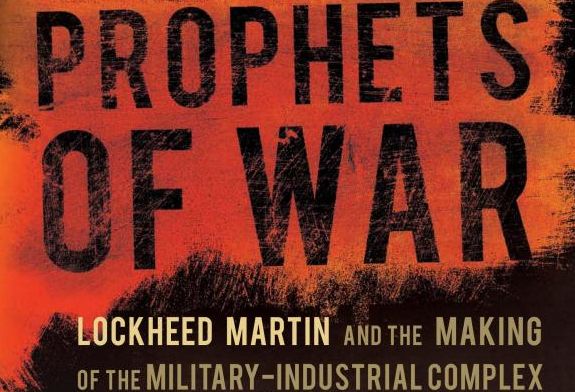
But, there is another firm far from the circles of Wall Street for which that same question should be asked, says William Hartung, author of the new book Prophets of War. The subtitle of his book says it all: Lockheed Martin and the Making of the Military-Industrial Complex.

With $40 billion in annual revenue, Lockheed Martin is the single largest recipient of U.S. tax dollars. The company receives about $36 billion in government contracts per year. In 2008, $29 billion of that was for U.S. military contracts – a dollar figure 25% higher than its competitors Boeing Co. and Northrop Grumman.

What does that mean for you, the U.S. taxpayer? According to Hartung, each taxpaying household contributes $260 to Lockheed’s coffers each year!

Facebooktwittermail

A legacy Obama should avoid: Allowing detentions without trials

Tom Malinowski from Human Rights Watch writes:

It is an iron law of American government that institutions created to meet a temporary contingency are almost impossible to dismantle once the contingency has passed. If not for the Soviet threat, for example, the United States hardly would have established multiple intelligence agencies, military bases in Germany or a massive nuclear weapons complex. Yet 20 years after the Berlin Wall fell, these elements of the Cold War national security state are still with us.

The institutions cobbled together after the Sept. 11, 2001, attacks may be just as resistant to change, as President Obama is finding in his struggle to close the detention facility at Guantanamo Bay.

In 2008, presidential candidates Obama and John McCain promised to close Guantanamo. (McCain said he would move all the prisoners to Fort Leavenworth, Kan., on his first day in office.) But last year, Robert Gates’s Pentagon fought to preserve the facility’s military commissions. Then, Congress restricted transfers of prisoners to the United States for detention or trial. Last week, White House press secretary Robert Gibbs said that closing Guantanamo would “depend on the Republicans’ willingness to work with the administration,” which, if true, is a nice way of saying “never.”

Now Obama is reportedly weighing an executive order to clarify the rules for detaining some four dozen Guantanamo prisoners whom his administration deems too dangerous to release but who cannot be tried. These men pose a unique problem left over from the Bush administration, when evidence was poorly maintained, some detainees were tortured and others radicalized by their years in prison. If Obama’s order gives them better process, it will be a step forward.

Some, however, are urging Obama to take a more fateful step: to issue an order covering not just the hard cases he inherited in Guantanamo but also allowing detention without trial of any terrorism suspect who may be apprehended in the future, even if far from a battlefield. Such an order could transform the Guantanamo system from an unfortunate, improvised response to Sept. 11 into a permanent feature of our legal landscape.

Facebooktwittermail

Taliban not quite twelve feet tall

The theory behind President Obama’s Afghan surge (beyond the moronically simplistic “if it worked in Iraq, it should work in Afghanistan”) was the notion that after “sustained pressure,” “a more robust approach” — or whatever euphemism one chooses for an operation designed to kill more people — the US and Nato would be in a better position to try and negotiate an end to the war.

Now comes an unofficial Nato assessment: in spite of the surge, the Taliban are standing tall. In fact, when presenting a resistance to foreign forces at a ratio of 1:12, you have to wonder what the Pentagon, fielding its million-dollar-a-year soldiers, is learning from the Taliban in terms of the economics of warfare.

The Associated Press reports:

The Taliban are pitted against about 140,000 ISAF troops — two-thirds of them Americans — and over 200,000 members of the government’s security forces.

This gives the allies a numerical advantage of at least 12:1 — one of the highest such ratios in modern guerrilla wars. At the height of the Vietnam War, the U.S. and its allies had an advantage of between 4-5 to 1 over their Communist foes.

When one Afghan fighter with no body armor and little more than an AK-47 can effectively stand up to a dozen modern soldiers (obviously not all of whom are actually on the battlefield), even the war’s most stalwart defenders should be paying attention to the fabulous waste of money. The allies so-called numerical advantage means that for every dollar the Taliban spends, the Pentagon is wasting several hundred.

For how many more decades can the Pentagon continue fighting wars that it is incapable of winning — and draining the US economy in the process — before the knuckleheads across America who have been spellbound by the words “national security” finally wake up and say, enough?

Facebooktwittermail

War with Iran postponed — at least until after the 2012 US presidential election

Reuters reports:

Israel believes Iran will not be able to produce a nuclear bomb before 2015 and a top Israeli official has counseled against pre-emptive military strikes, intelligence assessments published Friday showed.

Given in a briefing by Mossad director Meir Dagan upon his retirement Thursday, the assessments pointed to new Israeli confidence in U.S.-led sanctions and covert action designed to discourage or delay Tehran’s uranium enrichment program.

They were also in line with Israeli Prime Minister Benjamin Netanyahu’s circumspection — echoing misgivings voiced more publicly by the Obama administration — about resorting to force against Iran, which denies seeking nuclear arms and has vowed to retaliate against Israel and U.S. interests for any such attack.

“Iran will not achieve a nuclear bomb before 2015, if that,” Dagan said, according to a transcript obtained by Reuters.

Facebooktwittermail

The tyranny of the national security state

Andrew Bacevich writes:

American politics is typically a grimy business of horses traded and pork delivered. Political speech, for its part, tends to be formulaic and eminently forgettable. Yet on occasion, a politician will transcend circumstance and bear witness to some lasting truth: George Washington in his Farewell Address, for example, or Abraham Lincoln in his Second Inaugural.

Fifty years ago, President Dwight D. Eisenhower joined such august company when, in his own farewell address, he warned of the rise in America of the “military-industrial complex.” An accomplished soldier and a better-than-average president, Eisenhower had devoted the preponderance of his adult life to studying, waging, and then seeking to avert war. Not surprisingly, therefore, his prophetic voice rang clearest when as president he reflected on matters related to military power and policy.

Ike’s farewell address, nationally televised on the evening of January 17, 1961, offered one such occasion, although not the only one. Equally significant, if now nearly forgotten, was his presentation to the American Society of Newspaper Editors on April 16, 1953. In this speech, the president contemplated a world permanently perched on the brink of war—“humanity hanging from a cross of iron”— and he appealed to Americans to assess the consequences likely to ensue.

Separated in time by eight years, the two speeches are complementary: to consider them in combination is to discover their full importance. As bookends to Eisenhower’s presidency, they form a solemn meditation on the implications—economic, social, political, and moral—of militarizing America.

Facebooktwittermail

Obama administration apparently complicit in the torture of an American teenager

Glenn Greenwald writes:

Gulet Mohamed is an 18-year-old American citizen whose family is Somalian. His parents moved with him to the U.S. when he was 2 or 3 years old, and he has lived in the U.S. ever since. In March, 2009, he went to study Arabic and Islam in Yemen (in Sana’a, the nation’s capital), and, after several weeks, left (at his mother’s urging) and went to visit his mother’s family in Somalia, staying with his uncle there for several months. Roughly one year ago, he left Somalia and traveled to Kuwait to stay with other family members who live there. Like many teenagers who reach early adulthood, he was motivated in his travels by a desire to see the world, to study, and to get to know his family’s ancestral homeland and his faraway relatives.

At all times, Mohamed traveled on an American passport and had valid visas for all the countries he visited. He has never been arrested nor — until two weeks ago — was he ever involved with law enforcement in any way, including the entire time he lived in the U.S.

Approximately two weeks ago (on December 20), Mohamed went to the airport in Kuwait to have his visa renewed, as he had done every three months without incident for the last year. This time, however, he was told by the visa officer that his name had been marked in the computer, and after waiting five hours, he was taken into a room and interrogated by officials who refused to identify themselves. They then handcuffed and blindfolded him and drove him to some other locale. That was the start of a two-week-long, still ongoing nightmare during which he was imprisoned for a week in an unknown location by unknown captors, relentlessly interrogated, and severely beaten and threatened with even worse forms of torture.

Facebooktwittermail

Troubling trends in the Middle East

In an examination of the “five mostly troubling trends from 2010 that will probably define and plague the Middle East for the year ahead,” Rami G Khouri writes:

The transformation of the formerly localized Arab-Israeli conflict into the fulcrum of a much wider regional confrontation with strong religious overtones bodes ill for the region in the years ahead.

The Arab-Israeli conflict now anchors a much more violent and complex stand-off that sees some Arab states (notably Syria), Iran and powerful Arab Islamist resistance movements like Hamas and Hezbollah working together to repel not only Israeli territorial aggression, but what they see as wider American-Israeli hegemonic ambitions in the Arab-Islamic Middle East.

The narrow competing claims of Palestinians and Israelis in a small corner of the region have now transformed into a regional and quasi-global existential battle among powerful actors who seem prepared to fight to the finish.

Large regional and global conflicts will now more easily find local proxies to wage the battle, while local feuds will often escalate quickly into more fierce and intractable conflicts because of the association with foreign actors.

Facebooktwittermail

In Iraq, Turkey demonstrates the effectiveness of soft power

Anthony Shadid reports:

A Turkey as resurgent as at any time since its Ottoman glory is projecting influence through a turbulent Iraq, from the boomtowns of the north to the oil fields near southernmost Basra, in a show of power that illustrates its growing heft across an Arab world long suspicious of it.

Its ascent here, in an arena contested by the United States and Iran, may prove its greatest success so far, as it emerges from the shadow of its alliance with the West to chart an often assertive and independent foreign policy.

Turkey’s influence is greater in northern Iraq and broader, though not deeper, than Iran’s in the rest of the country. While the United States invaded and occupied Iraq, losing more than 4,400 troops there, Turkey now exerts what may prove a more lasting legacy — so-called soft power, the assertion of influence through culture, education and business.

“This is the trick — we are very much welcome here,” said Ali Riza Ozcoskun, who heads Turkey’s consulate in Basra, one of four diplomatic posts it has in Iraq.

Turkey’s newfound influence here has played out along an axis that runs roughly from Zakho in the north to Basra, by way of the capital, Baghdad. For a country that once deemed the Kurdish region in northern Iraq an existential threat, Turkey has embarked on the beginning of what might be called a beautiful friendship.

In the Iraqi capital, where politics are not for the faint-hearted, it promoted a secular coalition that it helped build, drawing the ire of Iraq’s prime minister, Nuri Kamal al-Maliki, along the way. For Iraq’s abundant oil and gas, it has positioned itself as the country’s gateway to Europe, while helping to satisfy its own growing energy needs.

Just as the Justice and Development Party of Prime Minister Recep Tayyip Erdogan has reoriented politics in Turkey, it is doing so in Iraq, with repercussions for the rest of the region.

Facebooktwittermail

Israeli media acting like North Korean media

Didi Remez, whose blog is Coteret, provides a translation of an interview with the Israeli human rights attorney, Micheal Sfard, who appeared on Israel Defense Forces Radio yesterday morning.

Niv Raskin, IDF Radio: Now we turn to the IDF investigation on the death of protester Jawaher Abu Rahma. According to the IDF investigation, senior officers say it’s a kind of fabrication. The Bilin protester didn’t die of [tear] gas inhalation; she was a cancer patient. We want to talk about this issue with the family’s lawyer, Attorney Michael Sfard.

Attorney Michael Sfard: The IDF didn’t publish, its court journalists did.

Raskin: What do you mean?

Sfard: What I mean is that no IDF officer was willing to talk on-record. The IDF Spokesperson didn’t even put out a communiqué. Everything was done through journalists. They weren’t presented with even one document. I have never encountered such crazy fabricated blood libel.

Raskin: With your permission, let’s review the facts, at least as they were published. First, according to the reports, according to the investigation conducted by the IDF, there was no report of a wounded woman on Friday. According to those officers, at least, this casts doubt over whether she was at the protest at all.

Sfard: Niv, I don’t know where to start. There’s almost no word, no letter, of truth in the sentence you just uttered. And the most terrible thing is that I don’t know how Israeli media, which had the extraordinary courage to topple a Prime Minister [Olmert – DR] over corruption, acts like the North Korean media when it’s about something the IDF wants to achieve. There isn’t even one substantiating foundation for any of the components you described. Jawaher was at the protest. Dozens of people saw her there. I spoke to eyewitnesses who were beside her at the protest. Jawaher collapsed at the protest. She wasn’t sick like the IDF Spokesperson said on Friday. She didn’t have cancer as he’s saying today.

Raskin: Those officers ask why there aren’t photos of her at the protest when there dozens of photos from it.

Sfard: Because the IDF shot so much gas, that it was everywhere in the village and people all over were affected by it. The IDF has to this day refused order the opening of an [official] investigation. How is it supposed to obtain the photos? The Judge Advocate General hasn’t, until this very moment, ordered the opening of an investigation. So, on the one hand, they don’t open an investigation. On the other hand, they come up with these fabrications. If the IDF invested a tiny fraction of the energy it’s investing in fabrications, in investigating itself, lives would be saved because the IDF would know where its action were wrong.

Raskin: Let’s, with your permission, try to return to factual issues. The gaps in the timeline. According to the Palestinian medical reports, a blood sample was taken from Abu Rahme 40 minutes before she even arrived at the hospital. How does that work?

Sfard: Look at what we’re discussing. Do you know how many medical files I’ve seen where, under the pressure of a life threatening incident, someone wrote 2 instead of 3? That’s what’s important? According to what the IDF is telling journalists and journalists are telling us, is that she was a cancer patient. Is there one [real] journalist at Yediot this morning? Can the senior reporters — Nahum Barnea, Shimon Shiffer and Sever Plocker — ask the reporters and editors if they have one document substantiating the claim that she had leukemia? This is a farce! If we find an incorrect noting of a time, do we absolve the IDF of responsibility for her death?

Raskin: You’re criticizing the media?

Sfard: Of course.

Raskin: I’m not sure that’s the correct address. Someone gave them this version. Those were senior officers. Another allegation, they say, is that her clothes didn’t smell of tear gas, contradicting the Palestinian claims. They [also] talk about a quiet funeral, not the kind they have for Shahids [martyrs in Arabic — DR] and that the Palestinians usually know how to leverage [these funerals] for a PR advantage and that didn’t happen this time.

Sfard: Hold on, I want to understand, are you serious? The IDF is claiming that because it was a quiet funeral, she died from an illness and not by its hands? Is that a serious argument? So the IDF’s proof that she wasn’t at the protest is that there wasn’t rioting [at the funeral]? Look what’s become of us! I have to prove that there was or wasn’t a smell on Jawaher’s clothes when the IDF won’t investigate the incident? The IDF is talking about some kind of examination conducted by its officers. These aren’t people who know how to investigate.

Raskin: To summarize, bottom line, you’re saying that she wasn’t sick?

Sfard: What the hell? What sickness? She had an ear problem. We..really…her ear problem. Yesterday I got 20 calls from 20 reporters requesting an explanation what kind of problem she had with her ear. Let’s assume she had an ear problem. Does she deserve to die at a protest for it?

Raskin: A couple of days ago we spoke to her uncle who was with her at the protest. He said she was suffering from a kind of asthma and that she had suffered from respiratory problems over the past few years. That means that you can’t say she a clean medical record. Not that means anything. But it’s an important thing to say.

Sfard: Look, Niv. I’m not a Palestinian. I’m an Israeli and you’re an Israeli. I want to tell you..why not put out an orderly communiqué saying: ‘This is a tragic incident and we will investigate it. We use tear gas and other non-lethal weapons precisely so things like this won’t happen. We’ll look into how this happened.’ Then task the military police with a serious investigation, because a protester has died. This is important because, if an Israeli protester dies, it won’t matter what illness he had, the police will investigate seriously.

Raskin: Attorney Michael Sfard, representing the Abu Rahme family, thanks for joining us. I’ll just point out in this context that in contrast to what Attorney Sfard says, the item on the IDF investigation appears in all the [Israeli] media and not just in Yediot Aharonot, which Sfard attacked.

Facebooktwittermail

WikiLeaks: Israel told US it would keep Gaza near collapse

Reuters reports:

Israel told U.S. officials in 2008 it would keep Gaza’s economy “on the brink of collapse” while avoiding a humanitarian crisis, according to U.S. diplomatic cables published by a Norwegian daily on Wednesday.

Three cables cited by the Aftenposten newspaper, which has said it has all 250,000 U.S. cables leaked to WikiLeaks, showed that Israel kept the U.S. Embassy in Tel Aviv briefed on its internationally criticized blockade of the Gaza Strip.

The territory, home to 1.3 million Palestinians, is run by the Islamist Hamas group, which is shunned by the West over its refusal to recognize Israel, renounce violence or accept existing interim Israeli-Palestinian peace deals.

“As part of their overall embargo plan against Gaza, Israeli officials have confirmed to (U.S. embassy economic officers) on multiple occasions that they intend to keep the Gazan economy on the brink of collapse without quite pushing it over the edge,” one of the cables read.

Israel wanted the coastal territory’s economy “functioning at the lowest level possible consistent with avoiding a humanitarian crisis,” according to the November 3, 2008 cable.

Facebooktwittermail

Why think tanks attract sycophantic opportunists

Benjamin H. Friedman lists the reasons think tank analysts lack intellectual independence. Think tanks are shaped by five forces creating political bias:

The first is institutional funding. If you take government or industry money, you will hesitate to undertake research that offends your sponsors. Many people see foundations as somehow cleaner money, but they too have agendas. Even those of us that rely on donations from many individuals of an ideological persuasion get selected to advance that ideology and thus cannot much violate it.

Second, personal profit biases ideas. Many defense and homeland security experts, especially the most prominent ones, work for defense contractors or investment companies in that industry.

Third is ambition. Those concerned with defense analysts’ independence tend to focus on money, but as Hans Morgenthau tells us, power matters more. Analysts tend to reflect the views of one party because they hope to serve it or because their employer does. Those pining for jobs in the Obama or Thune administration are not going to tell you exactly what they think about Afghanistan without considering how their would-be bosses would react.

A fourth bias in defense analysis is what academics call a selection bias. Just as people that go into the international development business are likely to support increased foreign aid, defense analysts are more likely than most to be hawkish people.

Fifth is social convention. When these pressures point in a particular direction, it seems impolite and for many people uncomfortable to swim against the tide. And we unconsciously adjust our political views to fit in with those around us.

Facebooktwittermail

Once a terrorist, always a terrorist — unless you’re an Israeli

David Cole challenges the Supreme Court’s idiotic ruling on the definition of “material support” offered to designated terrorist organizations.

Did former Attorney General Michael Mukasey, former New York Mayor Rudolph Giuliani, Tom Ridge, a former homeland security secretary, and Frances Townsend, a former national security adviser, all commit a federal crime last month in Paris when they spoke in support of the Mujahedeen Khalq at a conference organized by the Iranian opposition group’s advocates? Free speech, right? Not necessarily.

The problem is that the United States government has labeled the Mujahedeen Khalq a “foreign terrorist organization,” making it a crime to provide it, directly or indirectly, with any material support. And, according to the Justice Department under Mr. Mukasey himself, as well as under the current attorney general, Eric Holder, material support includes not only cash and other tangible aid, but also speech coordinated with a “foreign terrorist organization” for its benefit. It is therefore a felony, the government has argued, to file an amicus brief on behalf of a “terrorist” group, to engage in public advocacy to challenge a group’s “terrorist” designation or even to encourage peaceful avenues for redress of grievances.

Don’t get me wrong. I believe Mr. Mukasey and his compatriots had every right to say what they did. Indeed, I argued just that in the Supreme Court, on behalf of the Los Angeles-based Humanitarian Law Project, which fought for more than a decade in American courts for its right to teach the Kurdistan Workers’ Party in Turkey how to bring human rights claims before the United Nations, and to assist them in peace overtures to the Turkish government.

But in June, the Supreme Court ruled against us, stating that all such speech could be prohibited, because it might indirectly support the group’s terrorist activity. Chief Justice John Roberts reasoned that a terrorist group might use human rights advocacy training to file harassing claims, that it might use peacemaking assistance as a cover while re-arming itself, and that such speech could contribute to the group’s “legitimacy,” and thus increase its ability to obtain support elsewhere that could be turned to terrorist ends. Under the court’s decision, former President Jimmy Carter’s election monitoring team could be prosecuted for meeting with and advising Hezbollah during the 2009 Lebanese elections.

At the heart of the Supreme Court justices view of terrorism is that it can be defined more in terms of who terrorists are than in what they do. In essence, it declares: once a terrorist, always a terrorist (unless the US government decides otherwise).

This view has become almost a religious orthodoxy in the United States over the last decade. Hence, it is only among hardcore advocates of human rights that the fact that men now being imprisoned primarily because of fears about what they might do in the future, is seriously being challenged.

But if this once-a-terrorist-alway-a-terrorist view was actually applied with rigor, how could the United States justify its support for Israel? Former prime minister Menachim Begin was a terrorist. Tzipi Livni’s parents were terrorists. Terrorism played a vital role in the creation of Israel. And yet material support from the US government to Israel flows in abundance. Different strokes for different folks, I guess.

Facebooktwittermail

Don’t deny detainees their day in court

Amos N. Guiora and Laurie R. Blank write:

The idea that every person deserves his or her “day in court” is a fundamental principle in the United States and many countries worldwide. Yet more than nine years after 9/11, the United States remains paralyzed not just about how to give the thousands of detainees in U.S. custody around the world their day in court but about whether to give them that day in court.

Multiple judicial forums have been created to try nonstate actors who have perpetrated war crimes from Rwanda to Sierra Leone to Cambodia to the former Yugoslavia — to give them their day in court. That makes the failure to answer this question for post-9/11 detainees particularly perplexing and deeply troubling.

Two successive administrations have been incapable of answering what should be the most basic questions: if, how and where to try terrorists. In the meantime, post-9/11 detainees languish in indefinite detention. The result is a fundamental and overwhelming violation of the rights of individuals who are no more than suspects, in either past or (more problematic) future acts.

The Obama administration now intends to issue an executive order establishing indefinite detention without trial for detainees at Guantanamo Bay. This decision will formalize this violation of basic rights. Denying individual accountability will now be official U.S. policy and law.

Facebooktwittermail

‘The Left has nowhere to go’

Chris Hedges writes:

Ralph Nader in a CNN poll a few days before the 2008 presidential election had an estimated 3 percent of the electorate, or about 4 million people, behind his candidacy. But once the votes were counted, his support dwindled to a little over 700,000. Nader believes that many of his supporters entered the polling booth and could not bring themselves to challenge the Democrats and Barack Obama. I suspect Nader is right. And this retreat is another example of the lack of nerve we must overcome if we are going to battle back against the corporate state. A vote for Nader or Green Party candidate Cynthia McKinney in 2008 was an act of defiance. A vote for Obama and the Democrats was an act of submission. We cannot afford to be submissive anymore.

“The more outrageous the Republicans become, the weaker the left becomes,” Nader said when I reached him at his home in Connecticut on Sunday. “The more outrageous they become, the more the left has to accept the slightly less outrageous corporate Democrats.”

Nader fears a repeat of the left’s cowardice in the next election, a cowardice that has further empowered the lunatic fringe of the Republican Party, maintained the role of the Democratic Party as a lackey for corporations, and accelerated the reconfiguration of the country into a neo-feudalist state. Either we begin to practice a fierce moral autonomy and rise up in multiple acts of physical defiance that have no discernable short-term benefit, or we accept the inevitability of corporate slavery. The choice is that grim. The age of the practical is over. It is the impractical, those who stand fast around core moral imperatives, figures like Nader or groups such as Veterans for Peace, which organized the recent anti-war rally in Lafayette Park in Washington, which give us hope. If you were one of the millions who backed down in the voting booth in 2008, don’t do it again. If you were one of those who thought about joining the Washington protests against the war where 131 of us were arrested and did not, don’t fail us next time. The closure of the mechanisms within the power system that once made democratic reform possible means we stand together as the last thin line of defense between a civil society and its disintegration. If we do not engage in open acts of defiance, we will empower a radical right-wing opposition that will replicate the violence and paranoia of the state. To refuse to defy in every way possible the corporate state is to be complicit in our strangulation.

Facebooktwittermail

The Israeli-Palestinian alliance that worries the Israeli government

In an analysis on the political fallout from the killing of Jawaher Abu Rahmah, a Palestinian women who died after inhaling tear gas fired by Israeli troops in the West Bank on Friday, Tony Karon writes:

[T]he news of Abu Rahmah’s death has highlighted a new alliance emerging between a small number of Israeli leftists and Palestinians engaged in unarmed mass protest action. Scores of Israeli activists had actually joined Friday’s demonstration, and they challenged the IDF claim that tear gas was fired only after stones were thrown by protesters. The news that Abu Rahmah had died brought hundreds of Israeli Jews to a protest in Tel Aviv on Saturday night outside Israel’s Defense Ministry, where a handful were arrested. More were held later by the police after 25 protesters converged on the residence of the U.S. ambassador to Israel and allegedly threw some of the U.S.-made tear-gas canisters collected in Bil’in onto his lawn.

The self-described leftists and anarchists engaged in direct action in concert with unarmed Palestinian protests are a negligible presence on an Israeli political spectrum whose median has moved steadily to the right over the past decade. But their actions may be directed less at the Israeli political mainstream than at international civil society. The Israeli protesters often use English rather than Hebrew in placards and slogans, and explicitly connect Israel’s occupation of Palestinian territories with South Africa’s apartheid system. That’s intended as a signal to international civil society, which helped end the apartheid regime through its support for boycotts and economic sanctions in the 1980s. Joseph Dana, an Israeli activist and the media coordinator for the Palestinian Popular Struggle Coordination Committee, says these Israeli leftists are “seeking to use the privileged access their voice carries in North America and Europe to add power to the voice of the Palestinians they struggle alongside, sidestepping engagement with [an Israeli] society that is unwilling to listen.”

Their numbers may be relatively small, but the activists are certainly making their presence felt. Weekly demonstrations against Israeli settlement activity in the Sheikh Jarrah neighborhood of East Jerusalem regularly draw scores of Israelis, who have also ventured out to demonstrations elsewhere in the West Bank. Just last week, Israeli anarchist Jonathan Pollak was sentenced to three months in an Israeli prison for his role in a bicycle protest against the Gaza blockade three years ago. In court for his sentencing, an unrepentant Pollak wore a T-shirt bearing the face of slain South African antiapartheid activist Steve Biko.

As much as it irks Israel’s liberal supporters in the West, the apartheid comparison with Israel’s occupation is being drawn more and more frequently, even by current Israeli Defense Minister Ehud Barak. Barak, of course, was using it to warn his countrymen of the danger of failing to achieve a two-state solution, which leaves Palestinians effectively ruled by a state that denies them citizenship. But its function for Tel Aviv leftists is to spur the international community to action — hoping that the fact that it comes from Jewish Israelis will counter any hesitation based on sensitivity to charges of anti-Semitism in the West.

The growing assertiveness of Israel’s leftists has the authorities worried.

Facebooktwittermail