Category Archives: Issues

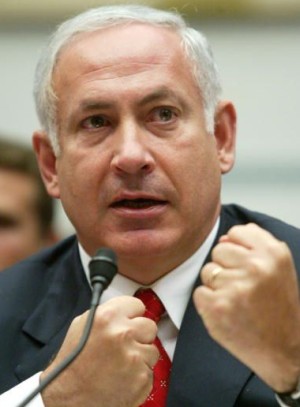
Netanyahu — disgraced, isolated and weaker

The headline for Aluf Benn’s article in Haaretz says it all: “Netanyahu leaves U.S. disgraced, isolated and weaker.”

Benn’s full account appears below but some of the comments elsewhere in the Israeli press reveal how deeply a racist outlook on the world is embedded within the Israeli perspective. As the Daily Telegraph reported:

Sending a clear message of his displeasure, Mr Obama treated his guest to a series of slights. Photographs of the meeting were forbidden and an Israeli request to issue a joint-statement once it was over were turned down.

“There is no humiliation exercise that the Americans did not try on the prime minister and his entourage,” Israel’s Maariv newspaper reported. “Bibi received in the White House the treatment reserved for the president of Equatorial Guinea.”

Why, the editors of Maariv might care to explain, would the president of Equatorial Guinea not be afforded respect during a visit to the White House?

The Telegraph says that upon his arrival to meet with President Obama, Netanyahu was presented with a set of 13 demands, key among those that Israel halt all new settlement construction in East Jerusalem:

When the Israeli prime minister stalled, Mr Obama rose from his seat declaring: “I’m going to the residential wing to have dinner with Michelle and the girls.”

As he left, Mr Netanyahu was told to consider the error of his ways. “I’m still around,” Mr Obama is quoted by Israel’s Yediot Ahronot newspaper as having said. “Let me know if there is anything new.”

When the two men met briefly an hour later, a short meeting failed to break the impasse.

Aluf Benn writes:

The visit – touted as a fence-mending effort, a bid to strengthen the tenuous ties between Netanyahu and U.S. President Barack Obama – only highlighted the deep rift between the American and Israeli administrations.

The prime minister leaves America disgraced, isolated, and altogether weaker than when he came.

Instead of setting the diplomatic agenda, Netanyahu surrendered control over it. Instead of leaving the Palestinian issue aside and focusing on Iran, as he would like, Netanyahu now finds himself fighting for the legitimacy of Israeli control over East Jerusalem.

The most sensitive and insoluble core issues – those which when raised a decade ago led to the dissolution of the peace process and explosion of the second intifada – are now being served as a mere appetizer.

At the start of his visit, Netanyahu was tempted to bask in the warm welcome he received at the AIPAC conference, at which he gave his emotional address on Jerusalem.

Taking a page from Menachem Begin, he spoke not on behalf of the State of Israel, but in the name of the Jewish people itself and its millennia of history.

His speech was not radical rightist rhetoric. Reading between the lines, one could spot a certain willingness to relinquish West Bank settlements as long as Israel maintains a security buffer in the Jordan Valley.

But at the White House, the prime minister’s speech to thousands of pro-Israel activists and hundreds of cheering congressmen looked like an obvious attempt to raise political capital against the American president.

Knowing Netanyahu would be reenergized by his speech at the lobby, Obama and his staff set him a honey trap. Over the weekend they sought to quell the row that flared up during U.S. Vice President Joe Biden’s trip here two weeks ago, and U.S. Secretary of State Hillary Clinton described Netanyahu’s response to the ultimatums Washington presented to him as “useful.”

Special envoy George Mitchell made a televised visit to the prime minister’s bureau Sunday to invite Netanyahu to the White House. Washington, it seemed, was trying to make nice.

Far from it. Just when Netanyahu thought he had resolved the crisis by apologizing to Biden, Clinton called him up for a dressing down.

This time as well, Netanyahu almost believed the crisis had passed, that he had survived by offering partial, noncommittal answers to the Americans’ questions. Shortly before meeting with Obama, Netanyahu even warned the Palestinians that should they continue to demand a freeze on construction, he would postpone peace talks by a year.

His arrogant tone underscored the fact that Netanyahu believed that on the strength of his AIPAC speech, he could call the next few steps of the diplomatic dance.

But then calamity struck. At their White House meeting, Obama made clear to his guest that the letter Netanyahu had sent was insufficient and returned it for further corrections. Instead of a reception as a guest of honor, Netanyahu was treated as a problem child, an army private ordered to do laps around the base for slipping up at roll call.

The revolution in the Americans’ behavior is clear to all. On Sunday morning Obama was still anxiously looking ahead to the House of Representatives vote on health care – the last thing he wanted was a last-minute disagreement with congressmen over ties with Israel.

The moment the bill was passed, however, a victorious Obama was free to deal with his unruly guest.

The Americans made every effort to downplay the visit. As during his last visit in November, Netanyahu was invited to the White House at a late hour, without media coverage or a press conference. If that were not enough, the White House spokesman challenged Netanyahu’s observation at AIPAC that “Jerusalem is not a settlement.”

The Americans didn’t even wait for him to leave Washington to make their disagreement known. It was not the behavior Washington shows an ally, but the kind it shows an annoyance.

The approval of construction at the Shepherd Hotel in Sheikh Jarrah, announced before his meeting with Obama, again caught Netanyahu unawares. Apparently the special panel appointed after the Ramat Shlomo debacle to prevent such surprises failed its first test.

Netanyahu is having his most difficult week since returning to office, beginning with the unfortunate decision to relocate the planned emergency room at Ashkelon’s Barzilai Medical Center and lasting through his humiliating jaunt through Washington.

Returning to Israel today, Netanyahu will need to work hard to rehabilitate his image, knowing full well that Obama will not relent, but instead demand that he stop zigzagging and decide, once and for all, whether he stands with America or with the settlers.

The satisfaction that Washington gains from putting Netanyahu in his place may be short-lived. As Seth Freedman notes in The Guardian: “External pressure on Israel from the likes of the United States and European Union serves only to provoke a siege-mentality response from Israelis and plays into the hands of the paranoiacs on the Israeli right.”


Facebooktwittermail

The two-state illusion

Mya Guarnieri writes:

A drive east of the Green Line suggests the two-state solution is moot. Jewish-only roads slice through the hills. The separation barrier winds through the West Bank, choking Palestinian villages. Settlements are lodged in the land’s throat.

Dr. Neve Gordon, author of the book Israel’s Occupation comments, “The one-state solution is already on the ground, in the sense that close to half a million Israeli Jews currently live in the area occupied by the [Israeli] army. They’re enmeshed within the Palestinian population.”

While the body of one state is here, the spirit isn’t. The current system, according to Dr. Gordon, is a democracy for Jews and an apartheid regime for Palestinians–different from that of South Africa, but functioning in a similar way.

“The question is whether there can be a separation,” Dr. Gordon says, pointing to the argument made by former Deputy Mayor of Jerusalem, Meron Benvenisti, who called the West Bank an egg that can’t be unscrambled.

And even if Israel could undo some of the mess, the proverbial finger Netanyahu recently gave the Americans suggests that the government has another agenda.

“I think what’s clear is that there is no intention on the part of the Israeli government to support a two-state solution,” Dr. Gordon says. “The borders, the airspace, all remain under Israeli control. What Netanyahu means when he says two states is not a state–it’s a municipality [for Palestinians] to collect their own garbage… What Netanyahu is supporting is a deepening of [settlements and the occupation] while talking about two states.”

To continue to advocate for a two-state solution, Dr. Gordon explains, is to support Netanyahu and his map for an unacknowledged, de facto single state that oppresses Palestinian residents.

Meanwhile, The Media Line reports:

Palestinian support for a two-state solution to the conflict with Israel is declining, a joint Palestinian-Israeli study has found.

The latest public opinion survey conducted by the Palestinian Center for Policy and Survey Research and the Harry S. Truman Research Institute for the Advancement of Peace at the Hebrew University of Jerusalem found that the while the majority of Palestinians and Israelis support a two-state solution to the conflict, Palestinian support for such a resolution has declined in recent months.

“The results show a decline in the Palestinians support for the two-state solution,” Waleed Ladadweh, a researcher with the Palestinian Center for Policy and Survey Research told The Media Line. “From 64 percent in December 2009 to 57 percent in this poll.”

Dr Nabil Kukali, Director of the Palestinian Center for Public Opinion, agreed that Palestinian public opinion is trending towards a bi-national state.

“On the whole Palestinians support the peace process, but there are some changes in attitudes towards the two-state solution,” he told The Media Line. “The Palestinians feel hopeless and they don’t think the Israelis will give the Palestinians one meter of their land.”

Facebooktwittermail

Israel escalates its repression, stoking the fires of division

Jesse Rosenfeld reports:

A week of Palestinian frustration with Israeli settler expansion in East Jerusalem and state provocations at Palestinian national and religious sites culminated last weekend with four young men from the Nablus region killed in suspicious circumstances. The grief and outrage at Sunday’s funeral in the village of Iraq Burin over the fatal shootings of 16-year-olds Muhammad and Useid Qadus was made more severe as news of two more deaths in the nearby village of Awarta spread through the procession.

The Qadus cousins were shot with live ammunition in the chest and head during a riot the previous day, instigated by soldiers sealing residents in their homes in an attempt to secure the main village road for use by settlers in the West Bank. Despite evidence of live rounds being fired, including X-rays showing an M16 round lodged in Useid’s brain, the army has claimed that they fired tear gas and rubber bullets.

“The two boys lived with the settlers attacking their land and family,” said Majida al Masri, a politician in Nablus and politburo member for the leftist, Democratic Front for the Liberation of Palestine, told me.

No sooner had the bodies been put in the ground than a line of funeral attendees headed back toward the Nablus hospital, this time to get information on the shooting of two farm boys by the army while they worked near the Itamar settlement.

Facebooktwittermail

Insurgent faction presents Afghan peace plan

The New York Times reports:

Representatives of a major insurgent faction have presented a formal 15-point peace plan to the Afghan government, the first concrete proposal to end hostilities since President Hamid Karzai said he would make reconciliation a priority after his re-election last year.

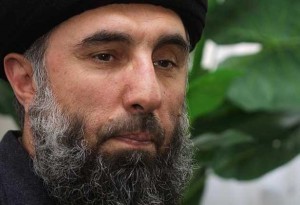
The delegation represents fighters loyal to Gulbuddin Hekmatyar, 60, one of the most brutal of Afghanistan’s former resistance fighters who leads a part of the insurgency against American, NATO and Afghan forces in the north and northeast of the country.

His representatives met Monday with President Karzai and other Afghan officials in the first formal contact between a major insurgent group and the Afghan government after almost two years of backchannel communications, which diplomats say the United States has supported.

Though the insurgent group, Hezb-i-Islami, or Islamic Party, operates under a separate command from the Taliban, it has links to the Taliban leadership and Al Qaeda and has fought on a common front against foreign forces in Afghanistan.

A spokesman for the delegation, Mohammad Daoud Abedi, said the Taliban, which makes up the bulk of the insurgency, would be willing to go along with the plan if a date was set for the withdrawal of foreign forces from the country. Publicly, a Taliban spokesman denied that.

The plan, titled the National Rescue Agreement, a copy of which was given to The New York Times, sets that date as July 2010, with the withdrawal to be completed within six months.

Earlier, Tim McGirk reported:

Pakistan’s arrest of a dozen top Taliban leaders — military commanders, strategic planners and a financier — over the past six weeks is viewed by Afghan and NATO officials with a mixture of relief and suspicion. On one hand, the arrests have disrupted the insurgents’ chain of command, making it tougher for the Taliban’s war council to relay funds and battle plans to their commanders fighting NATO troops. But according to Afghan officials and diplomats in Kabul, the roll-up of Taliban leaders has dealt a blow to secret, preliminary talks under way during the past six months between President Hamid Karzai and the Taliban, as well as those conducted through a separate channel between the Taliban and U.N. envoys.

Sources consulted by TIME in Peshawar, Kabul and Kandahar all characterize those Taliban commanders picked up by Pakistani intelligence agencies as being more malleable to peace talks with Karzai than a core of hard-liners within the Taliban’s ruling shura, or council, who are thought to be hiding in the Pakistani cities of Quetta or Karachi. One foreign diplomat in Kabul says he looked at the list of 14 Taliban arrested by the Pakistanis and thought, “I knew eight of them personally, and they were all in favor of a peace process.” This was confirmed by Kai Eide, the U.N.’s former Special Representative in Afghanistan, who told the BBC on March 18 that Pakistan’s arrests had cut short “talks about talks” between the U.N. and the Taliban in Dubai.

Facebooktwittermail

What’s worse than an insult?

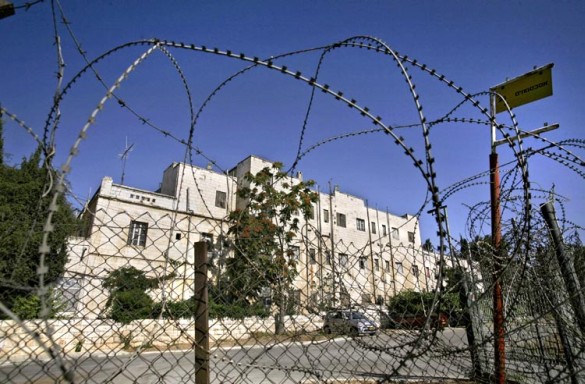
The Shepherd Hotel in the Sheikh Jarrah neighborhood of occupied East Jerusalem

[Updated below.] For Israel to announce new settlement construction in Israeli-occupied East Jerusalem right when Joe Biden was visiting, was, Hillary Clinton said, “insulting” to the United States.

Now Benjamin Netanyahu is visiting Washington and what happens right before he goes to the White House to meet President Obama? Another announcement from Jerusalem, but this time it’s even more inflammatory than the last one:

The Jerusalem municipality has given final approval to a group of settlers construct 20 apartments in a controversial hotel in east Jerusalem, Haaretz learned on Tuesday.

The announcement comes as Prime Minister Benjamin Netanyahu was in Washington smoothing over ties with the United States over the latest settlement-related tensions, and hours before the premier was to meet with President Barack Obama in Washington.

The Shepherd Hotel in the Sheikh Jarrah neighborhood was purchased by American Jewish tycoon Irving Moskowitz in 1985 for $1 million.

Moskowitz, an influential supporter of Ateret Cohanim and heightened Israeli settlement in East Jerusalem, plans to tear down the hotel and build housing units for Jewish Israelis in its place.

The local planning council initially approved the plan in July, a move which angered Britain and the United States and prompted them to call on Israel to cancel the plans. The council issued its final approval for the project last Thursday, which now enables the settlers to begin their construction at once.

An existing structure in the area will be town down to make room for the housing units, while the historic Shepherd Hotel will remain intact. A three-story parking structure and an access road will also be constructed on site.

Jake Tapper adds:

Moskowitz is a supporter of Ateret Cohanim (“Crown of the Priests”), a religious movement that seeks to populate East Jerusalem with Jewish settlers. As the Yeshiva puts it: “The Yeshiva is the spiritual epicenter of a community of almost 1000 residents in the heart of the Old City in the so-called ‘Moslem’ Quarter. This area was in fact, prior to the Arab riots, largely inhabited by Jews. It is on this historical basis that we refer to it now as the Renewed Jewish Quarter.”

No word yet on reaction from the White House.

Ynet reports:

Hatem Abdel Kader, holder of the Jerusalem portfolio in Fatah, told Ynet that the decision was tantamount to “Netanyahu slapping Obama in the face in his own house.”

Abdel Kader added that “Netanyahu feels that AIPAC is on his side, that he owns the US and that no action, no pressure by the Americans can prevent him from going ahead with the construction.”

The Fatah official added that the construction’s approval proved that the reports of Washington’s acquiescence in the face of Israel’s plans to build in east Jerusalem were true.

“The new plans for the Shepherd Hotel prove that the dispute between the Administration and Israel was not real and pertained to the way the plans were presented, rather than to the construction itself. What the Americans are actually saying to the Israelis is ‘keep building – but I don’t want to know about it,'” he said.

Update: After Netanyahu and Obama’s closed-door White House meeting, Politico says: “any impression that Netanyahu’s trip would mark a renewal of the troubled relationship between U.S. and Israeli leaders had faded by the time the men met.” The meeting was “shrouded in unusual secrecy” and marked a transition in the administration’s dealings with the Israeli prime minister that has shifted from the “red hot anger” of last week to “an icier suspicion” yesterday, reflected in the fact that no official statements followed the awkward encounter.

Still, the fact is, Obama didn’t turn Netanyahu away. The news that the Shepherd Hotel development had been approved prompted this: “This is exactly what we expect Prime Minister Netanyahu to get control of,” a senior U.S. official told POLTICO Tuesday evening. “The current drip-drip-drip of projects in East Jerusalem impedes progress.”

The transition from the Bush administration to the current administration has been in which the last secretary of state said the Israelis were being “unhelpful” whereas they are now described as “insulting” — either way, the status quo remains the same: Israel can do what it pleases whatever words of displeasure it might provoke.

Facebooktwittermail

Obama finds killing more convenient than trials or detention

Mind-reading is something that political commentators generally avoid. No one can claim to be any good at it. Yet even if we rarely find out what is actually going on inside a politician’s mind, there are moments when it seems impossible to avoid asking — even without the hope of getting an answer — what was he thinking?

One such moment came as soon as President Obama entered the White House when he signed an executive order to close Guantanamo. Symbolically, this appeared to mark the end of George Bush’s war on terrorism.

Obama had a wry expression on his face.

They have no idea.

Is that what he was he thinking, even at that moment when Obama euphoria was at its height?

Indeed, we really did have no idea that the president who had promised to end the mindset that led to war would within months of taking office have authorized even more extrajudicial killings than his predecessor and that a take-no-prisoners killing practice would be followed in order to avoid the legal complications of detention.

“Extrajudicial killing” is an Orwellian expression. In plain language it is murder.

Consider the case of Saleh Ali Saleh Nabhan who was killed in a helicopter attack in Somalia last year. Officials debated whether the militant suspected of being linked to al Qaeda should be captured but opted to kill him instead in part because they weren’t sure where he could be detained.

As the Los Angeles Times reports, the administration is still struggling to come up with its own version of Guantanamo, minus the name:

The White House is considering whether to detain international terrorism suspects at a U.S. military base in Afghanistan, senior U.S. officials said, an option that would lead to another prison with the same purpose as Guantanamo Bay, which it has promised to close.

The idea, which would require approval by President Obama, already has drawn resistance from within the government. Army Gen. Stanley A. McCrystal, the top commander of U.S. and NATO forces in Afghanistan, and other senior officials strongly oppose it, fearing that expansion of the U.S. detention facility at Bagram air base could make the job of stabilizing the country even tougher.

That the option of detaining suspects captured outside Afghanistan at Bagram is being contemplated reflects a recognition by the Obama administration that it has few other places to hold and interrogate foreign prisoners without giving them access to the U.S. court system, the officials said.

Without a location outside the United States for sending prisoners, the administration must resort to turning the suspects over to foreign governments, bringing them to the U.S. or even killing them.

In one case last year, U.S. special operations forces killed an Al Qaeda-linked suspect named Saleh Ali Saleh Nabhan in a helicopter attack in southern Somalia rather than trying to capture him, a U.S. official said. Officials had debated trying to take him alive but decided against doing so in part because of uncertainty over where to hold him, the official added.

Facebooktwittermail

Policing Afghanistan

At TomDispatch, Pratap Chatterjee writes:

The Pentagon faces a tough choice: Should it award a new contract to Xe (formerly Blackwater), a company made infamous when its employees killed 17 Iraqis in Baghdad in 2007, or to DynCorp, a company made infamous in Bosnia in 1999 when some of its employees were caught trafficking young girls for sex?

This billion-dollar contract will be the linchpin of a training program for the Afghan National Police, who are theoretically to be drilled in counterinsurgency tactics that will help defeat the Taliban and bring security to impoverished, war-torn Afghanistan. The program is also considered a crucial component of the Obama administration’s plan for turning the war around. Ironically, Xe was poised to win the contract until a successful appeal by DynCorp last week threw the field wide open.

Some people in the U.S. government (and many outside it) believe that this task should not be assigned to private contractors in the first place. Meanwhile, many police experts are certain that it hardly matters which company gets the contract. Like so many before it, the latest training program is doomed from the outset, they believe, because its focus will be on defeating the Taliban rather than fostering community-oriented policing.

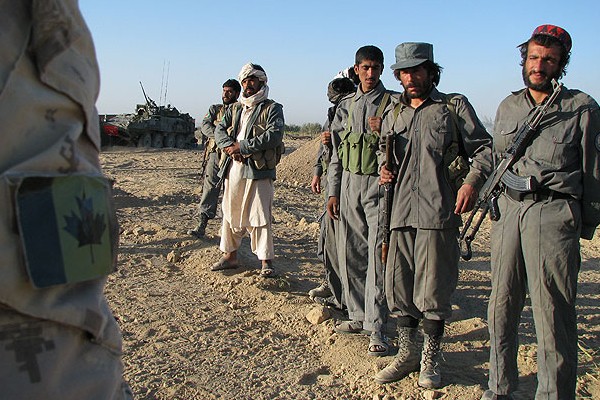
The Obama administration is in a fix: it believes that, if it can’t put at least 100,000 trained police officers on Afghan streets and into the scattered hamlets that make up the bulk of the country, it won’t be able to begin a drawdown of U.S. troop levels in Afghanistan by the middle of next year.

Meanwhile, the Washington Post reports that US forces are facing soaring IED attacks, the Taliban is making a dramatic comeback in the northern province of Kunduz.

The New York Times says that soon after what had been described as a successful offensive in Marja, the Taliban have begun waging a campaign of intimidation “that some local Afghan leaders worry has jeopardized the success of an American-led offensive there meant as an early test of a revised military approach in Afghanistan.”

Facebooktwittermail

Is Pakistan on a path back to military control?

From the New York Times:

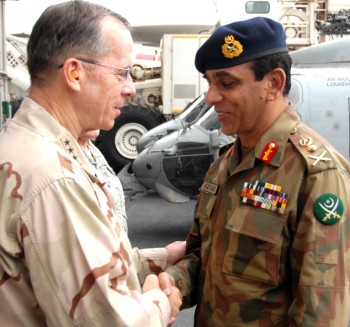
In a sign of the mounting power of the army over the civilian government in Pakistan, the head of the military, Gen. Ashfaq Parvez Kayani, will be the dominant Pakistani participant in important meetings in Washington this week.

At home, much has been made of how General Kayani has driven the agenda for the talks. They have been billed as cabinet-level meetings, with the foreign minister as the nominal head of the Pakistani delegation. But it has been the general who has been calling the civilian heads of major government departments, including finance and foreign affairs, to his army headquarters to discuss final details, an unusual move in a democratic system.

Foreign Minister Shah Mahmood Qureshi has been taking a public role in trying to set the tone, insisting that the United States needs to do more for Pakistan, as “we have already done too much.” And it was at his request that Secretary of State Hillary Rodham Clinton agreed this fall to reopen talks between the countries at the ministerial level.

The talks are expected to help define the relationship between the United States and Pakistan as the war against the Taliban reaches its endgame phase in Afghanistan. It is in that context that General Kayani’s role in organizing the agenda has raised alarm here in Pakistan, a country with a long history of military juntas.

The leading financial newspaper, The Business Recorder, suggested in an editorial that the civilian government of Prime Minister Yousaf Raza Gilani should act more forcefully and “shun creating an environment conducive to military intervention.”

The editorial added, “The government needs to consolidate civilian rule instead of handing over its responsibilities, like coordination between different departments, to the military.”

“General Kayani is in the driver’s seat,” said Rifaat Hussain, a professor of international relations at Islamabad University. “It is unprecedented that an army chief of staff preside over a meeting of federal secretaries.”

As Gen Kayani rises in power, it’s hard not to wonder whether the United States is falling back into its habitual pattern of preferring to deal with powerful military leaders rather than elected governments. For Washington, international relations always seem so much easier to manage on the basis of personal relations with generals who won’t be held accountable by a troublesome electorate.

Facebooktwittermail

The gulf in the Persian Gulf

From the Los Angeles Times (and don’t be put off by the author!):

For the Saudis, concern about Iran’s nuclear ambitions, which Riyadh sees as a longer-term threat, has taken a back seat to its concern about the lack of perceived progress in solving the Israel-Palestinian struggle.

Riyadh’s growing unease about the effect of this protracted conflict on the kingdom and on Iran’s hegemonic ambitions was conveyed to Adm. Michael G. Mullen, chairman of the Joint Chiefs of Staff, in meetings in the region last month with senior Saudi and other Arab officials, according to a senior U.S. military official.

Initially, the kingdom’s concern about the plight of the Palestinians was mostly lip service. While Saudi Arabia and other Arab oil states bankrolled the Palestine Liberation Organization and rhetorically endorsed the Palestinians’ right to a state of their own and a theoretical return to the lands of Palestine, Jerusalem in particular, the lack of a settlement and the perpetuation of the status quo following the 1973 Arab-Israeli war jeopardized neither vital Saudi nor Arab interests.

Today, however, concern about the rise of militant Palestinian Hamas, Palestinian political disarray and the growing political despair of Palestinians under Israeli occupation — if not those in the refugee camps of Jordan, Syria and Lebanon — seems widespread within the kingdom, for practical, self-serving reasons. The Saudi government has come to see the festering wound of Palestine as a primary source of the radicalization of its own population and, hence, of the extremism that threatens the kingdom’s stability and plays directly into Iranian hands.

Because Saudi Arabia is overwhelmingly young — more than 75% of Saudis are under 30 — most of the country’s citizens have no memory of a time when an Arab-Israeli peace seemed not only possible but likely. The 1991 Madrid peace conference, the 1993 Oslo accords, the Arab-Israeli handshakes on the White House lawn — all are now ancient history. Instead, Saudis, and young Saudis in particular, see Israelis not as potential partners in peace but as brutal occupiers.

The Arab media and the exponential growth of the Internet have reinforced among Saudis a sense of humiliation, injustice and outrage over Israel’s incursions into Lebanon and the Gaza Strip. Al Jazeera and the thousands of websites that Saudis avidly monitor have brought the once-distant suffering of Palestinians directly into their living rooms, giving their plight an immediacy and resonance it once lacked.

Everyone I talked to on a recent trip to Riyadh — from princes to merchants to bloggers — mentioned the Palestinian cause, rather than Iran, as their top foreign policy concern (an impression supported by recent opinion polls). Saudi royals and government officials know well that Al Qaeda and other “jihadi” groups exploited the Palestinian cause not only to help recruit the Saudi “muscle” for the 9/11 attacks — 15 of the 19 hijackers were Saudis — but also for subsequent attacks on the kingdom itself.

Facebooktwittermail

Squeeze Israel by cutting US aid? Not likely

At the AIPAC conference in Washington on Monday, Hillary Clinton said of US-Israeli ties: “Our countries and peoples are bound together by our shared values of freedom, equality, democracy, the right to live free from fear, and our common aspirations for a future of peace, security, and prosperity.” But the most important tie is the one Clinton left off the list: weaponry. Weaponry paid for by US taxpayers and sold by the US defense industry, through a military aid program that ensures a steady flow of lucrative contracts to US manufacturers and guarantees that for decades to come the Israeli war machine will remain “made in the USA.”

The diplomatic crisis between the U.S. and Israel has sent a tremor through their alliance, but one key part of the bond seems virtually untouchable: the roughly $3 billion a year in U.S. military aid.

Israel’s harsher critics often call for aid cuts to twist Israel’s arm. Yet amid the uproar of recent days over plans to build 1,600 new homes for a Jewish neighborhood in a disputed part of Jerusalem, there has been no serious talk of using aid as a club.

One reason may be the potential backlash from Israel’s supporters in the U.S. Another is that the overwhelming part of the money cycles back into the American economy.

Israel is the biggest recipient of American aid after Afghanistan. But unlike most other countries, Israel’s aid is earmarked entirely for military spending. Under an agreement between the two allies, at least three-quarters of the aid must be spent with U.S. companies.

This means that the “close, unshakable bond,” as Secretary of State Hillary Rodham Clinton described it, is also a mutually beneficial one: Israel gets the latest American military technology, and American weapons makers – Lockheed Martin, Raytheon, Boeing and others – get a steady stream of income.

The U.S. stepped up funding to Israel after the Arab-Israeli wars of 1967 and 1973, at a time when the Soviet Union was arming the Arabs. Following the 1979 Israeli-Egyptian peace treaty, Washington guaranteed Israel would continue receiving annual military and civilian aid in a 3:2 ratio with aid given to Egypt. Since then, Israel’s share has ranged between $2.1 billion and $3.7 billion a year.

Over the last decade, as Israel’s economy has grown, the U.S. has converted the whole package to military funding, under an agreement to have it at $3.15 billion a year by fiscal 2013 and keep it at that level until 2018.

Facebooktwittermail

The status quo is unsustainable. Really?

A week ago, Gen David Petraeus referred to “a perception of U.S. favoritism for Israel” that fuels anti-American sentiment across the Middle East.

He knows — as does anyone else who is even marginally aware of the issues — that this is not simply a matter of perception.

The United States does not merely exhibit favoritism towards Israel. Its political leaders express a level of loyalty towards the Jewish state that should be regarded as unseemly by any patriotic American.

Last week, right on the heels of receiving what was widely regarded as a monumental insult, Joe Biden said: “Throughout my career, Israel has not only remained close to my heart but it has been the center of my work as a United States Senator and now as Vice President of the United States.”

On Friday, Hillary Clinton spoke of US relations with Israel as “deep and broad, strong and enduring,” and today at the AIPAC conference in Washington said that America’s future is “bound up with the future of Israel.”

This is the status quo that should be changed but shows every sign of being thoroughly sustainable. It is one in which American politicians shamelessly pander to Israel’s wealthy supporters and cast aside any semblance of dignity in their efforts to display their unfailing devotion to the Jewish state.

The obsequious nature of these flourishes of unvarnished affection is further reinforced by the fact that neither on a political level nor a popular level are such feelings reciprocated from the other side.

As Chris McGreal wrote yesterday:

In a country permeated by fear and insecurity, Israelis define the rest of the world not by loyalties but by varying degrees of distrust. You can hear it among residents of Jewish settlements deep in the occupied territories and in the cafes of liberal Tel Aviv: angst over the perception of a new wave of antisemitism gripping Europe, the incomprehension over foreign condemnation of Israel’s crimes in Gaza, the common agreement that the United Nations is a conspiracy against the Jewish state.

In all of this, the US emerges as the least distrusted country by far… . Israelis recognise that they have long counted on Washington to pay a good chunk of their military budget and provide diplomatic cover for the illegalities of occupation.

Israel depends on defense and political aid from Washington and Washington dances to the tune of the Israel lobby.

Those who now hold on to the notion that this administration is intent on shifting the political dynamic simply because it proclaims that the Israeli-Palestinian status quo is unsustainable are paying attention to the wrong status quo.

Facebooktwittermail

Which is worse for women? Hamas oppression or Israeli oppression?

Ever since Hamas assumed full political control of Gaza in June 2007, there have been occasional reports that the Islamist movement is finding ways to impose a more rigidly conservative and religiously intolerant way of life in the Palestinian enclave — changes that would impact secular, liberal-minded women more harshly than any other social group.

The BBC spoke to five Palestinian women ranging in age from 21 to 36 to find out how they have personally been affected by living under Hamas’ rule. The consensus was pretty clear: nothing Hamas has done has had a fraction of the effect that Israel has had through imposing a brutal economic siege on the population of 1.5 million.

Mona Ahmad al-Shawa, 36, who runs the women’s unit at the Palestinian Centre for Human Rights, said:

The siege of Gaza, which Israeli tightened when Hamas took control in June 2007, makes women’s lives much more complicated.
There are shortages of water, electricity and cooking gas. It is very difficult to leave Gaza for medical treatment.

And after the war in Gaza last year, things got worse because many women lost their husbands. Women lost lives too, of course.

You can’t imagine how hard it is to be a disabled woman in this society. Or a widow.
Our Sharia law means that a widowed woman will lose custody of her children when a boy reaches nine years old and a girl 11.

Since the war, Hamas has ruled that a widow can keep her children if she doesn’t remarry. This is an improvement.

Women’s priorities in Gaza are focused on practical matters – a home, clean water and electricity. Finer points of human rights are not top of the list.

We have many problems with the Hamas authority, but we are not in a big fight with them about women.

People in Gaza feel they are in a big prison, they feel have no choices in life.
Conditions change according to the political situation.

When the first intifada started in 1987 most women covered up, because people could speak badly of you, or throw stones if you went uncovered in the streets. It is not as bad as that now.

Facebooktwittermail

Hamas says rocket attacks are helping Israel

Once a strongman, always a strongman…

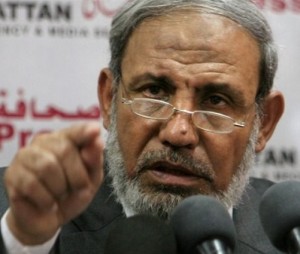
I don’t remember Ariel Sharon — or any other Israeli leader — being referred to as a “strongman”. I guess it’s a term reserved for men on the other side. Still, it’s funny (yet predictable) that a Hamas leader such as Dr. Mahmoud al-Zahar will be referred to as a strongman even when what he is reported as saying is that rocket attacks on Israel do not serve Palestinian interests. It’s not exactly a strongmanish, belligerent observation to make. Be that as it may, this is how his comments are reported by Ynet:

Hamas strongman Dr. Mahmoud al-Zahar on Saturday night slammed the Palestinian groups firing rockets at Israel. Zahar told the Iranian al-Alam television station that the rocket fire was a “suspicious action aimed at allowing the enemy to gain points in its favor in the public opinion and divert the attention from its crimes in the territories.”
According to Zahar, “The enemy wants to portray itself as defending itself against the rocket fire while being criticized by the Quartet. We are aware of the fact that there are elements wishing to help the enemy divert the attention from what is happening in Jerusalem.

“We are closely following those firing the rockets and are aware of the real motives behind the fire,” Zahar said, implying that the groups’ main goal was to undermine Hamas’ rule in the Gaza Strip.

He also slammed the Palestinian Authority for not allowing protests for Jerusalem, and noted that the International Quartet’s decision in Moscow was not serious. “It was more of a media event, and the most important thing is maintaining a popular movement for Jerusalem.”

Earlier, Al Jazeera reported:

A previously unknown Gaza group, Ansar al-Sunna, as well as the al-Aqsa Martrys Brigades, a wing of the mainstream Fatah movement, both claimed responsibility for the rocket attack from Gaza that preceded the air raids.

“The jihadist mission came in response to the Zionist assaults against the Ibrahimi and al-Aqsa mosques and the continued Zionist aggression against our people in Jerusalem,” Ansar al-Sunna said in a statement.

Matan Vilnai, the Israeli deputy defence minister, said that regardless of any claims of responsibility, Israel blamed the rocket strike on Hamas, the de facto ruler of the Gaza Strip.

Facebooktwittermail

The most racist “democracy” in the world

As the process of ethnic cleansing continues in Jerusalem — Benjamin Netanyahu confirmed today that there will be no interruption — those outside Israel who are calling most loudly for the swift implementation of a two-state solution, frequently do so on the basis that this is what is urgently needed in order to ensure the survival of Israel as a “Jewish democracy.”

Stephen Walt writes:

In her scheduled address to the conference, Secretary of State Hillary Rodham Clinton should reaffirm the U.S. commitment to Israel’s existence but make it crystal clear that Washington will no longer tolerate Israel’s self-defeating policy on settlements. She should explain unambiguously that Israel faces a choice: It can end the occupation, embrace a genuine two-state solution, preserve its democratic and Jewish character and remain a cherished U.S. ally. Or it can continue the occupation of the West Bank and the siege of Gaza — a course that will eventually force it to abandon either its Jewish character or its democratic principles, and jeopardize its standing with its most important partner.

Member of the Knesset, Zevulun Orlev, has another proposal: any Israeli who denies that Israel is a democracy should be thrown in jail. He has said that those who “talk about a country belonging to all its citizens belong in prison.”

Today Ynet reports:

The current Knesset is the most racist Knesset since the establishment of the State, according to the Mossawa Center’s annual report on racism published Sunday. The report, published in honor of International Day for the Elimination of Racial Discrimination being marked Sunday, reveals a 75% increase in discriminatory and racist bills submitted to the Knesset in the past year.

According to the report, 11 bills deemed “discriminatory and racist” were placed on the legislature’s table in 2007, while 12 such bills were initiated in 2008. However, in 2009 a full 21 problematic bills were discussed in the Knesset.

The Mossawa Center asserted that this is a worrisome trend and estimate that such bills will only increase if the Ministerial Committee for Legislative Affairs does not take immediate action against the phenomenon.

“A Knesset so active in discriminatory and racist bills against Arab citizens of the State has never been witnessed,” said the report’s authors, Lizi Sagi and Attorney Nidal Ottman.

Another report also published today, further underlines the intrinsically anti-democratic character of the Jewish state.

While a government decision was made that by 2012, non-Jews — who make up 25% of Israel’s population — should fill at least 10% of government positions, the facts on the ground in the Negev demonstrate the gulf between Israel’s democratic pretensions and the undemocratic reality. From a population of 200,000 Bedouin, 16 hold government positions!

As for Israel’s “democratic” future, the signs are clear. Nearly half of Jewish high schoolers recently polled said that they oppose Israel’s Arab citizens being allowed to vote. Among religious Jewish students — representative of what has become the most politically influential minority in Israel — 82% oppose equal rights for Arabs and Jews.

Facebooktwittermail

Netanyahu threatens American interests

Christopher Dickey writes:

Netanyahu summed up his core thinking in his 1993 book, A Place Among the Nations: Israel and the World, when he said it was naive for Israelis to believe that “Arabs loathed war as much as they themselves.” He derided Israelis who thought of peace as “a kind of blissful castle in the clouds, a Jewish never-never land in which the Jews will be able finally to find a respite from struggle and strife.”
In Bibi’s view, the fight will go on and on. “True, continuing struggle does not necessarily mean perpetual war, but it does mean an ongoing national exertion and the possibility of periodic bouts of international confrontation … You cannot end the struggle for survival without ending life itself.” So to protect itself, in Netanyahu’s view, Israel has to be aggressive on all fronts, controlling the land, the sea, the sky, and above all the message—never giving an inch. To paraphrase the late Erich Segal, being Bibi means never having to say you’re sorry.

So it is difficult, to say the least, to be Netanyahu’s friend, and nobody knows that better than the Jordanians, who tried to build a solid peace with Israel during his last term as prime minister in the 1990s. “Today everything is déjà vu,” says Randa Habib, author of the forthcoming Hussein and Abdullah: Inside the Jordanian Royal Family.

Jordan had signed a peace treaty with Israel in 1994 only to see the architect of that accord, Prime Minister Yitzhak Rabin, gunned down by an Israeli terrorist in 1995. When Netanyahu won the elections that followed, Jordan’s late King Hussein had hopes he could work with Bibi. Hussein tried to build confidence by receiving the Israeli prime minister in Amman in August 1996, only to have the Israelis begin digging a tunnel under Muslim holy places in Jerusalem a few days later. In February 1997, Hussein invited Netanyahu to Amman again, hoping to improve the atmosphere, but the next day the Israelis announced approval of a whole new Jewish neighborhood, Har Homa, to be built in East Jerusalem. In both cases the timing seemed planned not only to embarrass King Hussein, but to implicate and weaken him.

Finally, King Hussein wrote bluntly to Netanyahu: “You are destroying peace. I have no trust in you.” In his response to the king, Netanyahu professed to be “amazed by your personal attack.”

A few months later, Israeli agents tried to kill Hamas leader Khaled Meshal, who was then in Amman, by spraying an exotic poison in his ear. Unlike the killers of another Hamas official in Dubai in January this year, the ones in Jordan were caught. Hussein demanded the antidote from Netanyahu, as well as the release of another Hamas leader, and did not turn over the captured Mossad agents until he got them. The Canadian government protested the use of its passports by the assassins, another harbinger of the Dubai case. But in the end, like today, nothing happened. “The Israelis will get away with all this; they always get away with it,” says Habib.

I am not so sure. Even a dozen years ago, the American public was largely passive about Middle East issues. Congressmen proclaimed undying support for Israel, and their constituents asked few questions. Now, with America involved in two wars in the Muslim world, that’s not the case. The 1,000-plus comments on Aluf Benn’s Newsweek column make that clear. But the decisive voices may belong to America’s generals. Are they ready to have Bibi Netanyahu’s vision of war-without-end dictate endless wars for American troops? The answer, almost certainly, is no.

Given the warm embrace that Benjamin Netanyahu is sure to receive at the AIPAC conference in Washington next week — whether he appears in person or opts for a diplomatically safer live video link — it’s time that the pro-Israel lobby within which AIPAC is the central pillar be referred to by a more accurate label: the pro-Israel anti-American lobby.

Those Americans who are the most stalwart defenders of Israel’s interests, try to deflect the charge that they are working against the interests of their own nation by claiming that America’s interests and Israel’s interests are inseparable.

But let’s be honest. Given that there are no two states within the United States whose interests completely overlap, it is an absurd and audacious lie to claim that two nations separated by oceans, continents, cultures and thousands of miles have exactly the same interests.

In truth, the relationship between Israel and the United States is not one of indivisible interests but instead that of a dysfunctional familial tie.

In Yoav Shamir’s brilliant documentary, Defamation, there is a scene in which Abe Foxman, the president of the Anti-Defamation League, and a group of the ADL’s wealthy American supporters are talking about how they feel about Israel and how deep is their bond and commitment to the Jewish state’s survival. The consensus is that their attachment is like that of a parent for his or her own child; that they would sacrifice their own lives if that’s what Israel needed.

It’s hard to be clear about what state of development this Israel-child is in — rebellious teen, nursing infant or still tied by an umbilical chord. Whichever it is, the source of much its sustenance (unlike the ADL) is largely ignorant of the relationship.

When pollsters ask Americans about Israel they pose trite questions and solicit inane responses. But were Americans polled to find out whether they are happy to be providing aid which amounts to $1000 per Israeli citizen year in, year out, the likely responses would range from disbelief, to shock, to outrage. Americans who thought that number sounded “about right” would be in a small minority — especially in this struggling economy.

CNN’s Jack Cafferty poses the question: Is it time for the United States to get tougher with Israel?

Facebooktwittermail

The American backbone deficit

Gideon Levy writes:

Israel has no real intention of quitting the territories or allowing the Palestinian people to exercise their rights. Israel does not truly intend to pursue peace, because life here seems to be good even without it. The continuation of the occupation doesn’t just endanger Israel’s future, it also poses the greatest risk to world peace, serving as a pretext for Israel’s most dangerous enemies.

No change will come to pass in the complacent, belligerent and condescending Israel of today. That’s why this difficult, thankless task has fallen on the shoulders of an ally, as only it has the power to get things started. No agreement will come out of another endless series of futile diplomatic trips or peace plans to which no one intends to adhere. We have tried this enough in the past, and all for naught. This is the time to come up with a rehabilitation program for Israel. The entire world, and ultimately Israel too, will applaud Barack Obama if he succeeds.

Expressing offense at “poor timing” and giving Israel’s prime minister the cold shoulder are not enough. This is the time for action, comprehensive and unwavering. America must now decide where it is heading and where it aims to lead Israel, the Middle East and the world. At issue is not just the future of 1,600 homes in Ramat Shlomo, but that of Israel itself. What is required is not merely extending the settlement construction freeze – whether or not it includes the occupied areas of Jerusalem – but applying pressure on Israel to begin withdrawing to its own borders. The means at Washington’s disposal – including assistance on security and economic issues, the campaign against Iran’s nuclear program and diplomatic support of Israel – can all be conditioned on an end to the occupation.

America must now decide whether it’s for us or against us. Will it make do with easing the sting of the insult to the vice president? Will it continue to give in to its powerful Jewish lobby? Will it keep passing itself off as a friend while acting as a foe? Or are we really playing by different rules now? Yes, it’s likely to hurt Israel, and even many Americans, but this is the opportunity. There will be no other.

I’m not holding my breath.

A few days ago, when Hillary Clinton read the riot act to Benjamin Netanyahu, the word was that she was reading from an Obama-approved script. The image was of an angry president being tough while maintaining his facade of cool.

Almost a week later there are signs that the latest manifestation of Obama toughness was yet another mirage. Obama’s characteristically bland assessment that there is no crisis in US-Israeli relations but merely “a disagreement in terms of how we can move this peace process forward,” will yet again confirm Benjamin Netanyahu’s understanding that he is dealing with a spineless president.

Can Clinton and Mitchell make up for the backbone deficit? If the latter ends up in Israel in a few days without Netanyahu having made any significant concessions and if the former shows up at the AIPAC conference next week and doesn’t manage to make a few of the participants piss in their pants, then we’ll know the answer is no.

Facebooktwittermail

A trial for Saddam and a bomb for bin Laden

The Associated Press reports:

Attorney General Eric Holder told Congress on Tuesday that Osama bin Laden will never face trial in the United States because he will not be captured alive.

In testy exchanges with House Republicans, the attorney general compared terrorists to mass murderer Charles Manson and predicted that events would ensure “we will be reading Miranda rights to the corpse of Osama bin Laden” not to the al-Qaida leader as a captive.

Holder sternly rejected criticism from GOP members of a House Appropriations subcommittee, who contend it is too dangerous to put terror suspects on trial in federal civilian courts as Holder has proposed.

Unless my memory fails me, there was no outrage expressed in Congress when Saddam Hussein was captured, rather than given a summary execution. Nor were there howls of protest when he was imprisoned without torture and treated humanely. Nor were there huge objections against him going through a criminal trial. This for a man widely understood to have been responsible for the deaths of tens of thousands of Iraqis.

And let’s not forget, throughout the time Saddam was being hunted down he was presented as a greater threat to the world than Osama bin Laden.

Do American lawmakers have such little faith in the law they make or in the judicial system that applies that law, that they regard the United States legal system as too feeble an entity to justly handle the fate of one man — even a man given mythical proportions of Osama bin Laden?

As John Brennan — Assistant to the President and Deputy National Security Advisor for Homeland Security and Counterterrorism — pointed out last month, “Terrorists are not 100-feet tall. Nor do they deserve the abject fear they seek to instill.”

Facebooktwittermail

Israel is empowering al Qaeda, Petraeus warns

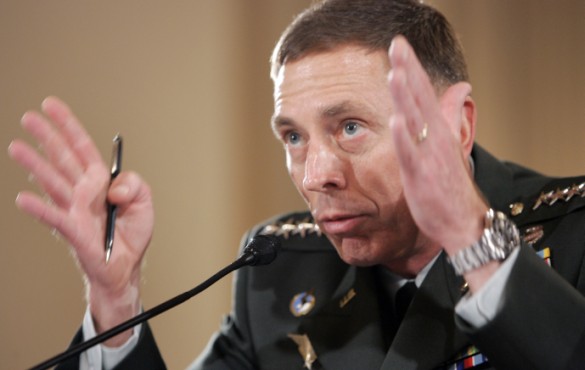
As erupting violence in Jerusalem suggests a third intifada may soon take hold, the CENTCOM commander Gen David Petraeus, testifying before the US Senate Armed Services Committee today, gave a grave warning about the wider impact of a conflict that has been the epicenter of Middle East hostilities ever since the creation of Israel.

In issuing his warning, Petraeus — arguably the most influential even if not the highest ranking member of the US military — was reiterating a statement he made almost a year ago. The only difference between what he said in April 2009 and what he said today, was that he now acknowledges al Qaeda is being strengthened by the conflict.

He now says:

The enduring hostilities between Israel and some of its neighbors present distinct challenges to our ability to advance our interests in the AOR [CENTCOM’s area of responsibility]. Israeli-Palestinian tensions often flare into violence and large-scale armed confrontations. The conflict foments anti-American sentiment, due to a perception of U.S. favoritism for Israel. Arab anger over the Palestinian question limits the strength and depth of U.S. partnerships with governments and peoples in the AOR and weakens the legitimacy of moderate regimes in the Arab world. Meanwhile, al-Qaeda and other militant groups exploit that anger to mobilize support. The conflict also gives Iran influence in the Arab world through its clients, Lebanese Hizballah and Hamas.

If such a statement was being made outside the American political arena, it could be regarded as a rather bland expression of what has long been utterly obvious. Yet from the lips of a celebrated general, regarded by many as a potential future president, these words come as a bombshell.

Neoconservatives and the Israel lobby have worked hard and long to obscure the deeply corrosive regional impact of a conflict that successive Israeli leaders have either been unwilling or seemingly incapable of resolving. Others, who earlier said what Petraeus now says, have either been dismissed as poorly informed or worse, branded as anti-Israeli or by insinuation, anti-Semitic.

No such charge will stick to Petraeus. Indeed, if the Israel lobby was so foolhardy as to try and go after an American general who sometimes gets treated like a latterday Eisenhower, the lobby will be at dire risk of being visited by its own greatest fear: being branded as anti-American.

Facebooktwittermail