Category Archives: Issues

Netanyahu faces double intifada from Palestinians and settlers

In Haaretz, Aluf Benn writes:

Prime Minister Benjamin Netanyahu is busy day and night, preparing Israel for a fateful confrontation with Iran. But his real problem may occur elsewhere. The territories are heating up, with the Palestinians escalating their protests against the settlements and the separation fence. The settlers, meanwhile, can smell Netanyahu’s weakness and are undermining the authority of the state.

Two events in recent days indicate the threat of an outburst: the protest in Bil’in, which Palestinian Prime Minister Salam Fayyad participated in, where some of the 1,000 demonstrators tore apart a short portion of the fence; and the invasion of dozens of right-wing activists into the ancient synagogue of Na’aran, saying “we will return to Jericho and Nablus.” In both incidents, the violence was limited and no one was injured. But the struggle over the West Bank has transitioned to a new stage.

Fayyad, the former darling of official Israel, is proving to be Netanyahu’s most problematic rival. The one-time economist and technocrat has gradually become a politician – enjoying exposure, kissing children, stepping up to the head of the “White Intifada,” as dubbed by researchers Shaul Mishal and Doron Matza in their article in Haaretz this week. On Monday, the Palestinian government adopted a plan of action for “non-violent opposition” to the settlements and the fence.

Fayyad’s White Intifada is different from its predecessors. It has a clear political goal: Declaring a Palestinian state within the 1967 borders by the summer of 2011. By then, Fayyad will have completed the building of national institutions and will work on gaining international recognition through a diplomatic pincer movement on Netanyahu. He is receiving enthusiastic approval from the U.S. administration as a successful manager. Some 2,600 Palestinian policemen have already graduated from the training course run by U.S. General Keith Dayton in Jordan and are back in the territories, expecting to serve an independent state, not as subordinate agents of an Israeli occupation. The foreign ministers of France and Spain, in a joint article published yesterday in Le Monde, called to expedite the establishment of a Palestinian state and complete its recognition by October 2011.

The readiness of PA security forces to step outside the role of being occupation subcontractors is not evident to Jesse Rosenfeld:

Israeli invasions of PA territory have increased since the summer, hitting Ramallah regularly for the past few months to arrest popular struggle leaders and international solidarity activists, and raiding the offices of grassroots anti-occupation movements. While usually it is impossible to go more than two blocks in the West Bank Palestinian political centre without seeing armed PA forces, when the Israelis come into town, they are ordered back to their barracks and are nowhere to be seen. I witnessed this countless times while living in Ramallah.

Meanwhile, Israeli military assassination missions against resistance in Nablus resumed on 26 December, with three men linked to the Fatah movement being killed in cold blood while PA security forces connived with the Israeli military and were nowhere to be seen. Hamas spokesperson Sami Abu Zuhri was quoted by Maan news agency speculating that there was PA involvement in the assassination and warning that “resistance should be encouraged, not plotted against”.

Meanwhile, Haaretz reports:

French Foreign Minister Bernard Kouchner and his Spanish counterpart Miguel Moratinos are promoting an initiative by which the European Union would recognize a Palestinian state in 18 months, even before negotiations for a permanent settlement between Israel and the Palestinian Authority are concluded.

According to senior European diplomats and senior Israeli officials, Israel has relayed its opposition to the initiative – warning that it would undermine any chance of a successful peace process.

A senior European diplomat noted that Israel was informed about the initiative several weeks ago, a fact confirmed by a senior Israeli official. The Israeli official said the initiative is being spearheaded by Kouchner who recruited the support of the Spanish foreign minister, whose country also currently holds the rotating European Union presidency.

Israeli sources say the two foreign ministers are preparing an article they intend to publish together in some of the main European dailies. The main message of the article is that the European Union should recognize a Palestinian state before the completion of negotiations, under the assumption that such a declaration will be made by Palestinian Authority President Mahmoud Abbas.


Facebooktwittermail

Israel’s policy of divide and survive

Back in the days when hazy-eyed neoconservatives stood like prophets laying out their vision of a democratic wave of Biblical proportions sweeping across the Middle East, Israel was supposedly the actualization of what elsewhere might be possible.

The problem was that since it came into existence, all the evidence suggested that the Jewish state, far from serving as a liberating force in the region, had actually done the opposite. It became the prime legitimizer of autocracy and stagnation.

Benjamin E Schwartz, in an article in the latest edition of The American Interest magazine, describes how Israel, rather than striving for a sustainable peace with its neighbors, sees its ability to survive as dependent on its ability to be divisive.

For a state that believes its legitimacy will always be questioned, survival is a higher imperative than stability and the pacification of threats more valuable than peace.

The power of Schwartz’s essay derives as much as anything from the fact that he is clearly in sympathy with the Zionist enterprise. His is neither an apology nor a criticism; it is a clinical analysis.

He writes:

When American diplomats talk about the road to peace, few Israelis dare articulate one awkward truth. The truth is that Israelis have managed their conflict with the Arabs and the Palestinians for half a century not by working to unite them all, but either by deliberately and effectively dividing them, or by playing off existing divisions. By approaching matters in this way, Israelis have achieved de facto peace during various periods of their country’s history—and even two examples of de jure peace. It is because of divisions among Palestinians that Israelis survived and thrived strategically in 1947–48, and because of divisions among the Arab states that Israel won its 1948–49 war for independence. Divisions among the Arabs and divided competition for influence over the Palestinians allowed Israelis to build a strong state between 1949 and 1967 without having to contend with a serious threat of pan-Arab attack. It was because of divisions and the strength of Egypt amid those divisions that Anwar Sadat decided to make a separate peace in 1979. It was because of another set of divisions that King Hussein was able to do the same in 1994.

The results of Israeli statecraft did not produce an American-style comprehensive peace, and it did not produce peace with the Palestinians. It may not even have produced a lasting peace with Egypt and Jordan—time will tell. But it did produce peace in its most basic and tangible form: an absence of violence and the establishment of relative security. This is what peace means for the vast majority of Israelis, most of whom do not believe that their Arab neighbors will ever accept, let alone respect as legitimate, a Jewish state in geographical Palestine. And the way Israelis have achieved this peace is, in essence, through a policy of divide and survive.

Schwartz then lays out in some detail the mechanisms through which Israel has implemented its divisive strategy — a strategy in which the control of Palestinian land, or at least the ability to rapidly enter and dominate it, is seen as a military prerequisite for defending Israeli land.

He concludes:

As a tiny country, Israel can only defeat its more numerous adversaries by breaking them into manageable pieces, or by behaving so that already broken pieces stay that way. Indeed, its geopolitical predicament mirrors that of the original Hebrew polity. It was the unity of hostile empires—Assyrian, Babylonian, Greek and Roman—that doomed ancient Israelite kingdoms. When its neighbors were divided, the First and Second Jewish Commonwealths did rather well.

There are three lessons here for American diplomats. First, Israelis will be reluctant to promote Palestinian social and economic unity, even if it is an essential precondition for strengthening Mahmoud Abbas’s moderate Fatah Party. The barriers and checkpoints that choke off the West Bank’s economic life and undermine Abbas’s popularity simultaneously inhibit rival Hamas from organizing its operatives. The Israelis have removed a good many checkpoints in recent months, and the local economy has thrived as a result. So far there have been few negative security implications. But American officials should expect that Israel will restore a greater degree of control if violence increases, and that there are strict limits to how far it will go to loosen its grip on the West Bank even without evidence of security deterioration.

Second, while the peace that America seeks—two states cooperating to ensure their mutual security—is the ideal political solution, it is operationally irrelevant so long as it also appears to be an improbable outcome. Governance in the West Bank is increasingly devolving to the local level, which critically undermines the Palestinian national project. Yet Israelis will allow and even promote this arrangement so long as local rule ensures near-term stability. Indeed, it benefits Israel for local rulers to be strong enough to control their own people, but weak enough not to challenge the Jewish state. It makes even more sense to the extent that anything better is judged to be unattainable for the foreseeable future.

Third, the geography of the land between the Mediterranean and the Jordan River, combined with the nature of contemporary warfare, dictate that Israel requires the presence of a security force it can trust in Palestinian territory. This means that the occupation will continue until Israelis come to trust the Palestinians, or at least some of them. Ultimately, this trust is the only viable foundation for a two-state solution. In the absence of it, American diplomats can expect all ambitious “high politics” peace initiatives to remain ethereal abstractions, Israelis to continue managing the conflict as they have long done and Palestinians to grow ever more fragmented. This is a formula for a local political life that may be nasty and brutish, but not necessarily short.

Or, to put Israel’s dilemma in slightly different terms which lead to the same conclusion: how can the Zionist state dispossess, divide and dis-empower the Palestinian people and then win their respect? After all, trust and respect do go hand in hand.

Facebooktwittermail

Fixing what’s wrong in Washington… in Afghanistan

Tom Engelhardt, noting that the US government is broke and that there is a bipartisan consensus that Washington is paralyzed, asks:

Why does the military of a country convinced it’s becoming ungovernable think itself so capable of making another ungovernable country governable? What’s the military’s skill set here? What lore, what body of political knowledge, are they drawing on? Who do they think they represent, the Philadelphia of 1776 or the Washington of 2010, and if the latter, why should Americans be considered the globe’s leading experts in good government anymore? And while we’re at it, fill me in on one other thing: Just what has convinced American officials in Afghanistan and the nation’s capital that they have the special ability to teach, prod, wheedle, bribe, or force Afghans to embark on good governance in their country if we can’t do it in Washington or Sacramento?

Meanwhile, The Times reports:

Nato forces in southern Afghanistan bombed a civilian convoy, killing 27 people including women and children and injuring many more, Afghan officials said.

The airstrike in a remote part of Oruzgan province yesterday capped a bloody week for Afghan civilians that has seen some 60 innocent people killed by Nato weapons.

Afghanistan’s cabinet called the attack “unjustifiable” and condemned the raid “in the strongest terms possible”.

The New York Times reports on the latest fracture in the NATO coalition:

A day after his government collapsed, Prime Minister Jan Peter Balkenende said Sunday that he expected Dutch troops to come home from Afghanistan before the end of the year.

A last-ditch effort by Mr. Balkenende to keep Dutch soldiers in the dangerous southern Afghan province of Oruzgan instead saw the Labor Party quit the government in the Netherlands early Saturday, immediately raising fears that the Western military coalition fighting the war was increasingly at risk.

Even as the allied offensive in the Taliban stronghold of Marja continued, it appeared almost certain that most of the 2,000 Dutch troops would be gone from Afghanistan by the end of the year. The question plaguing military planners was whether a Dutch departure would embolden the war’s critics in other allied countries, where debate over deployment is continuing, and hasten the withdrawal of their troops as well.

The Times says:

… Afghans involved in western-backed attempts to start talks with the Taliban to end the war were furious, warning that the arrest [of Mullah Abdul Ghani Baradar] might have ruined chances of negotiations.

“It’s a spectacular own goal [for the US],” said one official. “They want to wreck talks,” said a close aide to Afghanistan’s president, Hamid Karzai.

“Mullah Baradar was independently in contact with the Afghan government to find a way for reconciliation and the Pakistanis knew that from their secret agents.”

Finally, the Associated Press reports:

Pakistan will not turn over the Afghan Taliban’s No. 2 leader and two other high-value militants captured this month to the United States, but may deport them to Afghanistan, a senior minister said Friday.

Interior Minister Rahman Malik said Pakistani authorities were still questioning Mullah Abdul Ghani Baradar, the most senior Taliban figure arrested since the start of the Afghan war in 2001, and two other senior militants arrested with U.S. assistance in separate operations this month.

If it is determined that the militants have not committed any crimes in Pakistan, they will not remain in the country, he said.

“First we will see whether they have violated any law,” Malik told reporters in Islamabad. “If they have done it, then the law will take its own course against them.

“But at the most if they have not done anything, then they will go back to the country of origin, not to USA,” Malik said.

Facebooktwittermail

Is Israel a small penis or a limp penis?

Having thought a lot about Israel, I’ll confess I’ve never pictured it as a penis – of any particular size.

But on second thoughts, that’s not actually true. The wars on Lebanon and Gaza did evoke a sense that the Jewish state regards war as a type of Viagra, so I guess if war is Viagra that does indeed make Israel a penis — one that has difficulty maintaining an erection.

With that in mind the new Size Doesn’t Matter campaign aimed at promoting Israel (h/ts to Richard Silverstein and Dimi Reider) could be seen as an effort to convince young North American Jews that Israel is not suffering from erectile dysfunction. A trip to Israel — well that’s like giving or receiving a blow job, though the metaphor gets a little confusing at this point.

What the hell am I talking about?

Watch this video sponsored by the Canadian Council for Israel and Jewish Advocacy:

I have little doubt that when the makers of this video debated its merits, someone said that it would be sure to go viral.

Indeed, I along with many others are now making that happen. But even though “going viral” is supposed to be an online marketing success, it’s worth remembering where the metaphor comes from. In this case, did the promoters of Israel really want an image of their beloved state to spread like a contagious disease?

And one small footnote — the “size doesn’t matter” claim turns out to be a little disingenuous: the map of Israel in the video includes Gaza and the West Bank as part of Greater Israel. Apparently size really does matter.

Facebooktwittermail

Are we living in the post-moral age?

Rafi Eitan, an Israeli elder statesman and former intelligence officer is perhaps best known for having led the Mossad operation that captured Adolf Eichmann, architect of the Holocaust, and brought him back to face trial and execution in Israel in 1962.

In an interview with Haaretz this week, Eitan summed up the Zeitgeist in which we live — the Israelification of the Western world which unfolded after 9/11:

when there is a war on terror you conduct it without principles. You simply fight it.

President Bush, with his Manichaean view of the world, wanted to paint his war on terror in quasi-moral terms. President Obama has distilled it to its unprincipled essence.

The arc that has led from twisted morality to a rarefied amorality reached its completion point this week when the Obama administration made its determination that the authors of the former administration’s torture policies had done no more than make an error of judgment.

Newsweek reports:

The chief author of the Bush administration’s “torture memo” told Justice Department investigators that the president’s war-making authority was so broad that he had the constitutional power to order a village to be “massacred,” according to a report by released Friday night by the Office of Professional Responsibility.

The views of former Justice lawyer John Yoo were deemed to be so extreme and out of step with legal precedents that they prompted the Justice Department’s internal watchdog office to conclude last year that he committed “intentional professional misconduct” when he advised the CIA it could proceed with waterboarding and other aggressive interrogation techniques against Al Qaeda suspects.

The report by OPR concludes that Yoo, now a Berkeley law professor, and his boss at the time, Jay Bybee, now a federal judge, should be referred to their state bar associations for possible disciplinary proceedings. But, as first reported by NEWSWEEK, another senior department lawyer, David Margolis, reviewed the report and last month overruled its findings on the grounds that there was no clear and “unambiguous” standard by which OPR was judging the lawyers. Instead, Margolis, who was the final decision-maker in the inquiry, found that they were guilty of only “poor judgment.”

The report, more than four years in the making, is filled with new details into how a small group of lawyers at the Justice Department, the CIA, and the White House crafted the legal arguments that gave the green light to some of the most controversial tactics in the Bush administration’s war on terror. They also describe how Bush administration officials were so worried about the prospect that CIA officers might be criminally prosecuted for torture that one senior official—Attorney General John Ashcroft—even suggested that President Bush issue “advance pardons” for those engaging in waterboarding, a proposal that he was quickly told was not possible.

At the core of the legal arguments were the views of Yoo, strongly backed by David Addington, Vice President Dick Cheney’s legal counsel, that the president’s wartime powers were essentially unlimited and included the authority to override laws passed by Congress, such as a statute banning the use of torture. Pressed on his views in an interview with OPR investigators, Yoo was asked:

“What about ordering a village of resistants to be massacred? … Is that a power that the president could legally—”

“Yeah,” Yoo replied, according to a partial transcript included in the report. “Although, let me say this: So, certainly, that would fall within the commander-in-chief’s power over tactical decisions.”

“To order a village of civilians to be [exterminated]?” the OPR investigator asked again.

“Sure,” said Yoo.

Yoo is depicted as the driving force behind an Aug. 1, 2002, Justice Department memo that narrowly defined torture and then added sections concluding that, in the end, it essentially didn’t matter what the fine print of the congressionally passed law said: The president’s authority superseded the law and CIA officers who might later be accused of torture could also argue that were acting in “self defense” in order to save American lives.

Where does Obama stand?

“I’m a strong believer that it’s important to look forward and not backwards, and to remind ourselves that we do have very real security threats out there.”

Terrorism — even if this administration thinks the term is passé — remains the only reality. Obama’s cynical mastery rests in his ability to sustain the terror zeitgeist without using the word.

Principles? They’re a distraction — a preoccupation and an indulgence for those of us little folks who do not daily wrestle with the moral ambiguity of governance.

Facebooktwittermail

Five Israelis had their identities stolen – apparently by Mossad!

Anyone who is Jewish but doesn’t have a Jewish sounding name and who has been considering emigrating to Israel might soon be having second thoughts.

To the extent that Israel provides a safe haven to Jews, it turns out your religious identity might count for less than your name.

The Israeli government has yet to acknowledge that the murder of the Hamas commander, Mahmoud al-Mabhouh, in Dubai last month was carried out by Mossad, but the evidence is now overwhelming.

But the fact that Mossad carried out the killing may turn out to concern Israelis (and Jews elsewhere) less than the apparent willingness of the Israeli intelligence agency to put the lives and liberty of Israeli citizens in jeopardy by stealing their identities.

It now turns out that five Israeli dual nationals claim their identities were stolen in order to provide the Dubai killers with fake passports. (Update – Israel’s Hebrew Ma’ariv now reports that seven Israelis had their identities stolen.)

Haaretz reports:

At least five Israelis awoke Tuesday morning to find their names tied to the assassination of senior Hamas operative Mahmoud al-Mabhouh in his Dubai hotel room last month. All were stunned to find their names displayed on passports that police in the emirate said were used by the assailants.

However, the people pictured in the photos released by police looked nothing like them. All denied involvement in the affair.

“I’m in shock – I just don’t understand how something like this could happen,” said Paul John Keeley, a British-born repairman who lives on Kibbutz Nahsholim, near Zichron Yaakov. Keeley’s name appeared on the British passport Dubai authorities said belonged to one of the hit men.

“From the moment I heard about it I was very worried. I’m worried for my family,” said Keeley, who immigrated to Israel more than a decade ago. “The fact that it was my name that was published in this context makes me worry that someone will try to harm us.”

Keeley, 43 and a father of three, said Tuesday his passport was in his possession before, on and after January 20, the day Mabhouh was assassinated.

“I don’t know who a person calls when his identity is stolen,” he said. “I’m waiting for someone from the British or Israeli government to contact me and give me answers. I don’t understand how something like this could happen.”

Amir Oren adds:

Using the identities of real, living, innocent Israelis for operational documentation is against the law. This kind of abuse also causes innocent civilians to suffer the evil that already plagues ministers and officers: being prevented from traveling abroad for fear of being arrested by Interpol on suspicion of being the Dubai assassins.

Former Mossad chief Efraim Halevy pushed for a Mossad Law to be legislated that would enshrine the state’s obligation to defend its agents caught breaking laws abroad. The initiative never got off the ground: A state can’t legitimize illegality. But neither can it allow one of its institutions to arbitrarily harm civilians — not the police, not the tax authority, not the Shin Bet security service and not the Mossad.

Attorney General Yehuda Weinstein was asked yesterday whether an investigation will be opened following the public complaints of those whose identities were stolen from them, and whose lives and liberty are therefore now threatened. Weinstein has not yet had time to study the issue.

Oren is calling for Mossad chief Meir Dagan to be fired. But why stop there? Who can be so naive as to doubt that this operation was conducted with the authorization and at the behest of the Israeli prime minister himself.

Imagine a parallel in the United States. Richard Nixon couldn’t get away with ordering a burglary – can Netanyahu put his own citizens in jeopardy while ordering a murder?

This may end up not merely undermining public confidence in government officials; it might even shake Jewish confidence in Zionism.

Facebooktwittermail

Was the arrest of the Taliban’s second-in-command a strategic blunder?

Updated below
The capture of the Taliban’s second in command, Mullah Abdul Ghani Baradar, has been hailed as a huge blow to the Taliban but it may turn out to deliver an even bigger blow to President Obama’s hopes for an early withdrawal of US troops from Afghanistan.

Hajji Agha Lalai, former head of the Afghan government-led reconciliation process in Kandahar, who has dealt with members of the Taliban leadership council for several years, said Mullah Baradar was “the only person intent on or willing for peace negotiations.”

Last month Baradar facilitated an inconclusive meeting in Dubai between midlevel Taliban commanders and Kai Eide, the departing top UN official in Kabul, according to McClatchy newspapers.

Saeed Shah reported:

According to Vahid Mojdeh, a former Afghan official who worked under the Taliban, Baradar was instrumental in reining in insurgent violence, by banning sectarian killings and indiscriminate bombings.

“Baradar was an obstacle against al-Qaida, who wanted to make an operation in Afghanistan like they did in Iraq,” Mojdeh said. “But Baradar would not allow them to kill Shias” – the minority Muslim sect – “or set off explosions in crowded places.”

Pakistani analysts said Baradar’s capture suggested either that Islamabad had abandoned its attempt to promote peace talks or the Taliban number two had fallen afoul of the Pakistani authorities. Analysts said Baradar was the most likely point of contact for any future talks.

“This is inexplicable. Pakistan has destroyed its own credentials as a mediator between Taliban and Americans. And the trust that might have existed between Taliban and Pakistan is shattered completely,” said Rustam Shah Mohmand, a former Pakistani ambassador to Kabul after the overthrow of the Taliban.

The capture of Mullah Baradar has been widely reported as the result of a coordinated operation between the US and Pakistan, but so far the story seems very murky.

On Tuesday, February 9, the New York Times reported:

Pakistan has told the United States it wants a central role in resolving the Afghan war and has offered to mediate with Taliban factions who use its territory and have long served as its allies, American and Pakistani officials said.

The offer, aimed at preserving Pakistan’s influence in Afghanistan once the Americans leave, could both help and hurt American interests as Washington debates reconciling with the Taliban.

Pakistan’s army chief, Gen. Ashfaq Parvez Kayani, made clear Pakistan’s willingness to mediate at a meeting late last month at NATO headquarters with top American military officials, a senior American military official familiar with the meeting said.

The report said that General Kayani rebuffed US pressure to expand operations against the Taliban in North Waziristan because “the Pakistani Army still regarded India as its primary enemy and was stretched too thin to open a new front.”

Within days we learn of Mullah Baradar’s arrest in Karachi, Pakistan. His capture could cripple the Taliban’s military operations, at least in the short term, says Bruce Riedel, an adviser to the Obama administration. Others in Washington describe this as a huge blow to the Taliban.

But the New York Times now reports:

The arrest followed weeks of signals by Pakistan’s military chief, Gen. Ashfaq Parvez Kayani — to NATO officials, Western journalists and military analysts — that Pakistan wanted to be included in any attempts to mediate with the Taliban.

Even before the arrest of the Taliban commander, Mullah Abdul Ghani Baradar, a senior Pakistani intelligence official expressed irritation that Pakistan had been excluded from what he described as American and Afghan approaches to the Taliban.

“On the one hand, the Americans don’t want us to negotiate directly with the Taliban, but then we hear that they are doing it themselves without telling us,” the official said in an interview. “You don’t treat your partners like this.”

Mullah Baradar had been a important contact for the Afghans for years, Afghan officials said. But Obama administration officials denied that they had made any contact with him.

Whatever the case, with the arrest of Mullah Baradar, Pakistan has effectively isolated a key link to the Taliban leadership, making itself the main channel instead.

While Washington denied prior negotiations with Baradar, a US intelligence official in Europe claimed otherwise:

“I know that our people had been in touch with people around him and were negotiating with him,” the official said, speaking on the condition of anonymity because he was not authorized to discuss the issue.

“So it doesn’t make sense why we bite the hand that is feeding us,” the official added. “And now the Taliban will have no reason to negotiate with us; they will not believe anything we will offer or say.”

Update: In an interview on NPR Ahmed Rashid speculated that now that Baradar is in custody he could be in a better position to negotiate. Why? Because he’s not going anywhere?

Much more plausible is that the Pakistanis pulled him in — Rashid acknowledges that Baradar’s whereabouts have never been unknown to the ISI — because they didn’t want to be cut out of the negotiating loop by Americans negotiating directly with the Taliban. In other words, Pakistan is not willing to see a deal agreed to end this war without being able to dictate some of the terms.

If that is the case, no wonder The White House asked its news outlet (the New York Times) to sit on the story for a few days while they decided how it should be told.

Facebooktwittermail

Is Obama’s national security adviser out of the loop?

It could simply be Gen James Jones’ unassuming manner, but President Obama’s national security adviser certainly sounds and looks disengaged. He’s like a retired executive who got called up to fill-in during a protracted search for a permanent replacement.

A week ago, Peter Feaver noted that a Financial Times article on Obama’s core team of advisers made no mention of Jones. To have been included would have been no honor, yet to be left out of the picture reinforces the impression that Jones has a voice that simply doesn’t get heard and when you hear what he has to say it often seems like he’s not worth listening to.

Bloomberg reported:

Tighter international sanctions on Iran will increase pressure on the government there and could end up causing regime change, U.S. National Security Adviser James Jones said.

“We are about to add to that regime’s difficulties, by engineering, participating in very tough sanctions,” Jones said in an interview on “Fox News Sunday.” Combined with internal dissent, the sanctions “could trigger regime change,” he said.

At Foreign Policy, Blake Hounshell dismisses Jones’ prediction:

First, let’s get one thing straight: There will be no tough sanctions. As FP’s Colum Lynch has reported, China doesn’t even have a go-to Iran hand right now, and has shown little interest in damaging relations with a country that supplies 11 percent of its oil imports. Beijing will see to it that whatever sanctions do pass the U.N. Security Council are toothless, as the Chinese have done on all previous occasions. They’ll give just enough to allow the Obama administration to say it passed something, while wringing concessions out of Washington that we may never know about.

As for the likelihood of regime change, Hillary Clinton certainly didn’t give a hint that she sees that prospect. On the contrary, she sees the regime’s power concentrating in the hands of the military.

The New York Times reported:

Secretary of State Hillary Rodham Clinton said on Monday that the United States feared Iran was drifting toward a military dictatorship, with the Islamic Revolutionary Guards Corps seizing control of large swaths of Iran’s political, military, and economic establishment.

“That is how we see it,” Mrs. Clinton said in a televised town hall meeting of students at the Doha campus of Carnegie Mellon University. “We see that the government in Iran, the supreme leader, the president, the Parliament, is being supplanted and that Iran is moving towards a military dictatorship.”

The United States, she said, was tailoring a new set of tougher United Nations sanctions to target the Revolutionary Guards Corps, which controls Iran’s nuclear program and which she said had increasingly marginalized the country’s clerical and political leadership.

Mrs. Clinton’s remarks were remarkably blunt, given her audience in Qatar, a Persian Gulf emirate with close ties to Iran. But they build on the administration’s recent strategy of branding the corps as an “entitled class” that is the principal menace in Iran.

Even if Clinton doesn’t belong to Obama’s inner power circle, there’s much more reason to think that she reflects the views of the administration than does Jones.

That view has hardened to one which sees neither the possibility of productively engaging with Iran’s current leadership nor the prospect for sweeping political change inside the Islamic republic.

The language of engagement is now being replaced by the language of containment.

As the Times reported:

The United States, Mrs. Clinton said, would protect its allies in the gulf from Iranian aggression — a pledge that echoed the idea of a “security umbrella” that she advanced last summer in Asia. She noted that the United States already supplied defensive weapons to several of these countries, and was prepared to bolster its military assistance if necessary.

“We will always defend ourselves, and we will always defend our friends and allies, and we will certainly defend countries who are in the Gulf who face the greatest immediate nearby threat from Iran,” she said. “We also are talking at length with a lot of our friends in the Gulf about what they need defensively in the event that Iran pursues its nuclear ambitions.”

Pressed repeatedly by an audience of mainly Muslim students, Mrs. Clinton said the United States had no plans to carry out a military strike against Iran.

The Pentagon likewise echoes Clinton’s lack of appetite for military action, as Ynet reported:

Admiral Mike Mullen, chairman of the US Joint Chiefs of Staff, told reporters in Israel on Sunday that the US administration is very serious regarding its plans to impose harsh sanctions on Iran and expressed hope that such a step would ‘not end in violence.”

During a press briefing held at the US embassy in Tel Aviv, Mullen hinted that the US could attack Iran if negotiations failed and that such action could have “unintended consequences” throughout the volatile Middle East.

And if the US is unwilling to use force, that should not be taken to imply that Israel will take on the task.

As Reuters reported on Saturday:

Israel may lack the military means for successful pre-emptive strikes against Iranian nuclear facilities, its former top general said on Saturday.

While endorsing international efforts to pressure Tehran into curbing sensitive nuclear technologies, Israel has hinted it could resort to force. But some analysts say Israeli jets would be stymied by the distance to Iran and by its defences. Asked in a television interview about Israeli leaders’ vows to “take care” of the perceived threat, ex-general Dan Halutz, who stepped down as armed forces chief in 2007, said: “We are taking upon ourselves a task that is bigger than us.”

“I think that the State of Israel should not take it upon itself to be the flag-bearer of the entire Western world in the face of the Iranian threat,” Halutz, whose previous military post was as air force commander, told Channel Two.

If the Obama administration’s approach to Iran is uninspired, maybe we can at least be thankful that Washington now wants to invoke images of umbrellas rather than mushroom clouds.

As for talk of regime change, that just comes from a retired general content to merely dream that one day he might advise the president.

Facebooktwittermail

Goldman Sachs poses a threat to the world’s financial system

A couple of weeks ago I noted that Lloyd Blankfein, the CEO of Goldman Sachs, seems to meet the CIA’s requirements when it selects targets for drone attacks. If it is determined on the basis of current intelligence that such an individual poses “a continuing threat to US persons or interests” then the CIA has, under a presidential order, the legal authority to kill him.

This is not an argument for aiming drones at Wall Street but simply a way of drawing attention to the way America identifies its national security threats.

I’m no economist but it turns out that in terms of identifying the threat posed by Goldman Sachs I was seriously understating the threat posed by Wall Street’s most successful merchant bank. Simon Johnson, former chief economist of the International Monetary Fund, a professor at the MIT Sloan School of Management, and a senior fellow at the Peterson Institute for International Economics, says that in its dealings with the Greek government, Goldman Sachs has acted in a way that is “fundamentally destabilizing to the global financial system.”

Johnson writes:

A single rogue trader can bring down a bank – remember the case of Barings. But a single rogue bank can bring down the world’s financial system.

Goldman will dismiss this as “business as usual” and, to be sure, a few phone calls around Washington will help ensure that Goldman’s primary supervisor – now the Fed – looks the other way.

But the affair is now out of Ben Bernanke’s hands, and quite far from people who are easily swayed by the White House. It goes immediately to the European Commission, which has jurisdiction over eurozone budget issues. Faced with enormous pressure from those eurozone countries now on the hook for saving Greece, the Commission will surely launch a special audit of Goldman and all its European clients.

Facebooktwittermail

This is not a national emergency

Tom Engelhardt writes:

Let me put American life in the Age of Terror into some kind of context, and then tell me you’re not ready to get on the nearest plane heading anywhere, even toward Yemen.

In 2008, 14,180 Americans were murdered, according to the FBI. In that year, there were 34,017 fatal vehicle crashes in the U.S. and, so the U.S. Fire Administration tells us, 3,320 deaths by fire. More than 11,000 Americans died of the swine flu between April and mid-December 2009, according to the Centers for Disease Control and Prevention; on average, a staggering 443,600 Americans die yearly of illnesses related to tobacco use, reports the American Cancer Society; 5,000 Americans die annually from food-borne diseases; an estimated 1,760 children died from abuse or neglect in 2007; and the next year, 560 Americans died of weather-related conditions, according to the National Weather Service, including 126 from tornadoes, 67 from rip tides, 58 from flash floods, 27 from lightning, 27 from avalanches, and 1 from a dust devil.

As for airplane fatalities, no American died in a crash of a U.S. carrier in either 2007 or 2008, despite 1.5 billion passengers transported. In 2009, planes certainly went down and people died. In June, for instance, a French flight on its way from Rio de Janeiro to Paris disappeared in bad weather over the Atlantic, killing 226. Continental Connection Flight 3407, a regional commuter flight, crashed into a house near Buffalo, New York, that February killing 50, the first fatal crash of a U.S. commercial flight since August 2006. And in January 2009, US Airways Flight 1549, assaulted by a flock of birds, managed a brilliant landing in New York’s Hudson River when disaster might have ensued. In none of these years did an airplane go down anywhere due to terrorism, though in 2007 two terrorists smashed a Jeep Cherokee loaded with propane tanks into the terminal of Glasgow International Airport. (No one was killed.)

Facebooktwittermail

Goldman Sachs helped to mask debt fueling Europe’s crisis

The New York Times reports:

Wall Street tactics akin to the ones that fostered subprime mortgages in America have worsened the financial crisis shaking Greece and undermining the euro by enabling European governments to hide their mounting debts.

As worries over Greece rattle world markets, records and interviews show that with Wall Street’s help, the nation engaged in a decade-long effort to skirt European debt limits. One deal created by Goldman Sachs helped obscure billions in debt from the budget overseers in Brussels.

Even as the crisis was nearing the flashpoint, banks were searching for ways to help Greece forestall the day of reckoning. In early November — three months before Athens became the epicenter of global financial anxiety — a team from Goldman Sachs arrived in the ancient city with a very modern proposition for a government struggling to pay its bills, according to two people who were briefed on the meeting.

The bankers, led by Goldman’s president, Gary D. Cohn, held out a financing instrument that would have pushed debt from Greece’s health care system far into the future, much as when strapped homeowners take out second mortgages to pay off their credit cards.

It had worked before. In 2001, just after Greece was admitted to Europe’s monetary union, Goldman helped the government quietly borrow billions, people familiar with the transaction said. That deal, hidden from public view because it was treated as a currency trade rather than a loan, helped Athens to meet Europe’s deficit rules while continuing to spend beyond its means.

Facebooktwittermail

Our human rights vs. The others

Glenn Greenwald writes:

Ten American Baptists were arrested two weeks ago in Haiti on charges that they exploited the chaos in that country by attempting to smuggle 33 young Haitian children across the border without permission — either to bring them to a life of Christianity or (as some evidence suggests) to filter them into a child trafficking ring. National Review‘s Kathryn Jean Lopez is deeply upset by the plight of at least one of the detained Americans, Jim Allen, whom she contends (based exclusively on his family’s claims) is innocent. Lopez demands that the State Department do more to “insist” upon Allen’s release, and — most amazingly of all — complains about the conditions of his detention. She has the audacity to cite a Human Rights Watch description of prison conditions in Haiti as “inhumane.” Lopez complains that Allen was waterboarded, stripped, frozen and beaten has “hypertension,” was shipped thousands of miles away to a secret black site beyond the reach of the ICRC and then rendered to Jordan allowed to speak to his wife only once in the first ten days of his confinement, and was consigned to years in an island-prison cage with no charges denied his choice of counsel for a few days (though he is now duly represented in Haitian courts by a large team of American lawyers).

Facebooktwittermail

Rep. Bachmann: America ‘cursed’ by God ‘if we reject Israel’

The Minnesota Independent drew attention to remarks made by Rep. Michele Bachmann when she addressed the Republican Jewish Coalition in Los Angeles this month. Bachmann said:

I am convinced in my heart and in my mind that if the United States fails to stand with Israel, that is the end of the United States . . . [W]e have to show that we are inextricably entwined, that as a nation we have been blessed because of our relationship with Israel, and if we reject Israel, then there is a curse that comes into play. And my husband and I are both Christians, and we believe very strongly the verse from Genesis [Genesis 12:3], we believe very strongly that nations also receive blessings as they bless Israel. It is a strong and beautiful principle.

Right now in my own private Bible time, I am working through Isaiah . . . and there is continually a coming back to what God gave to Israel initially, which was the Torah and the Ten Commandments, and I have a wonderful quote from John Adams that if you will indulge me [while I find it] . . . [from his February 16, 1809 letter to François Adriaan van der Kemp]:

I will insist that the Hebrews have done more to civilize men than any other nation. If I were an atheist, and believed in blind eternal fate, I should still believe that fate had ordained the Jews to be the most essential instrument for civilizing the nations. If I were an atheist of the other sect, who believe or pretend to believe that all is ordered by chance, I should believe that chance had ordered the Jews to preserve and propagate to all mankind the doctrine of a supreme, intelligent, wise, almighty sovereign of the universe, which I believe to be the great essential principle of all morality, and consequently of all civilization.

… So that is a very long way to answer your question, but I believe that an explicit statement from us about our support for Israel as tied to American security, we would do well to do that.

Facebooktwittermail

Obama’s take-no-prisoners approach

A year ago, when President Obama signed his executive order to close Guantanamo he said: “the message we are sending around the world is that the United States intends to prosecute the ongoing struggle against violence and terrorism, and we are going to do so vigilantly; we are going to do so effectively; and we are going to do so in a manner that is consistent with our values and our ideals.”

It is now plain that Obama’s solution to the dilemma of how to interrogate and incarcerate suspected terrorists is chillingly simple: kill them.

The Obama administration’s kill-first policy relies first and foremost on this fact: the United States can act with impunity. Indeed, a president who was welcomed by the world largely because he was seen as the antithesis of his predecessor, appears in fact to believe that under the protection of a cool and sophisticated persona he has latitude to go further than Bush — as though the former president’s greatest failing was his style.

The Washington Post reports:

When a window of opportunity opened to strike the leader of al-Qaeda in East Africa last September, U.S. Special Operations forces prepared several options. They could obliterate his vehicle with an airstrike as he drove through southern Somalia. Or they could fire from helicopters that could land at the scene to confirm the kill. Or they could try to take him alive.

The White House authorized the second option. On the morning of Sept. 14, helicopters flying from a U.S. ship off the Somali coast blew up a car carrying Saleh Ali Nabhan. While several hovered overhead, one set down long enough for troops to scoop up enough of the remains for DNA verification. Moments later, the helicopters were headed back to the ship.

The strike was considered a major success, according to senior administration and military officials who spoke on the condition of anonymity to discuss the classified operation and other sensitive matters. But the opportunity to interrogate one of the most wanted U.S. terrorism targets was gone forever.

The Nabhan decision was one of a number of similar choices the administration has faced over the past year as President Obama has escalated U.S. attacks on the leadership of al-Qaeda and its allies around the globe. The result has been dozens of targeted killings and no reports of high-value detentions.

Facebooktwittermail

Obama’s secret prisons in Afghanistan endanger us all

Johann Hari writes:

Osama Bin Laden’s favourite son, Omar, recently abandoned his father’s cave in favor of spending his time dancing and drooling in the nightclubs of Damascus. The tang of freedom almost always trumps Islamist fanaticism in the end: three million people abandoned the Puritan hell of Taliban Afghanistan for freer countries, while only a few thousand faith-addled fanatics ever traveled the other way. Osama’s vision can’t even inspire his own kids. But Omar Bin Laden says his father is banking on one thing to shore up his flailing, failing cause — and we are giving it to him.
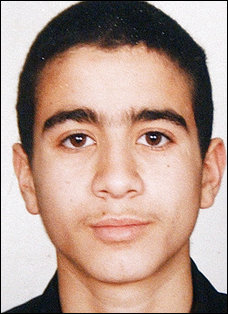
The day George W. Bush was elected, Omar says, “my father was so happy. This is the kind of president he needs — one who will attack and spend money and break [his own] country.” Osama wanted the US and Europe to make his story about the world ring true in every mosque and every mountain-top and every souq. He said our countries were bent on looting Muslim countries of their resources, and any talk of civil liberties or democracy was a hypocritical facade. The jihadis I have interviewed — from London to Gaza to Syria — said their ranks swelled with each new whiff of Bushism as more and more were persuaded. It was like trying to extinguish fire with a blowtorch.

The revelations this week about how the CIA and British authorities handed over a suspected jihadi to torturers in Pakistan may sound at first glance like a hangover from the Bush years. Barack Obama was elected, in part, to drag us out of this trap — but in practice he is dragging us further in. He is escalating the war in Afghanistan, and has taken the war to another Muslim country. The CIA and hired mercenaries are now operating on Obama’s orders inside Pakistan, where they are sending unmanned drones to drop bombs and sending secret agents to snatch suspects. The casualties are overwhelmingly civilians. We may not have noticed, but the Muslim world has: check out al-Jazeera any night.

Facebooktwittermail

New light cast on the recent murder of an Iranian physicist

The Economist reports:

When a motorcycle was blown up by remote control in Tehran last month, killing Masoud Alimohammadi, a professor of physics, the regime blamed “the triangle of wickedness”—Israel, America and their “hired agents”.

It is no secret that America, Israel and European countries are seeking to impede Iran’s nuclear plans, overtly and covertly. Yet the assassination theory was widely dismissed. The professor’s known works on particle and theoretical physics did not seem central to Iran’s nuclear programme. And his name had appeared on a list of Iranian academics favouring Iran’s protest movement. So, ran the prevailing theory, Israel or America had little reason to kill him, though Iranian hardliners may have wanted to do so.

But listen to the whispers of Western spies and diplomats, and the Iranian regime may turn out to be right. Well-placed sources in two Western countries now say the professor was “one of the most important people involved in the programme”.

Such conclusions, admit some, are based on “imperfect insight” into the workings of Iran’s nuclear establishment that includes the public and ostensibly civil projects run by the Atomic Energy Organisation of Iran (AEOI) and an overlapping but secret organisation run by the ministry of defence that focuses more on turning fissile material into nuclear weapons.

The AEOI said it had not employed Mr Alimohammadi. Several Iran-watchers said they had never heard of him until his death. But a Western counter-proliferation source says he “is known to have worked closely” with two key figures in Iran’s ministry of defence, Mohsen Fakhrizadeh-Mahabadi and Fereidoun Abbasi-Davani. Both are on the UN’s sanctions list of Iranians whose assets are to be seized and whose travels must be reported to the UN.

Facebooktwittermail

Atomic agency views Iran’s stepped-up enrichment of uranium as a violation

The New York Times reported:

Iran’s surprise move this week to begin enriching its uranium to a level closer to weapons-grade violated an agreement with atomic inspectors in Vienna, diplomats said, very likely providing the United States with another piece of evidence that Iran is not living up to its international commitments on its nuclear program.

The breach involved Iran’s starting the enrichment process in the absence of atomic inspectors — something that the International Atomic Energy Agency had specifically asked Iran not to do. Narrowly, the violation was viewed as technical in nature. But it caused resentment at the atomic agency’s headquarters in Vienna because Iran had acted so quickly and with such apparent contempt of the agreement.

“There’s a feeling of pique and annoyance,” said a European diplomat who works with the agency and spoke on condition of anonymity, because he was not authorized to speak with reporters.

Facebooktwittermail

Former boy soldier, youngest Guantanamo detainee, heads toward military tribunal

The Washington Post reported:

Omar Khadr, the youngest detainee at Guantanamo Bay, Cuba, was 15 when he allegedly threw a grenade that killed a U.S. Special Forces medic in Afghanistan. Now, more than seven years later, Khadr is drawing the Obama administration into a fierce debate over the propriety of putting a child soldier on trial.

The struggle against al-Qaeda has thrown up few detainees with as baleful and unlikely a background as Khadr’s — a father who moved his family to Afghanistan and inside Osama bin Laden’s circle of intimates when Omar was 10; a mother and sister who said the Sept. 11, 2001, attacks were deserved; and a brother, the black sheep of the clan, who said he became a CIA asset after his capture in Afghanistan.

This background has convinced U.N. officials, human rights advocates and defense lawyers that Khadr, a Canadian citizen, was an indoctrinated child soldier and, in line with international practice in other conflicts, should be rehabilitated, not prosecuted.

Facebooktwittermail