Category Archives: Issues

ANALYSIS & EDITOR’S COMMENT: The Petraeus promotion

Petraeus promotion frees Cheney to threaten Iran

The nomination of Gen. David Petraeus to be the new head of the Central Command not only ensures that he will be available to defend the George W. Bush administration’s policies toward Iran and Iraq at least through the end of Bush’s term and possibly even beyond.

It also gives Vice President Dick Cheney greater freedom of action to exploit the option of an air attack against Iran during the administration’s final months. [complete article]

Petraeus’ ascension

Reaffirming his status as his generation’s most respected general officer, David H. Petraeus was nominated today to head U.S. Central Command (Centcom), the command responsible for all U.S. military operations in the Middle East. The move puts the U.S. military’s premier advocate, theorist and practitioner of counterinsurgency operations — once shunned by a Vietnam-stung military — at the helm of the military’s most important regional command.

But many military analysts — even those closely associated with the counterinsurgency theories that Petraeus has long championed — viewed the move as a mixed blessing. [complete article]

Editor’s Comment — Time is running out! There’s only six months left to keeping pushing the argument that Dick Cheney is going to start another war. After that, the only hope for the war-fearmongers is a McCain or Clinton presidency… Pardon the sarcasm.

So why do I question the idea that Petraeus’ promotion lets Cheney off the leash? Firstly, I doubt that Gates had his arm twisted into doing this. Indeed, to the extent that Petraeus was guilty of promoting operations in Iraq at the expense of meeting needs in Afghanistan, this seems to present quite a strong argument in favor of his being moved to CentCom. As commander in Iraq, it wasn’t his job to be an advocate for meeting pressing needs in any other arena. But as head of CentCom, Petraeus will become answerable for both Iraq and Afghanistan. And this time around The White House is hardly likely to go around the CentCom commander and deal directly with the commander in Iraq. By appointing U.S. Army Gen. Raymond Odierno to that position, Gates has ensured that Petraeus retains control in both commands. And Petraeus’ own ambitions surely stretch beyond 2008. He won’t merely want to please this president, but he also knows he’s going to be answerable to the next.

And as William Arkin argued last month, beyond the occasional bellicose piece of rhetoric (and there really hasn’t even been much of that in recent months), there is no practical evidence that the US military is readying itself or capable of starting another war. Blaming Iran for problems in Iraq seems to have less to do with making a case for attacking Iran than it does with resisting pressure to withdraw troops.

Facebooktwittermail

CAMPAIGN 08 & EDITOR’S COMMENT: Clinton’s promise to “totally obliterate” Iran

Clinton on an Iran attack: ‘obliterate them’

Clinton further displayed tough talk in an interview airing on “Good Morning America” Tuesday. ABC News’ Chris Cuomo asked Clinton what she would do if Iran attacked Israel with nuclear weapons.

“I want the Iranians to know that if I’m the president, we will attack Iran,” Clinton said. “In the next 10 years, during which they might foolishly consider launching an attack on Israel, we would be able to totally obliterate them.” [complete article]

Editor’s Comment — Oy vey! Where to start? Let’s set aside the idea that a promise to incinerate millions of Iranians could be a vote winner in middle America, and let’s instead carefully parse what Clinton said.

Jake Tapper, true to form, cuts the quote off to make it as sensational as possible, so its important to add the sentence that followed:

In the next 10 years, during which they might foolishly consider launching an attack on Israel, we would be able to totally obliterate them. That’s a terrible thing to say, but those people who run Iran need to understand that, because that perhaps will deter them from doing something that would be reckless, foolish and tragic.

Interestingly, Clinton is distinguishing herself from the neocons here because she accepts the idea that the behavior of Iran’s leadership can be influenced by the power of deterrence. Given that she believes this, when the question was posed, “What would you do if Iran launched a nuclear attack on Israel,” she (or anyone else) who wanted to level with the American people should have given the honest answer:

Iran is not going to launch a nuclear attack on Israel, because if it did, it would suffer devastating retaliation from Israel itself. With a nuclear arsenal estimated to be around 200 warheads, Israel is perfectly capable of defending itself from, and deterring, a nuclear attack.

If in his confirmation hearings Robert Gates could be straightforward enough to skip the game of pretending that no one knows Israel is a nuclear state, then maybe it’s time for everyone else to give an honest account of Israel’s strengths and its weaknesses. Israel, as a nuclear state, is the military Goliath of the Middle East.

Facebooktwittermail

CAMPAIGN 08: Down with the plutocracy!

Obama’s touch of class

It is a stereotype you have heard many times before: Besotted with latte-fueled arrogance, the liberal looks down on average people, confident that he is a superior being. He scoffs at religion because he finds it to be a form of false consciousness. He believes in regulation because he thinks he knows better than the market.

“Elitism” is thus a crime not of society’s actual elite, but of its intellectuals. Mr. Obama has “a dash of Harvard disease,” proclaims the Weekly Standard. Mr. Obama reminds columnist George Will of Adlai Stevenson, rolled together with the sinister historian Richard Hofstadter and the diabolical economist J.K. Galbraith, contemptuous eggheads all. Mr. Obama strikes Bill Kristol as some kind of “supercilious” Marxist. Mr. Obama reminds Maureen Dowd of an . . . anthropologist.

Ah, but Hillary Clinton: Here’s a woman who drinks shots of Crown Royal, a luxury brand that at least one confused pundit believes to be another name for Old Prole Rotgut Rye. And when the former first lady talks about her marksmanship as a youth, who cares about the cool hundred million she and her husband have mysteriously piled up since he left office? Or her years of loyal service to Sam Walton, that crusher of small towns and enemy of workers’ organizations? And who really cares about Sam Walton’s own sins, when these are our standards? Didn’t he have a funky Southern accent of some kind? Surely such a mellifluous drawl cancels any possibility of elitism.

It is by this familiar maneuver that the people who have designed and supported the policies that have brought the class divide back to America – the people who have actually, really transformed our society from an egalitarian into an elitist one – perfume themselves with the essence of honest toil, like a cologne distilled from the sweat of laid-off workers. Likewise do their retainers in the wider world – the conservative politicians and the pundits who lovingly curate all this phony authenticity – become jes’ folks, the most populist fellows of them all. [complete article]

Facebooktwittermail

NEWS & EDITOR’S COMMENT: Hamas’s truce offer

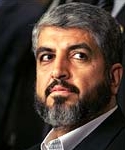
Meshal offers 10-year truce for Palestinian state on ’67 borders

Hamas’ political leader Khaled Meshal on Monday said Hamas would accept a Palestinian state in the West Bank and Gaza Strip along Israel’s pre-1967 borders, and would grant Israel a 10-year hudna, or truce, as an implicit proof of recognition if Israel withdraws from those areas.

Meshal’s comments were one of the clearest outlines Hamas has given for what it would do if Israel withdrew from the territories it captured in the 1967 Six Day War. He suggested Hamas would accept Israel’s existence alongside a Palestinian state on the rest of the lands Israel has held since 1948.

However, Meshal told reporters in Damascus that Hamas would not formally recognize Israel.

“We agree to a [Palestinian] state on pre-67 borders, with Jerusalem as its capital with genuine sovereignty without settlements but without recognizing Israel,” Meshaal said.

“We have offered a truce if Israel withdraws to the 1967 borders, a truce of 10 years as a proof of recognition,” he said. He said he made the offer to former U.S. President Jimmy Carter during talks Friday and Saturday in the Syrian capital. [complete article]

Editor’s Comment — It’s not going to happen, but just suppose Israel was to accept Hamas’s offer of a 10-year truce for a Palestinian state in the West Bank and Gaza with East Jerusalem as its capital. Imagine that without the burden of an Israeli occupation or an economic siege that Palestinians could devote their attention to the construction of their own sovereign state. The responsibility of a Palestinian government would then fall squarely on its ability to adequately serve its own people – not its capacity to negotiate with or resist the Israelis. The challenge of that decade would clearly be to improve the lives of ordinary Palestinians. The test of whatever political leadership held power would be its ability to deliver on its promises. To imagine that Hamas would use the peace in order to put together a longterm military plan to later challenge Israel seems fanciful. If they did so they would swiftly marginalize themselves out of existence.

So why should all of this be something we can only imagine? Because the real political challenge is not to persuade Hamas to accept a two-state solution, renounce violence or recognize Israel. The real challenge is for Israel to dismantle the settlements. It’s far easier to perpetually blame the Palestinians than to wrestle with an issue that has been relentlessly expanded towards a point where it could be regarded as irreversible.

Facebooktwittermail

NEWS & EDITOR’S COMMENT: Hamas’ recognition of Israel

Carter: Hamas will accept Israel

Former US President Jimmy Carter has said that Hamas is prepared to accept the right of Israel to “live as a neighbour next door in peace”.

After meeting Hamas leaders last week in Syria, he said it was a problem the US and Israel would not meet the group.

His comments came as the Israeli army launched a formal investigation into the death of a Reuters cameraman killed in the Gaza Strip last week. [complete article]

Editor’s Comment — In an op-ed in the Washington Post last week, Mahmoud al-Zahar, a co-founder of Hamas, wrote: “A ‘peace process’ with Palestinians cannot take even its first tiny step until Israel first withdraws to the borders of 1967; dismantles all settlements; removes all soldiers from Gaza and the West Bank; repudiates its illegal annexation of Jerusalem; releases all prisoners; and ends its blockade of our international borders, our coastline and our airspace permanently.”

The Post’s editorial board, in an effort to disassociate itself from the piece that it had freely chosen to publish, wrote: “On the opposite page today we publish an article by the ‘foreign minister’ of Hamas, Mahmoud al-Zahar, that drips with hatred for Israel, and with praise for former president Jimmy Carter. We believe Mr. Zahar’s words are worth publishing because they provide some clarity about the group he helps to lead, a group that Mr. Carter contends is worthy of being included in the Middle East peace process.”

Is the Post afraid it might suffer the same level of condemnation that Rev Jeremiah Wright’s church has had to suffer for reprinting an op-ed that the Los Angeles Times published of its own free will? I doubt it. On the contrary, this seems like a perverse celebration of freedom of speech among those who are afraid to listen.

What the Post’s editors chose to ignore — and this begs the question: did they actually read Zahar’s piece? — was that Hamas was making a de facto declaration of Israel’s right to exist. What Zahar laid out as preconditions for negotiations would to most observers look like the end point rather than the beginning of a peace process, yet the mere fact that he posits an Israel existing inside its 1967 borders as a viable negotiating partner, challenges the widely-held belief that Hamas has one and only one objective: the destruction of Israel.

Carter meeting sparks new debate over engaging Hamas

MARGARET WARNER: Mark Perry, should Jimmy Carter have met with Khaled Mashal and, if so, to what end?

MARK PERRY, Conflicts Forum: Absolutely he should have met with him, and here’s why. There are three very good reasons.

First, Hamas won an election in January 2006 in the Palestinian Authority, and it wasn’t even close, and it was the most transparent, open and fair elections in Arab world history.

Second, they retain prestige among the Palestinian people. All polls show that they retain their strength.

And, third, most recently, their leaders have been showing real moderation. They want an opening to the United States. This is their opportunity, and Jimmy Carter is capitalizing on that. We should be talking to Hamas. [complete article]

Our reign of terror, by the Israeli army

The older ex-soldier is Yehuda Shaul, who does indeed “know how it is in Hebron”, having served in the city in a combat unit at the peak of the intifada, and is a founder of Shovrim Shtika, or Breaking the Silence, which will publish tomorrow the disturbing testimonies of 39 Israelis – including this young man – who served in the army in Hebron between 2005 and 2007. They cover a range of experiences, from anger and powerlessness in the face of often violent abuse of Arabs by hardline Jewish settlers, through petty harassment by soldiers, to soldiers beating up Palestinian residents without provocation, looting homes and shops, and opening fire on unarmed demonstrators.

The maltreatment of civilians under occupation is common to many armies in the world – including Britain’s, from Northern Ireland to Iraq.

But, paradoxically, few if any countries apart from Israel have an NGO like Breaking the Silence, which seeks – through the experiences of the soldiers themselves – as its website puts it “to force Israeli society to address the reality which it created” in the occupied territories. [complete article]

Facebooktwittermail

FEATURES & EDITOR’S COMMENT: Torture and propaganda

Behind TV analysts, Pentagon’s hidden hand

In the summer of 2005, the Bush administration confronted a fresh wave of criticism over Guantánamo Bay. The detention center had just been branded “the gulag of our times” by Amnesty International, there were new allegations of abuse from United Nations human rights experts and calls were mounting for its closure.

The administration’s communications experts responded swiftly. Early one Friday morning, they put a group of retired military officers on one of the jets normally used by Vice President Dick Cheney and flew them to Cuba for a carefully orchestrated tour of Guantánamo.

To the public, these men are members of a familiar fraternity, presented tens of thousands of times on television and radio as “military analysts” whose long service has equipped them to give authoritative and unfettered judgments about the most pressing issues of the post-Sept. 11 world.

Hidden behind that appearance of objectivity, though, is a Pentagon information apparatus that has used those analysts in a campaign to generate favorable news coverage of the administration’s wartime performance, an examination by The New York Times has found.

The effort, which began with the buildup to the Iraq war and continues to this day, has sought to exploit ideological and military allegiances, and also a powerful financial dynamic: Most of the analysts have ties to military contractors vested in the very war policies they are asked to assess on air. [complete article]

Editor’s Comment — This article describes a triangle of complicity comprising Pentagon officials, retired military leaders, and television news networks. The New York Times essentially gives the networks a free pass. The final paragraphs of the article summarize the perfunctory answers the paper received in response to questions about conflicts of interest, yet the mere fact that the networks might have been unaware about the Pentagon briefings their analysts were receiving or the way these generals were cashing in on their connections, does not explain away what was always glaringly obvious: the chasm separating war news reporting on the one hand, and the military analysis being presented by the networks’ prize generals on the other hand. The networks had no interest in closing this gap. That fact in and of itself merits another investigative report but that will only happen if mainstream journalism opens itself up to some critical self-examination — and what are the chances of that happening?!

Stress hooding noise nudity dogs

When the Haynes memo reached Guantánamo on December 2 [2002], Detainee 063 was in an isolated, plywood interrogation booth at Camp X-Ray. He was bolted to the floor and secured to a chair, his hands and legs cuffed. He had been held in isolation since August 8, nearly four months earlier. He was dehydrated and in need of regular hook-ups to an intravenous drip. His feet were swollen. He was urinating on himself.
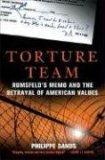
amazon-tortureteam.jpgDuring Detainee 063’s first few months at Guantánamo, the interrogators had followed established practices for military and law enforcement interrogations. Building rapport is the overriding aim of the US Army Field Manual 34-52, the rule book for military interrogators, colloquially referred to as “FM 34-52”. Legality was also essential, which meant operating in accordance with the rules set out in the US military’s Uniform Code of Military Justice and international law, in particular the four Geneva conventions.

At the heart of them lies “Common Article 3”, which expressly prohibits cruel treatment and torture, as well as “outrages upon personal dignity, in particular, humiliating and degrading treatment”. Tactics that had conformed to these principles changed dramatically. The interrogation log describes what happened immediately after Rumsfeld signed the Haynes memo.

The pattern was always the same: 20-hour interrogation sessions, followed by four hours of sleep. Sleep deprivation appears as a central theme, along with stress positions and constant humiliation, including sexual humiliation. These techniques were supplemented by the use of water, regular bouts of dehydration, the use of IV tubes, loud noise (the music of Christina Aguilera was blasted out in the first days of the new regime), nudity, female contact, pin-ups. An interrogator even tied a leash to him, led him around the room and forced him to perform a series of dog tricks. He was forced to wear a woman’s bra and a thong was placed on his head.

Rumsfeld led the charge for war in Iraq; in part he did so because of Saddam Hussein’s contempt for human life. “Torture is systematic in Iraq, and the most senior officials in the regime are involved,” Rumsfeld said, a few months before Saddam was overthrown. “Electric shock, eye gouging, acid baths, lengthy confinement in small metal boxes are only some of the crimes committed by this regime.” He spoke those words one day after secretly signing the Haynes memo and approving his own techniques of aggressive interrogation at Guantánamo.

Ironically, it was the Iraq war – in particular, events at Abu Ghraib prison – that brought the Haynes memo into the open two years later. By the autumn of 2003, Abu Ghraib was being run by the US as a detention facility. On April 28 2004, a CBS television report revealed the nature and scale of abuse being inflicted upon Iraqi prisoners. Photographs taken by US military participants were published, including one, now notorious, showing a prisoner standing on a box with his head covered and wires attached to his fingers. Another showed Private Lynndie England holding a leash tied to the neck of a naked man on the floor.

Was there a connection between the abuses at Abu Ghraib and the Bush administration’s secret interrogation policies at other places, including Guantánamo? In June 2004, President Bush, hosting the G8 summit in Savannah, Georgia, was asked by the media if he had authorised any kind of interrogation techniques necessary to pursue the “war on terror”? No, he said, his authorisation was that anything the US did would conform to US law and be consistent with international treaty obligations. “We’re a nation of law. We adhere to laws. We have laws on the books.”

Four days later, the administration unexpectedly declassified and released a number of documents relating to interrogation in the belief that this would reflect the thorough process of deliberation that, it was claimed, took place, and demonstrate a commitment to the rule of law. At the briefing, conducted by three lawyers from Bush’s inner circle, Alberto Gonzales, the president’s counsel, Jim Haynes from the Defence Department, and his deputy, Dan Dell’Orto, it was made clear that particular documents were crucial: the Haynes memo, and a decision taken a few months previously by the president, on February 7 2002, that none of the detainees at Guantánamo, whether Taliban or al-Qaida, could rely on any of the protections granted by the Geneva conventions, not even Common Article 3.

The second set of documents were legal opinions issued on August 1 2002. One of these, by two senior lawyers at the Justice Department, concluded that physical torture occurred only when the pain was “equivalent in intensity to the pain accompanying serious physical injury, such as organ failure, impairment of bodily functions, or even death”. Mental torture required “lasting psychological harm”. The memo concluded that torture of suspected terrorists under interrogation would not be unlawful if it could be justified on grounds of necessity or self-defence.

On October 11 2002, Guantánamo had request that additional techniques beyond those in FM 34-52 be approved for use against high-value detainees, in particular a Saudi Arabian, Mohammed al-Qahtani – otherwise known as Detainee 063. The underlying message of the briefing was spelled out: Rumsfeld had merely responded to a request from Guantánamo, and in doing so had acted reasonably. By contrast, the abuses at Abu Ghraib were unauthorised and unconnected to actual policies.

Much later, in March 2006, Time magazine published on its website the interrogation log of Detainee 063. Some of the Abu Ghraib images bore a resemblance to what Detainee 063 had been through: humiliation, stress, hooding, nudity, female interrogators, shackles, dogs. Was this just a coincidence? [complete article]

Facebooktwittermail

EDITORIAL: Talking to the enemy

Choosing the right battles

In the world we’ve been forced to inhabit for the last eight years, international relations has become the arena in which buddies congregate to engage in grooming behavior based on fawning, flattery and patronization. Participants then, like dogs pissing against a lamppost, gather for the all-important photo opportunity that says: “We were here. We left our mark.”

In this context, the idea of talking to the enemy has become tantamount to an act of treason. Even so, to his credit, Barak Obama has put this out on the table. Given that he was merely echoing some of the recommendations of the hallowed Iraq Study Group, he might have thought he was already on fairly safe ground. It turns out he put himself out on a limb.

There are those who now argue that since he’s already out there, for the sake of consistency, he should continue moving in the same direction. The logic that someone willing to talk to Iran should also be willing to talk to Hamas, is irrefutable.

That said, there’s a difference between trying to win an election and trying to win an argument. It won’t benefit Obama to come down on the right side on this issue if by doing so he undermines his ability to get elected.

In large measure, the foreign policy community has already accepted the idea that Hamas represents a political trend that cannot be wished away and that must be engaged. But is this an idea that can filter through into the presidential debate. No way! It’s taken a significant number of Americans several years to grasp the idea that Saddam Hussein was not the mastermind for 9/11 — and of course many more have yet to be disabused of the notion.

Supporting Obama’s campaign for change requires a realistic sense of timing about when is the optimum moment to try and drive each specific shift. I do not see an iota of evidence that America at large is ready to work through the laborious process of deconstructing most of the assumptions upon which its view of the Israeli-Palestinian issue is based — least of all during a presidential campaign. What might come after the election is another matter. At that time, the viability of the debate will hinge on the credibility of an administration, not the electability of a candidate. Will President Obama be bolder in taking on the issue then than he is now? I don’t know, but I’d like to find out.

Meanwhile, there’s reason to wonder whether Jimmy Carter is being politically tone deaf right now. If he goes to meet Khalid Meshaal, I think this would be a courageous act, but as I suggested earlier, it’s all important that this event be framed in the right way: it needs to act as a nudge towards a genuine political engagement between Israel and the Palestinian people — not just as campaign fodder for the Israel lobby.

Facebooktwittermail

FEATURE & EDITOR’S COMMENT: Remembering the Nakbah

Healing Israel’s birth scar

With the 60th anniversary of Israel’s birth — and of the Palestinian Nakbah (catastrophe) — which are, of course the same event, almost upon us, I was reminded this week that April 9 was also the 60th anniversary of an event that has long epitomized the connection between the creation of an ethnic-majority Jewish state and the man-made catastrophe suffered by the Palestinian Arabs. That would be the massacre at Deir Yassein, a small village near Jerusalem where fighters of the Irgun, led by Menahem Begin, massacred up to 250 Palestinian civilians — in what later emerged as a calculated campaign of “ethnic cleansing,” using violence and the threat of violence to drive Palestinians to flee their homes and land, which were then summarily appropriated by the new state of Israel, which passed legislation forbidding the Palestinian owners from returning to their property. It was the events of 1948 that created the Palestinian refugee problem, and set the terms of a conflict that continues to define the State of Israel six decades later. No resolution of the conflict is possible without understanding the events of 1948 — something that precious few mainstream U.S. politicians do. The irony is that Israelis are far more likely to be familiar with the uglier side of their victory in 1948 than are their most enthusiastic supporters on these shores. [complete article]

Editor’s Comment — I highly recommend watching the documentary “Deir Yassin Remembered.” The story is told slowly, thoughtfully, and methodically, explaining the significance of the Deir Yassin massacre in the context of the massive program of ethnic cleansing that laid the foundations for the creation of a Zionist state. This 33-minute documentary worth careful attention – especially for anyone not familiar with the story of how the modern state of Israel came into existence. The documentary was produced by Deir Yassin Remembered.


(This video can also be viewed here.)

Facebooktwittermail

NEWS & EDITOR’S COMMENT: Talking to Hamas

Former President Carter to meet with Hamas chief

Fkhalidmeshaal.jpgormer president Jimmy Carter plans to meet next week in Damascus with Khaled Meshal, the head of the Palestinian militant group Hamas, in a direct rebuke of the Bush administration’s campaign to isolate it.
The disclosure of Carter’s plans by the Arabic-language newspaper al-Hayat and subsequent confirmation by sources familiar with his itinerary instantly placed the campaigns of Sens. Barack Obama (D-Ill.) and Hillary Rodham Clinton (D-N.Y.) in a political bind.

The campaign of Sen. John McCain (Ariz.), the presumptive Republican nominee, was quick to blast Carter’s plans and called on both Obama and Clinton to condemn the meeting with what the State Department lists as a terrorist group.

Both Clinton and Obama issued statements with milder language, saying they “disagreed” or did “not agree” with Carter’s plans. [complete article]

Editor’s Comment — Simply because he had the supposed audacity to describe Israel as operating a system of apartheid in the Palestinian Occupied Territories, Jimmy Carter is already irredeemable in the eyes of much of Washington. But what will shape the political impact of Carter’s meeting with Khaled Meshal may have as much to do with the make up of the delegation accompanying Carter, as it does with Carter’s own presence.

If, as Al Jazeera reports, Carter is joined by Nelson Mandela and Kofi Annan, this would certainly capture the global media’s attention. But if this meeting is in part intended to challenge the conventional wisdom in America, then perhaps Carter should invite the former head of Mossad, Efraim Halevy.

This is a man, highly respected in Israel — and by no stretch of the imagination “soft on terrorism” — who like the majority of Israeli citizens supports the idea of talking to Hamas. If CNN was to broadcast a joint news conference between Carter, Meshal, and Halevy, perhaps a few more Americans might start to understand that the US government’s policy of shunning Hamas is not only ineffective, but it does not even reflect the will of the Israeli people. How can anyone claim to be loyal to Israel if they don’t pay attention to what Israeli’s themselves are saying?

To learn more about Halevy’s views on Hamas and the Palestinians and understand the thinking of this hard-headed realist, watch this March 19 interview (18 minutes) he did with Al Jazeera:

Facebooktwittermail

NEWS, OPINION & ANALYSIS: Global food crisis

A ‘revolutionary’ moment in Egypt?

The idea of the starving masses driven onto the streets to demand bread, and then being forced by the violent response of the state to seek its overthrow, had seemed impossibly quaint for decades — the stuff of a distant epoch, kept alive in Broadway musicals and Warren Beatty vehicles in a world where the masses were acquiring cell phones. Bread? Who needs bread? Let them eat arugula at globalization’s ever-expanding buffet table.

But a cursory look at the headlines of the past month — a general strike and mass protests in Egypt, the storming of the presidential palace in Haiti, violent protests in Cote D’Ivoire and Cameroon, demonstrations in Uzbekistan, Yemen and Indonesia, among others, suggests that the proverbial “wretched of the Earth” are arising, all over again, this time in response to skyrocketing food prices.

Turns out the Malthusians, and even — gasp! — their Marxist progeny, were not entirely wrong, after all: Spread capitalism to every corner of the globe (a planet already blighted by a century of industrialism with its attendant sometimes catastrophic climate) and the rich do, indeed, get richer, while the poor do get poorer, although not necessarily more numerous. The patterns are uneven, but basic laws of scarcity still prevail. Global food prices have risen 80% over the past three years, and the primary reason may be the success of capitalism in China and India over the past two decades: Their industrialization has spurred demand for energy beyond the capacity of supply, which has pushed oil prices to levels five times what they were in the mid 1990s. That, in turn, has raised pressure on food prices by making agricultural inputs more expensive, and by prompting the substitution of biofuel crops for edible ones on scarce farmland. And, of course, capitalism has indeed raised the living standards of hundreds of millions of people in those countries — they’re eating more, and better, particularly more meat. The fact that it takes some eight calories of grain to produce a single calorie of beef means that the expansion of meat protein in the diet of previously poor Chinese workers also creates a massive increase in global demand for grains. Throw in climate disasters such as the Australian drought, and you have food inflation spiraling so fast that even the U.N. agency created to feed people in emergencies is unable to keep pace. [complete article]

Food price rises threaten global security – UN

Rising food prices could spark worldwide unrest and threaten political stability, the UN’s top humanitarian official warned yesterday after two days of rioting in Egypt over the doubling of prices of basic foods in a year and protests in other parts of the world.

Sir John Holmes, undersecretary general for humanitarian affairs and the UN’s emergency relief coordinator, told a conference in Dubai that escalating prices would trigger protests and riots in vulnerable nations. He said food scarcity and soaring fuel prices would compound the damaging effects of global warming. Prices have risen 40% on average globally since last summer.

“The security implications [of the food crisis] should also not be underestimated as food riots are already being reported across the globe,” Holmes said. “Current food price trends are likely to increase sharply both the incidence and depth of food insecurity.” [complete article]

Food riots grip Haiti

United Nations peacekeepers fired rubber bullets and used tear gas to control mobs rioting over rising food prices in Haiti yesterday.

Angry protesters tried to break into the presidential palace in the capital, Port au Prince, and demanded that President Rene Preval step down.

Preval was inside the palace at the time, aides said. The president has made no public statements since riots broke out on the island last week. Five people have died in a week of protests, Reuters reported. [complete article]

Map of food riots
Where food riots have taken place around the world since January 2007. Map compiled by Allegra Stratton, The Guardian. Click on blue pointers for information on locality. Click on “minus” button for wider view.


View Larger Map

Facebooktwittermail

EDITORIAL: Who’s really special?

Who’s really special?

Is George Bush, ever so slowly, inching towards détente with Iran?

If so, it’s probably something he won’t brag about. But what on earth could hint at such a possibility?

Consider these few things:

First, an interesting piece of speculation recounted by Sami Moubayed a few days ago in Asia Times:

One theory says that Imad Mughniya, the Hezbollah commander who was assassinated in Damascus in February, had been charged by Iran to restructure the Mahdi Army. He had been one of the architects of Hezbollah in 1982 and was asked to do the same to professionalize the Sadrists. While all of this was being done, Muqtada was asked to return to his religious studies so he could rise to the rank of ayatollah and therefore gain a much stronger role in Shi’ite domestics. He would then be authorized to issue religious decrees and answer religious questions related to politics – just like Hakim.

Then suddenly something went wrong, and last week Maliki (who is now equally close to the Iranians) went to war against the Sadrists. Some claim that an under-the-table deal was hammered out in Baghdad in March between the Americans, Maliki and Iranian President Mahmud Ahmadinejad.

The Iranian leader would let the Americans have their way – and crush the Sadrists – in exchange for softening pressure on the Iranian regime. In return, Ahmadinejad would help them bring better security to Iraq through a variety of methods stemming from Iranian cooperation.

This would please the Americans, Maliki and the Iranians, who in exchange for Muqtada’s head would enter a new relationship with the Americans. This might explain why the only people who have been lobbying heavily with Maliki – to stop the war on Muqtada – have been those opposed to Iranian meddling in Iraqi affairs, mainly Sunni tribes, ex-prime minister Ibrahim al-Jaafari (who refused sanctuary in Tehran during the Iran-Iraq war) and the Sunni speaker of parliament, Mahmud Mashadani.

On Sunday, in an interview with CNN, Iraqi Prime Minister Nuri al-Maliki when questioned about Iran’s role in violence in Iraq said, “we understand this comes because of the background of the deep differences between Iran and the US and we are encouraging them to go back to the negotiating table with Iraqi mediation. We reject Iran using Iraq to attack the US and at the same time we reject the idea of the US using Iraq to attack Iran. We want to have peaceful positive relations with all sides.”

Maliki’s offer of mediation could be dismissed as political posturing, but it’s not hard to imagine that a prime minister who is not popular would be attracted by the idea of making himself indispensable. The role of mediation has never been dependent on strength, though if Iraq was to serve as a mediator between Iran and the US this would clearly benefit Iraq and especially the leader who had placed himself in such a pivotal position.

On Monday, Iran’s foreign ministry spokesman Mohammad Ali Hosseini told reporters, “We have received a new request from US officials through a formal note for holding talks on Iraq and we are looking into the issue.”

Then on Tuesday, after the main food market in Sadr City had burnt down and residents of the Shia district were fleeing American Hellfire missiles, Iran again issued another statement. Naturally it condemned US forces for indiscriminate bombardment of residential areas in Sadr City and Basra – but it didn’t stop there. It condemned attacks on the Green Zone and it praised “rightful measures taken by the Iraqi government to counter illegal armed groups.”

Could those illegal armed groups be the very same entities that have curiously been dubbed “special groups”?

What Maliki, Sadr and anyone else who might want a special relationship with Iran seems to discover sooner or later is that “special” does not mean “indispensable.” Iran, just like the United States, thinks first and foremost in terms of its national interest.

Facebooktwittermail

FEATURE: The price of the surge

How U.S. strategy is hastening Iraq’s demise

The surge has changed the situation not by itself but only in conjunction with several other developments: the grim successes of ethnic cleansing, the tactical quiescence of the Shiite militias, and a series of deals between U.S. forces and Sunni tribes that constitute a new bottom-up approach to pacifying Iraq. The problem is that this strategy to reduce violence is not linked to any sustainable plan for building a viable Iraqi state. If anything, it has made such an outcome less likely, by stoking the revanchist fantasies of Sunni Arab tribes and pitting them against the central government and against one another. In other words, the recent short-term gains have come at the expense of the long-term goal of a stable, unitary Iraq. Despite the current lull in violence, Washington needs to shift from a unilateral bottom-up surge strategy to a policy that promotes, rather than undermines, Iraq’s cohesion. That means establishing an effective multilateral process to spur top-down political reconciliation among the major Iraqi factions. And that, in turn, means stating firmly and clearly that most U.S. forces will be withdrawn from Iraq within two or three years. Otherwise, a strategy adopted for near-term advantage by a frustrated administration will only increase the likelihood of long-term debacle. [complete article]

Facebooktwittermail

CAMPAIGN 08: The executive campaign

Obama at the helm

Deep into a primary campaign that was supposed be over by now, Barack Obama must still answer one fundamental question. Jeremiah Wright notwithstanding, it’s not whether he’s too black. It’s whether he’s too green. Hillary Clinton has made Obama’s inexperience her chief line of attack, and if she goes down, John McCain will pick up where she left off. Luckily, Obama doesn’t have to rely on his legislative resume to prove he’s capable of running the government. He can point to something more germane: the way he’s run his campaign.

Presidents tend to govern the way they campaigned. Jimmy Carter ran as a moralistic outsider in 1976, and he governed that way as well, refusing to compromise with a Washington establishment that he distrusted (and that distrusted him). Ronald Reagan’s campaign looked harsh on paper but warm and fuzzy on TV, as did his presidency. The 1992 Clinton campaign was like the Clinton administration: brilliant and chaotic, with a penchant for near-death experiences. And the 2000 Bush campaign presaged the Bush presidency: disciplined, hierarchical, loyal and ruthless. [complete article]

Facebooktwittermail

GUEST CONTRIBUTOR – John Robertson: Mr Bush and his “legacy”

Mr Bush and his “legacy”
By John Robertson, War in Context, April 6, 2008

According to Britain’s Daily Telegraph our war-hero “Decider” president has decided that he will pull no more troops out of Iraq. According to the report, which cites Pentagon sources, he feels that showing such “resolve” will cement his legacy – which, he obviously assumes, is going to be an honorable one that will burn his glorious presidency indelibly into the pages of our national memory. A major contributor to his decision, moreover, seems to have been a report from another of our war-hero stalwarts, Fred Kagan, American Enterprise Institute all-star and an “intellectual” godfather of the “Surge.” Kagan is also a frequent contributor to William Kristol’s Weekly Standard (required reading for the – one would have hoped by now – discredited neocon faithful), where right up to the recent Basra humiliation he was serving up self-congratulatory pieces about the success of the Surge and declaring Iraq’s civil war to be “over.” Sorry, Fred, but most of the real experts (people like Juan Cole, Nir Rosen, and Patrick Cockburn – that is, people who know the country intimately, have lived there, and can read its newspapers) who’ve been reading the tea leaves suggest that, in the inimitable words of an American showman whose name I can’t recall, we “ain’t see nuthin yet.”

Please forgive me if I sound callous or flip by putting it that way, but by now it ought to be clear that the unfortunate people of Iraq have a long road to travel – and probably many years of suffering ahead – before they will be able to enjoy an existence graced by any consistency of peace, prosperity, and security. Surge notwithstanding, the Sunni Arabs of Anbar and elsewhere are no closer to being included in the governing of the Iraqi state than they were during the proconsulship of L. Paul Bremer, who marginalized them from the outset of the American occupation. The much-touted Sunni sahwa (“Sunni Awakening”) – to which the Bush-Petraeus “Surge” owed so much of its putative success – now seems, at best, to be hitting its collective snooze alarm while the US tries to keep these new militias, which are completely outside the control of the central government, paid off. Despite its ongoing entreaties, the Bush administration has been unable to convince the Shia-dominated Maliki government to incorporate them into the Iraqi army. Nor is that government making any appreciable effort to find them jobs to divert their attention and secure them some livelihood, and paychecks. It is likely only a matter of time before they bug out altogether and turn their newly obtained arms, equipment, and training on the people against whom so many of them were originally most intent on fighting in the first place: the US occupation forces and their Shia Badr Force allies.

Meanwhile, the sun seems to be setting on the hope-filled halcyon days of the Kurds’ autonomy in Iraq’s northeast, in which they were able to bask only because (after years of being sheltered and nurtured under a US-enforced no-fly zone) they supported the US invasion right down the line, while the US could point to them as Iraq’s model of stability and potential. But now the US has shown itself all too willing to sell them out when a stronger, more potentially useful ally, Turkey, put its marker down in this new “great game.” Notwithstanding the protests of the Kurdistan Regional Government, Turkish forces only recently completed major incursions into Iraqi Kurdistan to go after the PKK; only days ago, for the umpteenth time, Turkish warplanes flew bombing sorties into the region; and the Turkish republic’s leaders have reserved the right to violate the sovereignty of the KRG (and, by the standards of anybody’s interpretation of international law, the sovereignty of the state of Iraq) when and if they deem it necessary (which, given the current turmoil in the Turkish government, also translates to “politically expedient”). And as if the threat from Turkey weren’t enough, the future stability of Kurdistan faces what is perhaps an even direr threat: the possibility of civil war among Kurds, Arabs, and Turks over the ultimate control of the city and region of Kirkuk.

And speaking of civil war, it’s pretty safe to say that the violence of late March in Basra and Baghdad was only a taste of what might be in store for Iraq’s largely Shia south and center, where the scions of the powerful and prestigious al-Hakim and al-Sadr clerical lineages (along with smaller groups like the Fadhila party in Basra) are vying for political control (and in Basra, control of Iraq’s vital oil exports) as provincial elections, scheduled for October, approach. Their respective leaders – Abdulaziz al-Hakim and Muqtada al-Sadr – control well-armed and inspired militias (respectively, the Badr Forces and the Jaish al-Mahdi, or “Mahdi Army”) that fought each other viciously in the holy city of Karbala only a few months ago, and in Basra and Baghdad only recently. Thanks largely to the intervention of Iran (which was spearheaded by a “terrorist” Revolutionary Guard general), Muqtada agreed to a truce, not to be mistaken for a peace treaty. Simply put, the two militias hate each other. Add then to this very combustible mix that Muqtada is the leader of a huge popular political movement that claims the support of hundreds of thousands of the poor Shia of teeming slums like Sadr City in Baghdad, and of hundreds of thousands more in Iraq’s second largest city, Basra. He has called upon his followers – and other Iraqis who want the US occupation out of Iraq – to come together next week for a million-man march. That march was originally set for the holy city of Najaf, a stronghold of the Islamic Supreme Council of Iraq (ISCI), the Shia political movement led by Abdulaziz al-Hakim. Now, however, Muqtada has decided to stage the march in Baghdad.

Keeping a lid on the tensions that will be bubbling in Baghdad next week will be the job of the Maliki “government.” This is, of course, the same Maliki government that was recently humbled by its failure in Basra and that appears ever more dysfunctional, hunkered down in the “Green Zone” (beyond which it exercises little real control) and confronted with a divided, often absentee parliament. The army Maliki commands has proved itself largely unreliable and ineffective, often including members of the Badr militia whose loyalties to the state are suspect or forced to rely on Kurdish peshmerga who are loath to be involved in inter-Arab conflicts. But it’s this army with which Maliki is entrusted with keeping a damper on the situation as Muqtada’s march approaches. Can we really believe they’re up to it?

No. Which is why US troops, air power, and special forces will be on the scene aplenty next week – and why, Mr. Bush has now decided, and why Gen. Petraeus will insist next week, they will need to be there for the foreseeable future. And it’s also why Mr. Bush will feel it justifiable and necessary to hand off the Iraq tinderbox to his successor. Given the current mood of US citizenry (of whom, a new poll indicates, more than 80 percent believe that the country is headed in the wrong direction), that successor will likely not be a member of Mr. Bush’s political party. But with a level of military effort no longer sustainable (as almost all of the top brass have insisted), and with the national economy swirling the bowl, that successor will most certainly have to begin to disengage the US from Iraq – and be left to hold the bag for the hubris, incompetence, and catastrophe of his predecessor.

Because, as US forces pull out, Iraq will most certainly fall apart even more, its misery and violence ratcheting up by several notches. With much more justification than Mr. Bush did last week, many across the world will proclaim it a “defining moment.” Some will proclaim that the American behemoth has been vanquished once and for all. Others, perhaps more reflectively, and dishearteningly, may surmise that whatever fires America might have lit for insisting on goodness and justice on the planet lie in cinders, if not altogether doused.

But Mr. Bush’s glorious page in our national memory will be completely up in smoke, wisps on the wind of history.

John Robertson is a professor of Middle East history at Central Michigan University and has his own blog, Chippshots.

Facebooktwittermail

CAMPAIGN 08 & EDITOR’S COMMENT: America’s patriotism problem

The patriotism problem

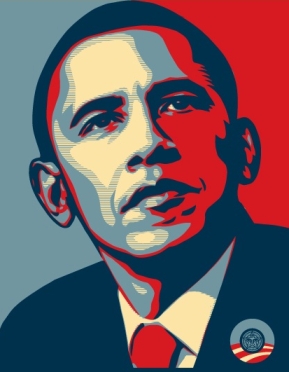
Tobama-screenprint.jpghere were signs that Obama’s hard work and extensive television advertising were paying off: various polls showed the race tightening a bit. The talk-show muttering had migrated from Jeremiah Wright to Clinton’s Bosnian sniper-fire fantasy. Hordes of new voters were registering in Pennsylvania. It was not impossible that Obama would turn Clinton’s predicted victory into a closer-than-expected moral defeat.
But there was still something missing. I noticed it during Obama’s response to a young man who remembered how the country had come together after Sept. 11 and lamented “the dangerously low levels of patriotism and pride in our country, the loss of faith in our elected officials.” Obama used this, understandably, to go after George W. Bush. “Cynicism has become the hot stock,” he said, “the growth industry during the Bush Administration.” He talked about the Administration’s mendacity, its incompetence during Hurricane Katrina, its lack of transparency. But he never returned to the question of patriotism. He never said, “But hey, look, we’re Americans. This is the greatest country on earth. We’ll rise to the occasion.” [complete article]

Editor’s Comment — Joe Klein refers to the “implicit patriotism of the Obama candidacy” but says, “to convince those who doubt him, Obama has to make the implicit explicit. He will have to show that he can be as corny as he is cool.”

Beyond, “we’re Americans – this is the greatest country on earth,” what other kinds of “explicit patriotism” does Klein have in mind? A flag lapel button? Stories about reciting the pledge of allegiance each morning with his wife and children? What kind of corny show of patriotism does Klein think would hit the mark and play best in the American heartland?

There’s little doubt that patriotism will at the very least figure as an insidious undercurrent in the general election and it’s important that the Obama campaign doesn’t fall into the position of being on the defense. But the way to do that is not to kowtow to those who push the conventional wisdom which says that political success in America requires a massive serving of red, white, and blue.

Patriotism should not be confused with its emblems. Too often these have been turned into the tools of a nationalism that paradoxically divides rather than unites the people.

When the flag wavers turn to the flag weary and say, “prove to us that you are American enough,” the implication is that even those who pass the test will remain less American than those requiring the test. The me-too patriot has capitulated to those who say: “It is we, not you, who understand what it means to be a real American.”

It’s not so much that Obama has a patriotism problem as much as that his opponents will, as he has said, use patriotism as a bludgeon. But what Obama has wisely done and I hope will continue to do is to insist that neither his critics nor commentators such as Joe Klein, be conferred with the privilege of framing each issue.

For four years Obama has been saying, “There’s not a black America and white America and Latino America and Asian America; there’s the United States of America.” What could be more patriotic than a heartfelt embracing of the whole nation?

America belongs to the American people. So when any particular group asserts a claim that they above others know what it means to be “real Americans”, they are in effect attempting to disavow the national identity of other citizens. What could be less patriotic than to abandon fellow Americans?

Facebooktwittermail

FEATURE: Why Bush should reflect on Pinochet

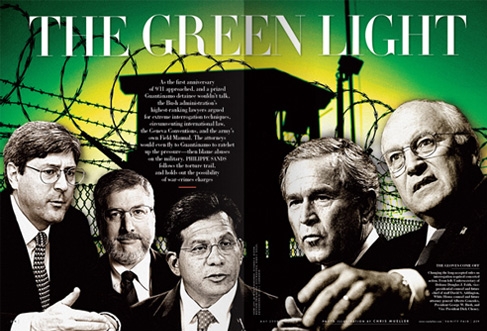
The green light

greenlight.jpg
The abuse, rising to the level of torture, of those captured and detained in the war on terror is a defining feature of the presidency of George W. Bush. Its military beginnings, however, lie not in Abu Ghraib, as is commonly thought, or in the “rendition” of prisoners to other countries for questioning, but in the treatment of the very first prisoners at Guantanamo. Starting in late 2002 a detainee bearing the number 063 was tortured over a period of more than seven weeks. In his story lies the answer to a crucial question: How was the decision made to let the U.S. military start using coercive interrogations at Guantanamo?

The Bush administration has always taken refuge behind a “trickle up” explanation: that is, the decision was generated by military commanders and interrogators on the ground. This explanation is false. The origins lie in actions taken at the very highest levels of the administration—by some of the most senior personal advisers to the president, the vice president, and the secretary of defense. At the heart of the matter stand several political appointees—lawyers—who, it can be argued, broke their ethical codes of conduct and took themselves into a zone of international criminality, where formal investigation is now a very real option. This is the story of how the torture at Guantanamo began, and how it spread. [complete article]

Facebooktwittermail

NEWS, ANALYSIS & EDITOR’S COMMENT: Authority in Iraq

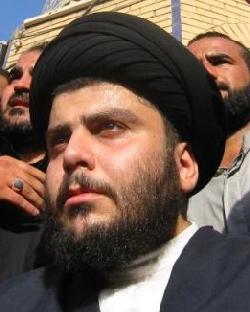
How Moqtada al-Sadr Won in Basra

Tmoqtadaalsadr.jpghe Iraqi military’s offensive in Basra was supposed to demonstrate the power of the central government in Baghdad. Instead it has proven the continuing relevance of anti-American cleric Moqtada al-Sadr. Sadr’s militia, the Mahdi Army, stood its ground in several days of heavy fighting with Iraqi soldiers backed up by American and British air power. But perhaps more important than the manner in which the militia fought is the manner in which it stopped fighting. On Sunday Sadr issued a call for members of the Mahdi Army to stop appearing in the streets with their weapons and to cease attacks on government installations. Within a day, the fighting had mostly ceased. It was an ominous answer to a question posed for months by U.S. military observers: Is Sadr still the leader of a unified movement and military force? The answer appears to be yes.

In the view of many American troops and officers, the Mahdi Army had splintered irretrievably into a collection of independent operators and criminal gangs. Now, however, the conclusion of the conflict in Basra shows that when Sadr speaks, the militia listens.

That apparent authority is in marked contrast to the weakness of Iraq’s prime minister, Nouri al-Maliki. He traveled south to Basra with his security ministers to supervise the operation personally. After a few days of intense fighting he extended his previously announced deadline for surrender and offered militants cash in exchange for their weapons. Yet in the ceasefire announcement the militia explicitly reserved the right to hold onto its weapons. And the very fact of the ceasefire flies in the face of Maliki’s proclamation that there would be no negotiations. It is Maliki, and not Sadr, who now appears militarily weak and unable to control elements of his own political coalition. [complete article]

Why al-Maliki attacked Basra

Why did Iraqi Prime Minister Nouri al-Maliki attack the Mahdi army in Basra last week?

Despite the cease-fire called Sunday by Shiite leader Sayyid Muqtada al-Sadr, leader of the millions-strong Sadr Movement, last week’s battles between the Mahdi army and the Iraqi army revealed the continued weakness and instability of al-Maliki’s government. Al-Maliki went to Basra on Monday, March 24, to oversee the attack on city neighborhoods loyal to al-Sadr. By Friday, the Iraqi minister of defense, Abdul Qadir Jasim, had to admit in a news conference in Basra that the Mahdi army had caught Iraqi security forces off guard. Most Sadrist neighborhoods fought off the government troops with rocket-propelled grenades and mortar fire. At the same time, the Mahdi army asserted itself in several important cities in the Shiite south, as well as in parts of Baghdad, raising questions of how much of the country the government really controls. Only on Sunday, after the U.S. Air Force bombed some key Mahdi army positions, was the Iraqi army able to move into one of the Sadrist districts of Basra. [complete article]

Iranian who brokered Iraqi peace is on U.S. terrorist watch list

The Iranian general who helped broker an end to nearly a week of fighting between Iraqi government forces and Shiite Muslim militiamen in southern Iraq is an unlikely peacemaker.

Brig. Gen. Qassem Suleimani, who helped U.S.-backed Iraqi leaders negotiate a deal with radical Shiite cleric Muqtada al Sadr to stop the fighting in Iraq’s largely Shiite south, is named on U.S. Treasury Department and U.N. Security Council watch lists for alleged involvement in terrorism and the proliferation of nuclear and missile technology.

His role as peacemaker, which McClatchy first reported Sunday, underscores Iran’s entrenched political power and its alliances in Iraq, according to analysts. [complete article]

Editor’s Comment — For five years, the US and its allies in Iraq have indulged in a modulated fantasy. To begin with it was that Moqtada al Sadr could be ignored — that he was an upstart deserving contempt. Once it became clear that he couldn’t be ignored, the aim turned to his destruction. Once it became clear that he and his movement could not be destroyed, hopes turned to his pacification. If he could be politically accommodated, he might lose his political fire and thence fall by the wayside. All along, the press has helped reinforce the administration’s efforts to brand Sadr by referring to him as radical, anti-American, rebel, fiery, militant, hardline, rabble-rousing, demagogue and a firebrand. What few have been willing to acknowledge is that over the span of the last five years, there is no one else in Iraq whose authority has been as durable or as demonstrable.

The American conceit was that by having ousted Saddam it acquired the ability to dispense or withhold political authority. The mistake was and remains a confusion about the difference between power and authority. For all its power, the US has never been able to wield any political authority in Iraq; it thus has no authority to dispense. Ironically, Sadr’s ability to acquire authority has in large part been assisted by the administration’s refusal to acknowledge his political weight.

Just over a month ago, US Central Command issued a press release in response to Sadr’s extension of his militia’s ceasefire. It said:

Those who continue to honor al-Sayyid Muqtada al-Sadr’s pledge will be treated with respect and restraint. Those who dishonor the Sadr pledge are regrettably tarnishing both the name and the honor of the movement…. [We] welcome an opportunity to participate in dialogue with the Sadr Trend and all groups who seek to bring about reconciliation in building the new Iraq.

This might have just been empty rhetoric, but I think that it more likely reflects that the US military is slightly ahead of its political leadership in starting to recognize that it’s time to show Sadr more respect. If the idea that he was going to fade away has managed to be a very durable fantasy — especially among those who have had equally durable dreams of success in Iraq — the time to wake up to the reality of Sadr’s political authority is long overdue.

Facebooktwittermail

OPINION & EDITOR’S COMMENT: Holy shit!

Christian rage and Muslim moderation

Bishop Paul Hinder, the Vatican’s representative in Arabia, was reluctant to criticize the pope, of course, but when I reached him in Abu Dhabi Wednesday morning he clearly had reservations about the way Allam was received into the Church. He said that local Christians took him aside at Easter services and asked him “why it had to be done in such an extraordinary way on a special night.” Hinder contrasted Allam’s conversion to Catholicism with former British prime minister Tony Blair’s, which “was done in a private chapel.”

“What I cannot accept is if it is done in a triumphalistic way,” said Hinder. That is, if Allam were not declaring only his personal beliefs but intentionally demeaning the faith of Muslims. Yet it is hard to read the spectacle of his conversion otherwise, because that’s exactly the tone in which Allam writes. He has made his career portraying Islam as a religion that terrorizes. Allam says he has lived in hiding and in fear for years because of reaction to his columns in the Italian newspaper Corriere della Serra, which regularly denounce excesses by Muslims and praise Israel. Allam converted to Catholicism, he says, as he turned away from “a past in which I imagined that there could be a moderate Islam.” Speaking as if for the pope, Allam told one interviewer in Italy, “His Holiness has launched an explicit and revolutionary message to a church that, up to now, has been too prudent in converting Muslims.”

Allam claims he is hoping his public embrace of Catholicism will help other converts to speak out in public. But that hardly seems likely. The more probable scenario is that others will feel even more vulnerable, while Allam’s books, like many Muslim-bashing screeds that preceded them, climb the best-seller lists.
benedict.jpg
Unless — and this really would be news — the Muslim world just turns the page. [complete article]

Editor’s Comment — Take away all the trappings of sanctity and there’s no getting away from the perception that the Vatican’s answer to Dick Cheney has a devilish streak. Benedict is a shit-stirrer — you can see it in those devious eyes.

Facebooktwittermail