Category Archives: Issues

NEWS & OPINION: The global warming that leaves America in the cold

The Sino-Russian embrace leaves the U.S. out in the cold

It has become a commonplace of international diplomacy that Russia and China often work together on key issues. They have frustrated western hopes for sanctions or other tough action on disputes ranging from Burma and Darfur to Iran. They are blocking a solution on Kosovo. What few in the west have spotted is that Sino-Russian rapprochement has reached such a point that the two huge countries’ relations with each other are far warmer than either US-Russian or US-Chinese relations. In other words, the famous US-Russia-China triangle Nixon and Kissinger created by their path-breaking overtures to Beijing in the early 1970s is completely reversed.

China, in those Maoist days, was mired in a mixture of international quarantine and self-imposed isolation, feared by the Soviet Union and hated by the US. The two Americans dramatically broke the mould. They cleverly manipulated Mao’s ideological rivalry with Moscow to bring China back into the global arena and thereby infuriate and put pressure on the Soviets. This helped to ease the US retreat from Vietnam.

Now Russia and China are together and the US is out of the loop. It is a stark fact that Condoleezza Rice and defence secretary Robert Gates cannot ignore today as they start two days of talks in Moscow. No more easy concessions from Moscow and Beijing. Both powers are big boys and can bargain as hard as anyone from Washington, whether neocon or “realist”. [complete article]

Putin threatens withdrawal from cold war nuclear treaty

President Vladimir Putin warned today that Russia was considering withdrawal from a major cold war arms treaty restricting intermediate range nuclear missiles unless it is expanded to include other states.

Mr Putin said that Moscow is planning to dump the intermediate range nuclear forces treaty (INF) – signed in a landmark deal between the US and Soviet Union in 1987 – unless countries like China are included in its provisions.

His comments came just before talks in Moscow today between the US secretary of state, Condoleezza Rice, and the US defence secretary, Robert Gates, with Russia’s foreign minister, Sergei Lavrov, and the defence minister, Anatoly Serdyukov. [complete article]


Facebooktwittermail

FEATURE: The Pentagon plans for a new hundred years’ war

Slum fights

Duane Schattle doesn’t mince words. “The cities are the problem,” he says. A retired Marine infantry lieutenant colonel who worked on urban warfare issues at the Pentagon in the late 1990s, he now serves as director of the Joint Urban Operations Office at U.S. Joint Forces Command. He sees the war in the streets of Iraq’s cities as the prototype for tomorrow’s battlespace. “This is the next fight,” he warns. “The future of warfare is what we see now.”

He isn’t alone. “We think urban is the future,” says James Lasswell, a retired colonel who now heads the Office of Science and Technology at the Marine Corps Warfighting Laboratory. “Everything worth fighting for is in the urban environment.” And Wayne Michael Hall, a retired Army brigadier general and the senior intelligence advisor in Schattle’s operation, has a similar assessment, “We will be fighting in urban terrain for the next hundred years.”

Last month, in a hotel nestled behind a medical complex in Washington, D.C., Schattle, Lasswell, and Hall, along with Pentagon power-brokers, active duty and retired U.S. military personnel, foreign coalition partners, representatives of big and small defense contractors, and academics who support their work gathered for a “Joint Urban Operations, 2007” conference. Some had served in Iraq or Afghanistan; others were involved in designing strategy, tactics, and concepts, or in creating new weaponry and equipment, for the urban wars in those countries. And here, in this hotel conference center, they’re talking about military technologies of a sort you’ve only seen in James Cameron’s 2000-2002 television series Dark Angel. [complete article]

Facebooktwittermail

NEWS & EDITOR’S COMMENT: Non-violence is easy to ignore

Only now, the full horror of Burmese junta’s repression of monks emerges

Monks confined in a room with their own excrement for days, people beaten just for being bystanders at a demonstration, a young woman too traumatised to speak, and screams in the night as Rangoon’s residents hear their neighbours being taken away.

Harrowing accounts smuggled out of Burma reveal how a systematic campaign of physical punishment and psychological terror is being waged by the Burmese security forces as they take revenge on those suspected of involvement in last month’s pro-democracy uprising.

The first-hand accounts describe a campaign hidden from view, but even more sinister and terrifying than the open crackdown in which the regime’s soldiers turned their bullets and batons on unarmed demonstrators in the streets of Rangoon, killing at least 13. At least then, the world was watching. [complete article]

Editor’s Comment — Paul Wolfowitz used to say that if only the Palestinians would dedicate themselves to a non-violent struggle they would have the world’s support (or words something to that effect). Mahahatma Gandhi without doubt was the embodiment of the power of ahimsa. It is thus tragic that the lesson from Myanmar is that non-violent resistance can easily be crushed and just as easily falls away from the media’s attention. For as long as the media rewards violence with the bulk of its attention, non-violence may have infinite moral weight yet little to no political effect.

Facebooktwittermail

NEWS & EDITOR’S COMMENT: Is the CIA trying to cover its tracks or avoid a set up?

CIA internal inquiry troubling, lawmaker says

The chairman of the House Intelligence Committee said today he was troubled by reports that the director of the Central Intelligence Agency has ordered an unusual internal inquiry into the work of the agency’s inspector general, whose aggressive investigations of the C.I.A.’s detention and interrogation programs and other matters have created resentment among agency operatives.

Representative Silvestre Reyes, Democrat of Texas, noted in a statement that the law guarantees the independence of the inspector general. “It is this independence that Congress established and will very aggressively preserve,” Mr. Reyes said. “The initiation of this investigation, if accurately reported, is troubling.”

Mr. Reyes was reacting to reports that a small team working for the C.I.A. director, Gen. Michael V. Hayden, was looking into the conduct of the agency’s watchdog office, which is led by Inspector General John L. Helgerson. Current and former government officials said the review had caused anxiety and anger in Mr. Helgerson’s office and aroused concern on Capitol Hill that it posed a conflict of interest.

The review is particularly focused on complaints that Mr. Helgerson’s office has not acted as a fair and impartial judge of agency operations but instead has begun a crusade against those who have participated in controversial detention programs. [complete article]

Editor’s Comment — Sounds like there are grounds for suspicion on all sides here. Undermining the IG’s independence stinks, but at the same time, a purported crusade against the CIA’s torturers could instead actually be a preemptive move initiated by the White House to line up some scapegoats-in-waiting to save Bush and Cheney from being charged with war crimes. Call it a search for the CIA’s Lynndie England and Charles Graner, even if the agency will have a much harder time portraying its interogators as witless subordinates.

Facebooktwittermail

NEWS: It takes a liar to spot a liar

Rice cites ‘lying’ by Iran about nuclear program

Secretary of State Condoleezza Rice took issue Thursday with Russian President Vladimir Putin’s statement that there is no evidence Iran is trying to build nuclear weapons, asserting that Tehran has prevaricated about its nuclear activities. At the same time, she held out hope that the White House and the Kremlin might bridge their differences over U.S. plans to deploy a missile defense system in the heart of Eastern Europe.

“There’s an Iranian history of obfuscation and indeed lying” to international nuclear inspectors, Rice told reporters traveling on the plane with her to Moscow for meetings with Putin and other officials. “There’s a history of Iran not answering important questions about what is going on. And there is Iran pursuing nuclear technologies that can lead to nuclear weapons-grade material.” [complete article]

The IAEA escape route

following intense negotiations, the International Atomic Energy Agency (IAEA) announced in late August a new work plan reached with Iran, aimed at resolving all outstanding issues in Iran’s nuclear file by the end of the year.

The agreement was branded as “a significant step forward” by the Agency’s Director General, Dr Mohamed El-Baradei. It was also hailed as a move in the right direction by most of the 118 nations of the Non-Aligned Movement who have consistently recognised Iran’s right to a nuclear energy program. [complete article]

Facebooktwittermail

NEWS: The mirage of Middle East peace

Haniyeh, Meshal urge Abbas not to fall into ‘trap’ of peace summit

Haniyeh, who was dismissed from office after Hamas overran Gaza in June, criticized Abbas for planning to attend next month’s U.S.-sponsored international peace conference, meant to provide support for an Israeli-Palestinian peace deal. He cautioned the PA chairman “not to give this occupier legitimacy on our land.”

“Don’t fall into the trap of the coming conference. Don’t make new compromises on Jerusalem, on our sovereignty,” Haniyeh urged.

Khaled Meshal echoed the warning in a holiday message on Hamas radio. And he urged Abbas, who set up his own government in the West Bank after Hamas’ Gaza takeover, to accept the Islamists’ invitations for dialogue.

“Abbas and his allies will find out that they are pursuing nothing but a mirage,” Meshal said, referring to the conference. [complete article]

Hamas offers talks with Fatah

Hamas has said it will hold reconciliation talks with Fatah and hinted it may be ready to give up control of the Gaza Strip it seized in June. [complete article]

Senior Fatah official rules out reconciliation with rival Hamas

Palestinian Chairman Mahmoud Abbas’s Fatah faction ruled out talks with Hamas on Thursday, while Israel said any such dialogue with the Islamists could “torpedo” a peace deal. [complete article]

Stalemate threatens Mideast peace talks

Israeli Prime Minister Ehud Olmert and Palestinian Authority President Mahmoud Abbas put negotiators to work last week with instructions to make progress in advance of a U.S.-sponsored peace conference tentatively set for next month. Yet the talks have reached an impasse, aides said, prompting the two leaders to look to Secretary of State Condoleezza Rice to salvage the effort during a six-day visit to the region starting this weekend. [complete article]

U.S. grills Israel over road planned on Palestinian land

United States Secretary of State Condoleezza Rice said Thursday that she asked the Israel’s ambassador to the U.S., Sallai Meridor
for clarifications about an Israeli plan to build a road near Jerusalem, partly on confiscated Palestinian land. Palestinians charge the construction will cut them off from Jerusalem. [complete article]

Israel-Palestine talks must be inclusive, urge U.S. graybeards

To succeed, next month’s Israeli-Palestinian conference here should establish and endorse the contours of a permanent peace accord and secure the participation of Arab states that do not currently recognize Israel, including Syria, according to a letter sent Wednesday to President George W. Bush from a bipartisan group of eight former top US policy-makers. [complete article]

Facebooktwittermail

NEWS: The threatened Turkish incursion

Ankara incursion threatens only part of Iraq still at peace

Turkey is threatening to send its troops into northern Iraq in pursuit of Kurdish guerrillas in a move likely to destabilise the one part of Iraq which is at peace.

The Turkish Prime Minister Recep Tayyip Erdogan will ask parliament next week to authorise a military incursion into Iraqi Kurdistan after attacks by Turkish Kurds killed more than 10 Turkish troops last Sunday. Threatening a push into Iraq would also underline Turkish anger at the US Congressional vote describing the Ottoman Turk killing of Armenians in 1915 as genocide.

A statement from Mr Erdogan’s office said: “The order has been given for every kind of measure to be taken [against the PKK] including, if needed, by a cross-border operation.” [complete article]

Facebooktwittermail

ANALYSIS: The impossible opening between Kabul and the Taliban

Afghanistan: necessity and impossibility

According to sources inside Afghanistan, Taliban leader ‘Mullah’ Mohammed Omar sent a secret envoy to President Hamid Karzai earlier this year to discuss his possible entrance into the Afghan government. This remarkable move culminated in Karzai’s recent offer of talks with the elusive cleric, followed by a Taliban announcement that the group would consider speaking with Kabul.

The moment is ripe for negotiations; diplomacy promises benefits to both Kabul and the Taliban’s political leadership. Unfortunately, this window of opportunity will most likely be squandered. For talks to succeed, Mullah Omar must play a central role in discussions between the Taliban and the Karzai government. But it is his centrality to any peace deal that sets a number of key external and internal actors against talking with the Taliban, making negotiations impossible. [complete article]

Facebooktwittermail

OPINION: Evangelicals explore the dark side

Guess who came to the evangelicals’ dinner

In the wildly popular “Left Behind” series of evangelical Christian novels, the Antichrist takes the form of the secretary general of the United Nations, sets up an abortion-promoting world government and becomes the Global Community Supreme Potentate.

Last night, the National Association of Evangelicals met for dinner at the Sheraton in Crystal City. The keynote speaker? Why, the Antichrist himself.

Actually, the NAE, the umbrella group for the nation’s evangelical denominations, brought in the real U.N. secretary general, Ban Ki-moon of South Korea, not his fictional satanic equivalent, Nicolae Carpathia of Romania. But for the Rev. Richard Cizik, the NAE official who invited Ban, it was just about as daring. Evangelical Christians regard the United Nations’ blue helmets with about as much enthusiasm as Satan’s red horns. [complete article]

Facebooktwittermail

NEWS & EDITOR’S COMMENT: Time for Israel to cut the crap

Syria tells journalists Israeli raid did not occur

Israel has been unusually quiet about the attack on Sept. 6 and has effectively imposed a news blackout about it. Benjamin Netanyahu, the Israeli opposition leader, on Sept. 19 became the first public figure in Israel to acknowledge that an attack had even taken place. Some Israeli officials have said, though not publicly, that the raid hit a nuclear-related facility that North Korea was helping to equip, but they have not specified where.

On Monday, journalists toured the agricultural center at the government’s invitation to prove, Mr. Mehdi said, that no nuclear weapons program or Israeli attacks occurred there. “The allegations are completely groundless, and I don’t really understand where all this W.M.D. talk came from,” Mr. Mehdi said, referring to weapons of mass destruction.

“There was no raid here — we heard nothing,” he added. [complete article]

Editor’s Comment — It’s much harder to prove that something didn’t happen than that it did but Syria has shown where the bombs didn’t fall. The onus is now on Israel. Stop playing games. Release the IAF in-flight videos so that we can see the time, the coordinates, the targets, and the explosions. If no such evidence is forthcoming, then the Syrians should be believed. And in that event, the press needs to engage in some serious self-examination. Why is it still so willing to allow itself to be the delivery system for imaginary weapons of mass destruction?

Facebooktwittermail

FEATURE: Bush administration strengths the regime they oppose

Meddling aggressively in Iran

Covert action to undermine the Tehran regime has already been under way intermittently for the past decade. Until now, however, the CIA has operated without a finding (authorisation for covert action) by using proxies. Pakistan and Israel, for example, provide weapons and money to insurgent groups in southeast and northwest Iran, where the Baluch and Kurdish ethnic minorities, both Sunni Muslim, have long fought against the repression of Shia-dominated Persian regimes.

The presidential finding [in April] was necessary to permit accelerated non-lethal activities by US agencies. Besides expanded propaganda broadcasts, a media disinformation campaign and the use of US and European-based Iranian exiles to promote political dissent, the programme focuses on economic warfare, especially currency rate manipulation and the disruption of Iran’s international banking and trade.

Although the finding was nominally secret, it did not stay secret for long after it was reported to the House and Senate Intelligence Committees, as required by law.

On a recent visit to Tehran, everyone was talking about it, and both conservatives and reformers agreed that it came at an unusually damaging moment of genuine opportunity for cooperation with the United States in Iraq and Afghanistan. Senior officials in the foreign ministry, the National Security Council, the office of President Mahmoud Ahmadinejad, and pro-government think tanks all said that stability in Iraq and Afghanistan is in Iran’s interest. Cooperation with the US is possible, they said, but only in return for a gradual accommodation between Washington and Tehran, starting with a complete cessation of covert and overt regime change policies.

“The United States is like a fox caught in a trap in Iraq,” said Amir Mohiebian, editor of the conservative daily Reselaat. “Why should we free the fox so he can eat us? Of course, if the US changes its policy, there is scope for cooperation.” [complete article]

Facebooktwittermail

NEWS: Democracy cannot be imported

Cut Iran democracy funding, groups tell U.S.

More than two dozen Iranian American and human rights groups have launched an appeal to Congress to reduce or eliminate new financial support of up to $75 million aimed at promoting democracy inside Iran.

The U.S. program, launched in 2006, backfired in its first year, undermining democracy efforts in Iran and leading to wider repression against activists as foreign agents or traitors, the groups said. Among those detained were four Iranian Americans, all charged with “crimes against national security” linked to the U.S. program. A second year of funding will further endanger democracy efforts, the groups added.

“Iranian reformers believe democracy cannot be imported and must be based on indigenous institutions and values. Intended beneficiaries of the funding — human rights advocates, civil society activists and others — uniformly denounce the program,” according to an open letter organized by the National Iranian American Council, the American Conservative Defense Alliance and the Center for Arms Control and Non-Proliferation. The letter was signed by 23 other liberal and conservative pro-democracy groups. [complete article]

Facebooktwittermail

NEWS & EDITOR’S COMMENT: Accounting for Blackwater

Blackwater case highlights legal uncertainties

Roughly 100,000 American contractors are working in Iraq, but there has yet to be a prosecution for a single incident of violence, according to Scott Horton, a specialist in the law of armed conflict who teaches at Columbia University.

“Imagine a town of 100,000 people, and there hasn’t been a prosecution in three years,” Mr. Horton said. “How do you justify the fact that you aren’t addressing this?”

One remedy is not being discussed: the State Department can waive immunity for contractors and let the case be tried in the Iraqi courts under Order 17, which is the section of the Transitional Administrative Law approved in 2004 that gives contractors immunity.

L. Paul Bremer III, who supervised the drafting of the immunity order as administrator of the United States occupation authority, said: “The immunity is not absolute. The order requires contractors to respect all Iraqi laws, so it’s not a blanket immunity.” [complete article]

See also, State Dept. may phase out Blackwater (AP).

Editor’s Comment — While the moral, legal, and political dimensions of the Blackwater story have been given most attention, the other part to which there are merely allusions is Blackwater as an expression of American culture. Yet the fantasies being lived out by that these “GI Joe-looking guys” — “They think they’re bloody Rambo!” — are not simply products of youthful imagination. Blackwater’s Iraqi rampage has been inspired as much, if not more, by Hollywood as by 9/11 and a Pentagon addicted to outsourcing.

Facebooktwittermail

ANALYSIS: What can we still achieve in Iraq?

Reconcilliation’s off the table, but there are other decent ways out

One of the more disturbing articles, in a spate of almost nothing but disturbing articles, about Iraq lately is Joshua Partlow’s front-page dispatch in the Oct. 8 Washington Post, reporting the widespread view among Baghdad politicians that “reconciliation”—the prospect of a unified national government—is an illusory goal.

“Iraqi leaders argue that sectarian animosity is entrenched in the structure of their government,” Partlow writes. (Italics added.) He quotes Deputy Prime Minister Barham Salih as saying, “I don’t think there is something called ‘reconciliation,’ and there will be no reconciliation. To me, it’s a very inaccurate term. This is a struggle about power.”

Two inferences can be drawn from this story, each dismaying, the two together more dismaying still.

First, the “surge,” at least as originally designed, seems hopeless. The idea of the surge, recall, was to provide enough security in Baghdad to give Iraq’s political leaders the “breathing space” to reconcile their differences. Yet if there simply is no way for the leaders to settle their disputes—if sectarian animosity is not merely rife but “entrenched in the structure of their government”—then the surge has no strategic purpose. (It may reduce civilian casualties, and that’s a notable accomplishment; but unless it makes Iraqis feel secure, and unless that facilitates political order, it’s like plugging a few leaks in a wall riddled with holes. It’s not a sustainable mission.)

However, the Post story also casts doubt on the proposition, advanced by many critics of the war, that if the United States merely sets a timetable for withdrawal, Iraq’s political leaders would realize that they had to get their act together. The Post story suggests there is no act. [complete article]

Facebooktwittermail

NEWS: Tribesman in Waziristan bury the dead

Tribesmen urge Pakistan to halt air raids

Tribesmen appealed to the Pakistani military on Wednesday to cease air raids in the tribal regions near Afghanistan so they could bury some 60 people killed in heavy fighting with militants over the last few days.

The military was also counting its losses, and one security official, who asked not to be named, said that more than 60 members of the security forces had been killed in the four days of fighting. Scores of people have fled the area and taken refuge with the wounded outside the region.

The fighting has been the fiercest in the tribal areas in several years and has been concentrated in the area of Mir Ali in the tribal region of North Waziristan, which the Taliban and Al Qaeda have long used as a base. It seems to have halted after heavy casualties on both sides and among the civilian population. [complete article]

Facebooktwittermail

ANALYSIS: Selling death and destruction

Arms sales: How the U.S. is not winning friends

The United States sells death and destruction as a fundamental instrument of its foreign policy. It sees arms sales as a way of making and keeping strategic friends and tying countries more directly to US military planning and operations.

At its simplest, as Lt Gen Jeffrey B Kohler, director of the Defense Security Cooperation Agency, told the New York Times in 2006, the United States likes arms deals because “it gives us access and influence and builds friendships”. South Asia has been an important arena for this effort, and it teaches some lessons the United States should not ignore.

A recent Congressional Research Service report on international arms sales records that last year the United States delivered nearly $8 billion worth of weapons to Third World countries. This was about 40% of all such arms transfers. The US also signed agreements to sell over $10 billion worth of weapons, one-third of all arms deals with Third World countries. [complete article]

Facebooktwittermail

NEWS: “Jimmy” Mubarak ready to become next pharaoh

In Egypt, a son is readied for succession

In Egypt, “we didn’t choose Sadat, we didn’t choose Mubarak, and we’re not choosing the next one,” Zakaria Nahla, a 52-year-old salesman of cheap furniture, said in a Cairo market crowded with beeping scooters and veiled women picking through racks of clothes.

Asked if they expected to have any say about Mubarak’s succession, a group of men with their arms full of round loaves of bread answered in unison, “No, no, no.” One underscored the point by wagging a finger and shaking his head.

“We take it as a given” that it will be Gamal Mubarak, said Sayida Amin, 46, a nanny who works for a family in one of Cairo’s wealthier districts. “People don’t know who he is. We only know he’s the president’s son, and he’s imposed on us.” [complete article]

Facebooktwittermail

ANALYSIS & EDITOR’S COMMENT: Iran – Israel’s enemy of convenience

Iran, the inflatable bogey

If Iran is, as Netanyahu and his allies in the U.S. suggest, irrationally aggressive, prone to a suicidal desire for apocalyptic confrontation, then both diplomacy and deterrence and containment are ruled out as policy options for Washington. The “Mad Mullahs,” as the neocons call them, are not capable of traditional balance of power realism. In the arguments of Netanyahu and such fellow travelers as Norman Podhortez and Newt Gingrich, to imagine that war against the regime in Tehran is avoidable is to be as naïve as Chamberlain was in 1938.

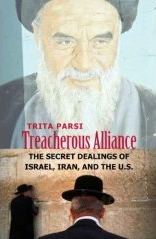
treaterousalliance.jpgHowever, as I discovered in the course of researching my book Treacherous Alliance – the Secret Dealings of Israel, Iran and the United States, not only does Netanyahu’s characterization of Iran have little relationship to reality; Netanyahu himself knows this better than most. Outside of the realm of cynical posturing by politicians, most Israeli strategists recognize that Iran represents a strategic challenge to the favorable balance of power enjoyed by Israel and the U.S. in the Middle East over the past 15 years, but it is no existential threat to the Israel, the U.S. or the Arab regimes.

And that was the view embraced by the Likud leader himself during his last term as prime minister of Israel. In the course of dozens of interviews with key players in the Israeli strategic establishment, a fascinating picture emerged of Netanyahu strongly pushing back against the orthodoxy of his Labor Party predecessors, Yitzhak Rabin and Shimon Peres, which treated Iran as one of Israel’s primary enemies. Not only that, he initiated an extensive discreet program of reaching out to the Islamic Republic. [complete article]

Editor’s Comment — Without wanting to understate Israel’s capacity for irrational behavior, it’s worth asking whether for the Israeli right there is one issue to which all others are subordinate. I would say that there is and that it is the consolidation of the territorial expansion that Israel has been engaged in for the last 40 years through building settlements in the West Bank. Even today, The Guardian reports on yet more seizure of Palestinian land that will allow a huge expansion of settlements. The greatest threat to this ongoing expansionist enterprise would come from the revival of the long-stalled peace process. The relentless construction of settlements, the construction of an apartheid road system separating Israeli and Palestinian traffic, and the construction of the so-called security barrier — these are all ways of making it clear, declarations to the contrary notwithstanding, that Israel has no intention of withdrawing to the 1967 borders.

And how does Iran fit into this equation? It presents a useful diversion through which in the shadow of a supposed existential threat, the development of the West Bank can continue all the way to the end of a window of opportunity — otherwise known as the Bush administration.

While Netanyahu’s neoconservative supporters in Washington can’t wait to see the bombs rain down on Iran, my suspicion (and it’s nothing more than that) is that Bibi will play the 1938 rhetoric for all it’s worth even while the prospect of a nuclear-armed Iran doesn’t cause him to loose a wink of sleep. Indeed, a silver-lining for Israel from a nuclear Iran is that that would provide the Jewish state with the perfect opportunity to come out of its own nuclear closet. It could claim that it was remaining true to its assertion that it would not have been the first state to “introduce” nuclear weapons to the region even if it was the first to deploy them — it simply didn’t make a fanfair about the fact; there was no declaration, no introduction. And with the balance of power having shifted towards Iran, the Israel lobby in Washington would have an easy time sustaining the United States’ financial commitment to Israel’s defense into perpetuity.

Having said that, a line that’s almost as popular as Netanyahu’s “1938”, is John McCain’s, “There is only one thing worse than the United States exercising a military option, that is a nuclear armed Iran.” The question thus remains, does the US and/or Israel truly believe that in such an attack the benefits outweigh the risks?

If Israel’s recent incursion into Syrian airspace was really as momentous an event as all the neocon chest-thumping would suggest, how come we still don’t know what happened? What might have been seen as a muscle-flexing exercise directed at Iran, at this point looks more like a very cautious dip of one toe in some icy water. While its success as a PR exercise is beyond question, its military significance remains in doubt.

And while the Iran-baiting rhetoric coming from American officials in Iraq has been escalating for months and months, it remains possible that the threshold will never be crossed from words to war. Everyone is playing an extremely dangerous game, yet the contest between those competing for the title, “master of destiny,” is a struggle between men, not one of whom has a clear view of the future.

Facebooktwittermail