Category Archives: Israel

World Jewry ever more uneasy with Israel, major study finds

The Times of Israel reports: World Jewry is finding it increasingly difficult to support Israel due to its ongoing conflict with the Palestinians, leading many communities to shun discussing the Jewish state altogether, a new major study has found.

The trend is eroding the Diaspora’s support for the Jewish state, warns the report by the Jewish People Policy Institute think tank, to be formally published next week.

While most Jews sympathize with Israel’s needs to wage war in self-defense and believe that its army acts according to high moral standards, there is growing discomfort with some Israeli policies they believe unnecessarily perpetuate conflict, according to the 100-page report by the JPPI, which was made available to The Times of Israel.

Diaspora Jews are not convinced that Israel is doing enough to prevent military conflicts and are troubled by the number of civilian casualties they often produce, though they generally blame Israel’s enemies for the bloodshed. The accusation of the use of “disproportionate force” makes it difficult for these Jews to defend Israeli actions. Somewhat paradoxically, however, Jews in the Diaspora are disappointed that Israel doesn’t manage to end its wars with decisive victories.

“Many Jews doubt that Israel truly wishes to reach a peace settlement with the Palestinians, and few believe it is making the necessary effort to achieve one,” according to the study’s author, Shmuel Rosner. [Continue reading…]

Facebooktwittermail

Israeli think tank with GOP ties at center of Iran deal opposition

McClatchy reports: With the U.S. Congress beginning hearings on the nuclear accord with Iran, Israeli opponents of the agreement are readying a full-court press to persuade that the deal has too many loopholes that would allow Iran to build a nuclear weapon.

“We will make our voice heard,” Foreign Affairs Ministry spokesman Emmanuel Nahshon told McClatchy. “We will not miss an opportunity to tell our side of the story because it is our moral duty.”

One Israeli think tank at the center of the campaign is the Jerusalem Center for Public Affairs, whose largest donor is U.S. casino magnate and Republican benefactor Sheldon Adelson.

Adelson and his wife, Miriam, gave $465,000 to political candidates and parties in 2014 – all to Republicans, according to the Center for Responsive Politics. Recipients in recent years included Republican presidential candidates Sens. Marco Rubio of Florida and Lindsey Graham of South Carolina, and both House Speaker John Boehner of Ohio and Senate Majority Leader Mitch McConnell of Kentucky. [Continue reading…]

Facebooktwittermail

‘Netanyahu cheered up by U.S. missile offer’: how the Onion scooped Haaretz

The Guardian reports: ‘US Soothes Upset Netanyahu With Shipment of Ballistic Missiles’ sounds like a headline from the Onion. And it is – except that this time it’s true. International media organisations have regularly been caught out by the satirical news site, fooled into thinking that Kim Jong-un really was voted the world’s sexiest man, or that Americans would prefer a beer with Mahmoud Ahmadinejad than Barack Obama.

But this time editors of the Israeli newspaper Haaretz were spooked by a story in the Onion from the previous day that matched what they had heard as fact.

Last week, the paper reported a senior US official as saying that Obama had spoken to the Israeli prime minister, Binyamin Netanyahu, offering to “begin immediate talks about upgrading the Israel Defence Forces’ offensive and defensive capabilities” after US negotiators reached a deal on Iran’s nuclear programme, which was condemned by Israel. But the day before, the Onion had published a tongue-in-cheek piece announcing that the Israeli government would receive “a nice, big shipment of ballistic missiles” to help them come to terms with the Iran deal. [Continue reading…]

Facebooktwittermail

Netanyahu steered U.S. toward war with Iran — the result is a deal he hates

Shibley Telhami writes: Much of the criticism of the Iran nuclear deal has focused on the fact that it is entirely limited to the nuclear issue, which leaves Iran a free hand — and new resources — to continue policies that have angered regional and international players. There is no denying that if Iran plays its hands well and uses the next decade to build its economic and political potential, its regional influence is likely to expand, as is its capacity to do the sort of things that have angered Israel and Gulf Arab states.

The deal’s biggest critic may be Israeli Prime Minister Benjamin Netanyahu, who called it “a historic mistake.” The irony is that the urgency with which the Obama administration pursued a nuclear deal was itself a product of Israeli actions. For Netanyahu, the deal was a good example of “be careful what you wish for.”

A little reminder is helpful here. To his credit, President Barack Obama succeeded early in his first term to get international support for sanctioning Iran — one critical reason for Iran’s willingness to take the negotiations more seriously. There have been deliberate and sustained efforts to continue pressuring Iran on multiple levels, including its behavior outside the nuclear issue. [Continue reading…]

Facebooktwittermail

Max Blumenthal: The next Gaza war

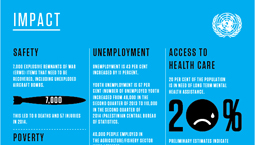
We’ve just passed the first “anniversary” — if such a word can even be used with such a catastrophe — of Operation Protective Edge, Israel’s third invasion of the Gaza Strip in recent years. That small bit of land has now suffered more devastation than just about any place on the planet. In the wake of the third war since 2008, more than 100,000 displaced Gazans remain homeless or crowded in with relatives. Whole neighborhoods, destroyed in the conflict, have yet to be rebuilt. A year later, there is still next to no electricity, the area’s sole power plant having been taken out by Israeli air strikes, and the situation when it comes to sewage and potable water, is disastrous. Blockaded and devastated by repeated wars, Gaza’s manufacturing sector has almost disappeared, while its economy is “on the verge of collapse,” according to the World Bank. In short, by any standard, Gaza is not a livable place and yet 1.8 million people (more than half of them under 18 years old, 43% under 15) are crammed into it with nowhere to go and in most cases nothing to do. After all, Gaza now has what may be the highest unemployment rate on the planet at 44%, with youth unemployment reaching 60%.

The great Israeli reporter Amira Hass, author of the classic book Drinking the Sea at Gaza: Days and Nights in a Land Under Siege, recently put the matter this way: “In practice, Gaza has become a huge, let me be blunt, concentration camp… This is not a novelty… This did not start, unlike what many people think, with the rise of Hamas… This policy of sealing off Gaza, of making Gazans into… defacto prisoners, started [in 1991]… So if I want to sum up the reality of Gaza: it is a huge prison… It is an Israel-meditated, pre-meditated, pre-planned, and planned project to separate Gaza from the West Bank.”

Max Blumenthal’s new book, The 51 Day War: Ruin and Resistance in Gaza, catches the nightmare of the third war in this tiny piece of land in the last six-and-a-half years in a uniquely gripping way. In its pages, you follow him directly into the devastation of the Israeli invasion. (He entered Gaza during the first extended truce of the war.) I doubt there could be a more vivid account of what it felt like, as a Palestinian civilian, to endure those weeks of horror, massive destruction, and killing. Today at TomDispatch, he looks back on that experience and forward to what he doesn’t doubt will be the fourth war of its kind. If he’s right, then sadly, in the years to come, some reporter will be writing yet another book on a Gaza war. Tom Engelhardt

The fire next time
Before homes are even rebuilt in the ruins of the Gaza Strip, another war looms
By Max Blumenthal

“A fourth operation in the Gaza Strip is inevitable, just as a third Lebanon war is inevitable,” declared Israeli Foreign Minister Avigdor Lieberman in February. His ominous comments came just days after an anti-tank missile fired by the Lebanon-based guerrilla group Hezbollah killed two soldiers in an Israeli army convoy. It, in turn, was a response to an Israeli air strike that resulted in the assassination of several high-ranking Hezbollah figures.

Lieberman offered his prediction only four months after his government concluded Operation Protective Edge, the third war between Israel and the armed factions of the Gaza Strip, which had managed to reduce about 20% of besieged Gaza to an apocalyptic moonscape. Even before the assault was launched, Gaza was a warehouse for surplus humanity — a 360-square-kilometer ghetto of Palestinian refugees expelled by and excluded from the self-proclaimed Jewish state. For this population, whose members are mostly under the age of 18, the violence has become a life ritual that repeats every year or two. As the first anniversary of Protective Edge passes, Lieberman’s unsettling prophecy appears increasingly likely to come true. Indeed, odds are that the months of relative “quiet” that followed his statement will prove nothing more than an interregnum between Israel’s ever more devastating military escalations.

Continue reading

Facebooktwittermail

Israeli special forces assassinated senior Syrian official in 2008

The Intercept reports: On Aug. 1, 2008, a small team of Israeli commandos entered the waters near Tartus, Syria, and shot and killed a Syrian general as he was holding a dinner party at his seaside weekend home. Muhammad Suleiman, a top aide to the Syrian president, was shot in the head and neck, and the Israeli military team escaped by sea.

While Israel has never spoken about its involvement, secret U.S. intelligence files confirm that Israeli special operations forces assassinated the general while he vacationed at his luxury villa on the Syrian coast.

The internal National Security Agency document, provided by former NSA contractor Edward Snowden, is the first official confirmation that the assassination of Suleiman was an Israeli military operation, and ends speculation that an internal dispute within the Syrian government led to his death. [Continue reading…]

Facebooktwittermail

Shakedown: Israeli opposition leader heads to Washington to ‘demand’ more money and weapons

The Jerusalem Post reports: Amid news of the nuclear deal reached between Iran and the P5+1 group of world powers, opposition leader Isaac Herzog (Zionist Union) announced Tuesday that he will be leaving for the US in the coming days to “demand a dramatic package of security measures for Israel.”

Voicing his disappointment over the deal, Herzog noted that a country that “funds, trains and nurtures terrorist organizations,” was both detrimental to Israel and to its future.

“With regard to security, I am more extreme than Netanyahu,” Herzog remarked. “In light of the situation, we must do everything within our power to improve our security,” he said. [Continue reading…]

The Times of Israel reports on the response from another opposition leader: Yesh Atid chairman Yair Lapid said Wednesday the Iran deal was the country’s biggest foreign policy failure ever.

“We stand today facing the greatest foreign policy failure by any Israeli prime minister since the establishment of the state,” Lapid told the Foreign Affairs and Defense Committee. “Netanyahu] is not [former British prime minister Winston] Churchill before the Second World War, he is [former Israeli prime minister] Golda [Meir] after the Yom Kippur War.”

The 1973 war, in which Israel was surprised by several Arab armies and needed urgent US airlifts of weapons, is considered one of the greatest strategic fiascoes in the history of the country. Then-prime minister Meir resigned in the wake of a commission of inquiry that analyzed Israel’s failure to see the war coming.

Lapid said that he would defend Israel to the world but added that a better agreement could have been reached:

“To the outside world, in English, we will support the government and explain to the whole world how dangerous this agreement is, and I have been doing this since yesterday,” he said. “But inside, in Hebrew, let’s face it – the prime minister failed in reaching a different agreement […] we could have had a deal in which the main issue is that of inspection. Sanctions could have been removed based on milestones [reached] and not according to a schedule, and then the deal would be different,” he said.

Lapid said Netanyahu has decimated Israel’s foreign relations: “Until yesterday the entire world was convinced the US and Israel always walk hand in hand. As of yesterday [the world] learned that the US will no longer listen to the prime minister, the Europeans won’t listen to the prime minister, the Chinese, the Russians, the Democrats [in the US], and he left scorched earth in Israel’s foreign relations. [Netanyahu] needs to go home after a failure of such colossal proportions. The prime minister cannot remain in office.” [Continue reading…]

Facebooktwittermail

Gaza one year after Israel’s Operation Protective Edge

Jadaliyya interviewed Nathan Thrall:
Jadaliyya (J): One year after Israel’s Operation Protective Edge, how would you describe the popular mood in the Gaza Strip? Is OPE still relevant for people, and if so, how? Do people reflect back on achievements, losses, or both?

Nathan Thrall (NT): There is widespread consensus among Gaza’s residents today that conditions there have never been worse. There is also widespread fatalism about the unlikelihood of breaking from the pattern of recurrent war with Israel. Walking in neighborhoods that were completely destroyed during the war, such as Shuja’iyya in Gaza City and parts of Beit Hanoun, I heard residents state pridefully that Israel had achieved nothing during the war and that they were ready to face Israel again. In the same breath, however, many of these same people then asked warily whether I thought a new war was coming. It’s clear that Gazans desperately want a normal life, free of war and free of the blockade. It’s also clear that they are quite likely to continue living with both.

The war looms behind the most quiet and normal scenes of daily life in Gaza. During the war, a close friend in Gaza City made each member of his family pack a small bag containing his or her most valuable documents, photographs, and belongings before placing the bag beside the front door. That way he and his wife, sons, and daughters would be able to evacuate the building quickly, without having to waste time arguing about which belongings were worth risking their lives to retrieve. Nearly one year later, those bags still sit beside the front door.

Since the war concluded there have been a number of bombings in Gaza. Some of these were Israeli airstrikes following a rocket launching that Hamas was unable to prevent. More often they were bombs detonated by Gazans, either salafi-jihadis or unidentified attackers targeting the homes and offices of Hamas and Fatah officials. In one instance in May, several died and dozens were injured when Israeli ordinance from the war exploded in Beit Lahiya. When I have been present in Gaza for some of these incidents, the first worry of Gaza residents I spoke with — in some cases, the first rumor spread among them — has been that the explosion marked the beginning of a new war with Israel.

The problems that helped precipitate the war not only remain unresolved but in many cases have become more acute.[Continue reading…]

Facebooktwittermail

Large majority of Democrats say Israel has ‘too much influence’ over U.S. foreign policy

The Times of Israel reports: Three quarters of highly educated, high income, publicly active US Democrats — the so-called “opinion elites” — believe Israel has too much influence on US foreign policy, almost half of them consider Israel to be a racist country, and fewer than half of them believe that Israel wants peace with its neighbors. These are among the findings of a new survey carried out by US political consultant Frank Luntz.

Detailing the survey results to The Times of Israel on Sunday, Luntz called the findings “a disaster” for Israel. He summed them up by saying that the Democratic opinion elites are converting to the Palestinians, and “Israel can no longer claim to have the bipartisan support of America.”

He said he “knew there was a shift” in attitudes to Israel among US Democrats “and I have been seeing it get worse” in his ongoing polls. But the new findings surprised and shocked him, nonetheless. “I didn’t expect it to become this blatant and this deep.”

“Israel has won the hearts and minds of Republicans in America, while at the same time it is losing the Democrats,” he said. On US politics, “I’m right of center,” he added. “But the Israeli government and US Jews have to focus on repairing relations with the Democrats.”

Luntz put a series of largely Israel-related questions to 802 members of the opinion elites and his findings have a 3.5% margin of error. The survey, sponsored by the Jewish National Fund, was conducted last week. Among the key findings: [Continue reading…]

Facebooktwittermail

France prepares sanctions against Israeli settlement policy

Uri Savir writes: Inside the European Union there is an ongoing debate regarding the desirability and scope of sanctions and punitive resources in relation to the Israeli government’s settlement policies. According to a senior source in the French Foreign Ministry who spoke with Al-Monitor on condition of anonymity, France is considering sharp economic measures against Israeli goods and businesses east of the Green Line. Settlements, the French official argued, are illegal according to international law and the EU should not apply its agreements with Israel to them. Sharp economic measures would translate into labeling of goods exported from the settlements as such (and not as ”made in Israel”), and excluding Israeli academic, research and development and cultural institutions that are active in the West Bank from any European funds or grants. Brussels, according to this source, has toughened its stance on implementing these policies following Israel’s March 17 elections.

The French, the official added, are considering taking even more severe measures if a peace process on the two-state solution is not launched by the end of 2015. France intends to coordinate these policies with other EU countries.

In the meantime, the French themselves intend to rigidly ensure that all exported Israeli goods emanating from Israeli settlements are indeed labeled accordingly, and that any EU funding to Israeli entities will be dependent on the submission of a declaration stating that the entity in question has no direct or indirect links to the West Bank or East Jerusalem. Concretely, the first to be hurt by these measures would probably be Israeli banks with branches east of the Green Line. [Continue reading…]

Facebooktwittermail

Israeli navy intercepts ship in flotilla sailing toward Gaza Strip

The New York Times reports: Israeli Navy forces intercepted a ship that was sailing toward the Gaza Strip early Monday to protest a maritime blockade of the coastal enclave, military officials and activists said.

The ship was intercepted in international waters and was being led to the southern Israeli port of Ashdod, a military statement said.

Pro-Palestinian activists have repeatedly sought to reach Gaza by sea, an action that Israel regards as highly provocative, to protest restrictions on the movement of both people and material in and out of the enclave. [Continue reading…]

Facebooktwittermail

Is BDS the only pro-Israel option left?

Mark LeVine writes: Just a year ago, the boycott, divestment and sanctions (BDS) movement was no more than a minor irritant in the eyes of the majority of Israeli and Diaspora Jewish leaders. The boycott of settlement products — with a value of $30 million per year in a GDP of $36 billion — while politically worrisome, was limited. The Knesset and the country’s National Science Foundation both released studies declaring the academic boycott’s impact marginal, and the number of artists refusing to play Israel remained manageably small.

What a difference a year makes. Today BDS is described as an existential threat to Israel; its potential cost is estimated at upward of $5 billion per year. Entire ministries are being tasked with combating it. The self-described “richest Jew in the world,” casino magnate Sheldon Adelson, has convinced other wealthy pro-Israel Jews to commit upward of $50 million to setting up programs on college campuses to aggressively fight it.

There are four reasons the “noise” — as Fitch Ratings financial analyst Paul Gamble described it for The Jewish Week — of BDS became a roar. First, the occupation of the West Bank has become so concentrated that it can no longer be dissolved into a larger narrative of a modern, Western Israel. Israel’s matrix of control is so dense that it is simply impossible to hide from the occupation or pretend it doesn’t exist. [Continue reading…]

Facebooktwittermail

Another futile report on Israel’s wild adventure in Gaza

Gideon Levy writes: The United Nations Human Rights Council’s report did not tell us anything new. We did not need to wait a year to know that Israel (and Hamas) committed war crimes; there was no need to impanel a committee to know that Israel went wild in Gaza; there was no need to bother judge Mary McGowan Davis in order for her to tell us that it is unacceptable to drop a one-ton bomb in the middle of a neighborhood. We have known that for a long time.

The UN report also did not tell us anything new about Israel’s response. There was no need to publish it to know the scope of unreceptiveness and denial within Israeli society, the low level to which the Israeli media stooped in finally allowing itself to become an agent of propaganda, and the lack of interest that all this killing and destruction in Gaza arouse in Israel. We have known all that for a long time.

The world knows the fundamental truths, and every commission repeats them like a parrot, and nothing changes: Israel ignores international law. It is convinced that it applies to all countries, except for itself. According to its combat theory, when the life of one Israeli soldier is at stake it is alright to wreak havoc with everything, and when Israel says everything it means everything. There is no chance Israel will change its doctrine of death and destruction, unless it is punished severely. Therefore this report, like all its predecessors, has no value at all.

If the Goldstone Report, which described in harsher colors a less brutal attack, did not prevent Operation Protective Edge, then why do we need all these reports? If the international community, which knew in real time what the Israel Defense Forces was doing in Gaza, did not respond immediately with actions that would stop it, then there is no reason for these commissions of inquiry after the fact.

If in the wake of this commission, too, the international community does not take practical steps against war criminals, then there is no further reason for commissions. [Continue reading…]

Facebooktwittermail

Operation Hannibal: Why Israel risks killing its own soldiers rather than see them get captured

Dan Ephron writes: On the morning of August 1, 2014, during the broadest Israeli assault on the Gaza Strip in years, a squad of Hamas fighters emerged from a shaft in the ground near the town of Rafah and ambushed three Israeli soldiers. The Israelis, members of an elite reconnaissance unit from the Givati Brigade, had been searching for a tunnel in the area, one of a network that the militant group Hamas had built under the Palestinian territory in recent years. In humid 80-degree heat, a firefight ensued that killed two of the Israelis and one of the Palestinians. It lasted less than a minute.

The war in Gaza, which had raged for three weeks by then and claimed the lives of dozens of Israelis and some 1,500 Palestinians, seemed to be tapering off. The ambush near Rafah would have gone down as one more skirmish. But as the surviving Palestinians retreated, they did something that would turn that Friday into the bloodiest day of the summer and embroil Israel in a possible war-crimes ordeal that reverberates even now: They dragged the third Israeli, Lieutenant Hadar Goldin, with them underground.

The sound of the gunfire drew other Israeli soldiers to the site, including Lieutenant Eitan Fund, the reconnaissance unit’s second-in-command. What Fund saw when he got there — bodies on a sandy road and an opening in the ground a few feet away — filled him with dread. Dead soldiers were disturbing enough, but for Israel, a missing fighter was about the worst possible outcome of any battlefield engagement. The last time Hamas had seized a soldier was in 2006: Corporal Gilad Shalit’s captivity lasted five years and set off a searing national trauma.

Fund, who was 23, had come to know Goldin during an officers’ training course. The two had also studied at the same religious seminary in the West Bank before their service. Fund radioed the details to his brigade commander, Col. Ofer Winter, and asked permission to take a squad underground. Winter instructed the lieutenant to drop a grenade and lower himself in. He then announced over the radio the start of a controversial procedure that Israel deploys when a soldier is taken captive: “Hannibal, Hannibal.”

To the military in the United States and around the world, Israel serves as a kind of laboratory for battle tactics, especially those involving counterinsurgency. Its wars with guerrilla groups like Hamas and Lebanon’s Hezbollah — four in the past nine years — are pored over for the lessons they hold and the questions they raise. The story of Hadar Goldin raises one question in particular: How far should a modern military go to prevent one of its own from being captured?

For the United States, the answer has centered mostly on technology. Today’s American troops go into battle with portable computers and GPS devices, including a system known as Blue Force Tracking that allows commanders in Humvees to “see” their forces in the arena. Ground troops are also monitored by satellites and drones. This combination of new technologies has produced a staggering drop in battlefield captives in Afghanistan and Iraq compared with previous wars. But the risks of combat remain great: U.S. Army Sergeant Salvatore Giunta became the first living Medal of Honor recipient in the war in Afghanistan, in part, for rescuing a comrade being dragged away by the Taliban during an ambush in 2007.

Israel has its own technology, of course, but it supplements those tools with a tactic the army revived in the aftermath of the Shalit ordeal — code word Hannibal — that calls for a massive use of force when a soldier is captured. Two Israelis familiar with the wording of the classified procedure described it to me as measured and restrictive. But from conversations with others, including more than a dozen Israelis in and out of uniform, it’s clear that soldiers often interpret it as something less nuanced—a kind of signal from commanders that a dead Israeli fighter is better than a captured one. Fund seemed to share that interpretation. As he entered the shaft, he told one of his squad members: “If you see something, open fire, even if it means killing Hadar or wounding Hadar.” [Continue reading…]

Facebooktwittermail

Obama administration restates its commitment to shelter war criminals

UPI reports: The Obama administration opposes bringing a United Nations report on the 2014 war between Israel and Hamas in the Gaza Strip to the Security Council for a vote, the State Department said.

State Department spokesman John Kirby said Tuesday the United States continues to review the U.N. report that found evidence of war crimes on the part of both the Israeli and Hamas-led Palestinian forces. Kirby said the United States calls into question the U.N. Human Rights Council’s process of appointing the investigative committee because of a “very clear bias against Israel.”

“We challenge the very mechanism which created it. And so we’re not going to have a readout of this. We’re not going to have a rebuttal to it. We’re certainly going to read it, as we read all U.N. reports,” Kirby said. “But we challenge the very foundation upon which this report was written, and we don’t believe that there’s a call or a need for any further Security Council work on this.”

The 200-page report found, among other things, 1,462 Palestinian civilians were killed by Israeli fire, noting over one-third were children. It added a large number of families lost three or more members in airstrikes against residences. Six Israeli civilians died during the conflict. [Continue reading…]

Facebooktwittermail

Palestinians giving up on statehood, Israeli ex-security chief says

The Times of Israel reports: The death of the two-state solution among the Palestinians is no secret to the Israelis, nor is it mourned by government officials. To the political echelon, the threat of a binational state is not sufficiently tangible, and the possibility that radical Islam will take over the West Bank if there should be a peace agreement seems more real.

But things sound different in the defense establishment, and particularly among those who have left it. Quite a few former generals, Shin Bet directors and Mossad chiefs have warned any number of times that maintaining the status quo in the territories, which has become a kind of strategy in Netanyahu’s era, could change the face of the State of Israel.

“I’m hearing from various Palestinian officials with whom I am in contact that they have given up on the two-state solution as an option for resolving the conflict,” says former Shin Bet chief Yuval Diskin, 59, who now owns a hi-tech firm in Herzliya. [Continue reading…]

Facebooktwittermail

UN report on Israel’s 2014 war on Gaza says those responsible for war crimes ‘must be brought to justice’

The Guardian reports: A United Nations inquiry into the 2014 Gaza war has accused Israeli and Palestinian factions of multiple potential violations of international law including suspected war crimes.

Calling on Israel to “break with its lamentable track record” and hold wrongdoers responsible, the hard-hitting report commissioned by the UN human rights council laid most of the blame for Israel’s suspected violations at the feet of the country’s political and military leadership. The commission said leaders should have been aware as the war progressed that their failure to change course was leading to huge civilian casualties.

“Those responsible for suspected violations of international law at all levels of the political and military establishments must be brought to justice,” it says. [Continue reading…]

Facebooktwittermail

Israel needs Hamas to prevent ISIS gaining a foothold in Gaza

The Associated Press reports: Nearly a year after a devastating war, Israel and Gaza’s Hamas rulers appear to have formed an unspoken alliance in a common battle against the shared threat of jihadis aligned with the Islamic State group.

While Israel and Hamas remain arch-enemies, both have an interest in preserving an uneasy calm that has prevailed since the fighting ended in a cease-fire last August — a stalemate that is largely the result of a lack of options on either side.

More than 2,200 Palestinians were killed in last year’s fighting, according to Palestinian officials, and Hamas suffered heavy losses. It is isolated internationally, Gaza’s economy is in tatters and reconstruction efforts have moved slowly. A renewal of hostilities would be devastating for Gaza’s 1.8 million people.

On the Israeli side, 73 people, including 67 soldiers, were killed in last year’s fighting, and the summer-long war disrupted the lives of millions of people as they coped with repeated rocket attacks and air-raid sirens. But Hamas, which seized power in Gaza eight years ago, has survived three wars, and the cost of toppling the group would be extremely high, so Israel appears content to contain Hamas and keep things quiet.

Hamas officials say that efforts are underway, through Qatari mediators, to work out a long-term cease-fire. The deal would call for Israel to ease a stifling blockade on Gaza in exchange for Hamas pledges to disarm, the officials said, speaking on condition of anonymity because they were discussing sensitive negotiations. It is unclear whether any progress has been made in the cease-fire efforts, which include Hamas demands to reopen sea and airports in Gaza. Israeli officials declined comment. [Continue reading…]

Facebooktwittermail