Early morning on 27 July, Israeli bulldozers, flanked by helicopters and throngs of police, demolished the entire Bedouin village of al-Araqib in the northern Negev desert. Despite their land rights cases still pending in the court system, hundreds of al-Araqib villagers were instantly made homeless a month after Israeli police posted demolition orders.
Eyewitness reports say the police were accompanied by several busloads of right-wing Israeli civilians who cheered during the demolitions.
The Electronic Intifada spoke with Dr. Yeela Ranaan of the Regional Council for Unrecognized Villages (RCUV) in the Negev, who was in al-Araqib all day long during the demolitions.
“Approximately 1,500 Israeli police came at 5:30 in the morning and evacuated everyone from their beds,” Ranaan said. “They brought tear gas and water cannons, but didn’t use them. There was a handful of Israeli peace activists who had come the night before to stay with the villagers, and the police beat them up and detained them. Once they evacuated everyone in the village, they started to demolish it. It took three hours to flatten the village. For the people of al-Araqib, it was a nightmare to see their village destroyed.”
Since the establishment of the State of Israel in 1948, al-Araqib villagers have been fighting for recognition in the courts. Ranaan told The Electronic Intifada that in the early 1950s, after they were forcefully expelled from their land by Israeli forces, villagers were fined for “trespassing” in their own homes by the Israeli government. Israel has refused to acknowledge al-Araqib villagers’ land deeds and receipts of land taxes paid to the Ottoman authorities well before Israel’s establishment.
“As we speak, the fate of al-Araqib hasn’t been decided in a court,” Ranaan said. “Despite this, Israel came and demolished the homes. Israel is not just changing the facts on the ground, it’s erasing them.”
Category Archives: Israel
Avrum Burg: Israeli democracy has lost its internal substance
Avrum Burg, former MK from the Labor Party, Speaker of the Knesset, and head of the Jewish Agency, has a new political vision:
The time has come for an Israeli party, a Jewish-Arab party, that will carry the banner of total commitment to equality, without a trace of discrimination and racism. It will be without Meretz’s complications and Hadash’s emotional baggage. A party that will sail far beyond the paradigms of classic Zionism, which to this day ignores the place of Israel’s Arabs. A party that will demand full equality for all Israel’s citizens, the kind of equality we demand for the Jews in the Diaspora wherever they live.
The party Israel Equality (Shivyon Yisrael ) – with the acronym Shai in Hebrew, gift – will fight for a state that will be a total democracy; everything else will be either personal or on the community level. The party will wrestle with the sanctimonious internal contradiction of “a Jewish and democratic state,” which means a great deal of democracy for the Jews and too much Jewish nationalism for the Arabs. It will be the party of those who are committed to the supreme universal and Israeli cultural values of human dignity, the search for peace and a desire for freedom, justice and equality.
Those who vote for it and its candidates will accept the definition of Israel as “a state whose regime is democratic and egalitarian, and which belongs to all its citizens and communities. The state in which the Jewish people have chosen to renew their sovereignty and where they realize their right to self-determination.” The practical expression of this commitment will be a supreme effort to change the social balance of power, which is unjust, to give equal opportunities to the entire population in Israel, regardless of national background, ethnic origin, race, sex or sexual preference.
Is this a step in the right direction? Sort of. But it’s a bit like a guy who shouts: “I have a big announcement: I’m going to get married!” Then, when asked who the bride-to-be is, he sheepishly responds: “Oh, we haven’t met yet — but we will.”
If this is going to be a state in which the Jewish people have chosen to renew their sovereignty and where they realize their right to self-determination, will it also be a state in which the Palestinian people have chosen to renew their sovereignty and where they realize their right to self-determination?
Burg says his new party “will wrestle with the sanctimonious internal contradiction of ‘a Jewish and democratic state’,” but if Israel has been wrestling with this contradiction throughout its existence, isn’t there a need to resolve the contradiction and not merely carry on wrestling with it?
Burg says: “The greatest internal threat to Israel’s existence is the erosion of Israeli democracy, which has already lost its internal substance — the values of freedom and total commitment to all its citizens.”
He got that right. And instead of presenting the promise of change through the creation of a party that so far lacks a visible foundation, maybe Burg’s energies would be better employed delivering his message that Israeli democracy is collapsing to Americans who imagine otherwise.
Israel: a strategic asset or liability?
On Tuesday, July 20, The Nixon Center hosted a luncheon discussion on “Israel: Strategic Asset or Liability?” in which Ambassador Chas Freeman, Jr., (US ambassador to Saudi Arabia for the George H.W. Bush administration from 1989 to 1992) delivered the following remarks:
Is Israel a strategic asset or liability for the United States? Interesting question. We must thank the Nixon Center for asking it. In my view, there are many reasons for Americans to wish the Jewish state well. Under current circumstances, strategic advantage for the United States is not one of them. If we were to reverse the question, however, and to ask whether the United States is a strategic asset or liability for Israel, there would be no doubt about the answer.
American taxpayers fund between 20 and 25 percent of Israel’s defense budget (depending on how you calculate this). Twenty-six percent of the $3 billion in military aid we grant to the Jewish state each year is spent in Israel on Israeli defense products. Uniquely, Israeli companies are treated like American companies for purposes of U.S. defense procurement. Thanks to congressional earmarks, we also often pay half the costs of special Israeli research and development projects, even when — as in the case of defense against very short-range unguided missiles — the technology being developed is essentially irrelevant to our own military requirements. In short, in many ways, American taxpayers fund jobs in Israel’s military industries that could have gone to our own workers and companies. Meanwhile, Israel gets pretty much whatever it wants in terms of our top-of-the-line weapons systems, and we pick up the tab.
Identifiable U.S. government subsidies to Israel total over $140 billion since 1949. This makes Israel by far the largest recipient of American giveaways since World War II. The total would be much higher if aid to Egypt, Jordan, Lebanon, and support for Palestinians in refugee camps and the occupied territories were included. These programs have complex purposes but are justified in large measure in terms of their contribution to the security of the Jewish state.
Per capita income in Israel is now about $37,000 — on a par with the UK. Israel is nonetheless the largest recipient of U.S. foreign assistance, accounting for well over a fifth of it. Annual U.S. government transfers run at well over $500 per Israeli, not counting the costs of tax breaks for private donations and loans that aren’t available to any other foreign country.
These military and economic benefits are not the end of the story. The American government also works hard to shield Israel from the international political and legal consequences of its policies and actions in the occupied territories, against its neighbors, or — most recently — on the high seas. The nearly 40 vetoes the United States has cast to protect Israel in the UN Security Council are the tip of iceberg. We have blocked a vastly larger number of potentially damaging reactions to Israeli behavior by the international community. The political costs to the United States internationally of having to spend our political capital in this way are huge.
Where Israel has no diplomatic relations, U.S. diplomats routinely make its case for it. As I know from personal experience (having been thanked by the then Government of Israel for my successful efforts on Israel’s behalf in Africa), the U.S. government has been a consistent promoter and often the funder of various forms of Israeli programs of cooperation with other countries. It matters also that America — along with a very few other countries — has remained morally committed to the Jewish experiment with a state in the Middle East. Many more Jews live in America than in Israel. Resolute American support should be an important offset to the disquiet about current trends that has led over 20 percent of Israelis to emigrate, many of them to the United States, where Jews enjoy unprecedented security and prosperity.
Clearly, Israel gets a great deal from us. Yet it’s pretty much taboo in the United States to ask what’s in it for Americans. I can’t imagine why. Still, the question I’ve been asked to address today is just that: what’s in it — and not in it — for us to do all these things for Israel.
We need to begin by recognizing that our relationship with Israel has never been driven by strategic reasoning. It began with President Truman overruling his strategic and military advisers in deference to personal sentiment and political expediency. We had an arms embargo on Israel until Lyndon Johnson dropped it in 1964 in explicit return for Jewish financial support for his campaign against Barry Goldwater. In 1973, for reasons peculiar to the Cold War, we had to come to the rescue of Israel as it battled Egypt. The resulting Arab oil embargo cost us dearly. And then there’s all the time we’ve put into the perpetually ineffectual and now long defunct “peace process.”
Still the US-Israel relationship has had strategic consequences. There is no reason to doubt the consistent testimony of the architects of major acts of anti-American terrorism about what motivates them to attack us. In the words of Khalid Sheikh Mohammed, who is credited with masterminding the 9/11 attacks, their purpose was to focus “the American people … on the atrocities that America is committing by supporting Israel against the Palestinian people….” As Osama Bin Laden, purporting to speak for the world’s Muslims, has said again and again: “we have … stated many times, for more than two-and-a-half-decades, that the cause of our disagreement with you is your support to your Israeli allies who occupy our land of Palestine….” Some substantial portion of the many lives and the trillions of dollars we have so far expended in our escalating conflict with the Islamic world must be apportioned to the costs of our relationship with Israel.
It’s useful to recall what we generally expect allies and strategic partners to do for us. In Europe, Asia, and elsewhere in the Middle East, they provide bases and support the projection of American power beyond their borders. They join us on the battlefield in places like Kuwait and Afghanistan or underwrite the costs of our military operations. They help recruit others to our coalitions. They coordinate their foreign aid with ours. Many defray the costs of our use of their facilities with “host nation support” that reduces the costs of our military operations from and through their territory. They store weapons for our troops’, rather than their own troops’ use. They pay cash for the weapons we transfer to them.
Israel does none of these things and shows no interest in doing them. Perhaps it can’t. It is so estranged from everyone else in the Middle East that no neighboring country will accept flight plans that originate in or transit it. Israel is therefore useless in terms of support for American power projection. It has no allies other than us. It has developed no friends. Israeli participation in our military operations would preclude the cooperation of many others. Meanwhile, Israel has become accustomed to living on the American military dole. The notion that Israeli taxpayers might help defray the expense of U.S. military or foreign assistance operations, even those undertaken at Israel’s behest, would be greeted with astonishment in Israel and incredulity on Capitol Hill.
Military aid to Israel is sometimes justified by the notion of Israel as a test bed for new weapons systems and operational concepts. But no one can identify a program of military R&D in Israel that was initially proposed by our men and women in uniform. All originated with Israel or members of Congress acting on its behalf. Moreover, what Israel makes it sells not just to the United States but to China, India, and other major arms markets. It feels no obligation to take U.S. interests into account when it transfers weapons and technology to third countries and does so only under duress.
Meanwhile, it’s been decades since Israel’s air force faced another in the air. It has come to specialize in bombing civilian infrastructure and militias with no air defenses. There is not much for the U.S. Air Force to learn from that. Similarly, the Israeli navy confronts no real naval threat. Its experience in interdicting infiltrators, fishermen, and humanitarian aid flotillas is not a model for the U.S. Navy to study. Israel’s army, however, has had lessons to impart. Now in its fifth decade of occupation duty, it has developed techniques of pacification, interrogation, assassination, and drone attack that inspired U.S. operations in Fallujah, Abu Ghraib, Somalia, Yemen, and Waziristan. Recently, Israel has begun to deploy various forms of remote-controlled robotic guns. These enable operatives at far-away video screens summarily to execute anyone they view as suspicious. Such risk-free means of culling hostile populations could conceivably come in handy in some future American military operation, but I hope not. I have a lot of trouble squaring the philosophy they embody with the values Americans traditionally aspired to exemplify.
It is sometimes said that, to its credit, Israel does not ask the United States to fight its battles for it; it just wants the money and weapons to fight them on its own. Leave aside the question of whether Israel’s battles are or should also be America’s. It is no longer true that Israel does not ask us to fight for it. The fact that prominent American apologists for Israel were the most energetic promoters of the U.S. invasion of Iraq does not, of course, prove that Israel was the instigator of that grievous misadventure. But the very same people are now urging an American military assault on Iran explicitly to protect Israel and to preserve its nuclear monopoly in the Middle East. Their advocacy is fully coordinated with the Government of Israel. No one in the region wants a nuclear-armed Iran, but Israel is the only country pressing Americans to go to war over this.
Finally, the need to protect Israel from mounting international indignation about its behavior continues to do grave damage to our global and regional standing. It has severely impaired our ties with the world’s 1.6 billion Muslims. These costs to our international influence, credibility, and leadership are, I think, far more serious than the economic and other burdens of the relationship.
Against this background, it’s remarkable that something as fatuous as the notion of Israel as a strategic asset could have become the unchallengeable conventional wisdom in the United States. Perhaps it’s just that as someone once said: “people … will more easily fall victim to a big lie than a small one.” Be that as it may, the United States and Israel have a lot invested in our relationship. Basing our cooperation on a thesis and narratives that will not withstand scrutiny is dangerous. It is especially risky in the context of current fiscal pressures in the United States. These seem certain soon to force major revisions of both current levels of American defense spending and global strategy, in the Middle East as well as elsewhere. They also place federally-funded programs in Israel in direct competition with similar programs here at home. To flourish over the long term, Israel’s relations with the United States need to be grounded in reality, not myth, and in peace, not war.
Israel’s slide towards fascism
In a 2003 issue of Free Inquiry, Laurence W. Britt innumerated the characteristics of fascism:
1. Powerful and continuing expressions of nationalism.
2. Disdain for the importance of human rights.
3. Identification of enemies/scapegoats as a unifying cause.
4. The supremacy of the military/avid militarism.
5. Rampant sexism.
6. A controlled mass media.
7. Obsession with national security.
8. Religion and ruling elite tied together.
9. Power of corporations protected.
10. Power of labor suppressed or eliminated.
11. Disdain and suppression of intellectuals and the arts.
12. Obsession with crime and punishment.
13. Rampant cronyism and corruption.
14. Fraudulent elections.
To this list I would add an overarching trend: an unremitting narrowing of the political space through which dissent is marginalized and then criminalized.
Israel might not yet exhibit all the attributes of a fascist state, but it is certainly on a fascist trajectory.
On Sunday, the human rights activist, former Israeli air force pilot and conscientious objector Yonatan Shapira, was summoned to a meeting with an agent from the Shabak (formally known as “Shin Beit”, Israel’s internal security service).
This is how the secret police operate: place a firm hand on the shoulder of the political dissident and attempt to steer him in the right direction. Show him the boundaries of what the authorities will tolerate and offer subtle or not so subtle warnings about the consequences of actions deemed a threat to national security. The preservation of peace, protection of the state and the duties of the patriotic citizen — these are the terms within which authoritarian rule couches the application of its power.
Noam Sheizaf provides a translation of Yonatan’s description of his interview:
Yesterday Rona from the Shabak called me and asked me to come talk to meet her in the police station on Dizengof st. (Tel Aviv). She refused to tell me what was it about, but made it clear I wasn’t going to be arrested, and that this is just an acquaintance or “a friendly talk”…
At five o’clock I got to the Dizengof police station and was sent to the second floor of the rear building, where a guy who presented himself as Rona’s security guard waited for me. I was taken to a room and subjected to a pretty intimate search to make sure I didn’t install any recording device on my testicles. After I was found clean I was let into Rona’s room. She was a nice looking girl, apparently from a Yemeni origin, in her early thirties.
Rona told me that I she knew I was active in the BDS (movement) and (calling for) an economical boycott of Israel, and she wanted to know what else do I do as part of these activities. I told her that everything (that I do) is well known and published in the internet and the media, and that I have nothing to add, and that I wasn’t going to talk to her.
Rona emphasized that there is a Knesset bill that might soon make my activities illegal. She went on and tried to get me into a political debate, asking if I know that the BDS is in fact a Palestinian organization.
Rona raised the issue of the graffiti in Warsaw and asked it was my own idea or another part of the BDS. She asked if I understood that I crossed a line and hurt many people’s feeling. Obviously the Shabak feeling’s (were hurt) as well… I offered her again to listen to interviews and read article on the issue. She said she did listen and read, but she wanted to know more. I told her I would be happy to give a public lecture to anyone who wants to hear, but not (talk about it) in a Shabak interrogation.
Apart from the BDS issue she asked me if I knew that the demonstrations in Bil’in and Ni’ilin are illegal, and that the entire area is closed for Israelis and internationals each Friday from 8.00 am to 8.00 pm. She went into length explaining how the soldiers feel in these demonstrations and that it irritates them when I talk to them and when I answer them.
Rona said she was there herself and that stones were thrown at her, and that it was really unpleasant. She said that the fact that Israelis are present there makes the Palestinians more violent, and that I have to think how the poor soldiers feel, and that all she is trying to do is for the good of the country and out of her will to defend the people living here.
I answered that all I do is out of a will to defend the people living here as well, and I asked where did she get all the information on my activities and whether they are listening to my phone. She said that she can’t answer this, but that generally speaking the Shabak has more important things to do, so I asked her whet I was doing here and why was I invited to a kind political interrogation if they have more important things to do.
I asked again if they are listening to my phone calls and Rona said she can’t answer that.
She asked me not to publish the content of our conversation because she wasn’t the type who wants publicity… I answered that as a person committed to a non-violent struggle against the occupation I would talk and publish anything I can, including the content of this conversation and future ones, if these will be such.
I documented the entire conversation on a piece of paper until Rona started discussing this paper and what I was writing down. Eventually she confiscated the dangerous piece of paper, claiming that I was not allowed to have any recording device in, and that what I was doing was illegal.
Luckily I remembered most of the conversation and Rona hasn’t confiscated my memory yet. Maybe (it will happen) in our next meeting.
That’s it. There might have been more details but from what I get these were the main issues. I understood that what they were after was our involvement in the BDS, and that they might even be preparing files for the moment the new law is passed.
Yonatan.
Noam Sheizaf says: “Yonatan could be right in assuming the police or the Shabak is putting together files on Israelis involved in the BDS. One of the many anti-democratic aspects of the new Knesset bill is that it will be possible to enforce it on past actions as well.”
Pulse included a public statement subsequently issued by Yonatan:
Even though this isn’t the best way to start or finish your day, my conversation with Rona from the Shabak was like a nature walk in summer-camp, when you compare it to what Palestinian citizens of Israel and residents of the Occupied Territories are going through. Amir Makhoul, Resident of Heifa is still caged without us knowing what the Shabak allegations against him are. Samieh Jabarin, resident of Jaffa, was under house arrest for long months, and of course, thousands of Palestinians in the [Occupied] Territories that Rona and her friends were- and will be- less “friendly” and polite to. This includes torture and bodily injuries and murder that will never be published and will forever stay buried in the Shabak basements and in the memories of those who survived.
On Sunday, I’ve experienced the tip of the tip of the iceberg of the processing of that which is called the only democracy in the Middle East. Today it happens to Israelis that express solidarity with the nonviolent Palestinian struggle, and tomorrow the circle will widen and widen. Until it will reach those who feel that they’re actually OK and that there’s no chance that Rona will call them, too.
IHH — The Foundation for Human Rights and Freedoms and Humanitarian Relief
At Huffington Post, Iara Lee from Cultures of Resistance, writes:
In the immediate aftermath of the massacre aboard the Mavi Marmara on May 31st, 2010, while journalists and activists were detained and isolated from the world, the Israeli government was quick to unleash their own version of events. Like the physical assault on the boat, the Israeli media assault was also reckless, clumsy, malicious, and dangerous. They were cynical enough to understand that first impressions in the mainstream American media are what count, and with this in mind they began to frantically hurl the word “terrorist” in reference to both the victims of their attack, as well as one of the main organizers of the Gaza Freedom Flotilla, the Turkish NGO IHH. It is a curious thing that few people asked the Israeli government why they would release “terrorists” that they had in their custody, and even fewer asked for (or received) solid evidence to support this claim. Despite the fact that several courageous journalists both in the US and abroad thoroughly debunked the Israeli account of what happened (this includes deliberately doctored footage along with the libelous accusations of links to terrorism), the damage was done.
Before speakers from the Mavi Marmara were scheduled to speak in New York about what happened on May 31st, local politicians began to put forth the rhetoric of their Israeli handlers, using slanderous language to demonize the victims of Israel’s illegal act of war. And most recently, 87 US senators have urged President Obama to launch an investigation of whether or not IHH should be added to the US list of foreign terrorist organizations.
I am a firm believer that actions speak louder than words, and in this spirit I thought it might help to take a closer look at IHH, and judge this group based on their actions, rather than empty words.
IHH began in 1992 as a humanitarian mission to offer relief to victims injured and displaced during the Bosnian war. They have held Special Consultative Status with the United Nations Economic and Social Council since 2004, and since becoming a fully-registered NGO in 1995, IHH — The Foundation for Human Rights and Freedoms and Humanitarian Relief — has accumulated more than 60,000 volunteers for their grassroots humanitarian efforts in 120 countries all over the world. Since May 31st, the number of volunteers has skyrocketed.
After the attack on the Mavi Marmara, I had an opportunity to ask the vice president of IHH, Huseyin Oruc, about accusations of IHH terror links. While he was not interested in dignifying such claims, he was very emphatic about the transparency of IHH’s work over the years, and hoped people would look at their large-scale sanitation and medical missions around the African continent — including 40,000 cataract surgeries in Sudan alone, clean water projects in Ethiopia- and IHH’s extensive work dealing with orphans in Iraq, Afghanistan, Pakistan, Bangladesh, and Gaza. While they are an Islamic organization, Oruc told me that IHH refuses to differentiate who receives attention based on religion, race, or political affiliation, and has noted their various projects in South America where Muslim populations are slight.
Their modus operandi is simple and direct. Given the neutrality of their humanitarian mission, IHH has been able to access some of the most inaccessible and dangerous regions of the world to help those most in need. Like most NGOs, this means they must coordinate with local governments in order to reach these populations. So while they must communicate with the Hamas government of Gaza to help civilians there, they must likewise do so with Fatah in the West Bank, Al Shabab in Somalia, the military junta in Myanmar and so on. Oruc was adamant that this did not mean IHH endorses any of those governments, and said that anyone who cared to investigate their work would find nothing other than great successes in helping ordinary people in situations of war, poverty, and natural disasters in places such as Haiti, Indonesia, and even the US in the aftermath of Hurricane Katrina. He also told me people were free to investigate their funding, most of which comes from lower and middle class donors, while the rest is raised through food fairs, auctions for Turkish artifacts, and other cultural events. By its own mandate, IHH is not beholden to any government or business interests.
We must remember that an attack on IHH is an attack on all humanitarian groups around the world. Given that IHH is among the most courageous humanitarian NGOs in the world — risking their lives to work in places like Somalia, cleaning up American messes in Iraq and Afghanistan — our politicians should perhaps be thanking them, rather than trying to tarnish their stellar reputation. Thankfully, IHH’s track record speaks for itself, as do the actions of their accusers — a comparison which does not calculate favorably for the Israeli government when asking just who, exactly, the terrorists are.
Qualitative Military Edge — another name for Israeli brutality backed by the US

On October 15, 2008, just three weeks before the US presidential election, George Bush signed into law the Naval Vessel Transfer Act which had been sponsored by one of Israel’s most loyal supporters in the US Congress, Rep. Howard Berman.
The new law, which from its title might have been assumed to relate primarily to the sale of ships from the US Navy to foreign governments, actually had a much more important purpose: to place every American president under a legal obligation to ensure that Israel maintains its military dominance over the Middle East.
What had previously been a matter of foreign policy, suddenly became law — law written to meet the interests of a foreign government.
Israel’s regional hegemony is legally enshrined in the concept of Israel’s “Qualitative Military Edge” (QME). The US Government must now guarantee that “the sale or export of the defense articles or defense services will not adversely affect Israel’s qualitative military edge over military threats to Israel.”
The law states:
[T]he term ‘qualitative military edge’ means the ability to counter and defeat any credible conventional military threat from any individual state or possible coalition of states or from non-state actors, while sustaining minimal damages and casualties, through the use of superior military means, possessed in sufficient quantity, including weapons, command, control, communication, intelligence, surveillance, and reconnaissance capabilities that in their technical characteristics are superior in capability to those of such other individual or possible coalition of states or non-state actors. [Emphasis mine.]
Andrew J Shapiro is the Assistant Secretary of State for Political-Military Affairs. One of his primary responsibilities is to ensure that Israel maintains its qualitative military edge. Does he serve the US government or the Israeli government? It’s far from clear.
This is how he presented the United States’ obligation to serve Israel’s interests in a speech he delivered at the Brookings Institute in Washington on Friday:
For decades, the cornerstone of our security commitment to Israel has been an assurance that the United States would help Israel uphold its qualitative military edge — a commitment that was written into law in 2008. Israel’s QME is its ability to counter and defeat credible military threats from any individual state, coalition of states, or non-state actor, while sustaining minimal damages or casualties. The Obama Administration has demonstrated its commitment to Israel’s QME by not only sustaining and building upon practices established by prior administrations, but also undertaking new initiatives to make our security relationship more intimate than ever before.
Each and every security assistance request from the Israeli Government is evaluated in light of our policy to uphold Israel’s Qualitative Military Edge. At the same time, QME considerations extend to our decisions on defense cooperation with all other governments in the region. This means that as a matter of policy, we will not proceed with any release of military equipment or services that may pose a risk to allies or contribute to regional insecurity in the Middle East.
The primary tool that the United States uses to ensure Israel’s qualitative military edge is security assistance. For some three decades, Israel has been the leading beneficiary of U.S. security assistance through the Foreign Military Financing program, or FMF. Currently, Israel receives almost $3 billion per year in U.S. funding for training and equipment under FMF. The total FMF account is $5 billion annually and is distributed among some 70 countries. So it is a testament to our special security relationship that each year Israel accounts for just over 50 percent of U.S. security assistance funding distributed through FMF.
The Obama Administration is proud to carry on the legacy of robust U.S. security assistance for Israel. Indeed, we are carrying this legacy to new heights at a time when Israel needs our support to address the multifaceted threats it faces.
For Fiscal Year 2010, the Administration requested $2.775 billion in security assistance funding specifically for Israel, the largest such request in U.S. history. Congress fully funded our request for FY 2010, and we have requested even more — $3.0 billion — for FY 2011. These requests fulfill the Administration’s commitment to implementing the 2007 memorandum of understanding with Israel to provide $30 billion in security assistance over 10 years.
This commitment directly supports Israel’s security, as it allows Israel to purchase the sophisticated defense equipment it needs to protect itself, deter aggressors, and maintain its qualitative military edge. Today, I can assure you that — even in challenging budgetary times — this Administration will continue to honor this 10-year, $30 billion commitment in future fiscal years. [Emphasis mine.]
Code Pink’s Medea Benjamin challenged Shapiro during Q&A:
[I]t pains me to hear you sound more like an agent of the Israeli government than a U.S. representative because as you travel around the world you see that this “special relationship” really endangers us, makes us more hated around the world. So I wonder if you would be willing to step in other shoes and go to Gaza, see the results of the Israeli invasion there, see the destruction, talk to people in Gaza, talk to the elected government, which is Hamas. You don’t have to like them to talk to them. I also wonder if you’ve spent any time with people in the West Bank and East Jerusalem to see what it feels like for Palestinians, the daily humiliations they suffer.
And I also wonder, given the financial crisis here at home and the great needs of impoverished nations around the world, couldn’t you think of a better use of $3 billion than giving it to a wealthy country like Israel that is abusing the human rights of Palestinians on a daily basis?
Benjamin drew a round of applause — Shapiro declined to respond directly to her challenge.
As Shapiro noted, the concept of Israel’s QME has been in use for decades, but it was only when the Bush administration let Israel draft American law, that QME turned into a license to use force with impunity.
In January 2008, William Wunderle, a U.S. Army lieutenant colonel, and Andre Briere, a U.S. Air Force lieutenant colonel, wrote in a paper for The Washington Institute for Near East Policy:
The US commitment to maintain Israel’s qualitative military edge (QME) is a long-standing tradition that every president since Lyndon Johnson has maintained and reiterated. The basic principle behind this commitment is simple: Israel is a bastion of liberal representative government in the Middle East, and, as such, its continued survival is a vital national interest of the United States. To ensure this longtime ally’s continued existence in a sea of nations that reflexively call for its destruction, Israel must be able to defend itself militarily and deter potential aggression. In this effort, Israel will always be militarily outnumbered with regard to the artillery, tanks, and combat aircraft that can be deployed by a coalition of Arab states. Israel’s continued survival can be ensured only if it is able to maintain qualitative military superiority, relying on superior weaponry, tactics, training, leadership, and other factors of military effectiveness to deter or defeat its numerically superior adversaries in the Middle East.
In other words, the US policy advocated that Israel should be able to counter a quantitative disadvantage with a qualitative advantage. It said nothing about supporting Israel’s use of that advantage at minimal cost. The expression after all was qualitative military edge — not supremacy.
These analysts noted however that:
Israel defines QME as “the ability to sustain credible military advantage that provides deterrence and, if need be, the ability to rapidly achieve superiority on the battlefield against any foreseeable combination of forces with minimal damage and casualties.”
The Israeli phrasing went straight into US law which says that Israel must maintain the ability to use military force “while sustaining minimal damages and casualties.”
Let’s put that in context. The law was signed just two years after Israel had visibly lost its qualitative military edge in Lebanon in 2006 when it faced Hezbollah, and less than three months before it used the assault on Gaza to once again demonstrate its ability to wreak massive destruction while sustaining minimal damages and casualties.
The war on Gaza, which President-elect Obama watched in silence, showed not merely the brutality that Israel is willing to use under America’s political protection, but the extent to which Israel’s military agenda is empowered through its ability to control the United States Government.
The war on Gaza was QME in action.
Netanyahu: America is easy to push around
Note: Click “CC” button to view English subtitles.
In 2001, while he believed he was speaking in private, Netanyahu revealed his contempt for the United States (“something that can easily be moved”) and took pride in having halted the peace process (“I actually stopped the Oslo Accord”).
The then-former Israeli prime minister was visiting a Jewish settlement in the West Bank to pay his condolences to the family of a man shot by a Palestinian. Three minutes into the conversation, Netanyahu requested that the video camera be switched off so that he could speak ‘freely’ but in mid-conversation, the camera resumed operation.
Dena Shunra, a Hebrew-English translator living and working in the United States, provided a translation of the conversation which was broadcast on Israel’s Channel 10. The following transcript published by Mondoweiss, runs from 3.15 to about minute 8.
Netanyahu: Are you starting to understand what the slogan “Judea and Samaria are right here”?
What does Arafat want? He wants one big settlement. It’s called “Tel Aviv”.Woman: Yes, that’s what my daughter in law, who comes from England, that what she says: “Tel Aviv is a settlement too.”
Netanyahu: As far as they’re concerned, I think, our territorial waters are also their?
-?
[inaudible]Netanyahu: The fact is that they want us in the sea, yes, but over there in the sea [points aside]. The Arabs are currently focusing a war of terror and they think it will break us. The main thing, first of all, is to hit them. Not just one hit, so many painful its that the price will be to heavy to be borne. The price is not too heavy to be borne, now. A broad attack on the Palestinian Authority. To bring them to the point of being afraid that everything is collapsing.
Woman: They’re not afraid, they’re making fun of us. They shoot into our settlement and make fun of us.
Netanyahu: Fear that everything is collapsing. That’s what leads them to… [makes a hand motion]
Woman: wait a moment, but then the world will say “how come you’re conquering again?”
Netanyahu: the world won’t say a thing. The world will say we’re defending.
Woman: Aren’t you afraid of the world, Bibi?
Netanyahu: Especially today, with America. I know what America is. America is something that can easily be moved. Moved to the right correction.
Child: They say they’re for us, but, it’s like…
Netanyahu: They won’t get in our way. They won’t get in our way.
Child: On the other hand, if we do some something, then they…
Netanyahu: So let’s say they say something. So they said it! They said it! 80% of the Americans support us. It’s absurd. We have that kind of support and we say “what will we do with the…” look. That administration was extremely pro-Palestinian. I wasn’t afraid to maneuver there. I was not afraid to clash with Clinton. I was not afraid to clash with the United Nations. I was paying the price anyway, I preferred to receive the value. Value for the price.
Child: But never mind that we gave them things, and we can’t take them back. Because they won’t give them back to us.
Netanyahu (holds his and to stop him from speaking): first of all, first of all Oslo is a system – you’re right. A, I don’t know what can be taken and can’t be taken.
Woman: he has political opinions, believe me.
Netanyahu: He’s right.
Woman: He said such things to Arik Sharon that I told him: that’s not – that’ not a child’s opinion. The Oslo Accords are a disaster.
Netanyahu: Yes. You know that and I knew that.
Woman: Fine, so I thought that…
Netanyahu: The people [nation] has to know.
Woman: Right. But I thought that the prime minister did know, and that he’d do everything so that, somehow, not to do critical things, like handing over Hebron, that…
Netanyahu: What were the Oslo Accords? The Oslo Accords, which the Knesset signed, I was asked, before the elections: “Will you act according to them?” and I answered: “yes, subject to mutuality and limiting the retreats.” “But how do you intend to limit the retreats?” “I’ll give such interpretation to the Accords that will make it possible for me to stop this galloping to the ’67 [armistice] lines. How did we do it?
Narrator: The Oslo Accords stated at the time that Israel would gradually hand over territories to the Palestinians in three different pulses, unless the territories in question had settlements or military sites. This is where Netanyahu found a loophole.
Netanyahu: No one said what defined military sites. Defined military sites, I said, were security zones. As far as I’m concerned, the Jordan Valley is a defined military site.
Woman: Right [laughs]. The Beit She’an settlements. The Beit She’an Valley.
Netanyahu: How can you tell. How can you tell? But then the question came up of just who would define what Defined Military Sites were. I received a letter – to my and to Arafat, at the same time – which said that Israel, and only Israel, would be the one to define what those are, the location of those military sites and their size. Now, they did not want to give me that letter, so I did not give the Hebron Agreement. I stopped the government meeting, I said: “I’m not signing.” Only when the letter came, in the course of the meeting, to my and to Arafat, only then did I sign the Hebron Agreement. Or rather, ratify it, it had already been signed. Why does this matter? Because at that moment I actually stopped the Oslo Accord.
Woman: And despite that, one of our own peope, excuse me, who knew it was a swindle, and that we were going to commit suicide with the Oslo Accord, gives them – for example – Hebron. I never understood that.
Netanyahu: Indeed, Hebron hurts. It hurts. It’s the thing that hurts. One of the famous rabbis, whom I very much respect, a rabbi of Eretz Yisrael, he said to me: “What would your father say?” I went to my father. Do you know a little about my father’s position?
Woman: Yes.
Netanyahu: My father is…
Child: No. [laughs]
Woman: He’ll read in a little while.
Netanyahu: He’s not exactly a lily-white dove, as they say. So my father heard the question and said: “Tell the rabbi that your grandfather, Rabbi Natan Milikowski, was a smart Jew. Tell him it would be better to give two percent than to give a hundred percent. And that’s the choice here. You gave two percent and in that way you stopped the withdrawal. Instead of a hundred percent.” The trick is not to be there and break down. The trick is to be there and pay a minimal price.
Woman: May you say that as prime minister.
Netanyahu: In my estimate that will happen.

How Netanyahu wrecked the peace process
When Barack Obama said last week, “I believe Prime Minister Netanyahu wants peace,” the president either revealed himself to be a much bigger fool than he is generally regarded, or, thought he must be addressing fools if he imagined his declaration would be taken seriously, or and most likely, assumed everyone reporting his words would know they were horse shit yet no one would be so rude as to point out the fact.
When Netanyahu in 2001 said, “America is a thing you can move very easily,” he was speaking the plain truth that every Israeli leader knows and every American president is ashamed to admit.
Liel Leibovitz at Tablet Magazine reports:
A newly revealed tape of Netanyahu in 2001, being interviewed while he thinks the cameras are off, shows him in a radically different light [from the way he recently presented himself at the White House]. In it, Netanyahu dismisses American foreign policy as easy to maneuver, boasts of having derailed the Oslo accords with political trickery, and suggests that the only way to deal with the Palestinians is to “beat them up, not once but repeatedly, beat them up so it hurts so badly, until it’s unbearable” (all translations are mine).
According to Haaretz’s Gideon Levy, the video should be “Banned for viewing by children so as not to corrupt them, and distributed around the country and the world so that everyone will know who leads the government of Israel.”
Netanyahu is speaking to a small group of terror victims in the West Bank settlement of Ofra two years after stepping down as prime minister in 1999. He appears laid-back. After claiming that the only way to deal with the Palestinian Authority was a large-scale attack, Netanyahu was asked by one of the participants whether or not the United States would let such an attack come to fruition.
“I know what America is,” Netanyahu replied. “America is a thing you can move very easily, move it in the right direction. They won’t get in their way.” He then called former president Bill Clinton “radically pro-Palestinian,” and went on to belittle the Oslo peace accords as vulnerable to manipulation. Since the accords state that Israel would be allowed to hang on to pre-defined military zones in the West Bank, Netanyahu told his hosts that he could torpedo the accords by defining vast swaths of land as just that.
“They asked me before the election if I’d honor [the Oslo accords],” Netanyahu said. “I said I would, but … I’m going to interpret the accords in such a way that would allow me to put an end to this galloping forward to the ’67 borders. How did we do it? Nobody said what defined military zones were. Defined military zones are security zones; as far as I’m concerned, the entire Jordan Valley is a defined military zone. Go argue.”
Why Israel is so unpopular
Larry Derfner writes in the Jerusalem Post:
All the Islamic countries are afraid of Israel, and for good reason — because this country is much stronger than all of them put together. We do things to the Palestinians, to Syria, to Lebanon and, reportedly, to Iran that we would never let anyone do to us in a million years — and they can’t stop us. They are extremely reluctant to even try; our military power deters them.
So what more do we want from our enemies before we’ll stop screwing with them? Love? Recognition of the justice of the Zionist cause? An admission that they were wrong all these years and we were right?
If that’s what we’re waiting for, we came to the wrong neighborhood. If we’re going to go on intercepting ships until their sponsors accept our right to keep Gaza under lock and key, we’re going to be engaged in gunboat diplomacy for a long time. If we think we can rule the West Bank Palestinians until they give up even nonviolent resistance, fly spy planes over Lebanon until Hizbullah agrees that we have the right to bear arms but it doesn’t, and bomb enemy nuclear sites until the whole Middle East acknowledges Israel as its sole, rightful nuclear power, then our future here is untenable.
Maybe the United States and Russia can hold sway over their regions, maybe they can have spheres of influence, but a little Jewish state surrounded by 57 Muslim states cannot. Neither our enemies nor our friends will allow us to be a mini-empire, a hegemon, for long. That’s a recipe for escalating, never-ending conflict.
The new cry of gevalt around here is that Israel’s legitimacy is under worldwide attack — but the truth is that the West has accepted the legitimacy of the Jewish state since 1947, and nothing’s changed. As for the Muslim world, it never has and never will accept the legitimacy of the Jewish state — but it has accepted the hard fact of it since the Six Day War.
Between Israel’s legitimacy in the West and deterrent power in the Middle East, we have what we need to survive as a Jewish state within our rightful, democratic borders. But we can’t survive as the neighborhood bully.
Remote-controlled killing
It takes just a week to train young Israeli women in the latest form of remote killing. Haaretz reports: “When the training program for the operators was being developed, the IDF wanted to learn from the experience of another country’s army, but couldn’t find a force doing anything similar.”
It is called Spot and Shoot. Operators sit in front of a TV monitor from which they can control the action with a PlayStation-style joystick.
The aim: to kill terrorists.
Played by: young women serving in the Israeli army.
Spot and Shoot, as it is called by the Israeli military, may look like a video game but the figures on the screen are real people — Palestinians in Gaza — who can be killed with the press of a button on the joystick.
The female soldiers, located far away in an operations room, are responsible for aiming and firing remote-controlled machine-guns mounted on watch-towers every few hundred metres along an electronic fence that surrounds Gaza.
The system is one of the latest “remote killing” devices developed by Israel’s Rafael armaments company, the former weapons research division of the Israeli army and now a separate governmental firm.
According to Giora Katz, Rafael’s vice-president, remote-controlled military hardware such as Spot and Shoot is the face of the future. He expects that within a decade at least a third of the machines used by the Israeli army to control land, air and sea will be unmanned.
The demand for such devices, the Israeli army admits, has been partly fuelled by a combination of declining recruitment levels and a population less ready to risk death in combat.
Oren Berebbi, head of its technology branch, recently told an American newspaper: “We’re trying to get to unmanned vehicles everywhere on the battlefield … We can do more and more missions without putting a soldier at risk.”
Rapid progress with the technology has raised alarm at the United Nations. Philip Alston, its special rapporteur on extrajudicial executions, warned last month of the danger that a “PlayStation mentality to killing” could quickly emerge.
According to analysts, however, Israel is unlikely to turn its back on hardware that it has been at the forefront of developing – using the occupied Palestinian territories, and especially Gaza, as testing laboratories.
Remotely controlled weapons systems are in high demand from repressive regimes and the burgeoning homeland security industries around the globe.
When honesty gets dangerous, liars succeed

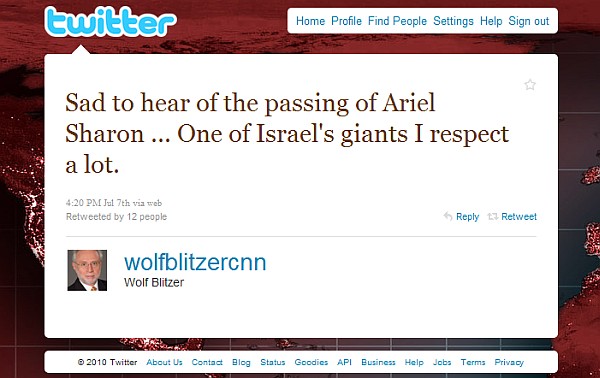
No, Ariel Sharon has not just died. But when he does, will Wolf Blitzer lose his job if he writes a tweet like the one above (a fake of course, created by yours truly)?
Certainly not, because as Glenn Greenwald correctly noted yesterday: “The speech prohibitions and thought crimes on the Middle East all run in one direction: to enforce ‘pro-Israel’ orthodoxies.”
Then again, Blitzer (who was at AIPAC and the Jerusalem Post before moving to CNN) will have no need to let his Zionist colors fly within the confines of a tweet. He’ll be content to report gushing praise for the former Israeli prime minister from President Obama or President Whoever, the day Sharon dies — a day when little if anything with be said in the Washington political/media establishment about Sharon’s personal responsibility in the slaughter of as many as 2,000 Palestinians killed in the Sabra and Shátila massacre in Beirut in 1982.
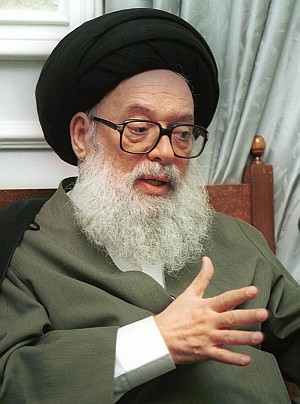
CNN’s Octavia Nasr, on the other hand, has been found guilty of praising Sayyid Mohammed Hussein Fadlallah, a man whose stature Sharon could never match — and for that offense, as has now been widely reported, the Lebanese-born journalist lost her job.
As Frances Guy, Britain’s ambassador to Lebanon, wrote in a blog post soon after Fadlallah’s death (a post she later removed “after mature consideration” according to the British Foreign Office):
When you visited him you could be sure of a real debate, a respectful argument and you knew you would leave his presence feeling a better person. That for me is the real effect of a true man of religion; leaving an impact on everyone he meets, no matter what their faith. Sheikh Fadlallah passed away yesterday. Lebanon is a lesser place the day after but his absence will be felt well beyond Lebanon’s shores. I remember well when I was nominated ambassador to Beirut, a muslim acquaintance sought me out to tell me how lucky I was because I would get a chance to meet Sheikh Fadlallah. Truly he was right. If I was sad to hear the news I know other peoples’ lives will be truly blighted. The world needs more men like him willing to reach out across faiths, acknowledging the reality of the modern world and daring to confront old constraints. May he rest in peace.

So why did CNN’s Nasr lose her job for expressing sadness at Fadlallah’s death? After all, his name is not a household word outside the Middle East.
Nasr’s mistake may well not have been that she expressed appreciation for this particular eminent Shia cleric but that she referred to him as one of “Hezbollah’s giants.”
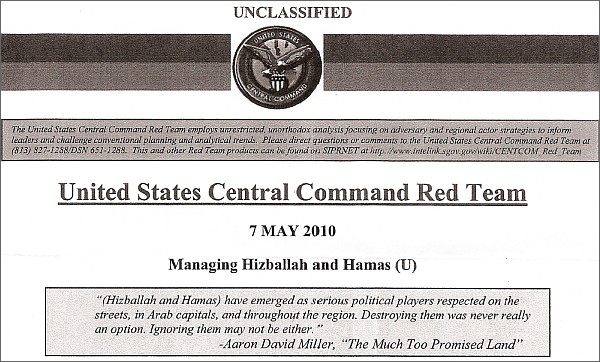
So here’s one of the many ironies in this incident: while the Israel lobby controls the mainstream media with a well-oiled censorship machine that would be the envy of Joseph Goebbels, freedoms that journalists are being terrorized to abandon are nevertheless being exercised inside the US military. At CNN Hezbollah cannot be mentioned without also being demonized, yet at CENTCOM there are those calling for the powerful militia to be brought in from the cold. As Mark Perry revealed last month, a recent Red Team report called for the integration of Hezbollah into the Lebanese Armed Forces.
As for Sayyid Fadlallah himself, Lebanon’s prime minister, Saad Hariri — an Arab leader of the variety much-loved in the West — praised the cleric as “a voice of moderation and an advocate of unity.”
One of the reasons Fadlallah has been condemned by successive US governments is because of his alleged connections to the 1983 bombing in Beirut that killed 241 American servicemen, yet Robert Baer, who was himself a CIA field officer in Beirut, says: “there never has been a shred of evidence that Fadlallah was responsible for the Marine bombing, other than his preaching against foreign occupation.”
Opposing foreign occupation — this indeed was Fadlallah’s principal offense.
In his New York Times obituary, Fadlallah’s “extremism” was supposedly evident when in 2002 he told the Daily Telegraph:
[The Palestinians] have had their land stolen, their families killed, their homes destroyed, and the Israelis are using weapons, such as the F16 aircraft, which are meant only for major wars. There is no other way for the Palestinians to push back those mountains, apart from martyrdom operations.
Which reminds me of a line I came across on Facebook recently: a terrorist is someone with a bomb but no air force.
Fadlallah was also guilty of questioning the Holocaust — a commonplace attitude in the Middle East that must surely perplex many in the West. Even so, that attitude is, I suspect, much more one of sentiment than historical perspective. The Holocaust, as a justification for the dispossession and slaughter of Palestinians, has as much relevance as do the childhood traumas of a murderer when recounted to the murder victim’s family. This is context that does nothing to color the crime. Indeed, Holocaust doubt, thus provoked, can be seen as a direct effect of Holocaust exploitation.
Perhaps Sayyid Fadlallah is best remembered not through a tweet or a State department classification but in his own words:
Throughout my life, I have always supported the human being in his humanism and [I have supported] the oppressed… I think it is the person’s right to live his freedom… and [it is his right] to face the injustice imposed on him by revolting against it, using his practical, realistic and available means to end the oppressor’s injustice toward him, whether it is an individual, a community, a nation, or a state; whether male or female. God created the people free; thus no one has the right to enslave people and no one has the right to enslave himself for others. Imam Ali said “do not be a slave of others, as God created you free.”
UAE ambassador confirms: Palestine is the core issue
During a stage interview with Yousel al Otaiba, the UAE ambassador to the United States, Jeffrey Goldberg made it clear that even when acting as a representative of The Atlantic and helping facilitate a forum in Aspen, Colorado, he still sees himself first and foremost as an Israeli.
When the ambassador pointed out that Iran’s nuclear program presents a greater risk to the UAE than it does to the US — the US being separated from Iran by two oceans — Goldberg requested clarification. Was he being addressed as an American or as a “representative of the Jewish people”? In Goldberg’s mind, to be Jewish means to have ones heart in Israel irrespective of where one might reside on the planet.
As Goldberg’s blog posts after the interview also made clear, when it comes to Iran, the topic that interests him above all else right now is pumping up support for a military strike against Iran. When the UAE ambassador pointed out that Palestine is the core issue in the region, Goldberg simply glossed over the fact.
This is the key section of the interview — the part Goldberg ignored, as did his friend Eli Lake at the Washington Times, when pumping out this week’s rendition of Israel’s Arabs-united-against-Iran narrative. Here the ambassador makes it clear that the only significant leverage Obama has on the issue of Iran is to push hard for the creation of a Palestinian state.
YOUSEF AL OTAIBA: I think President Obama has inherited two very difficult campaigns in Afghanistan and Iraq. He has inherited the worst financial crisis since 1929. He is now dealing with what seems to be an unfixable oil spill, not just environmentally, but economically, from an energy standpoint. So President Obama has his hands full.
Do I think he recognize the threat from Iran? Yes, I do. Do I think he has very limited options and not necessarily a lot of ability to fix it? Yes. I think President Obama is just constrained with the lack of resources and tools at his disposal. And if he’s heard anything from the Arab leaders that he talks to, most of them, and I’m fairly sure that King Abdullah when he was here mentioned the same thing.
For him to really make progress on the Iran issue and to deal with extremism and to deal with terrorism in the region, to deal with radicalized home-grown terrorism in the U.S., you need to address the peace process. That is the one core issue everyone tends to blame, and that’s what the people hang all their problems on.
Well, the Palestinians are, you know, they are — they don’t have a country, they are abused, they are oppressed, and the U.S. always sides with Israel. So the sooner U.S. appears to be objective and impartial and create a Palestinian state, we take that argument away from everyone, and that is in everyone’s best interest.
JEFFREY GOLDBERG: Why would that stop Iran from developing a nuclear weapon?
OTAIBA: It won’t stop. It will get you all the Arab countries more aligned on containing Iran because now they use Palestine as an excuse, and the Palestine issue is a deep political problem. And I’m not saying it’s only the U.S.’ fault, I’m saying it is as much Israel and Palestine’s fault for not making any progress on it themselves. But lack of their kind of commitment, the U.S. needs to step in and say, you need to do this. And you need to do this for your sake, for our sake, and for the region’s sake. [Emphasis mine.]
So, contrary to the claims being made by Jeffrey Goldberg and others in the Israel lobby, the principal call coming from the Arab world is not for the US to strike Iran but rather that it apply its influence on Israel and hasten the creation of a Palestinian state.
Who’s pushing to strike Iran?
[Update: See this post which confirms that Goldberg twisted the narrative here.]
After an exchange between the UAE ambassador to the US Yousef al-Otaiba and Jeffrey Goldberg on Tuesday we learn that “the UAE would sooner see military action against Iran’s nuclear program than see the program succeed” — at least that’s what Goldberg says.
But the ambassador also said: “There are many countries in the region who, if they lack the assurance the US is willing to confront Iran, they will start running for cover towards Iran.”
In other words, countries like the UAE will ultimately align themselves with whichever ends up being the most durable power in the region. Even so, autocratic rulers who rely on American support would naturally like the defender of their tenuous legitimacy to maintain its regional dominance.
The Washington Times quotes from the same exchange between Goldberg and al-Otaiba in Aspen:
“I think it’s a cost-benefit analysis,” Mr al-Otaiba said. “I think despite the large amount of trade we do with Iran, which is close to $12 billion … there will be consequences, there will be a backlash and there will be problems with people protesting and rioting and very unhappy that there is an outside force attacking a Muslim country; that is going to happen no matter what.”
“If you are asking me, ‘Am I willing to live with that versus living with a nuclear Iran?,’ my answer is still the same: ‘We cannot live with a nuclear Iran.’ I am willing to absorb what takes place at the expense of the security of the UAE.”
And this is how Goldberg interprets the UAE/Arab position:
It is not only Israel that fears the rise of a nuclear Iran; the Arabs, if anything, fear such a development to a greater degree. The Jews and Arabs have been fighting for one hundred years. The Arabs and the Persians have been going at for a thousand. The idea of a group of Persian Shi’ites having possession of a nuclear bomb scares Arab leader like nothing else — it certainly scares them more than the reality of the Jewish bomb.
Goldberg speaks for Netanyahu and the lobby, but the UAE government does not accept his interpretation of their ambassador’s remarks:
The UAE Assistant Foreign Minister for Political Affairs, Tareq al Haidan said today that the statements attributed by the Washington Times to the UAE Ambassador to the United States, Youssef al Otaiba “are not precise”.
“These statements came as part of general discussions held on the sidelines of an unofficial gathering and were taken out of their context in which Mr. Otaiba was speaking,” Mr al Haidanl said.
“Iran is a neighboring country and we maintain historic relations with it.” He stressed that “the UAE respects and believes in the sovereignty of other states and in the principle of non-interference, of all forms, in their internal affairs.”
“Already, the UAE declared, more than one time and in official statements issued by the Foreign Ministry, its position on the Iranian nuclear issue,” Mr al Haidan added.
“The UAE totally rejects the use of force as a solution to the Iranian nuclear issue and rather calls for a solution through political means that are based on the international legitimacy, transparency as well as the need for working, through the International Atomic Energy Agency [IAEA], on the right of all states to the peaceful use of nuclear energy.
“The UAE, at the same time, believes in the need of keeping the Gulf region free of nuclear weapons,” Mr al Haidan said.
As for whether the Arab world is as vexed about Iran as Goldberg claims, perhaps a clearer indication came from one of Israel’s few allies, Jordan, when King Abdullah spoke to the Wall Street Journal in April:
WSJ: What do you think when you look at Iran and international policy. There’s a lot of talk now about how active Iran is in Iraq as far as trying to push their political clients. Do you see it active in Hezbollah/Lebanon? In the Palestinian territories? Is the engagement track working?
HM KING ABDULLAH: Again, I look at it from a different angle. If there are those that are saying that Iran is playing mischief, then I say it is being allowed to play mischief. The platform they use is the injustice of the Palestinians and Jerusalem. So if you start taking those cards off the table, then Iranian influence on the Mediterranean through Hezbollah and Hamas in Gaza diminishes or becomes non existent. My view is that I am really against any military action in Iran, that is Pandora’s box. But by dealing with the core issue, that’s when you start taking cards away from the Iranian regime.
The core issue is Palestine — not an Iranian bomb — and a strike on Iran, that’s Pandora’s box.
Just because Obama put on a shameless performance yesterday to please the Israelis and the lobby, and just because there is no evidence that he is a man of principle, doesn’t mean he’s stupid. He knows what Pandora’s box looks like and he’s just as reluctant as anyone else to find out what it contains.
The war Israel can’t win
At The Daily Beast, historian Thaddeus Russell writes:
When Israeli Prime Minister Benjamin Netanyahu visits the White House Tuesday, President Obama will have the chance to be the first American president since the founding of Israel to ask The Question.
The Question is never addressed by Israel’s supporters and rarely raised by Israel’s detractors. But for those of us who are taxpayers in a nation that has been the state of Israel’s chief benefactor for 42 years — or those of us with Jewish ancestry — it is becoming the only question to ask. It is simple, self-interested, and fundamental: Does the existence of Israel make Americans and Jews safer?
And here is the paradox: Though support for Israel among Americans, and especially Jewish Americans, remains high according to recent Gallup polls, historical evidence says the answer to The Question is “no.”
“There was not a single act of Arab terrorism against Americans before 1968, when the U.S. became the chief supplier of military equipment and economic aid to Israel.”The history of Israel and its relationship with the U.S. is infinitely complex, but there’s one damning fact that’s ignored as often as The Question: There was not a single act of Arab terrorism against Americans before 1968, when the U.S. became the chief supplier of military equipment and economic aid to Israel. In light of this fact, it’s difficult to credibly sustain the argument that Arab terrorism is spawned by Islam’s alleged promotion of violence and antipathy toward American culture or by a “natural” Arab anti-Semitism. It also suggests that no matter what policies Israel enacts to protect itself — even a withdrawal from the occupied territories or a two-state “solution” — it must be a perpetual wartime state.
Very few Americans today are aware that the question of American and Jewish self-interest was first raised at the time of Israel’s founding by officials in the highest levels of the U.S. government. In 1948, several members of Harry Truman’s Cabinet predicted that the creation of a Jewish state in the Middle East would spur Arab violence against Jews and Americans, advising the president to shun Israel.
These included Secretary of State George Marshall, Defense Secretary James Forrestal, and George Kennan, then the leading policy strategist in the State Department. They argued that if the United States helped to set up an independent Jewish nation it would provoke terrorist attacks on Americans and inaugurate an endless war between Arabs and Jews. “There are 30 million Arabs on one side and about 600,000 Jews on the other,” Forrestal told those in the administration who favored recognizing Israel. “Why don’t you face up to the realities?”
Israel apologists will plead that Thaddeus Russell’s commentary is one more instance among international efforts — rapidly gaining steam — to delegitimize Israel.
Strangely, in response to what is perceived as a campaign of degitimization, there is, as far as I’ve seen, no Israel legitimization campaign. Those mounting a defense, do nothing more than attack their critics — and usually do so with an unbridled viscousness.
For instance, Robin Shepherd, writing in the Jerusalem Post about a decision last week by the Methodist Church of Britain to launch a boycott against goods emanating from settlements in the West Bank and East Jerusalem, says:
Overall, a church that behaves in the manner of the Methodists has buried its credibility under a gigantic dunghill of intransigence, pedantry, lies and distortions.
But let us not allow this matter to rest with a mere recognition of whom and what they have chosen to become.
If the Methodist Church is to launch a boycott of Israel, let Israel respond in kind: Ban their officials from entering; deport their missionaries; block their funds; close down their offices; and tax their churches.
If it’s war, it’s war. The aggressor must pay a price.
While it’s often said that attack is the best form of defense, that principle does not hold in the art of persuasion (and rarely for that matter in national security). The ranks cheering an attack such as Shepherd’s are small and shrinking. Indeed, the more venomous Israel and its supporters become, the less sympathy the Jewish state will evoke and the closer we will move to a critical juncture: where the world has given up on Israel and Israel has given up on the world. At that point, Israel’s isolation becomes the world’s nuclear peril.
Israel bans parachutes from Gaza
If Hamas had plans to form a paratroopers brigade, these will now need to be put on hold.
Israel’s long-awaited release of its blacklist of items banned from importation into the strip include parachutes. How exactly parachutes might be used in Gaza, if the ban gets lifted, is hard to envisage. What’s the use of a parachute if you can’t fly?
As Israel eases its economic blockade on Gaza, the manner by which it does so exposes the multi-layered deceit with which the siege was imposed and now unravels.
In its new policy, Israel now specifies which items are banned rather than which are allowed entry. But a ban on arms and munitions and items which could be used to develop, produce or enhance the military capabilities of the Gaza militias, begs a rather obvious question: were any such items allowed into Gaza before the siege started four years ago?
Of course not. So the idea that Israel’s goal, now or ever, has simply been to stem the flow of weapons into Gaza, doesn’t add up. Indeed, if that had actually been Israel’s primary concern it would have avoided creating a situation in which the principal conduit for the flow of goods into the strip had been through an unmonitored system of tunnels. Now as always, the easiest way to regulate what comes in and out of the Palestinian enclave is through carefully controlled land crossings.
The siege has always been and still remains a method of subjugation. Its purpose is to crush the will of the population in the hope that this might drain support for the resistance.
Now, in its effort to present a softer face to the world in the wake of its brutal attack on the flotilla, Israel is letting Gazans eat chocolate. What it remains much more reluctant to do is open the economic barriers that would allow Gazans to manufacture or perhaps even export their own chocolate.
Ultimately though, this isn’t about what Palestinians can be allowed to import or export — it’s about the one thing Israel continues to withhold from Palestinians in both Gaza and the West Bank. It’s about freedom.
Mainstreaming realism

It was widely assumed that George Bush’s departure from Washington would coincide with a revival of strength for the reality-based community — the people the neocons swept aside for the sake of empire. But though the neocon dream was quick to perish, the reality-based community is still struggling to assert itself — at least inside the nation’s capital.
It turns out that Tampa, Florida, where CENTCOM is headquartered (and where General David Petraeus was in charge before being sent to Kabul), is more amenable to the expression of realism.
Since its publication in Foreign Policy yesterday, a report by Mark Perry has been causing a stir. In “Red Team — CENTCOM thinks outside the box on Hamas and Hezbollah,” Perry writes:
While it is anathema to broach the subject of engaging militant groups like Hizballah and Hamas in official Washington circles (to say nothing of Israel), that is exactly what a team of senior intelligence officers at U.S. Central Command — CENTCOM — has been doing. In a “Red Team” report issued on May 7 and entitled “Managing Hizballah and Hamas,” senior CENTCOM intelligence officers question the current U.S. policy of isolating and marginalizing the two movements. Instead, the Red Team recommends a mix of strategies that would integrate the two organizations into their respective political mainstreams. While a Red Team exercise is deliberately designed to provide senior commanders with briefings and assumptions that challenge accepted strategies, the report is at once provocative, controversial — and at odds with current U.S. policy.
Among its other findings, the five-page report calls for the integration of Hizballah into the Lebanese Armed Forces, and Hamas into the Palestinian security forces led by Fatah, the party of Palestinian Authority President Mahmoud Abbas. The Red Team’s conclusion, expressed in the final sentence of the executive summary, is perhaps its most controversial finding: “The U.S. role of assistance to an integrated Lebanese defense force that includes Hizballah; and the continued training of Palestinian security forces in a Palestinian entity that includes Hamas in its government, would be more effective than providing assistance to entities — the government of Lebanon and Fatah — that represent only a part of the Lebanese and Palestinian populace respectively” (emphasis in the original). The report goes on to note that while Hizballah and Hamas “embrace staunch anti-Israel rejectionist policies,” the two groups are “pragmatic and opportunistic.”
To call the Red Team report a “deliberately provocative piece” — as Spencer Ackerman describes it — is to misinterpret the intelligence team’s brief in providing what they do call “unorthodox analysis.”
A Red Team’s approach merely attempts to look at an issue from a broader perspective than the one that military culture engenders. The goal, nevertheless, is objectivity. This isn’t simply an exercise in creative thinking.
Consider, for instance, this uncontroversial observation in the report (written before the recent international outcry demanding a swift end to the siege of Gaza):
The hardships in Gaza may be radicalizing more people, especially the young, and increasing the number of potential recruits for HAMAS. This is the opposite effect Israel thought the blockade would have in Gaza, hoping instead that people would see HAMAS as the cause of their suffering and turn against it.
Yet even today while it is clear to rest of the world that Israel’s divide-and-rule strategy in Gaza has failed, Israel’s deputy foreign minister Danny Ayalon wrote on Twitter: “Our position is to differentiate between Hamas, the occupiers of Gaza, and the civilian population.”
Gaza under occupation — by Hamas!
Ayalon might imagine he’s cleverly modifying the concept of “occupation” but the twist will persuade no one in Gaza, which — an ease to the restrictions on the flow of goods notwithstanding — remains the world’s largest prison.
Indeed, the seeming intransigence of Hamas has been in response to this very fact: that the reward for the moderation that the Palestinian Authority has already exhibited and in whose footsteps Hamas is being implored to follow is not self determination but an occupation with no end in sight. In this respect, Hamas, far from representing the extreme position it is claimed to hold, exhibits a sober realism, which is to say, it sees little evidence that concessions by Palestinians are matched with concessions by Israel.
CENTCOM’s Red Team may have concerned themselves only with the issue of “mainstreaming” Hamas and Hezbollah yet the possibility of that happening may depend less on the internal workings of each Islamist organization and more on the extent to which realism can be mainstreamed inside Washington.
The Obama administration’s support for the Supreme Court’s recent ruling in favor of a ridiculously broad interpretation of the meaning of “material support” (as applied to so-called Foreign Terrorist Organizations and thus both Hamas and Hezbollah) is not a promising sign.
The shifting sands of state power in the Middle East
In The Washington Quarterly, Alastair Crooke writes:
In his commendably candid interview with Time in January 2010, President Barack Obama noted that managing politics in the Israeli–Palestinian conflict “is just really hard.” The president, however, might well have been speaking about the Middle East as a whole. It is not just the Israeli-Palestinian track that has been difficult, so too have the Iranian and Syrian tracks, where engagement has not taken traction. Iran, Iraq, Israel, Lebanon, Syria—nothing has been exactly easy for US policymakers this past year. To be fair to the president, he has taken office at a time when the whole region is journeying into a new era. In a sense, the president is facing the consequences of three key events that took place in the region more than 20 years ago.
That the dynamics for change arising from this triumvirate of events should have culminated at the outset of Obama’s term is unfortunate. But the reality is that the strategic balance within the Middle East was already tipping. Change on several planes—at conventional state politics, economics, and within Islam—were already underway. The consequence of this is that the United States’ old allies in the ‘‘southern tier’’—namely Egypt and Saudi Arabia—are likely to wield less influence in the future. The ‘‘northern tier’’—which includes Turkey along with Iran, Qatar, Syria, and possibly Iraq and Lebanon—represents the nascent “axis of influence” for the coming regional era, barring war.
The prospective bitter struggle—already begun—over the future of the region, and over the shaping of Islam closely interconnected to the balance of power, will not see a region that becomes any “easier” for the United States to deal with. The question is whether or not the United States can accommodate some of the unfolding changes. As it remains obsessed with dissections of Israeli politics and bilateral relations, can it even recognize the broader regional changes? Will it adjust to them, or will the United States seek to inoculate itself by clinging to nation-state structures from the 1920s?
Download the complete article in PDF format here.
Erdogan interview
Charlie Rose: There are those who will say that Turkey has taken over the mantle of being the best friend of Palestinians in the region.
Turkey’s Prime minister Recep Tayyip Erdogan responds:
Watch the complete interview here.

When you visited him you could be sure of a real debate, a respectful argument and you knew you would leave his presence feeling a better person. That for me is the real effect of a true man of religion; leaving an impact on everyone he meets, no matter what their faith. Sheikh Fadlallah passed away yesterday. Lebanon is a lesser place the day after but his absence will be felt well beyond Lebanon’s shores. I remember well when I was nominated ambassador to Beirut, a muslim acquaintance sought me out to tell me how lucky I was because I would get a chance to meet Sheikh Fadlallah. Truly he was right. If I was sad to hear the news I know other peoples’ lives will be truly blighted. The world needs more men like him willing to reach out across faiths, acknowledging the reality of the modern world and daring to confront old constraints. May he rest in peace.