Category Archives: Lands

Palestinian citizens in Israel: A fast-shrinking civic space

Nadim Nashif and Raya Naamneh write: Israel still portrays itself as a Jewish and democratic state. Yet in practice, as its Palestinian citizens can attest, it functions as a Jewish ethnocracy, leaving small margins of freedom for its Palestinian citizens that have been steadily shrinking in the past few years. Now the Israeli state has come under the complete control of the far right wing, which sees no need even for such limited margins of freedom. This is evident in the wave of discriminatory legislation and the use of the Emergency Regulations against established non-governmental organizations (NGOs) and movements such as the northern branch of the Islamic Movement in Israel.

The many laws that Israeli Knesset (parliament) and government have passed to constrain Palestinian citizens’ political participation and activism include, in 2011 alone, the “Anti-Boycott” law, which prohibits the public promotion of boycotts; the “Nakba” law, which prevents Palestinian commemoration of their catastrophe due to Israel’s creation in 1948; and the “Foreign Government Funding” law, which places onerous reporting requirements on NGOs. These laws have severely damaged the ability of Palestinian parties, NGOs, and activists to freely express their opinions and protest Israel’s crimes, both within and outside the Green Line.

More recently, a bill proposed by former foreign minister and current Member of Knesset (MK) Avigdor Lieberman would prohibit the Israeli Supreme Court from interfering in the Knesset’s Central Elections Committee decision to disqualify MKs based on their political stances. If approved, this bill would directly target Palestinian MKs, such as Haneen Zoubi and her party, “Balad – the National Democratic Alliance,” who have previously been faced with attempts to disqualify them.

In addition to targeting political participation at the government level, Israel has limited or prohibited the work of several NGOs at the municipal level. It is important to note that the NGOs impacted include both Palestinian and Israeli organizations fighting to expose Israel’s human rights violations and the apartheid regime it maintains in all of historic Palestine. [Continue reading…]


Facebooktwittermail

Forgotten excrementitious humours of the third concoction shed by the English

Erica Wagner writes: Helen Maria Williams observed the French Revolution at first hand. A poet, essayist and novelist known for her support of radical causes, she entertained the likes of Thomas Paine and Mary Wollstonecraft in her salons. Among the things she perceived, in her accounts of political turmoil across the English Channel, were differences in national character when it came to expressing emotion.

“You will see Frenchmen bathed in tears at a tragedy,” she wrote in 1792. “An Englishman has quite as much sensibility to a generous or tender sentiment; but he thinks it would be unmanly to weep; and, though half choaked with emotion, he scorns to be overcome, contrives to gain the victory over his feelings, and throws into his countenance as much apathy as he can well wish.”

And so you would be forgiven for thinking that the stiff upper lip – the complete refusal of lachrymosity, no matter what disaster befalls us – has been paralysing the faces of Britishers since Stonehenge was raised on Salisbury Plain. But, as Thomas Dixon shows in his erudite and entertaining book Weeping Britannia, you would be wrong. Once upon a time and not so very long ago, this nation was given to paroxysms of sobbing at almost any opportunity. Dixon, a historian of emotions, philosophy, science and religion (phew!) at Queen Mary, University of London, asks what dried our tears and wonders whether the death of Diana, Princess of Wales, in 1997 unlocked the floodgates again.

Both he and Tiffany Watt Smith, in The Book of Human Emotions, offer a reminder that “emotion” is a pretty novel idea. [Continue reading…]

Facebooktwittermail

The Middle East is now suffering from neoconservative sins of commission and realist sins of omission

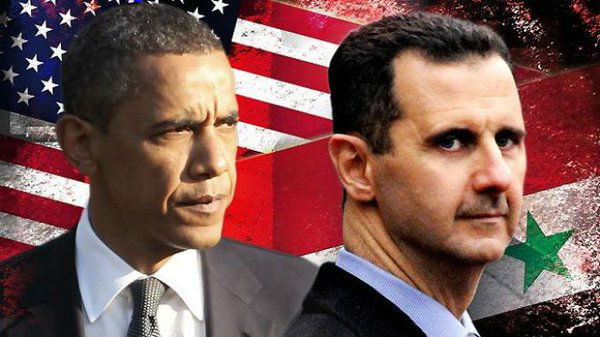
obama-assad

Muhammad Idrees Ahmad writes:  By now it is clear that US policy in Iraq and Syria is a disaster. In neither country has the situation been improved by the US military presence. In Iraq it empowers the same sectarian militias that forced alienated Sunnis into the arms of ISIS. In Syria it ignores, even accommodates, the regime whose brutality spawned the jihadi menace in the first place. In both its actions address symptoms rather than causes and alienate people without providing any commensurate security gains.

But would the situation improve if the United States were to withdraw? Ask the Yazidis of Iraq, whose tragedy would have been much larger had it not been for the timely US intervention; ask the Kurds of Syria, who would have been routed in Kobani had it not been for the sustained airstrikes that helped them repel an ISIS offensive. The Sunnis of Iraq might well ask who would protect them from the revanchist fury of the newly empowered sectarian militias, absent a US presence.

The issue then is not so much the fact of US military involvement as the nature of this involvement.

The United States bears responsibility for much of the current turmoil in the Levant. Had it not been for George W. Bush’s war and the fracturing of the Iraqi society, the region wouldn’t have turned into an incubator for jihadism. Had it not been for Barack Obama’s betrayal of the Syrian revolution — by making lofty promises and offering meager support; by following brave words with conspicuous inaction; and by demanding that Syrians submit their political aspirations to US security concerns — a quarter-million people would not have lost their lives, millions would not have been displaced, and thousands would not have drowned. The region suffers today from neoconservative sins of commission and realist sins of omission.

The United States could exit the Middle East and, in Sarah Palin’s immortal words, “let Allah sort it out.” But it would have condemned the region to perpetual war. Isolationism in the face of serious geopolitical challenges is not only an abdication of responsibility, but also a recipe for disaster. [Continue reading…]

Facebooktwittermail

In Syrian town cut off from the world, glimpses of deprivation

The New York Times reports: Nisrine kept teaching school for months as the siege tightened around the Syrian town of Madaya, but had to give up a few weeks ago when her students got too weak to walk to class. A local medic has been surviving on the rehydration salts he gives patients, while a business school graduate picks grass to make soup for his 70-year-old father, consulting shepherds about which ones their long-since-slaughtered flocks liked best.

A dozen women waited anxiously in their doorways one recent evening as an antigovernment activist named Firas trudged slowly up their street handing out small batches of smuggled bulgur wheat.

Firas, though, was in shock. He had taken a meal to the house of Suleiman Fares, 63 and bone-thin, in hopes of saving his life, only to find him already dead. Frustrated, Firas declared that far to the north, rebels allied with those in Madaya ought to resume shelling two pro-government towns — towns full of civilians who are also suffering, tit for tat, a siege from the other side.

“Better to die fighting,” he said that night in one of a series of recent telephone interviews, “than to starve.”

The people of Madaya and neighboring Zabadani have tried, since the siege by pro-government forces began in July, to keep society functioning and adjust to their surreal new set of dynamics. There is the black market across blockade lines, for instance, and the quiet or unexpected ways this type of warfare can kill: heart attacks, stillbirths, a step on a land mine while foraging for food.

And there is the relentless physical and psychological contraction of their communities, only an hour’s drive from Damascus, Syria, and two from Beirut yet suddenly sealed off from the outside world. [Continue reading…]

Facebooktwittermail

Middle East reality: An inconvenient truth for Obama

Joyce Karam writes: Characterizing events from Yemen to Syria to Libya as a “transformation that will play out for a generation, rooted in conflicts that date back millennia” is not only a reality distortion by U.S. President Barack Obama, but also a dangerous fantasy that resigns American diplomacy to dismissiveness in the Middle East.

Shrugging off the Middle East’s largest upheaval in decades as a theological rift, and shying away from major diplomatic initiatives, is a slap in the face for U.S. role and stature, restricted today to responding and containing conflicts.

Blaming the chaos of the Middle East on centuries’ old battles is a perfect cop-out strategy for Obama, avoiding his legacy from being tarnished by the fragmentation of four states, two of which were bombed by the United States (Iraq and Libya).

Except, religious scriptures from a different era are not driving the current regional rivalry, or spurring ISIS. It’s oppression, civil wars, ISIS territorial gains, and unchecked regional bickering that is fueling the hellfire.

Obama’s narrative, however, is largely aimed at absolving his administration of any wrong doing in the Middle East, and attributing current infernos to a “transformation” across a whole generation that Washington apparently has little influence over. This claim self destructs in every conflict zone in the Middle East, three of them started on Obama’s watch four years ago. [Continue reading…]

Facebooktwittermail

Obama ridiculed for saying conflicts in the Middle East ‘date back millennia’

The Washington Post reports: In his seventh and final State of the Union address, President Obama played up the state of the economy, played down the threat of the Islamic State, and introduced a new effort to beat cancer. He also found time for several not-so-subtle swipes at the Republican front-runner Donald Trump.

But for those versed in international relations, there was one line in particular that jumped out from his hour-long speech.

“The Middle East is going through a transformation that will play out for a generation, rooted in conflicts that date back millennia,” Obama said.

Thousands of years? Many of the conflicts in the Middle East don’t even date back a decade.

The Twitterati spotted the gaffe, and pounced. Obama was accused of peddling convenient falsehoods while others said he was espousing concepts unworthy of an undergraduate university student. Many said that Obama was not only excusing the conflicts, but in effect was making them seem normal and intractable. [Continue reading…]

Facebooktwittermail

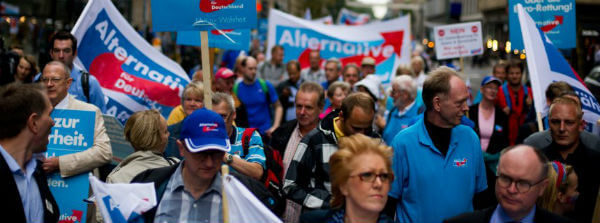
Germany’s right-wing AfD party surges to new high amid concern over refugees

AfD

The Independent reports: Germany’s eurosceptic right-wing party has hit a new all-time high in the opinion polls as concern about migration rises in the country.

Alternative for Germany (AfD) would take 11.5 per cent of the vote is a federal general election were held today, according to a poll for Bild magazine.

The party is in third place after Angela Merkel’s CDU/CSU, who are on 35 per cent. The centre-left social democrats are on 21.5 per cent.

The Green Party and the Left Party are on 10 per cent each, while the centre-right liberal FDP would re-enter parliament on 6 per cent after it was wiped out in the most recent Federal elections. [Continue reading…]

Facebooktwittermail

ISIS claims deadly Indonesia attacks

The Wall Street Journal reports: Multiple blasts and gunfire jolted the Indonesian capital Thursday in what officials said were coordinated Islamic State-linked terror attacks, killing seven and shattering a relatively peaceful period.

The dead comprised two civilians — a Canadian national and an Indonesian — and five terrorists, Indonesian police said.

The extremist group claimed responsibility for the attacks in an official Arabic-language statement distributed to its social media accounts, according to the SITE Intelligence Group, which monitors global jihadist activity.

“In a unique security operation, a group of Islamic State soldiers targeted a group of Crusader citizens who are fighting the Islamic State in Jakarta,” the statement said. “May the civilians of the Crusader alliance and those who protect them know that there is no safety for them in the lands of Muslims after today, God willing.”

The gun-and-bomb assaults struck in the heart of Jakarta’s downtown, popular with shoppers and tourists, when a suicide bomber entered a Starbucks and detonated a bomb, killing himself but no one else, police said.

Two more suicide bombers detonated blasts as motorists left their cars and joined hundreds fleeing the area. A Canadian citizen was shot near the Starbucks and an Indonesian was killed by shrapnel, police said.

Police shot and killed two other militants, leaving all five attackers dead, and said they found six small bombs after sweeping the area. Twenty civilians were injured, including a Dutch national and a German, officials said. [Continue reading…]

Facebooktwittermail

Q&A: Why did terror hit Jakarta’s streets – and what happens next?

By Noor Huda Ismail, Monash University

Explosions and gunfire on Thursday left seven people dead in Jakarta. The blasts and gunfight between Indonesian police and the suspected attackers took place near the busy Sarinah shopping mall in central Jakarta. Indonesian President Joko Widodo spoke of “acts of terror”.

Five suspected attackers are reportedly among those killed. What affiliation if any they had to a terrorist group is currently unknown.

Since 2000, Islamic hardliners in Indonesia have carried out several high-profile bombing attacks. Notably, the Bali bombings in 2002 killed 202 people, including 88 Australians.

The Conversation spoke to Noor Huda Ismail, a counter-terrorism analyst from Monash University, on the landscape of Indonesia’s terror groups and the threat the country faces.

Continue reading

Facebooktwittermail

Why Putin loves Trump

Ivan Krastev writes: “Vladimir Vladimirovich, is war coming?”

The question is asked in the first frame of “Myroporyadok” (“World Order”), a manifesto-style documentary aired in the last days of December on Russian state television. And in the following two-plus hours, President Vladimir V. Putin, aided by diplomats, policy analysts, conspiracy theorists and retired foreign statesmen, attempts to provide an answer.

Though the Russian leader resists sounding the alarm, the audience is nonetheless convinced that if nothing changes in the coming months, the Big War could be imminent. And the Kremlin isn’t doing much to dissuade them: Days after the film’s airing, its new national security strategy, which declares NATO and the United States as fundamental threats to Russia’s future, was unveiled.

“Myroporyadok” is a powerful expression of the Kremlin’s present state of mind. It views the world as a place on the edge of collapse, chaotic and dangerous, where international institutions are ineffective, held hostage to the West’s ambitions and delusions. Nuclear weapons represent the sole guarantee of a country’s sovereignty, and sovereignty is demonstrated by a willingness and capacity to resist Washington’s hegemonic agenda. [Continue reading…]

Facebooktwittermail

Me and my Syrian refugee lodger

Helen Pidd writes: “You are not going to like me saying this,” my dad said, “but you need to get a lock on your bedroom door and a lock on your bathroom door. Men can get very frisky when they are away from their wives.”

I rolled my eyes, hung up and panicked. I’d rung my parents to tell them that Yasser, a Syrian refugee, was coming to live with me while he arranged for his wife and baby to join him in Britain. I was a little nervous about the arrangement, but of all the many things worrying me – would he disapprove of my single heathen lifestyle? Could I carry on having bacon butties at the weekend? Should I edit my drinks cupboard? – the possibility of getting molested by my lodger had yet to occur to me.

I first had lunch with Yasser one day in August, after a mutual friend in Turkey told me he had arrived in Manchester and had no mates. She didn’t tell me he was Syrian, or how he had reached our rainy island. So I was gobsmacked when, in very broken English, he told me of his 37-day odyssey across land and sea. He had sailed across the Mediterranean in an inflatable boat in the dead of night, even though he can’t swim; walked from Greece to Macedonia, and crossed Europe until he reached the Jungle in Calais, where he jumped on trucks for six nights before making it to England hidden in the back of a lorry. After 17 hours packed between boxes of toys, he banged on the door. The truck driver was furious: he would face a £2,000 fine were the border police to discover his human cargo. Yasser scarpered. He wasn’t sure he was even in England until a car passed him driving on the left. He walked to the nearest petrol station and asked them to call the police. His new life had begun.

I wondered how I could help him. He was living on £5 a day given to him by Serco, the outsourcing company contracted by the Home Office to process asylum applications. While Yasser waited, he couldn’t take paid work and was living in a Serco house off the Curry Mile with five other asylum seekers: Syrians, Eritreans, a guy from Sudan. I asked if he fancied coming round to help me strip wallpaper on the bank holiday weekend. He agreed, but then I had to go and cover the world gravy wrestling championships in Bacup (try explaining that one to someone whose first language isn’t English), so left him to it.

When I got back, he had almost finished. We had an awkward meal together, then I tried to give him some money. Yasser looked appalled. “No, no,” he said. “I don’t want money. I want friends.”

Two days later, three-year-old Alan Kurdi washed up on a beach in Turkey. The mood in Britain changed. Suddenly the sort of newspapers who usually run stories about immigrants eating swans started showing compassion. David Cameron agreed to resettle 20,000 of the most vulnerable Syrian refugees – and I offered my spare room to Yasser. [Continue reading…]

Facebooktwittermail

UN war crimes investigators gathering testimony from starving Syrian town

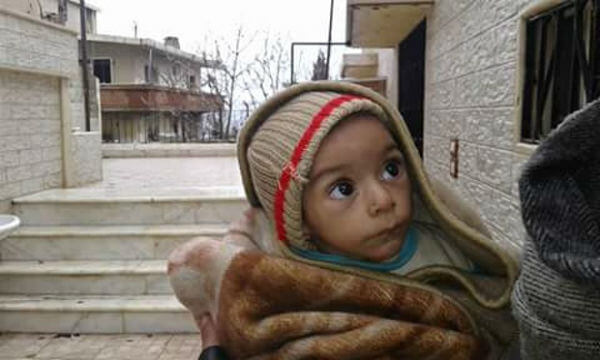
starving-child-madaya

Reuters reports: Residents of a besieged Syrian town have told U.N. investigators how the weakest in their midst, deprived of food and medicines in violation of international law, are suffering starvation and death, the top U.N. war crimes investigator told Reuters on Tuesday.

An aid convoy on Monday brought the first food and medical relief for three months to the western town of Madaya, where 40,000 people are trapped by encircling government forces.

Another United Nations official who oversaw the aid delivery described on Tuesday how he saw malnourished residents, particularly children, some of whom were little more than skeletons and barely moving.

The U.N. commission of inquiry documenting war crimes in Syria has been in direct contact with residents inside Madaya, the commission’s chairman Paulo Pinheiro said in an emailed reply to Reuters questions.

“They have provided detailed information on shortages of food, water, qualified physicians, and medicine. This has led to acute malnutrition and deaths among vulnerable groups in the town.” he said in the email sent from his native Brazil.

The U.N. inquiry, composed of independent experts, has long denounced use of starvation by both sides in the Syrian conflict as a weapon of war, and has a confidential list of suspected war criminals and units from all sides which is kept in a U.N. safe in Geneva. [Continue reading…]

Facebooktwittermail

What ISIS speaking in an English accent tells us about the group’s strategy

By Alan Greene, Durham University

A new year brings with it the feeling of hope that can only come with starting afresh. It did not take long, however, for us to be abruptly reminded of the most unpleasant aspects of 2015.

The release of a new Islamic State execution video became almost common place last year, so IS obviously feels the need to ratchet up the shock factor.

The latest video, released on January 4, did just that. It showed a young child with an English accent threatening to kill all non-believers in the UK. The video is also notable for the appearance of a so-called “new Jihadi John” following the death of Mohammed Emwazi, the previous owner of that moniker, in a US drone-strike in November.

A key suspect in the scramble to identify this new IS executioner is Siddhartha Dhar, a British Muslim convert from east London who skipped bail and travelled to Syria to join IS in 2014. Dhar was awaiting trial for being a member of the prescribed organisation Al-Muhajiroun. He is also known as Abu Rumaysah.

Continue reading

Facebooktwittermail

Iran’s swift release of U.S. sailors hailed as a sign of warmer relations

The New York Times reports: Iran’s release of 10 United States Navy sailors on Wednesday, less than 24 hours after they were detained on the Persian Gulf, is being hailed in both countries as a sign that their relations have evolved since the signing of the nuclear accord last summer.

Secretary of State John Kerry thanked the Iranians “for their cooperation in swiftly resolving this matter” and suggested in a statement that the quick resolution of the issue was a product of the nearly daily back-and-forth that now takes place between Washington and Tehran, after three decades of hostility and stony silence.

In an appearance later Wednesday at the National Defense University in Washington, Mr. Kerry said that his focus on diplomacy with a country “we hadn’t talked to for 35 years” before the nuclear negotiations had paid off.

“These are always situations that as everybody knows, if not properly handled, can get out of control,” Mr. Kerry said. “We can all imagine how a similar situation might have played out three or four years ago.” [Continue reading…]

Facebooktwittermail

The cyberattack on Ukraine’s power grid is a warning of what’s to come

By Nilufer Tuptuk, UCL and Stephen Hailes, UCL

When more than 100,000 people in and around the Ukrainian city of Ivano-Frankivsk were left without power for six hours, the Ukrainian energy ministry accused Russia of launching a cyberattack on the country’s national energy grid.

Now reports released by security researchers from the SANS Industrial Control Systems team and the Industrial Control Systems Cyber Emergency Response Team confirm their belief that a cyberattack was responsible for the power cut, making the incident one of the first significant, publicly reported cyberattacks on civil infrastructure.

This is a rare event, of which the most famous example is the Stuxnet malware used to destroy equipment in the Iranian nuclear programme. Many consider Stuxnet so sophisticated that national governments must have been involved. But as is frequently the case, attributing responsibility for Stuxnet has proved difficult, and it’s likely that, despite circumstantial evidence, it will be the same in this case. While the Ukrainian Security Service (SBU) and the international press were quick to blame Russian state-backed hackers, Moscow has remained silent.

Continue reading

Facebooktwittermail

Gaza journalist says he was tortured in Hamas jail

The Associated Press reports: Palestinian journalist Ayman al-Aloul frequently writes about the hardships of life in the Gaza Strip, and is one of the few voices willing to publicly criticize the rule of the Islamic Hamas movement.

But after nine days in jail, al-Aloul says he won’t be writing about politics anymore. He said a painful experience that included beatings and being forced to sit uncomfortably in a tiny chair has made him a “new man” and that he will now focus on less controversial topics like sports, food, literature and fashion.

“I’ve decided not to talk about the general situation anymore,” al-Aloul said in an interview at his home Tuesday, a day after he was released. “The experience I went through was very difficult.”

Al-Aloul’s experience is part of a crackdown by Hamas at a time when the continuing miseries of life in Gaza appear to be driving its population toward more open dissent. Critics have grown bolder on social media sites, and attempts by Hamas to impose new taxes have triggered rare public protests. [Continue reading…]

Facebooktwittermail

Revolt in governing party shakes Tunisian politics

The New York Times reports: Tunisia’s main Islamist party, Ennahda, re-emerged as the dominant faction in Parliament on Monday as mass resignations from President Béji Caïd Essebsi’s secular party continued, largely to protest his son’s position as party chief.

The upheaval in the governing party, Nidaa Tounes, just over a year after it defeated Ennahda in parliamentary elections and swept Mr. Essebsi to power in a presidential vote, had been brewing for months. The splintering is not expected to bring down the coalition government that Nidaa Tounes leads — indeed, a cabinet reshuffle was confirmed Monday evening despite the resignations — but the shift in power is likely to complicate politics going forward. The lawmakers kept their seats in Parliament but are unaffiliated with a political party for now.

Tunisia has been praised for its democratic progress in the five years since a popular uprising overthrew the dictator Zine el-Abidine Ben Ali, inciting the Arab Spring. But it has had five governments in five years, and many political parties have struggled to find a firm footing. [Continue reading…]

Facebooktwittermail