U.S. President Barack Obama laid out his new Afghanistan strategy on Tuesday night by ordering an additional 30,000 US forces to the country.
While the majority of the analysis and discussion in Washington has centered on the levels of US forces or the president’s reasoning for it, the president emphasized that the “burden [in Afghanistan] is not ours alone to bear.” Declaring that not only is NATO’s credibility on the line, but that the security of the US and all of its allies are at stake, the president invoked the international consensus on Afghanistan that led to a 43-nation coalition that has operated in the country since the attacks on Sept. 11, 2001, to sell his new strategy. Yet the reality is that this international coalition is waning, not surging, and is in desperate need of a regional champion that can serve as a model partner for the US in Afghanistan. Obama’s ideal partner is Turkey.
Consider the facts: Turkey boasts the second largest military in NATO after only the US and the largest in Europe. Turkey has been a close American bilateral and NATO ally for more than 60 years. In addition to being a member of almost every European organization, Turkey is a UN Security Council member, a member of the G-20, has successfully pushed Ekmeleddin İhsanoğlu as the secretary-general of the Organization of the Islamic Conference (OIC) and is one of the few examples of a fully functioning Muslim-majority democracy in the Middle East. On top of all of this, Ankara has close historic ties with Afghanistan that date back to the 1920s when the founder of the modern republic, Atatürk, served as a model for modernization that collapsed only after great power interference in Kabul carved up the country. Often referred to as Afghanistan’s “closest neighbor without borders,” Turkey also shares considerable cultural, ethnic and linguistic links that make it an ideal partner for the US to work with. [continued…]
An explosive secret letter that exposes how Tony Blair lied over the legality of the Iraq War can be revealed.
The Chilcot Inquiry into the war will interrogate the former Prime Minister over the devastating ‘smoking gun’ memo, which warned him in the starkest terms the war was illegal.
The Mail on Sunday can disclose that Attorney General Lord Goldsmith wrote the letter to Mr Blair in July 2002 – a full eight months before the war – telling him that deposing Saddam Hussein was a blatant breach of international law.
It was intended to make Mr Blair call off the invasion, but he ignored it. Instead, a panicking Mr Blair issued instructions to gag Lord Goldsmith, banned him from attending Cabinet meetings and ordered a cover-up to stop the public finding out.
He even concealed the bombshell information from his own Cabinet, fearing it would spark an anti-war revolt. The only people he told were a handful of cronies who were sworn to secrecy. [continued…]
The United States was “hell bent” on a 2003 military invasion of Iraq and actively undermined efforts by Britain to win international authorization for the war, a former British diplomat told an inquiry Friday.
Jeremy Greenstock, British ambassador to the United Nations from 1998 to 2003, said that President George W. Bush had no real interest in attempts to agree on a U.N. resolution to provide explicit backing for the conflict.
The ex-diplomat, who served as Britain’s envoy in Iraq after the invasion, said serious preparations for the war had begun in early 2002 and took on an unstoppable momentum. [continued…]
Turkey’s economy has more than doubled in the past decade, converting the nation from a backwater to a regional powerhouse. At the same time, its financial focus has moved closer to home: Turkey now conducts more trade with Russia, Iraq, and Iran than it does with the EU. Energy politics have also favored the Turks, who find themselves astride no fewer than three competing energy supply routes to Europe—from Russia, from the Caspian, and from Iran. Years of reform and stability are paying off as well. Ankara is on the verge of a historic deal with its Kurdish minority to end an insurgency that has left 35,000 dead in the past quarter century. In turn, Turkey is making peace with neighboring countries that once supported the insurgents, such as Syria, Iran, and Armenia. The principle is simple, says a senior Erdogan aide who’s not authorized to speak on the record: “We can’t be prosperous if we live in a poor neighborhood. We can’t be secure if we live in a violent one.”
The advantages keep compounding. Thanks to judicious diplomacy and expanding business ties throughout the region, Turkey is close to realizing what Davutoglu calls his “zero-problems-with-neighbors policy.” The new stance has boosted Ankara’s influence even further; the Turks have become the trouble-ridden region’s mediators of choice, called in to help with disputes between the Palestinian factions Hamas and Fatah, between Iraq and Syria—even, before Erdogan’s outburst in Davos, between Israel and Syria. Speaking at a recent press conference in Rome, Erdogan expressed little hope that Turkey could do more for Syria and Israel. “[Prime Minister Benjamin] Netanyahu doesn’t trust us,” he said. “That’s his choice.” But others in the region still welcome Ankara’s assistance: Turkish diplomats are excellently trained in conflict resolution. [continued…]
While the United States and Europe have been struggling to find a path forward in the Israel-Palestine conflict, Afghanistan and Iran, the strategic ground upon which their assumptions about the region rest has begun to shift dramatically.
Most significantly, Turkey has finally shrugged off the straightjacket of a tight U.S. alliance, grown virtually indifferent to E.U. membership and turned its focus toward its former Ottoman neighbors in Asia and the Middle East.
Though not primarily meant as a snub to the West, this shift does nonetheless reflect growing discomfort and frustration with U.S. and E.U. policy, from the support of Israel’s action in Gaza to Iran to the frustrated impasse of the European accession process. It also resonates more closely with the Islamic renaissance that has been taking place within Turkey. [continued…]
Editor’s Comment — Has Turkey grown virtually indifferent to EU membership? I don’t think so. Much more plausible is the likelihood that in pursuing its strategy “zero problems”, Turkey is merely following the paths of least resistance.
The indifference to Turkey’s EU membership is rooted inside Europe and among politicians who are pandering to the Christian right. Unless Europe utterly forgets its secular roots, sooner or later it will recognize that Turkish membership of the EU is in everyone’s interests.
Turkey is seeking to switch to payments in national currencies for $10 billion worth of trade with neighbouring Iran to lessen exchange rate risks and bolster trade volumes, a Turkish government source said on Friday.
Turkey has made similar proposals to China and Russia in recent months.
Iran proposed earlier this week during a visit by Turkish Prime Minister Tayyip Erdogan that the two countries should conduct bilateral trade in their own currencies as part of widening economic ties.
Bilateral trade jumped to $10.3 billion in 2008 from $2.4 billion in 2003, with Turkey running a large deficit largely due to its gas imports. Ankara and Tehran aim to boost the volume to $20 billion in the next few years. [continued…]
Iran and Turkey signed a number of deals on Wednesday to facilitate the efficient flow of gas through Turkey to Europe, including accords on allocating some of Iran’s South Pars gas field to the Turkish Petroleum Corporation (TPAO), allowing Iranian gas to be transported via Turkey and allowing Turkmenistan’s natural gas to be pumped to Turkey via Iran, during Turkish Prime Minister Recep Tayyip Erdoğan’s visit to Turkey’s southeastern neighbor.
Turkish Energy Minister Taner Yıldız said the deals provided advantages for Turkey in the use and the sale of some phases of the South Pars gas field. “Its conditions and prices will be negotiated later,” the minister added. Iran, which has the world’s second-largest natural gas reserves, is Turkey’s second-biggest supplier of natural gas after Russia. Turkey had signed a preliminary deal in November 2008 for Iranian gas to be exported to Europe through Turkey and for Turkey to produce gas in the South Pars field.
The investment would amount to $3.5 billion. But this deal has been delayed by objections from the United States, which opposes new energy deals in Iran as part of Western efforts to isolate Tehran over its nuclear program. [continued…]
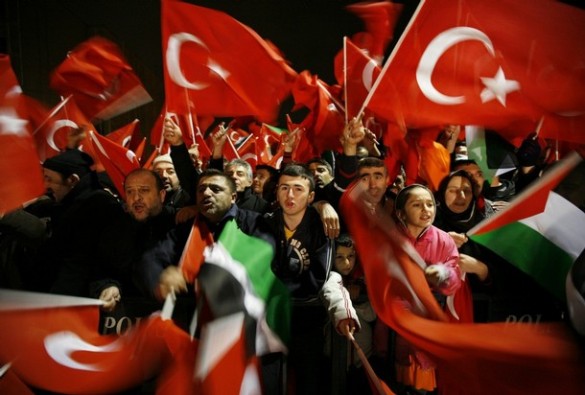
Turkey would continue relations with Israel on an equitable basis despite the growing diplomatic tensions between the two countries, Turkish Prime Minister Recep Tayyip Erdoğan said during the second day of his official visit to Iran.
Referring to his public row with Israeli President Shimon Peres over the deadly Gaza offensive at the World Economic Forum in Davos, Switzerland, the Turkish prime minister said that his reaction was not planned beforehand and added that it was spontaneous. “It would be wrong to assume that my reaction in Davos was a stance against the West,” Erdoğan said. “One side of Turkey’s face is turned to the West while the other is to the East,” he added. [continued…]
Prime Minister Recep Tayyip Erdoğan on Wednesday ruled out any shift in Turkey’s foreign policy orientation in the wake of a crisis with Israel over Gaza and increasing rapprochement with neighboring Iran, accused by the West of harboring aspirations to develop nuclear weapons.
Erdoğan, speaking during a visit to Tehran, said Turkey will not sacrifice its relations with the West for the sake of building alliances with the East. Erdoğan’s visit to Tehran, during which he defended Iran’s nuclear program as peaceful and Turkish officials announced a deal to explore natural gas in Iran’s South Pars basin, has added to Western concerns that Turkey might be forsaking its alliance with the West to pursue a leadership role in its neighborhood. [continued…]
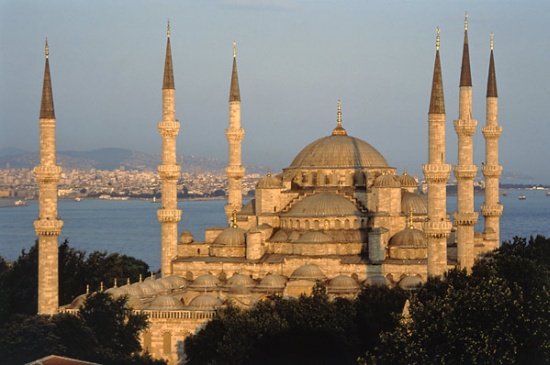
With its stunning vistas and former Ottoman palaces, the banks of the Bosphorus – the strategic waterway that cuts Istanbul in half and divides Europe from Asia – may be the perfect place to distinguish friend from foe and establish where your country’s interests lie.
And sitting in his grandiose headquarters beside the strait, long the symbol of Turkey’s supposed role as bridge between east and west, Recep Tayyip Erdogan had little doubt about who was a friend and who wasn’t.
Mahmoud Ahmadinejad, Iran’s radical president whose fiery rhetoric has made him a bête noire of the west? “There is no doubt he is our friend,” said Erdogan, Turkey’s prime minister for the last six years. “As a friend so far we have very good relations and have had no difficulty at all.”
What about Nicolas Sarkozy, president of France, who has led European opposition to Turkey’s bid to join the EU and, coincidentally, adopted a belligerent tone towards Iran’s nuclear programme? Not a friend?
“Among leaders in Europe there are those who have prejudices against Turkey, like France and Germany. Previously under Mr Chirac, we had excellent relations [with France] and he was very positive towards Turkey. But during the time of Mr Sarkozy, this is not the case. It is an unfair attitude. The European Union is violating its own rules.
“Being in the European Union we would be building bridges between the 1.5bn people of Muslim world to the non-Muslim world. They have to see this. If they ignore it, it brings weakness to the EU.” [continued…]
Editor’s Comment — When President Obama addressed the Turkish parliament on April 6, he said: “Turkey’s greatness lies in your ability to be at the center of things. This is not where East and West divide – this is where they come together.”
Turkey has since been making great strides with its “zero problems with neighbors” policy as Foreign Minister Ahmet Davutuoğlu engages erstwhile adversaries emphasising “a common history, a common fate and a common future.”
The White House should be asking: how come the Turks are having so much more success in practicing what we preach?
In the aftermath of the war on Gaza, Turkey has been uncompromising and principled in its criticisms of Israel. When asked whether he fears that this might risk harming Turkish-US relations, Erdogan dismisses the suggestion, saying: “I don’t think there is any possibility of that. America’s policy in this region is not dictated by Israel.”
Is that wishful thinking, or is it a polite and indirect way of telling Obama that it’s time to stiffen his backbone?
The crisis in Israeli-Turkish relationship could deteriorate to the point of a breakup, former US ambassador to Israel Martin Indyk said on Wednesday.
In an interview with The Jerusalem Post, Indyk, currently the Brookings Institute’s vice president for foreign policy, said that the “three brakes” that had prevented Turkey under the Islamic-rooted AK party from drifting toward the Arab world and away from Israel were the Turkish military, its business class, and the “peace process.”
Each of these brakes has been loosened over the last two years – the military has been pushed back into the barracks and no longer has influence over government policy as it once did; the business class is feeling considerable heat from the government and is in no position to stand up and say that ties with Israel are economically important; and the peace process – both with Syria and the Palestinians – is nonexistent, he said.
“I think that it is serious because it is like a car with an accelerator and no brake,” said Indyk, who participated this week in President Shimon Peres’s Israeli Presidential Conference in Jerusalem, arriving directly from meetings in Istanbul.
“I think it is a serious deterioration in the relationship, and it could lead to a breakup. It’s not like it hasn’t happened before. Israel lost a relationship with the whole of Africa, and had to rebuild it. It could happen,” he said. [continued…]
Turkey plans to carry out its $3.5 billion natural gas development plans in Iran, Turkish Energy Minister Taner Yildiz said on Wednesday.
“The issue would be discussed during Prime Minister Tayyip Recep Erdogan’s upcoming trip to Tehran,” Reuters reported.
The Turkish and Iranian governments agreed in July 2007 that Turkish Petroleum Corporation (TPAO) would produce 20.4 billion cubic meters (bcm) of natural gas annually from three development phases of Iran’s South Pars gas field, but the deal has been delayed. [continued…]
The accession to power of the Justice and Development Party (AKP), a moderate Islamist organisation, provided the domestic impulse to redefine the country’s approach to the Middle East. Under the AKP, Turkey is rediscovering its eastern identity, combining it with moderate Islamist ideology into what is known as a neo-Ottoman outlook. This seeks to anchor Turkey as a pivotal Asian actor whose economic wellbeing depends on a stable environment: something it does not have yet. So a confident Turkey is going about shaping that environment with an ambitious “zero problems, zero enemy” policy, the brainchild of the foreign minister, Ahmet Davutoglu.
This strategic reorientation has been obvious in the intense diplomatic activity of recent weeks. The most striking achievement is the establishment of diplomatic ties with Armenia, a country in dire need of regional integration, and the re-opening of the Armenian-Turkish border after 16 years. Conveniently, an “impartial scientific examination” will determine how to define the killing of more than a million Armenians during and just after the First World War. This arrangement may be scuttled by the rage of many in both countries, but a longstanding taboo has vanished.
Then there was the first meeting of the Turkey-Syria High Level Strategic Cooperation Council in Aleppo, crowning a decade-long rapprochement between the two countries. Of course, this would not have been possible without Turkish bullying and Syrian capitulation. In 1998 the Turkish army threatened to “enter Syria by one side and exit by another” unless Syria ended its support for the PKK. The Syrian president, Hafez al Assad, caved in and expelled the PKK leader, Abdullah Ocalan, from Damascus. Syria also had to accept the loss of the province of Hatay, also known as Alexandretta. [continued…]
In the first concrete sign that months of efforts by Turkey’s government to end a 25-year Kurdish insurgency could bear fruit, eight Kurdish rebels crossed over the border from Iraq on Monday to give themselves up.
Accompanied by 26 Kurdish villagers who fled Turkey more than a decade ago, the members of the Kurdistan Workers Party, or PKK, were detained by police and taken in for questioning by Turkish prosecutors.
Though not the first time such a gesture has been made, it comes months into what Turkish Prime Minister Recep Tayyip Erdogan has described as his government’s “democratic opening” to Turkey’s Kurdish population, who make up about a fifth of Turkey’s 70 million inhabitants. The PKK has fought a guerrilla war aimed at separating Kurdish areas from the rest of Turkey. Tens of thousands of people, mostly Kurds, have been killed since the fighting began in 1984. [continued…]
Jordan’s king said in comments published Monday that the U.S. administration seems to be focusing more of its attention on Iran and less on resolving the Israeli-Palestinian conflict, saying time was running out to make peace.
In an interview with Italian daily La Repubblica, King Abdullah II said the region’s hopes for peace were huge at the start of the Obama administration, but now sees the “goal getting farther away.”
“I’ve heard people in Washington talking about Iran, again Iran, always Iran,” Abdullah was quoted as saying. “But I insist on, and keep insisting on the Palestinian question: the Israeli-Palestinian conflict is the most serious threat to the stability of the region and the Mediterranean.” [continued…]
Editor’s Comment — Having just won the Nobel Peace Prize for advancing global diplomacy, President Obama should reflect some more on how engagement really works. The United States will talk to its adversaries, Obama boldly declared before getting elected. So far so good.
But engagement is sure to lead to a dead end unless it functions effectively as a two-way street. Washington has shown its readiness to talk, but is it ready to listen? Engagement can be as boneheaded as non-engagement if it doesn’t involve listening.
Abdullah, Erdogan and others are telling the US that this administration’s approach to the Middle East is failing. Is the administration listening?
Peace cannot be established in the Middle East when the suffering of the Palestinians continues and the Gaza Strip remains a wreck, Turkish Prime Minister Recep Tayyip Erdoğan said Monday.
Speaking at the Istanbul Forum organized by Stratim, Seta and the German Marshall Fund, Erdoğan said the Palestinian question is at the center of all problems in the Middle East. The prime minister recalled that Turkey vocalized its disapproval of the previous year’s bombing of the Gaza Strip, adding: “We criticized steps that were serving no purpose, but which increased suffering and sabotaged the peace process. We will continue to criticize it today, too. We will criticize anything similar taking place in other areas.” [continued…]
Turkey will continue to criticize its ally Israel with “courage” if it engages in “mistakes”, Turkish President Abdullah Gül said Sunday, continuing the verbal sparring between the two countries over the situation in Gaza.
Turkey is one of the “rare” countries to have good relations with both Arab countries and Israel, Gul said during an interview with public teleivision TRT.
“But this does not mean that Turkey will not raise its voice against errors if they are made. We should not think that Turkey will keep silent,” he said. [continued…]
…in Israel’s eyes, Turkey is seen as two states – one in the form of the military, twin sister of Israel, the other political, leaning toward Islam and making friends with Syria and Iran. Thus, insolent Israel decided in a typical manner not to take Turkey’s politicians seriously and to adopt the Turkish army. Israel was also certain all these years that Turkey, backward and poor, needed its sole friend in the Middle East because it was not accepted in the region due to its Ottoman history and close ties with Israel and the United States, and therefore could not do without Israel.
So in Israel, people have been quick to conclude that “something went wrong” in Turkey. Suddenly the government rules the army instead of the army, Israel’s loyal friend, telling the government what to do. Israelis did not think for a minute that the Turkish army might also have had enough.
Turkey has changed; inwardly, for the most part. In a long and difficult process it has become a more democratic country. The army is still dominant, but less public in its role in the civilian domain. Turkey has overcome most of its economic problems and has been transformed into a regional economic power. It is a real strategic asset for the United States, increasing its importance after the Iraq war. It has also developed a different regional strategy.
Whoever reads what Foreign Minister Ahmet Davutoglu says recognizes that Turkey aspires to become an influential player not only in the Middle East but also in the Caucasus and Asia. It is involved in the fighting in Afghanistan, is forming an economic alliance with Iraq, plans to invest billions of dollars in Egypt, and its annual trade with Iran stands at $9 billion, with Syria at $1.5 billion.
And here is the paradox. This is the only Muslim country that is not harshly criticized, whether by Iran or any Arab state, for having such close ties with Israel. As such, it could have served as an excellent mediator between Israel and the Arab countries had Israel not considered it an obvious satellite state. [continued…]
For years Israel has acted as if the unconditional support of the US would be enough to shield it for ever from the consequences of its behaviour – which is why last week was an unusually traumatic one for them.
No suicide bombers detonated themselves and no rockets or mortar shells fell, but the double whammy of a Turkish snub and a UN Human Rights Council vote shook Israelis even more than any aimless shelling would have done. Those two events signal profound changes that leave Israel paying a growing political price for the attack last winter that killed some 1,400 Palestinians and reduced Gaza to rubble.
It was the brutal pummelling of Gaza that prompted Turkey’s democratically elected government to break the silence among the region’s moderates and stand up for the Palestinians. At the time, the prime minister, Recep Erdogan, condemned the Israeli actions as war crimes, in language deemed intemperate and inappropriate by western leaders.
Curiously, Erdogan’s “intemperate” language was endorsed by the findings of a UN Human Rights Council investigation headed by the Jewish South African judge Richard Goldstone, known as a friend of Israel – findings that were adopted by the Council on Friday despite the efforts of the US and France to shield Israel from being formally accused of war crimes in an international body. [continued…]
The historic reconciliation agreement signed Saturday between Turkey and Armenia constitutes further testament to the positive changes undergone by Turkey in recent year. A government with an Islamic orientation was able to impressively promote two highly sensitive issues for Turkish public opinion: Recognizing the cultural rights of the Kurdish minority and normalizing ties with Armenia.
The strong sense of Turkish nationalism previously prevented any compromise with the Kurds, for fear this will open the door for boosting their national demands and in turn for a renewed territorial disintegration by Turkey.
Tayyip Erdogan’s administration realized that it is precisely openness towards the Kurdish minority that will prompt a greater sense of belonging among them and weaken their aspiration to join other Kurdish areas, mostly in Iraq.
Erdogan faced a similar choice vis-à-vis Armenia: Perpetuating the frozen status-quo in the ties with Turkey’s neighbor would have boosted the global Armenian campaign for recognition of the massacre committed by the Turks as an organized and methodical genocide. Turkey would have been faced with all the possible implications of such recognition, especially if it would have also been backed by the US Congress.
Erdogan decided to preempt this blow, and while taking advantage of the weak Armenian economy (which suffered gravely as result of the closure of its borders with Turkey and Azerbaijan) managed to secure (with Swiss mediation) a reconciliation agreement that is difficult for both for the Turks and for the Armenians – yet postpones to an unknown future date the question of addressing the Armenian holocaust and entrusts future research on its scope in the hands of historians. [continued…]
Editor’s Comment — The writer notes “the fact that precisely at a time when Turkey reaches out to its past enemies, the Turkish administration is adopting an increasingly hostile policy vis-à-vis its former great ally – Israel” and he cites this as a justification for Turkey’s entry into the European Union being blocked.
It’s interesting that an Israeli should be advising the EU who it should or should not be willing to consider as a future member. Of course Israelis who are concerned about keeping Turkey out of the EU merely need to do their bit in helping foment anti-Muslim bigotry across Europe to ensure that the Turks won’t get a fair hearing.
While Eldad Beck clearly admires Erdogan’s diplomatic successes, he falls back on an old cliche in assuming that the Turkish leader is merely taking advantage of popular hostility towards Israel in order to advance his political goals. The assumption, as always, is that such hostility would either not exist or be of minor proportions were it not being fomented. Israel remains the perpetual victim of a bad press.
The real lesson that Israelis should be drawing from observing Turkey is to note how stark the difference is between a diplomatically and democratically empowered nation as it pursues a policy of regional engagement, versus the inevitable isolation that Israel now faces as a diplomatically crippled nation.
It turns out that having just one friend isn’t enough.
… we have to recognize the fact that should the trend of isolation continue, we shall have to pay a heavy price – first and foremost on the economic front.
More than ever before, Israel’s growth and employment situation hinge on exporting goods to the global market. In case of isolation, we will find it difficult to engage in international trade, attract foreign investments, and acquire the credit we need.
The isolation will also undermine us strategically, as it would encourage Hezbollah, Hamas, Syria and Iran to provoke us. This is based on the assumption that the Israeli government will shy away from ordering the IDF to operate against them in full force, for fear of another Goldstone Report and possibly even UN Security Council sanctions.
Moreover, the isolation also serves to increase Israel’s depends on the American Administration to a dangerous degree; this dependence is too heavy as it is. [continued…]
When Turkish officials land in bitterly divided countries like Lebanon or Afghanistan or Pakistan, every faction is eager to talk to them. No country’s diplomats are as welcome in both Tehran and Jerusalem, Moscow and Tblisi, Damascus and Cairo. As a Muslim country intimately familiar with the region around it, Turkey can go places, engage partners, and make deals that the United States cannot.
This new Turkish role holds tantalizing potential. Before Turkey can play it fully, though, it must put its own house in order. That is one reason its leaders were so eager to resolve their country’s dispute with Armenia.
Turkey has one remaining international problem to resolve: Cyprus. Then it must solidify its democracy at home. That means lifting restrictions on free speech and fully respecting minority rights not just those of Kurds, whose culture has been brutalized by decades of repression, but also those of Christians, non-mainstream Muslims, and unbelievers.
Under other circumstances, Egypt, Pakistan, or Iran might have emerged to lead the Islamic world. Their societies, however, are weak, fragmented, and decomposing. Indonesia is a more promising candidate, but it has no historic tradition of leadership and is far from the center of Muslim crises. That leaves Turkey. It is trying to seize this role. Making peace with Armenia was an important step. More are likely to come soon. [continued…]
Ten months after Turkey first protested Israel’s military operation in and around Palestinian Gaza Strip, crisis between Ankara and the Israelis appears to be going from bad to worse.
It became clear on Sunday that Turkey had banned Israel from participating in a NATO-led, international air-force drill over its territory, which led to the entire exercise being postponed.
A day later, Turkish Prime Minister Recep Tayyip Erdogan launched a blistering verbal attack on Israel and its actions in Gaza last winter.
“While in some countries children are provided with comfort, peace, the most advanced education and health opportunities, other children are faced with poverty, destitution, helplessness, war, conflict, weapons of mass destruction and phosphorus bombs,” he told the Turkish Religious Council, cited by media reports in Turkey and Israel. [continued…]
After boosting their political relationship under the high-level strategic cooperation mechanism, Turkey and Syria are now taking steps to intensify defensive ties as well, a development that comes after Ankara’s decision to delay an international military exercise that would have included Israel.
In Gaziantep, Syrian Defense Minister Ali Habib announced Ankara and Damascus agreed to expand the scope of military drills that were conducted last spring. “Syria and Turkey held maneuvers in the spring and will hold more exercises to develop our actions on the border,” Habib said, according to local press but not confirmed by Turkish officials.
Turkey’s Defense Minister Vecdi Gönül said contact groups would be established between Turkey and Syria later this month to improve defense ties. He did not elaborate further but it has been learned that the contact groups will work on the fight against terrorism, military exercises and logistics. [continued…]
he Öncüpınar border gate on the Turkish side of the Turkish-Syrian border on Tuesday served as the venue for a symbolic gesture reflecting remarkable progress in bilateral relations between the two countries with the signing of a historic deal by the foreign ministers of the two countries, which came to the brink of war more than a decade ago.
Foreign Minister Ahmet Davutoğlu and his Syrian counterpart, Walid al-Moallem, officially signed an agreement on Tuesday in Gaziantep to end visa requirements between the two countries, a goal announced in mid-September by the two ministers during a visit to İstanbul by Syrian President Bashar al-Assad. While announcing the end to visa requirements, Davutoğlu and al-Moallem made an accord last month to end visa requirements and signed a bilateral cooperation agreement under which top ministers from the two countries will meet each year.
The accord, titled the “High-Level Strategic Cooperation Council Agreement,” is similar to a strategic mechanism recently established between Turkey and Iraq. [continued…]
The conceit of every autocratic leader is that power fits comfortably upon his shoulders. Even if he has not been chosen directly by his people, his right to rule reflects a natural order.
The World Economic Forum at Davos, with all its trappings of civility and reflective sophistication, embodies the same conceit. This is the forum of world governance that repeatedly unwittingly exposes the chasm dividing the world from its leaders.
Yesterday’s session, “Gaza: the case for Middle East peace,” was a pivotal moment in political discourse between the West and the rest of the world. The self-righteous hubris of an enraged Israeli president collided with the outrage of those who refused to ignore his bloodied hands.
To fully understand what happened, watch the one-hour eight-minute discussion. (For readers who want to fast forward to the part where Shimon Peres starts venting his rage, drag the play marker across to 45 minutes 50 seconds.)
Right now, the press has much less interest in exposing Peres’ lies than it has in the headline-grabbing moment — the point at which Turkish prime minister Recep Tayyip Erdogan left the stage in reaction to the insulting behavior of the Washington Post‘s David Ignatius. [continued…]
When on his recent visit to Turkey President Obama called for Turkish entry into the European Union, he put his finger on a strategic and cultural sore spot. The French president, Nicolas Sarkozy, speaking for the majority position in Europe, was quick to respond: Turkey may one day enjoy a privileged relationship with the EU, but full membership is out of the question. Turkey is not European – geographically or culturally.
Interpretations of the US stance are numerous and contradictory, but they highlight deep tensions within Europe on the issue. Some believe the US is concerned primarily with securing access to the energy reserves of the Caspian basin; others suspect Washington of using Turkish alignment with American policy (by way of Nato) to exert pressure on its European allies; still others see an attempt to weaken Europe by placing a Turkish economic, demographic and cultural millstone around its neck.
None of these hypotheses is wholly accurate or inaccurate. Nevertheless, they do reveal Europe’s continuing contortions over its identity and its future. The Turkish question rarely figures in the foreground of European debate today, yet its spectre hovers over discussions of “European identity”, “immigration” and the “Muslim question”. [continued…]
“Turkey’s greatness lies in your ability to be at the center of things. This is not where East and West divide — this is where they come together.” Barack Obama addressing the Turkish parliament, April 6, 2009.
Prime Minister Recep Tayyip Erdogan of Turkey is a man of brisk, borderline brusque, manner and he does not mince his words: “Hamas must be represented at the negotiating table. Only then can you get a solution.”
We were seated in his suite at London’s Dorchester Hotel, where a Turkish flag had been hurriedly brought in as official backdrop. Referring to Mahmoud Abbas, the beleaguered Fatah leader and president of the Palestinian Authority, Erdogan said, “You will get nowhere by talking only to Abbas. This is what I tell our Western friends.”
In an interview on the eve of President Barack Obama’s visit to Turkey, his first to a Muslim country since taking office, Erdogan pressed for what he called “a new balance” in the U.S. approach to the Middle East. “Definitely U.S. policy has to change,” he said, if there is to be “a fair, just and all-encompassing solution.” [continued…]
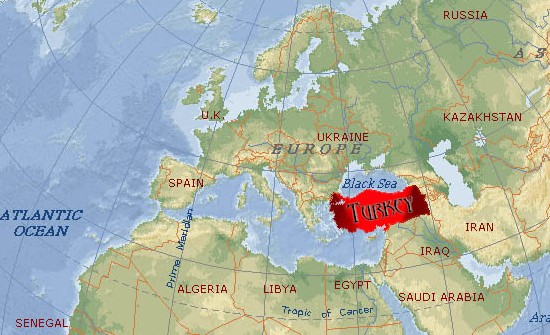
Editor’s Comment — Obama was well-advised in making Turkey one of his first foreign destinations. As a country that most Americans associate with a bird, its significance is not widely appreciated. But just look at a map. If any country can claim to be located at the strategic center of the world it is Turkey. No other country has as pivotal a position between multiple continents. It is no accident that Istanbul (or as it was, Constantinople) has been the capital of four successive empires. If the Turks now want to reclaim some of their former geopolitical power, the basis of that claim does not have to be imperial nostalgia. Turkey matters because this is where continents and cultures all converge.
“If we can show that a big Muslim nation can modernize itself with the help of friends,” former German Foreign Minister Joschka Fischer has argued on behalf of Turkey’s admission to the European Union, “it demonstrates that a strong civil society, equal rights for men and women, the rule of law, an independent judiciary, a modern administration and modern economy are not in contradiction to Islam. This would be the most powerful message against the jihadists and terrorists.”
That is certainly President Barack Obama’s hope when he attends the UN “Alliance for Civilizations” gathering in Istanbul this week after a pointed visit in Ankara to the grave of Ataturk, modern Turkey’s secular saint and founder. The meeting is of particular importance because Mohamed Khatami, the reformist former president of Iran is a key member of the group, as is Federico Mayor, the former secretary general of UNESCO who, long before 9/11, extolled the tolerant virtues of “La Convivencia” — the peaceful coexistence of Muslims, Jews and Christians in Andalusian Spain from 711-1492.
Whether Obama’s hope is justified is indeed the great test for the West in relations with the Muslim world. [continued…]
The Obama administration is preparing a broad stage for Middle East diplomacy stretching from the Palestinians to Syria to Iran. It’s a supremely ambitious agenda, and before the curtain goes up, Obama should explore his options and risks carefully.
By seeking to engage all the major actors in the Middle East at once, Obama is pursuing a general settlement of tensions in a dangerously unstable region. That’s intriguing and also worrying for countries in the Middle East. It makes Saudis and Israelis — not to mention Iranians and Syrians — nervous.
If you’re looking for a historical analogy for this scale of diplomacy, think of the Congress of Vienna of 1815. That gathering produced a new security architecture for a Europe that had been violently destabilized by revolutionary France — in something like the way the Middle East has been upset by the 1979 Iranian revolution. [continued…]
After Turkey’s Prime Minister Recep Tayyip Erdogan made his much-publicized exit from Davos, Alon Liel, the former Chargé d’Affaires of Israel in Ankara, wrote in Yediot Aharonot, “If you want to become a European, start behaving like one, then maybe we’ll see you in Davos again next year.”
Liel went on to remind his Israeli readers that in November 2007 Shimon Peres made history when he addressed Turkey’s parliament. “And it was the same Peres who was dealt, along with all of us, a stinging slap on the face by the Turkish prime minister who briefly turned Davos into the sewer of Istanbul.”
Erdogan’s offense was that he had risen above his station which dictates that a non-Western leader must at all times show deference to his Western counterparts — even deference to Washington Post columnists!
That Erdogan should be receiving rebukes for stepping out of line is ironic since in so many respects he is such a thoroughly westernized Muslim. (For instance, he doesn’t engage in that unconscionable act of defiance against Western values that Iran’s leaders indulge in: declining to wear a necktie.)
But Haaretz quotes a senior European official as saying: “Erdogan wants to be part of the European Union, but now he can forget about it.”
A number of analysts are now suggesting that because Turkey won’t march in lockstep with the Israeli-Western alliance, it has blown its chances of becoming a major strategic player in Middle East politics.
The problem with this interpretation of recent events is that Turkey doesn’t need Western approval to enter this role; this is a role it already enjoys — we simply haven’t been paying attention.
Stratfor‘s George Friedman points out:
…the challenge of the Islamic world now is to recover from the chaos imposed upon it by the United States — in wrecking al Qaeda.
Whether the country is Iran, whether the country is Iraq or Afghanistan, whether it’s Kuwait and Saudi Arabia, the desire now is for stability, within an Islamic framework. And simply put, Turkey is so far the most powerful Islamic country, and so much the most economically effective, and historically the leader of the region that it is very difficult to find any way in which it will not reemerge into that role. [Listen to the whole of Friedman’s excellent eight-minute podcast.]
Meanwhile, in the Washington Post, Soner Cagaptay is clearly concerned that Turkey is drifting out of the Western orbit:
Turkey is a special Muslim country. Of the more than 50 majority-Muslim nations, it is the only one that is a NATO ally, is in accession talks with the European Union, is a liberal democracy and has normal relations with Israel. Under its current government by the Justice and Development Party (AKP), however, Turkey is losing these special qualities. Liberal political trends are disappearing, E.U. accession talks have stalled, ties with anti-Western states such as Iran are improving and relations with Israel are deteriorating. On Thursday, for example, Prime Minister Recep Tayyip Erdogan walked out of a panel at Davos, Switzerland, after chiding Israeli President Shimon Peres for “killing people.” If Turkey fails in these areas or wavers in its commitment to transatlantic structures such as NATO, it cannot expect to be President Obama’s favorite Muslim country.
Consider the domestic situation in Turkey and its effect on relations with the European Union. Although Turkey started accession talks, that train has come to a halt. French objections to Turkish membership slowed the process, but the impact of the AKP’s slide from liberal values cannot be ignored. After six years of AKP rule, the people of Turkey are less free and less equal, as various news and other reports on media freedom and gender equality show. In April 2007, for instance, the AKP passed an Internet law that has led to a ban on YouTube, making Turkey the only European country to shut down access to the popular site. On the U.N. Development Program’s gender-empowerment index, Turkey has slipped to 90th from 63rd in 2002, the year the AKP came to power, putting it behind even Saudi Arabia. It is difficult to take seriously the AKP’s claim to be a liberal party when Saudi women are considered more politically, economically and socially empowered than Turkish women.
Readers of the Post will no doubt be shocked to learn that the plight of women in Turkey is worse than it is in Saudi Arabia, but does Cagaptay actually believe this or is he purposely misrepresenting the facts?
What he appears to have done is conflate two separate measures. On the Human Development Index, Saudi Arabia currently ranks 61 and Turkey 84. The Saudis rank much higher because they are much wealthier. But in terms of the gender empowerment measure, Turkey is 0.298, above Saudi Arabia at 0.254. By this measure, women are more empowered in Turkey than they are in Saudi Arabia or Egypt (0.263), but less empowered than in Iran (0.347).
If the White House still hasn’t decided which Muslim capital from which President Obama will make his major address to the Muslim world, maybe they should consider the rich symbolism that would derive from choosing Istanbul.
It might not be the capital of modern Turkey (that being Ankara) but both as the former Ottoman capital and as the geographic bridging point between Europe and Asia, this would provide the perfect place from which to acknowledge the global realignment that is taking place. By going to Istanbul, Obama would visibly be refuting the ideology of a clash of civilizations and showing that he welcomes the changes that cultural isolationists are currently struggling to resist.
In the last few weeks, London Times has run a series of articles about the so-called ‘Sibel Edmonds case’: (For sale: West’s deadly nuclear secrets,’ FBI denies file exposing nuclear secrets theft‘ and ‘Tip-off thwarted nuclear spy ring probe‘)
Former FBI translator Sibel Edmonds stumbled into a world of espionage, nuclear black market, narcotics trafficking, money laundering, and corruption at the highest levels of the US government.
I interviewed Sibel on Sunday regarding the current investigation and reporting by the Times, the failures of the US media, and last week’s decision by the Bush administration to legalize the sale of nuclear technology to Turkey, in an apparent effort to exonerate prior criminal activity by officials in his administration. [complete article]
This website or its third-party tools use cookies, which are necessary to its functioning. By closing this banner, you agree to the use of cookies.




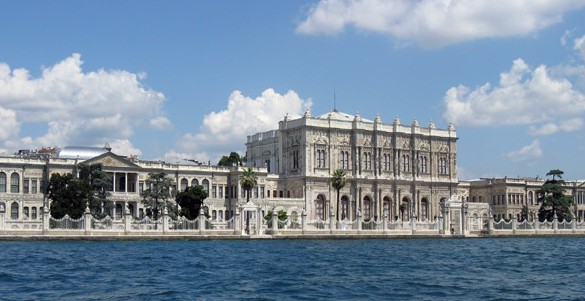
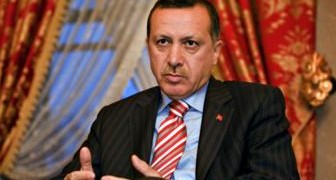 And sitting in his grandiose headquarters beside the strait, long the symbol of Turkey’s supposed role as bridge between east and west, Recep Tayyip Erdogan had little doubt about who was a friend and who wasn’t.