Is War in Context an indispensable news source for you?

“Like anyone else interested in the news, I spend the beginning of each day reading — from the U.S. mainstream media to overseas newspapers, from personal websites to news aggregators to political blogs. But of the dozens of internet sites that I read, War In Context is always first on my list. For me, it is the one indispensable source that gives me both a essential insight into the news, coupled with an always crucial and pointed commentary. I find War In Context supremely useful, as it not only identifies and highlights the news of the day, but also provides a breadth of coverage that I’ve not found elsewhere. War In Context says that it provides ‘attention to the unseen,’ but for me it also brings my attention to ‘the unread and unnoticed’ — a crucial culling of stories that I will surely have missed had I not read it. So it is that War In Context provides me not simply with another set of eyes, it provides another, and very badly needed perspective.”
Mark Perry, journalist and author most recently of Talking to Terrorists: Why America Must Engage with Its Enemies.

As an independent news editor and commentator, I use my own judgment. I don’t bow to anyone — not to governments, or political parties, or corporations, or the mainstream media, or advertisers, or think tanks, or academia, or popular opinion, or ideology, or the blogosphere, or social media, or even my own readership.

If you value this kind of liberated journalism, please support this site and make a donation. Thank you — Paul Woodward


Click the button above to make a secure donation via PayPal.

If you would prefer to make a donation by check, please contact me using the contact form or directly by email to: editor[at]warincontext.org and I will send you my mailing address.


Facebooktwittermail

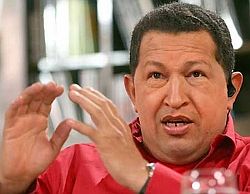
Hugo Chavez 1954–2013

Greg Grandin writes: I first met Hugo Chávez in New York City in September 2006, just after his infamous appearance on the floor of the UN General Assembly, where he called George W. Bush the devil. “Yesterday, the devil came here,” he said, “Right here. Right here. And it smells of sulfur still today, this table that I am now standing in front of.” He then made the sign of the cross, kissed his hand, winked at his audience and looked to the sky. It was vintage Chávez, an outrageous remark leavened with just the right touch of detail (the lingering sulfur!) to make it something more than bombast, cutting through soporific nostrums of diplomatese and drawing fire away from Iran, which was in the crosshairs at that meeting.

The press of course went into high dudgeon, and not just for the obvious reason that it’s one thing for opponents in the Middle East to call the US the Great Satan and another thing for the president of a Latin American country to personally single out its president as Beelzebub, on US soil no less.

I think what really rankled was that Chávez was claiming a privilege that had long belonged to the US, that is, the right to paint its adversaries not as rational actors but as existential evil. Latin American populists, from Argentina’s Juan Perón to, most recently, Chávez, have long served as characters in a story the US tells about itself, reaffirming the maturity of its electorate and the moderation of its political culture. There are at most eleven political prisoners in Venezuela, and that’s taking the opposition’s broad definition of the term, which includes individuals who worked to overthrow the government in 2002, and yet it is not just the right in this country who regularly compared Chávez to the worst mass murderers and dictators in history. New Yorker critic Alex Ross, in an essay published a few years back celebrating the wunderkind Venezuelan conductor of the Los Angeles Philharmonic, Gustavo Dudamel, fretted about enjoying the fruits of Venezuela’s much lauded government-funded system of music training: “Stalin, too, was a great believer in music for the people.”

Hugo Chávez was the second of seven children, born in 1954 in the rural village of Sabaneta, in the grassland state of Barinas, to a family of mixed European, Indian and Afro-Venezuelan race. Bart Jones’s excellent biography, Hugo! nicely captures the improbability of Chávez’s rise from dirt-floor poverty—he was sent to live with his grandmother since his parents couldn’t feed their children—through the military, where he became involved with left-wing politics, which in Venezuela meant a mix international socialism and Latin America’s long history of revolutionary nationalism. It drew inspiration from well-known figures such as Simón Bolívar as well as lesser known insurgents, such as nineteenth-century peasant leader Ezequiel Zamora, in whose army Chávez’s great-great-grandfather had served. Born just a few days after the CIA drove reformist Guatemalan president Jacobo Arbenz from office, he was a young military cadet of nineteen in September 1973 when he heard Fidel Castro on the radio announce yet another CIA-backed coup, this one toppling Salvador Allende in Chile. [Continue reading…]

Facebooktwittermail

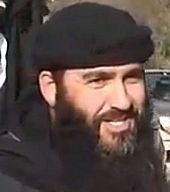
Profile of the leader of Jabhat al-Nusra

Al-Amir Gazi al-Haj

GlobalPost reports: On Dec. 10, the Obama administration officially deemed al-Nusra a terrorist organization, describing it as an extension of Al Qaeda in Iraq. The move criminalized any private support for the group. Members of al-Nusra have since dodged any questions about its Al Qaeda links in the foreign media. Al-Haj followed suit.

“Why are the US upset about Al Qaeda?” he asked. “Didn’t Hilary Clinton say they are fighting an organization they created?”

“If the US intend to make justice and peace in the world, then we are with them. If Al Qaeda does, then we are with them. We are on the side of justice and peace, whoever brings it.”

Among other opposition leaders, the general belief is that al-Nusra does not have direct links to Al Qaeda, but that much of their ideology stems from the same core beliefs. One of the few outside groups to have worked alongside al-Nusra is Suqur al-Sham, a coalition of moderate Islamists.

“Some of their thinking is similar to Al Qaeda in Iraq. But I do not believe they are financed by Al Qaeda,” said Ayachi Abdel Rahman, a Suqur al-Sham brigade leader who himself stands accused of terrorism. “They have shown a willingness to conform. They have slowly changed their tactics to appease fellow opposition groups and the Syrian population.”

Read the full story: From IT to rebel commander: The story of Ayachi Abdel Rahman

But Abdel Rahman said the two groups have had their disagreements over the killing of prisoners. He recalled a joint mission against a government checkpoint in Idlib where al-Nusra members captured and slit the throats of five government soldiers, throwing their bodies on the roadside. They told Abdel Rahman they wanted to instill fear in their enemy.

While the majority of opposition groups, by policy, send captives to face the centralized Free Syrian Army tribunal, YouTube videos show al-Nusra carrying out executions by gunfire and beheading.

Al-Nusra recently signed agreements in most areas, including Jabal al-Zawiya, to abide by the decisions of the Free Syrian Army courts, including the trial of prisoners of war. But al-Haj said there are situations were prisoners are executed without trial.

“There are some who we are sure have killed many,” he said. “By Islamic law it is an eye for an eye. These executions are by the same law as the courts. The intention of Jabhat al-Nursa is not to kill, but to uphold the law.”

Al-Haj said he was surprised when the United States designated al-Nusra a terrorist organization.

“If Jabhat al-Nusra are terrorists, why don’t we take a look at how many women have been raped by us, how many mosques have been destroyed by us, how many children killed. Now compare our record to Bashar’s list,” he said. “Then you will see who is the terrorist.”

Entering the room to serve a lunchtime feast, Al-Haj’s mother-in-law joined the conversation.

“The people are a witness to Jabhat al-Nusra,” she said. “They love Jabhat al-Nusra. What makes them terrorists? Because they don’t rape or steal? Because they protect and help the people? How is this terrorism?”

When his wife and young son entered the room, al-Haj beamed a joyous smile. He hugged the boy, who ran giggling into his arms, before warmly inviting his guests to enjoy the meal.

Following the terrorist designation in December, protests broke out across Syria in support of al-Nusra. Signs declared, “We are all Jabhat al-Nusra” and “There is no terrorism in Syria except that of Assad.”

Facebooktwittermail

Netanyahu threatens America

“We have to stop [Iran’s] nuclear enrichment program before it’s too late. And I have to tell you, from the bottom of my heart and with the clarity of my brain: words alone will not stop Iran. Sanctions alone will not stop Iran. Sanctions must be coupled with a clear and credible military threat, if diplomacy and sanctions fail.

“I deeply appreciate something President Obama has said repeatedly — you’ve just heard Vice President Biden say it again: Israel must always be able to defend itself, by itself, against any threat to its existence.”

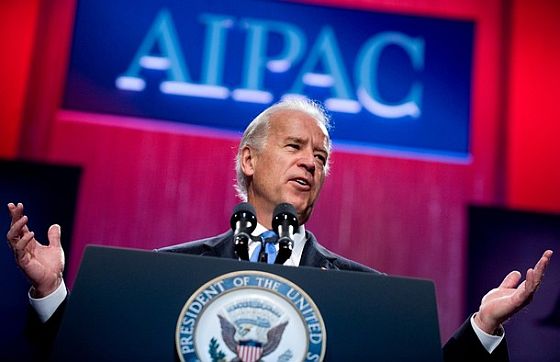
This was the core of Benjamin Netanyahu’s speech yesterday as he addressed the key representatives of the U.S. House of Representatives, Senate, and the Obama administration who had all convened for their annual display of allegiance to AIPAC.

Netanyahu’s message was unambiguous: hand over the money you promised. Sequestration is your problem, not ours.

How can Israel possibly continue to make credible military threats against Iran if at the hour of its greatest need, Washington betrays the Jewish state by making cuts in the 20% share of its defense budget that American taxpayers are obligated to pay?

We must stand by Israel, Washington will continue to say with an undivided voice over the coming days, even while failing to stand by millions of senior Americans who will soon no longer be receiving meals-on-wheels thanks to sequestration. When it comes weighing up conflicting demands coming from AARP and AIPAC, our elected representatives know which side their bread is buttered on.

Yet the issue might be seen as a little less clear-cut if anyone paused to parse Netanyahu’s latest evocation of his perennial rhetorical standby: directing military threats against Iran.

There was nothing new in Netanyahu’s statement and taken at face value it might sound like he was issuing yet another military threat. If that was indeed the case, then based on his own reasoning — that the continued expansion of Iran’s nuclear enrichment program demonstrates that diplomacy and sanctions have been ineffective — it follows: military threats from Netanyahu are also ineffective. He’s been making what sound like threats for years and yet enrichment continues.

On the other hand, even if Netanyahu likes to assume a threatening posture, what he is saying strongly implies that Israel is actually incapable of making a credible military threat against Iran. Strikes on targets in Syria and Iraq have arguable done more to demonstrate the limits of Israeli air power than its potential to strike Iran.

What Netanyahu is really calling for is louder threats from Washington. That a military threat remains “on the table” and that “we’ve got your back covered,” is not enough.

If a year ago Obama was telling AIPAC there was too much “loose talk of war,” Netanyahu’s response now is that there isn’t enough talk of war.

For a while the Israeli prime minister thought he could cajole the U.S. by saying: you must do what we can’t, because if you don’t, we will — but the only coherent part of that message was the bit Israel is now left with: we can’t; you must.

Even worse for Netanyahu, he no longer has the power to threaten Obama’s chances for re-election.

As for how all this looks from Tehran, with a jaundiced eye no doubt they are simply asking: what’s new?

Facebooktwittermail

The Zionism that Erdoğan opposes

Mustafa Akyol writes: Last week, during a visit to Vienna, Turkish Prime Minister Recep Tayyip Erdoğan initiated an international controversy by condemning “Zionism,” albeit in passing. “As is the case for Zionism, anti-Semitism and fascism,” he said, “it is inevitable that Islamophobia be considered a crime against humanity.”

Soon objections came. U.N. Secretary-General Ban Ki-moon found the comment “unfortunate” and “hurtful and divisive.” Israeli Prime Minister Benjamin Netanyahu was expectedly sharper, by defining Erdoğan’s words as “a dark and mendacious statement, the likes of which we thought had passed from the world.”

The issue surfaced during the U.S. Secretary of State John Kerry’s trip to Turkey as well. Kerry, on his first trip to a Muslim country since taking office, found welcoming hosts in Ankara, but he noted that he found Erdoğan’s comments “objectionable.”

But why did Erdoğan create such a fuss? And what did he really mean?

As a longtime observer of the Turkish prime minister, here is my humble advice for anyone who would like to find an answer to such questions: Erdoğan is a very Turkish politician. He, in other words, thinks and speaks in very local terms, not international ones. Therefore when he speaks of “Zionism,” what he has in mind is what most Turks have in mind, rather than what Ban Ki-moon, Netanyahu and Kerry have in theirs.

And there is a big gap between these two. Zionism, by international definitions, is a form of Jewish nationalism that is focused on founding and securing a Jewish state in what Jewish sources call “the Land of Israel.” Of course, Arabs call the same land “Palestine,” and the ones who used to live there, the Palestinians, have conflicted with Zionism from the beginning. In return, Zionists have taken various attitudes against Palestinians, ranging from moderate views which hope to co-exist with the Arabs to radical views which want to “transfer” all of them to other countries, which is a euphemism for ethnic cleansing. [Continue reading…]

Facebooktwittermail

Fallout from ‘Untouchables’ documentary: Another Wall Street whistleblower gets reamed

Matt Taibbi writes: A great many people around the county were rightfully shocked and horrified by the recent excellent and hard-hitting PBS documentary, The Untouchables, which looked at the problem of high-ranking Wall Street crooks going unpunished in the wake of the financial crisis. The PBS piece certainly rattled some cages, particularly in Washington, in a way that few media efforts succeed in doing. (Scroll to the end of this post to watch the full documentary.)

Now, two very interesting and upsetting footnotes to that groundbreaking documentary have emerged in the last weeks.

The first involves one of the people interviewed for the story, a former high-ranking executive from Countrywide financial who turned whistleblower named Michael Winston. You can see Michael’s segment of The Untouchables at around the 4:20 mark of the piece. The story Winston told during the documentary is essentially an eyewitness account of the beginning of the financial crisis.

When I spoke to him last week, Winston was still as amazed and repulsed by what he saw at Angelo Mozilo’s crooked subprime mortgage company as he was when he worked there. Winston, who had worked for years at high-level positions at companies like Motorola and Lockheed before joining Countrywide in the 2000s, described a moment in his first months at the company, when he rolled into the parking lot at the company headquarters.

“There was a guy there, a well-dressed guy, standing next to a car that had a vanity plate,” he said. “And the plate read, ‘FUND’EM.'”

Winston, curious, asked the guy what the plate meant. The man laughed and said, “That’s Angelo Mozilo’s growth strategy for 2006.” Here’s how Winston described the rest of the story to PBS – i.e. what happened when he asked the man to elaborate:

“What if the person doesn’t have a job?”

“Fund ’em,” the – the guy said.

And I said, “What if he has no income?”

“Fund ’em.”

“What if he has no assets?” And he said, “Fund ’em.”

Later on, Winston would hear that the company’s unofficial policy was that if a loan applicant could “fog a mirror,” he would be given a loan.

This kind of information is absolutely crucial to understanding what caused the subprime crisis. There are people out there still willing to argue that the government somehow “forced the banks to lend” to unworthy applicants. In reality, it was unscrupulous companies like Countrywide that were cranking out loans en masse, knowing that these loans would be unloaded down the line, first to banks and then to sucker investors like pension funds and foreign trade unions, almost as soon as they were created.

Winston was a witness to all of this. Eventually, he would be asked by the firm to present false information to the Moody’s ratings agency, which was about to give Countrywide a negative rating because of some trouble the company was having in working a smooth succession from one set of company leaders to another.

When Winston refused, he was essentially stripped of his normal responsibilities and had his corporate budget slashed. When Bank of America took over the company, Winston’s job was terminated. He sued, and in one of the few positive outcomes for any white-collar whistleblower anywhere in the post-financial-crisis universe, won a $3.8 million wrongful termination suit against Bank of America last February.

Well, just weeks after the PBS documentary aired, the Court of Appeals in the state of California suddenly took an interest in Winston’s case. Normally, a court of appeals can only overturn a jury verdict in a case like this if there is a legal error. It’s not supposed to relitigate the factual evidence.

Yet this is exactly what happened: [Continue reading…]

Facebooktwittermail

Is War in Context an exceptionally valuable news source for you?

War in Context is an exceptionally valuable source of information about international affairs in general and conflicts and crises in particular. It has many merits: broad coverage, a liberal perspective, sound editorial policy, a user-friendly format, and, above all, a healthy scepticism towards the claims made by governments. War in Context enables me to keep up-to-date with my main research interest – the Israeli-Palestinian conflict. I also enjoy the range of materials it offers on other regions such a film footage of hot spots and interviews with peace activists like Noam Chomsky. All in all, it is a first-rate online service for its readers.”
Avi Shlaim, FBA, Professor of International Relations, University of Oxford, and author of The Iron Wall: Israel and the Arab World 1948-1998

As an independent news editor and commentator, I use my own judgment. I don’t bow to anyone — not to governments, or political parties, or corporations, or the mainstream media, or advertisers, or think tanks, or academia, or popular opinion, or ideology, or the blogosphere, or social media, or even my own readership.

If you value this kind of liberated journalism, please support this site and make a donation. Thank you — Paul Woodward


Click the button above to make a secure donation via PayPal.

If you would prefer to make a donation by check, please contact me using the contact form or directly by email to: editor[at]warincontext.org and I will send you my mailing address.

Facebooktwittermail

Why the Democrats are so much worse on Israel than the GOP

M.J. Rosenberg writes: It’s hard to watch the AIPAC conference for more than a few minutes at a time. For me, the worst part is the pandering (and lying) by Democratic politicians eager to raise money for their next campaign.

So far, Joe Biden has been the worst. He is heavily funded by the Adler family of Miami Beach (he even brought President Obama to their home for a fundraiser), one of the big AIPAC families. Here is Biden talking about how the head of the Adler klan and another AIPAC mogul gave him his “formal education” on the Middle East. (Not to mention all that money.)

And, of course, Biden (like John Kerry) knows better than his AIPAC speeches indicate. I have talked to him about Israel and Palestine. He can name the top Palestinian leaders in Fatah and Hamas and tell you the differences between their respective positions. He believes Israel needs to end the occupation and talk to Hamas. He would not dare say it publicly, although he has said it so often privately that it is amazing the media never reports it.

But Biden does what he thinks he has to because, for politicians like him (that is, pretty much all politicians), nothing is more important than keeping donors happy. Call him a hypocrite but he cries all the way to the bank.

The Republicans are different. Supporting the occupation and threatening war with Iran come naturally to them. They don’t need lobby money for their campaigns and they don’t get Jewish votes anyway. (This is not to say that they don’t like Sheldon Adelson’s money, just that as the pro-business party, they don’t need it). They support Netanyahu because they believe that the west needs to crush the Muslim world. They do not feign Islamophobia. It’s them. [Continue reading…]

Facebooktwittermail

Americans need guns to protect their guns

David Altheide writes: The future of guns in our society may be better understood if we knew more about what they mean to people and why people buy them.

Fear is a major factor for many firearm purchases. Recent trends in gun sales suggest that many citizens are becoming more fearful: Gallup poll data suggest that Americans are more fearful, at near-record high levels, about big government, compared to big business or big labor. This fear overlays the long-term public fear of crime and terrorism.

Reactions to mass killings, particularly the shooting of first-graders at Sandy Hook school in Newtown, Connecticut, sparked a national debate about gun control. But that, in turn, has heightened fear about government’s role in regulating assault weapons, especially popular semi-automatic models like the AK-47 and AR-15 that are bought and sold throughout both the US and the world.

Public reaction to the latest assault weapon massacre is disturbing in view of worldwide trends. Studies show that price increases for semi-automatic assault weapons reflect public moods and fears about social instability. According to author James Barr, in many countries, “The Kalashnikov index is effectively a futures market for violence.” More than 80m AK-47s circulate between countries in predictable patterns that are associated with social instability.

The cost of this weapon doubled and tripled in Iraq and Afghanistan just before the US invasions of those countries. Afghan arms merchants are selling the model favored by Osama bin Laden for $2,000, while Syrians are paying more than $2,100. Demand and prices fall only when citizens believe that things are settling down.

I’d be a bit wary about the idea of viewing the rise or fall of gun prices as a universally reliable index of social stability.

Each time there’s a new rush to buy assault weapons across America, it seems to happen for the same reason: buyers are afraid these weapons are going to get banned.

And even though fear of government is very much a part of American DNA, among those for whom this fear calls them to go out and buy more guns, I see little evidence that it serves as a driving force for broader political action — beyond perhaps attending an occasional Tea Party meeting or paying annual dues to the NRA.

In other words, as vexed as many Americans might be about the power of Big Government, so long as gun control doesn’t go further than a few cosmetic reforms like reducing permitted magazine sizes, then Americans who are afraid of having their guns taken away will remain quite content with the status quo. Indeed, sustaining the fear that gun ownership is under threat, ironically has the effect of legitimizing gun ownership.

The result is this utterly circular reality: that the freedom so many gun owners care more about protecting than any other freedom is the freedom to own a gun.

The government can assassinate U.S. citizens, monitor all electronic communications, use taxpayer money to bail out banks, fight wars without authorization of Congress, serve the interests of corporations above those of the electorate, and all of this will provoke little more than some idle grumbling.

Do anything else — just don’t take away our guns. Try and take away our guns and we’ll start another revolution!

I have my doubts. I don’t think there’s any prospect of an administration that would actually attempt to institute serious gun control — and even if it did, legislation would never get through Congress. But neither do I think in the unlikely event that such gun control was implemented would it provoke a revolution.

However fiercely independent Americans may once have been, that fierceness has given way to a more pervasive docility.

Facebooktwittermail

U.S. policy on Syria is self-defeating

Rami G Khouri writes: Every time I visit the United States, I find without fail that the public’s awareness of the Middle East reflects a pattern that has two dimensions. The majority, which does not follow events in the region, invariably expresses those images that it absorbs from simplistic media coverage of events, usually with phrases like, “Are they ever going to solve the problems over there?” or, “Are things any quieter now over there?” to which the easiest reply is, “Oh, not really, but we hope for the best.”Those Americans who do follow events in the Middle East, however, tend to focus on only one issue at a time, perhaps because it is easier to see it in terms of single issues isolated in time and political context, rather than view the complexities and nuances of our region as they really are: interconnected, fluid and mostly negotiable, among a range of situations and actors such as Egypt, Iran, Saudi Arabia, Turkey, the March 14 and March 8 alliances in Lebanon, the warring sides in Syria, and Iraq’s fragile condition in the run-up to President Barack Obama’s visit to the Middle East this month.

At the start of my current trip in the U.S. the single question that preoccupies Middle East-watchers there is what to do about Syria, and whether or not the United States should provide military assistance to the opposition groups fighting to topple the regime of President Bashar Assad. The issue is topical given the current trip to the Middle East of Secretary of State John Kerrey, who has met with the head of the main political opposition group in Syria, the Syrian National Coalition. Kerry also announced $60 million in nonlethal aid to help the opposition improve services for citizens in liberated areas.

The big question people ask is whether the U.S. should provide military aid to help the Syrian rebels improve their chances of defeating the Assad family regime. The hesitancy of the Obama administration to do this (beyond the military training that is widely assumed to be under way in Jordan) is a classic example of why American foreign policy in the Middle East is so erratic, often leading to the growth of groups that feed off anti-American sentiments.

The U.S. is reluctant to offer direct military aid to the rebels because it fears weapons might fall into the hands of groups the United States does not like, especially Islamist groups such as the Nusra Front or smaller groups with alleged affinities to Al-Qaeda that have grown rapidly in the past year and now spearhead military advances in parts of Syria. Presumably, that is because the U.S. does not want to arm Islamist or other unfriendly groups who might agitate against the U.S. or its allies, such as Israel, Saudi Arabia or Jordan.

That sounds like a reasonable policy, but in reality it is a total failure. In fact it brings about precisely that outcome that Washington says it wishes to avoid – the rise to prominence, or even dominance, of those Islamist groups the U.S. dislikes. So as the U.S. speaks boldly about bringing down the Assad regime, but does little on the critical military front to help bring this about, Islamist and other rebel groups whom the U.S. dislikes have received plenty of arms and made sustained gains militarily. They have therefore won the confidence of ordinary people across the land, enhancing the likelihood that these groups will dominate the post-Assad system of power.

Vali Nasr says: “It is not going too far to say that American foreign policy has become completely subservient to tactical domestic political considerations.”

So how does this apply to Obama’s thinking on Syria?

I imagine it runs something like this: Who knows how long the war in Syria will drag on? Maybe the death toll will pass 200,000. But here’s the thing we must be sure will never happen: We cannot run the risk that an American-supplied surface-to-air missile might be used to bring down an Israeli aircraft. That would be unthinkable — the rest, that’s just regrettable. After all, no one in Washington has to worry about the Free Syria Lobby.

Facebooktwittermail

The way the U.S. is teaching the world to use drones

Paul J. Saunders considers the lessons that states around the world must currently be drawing from Washington’s approach to the use of drones.

Thus far, the principal lesson may well be that drones can be extremely effective in killing your opponents, wherever they are, without risking your own troops and without sending soldiers or law enforcement personnel across another country’s borders. It seems less likely that others will adopt U.S.-style legal standards and oversight procedures, or that they will always ask other governments before sending drones into their airspace.

Based on their actions, it is almost as if Obama administration officials believe that the United States and its allies will have a long-term monopoly on drones. How else can one explain their exuberant confidence in launching drone attacks? However, the administration’s dramatic expansion in drone strikes — and their apparent effectiveness — will only further shorten Washington’s reign as the drone capital of the world by increasing the incentives to others eager to develop, refine or buy the technology.

Have Obama administration officials given any thought to what the world might look like when armed drones are more widespread and when Americans or U.S. allies and partners could become targets? To an outsider, there is little evidence of this kind of thinking in the administration’s use of drones.

This is a serious problem. According to an unclassified July 2012 report by the Government Accountability Office, at least 76 countries already have acquired unmanned aerial vehicles, known as UAVs or drones; the report also states that “countries of concern” are attempting to acquire advanced UAVs from foreign suppliers as well as seeking illegal access to U.S. technology. And a 2012 special report by the United Kingdom’s Guardian newspaper indicated that China has 10 or more models, though not all are armed. Other sources identify additional varieties in China. At least 50 countries are trying to build 900 different types of drones, the GAO writes.

More generally, the administration’s expanding use of drones is a powerful endorsement of not only the technology, but of the practice of targeted killing as an instrument of foreign and security policy. Having provided this powerful impetus, the United States should not be surprised if others — with differing legal standards and more creative efforts at self-justification — seize upon it once they have the necessary capabilities. According to the GAO, this is already happening — in government-speak, “while only a limited number of countries have fielded lethal or weaponized UAVs, this threat is anticipated to grow.” From this perspective, it is ironic that a president so critical of his predecessor’s unilateralism would practice it himself—particularly in a manner that other governments will find much easier to emulate than the Bush administration’s larger-scale use of force.

Facebooktwittermail

The new normal in Baghdad

Peter Harling writes: After violence that shattered hundreds of thousands of lives and left nearly everyone with a tragic story to tell, life in Iraq has settled into a strange normality — with no discernible direction or clear future. “How do you make sense of the last ten years?” said a novelist, who is trying to do just that. “The problem is not the starting point, but where to end. To write the history of the Algerian civil war, you had to wait till it was over. Here, we are still in the middle of a sequence of events whose outcome we cannot see.” The structure of his novel, in which each chapter relates to a different year, means he remains hostage to a political system that continues to keep the country in suspense.

A decade after the US invasion that toppled Saddam Hussein, Iraq remains in crisis, although you wouldn’t know it from visiting Baghdad. The suicide attacks, car bombs and other explosive devices used, and abused, by the resistance and sectarian militias are much rarer than they were a few years ago, leading the world’s media to lose much of its interest in Iraq.

Traffic is easing its way through the maze of roadblocks and concrete barriers that had made it a nightmare. Many Iraqis who fled the violence in 2006 and took refuge in Kurdistan, or abroad, have returned. Those who stood accused of “collaborating” with the US are fitting back into society. The high cost of living doesn’t stop the new recipients of oil money from frantic consumerism. Indeed there’s more of a bustle in the shopping streets than in the corridors of power, where politicians on all sides react to the latest political tussle with remarkable nonchalance.

Prime minister Nouri al-Maliki’s detractors have been growing as he has accumulated powers. His trial of strength with the Kurdish leadership in the northeast of the country, over oil revenue and disputed territories, did help him rally support among the Arab population, both Shia and Sunni, establishing him as the defender of their interests and, more generally, of the country’s integrity. But then he overreached himself by using the “terrorism” argument to push aside politicians such as Rafi al-Issawi, his Sunni deputy, in a political system where senior government posts are allocated on ethno-sectarian lines. This led to huge popular protests against Al-Maliki, which forced Sunni politicians whom he had co-opted to distance themselves from him.

That in turn almost inevitably rekindled Shia identity politics, in a society still scarred by sectarian violence, particularly rife between 2006 and 2008. But not everyone in this diverse Shia community is an ally of Al-Maliki, since his personal power increases by reducing the influence of his rivals. [Continue reading…]

Facebooktwittermail

Katharine Gun: Ten years on what happened to the woman who revealed dirty tricks on the UN Iraq war vote?

Martin Bright reports: Ten years ago, a young Mandarin specialist at GCHQ, the government’s surveillance centre in Cheltenham, did something extraordinary. Katharine Gun, a shy and studious 28-year-old who spent her days listening in to obscure Chinese intercepts, decided to tell the world about a secret plan by the US government to spy on the United Nations.

She had received an email in her inbox asking her and her colleagues to help in a vast intelligence “surge” designed to secure a UN resolution to send troops into Iraq. She was horrified and leaked the email to the Observer. As a result of the story the paper published 10 years ago this weekend, she was arrested, lost her job and faced trial under the Official Secrets Act.

The memo from Frank Koza, chief of staff at the “regional targets” section of the National Security Agency, GCHQ’s sister organisation in the US, remains shocking in its implications for British sovereignty. Koza was in effect issuing a direct order to the employees of a UK security agency to gather “the whole gamut of information that could give US policymakers an edge in obtaining results favourable to US goals or to head off surprises”. This included a particular focus on the “swing nations” on the security council, Angola, Cameroon, Chile, Bulgaria and Guinea, “as well as extra focus on Pakistan UN matters”.

The story went around the world and the leak electrified the international debate during the weeks of diplomatic deadlock. Most directly, it bolstered opposition to the US position from Chilean and Mexican diplomats weary of American “dirty tricks”. The same countries demanded immediate answers from the British government about its involvement in the spying. With the operation blown, the chances of George W Bush and Tony Blair getting the consensus for a direct UN mandate for war were now near zero.

For the Observer too, it was a story full of risks. The paper had taken the controversial decision to back intervention in Iraq. Yet here was a story that had the capacity to derail the war altogether. It remains entirely to the credit of Roger Alton, at the time the paper’s editor, that he stuck with the story, despite its potential implications.

Gun had hoped the leak would prick the conscience of the British public, large sections of which were already taking to the streets in opposition to the war. Surely, she thought, when people realised that the UK was being asked to collaborate in an operation to find out personal information that could be used to blackmail UN delegates, they would be outraged and the UK government would halt its slide into war. She failed.

A decade on, sitting in a cafe in Cheltenham, not far from GCHQ, I asked her if she still stood by what she had done. “Still no regrets,” she said. “But the more I think about what happened, the more angry and frustrated I get about the fact that nobody acted on intelligence. The more we find out that in fact the million-person march was a real cause of worry for Downing Street and for Blair personally, it makes you think we were so close and yet so far.” [Continue reading…]

Facebooktwittermail

Do you read War in Context every day?

“If you are seriously interested in international politics, especially the Middle East, War in Context is one of the best sites on the web. Not only does it say smart things about war on a daily basis, but it also deals extensively with the broader political context in which war takes place. In that sense, Paul Woodward is a Clausewitzian at heart. He is also tough-minded, smart, and goes where the evidence takes him. The end result is first-rate analysis on the key issues of the day, something that is increasingly difficult to find in the mainstream media. It is for good reason that I make sure to read War in Context every day.”
John Mearsheimer, Professor of Political Science, University of Chicago, co-author of The Israel Lobby and U.S. Foreign Policy.

As an independent news editor and commentator, I use my own judgment. I don’t bow to anyone — not to governments, or political parties, or corporations, or the mainstream media, or advertisers, or think tanks, or academia, or popular opinion, or ideology, or the blogosphere, or social media, or even my own readership.

If you value this kind of liberated journalism, please support this site and make a donation. Thank you — Paul Woodward


Click the button above to make a secure donation via PayPal.

If you would prefer to make a donation by check, please contact me using the contact form or directly by email to: editor[at]warincontext.org and I will send you my mailing address.
Facebooktwittermail

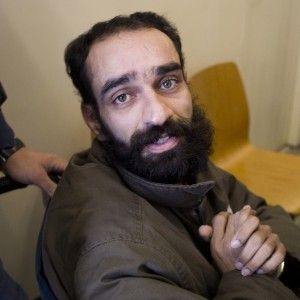
We are fighting for all Palestinians

Samer Issawi is now on the 216th day of hunger strike.

Samer Issawi writes: My story is no different from that of many other Palestinian young people who were born and have lived their whole lives under Israeli occupation. At 17, I was arrested for the first time, and jailed for two years. I was arrested again in my early 20s, at the height of the second intifada in Ramallah, during an Israeli invasion of numerous cities in the West Bank – what Israel called Operation Defensive Shield. I was sentenced to 30 years in prison on charges relating to my resistance to the occupation.

I am not the first member of my family to be jailed on my people’s long march towards freedom. My grandfather, a founding member of the PLO, was sentenced to death by the British Mandate authorities, whose laws are used by Israel to this day to oppress my people; he escaped hours before he was due to be executed. My brother, Fadi, was killed in 1994, aged just 16, by Israeli forces during a demonstration in the West Bank following the Ibrahimi mosque massacre in Hebron. Medhat, another brother, has served 19 years in prison. My other brothers, Firas, Ra’afat and Shadi were each imprisoned for five to 11 years. My sister, Shireen, has been arrested numerous times and has served a year in prison. My brother’s home has been destroyed. My mother’s water and electricity have been cut off. My family, along with the people of my beloved city Jerusalem, are continuously harassed and attacked, but they continue to defend Palestinian rights and prisoners.

After almost 10 years in prison, I was released in the Egypt-sponsored deal between Israel and Hamas to release the Israeli soldier Gilad Shalit in exchange for Palestinian prisoners. However, on 7 July 2012, I was arrested again near Hizma, an area within the municipality of Jerusalem, on charges of violating the terms of my release (that I should not leave Jerusalem). Others who were released as part of that deal were also arrested, some with no declared reason. Accordingly, I began a hunger strike on 1 August to protest against my illegal imprisonment and Israel’s violation of the agreement.

My health has deteriorated greatly, but I will continue my hunger strike until victory or martyrdom. This is my last remaining stone to throw at the tyrants and jailers in the face of the racist occupation that humiliates our people. [Continue reading…]

Facebooktwittermail