Target of Obama-era rendition alleges torture

Target of Obama-era rendition alleges torture

During the 2008 presidential campaign, Barack Obama sharply criticized the Bush Administration’s extraordinary renditions program. “To build a better, freer world, we must first behave in ways that reflect the decency and aspirations of the American people,” he wrote in Foreign Affairs. “This means ending the practice of shipping away prisoners in the dead of night to be tortured in far-off countries, of detaining thousands without charge or trial, of maintaining a network of secret prisons to jail people beyond the reach of law.” But Obama was consistently careful never to commit to ending the practice of rendition entirely. When the issue flared shortly after his inauguration, senior administration officials were quick to say that abuses including torture would end, but that “ordinary” renditions – the spiriting away of suspects from other countries without going through the formal process of extradition — would be continued in a cleaned-up form. Now in a federal court in suburban Washington, a case is unfolding that gives us a practical sense of what an Obama-era rendition looks like.

Raymond Azar, a 45-year-old Lebanese construction manager with a grade school education, is employed by Sima International, a Lebanon-based contractor that does work for the U.S. military in Iraq and Afghanistan. He also has the unlikely distinction of being the first target of a rendition carried out on the Obama watch.

According to court papers, on April 7, 2009, Azar and a Lebanese-American colleague, Dinorah Cobos, were seized by “at least eight” heavily armed FBI agents in Kabul, Afghanistan, where they had traveled for a meeting to discuss the status of one of his company’s U.S. government contracts. The trip ended with Azar alighting in manacles from a Gulfstream V executive jet in Manassas, Virginia, where he was formally arrested and charged in a federal antitrust probe.

This rendition involved no black sites and was clearly driven by a desire to get the target quickly before a court. Also unlike renditions of the Bush-era, the target wasn’t even a terror suspect; rather, he was suspected of fraud. But in a troubling intimation of the last administration, accusations of torture hover menacingly over the case. According to papers filed by his lawyers, Azar was threatened, subjected to coercive interrogation techniques and induced to sign a confession. Azar claims he was hooded, stripped naked (while being photographed) and subjected to a “body cavity search.”

On a ride to the infamous Bagram air base in Afghanistan — site of the torture-homicides involving U.S. interrogators exposed in the Oscar-winning documentary Taxi to the Dark Side — Azar contends that a federal agent pulled a photograph of Azar’s wife and four children from his wallet. Confess that you were bribing the contract officer, the agent allegedly said, or you may “never see them again.” Azar told his lawyers he interpreted that as a threat to do physical harm to his family. [continued…]

2 U.S. architects of harsh tactics in 9/11’s wake

Col. Steven M. Kleinman, an Air Force interrogator and intelligence officer who knows Dr. Mitchell and Dr. Jessen, said he thought loyalty to their country in the panicky wake of the Sept. 11 attacks prompted their excursion into interrogation. He said the result was a tragedy for the country, and for them.
“I feel their primary motivation was they thought they had skills and insights that would make the nation safer,” Colonel Kleinman said. “But good persons in extreme circumstances can do horrific things.”

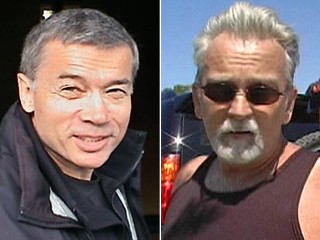
For the C.I.A., as well as for the gray-goateed Dr. Mitchell, 58, and the trim, dark-haired Dr. Jessen, 60, the change in administrations has been neck-snapping. For years, President George W. Bush declared the interrogation program lawful and praised it for stopping attacks. Mr. Obama, by contrast, asserted that its brutality rallied recruits for Al Qaeda; called one of the methods, waterboarding, torture; and, in his first visit to the C.I.A., suggested that the interrogation program was among the agency’s “mistakes.”

The psychologists’ subsequent fall from official grace has been as swift as their rise in 2002. Today the offices of Mitchell Jessen and Associates, the lucrative business they operated from a handsome century-old building in downtown Spokane, Wash., sit empty, its C.I.A. contracts abruptly terminated last spring. [continued…]


Facebooktwittermail

Has Kandahar already fallen?

Has Kandahar already fallen?

In a week where security in Afghanistan seems headed anywhere but up (rocket strikes on Kabul, a Taliban frontal assault in Logar province today), the question on many a commentator’s lips has been: where is this all going?

Some of the strongest analysis on stabilizing Afghanistan recently has come from Andrew Exum who just took a break from his position at the Center for New American Security to act as some-time advisor to General McChrystal. I was struck by a comment he made in an interview on the World Politics Review:

“The fall of Kandahar is not going to look like the Taliban rolling down the streets in tanks. The fall of Kandahar is going to look like the Taliban steadily making ground with a campaign of fear and intimidation, and creating an environment in which the Afghan government can’t operate in Kandahar, and Kandahar eventually becomes ideologically inhospitable to the government of Afghanistan, never mind Coalition forces.”

I think Ex is dead on. But by that standard, I have to question: Has Kandahar already fallen? [continued…]

President Karzai’s supporters ‘buy’ votes for Afghanistan election

Supporters of President Karzai are preparing to rig voting in next week’s presidential elections in unstable parts of Afghanistan’s south as Taleban violence threatens to intimidate voters and hit turnout in his traditional support base.


The Times has talked to several witnesses whose reports will bolster suspicions within the international community that there will be electoral fraud across the south, some of it allegedly orchestrated by Mr Karzai’s half-brother, Ahmed Wali Karzai.

Such irregularities could threaten the credibility of the election process and have led to threats of violent demonstrations in the north if Mr Karzai is thought to have stolen the vote.

One tribal elder in the Marja district of Helmand alleged that the vote rigging was being organised by members of Mr Karzai’s family and local tribal allies, particularly Sher Mohammad Akhundzada, the former governor of the province. [continued…]

U.S. ambassador seeks more money for Afghanistan

The United States will not meet its goals in Afghanistan without a major increase in planned spending on development and civilian reconstruction next year, the U.S. ambassador in Kabul has told the State Department.

In a cable sent to Secretary of State Hillary Rodham Clinton, Ambassador Karl W. Eikenberry said an additional $2.5 billion in nonmilitary spending will be needed for 2010, about 60 percent more than the amount President Obama has requested from Congress. The increase is needed “if we are to show progress in the next 14 months,” Eikenberry wrote in the cable, according to sources who have seen it.

Obama has asked for $68 billion in Defense Department spending in Afghanistan next year, an amount that for the first time would exceed U.S. military expenditures in Iraq. Spending on civilian governance and development programs has doubled under the Obama administration, to $200 million a month — equal to the monthly rate in Iraq during the zenith of spending on nonmilitary projects there. [continued…]

Life, death and the Taliban: War of ideas

Almost daily, girls’ schools are burned and bombed and teachers, principals, students and their families receive what are known as “night letters,” Islamic decrees of death issued by the Taliban and pasted on homes and the walls of villages in the dead of night.

In just two years, more than 640 schools in Afghanistan and more than 350 in Pakistan have been bombed, burned or shut down, according to the education ministries in both countries. Eighty percent of those targeted were girls’ schools.

In the Helmand Province in the south of Afghanistan, where the Taliban is effectively in control of most of the province, 75 of the 228 schools have been shut down by Taliban militias that disapprove of the secular teaching and the idea of girls receiving an education. [continued…]

Afghan drug lords: targeted until proven innocent

So first we expanded our forces in Afghanistan. Then we took on the challenge of prison reform there (ignoring the fact that America’s own prison system is a national disgrace). And yesterday we learned that U.S. armed forces are putting suspected Afghan drug dealers on a “kill or capture” list. In other words, we are now extending the “war on drugs” to Afghanistan, ignoring the fact that this “war” (first announced by Richard Nixon four decades ago) hasn’t led to victory. The new strategy also ignores some of the obvious lessons of that “war,” and places the United States on some pretty dubious moral ground. [continued…]

Facebooktwittermail

Pakistan denies militants attacked nuclear sites

Pakistan denies militants attacked nuclear sites

A military spokesman denied a recent report that militants have attacked Pakistan’s nuclear facilities three times in two years, saying Wednesday there is “absolutely no chance” the country’s atomic weapons could fall into terrorist hands.

Maj. Gen. Athar Abbas said an article written by a U.K.-based security expert was false because none of the bases named actually had any nuclear facilities.

“It is factually incorrect,” he said.

Taliban militants’ brief takeover of areas some 60 miles (100 kilometers) from the capital, Islamabad, raised new fears about the security of Pakistan’s atomic weapons being seized by extremists linked to al-Qaeda, although the country insists its arsenal is secure.

Shaun Gregory, a professor at Bradford University’s Pakistan Security Research Unit, wrote that several militant attacks have already hit military bases where nuclear components are secretly stored. The article appeared in the July newsletter [PDF] of the Combating Terrorism Center of the U.S. Military Academy at West Point. [continued…]

Facebooktwittermail

Climate disobedience

Climate disobedience

In the early morning of October 8, 2007, a small group of British Greenpeace activists slipped inside a hulking smokestack that towers more than 600 feet above a coal-fired power plant in Kent, England. While other activists cut electricity on the plant’s grounds, they prepared to climb the interior of the structure to its top, rappel down its outside, and paint in block letters a demand that Prime Minister Gordon Brown put an end to plants like the Kingsnorth facility, which releases nearly 20,000 tons of carbon dioxide into the atmosphere each day.
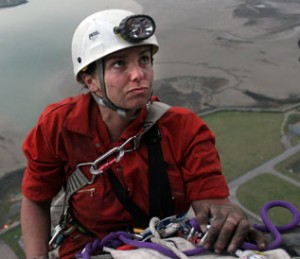
The activists, most of them in their thirties and forties, expected the climb to the top of the smokestack would take less than three hours. Instead, scaling a narrow metal ladder inside took nine. “It was the most physically exhausting thing I have ever done,” 35-year-old Ben Stewart said later. “It was like climbing through a huge radiator — the hottest, dirtiest place you could imagine.”

In the end, the fatigued, soot-covered climbers were only able to paint the word “Gordon” on the chimney before, facing dizzying heights, police helicopters, and a high court injunction, they were compelled to abandon the attempt and submit to arrest. They could hardly have known then that their botched attempt at signage would help transform British debate about fossil-fuel power plants — and that it would send tremors through an emerging global movement determined to use direct action to combat the depredations of climate change.

The case took on historic weight only after the Kingsnorth Six went to court, where they presented to a jury what is known in the United States as a “necessity” defense. This defense applies to situations in which a person violates a law to prevent a greater, imminent harm from occurring: for example, when someone breaks down a door to put out a fire in a burning building.

In the Kingsnorth case, world-renowned climate scientist James Hansen, director of the NASA Goddard Institute for Space Studies, flew to England to testify. According to the Guardian, he presented evidence that the Kingsnorth plant alone could be expected to cause sufficient global warming to prompt “the extinction of 400 species over its lifetime.” Citing a British government study showing that each ton of released carbon dioxide incurs $85 in future climate-change costs, the activists contended that shutting the plant down for the day had prevented $1.6 million in damages — a far greater harm to society than any rendered by their paint — and that their transgressions should therefore be excused.

What surprised both Greenpeace and the prosecution was that 12 ordinary Britons agreed. The jury returned with an acquittal, and the freed defendants made the front pages of newspapers throughout the country. The tumult also produced political results. In April, British energy and climate change minister Ed Miliband announced a reversal in governmental policy on power stations, declaring, “The era of new unabated coal has come to an end.” Discussing Kingsnorth, Daniel Mittler, a long-time environmental activist in Germany, told me recently, “it was probably one of the most impactful civil disobedience cases the world has ever seen, because it was the right action at the right time.” [continued…]

Facebooktwittermail

Iran roiled by prison abuse claims

Iran roiled by prison abuse claims

Nearly a month later, she can’t erase images of the dying young man from her mind.

All but two of his upper teeth had been knocked out. His nails had been pulled out. His head had been bashed in. His kidneys had stopped working. But what most disturbed her, she said, were the stitches around his anus — a sign, the nurses told her, that he had been raped.

Iranian reformist websites and activists in recent days had identified 19-year-old Mohammad K. as one of the protesters arrested during Iran’s postelection unrest, locked up in the Kahrizak detention facility and severely beaten.

He died in the late hours of July 16 or the early hours of July 17 at a hospital in Tehran, according to the websites. [continued…]

Well-informed Larijani congratulated Mousavi on election day, report says

Observers have for weeks heard various theories that purport to prove that Iran’s June 12 presidential elections were rigged. They have come from Western think tanks, mathematicians and, of course, supporters of opposition figurehead Mir-Hossein Mousavi, who ran and lost against Mahmoud Ahmadinejad.
But the latest tantalizing tidbit, from the camp of Ahmadinejad, comes from the website Rajanews.com, which is run by a strident backer of the president, lawmaker Fatemeh Rajabi.

In paragraphs tucked into the end of an article posted Monday, the website may have inadvertently published information damning to its own president while trying to smear the speaker of parliament, a conservative rival of Ahmadinejad. [continued…]

Facebooktwittermail

Israel’s threats to Lebanon only boost Hezbollah

Israel’s threats to Lebanon only boost Hezbollah

Which Lebanon exactly does Prime Minister Benjamin Netanyahu hold responsible for every Hezbollah action? Two months following the elections, Lebanon still has no government. The prime minister-designate, Sa’ad Hariri, just returned on Monday from a vacation in the south of France, the distribution of portfolios has yet to be completed and is likely to be delayed further due Walid Jumblatt’s decision to quit the majority bloc, and there does not appear to be anyone in Lebanon that is moved by the Israeli threats.

At the same time, it is clear to all parties in Lebanon that the Israeli threats to harm civilian infrastructure as retaliation for a Hezbollah attack have no basis since such reprisals will bear no influence on anyone within or without the Beirut government. The Lebanese public has already weighed in on its preference during the last elections in which Hezbollah was dealt a crushing blow (yet still wields considerable political leverage in the country). Continue reading

Facebooktwittermail

Rabbis fight flu pandemic on a wing and a prayer

Rabbis fight flu pandemic on a wing and a prayer

Dozens of rabbis and Kabbalah mystics armed with ceremonial trumpets have taken to the skies over Israel to battle the H1N1 flu virus, Israeli media said on Tuesday.

About 50 Jewish holy men chanted prayers and blew ritual rams’ horns known as shofars in an aircraft circling over the country in the hope of stopping the spread of the virus, some of those involved in Monday’s venture were quoted as saying.

“The aim of the flight was to stop the pandemic so people will stop dying from it,” rabbi Yitzhak Batzri told the Yedioth Ahronoth newspaper, which carried a picture of the bearded men praying while airborne.

“We are certain that, thanks to the prayer, the danger is already behind us,” added Batzri, who could not be reached for further comment on Tuesday. [continued…]

Facebooktwittermail

Shiites in Iraq show restraint as Sunnis keep attacking

Shiites in Iraq show restraint as Sunnis keep attacking

Shiite clerics and politicians have been successfully urging their followers not to retaliate against a fierce campaign of sectarian bombings, in which Shiites have accounted for most of the 566 Iraqis killed since American troops pulled out of Iraq’s cities on June 30.

“Let them kill us,” said Sheik Khudair al-Allawi, the imam of a mosque bombed recently. “It’s a waste of their time. The sectarian card is an old card and no one is going to play it anymore. We know what they want, and we’ll just be patient. But they will all go to hell.”

The patience of the Shiites today is in extraordinary contrast to Iraq’s recent past. With a demographic majority of 60 percent and control of the government, power is theirs for the first time in a thousand years. Going back to sectarian war is, as both Sunni extremists and Shiite victims know, the one way they could lose all that, especially if they were to drag their Sunni Arab neighbors into a messy regional conflict.

It is a far cry from 2006, when a bomb set off at the sacred Shiite shrine in Samarra killed no one, but ignited a fury at the sacrilege that set off two years of sectarian warfare. [continued…]

Facebooktwittermail

Officials see rise in militia groups across US

Officials see rise in militia groups across US

ilitia groups with gripes against the government are regrouping across the country and could grow rapidly, according to an organization that tracks such trends.

The stress of a poor economy and a liberal administration led by a black president are among the causes for the recent rise, the report from the Southern Poverty Law Center says. Conspiracy theories about a secret Mexican plan to reclaim the Southwest are also growing amid the public debate about illegal immigration.

Bart McEntire, a special agent with the Bureau of Alcohol, Tobacco, Firearms and Explosives, told SPLC researchers that this is the most growth he’s seen in more than a decade.

“All it’s lacking is a spark,” McEntire said in the report. [continued…]

Return of the militias

The 1990s saw the rise and fall of the virulently antigovernment “Patriot” movement, made up of paramilitary militias, tax defiers and so-called “sovereign citizens.” Sparked by a combination of anger at the federal government and the deaths of political dissenters at Ruby Ridge, Idaho, and Waco, Texas, the movement took off in the middle of the decade and continued to grow even after 168 people were left dead by the 1995 bombing of Oklahoma City’s federal building — an attack, the deadliest ever by domestic U.S. terrorists, carried out by men steeped in the rhetoric and conspiracy theories of the militias. In the years that followed, a truly remarkable number of criminal plots came out of the movement. But by early this century, the Patriots had largely faded, weakened by systematic prosecutions, aversion to growing violence, and a new, highly conservative president.

They’re back. Almost a decade after largely disappearing from public view, right-wing militias, ideologically driven tax defiers and sovereign citizens are appearing in large numbers around the country. “Paper terrorism” — the use of property liens and citizens’ “courts” to harass enemies — is on the rise. And once-popular militia conspiracy theories are making the rounds again, this time accompanied by nativist theories about secret Mexican plans to “reconquer” the American Southwest. One law enforcement agency has found 50 new militia training groups — one of them made up of present and former police officers and soldiers. Authorities around the country are reporting a worrying uptick in Patriot activities and propaganda. “This is the most significant growth we’ve seen in 10 to 12 years,” says one. “All it’s lacking is a spark. I think it’s only a matter of time before you see threats and violence.” [continued…]

Facebooktwittermail

Israel clouds Obama’s nuclear summit

Israel clouds Obama’s nuclear summit

President Barack Obama’s call for a nuclear security summit next March could end up turning an uncomfortable spotlight on at least one nation — Israel — and further strain the administration’s relations with the Jewish state, analysts said.

Obama told leaders at the G-8 summit in July that he planned to ask the heads of 25 to 30 countries to come to Washington to discuss securing nuclear stockpiles. The final invites haven’t gone out yet, and one key question for Obama is this: Does he ask Israel to attend, or not?

There’s no good choice.

Invite Israel, and open its leaders up to questions about the country’s widely reported nuclear weapons program — which the Israelis have long refused to discuss.

But leave out Israel, and the Middle Eastern nations who would seem to be a necessity at any summit discussing nuclear security would feel compelled to point to Israel’s reported efforts as a source of instability in the region. [continued…]

Facebooktwittermail

The two-state solution doesn’t solve anything

The two-state solution doesn’t solve anything

The two-state solution has welcomed two converts. In recent weeks, Benjamin Netanyahu, the Israeli prime minister, and Khaled Meshal, the head of Hamas’s political bureau, have indicated they now accept what they had long rejected. This nearly unanimous consensus is the surest sign to date that the two-state solution has become void of meaning, a catchphrase divorced from the contentious issues it is supposed to resolve. Everyone can say yes because saying yes no longer says much, and saying no has become too costly. Acceptance of the two-state solution signals continuation of the Israeli-Palestinian struggle by other means.

Bowing to American pressure, Mr. Netanyahu conceded the principle of a Palestinian state, but then described it in a way that stripped it of meaningful sovereignty. In essence, and with minor modifications, his position recalled that of Israeli leaders who preceded him. A state, he pronounced, would have to be demilitarized, without control over borders or airspace. Jerusalem would remain under Israeli sovereignty, and no Palestinian refugees would be allowed back to Israel. His emphasis was on the caveats rather than the concession.

As Mr. Netanyahu was fond of saying, you can call that a state if you wish, but whom are you kidding? [continued…]

Hoyer: E. J’lem not same as W. Bank

US House Majority leader Steny Hoyer praised Prime Minister Binyamin Netanyahu, called for the Palestinian Authority to drop any preconditions to negotiations, and said that Congress differentiated between building in east Jerusalem and in the West Bank, during an interview with The Jerusalem Post on Monday.

Hoyer, currently in the country leading a delegation of 29 Democratic legislators, also said the rhetoric coming out of the Fatah General Assembly in Bethlehem was “unfortunate.”

The delegation, sponsored by the American Israel Education Foundation, a charitable organization affiliated with the American Israel Public Affairs Committee, arrived on Sunday evening and met Monday with President Shimon Peres, Foreign Minister Avigdor Lieberman and US security coordinator Lt.-Gen. Keith Dayton.

Lieberman told the group that the continued control of Gaza by Hamas, along with the rhetoric coming out of the Fatah conference in Bethlehem, essentially buried chances of peace for the near future. [continued…]

Israel PM vows never to evict settlers

Prime Minister Benjamin Netanyahu pledged on Sunday that he will never evict Jewish settlers from occupied Palestinian land as Israel did in 2005 in the Gaza Strip.

“The withdrawal from the Gaza Strip brought us neither peace nor security. The territory has become a base for the pro-Iranian Hamas movement and we will never make the same mistake again,” Netanyahu said at the weekly cabinet meeting.

“We will not evict any more people from their homes,” he added in comments carried by public radio. [continued…]

Netanyahu’s sister-in-law detained by police; calls Sheikh Jarrah evictions an unjust folly

Even compared to the low ethical standards which most people, outside the United States, ascribe to the actions of the Israeli government of occupation, the recent decision of their Supreme Court to evict long-time residents of Arab neighborhoods and to replace them with Jewish Israelis signals a particularly low point in the Jewish state’s brutally harsh treatment of Palestinians.

In a sparsely reported incident which occurred on Sunday, August 1,Ofra Ben-Artzi, the sister-in-law of Israeli Prime Minister Binyamin Netanyahu, was detained by police in the Sheikh Jarrah neighborhood in East Jerusalem. The 58 year-old Ben-Artzi, an editor for the anti-occupation magazine, HaKibush, spent several hours in police custody before being released without any charges being filed. Her apparent crime was her sympathy with the Palestinians who had recently been evicted from their homes. [continued…]

Facebooktwittermail

Karzai offers rival top Cabinet post in effort to avoid election defeat

Karzai offers rival top Cabinet post in effort to avoid election defeat

One of the three main contenders in Afghanistan’s presidential election admitted yesterday that he had been offered a power-sharing deal by President Karzai in an apparent attempt to sideline the other leading candidate and avoid a second-round vote.

Ashraf Ghani, a former academic and World Bank executive, told The Times that a “weakening” Mr Karzai had attempted to persuade him to abandon his campaign in exchange for the position of prime minister in a new Karzai administration.

Mr Ghani, who was Finance Minister in Mr Karzai’s first Cabinet, said that he was “listening” to the approaches from Mr Karzai’s intermediaries but was not giving up his campaign for the election on August 20. “An offer was made. It was for a position as ‘chief executive’ [in the Cabinet],” he said. “The details were not worked out. I am not discontinuing my election campaign.”

The proposed deal could seriously undermine the campaign of the other major contender in the election, Abdullah Abdullah, who is widely regarded as the main threat to Mr Karzai’s continued grip on power. [continued…]

Afghanistan enlists tribal militia forces

The Afghan and U.S. governments have launched a new effort to enlist tribal fighters from many of the country’s most violent provinces in the war against the Taliban, hoping that a tactic first used in Iraq can help turn the tide here as well.

Thousands of armed tribal fighters from 18 Afghan provinces will initially be hired to provide security for elections on Aug. 20, officials from both countries said. If the security is effective, Afghan officials say they will try to give the tribesmen permanent jobs protecting their villages and neighborhoods.

The tribal initiative is being run by a new branch of the Afghan government called the Independent Directorate for the Protection of Highways and Public Property. In coming days, officials from the agency will ask tribal shuras, or councils, in participating provinces to organize armed militias to guard polling places, roads and public gathering spaces. [continued…]

Al-Qa’ida intervenes in battle for control of the Pakistan Taliban

Al-Qai’da militants may be trying to install their own “chief terrorist” to succeed Baitullah Mehsud as the head of the Pakistan Taliban following his death during a US drone strike, Pakistan’s top security official believes.

The head of the country’s interior ministry, Rehman Malik, said the Pakistan Taliban was in disarray following last week’s targeted killing of Mehsud and that in the ensuing uncertainty al-Qa’ida was using its influence to try to ensure it selected his replacement.

Mr Malik voiced his concern as Pakistan said it was trying to collect DNA evidence to conclusively confirm the Taliban commander’s death in the rugged and inaccessible wilds of Taliban-controlled South Waziristan. Pakistani authorities will try to compare a sample to the DNA of one of Mehsud’s brothers, killed in a previous strike. [continued…]

Facebooktwittermail

Iranian lawmakers demand say on cabinet, hinting at a rift among hard-liners

Iranian lawmakers demand say on cabinet, hinting at a rift among hard-liners

A bout 200 conservative Iranian lawmakers signed a letter on Monday calling on President Mahmoud Ahmadinejad to consult them about cabinet appointments, the latest sign of a struggle among hard-liners that may limit the president’s political clout as he moves to form a new government in the coming week.

The lawmakers’ demands followed reports that Mr. Ahmadinejad had fired as many as 20 officials in Iran’s Intelligence Ministry. The purge appeared to be aimed at those who disagreed with the handling of the harsh crackdown on opposition protests in the wake of the disputed June 12 presidential election.

The firings have exposed sharp differences among conservatives over how to deal with Iran’s still defiant opposition movement. Last month, Mr. Ahmadinejad fired the intelligence minister, Gholam-Hussein Mohseni-Ejei, provoking furious criticism from many conservative lawmakers and senior clerics. Mr. Mohseni-Ejei had objected to using televised confessions of jailed protesters — widely believed even in Iran to be coerced — and since his removal, those confessions have been used in a mass trial of reformist figures. [continued…]

Facebooktwittermail

Iraq attacks raise fears of renewed ethnic tensions

Iraq attacks raise fears of renewed ethnic tensions

A string of bombings in northern Iraq and Baghdad that has killed at least 112 people in the last several days, including 60 on Monday, has raised fears that insurgent groups are embarking on a sustained attempt to kindle ethnic and sectarian warfare.

The toll since Friday represents the worst surge of violence since U.S. troops handed over security in urban areas to Iraqi security forces on June 30.

The attacks serve as a reminder that although the U.S. military says it is on track to complete the withdrawal of U.S. combat forces from Iraq by next August, the potential for fresh conflict between Arabs and Kurds in the north, and Sunnis and Shiites elsewhere, remains very real. [continued…]

Sectarian bombings pulverize a village in Iraq

The entire village was gone. Local television broadcast scenes of homes reduced to heaps of rubble mixed with bed frames, mattresses, furniture and bloodstained pillows. A villager cried into the camera, “Look, Mr. Prime Minister and Mr. Interior Minister, where is the security that you speak about?”

The latest wave of sectarian bombings struck northern Iraq and Baghdad on Monday, killing at least 50 people, wounding hundreds more and leveling the village, near Mosul.

Nearly 100 people in Baghdad and the northern city of Mosul have been killed in attacks since Friday, raising grave concerns about the Iraqi government’s ability to maintain security. [continued…]

Facebooktwittermail

Judge: CIA interrogations not relevant to 9/11 accused’s sanity

Judge: CIA interrogations not relevant to 9/11 accused’s sanity

US military defense lawyers for accused 9/11 conspirator Ramzi bin al Shibh cannot learn what interrogation techniques CIA agents used on the Yemeni before he was moved to Guantánamo to be tried as a terrorist, an Army judge has ruled.

Bin al Shibh, 37, is one of five men charged in a complex death penalty prosecution by military commission currently under review by the Obama administration. He allegedly helped organize the Hamburg, Germany, cell of the Sept. 11, 2001, hijackers before the suicide mission that killed 2,974 people in New York, the Pentagon and Pennsylvania.

But his lawyers say he suffers a “delusional disorder,” and hallucinations in his cell at Guantánamo may leave him neither sane enough to act as his own attorney nor to stand trial. Prison camp doctors treat him with psychotropic drugs. [continued…]

Facebooktwittermail

Zen and the art of foreign relations

US showed support for Iran protestors: Clinton

Secretary of State Hillary Clinton said Sunday that the United States did a lot “behind the scenes” to show support for demonstrators contesting Iran’s disputed presidential election results.

“We did not want to get between the legitimate protests and demonstrations of the Iranian people and the leadership,” Clinton said in an interview with CNN broadcast on Sunday.

“And we knew that if we stepped in too soon, too hard… the leadership would try to use us to unify the country against the protestors.”

“Now, behind the scenes, we were doing a lot,” Clinton said. “We were doing a lot to really empower the protestors without getting in the way. And we’re continuing to speak out and support the opposition.” [continued…]

Editor’s Comment — If the Iranian revolutionary court recently trying protesters in Tehran had been able to subpoena Hillary Clinton to testify on behalf of the prosecution, this is what they would have wanted her to say: “behind the scenes, we were doing a lot.”

This is not what President Obama should want his chief diplomat to be saying. What the hell was she thinking?

There is one thing that movers and shakers (while they’re doing all their moving and shaking) find almost impossible to grasp: there are times when doing nothing is better than doing something.

Tell the Iranian people: we’re with you in spirit and we’re rooting for you, but this is your fight. The best we can do is to do nothing that will empower those who want to oppress you.

Facebooktwittermail

Iranian officials call for arrest of opposition leaders

Iranian officials call for arrest of opposition leaders

Revolutionary Guard generals, top politicians and senior clerics have called for the arrest and punishment of opposition leaders, including defeated presidential candidate Mir Hossein Mousavi, Iranian state media reported Sunday, while the national police chief acknowledged that protesters had been mistreated while in custody.[…]

“In order to end this mayhem, they need to arrest, try and punish these political figures,” Gen. Yadollah Javani, head of the political office of the Revolutionary Guard Corps, advised the judicial system Sunday, according to state news agency IRNA. “These individuals should be prosecuted, punished and tried as traitors.” He singled out Mousavi, fellow defeated candidate Mehdi Karroubi and former president Mohammad Khatami. The Revolutionary Guard is a force that plays a highly influential role in politics.

Mohammad Karami-Rad, a member of the parliament’s National Security and Foreign Policy Commission, told Iran’s Journalists Club on Sunday that the government was pursuing a complaint against Mousavi, but he did not provide details.

Coupled with the trials already underway, charges against Mousavi and other top opposition figures would mark an unprecedented attempt to purge a faction that has been part of the nation’s political fabric since the Islamic revolution 30 years ago. It comes after a decades-long dispute between the faction now represented by Ahmadinejad and the one now led by Mousavi, which erupted into open conflict in the run-up to the elections. [continued…]

Iran’s president purges Intelligence Ministry

Ian’s president has conducted a purge of the nation’s Intelligence Ministry, sweeping aside ranking officials with decades of experience in favor of loyalists, said a lawmaker, several news websites and a former intelligence chief’s son.

The move, chronicled by news outlets Sunday, underscores the deep rifts and disarray within the highest echelons of the country’s security apparatus since President Mahmoud Ahmadinejad’s disputed June 12 reelection. [continued…]

Iran’s Karoubi says some detainees raped in jail

Iran’s defeated presidential candidate Mehdi Karoubi said some of those detained after the country’s disputed June presidential vote had been raped in detention, according to his website on Sunday.

“Some senior officials told me that … really shameful issues … Some young male detainees were raped … also some young female detainees were raped in a way that have caused serious injuries,” the website quoted a letter Karoubi wrote 10 days ago to Akbar Hashemi Rafsanjani, head of a powerful arbitration body, as saying. [continued…]

Iran admits election demonstrators were tortured

Iran’s police chief admitted yesterday that protesters who were arrested after June’s disputed presidential election had been tortured while in custody in a prison in south-west Tehran. But he denied that any of the detainees had died as a result.

General Ismail Ahmadi Moghaddam said the head of the Kahrizak detention centre had been dismissed and jailed. “Three policemen who beat detainees have been jailed as well,” the official IRNA news agency quoted Moghaddam as saying.

Human rights groups had previously identified at least three detainees they said had died after torture at Kahrizak, which was closed last month on the orders of Iran’s supreme leader, Ayatollah Ali Khamenei. Moghaddam denied that the abuses were responsible for any fatalities there, claiming that an unspecified “viral illness” had caused the deaths. [continued…]

Facebooktwittermail

Sanctions unlikely to stop Iran’s nuclear quest

Sanctions unlikely to stop Iran’s nuclear quest

Unless Iran responds positively to President Obama’s offer of talks on its nuclear program by next month, it could face what Secretary of State Hillary Clinton calls “crippling sanctions.” That was the message from Administration officials touring the Middle East in recent weeks. And it’s backed by congressional moves to pass legislation aimed at choking off the gasoline imports on which Iran relies for almost a third of its consumption, by punishing third-country suppliers. It sounds impressive and, for an undiversified economy like Iran’s, potentially calamitous. But a number of Iran analysts are skeptical that new sanctions will break the stalemate.

President Mahmoud Ahmadinejad’s government has promised to present a new package of proposals on the nuclear issue to Western negotiators in the coming weeks. But that package is unlikely to reflect any shift in Tehran’s rejection of the U.S. demand that it forgo the right to enrich uranium as part of its nuclear-energy program. “If the U.S. position remains unchanged,” says Farideh Farhi, an Iran expert at the University of Hawaii, “Iran may well come to the table, but only in order to demonstrate to its own people that its regime has been recognized, not to seriously engage with U.S. proposals or give ground.” [continued…]

Facebooktwittermail