
Target of Obama-era rendition alleges torture
During the 2008 presidential campaign, Barack Obama sharply criticized the Bush Administration’s extraordinary renditions program. “To build a better, freer world, we must first behave in ways that reflect the decency and aspirations of the American people,” he wrote in Foreign Affairs. “This means ending the practice of shipping away prisoners in the dead of night to be tortured in far-off countries, of detaining thousands without charge or trial, of maintaining a network of secret prisons to jail people beyond the reach of law.” But Obama was consistently careful never to commit to ending the practice of rendition entirely. When the issue flared shortly after his inauguration, senior administration officials were quick to say that abuses including torture would end, but that “ordinary” renditions – the spiriting away of suspects from other countries without going through the formal process of extradition — would be continued in a cleaned-up form. Now in a federal court in suburban Washington, a case is unfolding that gives us a practical sense of what an Obama-era rendition looks like.
Raymond Azar, a 45-year-old Lebanese construction manager with a grade school education, is employed by Sima International, a Lebanon-based contractor that does work for the U.S. military in Iraq and Afghanistan. He also has the unlikely distinction of being the first target of a rendition carried out on the Obama watch.
According to court papers, on April 7, 2009, Azar and a Lebanese-American colleague, Dinorah Cobos, were seized by “at least eight” heavily armed FBI agents in Kabul, Afghanistan, where they had traveled for a meeting to discuss the status of one of his company’s U.S. government contracts. The trip ended with Azar alighting in manacles from a Gulfstream V executive jet in Manassas, Virginia, where he was formally arrested and charged in a federal antitrust probe.
This rendition involved no black sites and was clearly driven by a desire to get the target quickly before a court. Also unlike renditions of the Bush-era, the target wasn’t even a terror suspect; rather, he was suspected of fraud. But in a troubling intimation of the last administration, accusations of torture hover menacingly over the case. According to papers filed by his lawyers, Azar was threatened, subjected to coercive interrogation techniques and induced to sign a confession. Azar claims he was hooded, stripped naked (while being photographed) and subjected to a “body cavity search.”
On a ride to the infamous Bagram air base in Afghanistan — site of the torture-homicides involving U.S. interrogators exposed in the Oscar-winning documentary Taxi to the Dark Side — Azar contends that a federal agent pulled a photograph of Azar’s wife and four children from his wallet. Confess that you were bribing the contract officer, the agent allegedly said, or you may “never see them again.” Azar told his lawyers he interpreted that as a threat to do physical harm to his family. [continued…]
2 U.S. architects of harsh tactics in 9/11’s wake
C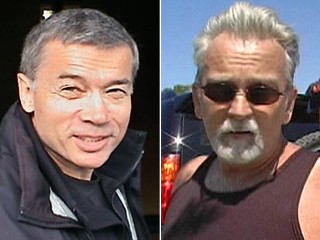 ol. Steven M. Kleinman, an Air Force interrogator and intelligence officer who knows Dr. Mitchell and Dr. Jessen, said he thought loyalty to their country in the panicky wake of the Sept. 11 attacks prompted their excursion into interrogation. He said the result was a tragedy for the country, and for them.
“I feel their primary motivation was they thought they had skills and insights that would make the nation safer,” Colonel Kleinman said. “But good persons in extreme circumstances can do horrific things.”
For the C.I.A., as well as for the gray-goateed Dr. Mitchell, 58, and the trim, dark-haired Dr. Jessen, 60, the change in administrations has been neck-snapping. For years, President George W. Bush declared the interrogation program lawful and praised it for stopping attacks. Mr. Obama, by contrast, asserted that its brutality rallied recruits for Al Qaeda; called one of the methods, waterboarding, torture; and, in his first visit to the C.I.A., suggested that the interrogation program was among the agency’s “mistakes.”
The psychologists’ subsequent fall from official grace has been as swift as their rise in 2002. Today the offices of Mitchell Jessen and Associates, the lucrative business they operated from a handsome century-old building in downtown Spokane, Wash., sit empty, its C.I.A. contracts abruptly terminated last spring. [continued…]



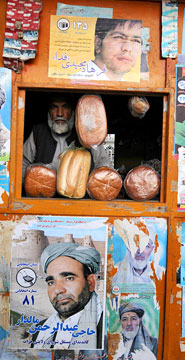 upporters of President Karzai are preparing to rig voting in next week’s presidential elections in unstable parts of Afghanistan’s south as Taleban violence threatens to intimidate voters and hit turnout in his traditional support base.

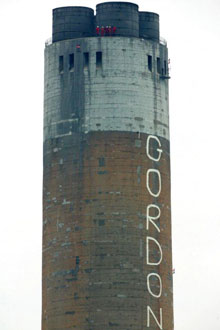 n the early morning of October 8, 2007, a small group of British Greenpeace activists slipped inside a hulking smokestack that towers more than 600 feet above a coal-fired power plant in Kent, England. While other activists cut electricity on the plant’s grounds, they prepared to climb the interior of the structure to its top, rappel down its outside, and paint in block letters a demand that Prime Minister Gordon Brown put an end to plants like the Kingsnorth facility, which releases nearly 20,000 tons of carbon dioxide into the atmosphere each day.
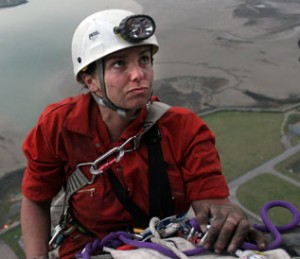 In the end, the fatigued, soot-covered climbers were only able to paint the word “Gordon” on the chimney before, facing dizzying heights, police helicopters, and a high court injunction, they were compelled to abandon the attempt and submit to arrest. They could hardly have known then that their botched attempt at signage would help transform British debate about fossil-fuel power plants — and that it would send tremors through an emerging global movement determined to use direct action to combat the depredations of climate change.
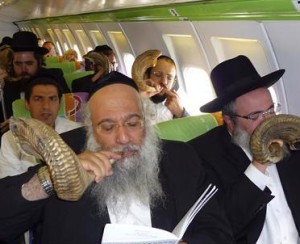 ozens of rabbis and Kabbalah mystics armed with ceremonial trumpets have taken to the skies over Israel to battle the H1N1 flu virus, Israeli media said on Tuesday.
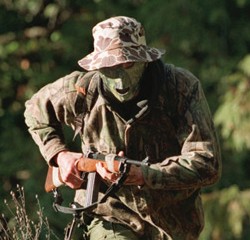 ilitia groups with gripes against the government are regrouping across the country and could grow rapidly, according to an organization that tracks such trends.
 — If the Iranian revolutionary court recently trying protesters in Tehran had been able to subpoena Hillary Clinton to testify on behalf of the prosecution, this is what they would have wanted her to say: “behind the scenes, we were doing a lot.”