Yearly Archives: 2010

Reclaiming self-determination

In a policy brief for Al-Shabaka, Ali Abunimah reviews the evolution of the concept of self-determination, its applicability to the Palestinian people, and its gradual erosion since 1991. He argues not only that self-determination must return to the center of the Palestinian struggle; he also shows how the Palestinian exercise of this right can be compatible with eventual coexistence with Israeli Jews.

In his 1974 speech to the United Nations General Assembly, Palestine Liberation Organization Chairman Yasir Arafat addressed “the roots of the Palestine question,” declaring, “Its causes do not stem from any conflict between two religions or two nationalisms. Neither is it a border conflict between neighboring States. It is the cause of a people deprived of its homeland, dispersed and uprooted, and living mostly in exile and in refugee camps.”

How ironic then that the “peace process” has reconceived the Palestine question precisely as little more than a border dispute between Israel and a putative Palestinian state. The “roots” were first reduced to a laconic list of “final status issues”: borders, settlements, Jerusalem and refugees and then gradually buried. Lost has been any commitment to self-determination in principle or in practice.

Although they have rarely been formally discussed, it has long been conventional wisdom in peace process circles that the “final status” issues have already effectively been settled, largely according to Israel’s requirements (we have heard ad nauseam the refrain “everyone knows what a final settlement will look like”). The United States and its hand-picked Palestinian leaders have accepted that large Israeli “settlement blocs” housing most of the settlers, will remain where they are in the West Bank.

The same formula has been adopted for Jerusalem, as per the so-called Clinton parameters: Israel would get “Jewish neighborhoods” and the Palestinian state would get “Arab neighborhoods.” What this means in practice is that Israel would keep everything it illegally annexed and colonized since 1967, and Palestinians might get some form of self-rule in whatever is left – which is shrinking daily as Israel aggressively escalates its Judaization of eastern Jerusalem. While everything east of the 1967 line is divisible and “disputed,” the same does not apply to the west. Palestinians would not be entitled, for example, to seek the return of their West Jerusalem neighborhoods ethnically cleansed and colonized by Israel in 1948. The “peace process” has actually created an incentive for Israel to accelerate its colonization of eastern Jerusalem because Israel knows that whatever is left uncolonized would become the new maximum ceiling of what the United States and other peace process sponsors would support as Palestinian demands.

Similarly, the refugee question has been virtually “settled” as well. Palestinian Authority-appointed chief negotiator Saeb Erekat revealed in a paper he circulated last December that Fatah leader and acting Palestinian Authority President Mahmoud Abbas had proposed to Israel that no more than 15,000 Palestinian refugees per year for ten years return to their original lands in what is now Israel.1 According to Erekat, then Israeli Prime Minister Ehud Olmert had countered with an offer of 1,000 refugees per year for a period of five years. In other words, the parties had already agreed to abrogate the fundamental rights of millions of Palestinian refugees, and were haggling only over the difference between 5,000 and 150,000, or less than three percent of the Palestinian refugees registered to receive services from UNRWA (the United Nations Works and Relief Agency for Palestine Refugees in the Near East).

So what is left to negotiate? Camille Mansour’s policy brief accurately summarizes the outstanding issues – as seen from within the peace process – the final borders and attributes of sovereignty of the Palestinian state. Mansour doubts that negotiations in present circumstances would lead to a peace treaty in which “Palestinian sovereignty requirements could be attained.”

Let us assume for the sake of argument that Israel were to agree to a Palestinian state in the West Bank including East Jerusalem, and the Gaza Strip that satisfies official Palestinian positions and provides for a state no more or less sovereign than any other. The question that then arises is: Does this sovereign state provide for the self-determination of the Palestinian people? Does it restore and guarantee their fundamental rights? As argued, below, the answer is a clear no. And this underscores the need to distinguish the limited goal of sovereignty from that of self-determination.

Facebooktwittermail

Interview with Ken O’Keefe

Ken O’Keefe, an activist who was on board the Mavi Marmara, is interviewed by Mark Dankof on his podcast, The Ugly Truth.

(During the first ten minutes of the broadcast, Phil Tourney, a survivor from the USS Liberty, describes the circumstances in which Israel attacked that American intelligence vessel in 1967.)

In a statement O’Keefe released soon after his expulsion from Israel, he said:

I said this straight to Israeli agents, probably of Mossad or Shin Bet, and I say it again now, on the morning of the attack I was directly involved in the disarming of two Israeli Commandos. This was a forcible, non-negotiable, separation of weapons from commandos who had already murdered two brothers that I had seen that day. One brother with a bullet entering dead center in his forehead, in what appeared to be an execution. I knew the commandos were murdering when I removed a 9mm pistol from one of them. I had that gun in my hands and as an ex-US Marine with training in the use of guns it was completely within my power to use that gun on the commando who may have been the murderer of one of my brothers. But that is not what I, nor any other defender of the ship did. I took that weapon away, removed the bullets, proper lead bullets, separated them from the weapon and hid the gun. I did this in the hopes that we would repel the attack and submit this weapon as evidence in a criminal trial against Israeli authorities for mass murder.

I also helped to physically separate one commando from his assault rifle, which another brother apparently threw into the sea. I and hundreds of others know the truth that makes a mockery of the brave and moral Israeli military. We had in our full possession, three completely disarmed and helpless commandos. These boys were at our mercy, they were out of reach of their fellow murderers, inside the ship and surrounded by 100 or more men. I looked into the eyes of all three of these boys and I can tell you they had the fear of God in them. They looked at us as if we were them, and I have no doubt they did not believe there was any way they would survive that day. They looked like frightened children in the face of an abusive father.

But they did not face an enemy as ruthless as they. Instead the woman provided basic first aid, and ultimately they were released, battered and bruised for sure, but alive. Able to live another day. Able to feel the sun over head and the embrace of loved ones. Unlike those they murdered. Despite mourning the loss of our brothers, feeling rage towards these boys, we let them go. The Israeli prostitutes of propaganda can spew all of their disgusting bile all they wish, the commandos are the murders, we are the defenders, and yet we fought. We fought not just for our lives, not just for our cargo, not just for the people of Palestine, we fought in the name of justice and humanity. We were right to do so, in every way.

Facebooktwittermail

Time for the West to shed its cultural arrogance

“The westerly excrescence of the continent of Asia,” is how the British historian Barry Cunliffe describes Europe’s topographic form. It’s a useful image because it emphasizes what this nominal continent is anchored on to rather than what sets it apart. Seen in this way, the importance of Turkey — a figurative bridge between two continents that actually reveals how indivisible they are — cannot be overestimated. Yet now more than ever, Europe’s eastern edge is being viewed warily.

Western disquiet about the political trajectory upon which Turkey might be heading has been growing ever since the AK party became the dominant political force. At the same time, there’s no denying that under Islamist governance Turkey’s economy has thrived as never before. But what offends Western capitals more than anything else right now is the perception that Turkey no longer looks up to its cultural superiors.

“Who do they think they are?” the Americans, Germans and French must be muttering as they witness Turkey step out of line by voting against Security Council sanctions on Iran. Worst of all, why does the Turkish prime minister repeatedly insist on exposing the obsequious nature of the ways in which so many Western governments indulge Israel?

Just as Recep Tayyip Erdogan has embarrassed most Arab leaders by presenting a model of leadership that cannot be emulated without democracy, he likewise exposes the weakness of Western leaders — politicians who instead of showing leadership have become service managers catering to the needs of special interests.

In this context, Turkey’s rising power is increasingly being characterized as a rogue tendency. Maturity is being cast as insubordination.

But at the Financial Times, Philip Stephens explains why the claim that “Turkey has been lost,” really has no foundation.

[T]he message I took from policymakers and business leaders at a recent conference in Istanbul convened by Chatham House was far more subtle than the present discourse in the west. Far from turning its back on Europe, the [Turkish] government hopes that the country’s rising regional influence will strengthen its claim for admission [to the EU].

It is not often these days that you hear anyone praise the EU. Turkish politicians are the exception. The Union, one of Mr Erdogan’s ministers told the conference, had been a “greatest peace project in the history of mankind”. Securing Turkey’s membership remained a “national and a strategic” objective.

Nor, according to ministers, had Turkey taken pleasure in opposing a new UN Security Council sanctions resolution against Iran – a vote that followed an abortive Turkish-Brazilian initiative to broker a deal over Tehran’s nuclear ambitions.

The initiative, which would have seen the transfer of part of Iran’s stockpile of uranium to Turkey, was dismissed in Washington as at best naive. Ankara was accused of falling into an Iranian trap. Turkish ministers offer a rather different version of events. The terms of proposal, they insist, were entirely consistent with those set out in a private letter sent to Mr Erdogan in April by US president Barack Obama. The initiative was never promoted as a comprehensive solution, but rather as a confidence-building measure that could lead to broader negotiations with Tehran.

Whatever the precise details and chronology, nothing that I heard in Istanbul spoke to a nation looking for a breach with the west; what I took away instead was that 20 years after the end of the cold war Turkey has decided that it can sometimes shape its own foreign policy. Membership of the west once meant doing whatever Washington said. Now it has interests, opinions and rights of its own.

For many Americans, and for some Europeans, this is more than irritating. The Turkey of their imagination was one forever in their debt and forever grateful for any seat at the western table.

The irony, of course, is that the new, assertive, Turkey has more to offer the west than its pliant precedessor. With a mind of its own, it has greater strategic credibility in the Middle East and the Muslim world. This is the Turkey the west really must not lose.

Facebooktwittermail

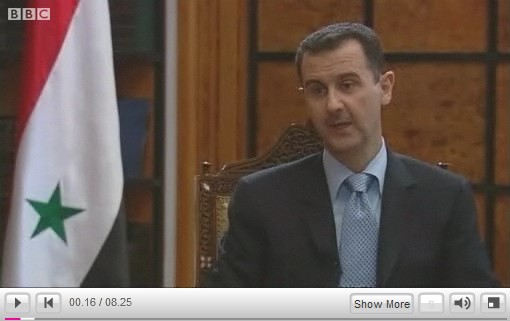
Syria’s Bashar al-Assad warns of Middle East war

The BBC’s Middle East editor, Jeremy Bowen interviewed Syrian President Bashar al-Assad who says Israel’s raid on the Gaza aid flotilla has increased the risk of war in the Middle East.

A few days before the Israeli attack on the Mavi Marmara, Charlie Rose did a full length interview with the Syrian president which is well worth watching. He’s a serious and articulate strategic thinker.

Assad gets far less attention in the US media than he deserves. To some extent this may result from his reserved manner and the perception that he rules in the shadow of his father, the late Hafez al-Assad, but to a larger extent I see it as standard-fare Washington contempt for Syria itself. Perennially branded a rogue state, a relatively minor oil producer, Syria is a country that interests America no more than can be measured by its willingness (or unwillingness) to bow to American pressure.

But Assad belongs to and is articulating the vision of a new generation of regional leaders who recognize that the fate of the Middle East rests firmly in the hands of those who refuse to define themselves on the basis of their relationship with the United States.

Facebooktwittermail

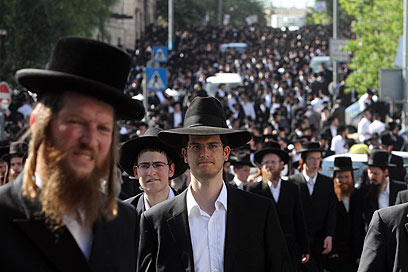
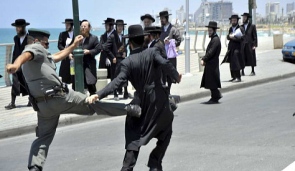
100,000 ultra-Orthodox Jews rally in Jerusalem in support of segregation

“It’s like putting Americans and Africans together. They can’t study together with such huge mental differences,” an ultra-Orthodox Jewish parent said when explaining why he cannot allow his daughters to share a classroom with Sephardi Jewish girls.

It’s hard to countenance the concept of a “demographic threat” and treat it as socially acceptable without also opening the door to other forms of bigotry that a liberal Zionist cannot possibly tolerate.

This is the dilemma many Israelis now face: How do you justify the idea that the rights of a non-Jewish minority can be restricted (this being a practical necessity if Israel is to remain a Jewish state), and then stand up in defense of religious and racial pluralism when ultra-Orthodox Jews insist that the “purity” of their children will be tainted if they are forced to share classrooms with Sephardi Jews?

Today, as 100,000 ultra-Orthodox Jews protested in Jerusalem in support of segregation, many Israelis probably feel conflicted about which particular demographic threat now poses the greatest danger to Israel.

The liberal commentator, Yossi Sarid, expresses what I take to be commonplace Israeli secular Jewish contempt for and exasperation with the ultra-Orthodox when he writes: “[T]he rebellious Haredim must be put in their place.”

Last December, Haaretz reported:

The Ashkenazi students of the ultra-Orthodox Beit Yaakov girls’ school in [the West Bank settlement] Immanuel stayed home on Wednesday, yet again, as part of an organized protest against the decision by the Education Ministry and High Court to end the segregation between Sephardi and Ashkenazi students.

“No court ruling or Education Ministry decision can bring the two groups together,” an Immanuel resident said Wednesday.

“It’s like putting Americans and Africans together. They can’t study together with such huge mental differences,” he said.

Some 70 Ashkenazi students of the Beit Yaakov girls’ school stopped attending classes two days before the Hanukkah holiday – in protest of the ministry’s efforts to force the ultra-Orthodox school to rescind the segregation, in keeping with the High Court ruling.

The father of one Mizrahi student was in no doubt about the basis for discrimination: “The Ashkenazis think they’re more intelligent than we are, but what really bugs them is our skin color.”

Sami Michael, an Israeli author who grew up in Baghdad and settled in Israel in 1949 when he was 23, notes that even in the darkest days in Iraq, Egypt and Lebanon, they never separated Jews from Muslims and Christians in schools.

On segregation in Immanuel he writes:

My nerves are tingling and my flesh is crawling as I write these lines. This is a small story about two girls attending the same school who became friends and who are now required, by racist order, to wear school uniforms of different colors.

They have been forbidden to come in contact with each other and in order to make the prohibition concrete, a fence covered with an opaque cloth has been stretched between them. They preserve their friendship by passing notes through a hole in the fence.

This story did not happen in the days of apartheid South Africa or in the dark times before the civil rights movement in the United States or in a ghetto in an insane Europe during World War II.

The two schoolgirls wearing uniforms of different colors are Jewish girls from the Israeli settlement of Immanuel in the West Bank, which is flourishing under the flag and armed protection of the Israel Defense Forces. The school also receives funding courtesy of the Israeli taxpayer.

The two schoolgirls’ crime is their different ethnic origins. One is an Ashkenazi Jew, whose family’s roots are in Europe, and her friend is a Mizrahi Jew, whose family comes from Middle Eastern and North African countries. Was it for this that the state of Israel forged its path through rivers of the blood of its sons and its enemies?

Even in the darkest days in Iraq, Egypt and Lebanon, they never separated Jews from Muslims and Christians in schools.

One of the initiators of the segregation in Immanuel commented: “This isn’t ethnic separation, but rather religious.” He was right, but only partially. Indeed, this separation is not ethnic but rather “racist,” a word rarely used, even by those of courageous and honest determination.

The Supreme Court’s justices, whom I see as the last bastion of democracy in Israel, used the term “discrimination.”

To my regret, intellectuals whose voice resounds from time to time from here and abroad have sealed their lips. They and the vast majority of Israeli society used to think of “discrimination” as something unclean. What? Here? In our enlightened country?

Along came the righteous Supreme Court justices, headed by Edmond Levy and Hanan Melcer, who smashed the taboo and used the despised word “discrimination.”

Let us imagine for a moment a school, say in Germany or Britain, which puts up a separation fence for “religious” reasons, as the Immanuel racists claimed, and compels the Jewish students to wear a uniform of a different color. What a ruckus we would be raising!

I have personally met the current head of the Jewish community in Tehran and I have conversed with many Iranian expatriates in Europe and the United States. I am also in touch with combative elements in Iran. I can attest that Jewish schoolchildren and students living in Iran today are not required to wear clothing of a different color.

How has it happened that rabbis, at least in Immanuel, are even more benighted than the ayatollahs we excoriate and abominate day and night? And why have the intellectuals here mostly disappeared?

Facebooktwittermail

Entering the Soviet era in America

As President Obama addressed the nation last night, he employed the impoverished language of a nation for which all things must supposedly be seen in terms of war. He spoke of “the battle we’re waging against an oil spill that is assaulting our shores and our citizens.”

“We will fight this spill with everything we’ve got for as long as it takes,” Obama said unconvincingly invoking a Churchillian spirit for tackling this sticky foe. He then laid out his “battle plan.”

It’s not that war is inherently a useless metaphor, but, to borrow one of Tom Engelhardt’s favorite expressions and the title of his new book, when it comes to the American way of war, war now has all the wrong connotations.

War spreads, is expensive, messy, difficult to end and difficult to justify. If the Obama administration claims it’s fighting a war against an oil spill, why exactly at this point in America’s history are we now supposed to have confidence in America’s war-fighting capabilities?

It seems that the path of war that America’s leaders persistently tread is a path they continue down (whether literally or metaphorically) not because they have confidence in reaching a desirable destination but because this has become the only path they know.

In this respect, as Tom Engelhardt points out, the United States is now following resolutely in the footsteps of the Soviet Union.

Mark it on your calendar. It seems we’ve finally entered the Soviet era in America.

You remember the Soviet Union, now almost 20 years in its grave. But who gives it a second thought today? Even in its glory years that “evil empire” was sometimes referred to as “the second superpower.” In 1991, after seven decades, it suddenly disintegrated and disappeared, leaving the United States — the “sole superpower,” even the “hyperpower,” on planet Earth — surprised but triumphant.

The USSR had been heading for the exits for quite a while, not that official Washington had a clue. At the moment it happened, Soviet “experts” like Secretary of Defense Robert Gates (then director of the CIA) still expected the Cold War to go on and on. In Washington, eyes were trained on the might of the Soviet military, which the Soviet leadership had never stopped feeding, even as its sclerotic bureaucracy was rotting, its economy (which had ceased to grow in the late 1970s) was tanking, budget deficits were soaring, indebtedness to other countries was growing, and social welfare payments were eating into what funds remained. Not even a vigorous, reformist leader like Mikhail Gorbachev could staunch the rot, especially when, in the late 1980s, the price of Russian oil fell drastically.

Looking back, the most distinctive feature of the last years of the Soviet Union may have been the way it continued to pour money into its military — and its military adventure in Afghanistan — when it was already going bankrupt and the society it had built was beginning to collapse around it. In the end, its aging leaders made a devastating miscalculation. They mistook military power for power on this planet.

Facebooktwittermail

Credibility, once shredded, is impossible to piece together again

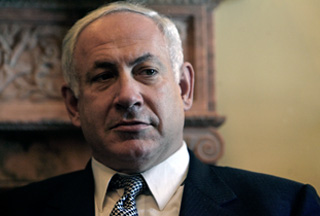
“The man who ordered the attack on the aid flotilla to Gaza, set up the inquiry, chose its members and determined its mandate, has announced its outcome even before it has started,” wrote Chris Doyle, noting Benjamin Netanyahu’s visible satisfaction, confident that he has mounted an effective response to international pressure.

If the only audience the Israeli prime minister needed to satisfy was made up by the likes of Jeremy Ben-Ami and Barack Obama, Netanyahu could indeed take satisfaction as he proves how easy it is to win unprincipled support.

On the day of the Mavi Marmara massacre, J Street’s president Ben-Ami issued a statement which included this:

There will undoubtedly be calls in the coming days for a UN investigation into today’s events. A credible, independent commission appointed by the Israeli government should provide the world with a full and complete report into the causes and circumstances surrounding the day’s events and establish responsibility for the violence and bloodshed.

The world? And which world would that be?

There is nothing mysterious about the nature of credibility, but if the Israeli government and members of the pro-Israel lobby and the Obama administration assign themselves the exclusive role of being the arbiters of “credibility” then the term as applied has itself lost credibility.

The real arbiters of credibility have to include the Turkish government and the Turkish people. In its May 31 statement and a statement issued yesterday, J Street makes no reference to them.

Indeed, echoing those who see all Israeli violence as justifiable we hear J Street repeat the mantra, Israel has the right to self-defense.

Given that there has not been a single call for Israel to renounce its right to self-defense, this reiteration of Israel’s “defensive” posture implicitly endorses the claim that the attack on the Mavi Marmara in international waters was itself an act of self-defense.

The New York Times editorial board — not renowned for its political courage — managed to be bold enough to say that on this matter Israel cannot simply investigate itself. The paper has called for an inquiry overseen by The Quartet and says that Israeli and Turkish representation would have to be included: “That is in Israel’s clear interest. And it is in Turkey’s clear interest. The Obama administration should be pressing both its allies to embrace the idea.”

Anyone who now holds the position that this is Israel’s business and Israel can somehow impartially investigate itself, apparently regards the families of the dead as irrelevant.

But as an editorial in Haaretz makes clear, a move by Netanyahu that J Street, the Obama administration and other Israeli apologists have welcomed, does not meet the credibility test even inside Israel.

The government’s efforts to avoid a thorough and credible investigation of the flotilla affair seem more and more like a farce. The conclusions of an ostensible probe are intended to justify retroactively the decision to blockade Gaza, to forcibly stop the Turkish aid flotilla in international waters and to use deadly force on the deck of the Mavi Marmara.

To make the costume seem credible, the Prime Minister’s Bureau asked a retired Supreme Court justice, Yaakov Tirkel, to chair the committee. Alongside him will sit foreign observers in order to legitimize the conclusions in international public opinion. Prime Minister Benjamin Netanyahu even pledged to testify before the committee, together with Defense Minister Ehud Barak, other ministers and the chief of staff, so “the truth will come out.”

The truth that Netanyahu wishes to bring out involves the identity of the flotilla’s organizers, its sources of funding and the knives and rods that were brought aboard. He does not intend to probe the decision-making process that preceded the takeover of the ship and the shortcomings that were uncovered. As far as Netanyahu is concerned, it will be enough for television channels to broadcast footage of dark-suited jurists, and politicians addressing them, to present the semblance of an “examination.”

But Netanyahu’s panel will have no powers, not even those of a government probe, and its proposed chairman does not believe in such a panel. In an interview to Army Radio, Tirkel said there is no choice but to establish a state committee of inquiry. He opposed bringing in foreign observers and made clear that he is not a devotee of drawing conclusions about individuals and dismissing those responsible for failures. When a Haaretz reporter confronted Tirkel about these remarks, the former justice evaded the question saying, “I don’t remember what I said.”

The disagreements that erupted at the week’s end between Netanyahu and his deputy, Strategic Affairs Minister Moshe Ya’alon, over the question of whether Ya’alon was updated in time about the action underscored the suspicion of serious faults in the decision-making process with regard to the flotilla. Instead of being part of the whitewash, Tirkel, whose dodging of his earlier statements does him no honor, should return his mandate to the prime minister and demand that Netanyahu establish a government committee of inquiry with real powers. The public, as Netanyahu said, has a right to know the truth.

Facebooktwittermail

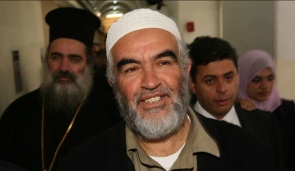
Did Israel target Raed Salah in the Mavi Marmara raid?

In an Al Jazeera documentary on the Israeli assault on the Mavi Marmara, it is claimed that Sheikh Raed Salah, head of the northern branch of the Israeli-Arab Islamic Movement, was the target of an attempted assassination during the raid.

(Video cannot be viewed in the U.S.)

AJ commentary: Meanwhile, a recording surfaced [from Cultures of Resistance] that appeared to suggest that some activists had been deliberately targeted in advance of the raid.

Durmus Aydin, Vice Chairman, IHH organization said: “In the pictures there were picture of the Raed Salah. Instead of killing Raed Salah, they killed other one. They’ve killed another people who looks like Raed Salah. And then Raed Salah said that when they killed that guy, the soldier was telling the others, ‘We finished off Raed Salah’.”

The Alternative Information Center adds:

Shortly after the Freedom Flotilla was attacked, rumors circulated that Sheikh Salah had been critically injured, hospitalized or even killed. The Israeli Ministry of Foreign Affairs stated that he had suffered only minor injuries.

It has been widely reported, however, that during a hearing shortly before his release at the Ashkelon Magistrates’ Court, Salah stated, “The [Israeli] soldiers tried to kill me. They shot in the direction of someone they thought was me.”

Born in 1958 in the city of Umm al-Fahm in the Haifa area, Salah was known for his poetry before becoming involved with the Islamic Movement.

Today, the Islamic Movement in Israel acts on three tracks: religious, social and national. In 1989, the party decided to participate in municipal elections for the first time. Sheikh Salah succeeded in being elected mayor of Umm al-Fahm that year, and was re-elected to the position twice during the 1990s.

A long-time advocate of the right of return for Palestinian refugees, Sheikh Salah has non-violently protested against the Israeli occupation for decades. His primary focus has been on reinforcing and rebuilding destroyed mosques throughout Israel, and more specifically, protecting the al-Aqsa Mosque in Jerusalem’s Old City. The Israeli authorities have arrested Sheikh Salah on numerous occasions for his promotion of Palestinian human rights.

Facebooktwittermail

In a different voice: a letter from Israel

Ronen Shamir, a professor of sociology and law who chairs the Department of Sociology and Anthropology at Tel Aviv University, writes in Today’s Zaman:

The truth must be said: The present-day Israeli regime is not interested in peace. The Israeli establishment has become prisoner to an ever growing public of Jewish fanatics — informed by messianic visions of Greater Israel — who over the years not only irreversibly settled in the occupied West Bank, with state funding, but have also penetrated the ranks of army officers, the civil service and the government. The outcome is that the current Israeli regime is firmly grounded in a religiously guided, ultranationalist and xenophobic worldview, one which is bound to bring calamity to the whole region, including Israel.

Deteriorating relations with Turkey are, sadly, an inevitable outcome of a siege mentality common among Israelis. For many, criticism of Israel’s policies from abroad is not heeded as yet more proof that “the world is against us” in general and that “the world is anti-Semitic” in particular. The Israeli regime, for its part, fosters this view, one that deliberately obscures the crucial difference between criticism of Israeli policies and a principled stand against Israel’s right to exist. The two become one in the Israeli media, the Israeli political propaganda machine, and ultimately, in the Israeli mind. Things became worse when criticism came from Turkey. Over the course of less than two years, following a string of events that reached its tragic climax last month, Turkey has been systematically demonized by the Israeli government. Relying on and further fostering well-embedded stereotypes of Muslims among Israeli Jews, Turkey — abstracted and depicted as a homogenous social-political entity — is now portrayed as the natural ally of militant and radical Islamists around the world.

It is in the context of such a cynical trope, at this dangerous juncture, that I wish to express my personal apology to the Turkish people for the deadly attack on the flotilla. It is also at this point in time that I believe it important to remember that there are many Israelis who are shocked and dismayed by the way Israel is governed, by the continuous blockade of Gaza and by Israel’s unwillingness to put an end to its occupation and repression of the Palestinian people. There are also many Israelis who understand and lament the folly involved in losing a long-time ally like Turkey, another step along a suicidal road that is leading us into an abyss.

Facebooktwittermail

The UN and Red Cross agree: the siege of Gaza is unsustainable — it must end

Although President Obama acknowledges that the situation in Gaza is “unsustainable”, he refuses to draw the obvious conclusion and insist that Israel’s siege must end. But if it can’t continue, it must end, right?

The International Committee of the Red Cross and the UN are happy to adopt Obama’s term (unsustainable) but are less willing to equivocate. Indeed, the Red Cross has gone even further and accuses Israel of breaking international law through its use of collective punishment.

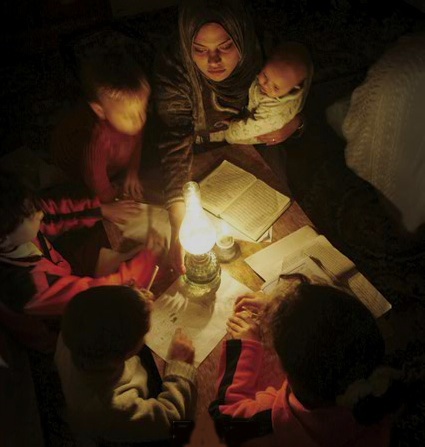
As the ICRC has stressed repeatedly, the dire situation in Gaza cannot be resolved by providing humanitarian aid. The closure imposed on the Gaza Strip is about to enter its fourth year, choking off any real possibility of economic development. Gazans continue to suffer from unemployment, poverty and warfare, while the quality of Gaza’s health care system has reached an all-time low.

The whole of Gaza’s civilian population is being punished for acts for which they bear no responsibility. The closure therefore constitutes a collective punishment imposed in clear violation of Israel’s obligations under international humanitarian law.

“The closure is having a devastating impact on the 1.5 million people living in Gaza”, said Béatrice Mégevand-Roggo, the ICRC’s head of operations for the Middle East. “That is why we are urging Israel to put an end to this closure and call upon all those who have an influence on the situation, including Hamas, to do their utmost to help Gaza’s civilian population. Israel’s right to deal with its legitimate security concerns must be balanced against the Palestinians’ right to live normal, dignified lives.”

The international community has to do its part to ensure that repeated appeals by States and international organizations to lift the closure are finally heeded.

Likewise, the UN is pushing for the blockade not merely to be “eased” or — to use Tony Blair’s language — made “softer” (suggestive of a more compassionate collective punishment?). No, the siege must end.

[T]he UN said Tuesday that an international consensus has emerged demanding that Israel lift the blockade of Gaza Strip and replace it with a “different and more positive strategy.”

“The flotilla crisis is the latest symptom of a failed policy,” said Robert Serry, the UN special envoy for Middle East peace process.

“The situation in Gaza is unsustainable and the current policy is unacceptable and counter-productive, and requires a different, more positive strategy,” Serry said during a UN Security Council session on the Middle East.

The closure and blockade of the Gaza Strip needs to come to an end,” he said. “There is now a welcome international consensus on Gaza.”

Facebooktwittermail

The latest threat to Afghanistan’s existence

Ask a foreigner what Afghans most need and he’s most likely to say: to escape from poverty. Ask an Afghan and he’s more likely to say: to escape from foreign interference.

The latest news from Afghanistan is no cause for celebration. The New York Times reports:

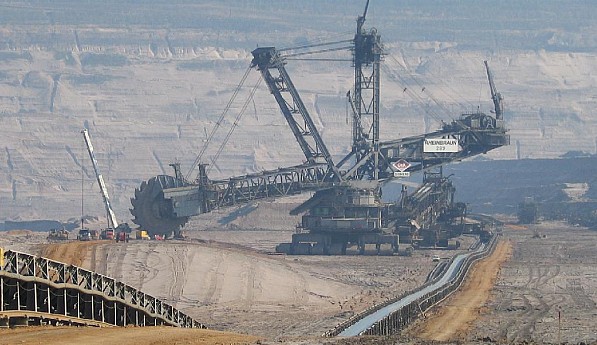
The United States has discovered nearly $1 trillion in untapped mineral deposits in Afghanistan, far beyond any previously known reserves and enough to fundamentally alter the Afghan economy and perhaps the Afghan war itself, according to senior American government officials.

The previously unknown deposits — including huge veins of iron, copper, cobalt, gold and critical industrial metals like lithium — are so big and include so many minerals that are essential to modern industry that Afghanistan could eventually be transformed into one of the most important mining centers in the world, the United States officials believe.

An internal Pentagon memo, for example, states that Afghanistan could become the “Saudi Arabia of lithium,” a key raw material in the manufacture of batteries for laptops and BlackBerrys.

The vast scale of Afghanistan’s mineral wealth was discovered by a small team of Pentagon officials and American geologists. The Afghan government and President Hamid Karzai were recently briefed, American officials said.

While it could take many years to develop a mining industry, the potential is so great that officials and executives in the industry believe it could attract heavy investment even before mines are profitable, providing the possibility of jobs that could distract from generations of war.

After all, who wants fight a holy war when you could instead be risking your life for Rio Tinto or Anglo-American?

Mining is the quintessential parasitic relationship that humans have with this planet. As an exercise in plundering the resources of the earth, it’s natural that the enterprises engaged in this activity have a habit of giving far more attention to what they are in the business of acquiring, than they do to the means by which they acquire it. They have as little respect for their workers as they do for the environment.

The US officials who told the New York Times that Afghanistan is the new Eldorado, probably thought they were sharing “good news” from a place where that particular commodity is in a desperately short supply.

Afghans themselves now have reason to wonder whether after having succeeded for centuries in holding back imperial forces they are now in danger of falling victim to the most destructive possible takeover — by global mining conglomerates.

Some existential threats are imaginary or abstract but Afghanistan now faces a material and cultural threat that could ultimately prove more destructive than decades of war.

Facebooktwittermail

Obama’s contempt for international standards

The National Security Strategy of the Obama administration says: “if nations challenge or undermine an international order that is based upon rights and responsibilities, they must find themselves isolated.”

Israel is currently resisting international pressure to accept an international investigation into the circumstances in which at least nine Turkish civilians were killed by Israeli soldiers on board the Mavi Marmara while the ship was in international waters moving away from Israel.

The UN Security Council, under pressure from the Obama administration, watered down a call for an international investigation into the massacre by saying that such an inquiry should merely meet “international standards.”

When team Obama came up with that phrase — as they surely did — did they first consult with George Bush’s former ambassador to the UN, John Bolton? It’s his kind of language. It cynically gives a passing nod to the idea that an inquiry needs international legitimacy, yet leaves it to Israel — a state that views the international community with contempt — to determine how that requirement might be met.

The answer, as far a Benjamin Netanyahu is concerned, is to toss in a couple of international figures who can observe the workings of the Israeli commission — a three-man body whose members have an average age of 85.

One of the two internationals is David Trimble, former First Minister of Northern Ireland. Are his the eyes that can ensure this commission conducts “a prompt, impartial, credible and transparent investigation”?

On the day of the Israeli assault, the Jerusalem Post reported on the launch of the “Friends of Israel Initiative,” a new project in defense of Israel’s right to exist, led by Spain’s former prime minister Jose Maria Aznar. This group of international leaders includes none other than, David Trimble.

The initiative is being launched now, its sponsors said in a statement, because of their outrage and concern about the “unprecedented delegitimation campaign against Israel, driven by the enemies of the Jewish state and perversely assumed by numerous international authorities.”

So will a commission in which there is an international observer with a declared suspicion of international organizations, meet “international standards”?

The White House calls this “an important step forward” and says:

We believe that Israel, like any other nation, should be allowed to undertake an investigation into events that involve its national security. Israel has a military justice system that meets international standards and is capable of conducting a serious and credible investigation, and the structure and terms of reference of Israel’s proposed independent public commission can meet the standard of a prompt, impartial, credible, and transparent investigation.

Credible perhaps to an American president who serves at the pleasure of the Israel lobby, but on this matter Obama doesn’t even have the support of the New York Times.

Facebooktwittermail

What happens when a country has no borders?

In the hours leading up to the Mavi Marmara massacre, Israel extended like a cloud whose shadow spread deep into the Mediterranean. The Turkish ship’s captain took evasive action but it’s hard to escape the reach of a nation whose borders are so elastic.

Anyone who reads the Israeli press will sooner or later notice one of the curious features about Israel’s geographic identity. Politicians talk about threats from the north and the south in such a way that Israel sounds like a legendary kingdom on whose periphery are regions of darkness. It doesn’t have borders as such but instead margins of indeterminate depth where it is dangerous to venture.

This might explain in part the mythopoetic imagination through which Israelis see themselves heroically standing up against the forces of evil. It also suggests why it is that a very modern state has a medieval view of the world.

Benjamin Netanyahu warned his cabinet this weekend: “Dark forces from the Middle Ages are raging against us. I have received calls from concerned officials in the Balkans and Eastern Europe who are very worried about these developments.”

The mission of the Mavi Marmara, Netanyahu seems to hint, signaled the beginning of an attempt to re-establish an Ottoman Caliphate that once again threatens to take control of the Holy Land. Nevertheless, at such a historic juncture, it’s perhaps surprising that the commander of Israel’s military forces was apparently asleep.

Was this an expression of the unshakable confidence IDF’s commander in chief has in his soldiers, or (more likely) the blasé attitude with which Israel operates in the international arena?

Israel Defense Forces chief of staff Gabi Ashkenazi was not present in the IDF’s Tel Aviv command center during the first part of the maritime takeover of the Gaza-bound Turkish ship Mavi Marmara on May 31, Haaretz learned Sunday.

Instead, the most senior officer supervising the raid was Major General Tal Russo, IDF Chief of Operations, with Ashkenazi arriving only after the takeover had taken a turn for the worse.

The absence of both Ashkenazi and his second in command, Major General Benny Ganz, will be one of the issues to be reviewed by the specialist panel named by the IDF chief to probe the raid, headed by retired major general Giora Eiland.

No wonder Israel has been dragging its feet in responding to calls for an international investigation. But now, thanks to the Obama administration, it looks like Israel may once again avoid being held accountable for its actions.

Israel last night flouted pressure for an independent international inquiry into the lethal assault two weeks ago on a flotilla of ships attempting to break the blockade on Gaza, announcing an internal investigation with two foreign observers.

The White House gave its approval for the Israeli formula, which will be confirmed by the Israeli cabinet today.

The inquiry into the raid, in which nine Turkish activists aboard the Mavi Marmara were killed, will be headed by a former Israeli supreme court judge, Yaakov Tirkel. The foreign observers are the former Northern Ireland first minister David Trimble and a Canadian judge, Ken Watkin. They will have no voting rights.

The inquiry falls short of a UN proposal for an international investigation, but was agreed after consultation with the US. The White House said last night that the Israeli inquiry meets the standard of “prompt, impartial, credible and transparent investigation”.

The US Ambassador to the UN, Susan Rice, told Fox News on Sunday:

“We think that an international component would strengthen the investigation and certainly buttress its credibility in the eyes of the international community, and we’ve had discussions with Israel as to how and whether they might go about doing that,” Rice said.

But she added it’s “obviously ultimately the Israelis’ choice” whether to participate in such a group evaluation.

“Our view is that Israel, as a democracy, as a country with a tradition of strong military justice, can conduct an investigation of this sort however it chooses to constitute it,” she said, adding, “We are not pressuring Israel to participate in anything that it chooses not to participate in.”

In effect, what the United States is saying is that unlike any other country on the planet, Israel has the right construct its own definition of the term “international.” Israel when operating outside even its own self-determined boundaries of sovereignty, when conducting an assault on a ship operating under a Turkish flag and killing Turkish citizens, nevertheless has the “right” to say, “this is our business” — and Washington agrees.

Sefi Rachlevsky describes what happens when a nation refuses to set its own limits.

Israel gave itself a nice present to celebrate the 43rd anniversary of losing its borders. The raid on the Gaza flotilla in international waters is like the first Lebanon War – as if in a nightmarish experiment, we seem to be examining the question: What happens when a country has no borders?

Israel’s maritime attack did not happen by chance. A border is one of the fundamental factors that defines a country. Decades without one have distorted Israel’s thinking.

It is self-evident that, just as a person cannot build in an area that he does not own, a country cannot build settlements outside of its borders. And yet Israel has settled hundreds of thousands of its citizens in areas that, according to its laws, are not part of the State of Israel.

It is self-evident that any couple can marry “without regard to religion, race or gender.” And yet in Israel a Jewish man and a non-Jewish woman cannot legally marry. It’s self-evident that there is no arbitrary discrimination, and yet it’s enough to use the magic words “I’m a religious woman” or “I’m an ultra-Orthodox man” and the obligation to serve in the military evaporates.

It’s self-evident that the education provided to children be based on democracy and equality. And yet in Israel, 52 percent of first-graders defined as Jews study in various religious school systems that teach students things like “You are considered a human being and the other nations of the world are not considered human beings.”

They are taught that a non-Jew is not a human being, and that anyone who kills a non-Jew is not supposed to be killed by human hands; that women are inferior, and it is an obligation that males and females be separated; and that secular people, or anyone with secular family members, cannot enter these schools.

It is self-evident that racist education cannot be funded by the government and is illegal. And yet most of the country’s first-graders receive such “compulsory education” from their government.

The results of this nightmarish experiment are self-evident. In the most recent elections, 35 percent of voters defined as Jews cast their ballots for avowedly racist parties – Yisrael Beitenu, Shas, National Union and their friends.

Critics in the Israeli media wake up only when mistakes are made. That is why – after initially cheering the declaration that “the flotilla will not pass” – they changed their tune following the imbroglio, turning into advocates of the twisted logic “be smart, not right.” But what justice is there in an attack on civilians by soldiers on the open seas?

Like the territories, international waters are not Israel; they are outside its borders. A Turkish ship on the open sea is, in effect, a floating Turkish island. An Israeli attack on such an island is not all that different from sending the Israel Defense Forces to take on demonstrators at the Luxembourg Gardens in Paris. There, too, unpleasant people who are not friends of Israel can sometimes be found.

Turkey, which is a member of NATO, was not in a state of war with Israel before the attack. Attacking its citizens on territory that is by definition Turkish is another expression of the Israeli lunacy that lacks any kind of boundaries.

An attack beyond the border must be reserved for extreme cases involving a military target that represents an entity fighting against the country and when citizens are in danger. But civilian ships, that are not carrying weapons, but are bringing civilian aid to a population that is denied chocolate, toys and notebooks, are not nuclear reactors in Iraq, Syria or Iran.

A person who grows up without external borders tends to create distorted internal borders. That is the reason for the attack on Arab MK Hanin Zuabi and her colleagues. While there were certain Arab public figures who went too far in their statements, joining a civilian aid flotilla is one of those legitimate acts which are supposed to be self-evident.

And yet, what was self-evident became betrayal. And citizenship, one of the unconditional foundations of existence, has turned into something that can be revoked – in this case on the basis of ethnicity, a tactic used in fascist regimes. The street has returned to the atmosphere that prevailed under “responsible” opposition leader Benjamin Netanyahu and led to the assassination of prime minister Yitzhak Rabin – and the next murder is in the air.

The Israeli deed at sea is liable to reach The Hague. The problem is that Israel has genuine enemies who want to destroy it. A country that does not do everything in its power to accumulate legitimacy, along with turning Iran into an entity that is losing legitimacy and can therefore become a target of activities to undermine it, is a country losing its basic survival instinct. Without borders, it turns out, you lose even that.

Young Israelis who have grown up without borders are now dancing and singing “In blood and fire we will expel Turkey” and “Mohammed is dead.” If this keeps up, Israel will not make it to The Hague. The entity gradually replacing the State of Israel is liable not to exist long enough to get there.

Facebooktwittermail

German parliamentarians file war crimes complaints against Israel

Der Spiegel reports:

Public prosecutors in Germany are looking into a war crimes complaint filed against Israel by two members of parliament with the far-left Left Party and a human rights activist who were on board the Mavi Marmara when Israeli troops stormed it 11 days ago.

Eleven days ago, the Israeli military stormed the Turkish ship Mavi Marmara, part of a flotilla carrying pro-Palestinian activists toward the Gaza Strip in an attempt to break the Israeli blockade. Now, it has become a case for German prosecutors.

Human rights activist Norman Paech and two German parliamentarians from the far-left Left Party, Annette Groth and Inge Höger, have filed criminal complaints for “numerous potential offences, including war crimes against individuals and command responsibility … as well as false imprisonment.”

At 5:10 a.m. on May 31, the complaint reads, Höger, Groth and Paech heard from the captain of the Mavi Marmara via the ship’s loudspeaker that the Israeli soldiers who had boarded the ship as part of the commando operation were taking over control of the ship. An hour later, Israeli soldiers ordered the Germans on deck, where their backpacks and other belongings were searched. Their hands were temporarily bound.

It wasn’t until 9:10 p.m. that parliamentarian Annette Groth was given the possibility of contacting the German Embassy. At 2 a.m. on June 1, the Germans were brought to the airport in a prisoner transport vehicle for their flight back home.

According to international criminal law expert Florian Jessberger of Berlin’s Humboldt University, “there is cause to believe that false imprisonment was perpetrated as understood by German law.” He says that German criminal law would have jurisdiction “irrespective of the fact that the act was perpetrated on the high seas.”

Facebooktwittermail

Turkey is the new Palestinian champion

Noting a historic shift in the regional balance of power, Alastair Crooke says:

The cause of the Palestinians is gradually passing out of the hands of Mubarak and King Abdullah bin Aziz Al Saud of Saudi Arabia. It is the leaders of Iran and Turkey, together with President Bashar al-Assad of Syria, who recognize the winds of change. Mubarak appears increasingly isolated and is cast as Israel’s most assiduous collaborator. Here in the region, it is often as not the Egyptian embassies that are the butt of popular demonstrations.

Mubarak’s motives for his dogged support for Israel are well known in the region: He is convinced that the gateway to obtaining Washington’s green light for his son Gamal to succeed him lies in Tel Aviv rather than Washington. Mubarak enjoys a bare modicum of support in the United States, and if Washington is to ignore its democratic principles in order to support a Gamal shoo-in, it will be because Israel says that this American “blind eye” is essential for its security.

To this end, Mubarak has worked to weaken and hollow out Hamas’s standing in Gaza, and to strengthen that of Palestinian Authority President Mahmoud Abbas. Indeed, he has pursued this policy at the expense of Palestinian unity – his regular “unity” initiatives notwithstanding. Egyptian one-sided peace “brokering” is viewed here as part of the problem rather than as part of any Palestinian solution. Paradoxically, it is precisely this posture that has opened the door to Turkey and Iran’s seizing of the sponsorship of the Palestinian cause.

Meanwhile, Associated Press reports:

The Arab world’s top diplomat declared support Sunday for the people of blockaded Gaza in his first visit to the Palestinian territory since Hamas violently seized control of it three years ago.

The visit was latest sign that Israel’s deadly raid on a flotilla trying to break the blockade of Gaza has eased the diplomatic isolation of the Islamic militant group.

Israel, meanwhile, appeared to grow more isolated in the fallout over the May 31 raid as Israeli Defense Minister Ehud Barak abruptly canceled plans Sunday to visit Paris.

Barak’s office said he canceled his trip while Israel forms a committee to investigate the raid. The statement denied that the decision was connected to attempts by pro-Palestinian groups to seek his arrest.

George Mitchell, having been President Obama’s so-called Middle East peace envoy for a year and a half and during that time having engaged in tireless and fruitless shuttle diplomacy, has yet to visit Gaza.

Facebooktwittermail

Israel’s greatest loss: its moral imagination

Henry Siegman writes:

Following Israel’s bloody interdiction of the Gaza Flotilla, I called a life-long friend in Israel to inquire about the mood of the country. My friend, an intellectual and a kind and generous man, has nevertheless long sided with Israeli hardliners. Still, I was entirely unprepared for his response. He told me—in a voice trembling with emotion—that the world’s outpouring of condemnation of Israel is reminiscent of the dark period of the Hitler era.

He told me most everyone in Israel felt that way, with the exception of Meretz, a small Israeli pro-peace party. “But for all practical purposes,” he said, “they are Arabs.”

Like me, my friend personally experienced those dark Hitler years, having lived under Nazi occupation, as did so many of Israel’s Jewish citizens. I was therefore stunned by the analogy. He went on to say that the so-called human rights activists on the Turkish ship were in fact terrorists and thugs paid to assault Israeli authorities to provoke an incident that would discredit the Jewish state. The evidence for this, he said, is that many of these activists were found by Israeli authorities to have on them ten thousand dollars, “exactly the same amount!” he exclaimed.

When I managed to get over the shock of that exchange, it struck me that the invocation of the Hitler era was actually a frighteningly apt and searing analogy, although not the one my friend intended. A million and a half civilians have been forced to live in an open-air prison in inhuman conditions for over three years now, but unlike the Hitler years, they are not Jews but Palestinians. Their jailers, incredibly, are survivors of the Holocaust, or their descendants. Of course, the inmates of Gaza are not destined for gas chambers, as the Jews were, but they have been reduced to a debased and hopeless existence.

Fully 80% of Gaza’s population lives on the edge of malnutrition, depending on international charities for their daily nourishment. According to the UN and World Health authorities, Gaza’s children suffer from dramatically increased morbidity that will affect and shorten the lives of many of them. This obscenity is a consequence of a deliberate and carefully calculated Israeli policy aimed at de-developing Gaza by destroying not only its economy but its physical and social infrastructure while sealing it hermitically from the outside world.

Particularly appalling is that this policy has been the source of amusement for some Israeli leaders, who according to Israeli press reports have jokingly described it as “putting Palestinians on a diet.” That, too, is reminiscent of the Hitler years, when Jewish suffering amused the Nazis.

Another feature of that dark era were absurd conspiracies attributed to the Jews by otherwise intelligent and cultured Germans. Sadly, even smart Jews are not immune to that disease. Is it really conceivable that Turkish activists who were supposedly paid ten thousand dollars each would bring that money with them on board the ship knowing they would be taken into custody by Israeli authorities?

That intelligent and moral people, whether German or Israeli, can convince themselves of such absurdities (a disease that also afflicts much of the Arab world) is the enigma that goes to the heart of the mystery of how even the most civilized societies can so quickly shed their most cherished values and regress to the most primitive impulses toward the Other, without even being aware they have done so. It must surely have something to do with a deliberate repression of the moral imagination that enables people to identify with the Other’s plight. Pirkey Avot, a collection of ethical admonitions that is part of the Talmud, urges: “Do not judge your fellow man until you are able to imagine standing in his place.”

Of course, even the most objectionable Israeli policies do not begin to compare with Hitler’s Germany. But the essential moral issues are the same. How would Jews have reacted to their tormentors had they been consigned to the kind of existence Israel has imposed on Gaza’s population? Would they not have seen human rights activists prepared to risk their lives to call their plight to the world’s attention as heroic, even if they had beaten up commandos trying to prevent their effort? Did Jews admire British commandos who boarded and diverted ships carrying illegal Jewish immigrants to Palestine in the aftermath of World War II, as most Israelis now admire Israel’s naval commandos?

Who would have believed that an Israeli government and its Jewish citizens would seek to demonize and shut down Israeli human rights organizations for their lack of “patriotism,” and dismiss fellow Jews who criticized the assault on the Gaza Flotilla as “Arabs,” pregnant with all the hateful connotations that word has acquired in Israel, not unlike Germans who branded fellow citizens who spoke up for Jews as “Juden”? The German White Rose activists, mostly students from the University of Munich, who dared to condemn the German persecution of the Jews (well before the concentration camp exterminations began) were also considered “traitors” by their fellow Germans, who did not mourn the beheading of these activists by the Gestapo.

So, yes, there is reason for Israelis, and for Jews generally, to think long and hard about the dark Hitler era at this particular time. For the significance of the Gaza Flotilla incident lies not in the questions raised about violations of international law on the high seas, or even about “who assaulted who” first on the Turkish ship, the Mavi Marmara, but in the larger questions raised about our common human condition by Israel’s occupation policies and its devastation of Gaza’s civilian population.

If a people who so recently experienced on its own flesh such unspeakable inhumanities cannot muster the moral imagination to understand the injustice and suffering its territorial ambitions—and even its legitimate security concerns—are inflicting on another people, what hope is there for the rest of us?

The hope for the rest of us is that we do not grasp an ethnic or national identity with such vigor that we forget what it means to be human.

To have an identity, supposedly written in ones DNA — an identity that marks one as distinct and somehow unrelated to the other members of the human family — is to perceive a divide much harder to bridge with empathy than the divide that already separates every individual. For Israelis to put themselves in the place of the other, demands that they begin to shed the shackles of their own identity.

In this regard, to be marked as a people who were victims of the greatest genocide in human history, now demands that Jews cultivate a more expansive view of human suffering. Yes, the Holocaust is unparalleled as a calculated act of brutality and inhumanity, yet the idea, no one has suffered more, is itself an incubator for brutality.

Facebooktwittermail

Are Israel’s battles costing the country its soul?

Ehud Eiran, a major in the IDF reserves, sees Israel on a spiral of descent down which it is rapidly losing its sense of humanity. In addition to that, the ruthless defense of a Jewish state — conceived as a safe haven for Jews — has resulted in the creation of a place where Jews live in greater risk than anywhere else on the planet.

In September 1982, after Christian militiamen slaughtered hundreds of Palestinian civilians in Lebanon’s Sabra and Shatila refugee camps, 10 percent of Israel’s total population took to the streets of Tel Aviv to protest Israel’s indirect responsibility. Only a few dozen Israelis demonstrated 26 years later, when the Israeli military was directly responsible for a similarly large number of Palestinian civilian casualties in the 2008–09 Gaza conflict.

It is not only the spread of moral insensitivity I fear. As Dean Acheson observed, there’s something worse than immoral policy: erroneous policy. The apparent inability of Israeli leaders to connect our goals and our means puts the country in long-term jeopardy. Our most profound problem is that 130 years after young Zionists began immigrating to Palestine with the hope of creating a safe place for Jews, we’re still relying on force to secure our existence. Ironically, more Jews have been killed since 1945 in this “safe haven” than in any other place. A future Iranian nuclear device, which may be hard to stop if Israel can’t muster international support more effectively, will take this Zionist failure to new lows.

Actions like the killings aboard the Gaza aid ship do nothing to ameliorate this situation; they only create new sources of resistance. The blockade that brought about the flotilla is dehumanizing, barely justified on security grounds. It is imposed against the same people who hold the key to our legitimacy, at least in the eyes of the millions of Arabs who surround us. The killing of several Turks deeply corrodes Israel’s relationship with Istanbul, the only capital in the region that did not wait for Palestinian approval to engage in a meaningful relationship with the Jewish state. Wide international condemnation has already slowed efforts at the United Nations to tighten sanctions on Iran. How long can our modern-day Sparta live by its sword, when the sword creates new difficulties?

Facebooktwittermail