How do we know the power of the lobby is undiminished? Each time President Obama pressed Israeli Prime Minister Netanyahu on the issue of a settlement freeze, Obama was forced into a humiliating retreat. That would not have happened had it not been for the behind-the-scenes machinations of the lobby.
That’s John Mearsheimer’s argument.
Not for a second do I doubt the existence and power of the lobby, but in this instance I think Mearsheimer is actually undermining his and Stephen Walt’s overarching argument about the extent of the lobby’s influence.
To portray Obama as a victim of the lobby is to avoid looking at the effect of two other major factors: Obama’s political skills and political instability in Iran.
Obama went into a fight without carrying weapons. He put pressure on Netanyahu yet neither threatened any consequences if the Israeli leader refused to yield, nor took any kind of punitive actions (beyond petty insults like withholding photo-opportunities) when Netanyahu stood his ground.
Even if the president was constrained in terms of the weapons at his disposal — the lobby as always keeps Congress in its pocket, meaning that legislative pressure is unavailable — he had recourse to more than sternness. He could for instance have derived leverage from Goldstone. In other words, he could have made American support for Israel at the UN conditional on a settlement freeze.
Aside from these types of tactical errors Obama made in terms of how he wielded the power of the presidency, the other factor that seriously undermined his strategy for challenging Netanyahu was the impact of political unrest in Iran resulting from the disputed 2009 presidential elections.
As the Iranian regime set about crushing the Green Movement, Obama became an awkward and passive spectator. For good reasons he believed that there was very little the US could constructively do to support Iran’s embattled democracy movement, yet that created the perception that having been tough on Israel he was now being soft on Iran. In what appeared to be an effort to counter that perception he essentially abandoned his tough love approach to Israel. Thereafter, it became all carrots and no sticks when dealing with Netanyahu.
The lobby no doubt took satisfaction at this turn of events and helped push the claim that Obama must not be tough on Israel while soft on Iran, but this was secondary to the effect of what was playing out on the streets of Tehran.
So, even if I would agree that the lobby’s power is largely undiminished, Obama’s failed Middle East strategy is very much a train wreck of his own making. To say that the lobby tied his hands, simply lets him off the hook.
In June 2006, Elliot Doxer, an employee at an internet company in Boston, sent an email to a foreign consulate. “I am a Jewish American who lives in Boston,” he allegedly wrote. “I know you are always looking for information and I am offering the little I may have.” He also wrote that he wanted “to help our homeland and our war against our enemies.”
Let’s take a wild guess: he was referring to the Jewish homeland and communicating with the Israeli consulate. That’s the assumption made by the Jerusalem Post and just about everyone else — even though court documents only refer to “Country X.”
As the victim of an FBI sting operation, Doxer now faces the prospect of 20 years in jail and a $250,000 fine if convicted.
But here’s the interesting bit. In response to Doxer’s approach, the consulate informed US law enforcement officials and then assisted the FBI with its investigation.
So what’s a would-be spy to do?
Don’t trust your local Israeli consulate?
Don’t ask for compensation?
Make sure you have extremely valuable intelligence?
Acquire Israeli citizenship before you do anything else?
The next Jonathan Pollard might now be reconsidering his options.
The U.S. has been wooing Netanyahu for weeks with offers including a squadron of F-35 fighters, support for a long-term Israeli troop presence in a new Palestinian state, and a pledge to veto any anti-Israel resolutions passed by the United Nations Security Council. The U.S. also is offering access to its satellites that could provide early warning of attacks.
To the Palestinians, the White House is pledging support for their position on the exact location of borders for a future state in exchange for a promise to continue negotiating even if Israel refuses to extend the construction moratorium.
Although the Obama administration was expected to eventually give out incentives to keep the negotiations alive, diplomats and other observers say they are surprised that it has offered so much, so early for such a small victory: a commitment by both sides to keep talking.
“From the left to the right, people are saying that the administration is looking desperate,” said Robert Danin, a former U.S. official and an advisor to former British Prime Minister Tony Blair, an envoy to the region for the United Nations, U.S., European Union and Russia.
Making a hint that they will be used to bomb Iran, he described them as being “one of the answers” for dealing with the “problem” of Tehran.
Israel will get the jets at a discount, pay for them with US tax dollars (through recession-proof military aid), while also likely profiting from F-35 production — it has expressed an interest in manufacturing 25% of the wings of the more than 3,000 aircraft Lockheed expects to build.
The jets won’t be delivered until about 2016, but by that point Israel’s war-mongers no doubt feel optimistic that there will be a war-friendly Republican administration in place — though whether GOP control of the White House is necessary to serve Israel’s needs, is highly debatable.
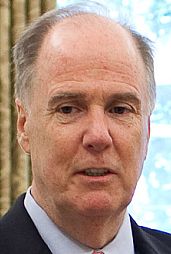
Undaunted by the revelations from Bob Woodward’s book, Obama’s Wars, President Obama is replacing National Security Adviser Gen James Jones with his deputy, Tom Donilon.
Last year, Defense Secretary Robert Gates said Donilon would be a “disaster” in that position and Jones said Donilon had “no credibility with the military.”
Was it Donilon’s performance as a vice president at Fannie Mae that impressed Obama?
If Obama is to be judged by those he surrounds himself with, it sure looks like he seeks the company of those who make him comfortable rather than those who appear most competent.
As reported by Woodward, the performance evaluation that Jones gave Donilon was pretty scathing:
First, he had never gone to Afghanistan or Iraq, or really left the office for a serious field trip. As a result, he said, you have no direct understanding of these places. “You have no credibility with the military.” You should go overseas. The White House, Situation Room, interagency byplay, as important as they are, are not everything.
Second, Jones continued, you frequently pop off with absolute declarations about places you’ve never been, leaders you’ve never met, or colleagues you work with. Gates had mentioned this to Jones, saying that Donilon’s sound-offs and strong spur-of-the-moment opinions, especially about one general, had offended him so much at an Oval Office meeting that he nearly walked out.
Third, he said, you have too little feel for the people who work day and night on the NSC staff, their salaries, their maternity leaves, their promotions, their family troubles, all the things a manager of people has to be tuned to. “Everything is about personal relations,” Jones said.
Update: Shoot-from-hip posts sometimes need revision. As others have pointed out, the criticisms of Donilon don’t necessarily put him in a negative light. My own snap judgement was largely based on a negative view of Jones and the expectation that his deputy was unlikely to outshine the general.
Immediate reaction within the administration to Jones’s resignation was consistent with the long-held view that Jones was never able to be effective as national security advisor because he was outside of Obama’s inner circle and was intellectually and sometimes physically cut out of major foreign policy discussions.
“Jones always carried an ’emeritus’ air about him and appeared removed and distant from the day-to-day operations,” one administration official told The Cable. “In six months, you will be hard pressed to find anyone in the administration who notices that Jones is no longer there.”
According to all accounts, Donilon has been the machine running the NSC for some time, chairing the crucial deputies committee meetings and making the trains run on time throughout the NSC. But Donilon is not viewed as a strategic thinker along the lines of someone like former NSA Henry Kissinger or Zbigniew Brzezinski.
“Donilon will represent continuity and I can’t see any major shifts in policy stemming from the changeover,” one administration source said.
On one major issue, Jones and Donilon seemed to agree. Donilon is skeptical about the prospects for success in Afghanistan, for reasons similar to Jones’s. Just after Obama announced the decision to add 30,000 more troops to Afghanistan, Donilon said to the NSC’s Gen. Doug Lute, “My god, what have we got this guy into?,” according to Woodward.
And there you have — horribly predictably — the illegitimate offspring of “change”: continuity.
Everything’s being going so stunningly well, who could dream of changing course?
But Obama will need someone who can inspire boldness if he’s going to find a way out of the Afghan labyrinth. I don’t see that a man whose chief virtue is that he knows how to keep operations running smoothly will have such a talent.
In a landmark case, the first trial of a former Guantánamo detainee, Judge Lewis A. Kaplan of United States District Court in Manhattan made a ruling that presents a major setback for the Department of Justice. He barred the key witness from testifying because he had been identified and located through torturing the accused, Ahmed Khalfan Ghailani, who was being held in a secret prison by the CIA.
Kaplan explained his decision in this way:
The Court has not reached this conclusion lightly. It is acutely aware of the perilous nature of the world in which we live. But the Constitution is the rock upon which our nation rests. We must follow it not only when it is convenient, but when fear and danger beckon in a different direction. To do less would diminish us and undermine the foundation upon which we stand.
At face value, this sounds like one of those rare feel-good moments in the post 9/11 era when someone who has sworn to uphold the Constitution took that responsibility very seriously.
“… the Constitution is the rock upon which our nation rests.” I imagine Judge Kaplan took satisfaction in crafting that sentence. It’s good.
But just in case anyone might be alarmed that the innocent-until-proven-guilty Ghailani might end up being acquited, the judge was eager to pacify such fears.
[H]is status as an “enemy combatant” probably would permit his detention as something akin to a prisoner of war until hostilities between the United States and Al Qaeda and the Taliban end even if he were found not guilty in this case.
So is Ghailani on trial to determine his innocence or guilt, or simply to decide on the location of his prison cell?
Isn’t that the direction in which fear and danger beckon?
Anyone who carefully read the Washington Post‘s report on talks between the Karzai government and the Taliban should have been struck by this detail: “discussions with the Quetta Shura [Taliban leadership] do not include representatives of the Haqqani group.”
The Waziristan-based Haqqani network has for some time been described as the most formidable element in the Afghan insurgency, so how would the war end if the group that is most vigorously fighting it is left out of a reconciliation process?
Hamid Karzai’s government held direct talks with senior members of the Haqqani clan over the summer, according to well-placed Pakistani and Arab sources. The US contacts have been indirect, through a western intermediary, but have continued for more than a year.
The report said:
The indirect contacts with the Americans have been made through a non-governmental western intermediary, who has met Haqqani representatives in Pakistan several times in the past 18 months, and who has conveyed messages to and fro.
Different diplomatic sources gave different accounts of the Haqqanis’ readiness to take part in a preliminary dialogue.
One said the relentless targeting of the Haqqani network fighters and leaders by US drones had devastated morale. “There is war-weariness on both sides. Not just in the west,” the diplomat said.
Another said the announcement by the US president, Barack Obama, that the troop drawdown would begin next July, had in turn encouraged the Haqqanis to come forward. “That conveyed a message that the Americans would not be there for ever, and they definitely were in the market for talks, and that opened a door,” the source said.
He predicted that talks with both the Haqqanis and the Quetta Shura would begin in earnest in December, after the winter snows cut the passes between Pakistan and Afghanistan and effectively end the fighting season.
In any future talks the critical demand from both Kabul and Washington would be for the Haqqanis to sever their ties to al-Qaida, whose leaders, including Osama bin Laden, are believed to be sheltering in the caves of North Waziristan.
A Pakistani official said yesterday that he believed the group was ready to make that step. “This is the end of the road for al-Qaida in Waziristan,” the official said.
Just over a year ago, the intrepid Ghaith Abdul-Ahad went to meet Haqqani fighters in their stronghold.
“We are Afghans fighting the jihad and defending our country under the leadership of Jalaluddin Haqqani,” the commander said. He spoke in a schoolmasterly tone. As well as being a commander, Mawlawi Jalali is a teacher in Haqqani’s madrasa.
“The Americans toppled the emirate [of the Taliban] and we are fighting to bring it back. When the Taliban were here the jihad was only in Afghanistan. Now, thanks to the Americans, the jihad has spread to many other countries.”
How did he plan to pursue his holy war? “We use different tactics: mining the streets, fighting and direct attacks. Here in this camp we make all the preparations and have all the men we need for these different tactics.”
What about the new American surge, I asked. Did it concern him?
“We attack the towns, like in Wazi Zadran, where there is a strong American and Afghan garrison, and mine the streets every day. We average two or three attacks a day against the Americans and their allies. The more troops they send, the more targets we have, so it’s good.”
One Western military official said there was an unspoken agreement between Pakistani and American officials that United States Predator drones would generally be used in the tribal areas against foreign Qaeda members, rather than Pakistani or Afghan targets, like the Haqqanis.
If such an agreement existed, it clearly doesn’t any more.
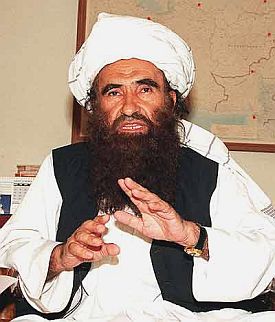
Tom Gregg points out that the opportunity to draw the Haqqani network into a peace process will pass as soon as its leader, Maulavi Jalaluddin Haqqani, transfers power to his son.
It is well known that for almost a decade he has suffered from health problems and requires regular medical attention rendering him relatively inactive in the day-to-day workings of the insurgency. Furthermore, as a senior insurgent commander (and former Taliban Minister), Maulavi Haqqani’s profile as a “most wanted” does not permit travel to the Afghan battle space. Consequently, his 36-year-old son Sirajuddin (aka “Khalifa”) has increasingly taken over, with gusto, operational command of his father’s network.
However, these limitations speak nothing of the influence Maulavi Haqqani continues to enjoy as a tribal leader, religious scholar, ISI associate and close ally of Gulf Arab financiers. Indeed, the success of the Haqqani network rests with these social/religious/political connections that Maulavi Haqqani has carefully nurtured over the past 30-plus years; indeed, it was these very factors that also made him so popular with the CIA during the anti-Soviet jihad). It can be assumed that these networks, particularly with Arab financiers and the ISI, have been “inherited” by Sirajuddin. However, the same cannot be said about Maulavi Haqqani’s tribal, religious and mujahideen credentials. Sirajuddin is in his early 30’s, grew up in Miram Shah, Pakistan and, prior to 2001, only occasionally traveled to his native village of Garde Serai, nestled in the rugged mountains of Paktia province. In Miram Shah he was involved in Islamic Studies but, unlike his father, did not graduate from a prestigious madrassah and is too young to have been a well-known fighter during the anti-Soviet jihad.
Hence, the very elements that have contributed to the success of Maulavi Haqqani’s activities in eastern Afghanistan (and that could be used to assist in a peace process) — his personal influence as a tribal leader, mujahideen commander and religious elder — will be lost after he dies or passes control to Siraj.
“You have the watches, but we have the time,” the Taliban like to say.
But now the Washington Post reports that the Taliban’s top commanders are “very serious” about finding a way to end the war. Their eagerness is driven by fear that their power will be usurped.
The leadership knows “that they are going to be sidelined,” the source said. “They know that more radical elements are being promoted within their rank and file outside their control. . . . All these things are making them absolutely sure that, regardless of [their success in] the war, they are not in a winning position.”
In this narrative, when it comes the issue of negotiating peace, it’s Washington that has been dragging its feet, waiting for an advantageous position.
The United States’ European partners in Afghanistan, with different histories and under far stronger domestic pressure to withdraw their troops, have always been more amenable to a negotiated settlement. “What it really boils down to is the Americans both supporting and in some cases maybe even participating in talking with the enemy,” the first European official said. “If you strip everything away, that’s the deal here. For so long, politically, it’s been a deal breaker in the United States, and with some people it still is.”
Whatever domestic political difficulties the administration may fear would result from a negotiated deal with the Taliban, this official said, would be resolved by ending the war earlier rather than later. “A successful policy solves the political problem,” he said.
U.S. officials depicted a somewhat different progression leading to the same conclusion, insisting that the time for real negotiations has only now arrived. Although last fall’s strategy review concluded that defeat of the Taliban was an unrealistic goal, it was followed this year by “a period of time where we’ve been focused on getting our inputs in place, moving resources into Afghanistan,” a senior administration official said. The Afghan government has also been positioning itself for serious talks, he said, through international conferences in January and July, the convening of a “peace jirga,” or council, in Kabul and last week’s naming of the members of an official government reconciliation team.
“Now, yeah, there’s a sense that we mean what we say” when voicing support for a political process, the official said. “The president’s view is that we have to do these things at the same time. We can’t take the approach that we’re just going to be putting our foot on the gas on the military side of things and will get around to the political,” he said.
Last month, Obama pressed his national security team to be more specific about what it meant by a political solution, and “reinforced” the need to be working simultaneously on the military and political sides of the equation, the official said.
Gen. David H. Petraeus, the top U.S. and NATO commander in Afghanistan, told reporters last week that high-level Taliban leaders had “sought to reach out” to the top level of the Karzai government. “This is how you end these kinds of insurgencies,” he said.
So, even as NATO convoys are getting blown up in Pakistan, things are moving into alignment in Afghanistan just in time for a favorable policy review in December and the beginning of troop withdrawals in July. What a stroke of luck!
What makes me skeptical that Mullah Omar is ready for retirement in Saudi Arabia?
U.S. officials in Pakistan have spent much of the past year toiling to bolster the country’s elected government and perhaps improve the United States’ image along the way. But much of the progress made toward those goals may have been swept away with the firing of two NATO missiles last week, officials and politicians here said.
The helicopter strike, which Pakistan says killed three of its soldiers, is widely seen here as proof that the U.S. alliance with Pakistan is based solely on self-serving security interests. And it may have put the United States in the position of destabilizing the weak government it wants to fortify, by giving President Asif Ali Zardari’s many critics another reason to say he is allowing Pakistan to be an American pawn.
It did not help that the airstrike came at the end of a month in which the CIA targeted Pakistan’s militant-riddled tribal areas with a record number of drone strikes, which are secretly sanctioned by Pakistan but deeply unpopular. It also followed reports, confirmed by Pakistani officials, depicting the powerful army chief and U.S. officials as trying to play puppet master by presenting Zardari with lists of incompetent ministers and aides they think should be dismissed to improve governance.
A joint investigation into the airstrike is underway, with results expected to be released sometime Wednesday. U.S. and Pakistani officials said the incident had strained but not fractured the nations’ relationship. A U.S. Embassy spokesman said the allies are “working energetically” to resolve the issues.
Pentagon press secretary Geoff Morrell struck an upbeat tone with reporters earlier this week, saying that the relationship between the Pentagon and the Pakistani military is “stronger than it has ever been.”
Privately, though, the Obama administration and U.S. military have appeared exasperated by Pakistan’s response to last week’s missile strike. Senior military officials eschewed the effusive apologies and compensation that normally follow inadvertent coalition killings of civilians, noting that the three killed were not civilians and that the United States is not in the habit of compensating the families of soldiers who fire on U.S. forces. The officials said no substantive move will be taken until the probe is completed.
Farahnaz Ispahani, a spokeswoman for Zardari, said Tuesday that Pakistan is satisfied with the U.S. response. In the public’s eyes, though, she said, the incident “only bolsters the arguments and popularity of the terrorists.” The Taliban has asserted responsibility for a string of retaliatory attacks on NATO supply convoys.
On Wednesday, the US ambassador to Pakistan, Anne Peterson, apologized for last week’s attack and said in a statement that a joint investigation has established that U.S. helicopters mistook the Frontier Corps soldiers for insurgents they had been pursuing.
When it comes to respect for sovereignty, America’s double standards are glaringly obvious to Rafia Zakaria writing in Pakistan’s Dawn newspaper.
On Oct 1, just days after the Nato incident in Pakistan, US forces engaged in an armed standoff with Mexican forces that had crossed the international bridge in pursuit of a vehicle related to a drugs case. US forces at the Texas border at Progresso shut down the international crossing when the Mexican military was reported to have crossed the border.
While no shots were fired, the US customs and border police refused to admit that the Mexican military had the right to cross into the US while in pursuit of criminals. This despite the fact that drug-related crimes caused nearly 5,500 deaths in Mexico in 2008 and the US supplies 90 per cent of the weapons used by drug cartels in Mexico to carry out these murders. All these would seem good reason to allow the doctrine of hot pursuit to apply when Mexican police or military are engaged in an operation against the deadly cartels and cross into the US.
Of course, such is not the case. Mexico is not permitted to fly drones into US territory, searching for intelligence on the drug trade or to thwart arms deals that cause deaths of their citizens. Similarly, Pakistan has to look the other way when the US chooses to ignore the Afghanistan-Pakistan border in search of terrorists. Crudely stated, the rules of the game in the current case are being dictated not by any existing legal doctrine in international law but rather at the will and whims of the most powerful player.
Pakistanis scoff at the argument often heard in Washington that the U.S. needs to remain at war in Afghanistan partly in order to stabilize Pakistan — instead, they see the U.S. war in Afghanistan and the load that it has placed on Islamabad as being the major cause of the instability in their country. In other words, they have a very different idea of what another 10 years of war in Afghanistan or a full-fledged bombing campaign against the tribal areas will do for Pakistan’s security.
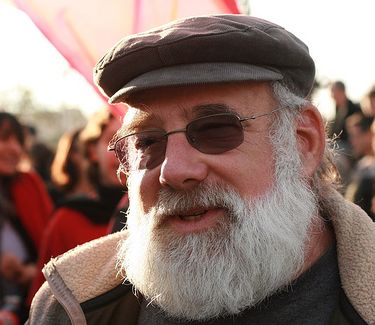
Phil Weiss, who’s in Israel right now, sat down to talk with Jeff Halper, the Minnesota-born founder of the Israeli Committee Against House Demolitions, to hear his thoughts on the conflict.
Halper would be happy living in a democracy with Palestinians. I asked him why so many Israelis don’t feel that way.
“There is a principle inculcated in Israelis and Jews from before 1948, by all politicians, newscasters, teachers, journalists, any official, and that is that the Arabs are our permanent enemies. And that’s it! And if you take that as an unchanging premise, then it doesn’t matter what is being done to Palestinians.They brought it on themselves.
“You can’t trust the Arabs. That makes everything else a non-issue… Yitzhak Shamir said, ‘The Jews are still the Jews, the Arabs are still the Arabs, and the sea is still the sea.’ Which means, it’s just the way it is, it’s nature. Arabs are what they are, and we are what we are, and nothing’s going to change that….”
But are Israelis even aware of the tapestry of suffering that is the occupation, and what this does to Palestinian lives?
“Israelis don’t care. Because they’re living the good life. Polls show that peace is the 8th issue in priority for Israelis. It’s like that cover ot Time magazine, Israel doesn’t want peace. I’ve been saying that for years…. And the Israeli government thinks it’s sustainable, they think they can keep this going for another 40 years. They have no idea that we’re living on borrowed time.
“And Israel is not going to cooperate and is not going to negotiate in good faith. Because of the Congress. The only way to go to some kind of peace is by exerting pressure on Israel, which the U.S. could do easily, but the president can’t do. And Israel feels completely protected. The U.S. can’t do anything to Israel, and it won’t let anyone else do anything to Israel. We start building settlements, and it’s, ‘So what?’”
I said that the status quo will bring on violence. Halper said he doubts it.
“It’s too sewn up. Israel is too much in control. Israeli soldiers are every ten feet in the West Bank… Israel is knocking off Palestinian leaders all the time.” And the natural source of Palestinian leadership is all in Israeli jails, 12,000 Palestinians– “I use the term warehousing”– and Palestinian society is rife with collaborators, from the Palestinian Authority on down.
Where’s the hope?
“I don’t use the word hope, I use the word struggle. There’s a struggle going on…”
The good news is that now it’s globalized: the United States is becoming more and more isolated on this issue.
“I don’t think Americans appreciate how isolated they are internationally. This is now a global conflict, and so you have the irresistible force meeting the immovable object. The irresistible force is– the EU can make things hard on Israel economically, and the whole Muslim world can be up in arms, and you have BDS, Turkey, isolating Israel, and the international community saying that this is too costly to accept forever. But then the immovable object is the U.S. Congress.”
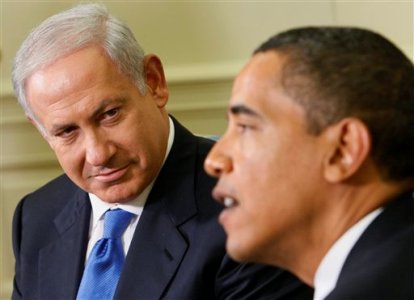
The disclosure of the details of a letter reportedly sent by President Barack Obama last week to Benjamin Netanyahu, the Israeli prime minister, will cause Palestinians to be even more skeptical about U.S. and Israeli roles in the current peace talks.
According to the leak, Obama made a series of extraordinarily generous offers to Israel, many of them at the expense of the Palestinians, in return for a single minor concession from Netanyahu: a two-month extension of the partial freeze on settlement growth.
A previous 10-month freeze, which ended a week ago, has not so far been renewed by Netanyahu, threatening to bring the negotiations to an abrupt halt. The Palestinians are expected to decide whether to quit the talks over the coming days.
Netanyahu was reported last week to have declined the U.S. offer.
The White House has denied that a letter was sent, but, according to the Israeli media, officials in Washington are privately incensed by Netanyahu’s rejection.
The disclosures were made by an informed source: David Makovsky, of the Washington Institute for Near East Policy, a close associate of Dennis Ross, Obama’s chief adviser on the Middle East, who is said to have initiated the offer.
The letter’s contents have also been partly confirmed by Jewish U.S. senators who attended a briefing last week from Ross.
According to Makovsky, in return for the 60-day settlement moratorium, the U.S. promised to veto any UN Security Council proposal on the Israeli-Palestinian conflict over the next year, and committed to not seek any further extensions of the freeze. The future of the settlements would be addressed only in a final agreement.
The White House would also allow Israel to keep a military presence in the West Bank’s Jordan Valley, even after the creation of a Palestinian state; continue controlling the borders of the Palestinian territories to prevent smuggling; provide Israel with enhanced weapons systems and security guarantees and increase its billions of dollars in annual aid; and create a regional security pact against Iran.
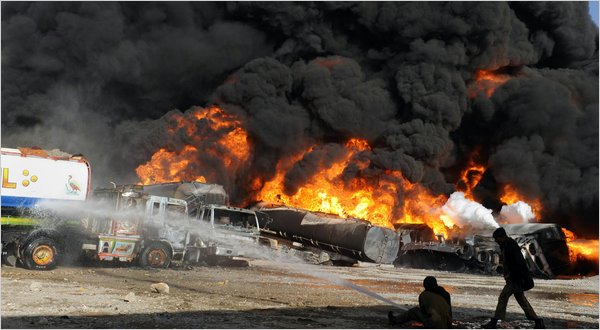
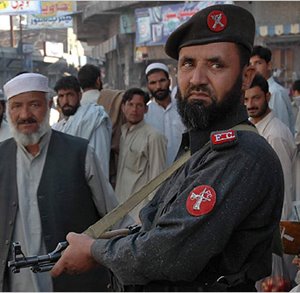
After three Frontier Corps soldiers were killed in a NATO helicopter attack on a Pakistani border post last week, the Pakistani government cut off supplies to Afghanistan by closing the Torkham border crossing. It was the easiest way of sending a message to Washington that killing Pakistani soldiers is unacceptable.
The Washington Post‘s editorial page now shoots back: “[Pakistan’s] resistance to a more muscular U.S. campaign in North Waziristan, where the Haqqani faction is based, is unacceptable.”
So what’s the Obama administration going to do? Show the Pakistanis who’s the boss and threaten to cut off aid to a country currently dealing with an environmental catastrophe worse than the 2004 Asian Tsunami?
For those with an imperial mindset (like the editors of the Washington Post) the issue here is about who has the right and the power to exercise their will. America, land of the righteous, savior of the world, must prevail.
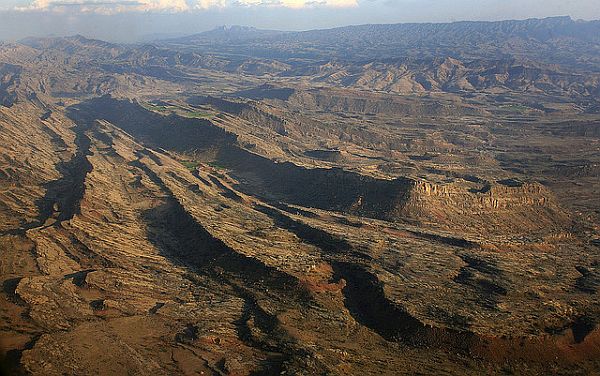
But America’s real military problem is not it’s inability to restore a global consensus about the supremacy of its military might. America’s problem is topography.
It’s because of topography that the border between Pakistan and Afghanistan is a contrivance that the Taliban can freely use to their advantage.
Though thanks to Vietnam’s jungles, quagmire remains the metaphor of choice when we talk about unwinnable wars, a more appropriate metaphor for what is now glibly referred to as Af-Pak is The Labyrinth.
When the Pentagon saw it’s opportunity to vanquish the ghost of Vietnam, it knew what it was looking for: a great big cumbersome army in a wide open space.
Victory against Saddam in Kuwait was a foregone conclusion — even if it’s debatable exactly what the US proved when it demonstrated its ability to slaughter thousands.
The Washington Post now sees itself as a valiant bugler leading the charge in the next phase of what it swiftly, justifiably but also cynically dubbed “Obama’s war”. But like all the war’s proponent, it is a victim of an irresistible illusion: that will-power can move mountains. Others have tried — and the mountains are still there.
What will be accomplished by the latest call for what is euphemistically described as a more “muscular” approach in Waziristan is the further reinforcement of a view of America already widely held in Pakistan.
There is no ideological commitment or religious fervor that fuels the Pakistani public’s anti-Americanism. Nor is there a particularly civilizational flavor to it. Pakistani anti-Americanism comes from a sustained narrative in which Pakistan is the undignified and humiliated recipient of U.S. financial support — provided at the expense of Pakistani blood.
As narratives go, this comes closer to the truth than its comic-book counterpart: the war of necessity (in which Obama heads in deeper on his search for the way out).
Is the word “terrorism” a secret terrorist weapon?
It appears that when US government officials try to think about terrorism their brains stop working. It’s a word that has become a piece of neural malware and everywhere it spreads, rational minds sputter and then cease to function. Who could have dreamed that a simple word could be so potent and destructive.
Yesterday we were told this: “The State Department alerts U.S. citizens to the potential for terrorist attacks in Europe.”
Why were they so specific, limiting the warning to just one continent?
The State website usefully provides a map, just in case anyone isn’t sure where Europe is. Should Americans already there jump on the first plane to head home? Apparently not.
“U.S. citizens should take every precaution to be aware of their surroundings and to adopt appropriate safety measures to protect themselves when traveling.”
This might prevent a few road fatalities. Drivers in Europe do expect pedestrians to exercise caution in the vicinity of fast-moving traffic. It’s always a good idea not to step off the curb with your eyes shut.
The New York Times thought it would be good to get some expert opinion on the significance of the State travel alert. Georgetown University’s Bruce Hoffman said: “I’m not sure what it says, beyond the fact that the world’s a dangerous place, and we already knew that.” Indeed.
As to who prompted this response to the latest al Qaeda threat:
A White House spokesman, Nicholas S. Shapiro, said that while the State Department had decided to issue the alert, it came in response to Mr. Obama’s insistence that “we need to do everything possible to disrupt this plot and protect the American people.”
Now here’s the serious point.
In terms of being able to identify where the next major act of terrorism may strike, the US government can’t be any more precise than to specify a continent — and with that level of precision who’s to say whether they identified the right continent.
At the same time, when it comes to identifying from where the next major act of terrorism will emanate, the US government claims it can identify targets with pinpoint accuracy as it escalates drone warfare in Pakistan.
Perhaps it’s not surprising that those who see danger everywhere also claim they have a talent for shooting straight.
There was a time — and it’s really not that long ago — that terrorism provoked a sturdier response from politicians who recognized that it was not their job to become agents of mass hysteria.
On October 12, 1984, Britain’s prime minister, Margaret Thatcher, survived an assassination attempt by the IRA. Five were killed and 31 injured in the blast which occurred at 2.54AM. Just over an hour later, having dusted herself off and changed her clothes, Thatcher spoke to the press.
“Life must go on as usual,” she said and went on to speak at the Conservative Party Conference which continued on schedule.
The event was recalled in Andrew Marr’s History of Modern Britain*:
The IRA responded with equal clarity:
Mrs. Thatcher will now realise that Britain cannot occupy our country and torture our prisoners and shoot our people in their own streets and get away with it. Today we were unlucky, but remember we only have to be lucky once. You will have to be lucky always. Give Ireland peace and there will be no more war.
The Provisional IRA’s bombing campaign continued until 1997.
Thatcher may have lacked the political flexibility and imagination required for the peace process, but she and the people of Northern Ireland and Britain demonstrated that life can indeed go on as usual even during a decades-long bombing campaign.
President Obama on the other hand seems willing to try and perpetuate the illusion that rests as the foundation of the war on terrorism: the idea that terrorism can be thwarted. It cannot.
The opportunities for individuals or small groups of individuals to cause carnage are infinite. The means to prevent such acts of violence are limited.
Political courage demands the articulation of this truth: the issue is not how you stop the unstoppable, but what you do afterwards.
Terrorism can provoke either intelligent or stupid responses and nothing is more stupid than an approach to counterterrorism which ends up fueling further acts of random violence.
Is the world safer now than it was on September 12, 2001? Obviously not.
The fact that 9/11 was followed by a decade of war with no end in sight is the grossest act of stupidity in modern history. Through its misconceived approach to counterterrorism America has rewarded al Qaeda more generously than Osama bin Laden could have ever dreamed.
*Marr’s entertaining BBC documentary series covers British history from the end of the Second World War onwards. The context for the clip above was Thatcher’s ruthless campaign against the National Union of Miners led by Arthur Scargill, but more broadly an effort to destroy the trade union movement and dismantle the welfare state. In the process, she deservedly became the most despised woman in Britain.
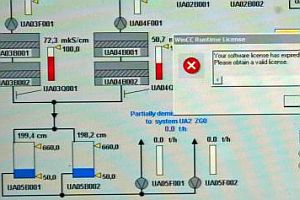
Ben D, a commenter at this site and Arms Control Wonk is skeptical about my assertion that Siemens SCADA software is being used at Iran’s Bushehr nuclear facility. I based that claim on a UPI photograph that led the German industrial security expert, Ralph Langner, to speculate that Bushehr was the intended target of the Stuxnet malware.
These are Ben’s qualms:
Concerning the UPI image of a control panel with a MS look window superimposed that says.. “WinCC Runtime License: Your software license has expired. Please obtain a valid license”, well it doesn’t prove a thing.
First of all, the WinCC window could so easily be a photo- shopped overlay on the image of a process control panel.
Secondly, the Control Panel image is typical of process control panels everywhere and even if the WinCC window was not photo-shopped, what has that got to do with Bushehr. There is nothing else in the image to provide any information whatsoever about the local environment to provide any context as to its locality or purpose.
Thirdly, UPI does not provide a source for anyone claiming that the UPI Photo by Mohammad Kheirkhah is actually Bushehr, they just provide a narrative to imply that it is.
Fourthly, Ralph Lagner is not claiming the UPI image is actually genuine or that it is of Bushehr, he merely prefaces his speculative theory with ” If the picture is authentic, which I have no means of verifying,….”.
Has the image been doctored? I’m not in a position to determine that, but the Hacker Factor Blog did some image analysis and concluded that it was not doctored. He has other reasons for questioning whether it was taken at Bushehr but found no evidence that it had been manipulated with Photoshop.
This image apparently confirms that the photograph is of a computer monitor and the continuity in the ripple pattern across the part of the screen where the WinCC message appears seems to confirm that this was not inserted from a different screen image. (This ripple pattern can be seen both in the blue image and the close-up image.)
So, assuming that the WinCC expired-licence message was actually appearing on that monitor screen, is there any evidence that the monitor and the control system it depicts is in Bushehr?
Frankly, I was willing to accept that UPI was not misrepresenting or incorrectly labeling its photos, but still, some additional analysis was both in order and turned out to be fruitful. There is indeed evidence that this image depicts a Bushehr control system.
The elements in the schematic have a uniform numbering system — UA04B001, UA04B002 etc.
Another UPI photograph appears to show the physical components depicted on the system control monitor. This vessel shown on the right is numbered UA06B002. That particular number doesn’t appear on the monitor image but it’s hard to believe that this is not part of the same system.
OK. But maybe the screen image and the image of an Iranian technician turning a valve were taken some place other than Bushehr.
Well, UPI’s photographer was one among a group of international journalists who were shown around Bushehr in February 2009. They included Jon Leyne, a reporter for the BBC, and a video in his report shows the same assembly of pale gray vessels that appear in the UPI photo. Indeed, an AFP image in the same report shows the same technician, from a different angle, doing his valve-turning performance for the assembled press.
With the evidence that I’ve laid out I will assert with even more confidence that the Bushehr nuclear plant uses Siemens WinCC SCADA software. I also see little reason to doubt that Iranian officials were telling the truth when they said that Stuxnet had been found on personal computers used by the facility’s operators. What I remain skeptical about is their claim that the malware did not penetrate the system. How confident the Iranians are on that question may become evident in the coming months when the plant begins or fails to begin generating electricity.
A USB memory stick carrying the Stuxnet malware is believed to have provided intruders with access to Iran’s nuclear program. The same technique was used in November 2008 to break into CENTCOM, providing a foreign government with unfiltered access to the Pentagon’s command of the wars in Iraq and Afghanistan. Did both attacks come from the same source?
Cyber warfare has quietly grown into a central pillar of Israel’s strategic planning, with a new military intelligence unit set up to incorporate high-tech hacking tactics, Israeli security sources said on Tuesday.
Israel’s pursuit of options for sabotaging the core computers of foes like Iran, along with mechanisms to protect its own sensitive systems, were unveiled last year by the military intelligence chief, Major-General Amos Yadlin.
The government of Prime Minister Benjamin Netanyahu has since set cyber warfare as a national priority, “up there with missile shields and preparing the homefront to withstand a future missile war”, a senior source said on condition of anonymity.
Back in 1997, when the US did not overtly support political assassinations, President Clinton intervened to save the life of Khalid Meshaal. The Hamas political bureau chief had been poisoned by Mossad operatives (carrying stolen Canadian passports) on the streets of Jordan’s capital, Amman.
Clinton wasn’t trying to help Hamas but knew that a peace treaty he had helped broker between Israel and Jordan would be in jeopardy if Prime Minister Netanyahu thought he could disregard the sovereignty of Jordan and carry out assassinations with impunity. Likewise, neither King Hussein nor the Canadian government believed that Israeli actions showing a flagrant disregard for the authority of their respective governments could go unanswered.
Netanyahu would probably have found Clinton’s pressure unpersuasive were it not for the fact that the Israeli operatives had already been arrested. In exchange for their release, the Israelis supplied the antidote that saved Meshaal’s life while also releasing the Hamas spiritual leader Sheikh Ahmed Yassin.
Then came 9/11.
Before long, Yassin had been assassinated, the US was using Israeli methods of torture in its campaign against an amorphous Islamic threat, Israel’s own war crimes were sanctioned by the US in the name of the war on terrorism, and the use of stolen foreign passports by Mossad agents committing murder on foreign soil provoked nothing more than a diplomatic slap on the wrists.
The willingness of this and the previous administration to allow Israel to disregard international law shows that even if the Israel lobby can no longer flourish like a night flower, its power is barely diminished. Even so, the appearance of the Stuxnet malware should be a wake-up call to every government around the world that refuses to place Israel’s national interests above its own.
In its conception, Stuxnet can be viewed very much like a targeted killing — but one designed to attack silently and leave no trace of its origin.
It’s creators understood that they had designed an exceedingly dangerous weapon and so they made sure its damage could be contained. But it seems not to have worked according to plan and so caution got tossed out of the window. Apparently, Israel did what it has done so many times before: pursued what it regarded as its own interests with an utter disregard for the international consequences.
The original infection method, which relied on infected USB drives, included a counter that limited the spread to just three PCs, said [Liam] O Murchu [operations manager with Symantec’s security response]. “It’s clear that the attackers did not want Stuxnet to spread very far,” he said. “They wanted it to remain close to the original infection point.”
O Murchu’s research also found a 21-day propagation window; in other words, the worm would migrate to other machines in a network only for three weeks before calling it quits.
Those anti-propagation measures notwithstanding, Stuxnet has spread widely. Why?
Kaspersky’s [Roel] Schouwenberg [a senior antivirus researcher] believes it’s because the initial attack, which relied on infected USB drives, failed to do what Stuxnet’s makers wanted.
“My guess is that the first variant didn’t achieve its target,” said Schouwenberg, referring to the worm’s 2009 version that lacked the more aggressive propagation mechanisms, including multiple Windows zero-day vulnerabilities. “So they went on to create a more sophisticated version to reach their target.”
That more complex edition, which O Murchu said was developed in March of this year, was the one that “got all the attention,” according to Schouwenberg. But the earlier edition had already been at work for months by then — and even longer before a little-known antivirus vendor from Belarus first found it in June. “The first version didn’t spread enough, and so Stuxnet’s creators took a gamble, and abandoned the idea of making it stealthy,” said Schouwenberg.
In Schouwenberg’s theory, Stuxnet’s developers realized their first attempt had failed to penetrate the intended target or targets, and rather than simply repeat the attack, decided to raise the ante.
“They spent a lot of time and money on Stuxnet,” Schouwenberg said. “They could try again [with the USB-only vector] and maybe fail again, or they could take the risk of it spreading by adding more functionality to the worm.”
O Murchu agreed that it was possible the worm’s creators had failed to infect, and thus gain control, of the industrial systems running at their objective(s), but said the code itself didn’t provide clear clues.
What is clear, O Murchu said in a news conference Friday morning, is that Stuxnet evolved over time, adding new ways to spread on networks in the hope of finding specific PLCs (programming logic control) hardware to hijack. “It’s possible that [the attackers] didn’t manage to get to all of their targets [with the earlier version],” O Murchu said. “The increased sophistication of Stuxnet in 2010 may indicate that they had not reached their target.”
With the proliferation of Stuxnet, Schouwenberg said that the country or countries that created the worm may have themselves been impacted by its spread. But that was likely a calculated risk the worm’s developers gladly took.
And that risk may have been quite small. “Perhaps they knew that their own critical infrastructure wouldn’t be affected by Stuxnet because it’s not using Siemens PLCs,” Schouwenberg said.
The danger now posed by Stuxnet is not simply through its direct proliferation but by virtue of the fact that it provides a blueprint that can be adapted by other parties who would otherwise lack the resources to create malware this sophisticated from scratch.
What might have been conceived as a tool to prevent the creation of a weapon of mass destruction could itself be turned into a WMD.
“Stuxnet opened Pandora’s box,” said Ralph Langner, a German researcher whose early analysis of the worm’s ability to target control systems raised public awareness of the threat. “We don’t need to be concerned about Stuxnet, but about the next-generation malware we will see after Stuxnet.”
Sean McGurk, director of the U.S. National Cybersecurity and Communications Integration Center at the Department of Homeland Security, said that the department posted its first report to industry recommending steps to mitigate the effects of Stuxnet on July 15. But “not even two days later,” he said, a hacker Web site posted the code so that others could use it to exploit the vulnerabilities in Microsoft.
“So we know that once the information is out in the wild, people are taking it and they’re modifying it,” he said.
In other words, what started as an Israeli cyber attack on nuclear installations in Iran could end up crashing the US powergrid or causing havoc anywhere else on the globe.
Even before Stuxnet loomed over the horizon, serious warnings were being issued about the United States’ vulnerability to a crippling cyber attack, yet thus far none of those raising the alarm have pointed to the ways in which Israel’s cyber warfare capabilities may now indirectly or directly threaten the United States and its interests.
– – –
Late last year, 60 Minutes reported on America’s vulnerability to a major cyber attack.
Ever since speculation began, suggesting that Israel is the source of the Stuxnet malware, there has been a buzz of excitement in the Zionist corner of the blogosphere. The DEBKAfile — trusted source for pro-Israel fantasists all over the world — declared that if it turns out that millions of Iranian industrial units have been hit, “this cyber weapon attack on Iran would be the greatest ever.”
Glee at such a prospect is not shared by observers who lack the Zionist pathological obsession with Iran.
Stephen Spoonamore, a veteran cybersecurity consultant interviewed by NPR said: “I can think of very few stupider blowback decisions” than to release code that controls most of the worlds’ hydroelectric dams or many of the world’s nuclear plants or many of the world’s electrical switching stations.
The Stuxnet computer worm has wreaked havoc in China, infecting millions of computers around the country, state media reported this week.
Stuxnet is feared by experts around the globe as it can break into computers that control machinery at the heart of industry, allowing an attacker to assume control of critical systems like pumps, motors, alarms and valves.
It could, technically, make factory boilers explode, destroy gas pipelines or even cause a nuclear plant to malfunction.
The virus targets control systems made by German industrial giant Siemens commonly used to manage water supplies, oil rigs, power plants and other industrial facilities.
“This malware is specially designed to sabotage plants and damage industrial systems, instead of stealing personal data,” an engineer surnamed Wang at antivirus service provider Rising International Software told the Global Times.
“Once Stuxnet successfully penetrates factory computers in China, those industries may collapse, which would damage China’s national security,” he added.
Another unnamed expert at Rising International said the attacks had so far infected more than six million individual accounts and nearly 1,000 corporate accounts around the country, the official Xinhua news agency reported.
Jeffrey Carr, author of “Inside Cyber Warfare,” describes what he believes is the first example of Stuxnet’s destructive power: the loss of India’s INSAT-4B communications satellite which shut down in July. The satellite’s control systems use Siemens S7-400 PLC and SIMATIC WinCC software, both of which are targeted by Stuxnet.
If speculation that Stuxnet was created by Israel has been driven by the circumstantial evidence that Israel’s nemesis Iran appears to have been the primary target, there is now some subtle but concrete evidence again pointing in Israel’s direction.
Buried in Stuxnet’s code is a marker with the digits “19790509” that the researchers believe is a “do-not infect” indicator. If the marker equals that value, Stuxnet stops in its tracks, and does not infect the targeted PC.
The researchers — Nicolas Falliere, Liam O Murchu and Eric Chen — speculated that the marker represents a date: May 9, 1979.
“While on May 9, 1979, a variety of historical events occurred, according to Wikipedia “Habib Elghanian was executed by a firing squad in Tehran sending shock waves through the closely knit Iranian Jewish community,” the researchers wrote.
Elghanian, a prominent Jewish-Iranian businessman, was charged with spying for Israel by the then-new revolutionary government of Iran, and executed May 9, 1979.
Deep inside the computer worm that some specialists suspect is aimed at slowing Iran’s race for a nuclear weapon lies what could be a fleeting reference to the Book of Esther, the Old Testament tale in which the Jews pre-empt a Persian plot to destroy them.
That use of the word “Myrtus” — which can be read as an allusion to Esther — to name a file inside the code is one of several murky clues that have emerged as computer experts try to trace the origin and purpose of the rogue Stuxnet program, which seeks out a specific kind of command module for industrial equipment.
Not surprisingly, the Israelis are not saying whether Stuxnet has any connection to the secretive cyberwar unit it has built inside Israel’s intelligence service. Nor is the Obama administration, which while talking about cyberdefenses has also rapidly ramped up a broad covert program, inherited from the Bush administration, to undermine Iran’s nuclear program. In interviews in several countries, experts in both cyberwar and nuclear enrichment technology say the Stuxnet mystery may never be solved.
There are many competing explanations for myrtus, which could simply signify myrtle, a plant important to many cultures in the region. But some security experts see the reference as a signature allusion to Esther, a clear warning in a mounting technological and psychological battle as Israel and its allies try to breach Tehran’s most heavily guarded project. Others doubt the Israelis were involved and say the word could have been inserted as deliberate misinformation, to implicate Israel.
The same report cites Shai Blitzblau, the technical director and head of the computer warfare laboratory at Maglan, an Israeli company specializing in information security, who said he was “convinced that Israel had nothing to do with Stuxnet.”
“We did a complete simulation of it and we sliced the code to its deepest level,” he said. “We have studied its protocols and functionality. Our two main suspects for this are high-level industrial espionage against Siemens and a kind of academic experiment.”
Did Blitzblau present his findings at this week’s VB Conference in Vancouver where Stuxnet was the focus of attention? No — which is not surprising given his vacuous claim to have studied the code at its deepest level while other experts say it will take months to penetrate the thousands of lines of code contained in a 500kB piece of software.
As for why Israeli programmers would have inserted clues about about authorship deep inside the malware, the most obvious explanation would be the most prosaic: pride.
Even when the utmost secrecy is called for, there are those who cannot resist the temptation to leave their mark.
As for the significance of another finding — June 24, 2012 is the “kill date” after which the worm will refuse to execute — again, we can only speculate.
Is this the cut-off point for Israel’s campaign of cyber warfare against Iran after which will come the time for real war? Right in the run up to the 2012 US presidential election.
This website or its third-party tools use cookies, which are necessary to its functioning. By closing this banner, you agree to the use of cookies.




 Undaunted by the revelations from Bob Woodward’s book, Obama’s Wars, President Obama is replacing National Security Adviser Gen James Jones with his deputy, Tom Donilon.
 In a landmark case, the first trial of a former Guantánamo detainee, Judge Lewis A. Kaplan of United States District Court in Manhattan
 It is well known that for almost a decade he has suffered from health problems and requires regular medical attention rendering him relatively inactive in the day-to-day workings of the insurgency. Furthermore, as a senior insurgent commander (and former Taliban Minister), Maulavi Haqqani’s profile as a “most wanted” does not permit travel to the Afghan battle space. Consequently, his 36-year-old son Sirajuddin (aka “Khalifa”) has increasingly taken over, with gusto, operational command of his father’s network.

 Halper would be happy living in a democracy with Palestinians. I asked him why so many Israelis don’t feel that way.
 The disclosure of the details of a letter reportedly sent by President Barack Obama last week to Benjamin Netanyahu, the Israeli prime minister, will cause Palestinians to be even more skeptical about U.S. and Israeli roles in the current peace talks.
 After three Frontier Corps soldiers were killed in a NATO helicopter attack on a Pakistani border post last week, the Pakistani government cut off supplies to Afghanistan by closing the Torkham border crossing. It was the easiest way of sending a message to Washington that killing Pakistani soldiers is unacceptable.

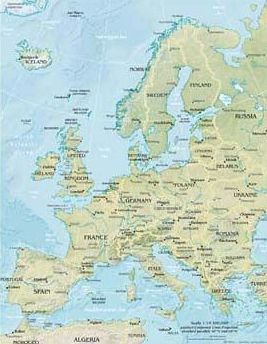 The State website usefully provides a map, just in case anyone isn’t sure where Europe is. Should Americans already there jump on the first plane to head home? Apparently not.