Facing budget cuts at home, western arms firms are desperate for a share of the lucrative Middle East market. “The post-financial crisis reality,” said Herve Guillou, president of Cassidian Systems, a subsidiary of European aviation defence group EADS, “is that today it is clearly the Middle East that is seeing the biggest growth.” Iran’s growing military power has pushed Gulf states into their largest-ever military build up, making purchases worth £76 billion from the US alone in 2010. The largest acquisitions were made by Saudi Arabia, which is spending £41 billion on F-15 fighter jets and upgrades for its naval fleet.
The six Gulf Cooperation Council countries – Saudi Arabia, Bahrain, UAE, Oman, Qatar, Kuwait – along with Jordan will spend another £41 billion on defence in 2011, according to Frost and Sullivan, a research firm.
Libya and Egypt are among the states which have representatives at IDEX [the International Defence Exhibition and Conference in Abu Dhabi]. Global Industrial and Defence Solutions, a Pakistani exhibitor, lists Libya as being among the “key customers of our products.” Renault also issued a press release before the exhibition, saying it had contracted to supply military trucks to Egypt. Libya’s al-Musallah magazine, which covers arms-trade related issues in the country, is also among the exhibitors.
I must be missing something. The present British government, like its predecessor, claims to pursue a policy of “liberal interventionism”, seeking the downfall of undemocratic regimes round the globe, notably in the Muslim world. The same British government, again like its predecessor, sends these undemocratic regimes copious weapons to suppress the only plausible means of the said downfall, popular insurrection. The contradiction is glaring.
Downing Street is clearly embarrassed by Egypt, Bahrain and Libya having had the impertinence to rebel just as David Cameron was embarking on an important arms-sales trip to the Gulf, not an area much addicted to democracy. Fifty British arms makers were present at last year’s sickening Libyan arms fair, while the resulting weapons are reportedly prominent in gunning down this week’s rioters. Cameron reads from the Foreign Office script, claiming that all guns, tanks, armoured vehicles, stun grenades, tear gas and riot-control equipment are “covered by assurances that they would not be used in human rights repression”. He must know this is absurd.
What did the FO think Colonel Gaddafi meant to do with sniper rifles and tear-gas grenades – go mole hunting? Britain has tried to cover its publicity flank by “revoking 52 export licences” to Bahrain and Libya for weapons used against demonstrators, in effect admitting its guilt. This merely locks the moral stable after the horse has fled, while also being a poor advertisement for British after-sales service. What is the point of selling someone a gun and telling him not to use it?
Gaddafi turns US and British guns on his own people
As the GCC foreign ministers huddled in a Bahraini capital seemingly under siege, it is clear that the predicted stability of the oil states is being put to the test. Most analysts believed the Gulf would be spared the wave of rebellion spreading across the Arab World due to their relative wealth and welfare provisions for their populace. Yet Bahrain’s pre-emptive promises of increased social spending and direct subsidies of $2,700 per family did not prevent robust protests this week. Analysts also suggested that monarchies are less prone to revolutionary fervor than the Arab faux republics; legitimacy is based on religion and paternalistic care of citizenry, not on the false promise of public sovereignty in the republics. Yet it is exactly that paternalistic authority that is being called into question by political activists across the Gulf.
In fact, the demands of Gulf activists, and increasingly Gulf publics, are broadly similar to those coming from Tunisia and Egypt: We want accountable governance, free of corruption. We want popular participation and to have our say on the issues that affect us. And we want to be free to speak our minds — to assemble online and off without fear of intimidation or arrest. In short, Gulf publics, and particularly Gulf youths, want to be full citizens.
An uncertain calm has settled over the small island kingdom of Bahrain. The wave of peaceful pro-democracy protests from February 14-17 culminated in bloodshed, including the brutal murder of seven activists, some of whom were asleep in tents, by the armed forces. On orders from above, the army withdrew from the roundabout on the outskirts of the capital of Manama where the protests have been centered, and since shortly after the seven deaths it has observed calls for restraint. Thousands of jubilant protesters seized the moment to reoccupy the roundabout, the now infamous Pearl Circle. In commemoration of the dead, the demonstrators have renamed it Martyrs’ Circle.
The mood in the circle is buoyant, even carnivalesque. It is also dead serious, for the thousands of encamped demonstrators demand nothing short of fundamental change to the kingdom’s autocratic political order. The crown prince, Salman bin Hamad Al Khalifa, has issued a bland call for healing and national dialogue. The country’s formal opposition may be tempted by the prospect of realizing at least some of its long-established demands for reform. But the wounds from the direct assault at dawn on February 17 are deep. Several prominent banners in Martyrs’ Circle display the pledge, “No dialogue with those who killed us in cold blood.” Chants echo: “We will sit here until the fall of the regime!” The fault lines that have long divided rulers and subjects in Bahrain have widened due to the carnage.
The United States military undermined efforts to improve relations with Bahrain’s Shiite majority and understated abuses by the Sunni royal family, according to one present and one former American government adviser and a Bahraini human rights advocate.
As Bahrain’s leaders struggle to hold back a rising popular revolt against their absolute rule, Washington’s posture toward the Shiite majority, which is spearheading the opposition, could prove crucial to future relations with this strategically valuable Persian Gulf nation. The United States Navy’s Fifth Fleet is based here, helping ensure the flow of oil through the Strait of Hormuz and the gulf, and safeguarding American interests in this volatile region.
Over the years, the military, according to the advisers and the human rights advocate, believed that King Hamad bin Isa al-Khalifa and his court were reform-minded leaders who could advance democracy and preserve stability. That narrative contrasts sharply with the experience of the Shiites, as documented by human rights groups and some of the military’s own advisers.
“The problem has been that we have been doing everything we can to cuddle up to the Khalifas and have been consciously ignoring at best the situation of Bahraini Shiites,” said Gwenyth Todd, a former political adviser to the Navy in Bahrain from 2004 to 2007 who was also an adviser on Middle Eastern and North African affairs at the Pentagon and the White House. “We could find ourselves in a very bad situation if the regime has to make major concessions to the Shia, unless we change our tone.”
I spent four and a half years negotiating resolutions on the Middle East at the UN Security Council. When it wishes, the council can make decisions in hours. We agreed a resolution condemning the 9/11 attacks in less than an hour, the morning after the attacks took place. Time is of the essence. The only message that Gadaffi will understand is one of real substance and force. Such a resolution should state, at a minimum:
• The demand that all violence cease immediately, and that if lethal force continues to be used, the government will face consequences. At this point, such consequences do not need to be spelled out (and would unlikely be agreed) but imply sanctions, and, in extremis, force.
• Immediate freezing of all assets and an explicit travel ban on members of the regime, until all violence is halted and has been fully investigated.
• Since Libya is not a party to the International Criminal Court, the Council can and should refer Libya to the ICC for an immediate investigation into possible war crimes.
• Demand that there be an immediate transition to a representative government, involving consulting civil society and all relevant political actors.
• The decision should be taken under chapter VII of the UN Charter, recognising that events in Libya are an international threat to international peace and security (there are already refugees flowing out of Libya), and requiring all UN members to comply (this reference also implies the threat of military enforcement action).
I would love to see the council agree a no-fly zone or exclusion zone, to prevent air attacks on civilians. However, unless someone is prepared to enforce such a ban, it is meaningless. Realistically, only the US has this capability and such a call would risk playing into Gaddafi’s hands in his specious claim that foreign forces are behind the unrest.
The first test of any would-be interventionist is this: do no harm. And there is very little evidence that direct intervention in the Libyan case could meet this test. For instance, calls for a no-fly zone by Libya’s Deputy Ambassador to the U.N. (drawing on the Iraqi precedent of the 1990s) and an air campaign by others (drawing on the Kosovo precedent from 1999) would surely fail this test. Neither option would shield the Libyan civilian population from the regime’s coercive apparatus (which is not principally aerial) and both options may entail serious costs to civilians by freezing or exacerbating the situation on the ground. Beyond raising questions of enforcement (would international forces fire on Libyan aircraft?), a no-fly zone might well block one method of escape for Libyan civilians or close an avenue for defections by members of the air force, such as the four pilots that are known to have flown out and defected in disobedience of direct orders to bomb civilians. Alternatively, air strikes run the risk of serious damage to both the civilian population and infrastructure. In short, any intervention must be crafted to offer real support to the civilian population of Libya, which direct forms of coercive intervention like no-fly zones or air strikes would not. But are there other forms of intervention that would be better suited to the task? Given limited knowledge of Libya’s internal dynamics at present and the heavy-handed interventionist toolkit developed to date by the international community any such option must be approached with caution.
Coercive options should be taken off the table. Absent the political will to commit ground forces to serve as a meaningful buffer between the regime and the population, any coercive intervention will do more damage (particularly to civilians) than good. Further, even if the political will existed for forceful intervention to offer direct protection to Libyan civilians, history suggests that the ultimate outcome of such intervention would still be harmful. Aside from the obvious potential threats to the civilian populations from the presence of foreign troops on their soil, including risks from a ground conflict and risks associated with the possibility of a prolonged presence, there are additional considerations that weigh against such intervention. At a time when the regime appears to be crumbling from within, as a result of the courageous mobilization of its own people, to engage in an eleventh hour intervention runs the very serious risk of depriving the Libyan people of their control over the hard-won transition they have initiated. To rebrand the Libyan uprising with the last minute trappings of international liberation (read: “Made in the West”) would do a serious disservice to the achievements of the protesters. Of course, none of this is to absolve the international community of its obligation to support Libyan civilians. Rather, we seek to identify a principled course of action that speaks to the dire situation, our responsibilities towards it, and the power relations that frame it.
In the immediate context, the most appropriate role for the international community is in providing humanitarian assistance and desisting from any further support to the regime. In addition to condemning the regime’s resort to violence, there are at least five modalities for the provision of such assistance, all of which should be employed immediately, with the support of the Security Council. First, all borders should be opened and appropriate facilities created to allow Libyan civilians to flee regime violence. If various governments are going to create exit routes through charter flights and land crossings for their own citizens, they also need to create a mechanism for Libyans to get out. Second, all available means for providing direct humanitarian assistance on the ground to the Libyan population should be utilized, including aid convoys to eastern Libya through Egypt and to western Libya through Tunisia. Third, al-Qaddafi’s assets and those of remaining elements of the regime should be frozen and kept in safe keeping to be given to whatever post-Qaddafi system emerges. Fourth, governments with ties to Libya should immediately sever all military ties, withholding delivery of materiel and cancelling all outstanding contracts. Finally, an arms embargo should be imposed preventing the sale or delivery of military equipment or personnel (including foreign mercenaries) to the Libyan state security forces. Sanctions that target military materiel, services and the movement of reinforcements from among foreign mercenaries are essential. Sanctions that go beyond these aims would run the risk of causing more harm to civilians than to the regime.
Up to 15,000 men, women and children besieged Tripoli’s international airport last night, shouting and screaming for seats on the few airliners still prepared to fly to Muammar Gaddafi’s rump state, paying Libyan police bribe after bribe to reach the ticket desks in a rain-soaked mob of hungry, desperate families. Many were trampled as Libyan security men savagely beat those who pushed their way to the front.
Among them were Gaddafi’s fellow Arabs, thousands of them Egyptians, some of whom had been living at the airport for two days without food or sanitation. The place stank of faeces and urine and fear. Yet a 45-minute visit into the city for a new airline ticket to another destination is the only chance to see Gaddafi’s capital if you are a “dog” of the international press.
There was little sign of opposition to the Great Leader. Squads of young men with Kalashnikov rifles stood on the side roads next to barricades of upturned chairs and wooden doors. But these were pro-Gaddafi vigilantes – a faint echo of the armed Egyptian “neighbourhood guard” I saw in Cairo a month ago – and had pinned photographs of their leader’s infamous Green Book to their checkpoint signs.
There is little food in Tripoli, and over the city there fell a blanket of drab, sullen rain. It guttered onto an empty Green Square and down the Italianate streets of the old capital of Tripolitania. But there were no tanks, no armoured personnel carriers, no soldiers, not a fighter plane in the air; just a few police and elderly men and women walking the pavements – a numbed populous. Sadly for the West and for the people of the free city of Benghazi, Libya’s capital appeared as quiet as any dictator would wish.
But this is an illusion. Petrol and food prices have trebled; entire towns outside Tripoli have been torn apart by fighting between pro- and anti-Gaddafi forces. In the suburbs of the city, especially in the Noufreen district, militias fought for 24 hours on Sunday with machine guns and pistols, a battle the Gadaffi forces won. In the end, the exodus of expatriates will do far more than street warfare to bring down the regime.
Muammar Gaddafi was looking increasingly isolated after damaging defections by senior regime figures and key military commanders and units as the uprising spread closer to Tripoli.
Malta denied a report that Gaddafi’s daughter, Aisha, was on board a Libyan plane refused permission to land on the island on Wednesday. But Menas, a respected London Middle East consultancy, said the leader’s wife, daughter, daughters-in-law and grandchildren had left Libya for an unknown destination.
Mass protests erupted in Misurata, a Mediterranean port and the country’s third-largest city, and violence was reported in Sebrata and Zawiya, which are also in western Libya and closer to Tripoli.
Benghazi and much of the east of the country have now been lost to the government. Misurata is near Sirte, the leader’s home town, where a key tribe has reportedly come out in support of what is being called the 17 February revolution.
Al-Jazeera TV reported that tribes in the Azzintan and Nalut areas, also in the west, had come out against Gaddafi. Oil facilities were now under their protection.
Libyan and Arab sources said the biggest blow to Gaddafi so far had been the defection of his interior minister and veteran loyalist, Abdel-Fatah Younes al-Obeidi, who called on the army on Tuesday to “serve the people and support the revolution and its legitimate demands”.
But the whereabouts of other senior comrades remains unclear. Mustafa al-Kharroubi, a leading figure in the regime’s old guard, is rumoured to have left Tripoli. There are question marks too about another loyalist, Khweildi al-Hmeidi, whose daughter is married to the leader’s wayward son Sa’adi.
In another blow to the Libyan leader, his former justice minister, Mustafa Abdel-Jalil, who stepped down this week, was quoted as saying today that Gaddafi personally ordered the Lockerbie bombing, in which 270 people were killed.
Another departure was of Youssef Sawan, who quit as director of the Gaddafi International Charitable Foundation run by the leader’s son, the supposedly reformist-minded Saif al-Islam.
Libyan exile sources also confirmed the defection of a senior figure in the revolutionary committees, Ali al-Sahouli, who warned that Gaddafi would sabotage the country’s infrastructure including oil installations, power stations and banks.
Amid the revolutionary cheer that was emanating from Egypt last week, a group of Israeli Jews attacked and killed a Palestinian in the heart of West Jerusalem. 24-year-old Palestinian Hussam Rwidy was killed by a group of nationalist Jewish youth screaming “death to Arabs” as he was walking home from work. The Israeli government quickly put a media blackout on the case fearing a violent reactions from Palestinians in Jerusalem, Israel and the West Bank. Once the media blackout was lifted, select Israeli media outlets covered the story as a “drunken brawl turned bad” and the story was largely ignored.
Tobruk is several hundred miles away from Benghazi, the first large epicenter of the revolt, and even farther from Tripoli, the Libyan capital. But local activists felt wired into the revolutions going on far beyond the borders of their nation, even though foreign newspapers were never for sale in Gaddafi’s Libya and websites were often blocked, says Gamal Shallouf, a marine biologist who has joined the newly fledged opposition. While the Internet has been down here since the revolution started, the regime’s inability to shut down new-media innovations entirely has been key to spreading Libya’s revolt.
“Generally, in Libya before this, there was no media,” explains Shallouf. “So if Tobruk made a revolution, [the government] would spend three to five days killing us and finish the revolution. Nobody in [larger nearby communities and cities] al-Baida or Darna or Benghazi would have heard about it. But now with al-Jazeera and Facebook and the media, all of Libya hears about the revolution and is with the revolution. They know about it. They think, ‘I am Libyan, this is my family, so I will go to the street to fight for them.’ ”
He and fellow Libyans had followed the Tunisian and Egyptian uprisings on al-Jazeera and satellite Arabic-language news channels. He did his best, along with other Libyan activists, to internally circulate the videos he saw so that other Libyans could get a glimpse of what was happening on either side of their closed-off country. “After I got videos from the Internet, we sent them from Bluetooth to Bluetooth. Mostly videos of fighting in Egypt. I felt two things when I saw these videos: I felt sad. And then I wanted to make a revolution!”
Muammar Gaddafi, the Libyan leader, has vowed to fight on and die a “martyr”, calling on his supporters to take back the streets from protesters demanding his ouster, shouting and pounding his fist in a furious speech on state TV.
Gaddafi, clad in brown robes and turban, spoke on Tuesday from a podium set up in the entrance of a bombed-out building that appeared to be his Tripoli residence hit by US air raids in the 1980s and left unrepaired as a monument of defiance.
“I am a fighter, a revolutionary from tents … I will die as a martyr at the end,” he said.
“I have not yet ordered the use of force, not yet ordered one bullet to be fired … when I do, everything will burn.”
He called on supporters to take to the streets to attack protesters. “You men and women who love Gaddafi …get out of your homes and fill the streets,” he said. “Leave your homes and attack them in their lairs … Starting tomorrow the cordons will be lifted, go out and fight them.”
“From tonight to tomorrow, all the young men should form local committees for popular security,” he said, telling them to wear a green armband to identify themselves. “The Libyan people and the popular revolution will control Libya.”
Ben Wedeman, the first Western television correspondent to enter and report from Libya during the current crisis, describes what he saw.
“Your passports please,” said the young man in civilian clothing toting an AK-47 at the Libyan border.
“For what?” responded our driver, Saleh, a burly, bearded man who had picked us up just moments before. “There is no government. What is the point?” He pulled away with a dismissive laugh.
On the Libyan side, there were no officials, no passport control, no customs.
I’ve seen this before. In Afghanistan after the route of the Taliban, in Iraq after the fall of Saddam Hussein. Government authority suddenly evaporates. It’s exhilarating on one level; its whiff of chaos disconcerting on another.
The scene on the Libyan side of the border was jarring. Men – and teenage boys – with clubs, pistols and machine guns were trying to establish a modicum of order.
Hundreds of Egyptian workers were trying to get out, their meager possessions – bags, blankets, odds and ends – piled high on top of minibuses.
Egyptian border officials told us that 15,000 people had crossed from Libya on Monday alone.
“Welcome to free Libya,” said one of the armed young men now controlling the border.
“Free Libya” was surprisingly normal, once we got out of the border area. We stopped for petrol – there were no lines – and saw some stores were open. The electricity was working. The cell phone system is still functioning, though you can’t call abroad. The internet, however, has been down for days.
On the other hand, we did see regular groups of more armed young men in civilian clothing, stopping cars, checking IDs, asking questions. All were surprised, but happy, to see the first television news crew to cross into Libya since the uprising began February 15.
They were polite, if a tad giddy. Having thrown off the yoke of Moammar Gadhafi’s 42-year rule (longer than most Libyans have been alive), it’s understandable.
Lisa Goldman in Tel Aviv spoke to “Ali,” a friend who lives in Sarraj, a suburb of Tripoli that is located 10 kilometers west of the city’s center.
Ali and his neighbors take turns patrolling the neighborhood around the clock, to protect it from roaming mercenary soldiers; but otherwise they stay at home. Since Qaddafi’s regime enforced a strict ban on civilians owning firearms, they are using makeshift weapons to protect themselves. Ali said he is armed with a crowbar. The mercenaries, Ali said, are everywhere. They come mostly from Chad and Darfur.
Q: What is the situation with the army? Are Libyan soldiers attacking demonstrators, helping or staying neutral? Do you know if soldiers are defecting to the opposition? If yes, are they doing so in significant numbers?
A: The Libyan army is one of the poorest and most neglected security sector in the government. They are poorly fed , equipped, trained and paid. They are mostly ceremonial and Qaddafi does not trust them. So what we have here are private battalions with each of his sons owning the one named for him. So for example his son Khamees has a battalion belonging to him calling it “Kateebit Khamees.” Each is placed in private super huge barracks situated strategically around Tripoli for situations like these. These battalions are well-equipped, trained and paid and are extremely loyal not to the country but to the leader of their battalion.
So to answer your question the regular army is non-compliant and has mostly sided with the people. Remember they are poorly-equipped and so can be of only limited help. However, the battalions belonging to the regime itself are very much in the fight and are killing people wholesale. Still their numbers are not so great to cover this huge country so it seems they are complemented by mercenaries.
Abdelrazeg El-Murtadi Suleiman Gouider, the Libyan UN Mission’s legal adviser speaking to Nizar Abboud:
What do you do when your friend is blind drunk, slurring, staggering and boisterous as they fumble for their car keys? Do you cheer them on, slap them on their back and hand them another shot of whiskey? Of course not, no matter how much they may protest. And when it comes to America’s friendship with Israel, what is true for the ethics of bars holds true for international politics as well.
Israel is America’s obnoxious drunk friend. And for over half a century, America has been Israel’s bartender and enabler: each year dumping billions of dollars in military aid that is used to oppress Palestinians, handing out bribe money to Arab tyrants in exchange for the suppression of their people’s outrage and, most importantly, protecting Israel from the UN Security Council despite repeated, flagrant violations of international law. On Friday, America did it again by vetoing a Security Council resolution that would have declared Israel’s settlements illegal… all other members of the council, longstanding friends of Israel included, had voted in favor of the reprimand.
In the last thirty days, the power dynamics of the Middle East have changed irrevocably. Israel’s biggest ally in the region has been toppled, popular movements are sweeping neighboring countries and a new mood of self-governance has captured the imagination of the world’s citizens. It is time for Israel to sober up and face the reality that their aggressive militarism won’t work any more. Only America has the power to grab Israel’s car keys.
Palestinians are planning a “day of rage” on Friday in response to the US wielding its veto against a UN security council resolution condemning Israeli settlements.
The US decision to use its veto has sparked a furious reaction in the West Bank and Gaza.
Anti-US rallies took place in the West Bank towns of Bethlehem, Tulkarem and Jenin this weekend after the 14-1 vote on the resolution, in which the US stood alone against the rest of the security council, including Britain, Germany and France. It voted in contradiction of its own policy.
In Gaza, Hamas described the US position as outrageous and said Washington was “completely biased” towards Israel.
Ibrahim Sarsour, an Israeli-Arab member of the Israeli parliament, the Knesset, said it was time to tell the US president, Barack Obama, to “go to hell”.
“Obama cannot be trusted,” he wrote in an open letter to the Palestinian president, Mahmoud Abbas. “We knew his promises were lies. The time has come to spit in the face of the Americans.”
On January 27, Raymond Davis, a former U.S. Special Forces soldier, shot and killed two Pakistani citizens in that nation’s second-largest city, Lahore, using a semi-automatic Glock pistol. Davis claims he acted in self-defense when they attacked his car to rob him — both of the dead were armed and had lengthy records of petty crimes — but each was shot five times, and one was killed after Davis was safely back in his car and the victim was fleeing. After shooting the two dead, Davis calmly photographed their bodies and then called other Americans stationed in Pakistan (likely CIA officers) for assistance; one of the Americans’ Land Rovers dispatched to help Davis struck and killed a Pakistani motorcyclist while speeding to the scene. The Pakistani wife of one of Davis’ victims then committed suicide by swallowing rat poison, saying on her deathbed that she had serious doubts that Davis would be held accountable.
For reasons easy to understand — four dead Pakistanis at the hands of Americans, two of whom (at least) were completely innocent — this episode has become a major scandal in that nation. From the start, the U.S. Government has demanded Davis’ release on the grounds of “diplomatic immunity.” But the very murky status of Davis and his work in Pakistan has clouded that claim. The State Department first said he worked for the consulate, not the embassy, which would make him subject to weaker immunity rights than diplomats enjoy (State now says that its original claim was a “mistake” and that Davis worked for the embassy). President Obama then publicly demanded the release of what he absurdly called “our diplomat in Pakistan”; when he was arrested, Davis “was carrying a 9mm gun and 75 bullets, bolt cutters, a GPS unit, an infrared light, telescope, a digital camera, an air ticket, two mobile phones and a blank cheque.” Late last week, a Pakistani court ordered a three-week investigation to determine if Davis merits diplomatic immunity, during which time he will remain in custody. And now it turns out, according The Guardian last night, that “our diplomat” was actually working for the CIA.
Pakistani prosecutors accuse the spy of excessive force, saying he fired 10 shots and got out of his car to shoot one man twice in the back as he fled. The man’s body was found 30 feet from his motorbike.
“It went way beyond what we define as self-defence. It was not commensurate with the threat,” a senior police official involved in the case told the Guardian.
The Pakistani government is aware of Davis’s CIA status yet has kept quiet in the face of immense American pressure to free him under the Vienna convention. Last week President Barack Obama described Davis as “our diplomat” and dispatched his chief diplomatic troubleshooter, Senator John Kerry, to Islamabad. Kerry returned home empty-handed.
Many Pakistanis are outraged at the idea of an armed American rampaging through their second-largest city. Analysts have warned of Egyptian-style protests if Davis is released. The government, fearful of a backlash, says it needs until 14 March to decide whether Davis enjoys immunity.
A third man was crushed by an American vehicle as it rushed to Davis’s aid. Pakistani officials believe its occupants were CIA because they came from the house where Davis lived and were armed.
The US refused Pakistani demands to interrogate the two men and on Sunday a senior Pakistani intelligence official said they had left the country. “They have flown the coop, they are already in America,” he said.
ABC News reported that the men had the same diplomatic visas as Davis. It is not unusual for US intelligence officers, like their counterparts round the world, to carry diplomatic passports.
The US has accused Pakistan of illegally detaining him and riding roughshod over international treaties. Angry politicians have proposed slashing Islamabad’s $1.5bn (£900m) annual aid.
But Washington’s case is hobbled by its resounding silence on Davis’s role. He served in the US special forces for 10 years before leaving in 2003 to become a security contractor. A senior Pakistani official said he believed Davis had worked with Xe, the firm formerly known as Blackwater.
Pakistani suspicions about Davis’s role were stoked by the equipment police confiscated from his car: an unlicensed pistol, a long-range radio, a GPS device, an infrared torch and a camera with pictures of buildings around Lahore.
“This is not the work of a diplomat. He was doing espionage and surveillance activities,” said the Punjab law minister, Rana Sanaullah, adding he had “confirmation” that Davis was a CIA employee.
A number of US media outlets learned about Davis’s CIA role but have kept it under wraps at the request of the Obama administration. A Colorado television station, 9NEWS, made a connection after speaking to Davis’s wife. She referred its inquiries to a number in Washington which turned out to be the CIA. The station removed the CIA reference from its website at the request of the US government.
Does being known as the Prince of Darkness lower or raise your status as an image consultant? I guess it just depends on the client. Laura Rozen reports:
One of the more unlikely image-mongers that has worked to burnish Qadhafi’s and Libya’s image never registered with the Justice Department. Prominent neoconservative Richard Perle, the former Reagan-era Defense Department official and George W. Bush-era chairman of the Defense Policy Board, traveled to Libya twice in 2006 to meet with Qadhafi, and afterward briefed Vice President Dick Cheney on his visits, according to documents released by a Libyan opposition group in 2009.
Perle traveled to Libya as a paid adviser to the Monitor Group, a prestigious Boston-based consulting firm with close ties to leading professors at the Harvard Business School. The firm named Perle a senior adviser in 2006.
The Monitor Group described Perle’s travel to Libya and the recruitment of several other prominent thinkers and former officials to burnish Libya’s and Qadhafi’s image in a series of documents obtained and released by a Libyan opposition group, the National Conference of the Libyan Opposition, in 2009.
The Monitor Group did not return phone calls left at its Boston offices Monday. But Monitor describes, in a series of documents published by the National Conference of the Libyan Opposition in 2009, an “action plan” to “introduce and bring to Libya a meticulously selected group of independent and objective experts” to travel to Libya, meet senior officials, hold lectures and workshops, and promote the image of Libya and its controversial ruler.
Saudi Arabia said Sunday that it stands ready “with all its capabilities” to shore up Bahrain’s ruling royal family if a standoff with the Shiite-led opposition is not resolved soon, underscoring the kingdom’s deep concern about its neighbor’s ongoing political crisis.
Sunni-led Saudi Arabia props up Bahrain’s al-Khalifa family with cash and has long sought to prevent the tiny Persian Gulf state – with its majority Shiite population – from falling into Iran’s orbit. With dwindling oil resources, Bahrain relies heavily on Saudi Arabia for money and security.
It was unclear whether the Saudi comments indicated that the country was contemplating possible action in Bahrain or were merely meant to express growing anxiety among Saudi leaders. But some regional experts have long warned that a concerted Shiite challenge to the monarchy in Bahrain might prompt intervention from Saudi Arabia, which has its own restive Shiite minority population. The two countries are connected by a causeway.
And let’s suppose that in the coming days or weeks, Saudi forces (which they would no doubt describe with some anodyne phrase such as “peacekeeping forces” or “military assistance”) invade Bahrain.
Hand-wringing in Washington and other Western capitals will surely become frenzied in a decisive moment when Obama and his allies will be forced to show the world whether they truly stand for or against democracy.
Gulf states could go as far as using military intervention to prevent a regime change in Bahrain to block the tide of protests there from reaching their countries, analysts say.
A spread of the Shi’ite protests in Bahrain into the rest of the energy-rich Gulf states would be a major strategic victory for neighbouring Shi’ite Iran, they said on Thursday.
Foreign ministers of the six-nation alliance of the Gulf Cooperation Council (GCC), of which Bahrain is a member, affirmed at a meeting in Manama on Thursday their political, economic, security and defence support for Bahrain.
“Gulf states cannot accept a fundamental and radical change in Bahrain. The demand for constitutional monarchy cannot be imposed without [natural] political development that takes its due course,” Saudi political analyst Dakheel al-Dakheel said.
“This will create a state of political and security confusion in Bahrain that opens the door for Iranian and non-Iranian interference, which will not be acceptable to Gulf states, especially Saudi Arabia,” said Dakheel.
In agreement with Gilles Kepel who has dubbed events unfolding across the Middle East as the “Arab democratic revolution,” David Hirst writes:
[S]ome now say, this emergence of democracy as an ideal and politically mobilising force amounts to nothing less than a “third way” in modern Arab history. The first was nationalism, nourished by the experience of European colonial rule and all its works, from the initial great carve-up of the “Arab nation” to the creation of Israel, and the west’s subsequent, continued will to dominate and shape the region. The second, which only achieved real power in non-Arab Iran, was “political Islam”, nourished by the failure of nationalism.
And it is doubly revolutionary. First, in the very conduct of the revolution itself, and the sheer novelty and creativity of the educated and widely apolitical youth who, with the internet as their tool, kindled it. Second, and more conventionally, in the depth, scale and suddenness of the transformation in a vast existing order that it seems manifestly bound to wreak.
Arab, yes – but not in the sense of the Arabs going their own away again. Quite the reverse. No other such geopolitical ensemble has so long boasted such a collection of dinosaurs, such inveterate survivors from an earlier, totalitarian era; no other has so completely missed out on the waves of “people’s power” that swept away the Soviet empire and despotisms in Latin America, Asia and Africa. In rallying at last to this now universal, but essentially western value called democracy, they are in effect rejoining the world, catching up with history that has left them behind.
If it was in Tunis that the celebrated “Arab street” first moved, the country in which – apart from their own – Arabs everywhere immediately hoped that it would move next was Egypt. That would amount to a virtual guarantee that it would eventually come to them all. For, most pivotal, populous and prestigious of Arab states, Egypt was always a model, sometimes a great agent of change, for the whole region. It was during the nationalist era, after President Nasser’s overthrow of the monarchy in 1952, that it most spectacularly played that role. But in a quieter, longer-term fashion, it was also the chief progenitor, through the creation of the Muslim Brotherhood, of the “political Islam” we know today, including – in both the theoretical basis as well as substantially in personnel – the global jihad and al-Qaida that were to become its ultimate, deviant and fanatical descendants.
But third, and most topically, it was also the earliest and most influential exemplar of the thing which, nearly 60 years on, the Arab democratic revolution is all about. Nasser did seek the “genuine democracy” that he held to be best fitted for the goals of his revolution. But, for all its democratic trappings, it was really a military-led, though populist, autocracy from the very outset; down the years it underwent vast changes of ideology, policy and reputation, but, forever retaining its basic structures, it steadily degenerated into that aggravated, arthritic,deeply oppressive and immensely corrupt version of its original self over which Hosni Mubarak presided. With local variations, the system replicated itself in most Arab autocracies, especially the one-time revolutionary ones like his, but in the older, traditional monarchies too.
And, sure enough, Egypt’s “street” did swiftly move, and in nothing like the wild and violent manner that the image of the street in action has always tends to conjure up in anxious minds. As a broad and manifestly authentic expression of the people’s will, it accomplished the first, crucial stage of what surely ranks as one of the most exemplary, civilised uprisings in history. The Egyptians feel themselves reborn, the Arab world once more holds Egypt, “mother of the world”, in the highest esteem. And finally – after much artful equivocation as they waited to see whether the pharaoh, for 30 years the very cornerstone of their Middle East, had actually fallen – President Obama and others bestowed on them the unstinting official tributes of the west.
These plaudits raise the great question: if the Arabs are now rejoining the world what does it mean for the world? Will the adoption of a fundamental western value make it necessarily receptive to western policies or prescriptions? Probably not. Democracy itself, let alone Arab resentment over the west’s long record of upholding the old, despotic order, will militate against that.
Mubarak claimed that Islamists were behind the Egyptian revolution. Ben Ali said the same in Tunisia. King Abdullah of Jordan sees a dark and sinister hand – al-Qa’ida’s hand, the Muslim Brotherhood’s hand, an Islamist hand – behind the civil insurrection across the Arab world. Yesterday the Bahraini authorities discovered Hizbollah’s bloody hand behind the Shia uprising there. For Hizbollah, read Iran. How on earth do well-educated if singularly undemocratic men get this thing so wrong? Confronted by a series of secular explosions – Bahrain does not quite fit into this bracket – they blame radical Islam. The Shah made an identical mistake in reverse. Confronted by an obviously Islamic uprising, he blamed it on Communists.
Bobbysocks Obama and Clinton have managed an even weirder somersault. Having originally supported the “stable” dictatorships of the Middle East – when they should have stood by the forces of democracy – they decided to support civilian calls for democracy in the Arab world at a time when the Arabs were so utterly disenchanted with the West’s hypocrisy that they didn’t want America on their side. “The Americans interfered in our country for 30 years under Mubarak, supporting his regime, arming his soldiers,” an Egyptian student told me in Tahrir Square last week. “Now we would be grateful if they stopped interfering on our side.” At the end of the week, I heard identical voices in Bahrain. “We are getting shot by American weapons fired by American-trained Bahraini soldiers with American-made tanks,” a medical orderly told me on Friday. “And now Obama wants to be on our side?”
The events of the past two months and the spirit of anti-regime Arab insurrection – for dignity and justice, rather than any Islamic emirate – will remain in our history books for hundreds of years. And the failure of Islam’s strictest adherents will be discussed for decades. There was a special piquancy to the latest footage from al-Qa’ida yesterday, recorded before the overthrow of Mubarak, that emphasised the need for Islam to triumph in Egypt; yet a week earlier the forces of secular, nationalist, honourable Egypt, Muslim and Christian men and women, had got rid of the old man without any help from Bin Laden Inc. Even weirder was the reaction from Iran, whose supreme leader convinced himself that the Egyptian people’s success was a victory for Islam. It’s a sobering thought that only al-Qa’ida and Iran and their most loathed enemies, the anti-Islamist Arab dictators, believed that religion lay behind the mass rebellion of pro-democracy protesters.
After the battle for Tahrir Square, the conceptual grid that Western officials have used to divide the Islamic world into friends and enemies, moderates and radicals, good Muslims and bad Muslims has never looked more inadequate, or more irrelevant. A ‘moderate’ and ‘stable’ Arab government, a pillar of US strategy in the Middle East, has been overthrown by a nationwide protest movement demanding democratic reform, transparent governance, freedom of assembly, a more equitable distribution of the country’s resources and a foreign policy more reflective of popular opinion. It has sent other Arab governments into a panic while raising the hopes of their young, frustrated populations. If the revolution in Egypt succeeds, it will have swept away not only a corrupt and autocratic regime, but the vocabulary, and the patterns of thought, that have underpinned Western policy in the greater Middle East for more than a half century.
The fate of Egypt’s revolution – brought to a pause by the military’s seizure of power on 11 February, after Mubarak’s non-resignation address to his ‘children’ – remains uncertain. Mubarak is gone, but the streets have been mostly cleared of protesters and the army has filled the vacuum: chastened, yet still in power and with considerable resources at its disposal. Until elections are held in six months, the Supreme Council of the Armed Forces will be ruling by decree, without the façade of parliamentary government. The parliament, voted into office in rigged elections, has been dissolved, a move that won wide support, and a new constitution is being drafted, but it’s not clear how much of a hand the opposition will have in shaping it. More ominously, the Supreme Council has vowed to punish anyone it can accuse of spreading ‘chaos and disorder’. The blunt rhetoric of its communiqués may be refreshing after the speeches of Mubarak, his son Gamal and the industrialists who dominated the ruling National Democratic Party, with their formulaic promises of reform and their talk of the nobility of the Egyptian people but ten days ago in Tahrir Square the protesters said – maybe even believed – that the army and the people stood together. Today the council’s communiqués are instructions, not proposals to be debated, and it has notably failed to answer the protesters’ two most urgent demands: the repeal of the Emergency Law and the release of thousands of political prisoners.
The Egyptian revolution has captivated audiences and inspired a sense of endless new possibilities. Whether it is a “new dawn” or “a dividing point in history” (as I heard it described by Jordanians and Palestinians across the political spectrum), Egyptians are seen as having brought down a rotten system as they begin to write their own future. The only question is how other Arabs (and maybe even Iranians) can join them.
I am not yet so sure.
It is not that the old regime still remains (though it does; the junta and the cabinet are both still staffed by pre-revolutionary appointees and only vague hints of a cabinet reshuffle have been floated). It is clear that real change of some kind will take place. But the shape of the transition has not yet been defined. A more democratic, pluralistic, participatory, public-spirited, and responsive political system is a real possibility. But so is a kinder, gentler, presidentially-dominated, liberalized authoritarianism. In this post, I will discuss the state of play in Egypt; in future writings I hope to explore the implications for other regimes in the region.
The danger of indefinite military rule in Egypt is small. While pundits have often proclaimed the military to be the real political power in Egypt since 1952, in fact the political role for the military has been restricted for a generation. And there is no sign that the junta wants to change that for long. It is order, not power that they seem to seek. When the generals suspended the constitution, most opposition elements saw that as a positive step because it made possible far-reaching change, and I think that was a correct political judgment. (The suspension led to odd headlines in international press referring to Egypt as now being under martial law. But Egypt has been under martial law with only brief interruptions since 1939. It was not the generals who placed Egypt under martial law; that step was taken by King Faruq.)
But if the suspension of the constitution allowed the possibility of fundamental change, it did not require it. Indeed, the transition as defined by Egypt’s junta seems both extremely rushed and very limited.
He organized his first demonstration while still a student in 1998, then got arrested and tortured by Egyptian police two years later at age 23. Now he has seen the fall of the president he spent his adult life struggling against.
For 33-year-old activist Hossam el-Hamalawy, though, Egypt’s three-week youth revolution is by no means over — there remains a repressive state to be dismantled and workers who need to get their rights.
“The job is unfinished, we got rid of (Hosni) Mubarak but we didn’t get rid of his dictatorship, we didn’t get rid of the state security police,” he told The Associated Press while sipping strong Arabic coffee in a traditional downtown cafe that weeks before had been the scene of street battles.
The activism career of el-Hamalawy typifies the long, and highly improbable, trajectory of the mass revolt that ousted Mubarak, Egypt’s long-entrenched leader. Once a dreamer organizing more or less on his own, el-Hamalawy’s dreams suddenly hardened into reality. The next step, he says, is the Egyptian people must press their advantage.
“This is phase two of the revolution,” said el-Hamalawy, who works as a journalist for an English-language online Egyptian paper and runs the Arabawy blog, a clearing house for information on the country’s fledgling independent labor movement — a campaign that has become increasingly assertive since the fall of the old government.
For years, activists in Egypt planted seeds — sometimes separately, sometimes in coordination — building networks and pushing campaigns on specific causes. They fought lonely fights: anti-war protests here, labor strikes there, an effort to raise awareness about police abuse, another to organize “Keep Our City Clean” trash collection.
Then one day in late January, it all came together for them. They were part of a movement, hundreds of thousands strong.
For three weeks, el-Hamalawy fought regime supporters and manned the barricades in Tahrir Square, but unlike the youth leaders who have come to prominence in the aftermath of the uprising, he refuses to talk to the generals now ruling Egypt and fears the uprising’s momentum is being lost as everyone waits for the military to transition the country to a new government.
This weekend, a new member enrolled in Likud – and not just in the ruling party, but in its most hawkish wing. Located somewhere between Tzipi Hotovely and Danny Danon, U.S. President Barack Obama bypassed Dan Meridor and Michael Eitan on the right and weakened their position.
The first veto cast by the United States during Obama’s term, a veto he promised in vain not to use as his predecessors did, was a veto against the chance and promise of change, a veto against hope. This is a veto that is not friendly to Israel; it supports the settlers and the Israeli right, and them alone.
The excuses of the American ambassador to the UN won’t help, and neither will the words of thanks from the Prime Minister’s Office: This is a step that is nothing less than hostile to Israel. America, which Israel depends on more than ever, said yes to settlements. That is the one and only meaning of its decision, and in so doing, it supported the enterprise most damaging to Israel.
Moreover, it did so at a time when winds of change are blowing in the Middle East. A promise of change was heard from America, but instead, it continued with its automatic responses and its blind support of Israel’s settlement building. This is not an America that will be able to change its standing among the peoples of the region. And Israel, an international pariah, once again found itself supported only by America.
This should have disturbed every Israeli. Is that what we are? Alone and condemned? And all for the continuation of that worthless enterprise? Is it really worth the price? To hell with the UN and the whole world is against us?
We can’t wrap ourselves in this hollow iron dome forever. We must open our eyes and understand that if no country, aside from weakening America, supports this caprice of ours, then something fundamental is wrong here.
Israel, which is condemned by the entire world but continues merrily on its way, is a country that is losing its connection to reality. It is also a country that will ultimately find itself left entirely to its fate. That is why America’s decision harmed Israel’s interests: It continued to blind and stupefy Israel into thinking it can go on this way forever.
In 1969, the United States voted with the rest of the Security Council to condemn Israel’s annexation of East Jerusalem and plans to build Jewish settlements in East Jerusalem. The Security Council “urgently calls once more upon Israel to rescind forthwith all measure taken by it which may tend to change the status of the City of Jerusalem.” And it explicitly mentioned expropriation of land.
Several days earlier, the US ambassador the United Nations had said in a speech to the UN:
The United States considers that the part of Jerusalem that came under the control of Israel in the 1967 war, like all other areas occupied by Israel, is occupied territory and hence subject to the provisions of international law governing the rights and obligations of an occupying Power. Among the provision of international law which bind Israel, as they would bind any occupier, are the provisions that the occupier has no right to make changes in law or in administration other than those which are temporarily necessitated by his security interests, and that an occupier may not confiscate or destroy private property. The pattern of behavior authorized under the Geneva Convention of 12 August 1949 and international law is clear: the occupier must maintain the occupied area as intact and unaltered as possible, without interfering with the customary life of the area, and any changes must be necessitated by the immediate needs of the occupation. I regret to say that the actions by Israel in the occupied portion of Jerusalem present a different picture, one which gives understandable concern that the eventual disposition of East Jerusalem may be prejudiced, and that the private rights and activities of the population are already being affected and altered. (Cited in Separate and Unequal: The Inside Story of Israeli Rule in East Jerusalem, by Amir S. Cheshin, Bil Hutman, and Avi Melamed (Cambridge: Harvard, 1999), pp. 46-7.
I should point out that this statement was made before a single Jewish settlement had been built outside of Jerusalem. The censure was in reaction to Israel construction of Jewish settlements over the Green Line in East Jerusalem – settlements that are now the “neighborhoods” of Ramot Eshkol and Ma’a lot dafna, East Talpiyot and Neveh Ya’akov.
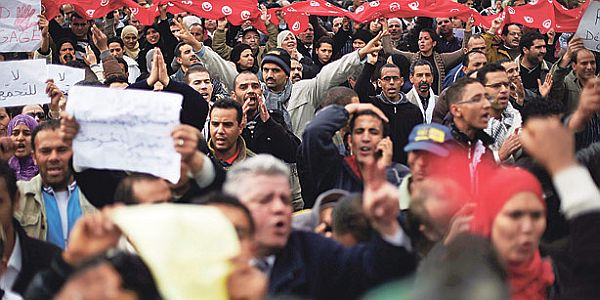
Around 3,000 Palestinians gathered in the West Bank city of Ramallah on Sunday to protest the US veto that nixed a Security Council resolution on Israeli settlements.
The crowd massed in Manara Square, a central traffic circle in the West Bank city, waving banners and shouting slogans against the American administration.
“Obama, you despicable man, we want self-determination!” shouted the demonstrators, many of them members of Palestinian president Mahmud Abbas’s Fatah party.
While the Palestinians continue to express their anger over the US veto against a UN vote condemning Israel’s settlement construction policy, new details have surfaced regarding the pre-veto discussions. Fatah elements claimed Saturday that US Secretary of State Hillary Clinton threatened to halt financial aid should the Palestinian Authority not withdraw its draft from the Security Council’s agenda. Nevertheless, Palestinian President Mahmoud Abbas stressed that the PA will not boycott the US.
A senior Fatah element told the Palestinian news agency Sama that Clinton threatened Abbas on Friday to cancel US aid. According to the source, US President Barack Obama told Abbas on Thursday night that no other American president has promoted the Palestinian issue more vigorously.
The Obama administration — which has yet to find a Bush policy it’s unwilling to promote — is continuing the practice of ideological exclusion (a Soviet-style policy of excluding political critics from entering the US). Omar Barghouti, author of Boycott, Divestment, Sanctions: The Global Struggle for Palestinian Rights, has been refused a visa for his upcoming speaking tour. He writes:
Ms. Clinton can sing the tunes of freedom all she wants when watching the news of Arab popular revolts from Morocco to Bahrain, but she is not fooling any average-intelligence person in the Arab world. US policy, especially after the veto cast yesterday against the most benign UN Security Council resolution, simply reiterating universal, long-held facts that Israel’s colonial settlements are illegal and thwart just peace, is being exposed to the new generation of restive, fearless, freedom-aspiring Arab youth as the main cause of their oppression, of buttressing and protecting the tyrants that have denied them all freedoms for decades. It has long been exposed, too, as the key partner of Israel in its occupation, colonialism and apartheid. Without US largess, Israel’s multi-tiered system of racist and colonial oppression cannot possibly survive.
Dozens of protesters were reported killed by sniper fire from security forces in Benghazi, Libya’s second city, yesterday when violence flared again as crowds clashed after funerals for people killed in fighting on Friday. “Dozens were killed. We are in the midst of a massacre here,” one eyewitness reported.
Clashes were reported in the town of al-Bayda, where dozens of civilians were said to have been killed and police stations came under attack. In all, the death toll was reported to have reached 120. Doctors from Aj Jala hospital in Benghazi confirmed 1,000 people had been injured. (The Independent)
Reports of intense Benghazi violence
Benghazi, about 1,000 km (600 miles) from Tripoli, has been the main focus of the demonstrations against Col Gaddafi’s 42-year rule.
Troops opened fire on people attending a funeral there on Saturday, killing 15, both the Associated Press news agency and al-Jazeera television said.
But an eyewitness told Reuters news agency that many more had actually died.
“Dozens were killed… not 15, dozens,” the unnamed eyewitness said, adding that he had helped take victims to a local hospital.
A Benghazi resident told the BBC that security forces inside a government compound had fired on protesters with mortars and 14.5mm machine guns – a heavy machine gun typically produced in the former USSR.
They were, he said, machine-gunning cars and people indiscriminately. “A lot [of people] have fallen down today,” he added. (BBC)
Libyan protesters risk ‘suicide’ by army hands
Colonel Muammar Gaddafi is confronting the most serious challenge to his 42-year rule as leader of Libya by unleashing his army on unarmed protesters.
Unlike the rulers of neighbouring Egypt, Gaddafi has refused to countenance the politics of disobedience, despite growing international condemnation, and the death toll of demonstrators nearing 100.
The pro-government Al-Zahf al-Akhdar newspaper warned that the government would “violently and thunderously respond” to the protests, and said those opposing the regime risked “suicide”.
William Hague, the UK’s foreign secretary, condemned the violence as “unacceptable and horrifying”, even as the Libyan regime’s special forces, backed by African mercenaries, launched a dawn attack on a protest camp in the eastern Libyan city of Benghazi.
Britain is scrambling to extricate itself from its recently cosy relationship with Gaddafi, initiated by then prime minister Tony Blair in 2004. That rapprochement saw Libya open its doors to British oil companies in exchange for becoming a new ally in the “war on terror” while Britain sold Gaddafi arms. (The Guardian)
Unrest encircles Saudis, stoking sense of unease
The Saudi and pan-Arab news media have been cautiously supportive of the uprisings in Egypt and Tunisia, with a number of opinion articles welcoming the call for nonviolent change. That may change now that protests and violence have seized Bahrain, which lies just across a 15-mile causeway from the Saudi border. Bahrain is a far more threatening prospect, in part because of the sectarian dimensions of the protests. Bahrain’s restive population is mostly Shiite, and is adjacent to the Eastern Province of Saudi Arabia, an important oil-producing area where the Shiite population has long complained of unfair treatment by the puritanical Saudi religious establishment. They feel a strong kinship with their co-religionists across the water.
“The Bahrain uprising may give more courage to the Shia in the Eastern Province to protest,” said one Saudi diplomat. “It might then escalate to the rest of the country.”
Most analysts say that is unlikely. Although Saudi Arabia shares many of the conditions that bred the democracy uprisings — including autocracy, corruption and a large population of educated young people without access to suitable jobs — its people are cushioned by oil wealth and culturally resistant to change.
Moreover, analysts tend to agree that Saudi Arabia would never allow the Bahraini monarchy to be overthrown. Ever since Bahrain began a harsh crackdown on protesters on Thursday, rumors have flown that Saudi Arabia provided military support or guidance; however, there is no evidence to support that. In recent days, the deputy governor of the Eastern Province, Saud bin Jalawi, spoke to Shiite religious leaders and urged them to suppress any rebellious sentiment, according to Saudi news media reports.
“Saudi Arabia did not build a causeway to Bahrain just so that Saudis could party on weekends,” said Toby Jones, an expert on Saudi Arabia at Rutgers University. “It was designed for moments like this, for keeping Bahrain under control.” (New York Times)
How Mideast autocrats win friends and influence people in Washington
Shortly after 20 Shiite opposition leaders, including clerics and human rights activists, were arrested on the eve of elections in Bahrain last September, U.S. State Department Spokesman P.J. Crowley was asked about the situation, including allegations of police torture, “given the close relations between Bahrain and the United States.”
Crowley responded, “We are in touch with Bahraini authorities and have expressed our concern. At the same time, we have confidence as Bahrain evolves that you don’t have to make a choice between security and democracy, and that this is the message that we’re sending to the government.”
When asked whether the State Department believes Bahraini government claims that those opposition figures were plotting a coup against the royal family, Crowley dismissed the allegation, saying, “I don’t know that we’re aware of any information along those lines…”
Bahrain’s state media covered the same press briefing with a slightly altered response from Crowley. Their headline read, “America: Bahrain evolves in security and democracy,” with an accompanying story reporting the “spokesman stressed that the United States has confidence that Bahrain is evolving in the fields of development, security and democracy.”
Control of the state media is not the only way the oil-rich island kingdom polishes its reputation. A month before the arrests, one of Washington’s most powerful lobbying firms began working for Bahrain.
Qorivs, a lobbying and public relations giant with a roster of high-profile clients from Intel and the Washington Post to Saudi Arabia and Equatorial Guinea, began work under a subcontract with Britain’s Bell Pottinger. Among its goals: to position Bahrain as a key ally in the war on terror and as an advocate for peace in the Middle East. As part of its work, Qorvis pitched major media outlets, including the New York Times, Washington Post, Wall Street Journal, Bloomberg, Associated Press and the Los Angeles Times, reports O’Dwyer’s PR Daily. (Huffington Post)
Thousands of joyous Bahrainis retook a major square in the heart of the island nation’s capital Saturday — a dramatic turn of events two days after security forces ousted demonstrators from the spot in a deadly attack.
The sight of citizens streaming into Pearl Roundabout came as the Bahrain royal family appealed for dialogue to end a turbulent week of unrest and the crown prince ordered the removal of the military from the Pearl Roundabout, a top demand by opposition forces.
Pearl Roundabout, scene of such tragedy, now is again center of jubilation, cheering and honking. I don’t see any police/ Wow! I’m awed to watch the courage of Bahrainis. Such guts. And it worked: they have reclaimed a place stained with blood/ Delirious joy in #Bahrain “Martyrs’ Roundabout,” as it’s now called. People kissing ground. But the firecrackers make me jump/ Congrats to #Bahrain crown prince, presumably responsible for decision not to shoot protesters today. Hope he prevails/ People Power, 1; King, 0, in #Bahrain. But it’s not over yet. Lots of small children in roundabout. Let’s pray army doesn’t attack/ People still pouring into “Martyrs’ Roundabout” from every direction, say they won’t leave. Mixed views on whether attack will come.
This website or its third-party tools use cookies, which are necessary to its functioning. By closing this banner, you agree to the use of cookies.






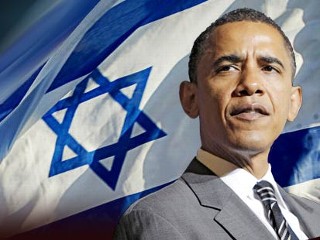 This weekend, a new member enrolled in Likud – and not just in the ruling party, but in its most hawkish wing. Located somewhere between Tzipi Hotovely and Danny Danon, U.S. President Barack Obama bypassed Dan Meridor and Michael Eitan on the right and weakened their position.