Category Archives: Analysis

Our slow, uncertain brains are still better than computers — here’s why

By Parashkev Nachev, UCL

Automated financial trading machines can make complex decisions in a thousandth of a second. A human being making a choice – however simple – can never be faster than about one-fifth of a second. Our reaction times are not only slow but also remarkably variable, ranging over hundreds of milliseconds.

Is this because our brains are poorly designed, prone to random uncertainty – or “noise” in the electronic jargon? Measured in the laboratory, even the neurons of a fly are both fast and precise in their responses to external events, down to a few milliseconds. The sloppiness of our reaction times looks less like an accident than a built-in feature. The brain deliberately procrastinates, even if we ask it to do otherwise.

Massively parallel wetware

Why should this be? Unlike computers, our brains are massively parallel in their organisation, concurrently running many millions of separate processes. They must do this because they are not designed to perform a specific set of actions but to select from a vast repertoire of alternatives that the fundamental unpredictability of our environment offers us. From an evolutionary perspective, it is best to trust nothing and no one, least of all oneself. So before each action the brain must flip through a vast Rolodex of possibilities. It is amazing it can do this at all, let alone in a fraction of a second.

But why the variability? There is hierarchically nothing higher than the brain, so decisions have to arise through peer-to-peer interactions between different groups of neurons. Since there can be only one winner at any one time – our movements would otherwise be chaotic – the mode of resolution is less negotiation than competition: a winner-takes-all race. To ensure the competition is fair, the race must run for a minimum length of time – hence the delay – and the time it takes will depend on the nature and quality of the field of competitors, hence the variability.

Fanciful though this may sound, the distributions of human reaction times, across different tasks, limbs, and people, have been repeatedly shown to fit the “race” model remarkably well. And one part of the brain – the medial frontal cortex – seems to track reaction time tightly, as an area crucial to procrastination ought to. Disrupting the medial frontal cortex should therefore disrupt the race, bringing it to an early close. Rather than slowing us down, disrupting the brain should here speed us up, accelerating behaviour but at the cost of less considered actions.


Continue reading

Facebooktwittermail

The idea that the U.S. can ‘do no harm’ depends on the fiction that it can be ‘neutral’ in foreign conflicts

Shadi Hamid writes: The eight years of the Obama presidency have offered us a natural experiment of sorts. Not all U.S. presidents are similar on foreign policy, and not all (or any) U.S. presidents are quite like Barack Obama. After two terms of George W. Bush’s aggressive militarism, we have had the opportunity to watch whether attitudes toward the U.S. — and U.S. military force — would change, if circumstances changed. President Obama shared at least some of the assumptions of both the hard Left and foreign-policy realists, that the use of direct U.S. military force abroad, even with the best of intentions, often does more harm then good. Better, then, to “do no harm.”

This has been Barack Obama’s position on the Syrian Civil War, the key foreign-policy debate of our time. The president’s discomfort with military action against the Syrian regime seems deep and instinctual and oblivious to changing facts on the ground. When the debate over intervention began, around 5,000 Syrians had been killed. Now it’s close to 500,000. Yet, Obama’s basic orientation toward the Syrian dictator Bashar al-Assad has remained unchanged. This suggests that Obama, like many others who oppose U.S. intervention against Assad, is doing so on “principled” or, to put it differently, ideological grounds.

Despite President Obama’s very conscious desire to limit America’s role in the Middle East and to minimize the extent to which U.S. military assets are deployed in the region, there is little evidence that the views of the hard Left and other critics of American power have changed as a result. (Yes, the U.S. military is arguably involved in more countries now than when the Obama administration took office, but — compared to Iraq and Afghanistan before him — Obama’s footprint has been decidedly limited, with a reliance on drone strikes and special-operations forces.) As for those who actually live in the Middle East, a less militaristic America has done little to temper anti-Americanism. In the three countries — Egypt, Jordan, and Lebanon — for which Pew has survey data for both Bush’s last year and either 2014 or 2015, favorability toward the U.S. is significantly worse under Obama today than it was in 2008. Why exactly is up for debate, but we can at the very least say that a drastic drawdown of U.S. military personnel — precisely the policy pushed for by Democrats in the wake of Iraq’s failure — does not seem to have bought America much goodwill.

Despite the fact that Assad and Russia are responsible for indiscriminate attacks on civilians and civilian infrastructure, including hospitals, many leftists have viewed even the mere mention of the U.S. doing anything in response as “warmongering.” We have had the unfortunate situation of someone as (formerly) well-respected as Jeffrey Sachs arguing that the U.S. should provide “air cover and logistical support” to Bashar al-Assad. We have had Wikileaks’ attacks on the White Helmets, who have risked — and, for at least 140, lost — their lives in the worst conditions to save Syrian lives from the rubble of Syrian and Russian bombardment. Of course, it is not an absurd position to be skeptical of any proposed American escalation against Assad, and many reasonable people across the political spectrum have made that case. But it is something else entirely to apply such skepticism selectively to the U.S. and not to others, especially when the others in question deliberately target civilians as a matter of policy. It can be a slippery slope. While no one would accuse Obama of liking Putin, coordinating with and enabling Russia in Syria is effectively U.S. policy. As the New York Times columnist Roger Cohen noted in February, well before the current disaster in Aleppo: “The troubling thing is that the Putin policy on Syria has become hard to distinguish from the Obama policy.”

The Left has always had a utopian bent, believing that life, not just for Americans, but for millions abroad, can be made better through human agency (rather than, say, simply hoping that the market will self-correct). The problem, though, is that the better, more just world that so many hope for is simply impossible without the use of American military force. At first blush, such a claim might seem self-evidently absurd. Haven’t we all seen what happened in Iraq? The 2003 Iraq invasion was one of the worst strategic blunders in the history of U.S. foreign policy. Yet, it’s not clear what exactly this has to do with the Syrian conflict, which is almost the inverse of the Iraq war. In Iraq, civil war happened after the U.S. invasion. In Syria, civil war broke out in the absence of U.S. intervention. [Continue reading…]

Facebooktwittermail

Donald Trump vs. America

Jamelle Bouie writes: In 1800, Federalist president John Adams lost to Thomas Jefferson and his Democratic-Republicans, following a painful and contentious contest. And rather than fight or challenge the results, Adams handed his rival the reins of power, the first peaceful transition of power in a democracy and a milestone in the history of the modern world. The act of conceding, in other words, is vital to the functioning of democracy. It confers legitimacy on the winner of an election, giving him or her a chance to govern. To refuse to concede, to deny that legitimacy, is to undermine our democratic foundations.

Surrogates for Trump have tried to defend his comments, citing then–Vice President Al Gore’s conduct following the 2000 election. But Gore didn’t challenge the process; he let it move forward. As ordered by state law, Florida had to do a recount. That recount was then stopped by the Supreme Court. At that point, Gore conceded the election, gracefully and without public hesitation.

In presidential elections at least, there’s simply no precedent for what Trump is promising. The slave South may have seceded from the Union following the 1860 election, but neither of Abraham Lincoln’s opponents denied his legitimacy as the duly-elected leader for the United States. It is world-historic in the worst possible way. [Continue reading…]

Facebooktwittermail

Russian hackers evolve to serve the Kremlin

The Wall Street Journal reports: With the hacking of Hillary Clinton’s campaign and the Democratic National Committee, U.S. officials say Russia has unleashed a strengthened cyberwarfare weapon to sow uncertainty about the U.S. democratic process.

In doing so, Russia has transformed state-sponsored hackers known as Fancy Bear and Cozy Bear from internet spies to political tools with the power to target the country’s adversaries, according to U.S. officials and cybersecurity experts.

The attacks are the harder side of parallel campaigns in the Kremlin’s English-language media, which broadcast negative news about Western institutions and alliances and focus on issues that demonstrate or stoke instability in the West, such as Brexit. Moscow seeks particularly to weaken the North Atlantic Treaty Organization, which has expanded its defense against Russia.

“The underlying philosophy of a lot of these attacks is about establishing information as a weapon,” said Alexander Klimburg, a cyber expert at the Hague Center for Strategic Studies. “Hacking for them is literally about controlling information.”

President Vladimir Putin denies Russian involvement in the hacking, but in a way that telegraphs glee about the potential chaos being sown in the U.S. democratic process.

“Everyone is talking about who did it, but is it so important who did it?” Mr. Putin said. “What is important is the content of this information.”

Former Central Intelligence Agency Director Michael Hayden said the Kremlin doesn’t appear to be trying to influence the election’s outcome, noting Russian involvement has provided fodder for both Republicans and Democrats. “They are not trying to pick a winner,” he said Tuesday at a cybersecurity conference in Washington. Rather, Russia is likely unleashing the emails “to mess with our heads.”

Pro-Kremlin commentators in Russia have seized on the DNC leaks to cast doubt on the American democratic process and argue that Washington has no right to criticize Moscow. They have said the hacked DNC emails, which showed party officials working to undermine primary runner-up Bernie Sanders, prove Americans are hypocritical when they malign Mr. Putin’s authoritarianism. [Continue reading…]

Facebooktwittermail

Donald Trump’s final insult to American democracy

John Avlon writes: “I’ll keep you in suspense.”

That was Donald Trump, candidate for president of the United States, treating the peaceful transfer of power like a reality-TV show cliffhanger in the final presidential debate.

The hyperpartisan hype man was either teasing the opening season of Trump TV or promising a constitutional crisis. Either way, it’s a display of stomach-churning disregard for our democracy by a celebrity demagogue whose narcissism has already stained our political history.

By now, we’re now used to The Donald treating this election as a vehicle for his vanity. Most sober Republicans have slowly come to the horrified realization that they have a manifestly irresponsible man at the top of their ticket. But the radius of damage seemed contained to the GOP and the quality of our civic debates. Donald changed that Wednesday night.

Once the act-like-an-adult sedatives wore off around 30 minutes into the third debate, he lapsed into his reflexive lying and insult comedy. He lied about insulting a disabled reporter. He lied about his past praise of Putin and his call for Japan to pursue nukes. He called his opponent a “nasty woman” and said she shouldn’t be allowed to vote, let alone run for president.

But those were just the fetid appetizers before the rotten main course that instantly defined the third debate.

The most troubling rumble from Trump’s flailing final weeks has been his suggestions that maybe he wouldn’t accept defeat. He teased this riff repeatedly to crowds only to have it be denied by his designated straight man, Mike Pence. But Trump went full wingnut with his comments in the third debate, refusing to say whether he would accept the results of the election if—as the polls show is likely—he loses on Nov. 8.

Put down the popcorn for a second. Remember that this election is real. It is not a reality show. [Continue reading…]

Facebooktwittermail

Only KGB generals stand between Putin and absolute power

Anders Åslund writes: Russia’s President Vladimir Putin rules supreme. On September 18, his United Russia party won its largest-ever majority — enough to change the constitution — in the parliamentary elections. He seems to be running circles around the West in both Ukraine and Syria.

Yet, Russia’s stability must not be overestimated. Last year, retail sales fell by 10 percent and this year by more than 5 percent, reflecting declining living standards, though social protests remain insignificant. But the real source of instability centers on conflicts in the security services. Putin is attempting a major transformation of Russia’s security services and state administration, trying to consolidate his power, but KGB generals in their 60s still dominate the security council and stand in his way.

Since becoming president in 2000, Putin has been exceedingly loyal to his old friends from the KGB (the Soviet Committee of State Security) and St. Petersburg, but that is no longer the case. One top KGB general after the other is being sacked. The veteran Russian journalist Yevgeny Kiselyov in Ukrainian exile has compared it with Joseph Stalin’s purge in 1937: Those who knew Putin early in his career in the KGB or St. Petersburg and can look down upon him are now being dismissed. [Continue reading…]

Facebooktwittermail

Military attacks on ‘hospitals shields’: International law itself is partly to blame

Neve Gordon and Nicola Perugini write: From the war in Afghanistan and the US-backed Saudi intervention in Yemen, to the Israeli occupation of Palestine and the Syrian civil war, hospitals have increasingly been targeted by military forces. The justification for many of these attacks has been uncannily similar: the hospitals were bombed because they were shielding combatants and therefore the attacks do not constitute a violation of international law. Hospitals, in other words, are now classified as if they are equivalent to human shields.

The figures are revealing. One year following the infamous US bombardment of the Doctors Without Borders hospital in Kunduz — which Afghan Defense Ministry officials initially tried to justify on the theory that the Taliban were “using the hospital as the equivalent of a human shield” — the humanitarian organization reported that 77 of its medical facilities have been attacked during the last twelve months alone. Yes, that’s over six per month. In June 2016, a United Nations commission documented that in Syria “more than 700 doctors and medical personnel have been killed in attacks on hospitals since the beginning of the conflict” and that medical facilities “are being turned into rubble.”

Politicians and military officers from Gaza to Yemen use the same refrain to defend these attacks. During its 2014 war on Gaza, Israel bombed different Palestinian medical facilities, destroying parts of one hospital and 5 primary health care centers. In an attempt to defend its strikes, Israel accused Hamas of using hospitals to store weapons and hide armed militants.

In a similar vein, after the recent bombardment of an underground medical facility in a rebel controlled area, a Syrian regime official declared that militants would be targeted wherever they were found, “on the ground and underground,” while his Russian patron explained that rebels were using “so-called hospitals as human shields.”

Saudi officials attempting to justify the high number of air strikes targeting medical facilities have adopted the same catchphrases. They, too, accused their adversaries, the Houthi militias, of using hospitals to hide their military forces. This exact claim is also reiterated in a recent UN report.

What ties all of these examples together is not merely the use of similar rhetoric, but more importantly the same underlying assumption: when health care facilities become “hospital shields” they lose the protected status they are granted by the Geneva Conventions. Thus, once framed as shields, these facilities can be bombarded without violating international law.

Let there be no mistake, “hospital shield” is an extremely dangerous neologism since it undermines one of the founding pillars of international law: the principle of distinction between legitimate military targets and protected civilian sites. The tragic irony is that international humanitarian law itself offers the legal toolkit for these regimes to justify the bombing of hospitals. It does so in two ways. [Continue reading…]

Facebooktwittermail

Humans aren’t the only primates that can make sharp stone tools


The Guardian reports: Monkeys have been observed producing sharp stone flakes that closely resemble the earliest known tools made by our ancient relatives, proving that this ability is not uniquely human.

Previously, modifying stones to create razor-edged fragments was thought to be an activity confined to hominins, the family including early humans and their more primitive cousins. The latest observations re-write this view, showing that monkeys unintentionally produce almost identical artefacts simply by smashing stones together.

The findings put archaeologists on alert that they can no longer assume that stone flakes they discover are linked to the deliberate crafting of tools by early humans as their brains became more sophisticated.

Tomos Proffitt, an archaeologist at the University of Oxford and the study’s lead author, said: “At a very fundamental level – if you’re looking at a very simple flake – if you had a capuchin flake and a human flake they would be the same. It raises really important questions about what level of cognitive complexity is required to produce a sophisticated cutting tool.”

Unlike early humans, the flakes produced by the capuchins were the unintentional byproduct of hammering stones – an activity that the monkeys pursued decisively, but the purpose of which was not clear. Originally scientists thought the behaviour was a flamboyant display of aggression in response to an intruder, but after more extensive observations the monkeys appeared to be seeking out the quartz dust produced by smashing the rocks, possibly because it has a nutritional benefit. [Continue reading…]

Facebooktwittermail

How good are Clinton’s Trumpologists?

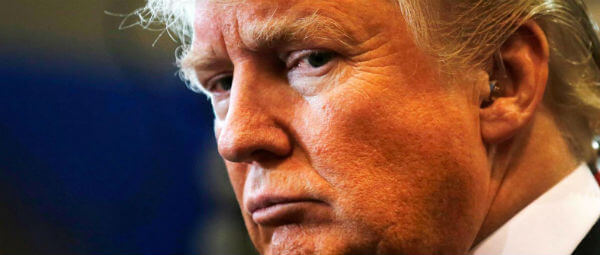
trump-frown

A science reporter for Business Insider seems somewhat disturbed about the likelihood that Hillary Clinton might be receiving unscientific advice on how to debate Donald Trump in Nevada tonight:

Hillary Clinton and Donald Trump are set to face off tonight in the third and final presidential debate of the 2016 election.

In August, The New York Times reported that Clinton’s campaign brought in psychology experts to help her prepare for her first debate with Donald Trump — which is weird, because that’s not really what psychologists do.

Here is the relevant part of The Times’ article (emphasis mine):

Hillary Clinton’s advisers are … seeking insights about Mr. Trump’s deepest insecurities as they devise strategies to needle and undermine him … at the first presidential debate … Her team is also getting advice from psychology experts to help create a personality profile of Mr. Trump to gauge how he may respond to attacks and deal with a woman as his sole adversary on the debate stage. They are undertaking a forensic-style analysis of Mr. Trump’s performances in the Republican primary debates, cataloging strengths and weaknesses as well as trigger points that caused him to lash out in less-than-presidential ways.

There’s not a tremendous amount of information here, but it’s enough to work from if we want to find research relevant to the work these psychologists (or “psychology experts”) are reportedly doing. The strange part is that there isn’t much to find.

Much as I can bemoan the reporting language of the New York Times on stylistic grounds, I will credit its reporters for their precision and/or intentional vagueness in their choice of words. To wit: psychology experts. If this report was referring to psychologists, I venture to assume that’s the term that would have been used.

While professional psychologists should be experts in psychology, there are all kinds of people who can be loosely described as psychology experts even if they aren’t actually psychologists — they might be lawyers, boxing coaches, politicians, or come from any walk of life through which they have acquired particular insight into the workings of the human mind. Psychology experts don’t need to licensed.

As for Clinton’s psychology experts, their particular skill need be no broader than in unlocking the operations inside one mind: Donald Trump’s. Or to be precise: one person. Trump’s way of being is so unreflective and so visceral that his thinking generally appears subordinate to the way he feels for which reason the Clinton campaign should probably have also sought some input from a primatologist.

Much as America and the whole world is already sick this man’s facility to generate a kind of universal consciousness — never before in human history has one living person captured the attention of this many people (an insane observation but surely true!) — one of the political payoffs for the Clinton campaign from the excessive media coverage Trump has received is that his insistence on being in the spotlight has rendered him all the more easy to analyse. What need is there for emails and tax returns when there is an endless supply of pure Trump?

Ultimately, however, irrespective of the extent to which Hillary Clinton’s debate preparation has been guided by genuine insight into her opponent, her success will hinge as much if not more on the moves she makes as they do those of Trump.

At this juncture in the campaign there is a real danger she may suffer from over-confidence — however much she has been told and tells herself to take nothing for granted.

Facebooktwittermail

Donald Trump is the first demagogue of the Anthropocene — he won’t be the last

Robinson Meyer writes: Lately I’ve been thinking back to something that John Kerry told The Atlantic’s editor, Jeffrey Goldberg, earlier this year. Asked about the importance of the Middle East to the United States, Kerry answered entirely about the Islamic State.

“Imagine what would happen if we don’t stand and fight [ISIS],” he said:

If we didn’t do that, you could have allies and friends of ours fall. You could have a massive migration into Europe that destroys Europe, leads to the pure destruction of Europe, ends the European project, and everyone runs for cover and you’ve got the 1930s all over again, with nationalism and fascism and other things breaking out. Of course we have an interest in this, a huge interest in this.

The 1930s all over again — Kerry was laying out a prediction in April, but it sounds a little more like description now. Even if America’s current dunderheaded demagogue loses the presidential election, the European project already falters in the United Kingdom, and Russia rumbles with revanchism. Fueled now (as then) by an ailing global economy, far-right nationalism seems ascendant worldwide. It’s hard not to think of the 1930s as the catastrophe which presaged our contemporary tragicomedy.

I write and report climate change, not a pursuit that usually encourages optimism, but watching all this unfold with the atmosphere in mind has been particularly bleak. For the past few months in particular, I’ve been thinking: Wow, this is all happening way earlier than I thought it would.

Spend enough time with some of the worst-case climate scenarios, and you may start to assume, as I did, that a major demagogue would contest the presidency in the next century. I figured that the catastrophic consequences of planetary warming would all but ensure the necessary conditions for such a leader, and I imagined their support coming from a movement motivated by ethnonationalism, economic stagnation, and hatred of immigrants and refugees. I pictured, in other words, something not so far from Trump 2016.

I just assumed it wouldn’t pop up until 2040. [Continue reading…]

Facebooktwittermail

Now is not the time to go Green (Party)

Erich Pica, President of Friends of the Earth Action, writes: Friends of the Earth Action endorsed Sen. Bernie Sanders for president a year ago but today we are encouraging our members and supporters to vote for Hillary Clinton for president. While we align with many facets of the Green Party platform, we do not support Green Party candidate Dr. Jill Stein for president.

We have vigorously disagreed with Sec. Clinton on many issues. We have fought over the Keystone XL Pipeline, the Trans Pacific Partnership, her interventionist foreign policy, her support for fracking, her ties to fossil fuel lobbyists and her neo-liberal economic platform. Yet without equivocation, we would rather have Hillary Clinton in the White House and push like hell for her to create better policy than fight Donald Trump to save basic human rights and centuries-old social agreements.

Urging our members and supporters to vote for Hillary Clinton does not constitute what Dr. Stein describes as being trapped in the two-party “duopoly.” Our assessment comes from a deep political and strategic analysis: Dr. Stein and the Green Party are not credible standard barriers for the progressive movement or Sen. Sanders’ Revolution. [Continue reading…]

Facebooktwittermail

The climate movement has to elect Hillary Clinton — and then give her hell

Bill McKibben writes:  It’s an odd feeling to be working for the election of someone you know dislikes you and your colleagues. I’ve spent a good chunk of this month trying to register voters on campuses in Pennsylvania and Ohio — registering them to vote against Donald Trump, which means pushing for the election of Hillary Clinton. It wasn’t how I wanted to spend the fall—I’d much rather have been campaigning for Bernie Sanders.

It didn’t get any easier when Wikileaks released a tape of Clinton talking to backers in the building-trades unions about the environmental work so many of us (including much of the rest of organized labor) have been engaged in for the last few years. “They come to my rallies and they yell at me and, you know, all the rest of it. They say, ‘Will you promise never to take any fossil fuels out of the earth ever again?’ No. I won’t promise that. Get a life, you know.”

I know the young people Clinton was talking about, and they weren’t demanding she somehow wave a wand and stop the fossil-fuel age overnight. They were asking her about the scientific studies showing that we can’t actually keep mining and drilling new supplies of coal, oil, and gas if we’re going to meet the temperature targets set with such fanfare in Paris last year. They were asking her to support the “Keep It In the Ground” Act introduced by Senator Jeff Merkley of Oregon and endorsed by a passel of other senators, from Barbara Boxer of California to Kirsten Gillibrand of New York. (Oh yeah, and that guy Bernie.) They were also asking her to take a stand against fracking, since new studies demonstrate quite clearly that the release of methane from the use of natural gas makes climate change worse. Publicly, she hemmed and hawed. When Bernie said in a debate that he was against fracking, period, Clinton said, “By the time we get through all of my conditions, I do not think there will be many places in America where fracking will continue to take place.” That was a pretty weak hedge to begin with, but we now know that privately she reassured the building trades unions: “My view is, I want to defend natural gas…. I want to defend fracking.”

Truth be told, these aren’t revelations. All of us working on climate issues have known this is how Clinton feels; she set up a whole wing of the State Department devoted to spreading fracking around the world. She’d favored the Keystone Pipeline from the start, and it was abundantly clear that only Sanders’s unexpected success in the primaries convinced her she’d have to change. (And it was only his refusal to endorse her until after the platform was agreed upon that made the platform into the fairly progressive document that it is, on climate and other issues). Still, it stings to see in black and white exactly how little regard she has for people fighting pipelines, frack wells, coal ports. Though truth be told, that was no huge surprise either: Politicians are forever saying they want people engaged in the political process, but most of them really just want people to vote and then go home.

So why are many of us out there working to beat Trump and elect her? Because Trump is truly a horror. He’s man who looks at fourth-grade girls and imagines that he’ll be dating them in ten years. He’s a racist. He knows next to nothing and lacks the intellectual curiosity to find out more. He’s a bully. He’s almost a cartoonish villain: If a writer invented a character this evil, no one would believe them. But he’s very nearly president.

Because environmentalists are not just concerned about the climate — we have allies and friends whom we support. And on some of those issues Clinton actually seems sincere: She clearly cares about women’s issues and understands that we are a nation of immigrants. [Continue reading…]

Facebooktwittermail

Why inequality is the most important economic challenge facing the next president

By Steven Pressman, Colorado State University

In a recent issue of The Economist, President Barack Obama set out four major economic issues that his successor must tackle. As he put it:

“… restoring faith in an economy where hardworking Americans can get ahead requires addressing four major structural challenges: boosting productivity growth, combating rising inequality, ensuring that everyone who wants a job can get one and building a resilient economy that’s primed for future growth.”

It’s hard to quibble with the items on the president’s list. Slow productivity growth, rising inequality, inadequate employment and the lack of sustainable economic growth all are important problems that a President Clinton or Trump will have to face.

But just how important are these issues? Does one, above all, deserve to be at the top of the next president’s economic to-do list?

Rather than rank these items, it is probably better to follow the advice of American theologian Reinhold Niebuhr’s serenity prayer: We should courageously change what we can while accepting what we cannot.

And inequality is the only item on that list that a president can influence in a significant way. It also happens to be, in my mind, the most important one – critical for solving the other three problems as well as preventing the disappearance of the middle class.

Continue reading

Facebooktwittermail

Trump didn’t invent the ‘rigged election’ myth. Republicans did

Elizabeth Warren writes: Cratering in the polls, besieged by sexual assault allegations and drowning in his own disgusting rhetoric, Donald Trump has been reduced to hollering that November’s election is “rigged” against him. His proof? It looks like he’s going to lose.

Senior Republican leaders are scrambling to distance themselves from this dangerous claim. But Trump’s argument didn’t spring from nowhere. It’s just one more symptom of a long-running effort by Republicans to delegitimize Democratic voters, appointees and leaders. For years, this disease has infected our politics. It cannot be cured until Republican leaders rethink their approach to modern politics.

Anyone with children knows that whining about imaginary cheating is the last refuge of the sore loser. But GOP leaders have served up such a steady diet of stories about imaginary cheating that an Economist-YouGov poll shows that 45 percent of Republican voters believe voter fraud is a “very serious problem,” and 46 percent have little or no confidence that ballots will be counted accurately. They hold these views even though there is literally no evidence — none, zero, zip — that widespread voter fraud is a factor in modern American elections. A recent study looked at around a billion ballots cast in the United States from 2000 through 2014 and found only 31 instances of impersonation fraud at the polls. [Continue reading…]

In the following interview, Al Cardenas, former Chairman of Florida Republican Party, is categorical in denying that there is any basis for Trump’s claim that this or any other election can be rigged.


Facebooktwittermail

The vulnerability of monolingual Americans in an English-speaking world

Ivan Krastev writes: In our increasingly Anglophone world, Americans have become nakedly transparent to English speakers everywhere, yet the world remains bafflingly and often frighteningly opaque to monolingual Americans. While the world devours America’s movies and follows its politics closely, Americans know precious little about how non-Americans think and live. Americans have never heard of other countries’ movie stars and have only the vaguest notions of what their political conflicts are about.

This gross epistemic asymmetry is a real weakness. When WikiLeaks revealed the secret cables of the American State Department or leaked the emails of the Clinton campaign, it became a global news sensation and a major embarrassment for American diplomacy. Leaking Chinese diplomatic cables or Russian officials’ emails could never become a worldwide human-interest story, simply because only a relative handful of non-Chinese or non-Russians could read them, let alone make sense of them. [Continue reading…]

Although I’m pessimistic about the prospects of the meek inheriting the earth, the bi-lingual are in a very promising position. And Anglo-Americans should never forget that this is after all a country with a Spanish name. As for where I stand personally, I’m with the bi-lingual camp in spirit even if my own claim to be bi-lingual is a bit tenuous — an English-speaker who understands American-English but speaks British-English; does that count?

Facebooktwittermail

Extremist militias recruiting in fear of Clinton winning election, activists say

The Guardian reports: In the past 12 months, Jessica Campbell has had her car’s fuel line cut and its wheel nuts loosened. Late last year, she had a GPS tracker surreptitiously attached to her vehicle. She is now accustomed to being tailed by unfamiliar vehicles on Interstate 5 near her home in Cottage Grove, just outside Eugene, Oregon. Strangers have regularly come uninvited onto her property; someone even stripped the barbed wire on her fence “just to send a message”. Online, she has repeatedly been threatened with rape and death.

And last week, when she showed up at the Canyon City community hall in Grant County, she told me that someone shot at her and her entourage. They misread their GPS, took a wrong turn and stopped to get their bearings when a crack rang out with what Campbell thought was a .22 bullet whizzing by their vehicle.

Such threats are part of the pushback her work has sparked in rural Oregon.

Campbell co-directs the Rural Organizing Project, a not-for-profit group that sets out to confront the rightwing insurgency that has been bubbling away in parts of rural Oregon and throughout the west. A political organizer since high school, she now coordinates groups attempting to respond to divisive tactics from rightwing activists on immigration, race and public land ownership.

This extremist surge received national media attention during the occupation of the Malheur national wildlife refuge by the Bundy group, but it has continued to rise alongside Trump, with his legitimization of white nationalist politics and his apparent inspiration of insurrectionists across the country. [Continue reading…]

The SPLC identified 998 active extreme antigovernment groups in 2015: The antigovernment movement has experienced a resurgence, growing quickly since 2008, when President Obama was elected to office. Factors fueling the antigovernment movement in recent years include changing demographics driven by immigration, the struggling economy and the election of the first African-American president. [Continue reading…]

Facebooktwittermail

Donald Trump reveals evangelical rifts that could shape politics for years

The New York Times reports: When Jen Hatmaker speaks to stadiums full of Christian women, she regales them with stories about her five children and her garden back in Austin, Tex. — and stays away from politics. But recently she took to Facebook and Instagram to blast Donald J. Trump as a “national disgrace,” and remind her legions of followers that there are other names on the ballot in November.

“Trump has consistently normalized violence, sexual deviance, bigotry and hate speech,” she said in an email interview. “I wouldn’t accept this from my seventh-grade son, much less from a potential leader of the free world.”

In the nearly four decades since Jerry Falwell Sr. founded a group called the Moral Majority, evangelical Christians have been the Republican Party’s most unified and reliable voting bloc in November presidential elections. The leaders of what came to be known as the religious right were kingmakers and household names, like Pat Robertson, James C. Dobson, Ralph Reed.

But this year, Ms. Hatmaker’s outraged post was one small sign of the splintering of the evangelical bloc and a possible portent of the changes ahead. While most of the religious right’s aging old guard has chosen to stand by Mr. Trump, its judgment and authority are being challenged by an increasingly assertive crop of younger leaders, minorities and women such as Ms. Hatmaker.

“Those men have never spoken for me or, frankly, anyone I know,” said Ms. Hatmaker, the author of popular inspirational Christian books. “The fracture within our own Christian family may be irreparable.”

The fault lines among evangelicals that the election of 2016 has exposed — among generations, ethnic groups and sexes — are likely to reshape national politics for years to come, conservative Christian leaders and analysts said last week in interviews. Arguments that were once private are now public, and agendas are no longer clear. [Continue reading…]

Facebooktwittermail