Saudi Arabia’s Prince Turki al-Faisal demanded on Sunday that WikiLeaks be “vigorously punished” and said that it was incumbent on the US “to not just be extra vigilant but to try to restore the credibility and the legitimacy of their engagement with the rest of us, and ensure that there are no more leaks to be faced in the future,” Reuters reported.
At Saudi Arabia’s urging, Morocco broke ties with Iran and began a domestic campaign against Moroccan Shiites in exchange for economic trade-offs, an Egyptian diplomat told sources at the U.S. Embassy in Rabat, according to a leaked U.S. diplomatic cable published by the Lebanese newspaper Al Akhbar.
“[The diplomat] said goading Iran, a country with which it had limited economic interests, and demonizing the Shi’a, a powerless minority group, was a small price for Morocco to pay for a strategy that could have major payoffs,” the April 2009 cable read.
In exchange for active Moroccan support, Saudi Arabia allegedly promised to ensure the flow of subsidized oil and compensate for the loss in direct foreign investment in Morocco resulting from the global financial crisis.
The diplomat, whose name had been redacted from the cable, also said that the domestic campaign against Shiites was intended to neutralize opposition groups in the municipal elections and reassert King Mohammed VI’s authority as a religious leader.
Morocco broke ties with Iran in March 2009, accusing Tehran of using its embassy in Rabat as a base for spreading Shiite Islam. The formal break in relations was followed by a crackdown on Morocco’s tiny Shiite minority, which resulted in the closure of religious schools and the arrest of hundreds of people.
“WikiLeaks cables portray Saudi Arabia as a cash machine for terrorists,” declares The Guardian, reporting on the US State Department’s concerns about the Kingdom’s role in funding al Qaeda and other militant organizations.
Reporters Eric Lichtblau and Eric Schmitt wait until paragraph nineteen of their report to declare: “Saudi Arabia, a critical military and diplomatic ally, emerges in the cables as the most vexing of problems.” Paragraph nineteen! Why wasn’t that in the first paragraph? Just because President Obama has demonstrated his willingness to bow to King Abdullah, does the Times feel obliged to assume the same posture?
Saudi Arabia is the world’s largest source of funds for Islamist militant groups such as the Afghan Taliban and Lashkar-e-Taiba – but the Saudi government is reluctant to stem the flow of money, according to Hillary Clinton.
“More needs to be done since Saudi Arabia remains a critical financial support base for al-Qaida, the Taliban, LeT and other terrorist groups,” says a secret December 2009 paper signed by the US secretary of state. Her memo urged US diplomats to redouble their efforts to stop Gulf money reaching extremists in Pakistan and Afghanistan.
“Donors in Saudi Arabia constitute the most significant source of funding to Sunni terrorist groups worldwide,” she said.
Three other Arab countries are listed as sources of militant money: Qatar, Kuwait and the United Arab Emirates.
The cables highlight an often ignored factor in the Pakistani and Afghan conflicts: that the violence is partly bankrolled by rich, conservative donors across the Arabian Sea whose governments do little to stop them.
The problem is particularly acute in Saudi Arabia, where militants soliciting funds slip into the country disguised as holy pilgrims, set up front companies to launder funds and receive money from government-sanctioned charities.
The counterpart of asymmetric warfare is asymmetric fear — a form of mass hysteria in which smaller and smaller threats provoke more and more extreme reactions.
The arc that connects Osama bin Laden to Julian Assange describes the pathology of these times: fear has become our only compass.
When the United States Secretary of State describes the release of reams of somewhat embarrassing but generally informative cables as “an attack on the international community,” and while opinion makers call for Assange’s arrest, assassination or execution, we shouldn’t be asking how much harm WikiLeaks can do, but whether the political establishment in America is becoming unhinged.
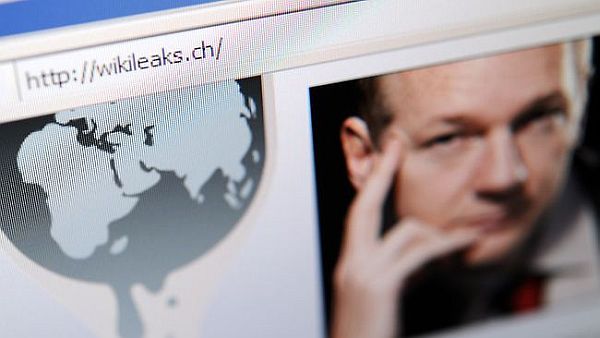
Julian Assange and Pfc Bradley Manning have done a huge public service by making hundreds of thousands of classified U.S. government documents available on Wikileaks — and, predictably, no one is grateful. Manning, a former army intelligence analyst in Iraq, faces up to 52 years in prison. He is currently being held in solitary confinement at a military base in Quantico, Virginia, where he is not allowed to see his parents or other outside visitors.
Assange, the organizing brain of Wikileaks, enjoys a higher degree of freedom living as a hunted man in England under the close surveillance of domestic and foreign intelligence agencies — but probably not for long. Not since President Richard Nixon directed his minions to go after Pentagon Papers leaker Daniel Ellsberg and New York Times reporter Neil Sheehan – “a vicious antiwar type,” an enraged Nixon called him on the Watergate tapes — has a working journalist and his source been subjected to the kind of official intimidation and threats that have been directed at Assange and Manning by high-ranking members of the Obama Administration.
Published reports suggest that a joint Justice Department-Pentagon team of investigators is exploring the possibility of charging Assange under the Espionage Act, which could lead to decades in jail. “This is not saber-rattling,” said Attorney General Eric Holder, commenting on the possibility that Assange will be prosecuted by the government. Secretary of State Hillary Clinton called the Wikileaks disclosures “an attack on the international community” that endangered innocent people. White House Press Secretary Robert Gibbs suggested in somewhat Orwellian fashion that “such disclosures put at risk our diplomats, intelligence professionals, and people around the world who come to the United States for assistance in promoting democracy and open government.”
For the past several months, Assange has widely believed to have been in hiding somewhere in the United Kingdom. The public perception has been one of a man hunt.
But according to his U.K.-based lawyer, Mark Stephens, Scotland Yard has actually had precise knowledge of Assange’s whereabouts since he arrived in this country in October. Indeed, Stephens maintains, they even have a phone number should they wish to reach him.
“I feel like I am sitting in the middle of a surreal Swedish fairytale,” Stephens said. “The trolls keep threatening to come on and keep making noises off stage. But at the moment, no appearance from them.”
Apparently, the delay in Assange’s apprehension stems from the fact that the original warrant listed the maximum penalty only for the most serious charge (in this case, rape), rather than for all of the charges (which include sexual molestation and unlawful coercion). Assuming the new warrant fulfills the letter of the law, Soca will then be legally obliged to authorize the police to arrest Julian Assange.
Baruch Weiss, a former federal prosecutor who served in the Treasury and Homeland Security departments, asks:
What law did Assange violate? It will surprise many that there is no statute making it illegal to reveal classified information. There are statutes that criminalize the disclosure of very specific types of classified information, such as the identity of a covert operative (think Valerie Plame) or “codes, ciphers or cryptographic systems.” But there is no catch-all law that simply says, “Thou shalt not disclose classified information.”
Indeed, when Congress tried to enact such a statute, President Bill Clinton sensibly vetoed it. His reason: The government suffers from such an overclassification problem – some intelligence agencies classify even newspaper articles – that a law of this sort would end up criminalizing the disclosure of innocuous information. And even that vetoed statute would have applied only to government officials, not to private individuals or journalists.
Instead, prosecutors in the Assange case, like the prosecutors in the AIPAC case I handled, would resort to the Espionage Act of 1917, an archaic, World War I-era statute that prohibits “willfully” disclosing “information relating to the national defense.” According to Judge T.S. Ellis in the AIPAC case, this means that the prosecution must prove, among other things, that a defendant knew that the information he was disclosing was potentially damaging to national security and that he was violating the law.
Here, Assange can make the department’s case especially difficult. Well before publishing the cables, he wrote a letter to the U.S. government, delivered to our ambassador in London, inviting suggestions for redactions. The State Department refused. Assange then wrote another letter to State, reiterating that “WikiLeaks has absolutely no desire to put individual persons at significant risk of harm, nor do we wish to harm the national security of the United States.”
In that second letter, Assange stated that the department’s refusal to discuss redactions “leads me to conclude that the supposed risks are entirely fanciful.” He then indicated that WikiLeaks was undertaking redactions on its own.
In an interview with the BBC, Bill Keller, executive editor of the New York Times, said that his paper presented to the Obama administration all the cables they planned on publishing and sought and received advice on making redactions and on national security issues. The fact that the administration was willing to enter into discussions with the Times but not Wikileaks, suggests that the administration has less concern about security risks than it does with sustaining the incestuous relationship it enjoys with its favorite newspaper.
A press release just issued by Wikileaks says the Julian Assange Defense Fund has been frozen.
The Swiss Bank Post Finance today issues a press release stating that it had frozen Julian Assange’s defense fund and personal assets (31K EUR) after reviewing him as a “high profile” individual.
The technicality used to seize the defense fund was that Mr. Assange, as a homeless refugee attempting to gain residency in Switzerland, had used his lawyers address in Geneva for the bank’s correspondence.
Late last week, the internet payment giant PayPal, froze 60Keur of donations to the German charity the Wau Holland Foundation, which were targeted to promote the sharing of knowledge via WikiLeaks.
WikiLeaks and Julian have lost 100Keur in assets this week.
One of the most fascinating aspects of the Cablegate exposure is how it is throwing into relief the power dynamics between supposedly independent states like Switzerland, Sweden and Australia.
WikiLeaks also has public bank accounts in Iceland (preferred) and Germany.
Please help cover our expenditures while we fight to get our assets back.
Justin Elliot looks back at Israel’s repeated predictions that Iran would soon acquire nuclear weapons.
Officials at the U.S. Department of State, we learned from the secret cables released by WikiLeaks last week, have serious questions about the accuracy — and sincerity — of Israeli predictions about when Iran will obtain a nuclear weapon. As one State official wrote in response to an Israeli general’s November 2009 claim that Iran would have a bomb in one year: “It is unclear if the Israelis firmly believe this or are using worst-case estimates to raise greater urgency from the United States.”
So we thought this was as good a time as any to look at the remarkable history of incorrect Israeli predictions about Iran — especially given that the WikiLeaks trove is being used to argue that an attack on Iran is becoming more likely.
According to various Israeli government predictions over the years, Iran was going to have a bomb by the mid-90s — or 1998, 1999, 2000, 2004, 2005, and finally 2010. More recent Israeli predictions have put that date at 2011 or 2014.
In the fall of 2008, the US Special Operations Command asked top US diplomats in Pakistan and Afghanistan for detailed information on refugee camps along the Afghanistan Pakistan border and a list of humanitarian aid organizations working in those camps. On October 6, the US ambassador to Pakistan, Anne Patterson, sent a cable marked “Confidential” to Defense Secretary Robert Gates, Secretary of State Condoleezza Rice, the CIA, US Central Command and several US embassies saying that some of the requests, which came in the form of emails, “suggested that agencies intend to use the data for targeting purposes.” Other requests, according to the cable, “indicate it would be used for “NO STRIKE” purposes.” The cable, which was issued jointly by the US embassies in Kabul and Islamabad, declared: “We are concerned about providing information gained from humanitarian organizations to military personnel, especially for reasons that remain unclear. Particularly worrisome, this does not seem to us a very efficient way to gather accurate information.”
What this cable says in plain terms is that at least one person within the US Special Operations Command actually asked US diplomats in Kabul and/or Islamabad point-blank for information on refugee camps to be used in a targeted killing or capture operation. It also seems possible whoever made that request actually put it in an email (FOIA anyone?). It is no longer a publicly deniable secret that US special operations forces and the CIA have engaged in offensive operations in Pakistan, but this cable is evidence that they sought to exploit the US embassies’ humanitarian aid operations through back channel communications to conduct potentially lethal operations. Needless to say, this type of request is extremely dangerous for aid workers because it reinforces the belief that USAID and other nongovernmental organizations are fronts for the CIA. In November 2009, a US military intelligence source told me that some Blackwater contractors working for US special operations forces in Pakistan have posed as aid workers. “Nobody even gives them a second thought,” he said. Blackwater, at the time, denied it was operating in Pakistan.
Craig Murray, former British Ambassador to Uzbekistan, notes:
[D]iplomats as a class very seldom tell unpalatable truths to politicians, but rather report and reinforce what their masters want to hear, in the hope of receiving preferment.
There is therefore [in the cables released by WikiLeaks] a huge amount about Iran’s putative nuclear arsenal and an exaggeration of Iran’s warhead delivery capability. But there is nothing about Israel’s massive nuclear arsenal. That is not because wikileaks have censored criticism of Israel. It is because any US diplomat who made an honest and open assessment of Israeli crimes would very quickly be an unemployed ex-diplomat.
WikiLeaks’ Julian Assange when asked by Time magazine what effect he is seeing from the publication of the diplomatic cables said, among other things:
[W]e can see the Israeli Prime Minister [Benjamin] Netanyahu coming out with a very interesting statement that leaders should speak in public like they do in private whenever they can. He believes that the result of this publication, which makes the sentiments of many privately held beliefs public, are promising a pretty good [indecipherable] will lead to some kind of increase in the peace process in the Middle East and particularly in relation to Iran.
But if Assange actually believes Netanyahu is rallying to the cause of transparency, he’ll be disappointed to read this from Sami Moubayed:
Last summer, Israeli Prime Minister Benjamin Netanyahu signed off on a law extending classification of state archives related to the early years of the Jewish State’s foundation. That means all documents related to the war of 1948 and its monumental aftermath will remain under lock and key until 2018, exactly 70 years after what the Arabs refer to as the Palestinian Nakba, or “Catastrophe.”
Documents about the 1967 Arab-Israeli war will, therefore, remain classified until 2037, while anything related to the 1982 siege of Beirut will remain off-limits until 2052. Records of Yasser Arafat’s 2004 death will not be opened until 2074 while Israeli archives of what happened in Beirut on that fateful day in February 2005, when a massive bomb killed Lebanon’s Prime Minister Rafiq al-Hariri, will hauntingly remain labeled “top secret”” until 2075.
Meanwhile, US government employees are being instructed to shield their eyes from the corrupting influence of US government documents. Christian Science Monitor reports that both State and Defense department employees have been instructed not to visit the WikiLeaks website.
Informed sources say that the current deluge of Wikileaks documents will continue for another week and grow in significance.
Leading US human rights lawyers Leonard Weinglass and Michael Ratner have joined the defense team for Julian Assange and Wikileaks. US officials are employing cyber-warfare and prosecutorial steps to deny any safe haven for the Wikileaks operation with a fervor comparable to their drone attacks on Al Qaeda havens in Pakistan and Yemen. WikiLeaks’ Julian Assange was placed on Interpol’s “most wanted” list as US authorities intensified efforts to suppress the whistleblower organization’s deluge of classified US diplomatic cables. Assange’s location was not immediately known. His choices are to turn himself in or be tracked down by local police. If outside of Sweden, he could face extradition on charges to stand trial there. Or the US could seek his extradiction on charges of espionage or theft of classified documents.
Two cyber-attacks have been reported against WikiLeaks servers this week. The Justice Department is seeking indictments on espionage charges from a grand jury quietly impaneled this week in arch-conservative Alexandria, Virginia. Assange is in London, facing rape and sexual harrassment charges in Sweden, which he denies. Extradition could be sought by the United States at any time from either venue.
Why is this drama important? Not because of “life-threatening” leaks, as claimed by the establishment, but because the closed doors of power need to be open to public review. We live increasingly in an Age of Secrecy, as described by Garry Wills in Bomb Power, among recent books. It has become the American Way of War, and increasingly draws the curtains over American democracy itself.
The Defense Department forced all “war on terror” detainees at the Guantanamo Bay prison to take a high dosage of a controversial antimalarial drug, mefloquine, an act that an Army public health physician called “pharmacologic waterboarding.”
The US military administered the drug despite Pentagon knowledge that mefloquine caused severe neuropsychiatric side effects, including suicidal thoughts, hallucinations and anxiety. The drug was used on the prisoners whether they had malaria or not.
The revelation, which has not been previously reported, was buried in documents publicly released by the Defense Department (DoD) two years ago as part of the government’s investigation into the June 2006 deaths of three Guantanamo detainees.
Army Staff Sgt. Joe Hickman, who was stationed at Guantanamo at the time of the suicides in 2006, and has presented evidence that demonstrates the three detainees could not have died by hanging themselves, noticed in the detainees’ medical files that they were given mefloquine. Hickman has been investigating the circumstances behind the detainees’ deaths for nearly four years.
Interviews with mefloquine and malaria experts and a review of peer-reviewed journals and government documents show there were no preexisting cases where mefloquine was ever prescribed for mass presumptive treatment of malaria.
Gary Anderson, a retired US Marine colonel, says that Julian Assange is an enemy combatant and is “as much an enemy to the United States as any Al Qaeda operative.”
Not long ago an Esquire headline writer posed the question: “Should we execute Julian Assange?” “We” being the national American vigilante?
“Lives are at risk” is one of those fire-alarm imperatives that drains blood from the brain. It sets arms and legs and vocal chords in motion, fixes the mind on red-light conclusions and turns quiet deliberation into an unaffordable luxury.
A few years ago in Reader’s Digest, Michael Crowley rang the same alarm bell when he demanded that life-threatening websites like Cryptome (a sibbling of WikiLeaks) be shutdown.
To understand what nuts and zealots can do with this sort of information [available through sites like Cryptome], recall what happened in the early 1990s when three abortion doctors were killed after pro-life extremists created “wanted” posters displaying the physicians’ names and photographs. A few years later, a website showed pictures of other abortion doctors, and listed the murdered ones with their names crossed out. Eventually the site’s Web server shut it down.
Having been an outlet for State Department and CIA propaganda in the 1940s and 50s, Reader’s Digest was already on shaky ground positioning itself as a champion of public interest, but it was the Department of Justice which revealed that on occasions Reader’s Digest itself had been a source of dangerous information.
Stories of crimes contained in popular literature and magazines also constitute a rich source of bombmaking information. For example, the August 1993 edition of Reader’s Digest contains an account of efforts by law enforcement officers to track down the killer of United States Court of Appeals Judge Robert S. Vance and attorney Robert Robinson. That article contained a detailed description of the explosive devices used by the bomber in committing the murders, including such information as the size of the pipe bombs, how the bombs were constructed, and what type of smokeless powder was used in their construction. According to the Arson and Explosives Division of the Bureau of Alcohol, Tobacco and Firearms, in a bombing case originating in Topeka, Kansas, the devices were patterned after the bomb used to kill Judge Vance. Upon questioning, the suspect admitted to investigators that he constructed the bomb based on information contained in the Reader’s Digest article.
As Daniel Ellsberg notes, in its efforts to clamp down on embarrassing leaks, the government’s first recourse is invariably to declare that “lives are at stake”
That’s a script that they roll out — every administration rolls out — every time there’s a leak of any sort. The best justification they can find for secrecy is that lives are at stake. Actually lives are at stake as a result of silence and lies which a lot of these leaks reveal.
In the latest revelations from WikiLeaks, the dangers of secrecy are no more clearly evident than in what we now learn about the vulnerability of Pakistan’s nuclear stockpiles — an issue we have previously been repeatedly assured poses no immediate risk. Secretly, we now learn, America’s leading diplomats in Pakistan did not share the confidence that the administration wanted to instill among Americans whose ignorance it preferred to guard.
Less than a month after President Obama testily assured reporters in 2009 that Pakistan’s nuclear materials “will remain out of militant hands,” his ambassador here sent a secret message to Washington suggesting that she remained deeply worried.
The ambassador’s concern was a stockpile of highly enriched uranium, sitting for years near an aging research nuclear reactor in Pakistan. There was enough to build several “dirty bombs” or, in skilled hands, possibly enough for an actual nuclear bomb.
In the cable, dated May 27, 2009, the ambassador, Anne W. Patterson, reported that the Pakistani government was yet again dragging its feet on an agreement reached two years earlier to have the United States remove the material.
She wrote to senior American officials that the Pakistani government had concluded that “the ‘sensational’ international and local media coverage of Pakistan’s nuclear weapons made it impossible to proceed at this time.” A senior Pakistani official, she said, warned that if word leaked out that Americans were helping remove the fuel, the local press would certainly “portray it as the United States taking Pakistan’s nuclear weapons.”
The fuel is still there.
It may be the most unnerving evidence of the complex relationship — sometimes cooperative, often confrontational, always wary — between America and Pakistan nearly 10 years into the American-led war in Afghanistan. The cables, obtained by WikiLeaks and made available to a number of news organizations, make it clear that underneath public reassurances lie deep clashes over strategic goals on issues like Pakistan’s support for the Afghan Taliban and tolerance of Al Qaeda, and Washington’s warmer relations with India, Pakistan’s archenemy.
The issue here, however, is more complex than transparency vs secrecy. While the dangers posed by nuclear stockpiles in Pakistan — and for that matter anywhere else — should concern everyone, the overbearing relationship between the US and a client state which it has turned into a theater for remote war, has fed popular and well-founded suspicion about the intentions of the US government. Pakistanis widely believe that the United States is intent on stealing the Islamic republic’s nuclear crown jewels. Those suspicions will now be further compounded as Pakistan’s government struggles to placate competing international and domestic fears.
If transparency is the buzzword of this political moment, maybe it should be seen as a signal that a larger issue is in desperate need of remedying — an issue that WikiLeaks cannot address: that the need for transparency is symptomatic of a global deficit in trust.
We have repeatedly been given reason to expect that government leaders, corporations and other powerful institutions cannot be trusted. WikiLeaks now fuels that mistrust and those who feel threatened can either shrink behind the barricades of secrecy or acknowledge that they must address the monumental task of building confidence in the fragile idea of public service.
In The Independent yesterday, Yossi Melman made an intriguing statement. Melman is the intelligence and military affairs correspondent for Haaretz and generally regarded as well informed on the operations of Mossad. He wrote:
Three events – not seemingly related – took place yesterday. The leaking of State Department documents, many of which deal with the world’s concerns about Iran’s nuclear programme; the mysterious assassination in Tehran of a top Iranian nuclear scientist and the wounding of another, and the appointment of Tamir Pardo as the new head of Mossad, Israel’s foreign espionage agency.
But there’s a link between them. They are part of the endless efforts by the Israeli intelligence community, together with its Western counterparts including Britain’s MI6 and America’s CIA, to sabotage, delay and if possible, to stop Iran from reaching its goal of having its first nuclear bomb.
In the rest of his article he focused on the assassins in Tehran and says that it is “obvious” that “Israel was behind it.” He does not amplify on this part of his opening assertion, namely, that the leaking of State Department cables is part of the effort to stop Iran developing nuclear weapons. However you read it, he seems to be suggesting that WikiLeaks is in some way part of the effort.
Interestingly, a request for a debate on WikiLeaks in the Israeli parliament has been rejected.
The Knesset will not hold a debate on WikiLeaks, despite a request by a number of parliamentarians for a session on leaked U.S. cables that has rocked the diplomatic world.
The Knesset Presidium, the body which regulates plenary debates in Israel’s parliament, turned down a request from a number of members for a session on the consequences of the leaks for national security.
Among the WikiLeaks disclosures were an Israeli plan to coordinate its 2008 invasion of Gaza with Palestinian President Mahmoud Abbas and details of Israel’s covert ties with governments in the United Arab Emirates.
This is not a conspiracy theory. To say that terrorism is a fabrication of a national security state is to say that when the label “terrorist” starts being indiscriminately applied to anyone who threatens the government we have taken another step towards totalitarianism.
Rep. Peter King, R-N.Y., the incoming chairman of the House Committee on Homeland Security, is calling for WikiLeaks to be designated a terrorist organization.
As Republicans come into power, they’re going to explore what can be done. They can’t do much. But let’s be honest. The quest to find some way to define Assange’s group as terrorists is not about fighting terrorism. It’s about indulging the fantasy, well put by Cornell law professor William Jacobson, of Assange being hunted down like a Robert Ludlum villain and possibly “killed while resisting arrest.”
And all of this assumes there’s something talismanic about declaring someone a “terrorist.” In reality, American agents could capture any boogeyman they wanted and prosecute him in the United States. The 1992 decision in U.S. v. Alvarez-Machain affirmed that the government was within its rights when a Mexican citizen was abducted and brought to the U.S. to be tried for the murder of a Drug Enforcement Administration agent. “We have kidnapped people to bring them to justice,” explains David Cole, a law professor at Georgetown. “Whether it applies in this case, I don’t know.”
It probably doesn’t. What’s being lost in the James Bond scenarios about taking down WikiLeaks is that its current, highly embarrassing leaks don’t actually threaten American intelligence assets. They create problems for diplomats, and by extension they embarrass the United States. They cause the State Department to lose face. That’s not terrorism as we define it.
So how does King or anyone else turn Julian Assange into a terrorist? They either have to define terrorism in some real way that would eventually open up media organizations to terror charges of their own, or WikiLeaks actually has to do something materially to benefit terrorists. Neither scenario seems likely. What is likely: None of this gets past the shouting stage.
Weigel’s analysis may be sound in the short term but the broader question is not legal. It is whether in American popular discourse the term “terrorist” continues to acquire legitimacy in broader and broader applications or whether those who criticize the term’s flagrant abuse are able to shout louder and get more widely heard. So far the terrorists are winning.
I didn’t come up with the headline — it’s from Israel’s pro-settler Arutz Sheva news network. And as their report makes clear, this favorable review of what has been described as a diplomatic 9/11, reflects the views of the Israeli government.
Just as Benjamin Netanyahu on September 11, 2001, said the attacks were a “good thing” for US-Israeli relations and then again in 2008 told an Israeli audience, “We are benefiting from one thing, and that is the attack on the Twin Towers and Pentagon,” it’s likewise reasonable to assume that he is similarly pleased with the repercussions of “Cablegate.” If for the past few days the diplomatic world has been thrown into disarray, the one country that so far remains unscathed is Israel.
WikiLeaks, on the other hand, having placed itself at the vanguard of a movement demanding transparency in global affairs, has so far failed to live up to the standard it is setting for others. They don’t need to jeopardize the security of their own operations, but they do need to explain the inner workings of the editorial process through which by releasing some cables and withholding others they are now feeding a narrative to the global media.
I’ll leave it others to construct elaborate theories on how WikiLeaks could be seen as a Mossad or CIA operation, but whether or not either or both intelligence organizations have played a role in shaping this story, one of its central features echoes the history of Israel and its use of a strategy of “divide-and-survive” across the Middle East.
In The American Interest earlier this year, Benjamin E Schwartz described this policy:
When American diplomats talk about the road to peace, few Israelis dare articulate one awkward truth. The truth is that Israelis have managed their conflict with the Arabs and the Palestinians for half a century not by working to unite them all, but either by deliberately and effectively dividing them, or by playing off existing divisions. By approaching matters in this way, Israelis have achieved de facto peace during various periods of their country’s history—and even two examples of de jure peace. It is because of divisions among Palestinians that Israelis survived and thrived strategically in 1947–48, and because of divisions among the Arab states that Israel won its 1948–49 war for independence. Divisions among the Arabs and divided competition for influence over the Palestinians allowed Israelis to build a strong state between 1949 and 1967 without having to contend with a serious threat of pan-Arab attack. It was because of divisions and the strength of Egypt amid those divisions that Anwar Sadat decided to make a separate peace in 1979. It was because of another set of divisions that King Hussein was able to do the same in 1994.
The results of Israeli statecraft did not produce an American-style comprehensive peace, and it did not produce peace with the Palestinians. It may not even have produced a lasting peace with Egypt and Jordan—time will tell. But it did produce peace in its most basic and tangible form: an absence of violence and the establishment of relative security. This is what peace means for the vast majority of Israelis, most of whom do not believe that their Arab neighbors will ever accept, let alone respect as legitimate, a Jewish state in geographical Palestine. And the way Israelis have achieved this peace is, in essence, through a policy of divide and survive.
Now, thanks to WikiLeaks, we see the Saudi king insulting the president of Pakistan, Egypt insulting Iran, America’s fear of Turkey — suspicions, fear and hostility pushed from the background into the foreground with no consequence more predictable than that these expressions of candor will be divisive and further erode the political authority of every player, except for one: Israel.
Meanwhile, if Israeli officials are discreet enough not to openly celebrate the divisions exposed by WikiLeaks, they have no hesitation in trumpeting their sense of vindication arising from the public display of hostility towards Iran expressed by so many of the region’s autocratic leaders.
Anticipating Sunday’s release of classified US embassy cables, Harold Koh, the top lawyer to the US state department, fired off a letter to Julian Assange, the editor-in-chief of WikiLeaks, on Saturday morning accusing him of having “endangered the lives of countless individuals”. Thus Koh pre-emptively made himself the figurehead for the US government’s reaction to the WikiLeaks release; the White House’s subsequent statement has echoed his attack.
Koh, a former dean of Yale law school, is also the man who authored a legal opinion for the Obama administration this past March stating that the president had the right to authorise “lethal operations” to target and kill alleged terrorists anywhere in the world without judicial review. This is in spite of the fact that other respected law professors and human rights organisations from Amnesty to Human Rights Watch have expressed grave worries that such actions also endanger the lives of countless individuals.
Koh – and another famous White House legal adviser named John Yoo – were both once fierce critics of what they believed were executive abuses by the president of US interests and standards of conduct overseas. Yet, once they themselves ascended to become acolytes of the highest office in the land, they both came to believe that the president alone had the right to determine what was right and what was wrong.
China’s willingness to accept Korean reunification, revealed in private conversations between senior Communist party officials and US and South Korean diplomats, reflects Beijing’s deep, previously concealed exasperation with its wayward ally North Korea.
But the leaked US diplomatic cables suggest there is no consensus on how to proceed towards this goal, with Beijing and Washington looking to each other to take the lead.
China’s reluctance to confront its ally was highlighted last week after the North launched a one-hour artillery bombardment of a South Korean island, plunging the peninsula into one of its worst crises since the Korean war. The White House swiftly deplored what it called an “outrageous” act and pledged military solidarity with South Korea. But Beijing declined to condemn Pyongyang, instead calling for calm and a resumption of talks on the North’s nuclear programme.
Admiral Mike Mullen, chairman of the US joint chiefs of staff, was among several American officials who subsequently demanded China take a stand. US pressure seems to have yielded limited results, with Beijing today inviting a North Korean official for talks in an apparent mediation effort. A senior Chinese diplomat has also travelled to Seoul as part of what China is calling “emergency consultations”.
It was reported last night that US, Japanese and South Korean officials will meet in Washington on 6 December to discuss the crisis with North Korea.
But China’s immediate Korea priorities continue unchanged: maintaining stability, a benign economic environment, and if possible, a peaceful dialogue. Notwithstanding its openness in the longer term to the idea of reconciliation and reunification, Beijing remains unwilling to do anything that could force the North Korea into a corner and increase the possibility that it might lash out unpredictably.
Washington is running a secret intelligence campaign targeted at the leadership of the United Nations, including the secretary general, Ban Ki-moon and the permanent security council representatives from China, Russia, France and the UK.
A classified directive which appears to blur the line between diplomacy and spying was issued to US diplomats under Hillary Clinton’s name in July 2009, demanding forensic technical details about the communications systems used by top UN officials, including passwords and personal encryption keys used in private and commercial networks for official communications.
It called for detailed biometric information “on key UN officials, to include undersecretaries, heads of specialised agencies and their chief advisers, top SYG [secretary general] aides, heads of peace operations and political field missions, including force commanders” as well as intelligence on Ban’s “management and decision-making style and his influence on the secretariat”. A parallel intelligence directive sent to diplomats in the Democratic Republic of the Congo, Uganda, Rwanda and Burundi said biometric data included DNA, fingerprints and iris scans.
The FBI is obviously quite pleased with itself over its arrest of a 19-year-old Somali-American, Mohamed Osman Mohamud, who — with months of encouragement, support and money from the FBI’s own undercover agents — allegedly attempted to detonate a bomb at a crowded Christmas event in Portland, Oregon. Media accounts are almost uniformly trumpeting this event exactly as the FBI describes it. Loyalists of both parties are doing the same, with Democratic Party commentators proclaiming that this proves how great and effective Democrats are at stopping The Evil Terrorists, while right-wing polemicists point to this arrest as yet more proof that those menacing Muslims sure are violent and dangerous.
What’s missing from all of these celebrations is an iota of questioning or skepticism. All of the information about this episode — all of it — comes exclusively from an FBI affidavit filed in connection with a Criminal Complaint against Mohamud. As shocking and upsetting as this may be to some, FBI claims are sometimes one-sided, unreliable and even untrue, especially when such claims — as here — are uncorroborated and unexamined. That’s why we have what we call “trials” before assuming guilt or even before believing that we know what happened: because the government doesn’t always tell the complete truth, because they often skew reality, because things often look much different once the accused is permitted to present his own facts and subject the government’s claims to scrutiny. The FBI affidavit — as well as whatever its agents are whispering into the ears of reporters — contains only those facts the FBI chose to include, but omits the ones it chose to exclude. And even the “facts” that are included are merely assertions at this point and thus may not be facts at all.
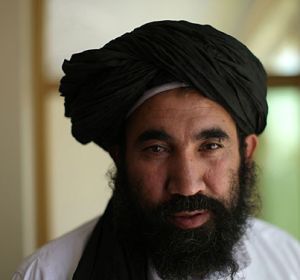
The intrepid Ghaith Abdul-Ahad, in his most recent series of reports from Afghanistan, describes his meeting with Abdul Salam Zaeef, the former Taliban ambassador to Pakistan, who spent three years from 2002 in Guantánamo and who, until July this year, was on the UN list of known terrorists.
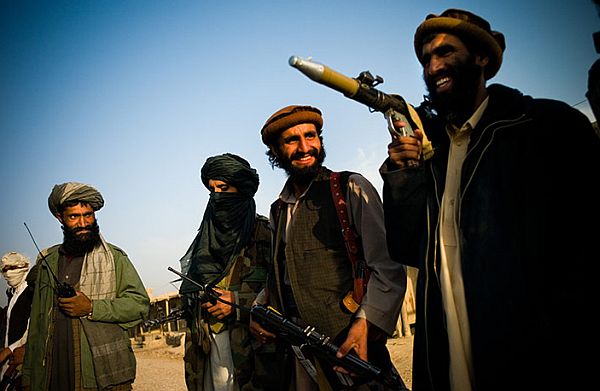
Zaeef is now a prolific writer and speaks five languages fluently. According to many Taliban insiders, if there are any negotiations between the Taliban and the Americans they will go through him.
“The Americans came and sat here,” he said, pointing at one of the big sofas. “They said they needed to talk to the Taliban but couldn’t find them. They didn’t know who the Taliban were. I said go and look, they are everywhere, the Taliban have shadow governors and administrators, why don’t you go and talk to them?”
The real reason the Americans didn’t talk, he said, was that they had no respect for the Taliban.
“I told the Americans to respect their enemy. You can’t negotiate with the Taliban from a position of strength, so why would the Taliban come and talk to you? If you want talks you have to treat the Taliban as equals.”
In any negotiation, the Taliban would assert that as long as their land was under occupation they would struggle to liberate it.
They would continue to fight until the foreigners left. Their argument was with the Americans, not the Afghan government. They did not want to bring down the government, they just wanted to renew it.
“The Taliban have no problem with the Afghan government. We have no problem with Karzai or the Afghans. The problem lies with the Americans,” he said.
“Why would we negotiate with Karzai if he has no say in running his government? They are under occupation and all orders come from foreigners.”
The Americans, he said, had not talked to any senior Taliban to his knowledge. However, “the government and the Taliban have been talking for two years on local matters, health-related issues, prisoner exchange, education.
“This is not a negotiation, this is a way to help and benefit our Afghan people and nation. Negotiations haven’t started yet.”
The Americans had a right to know that Afghanistan would not be used as a base for attacks against them, he said, but that was all.
“The Americans have one right only, and that is their right to be assured that Afghanistan will not be used against them and that is something the Taliban should give.
“Apart from that they have no rights, they have no right to tell us about democracy and human rights. That’s an Afghan issue and it will be decided by the Afghans.
“The Americans behave with arrogance and if they don’t want to be defeated in Afghanistan they should talk.
“They don’t belong here,” he said. “They are foreigners, outsiders.”
Meanwhile, The Guardian contradicts earlier reports which had claimed that British intelligence had been responsible for engaging an impostor negotiator.
Peace talks conducted with an impostor who posed as a Taliban leader, and which led to a meeting with Hamid Karzai in Kabul and thousands of dollars in “goodwill payments”, were started by the Afghan government and approved by the former American commander, Stanley McChrystal, the Guardian has learned.
This account sharply contradicts claims made by the Afghan presidency, which has put the entire blame on Britain, apparently supported privately by US officials.
The U.S. Air Force moved a WC-135 Constant Phoenix reconnaissance jet from the U.S. mainland to the Kadena Air Base in Okinawa, in September in preparation for another nuclear test by North Korea, the Sankei Shimbun reported Tuesday.
The WC-135, a modified aircraft, is able to detect nuclear explosions from the air by collecting samples from the atmosphere. It was stationed in Okinawa about a month before North Korea carried out its second nuclear test in May 2009. Apparently the U.S. believes that another nuclear test is imminent after unusual movements were detected at the North’s test site.
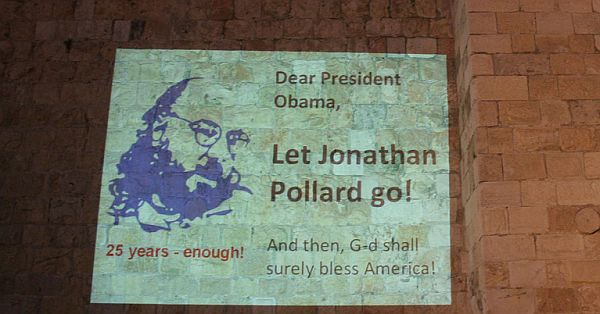
A “relentless” campaign by David Nyer, a Jewish Orthodox activist from Monsey, New York, has succeeded in winning significant support from House Democrats who are now calling on President Obama to release Jonathan Pollard.
Pollard is a former civilian intelligence analyst who was convicted of spying for Israel and through a plea bargain received a life sentence in 1987. He is believed to have caused incalculable damage to US national security.
Nyer’s campaign “struck gold” when he succeeded in winning the support of Rep. Barney Frank. The JTA reported:
Getting Frank was a coup, one congressional insider said, not only because he has a leadership position, but because his pronounced liberalism in other arenas adds credibility to an effort that has been identified in recent years with the Israeli and pro-Israel right.
Frank took up the cause because he long has believed that Pollard’s life sentence was disproportionate to the crime, his spokesman said.
“It is something he feels strongly about,” Harry Gural told JTA.
Launching the initiative at a Capitol Hill news conference Nov. 18, Frank listed two factors that made the matter timely: Pollard’s 25 years in prison as of Sundayand the parlous state of the Israeli-Palestinian peace process.
“The justification of this is the humanitarian one and the notion that the American justice system should be a fair one,” Frank said. “We believe that clemency after 25 years for the offenses of Jonathan Pollard would do that.
“My own hope is that if the president would do this, it would contribute to the political climate within the democracy of Israel and would enhance the peace process.”
Frank alluded to Obama’s low popularity in Israel where, fairly or not, the president has been saddled with a reputation as cool to Israeli interests.
The Jerusalem Post reports that Benjamin Netanyahu has asked the US to add Pollard’s release to the many other generous incentives the Obama administration have offered Israel in the hope of a 90 day, once only, extension to the settlement slowdown.
In “Why Pollard Should Never Be Released (The Traitor),” published in the New Yorker in January 1999, Seymour Hersh wrote:
A full accounting of the materials provided by Pollard to the Israelis has been impossible to obtain: Pollard himself has estimated that the documents would create a stack six feet wide, six feet long, and ten feet high. Rafi Eitan, the Israeli who controlled the operation, and two colleagues of his attached to the Israeli diplomatic delegation — Irit Erb and Joseph Yagur — were named as unindicted co-conspirators by the Justice Department. In the summer of 1984, Eitan brought in Colonel Aviem Sella, an Air Force hero, who led Israel’s dramatic and successful 1981 bombing raid on the Iraqi nuclear reactor at Osirak. (Sella was eventually indicted, in absentia, on three counts of espionage.) Eitan’s decision to order Sella into the case is considered by many Americans to have been a brilliant stroke: the Israeli war hero was met with starry eyes by Pollard, a chronic wannabe.
Yagur, Erb, and Sella were in Washington when Pollard was first seized by the F.B.I., in November, 1985, but they quickly left the country, never to return. During one period, Pollard had been handing over documents to them almost weekly, and they had been forced to rent an apartment in northwest Washington, where they installed a high-speed photocopying machine. “Safe houses and special Xeroxes?” an American career intelligence officer said, despairingly, concerning the Pollard operation. “This was not the first guy they’d recruited.” In the years following Pollard’s arrest and confession, the Israeli government chose not to cooperate fully with the F.B.I. and Justice Department investigation, and only a token number of the Pollard documents have been returned. It was not until last May [1998] that the Israeli government even acknowledged that Pollard had been its operative.
In fact, it is widely believed that Pollard was not the only one in the American government spying for Israel. During his year and a half of spying, his Israeli handlers requested specific documents, which were identified only by top-secret control numbers. After much internal assessment, the government’s intelligence experts concluded that it was “highly unlikely,” in the words of a Justice Department official, that any of the other American spies of the era would have had access to the specific control numbers. “There is only one conclusion,” the expert told me. The Israelis “got the numbers from somebody else in the U.S. government.”
Richard Perle? He was Assistant Secretary of Defense in the Reagan administration at that time and early in his career had been caught by the FBI passing classified information to the Israeli embassy in Washington.
Pollard’s American interrogators eventually concluded that in his year and a half of spying he had provided the Israelis with more than a year’s worth of the daily FOSIF reports from Rota [in Spain, the location of the Navy’s Sixth Fleet Ocean Surveillance Information Facility (FOSIF)]. Pollard himself told the Americans that at one point in 1985 the Israelis had nagged him when he missed several days of work because of illness and had failed to deliver the FOSIF reports for those days. One of his handlers, Joseph Yagur, had complained twice about the missed messages and had asked him to find a way to retrieve them. Pollard told his American interrogators that he had never missed again.
The career intelligence officer who helped to assess the Pollard damage has come to view Pollard as a serial spy, the Ted Bundy of the intelligence world. “Pollard gave them every message for a whole year,” the officer told me recently, referring to the Israelis. “They could analyze it” — the intelligence — “message by message, and correlate it. They could not only piece together our sources and methods but also learn how we think, and how we approach a problem. All of a sudden, there is no mystery. These are the things we can’t change. You got this, and you got us by the balls.” In other words, the Rota reports, when carefully studied, gave the Israelis “a road map on how to circumvent” the various American collection methods and shield an ongoing military operation. The reports provide guidance on “how to keep us asleep, thinking all is working well,” he added. “They tell the Israelis how to raid Tunisia without tipping off American intelligence in advance. That is damage that is persistent and severe.”
This website or its third-party tools use cookies, which are necessary to its functioning. By closing this banner, you agree to the use of cookies.





 Zaeef is now a prolific writer and speaks five languages fluently. According to many Taliban insiders, if there are any negotiations between the Taliban and the Americans they will go through him.