How much evidence should the US government be obliged to show before it kills an American citizen?
None, according to the Obama administration.
And how much evidence should the government be obliged to possess of an American’s wrongdoing before officially targeting them for killing?
That’s a secret, according to the Obama team.
As part of its war against violent extremism, the Obama administration now claims a right to kill Americans without a trial, without notice, and without any chance for targets to legally object. On May 6, the US government launched a drone attack to try to kill a US citizen in Yemen. The Obama administration alleges that Anwar al-Awlaki, an American born Muslim cleric, helped spark killings at Fort Hood, Texas, and an attempt to blow up a jetliner in 2009. Mr. Awlaki might be a four-star bad guy, but government press releases and background briefings have not previously been sufficient to justify capital punishment. The drone attack failed to terminate Awlaki, though two other people were killed.
The US government has admitted that it has added the names of other Americans to a list for targeted killing. The American Civil Liberties Union sued last year to compel the government “to disclose the legal standard it uses to place US citizens on government kill lists,” but was thwarted when the Obama administration claimed the entire program was a “state secret.” Last December, federal Judge John Bates dismissed the ACLU’s lawsuit because “there are circumstances in which the Executive’s unilateral decision to kill a US citizen overseas” is “judicially unreviewable.”
Assuming that Obama doesn’t lose his appetite for extrajudicial killing, it seems likely that missiles fired from drones will remain his weapon of choice. Old-fashioned death squads leave open the inconvenient possibility that the assassination target might attempt to surrender.
Did Osama bin Laden have his empty hands held high just before he was shot in the head? We can only be sure that any awkward record of such a fact would remain sealed in a vault for many decades.
Benjamin Ferencz is a 92-year-old naturalized U.S. citizen, American combat soldier during World War II, and a prosecutor at the Nuremberg Trials, where he prosecuted numerous Nazi war criminals, including some responsible for the deaths of upward of 100,000 innocent people. He gave a fascinating (and shockingly articulate) 13-minute interview yesterday to the CBC in Canada about the bin Laden killing, the Nuremberg principles, and the U.S. role in the world. Without endorsing everything he said, I hope as many people as possible will listen to it.
All of Ferencz’s answers are thought-provoking — including his discussion of how the Nuremberg Principles apply to bin Laden — but there’s one answer he gave which I particularly want to highlight; it was in response to this question: “so what should we have learned from Nuremberg that we still haven’t learned”? His answer:
I’m afraid most of the lessons of Nuremberg have passed, unfortunately. The world has accepted them, but the U.S. seems reluctant to do so. The principal lesson we learned from Nuremberg is that a war of aggression — that means, a war in violation of international law, in violation of the UN charter, and not in self-defense — is the supreme international crime, because all the other crimes happen in war. And every leader who is responsible for planning and perpetrating that crime should be held to account in a court of law, and the law applies equally to everyone.
These lessons were hailed throughout the world — I hailed them, I was involved in them — and it saddens me to no end when Americans are asked: why don’t you support the Nuremberg principles on aggression? And the response is: Nuremberg? That was then, this is now. Forget it.
To be candid, I’ve been tempted several times to simply stop writing about the bin Laden killing, because passions are so intense and viewpoints so entrenched, more so than any other issue I’ve written about. There’s a strong desire to believe that the U.S. — for the first time in a long time — did something unquestionably noble and just, and anything which even calls that narrative into question provokes little more than hostility and resentment. Nonetheless, the bin Laden killing is going to shape how many people view many issues for quite some time, and there are still some issues very worth examining.
One bothersome aspect about the reaction to this event is the notion that bin Laden is some sort of singular evil, someone so beyond the pale of what is acceptable that no decent person would question what happened here: he killed civilians on American soil and the normal debates just don’t apply to him. Thus, anyone who even questions whether this was the right thing to do, as President Obama put it, “needs to have their head examined” (presumably that includes Benjamin Ferencz). In other words, so uniquely evil is bin Laden that unquestioningly affirming the rightness of this action is not just a matter of politics and morality but mental health. Thus, despite the lingering questions about what happened, it’s time, announced John Kerry, to “shut up and move on.” I know Kerry is speaking for a lot of people: let’s all agree this was Good and stop examining it. Tempting as that might be — and it is absolutely far easier to adhere to that demand than defy it — there is real harm from leaving some of these questions unexamined.
The adult sons of Osama bin Laden have lashed out at President Obama over their father’s death, accusing the United States of violating its basic legal principles by killing an unarmed man, shooting his family members and disposing of his body in the sea.
The statement said the family was asking why the leader of Al Qaeda “was not arrested and tried in a court of law so that truth is revealed to the people of the world.” Citing the trials of Saddam Hussein and Slobodan Milosevic, the statement questioned “the propriety of such assassination where not only international law has been blatantly violated,” but the principles of presumption of innocence and the right to a fair trial were ignored.
“We maintain that arbitrary killing is not a solution to political problems,” the statement said, adding that “justice must be seen to be done.”
The statement, prepared at the direction of Omar bin Laden, a son who had publicly denounced his father’s terrorism, was provided to The New York Times by Jean Sasson, an American author who helped the younger Bin Laden write a 2009 memoir, “Growing Up bin Laden.” A shorter, slightly different statement was posted on a jihadist Web site Tuesday. (New York Times)
India is ratcheting up pressure on Pakistan ahead of next week’s terrorism trial in the U.S., releasing a document that alleges the Inter-Services Intelligence spy agency was directly involved in the attacks on Mumbai in 2008.
The move comes as Pakistan is facing accusations from the U.S. and India that some element of the military must have helped hide al Qaeda chief Osama bin Laden, who was killed last week in a secret raid by U.S. Navy SEALs on a house only four kilometers from the elite Pakistan Military Academy in Abbottabad.
A court in Chicago will begin hearings this month in the trial of seven men alleged to have aided David Coleman Headley, the Pakistani-American who has pleaded guilty of scouting sites for the Mumbai attacks, which led to the deaths of more than 160 people, including six Americans. (Wall Street Journal)
India kicked off war games involving thousands of troops on Monday along its border with arch-rival Pakistan, which is still smarting from the US operation that killed Osama bin Laden.
A military spokesperson told reporters the six-day exercise, codenamed Vijayee Bhava (Be Victorious) was being held in the Thar desert region in the Indian state of Rajasthan.
“This exercise envisages sustained massed mechanised manoeuvres,” S D Goswami said, adding the drill involved an array of weaponry that India has acquired as part of its ongoing military modernisation programme.
More than 20 000 combat troops were taking part. (AFP)
In revelations that could further embarrass Pakistan, WikiLeaks has released a fresh set of US diplomatic cables that show how the country’s spy agency, the Inter-Services Intelligence (ISI), allowed militants to go to India to carry out strikes on targets chosen by the Pakistan army.
The revelations are part of nearly 800 interrogation reports of suspects held in Guantanamo Bay prison.
WikiLeaks, in one of the several cables that exposes ISI’s links to terror groups, quotes a US cable as saying that an Algerian Al Qaeda militant arrested in 2002 said that his mission was to “kill Indians in India”. (NDTV)
The US and Pakistan struck a secret deal almost a decade ago permitting a US operation against Osama bin Laden on Pakistani soil similar to last week’s raid that killed the al-Qaida leader, the Guardian has learned.
The deal was struck between the military leader General Pervez Musharraf and President George Bush after Bin Laden escaped US forces in the mountains of Tora Bora in late 2001, according to serving and retired Pakistani and US officials.
Under its terms, Pakistan would allow US forces to conduct a unilateral raid inside Pakistan in search of Bin Laden, his deputy, Ayman al-Zawahiri, and the al-Qaida No3. Afterwards, both sides agreed, Pakistan would vociferously protest the incursion.
“There was an agreement between Bush and Musharraf that if we knew where Osama was, we were going to come and get him,” said a former senior US official with knowledge of counterterrorism operations. “The Pakistanis would put up a hue and cry, but they wouldn’t stop us.” (The Observer)
Dozens of African migrants were left to die in the Mediterranean after a number of European military units apparently ignored their cries for help, the Guardian has learned. Two of the nine survivors claim this included a Nato ship.
A boat carrying 72 passengers, including several women, young children and political refugees, ran into trouble in late March after leaving Tripoli for the Italian island of Lampedusa. Despite alarms being raised with the Italian coastguard and the boat making contact with a military helicopter and a warship, no rescue effort was attempted.
All but 11 of those on board died from thirst and hunger after their vessel was left to drift in open waters for 16 days. “Every morning we would wake up and find more bodies, which we would leave for 24 hours and then throw overboard,” said Abu Kurke, one of only nine survivors. “By the final days, we didn’t know ourselves … everyone was either praying, or dying.”
International maritime law compels all vessels, including military units, to answer distress calls from nearby boats and to offer help where possible. Refugee rights campaigners have demanded an investigation into the deaths, while the UNHCR, the UN’s refugee agency, has called for stricter co-operation among commercial and military vessels in the Mediterranean in an effort to save human lives. (The Guardian)
The United Nations refugee agency has urged the crews of ships in the Mediterranean to keep watch for unseaworthy vessels carrying migrants from war-torn Libya after a report that a ship with 600 people on board broke up just off the port of Tripoli on Friday.
Witnesses in Tripoli said the ship was only 100 yards from shore when it broke up, Sybella Wilkes, a spokeswoman for the Geneva-based organization, said Monday. “It’s not clear how many people died or drowned,” she said, but 16 bodies — including those of two babies — had been recovered.
Refugees who left on another vessel later on Friday said they saw bodies and pieces of a ship in the water, said Laura Boldrini, a spokeswoman in Italy for the agency, the United Nations High Commissioner for Refugees.
Ms. Wilkes said there had been a “dramatic increase in the number of boats making this terrible journey,” as migrants, many of them from sub-Saharan Africa, tried to flee Libya’s turmoil, heading for sanctuary on the Italian island of Lampedusa. (New York Times)
The family photo albums, abandoned on the sand, lay open and fluttering in the desert wind. Around them were the personal items with which they had been packed: heaps of clothing, sandals, DVDs, combs, bottles of perfume, cooking utensils, razors, toothbrushes, several teapots, bundled blankets and a few biscuits, broken and dry. Every several yards a dropped suitcase rested on the dirt, looted bare.
War can strip those caught in its path to almost nothing, which is what happened to the people who had gathered here last Wednesday. They were African migrants caught in the conflict in Libya. They had long ago winnowed their meager possessions down, first to leave their small flats to move into tents, then to leave the tents to stand in line with a suitcase or two at this plot of bare desert, where they were told to wait for a ride to a ship. Here they stood until they ran. They dashed away so quickly and with such panic that they left behind the last things to which they had clung.
Like more than 10,000 other migrant workers in Misurata, they had been idled from work by the outbreak of war, and then cut off from routes overland toward home when the military of Col. Muammar el-Qaddafi put this city under siege. They had waited two months for an evacuation vessel to arrive in the city’s harbor and carry them out. (New York Times)
Rebel fighters made significant gains Monday against forces loyal to Col. Muammar el-Qaddafi in both the western and eastern areas of the country, in the first faint signs that NATO airstrikes may be starting to strain the government forces.
In the besieged western city of Misurata hundreds of rebels broke through one of the front lines late on Sunday, and by Monday afternoon were consolidating their position on the ground a few miles to the city’s west.
The breakout of what had been nearly static lines came after NATO aircraft spent days striking positions and military equipment held by the Qaddafi forces, weakening them to the point that a ground attack was possible, the rebels said.
While not in itself a decisive shift for a city that remained besieged, the swift advance, made with few rebel casualties, carried both signs of rebel optimism and hints of the weakness of at least one frontline loyalist unit. (New York Times)
The Syrian government has gained the upper hand over a seven-week uprising against the rule of President Bashar al-Assad, a senior official declared Monday, in the clearest sign yet that the leadership believes its crackdown will crush protests that have begun to falter in the face of hundreds of deaths and mass arrests.
The remarks by Bouthaina Shaaban, an adviser to Mr. Assad who often serves as an official spokeswoman, suggested that a government accustomed to adapting in the face of crises was prepared to weather international condemnation and sanctions. Her confidence came in stark contrast to appearances just two weeks ago, when the government seemed to stagger before the breadth and resilience of protests in dozens of towns and cities.
“I hope we are witnessing the end of the story,” she said in an hourlong interview, for which a reporter was allowed in Syria for only a few hours. “I think now we’ve passed the most dangerous moment. I hope so, I think so.” (New York Times)
The wife of Syrian dictator Bashar al-Assad may have fled to London with the couple’s three young children, it has been claimed.
Asma Assad, 35, was said to be living in a safe house in or near the capital.
British-born Mrs Assad, who is considered to be one of the most glamorous first ladies in the world, has not been seen in public since the start of the Arab Spring. (Daily Telegraph)
The European Union has listed 13 Syrian officials on the bloc’s sanctions list, including a brother and a wealthy and influential cousin of Bashar al-Assad, the president, and intelligence chiefs.
Maher al-Assad commands Syria’s Republican Guard and is considered the second most powerful man in the country.
The EU’s official journal, in which the full list was published on Tuesday, described Maher al-Assad as the “principal overseer of violence against demonstrators”.
The measures, asset freezes and travel bans, are part of a package of sanctions, including an arms embargo which went into effect on Tuesday, as part of EU efforts to try to force Syria to end violence against anti-government protesters. (Al Jazeera)
Harrowing testimony of torture, intimidation and humiliation from a doctor arrested in the crackdown on medical staff in Bahrain has revealed the lengths to which the regime’s security forces are prepared to go to quash pro-democracy protests.
Interviews obtained by The Independent from inside Bahrain tell of ransacked hospitals and of terrified medical staff beaten, interrogated and forced into signing false confessions. Many have been detained, their fate unknown.
Inspired by the pro-democracy protests which swept Tunisia and Egypt earlier this year, Bahrainis took to the streets in their thousands in February, demanding greater political rights and more equality for the Shia Muslim majority, ruled over for decades by a Sunni monarchy. (The Independent)
At least 30 people have died in Bahrain, protesters and medical workers are being put on trial, and prominent opposition politicians are being arrested—but the United States has yet to toughen its talk or impose sanctions on its Gulf ally.
Bahrain, a predominantly Shiite country ruled by a Sunni monarchy, plays host to the U.S. Navy’s Fifth Fleet. McClatchy reports today that the government has bulldozed dozens of Shiite mosques. Shiite women and girls have also been detained and abused, according to McClatchy. The State Department has said little about these matters publicly, except to tell McClatchy it’s “concerned by the destruction of religious sites” and is “extremely troubled by reports of ongoing human rights abuses” in Bahrain.
The Bahraini government announced last week it would charge nearly 50 doctors and nurses for treating injured pro-democracy protesters. We’d previously noted the government’s detention of medical workers along with protesters, activists and journalists. (ProPublica)
Wendell Steavenson writes: Last week an activist I know came to see me and showed me a series of pictures on his mobile phone: men throwing Molotov cocktails, blurred fireballs, and debris-strewn streets.
“Where was this?” I asked him, thinking they were pictures taken during the revolution. “Moski,” he said, naming a downtown area of Cairo known for its street traders, “a half an hour ago.” “I was nearly stabbed,” he added. Apparently two rival streets had gone to battle over some kind of shop-to-shop dispute, using rocks, bricks, and shotguns. Sixty people were injured. It happened the same day as a smallish crowd of pro-Mubarak supporters tried to celebrate his birthday outside of the state TV building (a favorite spot for demonstrations; soldiers use the first-floor balconies as watchtowers in case of serious trouble) and clashed with a rival crowd.
Yesterday, I went to a conference for parties and people hoping to form a broad umbrella committee to begin to address issues like the economy and the constitutional process during this interim period. I met Dr. Mohamed Ghonim, a wise, tortoise-looking man who is a famous kidney specialist and elder statesman of sorts for the liberal front of the revolution. He ruminated on the role of the Army, currently the de facto ruling authority. “As you know, security in general is bad. Every day there are two or three major things happening and nothing serious is done to contain these incidents. The economy is going in a negative way, downhill…”
I asked him if he thought that these incidents were being deliberately allowed to erupt.
“Of course. How can people stop the railway?” he asked, referring to the disruption in the upper Egyptian town of Qena at the end of April, when local people cut rail lines that link the north and south of the country, to protest the imposition of an unpopular governor. Ghonim said that law and order, in the hands of the military since the police are still not deployed in anything like their pre-revolutionary numbers, was being allowed to disintegrate, “Until you get to a critical point and then people say ‘oh please step in politically!’” (The New Yorker)
Hassan Nafaa writes: The tragedy at St. Marmina church in Imbaba on Saturday is not a new story. A young Muslim man from Asyut claims he married a Christian woman who converted to Islam five years ago, and that his wife’s brothers kidnapped her in recent months. The young man then claims he received a phone call that his wife is detained at an Imbaba church. The young man then goes to Imbaba and gathers a group of Muslims, most of them Salafis, from nearby mosques. Together they head to the church and instigated yet another incident of sectarian strife.
When the police learned of the gathering in front of St. Marmina church, they sought the assistance of Sheikh Mohammad Ali, a prominent local Salafi leader and a preacher at the nearby Toba mosque. Along with other religious leaders, Sheikh Ali went to the gathering outside the church and listened to the young man recount his story in the presence of some police officers. The sheikh did not buy the story and was especially skeptical about the fact that the young man did not file a police report immediately after the kidnapping. To Sheikh Ali, it appeared that someone was trying to incite sectarian tensions.
Sheikh Ali immediately told the protesters that the young Muslim man was lying. “Because they trust me, they believed me and began to chant: ‘Muslims and Christians are one,’” he said. Ali added that he accompanied an interior ministry official to the church to inform church leaders that the conflict was over.
“But Copts residing in nearby apartment buildings thought we were entering the church to search it, so they started to throw bottles at us. Then I heard gun fire and things escalated from there.”
Rumors quickly spread through the media and a group of young men in the area headed to an adjacent church and set it ablaze. Clashes broke out and by the end of the evening 12 people were dead and over 100 were injured.
There will be more rumors tomorrow about imaginary incidents of rape, theft, marriage, and divorce that will provoke both sides to engage in more violence to avenge the dignity of their religious group. Many will fail to see that their anger is unwarranted.
In all these cases, the solution is that suspected criminal – regardless political, sectarian or class affiliation – be subjected to a fair trial. Taking the law into our own hands to avenge crimes committed against our family, or sect deals a serious blow to the idea of a civilized society. (Al-Masry Al-Youm)
The US government has frozen the bank accounts belonging to Hatem Abudayyeh, a Palestinian community organizer and director of a social service organization serving the Arab community in Chicago, and his wife, Naima.
Meanwhile, several members of Congress have written to the Obama administration to express their concerns about violations in civil liberties as a result of earlier government actions toward Abudayyeh and other activists.
The freezing of the Abudayyeh family’s bank accounts on Friday, 6 May is the latest development in a secret grand jury investigation that has been launched by US District Attorney Patrick Fitzgerald’s office in Chicago. The freezing of the accounts has raised concerns that criminal indictments in the case may be imminent. (Electronic Intifada)
Glenn Greenwald writes: On Friday, government officials anonymously claimed that “a rushed examination” of the “trove” of documents and computer files taken from the bin Laden home prove — contrary to the widely held view that he “had been relegated to an inspirational figure with little role in current and future Qaeda operations” — that in fact “the chief of Al Qaeda played a direct role for years in plotting terror attacks.” Specifically, the Government possesses “a handwritten notebook from February 2010 that discusses tampering with tracks to derail a train on a bridge,” and that led “the Obama administration officials on Thursday to issue a warning that Al Qaeda last year had considered attacks on American railroads.” That, in turn, led to headlines around the country like this one, from The Chicago Sun-Times:
The reality, as The New York Times noted deep in its article, was that “the information was both dated and vague,” and the official called it merely “aspirational,” acknowledging that “there was no evidence the discussion of rail attacks had moved beyond the conceptual stage“ In other words, these documents contain little more than a vague expression on the part of Al Qaeda to target railroads in major American cities (“focused on striking Washington, New York, Los Angeles and Chicago,” said the Sun-Times): hardly a surprise and — despite the scary headlines — hardly constituting any sort of substantial, tangible threat.
But no matter. Even in death, bin Laden continues to serve the valuable role of justifying always-increasing curtailments of liberty and expansions of government power. (Salon)
David Axe writes: The early-morning raid that killed Osama bin Laden was, according to CIA Director Leon Panetta, “the culmination of intense and tireless efforts on the part of many dedicated agency officers.” Panetta also thanked the “strike team, whose great skill and courage brought our nation this historic triumph.”
But it’s unclear who was on the strike team — the 25 people aboard two specially modified Army helicopters. Most of the “trigger-pullers” were, apparently, Navy commandos from the famed SEAL Team Six.
At the “pointy end” — a Beltway euphemism for combat — the operation targeting bin Laden in Abbottabad, Pakistan, looked overwhelmingly military. But the months-long process of gathering intelligence and planning had a CIA flavor.
Indeed, President Barack Obama described it as agency-led. The intelligence community pinpointed bin Laden’s location. Panetta monitored the raid in real time from Langley. The assault team may have included CIA operatives. Senior administration officials called it a “team effort.”
But did the CIA have people on the ground in Abbottabad? It’s not an academic question. Exactly who was on the strike force that killed bin Laden has major policy implications.
CIA presence places the operation on one side of an increasingly fuzzy legal boundary between two distinct U.S. legal codes: one exclusive to the military and another that defines the terms of open warfare for the whole U.S. government.
The extent of the CIA’s involvement also has serious implications with regard to a chain of presidential executive orders that prohibit Americans from participating in the assassination of foreign leaders. (Politico)
White House has demanded that Pakistan hand over intelligence seized from Osama bin Laden’s compound as relations between the two allies hit a new crisis over the outing of America’s top spy in Islamabad.
Mark Carlton, the purported CIA station chief, was named by a Pakistani newspaper and a private television news network over the weekend, the second holder of that post in less than a year to have his cover blown by the media, presumed to have official consent.
The reports documented a meeting between Mr Carlton and the head of Pakistan’s spy agency, the Inter- Services Intelligence, suggesting that the information came from them.
Washington has refused to comment on the development, which comes amid worsening relations between the US and Pakistan over how bin Laden came to be sheltering in a fortified compound in a garrison town.
Anger is mounting in Pakistan over how the US was able to carry out the raid in Abbottabad without detection, with calls for the Government to resign. (The Times)
The prime minister’s statements, along with the publication of the name of the C.I.A. station chief, signaled the depths of the recriminations and potential for retaliation on both sides as American officials demand greater transparency and cooperation from Pakistan, which has not been forthcoming.
The Pakistani spy agency, Inter Services Intelligence Directorate, gave the name of the station chief to The Nation, a conservative daily newspaper, American and Pakistani officials said.
The name appeared spelled incorrectly but in a close approximation to a phonetic spelling in Saturday’s editions of The Nation, a paper with a small circulation that is supportive of the ISI. The ISI commonly plants stories in the Pakistani media and is known to keep some journalists on its payroll.
Last December, American officials said the cover of the station chief at the time was deliberately revealed by the ISI. As a result, he was forced to leave the country. (New York Times)
President Obama’s national security adviser demanded Sunday that Pakistan let American investigators interview Osama bin Laden’s three widows, adding new pressure in a relationship now fraught over how Bin Laden could have been hiding near Islamabad for years before he was killed by commandos last week.
Both the adviser, Thomas E. Donilon, and Mr. Obama, in separate taped interviews, were careful not to accuse the top leadership of Pakistan of knowledge of Bin Laden’s whereabouts in Abbottabad, a military town 35 miles from the country’s capital. They argued that the United States still regards Pakistan, a fragile nuclear-weapons state, as an essential partner in the American-led war on Islamic terrorism.
But in repeatedly describing the trove of data that a Navy Seal team seized after killing Bin Laden as large enough to fill a small college library, Mr. Donilon seemed to be warning the Pakistanis that the United States might soon have documentary evidence that could illuminate who, inside or outside their government, might have helped harbor Bin Laden, the leader of Al Qaeda, who had been the world’s most wanted terrorist.
The United States government is demanding to know whether, and to what extent, Pakistani government, intelligence or military officials were complicit in hiding Bin Laden. His widows could be critical to that line of inquiry because they might have information about the comings and goings of people who were aiding him. (New York Times)
It is the unknown frontline in Libya’s civil war, a rebel town besieged by Gaddafi’s forces but almost ignored by the outside world.
Rockets and Scud missiles pour down. Water is running short. Tens of thousands are desperately trying to flee.
But transfixed by the horrors of Misurata, the international community – and the Nato military alliance – have all but overlooked the closely parallel drama in the mountain towns of Zintan and Yafran, little more than an hour’s drive from the capital.
“We have been under fire for about an hour and a half now,” said one Zintan resident, Mustafa Haider, by telephone from the town on Friday afternoon.
“From the south, from the north, from the east, from everywhere. They fire with Grad missiles, Scud missiles, anything. They have tried to enter Zintan many times but they couldn’t.” Homes, schools, and the town’s main hospital had been hit, causing panic, he said. (Daily Telegraph)
Libya: end indiscriminate attacks in western mountain towns
Human Rights Watch says: Libyan government forces have launched what appear to be repeated indiscriminate attacks on mountain towns in western Libya, Human Rights Watch said today.
Accounts from refugees who fled the conflict say the attacks are killing and injuring civilians and damaging civilian objects, including homes, mosques, and a school. Human Rights Watch called on Libyan forces to cease their indiscriminate attacks on civilian areas.
Human Rights Watch interviewed more than 50 refugees from Libya’s western Nafusa mountains in Tunisia from April 26 to May 1, 2011, as well as doctors and aid workers assisting those in need. The refugees gave consistent and credible accounts of indiscriminate shelling and possible rocket attacks in residential areas of the rebel-controlled towns of Nalut, Takut, and Zintan. Human Rights Watch could not confirm the refugees’ accounts due to government restrictions on travel in western Libya but, taken together, they describe a pattern of attacks that would violate the laws of war.
Amnesty International says: At least 48 people have been killed in Syria by the security forces in the last four days, local and international human rights activists have told Amnesty International, as the crackdown on the coastal city of Banias intensified.
More than 350 people – including 48 women and a 10-year-old child – are also said to have been arrested in the Banias area over the past three days with scores being detained at a local football pitch. Among those rounded up were at least three doctors and 11 injured people taken from a hospital.
“Killings of protesters are spiralling out of control in Syria – President Bashar al-Assad must order his security forces to stop the carnage immediately,” said Philip Luther, Amnesty International’s Deputy Director for the Middle East and North Africa.
Amnesty International has compiled the names of 28 people who were apparently shot dead by security forces on Friday and those of 12 others killed over the last three days.
The organization now has the names of 580 protesters and others killed since mid-March, when protests against the government of President Bashar al-Assad began.
The Syrian government is continuing its weeks-long crackdown on anti-government demonstrations, arresting opponents and deploying troops in protest hubs.
Rami Abdul-Rahman, director of the Syrian Observatory for Human Rights, said security forces were carrying out house-to-house raids targeting demonstration organisers and participants.
He said Monday’s raids were focused in the central city of Homs, the coastal city of Baniyas, some suburbs of the capital, Damascus, and villages around the southern flashpoint city of Deraa.
Live Blog Syria
Another activist said gunfire was heard in the town of Moadamiya, just west of the capital, Damascus, as troops carried out arrests. (Al Jazeera)
Ten years ago, as the main thrust of Egyptian society and the legal sphere was moving towards amending the constitution to make it more democratic and just, the collective brain of the regime’s inner circle was working in the opposite direction: twisting laws to fit the interests of the inner few — the oligarchs who had both wealth and political influence.
Steel magnate Ahmed Ezz, who is facing trial Today, Saturday, on charges of illegal profiteering and misuse of public funds, along with dozens of businessmen and officials considered to be close to the ousted regime, perfectly represents the marriage of wealth, party politics and undue power. Ezz became one of the first symbols that the Egyptian people decided to bring down after the January 25 Revolution.
On the night of 28 January, the headquarters of Ezz Steel in the Mohandeseen district was destroyed, along with other government headquarters and police stations, symbolising the downfall of the old regime.
“At the time he came to buy Alexandria National Iron and Steel Company (now Al-Ezz Al-Dekheila Steel Company) we had never heard of Ahmed Ezz,” said Ali Helmy, former chairman of the National Iron and Steel Company.
“The first time I met Ezz was in 1999 when Atef Ebeid, minister of the public enterprise sector at that time, invited managers of steel companies for a business dinner at a small factory in Sadat City producing galvanised iron,” recounted Helmy. “We were introduced to Ezz, a young engineer and owner of the factory.”
A few months later, continues Helmy, Ezz has already bought three million shares, accounting for LE456 million ($76.7 mln), of the Alexandria National Iron and Steel Company, and after a few months, he was appointed chairman of the company: first base for what would later become a great empire.
Ezz was born in 1959 to a family that was wealthy but not overly rich. After having graduated from the Faculty of Engineering at Cairo University in the mid-1980s, he worked as a percussionist in one of the most famous music bands at that time, Moudy and Hussein. At the time, Ezz had shown no interest in business until in 1995 his father, a steel trader, bought him a small plot of land in Sadat City and helped him build a steel factory.
His friendship with Gamal Hosni Mubarak, son of Egypt’s then president, helped to make his fortune, culminating in the buying of a huge amount of shares in Gamal’s 1998 Future Generation Foundation (FGF), a non-profit organisation that provided courses for young people to prepare them for entry to the workforce.
Several leading figures in Egypt‘s private sector, including Ahmed El-Maghrabi, former minister of tourism, and Rachid Mohamed Rachid, former minister of trade and industry were involved, and both now face trial.
From that point on, Ezz accompanied Gamal to all meetings and despite being a newcomer to politics, gradually became a familiar political face.
In 1999, the Alexandria National Iron and Steel Company faced a financial crisis due to dumped steel imports from Ukraine and other Eastern European countries coming into Egypt. Ezz quickly offered to buy shares in the troubled joint stock company. “For some reason, the biggest figures in the government helped Ezz finalise this deal,” said Helmy.
According to a 2007 report on Strategic Economic Trends by Al-Ahram Centre for Political and Strategic Studies, In 1999, Ezz bought some 540,000 shares in less than a month. Ezz had seized more than three million shares of the company, accounting for 27.9 per cent of total shares.
By the late 1990s, Ezz started his acquisition move in the steel market, through a strategy of taking loans from the biggest banks to buy shares in steel companies.
In 1999, Ezz was appointed chairman of the National Iron and Steel Company, despite the fact that he hadn’t paid back the loans he had taken from Egypt’s major banks, according to the same report.
“The National Bank of Egypt and Bank of Cairo (Egypt’s largest public banks) favoured Ezz because of his relationship with Gamal Mubarak and helped him get the loans, while denying credit to viable businesspeople who lacked the right political pedigree; they had for instance refused to issue loans for the same company bought by Ezz (Alexandria National Iron and Steel Company) a few months earlier to help it get out of its devastating financial crisis,” said Helmy.
“Ezz’s strategy from that time on was to take loans from Egyptians banks, buy shares and take a greater role in the steel market, but the thing is, he never gave a loan back. He would pay older loans by getting new loans,” elaborates Helmy. (Ahram Online)
Ali Abunimah writes: By deciding to join the US-backed Palestinian Authority led by Mahmoud Abbas, Hamas risks turning its back on its role as a resistance movement, without gaining any additional leverage that could help Palestinians free themselves from Israeli occupation and colonial rule.
Indeed, knowingly or not, Hamas may be embarking down the same well-trodden path as Abbas’ Fatah faction: committing itself to joining a US-controlled “peace process”, over which Palestinians have no say – and have no prospect of emerging with their rights intact. In exchange, Hamas may hope to earn a role alongside Abbas in ruling over the fraction of the Palestinians living under permanent Israeli occupation in the West Bank and Gaza Strip.
Whether Hamas realises it or not, it has effectively entered into a coalition with Israel and Abbas to manage the Occupied Territories, in which Hamas will have much responsibility, but little power. (Al Jazeera)
Saeed Kamali Dehghan writes: No Iranian president has ever dared to challenge the supremacy of Ali Khamenei’s two-decade-long leadership as publicly as Mahmoud Ahmadinejad did recently in an extraordinary power struggle between him and the ayatollah.
The unprecedented confrontation at the top of the Iranian regime began only a month ago when Khamenei, the supreme leader, intervened in a cabinet appointment by reinstating a minister who had initially resigned “under pressure from Ahmadinejad”.
In reaction to the reinstatement of Heydar Moslehi, the intelligence minister at the centre of the row, Ahmadinejad apparently staged an 11-day walkout from the presidential palace and refused to chair cabinet meetings.
At first glance, Ahmadinejad’s feud with the ayatollah seemed like a conventional disagreement between two leaders of one country but in Iran, where Khamenei is described as “God’s representative on Earth”, Ahmadinejad’s opposition was extremely serious. (The Guardian)
As Barack Obama continues his campaign of targeted killing — this time with a failed attempt to assassinate the American-born cleric, Anwar al-Awlaki, in Yemen — many Israelis regard this as a vindication of their own approach to eliminating their enemies.
As far as Jerusalem is concerned, President Barack Obama’s decision to assassinate Osama bin Laden constitutes a declared, if delayed, acknowledgment on the part of the Americans of the Israeli argument that targeted attacks on senior members of organizations are a necessary modus operandi in the struggle against terrorism. According to former director of Military Intelligence Maj. Gen. (res. ) Aharon Ze’evi-Farkash, bin Laden’s assassination reflects the administration’s understanding that it is impossible to separate the leader from the operational stratum below him.
The way the operation was carried out in Pakistan also carries significant implications for the objective of deterrence – not only in terms of the meticulous collection of intelligence and the impressive performance by the forces involved, but also with regard to the decision to dispatch a ground force and not carry out a remote-controlled aerial attack. The “close-up” assassination deprived the terrorist organizations, from Hamas to Al-Qaida, of the ability to claim that the West is cowardly and afraid to endanger its people in face-to-face combat. The methods used also helped avoid the killing of noncombatants and, of course, made it possible for the administration to ascertain that bin Laden had indeed been killed, though there will always be those who claim it was an American trick. The United States, for its part, is exempt from at least one Israeli concern: No one is about to send Obama and his officers to The Hague.
Maj.-Gen. Yoav Galant, the former head of the IDF’s Southern Command, spoke this week – for the first time publicly since the government retracted its decision to appoint him chief of staff – about the significance of assassinations in reference to bin Laden’s killing.
“Those who say that these operations don’t have an impact are mistaken,” said Galant, who personally participated in such operations as a longtime navy commando and later as head of the Southern Command. “The liquidation of terror leaders prevents terror attacks and influences the organizations.”
There are two categories of targets killed this way. The first is field operatives, people like Hezbollah’s military commander Imad Mughniyeh, reportedly killed by Israel in 2008 in Damascus, or Ali Mahmoud Mabhouh, the Hamas weapons smuggler reportedly killed by Israel in Dubai in 2010.
Their deaths are believed to have dealt critical blows to their respective organizations, to the point that over three years later, Israel still believes Hezbollah has yet to find an appropriate replacement for Mughniyeh.
Then there are symbolic figures whose assassination can have an effect on a terrorist group. This was the case in 2004 with the assassination of Sheikh Ahmed Yassin, the wheelchair-bound Hamas spiritual leader who was killed by an IAF missile as he left a mosque in the Gaza Strip.
Bin Laden’s death resembles Yassin’s in this respect, since while he was a leader at one point of a clear hierarchical organization, in the years since the 9/11 attacks, he has served more in the position of symbolic figurehead.
Hillary Clinton witnessing the operation to kill Osama bin Laden. Is this an expression of horror at the sight of seeing parents executed in front of their children?
Osama bin Laden’s daughter cradled the head of her wounded mother in the room where the al-Qaida leader had just been killed.
“I am Saudi,” she told Pakistani security officials shortly after US special forces had flown away with the terrorist’s bloodied body. “Osama bin Laden is my father.”
The 12-year-old had herself been injured by a piece of flying debris in her foot or ankle during the night-time raid on Bin Laden’s compound in Abbottabad, northern Pakistan, but she was comforting her father’s fifth wife, Amal Ahmed al-Sadah, 29, who was shot in the calf by commandos as they closed in on Bin Laden.
The woman lay quietly, her head in the girl’s lap, though she seemed conscious, the officials told the Guardian. Across the room stood another woman, hands tied behind her back and mouth taped, aged around 30 and possibly Bin Laden’s doctor from Yemen.
The tip on bin Laden’s whereabouts came in back in 2010. You have to assume the house was under surveillance. If they thought they “bagged him” they would be watching closely and choosing the right time to deep six the target (I actually wrote this lead paragraph sentence before reading this “Breaking News” from the Washington Post: “CIA had secret outpost in Abbottabad”).
“The CIA maintained a safe house in the Pakistani city of Abbottabad for a small team of spies who conducted extensive surveillance over a period of months on the compound where Osama bin Laden was killed by US special operations forces this week (US officials),” the newspaper reported.
Both Afghan agents and Pakistani intelligence now say they told the US about the house as early as 2009.
So, they knew he was there. That was a reason drones weren’t used.
The CIA wanted a more controlled high profile and dramatic intervention for public consumption, for what, in the end, was a marketing campaign – marketing the centrality of the agency’s role in a war whose main audience is not on the battlefield, but in the homeland.
They needed a heroic narrative to revive support for a war they have been losing, and a scalp to sell to a conflict-weary and disillusioned population. It is no surprise that the Seals labelled OBL “Geronimo”, reviving memories of fighting guerrilla-style Indian wars. Muslim renegades are apparently our new “savages”.
Consider the following scenario. A group of Irish republican terrorists carries out a bombing raid in London. People are killed and wounded. The group escapes, first to Ireland, then to the US, where they disappear into the sympathetic hinterland of a country where IRA leaders have in the past been welcomed at the White House. Britain cannot extradite them, because of the gross imbalance of the relevant treaty. So far, this seems plausible enough.
But now imagine that the British government, seeing the murderers escape justice, sends an aircraft carrier (always supposing we’ve still got any) to the Nova Scotia coast. From there, unannounced, two helicopters fly in under the radar to the Boston suburb where the terrorists are holed up. They carry out a daring raid, killing the (unarmed) leaders and making their escape. Westminster celebrates; Washington is furious.
What’s the difference between this and the recent events in Pakistan? Answer: American exceptionalism. America is subject to different rules to the rest of the world. By what right? Who says?
Consider another fictive scenario. Gangsters are preying on a small mid-western town. The sheriff and his deputies are spineless; law and order have failed. So the hero puts on a mask, acts “extra-legally”, performs the necessary redemptive violence and returns to ordinary life, earning the undying gratitude of the local townsfolk, sheriff included. This is the plot of a thousand movies, comic-book strips, and TV shows: Captain America, The Lone Ranger, and (upgraded to hi-tech) Superman. The masked hero saves the world.
Films and comics with this plot-line have been named as favourites by many presidents, as Robert Jewett and John Shelton Lawrence pointed out in The Myth of the American Superhero and Captain America and the Crusade Against Evil. The main reason President Obama has been cheered to the echo across the US, even by his bitter opponents, is not simply the fully comprehensible sense of closure a decade after the horrible, wicked actions of September 11 2001. Underneath that, he has just enacted one of America’s most powerful myths.
On Sunday April 24, 2011 WikiLeaks began publishing 779 secret files from the notorious Guantanamo Bay prison camp. The details for every detainee will be released daily over the coming month.
The Guantánamo files reveal the often fragile physical and mental condition of Guantánamo’s oldest and youngest residents, who have included an 89-year-old man and boys as young as 14.
In 2002 Guantánamo prisoners were described as “the worst of a very bad lot” by Dick Cheney, US vice-president. “They are very dangerous. They are devoted to killing millions of Americans, innocent Americans, if they can, and they are perfectly prepared to die in the effort.”
But the internal files on some prisoners paint a very different picture. A 2002 assessment of Guantánamo’s oldest prisoner, Mohammed Sadiq, who was then 89, revealed dementia, depression and sickness. “His current medical issues include major depressive disorder, senile dementia and osteoarthritis, for which he receives prescribed treatment.” The Afghan national was also being assessed for prostate cancer. (The Guardian)
Among the most dismaying stories to emerge is that of three hapless Tajiks caught up in a roundup of foreigners in Karachi in 2002.
The trio appear to have spent almost two years being interrogated and maltreated, first at the notorious Bagram airbase, and then at Guantánamo, before being released.
The prison files reveal that they were listed as “enemy combatants” on arrival , but turned out to be entirely innocent.
The then base commander, Maj-Gen Geoffrey Miller, signed reports to the US Southern Command HQ in Florida confirming that two of the men were not enemy combatants and he was having them sent home. He added: “It is undetermined as to why the detainee was transferred to GTMO.”
Reports on the third man, Shirinov Abdulghafar Umarovich, are missing from the files, but he was reported to have also been released and returned to Tajikistan on 31 March 2004 along with the two others, Mukhibullo Abdulkarim Umarov and Mazhar Udeen.
The camp files disclose that the three were “arrested at a small library in Karachi”. Almost two years after their eventual release, a journalist for the US magazine Mother Jones, while trekking in the Pamir mountains, stumbled across Umarov back at his remote home village and tape-recorded an interview.
Umarov’s story, now confirmed by the classified prison camp files, is that the three were living in a room in the University of Karachi library, and looking for work, when they were rounded up by Pakistani police and given to the Americans. A suicide bomb had exploded and at the time, the US were reported to be paying bounties of between $5,000 and $25,000 per al-Qaida prisoner.
Umarov said he had received no compensation since. He reportedly asked his interviewer: “Why did they keep a man for two years with no reason? Why? They caught me and kept me as a prisoner of war. What war, may I ask? When was I involved? I was sleeping when they came and dragged me out of my bed.”
He described going on hunger strike, and being put in the isolation “cooler” at Guantánamo, for complaining to an investigator. “The soldiers took all my clothes and left me there.” During the day, two electric coils were used to overheat the 3ft by 5ft metal cell. At night, frigid air was pumped in. “Some prisoners wouldn’t last the night and had to be taken to the doctor,” he said. “They kept me there for 10 days – and for no reason.”
The three Tajiks were among more than 100 detainees taken to Guantánamo for little more than being in the wrong place at the wrong time. (The Guardian)
By October 2004, two years into his detention at the Guantánamo Bay prison, Ali Abdullah Ahmed had established a corrosive reputation among prison officials. Mr. Ahmed’s classified file said he was a hunger striker, “completely uncooperative with interrogators,” and “had a history of aggressive behavior in the camp, often defiantly failing to comply with instructions.”
Twenty-one months later, the military announced that Mr. Ahmed, a Yemeni, and two other prisoners had simultaneously hanged themselves.
Their deaths in June 2006 — the first at Guantánamo — fueled a debate between military officials, who deemed the suicides “an act of asymmetric warfare waged against us” by jihadists seeking martyrdom, and prison critics, who interpreted them as an act of despair by men with little hope of a fair trial or release.
Since then, two other detainees have succeeded in killing themselves — one in 2007, and another in 2009. Against that backdrop, a collection of secret detainee assessment files obtained by The New York Times reveal that the threat of suicide has created a chronic tension at the prison — a tactic frequently discussed by the captives and a constant fear for their captors.
The files for about two dozen detainees refer to suicide attempts or threats. Others mention informants who pass on rumors about which prisoner had volunteered to kill himself next and efforts to organize suicide attempts. Two prisoners were overheard weighing whether it would create enough time for someone to end his life if fellow prisoners blocked their cell windows, distracting guards who would have to remove the obstructions. (New York Times)
Said Mohammed Alam Shah, a 24-year-old Afghan who had lost a leg as a teenager, told interrogators at the prison at Guantánamo Bay, Cuba, that he had been conscripted by the Taliban as a driver before being detained in 2001. He had been caught, he said, as he tried to “rescue his younger brother from the Taliban.”
Military analysts believed him. Mr. Shah, who had been outfitted with a prosthetic leg by prison doctors, was “cooperative” and “has not expressed thoughts of violence or made threats toward the U.S. or its allies,” according to a sympathetic 2003 assessment. Its conclusion: “Detainee does not pose a future threat to the U.S. or U.S. interests.”
So in 2004 Mr. Shah was sent back to Afghanistan — where he promptly revealed himself to be Abdullah Mehsud, a Pakistan-born militant, and began plotting mayhem. He recorded jihadist videos, organized a Taliban force to fight American troops, planned an attack on Pakistan’s interior minister that killed 31 people, oversaw the kidnapping of two Chinese engineers, and finally detonated a suicide bomb in 2007 as the Pakistani Army closed in. His martyrdom was hailed in an audio message by none other than Osama bin Laden.
The Guantánamo analysts’ complete misreading of Abdullah Mehsud was included among hundreds of classified assessments of detainees at the prison in Cuba that were obtained by The New York Times. The unredacted assessments give the fullest public picture to date of the prisoners held at Guantánamo over the past nine years. They show that the United States has imprisoned hundreds of men for years without trial based on a difficult and strikingly subjective evaluation of who they were, what they had done in the past and what they might do in the future. The 704 assessment documents use the word “possibly” 387 times, “unknown” 188 times and “deceptive” 85 times. (New York Times)
On Sept. 11, 2001, the core of al-Qaeda was concentrated in a single city: Karachi, Pakistan.
At a hospital, the accused mastermind of the bombing of the USS Cole was recovering from a tonsillectomy. Nearby, the alleged organizer of the 2002 bombing in Bali, Indonesia, was buying lab equipment for a biological weapons program. And in a safe house, the man who would later describe himself as the intellectual author of the Sept. 11 attacks was with other key al-Qaeda members watching the scenes from New York and Washington unfold on television.
Within a day, much of the al-Qaeda leadership was on the way back to Afghanistan, planning for a long war.
A cache of classified military documents obtained by the anti-secrecy organization WikiLeaks presents new details of their whereabouts on Sept. 11, 2001, and their movements afterward. The documents also offer some tantalizing glimpses into the whereabouts and operations of Osama bin Laden and his Egyptian deputy, Ayman al-Zawahiri.
The documents, provided to European and U.S. news outlets, including The Washington Post, are intelligence assessments of nearly every one of the 779 individuals who have been held at Guantanamo Bay, Cuba, since 2002. In them, analysts have created detailed portraits of detainees based on raw intelligence, including material gleaned from interrogations. (Washington Post)
On a cold Ukrainian winter night in mid-February 2011, a Gaza civil engineer named Dirar Abu Sisi was lying in bed in a railroad sleeper car traveling to Kiev to visit his brother, Yousef, whom he hadn’t seen in 15 years.
Abu Sisi had come to Ukraine as a refugee applying for Ukrainian citizenship. While there, he was staying with his wife’s family, who are Ukrainian natives. Though he was the deputy chief of Gaza’s only power plant, he and his wife, Veronika, increasingly felt that Gaza was an unsafe place to raise their six children. During his stay, he had formally applied for citizenship so that he might resettle his family in Ukraine.
But something strange happened that night on the train. Just outside the village of Poltava, two policemen rousted Abu Sisi from bed and took him away, according to a witness in the bunk under Abu Sisi, who saw the entire incident unfold. This witness, Andrej Makarenko, who was recently discovered by the Ukrainian independent newspaper, Pravda (Russian), also noted that a conductor was present. The latter at first confirmed Makarenko’s story to the press, but later recanted, possibly under pressure from Ukrainian authorities. The Pravda reporter says the conductor has been given extended leave and has disappeared from his home.
Abu Sisi claimed in a prison interview with a Gaza human rights group that he was transferred to a private apartment in Kiev, where he was questioned by Israeli Mossad agents. He was then brought to the airport, placed on a plane and flown to Israel, making this a case of extraordinary rendition.
When Abu Sisi’s wife, who was in Gaza at the time, realized he had disappeared, she smuggled herself through a border tunnel to Egypt and made the same trip her husband had to Ukraine. Once there, she began a desperate search for him together with Yousef. They didn’t hear from Dirar for a week until the end of February, when he finally called from an Israeli prison. During that period of silence, she summoned the Ukrainian press and began accusing the Mossad of kidnapping him.
In early March, a confidential Israeli source reported to me that Abu Sisi was in an Israeli prison. Until that moment, no one knew what had happened after he was kidnapped. A few days after I reported this, and after scouring the Israeli human rights nongovernmental organization (NGO) community, Dalia Kerstein of HaMoked wrote that the Gazan engineer was indeed in an Israeli prison. First, he’d been brought to the Shabak (also known as Shin Bet) detention facility at Petah Tikvah, where he’d been interrogated. Later, he’d been moved to Shikma prison outside Ashkelon. And the entire story was under gag order. [Continue reading…]
“Black sites,” the secret network of jails that grew up after the Sept. 11 attacks, are gone. But suspected terrorists are still being held under hazy circumstances with uncertain rights in secret, military-run jails across Afghanistan, where they can be interrogated for weeks without charge, according to U.S. officials who revealed details of the top-secret network to The Associated Press.
The Pentagon has previously denied operating secret jails in Afghanistan, although human rights groups and former detainees have described the facilities. U.S. military and other government officials confirmed that the detention centers exist but described them as temporary holding pens whose primary purpose is to gather intelligence.
The Pentagon also has said that detainees only stay in temporary detention sites for 14 days, unless they are extended under extraordinary circumstances. But U.S. officials told the AP that detainees can be held at the temporary jails for up to nine weeks, depending on the value of information they produce. The officials spoke on condition of anonymity because the program is classified.
The most secretive of roughly 20 temporary sites is run by the military’s elite counterterrorism unit, the Joint Special Operations Command, at Bagram Air Base. It’s responsible for questioning high-value targets, the detainees suspected of top roles in the Taliban, al-Qaida or other militant groups.
The site’s location, a short drive from a well-known public detention center, has been alleged for more than a year.
The secrecy under which the U.S. runs that jail and about 20 others is noteworthy because of President Barack Obama’s criticism of the old network of secret CIA prisons where interrogators sometimes used the harshest available methods, including the simulated drowning known as waterboarding.
Today, by ordering a military trial at Guantanamo for 9/11 plotter Khalid Sheikh Mohammed and his co-defendants, Attorney General Eric Holder finally put the Obama administration’s stamp on the proposition that some criminals are “too dangerous to have fair trials.”
In reversing one of its last principled positions—that American courts are sufficiently nimble, fair, and transparent to try Mohammed and his confederates—the administration surrendered to the bullying, fear-mongering, and demagoguery of those seeking to create two separate kinds of American law. This isn’t just about the administration allowing itself to be bullied out of its commitment to the rule of law. It’s about the president and his Justice Department conceding that the system of justice in the United States will have multiple tiers—first-class law for some and junk law for others.
Every argument advanced to scuttle the Manhattan trial for KSM was false or feeble: Open trials are too dangerous; major trials are too expensive; too many secrets will be spilled; public trials will radicalize the enemy; the public doesn’t want it.
Of course, exactly the same unpersuasive claims could have been made about every major criminal trial in Western history, from the first World Trade Center prosecution to the Rosenberg trial to the Scopes Monkey trial to Nuremburg. Each of those trials could have been moved to some dark cave for everyone’s comfort and well-being. Each of those defendants could have been tried using some handy choose-your-own-ending legal system to ensure a conviction. But the principle that you don’t tailor justice to the accused won out, and, time after time, the world benefited.
Now the Obama administration—having loudly and proudly made every possible argument against a two-tier justice system—is capitulating to it.
But make no mistake about it: It won’t stop here. Putting the administration’s imprimatur on the idea that some defendants are more worthy of real justice than others legitimates the whole creeping, toxic American system of providing one class of legal protections for some but not others: special laws for children of immigrants, special laws for people who might look like immigrants, different jails for those who seem too dangerous, special laws for people worthy of wiretapping, and special laws for corporations. After today it will be easier than ever to use words and slogans to invent classes of people who are too scary to try in regular proceedings.
Say what you want about how Congress forced Obama’s hand today by making it all but impossible to try the 9/11 conspirators in regular Article II courts. The only lesson learned is that Obama’s hand can be forced. That there is no principle he can’t be bullied into abandoning. In the future, when seeking to pass laws that treat different people differently for purely political reasons, Congress need only fear-monger and fabricate to get the president to cave. Nobody claims that this was a legal decision. It was a political triumph or loss, depending on your viewpoint. The rule of law is an afterthought, either way.
The bodies surface quietly, like corks bobbing up in the dark. They come in twos and threes, a few times a week, dumped on desolate mountains or empty city roads, bearing the scars of great cruelty. Arms and legs are snapped; faces are bruised and swollen. Flesh is sliced with knives or punctured with drills; genitals are singed with electric prods. In some cases the bodies are unrecognisable, sprinkled with lime or chewed by wild animals. All have a gunshot wound in the head.
This gruesome parade of corpses has been surfacing in Balochistan, Pakistan’s largest province, since last July. Several human rights groups, including Amnesty International, have accounted for more than 100 bodies – lawyers, students, taxi drivers, farm workers. Most have been tortured. The last three were discovered on Sunday.
If you have not heard of this epic killing spree, though, don’t worry: neither have most Pakistanis. Newspaper reports from Balochistan are buried quietly on the inside pages, cloaked in euphemisms or, quite often, not published at all.
The forces of law and order also seem to be curiously indifferent to the plight of the dead men. Not a single person has been arrested or prosecuted; in fact, police investigators openly admit they are not even looking for anyone. The stunning lack of interest in Pakistan’s greatest murder mystery in decades becomes more understandable, however, when it emerges that the prime suspect is not some shady gang of sadistic serial killers, but the country’s powerful military and its unaccountable intelligence men.
This is Pakistan’s dirty little war. While foreign attention is focused on the Taliban, a deadly secondary conflict is bubbling in Balochistan, a sprawling, mineral-rich province along the western borders with Afghanistan and Iran. On one side is a scrappy coalition of guerrillas fighting for independence from Pakistan; on the other is a powerful army that seeks to quash their insurgency with maximum prejudice. The revolt, which has been rumbling for more than six years, is spiced by foreign interests and intrigues – US spy bases, Chinese business, vast underground reserves of copper, oil and gold.
[The following statement in English and Arabic (below) was written by Mona Kareem on Friday March 18th, 2011, and can be found on her personal blog.]
After the recent importance of Social Media in creating change in our societies, a lot of Saudi women have been active on Twitter through the hash tag #SaudiWomenRevoltion to write their demands of applying social equality in Saudi society, giving examples and telling stories on the injustice they are facing in their society.
Media has talked about this hash tag but did not care to push this cause forward. Saudi Women, however, have created a page for their revolution on Facebook and talked to several media means to support their legal and legitimate human rights to fight sexism in their society. Thus, this following statement comes as a document that gathers different demands from the Saudi Women Revolution:
Women cannot have their rights until the system of Male Guardianship is completely taken off the laws and rules of the Saudi state. The Male Guardian or “Mahram” is the father, brother, husband, or even son who has all the legal rights to control a Saudi woman’s life in different ways. The Kingdom of Saudi Arabia has promised the Human Rights Council of the United Nations in June 2009 to cancel Male Guardianship and to end Sexism in the country, but these promises remain unaccomplished. Saudi women mostly suffer from the Male Guardianship because of the following reasons:
– The Saudi Woman cannot work or apply to a job without the permission of her legal male guardian.
– The Saudi Woman does not have the right to travel without her “Mahram” or without his written permission. The Ministry of interior affairs has decided to permit women who are over 45 years in age to travel without a male guardian or his permission; however, airport officials did not apply the decision, as the Human Rights watch stated in its report in April 2008.
– The Saudi Woman cannot receive education without the permission of her male guardian and cannot travel to receive education abroad without his permission even if she was awarded a scholarship from the state. The Saudi woman also suffers from the limited academic majors although she has proved a better educational performance than the Saudi man as the official statistics show.
– The Saudi woman does not have the rights of marriage and divorce without the permission from her male guardian. Saudi Arabia has had different examples of how women suffered from this system in particular. Human Rights Watch 2010 report stated two incidents of men marrying off their sisters five times to get money, in Braida and Riyadh.
– The Saudi Woman does not have the right to follow and finish her official documents and papers without the permission of her male guardian including her cases in court. Human Rights Watch 2010 report mentioned a woman named Sawsan Salim in Qasim who was punished with 300 lashes and one year and a half in jail for showing up to court without a “Mahram”. Justice ministry itself has promised in February 2010 to permit women to work as lawyers, but the promise is still not fulfilled.
– The Saudi woman cannot have medical surgery without the permission of her male guardian. Women have talked a lot about the damages done because of this system. Human Rights Watch report stated in July 2009 that Saudi women need a “Mahram” to enter and leave the hospital. If no “Mahram” showed up to get her out of the hospital, she will stay in until someone does so.
– The Saudi Woman cannot make a bank account for her kids, enroll them in schools, ask for their school files, or travel with them without the permission of her male guardian. [Continue reading…]
A leading group of doctors in the US concerned with the ethical treatment of patients has questioned the role of military psychiatrists in Quantico, Virginia, where the suspected WikiLeaks source Bradley Manning is being subjected to harsh treatment that some call torture.
The advocacy body Physicians for Human Rights has sounded the alarm over the role of psychiatrists at the brig in the marine base where Manning has been in custody since last July.
The group sees the psychiatrists as trapped in a situation of “dual loyalty”, where their obligations to the military chain of command may conflict with their medical duty to protect their patient.
Christy Fujio, author of a forthcoming report on the issue, said the main concern was that psychiatrists were allowing Manning’s continuing solitary confinement.
“Even if they do not officially approve it, by continuing to examine him and report back to the government on his condition, they are effectively taking part in security operations. Their failure to call it what it is, cruel and inhumane treatment, constitutes a violation of their ethical duties as doctors.”
Yesterday, I wrote about the fictitious excuse being offered to justify why Obama is continuing the indefinite detentions and military commissions which defined the Bush/Cheney Guantanamo detention scheme: it’s Congress’ fault. Today we have a new excuse: it’s Bush’s fault. Because Bush tortured some of the detainees, this reasoning goes, Obama is incapable of prosecuting them, yet because many of those detainees are Terrorists and/or Too Dangerous to Release (even though they can’t be convicted of anything), he has no real choice but to keep imprisoning them without charges. Here are the NYT Editors — even as they criticize Obama’s indefinite detention policy — making this case, one frequently heard from Obama supporters offering excuses for his policy of indefinite detention:
[T]he Obama administration has still chosen to accept the concept of indefinite detention without trial, which represents a stain on American justice. The president made that acceptance clear in a speech in May 2009. To some degree, he was forced into it by the Bush administration’s legacy of torture and abuse, which made some important cases impossible to prosecute.
And here’s Andrew Sullivan making a somewhat different but related claim, and then going even further, suggesting that the only thing that ever bothered him about Guantanamo was the torture, not the fact that people were being indefinitely imprisoned without a shred of due process:
My fundamental concern has always been humane treatment. When Gitmo was a torture camp, it was indefensible. . . . [Those equating Obama’s detention policies with Bush’s] omit that the very dilemma – prisoners with no formal charges, no serious evidence, and radicalized by torture and unjust imprisonment – was created by Bush in the first place. I’d release those against whom there is no credible evidence. But I can understand the security and political concerns of releasing men who could join Jihadists in, say, Yemen.
There’s a serious moral flaw in the NYT‘s reasoning, and two even worse empirical flaws with this excuse-making for indefinite detention. There are several compelling reasons why the use of torture-obtained evidence is barred by every civilized country for use in prosecution, and has been barred for decades if not centuries. A primary reason is because the most basic norms of Western morality demand that torture not be rewarded, which is what happens when the fruits of it are admissible in court to prosecute people. Those who say that Obama is justified in imprisoning people without charges because the evidence against them was obtained via torture and is thus unusable in court are repudiating this long-standing Western moral principle by justifying imprisonment based on evidence obtained by coercion (we know they’re guilty because of the evidence we got from torture, so we have to detain them).
The Obama administration, which famously pledged to be the most transparent in American history, is pursuing an unexpectedly aggressive legal offensive against federal workers who leak secret information to expose wrongdoing, highlight national security threats or pursue a personal agenda.
In just over two years since President Barack Obama took office, prosecutors have filed criminal charges in five separate cases involving unauthorized distribution of classified national security information to the media. And the government is now mulling what would be the most high-profile case of them all – prosecuting WikiLeaks founder Julian Assange.
That’s a sharp break from recent history, when the U.S. government brought such cases on three occasions in roughly 40 years.
The government insists it’s only pursuing individuals who act with reckless disregard for national security, and that it has an obligation to protect the nation’s most sensitive secrets from being revealed. Anyone seeking to expose malfeasance has ample opportunity to do so through proper channels, government lawyers say.
But legal experts and good-government advocates say the hard-line approach to leaks has a chilling effect on whistleblowers, who fear harsh legal reprisals if they dare to speak up.
Not only that, these advocates say, it runs counter to Obama’s pledges of openness by making it a crime to shine a light on the inner workings of government – especially when there are measures that could protect the nation’s interests without hauling journalists into court and government officials off to jail.
President Obama reversed his two-year-old order halting new military charges against detainees at Guantánamo Bay, Cuba, on Monday, permitting a resumption of military trials under rules he said provide adequate rights for defendants but implicitly admitting the failure for now of his pledge to close the prison camp.
Mr. Obama said in a statement he remains committed to closing Guantánamo some day and to charging some terrorist suspects in civilian criminal courts, as occurred throughout the administration of George W. Bush administration and has continued under Mr. Obama. But Congress has blocked the transfer of prisoners from Guantánamo to the United States for trial, undermining at least for the time being the administration’s plan to hold civilian trials for Khalid Shaikh Mohammed, the chief planner of the Sept. 11 attacks, and other accused terrorists.
An executive order signed by the president on Monday sets out new rules requiring a review of all detainees’ status within a year and every three years after that to determine whether they remain a threat to Americans. The order also requires compliance with the Geneva Conventions and the international treaty that bans torture and inhumane treatment.
Civil liberties advocates, who had been expecting the moves since they were forecast in an article in The New York Times in January, expressed deeply mixed feelings about the new policies. On the positive side, some said that the executive order may permit detainees imprisoned for years without trial to have their cases heard and potentially settled by plea agreement. In addition, the executive order avoids enshrining a system of indefinite detention in law and is restricted to the 172 prisoners currently held at Guantánamo.
But Elisa Massimino, president of Human Rights First, said that despite those factors, the continuation of detention at Guantánamo and military commissions more than two years after Mr. Obama took office is a disappointment.
“This is a step down the road toward institutionalizing a preventive detention regime,” Ms. Massimino said. “People in the Mideast are looking to establish new rules for their own societies, and this sends a mixed message at best.”
To follow-up on yesterday’s observations about the prolonged forced nudity to which Bradley Manning has been subjected the last two days: brig officials now confirm to The New York Times that Manning will be forced to be nude every night from now on for the indefinite future — not only when he sleeps, but also when he stands outside his cell for morning inspection along with the other brig detainees. They claim that it is being done “as a ‘precautionary measure’ to prevent him from injuring himself.”
Has anyone before successfully committed suicide using a pair of briefs — especially when under constant video and in-person monitoring? There’s no underwear that can be issued that is useless for killing oneself? And if this is truly such a threat, why isn’t he on “suicide watch” (the NYT article confirms he’s not)? And why is this restriction confined to the night; can’t he also off himself using his briefs during the day?
Let’s review Manning’s detention over the last nine straight months: 23-hour/day solitary confinement; barred even from exercising in his cell; one hour total outside his cell per day where he’s allowed to walk around in circles in a room alone while shackled, and is returned to his cell the minute he stops walking; forced to respond to guards’ inquiries literally every 5 minutes, all day, everyday; and awakened at night each time he is curled up in the corner of his bed or otherwise outside the guards’ full view. Is there anyone who doubts that these measures — and especially this prolonged forced nudity — are punitive and designed to further erode his mental health, physical health and will?
Colonel Ian Henderson, who from 1966 until 1998 was Bahrain’s security chief, is alleged to have instituted and overseen a brutal torture regime in the Gulf state, as a result of which he came to be known as the “Butcher of Bahrain.” Numerous human rights organizations have investigated and confirmed the allegations against him, yet an investigation by British police was suspended in 2008 due to a lack of co-operation from the Bahrain government.
“Ian Henderson has played a very dirty role,” said Saeed Shehabi, Bahrain Freedom Movement, in 2002. “Ever since he came to Bahrain in 1966, he embarked upon an era of terror and thousands of people were arrested — arbitrarily arrested — and tortured under his command. Until he retired, two or three years ago, he was the strong man behind the whole repressive regime in Bahrain.”
Blind Eye to the Butcher (2002)
In a report on Bahrain’s reliance on foreign nationals in its security services, Ian Black adds:
Bahrainis often complain that the riot police and special forces do not speak the local dialect, or in the case of Baluchis from Pakistan, do not speak Arabic at all and are reviled as mercenaries. Officers are typically Bahrainis, Syrians or Jordanians. Iraqi Ba’athists who served in Saddam Hussein’s security forces were recruited after the US-led invasion in 2003. Only the police employs Bahraini Shias.
The secret police – the Bahrain national security agency, known in Arabic as the Mukhabarat – has undergone a process of “Bahrainisation” in recent years after being dominated by the British until long after independence in 1971. Ian Henderson, who retired as its director in 1998, is still remembered as the “Butcher of Bahrain” because of his alleged use of torture. A Jordanian official is currently described as the organisation’s “master torturer”.
Channel 4 report on human rights abuses in Bahrain (1999)
Robert Tait describes 28 hours in the dark heart of Egypt’s torture machine:
The sickening, rapid click-click-clicking of the electric shock device sounded like an angry rattlesnake as it passed within inches of my face. Then came a scream of agony, followed by a pitiful whimpering from the handcuffed, blindfolded victim as the force of the shock propelled him across the floor.
A hail of vicious punches and kicks rained down on the prone bodies next to me, creating loud thumps. The torturers screamed abuse all around me. Only later were their chilling words translated to me by an Arabic-speaking colleague: “In this hotel, there are only two items on the menu for those who don’t behave – electrocution and rape.”
Cuffed and blindfolded, like my fellow detainees, I lay transfixed. My palms sweated and my heart raced. I felt myself shaking. Would it be my turn next? Or would my outsider status, conferred by holding a British passport, save me? I suspected – hoped – that it would be the latter and, thankfully, it was. But I could never be sure.
I had “disappeared”, along with countless Egyptians, inside the bowels of the Mukhabarat, President Hosni Mubarak’s vast security-intelligence apparatus and an organisation headed, until recently, by his vice-president and former intelligence chief, Omar Suleiman, the man trusted to negotiate an “orderly transition” to democratic rule.
Judging by what I witnessed, that seems a forlorn hope.
I had often wondered, reading accounts of political prisoners detained and tortured in places such as junta-run Argentina of the 1970s, what it would be like to be totally at the mercy of, and dependent on, your jailer for everything – food, water, the toilet. I never dreamed I would find out. Yet here I was, cooped up in a tiny room with a group of Egyptian detainees who were being mercilessly brutalised.
This website or its third-party tools use cookies, which are necessary to its functioning. By closing this banner, you agree to the use of cookies.





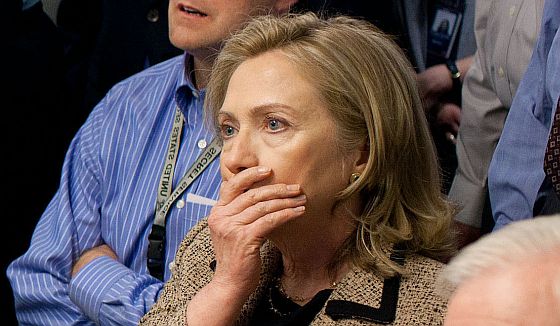

 On a cold Ukrainian winter night in mid-February 2011, a Gaza civil engineer named Dirar Abu Sisi was lying in bed in a railroad sleeper car traveling to Kiev to visit his brother, Yousef, whom he hadn’t seen in 15 years.
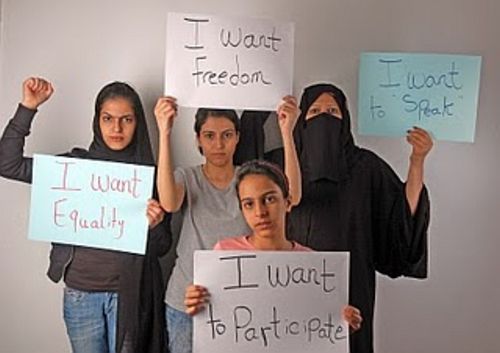

 Colonel