Category Archives: human rights

Egypt’s army ‘involved in detentions and torture’ of hundreds of anti-government protesters

The Guardian reports:

The Egyptian military has secretly detained hundreds and possibly thousands of suspected government opponents since mass protests against President Hosni Mubarak began, and at least some of these detainees have been tortured, according to testimony gathered by the Guardian.

The military has claimed to be neutral, merely keeping anti-Mubarak protesters and loyalists apart. But human rights campaigners say this is clearly no longer the case, accusing the army of involvement in both disappearances and torture – abuses Egyptians have for years associated with the notorious state security intelligence (SSI) but not the army.

The Guardian has spoken to detainees who say they have suffered extensive beatings and other abuses at the hands of the military in what appears to be an organised campaign of intimidation. Human rights groups have documented the use of electric shocks on some of those held by the army.

Egyptian human rights groups say families are desperately searching for missing relatives who have disappeared into army custody. Some of the detainees have been held inside the renowned Museum of Egyptian Antiquities on the edge of Tahrir Square. Those released have given graphic accounts of physical abuse by soldiers who accused them of acting for foreign powers, including Hamas and Israel.

Facebooktwittermail

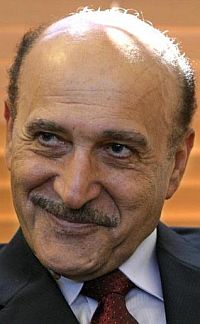
Omar Suleiman: Egypt’s torturer-in-chief threatens to unleash “dark bats of the night… to terrorize the people”

Lisa Hajjar writes:

Under the Bush administration, in the context of “the global war on terror”, US renditions became “extraordinary”, meaning the objective of kidnapping and extra-legal transfer was no longer to bring a suspect to trial – but rather for interrogation to seek actionable intelligence. The extraordinary rendition program landed some people in CIA black sites – and others were turned over for torture-by-proxy to other regimes. Egypt figured large as a torture destination of choice, as did [newly-appointed Vice President, Omar] Suleiman as Egypt’s torturer-in-chief. At least one person extraordinarily rendered by the CIA to Egypt — Egyptian-born Australian citizen Mamdouh Habib — was reportedly tortured by Suleiman himself.

In October 2001, Habib was seized from a bus by Pakistani security forces. While detained in Pakistan, at the behest of American agents, he was suspended from a hook and electrocuted repeatedly. He was then turned over to the CIA, and in the process of transporting him to Egypt he endured the usual treatment: his clothes were cut off, a suppository was stuffed in his anus, he was put into a diaper – and ‘wrapped up like a spring roll’.

In Egypt, as Habib recounts in his memoir, My Story: The Tale of a Terrorist Who Wasn’t, he was repeatedly subjected to electric shocks, immersed in water up to his nostrils and beaten. His fingers were broken and he was hung from metal hooks. At one point, his interrogator slapped him so hard that his blindfold was dislodged, revealing the identity of his tormentor: Suleiman.

Suleiman’s history should be kept in mind when considering statements he made yesterday. In a thinly veiled threat, he warned that if the protests do not end soon, there will be a coup and “dark bats of the night” will emerge “to terrorize the people.”

Egypt’s anti-government activists called on supporters Wednesday to expand their demonstrations in defiance of the vice president’s warning that protests calling for President Hosni Mubarak’s ouster would not be tolerated for much longer.

Vice President Omar Suleiman, who is managing the crisis, raised the prospect of a new crackdown on protesters Tuesday when he told Egyptian newspaper editors there could be a “coup” unless demonstrators agree to enter negotiations. The protesters insist they won’t talk before Mubarak steps down, which the president is refusing to do.

“He is threatening to impose martial law, which means everybody in the square will be smashed,” said Abdul-Rahman Samir, a spokesman for a coalition of the five main youth groups behind protests in Cairo’s Tahrir Square. “But what would he do with the rest of the 70 million Egyptians who will follow us afterward.”

Suleiman is creating “a disastrous scenario,” Samir said. “We are striking and we will protest and we will not negotiate until Mubarak steps down. Whoever wants to threaten us, then let them do so,” he added.

For the first time, protesters were calling forcefully Wednesday for labor strikes after Suleiman warned that calls by some protesters for a campaign of civil disobedience are “very dangerous for society and we can’t put up with this at all.”

The vice president’s warnings were the latest in a series of confused messages from the government to the protesters. Officials have made a series of pledges not to attack, harass or arrest the activists in recent days, followed by Suleiman’s thinly veiled threat of a new crackdown.

“We can’t bear this for a long time,” he said of the Tahrir protests. “There must be an end to this crisis as soon as possible.” He said the regime wants to resolve the crisis through dialogue, warning: “We don’t want to deal with Egyptian society with police tools.”

He also warned of chaos if the situation continued, speaking of “the dark bats of the night emerging to terrorize the people.” If dialogue is not successful, he said, the alternative is “that a coup happens, which would mean uncalculated and hasty steps, including lots of irrationalities.”

Facebooktwittermail

Egypt’s torture victims describe beatings, electroshock, rape threats

ABC News reports:

When Abdel Haleem Halim approached Hosni Mubarak at a 2002 conference to confront the Egyptian president about rampant unemployment, he says he received a familiar response. Like many of Egypt’s political dissidents, Halim says he was whisked away by the Mubarak regime’s domestic intelligence agents and tortured.

“They would bring me a paper and want me to write and sign a confession,” Halim told ABC News. “But I would refuse to write. So they would torture me because I was defiant.”

Halim claimed that the SSI agents used beatings and electroshock, and that his 2002 encounter was only the latest in a long line of detentions. A veteran political dissident, he said an earlier beating left him with temporary memory loss.

Unlike some victims of the Egyptian government’s security apparatus, however, Halim doesn’t hold the U.S. responsible. Hossam el-Hamalawy, a 33-year-old journalist who says he was tortured by the SSI in 2000, is less forgiving.

“I can’t accept that the U.S government preaches about democracy,” said el-Hamalawy, “while at the same time supporting the Mubarak regime, which has been so brutal to its own people.”

The U.S. State Department has joined international human rights groups in describing a culture of torture within Egyptian’s security agencies, issuing a 2009 report in which it itemized alleged abuses ranging from electroshock to sodomy and said “officials often operated with impunity.” Yet the U.S. government has also funded the Mubarak regime to the tune of more than a billion dollars per year, and since 1995 has used the Egyptians to interrogate terror suspects via extraordinary rendition outside the scrutiny of the U.S. legal system.

Meanwhile, Bloomberg reports:

Egypt’s Arab Center for the Independence of the Judiciary said today it may ask the International Criminal Court to look into attacks yesterday on demonstrators protesting against President Hosni Mubarak.

“There were attacks on peaceful demonstrators committed by Egyptian regime-backed groups using armed weapons, batons and Molotov cocktails in Tahrir Square,” Nasser Amin, the president of the rights group, said by telephone in Cairo.

“This means there is a possibility of considering those acts crimes against humanity under international law as they involved intentional killings and excessive harm. We are currently documenting these incidents and asking the International Criminal Court to consider them and may at some point submit an official request to the court.”

Facebooktwittermail

Egypt: impunity for torture fuels days of rage

Human Rights Watch reports:

Torture is an endemic problem in Egypt and ending police abuse has been a driving element behind the massive popular demonstrations that swept Egypt over the past week, Human Rights Watch said in a report released today. Prosecuting torture and ending the emergency laws that enable a culture of impunity for the security forces should be a priority for the Egyptian government, Human Rights Watch said.

The 95-page report, “‘Work on Him Until He Confesses’: Impunity for Torture in Egypt,” documents how President Hosni Mubarak’s government implicitly condones police abuse by failing to ensure that law enforcement officials accused of torture are investigated and criminally prosecuted, leaving victims without a remedy.
“Egyptians deserve a clean break from the incredibly entrenched practice of torture,” said Joe Stork, deputy director of the Middle East and North Africa Division at Human Rights Watch. “The Egyptian government’s foul record on this issue is a huge part of what is still bringing crowds onto the streets today.”

The case of Khaled Said, a 28-year-old man beaten to death by two undercover police officers on an Alexandria street in June, dominated headlines and set off demonstrations across the country. The local prosecutor initially closed an investigation and ordered Said’s burial, but escalating public protests prompted the Public Prosecutor to reopen the investigation and refer it to court. “We Are All Khaled Said” is the name of the Facebook group that helped initiate the mass demonstrations on January 25, 2011.

Facebooktwittermail

Globalized kidnapping backed by the US

Christian Science Monitor reports:

They came for Ismail Abubakar at nightfall on Aug. 9, 2010, plucking him from an outdoor market near the mosque where he had just finished teaching young Kenyans how to read the Quran.

The plainclothes Kenyan police shoved him into a car, took away his cellphone, hooded him, and drove him to a nearby police camp. Within hours, Mr. Abubakar – nicknamed “Mzungu” because of his pink albino skin – would be transported to Uganda to face charges for the July 11 suicide bombings that killed 76 people in Kampala, Uganda’s capital.

Three months later, Abubakar and two dozen other bombing suspects were released for lack of evidence. But the story of his rendition, and the ongoing detention of nine other Kenyans for the bombing, highlights a troubling pattern of extra-judicial abduction and human rights abuses as Africa increases efforts, often at the request of US counterterrorism officials, to combat rising Islamic terrorism.

Abubakar says he was “shocked” when investigators told him that he was about to be charged in the Kampala blasts. “I had never been to the west side of Nairobi, let alone go to Uganda,” he said.

When he was released Nov. 30, Abubakar was penniless and feared being rearrested. Donations from Ugandan Muslims helped him get to the Kenyan border. A travel document from the Ugandan government that said he was no longer a terrorism suspect helped him get across. “I was detained for nothing,” he said.

While condemned by human rights activists and the European Parliament, and criticized by some US military officials as “counterproductive,” renditions are seen by at least 28 US allies as a necessary weapon in the battle against terrorism. Estimates of the number of renditions since the US-led war on terror began after 9/11 are educated guesses, but some human rights organizations put the number over 1,000, and the British human rights group Cageprisoners estimates that 88 men, women, and children have been subjected to extrajudicial transfers from Kenya as of 2007.

Facebooktwittermail

America’s treatment of detainees

Glenn Greenwald writes:

Amnesty International has written a letter to Defense Secretary Robert Gates objecting to the conditions of Bradley Manning’s detention, which was first reported here. The group denounces the oppressive conditions under which Manning is being held as “unnecessarily harsh and punitive,” and further states they “appear to breach the USA’s obligations under international standards and treaties, including Article 10 of the International Covenant on Civil and Political Rights.” The letter describes Manning’s treatment as particularly egregious “in view of the fact that he has no history of violence or disciplinary infractions and that he is a pre-trial detainee not yet convicted of any offence.” Moreover:

The harsh conditions imposed on PFC Manning also undermine the principle of the presumption of innocence, which should be taken into account in the treatment of any person under arrest or awaiting trial. We are concerned that the effects of isolation and prolonged cellular confinement . . . may, further, undermine his ability to assist in his defence and thus his right to a fair trial.

The letter follows a report from Manning’s lawyer, former Lt. Col. David Coombs, that the conditions of his detention temporarily worsened in the past week, prompting a formal complaint under the Uniform Code of Military Justice. [Continue reading…]

Facebooktwittermail

The National Security State of America

An American teenager, forced into temporary exile and then tortured in Kuwait– almost certainly with the knowledge of the Obama administrationhas been freed.

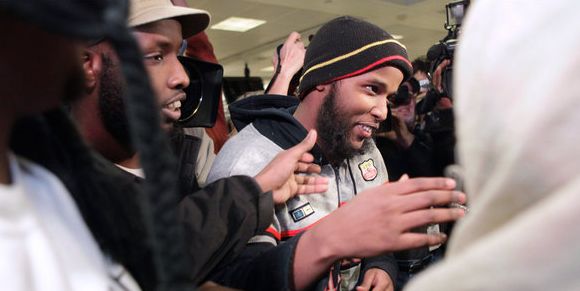
A Northern Virginia teen who had been barred from flying home from Kuwait landed in Washington on Friday morning, four weeks after being detained, allegedly beaten by Kuwait authorities and questioned by FBI agents about possible terrorist connections.

Gulet Mohamed, dressed in a worn hooded sweat shirt and sweat pants, was embraced by his family after he arrived at Dulles International Airport, the end of an ordeal that he said had “made me stronger.”

The United States “is built upon fighting for your rights,” Mohamed, 19, said in an interview.

Civil liberties groups charge that his case is the latest episode in which the U.S. government has temporarily exiled U.S. citizens or legal residents so they can be questioned about possible terrorist links without legal counsel.

The American Civil Liberties Union is suing the U.S. government on behalf of 17 citizens or legal residents who were not allowed to board flights to, from or within the United States, presumably because, like Mohamed, they were on the government’s no-fly list. Of those stranded overseas, all were eventually told they could return, often after they agreed to speak to the FBI. None was arrested upon their return.

The ACLU suit, filed in Portland, Ore., alleges that Americans placed on the no-fly list are denied due process because there is no effective way to challenge their inclusion. The government does not acknowledge that any particular individual is on the no-fly list or its other watch lists. Nor will it reveal the exact criteria it uses to place people on its list.

Meanwhile, the Washington Post reports:

The drone technology that has revolutionized warfare in Iraq, Afghanistan and Pakistan is entering the national airspace: Unmanned aircraft are patrolling the border with Mexico, searching for missing persons over difficult terrain, flying into hurricanes to collect weather data, photographing traffic accident scenes and tracking the spread of forest fires.

But the operation outside Austin [described at the beginning of this report] presaged what could prove to be one of the most far-reaching and potentially controversial uses of drones: as a new and relatively cheap surveillance tool in domestic law enforcement.

For now, the use of drones for high-risk operations is exceedingly rare. The Federal Aviation Administration – which controls the national airspace – requires the few police departments with drones to seek emergency authorization if they want to deploy one in an actual operation. Because of concerns about safety, it only occasionally grants permission.

But by 2013, the FAA expects to have formulated new rules that would allow police across the country to routinely fly lightweight, unarmed drones up to 400 feet above the ground – high enough for them to be largely invisible eyes in the sky.

Facebooktwittermail

Julian Assange’s fight to remain in the free world (outside the US)

The Guardian reported yesterday:

Julian Assange, the founder of WikiLeaks, could be at “real risk” of the death penalty or detention in Guantánamo Bay if he is extradited to Sweden on accusations of rape and sexual assault, his lawyers claim.

In a skeleton summary of their defence against attempts by the Swedish director of public prosecutions to extradite him, released today, Assange’s legal team argue that there is a similar likelihood that the US would subsequently seek his extradition “and/or illegal rendition”, “where there will be a real risk of him being detained at Guantánamo Bay or elsewhere”.

“Indeed, if Mr Assange were rendered to the USA, without assurances that the death penalty would not be carried out, there is a real risk that he could be made subject to the death penalty. It is well known that prominent figures have implied, if not stated outright, that Mr Assange should be executed.”

Glenn Greenwald notes:

Paragraphs 92-99 of the outline detail Sweden’s history of violating the Convention Against Torture by rendering War on Terror suspects to Egypt to be tortured, and concludes: “based on its record as condemned by the United Nations Committee against Torture and the Human Rights Committee, Sweden would bow to US pressure and/or rely naively on diplomatic assurances from the USA that Mr. Assange would not be mistreated, with the consequence that he would be deported/expelled to the USA, where he would suffer serious ill-treatment.” This danger is legally relevant because the governing Extradition Act bars the expulsion of a prisoner where “extradition would be [in]compatible with the Convention rights within the meaning of the Human Rights Act 1998.” The outline also cited vigilante calls from leading right-wing figures for Assange’s murder (yesterday, it was discovered that a prominent right-wing blogger, Melissa Clouthier, had registered the website JulianAssangeMustDie.com).

It’s quite notable that the mere threat of ending up in American custody is considered (at least by Assange’s lawyers) to be a viable basis for contesting extradition on human rights grounds. Indeed, this argument is not unusual. Numerous countries often demand, as a condition for extradition to the U.S., assurances from the U.S. Government that the death penalty will not be applied. Similarly, there are currently cases pending in EU courts contesting the extradition of War on Terror detainees to the U.S. on the ground that they will be treated inhumanely by virtue of the type of prolonged, intensive solitary confinement to which Bradley Manning — and thousands of other actual convicts — are subjected.

And now we have the spectacle of Julian Assange’s lawyers citing the Obama administration’s policies of rendition and indefinite detention at Guantanamo as a reason why human rights treaties bar his extradition to any country (such as Sweden) which might transfer him to American custody. Indeed, almost every person with whom I’ve spoken who has or had anything to do with WikiLeaks expresses one fear above all others: the possibility that they will end up in American custody and subjected to its lawless War on Terror “justice system.” Americans still like to think of themselves as “leaders of the free world,” but in the eyes of many, it’s exactly the “free world” to which American policies are so antithetical and threatening.

A statement released by WikiLeaks, innumerates the many instances in which prominent figures in the US media have called for Assange’s murder:

WikiLeaks staff and contributors have also been the target of unprecedented violent rhetoric by US prominent media personalities, including Sarah Palin, who urged the US administration to “Hunt down the WikiLeaks chief like the Taliban”. Prominent US politician Mike Huckabee called for the execution of WikiLeaks spokesman Julian Assange on his Fox News program last November, and Fox News commentator Bob Beckel, referring to Assange, publicly called for people to “illegally shoot the son of a bitch.” US radio personality Rush Limbaugh has called for pressure to “Give [Fox News President Roger] Ailes the order and [then] there is no Assange, I’ll guarantee you, and there will be no fingerprints on it.”, while the Washington Times columnist Jeffery T. Kuhner titled his column “Assassinate Assange” captioned with a picture Julian Assange overlayed with a gun site, blood spatters, and “WANTED DEAD or ALIVE” with the alive crossed out.

John Hawkins of Townhall.com has stated “If Julian Assange is shot in the head tomorrow or if his car is blown up when he turns the key, what message do you think that would send about releasing sensitive American data?”

Christian Whiton in a Fox News opinion piece called for violence against WikiLeaks publishers and editors, saying the US should “designate WikiLeaks and its officers as enemy combatants, paving the way for non-judicial actions against them.”

WikiLeaks spokesman Julian Assange said: “No organisation anywhere in the world is a more devoted advocate of free speech than Wikileaks but when senior politicians and attention seeking media commentators call for specific individuals or groups of people to be killed they should be charged with incitement — to murder. Those who call for an act of murder deserve as significant share of the guilt as those raising a gun to pull the trigger.”

Facebooktwittermail

A legacy Obama should avoid: Allowing detentions without trials

Tom Malinowski from Human Rights Watch writes:

It is an iron law of American government that institutions created to meet a temporary contingency are almost impossible to dismantle once the contingency has passed. If not for the Soviet threat, for example, the United States hardly would have established multiple intelligence agencies, military bases in Germany or a massive nuclear weapons complex. Yet 20 years after the Berlin Wall fell, these elements of the Cold War national security state are still with us.

The institutions cobbled together after the Sept. 11, 2001, attacks may be just as resistant to change, as President Obama is finding in his struggle to close the detention facility at Guantanamo Bay.

In 2008, presidential candidates Obama and John McCain promised to close Guantanamo. (McCain said he would move all the prisoners to Fort Leavenworth, Kan., on his first day in office.) But last year, Robert Gates’s Pentagon fought to preserve the facility’s military commissions. Then, Congress restricted transfers of prisoners to the United States for detention or trial. Last week, White House press secretary Robert Gibbs said that closing Guantanamo would “depend on the Republicans’ willingness to work with the administration,” which, if true, is a nice way of saying “never.”

Now Obama is reportedly weighing an executive order to clarify the rules for detaining some four dozen Guantanamo prisoners whom his administration deems too dangerous to release but who cannot be tried. These men pose a unique problem left over from the Bush administration, when evidence was poorly maintained, some detainees were tortured and others radicalized by their years in prison. If Obama’s order gives them better process, it will be a step forward.

Some, however, are urging Obama to take a more fateful step: to issue an order covering not just the hard cases he inherited in Guantanamo but also allowing detention without trial of any terrorism suspect who may be apprehended in the future, even if far from a battlefield. Such an order could transform the Guantanamo system from an unfortunate, improvised response to Sept. 11 into a permanent feature of our legal landscape.

Facebooktwittermail

Obama administration apparently complicit in the torture of an American teenager

Glenn Greenwald writes:

Gulet Mohamed is an 18-year-old American citizen whose family is Somalian. His parents moved with him to the U.S. when he was 2 or 3 years old, and he has lived in the U.S. ever since. In March, 2009, he went to study Arabic and Islam in Yemen (in Sana’a, the nation’s capital), and, after several weeks, left (at his mother’s urging) and went to visit his mother’s family in Somalia, staying with his uncle there for several months. Roughly one year ago, he left Somalia and traveled to Kuwait to stay with other family members who live there. Like many teenagers who reach early adulthood, he was motivated in his travels by a desire to see the world, to study, and to get to know his family’s ancestral homeland and his faraway relatives.

At all times, Mohamed traveled on an American passport and had valid visas for all the countries he visited. He has never been arrested nor — until two weeks ago — was he ever involved with law enforcement in any way, including the entire time he lived in the U.S.

Approximately two weeks ago (on December 20), Mohamed went to the airport in Kuwait to have his visa renewed, as he had done every three months without incident for the last year. This time, however, he was told by the visa officer that his name had been marked in the computer, and after waiting five hours, he was taken into a room and interrogated by officials who refused to identify themselves. They then handcuffed and blindfolded him and drove him to some other locale. That was the start of a two-week-long, still ongoing nightmare during which he was imprisoned for a week in an unknown location by unknown captors, relentlessly interrogated, and severely beaten and threatened with even worse forms of torture.

Facebooktwittermail

WikiLeaks: Israel told US it would keep Gaza near collapse

Reuters reports:

Israel told U.S. officials in 2008 it would keep Gaza’s economy “on the brink of collapse” while avoiding a humanitarian crisis, according to U.S. diplomatic cables published by a Norwegian daily on Wednesday.

Three cables cited by the Aftenposten newspaper, which has said it has all 250,000 U.S. cables leaked to WikiLeaks, showed that Israel kept the U.S. Embassy in Tel Aviv briefed on its internationally criticized blockade of the Gaza Strip.

The territory, home to 1.3 million Palestinians, is run by the Islamist Hamas group, which is shunned by the West over its refusal to recognize Israel, renounce violence or accept existing interim Israeli-Palestinian peace deals.

“As part of their overall embargo plan against Gaza, Israeli officials have confirmed to (U.S. embassy economic officers) on multiple occasions that they intend to keep the Gazan economy on the brink of collapse without quite pushing it over the edge,” one of the cables read.

Israel wanted the coastal territory’s economy “functioning at the lowest level possible consistent with avoiding a humanitarian crisis,” according to the November 3, 2008 cable.

Facebooktwittermail

Don’t deny detainees their day in court

Amos N. Guiora and Laurie R. Blank write:

The idea that every person deserves his or her “day in court” is a fundamental principle in the United States and many countries worldwide. Yet more than nine years after 9/11, the United States remains paralyzed not just about how to give the thousands of detainees in U.S. custody around the world their day in court but about whether to give them that day in court.

Multiple judicial forums have been created to try nonstate actors who have perpetrated war crimes from Rwanda to Sierra Leone to Cambodia to the former Yugoslavia — to give them their day in court. That makes the failure to answer this question for post-9/11 detainees particularly perplexing and deeply troubling.

Two successive administrations have been incapable of answering what should be the most basic questions: if, how and where to try terrorists. In the meantime, post-9/11 detainees languish in indefinite detention. The result is a fundamental and overwhelming violation of the rights of individuals who are no more than suspects, in either past or (more problematic) future acts.

The Obama administration now intends to issue an executive order establishing indefinite detention without trial for detainees at Guantanamo Bay. This decision will formalize this violation of basic rights. Denying individual accountability will now be official U.S. policy and law.

Facebooktwittermail

2010, the year of assassination by drones

The Asian News International news agency reports:

As many as 2,043 people, mostly civilians, were killed in US drone attacks in northwestern parts of Pakistan during the last five years, a research has revealed.

The yearly report of Conflict Monitoring Centre (CMC) has termed the CIA drone strikes as an ”assassination campaign turning out to be revenge campaign”, and showed that 2010 was the deadliest year ever of causalities resulted in drone-hits in Pakistan.

According to the report, 134 drone attacks were reported in Pakistan’s FATA region in 2010 alone, inflicting 929 causalities. December 17 was the deadliest day of 2010 when three drone attacks killed 54 people in Khyber Agency.

Regarding civilian causalities and attacks on women and children, the report said: “People in the tribal belt usually carry guns and ammunition as a tradition. US drone will identify anyone carrying a gun as a militant and subsequently he will be killed.”

“Many times, people involved in rescue activities also come under attack. The assumption that these people are supporters of militants is quite wrong,” The Nation quoted the CMC report, as stating.

The document cited the Brooking Institute”s research, which suggested that with every militant killed, nearly ten civilians also died.

It also mentioned a related research report of Campaign for Innocent Victims in Conflict (CIVIC), which underlined that at least 2,100 civilians were killed and various others injured during 2009, in the ongoing war on terror and drone attacks.

The CMC report, “2010, The Year of Assassination by Drones,” can be read here [PDF].

Facebooktwittermail

Bradley Manning and the case against solitary confinement

Lynn Parramore lays out the reasons why solitary confinement is a form of torture.

The degree of civilization in a society can be judged by entering its prisons.
~Fyodor Dostoevsky

In the earliest days of our Republic, a group of well-meaning Philadelphia Quakers set out to reform the prison system. The idea was to remove convicts from the mayhem and corruption of overcrowded jails to solitary cells where sinners would return to mental and spiritual health through reflection. In the Walnut Street Jail, no windows would distract the prisoners with street life; no conversation would disturb their penitence. Alone with God, they would be rehabilitated.

There was a small problem. Many of the prisoners went insane. The Walnut Street Jail was shut down in 1835.

But the word penitentiary became part of the language, and the idea of placing prisoners in solitary confinement did not die. It seemed so reasonable – so much better than chain gangs or public stocks. New prisons opened to test the theory that solitude might bring salvation to criminals.

Charles Dickens had a keen interest in prison conditions, having witnessed his father’s detention in a Victorian debtor’s prison. When he heard about the latest American innovation in housing convicts, he came to see for himself. At Philadelphia’s Eastern State Penitentiary, the wretches he found in solitary confinement were barely human spectres who picked their flesh raw and stared blankly at walls. His on-the-spot conclusion: Solitary confinement is torture. [Continue reading.]

Facebooktwittermail

‘Disappeared’ Pakistanis — innocent and guilty alike — have fallen into a legal black hole

Without a single reference to President Obama’s drone war in Pakistan, extrajudicial detention of prisoners at Guantanamo, the torture of suspected terrorists, CIA-run secret prisons, rendition, presidential authorization to assassinate US citizens, or the United States’ long history of supporting governments that use their power to suppress political dissent by making their opponents “disappear,” the New York Times reports:

The Obama administration is expressing alarm over reports that thousands of political separatists and captured Taliban insurgents have disappeared into the hands of Pakistan’s police and security forces, and that some may have been tortured or killed.

The issue came up in a State Department report to Congress last month that urged Pakistan to address this and other human rights abuses. It threatens to become the latest source of friction in the often tense relationship between the wartime allies.

The concern is over a steady stream of accounts from human rights groups that Pakistan’s security services have rounded up thousands of people over the past decade, mainly in Baluchistan, a vast and restive province far from the fight with the Taliban, and are holding them incommunicado without charges. Some American officials think that the Pakistanis have used the pretext of war to imprison members of the Baluch nationalist opposition that has fought for generations to separate from Pakistan. Some of the so-called disappeared are guerrillas; others are civilians.

“Hundreds of cases are pending in the courts and remain unresolved,” said the Congressionally mandated report that the State Department sent to Capitol Hill on Nov. 23. A Congressional official provided a copy of the eight-page, unclassified document to The New York Times.

Separately, the report also described concerns that the Pakistani military had killed unarmed members of the Taliban, rather than put them on trial.

Two months ago, the United States took the unusual step of refusing to train or equip about a half-dozen Pakistani Army units that are believed to have killed unarmed prisoners and civilians during recent offensives against the Taliban. The most recent State Department report contains some of the administration’s most pointed language about accusations of such so-called extrajudicial killings. “The Pakistani government has made limited progress in advancing human rights and continues to face human rights challenges,” the State Department report concluded. “There continue to be gross violations of human rights by Pakistani security forces.”

Facebooktwittermail

2011: A Brave New Dystopia

Chris Hedges writes:

The two greatest visions of a future dystopia were George Orwell’s “1984” and Aldous Huxley’s “Brave New World.” The debate, between those who watched our descent towards corporate totalitarianism, was who was right. Would we be, as Orwell wrote, dominated by a repressive surveillance and security state that used crude and violent forms of control? Or would we be, as Huxley envisioned, entranced by entertainment and spectacle, captivated by technology and seduced by profligate consumption to embrace our own oppression? It turns out Orwell and Huxley were both right. Huxley saw the first stage of our enslavement. Orwell saw the second.

We have been gradually disempowered by a corporate state that, as Huxley foresaw, seduced and manipulated us through sensual gratification, cheap mass-produced goods, boundless credit, political theater and amusement. While we were entertained, the regulations that once kept predatory corporate power in check were dismantled, the laws that once protected us were rewritten and we were impoverished. Now that credit is drying up, good jobs for the working class are gone forever and mass-produced goods are unaffordable, we find ourselves transported from “Brave New World” to “1984.” The state, crippled by massive deficits, endless war and corporate malfeasance, is sliding toward bankruptcy. It is time for Big Brother to take over from Huxley’s feelies, the orgy-porgy and the centrifugal bumble-puppy. We are moving from a society where we are skillfully manipulated by lies and illusions to one where we are overtly controlled.

Orwell warned of a world where books were banned. Huxley warned of a world where no one wanted to read books. Orwell warned of a state of permanent war and fear. Huxley warned of a culture diverted by mindless pleasure. Orwell warned of a state where every conversation and thought was monitored and dissent was brutally punished. Huxley warned of a state where a population, preoccupied by trivia and gossip, no longer cared about truth or information. Orwell saw us frightened into submission. Huxley saw us seduced into submission. But Huxley, we are discovering, was merely the prelude to Orwell. Huxley understood the process by which we would be complicit in our own enslavement. Orwell understood the enslavement. Now that the corporate coup is over, we stand naked and defenseless. We are beginning to understand, as Karl Marx knew, that unfettered and unregulated capitalism is a brutal and revolutionary force that exploits human beings and the natural world until exhaustion or collapse.

Facebooktwittermail

Most Palestinian prisoners held by Israel are denied access to an attorney

Amira Hass reports:

As many as 90 percent of Palestinian prisoners being interrogated by the Shin Bet security service are prevented from consulting with an attorney, even though civilian and military legislation state clearly that such prohibition should be rarely applied, according to a report published by the Public Committee Against Torture in Israel and the Palestinian Prisoners’ Society.

The Shin Bet says it has legal clearance to keep certain detainees from lawyers.

According to Dr. Maya Rosenfeld, the author of the study, during prolonged periods when prisoners are kept from meeting with lawyers, the Shin Bet utilizes interrogation methods that run contrary to international law, Israeli laws and Israeli commitments to avoid such methods.

Among these interrogation methods are tying prisoners for a long time to a chair with their hands behind the back, sleep deprivation, threats (usually of harming family members ), humiliation and being kept for long periods in unsanitary cells.

Facebooktwittermail