Category Archives: Issues

Showing with logic why Israel does not have the right to exist as a Jewish state

Joseph Levine writes: I was raised in a religious Jewish environment, and though we were not strongly Zionist, I always took it to be self-evident that “Israel has a right to exist.” Now anyone who has debated the Israeli-Palestinian conflict will have encountered this phrase often. Defenders of Israeli policies routinely accuse Israel’s critics of denying her right to exist, while the critics (outside of a small group on the left, where I now find myself) bend over backward to insist that, despite their criticisms, of course they affirm it. The general mainstream consensus seems to be that to deny Israel’s right to exist is a clear indication of anti-Semitism (a charge Jews like myself are not immune to), and therefore not an option for people of conscience.

Over the years I came to question this consensus and to see that the general fealty to it has seriously constrained open debate on the issue, one of vital importance not just to the people directly involved — Israelis and Palestinians — but to the conduct of our own foreign policy and, more important, to the safety of the world at large. My view is that one really ought to question Israel’s right to exist and that doing so does not manifest anti-Semitism. The first step in questioning the principle, however, is to figure out what it means.

One problem with talking about this question calmly and rationally is that the phrase “right to exist” sounds awfully close to “right to life,” so denying Israel its right to exist sounds awfully close to permitting the extermination of its people. In light of the history of Jewish persecution, and the fact that Israel was created immediately after and largely as a consequence of the Holocaust, it isn’t surprising that the phrase “Israel’s right to exist” should have this emotional impact. But as even those who insist on the principle will admit, they aren’t claiming merely the impermissibility of exterminating Israelis. So what is this “right” that many uphold as so basic that to question it reflects anti-Semitism and yet is one that I claim ought to be questioned?

The key to the interpretation is found in the crucial four words that are often tacked on to the phrase “Israel’s right to exist” — namely, “… as a Jewish state.” As I understand it, the principle that Israel has a right to exist as a Jewish state has three parts: first, that Jews, as a collective, constitute a people in the sense that they possess a right to self-determination; second, that a people’s right to self-determination entails the right to erect a state of their own, a state that is their particular people’s state; and finally, that for the Jewish people the geographical area of the former Mandatory Palestine, their ancestral homeland, is the proper place for them to exercise this right to self-determination.

The claim then is that anyone who denies Israel’s right to exist as a Jewish state is guilty of anti-Semitism because they are refusing to grant Jews the same rights as other peoples possess. If indeed this were true, if Jews were being singled out in the way many allege, I would agree that it manifests anti-Jewish bias. But the charge that denying Jews a right to a Jewish state amounts to treating the Jewish people differently from other peoples cannot be sustained. [Continue reading…]


Facebooktwittermail

When the victor belongs to the spoils of war

Andrew J. Bacevich writes: Judgments rendered by history tend to be tentative, incomplete and reversible. More than occasionally, they arrive seasoned with irony. This is especially true when it comes to war, where battlefield outcomes thought to be conclusive often prove anything but.

Rather than yielding peace, victory frequently serves as a prelude to more war. Once opened, wounds fester. Things begun stubbornly refuse to end. As the renowned strategic analyst F. Scott Fitzgerald once observed, “The victor belongs to the spoils.”

Next year marks the centennial of the conflict once known as the Great War. Germany lost that war. Whether France and Britain can be said to have won in any meaningful sense is another matter. Besides planting the seeds for an even more horrific bloodletting just two decades later, the fighting of 1914-1918 served chiefly to provide expansion-minded British politicians with a pretext for carving up the Ottoman Empire. It proved a fateful move.

What London wanted from this new Middle East that it nonchalantly cut and pasted was profit and submission; what it got was resentment and resistance, yielding a host of intractable problems that in due time it bequeathed to Washington. In effect, victory in 1918 expanded Britain’s imperial domain only to accelerate its demise, with the United States naively assuming the mantle of imperial responsibility (euphemistically termed “leadership”). Thank you, Perfidious Albion.

Many another storied triumph has contained its own poison pill. More recent examples include the Six Day War, which saddled Israel with a large, restive minority that it can neither pacify nor assimilate; the ouster of the Soviet Union from Afghanistan, giving rise to the Taliban; and Operation Desert Storm, after which the garrisoning of U.S. forces in Saudi Arabia helped light the long fuse that would eventually detonate on Sept. 11, 2001.

Think you’ve won? Wait until all the returns are in.

With the passage of time, near-term military results matter less than long-term political consequences. [Continue reading…]

Facebooktwittermail

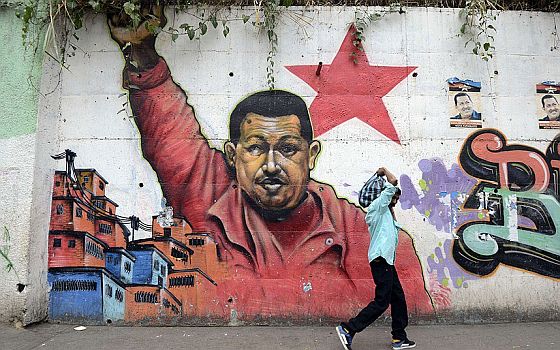
How Hugo Chavez helped liberate South America from the United States’ toxic influence

In the Toronto Star, Tony Burman writes: When Chavez was elected in 1998, his government replaced decades of corrupt and greedy rule by political and business elites — openly supported by the United States — who squandered the nation’s wealth.

During his years as president, millions of Venezuelans received health care for the first time. Extreme poverty was reduced by 70 per cent and access to public education increased dramatically. Illiteracy has virtually been eradicated. Above all, the vast Venezuelan majority, marginalized and ignored by governments in past decades, assumed a dignity and pride of place that had been unheard of in the modern Latin American political culture.

Since September 2001, the United States has virtually ignored the region, and the Latin American response has been eye-opening. The populist approach by Chavez, which challenged conventional political and economic thinking, has been contagious.

This is the one region that did not respond to the 2008 global recession with across-the-board austerity. Instead, several governments expanded public services, reduced poverty and inequality, and nationalized key industries. The result has been strong economies and a string of popular governments that have actually been reelected.

Apart from Chavez, who won last October’s presidential election in Venezuela with an 11 per cent margin, the latest example of this is Rafael Correa, reelected last month as Ecuador’s president with 57 per cent of the vote. Last year, Latin America’s first indigenous president, Evo Morales, was elected in Bolivia and, in 2009, Dilma Rousseff was voted in as president of Brazil.

The distinction of Latin America in today’s global political context is that it is far more independent of the United States than other regions, such as Europe or — dare I say — Canada. And that is a staggering irony given its history in the past century of being a virtual vassal, or doormat, of the U.S. [Continue reading…]

Facebooktwittermail

Time to ditch the 9/11 legal pretext for perpetual war

In an editorial, the New York Times says: Three days after the Sept. 11, 2001, terrorist attacks, Congress approved the Authorization for Use of Military Force. It was enacted with good intentions — to give President George W. Bush the authority to invade Afghanistan and go after Al Qaeda and the Taliban rulers who sheltered and aided the terrorists who had attacked the United States.

But over time, that resolution became warped into something else: the basis for a vast overreaching of power by one president, Mr. Bush, and less outrageous but still dangerous policies by another, Barack Obama.

Mr. Bush used the authorization law as an excuse to kidnap hundreds of people — guilty and blameless people alike — and throw them into secret prisons where many were tortured. He used it as a pretext to open the Guantánamo Bay camp and to eavesdrop on Americans without bothering to obtain a warrant. He claimed it as justification for the invasion of Iraq, twisting intelligence to fabricate a connection between Saddam Hussein and the 9/11 attacks.

Unlike Mr. Bush, Mr. Obama does not go as far as to claim that the Constitution gives him the inherent power to do all those things. But he has relied on the 2001 authorization to use drones to kill terrorists far from the Afghan battlefield, and to claim an unconstitutional power to kill American citizens in other countries based only on suspicion that they are or might become terrorist threats, without judicial review.

The concern that many, including this page, expressed about the authorization is coming true: that it could become the basis for a perpetual, ever-expanding war that undermined the traditional constraints on government power. The result is an unintelligible policy without express limits or protective walls.

Last Wednesday, Attorney General Eric Holder said the president would soon shed more light on his “targeted killing” policy. Mr. Obama needs to. In the last few weeks, confusion over these issues has been vividly on display. On one hand, the administration has said it would use lethal force only when capturing a terrorist was impossible, and it did arrest Sulaiman Abu Ghaith, a son-in-law of Osama bin Laden who once served as a spokesman for Al Qaeda, and arraigned him on Friday in federal court in Manhattan. The Washington Post reported last week that counterterrorism officials considered using the authorization law as the basis for the government’s authority to kill Mokhtar Belmokhtar, a militant leader in Algeria and Mali, but decided it did not apply because he was not part of Al Qaeda or an associated group.

But the administration still has not fully disclosed to Congress the legal documents on which the targeted killing program is based. And in that same article, The Post said the administration was debating whether it could stretch the law to make it apply to groups that had no connection, or only slight ones, to Al Qaeda and the 9/11 attacks.

A big part of the problem is that the authorization to use military force is too vague. It gives the president the power to attack “nations, organizations or persons he determines planned, authorized, committed or aided the terrorist attacks that occurred on Sept. 11, 2001, or harbored such organizations or persons, in order to prevent any future acts of international terrorism against the United States by such nations, organizations or persons.”

Making the law more specific, however, would only further enshrine the notion of a war without end. And, as Jeh Johnson, then counsel to the defense secretary, said in a speech last November, “War must be regarded as a finite, extraordinary and unnatural state of affairs.”

The right solution is for Congress to repeal the 2001 authorization. It could wait to do that until American soldiers have left Afghanistan, which is scheduled, too slowly, for the end of 2014. Better yet, Congress could repeal it now, effective upon withdrawal.

Facebooktwittermail

The neighbors most of America chooses to ignore

There is a sense in which America conjures a metaphysical absolute space — a space in which an infinite distance separates this country from everything and everyone outside its borders.

Ciudad Juárez — which is literally a stone’s throw from El Paso in Texas — could be as far away as North Waziristan.

So long as fences — both physical and cognitive — can be raised high enough, no one need concern themselves with what happens on the outside.

Jeremy Relph writes: The interior of the school bus is awash in blue light, lumbering through the Villa Esperanza neighborhood on the outskirts of Ciudad Juárez, Mexico, on a chilly November evening. Tinny rap music in Spanish plays on a cell phone. The kids ride the bus in their uniforms: white polo shirts with green collars and khakis. The guys favor lots of gel; the girls, ponytails. Most students will have walked home from school in the dark, which is often when things go wrong. We are in Km 29, which is Artistas Asesinos territory, a street gang aligned with the Sinaloa Cartel.

The bus leaves the paved highway and rumbles over hard dirt roads in the desert. It’s a slow ride. A girl gets off the bus and picks her way over the uneven dirt beside the road. The bus driver turns off the lights, plunging the landscape into darkness but for the glow of Juárez. When he turns the lights back on, she is running.

You accept the evil here in faith. Faith, after all, is belief in the unseen. It’s the opposite of hope but the same muscle. You don’t see it, but you know it’s there. We eat tacos al pastor later that evening, back in the city. We hear war stories. A friend mimics the bang bang of shooting, making a rifle with his hands. A patron behind me, waiting for his takeout, wears a gun on his hip. The restaurant is half full, and our waiter becomes inattentive, hurrying to another table. Our friend realizes that seated at the table behind us are members of a local cartel comprising dirty cops, La Linea. The patron waiting on his takeout is a state cop. In the Juárez of yesterday, this might have lead to a restaurant littered with dead bodies. Cuidad Juárez is changing.

The drug war in Juárez saw some 10,000 men, women, and children die since 2007 — 359 homicides reported in October 2010 alone — a disproportionate chunk of the nearly 60,000 reported for the rest of the country. At stake: access to the American market, worth close to $40 billion. That money, and the violence that inevitably comes with it, moves beyond class boundaries — society itself fell apart over the past six years here. Extreme violence became totally normal, a fact of everyday life.

Throughout the war, cartels actively recruited young people. Teenagers — Los Ninis (ni estudian ni trabajan, neither work nor study) — were the most vulnerable, some drawn to quick money and status. And now it’s considered done. Some credit could go to former President Felipe Calderón’s Todos Somos Juárez’s program (We Are All Juárez), introduced in 2010. The federal government invested $263 million in 2010 and $138 in 2011. Security ate up 18% of the money, the rest being pushed to other areas like health, education, and social development. The results, on paper, are impressive, though flawed. Some feel the cessation of violence has more to do with the Sinaloa cartel winning the war or the combatants merely taking a breather. Regardless, as of last year, Juárez is no longer the world’s murder capital, a distinction passed on to San Pedro Sula, Honduras; now it’s No. 19.

Juárez struggles to provide for its 1.5 million residents, and nowhere will its failings be more evident in the future than in schools and the next generation of young people, who came of age during the drug wars and don’t know much else. The system meant to look out for them is broken, but, amazingly, they — and the adults charged with looking after them — are not. [Continue reading…]

Facebooktwittermail

Global temperature rise is fastest in at least 11,000 years, study says

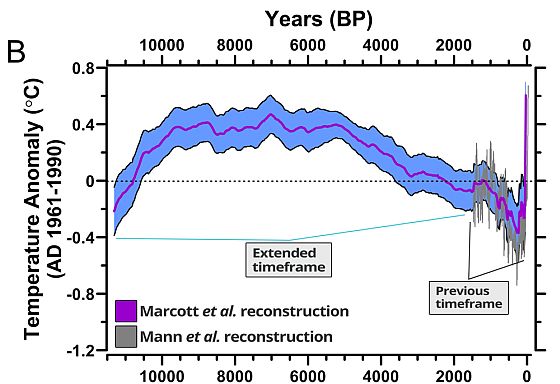
Christian Science Monitor reports: Over the past century, global average temperatures appear to have risen faster than at any time since the end of the last ice age 11,300 years ago, and perhaps longer. Meanwhile, the magnitude of the increase has been unmatched in at least the past 4,000 years.

Researchers say those are the implications of a new study that uses natural stand-ins for thermometers to trace temperature trends back to the beginning of the current warm, interglacial period. Significantly, the study’s findings suggest the current warming trend cannot be explained by some forms of naturally occurring temperature variability, a lingering issue in the debate over the impact of human activity on global warming.

The main trigger for the current warming trend, especially since the middle of the last century, has been rising emissions of heat-trapping carbon dioxide as people burn fossil fuels and change land-use patterns, researchers say.

Although other so-called paleoclimate records reach farther back into geological time, the team focused on the Holocene epoch, in which human civilizations emerged and evolved.

“To our knowledge, based on this reconstruction, the rate of change today is unprecedented” in the Holocene, says Shaun Marcott, an atmospheric scientist at Oregon State University who led a team formally reporting the results in Friday’s issue of the journal Science. Indeed, it may be unprecedented in the past 22,000 years, he adds, when previous paleoclimate research he and his colleagues have conducted is taken into account.

Facebooktwittermail

The drone question Obama hasn’t answered

Ryan Goodman writes: The Senate confirmed John O. Brennan as director of the Central Intelligence Agency on Thursday after a nearly 13-hour filibuster by the libertarian senator Rand Paul, who before the vote received a somewhat odd letter from the attorney general.

“It has come to my attention that you have now asked an additional question: ‘Does the President have the authority to use a weaponized drone to kill an American not engaged in combat on American soil?’ ” the attorney general, Eric H. Holder Jr., wrote to Mr. Paul. “The answer to that question is no.”

The senator, whose filibuster had become a social-media sensation, elating Tea Party members, human-rights groups and pacifists alike, said he was “quite happy with the answer.” But Mr. Holder’s letter raises more questions than it answers — and, indeed, more important and more serious questions than the senator posed.

What, exactly, does the Obama administration mean by “engaged in combat”? The extraordinary secrecy of this White House makes the answer difficult to know. We have some clues, and they are troubling.

If you put together the pieces of publicly available information, it seems that the Obama administration, like the Bush administration before it, has acted with an overly broad definition of what it means to be engaged in combat. [Continue reading…]

Facebooktwittermail

The man who could be U.K.’s first Jewish PM reluctant to call himself a Zionist

The headline in Haaretz says: “The man who could be U.K.’s first Jewish PM says he is a Zionist.” But that’s not exactly how the report under the headline reads.

At an event in central London on Thursday, organized by the Board of Deputies of British Jews and the London Jewish News, Labour Party leader Ed Miliband used the opportunity to establish his pro-Israel credentials.

The moment that made it for the audience was when he emphatically answered the question of whether he is a Zionist by saying: “Yes, I consider myself a supporter of Israel.” Nevertheless, some in the audience lamented that he was careful not to voice the sound bite – I am a Zionist.

The United States has a non-Jewish vice president who calls himself a Zionist, but Miliband calls himself a supporter of Israel.

That sounds to me like a man who’s going through the motions, saying what he thinks he needs to say. He could have said “I am a Zionist.” He declined to utter those words.

Facebooktwittermail

The missing history of America’s third war

Micah Zenko writes: Since 11:47 on Wednesday morning, the beginning of a Senate filibuster to delay a vote on John Brennan’s nomination to head the CIA, “Rand Paul,” “drones,” and “John Brennan” have intermittently been trending on Twitter. This attention-grabbing focus on targeted killings — which will last only until Paul runs out of steam — is representative of the sporadic attention that the controversial tactic has received from policymakers and the public.

With each supposed revelation — the “kill list,” “signature strikes,” “disposition matrix,” and the leaking of a Department of Justice white paper providing the legal justification for killing American citizens — there is a frenzy of interest in drone strikes. Analysts (myself included) are repeatedly asked, “Where is this all heading in five or ten years?” In other words: What additional lethal missions will U.S. armed drones execute, and where will they occur? What other states will seek to develop this military capability?

But, in general, there is relative indifference to the history of America’s Third War — the 10-year campaign of over 400 targeted killings in non-battlefield settings that have killed an estimated 3,500 to 4,700 people. And that is puzzling, particularly since they have become a defining feature of post-9/11 U.S. foreign policy.

Over the past few months, many stakeholders in and out of government have offered recommendations about how the Obama administration should change, limit, end, or enhance its targeted killing policies. However, there have been no calls for an official government study into the history and evolution of non-battlefield targeted killings. This is essential, since reforms must first be informed by an accurate accounting of how the policies were originally conceived, how they were implemented and altered based on updated information, whether they succeeded or failed at achieving their objectives, and what their intended and unintended effects have been. [Continue reading…]

Facebooktwittermail

Barack Obama ‘has authority to use drone strikes to kill Americans on U.S. soil’

The Telegraph reports: President Barack Obama has the authority to use an unmanned drone strike to kill US citizens on American soil, his attorney general has said.

Eric Holder argued that using lethal military force against an American in his home country would be legal and justified in an “extraordinary circumstance” comparable to the September 11 terrorist attacks.

“The president could conceivably have no choice but to authorise the military to use such force if necessary to protect the homeland,” Mr Holder said.

His statement was described as “more than frightening” by Senator Rand Paul, a Republican from Kentucky, who had demanded to know the Obama administration’s position on the subject.

Facebooktwittermail

Priceless Colbert on Israel

Stephen Colbert: Our worst fears about Obama were confirmed when he appointed as Secretary of Defense, former senator and man who just learned his dog died, Chuck Hagel.

Hagel has a history of troubling statements. He once said:

The Jewish Lobby intimidates a lot of people…

And:

I’m not an Israeli senator. I’m a United States senator.

Clearly, this man does not understand that when it comes to Israel there are certain things you can’t say, for instance, implying that there are certain things that you can’t say. Which there aren’t. You can say anything you want about Israel which I would, if there was anything to say, but there isn’t so there’s nothing to be said.

And how dare Hagel say it.

Facebooktwittermail

The gap between rich and poor will continue to grow

Thomas Pascoe writes: The world’s rich are getting richer. The Forbes billionaire list was published this morning (there are now 1,426 of them globally in dollar terms, with 210 new entrants in the last year), and collectively they are $800bn richer than they were a year ago. Each billionaire is, on average, $100m richer than in 2011, with an average wealth of $3.7bn.

It can hardly be a surprise. Across the world, stock markets are booming (Dow futures indicate it will open today around the 14,170 mark, a new record). Bond prices are also strong in developed markets despite those same sovereigns usually being mired in a debt crisis. At the same, no major currency has collapsed, thanks to the cancellation effect of simultaneous Western devaluation, and commodities (WTI crude is perhaps the exception), have looked fairly stable, even though the bull run has stopped. In short, if you have any asset base at all, you had to be quite special to have lost money in the last year.

Strong stocks and strong bonds are an unusual mix. Theoretically and historically, money has washed from one to the other causing rises and falls along the way. What is unusual about the present climate is that so much money has been created by central banks that there is sufficient available to create a bubble in, well, everything. [Continue reading…]

Facebooktwittermail

Israel mistreats Palestinian children in custody: UNICEF

Reuters reports: Palestinian children detained by the Israeli military are subject to widespread, systematic ill-treatment that violates international law, a UNICEF report said on Wednesday.

The United Nations Children Fund (UNICEF) estimated that 700 Palestinian children aged 12-17, most of them boys, are arrested, interrogated and detained by the Israeli military, police and security agents every year in the occupied West Bank.

UNICEF said it had identified some examples of practices that “amount to cruel, inhuman or degrading treatment or punishment according to the Convention on the Rights of the Child and the Convention against Torture”.

Israeli Foreign Ministry spokesman Yigal Palmor said officials from the ministry and the Israeli military had cooperated with UNICEF in its work on the report, with the goal of improving the treatment of Palestinian minors in custody.

“Israel will study the conclusions and will work to implement them through ongoing cooperation with UNICEF, whose work we value and respect,” he said.

According to the report, ill-treatment of Palestinian minors typically begins with the arrest itself, often carried out in the middle of the night by heavily armed soldiers, and continues all the way through prosecution and sentencing.

“The pattern of ill-treatment includes … the practice of blindfolding children and tying their hands with plastic ties, physical and verbal abuse during transfer to an interrogation site, including the use of painful restraints,” the report said.

It said minors, most of whom are arrested for throwing stones, suffer physical violence and threats during their interrogation, are coerced into confession and do not have immediate access to a lawyer or family during questioning.

“Treatment inconsistent with child rights continues during court appearances, including shackling of children, denial of bail and imposition of custodial sentences and transfer of children outside occupied Palestinian territory to serve their sentences inside Israel,” the report said.

Such practice “appears to be widespread, systematic and institutionalized”, it added.

Facebooktwittermail

Netanyahu threatens America

“We have to stop [Iran’s] nuclear enrichment program before it’s too late. And I have to tell you, from the bottom of my heart and with the clarity of my brain: words alone will not stop Iran. Sanctions alone will not stop Iran. Sanctions must be coupled with a clear and credible military threat, if diplomacy and sanctions fail.

“I deeply appreciate something President Obama has said repeatedly — you’ve just heard Vice President Biden say it again: Israel must always be able to defend itself, by itself, against any threat to its existence.”

This was the core of Benjamin Netanyahu’s speech yesterday as he addressed the key representatives of the U.S. House of Representatives, Senate, and the Obama administration who had all convened for their annual display of allegiance to AIPAC.

Netanyahu’s message was unambiguous: hand over the money you promised. Sequestration is your problem, not ours.

How can Israel possibly continue to make credible military threats against Iran if at the hour of its greatest need, Washington betrays the Jewish state by making cuts in the 20% share of its defense budget that American taxpayers are obligated to pay?

We must stand by Israel, Washington will continue to say with an undivided voice over the coming days, even while failing to stand by millions of senior Americans who will soon no longer be receiving meals-on-wheels thanks to sequestration. When it comes weighing up conflicting demands coming from AARP and AIPAC, our elected representatives know which side their bread is buttered on.

Yet the issue might be seen as a little less clear-cut if anyone paused to parse Netanyahu’s latest evocation of his perennial rhetorical standby: directing military threats against Iran.

There was nothing new in Netanyahu’s statement and taken at face value it might sound like he was issuing yet another military threat. If that was indeed the case, then based on his own reasoning — that the continued expansion of Iran’s nuclear enrichment program demonstrates that diplomacy and sanctions have been ineffective — it follows: military threats from Netanyahu are also ineffective. He’s been making what sound like threats for years and yet enrichment continues.

On the other hand, even if Netanyahu likes to assume a threatening posture, what he is saying strongly implies that Israel is actually incapable of making a credible military threat against Iran. Strikes on targets in Syria and Iraq have arguable done more to demonstrate the limits of Israeli air power than its potential to strike Iran.

What Netanyahu is really calling for is louder threats from Washington. That a military threat remains “on the table” and that “we’ve got your back covered,” is not enough.

If a year ago Obama was telling AIPAC there was too much “loose talk of war,” Netanyahu’s response now is that there isn’t enough talk of war.

For a while the Israeli prime minister thought he could cajole the U.S. by saying: you must do what we can’t, because if you don’t, we will — but the only coherent part of that message was the bit Israel is now left with: we can’t; you must.

Even worse for Netanyahu, he no longer has the power to threaten Obama’s chances for re-election.

As for how all this looks from Tehran, with a jaundiced eye no doubt they are simply asking: what’s new?

Facebooktwittermail

The Zionism that Erdoğan opposes

Mustafa Akyol writes: Last week, during a visit to Vienna, Turkish Prime Minister Recep Tayyip Erdoğan initiated an international controversy by condemning “Zionism,” albeit in passing. “As is the case for Zionism, anti-Semitism and fascism,” he said, “it is inevitable that Islamophobia be considered a crime against humanity.”

Soon objections came. U.N. Secretary-General Ban Ki-moon found the comment “unfortunate” and “hurtful and divisive.” Israeli Prime Minister Benjamin Netanyahu was expectedly sharper, by defining Erdoğan’s words as “a dark and mendacious statement, the likes of which we thought had passed from the world.”

The issue surfaced during the U.S. Secretary of State John Kerry’s trip to Turkey as well. Kerry, on his first trip to a Muslim country since taking office, found welcoming hosts in Ankara, but he noted that he found Erdoğan’s comments “objectionable.”

But why did Erdoğan create such a fuss? And what did he really mean?

As a longtime observer of the Turkish prime minister, here is my humble advice for anyone who would like to find an answer to such questions: Erdoğan is a very Turkish politician. He, in other words, thinks and speaks in very local terms, not international ones. Therefore when he speaks of “Zionism,” what he has in mind is what most Turks have in mind, rather than what Ban Ki-moon, Netanyahu and Kerry have in theirs.

And there is a big gap between these two. Zionism, by international definitions, is a form of Jewish nationalism that is focused on founding and securing a Jewish state in what Jewish sources call “the Land of Israel.” Of course, Arabs call the same land “Palestine,” and the ones who used to live there, the Palestinians, have conflicted with Zionism from the beginning. In return, Zionists have taken various attitudes against Palestinians, ranging from moderate views which hope to co-exist with the Arabs to radical views which want to “transfer” all of them to other countries, which is a euphemism for ethnic cleansing. [Continue reading…]

Facebooktwittermail