Category Archives: Israel

Israel’s indispensable enemies

The brutality with which the Iranian authorities have suppressed political dissent since last June’s disputed presidential election has been widely reported. The Washington Post now reveals that the political turmoil has had another effect: it has resulted in a new supply of intelligence as disaffected officials leak information about Iran’s nuclear program.

As a result, a National Intelligence Estimate being prepared for President Obama which was due out last fall is not expected to be completed until August.

The revisions to the NIE underscore the pressure on the U.S. intelligence community to produce an accurate assessment of Iran’s nuclear ambitions as President Obama pursues a policy aimed at preventing the country from acquiring an atomic bomb. The community’s 2007 assessment presented the startling conclusion that Iran had halted its work on developing a nuclear warhead, provoking enduring criticism that the report had underestimated the Iranian threat.

Officials briefed on the new version, which is technically being called a “memo to holders” of the first, say it will take a harder tone. One official who has seen a draft said that the study asserts that Iran is making steady progress toward nuclear weapons capability but that it stops short of concluding that the Islamic republic’s top leaders have decided to build and test a nuclear device.

There is little question that Iran sees strategic value in making its nuclear intentions hard to decipher, but let’s for the sake of argument assume that its goal is to put itself in the same position as Japan: not to assemble a nuclear arsenal but to have the means to do so at short notice. Could such a capability pose an existential threat to Israel (or anyone else)?

Israeli leaders have already made it clear that they draw no distinction between a nuclear armed Iran and an Iran that has nuclear weapons capability, yet this may say less about the nature of an Iranian threat than it does about the nature of Zionism. Deprive Israel of its existential threats, and the necessity for a Jewish state becomes less imperative. Take away the fear of annihilation and Jewish identity will lose one of its most unifying attributes.

Israel might fear its enemies, yet can it survive without them?

Facebooktwittermail

Iran’s nuclear capabilities

Thomas Schelling, a Nobel laureate and an expert in nuclear strategy, spoke at the New America Foundation in Washington last week.

Having recently attended the highly influential Herzliya Conference in Israel, Schelling said:

I was impressed with how many Israelis speculate that what Iran wants to do is to get just about where Japan is in terms of nuclear capability. Get to where they could have a few bombs in a few months, or maybe a few weeks, but not overtly test anything to prove they have it and maybe not to claim they have it.

I don’t know where the Iranians might get that idea, but I’d heard about it for a couple of years from Americans who study Iranian apparent nuclear policy and it strikes me as an idea that might not occur to the Iranians but it strikes me as a good idea. I don’t see any way to make them back down from where they are, but it might be possible to persuade them not to take the final step…

Israel’s President Shimon Peres, who also attended the Herzliya Conference yet lacks the slightest nuance in his assessment of Iran’s intentions, yesterday declared that Iran poses a threat to the whole civilized world.

“A threat to the peace of the Jewish people always carries the danger of turning into a threat to the civilized world as a whole,” Peres said in Jerusalem on Sunday.

That’s a statement eerily reminiscent of something the Israeli historian, Martin van Creveld, said a few years ago while referring to Israel’s own nuclear arsenal: “We have the capability to take the world down with us. And I can assure you that that will happen before Israel goes under.”

Which begs the question, given that Israel has an arsenal of several hundred nuclear weapons and Iran so far has none: Of which state should we be more afraid?

In considering the Iranian nuclear threat, there is another reason for thinking that the Iranians may well have calculated that attaining a nuclear capability without assembling a nuclear arsenal is in their best interests — not simply because of the international ramifications but because of the regime’s own internally complex and fractious power dynamics.

For Iran to actually acquire the bomb and not simply the means to produce it, begs difficult questions of command and control. Could the regime withstand a potential power struggle that might ensue over how weapons might be dispersed and under whose authority? The prospect of the Iranian Revolutionary Guards becoming Iran’s nuclear masters might be sufficiently galling to everyone outside the IRG, that nuclear capability appears as full a measure of nuclear power that the Islamic state can safely handle.

When it comes to assessing Iran’s nuclear intentions there is an abundance of evidence that it is indeed a rational actor and virtually none that it operates in the thrall of an apocalyptic vision of the future.

Facebooktwittermail

Why Netanyahu stayed away from Washington

There’s been plenty of speculation about Benjamin Netanyahu’s last-minute cancellation of his plan to attend the Nuclear Security Summit in Washington. The official explanation was that it was to avoid facing criticism from Turkey, Egypt and other Middle East states over Israel’s nuclear program. Such criticism was long anticipated so that was never a credible explanation, but maybe the real reason became apparent this afternoon when President Obama said Israel should sign the Nuclear Non-Proliferation Treaty.

This is what he said in a news conference:

Scott Wilson, Washington Post: You have spoken often about the need to bring U.S. policy in line with its treaty obligations internationally to eliminate the perception of hypocrisy that some of the world sees toward the United States and its allies. In that spirit and in that venue, will you call on Israel to declare its nuclear program and sign the Non-Proliferation Treaty? And if not, why wouldn’t other countries see that as an incentive not to sign on to the treaty that you say is important to strengthen?

President Obama: Well, Scott, initially you were talking about U.S. behavior and then suddenly we’re talking about Israel. Let me talk about the United States. I do think that as part of the NPT our obligation as the largest nuclear power in the world is to take steps to reducing our nuclear stockpile. And that’s what the START treaty was about — sending a message that we are going to meet our obligations.

And as far as Israel goes, I’m not going to comment on their program. What I’m going to point to is the fact that consistently we have urged all countries to become members of the NPT.

So there’s no contradiction there. We think it is important that we have a international approach that is universal and that rests on three pillars: that those of us who have nuclear weapons are making serious efforts to reduce those stockpiles; that we all are working against the proliferation of nuclear weapons and those countries that don’t currently have nuclear weapons make the decision not to pursue nuclear weapons; and that all countries have access to peaceful nuclear energy.

And so whether we’re talking about Israel or any other country, we think that becoming part of the NPT is important.

US Under Secretary of State for Arms Control and International Security Affairs Ellen Tauscher spoke with Deputy Foreign Minister Daniel Ayalon last week and said that the US was going to adopt a policy of “calculated ambiguity” towards friendly nuclear nations that are outside the NPT.

That calculated ambiguity may be exactly what spooked Netanyahu. In a play on Israel’s own policy (which is that it will not be the first country to introduce nuclear weapons to the Middle East), did the Obama administration merely promise the Israelis that at the summit the US would not “introduce” the topic of Israel’s need to sign the NPT?

Facebooktwittermail

The nuclear paradox

Here’s how President Obama states the nuclear paradox:

The risk of a nuclear confrontation between nations has gone down, but the risk of a nuclear attack has gone up.

Here’s how I define it:

Hypothetical nuclear threats provoke more fear than real nuclear threats.

Nowhere is this paradox more evident than in Tel Aviv and Tehran.

Which city is currently in greater jeopardy of nuclear annihilation? Tehran.

Which city’s residents are repeatedly being told by their political leaders they should be afraid of nuclear annihilation? Tel Aviv’s.

So, to return to Obama’s assessment, when he says the risk of nuclear confrontation between nations has gone down, he’s saying something that’s both obvious and deceptive. What’s obvious is that the Cold War risk of a nuclear war between nuclear-armed states has diminished, but what he purposefully did not say is that the risk of any nuclear-armed state actually using its nuclear weapons has gone down.

The risk that Israel could use tactical nuclear weapons to destroy Iran’s nuclear facilities is real. I don’t believe that Israel is likely to do so because its current leadership — despite its willingness to engage in hyperbolic rhetoric — probably recognizes that the regional and global impact of the first use of nuclear weapons in warfare since 1945 would seal Israel’s fate as a pariah state.

Still, the risk that Israel might use nuclear weapons is indisputably greater than the risk of nuclear weapons being used by any organization or state that is not currently armed with such weapons.

The risk of nuclear terrorism should not be dismissed, but as Brian Michael Jenkins notes, it’s important to distinguish between nuclear terrorism and nuclear terror. In 2008 he wrote:

Will terrorists go nuclear? It is a question that worried public officials and frightened citizens have been asking for decades. It is no less of a worry today, as we ponder the seventh anniversary of 9/11.

Might Iran’s nuclear weapons ambitions lead eventually to arming Hizbollah or Hamas with nuclear weapons? Might a financially desperate North Korea sell the wherewithal for nuclear weapons to terrorist buyers? Might a political upheaval in always turbulent Pakistan put a nuclear weapon in the hands of extremists? Could there, ultimately, be a nuclear 9/11?

We have to take the long-shot possibility of nuclear terrorism seriously, but we must not allow ourselves to be terrorized by it.

Nuclear terrorism and nuclear terror reside in different domains. Nuclear terrorism is about a serious threat — the possibility that terrorists might somehow obtain and detonate a nuclear weapon — while nuclear terror is about the anticipation of that event. Nuclear terrorism is about terrorists’ capabilities, while nuclear terror is about imagination.

Fear is not free. Fear can pave the way for circumventing established procedures for the collection of intelligence, for attempts to operate outside the courts, and perhaps for torture. Distinguished scholars discuss the durability of the U.S. Constitution in the face of nuclear terrorism.

Frightened populations are intolerant. Frightened people worry incessantly about subversion from within. They worry about substandard zeal. Frightened people look for visible displays to confirm unity of belief–lapel pin patriotism.

Fear creates its own orthodoxy. It demands unquestioning obeisance to a determined order of apprehension.

During the Cold War an all-out nuclear exchange would have meant planetary suicide. Today, we face one tyrant in North Korea with a handful of nuclear weapons, an aspirant in Iran enthralled by first-use fantasies, and a terrorist organization with an effective propaganda machine-dangerous, vexing, but not the end of the world, not the end of the nation, not the end of a single city.

Undoubtedly, a terrorist nuclear explosion of any size would have a huge psychological impact on America. But whether it would lead to social anarchy would depend heavily on the attitudes of the nation’s citizens and the behavior and communications of its leadership.

We may not be able to prevent an act of nuclear terrorism. But we can avoid destroying our democracy as a consequence of nuclear terrorism.

Whether or not we as citizens yield to nuclear terror is our decision.

John Mueller from Ohio State University’s department of political science wrote last year:

The evidence of al-Qaeda’s desire to go atomic, and about its progress in accomplishing this exceedingly difficult task, is remarkably skimpy, if not completely negligible. The scariest stuff — a decade’s worth of loose nuke rumor — seems to have no substance whatever. For the most part, terrorists seem to be heeding the advice found in an al-Qaeda laptop seized in Pakistan: “Make use of that which is available … rather than waste valuable time becoming despondent over that which is not within your reach.”

As Mueller and Mark G. Stewart note in an article in the current edition of Foreign Affairs, if America’s counterterrorism policy was actually based on objective risk assessment, we’d understand that the risk al Qaeda poses to each American is about the same as the risk posed by kitchen appliances.

As a hazard to human life in the United States, or in virtually any country outside of a war zone, terrorism under present conditions presents a threat that is hardly existential. Applying widely accepted criteria established after much research by regulators and decision-makers, the risks from terrorism are low enough to be deemed acceptable. Overall, vastly more lives could have been saved if counterterrorism funds had instead been spent on combating hazards that present unacceptable risks.

This elemental observation is unlikely to change anything, however. The cumulative increased cost of counterterrorism for the United States alone since 9/11 — the federal, state, local, and private expenditures as well as the opportunity costs (but not the expenditures on the wars in Iraq or Afghanistan) — is approaching $1 trillion. However dubious and wasteful, this enterprise has been internalized, becoming, in Washington parlance, a “self-licking ice cream cone,” and it will likely last as long as terrorism does. Since terrorism, like crime, can never be fully expunged, the United States seems to be in for a long and expensive siege.

Facebooktwittermail

Why Bibi won’t budge

Ever since David Ignatius revealed that President Obama is “seriously considering” proposing an American peace plan to resolve the Israeli-Palestinian conflict, Washington’s Middle East hands have been ruminating on the significance of this report. Obama dropped in on a meeting of former national security advisers in the White House a couple of weeks ago, but if the people whose job it is to keep the dream of a peace process alive are to be believed, who was there was more significant than the president’s casual entry.

Brent Scowcroft, Zbigniew Brzezinski, Sandy Berger, Colin Powell, Frank Carlucci and Robert C. McFarlane — these are the heavyweights who can push Obama in the right direction. Right? Not unless Benjamin Netanyahu also gets pushed out of the way.

Larry Derfner lays out the reasons Bibi presents an immovable obstacle.

Which way will Bibi go? This seems to be the big question – whether Prime Minister Binyamin Netanyahu will bow to American pressure, exchange his right-wing/religious government for a “peace coalition” and start taking down the occupation, or whether he will dig in.

I don’t think there’s any doubt about it – he’s going to dig in. This is not the prime minister who’s going to divide the land with the Palestinians.

To begin with, of the 69 MKs in an imagined Likud-Kadima-Labor-Meretz coalition, the great majority are totally opposed to paying the well-known price for peace – removing 100,000 settlers from the West Bank’s interior and relinquishing Arab Jerusalem to the Palestinians for their capital. No Likudnik sees this as anything less than treason, and all but a few Kadima members would agree. The peace coalition actually numbers no more than about 20 MKs, and even with the outside support of the Arab parties, they’re a hopeless minority, for now anyway.

Still, could a prime minister who has the president of the United States and the rest of the world bearing down on him convince the majority to do the deal? Could a prime minister with unusual powers of persuasion persuade the country to do what the democratic world has been asking it to do since 1967, on pain of losing its place in that world?

Maybe. If such a prime minister really believed Israel’s future depended on its ending the occupation. And Netanyahu doesn’t believe that for a minute. He’s spent his whole career preaching the opposite – that giving up the land conquered in the Six Day War would be the death of this country. This isn’t a talking point for him, it’s the worldview he was raised on, one he’s never abandoned regardless of the empty phrases he utters now and then to stroke the Obama administration. Netanyahu has opposed every peace process he’s ever been around. His view of the Palestinians is simple, clear and consistent – either we keep them down or they wipe us out.

And just in case anyone imagines that there is any other Israeli leader who could do what Netanyahu finds impossible, Derfner is clear: “No there isn’t. Not now, anyway.” Instead, it’s up to Israel’s friends “to make the status quo here intolerable.”

That’s a big leap from simply observing that the status quo is unsustainable.

Facebooktwittermail

The tyranny of law

When the question, is it right?, is made subordinate to the question, is it legal?, we succumb to the tyranny of law.

Once in a while a rare individual when confronting a contradiction between these two will refuse to be tyrannized. Anat Kam might be just such an individual, though as Richard Silverstein (who has covered this story in greater detail than anyone else) speculates, she may have simply been “an aspiring journalist who found herself in a position to advance her career.”

The story of her house arrest and impending trial have been the focus of huge attention inside and outside Israel but within the current media frenzy the real story is getting much less attention. That is the story which Kam revealed and which was reported in Haaretz two years ago.

But in case anyone is naive enough to imagine that a Haaretz report might inhibit the sense of impunity that guides Israel’s security forces, another report from less than four months ago makes it clear that those acting in the name of the state see few limitations on how they exercise their power. On December 26 Haaretz reported:

An investigation into an overnight Israel Defense Forces operation in the West Bank city of Nablus early Saturday suggests that Israeli soldiers may have executed two of the three Palestinian militants who were killed, the left wing rights group B’Tselem said Saturday.

In the operation, the IDF killed three Al Aqsa Martyrs Brigades operatives, whom officials said were responsible for a shooting attack on Thursday which killed 40-year-old father of seven Meir Hai of the settlement of Shavei Shomron. The troops surrounded the homes of the three and called for them to exit, and killed them when they refused to surrender.

According to B’Tselem, in two of the three cases the troops behaved as if they were preparing for an execution, not an arrest. Relatives and eyewitnesses told B’Tselem that the two were unarmed and did not attempt to flee, and that the soldiers weren’t trying to stop them, but rather shot them from close range once their identity was revealed.

Little has changed since the story that triggered the Anat Kam affair was first reported.

License to kill

Uri Blau, Haaretz, December 4, 2008

The Israeli Defense Forces highest commanders approved the killing of innocent people while targeted assassinations were being carried out, in spite of an Israeli High Court ruling that prohibited such operations. Moreover, the claim that the targets of such operations represented “ticking time bombs” was exposed as a fraud when an inconvenient scheduling conflict — the visit of a senior American official — required that a murder be postponed.

The announcement made by the Israel Defense Forces’ spokesman on June 20, 2007 was standard: “Two armed terrorists belonging to the Islamic Jihad terror organization were killed last night during the course of a joint activity of the IDF and a special force of the Border Police in Kafr Dan, northwest of Jenin. The two terrorists, Ziad Subahi Mahmad Malaisha and Ibrahim Ahmed Abd al-Latif Abed, opened fire at the force during its activity. In response the force fired at them, killing the terrorists. On their bodies two M-16 rifles, a pistol and ammunition were found. It was also discovered that the terrorists were involved in planning suicide attacks against the Israeli home front, including the attempt in Rishon Letzion last February.”

The laconic announcement ignores one important detail: Malaisha was a target for assassination. His fate had been decided several months earlier, in the office of then head of Central Command, Yair Naveh. As far as the public was concerned, on the other hand, the last declared assassination carried out by the IDF in the West Bank took place in August 2006; at the end of that year the High Court of Justice set strict criteria regarding the policy of assassinations in the territories.

A Haaretz Magazine investigation reveals for the first time operational discussions in which the fate of wanted men and innocent people was decided, in apparent disregard of the High Court decision. Thus it was revealed that the IDF approved assassination plans in the West Bank even when it would probably have been possible to arrest the wanted men – in contradiction to the State’s statement to the High Court – and that in cold military terminology the most senior IDF echelons approve, in advance and in writing, the harming of innocent Palestinians during the course of assassination operations. Moreover, it turns out that the assassination of a target the defense establishment called part of a “ticking infrastructure” was postponed, because it had been scheduled to take place during the visit of a senior U.S. official.

Leading legal experts who were asked to react to the documents say that the IDF is operating in contradiction to a High Court ruling. “Morality is a very difficult issue,” Prof. Mordechai Kremnitzer of Hebrew Univeristy said. “The thought that there are people who sit behind a desk and determine that someone is fated to die is a frightening thought.” Continue reading

Facebooktwittermail

Is the US getting ready to push Israel to declare its nuclear status?

[Updated below] Whatever else can be said about the strained relationship between Barack Obama and Benjamin Netanyahu, one thing is clear: Obama seems intent on keeping Netanyahu off balance.

On Tuesday, Netanyahu announced he would be returning to Washington next week to attend Obama’s Nuclear Security Summit. Just days later, he had changed his mind, ostensibly because of “fears that a group of Muslim states, led by Egypt and Turkey, would demand that Israel sign up to the international Nuclear Non-Proliferation Treaty, or NPT,” Haaretz reported.

An earlier report in the Jerusalem Post, however, had raised that specific issue and said this would not deter the Israeli prime minister from attending the summit:

[O]ne main argument against participation was that Netanyahu’s presence at an international forum dealing with nuclear issues would inevitably draw attention to Israel’s own reported nuclear arsenal, as well as its policy of ambiguity on whether it has nuclear weapons.

Countries such as Egypt, Turkey and Saudi Arabia will certainly – as they do regularly at international nuclear forums – shine the spotlight on Israel and a perceived imbalance: Why is the world so keen on stopping Iran’s nuclear development program, but silent in the face of Israel’s reported nuclear arsenal?

One government official said Netanyahu’s decision to attend, despite this likely scenario, had been made because key issues affecting Israel would be discussed there, and it was important for the Jewish state’s voice to be heard – as well as the realization that Israel’s reported nuclear capacity would be an issue whether Netanyahu participated in the meeting or not.

Earlier, Ynet reported:

US Under Secretary of State for Arms Control and International Security Affairs Ellen Tauscher spoke with Deputy Foreign Minister Daniel Ayalon Tuesday and updated him on US President Barack Obama’s new nuclear proliferation policy.

Tauscher said that the US will strive to protect its allies and work against countries which violate the Non-Proliferation Treaty (NPT) such as North Korea, or countries that fail to meet their commitments to the international community such as Iran.

The under secretary of state stressed that Washington will adopt a “calculated ambiguity” policy towards countries which do not pose a threat to the US. Despite not explicitly pointing to Israel, it appears her statements were meant to reassure the Jewish state.

It’s unclear however, whether the administration’s “calculated ambiguity” was really meant to reassure Israel or do the opposite.

The United States is not on the brink of pushing Israel to sign the Nuclear Non-Proliferation Treaty but it could be signalling its willingness to see pressure applied by others as it provides a platform in Washington for such an effort. Moreover, in a little noted move, the Obama administration appears to be using a new diplomatic tool to signal that Israel’s days of “nuclear ambiguity” may be numbered: Israel’s nuclear scientists are now being shut out of the United States.

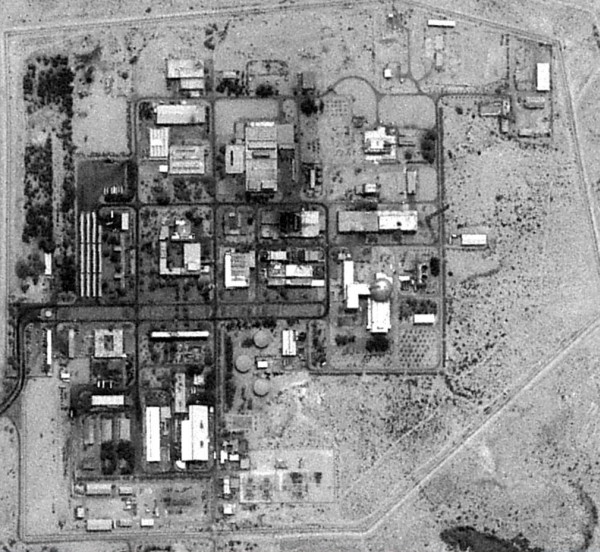
A report on the Hebrew NRG/Maariv website, under a headline, Dimona reactor workers not welcome in the US, says that workers at Israel’s Dimona nuclear research reactor who submitted visa requests to visit the United States for ongoing university education in physics, chemistry and nuclear engineering, have all been rejected, specifically because of their association with the Dimona reactor. According to the report, this is a new policy decision by the Obama administration, since reactor workers were until recently being issued visas to study in the US.

Update: Shortly after I posted this, Politico reported that the White House today denied that there has been any change in its visa policy.

Facebooktwittermail

Look in the mirror Avigdor

“The problem is not Turkey, the problem is Erdogan,” Israel’s foreign minister, Avigdor Lieberman, told Ynet on Monday.

Sorry Mr Lieberman: it’s you — not Turkey’s prime minister — who has a serious image problem. How many other countries in the world have a foreign minister who would best serve his county’s interests by staying at home and avoiding the media?

Today while visiting France, Recep Tayyip Erdogan, never one to spurn the diplomatic gifts that Israel so freely gives, was quick to use the opportunity to say plainly what every Western leader knows but lacks the guts to say in public: that Israel is the “principal threat to peace” in the Middle East.

Benjamin Netanyahu says: “We are interested in good relations with Turkey and regret that Erdogan chooses time after time to attack Israel,” but the Israeli prime minister and his foreign minister are indulging in an idle fantasy if they imagine they can drive a wedge between the nation of Turkey and its immensely popular leader.

Moreover, those who want to suggest or insinuate that the most populous Muslim nation that bridges Europe and Asia has somehow been led astray by its Islamist government should pay more attention to Turkey’s economy. Its growth rate is surpassed only by China’s. It survived the global economic crisis without bailing out a single bank and Erdogan has been the driving force behind an economic success story that neither Israel nor anyone else in the region can afford to ignore.

Bloomberg reports:

Erda Gercek spent 20 years outside Turkey, identifying stock market winners as a fund manager at Citigroup Inc. and Legg Mason Inc. Now he has moved back to his homeland, saying it’s a buy.

“In the time I was away, Turkey went from a highly volatile, boom-and-bust economy to one that’s relatively stable as inflation and interest rates came down,” Gercek, 44, said in an interview from Izmir, south of Istanbul. He said he’s “nurturing future talent,” teaching courses in fund management at Istanbul’s Bilgi University and Izmir Economy University.

The paradigm shift, as market strategist John Lomax of HSBC Holdings Plc calls it, was engineered by a government that the military and prosecutors say is trying to turn Turkey into an Islamic state. As Prime Minister Recep Tayyip Erdogan fought off pressure from secularist generals who ousted four governments since 1960 and also a lawsuit to shut his party, he reined in government spending, sold state-owned companies and crisscrossed the region to open trade doors for Turkish business.

The payoff has been average economic growth of 4.4 percent since he was first elected in 2002. Gross domestic product increased at an annual rate of 6 percent in the fourth quarter of 2009, lagging behind only China among the Group of 20 nations, the government said last week. Deputy Prime Minister Ali Babacan said April 2 the economy may have expanded by more than 10 percent in the first quarter.

Turkey’s $620-billion economy could move ahead of Germany’s to become the third-biggest in Europe by 2050, behind Russia and the U.K., Goldman Sachs Group Inc. economist Ahmet Akarli wrote in a report published in 2008.

Facebooktwittermail

The Israel lobby’s curious defense of an alleged Somali war criminal

Yousuf v. Samantar is the first human rights suit arising from abuses committed in Somalia under the brutal regime of Siad Barre. It is currently pending before the Supreme Court, where an odd coalition of defenders has filed briefs on behalf of the defendant, Mohammed Samantar, a prime minister under Barre and an alleged war criminal.

Among his defenders are five pro-Israel organizations — the American Jewish Congress, the Zionist Organization of America, the American Association of Jewish Lawyers And Jurists, Agudath Israel of America, and the Union of Orthodox Jewish Congregations of America in Support of Petitioner — each with a professed interest in keeping Samantar out of court. Allowing the case to proceed, they warn, would set an inviting precedent for Israel’s detractors in the human rights community, exposing current and former Israeli officials to an avalanche of litigation.

This suit was brought by the Center for Justice and Accountability and pro bono co-counsel Cooley Godward Kronish LLP in 2004 on behalf of five torture survivors: Bashe Abdi Yousuf, a young business man detained, tortured, and kept in solitary confinement for over six years; Aziz Mohamed Deria, whose father and brother were abducted by officials and never seen again; John Doe I, whose two brothers were summarily executed by soldiers; Jane Doe, a university student detained by officials, raped 15 times, and put in solitary confinement for over three years; and John Doe II, who was imprisoned for his clan affiliation and was shot by a firing squad, but miraculously survived by hiding under other dead bodies.

A strange alliance at the Supreme Court

By Sam Singer, War in Context, April 4, 2010
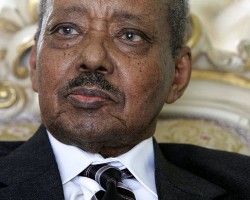
Mohammed Ali Samantar is the only living vestige of the Barre regime, the last government in two decades to exercise central control over Somalia and, not coincidentally, the last that was impudent enough to try. When Siad Barre was finally overthrown in 1991, Samantar, who had served as defense minister and prime minister, fled, in a storm of bullets, to Italy. He eventually made his way to Fairfax, Virginia, where he lived in suburban obscurity until a group of Somali nationals discovered him, hired a lawyer, and sued for damages. According to his accusers, the Barre regime committed unforgivable acts of violence against them and their families, offenses spanning a range of brutality from arbitrary detention, to torture, rape and extrajudicial killing. Samantar was allegedly aware of the crimes being perpetrated against civilians and yet failed to stop them. The suit was dismissed by a federal district court and then reinstated by the US Court of Appeals for the Fourth Circuit. It is now pending before the Supreme Court, where a peculiar coalition of defenders is urging reversal. Among them, to the confusion of some observers, are five prominent pro-Israel organizations, each with a professed interest in keeping Samantar out of court. In joint amicus briefs, the groups insist that as a former government official, Samantar should be immune from suit. To hold otherwise, they warn, would violate international law and set an inviting precedent for Israel’s enemies and their supporters in the human rights community.

The arrival of the Israel lobby adds geopolitical intrigue to a case that already read like a Ludlum thriller. And because it speaks to real and immediate consequences, it lends concreteness to a discussion that would have otherwise carried on in the abstract. It is one thing for a lawyer to appeal to legal authority for the proposition that the courts of one nation ought not sit in judgment of the acts of another; it is quite another for five groups purporting to represent the interests of the Israeli government to advise that doing so in this case would be to declare open season on Israeli officials in US courts.

It is not without some irony that organizations claiming to represent Israel, a state conceived in the wake of unprecedented state-sponsored violence, find their wagon hitched to the cause of an alleged war criminal. Nor does the position square, at least not at first glance, with less expansive interpretations of sovereign immunity advanced by the lobby’s constituents in the past. Just this year, Israeli victims of rocket fire on the Lebanese border sued the Iranian government, by way of its central banks, on the theory that it provided material support to Hezbollah, the source of the rockets. Last December, a pro-Israel group in Europe sued leaders of Hamas in a Belgium court, invoking what it described as the court’s “universal” jurisdiction over cases arising from war crimes. In both cases, sovereign immunity was an obstacle standing between Israeli interests and a favorable judgment; here, in Samantar’s case, supporters of Israel invoke it as a shield.

In fact, Israel is far more likely to find itself on the receiving end of a human rights suit. According to one report, nearly 1,000 suits have been filed globally against Israeli officials and military personnel alleging war crimes and other abuses. The defense ministry expects some 1,500 more will follow, many stemming from military operations in the coastal territories, but also some taking aim at the less violent aspects of Israeli anti-terror strategy, including one suit describing the security fence as a “crime against humanity.” An Israeli newspaper published a “wanted” list of current and former officials who are among the common named defendants. The list, which was republished in briefs to the Court, reads like a who’s who in Israeli political and military history. The forums for these suits vary, but they commonly feature developed Western countries that have lowered the drawbridge for human rights litigants. Steering many of the cases are nongovernmental organizations (NGOs), some based in the Middle East with ties to the Palestinian government, others based in the West and backed by the likes of the Center for Constitutional Rights and George Soros’s Open Society Institute.

In these suits supporters of Israel see pretext. They describe a more sinister objective, a coordinated effort to bring Israeli officials into federal courtrooms. The idea is to delegitimize Israel, but not before dragging officials through an invasive and costly discovery process. Do it enough and Israeli officials will start thinking twice before traveling to the United States, or, worse yet, before assuming roles that could expose them to suit. Defense experts believe the strategy fits the definition of “lawfare,” think-tank speak for the use of legal methods to achieve military goals.

In the immediate term, the briefs warn, relations between the US and Israel will suffer. Like any partnership, the US/Israeli alliance benefits from a rich and ongoing exchange of people and ideas. For the exchange to thrive, current and former Israeli officials must be able to travel to and within the United States without fear of being served with a lawsuit. By way of illustration, the American Jewish Congress recounts the story of Moshe Ya’alon, a retired Israeli general who was recently summoned to court upon arriving in Washington, D.C. for a think tank forum. The complaint, which sought damages for civilian deaths resulting from a battle on the Lebanese border between Israel and Hezbollah, was perfunctory. With respect to Ya’alon, it alleged only that he served in the army chain-of-command during the relevant period. The district court dismissed the case on jurisdictional grounds and the D.C. Circuit affirmed, concluding that the immunity of a foreign state extends to its former officials. Ya’alon never had to step foot in a courtroom. Now suppose that instead of Washington, he had been served with the suit 15 minutes away, in Arlington, Virginia. In that event the dismissal of his suit would have been appealed to the Fourth Circuit, which, as we learned in Samantar’s case, does not share the D.C. Circuit’s view on official immunity. In other words, had Ya’alon booked a hotel across the river, he might well still be there today.

A Statutory Nightmare

Naturally, US-Israeli relations didn’t figure into the Supreme Court’s questioning at oral arguments. The justices had assembled to resolve a disagreement among the federal circuit courts over whether sovereign immunity extends to officials. Accordingly, they trained their focus on Samantar and his theory of the case, which rests on the off-stated maxim that one equal has no dominion over another equal. That this saying, which encapsulates the principle of sovereign immunity, is most commonly recited in Latin suggests something about its vintage. It is as close to a truism as a proposition can come in a foggy discipline like international law, and it is an animating principle of the Foreign Sovereign Immunity Act (FSIA). That law changed the way US courts process suits against foreign governments. Before 1976, a court needed the go-ahead from the State Department before docketing such cases. When this approach proved unwieldy, Congress vested gate-keeping authority in the federal courts and then cabined it by stripping them of jurisdiction over suits against foreign states that don’t fit within a narrow set of exceptions.

Until recently it was generally accepted that these same protections applied to foreign officials. After all, a suit against a foreign official acting on behalf of a state is effectively a suit against the state. True, the caption may list the Minister of Defense rather than the Ministry of Defense, and the plaintiff may have his sights set on a personal bank account rather than the national treasury, but in either case the court is sitting in judgment of the state’s actions. It has intuitive appeal, this idea. It also has the support of the majority of the federal circuits.

But as the Fourth Circuit pointed out below, the argument is without support in the one place it needs it most–the text of the FSIA. FSIA extends sovereign immunity to “foreign states” as well as their “agencies and instrumentalities”, but it remains conspicuously silent on the matter of foreign officials. For supporters of broad immunity, this omission is proof that the identity of interests between a foreign sovereign and its officials is self-evident. Congress, they argue, had no reason to split hairs, to try to distinguish the indistinguishable. Opponents, who harbor a less attenuated view, insist that if Congress wanted to extend immunity to foreign officials, it would have said so.

The theory that foreign officials are immune from suit encounters an more mystifying problem in the Torture Victim Protection Act (TVPA), a federal law that permits victims of state-sponsored torture to bring suit in the United States against culpable foreign officials. The TVPA is one of the statutes supplying the cause of action in the suit against Samantar, but that’s not why it’s important. Rather, as Justice Kennedy pointed out during oral arguments, the text of the TVPA appears to make a mockery of the proposition that foreign officials are never amenable to suit in U.S courts. To read the law any other way would be to watch it evaporate, an entire congressional enactment rendered useless, leaving torture victims a right without a remedy. The Court, Justice Kennedy reminds, is not in the business of reading entire statutes out of existence.

Supporters of immunity for foreign officials counter that allowing the case to proceed against Samantar would be just as devastating for FSIA. As a preoccupation of Justice Breyer’s, this argument soaked up a fair amount of the Court’s time. The consensus is that opening officials to suit would allow litigants to undermine the intent of the FSIA without actually violating it. In Ya’alon’s case, instead of suing the Ministry of Defense, a lawyer with his wits about him would simply name Ya’alon, the former head of army intelligence, and the suit would survive. “What you are saying,” Breyer concluded, “is that FSIA is only good against a bad lawyer.”

Hedging, counsel for the plaintiffs reminded the Court that jurisdiction is not the only hurdle between a foreign official and liability. Once a plaintiff establishes jurisdiction, there are other age-old immunity doctrines that shield foreign officials from suit. There is the head of state doctrine, for instance, which protects current and former leaders from prosecution and civil liability, or the doctrine of diplomatic immunity, a similar, if more controversial, safeguard for diplomats and their staff. But there is no small difference between immunity from suit and immunity from liability. To have the former without the latter is to have comfort without convenience; it is, so to speak, the difference between putting up and showing up.

The Supreme Court is thus left to choose between two seemingly impossible outcomes. Extend sovereign immunity to foreign officials and the Torture Victim Protection Act is gutted, along with U.S. credibility in the human rights community. Expose them to suit and make hash of one of the core objectives of the Foreign Sovereign Immunity Act—saving key allies the expense and embarrassment of defending national security decisions in US courts. To the extent possible, courts generally try to read conflicting statutes in a way that gives effect to both. But even with so much hanging in the balance, coexistence between the TVPA and the FSIA appears impossible. Unimpressed and evidently undecided, the justices took the case under advisement.

Sam Singer is a 2009 graduate of Emory Law School and a Staff Law Clerk for the US Court of Appeals for the Seventh Circuit. His commentaries on law and politics have appeared in various publications, including The Beachwood Reporter and Culturekiosque.com. He has also reported and written articles for The Chicago Tribune and Market News International.


Facebooktwittermail

Israel’s censorship scandal

Judith Miller reports:

You’ve probably never heard of Anat Kamm. Few people have. But for nearly four months, the 23-year-old Israeli journalist has been under house arrest in Tel Aviv for allegedly stealing and leaking secret Israeli defense ministry documents to a journalist from Ha’aretz, one of Israel’s leading dailies.

Kamm would love to tell her side of the story, her friends and associates tell me. So would her lawyers. So, too, would Dov Alfon, the chief editor of Ha’aretz, a liberal paper, and Uri Blau, the reporter to whom Kamm allegedly leaked the documents she was said to have copied while she was completing her military service.

But they cannot talk or write about the espionage case. In an extremely rare action, an Israeli court has ordered the Israeli media not to publish or broadcast a word about Kamm, the allegations against her, or the investigation that has led Blau, the Ha’aretz reporter involved, to flee to London. For almost four months, Blau has been in self-imposed exile there to avoid answering questions about how and from whom he obtained the confidential defense department documents that are said to have resulted in a spate of stories alleging personal and institutional misconduct on the part of the Israeli Defense Forces, the hallowed IDF, and some of its senior officials.

Facebooktwittermail

Palestinian aspirations are clear, but what does Israel want?

Gideon Levy writes:

Does anybody know what Benjamin Netanyahu wants? Has anybody ever understood what his predecessors wanted? Where are they headed? And where are they leading us? One after another, Israeli politicians have been asked these questions, only to reply with the standard rejoinders: “You don’t expect me to answer this question” or “Let’s leave this for the negotiations.” Vague answers, obfuscations, evasive and noncommittal cliches – promises, promises. There was one clear, unequivocal answer – none. There is no other country whose citizens, friends and enemies have not the slightest clue about which direction it is facing. For our enemies not to know is understandable, but don’t we deserve to know more? Don’t we at least deserve to know the ultimate goal?

While the Arabs have always declared their aspirations – and did so with clarity, precision, sharpness and at times extremism, the Israelis have donned masks. While the goals of warring parties in international conflicts are known to all, and while everyone knows what the Palestinians are after in the Middle East – the ’67 lines, a state, a solution to the refugee problem, the right of return – nobody knows what the Israelis want. Do they wish to annex the territories? Come on. Do they want to evacuate them? Not now. If not now, when? It remains unclear. How much of the territories? Nobody knows.

A few days ago, journalists broached the question of a construction freeze in Jerusalem to a few ministers. Almost all of them refused to give a response. Why should they? This is nothing less than a scandal. A minister who is not ready to state his position on an issue is derelict in his duties. When a prime minister refrains from doing so, it is 10 times as grave. While Swedish law obligates the publication of every letter sent from the office of a minister, we cannot even extract a response from our top officials over critical issues.

The blame, as usual in these instances, is shared by us all. Through the years we have implicitly agreed that our leaders would guide us on the basis of fraud, or at the very least distortion. The mantra of there’s-no-need-to-say-it-aloud has become a matter of consensus, almost an axiom.

The conventional thinking whereby striving for peace is likened to market bartering and late-night horse-trading, as if it were verboten to clearly specify a final price, has become official policy. What might work for the illusory world of advertising and marketing, or the avarice of the consumer culture, has become a philosophical cornerstone in this country. Vagueness is the message. Perhaps this country has no goal, or a way to get to a goal, and the vagueness is meant to obfuscate this disgrace.

Is the prime minister of Israel ready to withdraw from the Golan Heights in exchange for peace with Syria? Yes or no? Don’t we deserve to know? Which parts of the West Bank, if any, is he ready to evacuate? And what, for heaven’s sake, does our defense minister want? What are his policy goals? Does anybody know? And why is it that if we were to know the answer, this would weaken our position and not strengthen it? Is vagueness tantamount to strength? Is trickery a modus operandi?

Our amateur merchants, as is their wont, will never reveal their opinions. No wonder their wholesale marketing strategy has proved to be a resounding failure. Israel’s global standing is at an all-time low due to, among other things, ambiguity and a loss of direction. Even the all-knowing president of the United States has no idea what his ally wants. Now at least he is trying to get an answer by saying, “Tell me what it is you people want.” It is doubtful whether he will get the answer he is looking for.

Forty-three years after the start of the occupation, no one, either here in Israel or anywhere in the world, knows what we really want and in which direction we are heading. Thus, we have not only become the only country in the world without clearly defined borders, we are also the only country without clearly defined national goals.

In William Shakespeare’s “The Merchant of Venice,” Shylock forces Antonio to agree to a loan on highly unfavorable terms. Yet the Jew provides us with one of the most memorable monologues ever written: “If you prick us, do we not bleed? If you tickle us, do we not laugh? If you poison us, do we not die? And if you wrong us, shall we not revenge?” The monologue given by the merchants of Jerusalem, on the other hand, is far more wretched. “If they give, then they’ll receive,” or something like that.

Facebooktwittermail

The Pentagon’s doubts about Israel began with its creation

By Mark Perry, April 1, 2010

In early February of 2006, I submitted a book proposal about the wartime relationship between Generals George Marshall and Dwight Eisenhower to a group of New York publishers. I had worked on the proposal for nine months and believed it would garner significant interest. Two weeks after the submission, I received my first response — from a senior editor at a major New York publishing firm. He was uncomfortable with the proposal: “Wasn’t Marshall an anti-Semite?” he asked. I’d heard this claim before, but I was still shocked by the question. For me, George Marshall was an icon: the one officer who, more than any other, was responsible for the American victory in World War Two. He was the most important soldier of his generation — and a man of great moral and physical courage.
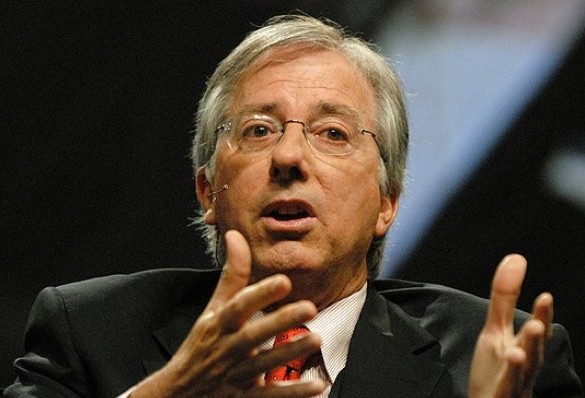
That Marshall was an anti-Semite has been retailed regularly since 1948 — when it became known that, by that time as US Secretary of State, he not only opposed the U.S. stance in favor of the partition of Palestine, but vehemently recommended that the U.S. not recognize the State of Israel that emerged. Harry Truman disagreed and Marshall and Truman clashed in a meeting in the Oval Office, on May 12, 1948. Truman relied on president counselor Clark Clifford to make the argument. Clifford faced Marshall: the U.S. had made a moral commitment to the world’s Jews that dated from Britain’s 1919 Balfour Declaration, he argued, and the U.S would be supported by Israel in the Middle East. The Holocaust had made Israel’s creation an imperative and, moreover, Israel would be a democracy. He then added: Jewish-Americans, were an important voting bloc and would favor the decision.

Marshall exploded. “Mr. President,” he said, “I thought this meeting was called to consider an important, complicated problem in foreign policy. I don’t even know why Clifford is here.” Truman attempted to calm Marshall, whom he admired — but Marshall was not satisfied. “I do not think that politics should play any role in our decision,” he said. The meeting ended acrimoniously, though Truman attempted to placate Marshall by noting that he was “inclined” to side with him. That wasn’t true — the U.S. voted to recognize Israel and worked to support its emerging statehood. Marshall remained enraged.

When Marshall returned to the State Department from his meeting with Truman, he memorialized the meeting:

I remarked to the president that, speaking objectively, I could not help but think that suggestions made by Mr. Clifford were wrong. I thought that to adopt these suggestions would have precisely the opposite effect from that intended by him. The transparent dodge to win a few votes would not, in fact, achieve this purpose. The great dignity of the office of the president would be seriously damaged. The counsel offered by Mr. Clifford’s advice was based on domestic political considerations, while the problem confronting us was international. I stated bluntly that if the president were to follow Mr. Clifford’s advice, and if I were to vote in the next election, I would vote against the president.

Put more simply, Marshall believed that Truman was sacrificing American security for American votes.

The Truman-Marshall argument over Israel has entered American lore – and been a subject of widespread historical controversy. Was Marshall’s opposition to recognition of Israel a reflection of his, and the American establishment’s, latent anti-Semitism? Or was it a credible reflection of U.S. military worries that the creation of Israel would engage America in a defense of the small country that would drain American resources and lives? In the years since, a gaggle of historians and politicians have weighed in with their own opinions, the most recent being Ambassador Richard Holbrooke. Writing in the Washington Post on May 7, 2008, Holbrooke noted that “beneath the surface” of the Truman-Marshall controversy “lay unspoken but real anti-Semitism on the part of some (but not all) policymakers. The position of those opposing recognition was simple – oil, numbers and history.”

But that’s only a part of the story. In the period between the end of World War Two and Marshall’s meeting with Truman, the Joint Chiefs of Staff had issued no less than sixteen (by my count) papers on the Palestine issue. The most important of these was issued on March 31, 1948 and entitled “Force Requirements for Palestine.” In that paper, the JCS predicted that “the Zionist strategy will seek to involve [the United States] in a continuously widening and deepening series of operations intended to secure maximum Jewish objectives.” The JCS speculated that these objectives included: initial Jewish sovereignty over a portion of Palestine, acceptance by the great powers of the right to unlimited immigration, the extension of Jewish sovereignty over all of Palestine and the expansion of “Eretz Israel” into Transjordan and into portions of Lebanon and Syria. This was not the only time the JCS expressed this worry. In late 1947, the JCS had written that “A decision to partition Palestine, if the decision were supported by the United States, would prejudice United States strategic interests in the Near and Middle East” to the point that “United States influence in the area would be curtailed to that which could be maintained by military force.” That is to say, the concern of the Joint Chiefs of Staff was not with the security of Israel — but with the security of American lives.

In the wake of my March 13 article in these pages (“The Petraeus Briefing: Biden’s embarrassment is not the whole story”) a storm of outrage greeted my claim that Israeli intransigence on the peace process could be costing American lives. One week after that article appeared, I called General Joe Hoar, a former CENTCOM commander and a friend. We talked about the article. “I don’t get it,” he said. “What’s the news here? Hasn’t this been said before?” If history is any guide, the answer is simple: it was said sixty years ago by one of America’s greatest soldiers. George Marshall wasn’t an anti-Semite. But he was prescient.

Mark Perry’s most recent book is Talking To Terrorists (Basic Books, 2010). He is also the author of Partners In Command: George Marshall and Dwight Eisenhower in War and Peace (2007) and Four Stars, The Inside Story of the Battle between the Joint Chiefs of Staff and America’s Civilian Leaders (1989).

[This article previously appeared in Foreign Policy and is reproduced here in full with the author’s permission.]

Facebooktwittermail

The growing challenge to Israel

Scott McConnell writes:

[T]wo streams of anti-settlement, pro-peace-process discourse have begun to merge and reinforce one another. The realist argument about Israel—which can be traced from President Truman’s secretary of state George Marshall through Kennedy and Johnson aide George Ball to Stephen Walt and John Mearsheimer—now appears to have the patronage of American’s most respected military commander [Gen David Petraeus]. The pretense that America’s and Israel’s interests in the Middle East coincide completely is being challenged at the highest level and may never recover.

At the same time, the humanitarian argument, rooted in observation of Israeli oppression and Palestinian suffering, is disseminated more widely than ever. It reaches Americans through the Internet, through congressional visits, through the work of Israeli peace and human-rights monitoring groups, through the burgeoning communities of international solidarity workers, through church groups, through Richard Goldstone. Expressions of unconditional solidarity with Israel—such as Joseph Lieberman’s claim that we must not quarrel in public because Israel is “family”—are of course as common as ever. But they often give off the musty scent of Soviet bloc boilerplate in the 1970s and ’80s—words that many recite ritualistically but fewer and fewer say with conviction.

A gap in the line has been opened, but no one yet knows whether Obama will push through it. Chas Freeman, the veteran diplomat whose appointment to chair the National Intelligence Council was scuttled by objections from Israel lobbyists, says, “The president gets it”—that his appreciation of the centrality of these issues was manifest in his Ankara and Cairo speeches. Freeman views the showdown as an historic juncture: “the first time anything resembling an assault on an entrenched interest that many have recognized is contrary to American interests” has taken place. The moment has the potential to unite “Obama as the commander in chief with the visionary who spoke in Cairo.” But Obama’s track record is not reassuring, Freeman admits. He notes that the president has a “pattern of laying out a sensible strategic doctrine followed by delegating its implementation to people who may work to subvert it or who have their own agendas.”

Facebooktwittermail

Dennis Ross ‘peddling the same snake oil’

If one man can be said to epitomize the failure of the peace process more than any other American official, it’s probably Dennis Ross. Why then, one might then ask, would he have such a central role in getting this “derailed” process “back on track”?

According to this report from Laura Rozen, Ross is provoking some blistering criticism from inside the administration, with one official quoted posing this exact question in the bluntest terms: “why, since [Ross’s] approach in the Oslo years was such an abysmal failure, is he back, peddling the same snake oil?”

Ross’s line is the Israel lobby’s line: American and Israeli interests are indistinguishable. The funny thing about that line is that if it was really true, then Washington would only need to take care of US interests – Israel’s would inevitably be served.

In truth, the only reason the drum of “indivisible interests” needs to be beat upon so loudly is because it’s so obvious that American and Israeli interests diverge.

Since Israeli Prime Minister Benjamin Netanyahu’s tense visit to the White House last week, an intense debate inside the Obama administration about how to proceed with Netanyahu to advance the Middle East peace process has grown more heated, even as Israeli officials are expected to announce they have reached some sort of agreement with Washington as soon as tonight.

Sources say within the inter-agency process, White House Middle East strategist Dennis Ross is staking out a position that Washington needs to be sensitive to Netanyahu’s domestic political constraints including over the issue of building in East Jerusalem in order to not raise new Arab demands, while other officials including some aligned with Middle East peace envoy George Mitchell are arguing Washington needs to hold firm in pressing Netanyahu for written commitments to avoid provocations that imperil Israeli-Palestinian peace talks and to preserve the Obama administration’s credibility.

POLITICO spoke with several officials who confirmed the debate and its intensity. Ross did not respond to a query, nor did a spokesman for George Mitchell.

“He [Ross] seems to be far more sensitive to Netanyahu’s coalition politics than to U.S. interests,” one U.S. official told POLITICO Saturday. “And he doesn’t seem to understand that this has become bigger than Jerusalem but is rather about the credibility of this Administration.”

What some saw as the suggestion of dual loyalties shows how heated the debate has become.

Last week, during U.S.-Israeli negotiations during Netanyahu’s visit and subsequent internal U.S. government meetings, the official said, Ross “was always saying about how far Bibi could go and not go. So by his logic, our objectives and interests were less important than pre-emptive capitulation to what he described as Bibi’s coalition’s red lines.”

When the U.S. and Israel are seen to publicly diverge on an issue such as East Jerusalem construction, the official characterized Ross’s argument as: “the Arabs increase their demands … therefore we must rush to close gaps … no matter what the cost to our broader credibility.”

A second official confirmed the broad outlines of the current debate within the administration. Obviously at every stage of the process, the Obama Middle East team faces tactical decisions about what to push for, who to push, how hard to push, he described.

As to which argument best reflects the wishes of the President, the first official said, “As for POTUS, what happens in practice is that POTUS, rightly, gives broad direction. He doesn’t, and shouldn’t, get bogged down in minutiae. But Dennis uses the minutiae to blur the big picture … And no one asks the question: why, since his approach in the Oslo years was such an abysmal failure, is he back, peddling the same snake oil?”

Facebooktwittermail

Apartheid inside Israel

Jonathan Cook reports:

The Zakai and Tarabin families should be a picture of happy coexistence across the ethnic divide, a model for others to emulate in Israel.

But Natalie and Weisman Zakai say the past three years – since the Jewish couple offered to rent their home to Bedouin friends, Ahmed and Khalas Tarabin – have been a living hell.

“I have always loved Israel,” said Mrs Zakai, 43. “But to see the depth of the racism of our neighbours has made me question why we live in this country.”

Three of the couple’s six dogs have been mysteriously poisoned; Mrs Zakai’s car has been sprayed with the words ”Arab lover” and the windows smashed; her three children in school are regularly taunted and bullied by other pupils; and a collection of vintage cars in the family’s yard has been set on fire in what police say was an arson attack.

To add to these indignities, the Zakais have spent three years and thousands of dollars battling through the courts against the elected officials of their community of Nevatim, in Israel’s southern Negev desert, who have said they are determined to keep the Tarabins from moving in.

Last week the Zakais’ legal struggle looked like it had run out of steam. The supreme court told the two families the Tarabins should submit to a vetting committee of local officials to assess their suitability – a requirement that has never been made before by the Negev community in the case of a family seeking to rent a home.

“The decision of the committee is a foregone conclusion,” Mr Tarabin said.

Chances for Jews and Arabs to live together – outside of a handful of cities – are all but impossible because Israel’s rural communities are strictly segregated, said Alaa Mahajneh, a lawyer representing the Zakais.

Facebooktwittermail

What planet do these people live on?

A letter signed by 300 members of Congress and sent to Secretary of State Hillary Clinton declares:

A strong Israel is an asset to the national security of the United States and brings stability to the Middle East.

What an accomplishment! That so many fallacies could be packed into a single sentence!

But the lunacy isn’t confined to Congress. Right in the middle of what is being described as the worst rift in US-Israeli relations in decades, when it comes to the business of business it’s business as usual:

Even as Prime Minister Benjamin Netanyahu received the full wrath of the Obama administration, the Defense Ministry and Pentagon were concluding yet another huge deal.

Israel will buy three new Hercules-J transport aircraft, built by Lockheed Martin, at a cost of $250 million. The planes will be manufactured according to Israeli specifications and include many systems produced by Israeli military suppliers.

The deal goes to show that a continuing diplomatic crisis between Israel and the United States has still to make itself felt as far as defense relations are concerned.

Facebooktwittermail

No peace without equality

(h/t to Adam Horowitz at Mondoweiss.)

When Israel defines itself as a “Jewish State,” it not only sees itself as the state of Jews worldwide. It also sees Arab identity in this homeland as a threat to that definition. That’s why the state sees discrimination against Arabs as part of its “job description.” — Hassan Jabareen, Founder and General Director of Adalah, The Legal Center for Arab Minority Rights in Israel.

One of the most insidious deceptions embedded in the concept of a two-state solution is the implication that once a peaceful Palestinian state comes into existence alongside a secure Israel, then the Jewish state will finally have established its international legitimacy. Israel will no longer be a state that disregards the political rights and aspirations of the Palestinian population. It will be vindicated in its claim to be a Jewish democracy.

The deception in that picture is that it glosses over the fact that even if against all expectations a Palestinian state was established in two years, those Palestinians who are also Israeli citizens and who make up a quarter of Israel’s population would remain as they are today: second class citizens. Indeed, in the event that a Palestinian state is created, it seems quite likely that the Palestinian citizens of Israel would come under pressure to leave Israel for the Jews and to move to “their own state”. In such an event, the two-state solution far from being the panacea that it is portrayed to be could well be the forerunner of another catastrophe.

If Israeli Jews cannot embrace the idea that non-Jews deserve equal rights, then there is no formula — two-state or otherwise — that will lead to a just resolution of the Middle East conflict.

Facebooktwittermail

Netanyahu — disgraced, isolated and weaker

The headline for Aluf Benn’s article in Haaretz says it all: “Netanyahu leaves U.S. disgraced, isolated and weaker.”

Benn’s full account appears below but some of the comments elsewhere in the Israeli press reveal how deeply a racist outlook on the world is embedded within the Israeli perspective. As the Daily Telegraph reported:

Sending a clear message of his displeasure, Mr Obama treated his guest to a series of slights. Photographs of the meeting were forbidden and an Israeli request to issue a joint-statement once it was over were turned down.

“There is no humiliation exercise that the Americans did not try on the prime minister and his entourage,” Israel’s Maariv newspaper reported. “Bibi received in the White House the treatment reserved for the president of Equatorial Guinea.”

Why, the editors of Maariv might care to explain, would the president of Equatorial Guinea not be afforded respect during a visit to the White House?

The Telegraph says that upon his arrival to meet with President Obama, Netanyahu was presented with a set of 13 demands, key among those that Israel halt all new settlement construction in East Jerusalem:

When the Israeli prime minister stalled, Mr Obama rose from his seat declaring: “I’m going to the residential wing to have dinner with Michelle and the girls.”

As he left, Mr Netanyahu was told to consider the error of his ways. “I’m still around,” Mr Obama is quoted by Israel’s Yediot Ahronot newspaper as having said. “Let me know if there is anything new.”

When the two men met briefly an hour later, a short meeting failed to break the impasse.

Aluf Benn writes:

The visit – touted as a fence-mending effort, a bid to strengthen the tenuous ties between Netanyahu and U.S. President Barack Obama – only highlighted the deep rift between the American and Israeli administrations.

The prime minister leaves America disgraced, isolated, and altogether weaker than when he came.

Instead of setting the diplomatic agenda, Netanyahu surrendered control over it. Instead of leaving the Palestinian issue aside and focusing on Iran, as he would like, Netanyahu now finds himself fighting for the legitimacy of Israeli control over East Jerusalem.

The most sensitive and insoluble core issues – those which when raised a decade ago led to the dissolution of the peace process and explosion of the second intifada – are now being served as a mere appetizer.

At the start of his visit, Netanyahu was tempted to bask in the warm welcome he received at the AIPAC conference, at which he gave his emotional address on Jerusalem.

Taking a page from Menachem Begin, he spoke not on behalf of the State of Israel, but in the name of the Jewish people itself and its millennia of history.

His speech was not radical rightist rhetoric. Reading between the lines, one could spot a certain willingness to relinquish West Bank settlements as long as Israel maintains a security buffer in the Jordan Valley.

But at the White House, the prime minister’s speech to thousands of pro-Israel activists and hundreds of cheering congressmen looked like an obvious attempt to raise political capital against the American president.

Knowing Netanyahu would be reenergized by his speech at the lobby, Obama and his staff set him a honey trap. Over the weekend they sought to quell the row that flared up during U.S. Vice President Joe Biden’s trip here two weeks ago, and U.S. Secretary of State Hillary Clinton described Netanyahu’s response to the ultimatums Washington presented to him as “useful.”

Special envoy George Mitchell made a televised visit to the prime minister’s bureau Sunday to invite Netanyahu to the White House. Washington, it seemed, was trying to make nice.

Far from it. Just when Netanyahu thought he had resolved the crisis by apologizing to Biden, Clinton called him up for a dressing down.

This time as well, Netanyahu almost believed the crisis had passed, that he had survived by offering partial, noncommittal answers to the Americans’ questions. Shortly before meeting with Obama, Netanyahu even warned the Palestinians that should they continue to demand a freeze on construction, he would postpone peace talks by a year.

His arrogant tone underscored the fact that Netanyahu believed that on the strength of his AIPAC speech, he could call the next few steps of the diplomatic dance.

But then calamity struck. At their White House meeting, Obama made clear to his guest that the letter Netanyahu had sent was insufficient and returned it for further corrections. Instead of a reception as a guest of honor, Netanyahu was treated as a problem child, an army private ordered to do laps around the base for slipping up at roll call.

The revolution in the Americans’ behavior is clear to all. On Sunday morning Obama was still anxiously looking ahead to the House of Representatives vote on health care – the last thing he wanted was a last-minute disagreement with congressmen over ties with Israel.

The moment the bill was passed, however, a victorious Obama was free to deal with his unruly guest.

The Americans made every effort to downplay the visit. As during his last visit in November, Netanyahu was invited to the White House at a late hour, without media coverage or a press conference. If that were not enough, the White House spokesman challenged Netanyahu’s observation at AIPAC that “Jerusalem is not a settlement.”

The Americans didn’t even wait for him to leave Washington to make their disagreement known. It was not the behavior Washington shows an ally, but the kind it shows an annoyance.

The approval of construction at the Shepherd Hotel in Sheikh Jarrah, announced before his meeting with Obama, again caught Netanyahu unawares. Apparently the special panel appointed after the Ramat Shlomo debacle to prevent such surprises failed its first test.

Netanyahu is having his most difficult week since returning to office, beginning with the unfortunate decision to relocate the planned emergency room at Ashkelon’s Barzilai Medical Center and lasting through his humiliating jaunt through Washington.

Returning to Israel today, Netanyahu will need to work hard to rehabilitate his image, knowing full well that Obama will not relent, but instead demand that he stop zigzagging and decide, once and for all, whether he stands with America or with the settlers.

The satisfaction that Washington gains from putting Netanyahu in his place may be short-lived. As Seth Freedman notes in The Guardian: “External pressure on Israel from the likes of the United States and European Union serves only to provoke a siege-mentality response from Israelis and plays into the hands of the paranoiacs on the Israeli right.”

Facebooktwittermail