Category Archives: Lands

Israel accused of war crimes in Gaza

Asmaa al-Ghoul writes: Ashraf al-Qadra, the spokesman for the Ministry of Health in the Gaza Strip, confirmed to Al-Monitor that the number of martyrs in the Israeli war on Gaza had risen to 101, in addition to more than 700 injured. He added that the martyrs included 21 children, 19 women and six senior citizens.

The Israeli occupation continued to target civilian houses in various areas of Gaza, and the number of homes completely destroyed by the occupation’s aircraft reached more than 120. Among these was the home of the Hajj family, located in the refugee camp in Khan Yunis. Eight members of the family died at dawn on July 10, in the strike that destroyed their home.

Mahmoud al-Hajj, 27, a relative of the martyrs, told Al-Monitor, “I heard a terrifying explosion. I never expected that [it had hit] my uncle’s home. They are a very normal family, none of the family members are involved in military activity. I ran to the area and found people in a state of hysteria, crying and screaming. I discovered that eight members of my uncle’s family had died under the rubble.” [Continue reading…]

Reuters reports: The United Nations human rights chief on Friday voiced serious doubts that Israeli’s military operation against Gaza complied with international law banning the targeting of civilians, and called on both sides to respect the rules of war.

International law requires Israel to take all measures to ensure that its attacks are proportional, distinguish between military and civilian objects, and avoid civilian casualties, U.N. High Commissioner for Human Rights Navi Pillay said.

“We have received deeply disturbing reports that many of the civilian casualties, including of children, occurred as a result of strikes on homes. Such reports raise serious doubt about whether the Israeli strikes have been in accordance with international humanitarian law and international human rights law,” Pillay said in a statement. [Continue reading…]

Al Jazeera reports: With tearful eyes, the Al-Aqsa TV anchorman announced the death of Palestinian journalist Hamed Shehab on Wednesday evening, hit by an Israeli air strike while driving home on Omar al-Mukhtar street.

Shehab, 27, was working for local press company Media 24. He was driving a car that had the letters “TV” affixed to it in large, red stickers when it was struck by an Israeli missile. The bombing, carried out on one of Gaza City’s busiest streets, has triggered fear and rage among journalists in Gaza.

“Such [an] attack is meant to intimidate us. Israel has no bank of targets anymore, except civilians and journalists,” Abed Afifi, a cameraman for the Beirut-based Al Mayadeen TV channel, told Al Jazeera. [Continue reading…]


Facebooktwittermail

This renewed violence suggests a bleak future for Palestinians and Israelis

Daniel Levy writes: The absence of determined mediation between Israel and Hamas was one reason that Israeli operation Cast Lead against Gaza in the winter of 2008-9 lasted so long: 22 days. Rapid Egyptian and US-led ceasefire efforts in November 2012 helped ensure that the then Israeli operation “Pillars of Defence” would last only eight days and with far less devastating consequences. But that was under President Morsi, who had good relations with Hamas and included high-level Egyptian and Arab League delegations to Gaza, which also helped ease tensions. This time, the Egyptian and Hamas leadership are at loggerheads, inter-Arab divisions are more rife, and hostility to the Muslim Brotherhood (to which Hamas is affiliated) is a defining faultline and mediators are scarce – all of which may embolden Israel further. Any international mediation will need regional interlocutors with good enough ties to Hamas.

And finally there is Binyamin Netanyahu himself. The Israeli prime minister tends to avoid military adventures, but that has more to do with risk aversion than Solomonic wisdom. Netanyahu is sometimes mistakenly credited with being a pragmatist. He is an ideologue. He is also facing a domestic political challenge (mostly from the right) unprecedented since his return to power in 2009. Netanyahu has little to show for his cumulative eight years in office and his endless un-acted-on military threats against Iranians and Palestinians are beginning to ring rather hollow. Netanyahu may decide that the political risks associated with inaction trump all other considerations.

This past April, nine months of US-led peace talks predictably failed. Israel was again not budged from its settlements and occupation. Those talks have now been replaced by a new round of violence and killing. If the alternatives to meaningless talks and tragic violence – namely peaceful resistance, Palestinian recourse to international law and sanctioning of Israel in response to continued occupation – are given short shrift, then expect more of the same and a continued bleak outlook for both Palestinians and Israelis.

Facebooktwittermail

Ukraine’s dangerous drift towards chaos

David C. Hendrickson writes: One of the most deplorable features of the Ukraine crisis has been the unwillingness of both Russia and the United States to restrain their respective allies. Until yesterday, when reports emerged that Washington is now counseling a go-slow approach to the prospective sieges of Donetsk and Lugansk, Washington has betrayed little anxiety that the Ukrainians might go too far. About the only daylight observable between the two states has been that the U.S. State Department refers to the insurgents as separatists, whereas the Ukrainians call them terrorists. But American officials have not condemned the use of that terminology by the Ukrainians, and they continue to defend Ukraine’s military actions as “moderate and measured.”

The language of the Ukrainian authorities is of a war to the death. “We will not stop,” said the newly appointed Defense Minister, Valeriy Heletey. He continued:

We will bring in maximum numbers of troops and weapons, and strengthen them with National Guard soldiers, police troops and the Security Service – all will be thrown in to defend the Donbas . . . to defend those cities from terrorists.

Those not willing to give up arms [will] understand that waging a war against the Ukrainian army and the Ukrainian people is not just dangerous but it will mean doom for these people . . . We will continue the active phase until the moment there is not a single terrorist left on the territory of Donetsk and Lugansk.

Heletey, the fourth defense minister since February, was appointed on July 3; in his maiden speech, he promised to liberate Crimea. “There will be a victory parade,” he declared, “in Ukraine’s Sevastopol.” The minister acknowledged that the people in the southeast “are disoriented and afraid of Ukraine, of Kyiv. They are afraid they will be punished and tortured.” But he also warned the residents, in effect, that you’re either with us or against us. “The residents have to . . . first and foremost not support, passively or actively, those terrorists. If it works this way, the process will be very quick,” he said.

Another piece of ominous news, from the New York Times, is that the new Ukrainian forces have learned to kill their fellow countrymen without being conscience-stricken about it. This, the Times intimates, is great progress. “They have overcome that psychological barrier in which the military were afraid to shoot living people,” says one local expert. Once the military had gotten over their silly phobia, “and it became clear who were our people, who were foes, the operations became more effective.”

There is no shortage of similar talk on the Russian side. [Continue reading…]

Facebooktwittermail

‘Diplomatic earthquake’ as Germany halts spy cooperation with U.S.

IntelNews.org reports: The German government has instructed its intelligence agencies to limit their cooperation with their American counterparts “to the bare essentials” until further notice, according to media reports. The move follows news that Berlin requested on Thursday the immediate removal from Germany of the United States Central Intelligence Agency chief of station — essentially the top American official in the country. The request came after two German citizens, one working for the BND, Germany’s main external intelligence organization, and one working for the country’s Federal Ministry of Defense, were allegedly found to have been secretly spying for the US. German media reported on Thursday that the temporary halt in Berlin’s intelligence collaboration with Washington applies across the spectrum, with the exception of areas directly affecting tactical security concerns for Germany, such as the protection of its troops in Afghanistan, or defending against immediate terrorist threats. Sources in the German capital claimed that the removal of the CIA station chief was technically a “recommendation for his departure”, and did not constitute an official diplomatic expulsion. However, German observers described the incident as a “diplomatic earthquake”, which would have been unthinkable as a policy option for the German government, barring actions against “pariah states like North Korea or Iran”. [Continue reading…]

Facebooktwittermail

Syria: Should the West work with Assad?

Fred Hof writes: The combination of the Islamic State in Iraq and al-Sham (ISIS) running amok in Iraq and the appearance of an Assad regime military victory in western Syria have added octane to arguments that Washington should forego its step-aside guidance to Bashar al-Assad. An unnamed senior Obama administration official recently told The Daily Beast, “Anyone calling for regime change in Syria is frankly blind to the past decade; and the collapse of eastern Syria, and the growth of Jihadistan, leading to thirty to fifty suicide attacks a month in Iraq.” The senior official was wise to insist on anonymity: he or she implied that a murderous regime is part of the solution and attributed blindness to a president who, nearly three years ago, told Assad to step aside. Other analysts have gone farther, suggesting that the West work with Assad to counter ISIS and rebuild Syria. Should Washington and its allies consider cooperating with the Assad regime?

There are two aspects of the “do business with Assad thesis:” one posits that the regime has won; and the other suggests that the ISIS rampage in Iraq wipes the slate clean in terms of the Assad regime’s complicity in creating the problem to be solved. Thus, the regime’s role in the establishment of al-Qaeda in Iraq becomes yesterday’s news. The regime’s sheer brutality — serving as a magnet for ISIS and its cadre of Sunni foreign fighters — becomes irrelevant. The de facto collaboration of ISIS and the regime in seeking to obliterate Assad’s Syrian opposition may, once that pesky opposition disappears, be safely put to the side. The sheer scope of the ISIS emergency, according to this line of thinking, makes it mandatory for the West to work with the Assad regime to beat ISIS.

Indeed, the Syrian opposition is back on its heels and perhaps headed for a knockdown; if not a knockout. In Aleppo, it faces a murderous barrage of regime barrel bombs to its front and ISIS assaults to its back. Whatever Bashar al-Assad and Abu Bakr Al-Baghdadi may think of one another personally, their top tactical priority in Syria is identical: destroy the Syrian nationalist opposition to the Assad regime.

That destruction is vital to both parties. From the beginning, Assad has maintained that terrorists, top-heavy with foreign fighters, are his only opponents of consequence. By focusing his firepower on the nationalist opposition and by largely ignoring the ISIS phenomenon, he seeks to give his argument the attribute of truth and restore his value to the West. As for ISIS, exterminating Assad’s opposition opens up two possibilities: incorporating non-regime Syria into its declared state; and setting the stage for its ultimate showdown with the regime (unless, of course, it and the regime extend indefinitely their live-and-let-live arrangement).

Is the definitive defeat of the Syrian opposition inevitable and (if so), would that defeat mandate a renewal of the transactional relationship between the regime and the West? [Continue reading…]

Facebooktwittermail

Lebanon’s closed doors for Palestinian refugees

IPS reports: Tens of thousands of Palestinians living in Syria have been uprooted since the violent government crackdown on the uprising and the ensuing battles that ensnared their communities. For around 50,000 of them, Lebanon was their only safe route out but now it seems this door is being closed on them.

The family of 19-year-old Iyad was exiled from Palestine in 1948 upon creation of the state of Israel and fled to Yarmouk camp in Damascus, Syria, where they settled but violence and war have once again uprooted their community. Iyad now finds himself on the run from Syria, but his security in Lebanon is far from assured.

Having fled to Lebanon in December last year, Iyad was intent on traveling onto Libya and from there to make the perilous journey to the now renowned Italian island of Lampedusa. However, last month his plans were thwarted when the Lebanese security services detained him, along with 48 other young Palestinian men, as they tried to leave Lebanon through Rafiq Hariri airport in Beirut. [Continue reading…]

Facebooktwittermail

Israel’s failure to make the right choices

Noam Sheizaf writes from Tel Aviv: When Hamas or any other organization fires rockets on Be’er Sheva or Tel Aviv, it supposedly doesn’t leave Israel with much choice but to retaliate. At least that’s how the argument goes.

But things also have a certain context that the Israeli public simply ignores. Hamas is weaker than ever. The tunnels to Gaza were destroyed and Egypt closed the border. Israel is preventing Hamas government employees from receiving their salaries, and has even threatened to deport the UN official who tried to solve the latest crisis. In recent weeks, Hamas’ politicians in the West Bank were also arrested.

Hamas isn’t just a militant organization. It is also a movement that represents half of the Palestinian people in the occupied territories and runs the lives of 1.8 million people in Gaza. Leaving Hamas with its back to the wall gives the organization an interest for this kind of escalation, despite the fact that Hamas knows that Palestinians will pay a much greater price than Israelis.

Some questions need to be asked: maybe the months and years of relative calm before this escalation were a good time to lift the siege on Gaza? Perhaps Israel should have recognized the new Palestinian technocratic government? Maybe there was a way for Hamas to undergo a process of politicization, similar to that which Fatah went through?

All these issues were never discussed in Israel; raising them now, in the current atmosphere, is seen as “giving in to terror.”

“They left us no choice” is the ultimate Israeli argument. Yes, it makes sense that when Palestinians hurl stones on Israeli cars at night, in the West Bank or within the Green Line, Israeli security forces will be sent to make them stop, just as they are sent to treat any issue of law and order. When a protester throws a stone at a soldier near the West Bank village of Bil’in, the soldier is left with no choice but to respond. But what was this soldier doing on the village’s confiscated land in the first place?

The West Bank has been relatively calm for the past five years, yet Israel has never bothered to conduct a much-delayed national conversation on ending the occupation. Instead, it waged propaganda wars on the Palestinians, built settlements and confiscated more land.

Almost five years after Operation Cast Lead, Israel’s Gaza policy – from the naval blockade to the “no go zone” it maintains at the edges of the strip – has never been questioned. Five years in which people have been warning this government that things will eventually blow up, and when they finally did, the same government responds with military force, because “we are left with no choice.”

Facebooktwittermail

In its latest assault on Gaza, so far Israel has killed 21 children

It’s too soon to know what the ultimate death toll will be from Israel’s current assault on Gaza, but it’s noteworthy that even the Washington Post is paying attention to the number of children getting killed.

If media attention given to the World Cup has provided Netanyahu some extra latitude in conducting this military operation, the welcome escape of watching football offered no safety for one group of fans in Gaza.

As AFP reports:

It was supposed to be an evening of entertainment in Gaza, watching the World Cup semi-final at a cafe, a welcome break from 48 hours of Israeli air strikes.

But the evening was cut brutally short when an Israeli raid flattened the Fun Time Beach cafe in the southern Gaza Strip in the early hours of Thursday, killing nine people and wounding 15.

All that is left of the popular seaside cafe — where dozens broke their Ramadan fast on Wednesday night before settling down to watch Argentina play the Netherlands — is a large crater and a few mounds of sand.

The cafe’s multicoloured sign is still standing, somewhat crookedly, as colourful bunting and canvas windbreakers lay strewn on the floor, torn down by the force of the blast.

The Israeli missile scattered the dead and wounded across the beach, and made a hole so deep that seawater filled it up from underground after impact.

The New York Times adds: Tamer al-Astal, 27, was lying in a hospital bed being treated for shrapnel wounds in his face and leg from the blast on the beach. Mr. Astal, a construction worker, said he lived near the cafe and went there every night.

“We were watching news on the television and waiting for the match to begin,” he recalled. “I heard a terrible boom and felt myself suffocating. I woke up to find myself here in the hospital.”

Three of Mr. Astal’s cousins were among the dead.

Samah Sawalli, 29, said her brothers had been spending their nights at the cafe and coming home at dawn when the daily fast starts in the Muslim holy month of Ramadan.

“They would break their fast there,” she said, wearing a black veil and surrounded by her mother, who was unable to speak, and other women at the family’s home in Khan Younis. Weeping, she recalled their assuring her that Fun Time Beach “was a safe place.”

Facebooktwittermail

Egypt silent as Israel attacks Gaza

The New York Times reports: Again and again over decades, Egypt has leapt in to play the role of mediator during hostilities between the Palestinians and the Israelis, including the time two years ago when Egypt’s president, Mohamed Morsi, helped broker a cease-fire after eight days of bloodshed in the Gaza Strip.

But in the latest battle, the Egyptians appear to be barely lifting a finger, leaving the combatants without a go-between as the Palestinian death toll mounts.

Officials with Hamas, the Palestinian Islamist movement in Gaza, said on Wednesday they had seen almost no sign of an Egyptian effort to defuse the crisis, in sharp contrast to previous conflicts under Mr. Morsi and President Hosni Mubarak. Making matters worse, according to Palestinian officials, Egypt continued to keep its side of the border all but sealed on Wednesday, barring even humanitarian aid.

Egypt’s apparent willingness to sit out the crisis reflected shifts in its foreign policy under its new president, Abdel-Fattah el-Sisi, who led the military ouster last summer of Mr. Morsi, a leader of the Muslim Brotherhood and a close ally of Hamas. The Brotherhood was outlawed after Mr. Morsi’s ouster, and accused by Egyptian officials of terrorism during a crackdown on the government’s opponents. In various plots against Egypt described by the authorities, Hamas was often cast as the Brotherhood’s menacing accomplice. [Continue reading…]

Facebooktwittermail

Palestinians denounce West Bank leadership

Al Jazeera reports: Like every night since the kidnapping and murder of 16-year-old Palestinian teen Muhammed Abu Khdair, a group of young Palestinian men in Bethlehem covered their faces with t-shirts and kuffiyehs (checkered scarves), and headed to their usual positions near the Israeli army post next to Rachel’s Tomb.

Palestinian Authority (PA) forces surveyed the scene from behind the youth, who threw stones and dodged volleys of tear gas, rubber-coated steel bullets, and live ammunition fired by Israeli soldiers from their watchtower.

For many, this non-interference on the part of the PA is a major source of anger, as protests continue to spread across the occupied West Bank, East Jerusalem, and in Palestinian communities in Israel over the military offensive under way in the Gaza Strip.

“The Palestinian police is mercenary of the Israeli occupation; they just watch and do nothing,” said Majdi, a 28-year-old from Deheisheh refugee camp and one of the usual protesters. His friend, Dia, added that: “It’s worse than that,” alleging that Palestinian police document the people who throw stones and pass the information on to Israeli soldiers. [Continue reading…]

Facebooktwittermail

Israel’s soft stance on incitement creates tragedy

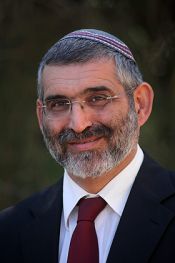
Michael Ben Ari

Michael Ben Ari

Shlomi Eldar writes: The motto of the racist activists and their various organizations is fanatical hatred of Arabs. But they have not been placed outside the law; on the contrary, their leaders have continued with their daily routine. Most of them were not investigated or indicted for incitement, and no one imposed administrative detention on them or severed them from their sources of influence.

One of the “sources of inspiration” for the far-right Jewish movements is Michael Ben Ari, a former Knesset member of the Ichud Leumi Party. Ben Ari now heads the Otzma LeYisrael movement that did not garner enough votes to pass the electoral threshold in the 2013 elections. Ben Ari and other movement activists are working energetically to disseminate their worldview, based on Kach movement ideology. Ben Ari was one of its activists.

In 1994, the Kach movement was declared a terrorist organization by Israel. It is included in the list of terror organizations of the United States, the European Union and other countries. But its holdovers — including Ben Ari, Baruch Marzel, Itamar Ben Gvir and others — continue to recruit adherents for the same goal: the expulsion of all the Arabs from the territories of “the land of Israel.” [Continue reading…]

Facebooktwittermail

Death toll rises past 80 on third day of Israeli assault on Gaza

Al-Akhbar reports: Israel pressed on with an intensive aerial offensive in Gaza for a third day on Thursday, raising the death toll to 81, Palestinian officials said, as Israel indicated a ceasefire was “not on the agenda.”

The Israeli military had no immediate comment on the deadliest single bombing raid since the start of the offensive which killed eight members of a family including five children in a predawn strike. The attack destroyed at least two homes in Khan Younis in southern Gaza while residents were asleep, killing the eight people, the Palestinian Health Ministry said.

At least 81 Palestinians have been killed since the beginning of the Israeli military operation on Tuesday, more than 50 of them civilians, Palestinian health ministry sources said. The ministry of health added that 537 Palestinians have been injured in Israeli attacks since the Tuesday.

The bloodshed is likely to continue unabated, as Israeli Prime Minister Benjamin Netanyahu told Knesset members on Thursday that a ceasefire was not in the plans.

“I am not talking to anybody about a cease-fire right now,” Israeli newspaper Haaretz quoted Netanyahu as saying. “It’s not even on the agenda.” [Continue reading…]

Facebooktwittermail

U.S. may agree to Assad retaining control over chemical weapons facilities

Defense One reports: Syria’s regime may be able to retain parts of its shuttered chemical-arms factories under “compromise” terms devised by a global watchdog agency.

The United States could endorse the concept in order to finalize a plan this week for dealing with the dozen contested sites, even though doing so would require making “serious” concessions to President Bashar Assad’s government, said Robert Mikulak, Washington’s envoy to the Organization for the Prohibition of Chemical Weapons.

“We are not, however, prepared to go further or engage in further haggling,” Mikulak told the agency’s 41-nation governing board on Tuesday.

He indicated that the plan from the agency’s Netherlands-based staff would impose new “tunnel perimeters” and “more effective monitoring measures” for at least some of Syria’s five underground facilities, while demolishing seven fortified hangars. [Continue reading…]

Facebooktwittermail

U.S. ignored warnings before ISIS takeover of a key border city

The Daily Beast reports: Three weeks ago, a group of leaders from the opposition Free Syrian Army warned U.S. officials that a strategic city along the Iraqi border was about to fall to ISIS. It was the latest in a long series of increasingly anxious cries for help. The rebels never heard back from the Americans.

Five days ago, the predictions came true. Free Syrian Army units in the city of Der al Zour handed over their territory to the Islamic State of Iraq and al Sham, following weeks of desperate requests for help to international officials, including a direct appeal in a private meeting with U.S. Ambassador to the United Nations Samantha Power.

“[The U.S. officials] showed an understanding of the situation but there was no movement at all,” the commander of the FSA battalion near Der al Zour told The Daily Beast in an interview. “There’s no clear American position in that part of Syria. We told the Americans we are going to fight ISIS and ISIS is close to us, but they did nothing.”

Two leaders of the Free Syrian Army in eastern Syria told The Daily Beast that the moderate rebels in the area greatly outnumbered the ISIS fighters returning from Iraq in stolen American-made vehicles. But the FSA battalion, weakened from months of being under siege, did not have enough ammunition to engage ISIS in the fight. They retreated south, giving up what they controlled of Der al Zour to ISIS without ISIS having to fire a shot.

“Der al Zour was surrounded for several months by ISIS and the regime. The siege included no food and water. Our battalion was weakened,” the FSA commander said. “The FSA numbers are big, but we don’t have weapons, we don’t have ammunition, we don’t have anything.”

For several weeks prior, FSA leaders had tried to sound the alarm. If Der al Zour fell to ISIS, the extremist group would have control of the transportation routes from their stronghold in Raqqa, Syria to their new territories in northern Iraq. The area is also rich in oil and gas resources and was the last FSA stronghold along the rapidly disappearing Iraq-Syria border. [Continue reading…]

Facebooktwittermail