Category Archives: United Kingdom

Britain’s humiliation in Palestine

In The Observer, Rachel Cooke writes:

In 1999, shortly after his film about the British peace-keeping force in Bosnia, Warriors, was screened by the BBC, Peter Kosminsky received a letter. It was from an old soldier, who had found Warriors moving, and wanted to thank its director. At the end of the letter, though, was a line – thrown out more in hope than expectation – that caught Kosminsky’s eye. “You should do a film about the British soldiers who were in Palestine,” it said. “No one remembers us.”

As psychological bullets go, this one was well aimed. Kosminsky is nothing if not in the business of remembering. The kind of things that governments like to forget are his stock in trade. Down the years, he has made films on a variety of uncomfortable subjects, from the activities of the police in Northern Ireland (Shoot to Kill) and New Labour control-freakery (The Project), to British-born Muslim suicide bombers (Britz) and the suicide of Dr David Kelly (The Government Inspector), each one trailing controversy – if not always a sudden bout of recovered memory on the part of the establishment – in its wake. The soldier’s letter was duly passed to Kosminsky’s researchers, who began interviewing veterans.

Between 1945 and 1948, some 100,000 soldiers served in the British-controlled Mandate of Palestine. Kosminsky’s team spoke to around 80; he found the men’s stories to be both gripping and moving, so he carried on, wading next through letters, diaries, memoirs and history books. Slowly, a theme began to emerge. “The thing that came out most strongly,” he says, “was that the men all arrived in Palestine feeling incredibly pro-Jewish. A few of them had helped to liberate the [concentration] camps, so they had seen what had happened [to the Jews] with their own eyes. And everyone had heard the stories and seen the newsreels.

“When Jewish refugees arrived in Palestine off the boats, and were caged and beaten by British forces [the British placed strict limitations on Jewish immigration to Palestine], many soldiers didn’t like it all. They knew what these people had been through. Over time, though, the soldiers’ attitudes changed. Some of this was just the usual British support for the underdog; there’s no question that by 1948 [when Israel declared itself an independent state] the Arabs were perceived as that. But also, if you’re being attacked on a daily basis [by the Jewish resistance], if you’re under constant threat of kidnap, if you’re confined to barracks behind a lot of razor wire, your feelings are bound to change.”

Kosminsky’s first idea was to make a drama about a British soldier who would exemplify this shift. “I suppose it started out as standard Kosminsky fare, which was pointing the finger at Britain. First of all, these men don’t have a memorial; they’re forgotten. It’s only recently that they were allowed to march to the Cenotaph. When they came back to Britain, no one wanted to know; pulling out of Palestine was a terrible humiliation, a total defeat. Second, we were the colonial power in Palestine and, as in so many other examples of our retreat from Empire, we left it totally fucked up. Chaos. We washed our hands of it. I wanted to say: if you think the Israeli-Palestinian situation is not our problem, think again. We were there, we left, and 60 years later, it is still a problem.”

The trouble was, something else kept nagging away at him. “The more I read their stories, the more I began to be struck by some odd parallels,” he says. “For instance, if there’s a suicide bombing in Israel, usually the Israeli Defence Force immediately goes [to the West Bank or Gaza] and blows up the house of the bomber. I’d always assumed this tactic had been invented in the modern era. But in the veterans’ interviews, they described doing exactly the same thing. When a member of Etzel [the Israeli name for Irgun, the Zionist paramilitary group that operated in the Mandate of Palestine from 1931 until 1948] or Lehi [better known as the Stern Gang, another militant Zionist group] attacked them, the British would find the family home and dynamite it.”

On the other side stood the Irgun, as ruthless as any 21st-century terrorist organisation. When the King David Hotel in Jerusalem, which served as the British Mandatory authorities’ headquarters, was bombed in July 1946, 91 people died, many of them civilians. “They were extremely effective. You only have to compare the attack on the King David to something like the Brighton Bomb [in which the IRA killed five people] to see that. There’s a moving memoir by the colonial secretary, who survived. He spent a week attending the funerals of his friends, became unhinged and had to be invalided out. He lost his reason.”

Somewhere along the line, Kosminsky decided that his film would need to tell two stories: one set in the Mandate of Palestine, the other in Israel, 2011.

Eleven years later and the result of all this research and ambition is shortly to be screened on Channel 4. Was it worth it? I think it would have been worth it if it had taken him twice as long. The Promise, which will be screened in four parts, and runs to some seven and a half hours, is the best thing you are likely to see on television this year, if not this decade. It is not only that it is so exciting, moving, and full of exquisite performances; it’s also that the extraordinary detail and thoughtfulness of it – the sheer scale of the canvas on which its director works – subtly imparts so many emotional and factual truths that you feel your own allegiances, whatever they may be, suddenly shifting uneasily, sometimes on a minute-by-minute basis. Revelatory is an overused word, but The Promise is exactly that: the power of its storytelling will open eyes more effectively than any leaked document, any piece of rhetoric, any news bulletin.


Facebooktwittermail

Islamophobia ‘acceptable’ in UK

Al Jazeera reports:

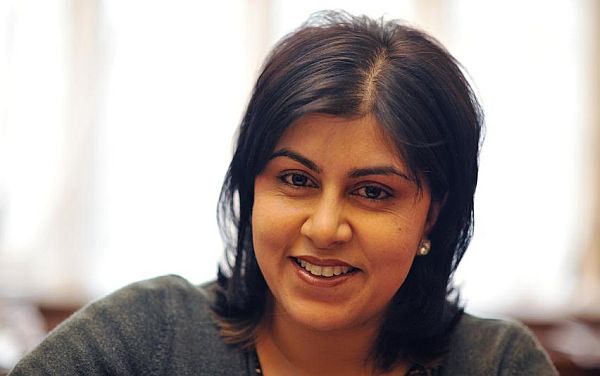
Prejudice against Muslims has “passed the dinner-table test” and become socially acceptable in Britain, the chairwoman of the country’s ruling Conservative party has said.

Sayeeda Warsi, the first British Muslim woman to join the country’s cabinet, said in a speech at the University of Leicester on Thursday that Britain is becoming a less tolerant place for believers.

Warsi said that dividing Muslims into “moderate” and “extremist” fuels intolerance as does “the patronising, superficial way faith is discussed in certain quarters, including the media”.

The Pakistan-born minister has previously criticised parts of British society for demonizing Muslims in response to the threat from small numbers of extremists.

Facebooktwittermail

New Mossad chief to apologise for use of UK passports in Dubai killing

The Daily Telegraph reports:

The new head of Israel’s secret service, Mossad, is ready to apologise for the use of forged British passports during the assassination of a leading Hamas militant in Dubai.

Tamir Pardo, who took over as Mossad’s chief earlier this month, will also promise that Israeli agents will never again be allowed to use fake British documents during operations abroad.

Facebooktwittermail

Britain has become a land of broken promises

Johann Hari writes:

The year 2010 began with David Cameron looking into a TV camera and pledging to the British people: “If any cabinet minister comes to me and says ‘Here are my plans’ and they involve frontline reductions, they’ll be sent straight back to their department to go away and think again.” The year ended with him pushing through the most severe cuts to frontline services in living memory.

It is now clear that David Cameron systematically lied to the electorate. He said it was “sick” and “frankly disgusting” to say he would end the NHS guarantee for cancer patients to be seen within two weeks – and then scrapped NHS guarantees, so that the number of patients waiting months before their cancer is detected has doubled. He said hospitals were “my No 1 priority” to be “totally protected” – and then slashed 20 per cent from the budget of specialist hospitals across the country. He said he would “protect the poor” from cuts – and then slashed the income of each poor family by £1,000 and began forcing hundreds of thousands from their homes.

He said he would make affordable childcare his “top priority” – and then slashed the childcare tax credit by 70 per cent. He said he “absolutely” supported the Educational Maintenance Allowance that gives £30 a week to the poorest kids to stay on at school – and then abolished it. He said he would lead “the greenest government ever” – and then began selling off our national forests and introducing deep-water drilling off our coasts. Each time, he promised he would not introduce whiplash austerity before the election – and then did it the moment he seized power.

Facebooktwittermail

WikiLeaks reveals Bangladeshi ‘death squad’ trained by UK government

The Guardian reports:

The British government has been training a Bangladeshi paramilitary force condemned by human rights organisations as a “government death squad”, leaked US embassy cables have revealed.

Members of the Rapid Action Battalion (RAB), which has been held responsible for hundreds of extra-judicial killings in recent years and is said to routinely use torture, have received British training in “investigative interviewing techniques” and “rules of engagement”.

Details of the training were revealed in a number of cables, released by WikiLeaks, which address the counter-terrorism objectives of the US and UK governments in Bangladesh. One cable makes clear that the US would not offer any assistance other than human rights training to the RAB – and that it would be illegal under US law to do so – because its members commit gross human rights violations with impunity.

Since the RAB was established six years ago, it is estimated by some human rights activists to have been responsible for more than 1,000 extra-judicial killings, described euphemistically as “crossfire” deaths. In September last year the director general of the RAB said his men had killed 577 people in “crossfire”. In March this year he updated the figure, saying they had killed 622 people.

Facebooktwittermail

Your right to protest is under threat

Johann Hari writes:

So now we know. When our politicians complained over the past few decades, in a low, sad tone, that our young people were “too apathetic” and “disengaged”, it was a lie. A great flaring re-engagement of the young has take place this year. With overwhelmingly peaceful tactics, they are demanding policies that are supported by the majority of the British people – and our rulers are trying to truncheon, kettle and intimidate them back into apathy.

Here’s one example of the intimidation of peaceful protest by the young that is happening all over Britain. Nicky Wishart is a 12-year-old self-described “maths geek” who lives in the heart of David Cameron’s constituency. He was gutted when he found out his youth club was being shut down as part of the cuts: there’s nowhere else to hang out in his village. He was particularly outraged when he discovered online that Cameron had said, before the election, that he was “committed” to keeping youth clubs open. So he did the right thing. He organized a totally peaceful protest on Facebook outside Cameron’s constituency surgery. A few days later, the police arrived at his school. They hauled him out of his lessons, told him the anti-terrorism squad was monitoring him and threatened him with arrest.
The message to Nicky Wishart and his generation is very clear: don’t get any fancy ideas about being an engaged citizen. Go back to your X-Box and X-Factor, and leave politics to the millionaires in charge.

This slow constriction of the right to protest has been happening for decades now. Under New Labour, protesters outside parliament started to have to ask permission and suddenly found themselves prosecuted for “anti-social behaviour.” In 2009, a man who had committed no violence or threats at all died after being attacked by a police officer on the streets of London at a protest – and nobody has ever been punished. Now the Metropolitan Police’s instinctive response to any group of protesters is to surround them and ‘kettle’ – that is, arbitrarily imprison – them for up to ten hours in the freezing cold, with no food, water, or toilets. It doesn’t matter how peaceful you were. You are trapped.

In the past few weeks police officers have been caught responding to a disabled young man with cerebral palsy – who was protesting because his 16 year old brother is now too scared of debt to go to university – by hauling him out of his wheelchair and throwing him to the ground. They even tried to block a severely injured protester in need of brain surgery from being treated at the nearest hospital, on the grounds that police officers were being treated there too and it was ‘upsetting’ to have injured protesters in the same place. Now Sir Paul Stephenson, head of the Met, says a total ban on protests by students is “one of the tactics we will look at.”

These protesters are not defying the will of the British people; they are expressing it.

Facebooktwittermail

In Britain’s effort to crush political dissent, the disabled have become fair game

How dangerous is a man in a wheelchair? British police officers attempting to restore order on the streets of London during recent student protests, decided they couldn’t take any chances when facing the threat posed by 20-year-old Jody McIntyre who suffers from cerebral palsy and is a self-described revolutionary.

In an interview, the BBC’s Ben Brown challenged McIntyre, saying: “There’s a suggestion that you were rolling towards the police in your wheelchair. Is that true?”

McIntyre turns the table on his interviewer by asking: “Do you think that I could have in any way posed a physical threat from the the seat of my wheelchair to an army of police officers armed with weapons?”

On the BBC’s Breakfast News, McIntyre faced similar treatment by interviewers who seemed inclined to believe the police must have been reacting to some form of provocation.

At Open Democracy, Ryan Gallagher notes that the tone of these interviews is:

… typical of how the mainstream media have responded to protests and the policing of them both past and present. Their automatic assumption is that the police are protectors of our best interests, defenders of public order, righteous upholders of the law. Protesters, on the other hand, are automatically perceived as a threat and a potential destructive force – they are folk devils: outsiders, troublemakers and vandals of decency.

The police are therefore at an immediate advantage in the media realm, for they are always given the benefit of the doubt. Officers may have had to crack a few skulls during the fees protests, however only because they were provoked by what [Prime Minister] David Cameron described as “feral thugs”. And it is for this same reason that McIntyre was repeatedly placed on the back foot throughout his BBC interview. Was he a “cyber-radical?” Did he want to build a “revolutionary movement?” The police would never just attack a defenceless disabled man in a wheelchair, would they?

Kira Cochrane spoke to McIntyre about his treatment by the BBC.

Was he surprised by the tone of Brown’s interview? “Not at all,” he says, “because it’s state television. Why do we so heavily criticise state television in other countries and then suggest that our state television would be impartial? I was at a demonstration against the government, and I’m then interviewed on television that works for the government. Why would they question me fairly?”

I ask whether he was scared at any point during the demonstration, and he suggests he has seen much worse recently. At 18, straight after his A-levels, and inspired by Che Guevara, McIntyre decided to travel through South America for three months; after that, he went to Palestine to live in areas including Gaza and Bil’in. “I had Israeli soldiers invading one village every night, shooting at us with live bullets, so a Metropolitan police officer is really not going to pose much of a worry to me. But it was quite humiliating, obviously, to be dragged from my wheelchair.” Was he surprised by the incident? “No, and I don’t know why other people are. To me, it’s as if people must have been asleep all their lives if they don’t realise this is the police’s role at demonstrations – to protect the interests of the government and the state.”

He has been on a lot of protests, on a wide range of issues, and says he has always had a political outlook, which he chronicles on his blog, Life on Wheels (“One man’s journey on the path to revolution”). He isn’t a student himself, but says he cares deeply about the issue both because “acceptance into university should be based on the merit of your grades, not the size of your wallet” and because “education is simply the first target. These cuts, this axe that the government is wielding, is going to affect everyone.”

At the New Statesman, Laurie Penny writes:

The truly fascinating aspect of McIntyre’s story is what it reveals about how the British understand disability: namely, that ‘real’ disabled people are not whole human beings. The attitude is that there are two types of disabled person: there are ‘real’ disabled people, who are quiet and grateful and utterly incapable of any sort of personal agency whatsoever, and ‘fake’ disabled people, people like Jody McIntyre, who are disqualified from being truly disabled by virtue of having personality, ambition, outside interests and, in this case, the cojones to stand up to a corrupt and duplicitous government.

This remarkable Catch-22 clause, whereby the authorities can claim that any disabled person who criticises them on disability issues or any other issues must de facto not actually be disabled, does not only affect how individuals like McIntyre are treated. It directly influences policymaking in the most clinical and ruthless of ways. Bear in mind that, alongside its highly publicised cuts to secondary and higher education funding, this government is also taking away benefits from disabled people: housing benefit, income support, the mobility component of Disability Living Allowance and other vital sources of funding are being decimated or removed entirely.

Facebooktwittermail

Julian Assange freed on bail

The Guardian reports:

Britain’s high court today decided to grant bail to Julian Assange, the WikiLeaks founder who is wanted in Sweden for questioning over allegations of rape.

Justice Duncan Ouseley agreed with a decision by the City of Westminister earlier in the week to release Assange on strict conditions: £200,000 cash deposit, with a further £40,000 guaranteed in two sureties of £20,000 and strict conditions on his movement.

The New York Times reports:

Federal prosecutors, seeking to build a case against the WikiLeaks leader Julian Assange for his role in a huge dissemination of classified government documents, are looking for evidence of any collusion in his early contacts with an Army intelligence analyst suspected of leaking the information.

Justice Department officials are trying to find out whether Mr. Assange encouraged or even helped the analyst, Pfc. Bradley Manning, to extract classified military and State Department files from a government computer system. If he did so, they believe they could charge him as a conspirator in the leak, not just as a passive recipient of the documents who then published them.

Among materials prosecutors are studying is an online chat log in which Private Manning is said to claim that he had been directly communicating with Mr. Assange using an encrypted Internet conferencing service as the soldier was downloading government files. Private Manning is also said to have claimed that Mr. Assange gave him access to a dedicated server for uploading some of them to WikiLeaks.

Glenn Greenwald writes:

Bradley Manning, the 22-year-old U.S. Army Private accused of leaking classified documents to WikiLeaks, has never been convicted of that crime, nor of any other crime. Despite that, he has been detained at the U.S. Marine brig in Quantico, Virginia for five months — and for two months before that in a military jail in Kuwait — under conditions that constitute cruel and inhumane treatment and, by the standards of many nations, even torture. Interviews with several people directly familiar with the conditions of Manning’s detention, ultimately including a Quantico brig official (Lt. Brian Villiard) who confirmed much of what they conveyed, establishes that the accused leaker is subjected to detention conditions likely to create long-term psychological injuries.

Since his arrest in May, Manning has been a model detainee, without any episodes of violence or disciplinary problems. He nonetheless was declared from the start to be a “Maximum Custody Detainee,” the highest and most repressive level of military detention, which then became the basis for the series of inhumane measures imposed on him.

Facebooktwittermail

The age of political apathy is ending

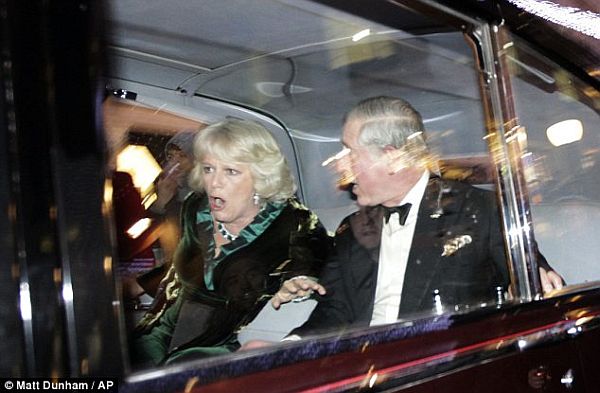
“Off with their heads,” shouted demonstrators crowding round the Rolls Royce carrying Prince Charles and his wife Camilla to a West End theater last night. Even if he didn’t fear for his life, Britain’s heir to the throne was reminded of the fate of his namesake, Charles I, last time Britons violently upturned the established order. And even if to Americans the British monarchy has the appearance of a quaint anachronism, the incident serves as a reminder that there are never any institutional seats of power that can perfectly protect themselves from the wrath of a population that forcefully demands to be heard.

For much of the last two decades, the West’s cynical democratic leaders have comforted themselves with the knowledge that governmental power rarely requires popular support. With election strategies that hinge on securing a 51% majority — a minority from a largely apathetic electorate — the only constituencies that have demanded and been rewarded with loyal service are those who pay handsomely to have their interests represented.

No more. The new British government recently volunteered to test the theory that austerity measures are not only a panacea for the economic travails of these times, but that a docile population will buckle under when forced to swallow bitter medicine. Unless the government is forced to change course, this will make higher education unfordable for most of a generation.

On the streets of London, Britain’s young people are now demonstrating that their character has been misjudged. None has done so more articulately than Barnably, a 15 year-old speaking at the Coalition of Resistance national conference in London on November 27.

Aaron Porter writes:

The last 30 days have shaken the coalition. Together with UCU, the lecturers’ union, we brought 50,000 to the streets of London on 10 November for the biggest student demonstration in a generation. It has sparked a new wave of activism that has involved tens of thousands of students, parents, pupils and teachers in creative, nonviolent protests and direct action.

By piling pressure on MPs with dozens of spontaneous demonstrations, scores of occupations and hundreds of thousands taking action around the country, we have come together to defend education and fight for our future. A generation has found its voice.

In its founding statement, the Coalition of Resistance declared:

It is time to organise a broad movement of active resistance to the Con-Dem government’s budget intentions. They plan the most savage spending cuts since the 1930s, which will wreck the lives of millions by devastating our jobs, pay, pensions, NHS, education, transport, postal and other services.

The government claims the cuts are unavoidable because the welfare state has been too generous. This is nonsense. Ordinary people are being forced to pay for the bankers’ profligacy.

The £11bn welfare cuts, rise in VAT to 20%, and 25% reductions across government departments target the most vulnerable – disabled people, single parents, those on housing benefit, black and other ethnic minority communities, students, migrant workers, LGBT people and pensioners.

Women are expected to bear 75% of the burden. The poorest will be hit six times harder than the richest. Internal Treasury documents estimate 1.3 million job losses in public and private sectors.

We reject this malicious vandalism and resolve to campaign for a radical alternative, with the level of determination shown by trade unionists and social movements in Greece and other European countries.

This government of millionaires says “we’re all in it together” and “there is no alternative”. But, for the wealthy, corporation tax is being cut, the bank levy is a pittance, and top salaries and bonuses have already been restored to pre-crash levels.

An alternative budget would place the banks under democratic control, and raise revenue by increasing tax for the rich, plugging tax loopholes, withdrawing troops from Afghanistan, abolishing the nuclear “deterrent” by cancelling the Trident replacement.

An alternative strategy could use these resources to: support welfare; develop homes, schools, and hospitals; and foster a green approach to public spending – investing in renewable energy and public transport, thereby creating a million jobs.

In another address to the national conference, the rapper, Lowkey, pointed out that the Liberal Democrats have not only reversed themselves on the issue of university tuition fees but also abandoned their proposal of an arms embargo on Israel. He also noted the irony that even during the rule of a Tory government, the Conservative Party headquarters in London has less protection than the Israeli embassy.

Facebooktwittermail

WikiLeaks reveals British government colluded with the US to deceive the British parliament and evade cluster bomb ban

The Guardian reports:

British and American officials colluded in a plan to hoodwink parliament over a proposed ban on cluster bombs, the Guardian can disclose.

According to leaked US embassy dispatches, David Miliband, who was Britain’s foreign secretary under Labour, approved the use of a loophole to manoeuvre around the ban and allow the US to keep the munitions on British territory.

Unlike Britain, the US had refused to sign up to an international convention that bans the weapons because of the widespread injury they cause to civilians.

Seumas Milne writes:

[B]eyond the dispatches on Prince Andrew’s crass follies and Colonel Gaddafi’s “weirdness”, the leaks do paint a revealing picture of an overstretched imperial system at work, as its emissaries struggle to keep satraps in line and enemies at bay.

Much has been made of the appalling damage supposedly done to the delicate business of diplomacy. No doubt the back channels will survive the shock of daylight. But in any case the United States is the centre of a global empire, a state with a military presence in most countries which arrogates to itself the role of world leader and policeman.

When genuine checks on how it exercises that entirely undemocratic power are so weak at home, let alone in the rest of the world it still dominates, it’s both inevitable and right that people everywhere will try to find ways to challenge and hold it to account.

After the Russian revolution, the secret tsarist treaties with Britain and France were published to expose and challenge the colonial carve-ups of the day. In the 1970s, the publication of the Pentagon papers cut the ground from beneath the US case for the Vietnam war. Now technology is allowing such exposures on a far grander scale.

Clinton complained this week that the leaks “tore at the fabric” of government and good relations between states. Far more damaging is her own instruction to ordinary US diplomats to violate the treaties the US government has itself signed and spy on UN officials, along with any other public figure they happen to meet: down to their credit card details, biometric records – and even frequent-flyer account numbers.

Not surprisingly, US allies and client states come out badly from the leaks.

Facebooktwittermail

George Bush gets some advice from the Conservative Mayor of London

Borris Johnson writes:

It is not yet clear whether George W Bush is planning to cross the Atlantic to flog us his memoirs, but if I were his PR people I would urge caution. As book tours go, this one would be an absolute corker. It is not just that every European capital would be brought to a standstill, as book-signings turned into anti-war riots. The real trouble — from the Bush point of view — is that he might never see Texas again.

One moment he might be holding forth to a great perspiring tent at Hay-on-Wye. The next moment, click, some embarrassed member of the Welsh constabulary could walk on stage, place some handcuffs on the former leader of the Free World, and take him away to be charged. Of course, we are told this scenario is unlikely. Dubya is the former leader of a friendly power, with whom this country is determined to have good relations. But that is what torture-authorising Augusto Pinochet thought. And unlike Pinochet, Mr Bush is making no bones about what he has done.

Unless the 43rd president of the United States has been grievously misrepresented, he has admitted to authorising and sponsoring the use of torture. Asked whether he approved of “waterboarding” in three specific cases, he told his interviewer that “damn right” he did, and that this practice had saved lives in America and Britain. It is hard to overstate the enormity of this admission.

Facebooktwittermail

Who has the courage to end the war in Afghanistan?

British ex-soldier, Joe Glenton, was jailed for refusing to return to Afghanistan in a war he believed to be unjustified. On November 19 he handed back his medal to Britain’s Prime Minister David Cameron in Downing Street, as a protest against the war in Afghanistan.

Glenton’s story was told in a Press TV documentary earlier this year. Watch parts one, two and three. (Thanks to a reader for passing along the report about Glenton’s protest and yesterday’s rally in London.)

Meanwhile, Politico reports:

President Barack Obama and nearly 50 world leaders attending the NATO Summit that concluded here Saturday adopted a call to give the Afghan government control over its own security by 2014.

Not so much talked about, in public anyway, were some of the toughest decisions that may be required to get there.

With the public in the U.S and particularly in Europe losing patience with the Afghan mission, the NATO announcement seemed intended to generate headlines or at least a public perception of a plan for withdrawal.

In fact, the transition plan is more of a hope than a detailed roadmap. The provinces to be handed over next year by NATO and U.S. forces have yet to be selected, officials said, and the prospects for transition in parts of the country facing the fiercest fighting are murky at best. Decisions about whether to negotiate with the Taliban have yet to be made and disagreements remain about what concessions could be made.

Christian Science Monitor adds:

[T]he Pentagon on Thursday said the goal of handing over security duties to the Afghans in 2014 was “aspirational.”

“Although the hope is, the goal is, to have Afghan security forces in the lead over the preponderance of the country by then, it does not necessarily mean that … everywhere in the country they will necessarily be in the lead,” said Pentagon spokesman Geoff Morrell.

Crunching the numbers

So how much extra would it cost if the bulk of the withdrawal starts rather than finishes around 2014? About $125 billion, says Mr. Harrison at the Center for Strategic and Budgetary Assessments, at that’s just through 2014. He uses two different troop level scenarios – one high, and one low. He calculates costs based $1.1 million per soldier per year, which reflects the five-year average in Afghanistan.

The lower cost – $288 billion – assumes that the troops involved in Obama’s surge would be withdrawn by 2012, and that by the end of 2014 only 30,000 US troops would remain. The higher cost – $413 billion – assumes no drawdown will happen until 2013, and 70,000 US troops would remain by the end of 2014. The difference: $125 billion.

Facebooktwittermail

Shock over senior UK Jewish leader’s Bibi criticism

Britain’s TheJC.com reports:

One of British Jewry’s most senior leaders this week shattered a longstanding taboo by publicly criticising Israeli Prime Minister Benjamin Netanyahu over the peace process, voicing moral reservations about some of Israel’s policies, and calling for criticism of Israel to be voiced freely throughout the community.

Mick Davis, chairman of both the UJIA and the executive of the Jewish Leadership Council, also warned that unless there were a two-state solution with the Palestinians, Israel risked becoming an apartheid state.

As news of his views, aired at a meeting in London on Saturday night, began to ripple around the Jewish community, other leaders backed his stance, although it also drew criticism.
[…]
He said that if the world community were to lose hope in the possibility of a two-state solution, then demographics would eventually cause Israel to become an apartheid state “because we then have the majority going to be governed by the minority”.

Mr Davis was appearing in a discussion with Peter Beinart, author of a recent essay critical of America’s Zionist leaders which sparked widespread debate overseas.

Facebooktwittermail

Guantánamo Bay detainees to be paid compensation by UK government

The Guardian reports:

The [British] government will announce today that it will pay millions of pounds in compensation to former Guantánamo Bay detainees following weeks of negotiations between lawyers for the government and the former prisoners.

Ministers appear to have decided on the advice of the security services that they could not afford to risk the exposure of thousands of documents in open court on how Britain co-operated with the US on the so-called extraordinary rendition of terrorist suspects.

Some of the suspects, who were taken for interrogation in secret locations around the world before ending up in Guantánamo, were alleged to have links with the Afghan Taliban.

According to ITN, the high court has been notified that a settlement had been reached between the lawyers. The exact amounts may never be known, but at least one detainee is understood to be in line for a payout of more than £1m.

Facebooktwittermail

British deny George Bush’s claims that torture helped foil terror plots

The Guardian reports:

British officials said today there was no evidence to support claims by George Bush, the former US president, that information extracted by “waterboarding” saved British lives by foiling attacks on Heathrow airport and Canary Wharf. In his memoirs, Bush said the practice – condemned by Downing Street as torture – was used in CIA interrogations of Khalid Sheikh Mohammed, the alleged mastermind of the 9/11 attacks on the US.

He said Mohammed, below, was one of three al-Qaida suspects subjected to waterboarding. “Their interrogations helped break up plots to attack American diplomatic facilities abroad, Heathrow airport, and Canary Wharf in London, and multiple targets in the United States,” he wrote.

It is not the first time information extracted from Mohammed has been claimed as helping to prevent al-Qaida attacks on British targets. Mohammed cited attacks on Heathrow, Big Ben and Canary Wharf in a list of 31 plots he described at Guantánamo Bay after he was subjected to waterboarding 183 times following his capture in Pakistan in March 2003. The Heathrow alert in fact happened a month before his arrest, with army tanks parked around the airport, in what was widely regarded as an overreaction.

British counter-terrorism officials distanced themselves from Bush’s claims. They said Mohammed provided “extremely valuable” information which was passed on to security and intelligence agencies, but that it mainly related to al-Qaida’s structure and was not known to have been extracted through torture. Eliza Manningham-Buller,head of MI5 at the time, said earlier this year that the government protested to the US over the torture of terror suspects, but that the Americans concealed Mohammed’s waterboarding from Britain. Officials said today the US still had not officially told the British government about the conditions in which Mohammed was held.

Facebooktwittermail

Britain’s Abu Ghraib

The Guardian reports:

Evidence of the alleged systematic and brutal mistreatment of Iraqi prisoners at a secret British military interrogation centre that is being described as “the UK’s Abu Ghraib” emerged yesterday during high court proceedings brought by more than 200 former inmates.

The court was told there was evidence that detainees were starved, deprived of sleep, subjected to sensory deprivation and threatened with execution at the shadowy facilities near Basra operated by the Joint Forces Interrogation Team, or JFIT.

It also received allegations that JFIT’s prisoners were beaten, forced to kneel in stressful positions for up to 30 hours at a time, and that some were subjected to electric shocks. Some of the prisoners say that they were subject to sexual humiliation by women soldiers, while others allege that they were held for days in cells as small as one metre square.

Michael Fordham QC, for the former inmates, said the question needed to be asked: “Is this Britain’s Abu Ghraib?”

The evidence of abuse is emerging weeks after defence officials admitted that British soldiers and airmen are suspected of being responsible for the murder and manslaughter of a number of Iraqi civilians, in addition to the high-profile case of Baha Mousa, the hotel receptionist tortured to death by troops in September 2003. One man is alleged to have been kicked to death aboard an RAF helicopter, while two others died after being held for questioning.

Facebooktwittermail

Obama is through with Middle East peacemaking — at least for now

Larry Derfner writes:

Whatever the Obama administration may say, it is through with Middle East peacemaking, at least for this term. It has zero leverage over Israel’s right-wing government because the roaring Republicans love this government and especially its prime minister. The Republicans love the settlements, love Israeli rule over the West Bank, love the blockade of Gaza and, no less important, hate Palestinians and the rest of the Muslim world.

These are the political forces that have Obama in check. Well before the Tea Party surfaced, the GOP had lurched to the right on Israel/Palestine, lining up squarely with Likud and the Council of Jewish Communities in Judea, Samaria and the Gaza Strip, and now these people are in the catbird’s seat in Washington.

If you were a Palestinian, would you trust that the US could even soften the Netanyahu government in negotiations now, much less “deliver” it? No, you wouldn’t, and neither would I, so I don’t see why the Palestinians should be expected to go on playing with Israel when America is the dealer. If the game wasn’t rigged against them before, it obviously is after Tuesday.

And since Israel isn’t going to budge and America can’t force it to, that means the ball is in the Palestinians’ court.

What are they going to do, now that Pax Americana is not an option for them, not for at least two years and maybe a lot longer? Hopefully, they’re not going to return to violence. Hopefully, Palestinian Authority President Mahmoud Abbas and Prime Minister Salam Fayyad will not resign, nor be overthrown by Hamas in the West Bank like they were in the Gaza Strip.

The best-case scenario is that the PA will make good on its threat to seek UN recognition for statehood, knowing that even if the US vetoes such a resolution, it would be a show of strength. It would create a sense of urgency. Challenging the occupation in the UN might shake the moderate West into acting as a counterweight to Tea Party America in the conflict.

Hopefully, the PA will also keep pressing its claim on Arab east Jerusalem nonviolently, as Fayyad sought to do this week, with some success. And hopefully, the moderate West will show its support, as British Foreign Secretary William Hague did yesterday by meeting Palestinian activists on the city’s Arab side.

Ynet reports:

British Foreign Minister William Hague on Wednesday met with the Palestinian prime minister and Israeli foreign minister, but his visit with Palestinian activists made the most headlines.

Hague met with three senior Palestinian activists spearheading the popular struggle against Jewish settlements and the West Bank security fence, and expressed his support in their non-violent struggle.

“Hague told us that he supports the non-violent popular struggle, similarly to the official statement made by the European Union,” Mahmud Zuhari, one of the activists, told Ynet.

The meeting was held in the West Bank town of Bitunia, just south of Ramallah, in an area overlooking the security fence and Ofer Prison, where many activists are jailed.

Facebooktwittermail

Tea Party teaming up with English fascists

The Observer reports:

The English Defence League, a far-right grouping aimed at combating the “Islamification” of British cities, has developed strong links with the American Tea Party movement.

An Observer investigation has established that the EDL has made contact with anti-jihad groups within the Tea Party organisation and has invited a senior US rabbi and Tea Party activist to London this month. Rabbi Nachum Shifren, a regular speaker at Tea Party conventions, will speak about Sharia law and also discuss funding issues.

The league has also developed links with Pamela Geller, who was influential in the protests against plans to build an Islamic cultural centre near Ground Zero. Geller, darling of the Tea Party’s growing anti-Islamic wing, is advocating an alliance with the EDL. The executive director of the Stop Islamisation of America organisation, she recently met EDL leaders in New York and has defended the group’s actions, despite a recent violent march in Bradford.

Geller, who denies being anti-Muslim, said in one of her blogs: “I share the EDL’s goals… We need to encourage rational, reasonable groups that oppose the Islamisation of the west.”

Devin Burghart, vice-president of the Kansas-based Institute for Research & Education on Human Rights, said: “Geller is acting as the bridge between the EDL and the Tea Party. She plays an important role in bringing Islamophobia into the Tea Party. Her stature has increased substantially inside the Tea Party ranks after the Ground Zero mosque controversy. She has gained a lot of credibility with that stuff.”

Details of the EDL’s broadening aspirations came as about 1,000 supporters yesterday gathered to demonstrate in Leicester, which has a significant Muslim population. Home secretary Theresa May banned marches in the city last week but the EDL said its protest would proceed, raising fears of violence. Parts of Leicester were cordoned off to separate a counter-protest from Unite Against Fascism. Officers from 13 forces were on hand to maintain order.

At the end of August, EDL members converged on Bradford (which has a large British Muslim population) for a demonstration they promoted as “The Big One”.

This is their promotional video and beneath it is a video of the actual demonstration. In an apparent effort to fend off accusations that the EDL is a band of fascist, racist thugs, they have adopted as one of their rally symbols the Israeli flag (see 1 min 30 seconds into the second video) — even while they use the Nazi salute.

EDL rally in Bolton, March, 2010:

Facebooktwittermail