Premature death offers the surest path to immortality.
No, that isn’t a metaphysical statement; just a rather prosaic observation.
Che Guevara, Marilyn Monroe, James Dean, John F Kennedy, Malcolm X and now Osama bin Laden — all will forever be remembered through iconic images that capture their vitality, untarnished by age and infirmity.
The war on terrorism made pitifully little sense other than in symbolic terms, yet even in these terms the US has consistently been the loser.
9/11 was an offense to American pride — how could the greatest, most powerful nation on earth be brought to its knees by a small band of young men armed with box cutters?
Apparently, the only way to restore American pride and reinvigorate American power was to go on a rampage across the Middle East, kill hundreds of thousands of people and then, in what most Americans would gladly see as the final act, execute America’s archenemy. If we bankrupted ourselves along the way, it was all in the name of the most noble cause: the war between good and evil.
But evil can only be effectively externalized and symbolically vanquished if we simultaneously indulge in the willful suppression of awareness. The destruction of al Qaeda has only been a plausible objective for as long as we remain dreamily wedded to our own sense of innocence.
Elliot Abrams, a man still guided by his own dream images of the Middle East, writes:
The timing of Osama bin Laden’s death is perfect, coming during the Arab Spring. Al Qaeda’s message that violence, terrorism and extremism are the only answer for Arabs seeking dignity and hope is being rejected each day in Tunisia, Egypt, Libya, Syria, Yemen, Bahrain and throughout the Arab lands.
Al Qaeda and its view of the world are being pushed aside in favor of demands for new governments, free elections, freedom of speech and assembly and an end to corruption. Bin Laden’s death weakens Al Qaeda and Salafi movements further by taking away their most powerful symbol.
But on the contrary, what bin Laden’s death has achieved is to terminate the real life of a fugitive and leave behind nothing but the powerful symbol.
While in the eyes of Americans bin Laden came to symbolize violence, in the eyes of those who looked up to him as “Sheikh Osama” he symbolized a beacon of defiance in a region where for too long subservient populations had acquiesced to authoritarian rule by leaders who were themselves subservient to American interests.
As a political awakening now erupts across the region, a narrow violent Islamist movement has not so much been rejected as it has been superseded by a broad, youthful, partially non-violent, popular movement.
Even if the Middle East’s young revolutionaries have no organizational links or ideological sympathies with al Qaeda and its affiliates, the jihadists can nevertheless be viewed as a historical precursor to the Arab Spring in as much as they too rejected the political legitimacy of the region’s American-backed autocratic rulers.
To the extent that commentators portray the uprisings as ideologically non-violent, this seems to say more about the way Americans across the political spectrum have in the post 9/11 era been conditioned to view political violence, than it says about the nature of the Middle East’s ongoing revolutions. If one wants to praise the uprisings it is only politically correct to do so if one also praises their ostensible non-violent character.
Nowhere has this image of non-violence been held up more frequently than in the coverage of the Egyptian revolution, but as Egyptian journalist and blogger, Hossam el-Hamalawy, writes, this image is a fabrication.
One of the biggest myths invented by the media, tied to this whole Gene Sharp business: the Egyptian revolution was “peaceful.” I’m afraid it wasn’t. The revolution (like any other revolution) witnessed violence by the security forces that led to the killing of at least 846 protesters.
But the people did not sit silent and take this violence with smiles and flowers. We fought back. We fought back the police and Mubarak’s thugs with rocks, Molotov cocktails, sticks, swords and knives. The police stations which were stormed almost in every single neighborhood on the Friday of Anger–that was not the work of “criminals” as the regime and some middle class activists are trying to propagate. Protesters, ordinary citizens, did that.
Egyptians understand well what a police station is for. Every family has a member who got abused, tortured or humiliated by the local police force in his/her neighborhood. And I’m not even talking here about the State Security Police torture factories. I’m talking about the “ordinary police.”
Along with dispelling the myth of non-violence, maybe it’s time we stopped calling this an Arab Spring — or at least remember that spring brings tornadoes and storms and not just flowers and birdsong.
“As crowds gathered outside the White House, there was little question that Mr. Obama’s presidency had forever been changed.” That’s the caption the New York Times put under the photo below.
David Axelrod might have preferred this event to have occurred closer to the end of Obama’s reelection campaign, though accusations that the news was being timed to serve partisan political interests would have been even harder to refute than they are now.
“Osama bin Laden, the mastermind of the most devastating attack on American soil in modern times and the most hunted man in the world, was killed in a firefight with United States forces in Pakistan, President Obama announced on Sunday night,” is the lead in the New York Times main report.
US forces on a mission to kill or capture (not capture or kill) bin Laden, killed him “in a firefight” in Pakistan. At least that’s what the Times reports. Only further into the report does it reiterate what Obama actually said: “After a firefight, they killed Osama bin Laden and took custody of his body.”
The White House chooses its words carefully. If bin Laden was killed during the firefight then it’s reasonable to assume that this is exactly what Obama would have said. To say that the al Qaeda leader was killed after a firefight seems to suggest he was executed.
The exact manner in which the death occurred may explain why, at least thus far, no photographic evidence has been released. If bin Laden was indeed executed it was most likely for political reasons.
Bin Laden’s capture could surely have provided an intelligence bonanza of inestimable value. His subsequent trial would indeed have been a compelling demonstration of what it should mean to deliver justice. But it would also have opened a can of worms.
If bin Laden had been tried in front of a military tribunal then yet again this government would be undermining the strength of the criminal justice system. If on the other hand he was tried in a civilian court, it would be hard for the administration to justify its continued use of military tribunals for any terrorism-related cases.
During a trial, there would be no predicting what kind of strategically damaging information might have been revealed that could have affected US relations with Pakistan, Saudi Arabia or other Gulf nations.
And then there would be the headache of deciding where the trial could take place.
Just over a year ago, it was Attorney General Eric Holder who assured Congress that there was no risk of bin Laden ever being read his Miranda rights.
“The reality is that we will be reading Miranda rights to the corpse of Osama bin Laden. He will never appear in an American courtroom. That’s the reality. … He will be killed by us, or he will be killed by his own people so he’s not captured by us. We know that,” Holder said emphatically.
“Dead men don’t talk,” is a truth esteemed by those who value secrets, but the fact that bin Laden’s death leaves so many questions unanswered means that he will remain a potent force for those who want to promote conspiracy theories of every variety. The celebrations in this “victory” will likely be quite short-lived.
The fact that bin Laden was found in a compound in a wealthy retirement community populated in large part by former Pakistani military officers raises dire questions about the relationship of the Pakistani army and its intelligence community to radical Islamic terrorists. For the past decade, as America has poured billions into a country where about one in a hundred citizens pays income taxes, the Pakistani military/intelligence complex has gone into the looking-for-bin-Laden business. Now, they are out of business. If it is true that Pakistani intelligence was helpful in locating bin Laden, and kept that matter secret, then we can begin to sort out our fraught relationship with that troubled country on a more equitable, trusting basis. If that turns out not to be the case, then there will be a dreadful reckoning to come.
Al Qaeda and its followers will be attempting to make a powerful statement in the next several weeks to demonstrate that they are still relevant following this mighty loss. Al Qaeda affiliates may speed up operations that were in the pipeline. The recent bombing in Marrakesh and the arrests in Germany demonstrate that Al Qaeda continues to have enthusiastic, entrepreneurial operatives that are eager to make their own mark on history.
The fact that bin Laden had found refuge close to Islamabad may or may not reveal a role played by individuals in Pakistan’s intelligence and military establishment, but perhaps more importantly it should serve as a reminder of what was already known in 2001: that al Qaeda never was an organization tied to a particular place.
[F]or the Muslim world, bin Laden has already been made irrelevant by the Arab Spring that underlined the meaning of peoples power through peaceful means.
It is also worth recalling that bin Laden’s al-Qaeda and its affiliates have killed far more Arabs and Muslims than they did Westerners.
And it was only after they failed to garner real support in the Arab world that they ran back to Afghanistan and began to target the West.
After long hijacking Arab and Muslim causes through its bloody attacks on Western targets, al-Qaeda has been discredited since 9/11 and its organisational capacity diminished by Western counter terror measures.
Al-Qaeda’s bin Laden has provided the Bush administration with the excuse to launch its disastrous and costly wars in the greater Middle East.
As expected, Washington’s wars in Iraq, Afghanistan and Pakistan continued to provide al-Qaeda with fresh recruits and support in the Muslim world and perpetuate a cycle of violence that ripped through the region for the last decade.
However, it has been the more implicit and less costly US and Western intelligence services that succeeded to a large degree in curtailing al-Qaeda activities, limiting the movement of its leaders that eventually led to his killing.
So what will this mean for the US war in Afghanistan and Pakistan? Certainly Washington has less reason or justification to wage a war in Afghanistan now that bin Laden is no more.
It might also find more readiness among certain Taliban leaders in the absence of the thorniest issue of al-Qaeda, to make a deal that insures a power sharing arrangement in favour of the Taliban in return for curbing the use of Afghanistan by al-Qaeda to export “terrorism”.
Bin Laden will continue to be a distraction for the short term, and especially if some of al-Qaeda groups muster revenge attacks.
But in the long term, it is the historical transformations in the Arab and Muslim world that will eventually close the book on al-Qaeda.
A Taliban commander in Afghanistan has promised that his fighters would mount attacks to avenge the killing by US forces of Osama bin Laden.
The commander, who gave his name as Qudos and operates in the northern province of Baghlan, said: “The killing of Osama bin Laden will bring no change to jihad. Osama is the leader of al-Qaida and he is a powerful man in jihad. Losing him will be very painful for the mujahideen, but the shahadat [martyrdom] of Osama, will never stop the jihad. We will continue our fight until we liberate our lands from the Kafirs.”
He said his fighters planned to launch an operation called Bader “to avenge the killing of Osama” and claimed many other similar operations would be launched.
A Taliban fighter — who had what seemed like a British accent but said he was Afghan — told the Guardian there was still a lot of suspicion among the Taliban about whether the news of Bin Laden’s death was true. But he added: “Even if he is dead, I don’t think it will make any difference to our fight. He is just one of thousands of fighters, and from a different organisation.”
A Yemeni jihadi who goes by the name of Omar claimed the death of Bin Laden would not stop al-Qaida insurgents mounting attacks. “I am not fighting for Bin Laden to stop fighting if he is killed, we are not people who worship figures, he – may God have mercy on him – is a brave man who created and led the jihad but it will not stop here and now look what is happening with all the dictators, they are falling because we have been fighting them for so long and that’s thanks to the ways of the Sheikh the shahid [the Sheikh the martyr]. Many brothers will I am sure be planning revenge attacks at the moment.”
The dilemma of what to do with Osama bin Laden’s body appears to have been quickly resolved if reports that he has been buried at sea prove correct.
Burying him on land could have led to his grave becoming a centre of contention as well as raising questions about where he should be buried.
“Finding a country willing to accept the remains of the world’s most wanted terrorist would have been difficult,” a US official said, adding: “So the US decided to bury him at sea.”
Fears about Bin Laden’s burial place turning into a shrine for Islamists were probably unfounded, since the Wahhabi/Salafi tradition rejects such things. Even Saudi kings are buried in unmarked graves.
Senior US officials initially told news agencies that his body would be disposed of in accordance with Islamic tradition, which involves ritual washing, shrouding and burial within 24 hours.
Although the swift burial complies with Islamic custom and should therefore avoid causing any offence in Muslim countries, the apparent haste could lead to claims that the person killed was not really Bin Laden – though the US authorities have taken DNA samples and appear to have no doubts.
The 24-hour rule has not always been applied by the US in the past. For example, the bodies of Uday and Qusay Hussein – sons of the Iraqi dictator – were held for 11 days before being released for burial.
Burial at sea is rare in Islam, though several Muslim websites say it is permitted in certain circumstances.
One is on a long voyage where the body may decay before the ship reaches land. The other is if there is a risk of enemies digging up a land grave and exhuming or mutilating the body – a rule that could plausibly be applied in Bin Laden’s case.
For sea burial, according to alislam.org, the body should be lowered into the water “in a vessel of clay or with a weight tied to its feet”. The website adds: “As far as possible it should not be lowered at a point where it is eaten up immediately by the sea predators.”
The Libyan regime’s claims that Nato is attempting to assassinate Muammar Gaddafi have intensified following the apparent death of one of the leader’s sons and three of his grandchildren in an air strike on Tripoli.
Gaddafi was at the one-storey house in a residential area of Tripoli when the missile struck late on Saturday, according to the government spokesman Moussa Ibrahim.
In a rare acknowledgement that security around Gaddafi may not be watertight, Ibrahim told reporters that intelligence about Gaddafi’s whereabouts or plans must have been leaked to Nato. (The Guardian)
The claim that Muammar Qaddafi’s three grandchildren were killed in an airstrike conducted by NATO late Saturday is not true, an Al Arabiya source has revealed. A source close to the Qaddafi family has confirmed the death of Colonel Qaddafi’s youngest son, Saif al-Arab, in the airstrike but has denied the story that Mr. Qaddafi’s three grandsons were killed. (Al Arabiya)
Shashank Joshi writes: The death of Saif al-Arab Gaddafi, if confirmed, is likely to have come as a consequence of Nato’s increasingly aggressive tactics, undertaken by the alliance to shake up a stalemate in the conflict.
But his killing in an air strike is a grievous strategic error – militarily insignificant but diplomatically disastrous.
Towards the end of April, Nato states made a number of operational innovations. Three member states – Britain, France, and Italy – injected military advisers into rebel-held eastern Libya. Another, the US, began continuous patrols of armed drones.
Third, and most important, air strikes began to target command, control, communications and intelligence networks (known, in military parlance, as C3I). The Bab al-Aziziya compound includes all three such networks, and it was presumed that their disruption would disorient regime soldiers on the front line, cut off field commanders from Tripoli, and sow confusion in the ranks.
But was the strike also an assassination attempt?
Assassination of a head of state is illegal under international law, and forbidden by various US presidential orders. On the other hand, the targeted killing of those woven into the enemy chain of command is shrouded in legal ambiguity. (BBC News)
Britain has ordered the expulsion of the Libyan ambassador to London, Omar Jelban, in retaliation for an attack on the British embassy by a pro-Gaddafi crowd in Tripoli.
Jelban has been given 24 hours to leave the country.
“I condemn the attacks on the British embassy premises in Tripoli as well as the diplomatic missions of other countries,” said the foreign secretary, William Hague. “The Vienna convention requires the Gaddafi regime to protect diplomatic missions in Tripoli. By failing to do so that regime has once again breached its international responsibilities and obligations. I take the failure to protect such premises very seriously indeed.” (The Guardian)
They sniff with contempt at a passing car filled with Moammar Kadafi’s supporters. They turn up the volume on Al Jazeera just when a report chronicling the government’s attacks on civilians in rebel-held Misurata comes on.
Or they make a cryptic remark, like the driver working with the government minders assigned to monitor foreign reporters.
“God willing, spring will come soon,” he said.
But spring began weeks ago.
“God willing, in two weeks,” he said with a smile.
“Two weeks” is the time in which Libyans have been assuring themselves that their nightmare will come to an end. (Los Angeles Times)
Pro-Gaddaffi forces have been seen roaming the streets of Misurata wearing gas masks, contacts in Libya’s besieged city have reported to timesofmalta.com .
Sources at the hospital confirmed that pro regime troops were wearing gas masks. An independent source said there were reports that thousands of gas masks had been distributed to troops yesterday. (Times of Malta)
Shattered glass litters the carpet at the Libyan Down’s Syndrome Society, and dust covers pictures of grinning children that adorn the hallway, thrown into darkness by a NATO strike early on Saturday.
It was unclear what the target of the strike was, though Libyan officials said it was Muammar Gaddafi himself, who was giving a live television address at the time.
“They maybe wanted to hit the television. This is a non-military, non-governmental building,” said Mohammed al-Mehdi, head of the civil societies council, which licenses and oversees civil groups in Libya. (Reuters)
David Kenner writes: Bashar al-Assad never saw it coming. In a Jan. 31 interview with the Wall Street Journal, the Syrian autocrat boasted that his regime was immune from the revolutionary wave spreading across the Middle East because it “very closely linked to the beliefs of the people.”
Over the past month and a half, Syrians have made a liar out of their president. Small protests broke out in Damascus on March 15 and have slowly spread to towns and cities throughout the country. And as the movement has gained strength, Assad’s crackdown has increased in brutality. The Syrian regime has killed at least 450 people since the uprising began, according to human rights groups, and this week sent tanks into the mutinous southern town of Daraa to quell the protests.
So far, the regime’s attempts to quash the demonstrations have only caused them to increase in size. Tens of thousands of Syrians came out to the protests this Friday, with crowds demonstrating in more than 50 towns throughout the country. The protests’ growing strength has produced a reaction in Washington: Following days of escalating statements, President Barack Obama issued new sanctions today against three of the regime’s most notorious officials, including Bashar’s brother, Maher al-Assad. The U.N. Human Rights Council also denounced Assad’s use of violence against peaceful protesters on Friday, calling for a team to visit Syria in order to “ensur[e] full accountability” for those who perpetrated the attacks.
So who’s leading the charge against Assad? The president has accumulated no shortage of enemies over his decade-long rule, many of whom have little in common besides their enmity toward the Syrian president. If he continues his ruthless crackdown, however, it just may be enough to unite them. (Foreign Policy)
When protests erupted in March in the forlorn Syrian border town of Dara’a, demonstrators burned the president’s portraits, then set ablaze an unlikely target: the local office of the country’s largest mobile phone company, Syriatel, whose owner sits at the nexus of anger and power in a restive country.
Syriatel is owned by Rami Makhlouf, first cousin and childhood friend of President Bashar al-Assad and the country’s most powerful businessman. In the past decade, he has emerged as a strength and a liability of a government that finds its bastions of support shrinking and a figure to watch as Mr. Assad’s inner circle tries to deal with protests shaking his family’s four decades of rule.
Leery of the limelight, he is alternatively described as the Assad family’s banker or Mr. Five Percent (or 10, or whatever share gets the deal done). His supporters praise him for his investment in Syria, but they are far outnumbered by detractors, who have derided him in protests as a thief or worse. Sometimes more than Mr. Assad himself, he has become the lightning rod of dissent.
“We’ll say it clearly,” went a chant in Dara’a. “Rami Makhlouf is robbing us.”
Egypt had Ahmed Ezz, the steel magnate who favored tight Italian suits (and now faces trial in white prison garb). In Tunisia, it was Leila Traboulsi, the hairdresser who became the president’s wife, then a symbol of the extravagance of the ruling family. Mr. Makhlouf, 41, is Syria’s version, a man at the intersection of family privilege, clan loyalty, growing avarice and, perhaps most dangerously, the yawning disconnect between ruler and ruled that already reshaped authoritarian Syria even before the protests. (New York Times)
Zvi Bar’el writes: Israel’s Pavlovian response to Palestinian reconciliation, which included the usual threats of boycott, is the result of the ingrained anxiety of people who no longer control the process. For five years, Israel has done everything to change the outcome of Hamas’ watershed victory in the elections in the territories. It did not recognize the Hamas government or the unity government, and of course, it did not recognize the Hamas government that arose after that organization’s brutal takeover of the Gaza Strip.
Gaza became a synonym for Hamas; that is, for terror, and the West Bank stood for the land of unlimited possibilities. Israel made an enormous contribution toward building up Hamas into an institution, not only an organization. The cruel closure of Gaza, Operation Cast Lead, turning Gaza into a battle zone and the saga of kidnapped soldier Gilad Shalit, with Israel continuing to negotiate with Hamas while striking out against it – all this has transformed Gaza into a symbol of the occupation and a focus of international empathy.
Israel, in its diplomatic blindness, saw the product it helped manufacture as a huge diplomatic achievement. Its working assumption was that the split between Gaza and the West Bank would allow Israel to pursue the appearance of negotiations with Palestinian President Mahmoud Abbas, while fighting another part of the Palestinian people in Gaza. Israel interpreted the political conflict between Abbas and Hamas leaders Ismail Haniyeh in Gaza and Khaled Meshal in Damascus as an unsolvable ideological conflict and a reality in which, in Israel’s thinking, Palestine is divided not only into two regions, but into two mutually hostile peoples. Israel tortures one side while celebrating with the other at a ribbon-cutting ceremony at the opening of a shopping center. (Haaretz)
Israel has suspended tax transfers to the Palestinians, its finance minister said on Sunday, fearing the money will be used to fund Hamas after President Mahmoud Abbas struck a unity deal with the Islamists.
The Palestinian Authority (PA), led by U.S.-backed Abbas, asked foreign powers to stop Israel from blocking the transfers, which make up 70 percent of its revenues. A senior Palestinian official said Israel, by its action, had “started a war.”
Israeli Finance Minister Yuval Steinitz said he had suspended a routine handover of 300 million shekels ($88 million) in customs and other levies that Israel collects on behalf of the Palestinians under interim peace deals. (Reuters)
Serious differences have emerged within Iran’s top leadership, media reports suggest, pitting Mahmoud Ahmadinejad, the president, against Aytollah Ali Khamenei, the country’s supreme leader.
Ahmadinejad has boycotted cabinet meetings since Heider Moslehi, the intelligence minister, was reinstated after he was forced out of the government.
Moslehi was restored to the powerful post by Khamenei after Ahmadinejad had forced him to resign on April 17.
Ahmadinejad’s opponents, meanwhile, have seized the opportunity.
According to the Shargh newspaper, a group of 216 lawmakers, more than two-third of the 290 members in the Iranian parliament, have issued a letter to Ahmadinejad, urging him to call off his cabinet boycott for the good of the country.
“You are expected to follow the supreme leader,” the lawmakers wrote.
On Friday, a hardline cleric used his nationally broadcast sermon to indirectly warn Ahmadinejad that he would be moving into dangerous territory by escalating his challenges to Khamenei.
“Obedience to the supreme leader is a religious obligation as well as a legal obligation, without any doubt,” Ayatollah Ahmad Khatami said. He did not mention Ahmadinejad by name, but it was clear he was referring to the president. (Al Jazeera)
John Norris writes: In poll after poll, Americans overwhelmingly say they believe that foreign aid makes up a larger portion of the federal budget than defense spending, Social Security, Medicaid, Medicare, or spending on roads and other infrastructure. In a November World Public Opinion poll, the average American believed that a whopping 25 percent of the federal budget goes to foreign aid. The average respondent also thought that the appropriate level of foreign aid would be about 10 percent of the budget — 10 times the current level.
Compared with our military and entitlement budgets, this is loose change. Since the 1970s, aid spending has hovered around 1 percent of the federal budget. International assistance programs were close to 5 percent of the budget under Lyndon B. Johnson during the war in Vietnam, but have dropped since. (Washington Post)
About 250 people raced across the Syrian border into Turkey, government officials said Saturday, a flight that reflects the fear and violence gripping the Arab nation.
The people hustled to the southern Turkish Yaylidagi district in Hatay province on Friday afternoon, according to local and federal government officials.
Turkish Foreign Ministry spokesman Selcuk Unal said the government is trying to determine more about the people and how and why they chose to leave Syria.
“They just came to the border post and want to go in without passports. They were let in,” Unal said. “We are trying to figure out whether this is an individual event or the tip of the iceberg.” (CNN)
Members of two Syrian army units have clashed with each other over carrying out orders to crack down on protesters in Deraa, the southern city at the heart of an anti-government uprising, according to a witness and human rights groups.
More than 500 people have been killed across Syria – about 100 in Deraa alone – since the popular revolt against the country’s president, Bashar al-Assad began in mid-March, according to human rights groups.
While the infighting in Deraa does not indicate any decisive splits in the military, it is significant because the army has always been seen as a bastion of support for the regime. The Syrian military has denied that there have been any splits in the military. (Al Jazeera)
“L.A” writes: Syria is known for its complicated sectarian mix. The Assad government and ruling Baath party are run by Alawites, a Shia sect followed by around 12 percent of the population. The majority of Syrians are Sunnis, but there are also Christians of all denominations (10 percent), other Shia, Druze, and a tiny Jewish minority. In recent weeks, the government has cited the threat of Islamist extremism as a reason to crack down on protesters. However, despite the veils and niqabs I encountered, there was little evidence in Douma of either an Islamist or sectarian element to the political demands being made.
“We don’t have Ikhwan (Muslim Brotherhood) in Douma,” one man told us. “They’re just conservative around here.” Later, Alaa said the same thing, explaining that much of the local population belongs to the Hanbali school of Sunni Islam, the most conservative of the four Sunni schools. But there were also Shia and more secular people in the crowd. One young man I met, “Imad,” was secular, university-educated, and worked for a large company. He had been demonstrating alongside laborers wearing dusty clothes and the red and white keffiyeh, and religious conservatives. The diversity was also apparent in the different colored ribbons worn as armbands by the mourners—green for the Shia, red for the Sunni.
In other protest cities, such as Latakia and Baniyas, the demonstrations have been even more mixed, with many Shia and Christians participating. Protests in different parts of the country have generally cut across both religious and ethnic divisions: Ismailis (a Shia sect) in Salamiya near Hama, Kurds in the north, Armenians in Latakia, and Druze in Suweida. (NYRB Blog)
Syria’s loosely organized pro-democracy movement drew tens of thousands of people into the heart of Damascus and cities across the country Friday, a major victory against a government campaign of violence that has killed hundreds of peaceful protesters.
Activists said security forces, who have deployed tanks in some cities, killed 64 people Friday as they tried to crush the 6-week-old protest movement.
In Washington, the White House said President Obama had signed an executive order imposing sanctions on three Syrian officials the United States believes engaged in human rights abuses. (Los Angeles Times)
Libyan opposition forces have rejected a ceasefire offer by Muammar Gaddafi and dismissed his regime’s claims that loyalist forces had cut off access to the crucial seaport in the besieged city of Misrata.
In a rambling, defiant speech on state television on Saturday, in which he declared that he was “more sacred [to Libyans] than the emperor of Japan is to his people”, Gaddafi called for talks with Nato, which is conducting air strikes against his forces.
“The door to peace is open,” Gaddafi said. “You are the aggressors. We will negotiate with you. Come, France, Italy, UK, America, come, we will negotiate with you. Why are you attacking us?”
More than two months into the Libyan revolution, loyalist forces are becoming increasing stretched. In the east, they are preventing the rebel advance near the town of Ajdabiya; in the far west, they are trying to quell a more recent uprising near the border with Tunisia. And just 130 miles from Tripoli, the battle for the industrial city of Misrata continues, with at least six people killed before noon on Saturday. (The Guardian)
Egypt is charting a new course in its foreign policy that has already begun shaking up the established order in the Middle East, planning to open the blockaded border with Gaza and normalizing relations with two of Israel and the West’s Islamist foes, Hamas and Iran.
Egyptian officials, emboldened by the revolution and with an eye on coming elections, say that they are moving toward policies that more accurately reflect public opinion. In the process they are seeking to reclaim the influence over the region that waned as their country became a predictable ally of Washington and the Israelis in the years since the 1979 peace treaty with Israel.
The first major display of this new tack was the deal Egypt brokered Wednesday to reconcile the secular Palestinian party Fatah with its rival Hamas. “We are opening a new page,” said Ambassador Menha Bakhoum, spokeswoman for the Foreign Ministry. “Egypt is resuming its role that was once abdicated.”
Egypt’s shifts are likely to alter the balance of power in the region, allowing Iran new access to a previously implacable foe and creating distance between itself and Israel, which has been watching the changes with some alarm. “We are troubled by some of the recent actions coming out of Egypt,” said one senior Israeli official, citing a “rapprochement between Iran and Egypt” as well as “an upgrading of the relationship between Egypt and Hamas.” (New York Times)
Chief of Staff of the Egyptian Armed Forces General Sami Anan warned Israel against interfering with Egypt’s plan to open the Rafah border crossing with Gaza on a permanent basis, saying it was not a matter of Israel’s concern, Army Radio reported on Saturday.
Egypt announced this week that it intended to permanently open the border crossing with Gaza within the next few days.
The announcement indicates a significant change in the policy on Gaza, which before Egypt’s uprising, was operated in conjunction with Israel. The opening of Rafah will allow the flow of people and goods in and out of Gaza without Israeli permission or supervision, which has not been the case up until now. (Haaretz)
Adam Shatz writes: The agreement is arguably one of the first diplomatic fruits of the Egyptian revolution. But Barack Obama also deserves some of the credit. Abbas has been humiliated by Obama, and he is clearly angry. As he told Newsweek, ‘It was Obama who suggested a full settlement freeze. I said OK, I accept. We both went up the tree. After that, he came down with a ladder, and he removed the ladder and said to me: “Jump.” Three times, he did it.’ The Obama administration also urged Abbas to oppose a draft UN Security Council resolution demanding that Israel ‘immediately and completely cease all settlement activities in the occupied Palestinian territory’. ‘It’s better for you and for us and for our relations,’ Obama told Abbas by phone, before enumerating the sanctions Palestinians would suffer if the vote went ahead, and warning that Congress might not approve $475 million in aid. In fact, there was little the PA could do to advance Palestinian interests that wouldn’t have put US aid at risk: soon after the unity agreement was announced, Washington chimed in with Tel Aviv’s denunciations of Hamas as a ‘terrorist organisation’, and three members of Congress, led by the House foreign affairs chairwoman, Ileana Ros-Lehtinen, threatened to cut off aid.
But Obama may have done Abbas a favour: by revealing in the starkest terms the unconditional nature of US support for Israel – and how slender the rewards are for being America’s man in Ramallah – he has forced Abbas to do something that, for once, may win him some Palestinian goodwill. And he may just be able to sell the agreement – in other words, the inclusion of a party that has not renounced violence or recognised Israel – to the EU, which has become increasingly exasperated with Obama’s timidity on Palestine. The unity agreement may turn out to be a bluff, Abbas’s way of reminding his patrons that he has other options, and that they can’t simply ignore Palestinian interests. But perhaps Abbas and the old men in Fatah are at last rediscovering the virtues of self-reliance. (LRB Blog)
We are told that war is the pursuit of politics by other means. Attributed to Clausewitz, the thought is actually rather comforting. War may be violent but at least it’s rational. It is a sometimes necessary strategy to achieve objectives.
A world is imagined in which armed force is an instrument that can be calibrated, here a scalpel, there a hammer. Violence – the destruction of bodies and things – becomes a means to be assessed for its efficacy in attaining ends.
How much ‘punishment’ will the people of Gaza take before they get rid of Hamas? How much ‘pressure’ needs to be applied before the Gaddafi regime collapses?
Experts offer authoritative analyses. PowerPoint slides are produced, briefings given. Leaders make informed decisions. The balloon goes up. Operation Cast Lead or Unified Protector or some other begins.
Speeches follow; political, legal and moral justifications are made. Politicians and their advisors claim truth in the face of war. They speak of their rational command of force, of the effects it will have among the target populations.
Clausewitz also likened war to a wrestling match. Players in a game know it can take on a life of its own. Each move is countered, and then countered again. They are caught in a system neither side controls, each seeking a dominance that often turns out fleeting.
Like many veteran soldiers, Clausewitz well understood that the enemy always has a vote, that plans are cast aside on first contact, and that outcomes are ultimately unpredictable. Amidst the fog of war, calculations must be made with variable quantities. It was precisely for these reasons that he enjoined politicians and generals to think so carefully about their objectives in going to war.
What Clausewitz actually teaches us is that war is far more likely to make us its servants than we are to make war our instrument. War subjects us to its dynamics, it draws in ever greater resources, and it changes everything, especially but not only for those caught in the direct grip of its violence.
On March 24, the Israeli government arrested Bassem Tamimi, a 44-year-old resident of the small Palestinian village of Nabi Saleh, which is just west of Ramallah. Tamimi was arrested for leading a group of his neighbors in protest marches on a settlement that had “expropriated” the village’s spring — the symbolic center of Nabi Saleh’s life.
Tamimi was brought before the Ofer military court and charged with “incitement, organizing unpermitted marches, disobeying the duty to report to questioning” and “obstruction of justice” — for giving young Palestinians advice on how to act under Israeli police interrogation. He was remanded to an Israeli military prison to await a hearing and a trial. The detention of Tamimi is not a formality: under Israeli military decree 101 he is being charged with attempting “verbally or otherwise, to influence public opinion in the Area in a way that may disturb the public peace or public order.” As in Syria, this is an “emergency decree” disguised as protecting public security. It carries a sentence of 10 years.
The arrest of Tamimi marked only the most recent escalation in Israel’s campaign to suffocate the Nabi Saleh movemen: in the two months prior to his arrest, Israeli officials detained more than 18 Nabi Saleh youths; over the last two years, nearly 15 percent of Nabi Saleh’s population has spent time in Israeli jails; half of those arrested have been under the age of 18 and the youngest of them was 11. But what is extraordinary about the Nabi Saleh campaign is its effectiveness. The protestors are trained in non-violent tactics. “Our strategic choice of a popular struggle — as a means to fight the occupation taking over our lands, lives, and future — is a declaration that we do not harm human lives,” Tamimi has said. “The very essence of our activity opposes killing.”
Tamimi’s arrest has not stopped the movement. On the morning of April 8, about 80 villagers marched from Nabi Saleh’s main street towards the settlement. As they crossed into some nearby fields, they were attacked by IDF soldiers with teargas, rubber bullets, and stun grenades. The villagers fled, but then reorganized themselves, defiantly linking arms in front of the soldiers. Again, the IDF responded harshly and, by that evening, had arrested six villagers. But these are small incidents in a continuing battle. The protests go on day after day, week after week — and have over the course of the last four years.
Nabi Saleh does not stand alone. The non-violent protests actually began eight years ago in small communities near Israel’s security wall, then took root in the villages of Mas’ha and Budrus; the protests have now spread to towns and villages across the West Bank, encompassing mass rural movements from Hebron in the south to Nablus in the north. The protests have involved dozens to hundreds, and on rare occasions, thousands of villagers. But pride of place for this widespread non-violent resistance movement belongs to Bil’in, a village that (like Nabi Saleh) has seen much of its land taken over by a settlement. The leader of the Bil’in protests is Abdallah Abu Rahmah, the head of Bil’in’s Popular Committee Against the Wall. Like Tamimi, Abu Rahmah has trained his young activists in the principles of non-violence, sparking movable protests that the IDF has found impossible to suppress.
Abu Rahmah, a high school teacher at the Latin Patriarch School in Ramallah, began organizing Bil’in’s protests in 2004, even as the violence of the Second Intifada was beginning to wane. Every Friday after prayers, Abu Rahmah would lead a group of Bil’in residents on a protest march towards a local settlement — and every Friday his march would be intercepted by the IDF.
In one demonstration, an IDF sniper used a .22 caliber rifle to disburse the protesters, killing a Palestinian boy. Twenty-one unarmed demonstrators, among them five children, have been killed in non-violent West Bank demonstrations since the beginnings of the movement. In the village of Nil’in in 2008, American activist Tristan Anderson was paralyzed after an IDF soldier fired a high velocity tear gas canister at his head from a distance of 15 meters. In December of 2009, IDF soldiers raided Abu Rahmah’s home, arrested him for incitement, and sentenced him to 12 months in prison. At the end of his sentence, the IDF asked his sentence to be extended for another four months, describing Abu Rahmah as “dangerous.” The court agreed.
Abu Rahmah has become a symbol of the protests. While in prison, he smuggled letters to his supporters, including one — written this last February — that has become a kind of “Letter from Birmingham Jail” of the movement. “Ofer is an Israeli military base inside the occupied territories that serves as a prison and military court,” he wrote. “The prison is a collection of tents enclosed by razor wire and an electrical fence, each unit containing four tents, 22 prisoners per tent. Now, in winter, wind and rain comes through the cracks in the tent and we don’t have sufficient blankets, clothes, and other basic necessities. Food is a critical issue here in Ofer, there’s not enough. We survive by buying ingredients from the prison canteen that we prepare for our tent. We have one small hot plate, and this is also our only source of warmth.”
One month after penning this letter, Abu Rahmah was released, but it’s only a matter of time before he’s arrested again — and shut inside one of the half-dozen Israeli military prisons and administrative facilities that dot the West Bank. Israeli tactics, the mass arrests, and the use of live fire have been condemned by a long list of human rights organization. But not by the United States.
Just how much do the Bil’in-Nabi Saleh protests worry Israel? One widely circulated article from the popular Israeli political daily Yediot Ahronot described Naji Tamimi, who helped his cousin Bassem organize the Nabi Saleh movement, as “a pied piper” who “fans the flames of violence.” (Despite the fact that not one Israeli has died as a result of the protests.) The article went further: “Even though it hasn’t been proven, it seems that sources connected to the Palestinian Authority are directing the activities and that the funds paid out to the youths is coming from donations from organizations registered abroad.” Not proven — because it’s not true. In fact, while Fateh and Hamas officials monitor the protests (PA officials have come to Nabi Saleh — before scuttling back to their offices in Ramallah), they have been careful not to interfere in them. They view the protests as a credible and powerful movement that is better left alone. Hamas leaders agree. “We wish them well. We hope they succeed. We support them. We are staying away,” a senior Hamas official says.
A group of international activists have been helping the Nabi Saleh protests. Jonathan Pollak, a 29-year-old native of Tel Aviv, has found himself at the center of the protests — and has written about them extensively. “I grew up in a progressive home,” he says, “but I don’t think that anyone in my family could be described as a radical. I came to Nabi Saleh and realized I had to help. What’s happening here is just wrong.” Joseph Dana, a New York native and journalist, works alongside Pollak. He came to Israel to find his Jewish identity. “I haven’t found it,” he says. “What I found instead was an army that arrests children.”
Pollak, Dana, and other international activists are working to bring attention to the Nabi Saleh movement and have escorted diplomats from Europe through the village. A few low-level American diplomats from Jerusalem have come to Nabi Saleh, but no senior American officials have visited. “The international community has been asking for years where the Palestinian nonviolent movement is,” Joseph Dana says from his home in Jerusalem. “Well, here it is. And the Americans are nowhere to be found.”
Pollak and Dana are being modest. While the events at Nabi Saleh and Bil’in have been largely ignored in the United States, they have sparked a simmering conflict between Palestinian villagers and Israeli settlers. The IDF has taken the side of the settlers, arresting hundreds of young Palestinians (many of them minors) and using (in one case) the testimony of a 14-year-old boy to condemn the movement’s leadership. “They kept him up all night, shouting at him,” Dana says. “He was frightened, alone. Finally, he did what they wanted. If you can imagine, Israeli soldiers subjecting a child to mental torture.” While the world’s attention has been diverted by the events in Tahrir Square, Israeli officials have struck back against what may well be the greatest threat to their settlement project — condemning non-violent protesters as “terrorists” and standing aside while settlers have taken more and more land from unarmed and defenseless people. Israel has poured increased funds into countering the protests, deployed more and more soldiers to stop them, and escalated the arrest of its leaders — breaking down the doors of their homes in pre-dawn raids designed to frighten and intimidate them. Nothing has worked.
Unfunded and unnoticed, Bassem Tamimi, his cousin Naji, Abdallah Abu Rahmah, and a handful of others have organized and trained battalions of young men and women in the art of non-violent resistance. Bassem Tamimi’s arrest has not stopped the protests. They are growing, and spreading. The movement is now in the hands of Bassem’s wife, Nariman, who vows to fight on. She has already spent time in an Israeli jail, but remains undeterred. “There is no knowing what the future holds,” she says from her home in Nabi Saleh, “but our path is clear and so is our goal. We know well that it is possible to achieve it, and we will continue to fight for it. To a great extent, the question of our victory is also one that should be directed to the American people and their government — are you on the side of justice and victory, or on the side of continued oppression?”
The Arab Spring has seen revolutions come to Tunisia, Egypt, Libya, Yemen, Bahrain, and Syria. In each revolution, U.S. President Barack Obama has praised the crowds seeking democracy and freedom. Again and again he has talked of the need to fight extremist violence. He has paid homage to the young men and women who have brought freedom to Egypt and Tunisia. He has supported those defending themselves in the streets of Benghazi, Sanaa, and Damascus. His talisman has been non-violence, his pole star the American civil rights movement. In Cairo, in June of 2009, President Obama linked the Palestinian quest for freedom to the American civil rights movement. “Palestinians must abandon violence,” he said. “Resistance through violence and killing is wrong and it does not succeed.” He was right. So why is it that now — when finally, Montgomery has come to Nabi Saleh — he chooses to remain silent?
Mark Perry is a military and political analyst and author of eight books, including Partners In Command, George Marshall and Dwight Eisenhower in War and Peace, and most recently Talking To Terrorists.
Dozens of people have been shot dead by Syrian security forces, activists claim, as tens of thousands took part in anti-government rallies dubbed a “day of rage”.
Activists said at least 50 protesters were killed across the country on Friday, although Al Jazeera cannot independently verify the death toll.
At least 15 people were reported killed near Deraa where security forces fired on thousands of protesters trying to enter the besieged southern city, sources told Al Jazeera’s Rula Amin.
Deraa has been the scene of regular demonstrations since protests against Syrian president Bashar al-Assad’s rule began last month, but the city has also borne the brunt of weeks of government repression.
The government claims its forces are battling “extremist and terrorist groups in the town” and said two soldiers were killed on Friday.
“Deraa has been under siege since Monday morning. Residents from the surrounding villages were trying to break the siege as they tried to get supplies,” our correspondent said. (Al Jazeera)
Peter Harling writes: Seen from Damascus, the crisis that is gripping Syria is fast approaching crunch-time. The regime appears to have stopped pretending it can offer a way out. More than ever, it portrays the confrontation as a war waged against a multifaceted foreign enemy which it blames for all casualties. This narrative, which informs the security services’ brutal response to protests, has cost the authorities the decisive battle for perceptions abroad, at home, and even in central Damascus — a rare bubble of relative calm that has now entered into a state of utter confusion.
The primary benefit of observing events from the Syrian capital is to measure just how unreliable all sources of information have become. Local media tell a tale of accusations and denials in which, incredibly, security services are the sole victims, persecuted by armed gangs. Where the regime initially acknowledged civilian martyrs and sought to differentiate between legitimate grievances and what it characterized as sedition, such efforts have come to an end.
For its part, the foreign media, denied access by the regime, relies virtually exclusively on material produced by on-the-ground protesters, the dependability of which has proven uneven. The novel phenomenon of “eye-witnesses” further blurs the picture. Outside observers have sought to counter the state-imposed blackout by recruiting correspondents, often haphazardly, flooding the country with satellite phones and modems. Several cases of false testimonies have cast doubts on such procedures but, for lack of an alternative, they largely continue to shape coverage of events. (Foreign Policy)
Reconciliation between Fatah and Hamas, the siege of Gaza about to be lifted, and Washington’s favorite Palestinian, Salam Fayyad, directed to vacate his position as prime minister — these aren’t the changes Obama believes in. But since all that the US and Israel have been intent on doing in the name of the so-called peace process is preserving the status quo, they have effectively consigned themselves to the roles of political spectators in the New Middle East. Expect a great deal of huffing and puffing from the Israel Lobby and its representatives on Capitol Hill over the coming days.
The Arab spring has finally had an impact on the core issue of the region, the Israeli-Palestinian conflict. It came in the form of a draft agreement between Fatah and Hamas which took everyone by surprise. There are three chief reasons why, after four years of bitter and violent conflict between the rivals, Fatah acceded to all of Hamas’s political conditions to form a national unity government.
The first was the publication of the Palestine papers, the secret record of the last fruitless round of talks with Israel. The extent to which Palestinian negotiators were prepared to bend over backwards to accommodate Israel surprised even hardened cynics. The Palestinian Authority found itself haemorrhaging what little authority it had left. The second was the loss to the Palestinian president, Abu Mazen, of his closest allies in Hosni Mubarak and his henchman Omar Suleiman. While they were still around, Gaza’s back door was locked. But the third reason had little to do with either of the above: Abu Mazen’s faith in Barack Obama finally snapped. For a man who dedicated his career to the creation of a Palestinian state through negotiation, the turning point came when the US vetoed a UN resolution condemning Israel’s settlement-building. In doing so, the US vetoed its own policy. To make the point, the resolution was drafted out of the actual words Hillary Clinton used to condemn construction. Fatah’s frustration with all this has now taken political form.
Israel’s politicians reacted darkly to the news of reconciliation. From right to left, they shared an assumption which is out of date. It is that they retain the ability – and the right – to dictate what sort of state Palestinians will build on their borders. Having spent years fashioning the environment, the penny has yet to drop that a future environment composed of free Egyptians, Jordanians and even possibly Syrians could well fashion Israel’s borders. Even after Mubarak fell, the consensus was that Cairo was so preoccupied with internal problems that it lacked the energy to make foreign policy.
Not so. Yesterday foreign minister Nabil al-Arabi announced that Egypt would shortly be lifting the siege of Gaza. These events pose a direct challenge to the status quo that Israel, the US and the EU have fashioned. Do they now subvert the will of the Egyptians they claim to champion? Does the US do what it did the last time Fatah and Hamas reconciled at Mecca, and pull the plug on the unity government? Do the Quartet threaten to withdraw the PA’s funds, because, as is very likely, Salam Fayyad will no longer be there to disburse them? The US could twist Fatah’s arm, but Fatah might just sign on the dotted line all the same.
The emergence of a reconciliation deal between Hamas and Fatah on Wednesday took most observers by surprise, but behind the scenes a new cast of players had been moving the relevant pieces into place ever since a popular revolution ousted the Egyptian president Hosni Mubarak.
His regime had long declared publicly that Palestinian unity was a key foreign policy objective, and the rhetoric made sense. Hamas was proving a troubling neighbour in the Gaza Strip on Egypt’s north-eastern border and Cairo had every interest in locking the political Islamists down into a more moderate political framework. Moreover, Egypt’s stewardship of the negotiations boosted its flagging regional status and helped to ensure US political support – and money – kept flowing towards Cairo.
Egypt’s hated spymaster Omar Suleiman was placed in charge of the unity drive, but below the surface Egypt was more interested in the appearance of reconciliation talks than it was in the reality. Israel and Washington had no genuine desire to see a unified Palestinian government, and Egypt’s thinking followed suit – until, that is, nationwide protests erupted against the regime in late January, and Suleiman was promoted to vice-president in a failed attempt to shore up Mubarak’s position.
Given the country’s internal chaos, few expected his replacement, Murad Muwafi, to devote much energy to the issue of Palestinian factionalism, but in fact Muwafi took the issue seriously – so seriously, in fact, that no fewer than five Israeli delegations were dispatched to his offices in the space of a few weeks in an effort to ward off any unity deal.
Muwafi’s stance was shaped partly by the ascendancy of the career diplomat Nabil el-Arabi to the position of foreign minister in Egypt’s interim government. Arabi had a reputation for saying some decidedly undiplomatic things regarding Egypt’s close alliance with Israel under presidents Mubarak and Sadat, and as part of an internal battle to wrest control of some policy issues away from the secret services – where they had drifted under Mubarak – and back under the auspices of the foreign ministry, he began making loud and relatively critical noises about Israel, marking an important shift in rhetoric. “It is time to stop managing the [Israeli-Palestinian] conflict, it’s time to end the conflict,” he said earlier this month.
Egypt, in short, was now ready to take Palestinian reconciliation seriously, and that shift in mindset coincided with further regional turmoil: the uprising in Damascus, where most of Hamas’s leadership is based. With the long-term future of their host – Syria’s president, Bashar al-Assad – in doubt, the group’s top brass knew it could not risk alienating the Egyptians at the very moment Cairo was finally mounting a genuine push to bring Hamas and Fatah together.
Egypt’s foreign minister said in an interview with Al-Jazeera on Thursday that preparations were underway to open the Rafah border crossing with Gaza on a permanent basis.
Egyptian Foreign Minister Nabil al-Arabi told Al-Jazeera that within seven to 10 days, steps will be taken in order to alleviate the “blockade and suffering of the Palestinian nation.”
The announcement indicates a significant change in the policy on Gaza, which before Egypt’s uprising, was operated in conjunction with Israel. The opening of Rafah will allow the flow of people and goods in and out of Gaza without Israeli permission or supervision, which has not been the case up until now.
Hamas has insisted on the departure of Salam Fayyad, the Palestinian prime minister favoured by Israel and the west, under a deal agreed with its rival faction Fatah for a unity government, according to sources in Gaza.
The Islamist organisation also said it would keep control of the Gaza Strip under the accord, which is expected to be formally signed by leaders of the two factions in Cairo next week.
The plan drew further criticism on Thursday from Israel, which has said it would not deal with a Palestinian government that included members of Hamas.
However, the interim Hamas-Fatah government will have no involvement in negotiations with Israel. Talks will still be conducted by the Palestinian Liberation Organisation, headed by Palestinian president Mahmoud Abbas.
In Damascus, the posters – in their tens of thousands around the streets – read: “Anxious or calm, you must obey the law.” But pictures of President Bashar al-Assad and his father Hafez have been taken down, by the security police no less, in case they inflame Syrians.
There are thieves with steel-tipped rubber coshes on the Damascus airport road at night, and in the terminal the cops ask arriving passengers to declare iPods and laptops. In the village of Hala outside Deraa, Muslim inhabitants told their Christian neighbours to join the demonstrations against the regime – or leave.
And they are true. Syrians arriving in Lebanon are bringing the most specific details of what is going on inside their country, of Fifth Brigade soldiers fighting the armed units of Maher Assad’s Fourth Brigade outside Deraa, of random killings around Damascus by the ever-growing armed bands of Shabiha (“the mafia”) from the Alawite mountains, of massive stocking up of food. One woman has just left her mother in the capital with 10 kilos of pasta, 10 kilos of rice, five kilos of sugar, box after box of drinking water.
In Deraa – surrounded, without electricity or water or supplies – the price of bread has risen 500 per cent and men are smuggling food into the city over the fields at night.
But it is the killings which terrify the people. Are they committed by the Shabiha from the port city of Lattakia – created by the Assad family in the 70s to control smuggling and protection rackets – or by the secret police to sow a fear that might break the uprising against Assad? Or by the murderers who thrive amid anarchy and lawlessness? Three men carrying sacks of vegetables outside Damascus at night were confronted by armed men last week. They refused to stop. So they were executed.
Muammar Gaddafi is arming Libyan 17-year-olds to build a “home front” against Nato military intervention and the possibility of rebels from the east of the country reaching largely loyalist towns and cities in the west.
As part of the drive towards an unofficial civilian army, the government is releasing thousands of AK-47 assault rifles into communities and is organising classes in the use of weapons.
At a women’s training centre in the town of Sbia, 30 miles south of Tripoli, young women crowded round a trestle table as a soldier wearing camouflage fatigues and thick red lipstick demonstrated how to field-strip and reassemble the guns.
Officials said the minimum age for weapons training was 17, although the centre was crowded with girls as young as seven who were schooled in loyalist chants and waving portraits of Gaddafi. (The Guardian)
The death sentence imposed on four Bahrainis caught up in the Shiite uprising is a “deplorable” act, the president of the European Parliament said Thursday.
Bahraini authorities announced via the state-run news agency that four men were sentenced to death and three others were given life-in-prison terms for the reported killing of two police officers during demonstrations in March.
Bahrain is facing international scrutiny for its response to the Shiite uprising. Opposition leaders accuse the ruling Sunni minority of cracking down on healthcare workers and hospital patients in order to downplay the severity of the violence. (UPI)
The former head of an agency accused of torture and human rights abuses is expected to be a guest at Friday’s royal wedding, the Guardian has learned.
Sheikh Khalifa Bin Ali al-Khalifa is a former head of Bahrain’s National Security Agency (NSA) and will attend the wedding in his role as the current Bahraini ambassador to London.
British sources confirmed he had been invited and a spokesperson for the Bahraini embassy in London said he was expected to attend. (The Guardian)
How should we make sense of the revolts that have engulfed the Arab world? Some observers see them as postmodern revolutions, diffused and leaderless, with no fixed ideology. Others view them as the next wave of democratic and liberal revolutions. Most commonly, they are described as youth revolutions, since young people played a key role in initiating them. Still others argue that they may be Islamist revolutions and will turn the region into a theocracy resembling Iran. In the United States, this is the position that many Republicans hold. The Iranian hard-liners concur, insisting that the Arab revolts are inspired by Iran’s 1979 Islamic takeover.
Religious factions have been involved in the Arab protests to an extent — al-Nahda has in Tunisia, the Muslim Brotherhood has in Egypt and Syria, and the Islamic opposition has in Yemen, for example. But in truth, the revolutions transcend the Islamist politics that reigned in the region just a few years ago. In a 2008 essay on the future of Islamic revolutions, I suggested that the Iranian experience “may well remain the first and the last Islamic Revolution of our time,” for the “growth of democratic sensibilities and movements [in the Middle East] is likely to push Islamism into the ‘post-Islamist’ course, paving the way for a democratic change in which an inclusive Islam may play a significant role. The outcome may be termed ‘post-Islamist refo-lutions’ [a mix of reforms and revolutions].”
Post-Islamism is not anti-Islamic or secular; a post-Islamist movement dearly upholds religion but also highlights citizens’ rights. It aspires to a pious society within a democratic state. Early examples of such movements include the reform movement in Iran in the late 1990s and the country’s Green Movement today, Indonesia’s Prosperous Justice Party, Egypt’s Hizb al-Wasat, Morocco’s Justice and Development Party (PJD), and Turkey’s ruling Justice and Development Party (AKP). Each was originally fundamentalist but over time came to critique Islamist excess, its violation of democratic rights, and its use of religion as a tool to sanctify political power. They all eventually opted to work within the democratic state.
The protest movements underlying the current revolutions seem set to follow these earlier post-Islamist experiments. So far, religious rhetoric has been remarkably absent, even though the participants of the Middle East’s many uprisings remain overwhelmingly people of faith. In Tunisia, protesters’ central objective was to establish a democratic government. Rachid al-Ghannouchi, the founder of Tunisia’s main Islamist party — Islamic Nahda — has publicly rejected a Khomeini-style state and has declined to run for president in future elections. Similarly, in Egypt the revolution demanded “change, freedom, and social justice” and was broadly secular. In fact, the major religious groups — Gamaiyya Ansar al-Sunna al-Muhammadiyya, a Salafi movement that controls 500 mosques and scores of schools and associations; al-Azhar, the main establishmentarian Islamic institution; and the Coptic Church did not initially back the revolution. The Muslim Brotherhood’s old guard joined reluctantly and only after being pushed by the group’s younger members.
Libya’s rebel movement and provisional government, the National Council, is composed not of Islamists or al Qaeda members but of a mix of the secular and faithful, including doctors, lawyers, teachers, regime defectors, and activists working to end Muammar al-Gaddafi’s oppression. According to their spokesman, Abdul Hafidh Ghoga, a human rights lawyer, Islamist presence is minimal, since the country’s Islamists were, for the most part, crushed by Qaddafi long ago. And in Yemen and Syria, where protesters are also demanding democracy, there has also been no evidence of a major Islamist presence. In Bahrain, of course, the protests have taken on a sectarian dimension, since the monarchy is Sunni and the population is Shia, but the mainstream opposition still has largely secular demands: an elected government, a free press, the right to establish organizations, and the end to religious discrimination.
A discussion on Libya, Egypt and the Mideast with Palestinian writer Rula Jebreal, author of “Miral” and journalist Issandr El Amrani on Democracy Now!
One of the less-discussed facts about the wave of uprisings in the Middle East is that the Arab monarchies are still relatively unscathed. The regimes most seriously challenged by popular protests – in Tunisia, Egypt, Yemen, Libya and Syria – have all been republics. This may seem odd to Europeans whose revolutions over the centuries have been mainly about overthrowing kings.
To some extent, the apparent resilience of Arab monarchies may be a matter of luck. Most of them are in the Gulf and they have oil, which means they can (and do) use their money to buy off discontent. That does not apply to the kingdoms of Jordan and Morocco, however, and oil wealth has not saved the Gaddafi regime from trouble in the Great Socialist People’s Libyan Arab Jamahiriya.
Another possible explanation is that Arab monarchs, in the eyes of many of their citizens, have a stronger claim to legitimacy than republican leaders who came to power – or clung on to it – in dubious circumstances.
The monarchies base their legitimacy on religious or tribal roots. The rulers of Kuwait, Qatar, Oman, Bahrain and the Emirates all came from old and prominent tribes and the “right” to rule was derived from their families’ status.
The Sabah family, for instance, was a clan of the Anizah tribe which migrated from Nejd – the central plateau of Saudi Arabia – to Kuwait in the 18th century and has ruled locally ever since. The Khalifa family was another clan from the same tribe that had arrived in Bahrain about the same time. The Thani family that rules Qatar is a branch of the Bani Tameem tribe and also arrived from Nejd in the 18th century.
The Saudi royal family has tribal roots too, though its main claim to legitimacy today is religious – so much so that the king’s religious title, Guardian of the Two Holy Shrines (Mecca and Medina, the two holiest sites in Islam) takes precedence over his royal title.
Similarly, the king of Jordan is official guardian of al-Aqsa mosque in Jerusalem, regarded as Islam’s third holiest site. Jordan’s current monarch, Abdullah II, also boasts of being a “43rd generation direct descendant of the Prophet Muhammad”. Meanwhile the king of Morocco embodies both “spiritual and temporal authority” and is known as Amir al-Mu’mineen – the prince (or commander) of the believers.
Although rule by birthright might seem an inherently objectionable form of government, the tribal and religious background makes it difficult to challenge in what are often highly traditional and patriarchal societies. In the monarchies where there have been significant protests, such as Morocco, Oman and Jordan, demonstrators have been demanding reform but without questioning the ruler’s right to govern – which is still very much a taboo. (Bahrain is a special case, where a Sunni Muslim minority rules over a Shia majority, making the legitimacy question much more obvious.)
Palestinians in the Gaza Strip were shocked the week before last when an Italian activist and journalist, Vittorio Arrigoni, was kidnapped and then murdered by a self-proclaimed Salafi jihadi group. Arrigoni, a bighearted man who I met several times during a recent two-month stay in Gaza, was well known around the Strip as a strong supporter of the Palestinian cause. “I come from a partisan family,” he once told an interviewer. His grandparents had fought and died while fighting fascism in Italy. “For this reason,” he said, “probably, in my DNA, there are particles that push me to struggle.”
In a YouTube video Arrigoni’s captors demanded that Gaza’s Hamas government release Salafi prisoners from its jails within 30 hours or they would execute their hostage. With police closing in, the captors apparently decided not to wait for their own deadline and killed him the same day. Last Tuesday, Hamas-affiliated police and security forces surrounded three suspects in a house in the Nuseirat refugee camp. Nuseirat is where the Salafi group Tawhid wa Al-Jihad (Monotheism and Jihad) is based. As documented in a video, Hamas authorities brought Hisham Sa’idini, the leader of Tawhid wa Al-Jihad, whose release the kidnappers demanded, from prison in an attempt to negotiate their surrender. Police also summoned the mother of one of the suspects, a Jordanian citizen, to aid in the negotiating process. According to Hamas officials, the standoff ended in a shootout in which the Jordanian threw a grenade at his two accomplices then shot himself.
In the initial days after the murder, Hamas officials insinuated that the perpetrators of this inexplicable crime were Israeli agents, although they were reluctant to make this statement unequivocally when speaking on the record. Of course, no evidence has emerged publicly to support this conspiracy theory. Others, particularly in right-wing Israeli and U.S. circles, seized on Arrigoni’s murder in order to depict the Gaza Strip, and Palestinian society at large, as a monolithic den of fanatics. It ought to go without saying that this is not the case. Gaza’s people, who belong to a wide and overlapping spectrum of religious and political views, universally condemned the murder. Similarly, all political parties, including Hamas, Fatah, Islamic Jihad, the Popular Resistance Committees, and even Salafi leaders, denounced the killing.
Beyond the tragic events of the story itself, however, Arrigoni’s death highlights a complex political context, a web of power relations among various actors in Gaza including Israel, Hamas, the Palestinian Authority, the Salafis, other Palestinian factions, and the international community. At the root of these dynamics is the Israeli and Western policy of isolating Gaza and ignoring Hamas. The crippling four-year-long blockade of Gaza has created the conditions of human misery and desperation in which a handful of people have turned to extremism. A new report from International Crisis Group states that the blockade has amounted to “an assist provided to Salafi-Jihadis, who benefit from…Gaza’s lack of exposure to the outside world.”
The first four Directors of the CIA (from 1947-1953) were military officers, but since then, there has been a tradition (generally though imperfectly observed) of keeping the agency under civilian rather than military leadership. That’s why George Bush’s 2006 nomination of Gen. Michael Hayden to the CIA provoked so many objections from Democrats (and even some Republicans).
The Hayden nomination triggered this comment from the current Democratic Chairwoman of the Senate Intelligence Committee, Dianne Feinstein: “You can’t have the military control most of the major aspects of intelligence. The CIA is a civilian agency and is meant to be a civilian agency.” The then-top Democratic member of the House Intelligence Committee, Jane Harman, said “she hears concerns from civilian CIA professionals about whether the Defense Department is taking over intelligence operations” and “shares those concerns.” On Meet the Press, Nancy Pelosi cited tensions between the DoD and the CIA and said: “I don’t see how you have a four-star general heading up the CIA.” Then-Sen. Joe Biden worried that the CIA, with a General in charge, will “just be gobbled up by the Defense Department.” Even the current GOP Chair of the House Intelligence Committee, Pete Hoekstra, voiced the same concern about Hayden: “We should not have a military person leading a civilian agency at this time.”
Of course, like so many Democratic objections to Bush policies, that was then and this is now. Yesterday, President Obama announced — to very little controversy — that he was nominating Gen. David Petraeus to become the next CIA Director. The Petraeus nomination raises all the same concerns as the Hayden nomination did, but even more so: Hayden, after all, had spent his career in military intelligence and Washington bureaucratic circles and thus was a more natural fit for the agency; by contrast, Petraues is a pure military officer and, most of all, a war fighting commander with little background in intelligence. But in the world of the Obama administration, Petraeus’ militarized, warrior orientation is considered an asset for running the CIA, not a liability.
That’s because the CIA, under Obama, is more militarized than ever, as devoted to operationally fighting wars as anything else, including analyzing and gathering intelligence. This morning’s Washington Post article on the Petraeus nomination — headlined: “Petraeus would helm an increasingly militarized CIA” — is unusual in presenting such a starkly forthright picture of how militarized the U.S. has become under the 2009 Nobel Peace Prize winner:
They came, they saw, they conquered. This line pretty well sums up a little-reported but important story about the new tea partiers in the U.S. House of Representatives.
No sooner had they arrived than the corporate lobbying corps came to visit, saw what these supposed rebels were made of and quickly conquered them without a fight. The forces of big business needed only to lay out some campaign cash — and quicker than you can say, “Business as usual,” the budding lawmakers snatched up the money and immediately began carrying the lobbyists’ corporate agenda.
Check out the financial services subcommittee, which handles legislation affecting Wall Street bankers. Five tea partiers got coveted slots on this panel, and all five were suddenly showered with big donations from such financial lobbying interests as Goldman Sachs. Now, all five are sponsoring bills to undo parts of the recent reforms to reign in Wall Street excesses.
Steve Stivers of Ohio, for example, hauled in nearly $100,000 in just his first two months in office — 85 percent of it from the special interests his committee oversees. He insists that the cash he took from Goldman Sachs and others has nothing to do with his subsequent support of bills that Goldman is lobbying so strongly for. Stivers claims that his sole legislative focus is on jobs for Ohio’s 15th district.
Really? Among the deform-the-reform bills that Steve is carrying is one to let Wall Street giants avoid disclosing the difference in what the CEO is paid and what average employees make. Another would exempt billionaire private equity hucksters from regulation. I can see that these bills are great job extenders for the barons of Wall Street, but how do either of them create a single job in his district?
This website or its third-party tools use cookies, which are necessary to its functioning. By closing this banner, you agree to the use of cookies.

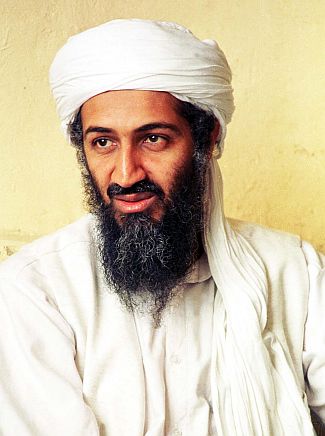 Premature death offers the surest path to immortality.