Was the shooting of Representative Gabrielle Giffords an historic moment in American politics?
The media frenzy, a presidential response and now a national moment of silence — all join together to suggest that at 10am on January 8, something happened not just in Tuscon, Arizona, but across the whole of America.
I suppose historic moments are by their nature social fabrications, yet some have a palpable authenticity that others lack.
The Tuscon shootings might have provided an opportunity for some national soul searching on the vitriol that now pollutes American political discourse, but it’s a bit premature to conclude that the wider phenomenon and Saturday’s bloodshed can be reduced to cause and effect.
The idle willingness with which the actions of individuals are treated as representations of the character of social groups is no more justifiable when Jared Lee Loughner is instantly tied to Sarah Palin and the Tea Party, than it is when Major Nidal Malik Hasan is tied to the American Muslim community. Granted, Palin and others on the right should now have pause to reconsider what kind of language and imagery they use, but in trying to understand why Loughner pulled the trigger it seems just as likely that he was motivated by anticipation of the reaction he would provoke as much as anything else.
At Salon, Laura Miller challenges those who want to read a great deal into Loughner’s reading favorites — books that ranged the gamut from Hitler’s Mein Kampf to Herman Hesse’s Siddhartha. She writes:
Loughner is almost certainly insane and, like the countless other mentally disturbed people who send similar ravings to media outlets around the world, his ideas would have been ignored as incoherent and irrelevant if he hadn’t fired a gun into a crowd of people Saturday. The fact that he did fire that gun, however, doesn’t make his delusions suddenly meaningful. It doesn’t make his list of favorite books significant. Crazy people who make headlines and change history are still crazy.
By studying Loughner’s book list for clues to the political leanings that somehow “drove” him to commit murder, commentators are behaving a lot like crazy people themselves. Paranoids are prone to scouring newspaper articles and the monologues of late-night comedians for imaginary coded messages that confirm their “secret knowledge” about the world. But those coded messages aren’t there — it’s just random stuff with no special significance. The truth about mental illness is that it strikes without regard to political affiliation or ideological orientation, and it turns beautiful minds into nonsense factories. We can debate a social order that allows its victims access to firearms and talk about finding better ways to intervene before the minority of mentally disturbed individuals with violent impulses are able to act on those impulses. But trying to find the cause for this disease in politics, ideas or books is just plain nuts.
The willingness of a journalist to glibly write that mental illness “turns beautiful minds into nonsense factories,” says less about the nature of mental illness than it says about the degree to which introspective reflection is undervalued in the contemporary world, fixated as we are on the stuff around us at the expense of our interior life.
It’s easy to marginalize the mentally ill by regarding them as people with broken minds filled with nonsense, but that neither advances a wider understanding of mental illness as it exists within the wild territory of human experience, nor addresses the need to bridge a divide between the mentally ill and the society in which they lack support.
Alienation — which can be described as the feeling of not being heard and of becoming socially invisible — is not a marginal dimension of modern life. On the contrary, the quest for identity in a world where electronic connections increasingly serve as substitutes for physical relationships, is an expression of the degree to which alienation has become so ordinary, universal and normal, that it is also now regarded as natural and thus unworthy of being named.
Mental illness exists on the continuum of alienation and although most people’s experience might not extend so far out on that continuum, those who regard themselves as mentally healthy derive a false comfort in imagining that the Loughners in our world merely reveal the distortions of their own troubled minds and nothing about the world they struggle to inhabit.









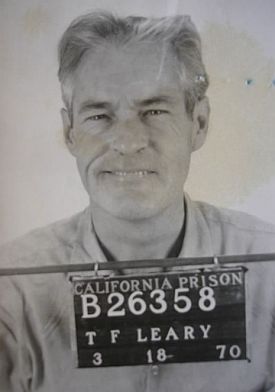 When you think about it, secrecy is the cause of the whole flap. Ellsberg and Russo published some secrets. Leaks in the White House. The plumbers steal Ellsberg’s psychiatric secrets. And bug the Democrat’s phone calls. The entire White House is involved in cover-up. The hearings center on cover-up of the cover-up.