‘Disappeared’ Pakistanis — innocent and guilty alike — have fallen into a legal black hole

Without a single reference to President Obama’s drone war in Pakistan, extrajudicial detention of prisoners at Guantanamo, the torture of suspected terrorists, CIA-run secret prisons, rendition, presidential authorization to assassinate US citizens, or the United States’ long history of supporting governments that use their power to suppress political dissent by making their opponents “disappear,” the New York Times reports:

The Obama administration is expressing alarm over reports that thousands of political separatists and captured Taliban insurgents have disappeared into the hands of Pakistan’s police and security forces, and that some may have been tortured or killed.

The issue came up in a State Department report to Congress last month that urged Pakistan to address this and other human rights abuses. It threatens to become the latest source of friction in the often tense relationship between the wartime allies.

The concern is over a steady stream of accounts from human rights groups that Pakistan’s security services have rounded up thousands of people over the past decade, mainly in Baluchistan, a vast and restive province far from the fight with the Taliban, and are holding them incommunicado without charges. Some American officials think that the Pakistanis have used the pretext of war to imprison members of the Baluch nationalist opposition that has fought for generations to separate from Pakistan. Some of the so-called disappeared are guerrillas; others are civilians.

“Hundreds of cases are pending in the courts and remain unresolved,” said the Congressionally mandated report that the State Department sent to Capitol Hill on Nov. 23. A Congressional official provided a copy of the eight-page, unclassified document to The New York Times.

Separately, the report also described concerns that the Pakistani military had killed unarmed members of the Taliban, rather than put them on trial.

Two months ago, the United States took the unusual step of refusing to train or equip about a half-dozen Pakistani Army units that are believed to have killed unarmed prisoners and civilians during recent offensives against the Taliban. The most recent State Department report contains some of the administration’s most pointed language about accusations of such so-called extrajudicial killings. “The Pakistani government has made limited progress in advancing human rights and continues to face human rights challenges,” the State Department report concluded. “There continue to be gross violations of human rights by Pakistani security forces.”


Facebooktwittermail

Not just a friend: one Palestinian’s view of Israeli activist Jonathan Pollak

The Palestinian activist Ayed Morrar writes:

I know that power – with all the authority, physical comfort, and quality of life it brings – strongly pushes a person into a world of material possessions, and people and things that stimulate their senses. Gradually, they start to protect this material paradise with walls to defend it from threats and keep from it anything that may unsettle life inside. As the blessings in that paradise increase, the walls around it multiply to the same degree.

Only great willpower and moral strength can enable a person to get to know those that live outside these walls, engage with their concerns and wounds, and even struggle for them. As a person embellishes their life in their paradise, the human and moral effort required to live the struggles of others increases. As I began to recognize this truth as someone who lives outside the walls, my understanding and respect grew for those who have been able to break through the walls of their paradise, for those who leave it and come towards me in solidarity to live my concerns and wounds, as a people who live under the oppression of occupation, lacking freedom and justice.

On December 27, prominent Israeli activist Jonathan Pollak was sentenced to three months in an Israeli jail for protesting the occupation. Jonathan’s upcoming imprisonment highlights two little-known stories – the support of some Israeli activists for our growing movement of Palestinian-led unarmed civilian protests, and the Israeli government’s effort to crush our joint struggle against the Israeli occupation. Over the last eight years, Jonathan has participated in hundreds of Palestinian-led protests in the West Bank against Israel’s military occupation. Along with other Israelis and internationals, he participated in our successful protest campaign in my West Bank village of Budrus in 2003-2004, that pushed Israel to reroute its wall and saved our farmland.

Jonathan Pollak is a great man – as great as the material temptations that the paradise of his nation affords him, in which his skills as a graphic designer would allow him to live in safety and unimaginable affluence. He is as great as the human and moral effort he exerted to know the other, to understand them, and struggle on behalf of the other for their freedom. His greatness is also the more for its rarity. He may not be the only one who stands at the borders of his moral and humanistic principles, but he remains, along with his many colleagues, part of a small group in their society. Their unusual status increases the magnitude of their struggle for justice, freedom and true peace. [Continue reading.]

Facebooktwittermail

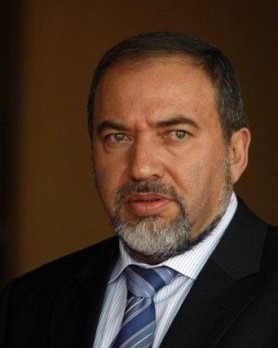
Lieberman represents Israel

In recent months, Israel’s political leaders and Israel’s stateside supporters have been railing against the so-called delegitimization movement. It’s debatable whether such a movement exists but even to the extent that it does, the effect it has had in tarnishing Israel’s image is minuscule in comparison to Israel’s own unintentional delegitimization efforts.
The latest examples came this month in a new campaign to guard Jewish racial purity. A letter signed by the wives and daughters of prominent rabbis, urges Jewish women not to date or even work with Arab men. It was preceded by a letter signed by hundreds of rabbis calling on Jews not to rent apartments to Arabs. The letters are part of a “racist tidal wave” sweeping across Israel, says defense minister, Ehud Barak.

In this context, the American Jewish diaspora is becoming acutely uncomfortable. The more transparent Israeli racism becomes, the harder it is for Americans — Jewish or non-Jewish — to support Israel; the more obvious it is that Israel’s Jewish identity is being defended at the expense of its democratic identity.

Strange then, that the editors of the liberal The Forward, seem to imagine that getting rid of Avigdor Lieberman as foreign minister would significantly help Israel.

In an editorial, the paper says:

Lieberman’s tenure in such a prominent position has been dismissed as an embarrassing annoyance by most Diaspora leaders, a necessary burden to ensure that his Yisrael Beiteinu party remains in Prime Minister Benjamin Netanyahu’s coalition. Besides, the inner workings of Netanyahu’s government are arguably not our right to influence, no more than Israelis should have a say in who is U.S. Attorney General or mayor of New York.

But if Netanyahu persists in keeping Lieberman, both men should know this: The obligation we assume as Diaspora Jews to support Israel and combat delegitimization becomes much harder, more distasteful and less effective every time the foreign minister opens his mouth. It betrays our Judaic and civic values to stand by while such a man advocates for the transfer of Arab citizens of Israel, for a discriminatory loyalty oath, for an endless postponement of peace negotiations that are the only — the only — way to ensure that Israel remains Jewish and democratic.

The Israeli newspaper Haaretz published an editorial December 28 excoriating the foreign minister, arguing that “Lieberman and his pronouncements only provide vindication to Israel’s adversaries.” For that reason, the paper declared, he must go.

And if Lieberman goes, Israel will change?

No doubt its liberal supporters would welcome a more respectable face such as could be provided by a Likud-Kadima coalition (which isn’t in the offing), but Lieberman is no different from Rabbi Meir Kahane who said, in reference to Israel’s Arab-hating population: “I say what they think.”

As more and more Israelis openly declare their unwillingness to live alongside Arabs, what appears to be changing is not that Israel is becoming more racist but that its underlying racism is being expressed more freely.

Kahane said: “I want Democracy for Jews but I don’t want Democracy for Arabs because otherwise there won’t be a Jewish State!” He was dubbed an extremist and an aberration, but the veil is now being lifted.

Who can be so naive as to imagine that an Israel without Lieberman as its foreign minister would become a more tolerant, democratic society? Or are these calls for his departure nothing more than an appeal for cosmetic changes necessary for making the indefensible, defensible?

Kahane had it right: Israel is a “democracy” for Jews, which is to say that it grants rights to Jews that it withholds from others, and as that unpalatable truth becomes increasingly evident to the whole world, the liberal Jewish diaspora will need to abandon the illusion that Israel can be a Jewish and democratic state. It can only be one or the other.

Facebooktwittermail

Obama’s indiscriminate slaughter in Pakistan can only encourage new waves of militancy

Mehdi Hasan writes:

Speaking at the White House Correspondents’ Association dinner in May, Barack Obama spotted teen pop band the Jonas Brothers in the audience. “Sasha and Malia are huge fans, but, boys, don’t get any ideas,” deadpanned the president, referring to his daughters. “Two words for you: predator drones. You will never see it coming.” The crowd laughed, Obama smiled, the dinner continued. Few questioned the wisdom of making such a tasteless joke; of the US commander-in-chief showing such casual disregard for the countless lives lost abroad through US drone attacks.

From the moment he stepped foot inside the White House, Obama set about expanding and escalating a covert CIA programme of “targeted killings” inside Pakistan, using Predator and Reaper drones armed with Hellfire missiles (who comes up with these names?) that had been started by the Bush administration in 2004. On 23 January 2009, just three days after being sworn in, Obama ordered his first set of air strikes inside Pakistan; one is said to have killed four Arab fighters linked to al-Qaida but the other hit the house of a pro-government tribal leader, killing him and four members of his family, including a five-year-old child. Obama’s own daughter, Sasha, was seven at the time.

But America’s Nobel-peace-prize-winning president did not look back. During his first nine months in office he authorised as many aerial attacks in Pakistan as George W Bush did in his final three years in the job. And this year has seen an unprecedented number of air strikes. Forget Mark Zuckerberg or the iPhone 4 – 2010 was the year of the drone. According to the New America Foundation thinktank in Washington DC, the number of US drone strikes in Pakistan more than doubled in 2010, to 115. That is an astonishing rate of around one bombing every three days inside a country with which the US is not at war.

Facebooktwittermail

When Americans stop being killed in Iraq it stops being called a war

Just as the State Department defines “terrorism” in terms of threats to American lives and threats to America’s national security, the war in Iraq is ceasing to be a “war” because fewer and fewer Americans are dying — as though the only blood that supports life is American blood; as though life itself only truly qualifies as such when it carries the American brand.

From a US base near Khanaqin, the New York Times reports:

Somewhere else, miles away from a tiny desert outpost where American troops dozed in combat vehicles and brewed midnight pots of Dunkin’ Donuts coffee, another Iraq was seething. Iraqi bureaucrats and soldiers were killed by bullets and bombs. Iraqi army patrols were rocked by explosions.

But for the Americans camped out at this remote checkpoint, keeping watch over Iraqi soldiers and passing traffic, it was another quiet night of a quieted war.

They ate ribs and watched a slasher movie. They lifted weights and talked about Christmases spent in Hawaii. They took turns watching the headlights of watermelon trucks and oil tankers glide across the horizon of one of Iraq’s most violent and ethnically divided regions, noting routine radio chatter and shift changes in a logbook.

“It’s boring,” said Sgt. Bradley Jackson, sprawled out in a swamp-green Stryker vehicle, as he monitored the road to Khanaqin, a disputed town claimed both by Iraq’s Arab and Kurdish populations. “And that’s the way we like it.”

By no means is the fighting in Iraq over. American forces remain the targets of snipers’ bullets, rocket attacks, mortar launches and roadside bombs. Some soldiers are still shooting and hunting insurgents. Others are still dying, joining the ranks of the roughly 4,400 troops who have been killed since the United States invaded in 2003.

But largely, the newly renamed mission, Operation New Dawn, is a twilight war for the troops still living in dusty camps and sprawling corrugated bases across the country.

Facebooktwittermail

The struggle for East Jerusalem

Jesse Rosenfeld writes:

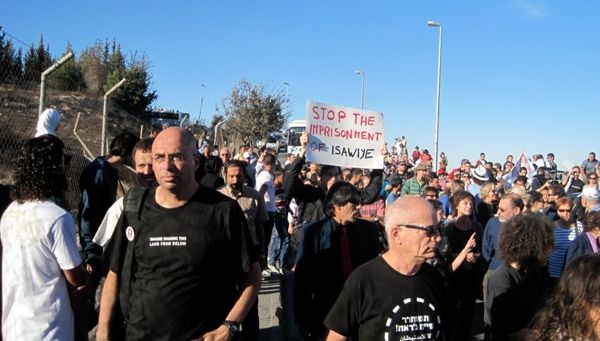
Half way down a hill, sandwiched between Jerusalem’s Hadassa hospital and Hebrew University, sits the compact and overcrowded occupied East Jerusalem village of Issawiya.

Before crossing the makeshift police checkpoint of concrete block obstacles at the edge of the University and entering the neighbourhood – which resembles more of a besieged West Bank refugee camp than a Jerusalem municipality – there is a clearly marked ‘Dead End’ street sign. On the main road leaving towards the hospital on the other side of the neighbourhood there is a wall of concrete cubes blocking any traffic, leaving just a narrow space for pedestrians to cross.

Although the Jewish dominated Hebrew University has expanded onto Issawiya’s land, the picture of Jerusalem from both places couldn’t be more different. While Israeli students attend classes oblivious to life beyond the ‘dead end’, Israeli security forces have orchestrated a campaign of regular night time arrest raids against Issawiya residents in an effort to halt growing popular resistance to segregation, home demolition and land confiscation.

The recent Israeli home demolitions, increasing the pressure on the already squeezed Palestinian community, have given rise to local youth organising ruckus street demonstrations, clashing with Israeli police and border guards at the neighbourhood checkpoints. Now the campaign has expanded and the youth of Issawiya have been joined by Israeli anti-occupation activists.

With Israel continuing to expand Jewish settlements in East Jerusalem, squeezing and displacing the Palestinian residents under the banner of an undivided Israeli capital (a claim rejected by most of the world), the Palestinian Authority has been powerless in defending the residents of their future capital. Meanwhile, despite murmurs of discontent from Washington and the international community, international diplomacy has proven just as ineffective in advocating for the rights of Jerusalem’s Palestinian residents.

Now, failed by national leadership and abandoned by an international community to the mercy of an Israeli government that is forcing them from sight in order to make way for Israeli control and settlement, Palestinian residents are taking it on themselves to defend their land, rights and presence. [Continue reading.]

Facebooktwittermail

Helen Thomas: thrown to the wolves

Danny Schechter writes:

In 1960, I was fixated on emulating the courageous media personalities of the times, from Edward R. Murrow to a distinctive figure I came to admire at presidential press conferences – a wire service reporter named Helen Thomas.

In recent years, my faith in the power of dialogue in politics has been severely tested – as, no doubt has hers – in an age where diatribes and deliberate demonization chills debate and exchanges of opposing views.

Once you are labeled and stereotyped – especially if you are denounced as an anti-Semite – you are relegated to the fringes, pronounced a hater beyond redemption, and even beyond explanation.

As the legendary Helen Thomas soon found out.

The rise of a legend

As a member in good standing of an activist generation, I saw myself more as an outsider in contrast to Helen’s distinctive credentials as an insider, as a White House bureau chief and later as the dean of the White House Correspondents’ Association.

Yet, beneath her establishment credentials and status, she was always an outsider too – one of nine children born to a family of Lebanese immigrants in Winchester Kentucky, who despite their Middle East origins were Christians in the Greek Orthodox Church.

She became a woman who broke the glass ceiling in the clubby, mostly male, inside-the-beltway world of big egos and self-important media prima donnas.

Her origins were more modest. She grew up in an ethnic neighborhood in Detroit.

Helen received her bachelor’s degree from Wayne State University in 1942, the year I was born. Earlier this year, her alma mater, of which she had taken so much pride in her achievements, canceled the award in her name.

A fall from grace

The withdrawal of her name from the prominent award was a striking gesture of cowardice and submission to an incident blown out of proportion that instantly turned Helen from a ‘she-ro’ to a zero.

The Simon Wiesenthal Center put her on their top ten list of anti-Semites after angry remarks she made about Israel went viral and exploded into a major story.

President Barack Obama who cheerfully brought her a birthday cake, later labeled her remarks as “reprehensible”.

You would think that given all the vicious ad hominems, Godwins and putdowns directed at him, he would be more cautious tossing slurs at others.

But no, all politicians pander to deflect criticism whenever the wind of enmity blows their way.

Now it was Helen who was being compared to Hitler in the latest furor. [Continue reading.]

Facebooktwittermail

My parents were executed under the unconstitutional Espionage Act — here’s why we must fight to protect Julian Assange

Robert Meeropol writes:

Rumors are swirling that the United States is preparing to indict Wikileaks leader Julian Assange for conspiring to violate the Espionage Act of 1917. The modern version of that act states among many, many other things that: “Whoever, for the purpose of obtaining information respecting the national defense with intent or reason to believe that the information is to be used to the injury of the United States” causes the disclosure or publication of this material, could be subject to massive criminal penalties. It also states that: “If two or more persons conspire to violate any of the foregoing provisions … each of the parties to such conspiracy shall be subject to the punishment provided for the offense which is the object of such conspiracy.” (18 U.S. Code, Chapter 37, Section 793.)

I view the Espionage Act of 1917 as a lifelong nemesis. My parents were charged, tried and ultimately executed after being indicted for Conspiracy to Commit Espionage under that act.

The 1917 Act has a notorious history. It originally served to squelch opposition to World War I. It criminalized criticism of the war effort, and sent hundreds of dissenters to jail just for voicing their opinions. It transformed dissent into treason.

Many who attacked the law noted that the framers of the Constitution had specifically limited what constituted treason by writing it into the Constituton: “Treason against the United States shall consist only in levying war against them, or in adhering to their enemies, giving them aid and comfort” (Article III, section 3). The framers felt this narrow definition was necessary to prevent treason from becoming what some called “the weapon of a political faction.” Furthermore, in their discussions at the Constitutional Convention they agreed that spoken opposition was protected by the First Amendment and could never be considered treason.

It appears obvious that the Espionage Act is unconstitutional because it does exactly what the Constitution prohibits. It is, in other words, an effort to make an end run around the Treason Clause of the Constitution. Not surprisingly, however, as we’ve seen in times of political stress, the Supreme Court upheld its validity in a 5-4 decision. Although later decisions seemed to criticize and limit its scope, the Espionage Act of 1917 has never been declared unconstitutional. To this day, with a few notable exceptions that include my parents’ case, it has been a dormant sword of Damocles, awaiting the right political moment and an authoritarian Supreme Court to spring to life and slash at dissenters.

Facebooktwittermail

US-trained militias ready to join forces with the Taliban

The Associated Press reported earlier this week:

Tribal militias allied with the government helped block a Taliban advance in this corner of northwest Pakistan close to the Afghan border, but their success has come at a price: the empowerment of untrained, unaccountable private armies that could yet emerge as a threat of their own.

Tensions are emerging between authorities and the dozens of militias that they helped to create predominantly in and near the northwest tribal regions. Operating from fortress-like compounds with anti-aircraft guns on the roofs, the militiamen have made it clear that the state now owes them for their sacrifices. They show photos on their cell phones of Taliban they killed and point to the scrubland outside, with graves of relatives who died in the fight.

The leader of the largest militia near the town of Matani, a wealthy landowner named Dilawar Khan, warns that he will stop cooperating with police unless he gets more money and weapons from authorities. Speaking to The Associated Press, he adds what could be a veiled threat to join the militants.

“Time and time again, the Taliban have contacted us, urging us to change sides,” he said.

The New York Times now reports:

Rival militant organizations on both sides of the Afghanistan-Pakistan border have increasingly been teaming up in deadly raids, in what military and intelligence officials say is the insurgents’ latest attempt to regain the initiative after months of withering attacks from American and allied forces.

New intelligence assessments from the region assert that insurgent factions now are setting aside their historic rivalries to behave like “a syndicate,” joining forces in ways not seen before. After one recent attack on a remote base in eastern Afghanistan, a check of the dead insurgents found evidence that the fighters were from three different factions, military officials said.

In the past, these insurgent groups have been seen as sharing ideology and inspiration, but less often plans for specific missions.

Now the intelligence assessments offer evidence of a worrisome new trend in which extremist commanders and their insurgent organizations are coordinating attacks and even combining their foot soldiers into patchwork patrols sent to carry out specific raids.

Facebooktwittermail

Mugabe doesn’t need an excuse for attacking Tsvangirai

Robert I. Rotberg writes:

President Robert Gabriel Mugabe is Zimbabwe’s curse. In his three decades in power, Mugabe has traded the country’s economic promise for withering decline. He’s turned what was once the breadbasket of the region into a deathtrap for its own citizens. He has crushed the opposition, cleared slums with bulldozers, ignored a devastating cholera outbreak, and chased millions of desperate migrants over the border into South Africa. His passing, when it comes, may seem like a blessing.

Yet when the ailing, 86-year-old Mugabe inevitably leaves office, by fair means or foul, more trouble is in store for the nation that he has singlehandedly destroyed. And hardly anyone is fully prepared for that game-changing moment — not Zimbabwe’s opposition; not neighboring South Africa; not Western embassies or regional multilateral organizations. No one has a workable contingency plan. And with everyone likely to be caught flat-footed by Mugabe’s demise, the president’s cronies are likely to attempt to seize power and install a regime as bad as or worse than the one left behind.

For now, Mugabe is keeping a tight grip on the Zimbabwean state. After losing a presidential election in 2008, he agreed — under heavy international pressure — to share power with the vote winner, opposition leader Morgan Tsvangirai, and the two adversaries were forced into an unhappy marriage in 2009. Although Tsvangirai was made the prime minister, Mugabe continues to run the country according to his own whims. Defying the 2009 agreement, he appoints provincial governors, judges, ambassadors, an attorney general, a central bank governor, and military generals without so much as a nod in Tsvangirai’s direction. In fact, he ignores Tsvangirai most of the time, and blames the prime minister for Zimbabwe’s ongoing economic and social failings.

Facebooktwittermail

WikiLeaks’ gift to Robert Mugabe

The political and media establishment’s assault on WikiLeaks has had the unfortunate effect of creating two camps — one for which WikiLeaks is a band of cyber-terrorists and the other in which WikiLeaks’ embattled status fosters a sense that all challenges are unwarranted.

At this point, I still believe that WikiLeaks’ actions pose a legitimate challenge to the cancerous growth of secrecy in the West’s nominal democracies. If however I was living under the oppressive rule of the Mugabe regime in Zimbabwe, I don’t think I’d have a favorable view of Julian Assange and his cohorts. Indeed, in this instance, I’d say WikiLeaks fucked up — perhaps catastrophically.

Christopher R. Albon writes:

Last year, early on Christmas Eve morning, representatives from the U.S., United Kingdom, Netherlands, and the European Union arrived for a meeting with Zimbabwean opposition leader Morgan Tsvangirai. Appointed prime minister earlier that year as part of a power-sharing agreement after the fraud- and violence-ridden 2008 presidential election, Tsvangirai and his political party, Movement for Democratic Change (MDC), are considered Zimbabwe’s greatest hopes for unseating the country’s long-time de facto dictator Robert Mugabe and bringing democratic reforms to the country.

The topic of the meeting was the sanctions imposed on Zimbabwe by a collection of western countries, including the U.S. and E.U. Tsvangirai told the western officials that, while there had been some progress in the last year, Mugabe and his supporters were dragging their feet on delivering political reforms. To overcome this, he said that the sanctions on Zimbabwe “must be kept in place” to induce Mugabe into giving up some political power. The prime minister openly admitted the incongruity between his private support for the sanctions and his public statements in opposition. If his political adversaries knew Tsvangirai secretly supported the sanctions, deeply unpopular with Zimbabweans, they would have a powerful weapon to attack and discredit the democratic reformer.

Later that day, the U.S. embassy in Zimbabwe dutifully reported the details of the meeting to Washington in a confidential U.S. State Department diplomatic cable. And slightly less than one year later, WikiLeaks released it to the world.

In Zimbabwe’s The Standard, Nqaba Matshazi writes:

The recent WikiLeaks cable releases could have afforded President Robert Mugabe ammunition to call for elections next year, with his main argument that his coalition partner, Morgan Tsvangirai was in bed with the West.

For years now, Mugabe has claimed that Tsvangirai was a pliant tool for Britain and America and revelations that the Prime Minister called for the West to maintain sanctions against Zimbabwe will only strengthen the veteran leader’s resolve to hold elections.

The removal of sanctions is listed as one of the priority issues in the Global Political Agreement (GPA) and hawks in Mugabe’s Zanu PF party are already screaming treason and are using the cables as an excuse to call for the end of the inclusive government.

Political analysts last week told The Standard that the leaked cables were fitting well into Zanu PF’s agenda and they would use them to confront the government.

Trevor Maisiri said Zanu PF would now use the cables as an excuse to call for the end of the inclusive government charging that they were getting rid of imperialist influences in the government.

“Zanu PF will obviously see these leaks as a bonus to their already rubber-stamped position of early elections,” he said.

“What Zanu PF may then do is craft their message upon the urgency of having election so as to retire the MDC-T out of government and thereby ensure that there is a blockade of the USA influence in Zimbabwean affairs.”

South Africa’s Business Day reports:

Zimbabwean government’s threat to investigate treason charges against Prime Minister Morgan Tsvangirai over his confidential talks with US diplomats disclosed by WikiLeaks was Zanu (PF)’s opening salvo ahead of proposed elections next year, analysts said yesterday.

The South African government yesterday refused to speculate on how new treason charges, if instituted against Mr Tsvangirai, would affect President Jacob Zuma ’s mediation efforts.

Siphamandla Zondi, executive director at the Institute for Global Dialogue, said the WikiLeaks revelations would hurt Mr Tsvangirai’s political stature, and were likely to be exploited by President Robert Mugabe to discredit him and reinforce negative perceptions spread by Zanu (PF) that the Movement for Democratic Change (MDC) was “the political surrogates and puppets” of western powers.

The attorney-general, Johannes Tomana, reportedly said he intended appointing a commission of five lawyers to examine whether recent disclosures amounted to a breach of the constitution.

Facebooktwittermail

Former CIA chief: ‘I thank god every day for the continuity’ between Bush and Obama

On CNN on Sunday, former Bush officials lined up to praise President Obama:

Former Central Intelligence Agency Director Michael Hayden, a retired Air Force general, also argued that Obama’s approach has been, by and large, the same — regardless of campaign rhetoric.

“When one is in office, it’s, as the admiral has suggested, when one is in office, that responsibility weighs pretty heavily. And so we’ve seen a powerful consistency between two administrations trying to deal with this problem,” Hayden said. “Actually, I’ve seen it over two administrations, and I thank god every day for the continuity.”

“Regardless of which side of the political spectrum you come from or what your political views might be, these threats are very real and very serious. And we have to — have to deal with them in a very serious way,” [ former National Intelligence Director and retired Navy Vice Admiral Michael] McConnell added.

Facebooktwittermail

New York art shoppers protected from seeing the word ‘Gaza’

Does this say more about the sensitivities of the Gagosian Gallery’s wealthy patrons or its owner, Larry Gagosian, or do they each find the mention of Gaza (and by implication, reference to Israel’s inhumane treatment of Gaza’s residents) offensive?

At the New York Times, Robert Mackey reports:

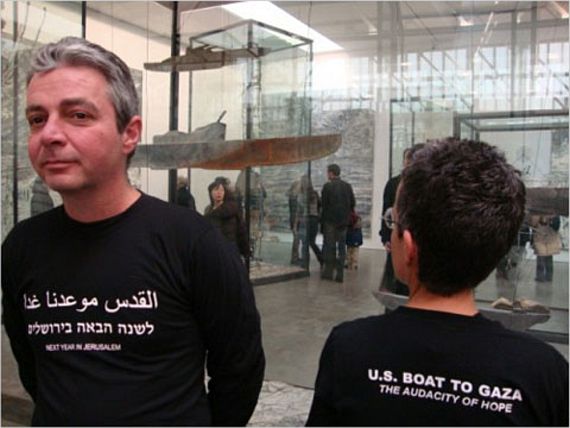
Four activists were forced to leave an art gallery in New York this month for wearing T-shirts promoting an effort to include an American boat in the next blockade-challenging Gaza flotilla.

The incident came on the final day of an exhibition at the Gagosian Gallery called “Next Year in Jerusalem,” featuring pieces by the German artist Anselm Kiefer on the subject of Nazi Germany and the Holocaust.

The T-shirts worn by the activists repeated the show’s title, which is borrowed from a Jewish prayer, in English, Hebrew and Arabic, on the front and said “U.S. Boat to Gaza” and “The Audacity of Hope” on the back. (As The Lede explained in a previous post, the American activists plan to call their boat the Audacity of Hope, echoing the title of a book by President Obama.)

As Claudia Roth Pierpont reported in an account of the incident on the New Yorker’s Web site last week, the gallery, on West 24th Street, called the police, and force was used to eject one bystander who asked the officers why the activists were being ordered to leave.

Facebooktwittermail

New York Times sick of Israel

I have no idea how accurate the reporting is here, but Israel Today Magazine has a colorful account of what it headlines as an Israeli diplomat getting “ambushed” by the New York Times editorial team, under the direction of “rabid columnist” Tom Friedman.

The New York Times, flagship of the liberal American media, has never been a friend of the Jewish state. But the newspaper’s aversion to Israel turned to open hostility this month when its top editors ambushed and tore into an unsuspecting senior official from the Israeli Consulate in New York City.

The Israeli official was invited by the Times editors, among them rabid columnist Thomas Friedman, to meet with them at their office. Being a veteran at dealing with the American media, the official assumed the invitation was for a friendly discussion and perhaps an interview regarding the peace process and other matters of importance to Israel.

The Israeli had no idea he was being invited for what he described as a lynch.

As the meeting started, the Times editors – most of them Jews, and one of them a former Israeli – began to attack the Israeli diplomat, and refused to give him even a moment to respond.

They blamed Israel for everything, the diplomat told Israel Today.

The Times editors insisted the breakdown of the peace process was Israel’s fault, that the lack of peace was Israel’s fault, and were adamant that Israel had given nothing to the Palestinians. They accused Israel of being an extremist and racist state, and blasted the diplomat for Israel’s “ill-treatment” of President Barack Obama.

In short, the Times staff informed the Israeli in no uncertain terms that they were sick of his country.

The diplomat told us he was shocked by the attack. He tried to respond, but the Times editors were not interested in hearing his arguments.

“I asked them,” said the diplomat, “We haven’t given the Palestinians anything? How can you say that? Prime Minister Benjamin Netanyahu broke with his party platform and implemented a 10-month Jewish building freeze, and what did we get in return? More Palestinian refusal to negotiate.”

According to the Israeli, the Times editors responded: “Yes, yes. Of course you are going to start telling us about how Israel’s security needs are not being met. You just don’t get it that we are sick of hearing about that.”

There is little doubt that this ambush was led by Friedman, whose hostility toward Israel in his recent columns has surprised even his liberal friends in the Jewish state.

In recent articles, Friedman has accused Israel of being a spoiled child, crazy and extremist. He insisted that the US stop being Israel’s “enabler,” and pointed out that the rest of the world is fully on the side of the Palestinians, so why not America?

Wrote Friedman in one of his columns: “Israel, when America – which has given you billions over the past 50 years and defended you in the international arena – asks you to stop building settlements for three months in order to jump start peace talks, there is only one correct answer, and that is ‘yes, whatever you say.’”

Facebooktwittermail

2011: A Brave New Dystopia

Chris Hedges writes:

The two greatest visions of a future dystopia were George Orwell’s “1984” and Aldous Huxley’s “Brave New World.” The debate, between those who watched our descent towards corporate totalitarianism, was who was right. Would we be, as Orwell wrote, dominated by a repressive surveillance and security state that used crude and violent forms of control? Or would we be, as Huxley envisioned, entranced by entertainment and spectacle, captivated by technology and seduced by profligate consumption to embrace our own oppression? It turns out Orwell and Huxley were both right. Huxley saw the first stage of our enslavement. Orwell saw the second.

We have been gradually disempowered by a corporate state that, as Huxley foresaw, seduced and manipulated us through sensual gratification, cheap mass-produced goods, boundless credit, political theater and amusement. While we were entertained, the regulations that once kept predatory corporate power in check were dismantled, the laws that once protected us were rewritten and we were impoverished. Now that credit is drying up, good jobs for the working class are gone forever and mass-produced goods are unaffordable, we find ourselves transported from “Brave New World” to “1984.” The state, crippled by massive deficits, endless war and corporate malfeasance, is sliding toward bankruptcy. It is time for Big Brother to take over from Huxley’s feelies, the orgy-porgy and the centrifugal bumble-puppy. We are moving from a society where we are skillfully manipulated by lies and illusions to one where we are overtly controlled.

Orwell warned of a world where books were banned. Huxley warned of a world where no one wanted to read books. Orwell warned of a state of permanent war and fear. Huxley warned of a culture diverted by mindless pleasure. Orwell warned of a state where every conversation and thought was monitored and dissent was brutally punished. Huxley warned of a state where a population, preoccupied by trivia and gossip, no longer cared about truth or information. Orwell saw us frightened into submission. Huxley saw us seduced into submission. But Huxley, we are discovering, was merely the prelude to Orwell. Huxley understood the process by which we would be complicit in our own enslavement. Orwell understood the enslavement. Now that the corporate coup is over, we stand naked and defenseless. We are beginning to understand, as Karl Marx knew, that unfettered and unregulated capitalism is a brutal and revolutionary force that exploits human beings and the natural world until exhaustion or collapse.

Facebooktwittermail

Greenwald challenges Wired on its refusal to publish evidence on Manning

Glenn Greenwald writes:

For more than six months, Wired’s Senior Editor Kevin Poulsen has possessed — but refuses to publish — the key evidence in one of the year’s most significant political stories: the arrest of U.S. Army PFC Bradley Manning for allegedly acting as WikiLeaks’ source. In late May, Adrian Lamo — at the same time he was working with the FBI as a government informant against Manning — gave Poulsen what he purported to be the full chat logs between Manning and Lamo in which the Army Private allegedly confessed to having been the source for the various cables, documents and video that WikiLeaks released throughout this year. In interviews with me in June, both Poulsen and Lamo confirmed that Lamo placed no substantive restrictions on Poulsen with regard to the chat logs: Wired was and remains free to publish the logs in their entirety.

Despite that, on June 10, Wired published what it said was only “about 25 percent” of those logs, excerpts that it hand-picked. For the last six months, Poulsen has not only steadfastly refused to release any further excerpts, but worse, has refused to answer questions about what those logs do and do not contain. This is easily one of the worst journalistic disgraces of the year: it is just inconceivable that someone who claims to be a “journalist” — or who wants to be regarded as one — would actively conceal from the public, for months on end, the key evidence in a political story that has generated headlines around the world.

Greenwald comments:

Over the last month, I’ve done many television and radio segments about WikiLeaks and what always strikes me is how indistinguishable — identical — are the political figures and the journalists. There’s just no difference in how they think, what their values and priorities are, how completely they’ve ingested and how eagerly they recite the same anti-WikiLeaks, “Assange = Saddam” script. So absolute is the WikiLeaks-is-Evil bipartisan orthodoxy among the Beltway political and media class (forever cemented by the joint Biden/McConnell decree that Assange is a “high-tech Terrorist,”) that you’re viewed as being from another planet if you don’t spout it. It’s the equivalent of questioning Saddam’s WMD stockpile in early 2003.

Facebooktwittermail

America’s leading liberal Zionists are losing faith in Israel

Earlier this month, Tom Friedman bemoaned the fact that Israel’s leadership has become “disconnected from reality”.

Then came the New Yorker‘s David Remnick warning Israelis about the way the American Jewish community is changing:

A new generation of Jews is growing up in the US. Their relationship with Israel is becoming less patient and more problematic. They see what has happened with the Rabbinical Letter [proscribing rental and sale of property to Arabs], for example. How long can you expect that they’ll love unconditionally the place called Israel? You’ve got a problem.

And now comes Israel’s most loyal American liberal defender, Jeffrey Goldberg.

Before Christmas, Goldberg was fretting that the possibility of a two-state solution is slipping out of reach:

I would like someone in the Netanyahu government to please explain the plan here. It would make things so much easier to understand if we just knew the plan. Is the plan to continue settling Judea and Samaria [the West Bank] so that there is no chance whatsoever of creating a Palestinian state? And if this is the plan, then what happens to those Palestinians who are being denied a state? Will they be absorbed into democratic Israel, thus bringing about an end to the idea that there should be a single small country on earth where Jews can be a majority? Or are they going to be denied democratic rights, in which case, well, Israel as we know it will cease to exist. Or is there some other plan? Or — maybe — there is no plan.

And now Goldberg is acknowledging his grimmest fear: that Israel can all too easily dispense with democracy.

As I wrote last week, there’s very little Israel’s right-wing government has done in the past year or so to suggest that it is willing to wean itself from its addiction to West Bank settlements, and the expansion of settlements bodes ill for the creation of a Palestinian state — and the absence of Palestinian statehood means that Israel will one day soon confront this crucial question concerning its democratic nature: Will it grant West Bank Arabs the right to vote, or will it deny them the vote? If it grants them the vote, this will be the end of Israel as a Jewish state; if it denies them the vote in perpetuity, it will cease to be a democratic state.

I will admit here that my assumption has usually been that Israelis, when they finally realize the choice before them (many have already, of course, but many more haven’t, it seems), will choose democracy, and somehow extract themselves from the management of the lives of West Bank Palestinians. But I’ve had a couple of conversations this week with people, in Jerusalem and out of Jerusalem, that suggest to me that democracy is something less than a religious value for wide swaths of Israeli Jewish society. I’m speaking here of four groups, each ascendant to varying degrees:The haredim, the ultra-Orthodox Jews, whose community continues to grow at a rapid clip; the working-class religious Sephardim — Jews from Arab countries, mainly — whose interests are represented in the Knesset by the obscurantist rabbis of the Shas Party; the settler movement, which still seems to get whatever it needs in order to grow; and the million or so recent immigrants from Russia, who support, in distressing numbers, the Putin-like Avigdor Lieberman, Israel’s foreign minister and leader of the “Israel is Our Home” party.

Let’s just say, as a hypothetical, that one day in the near future, Prime Minister Lieberman’s government (don’t laugh, it’s not funny) proposes a bill that echoes the recent call by some rabbis to discourage Jews from selling their homes to Arabs. Or let’s say that Lieberman’s government annexes swaths of the West Bank in order to take in Jewish settlements, but announces summarily that the Arabs in the annexed territory are in fact citizens of Jordan, and can vote there if they want to, but they won’t be voting in Israel. What happens then? Do the courts come to the rescue? I hope so. Do the Israeli people come to the rescue? I’m not entirely sure. There are many Israelis who value democracy, but they might not possess the strength to fight. Does American Jewry come to the rescue? Well, most of American Jewry would be so disgusted by Israel’s abandonment of democratic principles that I think the majority would simply write off Israel as a tragic, failed experiment.

Facebooktwittermail