How long will it take the Washington press corps to discover the big story in Washington?

The story so far:

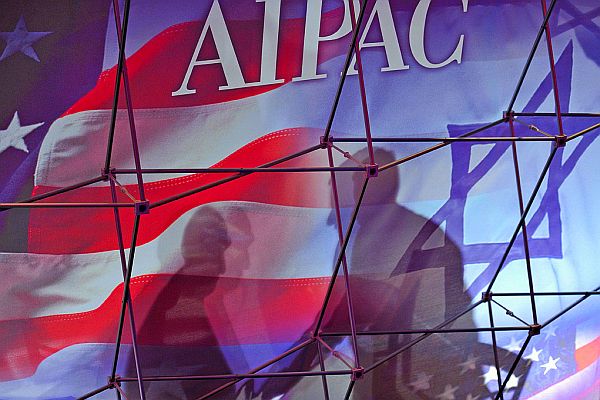
November 8: the American Israel Public Affairs Committee (AIPAC) files a 260-page motion [large pdf — don’t attempt to download without broadband] in the District of Columbia Superior Court, in which AIPAC is attempting to fend off a $20 million defamation suit from former employee Steven J Rosen who claims he was wrongfully dismissed. AIPAC ditched him and his colleague Keith Weissman in 2005 when the pro-Israel lobby feared investigation by the FBI.

November 15: Grant Smith highlights much of the politically damaging content of the motion in an Antiwar article, AIPAC Bares All to Quash Lawsuit.

November 16: the story is picked up by MJ Rosenberg, The Forward and others.

November 17: the story is gathering steam in the Jewish press, with items in the JTA and Haaretz.

As for the Washington Post, the New York Times and the rest of the US mainstream media, well as of noon Wednesday, it’s apparently still nap time — or, a figurative bloodbath at that obscure and uninfluential lobbying organization really isn’t news — or, there’s no such thing as the Israel lobby and so why should the press pay any attention — or, a bunch of spineless editors, worried about embarrassing their friends at AIPAC, are looking over their shoulders waiting to see which of their competitors is going to break loose first and force them to report on this unseemly turn of events.

And as for why AIPAC and Rosen are both willing to engage in what looks like a self-destructive fight, I suspect that their interests are not actually as far apart as they seem.

Rosen says: “Any embarrassment I suffered as a result of what they filed will be insignificant compared to the embarrassment they’ll suffer after we file our motion.” This seems to be key: that both sides are engaged in campaigns to embarrass the other and both sides are ultimately served if the conflict can be contained to one of embarrassment.

AIPAC can survive embarrassment. What it cannot survive would be investigation by the FBI. It can get away with looking like a sleazy operation. It can’t get away with being exposed as being the instrument of a foreign government.

At the same time, this is also a fight over money. Rosen’s devotion to Zionism turns out to have come with an enormous price tag at a time that AIPAC is not as flush with funds as it used to be.

Hard times for the Israel lobby.

Facebooktwittermail

AIPAC is on the brink

The Forward reports:

The espionage case against two senior officials of the pro-Israel lobby in Washington was dropped last year. But it has not been forgotten, and is now threatening to draw the lobby into new depths of mudslinging.

Papers filed in the civil lawsuit of former lobbyist Steve Rosen against his previous employers at the American Israel Public Affairs Committee include mutual accusations of using pornographic material at the lobby headquarters, among other allegations. The papers, based on depositions taken from Rosen and from AIPAC principles, dig into the private lives of the involved parties. They also reveal in detail the close ties AIPAC officials held with Israeli diplomats based in Washington.

“After reading this stuff you feel like you need to wash your hands,” said one pro-Israel activist after skimming through the 260-page document, which is laced with graphic descriptions and invasive personal details. He declined to be named, out of a desire to avoid involvement in the case.

At issue is Rosen’s $20 million defamation lawsuit against his previous employers at AIPAC, who fired him and his colleague Keith Weissman in 2005 — several months after both had been indicted under a rarely used espionage statute because they allegedly received and passed on classified information. AIPAC, in a move that could be seen as meant to embarrass Rosen, revealed in its court filings extensive parts of the depositions, many of them dealing directly with Rosen’s personal life.

In an interview with the Forward after the court documents had been made public, Rosen said he was not deterred and promised that when he files his own motion next month, the information in it will put AIPAC on the hot seat. “Any embarrassment I suffered as a result of what they filed will be insignificant compared to the embarrassment they’ll suffer after we file our motion,” Rosen said.

“When this is all over we will do right by Steve,” AIPAC’s general counsel Philip Friedman is alleged to have told Rosen’s attorney Abbe Lowell. Indeed, as flag bearers for the pro-Israel lobby one might have expected the two parties to have reached an out-of-court settlement in order to minimize the damage caused by an ugly legal fight. Instead, AIPAC and Rosen appear to have opted to go on a path heading towards mutually assured destruction. The one thing that counts in their favor right now is that the mainstream media has thus far chosen to ignore the story. But the media’s silence can only last so long.

MJ Rosenberg writes:

Beyond the smut, the most shocking revelation in the court documents is when Rosen reveals that immediately upon being told by the FBI that he was in serious trouble, and being warned by AIPAC’s counsel to come immediately to his office and talk to no one in advance, he immediately ran to meet with the #2 at the Israeli embassy!

Now it’s war. AIPAC is putting out everything it has on Rosen and Rosen is about to put out everything he has on AIPAC. If he does — he won’t, it appears, if AIPAC pays him off — it is probably the end of the organization. Why? Because Rosen’s claim, which he will back up with documents in his possession, is that his operations — which AIPAC claims was more like those of “a secret agent than a lobbyist” — were standard operating procedure for the lobbying powerhouse. And that would mean that AIPAC is not a domestic lobbying organization at all, but something very, very different.

AIPAC is on the brink.

Facebooktwittermail

Clear evidence that Stuxnet targeted Natanz nuclear centrifuges

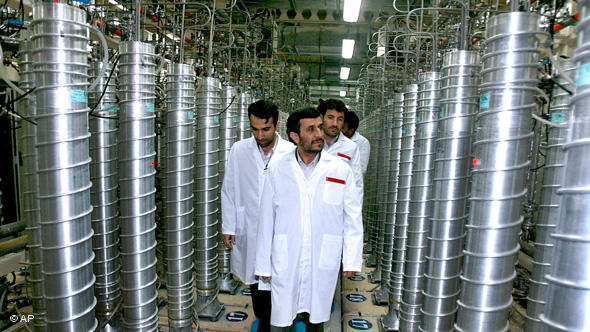
The latest evidence revealed by two independent groups of researchers studying the code in the Stuxnet malware — the world’s first identified cyber weapon — indicates the Iran’s uranium enrichment facility at Natanz was almost certainly the target for attack. Not only was it aimed at programmable logic controllers that regulate motor speeds in a limited number of applications, mainly in uranium enrichment. Stuxnet would also alter operating speeds in such a way that centrifuges would unpredictably malfunction — the intent clearly being that the sabotage would be both effective yet also go unrecognized as sabotage.

Christian Science Monitor reports:

Once Stuxnet has locked its sights on the target, it alternately brings the centrifuge process to either a grinding slowdown or an explosive surge – by sabotaging the centrifuge refining process. It tells the commandeered PLC to force the frequency converter drive to do something it’s not ever supposed to do: Switch back and forth from high speed to low speed at intervals punctuated by long period of normal operation. It also occasionally pushes the centrifuge to far exceed its maximum speed.

“Stuxnet changes the output frequencies and thus the speed of the motors for short intervals over periods of months,” Symantec researcher Eric Chien reported Nov. 12 on his blog. “Interfering with the speed of the motors sabotages the normal operation of the industrial control process.”

Normal operating frequency of the special drive is supposed to be between 807 and 1210 Hz – the higher the hertz, the higher the speed. One hertz means that a cycle is repeated once per second.

Stuxnet “sabotages the system by slowing down or speeding up the motor to different rates at different times,” including sending it up to 1410 Hz, well beyond its intended maximum speed. Such wide swings would probably destroy the centrifuge – or at least wreck its ability to produce refined uranium fuel, others researchers say.

“One reasonable goal for the attack could be to destroy the centrifuge rotor by vibration, which causes the centrifuge to explode” as well as simply degrading the output subtly over time, Ralph Langner, the German researcher who first revealed Stuxnet’s function as a weapon in mid-September, wrote on his blog last week.

All of the circumstantial evidence points in the same direction: Natanz.

The Natanz nuclear centrifuge fuel-refining plant may have been hit first by Stuxnet in mid-2009, said Frank Rieger, a German researcher with Berlin encryption firm GSMK. The International Atomic Energy Agency found a sudden drop in the number of working centrifuges at the Natanz site, he noted in an interview in September.

“It seems like the parts of Stuxnet dealing with PLCs have been designed to work on multiple nodes at once – which makes it fit well with a centrifuge plant like Natanz,” Mr. Rieger says. By contrast, Bushehr is a big central facility with many disparate PLCs performing many different functions. Stuxnet seems focused on replicating its intrusion across a lot of identical units in a single plant, he said.

That and Symantec’s new findings also dovetail nicely with Mr. Langner’s detailed findings in his ongoing dissection of Stuxnet. Parts of the code show Stuxnet causing problems for short periods, then resuming undisturbed operation, Symantec’s findings show. As a result, Langner writes, “the victim, having no clue of being under a cyber attack, will replace broken centrifuges by new ones – until ending in frustration. It’s like a Chinese water torture.”

Facebooktwittermail

The overestimation of our power and the underestimation of resistance

Patrick Porter writes:

The road to strategic hell is paved with good intentions. Consider the words of General Sir David Richards, the chief of defence staff. We can’t defeat al-Qaida and its ilk, he believes, but we can contain it. In other words, we might never destroy it physically or ideologically but we can limit its potency and lethality “to the point that our lives and our children’s lives” are “led securely”. Amen to that.

But what does “containment” look like? It is a moveable idea. During the cold war, containment meant different things to George Kennan, its intellectual architect, and the later US presidents who expanded and militarised it.

At its best, it is a practical idea. It holds that, without exhausting or overextending ourselves, we can bound a threat and curtail its ability to operate, then wait patiently for it to wither into an irrelevance or nuisance. It works well with a self-defeating enemy, be it the Soviet Union with its doomed Marxist-Leninist system and imperial overstretch, or al-Qaida, a movement that habitually alienates the very Muslims it claims to represent. Containment is not only about outlasting the enemy, but about keeping costs down and avoiding self-defeating behaviour.

But General Richards’s containment is more ambitious. It involves “upstream prevention”, “education and democracy” and – judging by his other recent remarks – maybe a future military intervention in Yemen. He doesn’t favour more military interventions now, but it would be “barmy to say that one day we wouldn’t be back in that position”.

This means using our (depleted) wealth, our (reduced) military and our (dubious) confidence that we know what is good for others.

Facebooktwittermail

Billions can be saved in defense budget: McCain

Reuters reports:

Senator John McCain, the top Republican on the Senate Armed Services Committee, said billions of dollars could be saved from the defense budget by cutting lawmakers’ pet projects, known as earmarks, and fixing troubled arms programs.

McCain told a foreign policy forum on Monday that he is confident Defense Secretary Robert Gates will be able to cut $100 billion from the defense budget over the next five years to fund personnel costs and keep weapons programs on track.

He cited several big arms programs that were over budget and behind schedule, saying they presented further opportunities to save money.

He said the Lockheed Martin Corp F-35 fighter program, now projected to cost $382 billion, was one example, saying it was “unacceptable” that the cost of each fighter jet was now double what was initially planned.

Axe the most expensive defense program ever — sounds like a good idea. But the Israelis will be disappointed. Maybe this says something about why the Obama administration is offering F-35 squadrons as though it was handing out candy.

Facebooktwittermail

From the top there’s only one way forward: down

Mature cosmological systems recognize the cyclical nature of change: that growth is followed by decay and that power gathered is later dispersed. These are not ideas readily embraced by an imperial power and thus America has driven itself into a trap which it cannot back out of without undermining its own image of preeminence.

The trap that a great power falls into as soon as it makes the mistake of using blunt force against an asymmetrical threat is that its opponent has the exclusive ability to make tactical retreats with its pride in tact.

For a decade now, America has been fighting adversaries who operate unwaveringly according to the Maoist principles of guerrilla warfare: “The enemy advances, we retreat; the enemy camps, we harass; the enemy tires, we attack; the enemy retreats, we pursue.”

The war on terrorism, whose sole purpose was to put on display the preeminence of American power, has instead in every possible way demonstrated the limits of American power and yet even now the prospect of defeat cannot be entertained.

The Obama administration, desperate to find a way out of Afghanistan, refuses to admit that it is developing an exit strategy. The plan to end combat missions by 2014 is not an exit strategy; it is a “transition strategy” US envoy Richard Holbrooke claims.

And as if to guard against the risk that Obama might end a second term (if he gets one) with the United States no longer at war, he seems intent on starting a war of his very own — a war whose beginning echoes America’s entry into Vietnam.

The Wall Street Journal reports:

The U.S. is preparing for an expanded campaign against al Qaeda in Yemen, mobilizing military and intelligence resources to enable Yemeni and American strikes and drawing up a longer-term proposal to establish Yemeni bases in remote areas where militants operate.

The developments are part of a U.S. scramble to step up the hunt for members of al Qaeda in the Arabian Peninsula, the terrorist organization behind a recent failed attempt to blow up two planes over the U.S. using bombs hidden in cargo.

Limited U.S. intelligence experience in Yemen has created “a window of vulnerability” that the U.S. government is “working fast to address,” a senior Obama administration official said.

For now, the U.S. gets much of its on-the-ground intelligence from a growing partnership with Saudi Arabia, which shares a border with Yemen and has a fruitful informant network in Yemen’s tribal areas.

In the rush to build up capabilities, the Central Intelligence Agency and other agencies are moving in equipment and personnel from other areas, and over the past year have expanded the size of teams in the U.S. analyzing intelligence on AQAP. The emphasis now is on expanding the number of intelligence operatives and analysts in the field.

There is a debate within the Obama administration and Pentagon about how best to ramp up the fight against AQAP, the Yemen-based terrorist group. Supporters of establishing forward operating bases for Yemeni forces say they would help the weak Yemeni government expand its control and create an opportunity to get a small number of American Special Operations trainers and advisers out of the capital region and into the field.

Facebooktwittermail

AIPAC bares all to quash Rosen lawsuit

Maybe the days of the Israel lobby are numbered — not because it’s about to fall apart but because the terms of discourse will change. That is, we will no longer be speaking about a “lobby” as such but more explicitly about the evidence that the state of Israel has effectively pulled off a soft coup and through its informal representatives in Washington assumed a controlling influence over significant parts of the US government.

To put the notion of America under Israeli control in perspective, imagine this: if at the height of the Cold War, hundreds of USG officials and political operatives inside Washington were discovered to have sympathies and close ties with the Soviet Union. No greater shock to the American political system would have been seen since the Civil War. The fact that Israel is characterized as a friendly state really does little to diminish the significance of the influence it wields in domestic American politics. No other foreign government enjoys a fraction of Israel’s power in the US.

Grant Smith writes:

On Nov. 8, 2010, the American Israel Public Affairs Committee (AIPAC) filed a massive 260-page motion [.pdf] in the District of Columbia Superior Court. It asks Judge Erik Christian to dismiss former AIPAC employee Steven J. Rosen’s $20 million defamation suit. In October the court dismissed all counts of the March 2009 lawsuit except for Rosen’s claim of harm over AIPAC statements to the press that he did not uphold its standards of conduct. Rosen and AIPAC have – until now – abstained from filing damaging information about the internal workings of AIPAC in court. AIPAC’s willingness to publicly air some extremely sordid and revealing content to get the remaining count thrown out before an alternative dispute resolution hearing begins in December is a sign that AIPAC is now fighting for its life, or – as one former AIPAC attorney put it – “reason for being.” If Rosen proves in court that AIPAC has long handled classified information while lobbying for Israel, the worn public pretense that AIPAC is anything but a stealth extension of the Israeli Ministry of Foreign Affairs – from which it emerged in 1951 – will end forever.

Rosen filed his civil suit after adverse judicial rulings made his (and coworker Keith Weissman’s) prosecution under the Espionage Act unlikely. Col. Lawrence Franklin pled guilty to passing classified national defense information to persons not entitled to receive it while Rosen and Weissman were indicted in 2005 for their role in the espionage affair. Although prosecutors reluctantly dropped [.pdf] their indictment in May 2009 – as AIPAC carefully notes in its filing – Rosen was never acquitted. Outstanding questions in the defamation suit about classified-information trafficking have now placed AIPAC in a bind. If AIPAC financially settles with Rosen, it will signal to the American people and attentive law enforcement officials that it is honoring a previous compensation deal to pay Rosen off after the spy flap subsided. On May 11, 2010, Rosen revealed an e-mail to Washington Post reporter Jeff Stein asserting that AIPAC promised “when this is over we will do right by Steve.” But it’s now far from clear whether AIPAC has the financial wherewithal or donors willing to honor such a – possibly illegal – commitment.

Facebooktwittermail

Washington’s shameless and slavish devotion to Israel

Mark Perry writes:

A legendary story from our early history has it that Thomas Jefferson so hated John Jay that he ordered Pierre L’Enfant — the civil engineer who designed our capital city — to excise any reference to Jay (including “J Street”) from his plans. The story is apocryphal, but the history behind it isn’t. For Jefferson, Jay was an arch appeaser: his 1795 treaty with Britain provided concessions to a nation we had defeated in our revolution. Jefferson wasn’t the only one who hated the treaty. While Jay’s agreement was ratified by the Congress, he was burned in effigy by New York and Philadelphia mobs and the treaty so stained his reputation that he was never considered for the presidency. Jefferson didn’t make the same mistake. When the Pasha of Barbary demanded ransom for U.S. ships he had seized, Jefferson sent a U.S. naval squadron to punish him. The resulting victory is now celebrated with a half-verse in the Marine Corps hymn (which celebrates the triumph on “the shores of Tripoli”) and a knock-out political slogan that energized a nation: “Millions for defense, but not one cent for tribute.”

If only Jefferson could see us now. This weekend, the Obama administration promised to turn over $3 billion in stealth fighters to Israel (supplementing the 20 F-35s it will buy with the $2.75 billion in “grants” it gets from Washington) and veto any U.N. resolution that questions Israel’s legitimacy — all in exchange for Israel’s pledge to extend a ten-month partial settlement moratorium for another 90 days. This is a bad idea. And it’s dangerous. There are differences, of course, between the events of the last 24 hours and the crisis that Jefferson faced in 1804. Then, we protested that we were “paying tribute,” now we are “providing incentives.” Then too, Israel is not making any “demands,” they are simply (in Israeli Prime Minister Netanyahu’s words) “insisting.” Oh — and let’s not forget — the pirates of Barbary were America’s “enemy.” That’s a lot different than now; Israel is our “friend.”

This administration’s decision would be shocking were it not so predictable. Back on October 20, State Department spokesman Andrew Shapiro reassured the press that a $60 billion U.S. arms transfer to Saudi Arabia would go forward because “Israel does not object…” Shapiro’s statement passed with nary an eye blink in L’Enfant’s city, where Israel’s approval is apparently required for America to do anything in the Middle East. But Shapiro’s tone-deafness is hardly limited to dime-a-dozen spokespersons. In the wake of General Petreaus’ controversial March testimony that the Israeli-Palestinian conflict “foments anti-American sentiment” (stop the presses), Hillary Clinton went out of her way to reassure Israelis that “we are committed to Israel’s security,” a soothing word-for-word mantra repeated by Barack Obama (July 6), Joe Biden (November 7) and any old American official behind a microphone (P.J. Crowley, August 4). The administration doesn’t get it: the question is not whether we are committed to Israel’s security, but whether they’re committed to ours.

The tone-deafness evidenced by Andrew Shapiro is now an all-consuming part of public policy, extending to every part of the American government — and beyond. When Elena Kagan testified during her confirmation hearings for the Supreme Court, she cited Israel jurist Aharon Barak as her model, because he was the “John Marshall of the State of Israel.” Kagan might well be a brilliant justice, but I would have thought she would cite Marshall as her model. Reminded that Barak was a judicial activist (and therefore not necessarily acceptable for some committee members), Kagan gave a ready explanation: “Israel means a lot to me,” she explained. Enough said. When David Petreaus was criticized by Israel advocates for his March testimony, he backtracked, asking neo-conservative Max Boot (in an email he carelessly sent to a blogger) whether it would help “if folks know that I hosted Elie Wiesel and his wife at our quarters last Sun night?” Petreaus is our nation’s most influential military officer since Eisenhower. Guess what? He’s afraid of Israel’s lobby. And when Angela Merkel addressed the U.S. Congress in November of 2009, she didn’t talk about American security, but Israeli security. “Security for the state of Israel is, for me, non-negotiable,” she said. “Whoever threatens Israel also threatens us.” Even senior aides to the otherwise pro-Israel Congress were puzzled. “Maybe she thought she was talking to the Knesset,” one of them said. Finally, Republican Eric Cantor recently told Israeli Prime Minister Benjamin Netanyahu that the new Republican majority would serve as “a check on the administration” in any dispute with Israel — a statement so astonishing that one pro-Israel journalist viewed it as not only unprecedented, but “extraordinary.”

Facebooktwittermail

Why America will come to regret the craven deal Obama is offering Netanyahu

Christopher Hitchens writes:

Those of us who keep an eye on the parties of God are avid students of the weekly Sabbath sermons of Rabbi Ovadia Yosef. In these and other venues, usually broadcast, this elderly Sephardic ayatollah provides an action-packed diet that seldom disappoints. A few months ago, he favored his devout audience with a classic rant in which he called down curses on the Palestinian Arabs and their leaders, wishing that a plague would come and sweep them all away. Last month, he announced that the sole reason for the existence of gentiles was to perform menial services for Jews: After that, he opined, their usefulness was at an end. A huge hubbub led to his withdrawal of the first of these diatribes. (I would be interested to know if this was on partly theological grounds. After all, the local Palestinians may still have some labor to perform before the divine plan is through with them.) The second sermon, so far as I know, still stands without apology. Why on earth should anybody care about the ravings of this scrofulous medieval figure, who peppers his talk of non-Jews in Palestine with comparisons to snakes, monkeys, and other lesser creations, rather as Hamas and Hezbollah refer to the Jews? Well, one reason is that he is the spiritual leader of the Shas Party, an important member of Prime Minister Benjamin Netanyahu’s coalition. Indeed, two key portfolios, of the Interior and of Construction and Housing, are held by Shas members named Eli Yishai and Ariel Atias.

Yishai recently delighted the Diaspora by saying that only those Jews who converted via the Orthodox route could carry “the Jewish gene.” Atias has expressed alarm about the tendency of Israeli Arab citizens to try to live where they please—or “spread,” as he phrases it—and has advocated a policy of segregation in housing within Israel proper. He also advocates the segregation by neighborhood of secular from Orthodox Jews, adding that he does not wish his own children to mix with their nonreligious peers. It is Yishai’s ministry that is famous for making announcements about new “housing” developments outside Israel itself and in legally disputed territory. Very often, Netanyahu himself has claimed to be taken by surprise at these announcements, which usually involve tense areas of Jerusalem. Thus the huge embarrassment inflicted on Vice President Joe Biden earlier this year, when fresh settlement construction was proclaimed in the middle of his high-level visit. And thus the undisguised irritation of President Obama and Secretary of State Hillary Clinton last week, when yet another round of such housing was scheduled while Obama was in Asia and Netanyahu was in the United States. Apparently, the latest high-level round of the peace process has included the modest and tentative suggestion to Israel that such disclosures be timed with greater tact and coordination in the future.

Facebooktwittermail

Cantor recants

MJ Rosenberg writes:

[Soon-to-be House Majority Leader Eric Cantor] has been an AIPAC cutout since he first was elected to office. He’s been to more AIPAC meetings than he can probably count. And he should have figured out by now that the lobby is extremely careful, obsessively careful, to always emphasize loyalty to the United States while simultaneously endorsing Israeli policies that undermine our foreign policy objectives.

AIPAC officials never, ever, say that when push comes to shove their loyalty is with Israel not the United States. In fact, the accusation that this is the case is the charge AIPAC hates most.

But the soon-to-be Majority Leader came right out and said it: Israel, right or wrong.

It took a few days for Cantor to understand how utterly offensive his statement was. (He might have heard from a few Tea Party types who, say what you will about them, tend to take their patriotism seriously.)

So today Cantor explained he was misunderstood. His inconvenient truth, his gaffe, was replaced by a laughable untruth.

This is how the Washington Post‘s Dana Milbank reports it:

Brad Dayspring, Cantor’s press guy, tells me Cantor’s promise that the Republican majority would “serve as a check on the administration” was “not in relation to U.S./Israel relations.”

Mmmm. So Cantor’s pledge to stand with Netanyahu against Obama was “not in relation to US/Israel relations” despite the context of Cantor’s statement — just before Netanyahu’s meeting with Clinton — and the fact that the person he was talking to was the Prime Minister of Israel.

So, what was Cantor’s pledge “in relation to”?

Was it in relation to either repealing “Don’t Ask, Don’t Tell” or the Bush tax cuts for millionaires? Maybe it was about farm subsidies.

Facebooktwittermail

Dark lord, dark victory — America’s dark passage

At Kosmos Journal, Michael Vlahos writes:

The fall of the Soviet Union initiated a new passage of American identity. Then the 9/11 War took us a long way down the road to journey’s end. This passage is also a migration. America has not simply abandoned one collective identity for another; we have become a different people, a different idea.

Our sacrosanct national narrative of ‘redeemer nation’ has been rewritten into a perverse story of a chosen people beleaguered and a civilization beset by barbarism. Those wretched of the earth we once so proudly pledged our sacred honor to succor and lift up are now our forever-foe — to be monitored, held down and, if necessary, hounded to the darkest ends of the earth.

But the darkness has instead come into us. While official banners still trumpet American altruism, our own spoken words, daily spun into the network ether of contemporary human consciousness, betray our true intent.

Our actions even speak so much louder. Daily our implacable national energies destroy yet more little bits of human society, no longer in the name of their salvation, but rather for our sake to defend the homeland. We are the Dark Lord now — the mythic essence of children’s nightmares. This is the story of our descent.

Part one: enemy of change (PDF)

Part two: dark lord, dark victory (PDF)

Facebooktwittermail

Is America bribing Bibi or blackmailing him?

The Economist‘s Lexington blog says:

Until this weekend, most people assumed that Israel enjoyed an unconditional American promise to maintain its military edge, and a nearly unconditional promise to support it in the United Nations. Now it seems that President Obama is making the continuation of some of these things conditional on Israel’s acceptance of a three-month settlement freeze, during which Israel will be pressed to agree final borders with a putative Palestinian state in the West Bank. That could be construed as a less confrontational, and more subtle, but no less effective version of the way George Bush senior forced a reluctant Yitzhak Shamir to the 1991 Madrid peace conference by withholding loan guarantees. Maybe, just maybe, the Obama peace push in Palestine has stronger legs than jaded onlookers have realised.

Facebooktwittermail

Aung San Suu Kyi’s release

The Los Angeles Times reports:

A day after her release from detention, opposition leader and Nobel Peace Prize laureate Aung San Suu Kyi on Sunday met dozens of ambassadors, hundreds of journalists and thousands of Myanmar citizens, underscoring the importance of dialogue, strength and determination in the battle for democracy in her country.

As a jubilant crowd swelled in front of the headquarters of her disbanded National League for Democracy party, traffic ground to a halt, and people perched in trees, on fences and on vehicle roofs for a look at their charismatic leader.

Her eventual appearance at noon in the doorway of the ramshackle building electrified the audience. “I understand what the people want; they want democracy,” she said to a roar from the crowd. “You must make your voices heard. Only then can we take action.”

An editorial in The Guardian notes:

Those who have campaigned for her release, including many western governments, have cause to celebrate. But this is not yet a defining moment in Burmese history, let alone the “Mandela moment” some believe they see.

Nelson Mandela was freed because those who ruled South Africa knew the game was up, that apartheid was unsustainable. Burma’s military rulers, by contrast, are determined to prolong their grip on power. They have held a bogus election and the party they created to win it has duly won. A general in a lounge suit is prime minister. Some nations, eyeing new trade opportunities, will be amenable to the idea of easing sanctions. Achieving that end is one of the calculations behind Suu Kyi’s release.

She is a symbol of hope, fortitude and strength – one Nobel peace prizewinner whose reputation never falters. But the generals may also reckon that she is a symbol from the past who might struggle to engage with the reality of modern Burma. Her own party, which didn’t contest the election, is split. Her tactical options are narrow and perilous. She has, after all, been locked away twice before. If she causes trouble, she could quickly rejoin the 2,000 unreleased political prisoners.

Facebooktwittermail

The trickledown revolution

Arundhati Roy writes:

On the 64th anniversary of India’s Independence, Prime Minister Manmohan Singh climbed into his bullet-proof soapbox in the Red Fort to deliver a passionless, bone-chillingly banal speech to the nation. Listening to him, who would have guessed that he was addressing a country that, despite having the second-highest economic growth rate in the world, has more poor people than 26 of Africa’s poorest countries put together? “All of you have contributed to India’s success,” he said, “the hard work of our workers, our artisans, our farmers has brought our country to where it stands today…. We are building a new India in which every citizen would have a stake, an India which would be prosperous and in which all citizens would be able to live a life of honour and dignity in an environment of peace and goodwill. An India in which all problems could be solved through democratic means. An India in which the basic rights of every citizen would be protected.” Some would call this graveyard humour. He might as well have been speaking to people in Finland, or Sweden.

If our prime minister’s reputation for “personal integrity” extended to the text of his speeches, this is what he should have said:

    “Brothers and sisters, greetings to you on this day on which we remember our glorious past. Things are getting a little expensive I know, and you keep moaning about food prices, but look at it this way—more than six hundred and fifty million of you are engaged in and are living off agriculture as farmers and farm labour. But your combined efforts contribute less than 18 per cent of our GDP. So what’s the use of you? Look at our IT sector. It employs 0.2 per cent of the population and accounts for 5 per cent of our GDP. Can you match that? It is true that in our country employment hasn’t kept pace with growth, but fortunately 60 per cent of our workforce is self-employed. Ninety per cent of our labour force is employed by the unorganised sector. True, they manage to get work only for a few months in the year, but since we don’t have a category called “underemployed”, we just keep that part a little vague. It would not be right to enter them in our books as unemployed. Coming to the statistics that say we have the highest infant and maternal mortality in the world—we should unite as a nation and ignore bad news for the time being. We can address these problems later, after our Trickle-Down Revolution, when the health sector has been completely privatised. Meanwhile, I hope you are all buying medical insurance. As for the fact that the per capita foodgrain availability has actually decreased over the last 20 years—which happens to be the period of our most rapid economic growth—believe me, that’s just a coincidence.

    “My fellow citizens, we are building a new India in which our 100 richest people, millionaires and billionaires, hold assets worth a full 25 per cent of our GDP. Wealth concentrated in fewer and fewer hands is always more efficient. You have all heard the saying that too many cooks spoil the broth. We want our beloved billionaires, our few hundred millionaires, their near and dear ones and their political and business associates, to be prosperous and to live a life of honour and dignity in an environment of peace and goodwill in which their basic rights are protected.

    “I am aware that my dreams cannot come true by solely using democratic means. In fact, I have come to believe that real democracy flows through the barrel of a gun. This is why we have deployed the Army, the Police, the Central Reserve Police Force, the Border Security Force, the Central Industrial Security Force, the Pradeshik Armed Constabulary, the Indo-Tibetan Border Police, the Eastern Frontier Rifles—as well as the Scorpions, Greyhounds and Cobras—to crush the misguided insurrections that are erupting in our mineral-rich areas.

    “Our experiments with democracy began in Nagaland, Manipur and Kashmir. Kashmir, I need not reiterate, is an integral part of India. We have deployed more than half-a-million soldiers to bring democracy to the people there. The Kashmiri youth who have been risking their lives by defying curfew and throwing stones at the police for the last two months are Lashkar-e-Toiba militants who actually want employment, not azadi. Tragically, 60 of them have lost their lives before we could study their job applications. I have instructed the police from now on to shoot to maim rather than kill these misguided youths.”

In his seven years in office, Manmohan Singh has allowed himself to be cast as Sonia Gandhi’s tentative, mild-mannered underling. It’s an excellent disguise for a man who, for the last 20 years, first as finance minister and then as prime minister, has powered through a regime of new economic policies that has brought India into the situation in which it finds itself now. This is not to suggest that Manmohan Singh is not an underling. Only that all his orders don’t come from Sonia Gandhi. In his autobiography (A Prattler’s Tale), Ashok Mitra, former finance minister of West Bengal, tells his story of how Manmohan Singh rose to power. In 1991, when India’s foreign exchange reserves were dangerously low, the Narasimha Rao government approached the International Monetary Fund (IMF) for an emergency loan. The IMF agreed on two conditions. The first was Structural Adjustment and Economic Reform. The second was the appointment of a finance minister of its choice. That man, says Mitra, was Manmohan Singh.

Over the years, he has stacked his cabinet and the bureaucracy with people who are evangelically committed to the corporate takeover of everything—water, electricity, minerals, agriculture, land, telecommunications, education, health—no matter what the consequences.

(Thanks to reader Aaron Aarons for drawing my attention to this article.)

Facebooktwittermail

The cauldron of global violence

At a time when there are those who still insist that Western civilization is the preeminent source of global stability, two snapshots of the last 1,000 years help put things in perspective. First, an animation of Europe’s fluid borders should make it clear that the West has always been an amorphous concept that can only be loosely mapped onto geographic territory. Second, an animation of global conflict over the same period reveals Europe as the epicenter of global violence.

Facebooktwittermail

How much is a three-month settlement freeze really worth?

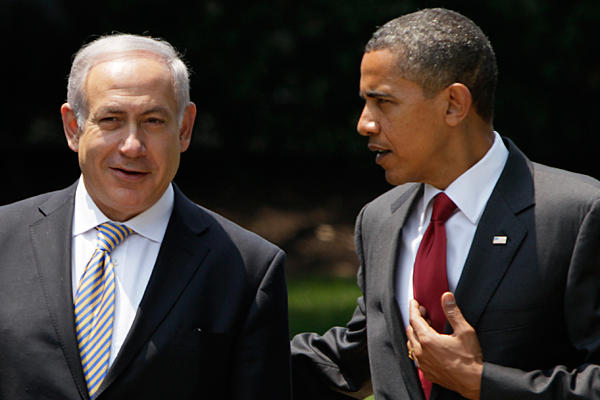
The offer of a free squadron of F-35 joint strike fighters is “an offer hard to refuse” a senior Israeli defense official tells the Jerusalem Post, but Aluf Benn suggests the Obama administration wants more than a brief extension of the settlement freeze in return. The goal is a coalition shake-up.

To date, Netanyahu was able to obtain cabinet approval for all U.S. dictates The right wing ministers in his coalition were not enthusiastic and did not go out of their way to sell the decisions to the public, but neither did they oppose the prime minister publicly. Now the situation is different. Shas announced that it will abstain and Foreign Minister Avigdor Lieberman declared that “we will not agree to even a single day of freeze.” If Lieberman votes in favor or abstains, and it does not matter what his excuse will be, he will be called a pushover. So it appears that for the first time, Netanyahu will face a divided vote on an important political issue.

But this is precisely what the Americans want: They want Netanyahu to change the composition of his coalition, bring in Kadima in place of the right wing factions and replace Lieberman with Tzipi Livni. That way the world will see that he’s serious about negotiations with the Palestinians. Netanyahu has opted to date to maintain his alliance with the right, fearing that Lieberman would steal voters away from him and that Livni would try to undermine him and push him out of office. But as the 91st day approaches, it may be that he has no choice.

Facebooktwittermail

Iraq’s disappearing Christians are Bush and Blair’s legacy

William Dalrymple writes:

When George W Bush sent the US into Iraq in 2003, he believed he would be replacing Saddam Hussein with a peaceful, pro-American Arab democracy that would naturally look to the Christian west for support. In reality, seven years on, it appears that he has instead created a highly radicalised pro-Iranian sectarian killing field, where most of the Iraqi Christian minority has been forced to flee abroad.

This week saw new levels of violence directed at Iraq’s Christians. Eight days after the attack on Baghdad’s main Catholic church that left more than 50 worshippers dead, militants detonated more than 14 bombs in Christian suburbs, killing at least four and wounding about 30. Since then the Islamic State of Iraq (ISI), an al-Qaida front, has warned of a new wave of attacks on Christians “wherever they can be reached … We will open upon them the doors of destruction and rivers of blood.”

Before Bush senior took on Saddam for the first time in 1991, there were more than a million Christians in Iraq. They made up just under 10% of the population, and were a prosperous and prominent minority, something exemplified by the high profile of Tariq Aziz, Saddam’s Christian foreign minister. Educated and middle class, the Christians were concentrated in Mosul, Basra and especially Baghdad, which then had the largest Christian population of any city in the Middle East.

Of the 800,000 Christians still in Iraq when Dubya unleashed the US army on Saddam for the second time, two thirds have fled the country.

Facebooktwittermail

India’s sound advice on Iran

Stephen Kinzer writes:

This week in New Delhi, President Obama went further than any of his predecessors toward embracing India as an ally, and most Indians are thrilled by this warm treatment. This does not mean, however, that the two countries will align all of their foreign policies. In some areas, India would like the United States to change its approach.

One key difference is over Iran. India has the wiser policy, and Obama should consider emulating it.

Despite some changes in atmospherics, Obama’s approach to Iran has been remarkably similar to the one President George W. Bush took in his second term: don’t bomb Iran, but continue to threaten that “all options are on the table’’; steadily intensify economic sanctions, despite ample evidence that they weaken civil society and lavishly enrich the repressive Revolutionary Guard; insist on negotiations on the nuclear issue, but refuse to broaden the agenda to include issues that concern Iran.

India, like many other regional powers, takes the Iranian threat far less seriously than the United States does. It does not see Iran as an existential threat to anyone, but rather as just another thuggish country with resources, and wants to see it enticed back into the world’s mainstream. India would like the United States to adopt a more accommodating policy toward Iran — and could even serve as the bridge that makes it possible.

Facebooktwittermail