Richard Clarke warns that NSA could enable police surveillance state

n13-iconZDNet reports: The NSA is so good at collecting intelligence that it has the potential to create a police surveillance state that could never be shut off, counter-terrorism expert Richard Clarke said during his keynote address at the Cloud Security Alliance Summit taking place Monday at the RSA Conference.

“We are not there yet, but the technology is,” said Clarke, the former National Coordinator for Security, Infrastructure Protection, and Counter-Terrorism for the United States and advisor to presidents dating back to Ronald Reagan.

Since such technology is available around the world to many governments, “the task of controlling them is more important than it has ever been,” Clarke said.

He concluded his talk by saying, “I believe we can have both security and civil liberties, but we can only do that if we keep a very close eye on the government and demand transparency and oversight and tell them we are not willing to trade our civil liberties for greater security.” [Continue reading…]

Facebooktwittermail

Obama sees limited options for cyberwar in Syria

n13-iconThe New York Times reports: Not long after the uprising in Syria turned bloody late in the spring of 2011, the Pentagon and the National Security Agency developed a battle plan that featured a sophisticated cyberattack on the Syrian military and President Bashar al-Assad’s command structure.

The military’s ability to launch airstrikes was a particular target, along with missile production facilities. “It would essentially turn the lights out for Assad,” said one former official familiar with the planning.

For President Obama, who has been adamantly opposed to direct American intervention in a worsening crisis in Syria, such methods would seem to be an obvious, low-cost, low-casualty alternative. But after briefings on variants of the plans, most of which are part of traditional strikes as well, he has so far turned them down.

Syria was not a place where he saw the strategic value in American intervention, and even such covert attacks — of the kind he had ordered against Iran during the first two years of his presidency — involved a variety of risks. [Continue reading…]

As a commenter at the Times says, people who live in glass houses shouldn’t throw stones.

Facebooktwittermail

How the United States legitimized mass killing in Syria

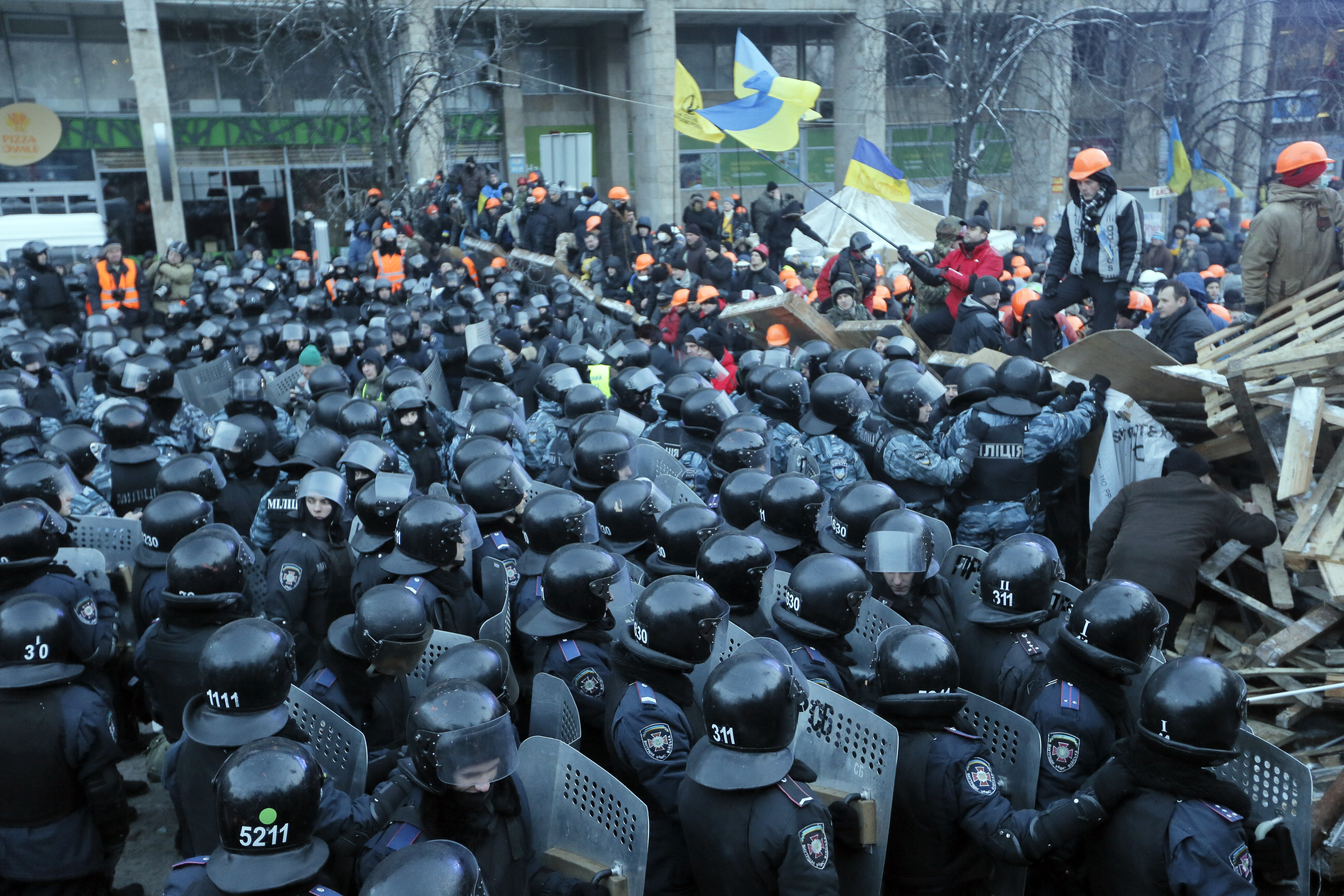
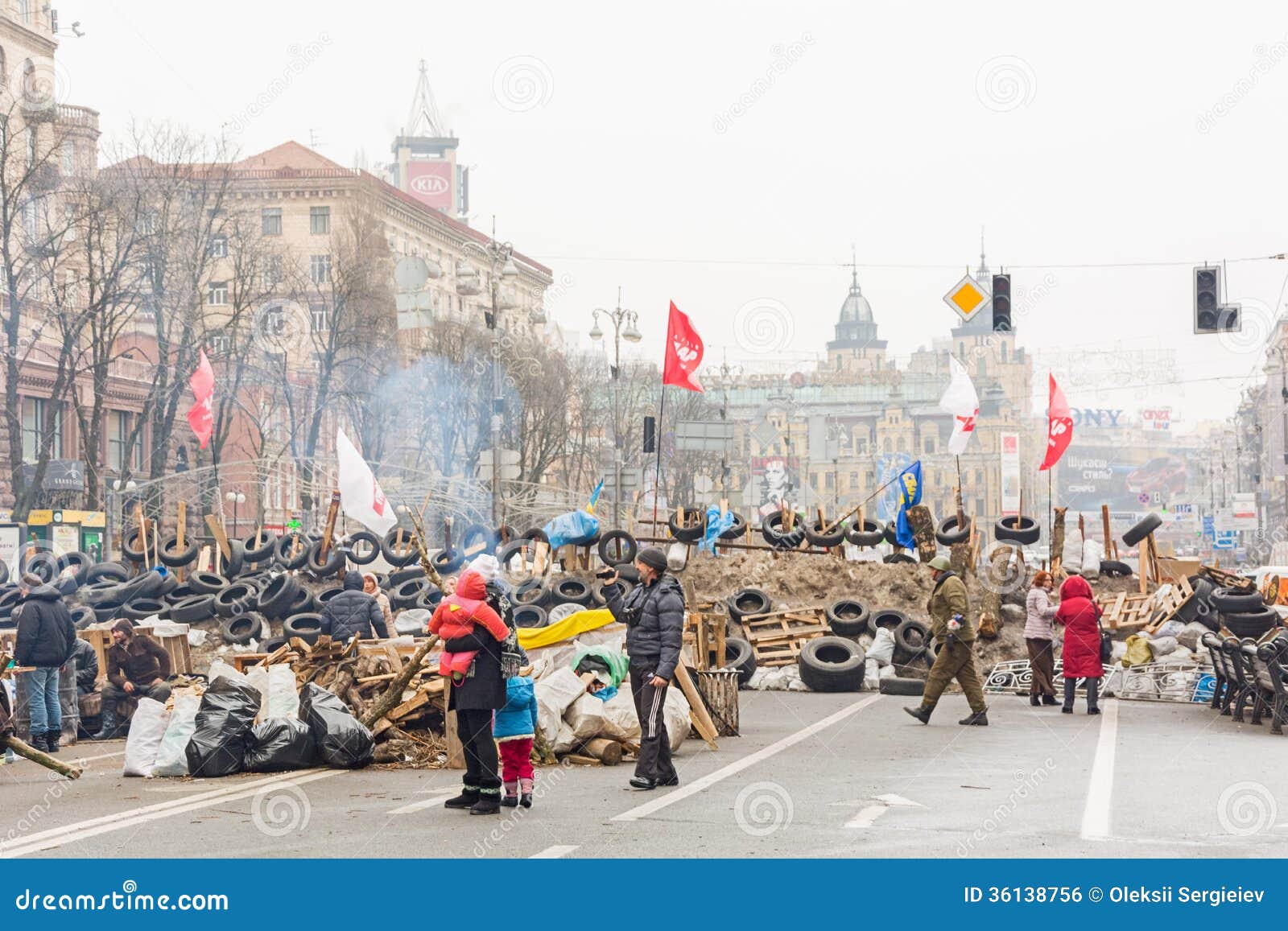
e13-iconThe political unrest in the Ukraine has been a news topic which falls outside the loosely defined scope of this site. Nevertheless, popular uprisings wherever they occur catch my attention for similar reasons that they resonate with most people.

Unless you subscribe to an ideology or identify with a social group that is so marginal that the very idea of the people evokes some sense of otherness, then to see people en masse challenging the power of the state, generally seems indicative of a social fracture in response to which it shouldn’t be too hard to take sides.

Do you side with the state and its agents who are willing to kill civilians in order to defend the state? Or do you side with the civilians who are risking their lives in order to defend their country?

That doesn’t sound like a tough choice, yet gain and again I encounter individuals who on the one hand challenge and view with suspicion virtually every action of the U.S. government and are tireless in their expressions of dissent, and yet on the other hand will just as tirelessly defend any other government if that government happens to be one not favored by the U.S..

This is what I would call a pathological anti-Americanism, because it elevates criticisms of the U.S. government (many of which are perfectly legitimate criticisms) to a point where they overshadow all other considerations. Worst of all, they view everything going on in the world through a U.S.-centric prism, oblivious to the possibility that the negative U.S.-centric prism is just as distorted and limiting as its pro-U.S.-centric counterpart.

Post-Iraq, the catastrophes that virtually everyone wants to guard against are the unintended effects of American military adventurism, while much less attention is given to the unintended effects of American inattention.

In one of Michael Vlahos’s characteristically deep analyses he describes the mythic significance of a citizens’ uprising — in response to which the state is in jeopardy of destroying itself.

But then he goes on to describe how in the case of Syria, the state has assumed an “inalienable right to kill.” Moreover, America’s acquiescence to Syria’s adoption of a strategy of mass atrocity has been instrumental in making that strategy effective.

To intervene or not intervene is not the question, because this frames global events in terms of American domination. Yet we fool ourselves if we imagine that the boundaries of our concerns also define the scope of our influence.

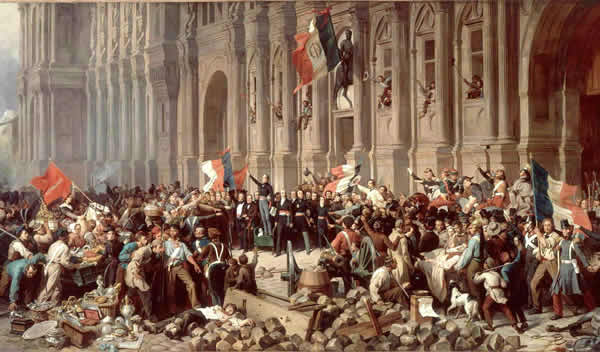
Michael Vlahos writes: Why do the photos, video, and tweets out of Kiev have such mythic power? Why do demonstrations, and barricades, and people shot down, young and old, men and women alike, wring such enduring emotion (like Les Miserables)? Why do citizen risings in big, capital cities have such a hold on us?

For a start, citizen-risings in cities are not war. Even when there is lots of fighting, it is never a fair fight, and we are rooting for the underdog, where the force against them is always unfairly superior, professional, and heavily armed. Plus a group of poorly armed citizens are unlike an army in almost every way. But especially this way — Together, they are the whole community: Men, women, and children fighting together. Their backs are against the family hearth itself. Nothing could be more existential, or more motivating.

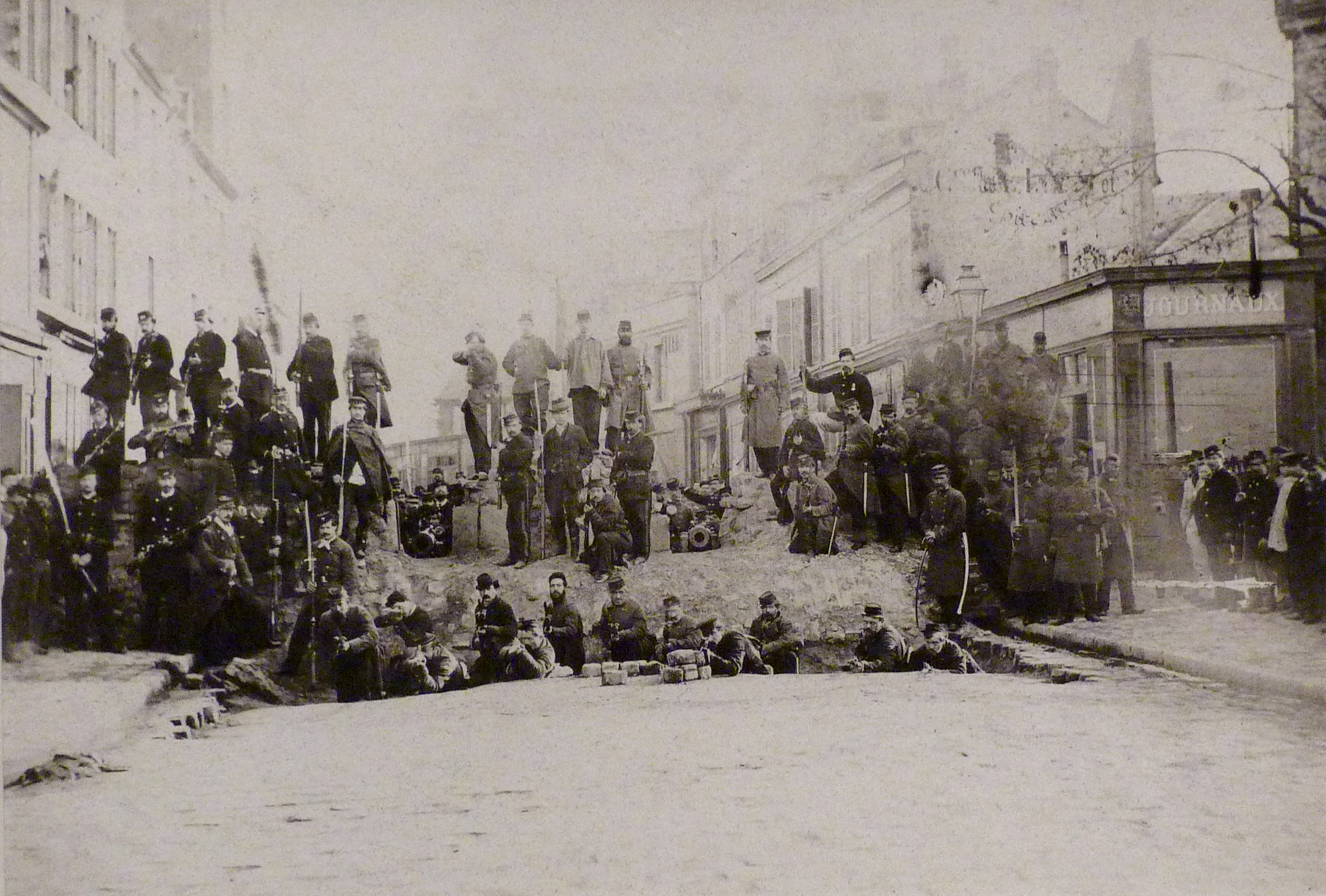
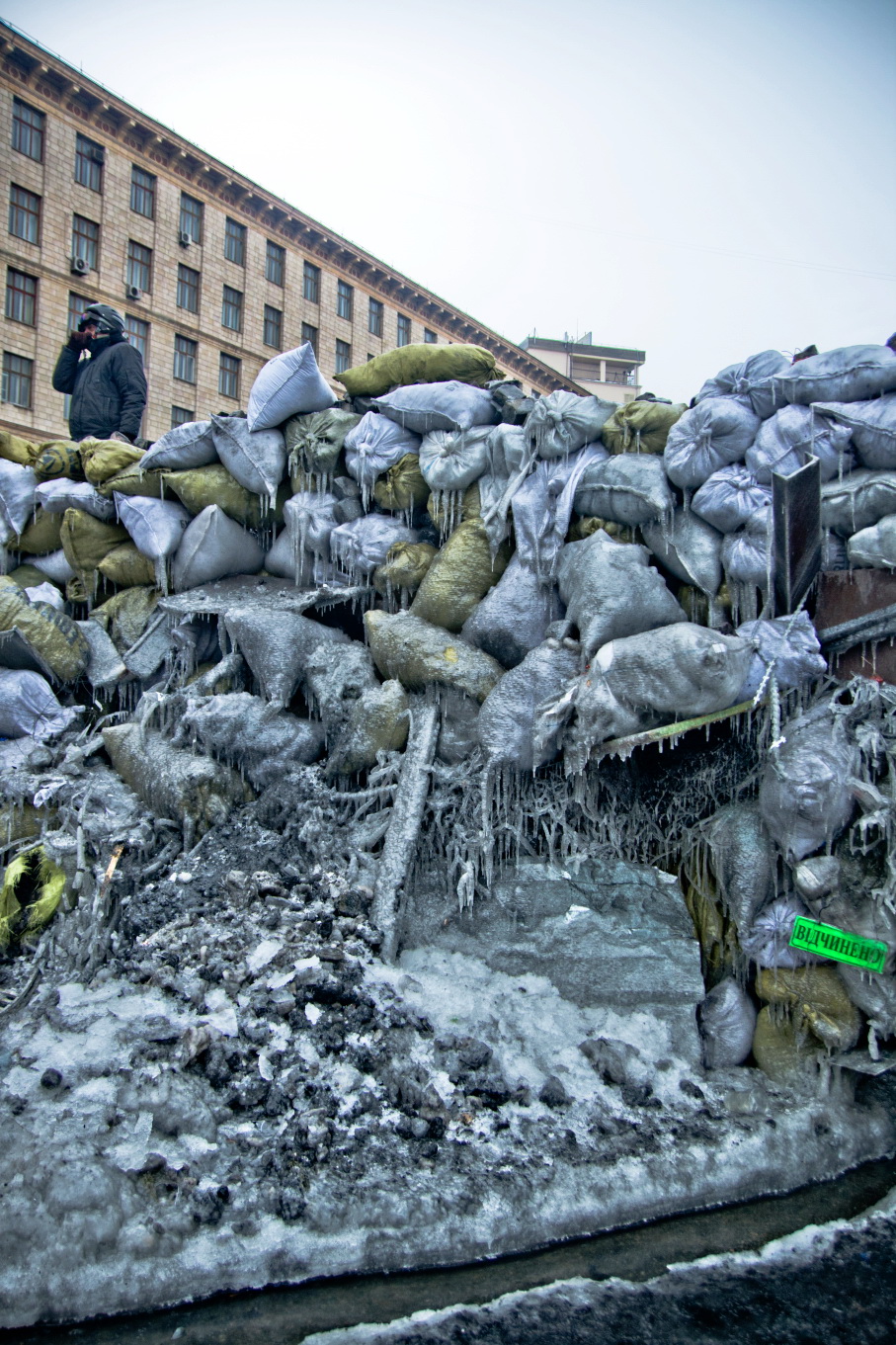
Hence their entire defense is an improvisation that seeks survival in destroying the very appearance of what they fight for, as they willingly demolish their homes (cutting passages and loopholes in their townhouse rows), their streets (ripping pavers and dragging their own vehicles into barricades), their centers of civic life — thus their very way of life — to resist the invader. Yet the material things of life mean nothing now compared to the preciousness of community and identity.

Because their defense is always existential — victory or death, freedom or slavery — and their enemy is always implacable and sure to win: If only they can kill enough.

Yet the mission of the citizen rising, though existential, is never hopeless, because the citizens know they can win through martyrdom.

The operational goal of the barricades is to successfully repel the armed might of the state — but the strategic goal is to overturn (or at least compromise) the very legitimacy of the state by forcing it to kill large numbers of its own citizens. This is why putting down a citizen rising is so risky for a state regime.

It is risky on two levels. On one level, soldiers will try to break down barricaded positions by killing civilians, reasoning that bravado — and thus resistance — will melt away as people see friends and family killed in front of them.

But this is the secret of community martyrdom: It cements social bonds stronger than any glue. In Kiev we have seen acts of heroism and sheer courage that convention typically associates only with soldiers in battle. Like the woman who tweeted after being shot in the neck, we have felt heartrending moments of pathos.

Truth is, a citizen rising that survives its first casualties (or atrocities) becomes potentially as strong as any army in any prepared, defensive position. Its barricades then suddenly are splendid field fortifications, the righteously occupied city blocks and squares like immoveable castles of concrete, rubble, and rubber.

So now the state’s arm of enforcement had better be an army, because they now face an army in a fortified place, ready to fight to the death.

But remember, these are still citizens of the republic, and the army of the republic cannot escape its sworn oath to defend them. And because the assembled and resistant are men and women and children together, killing them is like killing your own community: Your own family. Moreover, a state that would wantonly kill its own people is not simply guilty of crimes against humanity: It is guilty (at least incipiently) of attempting to kill itself. [Continue reading…]

Facebooktwittermail

Egypt government resigns, paving way for Sisi to seek presidency

n13-iconReuters reports: Egypt’s government resigned on Monday, paving the way for army chief Field Marshal Abdel Fattah al-Sisi to declare his candidacy for president of a strategic U.S. ally gripped by political strife.

After the July overthrow of elected Islamist President Mohamed Mursi and subsequent crackdown on Islamists and liberals with hundreds killed and thousands jailed, critics say Cairo’s military-backed authorities are turning the clock back to the era of autocrat Hosni Mubarak era, when the political elite ruled with an iron fist in alliance with top businessmen.

“(The outgoing government) made every effort to get Egypt out of the narrow tunnel in terms of security, economic pressures and political confusion,” Prime Minister Hazem el-Beblawi said in a live nationwide speech.

Beblawi, who was tasked by interim President Adly Mansour with running the government’s affairs until the election, did not give a clear reason for the decision.

But it effectively opened the way for Sisi to run for president since he would first have to leave his post as defense minister in any case. “This (government resignation) was done as a step that was needed ahead of Sisi’s announcement that he will run for president,” an Egyptian official said. [Continue reading…]

Meanwhile, the Associated Press reports: An Egyptian prosecutor on Sunday accused the ousted Islamist president of passing state secrets to Iran’s Revolutionary Guard, the first such explicit detail in an ongoing espionage trial.

If convicted, Mohammed Morsi could face capital punishment. He already stands accused of a string of other charges, some of which also carry the death penalty, levelled as part of a crackdown on his Muslim Brotherhood group after the military deposed him last summer.

At Sunday’s hearing, part of which was aired on state television, the prosecution accused Morsi and 35 other Brotherhood members of conspiring to destabilize the country and cooperating with foreign militant groups — including Palestinian Hamas and Lebanon’s Hezbollah.

Facebooktwittermail

If it’s reported by Bild, is it worth repeating?

Reuters has a report which is really a repeat, which is to say, it elevates to the status of “news,” an item in the Sunday edition of Germany’s Bild — a newspaper which is not renowned for the quality of its reporting.

The National Security Agency (NSA) has stepped up its surveillance of senior German government officials since being ordered by Barack Obama to halt its spying on Chancellor Angela Merkel, Bild am Sonntag paper reported on Sunday.

Revelations last year about mass U.S. surveillance in Germany, in particular of Merkel’s mobile phone, shocked Germans and sparked the most serious dispute between the transatlantic allies in a decade.

Bild am Sonntag said its information stemmed from a high-ranking NSA employee in Germany and that those being spied on included Interior Minister Thomas de Maiziere, a close confidant of Merkel.

“We have had the order not to miss out on any information now that we are no longer able to monitor the chancellor’s communication directly,” it quoted the NSA employee as saying.

This is silly.

Firstly, how likely is it that a “high-ranking NSA employee in Germany” is going to talk to Bild? Not likely.

Secondly, how likely is it that surveillance of Angela Merkel’s phone was occurring in isolation and thus, having been curtailed, now needs to be supplemented by broader surveillance?

Assuming that the NSA’s bugging efforts are designed for gathering intelligence as opposed to irritating the people being bugged, it’s hard to imagine that an interest in Merkel’s communications would overshadow an interest in the communications of the officials who brief her. Indeed, it’s reasonable to assume that an intelligence agency conducting surveillance on any head of state will actually be more interested in the communications going on around that individual than those that directly involve the individual her or himself. That being the case, what the NSA is doing in Germany now is probably very close to what it was doing before — except they are now more nervous about getting caught.

Facebooktwittermail

What the hell is Barack Obama’s presidency for?

o13-iconGary Younge writes: A few days after John F Kennedy’s assassination, Lyndon Johnson sat in his kitchen with his key advisers working his first speech to Congress. It was the evening of Kennedy’s funeral – Johnson was now president. The nation was still in grief and Johnson, writes Robert Caro in The Years of Lyndon Johnson: The Passage of Power, was not yet able to move into the White House because Kennedy’s effects were still there.

He had been a hapless vice-president; now he had to both personify and project the transition from bereavement to business as usual. In the midst of the cold war, with Vietnam brewing, the Kennedy administration had been trying to get civil rights legislation and tax cuts through Congress. There was plenty of business to attend to. Johnson’s advisers were keen that he introduced himself to the nation as a president who could get things done.

For that reason, writes Caro, they implored him not to push for civil rights in this first speech, since it had no chance of passing. “The presidency has only a certain amount of coinage to expend, and you oughtn’t to expend it on this,” said “one of the wise, practical people around the table”. Johnson, who sat in silence at the table as his aides debated, interjected: “Well, what the hell’s the presidency for.”

“First,” he told Congress a few days later, “no memorial oration or eulogy could more eloquently honour President Kennedy’s memory than the earliest possible passage of the civil rights bill for which he fought so long.” Over the next five years he would go on to sign the Civil Rights Act, the Voting Rights Act, launch the war on poverty and introduce Medicaid (medical assistance for low-income families) and Medicare (for seniors). That’s what his presidency was for.

Barack Obama has now been in power for longer than Johnson was, and the question remains: “What the hell’s his presidency for?” [Continue reading…]

Facebooktwittermail

There is no arm’s-length solution for Syria

o13-iconFrederic C. Hof writes: Geneva II was an attempt to fill that which nature abhors: a vacuum. Yet the vast emptiness of US policy toward Syria swallowed the effort itself, making it seem tiny, silly, and futile. President Bashar al-Assad’s regime calculated that it could treat the initiative with contempt. Although the opposition delegation in Geneva acted with competence and dignity, it could not alter or avoid facts on the ground; it could not dispel the belief on the part of the regime, Tehran, and Moscow that there is indeed a military solution for the Syrian crisis, a solution that is very much a work in progress.

The supposed absence of a military remedy to Syria’s travails has been the central talking point of a strategy-free approach to the crisis by the West, led—if that is the proper word—by the United States. The regime, Russia, and Iran may well be wrong that the uprising against crime family rule can be beaten by force of arms. Yet the West’s incantation to the contrary is by no means the product of rigorous, dispassionate analysis. Rather the United States and its allies simply have no appetite for trying seriously to affect the military situation inside Syria. The West has offered no meaningful counter to those who supply strategic arms, inject foreign fighters, and facilitate war crimes and crimes against humanity, all in an attempt to win a war outright. Ergo there is no military solution. It is as if the fact that one chooses not to play somehow means that the game itself does not exist.

That one side thinks it can win a battlefield decision gives it a perfectly logical sense of what a diplomatic outcome should entail: the other (losing) side suing for peace. The West, going into Geneva II, aimed to break new ground in the theory and practice of diplomacy: the party prevailing on the battlefield should do the decent thing and yield power. The self-serving doctrine of no military solution for Syria was even projected onto Russia in the hope that Moscow would prevail on its murderous client to stop shooting and graciously step aside. US leaders now voice disappointment in Russia’s Geneva II performance, suggesting a degree of surprise. One might just as usefully express shock over the dietary habits of the hyena.

Rather than speciously proclaiming the impossibility of a military decision in Syria, the administration might instead argue that US interests are not engaged by what happens in Syria; at least not to the extent that a serious effort to affect the military situation would be merited. One could argue that although regime atrocities against civilians easily represent the premier human rights abomination of the twenty-first century, there are similar (albeit smaller scale) abuses around the globe, so on what basis would one intervene in one place and not others? One could maintain that the only sort of military gesture that would really matter in Syria would be the Iraq-like invasion and occupation of the country. One could warn that even a military mission aimed precisely at killing the delivery systems that drop barrel bombs and other explosives on the defenseless would put the United States on a slippery slope to yet another Middle Eastern war.

Indeed, all of these arguments—or excuses for inaction—have already been made, some quite explicitly by President Barack Obama. One of his top aides reportedly even advanced the argument that Syria would be a wonderful place for Iran to have a bloody, drawn-out, Vietnam-like experience: a morality-free proposition offering Syrians a twist on the Will Rogers observation that, “Anything’s funny as long as it’s happening to someone else.” Perversely, however, the hand-wringing and excuse-making—the transformation of “never again” to “well, maybe just this once”—has made a bad situation incalculably worse and is now forcing the administration to reconsider the “no military solution” cop-out and its corollaries. [Continue reading…]

Facebooktwittermail

Greg Grandin: The reparations of history, paid and unpaid

When Americans think about slavery, we think about the Civil War, cotton plantations in Georgia, and the legacy that those centuries of bondage left in the United States. But we forget that, 200 years ago, the institution in various forms extended throughout the world: hundreds of millions of Chinese and Indian peasants were in debt bondage to landowners, indigenous slavery was widespread in Africa, and most people in Russia were serfs.

No slaves suffered more, however, than those who were force-marched to the African coast and, if they survived, transported in the packed, suffocating holds of sailing vessels across the vastness of the Atlantic Ocean. Here, too, we forget that it was not just to the United States that these ships brought their human cargo.  Far greater numbers of captive Africans in chains were shipped to the West Indies and to Latin America, especially Brazil. There, and in the Caribbean, the tropical climate and its diseases made field labor particularly harsh and the death rate especially high. At one time or another, however, slaves could be found almost everywhere in the Americas where Europeans had settled, from Quebec to Chile.

Slavery was the cornerstone of the modern world in more ways than we can imagine today. The structure of banking, insurance, and credit that underlies international commerce, for instance, has its origins, at least in part, in the “triangle trade”: slaves being transported from Africa to the Americas; slave-cultivated products like cotton and sugar traveling from the Americas to Europe; and trading goods meant to buy yet more slaves moving from Europe to Africa. Because a voyage on any leg of that triangle might last months and risked shipwreck, bankers, merchants, and ship owners wanted systems that both guaranteed payment for losses and protected their investments.   

Historian Greg Grandin is the author of remarkable — and highly readable — books like National Book Award and Pulitzer Prize finalist Fordlandia and his most recent work, The Empire of Necessity: Slavery, Freedom, and Deception in the New World. Today, he vividly suggests just how the bodies of slaves became something on which our world was built, zeroing in on one connection that we seldom think about — the development of modern medicine. Adam Hochschild

The bleached bones of the dead
What the modern world owes slavery (it’s more than back wages)
By Greg Grandin

Many in the United States were outraged by the remarks of conservative evangelical preacher Pat Robertson, who blamed Haiti’s catastrophic 2010 earthquake on Haitians for selling their souls to Satan. Bodies were still being pulled from the rubble — as many as 300,000 died — when Robertson went on TV and gave his viewing audience a little history lesson: the Haitians had been “under the heel of the French” but they “got together and swore a pact to the devil. They said, ‘We will serve you if you will get us free from the French.’ True story. And so, the devil said, ‘OK, it’s a deal.'”

A supremely callous example of right-wing idiocy? Absolutely. Yet in his own kooky way, Robertson was also onto something. Haitians did, in fact, swear a pact with the devil for their freedom. Only Beelzebub arrived smelling not of sulfur, but of Parisian cologne. 

Haitian slaves began to throw off the “heel of the French” in 1791, when they rose up and, after bitter years of fighting, eventually declared themselves free. Their French masters, however, refused to accept Haitian independence. The island, after all, had been an extremely profitable sugar producer, and so Paris offered Haiti a choice: compensate slave owners for lost property — their slaves (that is, themselves) — or face its imperial wrath. The fledgling nation was forced to finance this payout with usurious loans from French banks. As late as 1940, 80% of the government budget was still going to service this debt.

In the on-again, off-again debate that has taken place in the United States over the years about paying reparations for slavery, opponents of the idea insist that there is no precedent for such a proposal. But there is. It’s just that what was being paid was reparations-in-reverse, which has a venerable pedigree. After the War of 1812 between Great Britain and the U.S., London reimbursed southern planters more than a million dollars for having encouraging their slaves to run away in wartime. Within the United Kingdom, the British government also paid a small fortune to British slave owners, including the ancestors of Britain’s current Prime Minister, David Cameron, to compensate for abolition (which Adam Hochschild calculated in his 2005 book Bury the Chains to be “an amount equal to roughly 40% of the national budget then, and to about $2.2 billion today”).

Continue reading

Facebooktwittermail

The great rewilding

f13-iconOrion magazine: One day, the British environmental writer George Monbiot was digging in his garden when he had a revelation—that his life had become too tidy and constrained. While exploring what it would take to re-ignite his own sense of wonder, he waded into a sea of ideas about restoration and rewilding that so captured his imagination that it became the focus of his next book. Feral: Searching for Enchantment on the Frontiers of Rewilding was published in the United Kingdom in 2013, to much acclaim, and is forthcoming in the U.S. in 2014. Orion editor Jennifer Sahn caught up with Monbiot to talk about rewilding — what it means for people, for nature, and for an environmental movement that is in great need of having far wider appeal.

***

Jennifer Sahn: It’s sort of an obvious starting place, but I think it makes sense to begin by asking how you define rewilding.

George Monbiot: Actually, there are two definitions of rewilding that appeal to me. One is the mass restoration of ecosystems. By restoration, I really mean bringing back their trophic function. Trophic function involves feeding. It’s about eating and being eaten. Trophic function is the interactions between animals and plants in the food chain. Most of our ecosystems are very impoverished as far as those interactions are concerned. They’re missing the top predators and the big herbivores, and so they’re missing a lot of their ecological dynamism. That, above all, is what I want to restore.

I see the mass restoration of ecosystems, meaning taking down the fences, blocking up the drainage ditches, enabling wildlife to spread. Reintroducing missing species, and particularly missing species which are keystone species, or ecosystem engineers. These are species which have impacts greater than their biomass alone would suggest. They create habitats, and create opportunities for many other species. Good examples would be beavers, wolves, wild boar, elephants, whales — all of which have huge ramifying effects on the ecosystem, including parts of the ecosystem with which they have no direct contact.

Otherwise, I see humans having very little continuing management role in the ecosystem. Having brought back the elements which can restore that dynamism, we then step back and stop trying to interfere. That, in a way, is the hardest thing of all — to stop believing that, without our help, everything’s going to go horribly wrong. I think in many ways we still suffer from the biblical myth of dominion where we see ourselves as the guardians or the stewards of the planet, whereas I think it does best when we have as little influence as we can get away with.

The other definition of rewilding that interests me is the rewilding of our own lives. I believe the two processes are closely intertwined—if we have spaces on our doorsteps in which nature is allowed to do its own thing, in which it can be to some extent self-willed, driven by its own dynamic processes, that, I feel, is a much more exciting and thrilling ecosystem to explore and discover, and it enables us to enrich our lives, to fill them with wonder and enchantment.

Jennifer: So you’re using rewilding in part as a reflexive verb?

George: Absolutely. Of all the species that need rewilding, I think human beings come at the top of the list. I would love to see a more intense and emotional engagement of human beings with the living world. The process of rewilding the ecosystem gives us an opportunity to make our lives richer and rawer than they tend to be in our very crowded and overcivilized and buttoned-down societies. [Continue reading…]

Facebooktwittermail

Record U.S. gun production as Obama ‘demonized’ on issue

n13-iconBloomberg reports: U.S. gun makers led by Sturm Ruger & Co. and Smith & Wesson Holding Corp. churned out a record number of firearms in 2012, government data show, continuing a trend of robust production during Democratic presidencies.

More than 8.57 million guns were produced in 2012, up 31 percent from 6.54 million in 2011, according to data released this week by the U.S. Bureau of Alcohol, Tobacco, Firearms and Explosives, which has been tracking the statistics since 1986.

Almost as many guns — 26.1 million — were produced during Democrat Barack Obama’s first term as president as during the entire eight-year presidency of his Republican predecessor, George W. Bush, the ATF data show. [Continue reading…]

Facebooktwittermail

Why AT&T’s surveillance report omits 80 million NSA targets

Wired reports: AT&T this week released for the first time in the phone company’s 140-year history a rough accounting of how often the U.S. government secretly demands records on telephone customers. But to those who’ve been following the National Security Agency leaks, Ma Bell’s numbers come up short by more than 80 million spied-upon Americans.

AT&T’s transparency report counts 301,816 total requests for information — spread between subpoenas, court orders and search warrants — in 2013. That includes between 2,000 and 4,000 under the category “national security demands,” which collectively gathered information on about 39,000 to 42,000 different accounts.

There was a time when that number would have seemed high. Today, it’s suspiciously low, given the disclosures by whistleblower Edward Snowden about the NSA’s bulk metadata program. We now know that the secretive Foreign Intelligence Surveillance Court is ordering the major telecoms to provide the NSA a firehose of metadata covering every phone call that crosses their networks. [Continue reading…]

Facebooktwittermail

Lawyers, judge hold secret Guantánamo hearing on CIA black sites

n13-iconCarol Rosenberg reports: A military judge held a secret war court session Saturday on defense lawyers’ efforts to uncover evidence of what the CIA did to the alleged USS Cole bomber across years in the agency’s clandestine overseas prison network.

Both the public and the alleged terrorist were excluded from the 111-minute hearing in the case that seeks the execution of Abd al Rahim al Nashiri as mastermind of the Oct. 12, 2000 terror attack that killed 17 U.S. sailors off Aden, Yemen.

Only prosecutors and defense lawyers attended the hearing with the judge, Army Col. James L. Pohl, and a court recorder creating a classified transcript of the proceedings.

Nashiri, 49, spent four years in secret CIA prisons where, according to declassified reports, agents waterboarded him and interrogated him nude with a hood on his head and handcuffs on his wrists. One U.S. agent threatened to kill the Saudi with a power drill and handgun, and threatened to have his mother raped. [Continue reading…]

Meanwhile, AFP reports: Five former Guantanamo detainees are seeking damages for what they say were years of sexual, mental and physical abuse at the US detention center, where they were held without charge or trial.

The men from Turkey, Uzbekistan and Algeria, who are now settled in other countries, alleged Friday at a US appeals court that they were subjected to torture that included forced nudity, sexual harassment and beatings, first in Afghanistan and then at the military jail in Cuba.

Justices will make their ruling in several weeks, but one of them, Judge David Tatel, said military and civilian officials at the Pentagon had failed in their duty.

“Their job is to protect the detainees from abuse, they failed to do so,” he said.

Facebooktwittermail

How did 37 prisoners come to die at Cairo prison Abu Zaabal?

f13-iconThe Observer reports: Some time after midday on Sunday 18 August 2013, a young Egyptian film-maker called Mohamed el-Deeb made his last will and testament. It was an informal process. Deeb had no paper on which to sign his name and there was no lawyer present. He simply turned to the man handcuffed next to him and outlined which debts to settle if he should die, and what to say to his mother about the circumstances of his death.

Deeb had good reason to fear for his life. He was among 45 prisoners squashed into the back of a tiny, sweltering police truck parked in the forecourt of Abu Zaabal prison, just north-east of Cairo. They had been in the truck for more than six hours. The temperature outside was over 31C, and inside would have been far hotter. There was no space to stand and the prisoners had had almost nothing to drink. Some had wrung out their sweat-drenched shirts and drunk the drops of moisture. Many were now unconscious.

Most of the men inside that van were supporters of Mohamed Morsi, Egypt’s first elected president. Squashed against Deeb was Mohamed Abdelmahboud, a 43-year-old seed merchant and a member of Morsi’s Muslim Brotherhood.

Following four days of mass protests against his year-long rule, the army had overthrown Morsi and the Brotherhood in early July. In response, tens of thousands of people camped outside the Rabaa al-Adawiya mosque in east Cairo to call for the president’s reinstatement. Within a week, the space outside Rabaa turned from an empty crossroads to a sprawling tent city that housed both a market and a makeshift field hospital. At Rabaa’s centre was a stage where preachers led prayers and firebrands spouted sectarian rhetoric. At its edges were a Dad’s Army of badly equipped guards, dressed in crash helmets and tae kwon do vests, standing before a series of walls built of stones ripped from pavements. From behind these barricades, two or three times a day, protest marches would snake into nearby neighbourhoods, blocking major thoroughfares and paralysing much of the city. Clashes between armed police and protesters claimed more than 170 lives. [Continue reading…]

Facebooktwittermail

Egypt’s new dictator was made in the USA

f13-iconGregg Carlstrom reports: A confident-looking Abdel Fattah el-Sisi strides across the tarmac at Almaza Air Base, dressed in a blue blazer and his trademark sunglasses. He is not yet Egypt’s head of state, but certainly looks like one: Nabil Fahmy, the foreign minister, trails a few steps behind, half-obscured by the phalanx of military officers around Sisi. The delegation is en route to Russia to discuss a multi-billion dollar arms deal.

The next day in Moscow, a smiling Sisi shakes hands with Vladimir Putin. The Russian president wishes him well. “I know you have decided to run for president. This is a very responsible decision, to take upon yourself responsibility for the fate of the Egyptian people,” he says.

It is Sisi’s first foreign trip since he overthrew President Mohamed Morsi last summer, and it ticks all the boxes: The army chief doffing his uniform, acting like a statesman, shoring up relations with a popular ally.

Except, despite Putin’s good wishes, Sisi hasn’t actually announced a presidential bid yet. For the second time this month, a foreign dignitary got ahead of the army chief. Last week it was Ahmed El-Garallah, the editor of Al-Seyassah, a Kuwaiti newspaper of dubious reliability, who interviewed Sisi at the Defense Ministry and reported that he would run for president, only to have the army deny the story hours later. [Continue reading…]

Facebooktwittermail

Egypt: A return to the 1990s?

Nadine Marroushi and Passant Rabie report: Abandoned houses destroyed by shellfire, a mosque turned to rubble, and burned huts lay among sand dunes, citrus farms and olive groves, in the villages of Mehdeyya and Muqataa, a few kilometers from the borders of Gaza and Israel in the north of Egypt’s Sinai Peninsula.

They are the hometowns of some of the militants associated with Ansar Beit al-Maqdes, the jihadi group which has emerged as Egypt’s biggest terrorist threat in a decade, after its members claimed responsibility for bombing a tourist bus in the Sinai town of Taba, killing three South Korean tourists and the Egyptian bus driver, as well as shooting down a military helicopter, assassinating a senior policeman in broad daylight, and exploding a bomb outside Cairo’s police headquarters.

The impoverished villages and mountains of North Sinai have become the new base for an Islamist insurgency that echoes the one Egypt’s security forces fought and crushed in the 1980s and 1990s.

Jama’a al-Islamiya and Islamic Jihad were the two most prominent groups, whose string of attacks included the assassination of former president Anwar al-Sadat in 1981, an attempted assassination of the minister of interior in 1993, and of former President Hosni Mubarak in 1995, as well as repeated attacks on tourists and Christians. These culminated in the 1997 Luxor massacre when gunmen opened fire and killed 58 tourists and four Egyptians.

The attack was the last of a wave of terrorism that between 1992 and 1998 killed close to a 1,000 people. A ceasefire was announced in early 1998, with rumors of internal rifts within Islamic Jihad following the Luxor attack, and a heavy crackdown on Jama’a al-Islamiya’s members.

A decade and a half on, elusive groups based in Sinai are waging war against Egypt’s military-led government in response to the ouster of the Muslim Brotherhood-led government in July and a subsequent crackdown on the movement. Attacks have been directed at vital economic targets such as the tourist industry and the Suez Canal, security buildings, and military and police personnel, including high-ranking officials from the Ministry of Interior — in early September the minister himself, Mohamed Ibrahim, survived an assassination attempt. [Continue reading…]

Facebooktwittermail

Anatomy of the Deep State

Rome lived upon its principal till ruin stared it in the face. Industry is the only true source of wealth, and there was no industry in Rome. By day the Ostia road was crowded with carts and muleteers, carrying to the great city the silks and spices of the East, the marble of Asia Minor, the timber of the Atlas, the grain of Africa and Egypt; and the carts brought out nothing but loads of dung. That was their return cargo.

– The Martyrdom of Man by Winwood Reade (1871)

f13-iconMike Lofgren writes: There is the visible government situated around the Mall in Washington, and then there is another, more shadowy, more indefinable government that is not explained in Civics 101 or observable to tourists at the White House or the Capitol. The former is traditional Washington partisan politics: the tip of the iceberg that a public watching C-SPAN sees daily and which is theoretically controllable via elections. The subsurface part of the iceberg I shall call the Deep State, which operates according to its own compass heading regardless of who is formally in power.

During the last five years, the news media has been flooded with pundits decrying the broken politics of Washington. The conventional wisdom has it that partisan gridlock and dysfunction have become the new normal. That is certainly the case, and I have been among the harshest critics of this development. But it is also imperative to acknowledge the limits of this critique as it applies to the American governmental system. On one level, the critique is self-evident: In the domain that the public can see, Congress is hopelessly deadlocked in the worst manner since the 1850s, the violently rancorous decade preceding the Civil War.

As I wrote in The Party is Over, the present objective of congressional Republicans is to render the executive branch powerless, at least until a Republican president is elected (a goal that voter suppression laws in GOP-controlled states are clearly intended to accomplish). President Obama cannot enact his domestic policies and budgets: Because of incessant GOP filibustering, not only could he not fill the large number of vacancies in the federal judiciary, he could not even get his most innocuous presidential appointees into office. Democrats controlling the Senate have responded by weakening the filibuster of nominations, but Republicans are sure to react with other parliamentary delaying tactics. This strategy amounts to congressional nullification of executive branch powers by a party that controls a majority in only one house of Congress.

Despite this apparent impotence, President Obama can liquidate American citizens without due processes, detain prisoners indefinitely without charge, conduct dragnet surveillance on the American people without judicial warrant and engage in unprecedented — at least since the McCarthy era — witch hunts against federal employees (the so-called “Insider Threat Program”). Within the United States, this power is characterized by massive displays of intimidating force by militarized federal, state and local law enforcement. Abroad, President Obama can start wars at will and engage in virtually any other activity whatsoever without so much as a by-your-leave from Congress, such as arranging the forced landing of a plane carrying a sovereign head of state over foreign territory. Despite the habitual cant of congressional Republicans about executive overreach by Obama, the would-be dictator, we have until recently heard very little from them about these actions — with the minor exception of comments from gadfly Senator Rand Paul of Kentucky. Democrats, save a few mavericks such as Ron Wyden of Oregon, are not unduly troubled, either — even to the extent of permitting seemingly perjured congressional testimony under oath by executive branch officials on the subject of illegal surveillance. [Continue reading…]

Facebooktwittermail

It’s time to rethink our nightmares about surveillance

f13-iconThis is an excerpt from Zeynep Tufekci’s article at Matter — but don’t just read this, read her whole piece: I was in Philadelphia when the protests in Istanbul exploded, at a gathering called Data-Crunched Democracy, hosted by the Annenberg School for Communication at the University of Pennsylvania. It was supposed to be exciting, and a little contentious. But I’m also a scholar of social movements and new technologies. I’d visited Tahrir, the heart of the Egyptian uprising, and Zuccotti Square, the birthplace of the Occupy movement. And now new technology was helping to power protests in Istanbul, my hometown. The epicenter, Gezi Park, is just a few blocks from the hospital where I was born.

So there I was, at a conference I had been looking forward to for months, sitting in the back row, tweeting about tear gas in Istanbul.

A number of high-level staff from the data teams of the Obama and Romney campaigns were there, which meant that a lot of people who probably did not like me very much were in the room. A few months earlier, in an op-ed in the New York Times, I’d argued that richer data for the campaigns could mean poorer democracy for the rest of us. Political campaigns now know an awful lot about American voters, and they will use that to tailor the messages we see — to tell us the things we want to hear about their policies and politicians, while obscuring messages we may dislike.

Of course, these tactics are as old as politics. But the digital era has brought new ways of implementing them. Pointing this out had earned me little love from the campaigns. The former data director on the Obama campaign, writing later in the Times, caricatured and then dismissed my concerns. He claimed that people thought he was “sifting through their garbage for discarded pages from their diaries” — a notion he described as a “bunch of malarkey.” He’s right: Political campaigns don’t rummage through trashcans. They don’t have to. The information they want is online, and they most certainly sift through it.

What we do know about their use of “big data” — the common shorthand for the massive amounts of data now available on everyone — is worrisome. In 2012, again in the Times, reporter Charles Duhigg revealed that Target can often predict when a female customer is pregnant, often in the first 20 weeks of pregnancy, and sometimes even before she has told anyone. This is valuable information, because childbirth is a time of big change, including changes in consumption patterns. It’s an opportunity for brands to get a hook into you — a hook that may last decades, as over-worked parents tend to return to the same brands out of habit. Duhigg recounted how one outraged father, upset at the pregnancy- and baby-related coupons Target had mailed to his teenage daughter, visited his local store and demanded to see the manager. He got an apology, but later apologized himself: His daughter, it turned out, was pregnant. By analyzing changes in her shopping — which could be as subtle as changes in her choice in moisturizers, or the purchase of certain supplements — Target had learned that she was expecting before he did.

Personalized marketing is not new. But so much more can be done with the data now available to corporations and governments. In one recent study, published in the Proceedings of the National Academy of Sciences, researchers showed that mere knowledge of the things that a person has “liked” on Facebook can be used to build a highly accurate profile of the subject, including their “sexual orientation, ethnicity, religious and political views, personality traits, intelligence, happiness, use of addictive substances, parental separation, age, and gender.” In a separate study, another group of researchers were able to infer reasonably reliable scores on certain traits — psychopathy, narcissism, and Machiavellianism — from Facebook status updates. A third team showed that social media data, when analyzed the right way, contains evidence of the onset of depression.

Remember, these researchers did not ask the people they profiled a single question. It was all done by modeling. All they had to do was parse the crumbs of data that we drop during our online activities. And the studies that get published are likely the tip of the iceberg: The data is almost always proprietary, and the companies that hold it do not generally tell us what they do with it.

When the time for my panel arrived, I highlighted a recent study in Nature on voting behavior. By altering a message designed to encourage people to vote so that it came with affirmation from a person’s social network, rather than being impersonal, the researchers had shown that they could persuade more people to participate in an election. Combine such nudges with psychological profiles, drawn from our online data, and a political campaign could achieve a level of manipulation that exceeds that possible via blunt television adverts.

How might they do it in practice? Consider that some people are prone to voting conservative when confronted with fearful scenarios. If your psychological profile puts you in that group, a campaign could send you a message that ignites your fears in just the right way. And for your neighbor who gets mad at scaremongering? To her, they’ll present a commitment to a minor policy that the campaign knows she’s interested in — and make it sound like it’s a major commitment. It’s all individualized. It’s all opaque. You don’t see what she sees, and she doesn’t see what you see.

Given the small margins by which elections get decided — a fact well understood by the political operatives who filled the room — I argued that it was possible that minor adjustments to Facebook or Google’s algorithms could tilt an election. [Continue reading…]

Facebooktwittermail