
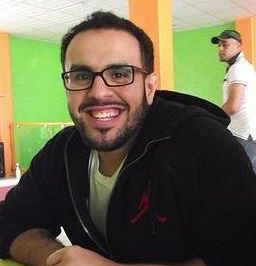
Letter to Obama from an American held in Cairo’s Tora prison

Mohamed-SoltanMohamed Soltan, an American citizen who is a 26-year-old graduate of Ohio State University, moved to Egypt last year. In August he joined a sit-in at Rabaa Square in Cairo to defend what he considered the norms of American-style democracy.

Soltan was shot in the arm when security forces broke up sit-ins at Rabaa and another square, killing nearly a thousand people. “He was recovering from surgery to remove the bullet when the police raided his home and arrested him. His family, which is collecting signatures on a petition calling for his release, has released the following text of a letter Mr. Soltan wrote to President Obama from a cell in Cairo’s Tora Prison on his 26th birthday in November.”

Dear President Obama,

Last week, I underwent a procedure to remove two 13” metal nails that were placed in my left arm to help support and repair the damage sustained from a gunshot wound I suffered at the hands of Egyptian security forces. The bullet that punctured my arm was paid for by our tax dollars. I was forced to undergo this procedure without any anesthesia or sterilization because the Egyptian authorities refused to transfer me to a hospital for proper surgical care.

After the nails penetrated the skin at my elbow from below, and ripped through my shoulder muscle from above. The doctor who performed this procedure is a cellmate. He used pliers and a straight razor in lieu of a scalpel. I laid on a dirty mat as my other cellmates held me down to ensure I did not jolt from the pain and risk permanent loss of feeling and function in that arm. The pain was so excruciating, it felt like my brain could explode at any given point. I was finally given two aspirin pills almost an hour later when the guards found my cellmates screams for help unbearable.

I share these details here because my mind drifted to 2007 as I stared at the ceiling of my cramped cell after surgery. During your first presidential campaign, I was moved by your message. I was so passionate about everything you represented. Finally, “change we can believe in.” I saw you, as many Americans did then, a true civil servant looking to put the disadvantaged first, and to pioneer a new model of governance. I felt I was part of the making of a great chapter in my country’s history. You were someone I wanted to stand behind, someone I wanted to support, so I volunteered and worked for your campaign in Ohio, a crucial swing state. As an O.S.U. student, I went door-to-door, made phone call after phone call, urged people to join the movement that would revolutionize American politics. It was time to go back to a government “for the people, of the people.”

Now as I sit in this crowded cell, I can’t help but ask myself, was I naïve to think you were a departure from the norm? [Continue reading…]


Facebooktwittermail

America’s rise as a superpower

In Der Spiegel, Hans Hoyng writes: “Sarajevo, 21st-century version.” This is how political scientist Anne-Marie Slaughter, the director of policy planning under former Secretary of State Hillary Clinton, refers to what is currently brewing off the Chinese coast, where the territorial claims of several nations overlap.

The analogy to the period prior to the outbreak of World War I is striking. China, “the Germany of (that) time,” as American historian Robert Kagan puts it, is the emergent world power still seeking to define its role within the global community. At the same time, China is staking its claim to natural resources, intimidating its neighbors and developing massive naval power to secure its trade routes.

In taking these steps, China could easily become a rival to another world power, the United States of America, which would assume the role once played by Great Britain in this historical comparison. Just as the United Kingdom did at the time, the United States is now building alliances with its rival’s neighbors. And leaders in Beijing have responded to such attempts to encircle their country with a similar sense of outrage as that displayed by the German Reich.

The current crisis in the East China Sea illustrates once again that there are still lessons to be learned from World War I a century after it began and, upon closer inspection, that politicians on both sides are trying to avoid making the same mistakes. But the current crisis in East Asia diverges from the situation leading up to World War I in one important respect: There is currently no country able to assume the role once played by the United States, which, with its late entry into the war, decided its outcome and eventually outpaced both its winners and losers.

The US’s entry into the war in 1917 marked the beginning of its path to becoming a world power. In fact, according to historian Herfried Münkler, this was precisely the goal of some politicians in Washington. Treasury Secretary William Gibbs McAdoo, a son-in-law of President Woodrow Wilson, was already forging plans to replace the pound sterling with the dollar as the foremost international reserve currency.

But his father-in-law, a lawyer and political scientist, and America’s only president to enter politics after serving as the president of a university, had no such prosaic intentions. Wilson, the descendent of Scottish Presbyterians and a staunch idealist, and yet down-to-earth and in many respects, such as his racism, a son of the South, wanted to save the world and end war once and for all.

He failed, of course, with peace lasting only 20 years after World War I. Nevertheless, American politicians today justify military intervention with the same arguments Wilson used to convince the country to put an end to its isolation and intervene in Europe. [Continue reading…]

Facebooktwittermail

How the reforms of Pope Francis are causing a sea change in the Catholic church

Huffington Post reports: When Pope Francis posed his now-iconic question, “Who am I to judge?” in reference to gay people in the Catholic Church, he signaled a sea change in a deeply conservative religious institution reeling from decades of scandal and decline in Europe and the Americas.

The pope’s insistence on simple living, his radical statements about economic injustice, and the arresting photos of him embracing others have effectively transcended religion, at once reflecting and furthering what his champions celebrate as progressive social change.

But beneath the Pope’s headline-catching rhetoric, he has delivered key administrative decisions over the past year that indicate serious and substantial reforms are already underway within the Catholic church.

In an unprecedented move soon after his election, Francis appointed eight cardinals from around the globe to sit on a permanent advisory panel. This group, which is about to meet for the third time, aids Francis in his efforts to “shake-up” the bureaucracy in the Vatican. The panel will also be responsible for creating guidelines on how to address the church’s global priest sex abuse scandal, namely how to handle clergy who have been accused of abuse and how to prevent it.

Francis has also replaced the widely criticized Secretary of State Tarcisio Bertone, whose tenure under Pope Benedict XVI was marked by a “Vatileaks” scandal that exposed alleged corruption, with Cardinal Secretary of State Pietro Parolin.

Additionally, he has targeted the scandal-prone and notoriously secretive Vatican Bank: He appointed a commission to investigate how it operates, hired secular financial firms to do a third-party investigation of its practices, and recently replaced almost all of the cardinals on its advisory council with a new group to oversee much-needed reforms.

Perhaps the pope’s most significant decision to date was his choice of 19 Catholic leaders slated to become the newest class of cardinals. Nine out of the 16 new cardinals who are eligible to vote for the next pope are from the global south and Asia — including some of the poorest countries in the world such as Haiti and Burkina Faso — and five are from Latin America.

By shifting power away from Italy and Europe, the pope is developing a hierarchy that more accurately represents the realities of the worldwide Catholic Church. [Continue reading…]

Facebooktwittermail

UAE is a dangerous place to express political opinion

Human Rights Watch: The United Arab Emirates (UAE) in 2013 stifled free expression, and subjected dissidents to manifestly unfair trials marred by credible allegations of torture, Human Rights Watch said today in its World Report 2014.

A court sentenced 69 dissidents to prison terms of up to 10 years in July on charges of aiming to overthrow the government, though most of the evidence the court cited in the 243-page judgment suggested that they had only engaged in peaceful political activities. Many of those convicted, and another group of 30 dissidents facing similar charges, said they experienced mistreatment in pretrial detention that in some cases amounted to torture.

“The UAE’s repressive laws and dysfunctional justice system belie the government’s efforts to present the country as moderate and progressive,” said Sarah Leah Whitson, Middle East director at Human Rights Watch. “The UAE might seem like a safe place to shop, do business, or take a winter holiday but it’s becoming a very dangerous place to express a political opinion.” [Continue reading…]

Facebooktwittermail

Rosetta the comet-chasing spacecraft wakes up

The Guardian reports: In 2004, the European Space Agency launched the Rosetta probe on an audacious mission to chase down a comet and place a robot on its surface. For nearly three years Rosetta had been hurtling through space in a state of hibernation. On Monday, it awoke.

The radio signal from Rosetta came from 800m kilometres away, a distance made hardly more conceivable by its proximity to Jupiter. The signal appeared on a computer screen as a tremulous green spike, but it meant the world – perhaps the solar system – to the scientists and engineers gathered at European Space Operations Centre in Darmstadt.

In a time when every spacecraft worth its salt has a Twitter account, the inevitable message followed from @Esa_Rosetta. It was brief and joyful: “Hello, world!”.

Speaking to the assembled crowd at Darmstadt, Matt Taylor, project scientist on the Rosetta mission, said: “Now it’s up to us to do the work we’ve promised to do.”

Just 10 minutes before he’d been facing an uncertain future career. If the spacecraft had not woken up, there would be no science to do and the role of project scientist would have been redundant.

The comet hunter had been woken by an internal alarm clock at 10am UK time but only after several hours of warming up its instruments and orientating towards Earth could it send a message home.

In the event, the missive was late. Taylor had been hiding his nerves well, even joking about the wait on Twitter but when the clock passed 19:00CET, making the signal at least 15 minutes late, the mood changed. ESA scientists and engineers started rocking on their heels, clutching their arms around themselves, and stopping the banter than had helped pass the time. Taylor himself sat down, and seemed to withdraw.

Then the flood of relief when the blip on the graph appeared. “I told you it would work,” said Taylor with a grin.

The successful rousing of the distant probe marks a crucial milestone in a mission that is more spectacular and ambitious than any the European Space Agency has conceived. The €1bn, car-sized spacecraft will now close in on a comet, orbit around it, and send down a lander, called Philae, the first time such a feat has been attempted.

The comet, 67P/Churyumov-Gerasimenko, is 4km wide, or roughly the size of Mont Blanc. That is big enough to study, but too measly to have a gravitational field strong enough to hold the lander in place. Instead, the box of sensors on legs will latch on to the comet by firing an explosive harpoon the moment it lands, and twisting ice screws into its surface.

To my mind, the long-standing belief that comets may have had a role in the origin of life on Earth seems even more speculative than Jeremy England’s idea that it could have arisen as a result of physical processes originating on this planet’s surface.

As much as anything, what seems so extraordinary about a project such as Rosetta is its accomplishment as a feat of navigation (assuming that it does in fact make its planned rendezvous with the comet). It’s like aiming an arrow at a speck of dust on a moving target in the dark.

Facebooktwittermail

Stephen Hawking: ‘There are no black holes’

Nature reports: Most physicists foolhardy enough to write a paper claiming that “there are no black holes” — at least not in the sense we usually imagine — would probably be dismissed as cranks. But when the call to redefine these cosmic crunchers comes from Stephen Hawking, it’s worth taking notice. In a paper posted online, the physicist, based at the University of Cambridge, UK, and one of the creators of modern black-hole theory, does away with the notion of an event horizon, the invisible boundary thought to shroud every black hole, beyond which nothing, not even light, can escape.

In its stead, Hawking’s radical proposal is a much more benign “apparent horizon”, which only temporarily holds matter and energy prisoner before eventually releasing them, albeit in a more garbled form.

“There is no escape from a black hole in classical theory,” Hawking told Nature. Quantum theory, however, “enables energy and information to escape from a black hole”. A full explanation of the process, the physicist admits, would require a theory that successfully merges gravity with the other fundamental forces of nature. But that is a goal that has eluded physicists for nearly a century. “The correct treatment,” Hawking says, “remains a mystery.”

Hawking posted his paper on the arXiv preprint server on 22 January. He titled it, whimsically, ‘Information preservation and weather forecasting for black holes’, and it has yet to pass peer review. The paper was based on a talk he gave via Skype at a meeting at the Kavli Institute for Theoretical Physics in Santa Barbara, California, in August 2013 (watch video of the talk). [Continue reading…]

Facebooktwittermail

When cleanliness kills

The Sunday Mail reports: Using mouthwash is a ‘disaster’ for health, increasing the risk of heart attacks and strokes, scientists are warning.

Swilling kills off ‘good’ bacteria that help blood vessels relax – so increasing blood pressure.

When healthy volunteers used Corsodyl, a brand containing a powerful antiseptic, their blood pressure rose within hours.

Professor Amrita Ahluwalia, who led the study, last night condemned the widespread use of antiseptic mouthwash.

She said: ‘Killing off all these bugs each day is a disaster, when small rises in blood pressure have significant impact on morbidity and mortality from heart disease and stroke.’

More than half of British adults regularly use mouthwash, creating a market worth £180 million a year.

The study compared blood pressure levels in 19 healthy volunteers who started using Corsodyl twice daily. Their blood pressure rose by between 2 and 3.5 units (mmgh).

This effect ‘appeared within one day’ of using the mouthwash, researchers wrote in the journal Free Radical Biology And Medicine.

For each two-point rise in blood pressure, the risk of dying from heart disease rises by seven per cent, according to separate research. Such a rise also increases the risk of dying from stroke by ten per cent. [Continue reading…]

Facebooktwittermail

The fall of Falluja reveals the tragic futility of America’s strategy in the Middle East

Graham E. Fuller writes: When is a war “worth it?” It’s a timeless question that still begs a decisive response.

The debacle of Iraq has now drifted off the scope Americans’ attention — US troops are no longer dying there and new challenges beckon Washington elsewhere. Been there, done that. The American part of the war may be over, and we have grown weary hearing about it, but the Iraqi part of the war still continues. And with the recent and symbolic fall, again, of Falluja to al-Qa’ida and other jihadis we are forcefully reminded of the price that we paid in the American cleansing of Falluja ten years ago — for naught. Falluja, massively damaged, seems back to square one.

What about the Iraqis — was the war worth it for them? The figures are pretty well known by now — upwards of half a million Iraqis died, either in the violence of war or subsequent civil strife. That’s roughly equivalent to 5 million US citizens dying in a war. Add at least one million Iraqis displaced from their homes and villages, many now in exile — equivalent to ten million Americans displaced. Saddam was one of the most brutal dictators the world has seen in modern times, but one wonders–Iraqis must wonder — whether anything Saddam could have done could ever have remotely approached such human and structural devastation as the war. And the psychological damage — constant fear, death, mayhem, ongoing massive insecurity, anarchy and civil conflict –is not yet over.

Still, if you talk to some Iraqi Shi’a, the shift of power from the hands of a Sunni minority under a brutal dictator into the hands of the Shi’ite majority was a long term political godsend for them; they are today “better off” — at least politically, than before the war. But that’s a political abstraction.

Was it “worth it” to individual Shi’ite families who suffered loss of husbands, brothers, wives and children, homes and livelihoods? Former Secretary of State Madeleine Albright, when asked about the deaths of half a million Iraqi children deprived of medicine under the US sanctions on Saddam, said it was “a hard choice… but it was worth it.” That is the comforting Olympian strategic view, uncomplicated by ground realities for real human beings.

What strategic gains can we tote up for the US alongside Iraqi losses? For the US, virtually nothing gained; indeed, it’s been a serious net loss in geopolitical terms. Few Iraqis are grateful. An Iraq that has always displayed strong Arab nationalist tendencies will not likely now change its colors or learn to love Israel.

Iran is now recognized as the real winner of the Iraq war. The Iraqi internal struggle has spread across into Syria, presenting the US with choices nearly all of which are highly unpalatable. Saudi Arabia has now felt the need to unleash a vicious sectarian conflict that destabilizes the Gulf, the Arabian Peninsula, Lebanon, Syria, even Pakistan. [Continue reading…]

Facebooktwittermail

Iraq’s battle with Al Qaeda in Anbar leaves 140,000 displaced

The Associated Press reports: More than 140,000 Iraqis have fled parts of Anbar province over clashes between security forces and al-Qaida militants, the worst displacement of civilians in years, a United Nations official said Friday.

The spokesman for the U.N. High Commissioner for Refugees, Peter Kessler, described it as “the largest” displacement witnessed in the country since the sectarian violence of 2006-2008. He added that more than 65,000 people fled the conflict just in the past week alone.

Since late December, members of Iraq’s al-Qaida branch — known as the Islamic State of Iraq and the Levant — have taken over parts of Ramadi, the capital of the largely Sunni province of Anbar. They also control the center of the nearby city of Fallujah.

Kessler said that many civilians are trapped and suffer from a lack of supplies. [Continue reading…]

Facebooktwittermail

The kidnapping of journalists — further evidence of collusion between Assad and al Qaeda?

It would appear that whoever is behind the kidnapping of journalists in Syria doesn’t welcome the press coverage they’ve been getting during the conflict. It’s reasonable to assume that there is some kind of underlying rationale. So given that ISIS is generally believed to be the prime culprit, one has to ask: how does this benefit the al Qaeda group?

After all, for members of al Qaeda in Syria or anywhere else there’s little if any friendly press coverage. Likewise, most of the coverage ISIS gets tends to inflate perceptions of the group’s power, so in a sense all coverage, however grizzly, can be seen to serve the group’s interests.

The overall impact of the spate of kidnappings has been to greatly diminish the number of foreign journalists willing to enter Syria and to amplify the international perception of rebel-controlled Syria as a lawless and hostile environment. Who benefits from both of these factors? The Assad regime. Yet if the regime was believed to have a direct role in the kidnappings, this would seriously undermine the PR campaign that it has been waging with increasing success on the international stage. Much better to outsource the task to a group that has no image to protect.

Press Freedom Now: Syria is currently the most dangerous country for journalists. In fact, all of us at Press Freedom Now have never seen anything like it and have never had so many colleagues go missing before.

For those of us who have worked in Syria, this conflict zone makes previous experiences covering conflict look a bit like walks in the park. At least 30 journalists have been kidnapped in Syria or disappeared since the start of the conflict in 2011.

Early in the Syrian Civil War it appeared that the Syrian government of Bashar al-Assad was responsible for the kidnappings of journalists. In recent months however, as the Islamic State of Iraq and the Levant (ISIL or ISIS) has risen in prominence in Syria, it has become clear that ISIS is responsible for most kidnappings of journalists.[Continue reading…]

Facebooktwittermail

Egypt clashes kill 29 on third anniversary of revolution

BBC News reports: At least 29 people have been killed in clashes in Egypt as the country marks the anniversary of the 2011 uprising which overthrew President Hosni Mubarak, the health ministry says.

Rival demonstrations of supporters and opponents of the military-backed government took place in Cairo.

But police broke up anti-government protests, and arrests were reported in Cairo and Alexandria.

Hundreds have died since July when the army deposed President Mohammed Morsi.

Extra security measures were in place for Saturday.

Egyptian Interior Minister Muhammad Ibrahim had urged Egyptians not to be afraid to go to events marking the anniversary of the uprising.

Thousands of supporters of the military and the government gathered in high-profile locations including Tahrir Square – the focal point of the 18-day 2011 popular revolt.

Facebooktwittermail

A letter from Tora prison, Cairo

Peter Greste, one of Al Jazeera’s journalists currently imprisoned in Egypt, writes: I am nervous as I write this. I am in my cold prison cell after my first official exercise session – four glorious hours in the grass yard behind our block and I don’t want that right to be snatched away.

I’ve been locked in my cell 24 hours a day for the past 10 days, allowed out only for visits to the prosecutor for questioning, so the chance for a walk in the weak winter sunshine is precious.

So too are the books on history, Arabic and fiction that my neighbours have passed to me, and the pad and pen I now write with.

I want to cling to these tiny joys and avoid anything that might move the prison authorities to punitively withdraw them. I want to protect them almost as much as I want my freedom back.

That is why I have sought, until now, to fight my imprisonment quietly from within, to make the authorities understand that this is all a terrible mistake, that I’ve been caught in the middle of a political struggle that is not my own. But after 2 weeks in prison it is now clear that this is a dangerous decision. It validates an attack not just on me and my two colleagues but on freedom of speech across Egypt.

All of a sudden, my books seem rather petty. I had been in Cairo only two weeks before interior ministry agents burst through the door of my hotel room, that of my colleague and producer Mohamed Fahmy, and into the home of Al Jazeera’s second producer Baher Mohamed.

We had been doing exactly as any responsible, professional journalist would – recording and trying to make sense of the unfolding events with all the accuracy, fairness and balance that our imperfect trade demands.

Most of the time, it is not a difficult path to walk. But when the Egyptian government declared the Muslim Brotherhood to be “terrorist organisation”, it knocked the middle ground out of the discourse. When the other side, political or otherwise, is a “terrorist”, there is no neutral way. As George W. Bush loved to point out after 9/11, you are either with the government or with the terrorists. So, even talking to them becomes an act of treason, let alone broadcasting their news however benign. [Continue reading…]

Facebooktwittermail

A Sisi presidency — what it could mean

Andrew Hammond considers the implications of Defence Minister General Abdel-Fattah el-Sisi becoming Egypt’s next president: For Sisi, it’s not even necessary to run for president. He can easily manipulate and oversee from his position as defence minister, not least with the military’s new powers of non-oversight enshrined in the constitution. To take on the job of president would be to open himself to the gradual erosion of his cult status among fans. It would also run the risk of tainting the reputation of the military institution itself, especially if his presidency came to be seen as a failure (a point that former editor of Al-Ahram newspaper Mohammed Hassanein Heikal has said worries Sisi). For this reason, there is some speculation that Brotherhood leaders would be relieved if Sisi took the plunge. With the military “other” leading the country, they would be able to avoid a serious review of their mistakes, and the group would then remain a powerful anti-modern force, some factions of which, as one former member put it, could succumb to the politics of resistance and obsession with injustice. Public opinion may also slowly turn in their favour.

Sisi may also be blinded to certain factors of his popularity. He has not put forward a vision to Egyptians of how the country can develop economically or politically. His message has simply been an uber-nationalist “No” to Islamist rule as un-Egyptian and a nostalgic call to order. His rhetorical style, with its home-baked weekend soothers – “I am telling you, don’t worry about Egypt”, “the lion doesn’t eat its cubs” – has gone under the radar of serious analysis because Egypt’s fascistic state propaganda machine has packaged it as sublime and above reproach (while notably reducing coverage of his public pronouncements, adding to the aura of saviour-from-beyond). Yet his tone is reminiscent of a mosque imam at Friday prayers.

Once Sisi dons civilian clothes and has to deal with the daily realities of policy and a restive public, people may well come to tire of him rather quickly. If, as is widely expected, he takes these risks, it will be due to a variety of things: vanity, an honest belief that he has a duty to the country, pressure from inside and abroad (Abu Dhabi, Riyadh), and promises of continued funding from the Gulf to ensure four years that can be deemed a success. It would also be naïve to think that, despite the anti-American sentiment that the media has whipped up, Washington won’t be appraised of his decision in advance, possibly even for its approval. [Continue reading…]

Facebooktwittermail

Contrary to Obama’s promises, the U.S. military still permits torture

Jeffrey Kaye writes: The United States Army Field Manual (AFM) on interrogation (pdf) has been sold to the American public and the world as a replacement for the brutal torture tactics used by the CIA and the Department of Defense during the Bush/Cheney administration.

On 22 January 2009, President Obama released an executive order stating that any individual held by any US government agency “shall not be subjected to any interrogation technique or approach, or any treatment related to interrogation, that is not authorized by and listed in Army Field Manual 2 22.3.”

But a close reading of Department of Defense documents and investigations by numerous human rights agencies have shown that the current Army Field Manual itself uses techniques that are abusive and can even amount to torture.

Disturbingly, the latest version of the AFM mimicked the Bush administration in separating out “war on terror” prisoners as not subject to the same protections and rights as regular prisoners of war. Military authorities then added an appendix to the AFM that included techniques that could only be used on such “detainees”, ie, prisoners without POW status.

Labeled Appendix M, and propounding an additional, special “technique” called “Separation”, human rights and legal group have recognized that Appendix M includes numerous abusive techniques, including use of solitary confinement, sleep deprivation and sensory deprivation. [Continue reading…]

Facebooktwittermail

RNC condemns NSA surveillance

The Hill: The Republican National Committee has formally renounced the “dragnet” surveillance program at the National Security Agency (NSA).

During its winter meeting in Washington, the committee on Friday overwhelmingly approved a measure calling for lawmakers to end the program and create a special committee to investigate domestic surveillance efforts.

The resolution, which declared that “unwarranted government surveillance is an intrusion on basic human rights,” among other condemnations, passed the committee on a voice vote with near-unanimous support. Only a small minority of the 168 RNC members dissented.

Facebooktwittermail

An open letter from U.S. researchers in cryptography and information security

MassSurveillance.info: Media reports since last June have revealed that the US government conducts domestic and international surveillance on a massive scale, that it engages in deliberate and covert weakening of Internet security standards, and that it pressures US technology companies to deploy backdoors and other data-collection features. As leading members of the US cryptography and information-security research communities, we deplore these practices and urge that they be changed.

Indiscriminate collection, storage, and processing of unprecedented amounts of personal information chill free speech and invite many types of abuse, ranging from mission creep to identity theft. These are not hypothetical problems; they have occurred many times in the past. Inserting backdoors, sabotaging standards, and tapping commercial data-center links provide bad actors, foreign and domestic, opportunities to exploit the resulting vulnerabilities.

The value of society-wide surveillance in preventing terrorism is unclear, but the threat that such surveillance poses to privacy, democracy, and the US technology sector is readily apparent. Because transparency and public consent are at the core of our democracy, we call upon the US government to subject all mass-surveillance activities to public scrutiny and to resist the deployment of mass-surveillance programs in advance of sound technical and social controls. In finding a way forward, the five principles promulgated at http://reformgovernmentsurveillance.com/ provide a good starting point.

The choice is not whether to allow the NSA to spy. The choice is between a communications infrastructure that is vulnerable to attack at its core and one that, by default, is intrinsically secure for its users. Every country, including our own, must give intelligence and law-enforcement authorities the means to pursue terrorists and criminals, but we can do so without fundamentally undermining the security that enables commerce, entertainment, personal communication, and other aspects of 21st-century life. We urge the US government to reject society-wide surveillance and the subversion of security technology, to adopt state-of-the-art, privacy-preserving technology, and to ensure that new policies, guided by enunciated principles, support human rights, trustworthy commerce, and technical innovation. [See signatories]

Facebooktwittermail

White House viewed surveillance report as ‘liberal’

Politico: A member of President Barack Obama’s hand-picked surveillance review group said Friday the White House was swayed by U.S. intelligence officials sympathetic to the National Security Agency and ultimately viewed the group’s findings “as a liberal report.”

University of Chicago law professor Geoffrey Stone said that, after receiving the surveillance group’s report, Obama spent a month meeting “with many of the same people we had met with at great length, members of the intelligence community, members of the intelligence committees from Congress largely on one side of the picture.”

“And instead of our report being truly understood as a middle ground, based upon taking into account all of those perspectives on both sides of the spectrum, I think the White House got moved by thinking of our report as a liberal report,” Stone said.

Stone, speaking during a panel discussion at the National Press Club in Washington, said intelligence officials were “pushing [Obama] and the White House generally more to what we can call the right.”

Facebooktwittermail