Author Archives: News Sources

The myth of “Good Israel” vs. “Bad Israel”

Liberal Zionists like Jeffrey Goldberg want to believe Israel is being corrupted by a number of course trends whose combined influence now threatens the secular democratic Israel that supposedly once represented a more authentic expression of the Jewish state.

Goldberg says:

I’m speaking here of four groups, each ascendant to varying degrees: The haredim, the ultra-Orthodox Jews, whose community continues to grow at a rapid clip; the working-class religious Sephardim — Jews from Arab countries, mainly — whose interests are represented in the Knesset by the obscurantist rabbis of the Shas Party; the settler movement, which still seems to get whatever it needs in order to grow; and the million or so recent immigrants from Russia, who support, in distressing numbers, the Putin-like Avigdor Lieberman, Israel’s foreign minister and leader of the “Israel is Our Home” party.

Noam Sheizaf writes:

This is a return to the old “good Israel” vs. “Bad Israel” theory. According to this idea, there are the peace-loving, democratic and liberal Israeli Jews, who represent the “real” values on which the country was born, and there are the “bad”, Sephardic Jews, Ultra-orthodox and Russian immigrants, who are to blame for all the current hiccups what was a model democracy until not that long ago. Goldberg is actually angry with them for taking away “his” Israel. I think he represents many in saying that

the Israel that I see today is not the Israel I was introduced to more than twenty years ago. The rise to power of the four groups I mentioned above has changed, in some very serious ways (which I will write about later) the nature and character of the Jewish state.

Let’s not deal with what some see as latent racism in these assumptions (I don’t think this is the case with Goldberg), and talk politics instead. First, Shas, is actually weaker than at any point since the mid nineties. The party is going through an internal crisis (some say it will split once its spiritual leader, Ovadia Yosef, passes away). The other Orthodox party, United Torah Judaism, has five seats – roughly the same number it always had. As for Avigdor Lieberman, the conventional wisdom is that only 60-something percent of his votes were from Russian immigrants and the rest came from ordinary middle class Jews. Pollsters claim that those middle class voters are the reason for Lieberman’s rise in the last elections (and probably, in the next ones).
We are left with Goldberg’s favorite target, the settlers. Contrary to the common belief, the settlers are also weaker than ever: the National Religious Party, which used to represent their interests, split into two, and the only real hard-core, rightwing party (The National Unity) has only four Knesset seats and was left out of the government by Netanyahu.

So, If the settlers and the orthodox might be so weak– or at least, not stronger than ever – how come we end up with the most racist, rightwing Knesset in the country’s history?

The answer is as simple as it is unpleasant: it’s Israel’s “good guys” that turned bad – and maybe they weren’t that good in the first place. The Israeli middle class, the good ole’ boys, are the ones supporting the racist bills in the Knesset and the anti-democratic initiatives. In other words, we always had Rabbis like Shmuel Eliyahu and members of Knesset like Kahane’s student Michael Ben-Ari. The difference is that now, we have Kadima and Likud backing them.


Facebooktwittermail

Is Lieberman the new Israeli mainstream?

Mitchell Plitnick writes:

In an interview given to Newsweek, Israeli Foreign Minister Avigdor Lieberman made the following, quite chilling statement: “I am the mainstream. When I started with my vision, I was really a small minority. Today we’re the third [largest] party in Israel.”

Lieberman is certainly no stranger to bluster, so it’s easy to dismiss this as more of Yvet’s (as he is called) hubris. But is that really the case? There’s a good deal of evidence to suggest that Lieberman is absolutely right.

Each piece of that evidence is another massive blow to the teetering ship that is Israeli democracy. The latest was a proposal introduced this past week by Lieberman’s party, Yisrael Beiteinu, to set up a Knesset committee to investigate the funding sources of progressive, and only left-wing, NGOs.

Israeli journalist and blogger Yossi Gurvitz likened the event to the burning of the Reichstag, implying that this was the point where Israel slipped from democracy to fascism. Gurvitz may be overstating the case (I’d certainly say he is), but he is not exaggerating how anti-democratic this action and this Knesset are. Nor can it be reasonably denied that, whether Gurvitz is right or not today, if Israel continues on its present course, there is no doubt he will be someday and probably not in all that distant a future.

Facebooktwittermail

Salmaan Taseer, Aasia Bibi and Pakistan’s struggle with extremism

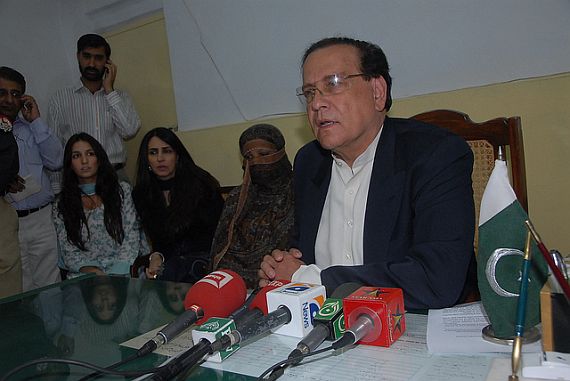
Governor of the Punjab Salmaan Taseer visits Aasia Bibi, Christian woman condemned to death under the Blasphemy Law

Declan Walsh recounts the story of Aasia Bibi, a Christian Pakistani woman convicted of blasphemy, whose most prominent defender, Salmaan Taseer the governor of Punjab, was assassinated last week.

A row over a glass of water is at the root of the case against the 46-year-old Christian mother of five. And it is indirectly the reason why a rogue policeman killed Taseer outside a trendy Islamabad café last Tuesday, plunging the country into a fresh torment.

The argument started on a hot summer’s day in June 2009 as Aasia Bibi picked falsa berries – a purple fruit used to make squash – with her Muslim neighbours. She brought them water to drink; they refused to touch her glass because she was a Christian. A vicious row ensued, although what was exactly said remains a matter of contention.

Bibi’s accusers say she flung vile insults at Islam and the prophet Muhammad. “She got very annoyed,” recalls Maafia. “But it was normal. We could not drink from that glass. She is Christian, we are Muslim, and there is a vast difference between the two. We are a superior religion.”

Bibi’s supporters say she used no religious slander, and was resisting pressure to convert to Islam. “She said those women used to badger her to convert to Islam. And one day she just got fed up with it,” says Shehrbano Taseer, 21-year-old daughter of the slain governor, who has visited Bibi in jail.

After Bibi’s conviction last November, the case seized the attention of Taseer, the outspoken governor of Punjab. Outraging conservatives, he visited Bibi in jail along with his wife, Aamna, and his daughter. He posed for photos, offered warm support, and promised a presidential pardon. He spoke on high authority – President Asif Ali Zardari told Taseer he was “completely behind him”, a reliable source said.

The bold intercession had been prompted by Taseer’s daughter. During a family holiday at the Punjab government’s winter residence in Murree, a hill resort above Islamabad, Shehrbano had alerted her father to Bibi’s plight through her Twitter feed. “He took the phone, read the tweets, and sat and thought about it for several hours. Then he said we should do something,” she recalls.

He was playing with fire. Religious leaders were outraged at Taseer’s description of the blasphemy statute as a “black law”. Protesters torched the governor’s effigy outside his sweeping residence in central Lahore. A radical cleric in Peshawar’s oldest mosque offered a 500,000 rupee (£3,800) reward to anyone who killed Bibi. Then last Tuesday Taseer’s guard, 26-year-old Mumtaz Qadri, turned his weapon on his boss and pumped him with bullets.

The killing has rocked Pakistan more than any event since the assassination of Benazir Bhutto in 2007. And the unseemly public reaction has laid bare an ugly seam of Pakistani society, suggesting a country in the grip of a rash Islamic fervour.

Last Wednesday 500 clerics from the mainstream Barelvi sect, who had previously criticised the Taliban, forbade their followers from offering condolences to Taseer’s family. Another religious group has planned a rally in Karachi tomorrow to protest against law reform. Posters for the rally singled out Sherry Rehman, a brave ruling party MP who shared Taseer’s outspoken views, for criticism. One preacher in the city has already dubbed her Wajib ul Qatil by one preacher – “deserving of death”. Fears that she could follow Taseer hardly seem overstated.

For all that, there is less religion behind the blasphemy furore than meets the eye. Critics say the law is, often as not, used as a tool of coercion against vulnerable minorities, or to settle petty disputes, or both. Typically, disputes culminate in one man claiming that his enemy burned pages from the Qur’an – even though it is a mystery why anyone would choose to do so in a religion-obsessed country such as Pakistan. Many victims of the blasphemy law, in fact, are Muslim.

When Christians are targeted, the motivation is often an ancient subcontinental prejudice . Christians have traditionally worked as cleaners and sweepers; many Muslims still consider them “unclean”. “This whole business about religion is just a decoy, a smokescreen,” said Ali Dayan Hasan of Human Rights Watch. “It’s often a case of simple caste prejudice.”

Facebooktwittermail

Icelandic MP fights US demand for her Twitter account details

The Guardian reports:

A member of parliament in Iceland who is also a former WikiLeaks volunteer says the US justice department has ordered Twitter to hand over her private messages.

Birgitta Jonsdottir, an MP for the Movement in Iceland, said last night on Twitter that the “USA government wants to know about all my tweets and more since november 1st 2009. Do they realize I am a member of parliament in Iceland?”

She said she was starting a legal fight to stop the US getting hold of her messages, after being told by Twitter that a subpoena had been issued. She wrote: “department of justice are requesting twitter to provide the info – I got 10 days to stop it via legal process before twitter hands it over.”

She said the justice department was “just sending a message and of course they are asking for a lot more than just my tweets.”

Jonsdottir said she was demanding a meeting with the US ambassador to Iceland. “The justice department has gone completely over the top.” She added that the US authorities had requested personal information from Twitter as well as her private messages and that she was now assessing her legal position.

Facebooktwittermail

US should exercise green power

Kevin Gallagher writes:

To kick off 2011, the Obama administration has had the audacity to file suit at the World Trade Organisation (WTO) against China’s policies to build green technologies.

This action is deeply flawed. The US should not try to beat China down, but should pursue its own green jobs policy and reform the WTO, so the rules allow countries to combat climate change.

The United States and China are the world’s largest emitters of the greenhouse gases. Together and separately, each nation should be doing all it can to develop clean technologies to mitigate and adapt to climate change.

That is not how the Obama administration has seen it. Repeatedly, at United Nations climate negotiations, the US has said that it will do little to combat climate change unless China does. Moreover, the US has stated it will not provide any financial assistance to China to help reduce emissions. With no US support, China was left to its own devices.

Fortunately, the government rose to the challenge. In 2009, China added more wind power than any other country, including the United States. China already has the largest solar thermal capacity in the world and now leads the world in installed renewable energy capacity.

Facebooktwittermail

Turks see US as biggest external threat, poll results show

Hürriyet Daily News reports:

Some 43 percent of Turks perceive the United States as the country’s biggest threat, followed by Israel, according to a broad survey carried out in December.

“This the highest ratio ever on the external threat question among our surveys,” Professor Özer Sencar, chairman of Ankara-based MetroPOLL Strategic and Social Research Center, told the Hürriyet Daily News & Economic Review on Wednesday.

“The U.S. foreign politics since the Iraqi invasion, the hood incident [the U.S. detention of Turkish soldiers during the Iraq war], the war in Afghanistan, repeated Armenian bills in the U.S. Congress and the negative statements that Turkish leaders make about the U.S. and Israel play a major role in this perception,” Sencar said.

Facebooktwittermail

Secrecy is the original sin

From Truthout:

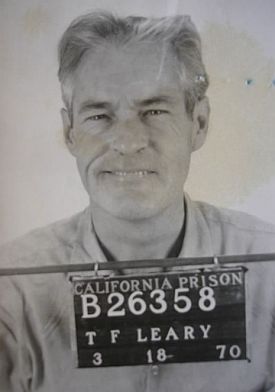
Largely because of his advocacy of psychedelic drugs, Tim Leary became a high-profile political prisoner whom Nixon called “the most dangerous man in America” (the same label Nixon used to describe Daniel Ellsberg). Leary was sentenced to ten years in prison for possession of .0025 grams of cannabis.

After escaping from prison in 1970, he became the object of an international manhunt. Finally captured in Afghanistan, he was kidnapped by the CIA – there was no extradition treaty between the two countries – and brought back to face four more years in prison, including long stretches in solitary confinement, before he was released in 1976. The following is an excerpt from a text he wrote in maximum-security Folsom Prison, California, in May 1973. — Michael Horowitz

Timothy Leary writing at the time of Watergate:

When you think about it, secrecy is the cause of the whole flap. Ellsberg and Russo published some secrets. Leaks in the White House. The plumbers steal Ellsberg’s psychiatric secrets. And bug the Democrat’s phone calls. The entire White House is involved in cover-up. The hearings center on cover-up of the cover-up.
Secrecy is the enemy of sanity and loving trust. If you keep secrets, you are an insane paranoiac. Concealment is the seed source of every human conflict. Secrecy is always caused by guilt or fear. [Gordon] Liddy’s parents were guilty about sex. And Nixon’s parents. It drives them crazy when he secretly suspects that she’s keeping secrets so he hires a private detective and vice versus.

Let’s break out of the huddle. Before [FBI Director] J. Edgar Hoover there were no secret police in this country. Before World War II there was no C.I.A. and America was amazingly unconcerned with secrecy. The hidden sickness has become lethally epidemic in the last forty years.

Now comes the electronic revolution. Reveal-ation. Bugging equipment effective at long distances is inexpensive and easily available. Good. Liberals want stiff laws against bugging. It’s the wrong move. Legalize everything. Legalize bugging. Let’s forget artificial secrets and concentrate on the mysteries.

I can tell you bugging is nothing to worry about. I’ve been tapped, surveilled, tailed for ten years. In Algeria everyone knew of at least three taps on all international calls — Algerian, French and C.I.A. The Algerians knew every move we made. That’s why they liked us. I was called in once by the Swiss Secret Service about some threats on my life. They offered me body guards. I looked at the chief agent and laughed. “Moi! Merci, non.” The agent laughed with me. “Professor, the Swiss police never sleep. We watch over you twenty-four hours a day.” Any real true intimate secrets are preserved in the tender codes of love. Privacy is woven with electric threads of contact that cannot be INTERCEPTED. Love has nothing to hide.

Secrecy is the original sin. Fig leaf in the Garden of Eden. The basic crime against love. The issue is fundamental. What a blessing that Watergate has been uncovered to teach us the primary lesson. The purpose of life is to receive, synthesize, and transmit energy. Communication fusion is the goal of life. Any star can tell you that. Communication is love. Secrecy, withholding the signal, hoarding, hiding, covering up the light is motivated by shame and fear, symptoms of the inability to love. Secrecy means that you think love is shameful and bad. Or that your nakedness is ugly. Or that you hide unloving, hostile feelings, Seed of paranoia and distrust.

Those who love have no need to hide their actions. As so often happens, the extreme wing is half right for the wrong reasons. They say primly: if you have done nothing wrong, you have no fear of being bugged. Exactly. But the logic goes both ways. Then F.B.I, files, and C.I.A. dossiers, and White House conversations should be open to all. Let every thing hang open. Let government be totally visible. The last, the very last people to hide their actions should be the police and government.

We operate on the assumption that everyone knows everything, anyway. There is nothing and no way to hide. This is the acid message. We’re all on cosmic T.V. every moment. We all play starring roles in the galactic broadcast: This Is Your Life. I remember the early days of neurological uncovering, desperately wondering where I could go to escape. Run home, hide under the bed, in the closet, in the bathroom? No way. The relentless camera “I” follows me everywhere. We can only keep secrets from ourselves.

And none of the legal experts get the point of Watergate. [Special prosecutor Archibald] Cox chasing leaks from his own staff.

We recall the classic political scandals involving secrets: Dreyfus, Alger Hiss, the Rosenbergs. The heroic figures around whom Watergate revolves, Tony [Russo] and Dan [Ellsberg]. Brave Russian dissenters uncovering the secret that everyone knows about Soviet repression.

I laugh at government bugging. Let the poor, deprived, bored creatures listen to our conversations, tape our laughter, study our transmissions. Maybe it will turn them on. Perhaps they’ll get the message our love-shine transmits: there is nothing to fear.

From Neuropolitics, 1977.

Facebooktwittermail

Lockheed Martin: the shadow government

Yahoo Tech Ticker reports:

Too big to fail?

That’s been the key question asked of Wall Street’s biggest banks since the September 2008 collapse of Lehman Brothers, which sent shock waves through the global financial system and led to the worst recession this country has seen since the Great Depression.

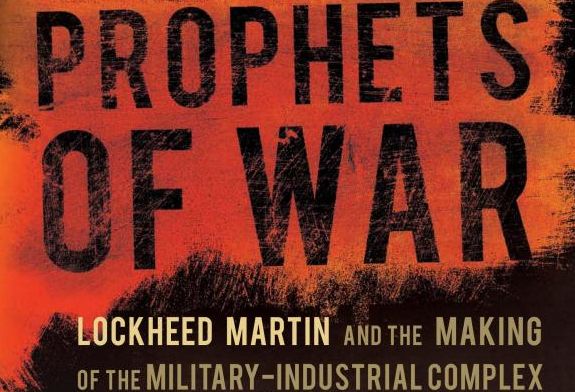
But, there is another firm far from the circles of Wall Street for which that same question should be asked, says William Hartung, author of the new book Prophets of War. The subtitle of his book says it all: Lockheed Martin and the Making of the Military-Industrial Complex.

With $40 billion in annual revenue, Lockheed Martin is the single largest recipient of U.S. tax dollars. The company receives about $36 billion in government contracts per year. In 2008, $29 billion of that was for U.S. military contracts – a dollar figure 25% higher than its competitors Boeing Co. and Northrop Grumman.

What does that mean for you, the U.S. taxpayer? According to Hartung, each taxpaying household contributes $260 to Lockheed’s coffers each year!

Facebooktwittermail

A legacy Obama should avoid: Allowing detentions without trials

Tom Malinowski from Human Rights Watch writes:

It is an iron law of American government that institutions created to meet a temporary contingency are almost impossible to dismantle once the contingency has passed. If not for the Soviet threat, for example, the United States hardly would have established multiple intelligence agencies, military bases in Germany or a massive nuclear weapons complex. Yet 20 years after the Berlin Wall fell, these elements of the Cold War national security state are still with us.

The institutions cobbled together after the Sept. 11, 2001, attacks may be just as resistant to change, as President Obama is finding in his struggle to close the detention facility at Guantanamo Bay.

In 2008, presidential candidates Obama and John McCain promised to close Guantanamo. (McCain said he would move all the prisoners to Fort Leavenworth, Kan., on his first day in office.) But last year, Robert Gates’s Pentagon fought to preserve the facility’s military commissions. Then, Congress restricted transfers of prisoners to the United States for detention or trial. Last week, White House press secretary Robert Gibbs said that closing Guantanamo would “depend on the Republicans’ willingness to work with the administration,” which, if true, is a nice way of saying “never.”

Now Obama is reportedly weighing an executive order to clarify the rules for detaining some four dozen Guantanamo prisoners whom his administration deems too dangerous to release but who cannot be tried. These men pose a unique problem left over from the Bush administration, when evidence was poorly maintained, some detainees were tortured and others radicalized by their years in prison. If Obama’s order gives them better process, it will be a step forward.

Some, however, are urging Obama to take a more fateful step: to issue an order covering not just the hard cases he inherited in Guantanamo but also allowing detention without trial of any terrorism suspect who may be apprehended in the future, even if far from a battlefield. Such an order could transform the Guantanamo system from an unfortunate, improvised response to Sept. 11 into a permanent feature of our legal landscape.

Facebooktwittermail

Uncomfortable lessons from the reaction to WikiLeaks

“Amid the sound and fury of the reaction to WikiLeaks, something is missing. Whether hostile or supportive, politicians and commentators on all sides have managed to miss the real point. The contents of the leaked cables should demand a deep reflection on our foreign policy. That this has not happened tells a sorry story about our very democracy,” writes Carne Ross.

Of the extraordinary cable sent by US ambassador April Glaspie of her last conversation with Saddam Hussein before he invaded Kuwait in 1990, there is nary a mention in any press anywhere, yet this is when — more or less precisely — Iraq tipped from being an ally of the US to an enemy, and thus the point of departure for America’s bloody and expensive involvement in Iraq that lasts to this day, twenty years later. (This cable by the way undermines the accusation that Glaspie gave the nod to Saddam to invade.)

Likewise, where is the debate on reports that show Afghanistan’s President Karzai, for whose “democratic” government young Americans are dying every day, brazenly refusing to reverse the release of cronies imprisoned for corruption?

Hendrik Hertzberg in the New Yorker, amongst many others, has claimed that there’s little that’s new or concerning in the cables, suggesting that his magazine already knew that the US was discussing how the Yemeni President might lie to his parliament about American bomb strikes in his country, that the US is secretly conducting aerial surveillance of Hezbollah positions at Lebanese government request (a highly toxic revelation in that unstable country), or that the British government, to its discredit, assured the US that its interests would be protected in a supposedly-independent public inquiry into the Iraq war.

One reaction has been commonplace but striking, among supposedly liberal as well as conservative commentary, namely that “government and diplomacy need secrecy” in order to function. What is extraordinary about this claim is that it is invariably made in complete ignorance of what it is that government is keeping secret. Nanny knows best.

I worked in government, on Afghanistan, the Middle East, and in particular Iraq, over which I eventually resigned (I was Britain’s Iraq “expert” at the UN Security Council for 4 ½ years). I resigned because my government lied about why it went to war and ignored available alternatives to war.

After the travesties of the last ten years, it is simply staggering that the information and responsibility to decide war is so lightly handed over. This choice — of what we allow government to do in our name — should always be contested, never taken for granted. Government needs far less secrecy than that which we grant it. And it is indeed our choice. And here is the real point.

The reaction that the WikiLeaks episode most deserves has been the least evident. The picture of the world revealed in the cables demands a sober and informed reflection on the realities of policy-making in regions like the Middle East, where any frank observer would conclude that Western foreign policy has not been a great success, to put it mildly.

Facebooktwittermail

How WikiLeaks could save the internet

Evgeny Morozov writes:

American diplomacy seems to have survived Wikileaks’s “attack on the international community,” as Hillary Clinton so dramatically characterized it, unscathed. Save for a few diplomatic reshuffles, Foggy Bottom doesn’t seem to be deeply affected by what happened. Certainly, the U.S. government at large has not been paralyzed by the leaks—contrary to what Julian Assange had envisioned in one of his cryptic-cum-visionary essays, penned in 2006. In a fit of technological romanticism, Assange may have underestimated the indispensability of American power to the international system, the amount of cynicism that already permeates much of Washington’s political establishment, and the glaring lack of interest in foreign policy particulars outside the Beltway.

Indeed, it’s not in the realms of diplomacy or even government secrecy where Wikileaks could have its biggest impact. If the organization wants to leave a positive imprint on the world, it should turn to a different mission entirely: forcing the general public to re-examine some of the organizing assumptions behind today’s Internet.

Regardless of what happens to Assange, Wikileaks has the potential to catalyze a worldwide campaign that could do for the Internet what the Greens did for the environment in the 1970s: start a much-needed conversation about the potentially corrosive impact of corporate interests on the public good, a conversation that may eventually coalesce into a broader political movement. Ironically, it’s not what Assange did, but what American companies and politicians did in response to the publication of the cables, that has given thousands of geeks a cogent alternative vision for the future of the Internet.

At the very heart of that vision lies the desire to ensure that the kind of problems that have plagued Wikileaks’s online presence since the publication of the diplomatic cables are never repeated in the future. It’s an impressive list of difficulties: Access to the Wikileaks.org domain was disrupted after its domain provider got cold feet; Amazon famously booted Wikileaks off its servers; PayPal, Visa, and MasterCard cut their ties to Wikileaks as well, significantly hampering its ability to raise donations. Bank of America went further, refusing to process any Wikileaks-related transactions, even prompting an angry editorial from The New York Times. It is also important not to forget that Wikileaks could have been in a considerably worse position if some other Internet companies—Facebook, Twitter, Google—chose to behave like Amazon and PayPal. Google could have made the text of the cables—or even any pages bearing the word “Wikileaks”—disappear from its search index. Twitter could have followed the path of Bank of America and refused to publish (or index) any tweets containing the words “Wikileaks,” “Assange,” or “Cablegate.” Facebook could have banned access to Wikileaks fan pages for anyone with an American IP address, as it did with the “Everybody Draw Muhammed Day” page for users in India and Pakistan.

While some of the companies that targeted Wikileaks were subject to direct political pressure from American politicians, others seem to have volunteered—a decision that must have been easy to make given all the Wikileaks-bashing in Congress. Wikileaks survived these betrayals; but the myth that today’s Internet is the best of all possible worlds didn’t.

Facebooktwittermail

The man who spilled the secrets

Vanity Fair tells the story of the fraught relationship between Julian Assange and The Guardian newspaper.

On the afternoon of November 1, 2010, Julian Assange, the Australian-born founder of WikiLeaks.org, marched with his lawyer into the London office of Alan Rusbridger, the editor of The Guardian. Assange was pallid and sweaty, his thin frame racked by a cough that had been plaguing him for weeks. He was also angry, and his message was simple: he would sue the newspaper if it went ahead and published stories based on the quarter of a million documents that he had handed over to The Guardian just three months earlier. The encounter was one among many twists and turns in the collaboration between WikiLeaks—a four-year-old nonprofit that accepts anonymous submissions of previously secret material and publishes them on its Web site—and some of the world’s most respected newspapers. The collaboration was unprecedented, and brought global attention to a cache of confidential documents—embarrassing when not disturbing—about American military and diplomatic activity around the world. But the partnership was also troubled from the start.

In Rusbridger’s office, Assange’s position was rife with ironies. An unwavering advocate of full, unfettered disclosure of primary-source material, Assange was now seeking to keep highly sensitive information from reaching a broader audience. He had become the victim of his own methods: someone at WikiLeaks, where there was no shortage of disgruntled volunteers, had leaked the last big segment of the documents, and they ended up at The Guardian in such a way that the paper was released from its previous agreement with Assange—that The Guardian would publish its stories only when Assange gave his permission. Enraged that he had lost control, Assange unleashed his threat, arguing that he owned the information and had a financial interest in how and when it was released.

The Guardian partnership was the first of its kind between a mainstream media organization and WikiLeaks. The future of such collaborations remains very much in doubt. WikiLeaks, torn by staff defections, technical problems, and a crippling shortage of money, has been both battered and rejuvenated by the events of the past several months. A number of companies—PayPal, Visa, and MasterCard—stopped acting as conduits for donations, even as international publicity has attracted high-profile supporters and many new donors. Kristinn Hrafnsson, a close associate of Assange’s and a WikiLeaks spokesman, promises that WikiLeaks will pursue legal action against the companies. Although it is not known where the instigation came from, hackers launched a wave of sympathy attacks on PayPal, Visa, and MasterCard operations, and temporarily shut them down. Assange himself, arrested in December on behalf of Swedish authorities for questioning in a sexual-assault investigation, spent time in a British prison before being granted release on bail. At press time, he awaits a decision on extradition and, in the meantime, must wear an electronic anklet, must check in with authorities daily, and must abide by a curfew. Some are pressing the U.S. government to take action against him under the Espionage Act or some other statute. Whatever the fate of WikiLeaks itself, the nature of the Internet guarantees that others will continue to step into its shoes. “The WikiLeaks concept will bring about other organizations and I wish them well,” Hrafnsson says, even as he insists that WikiLeaks is “functioning fully” without Assange.

Facebooktwittermail

War with Iran postponed — at least until after the 2012 US presidential election

Reuters reports:

Israel believes Iran will not be able to produce a nuclear bomb before 2015 and a top Israeli official has counseled against pre-emptive military strikes, intelligence assessments published Friday showed.

Given in a briefing by Mossad director Meir Dagan upon his retirement Thursday, the assessments pointed to new Israeli confidence in U.S.-led sanctions and covert action designed to discourage or delay Tehran’s uranium enrichment program.

They were also in line with Israeli Prime Minister Benjamin Netanyahu’s circumspection — echoing misgivings voiced more publicly by the Obama administration — about resorting to force against Iran, which denies seeking nuclear arms and has vowed to retaliate against Israel and U.S. interests for any such attack.

“Iran will not achieve a nuclear bomb before 2015, if that,” Dagan said, according to a transcript obtained by Reuters.

Facebooktwittermail

The Israeli equivalent of the burning of the Reichstag

Yossi Gurvitz writes:

The decision taken by the Knesset plenum yesterday, to create a parliamentary investigative committee for “the phenomenon of de-legitimization of the IDF in the world on the part of Israeli organization”, has nothing whatsoever to do with an investigation. Israel has investigative procedures: if there’s a suspicion of a crime, either the police or the GSS investigate it, and transfer the information they gather to the prosecution, which then decides if an indictment is in order; then the courts have their say – admittedly, all too often sounding suspiciously like the prosecution.

What the Knesset did yesterday was de-legitimizing of a political camp; an accusation of treason by one camp of another, masquerading as an investigation. The process was amazing: a few days ago, Faina Kirshenbaum, an MK of Yisrael Beitenu, tabled her motion, and it reached the Plenum with lightning speed. The person responding to Kirshenbaum’s motion on behalf of the government was Danny “The Chair” Ayalon, the deputy Foreign Minister and a member of Kirshenbaum’s party, who, displaying a rare height of cynicism, accused the left organizations of “trying to undermine Israeli democracy”. There was just one minor problem with Ayalon’s speech: As Minister Michael Eithan noted in shock and disgust (Hebrew), Ayalon had no business representing the government since it did not debate the issue and made no decision about it. But Eithan’s legalistic nitpicking belongs to a bygone era, the one before the “Second Zionist Revolution”, led by Avigdor Liberman and his pawns.

The Speaker of the Knesset, Rubi Rivlin, one of the last dew pillars of democracy in the current Knesset, savaged (Hebrew) the decision – supported by the right wing parties, but also by three Kadima MKs – and called it a show trial. And which voice is missing? Which dog did not bark? The voice of Binyamin Netanyahu, whose government did not debate Kirshenbaum’s decision yet supported it, and that of the Nobel Peace Prize winner and president, Shimon Peres. Apparently they had nothing to say.

What we saw last night was a final breaking of the rules of the games, the use of an investigation for the persecution of political rivals, the Israeli equivalent of the burning of the Reichstag. That, as may be recalled, was not just the torching of a physical building, but the excuse used by the revolutionary right to politically persecute their rivals, including elected deputies of the left parties (and, a few weeks later, also of the more moderate right wing parties). The taunting of the brownshirts of their rivals was reflected in MK Danny Danon’s victory chant yesterday: “You, my colleagues on the left, should hear today the words of the song: ‘sometimes the party is over’”. (Inarticulateness in the original).

And, yes: the democracy party in Israel is over. People who still mistakenly think Israel is the “only democracy in the Middle East” should be informed this title is no longer relevant. One doubts whether Ayalon, Kirshenbaum, Danon and the rest understand just how much aid they provide to the de-legitimization of Israel, but the process ought to be completed: finish off the legitimacy of the Zionist regime and the Liberman-Ayalon government. No loyalty must be shown to such a regime, if we hope to salvage something of what used to be Israel. If Israel is to live, the Zionist regime must pass away. This must be said everywhere, but particularly outside of Israel. As a long series of fascist regimes – from Italy through Germany to the Serbia of Milosevic – the people living under such regimes cannot save themselves, cannot wake out of the nightmare on their own, but require a strong external intervention. Since most Israelis love hating leftists, but love their vacations in Europe and their consumerism even more, let’s hope some heavy duty economical sanctions will do the job.

Facebooktwittermail

Egypt Muslims to act as “human shields” at Coptic Christmas Eve mass

Al-Ahram reports:

“Although 2011 started tragically, I feel it will be a year of eagerly anticipated change, where Egyptians will stand against sectarianism and unite as one,” Father Rafaeil Sarwat of the Mar-Mina church told Ahram Online. The Coptic priest was commenting on the now widespread call by Muslim intellectuals and activists upon Egyptian Muslims at large to flock to Coptic churches across the country to attend Coptic Christmas Eve mass, to show solidarity with the nation’s Coptic minority, but also to serve as “human shields” against possible attacks by Islamist militants.

Mohamed Abdel Moniem El-Sawy, founder of El-Sawy Culture Wheel was among the promiment Muslim cultural figures who first floated the bold initiative.

“This is it. It is time to change and unite,” asserted journalist Ekram Youssef, another notable sponsor of the intiative, in a telephone interview with Ahram Online. She added that although it is the government’s responsibility to act and find solutions to bring an end to such violations, “it is time for Egyptian citizens to act to revive the true meaning of national unity.”

Following last year’s Coptic Christmas Eve attack on congregants as they left their church in the Upper Egyptian city of Naga Hamady, Youssef created the crescent and cross logo with the slogan “A nation for all” – that was adopted during the past couple of days by many of Egypt’s 4 million Facebook users as their profile picture.

Facebooktwittermail

The murder of Salmaan Taseer

Governor of the Punjab Salmaan Taseer visits Aasia Bibi, a Christian woman condemned to death under Pakistan's Blasphemy Law, November 20, 2010.

Robin Yassin-Kassab writes:

Salmaan Taseer, governer of Pakistan’s Punjab province, has been shot dead by one of his own security detail for the supposed crime of defending Aasia Bibi, a Christian woman threatened with execution under Pakistan’s blasphemy law. The law was introduced by the British and given extra teeth by military dictator Zia ul-Haq, and is commonly used for the pursuit of grudges against the weak. The most disturbing aspect of Taseer’s murder is that both puritanical Deobandi and traditionalist ‘Sufi’ Barelvi religious leaderships have expressed support for it. Many Pakistanis are lionising Taseer’s murderer. For decades sections of Pakistan’s ruling elite have peddled religio-nationalist chauvinism as a stop-gap substitute for social justice. The result is today’s ugly combination of elite and mob rule. I reviewed a book by Taseer’s son here. Below, novelist Mohammed Hanif reports from Karachi:

Minutes after the murder of the governor of Pakistan’s Punjab province Salmaan Taseer I saw a veteran Urdu columnist on a news channel. He was being what, in breaking news jargon, is called a “presenter’s friend”. “It is sad of course that this has happened but . . .”

I watched in the desperate hope that he wouldn’t go into the ifs and buts of a brutal murder in the middle of Pakistan’s capital. By this time we knew that Governor Taseer had been shot dead by a man in police uniform, probably one of his own police guards. The news ticker on screen informed us that the postmortem was under way. Later we would find out that he took 27 bullets. Not a single shot was fired by his security detail. It seemed too early for analysis, but the presenter’s friend looked mildly smug, as if he had been mulling over arguments in his head long before the governor was shot. Although it wasn’t required, the presenter egged him on. “But you see these are sensitive matters. He should have watched his words. He shouldn’t have spoken so carelessly.”

What were the late governor’s words? I knew about his outspoken stance on the case of Asia Bibi, a Christian woman sentenced to death in a blasphemy case. In a village near Lahore, she served water to some Muslim women who refused to drink it from her glass. (This is quite a common expression of prejudice against lower-caste Christians in Pakistan.) They argued. A couple of days later, the village mullah filed a case saying she had insulted our Prophet.

I knew about his habit of making fun of his political foes, mostly through Twitter. But I still wanted to find out what his exact words were. If a billionaire who is also a governor and enjoys the highest level of security imaginable in Pakistan, can be shot for saying something, it’s in everyone’s interest to find out what those words were. I mean what if you were to utter those words by mistake?

The presenter chipped in helpfully. “Yes, he did call our blasphemy law a black law.” Thoughtfully, the presenter’s friend nodded his head in agreement.

Murder solved. [Continue reading.]

Facebooktwittermail

The tyranny of the national security state

Andrew Bacevich writes:

American politics is typically a grimy business of horses traded and pork delivered. Political speech, for its part, tends to be formulaic and eminently forgettable. Yet on occasion, a politician will transcend circumstance and bear witness to some lasting truth: George Washington in his Farewell Address, for example, or Abraham Lincoln in his Second Inaugural.

Fifty years ago, President Dwight D. Eisenhower joined such august company when, in his own farewell address, he warned of the rise in America of the “military-industrial complex.” An accomplished soldier and a better-than-average president, Eisenhower had devoted the preponderance of his adult life to studying, waging, and then seeking to avert war. Not surprisingly, therefore, his prophetic voice rang clearest when as president he reflected on matters related to military power and policy.

Ike’s farewell address, nationally televised on the evening of January 17, 1961, offered one such occasion, although not the only one. Equally significant, if now nearly forgotten, was his presentation to the American Society of Newspaper Editors on April 16, 1953. In this speech, the president contemplated a world permanently perched on the brink of war—“humanity hanging from a cross of iron”— and he appealed to Americans to assess the consequences likely to ensue.

Separated in time by eight years, the two speeches are complementary: to consider them in combination is to discover their full importance. As bookends to Eisenhower’s presidency, they form a solemn meditation on the implications—economic, social, political, and moral—of militarizing America.

Facebooktwittermail