Category Archives: Editorials

Syrian rebel groups reject exiled National Coalition

islamic-alliance

The formation of a coalition of rebel groups under an “Islamic framework” that rejects the authority and legitimacy of the Western-backed and Istanbul-based National Coalition, is going to be widely seen as further evidence of the “Islamisation” of the Syrian opposition. On that basis, it will also generally be viewed as reflecting a trend towards greater extremism, but that judgement might be premature.

The group which has not officially been named yet but is being referred to by some of its members as the “Islamic Alliance” appears to have coalesced around some core principles that seem to be more strategic than ideological, namely, that it rejects the authority and legitimacy of an exiled group that has assumed the role of a kind of government-in-waiting but whose members are safely removed from the fighting; that those who are fighting “own” the revolution; and that their success will depend on solidarity.

An indication that this new coalition might not signal further radicalization of the opposition is the fact that it does not include the most radical group in Syria: the Islamic State of Iraq and al-Sham (ISIS) which is most closely affiliated with al Qaeda. Al Qaeda leader Ayman al-Zawahri recently called on Syria’s Islamist fighters to shun secularists, but this new coalition might have more to do with shunning outsiders.

By raising expectations that a U.S. intervention might decisively tip the balance of power in the rebels’ favor, only to then see President Obama sign on to a chemical weapons disarmament plan whose most likely effect will be to ensure the continuation of Bashar al-Assad’s rule, the lesson that gets repeatedly driven home to Syrians is that there is no one they can rely upon but themselves.

Aron Lund writes for Syria Comment: Abdelaziz Salame, the highest political leader of the Tawhid Brigade in Aleppo, has issued a statement online where he claims to speak for 13 different rebel factions. You can see the video or read it in Arabic here. The statement is titled “communiqué number one” – making it slightly ominous right off the bat – and what it purports to do is to gut Western strategy on Syria and put an end to the exiled opposition.

The statements has four points, some of them a little rambling. My summary:

  • All military and civilian forces should unify their ranks in an “Islamic framwork” which is based on “the rule of sharia and making it the sole source of legislation”.
  • The undersigned feel that they can only be represented by those who lived and sacrificed for the revolution.
  • Therefore, they say, they are not represented by the exile groups. They go on to specify that this applies to the National Coalition and the planned exile government of Ahmed Touma, stressing that these groups “do not represent them” and they “do not recognize them”.
  • In closing, the undersigned call on everyone to unite and avoid conflict, and so on, and so on.

The following groups are listed as signatories to the statement.

  1. Jabhat al-Nosra
  2. Islamic Ahrar al-Sham Movement
  3. Tawhid Brigade
  4. Islam Brigade
  5. Suqour al-Sham Brigades
  6. Islamic Dawn Movement
  7. Islamic Light Movement
  8. Noureddin al-Zengi Battalions
  9. Haqq Brigade – Homs
  10. Furqan Brigade – Quneitra
  11. Fa-staqim Kama Ummirat Gathering – Aleppo
  12. 19th Division
  13. Ansar Brigade

Who are these people?

The alleged signatories make up a major part of the northern rebel force, plus big chunks also of the Homs and Damascus rebel scene, as well as a bit of it elsewhere. Some of them are among the biggest armed groups in the country, and I’m thinking now mostly of numbers one through five. All together, they control at least a few tens of thousand fighters, and if you trust their own estimates (don’t) it must be way above 50,000 fighters.

Most of the major insurgent alliances are included. Liwa al-Tawhid, Liwa al-Islam and Suqour al-Sham are in both the Western- and Gulf-backed Supreme Military Council (SMC a.k.a. FSA) and the SILF, sort-of-moderate Islamists. Ahrar al-Sham and Haqq are in the SIF, very hardline Islamists. Jabhat al-Nosra, of course, is an al-Qaida faction. Noureddin al-Zengi are in the Asala wa-Tanmiya alliance (which is led by quietist salafis, more or less) as well as in the SMC. And so on. More groups may join, but already at this stage, it looks – on paper, at least – like the most powerful insurgent alliance in Syria.

What does this mean?

Is this a big deal? Yes, if the statement proves to accurately represent the groups mentioned and they do not immediately fall apart again, it is a very big deal. It represents the rebellion of a large part of the “mainstream FSA” against its purported political leadership, and openly aligns these factions with more hardline Islamist forces.

That means that all of these groups now formally state that they do not recognize the opposition leadership that has been molded and promoted by the USA, Turkey, France, Great Britain, other EU countries, Qatar, and – especially, as of late – Saudi Arabia.

That they also formally commit themselves to sharia as the “sole source of legislation” is not as a big a deal as it may seem. Most of these factions already were on record as saying that, and for most of the others, it’s more like a slight tweak of language. Bottom line, they were all Islamist anyway. And, of course, they can still mean different things when they talk about sharia.

Why now? According to a Tawhid Brigade spokesperson, it is because of the “conspiracies and compromises that are being forced on the Syrian people by way of the [National] Coalition”. So there.

Mohammed Alloush of the Islam Brigade (led by his relative, Mohammed Zahran Alloush), who is also a leading figure in the SILF alliance, was up late tweeting tonight. He had a laundry list of complaints against the National Coalition, including the fact that its members are all, he says, “appointed”, i.e. by foreign powers. He also opposed its planned negotiations with the regime. This may have been in reference to a (widely misinterpreted) recent statement by the Coalition president Ahmed Jerba. Alloush also referred to the recent deal between the National Coalition and the Kurdish National Council, and was upset that this will (he thinks) splinter Syria and change its name from the Syrian Arab Republic to the Syrian Republic.

Is this a one-off thing?

The fellow from the Tawhid Brigade informed me that more statements are in the making. According to him, this is not just an ad hoc formation set up to make a single point about the National Coalition. He hinted that it’s the beginning of a more structured group, but when I asked, he said it has no name yet. On the other hand, Abdulqader Saleh – Tawhid’s powerful military chief – referred to it on Twitter as al-Tahaluf al-Islami or the Islamic Alliance, but that may have been just descriptive, rather than a formal name.

Mohammed Alloush also wrote on Twitter, somewhat ambiguously, that the member groups have their own offices and political bureaus, and there’s a political program different from the National Coalition. He, too, hinted that there’s more coming: “wait for the announcement of the new army”.

Who’s missing?

These are of course not all the rebels; far from it. Dozens or hundreds of small and local groups are missing from this alliance, just like they’ve been missing from every other alliance before it. Some really big groups are also not in there, like the Farouq Battalions or the Ahfad al-Rasoul Brigades, both of them quite closely aligned with the SMC and the National Coalition.

Most notably, the Islamic State of Iraq and al-Sham – Syria’s most querulous al-Qaida faction – is absent from the list. Given the recent surge in tension between the Islamic State and other factions, that seems significant. [Continue reading…]


Facebooktwittermail

A handshake postponed

Having celebrated the value of making credible military threats, asserted the United State’s self-declared right to conduct military action without the sanction of the UN Security Council, and reasserted America’s commitment to use all necessary means including military force to ensure the free flow of oil out of the Middle East, President Obama offered to shake hands with the president of the country that has most often been threatened by U.S. strikes: Iran.

The Iranians tactfully declined providing Obama with his photo opportunity, satisfied that an opportunity for substantive contact has already been arranged through a meeting between Secretary of State John Kerry and Iranian Foreign Minister Mohammad Javad Zarif scheduled to take place on Thursday.

A handshake can be historic if it actually means something — which is to say, means something more than simply a willingness to shake hands. In and of itself, a handshake with Obama is worth precisely nothing.

If anything, perhaps the most significant thing about the-handshake-that-didn’t-happen is the way the White House has mishandled the event. Having reached out to the Iranians and found that they aren’t ready, the artful diplomatic course would have been to say nothing and deflect questions about whether such a meeting would take place. Instead, by essentially saying we reached out to them but they didn’t reciprocate, Washington puts Tehran on the defense and the Americans end up looking like they were just trying to score points.

In his speech at the UN, Obama expressed the hope that the United States and Iran can develop a new relationship — “one based on mutual interests and mutual respect.” At the very same time, he asserted America’s status as a superpower and demanded that Iran bow to external pressure.

Neither individuals nor states can lay claim to coercive power and simultaneously claim they have an interest in developing a respectful relationship with those who they are currently trying to push around.

Facebooktwittermail

Egyptian court bans Muslim Brotherhood in ongoing campaign to eradicate the million-strong movement

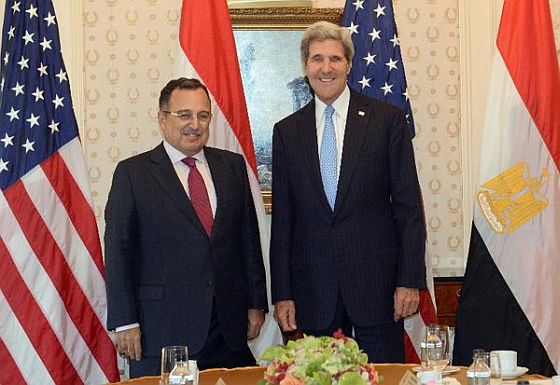
Egypt's Foreign Minister Fahmy meets with U.S. Secretary of State John Kerry in New York, September 22, 2013

Egypt's Foreign Minister Fahmy meets with U.S. Secretary of State Kerry in New York, September 22, 2013

“Things are moving forward in Egypt,” is the message officials are taking to the UN this week. Egypt’s rulers following the military coup in July want to placate Washington’s nominal concerns about democracy with this assurance:

Events for the most part are on the right track in Egypt, despite inevitable hiccups; the state is committed to a transitional process that will result in a referendum on an amended – and hopefully less controversial – constitution, and a full democratic process will be pursued.

Having ousted President Mohamed Morsi, killed hundreds of members of the Muslim Brotherhood and imprisoned thousands more, the effort to destroy the movement shows few signs of restraint.

“The plan is to drain the sources of funding, break the joints of the group, and the dismantle podiums from which they deliver their message,” a senior Egyptian security official tells Associated Press, using language reminiscent of then defense minister Yitzhak Rabin’s “broken bones” campaign as Israel attempted to crush the first Palestinian intifada.

Reuters reports: Murad Ali says he was put in a foul-smelling cell on death row, sleeping on a concrete floor, and denied light and human contact after his arrest in Egypt’s crackdown on the Muslim Brotherhood. “It was as dark as a grave,” he wrote in a letter addressed to friends and family and seen by Reuters.

The army-backed authorities deny claims Brotherhood leaders have been mistreated, and there is no way to independently verify such accounts; but people who have spoken to them in jail say some have been kept in similar conditions for days on end.

Their relatives describe it as a bid to break their spirit – a measure of the severity of the campaign against the group that was swept from power by the military on July 3, when Mohamed Mursi, a Brotherhood member, was deposed.

Analysts say it points to a state effort to weaken the Brotherhood by decapitating it. The movement says it has up to one million members and it is one of the most influential Islamist groups in the Middle East.

The New York Times reports: An Egyptian court on Monday issued an injunction dissolving the Muslim Brotherhood and confiscating its assets, escalating a broad crackdown on the group less than three months since the military ousted its ally, President Mohamed Morsi.

The ruling, by the Cairo Court for Urgent Matters, amounts to a preliminary injunction shutting down the Brotherhood until a higher court renders a more permanent verdict. The leftist party Tagammu had sought the immediate action, accusing the Brotherhood of “terrorism” and of exploiting religion for political gain. The court ordered the Brotherhood’s assets to be held in trust until a final decision.

If confirmed, the ban on the Brotherhood — Egypt’s mainstream Islamist group — would further diminish hopes of the new government’s fulfilling its promise to restart a democratic political process that would include Mr. Morsi’s Islamist supporters. For now, though, it effectively formalizes the suppression of the Brotherhood that is already well under way.

Since Mr. Morsi’s ouster, the new government appointed by Gen. Abdul-Fattah el-Sisi has killed more than 1,000 Brotherhood members in mass shootings at protests against the takeover and arrested thousands more, including almost all of the group’s leaders. Security services have closed offices of the group and its political party in cities around the country. Members are now sometimes afraid to speak publicly by name for fear of reprisals.

Abdullah Al-Arian writes: The military’s intervention reflects a longstanding desire among elements of the former regime to rid Egypt of its revolutionary movement and destroy any progress toward the establishment of democratic institutions.

If those intentions were not obvious in their posturing before July 3, they have certainly become clear since then. In the six-week long crisis that followed, there was no genuine attempt by the military-appointed interim government to resolve the situation in a manner that would allow Egypt to remain on the revolutionary track or even to avoid unnecessary bloodshed. The total war strategy employed against the Muslim Brotherhood and its supporters was meant to emulate the repression of prior eras, but on an even wider scale, due to the perception of widespread public support for this move.

Staying true to form as a movement with strong internal discipline and the capacity to mobilize, the Muslim Brotherhood employed the only means at its disposal, a non-violent mass protest, to oppose the clear attempts to overturn its democratic gains and destroy its presence in society for the foreseeable future. In fact, the Rabaa protests took the group’s leadership back to a place with which it is all too intimately familiar, the perpetual victimhood upon which it has built its eight-decade legacy. Far from the challenges of governance, the anti-coup protests recalled the common theme of standing up to tyranny and repression that marked the Muslim Brotherhood’s experiences under successive authoritarian rulers.

The military’s disproportionate response to the protests, unprecedented in Egypt’s modern history, reflects an attempt to establish a new political and social order that would not only marginalize the Muslim Brotherhood, but would destroy it altogether. The wholesale adoption of the “war on terror” discourse by the state and its media arm is not only intended to make the alarmingly high number of casualties seem justifiable. As with the Bush era policy of the same name, this paradigm is meant to convince those watching from the sidelines that the Islamic activist impulse that has been part and parcel of Egyptian society for a century could conceivably be eradicated.

The muted response from the liberal, leftist, and progressive currents within society suggest that this tactic has worked, with most groups hoping that the wave of violent repression is not indicative of a wider trend aimed at rolling back the gains of the revolution. Beyond wishful thinking, however, there is little to challenge the notion that the counter-revolution is in full swing.

Wishful thinking is in evidence today with the creation of a new anti-Brotherhood and anti-military group called the The Way of the Revolution Front (Facebook).

Facebooktwittermail

Mint Press and Dale Gavlak under threat from mysterious ‘third parties’?

No one is safe — not even in Minnesota — from the long arm of Saudi intelligence.

Publish something that offends Prince Bandar bin Sultan and your career might be destroyed, perhaps even your life will be in danger — at least that’s the picture currently be conjured up by Mnar Muhawesh, executive director and editor at large for MintPress News. No doubt these fears resonate with all those lonely individuals who have taken it upon themselves to challenge the political establishment in the United States and the Middle East.

However, whether Mint Press and one of its reporters, Dale Gavlak, have indeed provoked Prince Bandar’s wrath by alleging his involvement in the August chemical attacks outside Damascus, he probably doesn’t need to take any action since the publication and journalist are doing a very effective job at destroying each other.

But let’s backtrack a bit and let Clay Claiborne, in colorful style, sum up how we reached this point:

For three days after the sarin gas attack that murdered over a thousand Syrians, a third of them children, in suburban Damascus on 21 August 2013, the Assad Regime denied that any such attack had even happened. As the videos and eyewitness reports began to come out, that position became untenable, so the Assad Regime started saying “Well then, the rebels must have done it.”

The Left and the Peace and Just Us* movement in the United States is so thoroughly infiltrated with Assad apologists, and other opportunists more comfortable in blindfolds, that many readily jumped on this “blame the victims, let Assad off the hook” bandwagon.

I find what these people have been doing, marching under the flag of the fascist dictator and embellishing his trash, despicable.

One of the more popular theories of how the opposition gassed its own people was a story published by Mint Press. This story, in addition to absolving Assad of any responsibility for the attack and putting the blame squarely with the rebels, had many elements in common with the sort of racist saga were the bungling, stupid [sand] niggers, acting at the behest of some rich white Jew, in this case played by the Saudi Prince Bandar, ends up doing themselves in by a stupid accident.

Dale Gavlak’s name appeared in the byline for that story, but she is currently engaged in a legal fight to have her name removed. She tells the New York Times, that MintPress has “refused ‘repeated demands’ to remove her byline from the article and that she has now retained a lawyer to press her case.”

Earlier, Gavlak issued a statement saying:

I did not travel to Syria, have any discussions with Syrian rebels, or do any other reporting on which the article is based. The article is not based on my personal observations and should not be given credence based on my journalistic reputation.

But now Muhawesh has responded:

Gavlak pitched this story to MintPress on August 28th and informed her editors and myself that her colleague Yahya Ababneh [whose name appears after Gavlak’s on the byline] was on the ground in Syria. She said Ababneh conducted interviews with rebels, their family members, Ghouta residents and doctors that informed him through various interviews that the Saudis had supplied the rebels with chemical weapons and that rebel fighters handled the weapons improperly setting off the explosions.

When Yahya had returned and shared the information with her, she stated that she confirmed with several colleagues and Jordanian government officials that the Saudis have been supplying rebels with chemical weapons, but as her email states, she says they refused to go on the record.

Gavlak wrote the article in it’s entirety as well as conducted the research. She filed her article on August 29th and was published on the same day.

Dale is under mounting pressure for writing this article by third parties. She notified MintPress editors and myself on August 30th and 31st via email and phone call, that third parties were placing immense amounts of pressure on her over the article and were threatening to end her career over it. She went on to tell us that she believes this third party was under pressure from the head of the Saudi Intelligence Prince Bandar himself, who is alleged in the article of supplying the rebels with chemical weapons.

One of the principle websites which helped bring widespread attention to the original MintPress story was Antiwar.com. They have now issued a “Retraction and Apology to Our Readers for Mint Press Article on Syria Gas Attack.”

The staff of Antiwar.com sincerely and deeply apologizes for being a part of spreading this article. We also apologize to Dale Gavlak.

Gavlak’s disavowal of the story is somewhat undermined by an email she sent to MintPress on August 29 and which she shared with Brown Moses Blog:

Pls find the Syria story I mentioned uploaded on Google Docs. This should go under Yahya Ababneh’s byline. I helped him write up his story but he should get all the credit for this.

The New York Times adds:

The dispute over the article has caused even some contributors to MintPress to ask questions about its mission and how it is financed. Steve Horn, an investigative reporter based in Madison, Wis., said in an e-mail that he has decided to cut ties to the news site as a result of Ms. Gavlak’s objections to how her name was used. “I departed because I feel I was misled about the credibility of the article — which I trusted largely because Dale’s name was on it — and because of that, I no longer feel it’s a credible outlet. Frankly, I’m not sure it ever was.”

The thing to not lose sight of here, is that the MintPress story at the center of this fight contained nothing more than rumors.

Rumors can turn out to be true if they lead to an investigation that reveals substantive facts. But this has been the feature of the rebel-instigated-chemical-attack narrative from beginning to end — it has been propelled and propagated without any credible supporting evidence. Moreover, those pushing the narrative have shown an unconscionable lack of interest in evidence, allowing themselves to become enslaved to their own ideological convictions.

Facebooktwittermail

Nuclear madness

An obsession that has shaped much of foreign policy formulation in Washington over the last decade has been the drive to prevent a nuclear ‘catastrophe’ — that being the world-destablizing effect of Iran acquiring nuclear weapons.

What makes this obsession farcical, disingenuous, and dangerous is that the individuals at the vanguard of this effort possess large arsenals of nuclear weapons. We are being told that we should worry much more about a nuclear threat than a nuclear reality.

There is a certain parallel with the gun lovers’ argument that guns don’t kill people — people kill people. Similarly, there is a far greater fear of who might control nuclear weapons than the weapons themselves.

One of several indications that we continue to live in the nuclear age with a large measure of comfort is the frequency with which these weapons of massive destruction are referred to as nukes. Like all nicknames, nuke evokes a sense of familiarity; a notion that the danger such weapons pose is so remote that they should provoke little fear — unless, that is, they were to fall into the wrong hands.

There are currently 10,000 nuclear weapons scattered around the globe and of these, around 1,800 are ready to be launched in between 5 to 15 minutes. The fact that none of these have been intentionally or accidentally detonated fosters the illusion that we have little to worry about — that an issue that few people concern themselves with need be of little concern because the people who are in charge of these weapons have created fool-proof systems of command and control, making accidents impossible.

The writer Eric Schlosser points out, however: “The people for whom this is still a threat, the people who are most anti-nuclear, the people who are most afraid about this, are the ones who know most about it.”

Schlosser is author of the newly released Command and Control, whose publication coincides with yesterday’s “exclusive” in The Guardian on a secret document, revealing how close America came to a catastrophic nuclear accident in 1961 when a Mark 39 hydrogen bomb almost exploded in North Carolina on January 23, 1961.

Ed Pilkington writes: When he started on his nuclear researches, Schlosser conceived the book as something contained and compact. It would be the tale of one of the most serious accidents in the nuclear age, when, in September 1980, a Titan II missile, similar to the one he had witnessed taking off from Vandenberg [in 1999], exploded in its silo in Arkansas following routine repair work that turned bad. The missile was carrying a thermonuclear warheadwith a yield 600 times that of “Little Boy”, the bomb dropped over Hiroshima. The warhead was blasted hundreds of meters into a ditch, but failed to detonate.

As he started digging his way down into the rabbit hole, he began stumbling on other examples of mistakes and near-misses. One led to another until he found himself sitting on a mushroom cloud of disturbing nuclear accidents. When he requested under the Freedom of Information Act the release of an official record of all the incidents that had befallen the American nuclear arsenal in the 10 years to 1967, he was astounded to find it extending to 245 pages.

The stories he came across suggest that nothing but a miracle has prevented an accidental Hiroshima or Nagasaki taking place on US soil. In 1958 a Mark 6 atom bomb was accidentally dropped into the backyard of the Gregg family in Mars Bluff, South Carolina. Three years later, two hydrogen bombs, with a combined power of more than 500 Hiroshimas, were accidentally dropped over North Carolina after a B-52 broke up in mid air. Neither bomb detonated when they landed in a meadow, but a later secret investigation concluded that in the case of one of the devices only a single low-voltage switch stood between the US and catastrophe. In 1966 a hydrogen bomb was dropped inadvertently over the coast of Spain, also from a stricken B-52; it took six weeks of intensive searching before it was found and retrieved from the ocean bed.

As the mass of detail piles up, an important lesson emerges from the book. The way Schlosser explains it to me is that “our ability to create dangerous things exceeds our ability to control them. We are talking about hubris – our lack of understanding of our own flaws and lack of humility in the way we approach technology.”

Facebooktwittermail

Mint Press, Dale Gavlak, and alternative narratives around the August 21 chemical weapons attacks

For some people, antipathy for and suspicion of the U.S. government is so visceral that their immediate inclination is to believe the opposite of anything a U.S. official might claim.

Since the U.S. was quick to assert that the Assad regime must have been responsible for the August 21 chemical attacks, a knee-jerk reaction was to counter that the attack must have been carried out by rebels in an effort to trigger Western intervention.

This theory still has life even as it becomes increasingly evident that by happenstance or design, Bashar al Assad has been the preeminent beneficiary of the latest turn of events in Syria.

From the outset, this was a theory desperately in need of supporting facts and thus an August 29 report published by Mint Press News was quickly seized upon, among other reasons because included in the byline was the name Dale Gavlak, who has freelanced for the Associated Press.

A few days after the report appeared, the following note was added at the top of the report:

Dale Gavlak assisted in the research and writing process of this article, but was not on the ground in Syria. Reporter Yahya Ababneh, with whom the report was written in collaboration, was the correspondent on the ground in Ghouta who spoke directly with the rebels, their family members, victims of the chemical weapons attacks and local residents.

Gavlak is a MintPress News Middle East correspondent who has been freelancing for the AP as a Amman, Jordan correspondent for nearly a decade. This report is not an Associated Press article; rather it is exclusive to MintPress News.

She has now made it known that on August 29 when she filed the report she also wrote an email which said: “Pls find the Syria story I mentioned uploaded on Google Docs. This should go under Yahya Ababneh’s byline. I helped him write up his story but he should get all the credit for this.”

She didn’t want the byline but she did believe the report deserved credit.

She has now issued the following statement which appears at Brown Moses Blog:

Mint Press News incorrectly used my byline for an article it published on August 29, 2013 alleging chemical weapons usage by Syrian rebels. Despite my repeated requests, made directly and through legal counsel, they have not been willing to issue a retraction stating that I was not the author. Yahya Ababneh is the sole reporter and author of the Mint Press News piece. To date, Mint Press News has refused to act professionally or honestly in regards to disclosing the actual authorship and sources for this story.

I did not travel to Syria, have any discussions with Syrian rebels, or do any other reporting on which the article is based. The article is not based on my personal observations and should not be given credence based on my journalistic reputation. Also, it is false and misleading to attribute comments made in the story as if they were my own statements.

In a word, Gavlak wants to have nothing to do with the story.

It’s not hard to figure out why she now finds this an embarrassment. What’s harder to explain is why she filed the story in the first place.

Facebooktwittermail

The American psyche can be easily manipulated

The “American psyche can be easily manipulated” Sheherazad Jaafari – a press attache at Syria’s mission to the UN – advised an aide to the Syrian president prior to Barbara Walters’ interview with Bashar al-Assad in late 2011. That observation remains just as true now as it was then.

If America’s war on terrorism has turned out to be an abysmal failure in terms of eradicating terrorism, it has nevertheless been extraordinarily successful as an exercise in brainwashing a whole nation. Americans believe in terrorism with close to the same conviction that they believe in God.

“Terrorism” and “terrorist” are absolute terms. There might be small-time crooks but there are no small-time terrorists. The terrorist has become the archetype of evil whose power is treated as almost metaphysical — a threat to whole nations and to a way of life.

Whatever PR advice Assad received early on, it was sound, he took it to heart, and he has remained “on message” even while his international political opponents have become increasingly incoherent.

Assad’s fight is the good fight; the fight that virtually no American dare question: the fight against terrorism.

In Assad’s interview with Fox News which aired last night he said that “80 to 90% of the rebels or terrorists on the ground are Al Qaeda and their offshoots.”

A statement from Michael Clemente, executive vice president of news at Fox News, said that the interview “was conducted with no restrictions on the questions that could be asked,” yet neither Fox contributor Dennis Kucinich nor Senior Foreign Affairs Correspondent Greg Palkot, made any serious attempt to question Assad’s assertion.

They could for instance have pointed out that in a conflict that now involves an estimated 1,000 armed groups, the expressions “rebels,” “terrorists,” and “al Qaeda and their offshoots” grossly over-simplify a complex environment. Moreover, within that array of 100,000 fighters only 10% are believed to be linked to al Qaeada.

Islamic State in Iraq and Syria (ISIS), with its historical ties to the infamous Abu Musab al-Zarqawi, and Jabhat al-Nusra have both been branded terrorist organizations and al Qaeda affiliates yet in Syria are operating as rivals. Furthermore, the complexity of that rivalry is open to differing interpretations even by close observers.

Mohammed Al Attar writes:

Some tend to the view that there is no great difference between the two, with both functioning as two extremist arms of a main body that is Al Qaeda. Others believe that open confrontation between the two is on its way, driven by a dispute over approach and vision and, moreover, over legitimacy of representation. People tell the story of an Al Raqqa-born Front commander called Abu Saad who joined ISIS in the wake of the dispute between the two groups, after Al Nusra leader Abu Mohammed Al Jolani refused to swear an oath of loyalty to Abu Bakr Al Baghdadi. Within months, Abu Saad and a group of mujahideen split from ISIS and re-joined the Al Nusra Front in Al Tabaqa. We heard a number of similar stories in the countryside around Idlib and Aleppo of this reverse migration of fighters from ISIS to the Al Nusra Front. Some attribute this to the predominantly Syrian make-up of Al Nusra as opposed to ISIS, while others talk of the revulsion felt by certain mujahideen towards the excessively extreme and uncompromising practices of ISIS. None of this equips us to make a precise measurement of the numbers and strength of the two groups, but it points to a constant movement between them.

Is there any chance that this kind of analysis might be incorporated into an interview with Assad on Fox News? No way!

Assad knows without doubt that with American journalists and in front of an American audience, the terrorism narrative works. Use the label terrorist and supposedly few other details are necessary.

The terrorism narrative also works in the sense that it has effectively shut down intelligent political discourse on the issue inside the United States.

I don’t think that Dennis Kucinich is stupid or utterly naive and he is surely in no doubt that Assad uses the term terrorist as a label of political convenience to vilify his opponents, yet would the former Congressman be bold enough to challenge Assad by referring to “so-called” terrorists? Not likely. Why? Because if anyone on the left talks about “so-called” terrorists, they will swiftly get jumped on for being soft on terrorism. At the same time, someone like Charles Krauthammer, a bona fide neoconservative and general-purpose supporter of American wars, can freely scoff at Assad’s assertions and refer to “so-called” terrorists confident that he is not going to be accused of being soft on terrorism. The American right, having taken full ownership of the terrorism discourse can speak freely, while the left needs to perpetually monitor itself and polish its national security credibility.

Meanwhile, as Assad takes advantage of easy access to a U.S. media short on analysis, witness the contrast between the deferential treatment being offered to a president who has sanctioned mass killing, versus the zealous denouncing of a 26-year old Syria analyst who is guilty of having padded out her résumé and been less than forthright about some of her affiliations.

I refer to Elizabeth O’Bagy, the analyst cited by Secretary of State John Kerry when he asserted in Congress that the majority of Syria’s rebels are “moderates” — an analyst who it turns out does not possess a doctorate. Alongside working for Washington’s Institute for the Study of War, she also worked for the Syrian Emergency Task Force, “which both lobbies in Washington for the moderate Syrian opposition and does humanitarian work inside Syria,” reports Time.

Those vilifying O’Bagy see her as an easy target because the actions she has been faulted for cannot be easily defended, yet these attacks also, and not incidentally, sidestep the issue of the credibility of her analysis of the Syrian opposition.

It’s as though her lack of a PhD reveals much more about her knowledge of Syria than her six trips to rebel-controlled territory taught her. The fact that she can speak Arabic apparently matters much less than that she was hired by the Syrian Emergency Task Force. And to cap it all, she’s 26 — as though we can overlook the fact that plenty of similarly youthful reporters do not have their journalism dismissed on the basis of their age.

O’Bagy’s critics expose their superficiality and hypocrisy by glossing over the precise basis of her expertise which derived from neither academic credentials nor institutional affiliations but the very thing that hardly anyone in Washington possesses when it comes to Syria: on-the-ground experience.

Facebooktwittermail

On smoking guns and false flags

Ever since August 21 there has been a proliferation of rumors among what I dub the false flag brigade, supporting the view that whatever happened in the suburbs of Damascus that day had nothing to do with the Assad regime. “The event” whose nature is still being disputed was supposedly an attempt to trigger Western military intervention in Syria for the purpose of bringing down the regime.

The many videos of the dead and dying made it hard to dispute that something catastrophic had occurred. Initial reports that the areas in which the dead were concentrated had come under rocket attack from Syrian government forces and that rockets were landing without exploding — a signature of chemical weapons whose toxicity would be degraded by a large explosion — were countered with vague stories about rebels having released the chemicals in a false flag operation.

Some stories involved the use of improvised rockets (which turned out not to be rockets “Hell Cannons“) while others claimed the chemicals had been released from weapons that had been transported into the target areas and then handled improperly.

One of the most significant features of the alternative theories on the chemical attack was that none appear to have promoted the most plausible explanation on how rebels could have used chemical weapons: that they were using weapons captured from government stockpiles.

For narrative purposes, there were two problems in suggesting that rebels were using such weapons. Firstly, that would require an admission that the government possesses such weapons — an admission that many anti-interventionists are unwilling to make. But secondly, and more importantly, to suggest that chemical weapons have fallen into the hands of rebels is to conjure up a scenario that it has long been stated by the U.S. government would trigger a necessity for military intervention, including the use of ground forces.

Having said that, during the period between the attacks and the release of the UN report investigating the use of chemical weapons, there has been no physical evidence discovered that lends weight to any alternative explanation. And since no convincing alternative has emerged, those who resist the assertion that the regime launched the attacks have increasingly simply voiced skepticism about the evidence supporting the widely accepted interpretation of what happened.

Given that there are multiple sources of evidence showing the distinctive design of the type of rocket used in the attack (a design shown in the UN report), the regime and those who currently want to portray it as a victim of false accusations would at this point be best served by evidence showing the same type of rocket being used by rebels.

Lo and behold, a LiveLeak account created on September 16 has provided all the requirements — smoking guns, gas masks, glimpses of what look like the same kind of rocket and “jihadists” who have helpfully attached flags to their howitzer identifying their militia. Brown Moses Blog has subsequently posted the videos on YouTube.

Eliot Higgins writes: The men in the video claim to be Liwa al-Islam, and the many flags in the video are also marked Liwa al-Islam. In the videos they are shown to launch the same unusual munitions (I’ve dubbed UMLACAs) used in the August 21st sarin attack.

Obviously, this is meant to be proof that Liwa al-Islam were responsible for the August 21st attack, but there’s a lot about it that seems dubious.

First of all the video quality is awful, so it’s very difficult to make out a lot of details. It’s also rather odd it’s so dark when August 21st was a full moon, and there’s no lights in the city visible. Apart from that, there’s three things the videos seem designed to really push, that the UMLACAs are being used, it’s August 21st (repeated on each of the videos), and it’s Liwa al-Islam. They don’t just say they are Liwa al-Islam, but everything is draped in Islamic black standards with Liwa al-Islam written on it.

A look though YouTube channels used by Liwa al-Islam, here and here, doesn’t seem to show videos where they’ve draped black flags over the weapons they are using, as seen in these new videos, and the new videos also don’t appear to have the Liwa al-Islam logo anywhere, which they do seem to like plastering all over their equipment. It’s also a bit odd they’d cover everything with the logo, yet film it using such a poor quality camera.

After the August 21 attacks, let’s just imagine that a team in Syrian government intelligence was assigned the task of producing “evidence” which could be circulated on social media that would support the claims that the attacks had been carried out by Assad’s opponents. What would the “evidence” need to contain?

1. Clearly identifiable culprits: The LiveLeak videos are labelled “Syrian terrorists.August 21” and prominently display Liwa al-Islam flags.
2. Elements that will signal to non-experts that chemical weapons are involved: The men in the videos are wearing gas masks.
3. Recognizable munitions: Even while most of what’s happening in the videos is shrouded in darkness, there are multiple shots of what look like the rocket sections of what Higgins has called UMLACAs.

How difficult would it be for the regime to pull this off? Not very difficult.

If these videos are not Syrian government propaganda or do in fact indicate that chemical weapons have fallen into the hands of opposition fighters, the regime now has a problem.

With Russia’s support it is now pursuing a political strategy that hinges on its ability to secure and destroy its chemical weapons stockpiles. An ongoing visible demonstration of this commitment will serve as a kind of insurance policy that makes Assad’s continued rule an unpalatable yet a seeming necessity in the eyes of the Obama administration.

If, however, Syria lacks this ability, then sooner or later chemical weapons are very likely to be used again. At that time, the regime will be accused of either have reneged on its commitment to abandon its chemical weapons arsenal, or, to have lost control. Either way, the regime will no longer be viewed as indispensable.

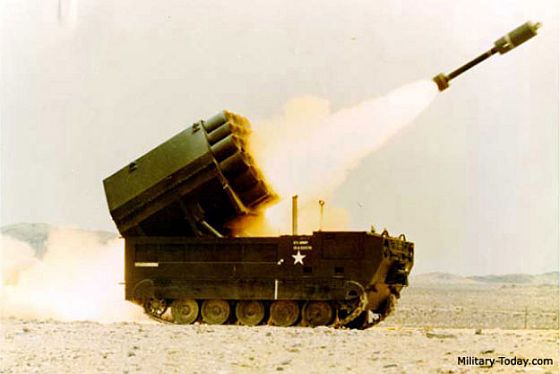
Footnote: I missed this when it appeared in Foreign Policy three weeks ago, but it looks like Syria’s “unique” chemical weapons munitions were actually modeled on an American design.

American Surface Launch Unit-Fuel Air Explosive from the 1970s.

American Surface Launch Unit-Fuel Air Explosive from the 1970s.

Facebooktwittermail

Another day, another massacre

Whatever else anyone wants to say about yesterday’s shooting spree by Navy veteran Aaron Alexis in Washington yesterday, the event was as American as apple pie.

Information somehow deemed of relevance to his killing of 12 people, ranges from the ridiculous — he was having difficulty finding parking spaces (which is not to minimize the frustration that can cause) — to the ridiculously obscure — he had “an abiding interest in Buddhism and Thai culture”.

And why, pray tell, did a New York Times reporter give greater prominence to Alexis’ interest in Buddhism, than to his PTSD?

[A construction manager] said he was in New York during the Sept. 11 attacks, and described to a detective “how those events had disturbed him,” according to the detective’s report. His father told investigators that Mr. Alexis had problems associated with post-traumatic stress disorder, and had been an “active participant” in rescue attempts on Sept. 11.

A 9/11 survivor with PTSD — that might be of more relevance than the parking situation or the interest in Buddhism.

Above all, the most blindingly obvious fact about the case is that whatever gave rise to the troubles inside Alexis’ mind — and I don’t think we need the findings of any investigation to conclude that he did indeed have a troubled mind — the vehicle that translated his cognitive state into a physical reality was a gun.

In other countries there are just as many people with just as deeply troubled minds, but outside America it’s much less common that the bridge between extreme emotions and the world is a lethal weapon.

Killing people is the way some Americans talk. Guns give them a voice. The message is banal — bang, you’re dead — yet it’s America’s mantra from Washington to Hollywood.

MedStar Washington Hospital Center Chief Medical Officer Janis Orlowski made this plea for an end to gun violence:

“Let’s get rid of this. This is not America. This is not Washington D.C. This is not good. So we have got to work to get rid of this.”

But this is America and it is Washington DC. Nothing can change without confronting reality and there is no question that gun violence is part of the American way of life.

Moreover, the gun in the hand of the individual mirrors the violent power of the nation.

Michael Vlahos writes:

We are Americans, and Americans are by definition, exceptional, because we are chosen. No one else: Not ancien monarchs and sultans, not Victorian prime ministers and les présidents, can go forth among humanity today and lay waste to the wicked. Only we Americans are entitled to do so, declaring all the while the unimpeachable righteousness of what we do.

But behind this love of violent power and this insistence on being exceptional, is a shadow — a gnawing sense of inferiority: that minus its guns and minus its exceptionalism America might be looked down upon.

At heart, America is troubled by an abiding fear of the world.

Facebooktwittermail

Earth is our home — not our ‘cocoon’

Scientists at NASA are justifiably thrilled that Voyager 1, the space probe which was launched in 1977, has been confirmed to have entered interstellar space, having continued on its million-miles-per-day journey taking it beyond the heliosphere, the bubble of charged particles in the space surrounding the Solar System.

Over the last 36 years, Voyager has traveled about 12 billion miles away from the Sun. Announcing the latest milestone in a mission that has continued far longer than anyone expected, John Grunsfeld, NASA’s associate administrator of science missions, said: “Someday humans will leave our cocoon in the solar system to explore beyond our home system. Voyager will have led the way.”

Befitting that sentiment, the theme from the original Star Trek TV show was played in the background at NASA’s Jet Propulsion Laboratory. I say sentiment in the hope that “someday” was supposed to signal that Grunsfeld was indulging in a childish fantasy and not making a prediction. But although I hope he didn’t mean to be taken seriously, I fear that he and his colleagues really do believe that someday human beings will venture beyond the Solar System.

Such a journey would face all sorts of technical challenges and also ethical ones. It would require the creation of space-travel human slaves. This being a multi-generational journey from which no one would return would require the initial crew to reproduce, raising children whose mission in life had been determined at conception — children who never dreamed of becoming astronauts but were simply given no other choice.

No doubt when Voyager 1 was launched, many of the NASA scientists involved in its creation were convinced that by now, in their advanced age, they would be enjoying the Jetson lifestyle and have grandchildren who were busy colonizing the Moon.

While human life and life on this planet are inextricably bound together, the visions of space travel that we have been encouraged to entertain for much of the last century, have in many ways poisoned the modern imagination.

They do so by fostering the idea that life beyond Earth would be an advance from life on Earth. Worst of all, they conjure up the possibility that if we really screw things up down here, we might find some better alternative some place else.

In reality, if it turns out that the evolutionary path which led to Homo Sapiens proves to be a dead end — due to our insatiable appetites and destructive capacities — it won’t just mean the end of humanity but also the end of life for many other species. Indeed, our “success” has already spelled doom for thousands of species that might otherwise have thrived.

Someday, the one and only human adventure into interstellar space may be a quest to recover the Golden Record on Voyager. Human culture and much of life having been wiped out, the last hope of salvaging humanity will rest in a record no one will be able to play.

If, however, in the detritus of human civilization one turntable survives, our forebears may get a chance to listen to Blind Willie Johnson sing “Dark Was the Night, Cold Was the Ground” as they ponder: what the hell were those guys from NASA thinking?

Facebooktwittermail

The problem with conspiracy theories

For an elite — be it a monarchy, an aristocracy, a military regime, or a government — to exercise and sustain its power, its power needs to operate largely unquestioned. A population will acquiesce to the dictates of a ruling power for only so long as most people believe they possess less power than their rulers. Otherwise, why would the many consent to being controlled by the few?

For this reason, the propagators of conspiracy theories, while presenting themselves as political rebels who by “exposing the truth” challenge the power of the state, actually have the opposite effect. They breed political apathy, presenting state power as so pervasive and so absolute in its control over the affairs of the world, that protest can never actually rise above symbolic acts of defiance. Alex Jones can engage in the political theater of alerting the world to the supposedly nefarious deliberations of the Bilderberg meetings, but the global elite continues refining and implementing its diabolical plans — because that’s what global elites do.

I grew up in a country that used to be occupied by an imperial power, that country being Britain and the power being the Roman Empire. Close to what later became the border between England and Scotland, the Roman Emperor Hadrian built a wall to “separate the Romans from the barbarians.” It’s not the most imposing of walls — nothing in comparison to the Great Wall of China — and since the Romans had succeeded in taking control of large swaths of Europe, one wonders, what kind of threat could the Picts, the “barbarian” tribesmen north of the wall, possibly pose to Rome’s military might?

Recent excavations on both sides of the wall have revealed the existence of stable native settlements suggesting that day-to-day life was relatively peaceful both to the south and north. The wall’s purpose may have been much more symbolic than defensive. Having occupied an island, the Romans may have built the wall, purely for the sake of creating a border.

Then as now, borders act as constant reminders that our freedoms are circumscribed by governments. Hadrian’s Wall may have served no other purpose than showing the natives who was in charge by controlling when gates would be opened or closed and carefully monitoring who passed through them.

States still cling just as strongly to the symbols of power — symbols that communicate: we’re in charge.

This is why terrorism poses a threat. Terrorists have negligible military strength — the power they wield is by casting doubt on power and making governments appear ineffectual. Counter-terrorism thus mirrors terrorism itself in as much as it attempts to reinvigorate the symbols of power and make losses of control appear momentary.

The underlying reality upon which neither terrorists nor governments nor conspiracy theorists want to cast light is the degree to which no one is control.

This week we witnessed one of those rare occasions when the veil suddenly falls away and politics as a sometimes farcical exercise in make-believe, suddenly becomes transparent.

On Monday, CBS News correspondent Margaret Brennan, asked Secretary of State John Kerry: “Is there anything at this point that his [Assad’s] government could do or offer that would stop an attack?”

We all now know how Kerry responded and the unintended sequence of events that followed.

Somewhere, there may be a few conspiracy theorists who even at this moment still cling to some notion that a master plan is being enacted — that Brennan’s question was planted; that we are witnessing another ruse. But she isn’t a dumb reporter. She has degrees in foreign affairs and Middle East studies, has studied Arabic and reported from across the region. The question she posed needed asking and no doubt it could have been posed by others, yet Kerry’s offhand response made it clear that this was not a question for which he had a prepared answer. Nor did he have any sense about where his answer might rapidly lead.

The fact that Kerry’s faux proposal, after having been dismissed by the State Department, would then be seized on first by the Russians, then the Syrians, and then the White House, revealed the completely opportunistic way in which each player was operating.

If Brennan’s question had really been planted, it must have been planted by a secret Russian-Syrian-American cabal — and that being the mother of all conspiracies, I guess we’d better include the Israelis.

In reality, no one could have predicted that Kerry would have taken Brennan’s question. He could have turned to someone else and now instead of debating the likelihood that a plan to decommission Syria’s chemical weapons can be agreed upon and carried out, we might instead be considering the political consequences of Obama soon facing a defeat in Congress.

Such is life, stitched together by adventitious events which form the twists and turns of the unexpected. Things happen and we call them opportunities, frustrations, and disappointments. We plot a course, stay on course, veer off course; purpose sometimes seeming crystal clear while at others shimmering like a mirage. All the while we hope that in the grander scheme of things there must be some design and yet periodically we get stabbed by a sense there might be none.

Facebooktwittermail

Why Syria was so quick to support the chemical weapons deal

“Syria said it would cease production of chemical weapons and disclose the locations of its stockpiles to the United Nations, Russia and others, as Damascus seized on a possible diplomatic route to avert international military action,” the Wall Street Journal reported today.

The first half of that sentence is factual and the second half is interpretative. The media and others have been so quick to assume that the Assad regime’s swiftness in responding positively to Russia’s initiative is an expression of fear — that it serves as a demonstration of the effectiveness of the threat of force — few have paused to consider an alternative motivation: that giving up chemical weapons may ensure Bashar al-Assad’s survival and ultimate victory.

One thing about which no one should be in any doubt is that the Syrian government understands better than anyone else does, what would be involved in destroying its chemical weapons stockpiles. For them, this isn’t an abstract proposition.

Syria’s agreement to give up its chemical weapons will likely mean its acceptance of an undertaking that may take as long as a decade to complete, says Cheryl Rofer, who supervised a team destroying chemical warfare agents at Los Alamos.

The only people with the technical skills to carry this out are the U.S. and Russian militaries. Teams assigned with this task would have to operate with the protection of the Syrian army. The only way of ensuring that the operation could successfully be completed and that chemical weapons could be prevented from falling into the hands of opposition militias would be for Assad to remain in power. The United States and Russia would in effect become the guarantors of Assad’s continuing rule.

Moreover, even if a deal is finalized and all the relevant governments sign on, due to continuing fighting it might be months or years before its implementation even begins.

No wonder Damascus has been so quick to seize this opportunity.

Foreign Policy reports: Russia’s proposal for Syrian President Bashar al-Assad to place his chemical weapons under international supervision and then destroy them is quickly gaining steam. Assad’s government accepted the plan this morning. A few hours later, President Obama, British Prime Minister David Cameron and French President Francois Hollande announced that they’d seriously explore the proposal. It already has the backing of United Nations Secretary General Ban Ki-moon and a growing number of influential lawmakers from both parties. There’s just one problem: the plan would be nearly impossible to actually carry out.

Experts in chemical weapons disposal point to a host of challenges. Taking control of Assad’s enormous stores of the munitions would be difficult to do in the midst of a brutal civil war. Dozens of new facilities for destroying the weapons would have to be built from scratch or brought into the country from the U.S., and completing the job would potentially take a decade or more. The work itself would need to be done by specially-trained military personnel or contractors. Guess which country has most of those troops and civilian experts? If you said the U.S., you’d be right.

“This isn’t simply burning the leaves in your backyard,” said Mike Kuhlman, the chief scientist for national security at Battelle, a company that has been involved in chemical weapons disposal work at several sites in the U.S. “It’s not something you do overnight, it’s not easy, and it’s not cheap.”

The decades-long U.S. push to eliminate its own chemical weapons stockpiles illustrates the tough road ahead if Washington and Damascus come to a deal. The Army organization responsible for destroying America’s massive quantities of munitions says the effort will take two years longer than initially planned and cost $2 billion more than its last estimate. The delay means an effort that got underway in the 1990s will continue until roughly 2023 and ultimately cost approximately $35 billion. [Continue reading…]

Facebooktwittermail

White House joins effort to prevent U.S. from launching an attack on Syria

My headline might sound like it comes straight from the Onion but it’s a faithful rendering of the opening sentence in this report from the New York Times — the latest acrobatics from an administration that didn’t need the UN until it discovered it couldn’t manage without the UN:

The White House and a bipartisan group of senators joined the international diplomatic momentum on Tuesday to avert an American military attack on Syria over its use of chemical munitions in that country’s civil war, responding positively to a Russian proposal aimed at securing and destroying those weapons.

The group of senators, including some of President Obama’s biggest supporters and critics, were drafting an alternative Congressional resolution that would give the United Nations time to take control of the Syrian government’s arsenal of the internationally banned weapons.

If the alternative resolution gained political traction, it could stave off a Congressional vote — and possibly a debilitating defeat for the Obama administration — in the coming days on a more immediate resolution authorizing the use of force, which a majority of Americans appear to oppose. That resolution, approved by the Senate Foreign Relations Committee last week, had been losing ground in both parties in recent days. Passage appeared increasingly difficult in the House and possibly the Senate as well.

At the same time, a senior White House official said Tuesday that administration officials — who just last week had been dismissing the United Nations as ineffective in the Syrian conflict — had begun working with American allies at the United Nations to further explore the viability of the Russian plan, in which the international community would take control of the Syrian weapons stockpile.

“Debilitating defeat”? Enough with the euphemisms. Debilitating = humiliating.

So, Obama drove into a ditch and the Russians were kind enough to haul him out. The French were only too eager to cut themselves loose from a doomed project. The Assad regime possibly sees that it will end up a net winner by agreeing to give up its chemical weapons. And the international community can rally under the flag of the UN proud to have defended the conscience of the world in upholding the prohibition on the use of chemical weapons.

There’s just one small problem. There’s another party that will have to cooperate in this process — if it’s going to advance outside conference rooms — and that is the Syrian opposition.

Assad’s potential reward is that he can be confident that he will face no further threats from the U.S. — and perhaps he’ll gain even stronger support from Russia.

What’s in it for the opposition? Confidence that the next hundred thousand dead — just like the first hundred thousand — won’t be killed by chemical weapons?

A year ago U.S. officials were saying that 60,000 troops would be needed to secure Syria’s chemical weapons sites.

The United States ratified the Chemical Weapons Convention sixteen years ago and it still hasn’t completed the elimination of all its stockpiles.

Facebooktwittermail

Don’t bomb Syria — talk to Iran

When asked by a journalist this morning whether there was anything Bashar al-Assad could do to avert American military strikes, John Kerry answered: “Sure, he could turn over every single bit of his chemical weapons to the international community in the next week — turn it over, all of it, without delay and allow the full and total accounting. But he isn’t about to do it, and it can’t be done.”

To predict Syrian intransigence is one thing, but to suggest “it can’t be done” seems to imply that the Obama administration is so strongly committed to attacking Syria that it is now unwilling to consider any alternative. At the same time, this commitment is to what Kerry describes as “an unbelievably small, limited kind of effort.”

U.S. policy towards Syria as it is currently being articulated is a resolute commitment to engage in military action that will have no effect on the outcome of the war. Is this a policy? Or an affectation? Is this about sending a message or striking a pose?

Ten days ago, the Los Angeles Times reported:

One U.S. official who has been briefed on the options on Syria said he believed the White House would seek a level of intensity “just muscular enough not to get mocked” but not so devastating that it would prompt a response from Syrian allies Iran and Russia.

“They are looking at what is just enough to mean something, just enough to be more than symbolic,” he said.

It’s hardly any wonder that when the Chairman of the Joint Chiefs of Staff, Gen. Martin Dempsey, was asked in the Senate last week what the U.S. is seeking in Syria, he said: “I can’t answer that, what we’re seeking.”

President Obama and his accessories are treating this moment as a test of the conscience of the world. And now it appears even Russia and Syria are willing to participate in the charade.

Following Kerry’s offhand remark about what he regarded as a purely hypothetical situation, Russia seized on the opportunity. The Wall Street Journal reports:

Foreign Minister Sergei Lavrov of Russia, one of the strongest supporters of the Assad regime, urged Syria to comply with Mr. Kerry’s call.

“We are calling on the Syrian leadership not just to agree to put chemical-weapons stores under international control, but also to their subsequent destruction, as well as fully fledged accession to the Chemical Weapons Convention,” Mr. Lavrov said.

Syrian Foreign Minister Walid Moallem, in comments to reporters in Moscow, didn’t provide any specifics, other than to say that Syria welcomed the Russian proposal.

“The Syrian Arab republic welcomes the Russian initiative, motivated by the concerns of the Russian leadership for the lives of our citizens and the security of our country,” Mr. Moallem said, according to Russia’s Interfax news agency.

Mr. Moallem didn’t provide any further details of whether Damascus supported both turning over its chemical weapons to international monitors and ultimately destroying them, as Mr. Lavrov proposed.

Mr. Moallem didn’t address Russia’s call for Damascus to accede to the global convention banning chemical weapons.

He said Syria’s position on the Russian proposal was motivated “out of our faith in the wisdom of the Russian leadership, which is striving to prevent American aggression against our people.”

U.K. Prime Minister David Cameron said Syria should be encouraged to put its chemical weapons beyond use, but added that the international community must be wary in case it uses any such offers as a diversionary tactic.

United Nations Secretary-General Ban Ki-moon added his support to the proposal, and said he is drawing up plans for Syria’s chemical weapons to be moved to a secure location within the country where they could be eliminated under U.N. supervision.

Slim as the odds might currently seem, let’s suppose that Syria follows through. After all, given that the use of chemical weapons was Obama’s only red line and the Assad regime has had little trouble killing 100,000 of its citizens by conventional means, getting rid of these weapons might now seem like a relatively small trade-off in exchange for enjoying continued free rein in the ongoing task of wiping out the opposition.

In the event that Syria’s chemical weapons stockpiles are destroyed, President Obama, John Kerry, Samantha Power and the other self-appointed guardians of the world’s conscience can declare a great success and yet the misery of Syria’s people will not have been alleviated in the slightest.

But were Obama to set his vanity aside and forget about an offhand remark on red lines he made in a news conference a year ago, he might pause to remember a much more significant commitment he made five years ago when he was trying to persuade Americans that he had what it took to become a strong president:

Russia might be Syria’s most powerful supporter, yet because of the roles that the Revolutionary Guard and Hezbollah play in defending the Assad regime, it is Iran that wields the greatest amount of influence with its closest regional ally.

Unlike Israel, which has become increasingly transparent in expressing its desire for the war in Syria to continue — “let them both bleed, hemorrhage to death,” as a former Israeli diplomat put it last week — Iran has a much greater interest in arriving at a political solution to the conflict.

As Time notes:

Much like Washington, Tehran finds itself debating what to do with Syria.

Former Iranian President Mahmoud Ahmadinejad threatened several times to wipe Israel from the face of the earth and under him Iran’s nuclear program has grown enormously in defiance of international sanctions. But Iran has a new president. Hassan Rouhani won a resounding victory in June, in part due to his promises of engagement with the West.

Certainly, the tone out of Tehran has taken a 180. Last week, Rouhani tweeted a happy new year to “all Jews, especially Iranian Jews” celebrating Rosh Hashanah. And his newly appointed Foreign Minister Mohammad Javad Zarif, who is widely expected to lead the new round of nuclear talks with the West later this month, tweeted at House Minority Leader Nancy Pelosi’s daughter that Iran “never denied” the Holocaust and “the man who was perceived to be denying it is now gone.” He was presumably referring to Ahmadinejad.

Rouhani’s tone on Syria has also been different, not so much in what he’s said but in what he hasn’t. In a speech before the Assembly of Experts on Wednesday, Rouhani said if Syria is attacked by the West, “the Islamic Republic of Iran will do its religious and humanitarian duty and send food and medicine.” He notably didn’t threaten bombs or retaliation. In other speeches, Rouhani has noted that Iran has bitter experience with chemical weapons: some 20,000 Iranian soldiers were killed and upwards of 100,000 Iranians were injured by Iraqis using chemical weapons during the Iran-Iraq War. “We completely and strongly condemn the use of chemical weapons, because the Islamic Republic of Iran is itself a victim of chemical weapons,” Rouhani said on Aug. 24, according to the ISNA News Agency.

Former Iranian President Akbar Hashemi Rafsanjani, a reformist who threw his support behind Rouhani before the elections, went so far as to blame the Assad regime for the attack, while most Iranian hardliners have blamed the Syrian opposition. The remarks were censored and he later issued a statement supporting the Syrian regime. Still, his remarks reflect the raging debate within Iran about Syria.

Few in Washington can be blind to the changes taking place in Iran right now, yet from Obama downwards, virtually no one has the courage to advocate seizing the most significant diplomatic opportunity to have emerged in a decade. Dialogue with Iran not only holds the key to a possible end to the war in Syria but also the beginning of a path leading to a deescalation of tensions with Israel. Moreover, as Iran’s international isolation diminishes, Saudi Arabia will have less freedom to fuel Sunni-Shia sectarian tensions which have flared across the region.

Could talking to Iran yield so many benefits? Not all at once and not quickly, but the opportunity is there and the biggest obstacles lie in the United States and in Israel.

Since the end of the Cold War, the national security economies of both countries have thrived through the continuation of conflict in the Middle East. War and the threat of war have been good for business and good for bloated defense budgets.

Moreover, a region that seems locked in interminable conflict, serves as a convenient foil behind which Israel’s occupation of a future Palestinian state becomes ever more entrenched and the so-called peace process becomes a sideshow bereft of any credibility.

Maybe there’s one useful lesson Obama can draw from the last few days: When the supposedly all-powerful Israel lobby pulls out all the stops in order to rally the kind of Congressional support that only this lobby holds in its power, it looks like AIPAC and its allies can’t actually deliver.

Has a corner been turned? Has Washington discovered it no longer needs to live in fear of retribution from the lobby?

Facebooktwittermail

The folly of the false flag brigade

In the rather pretentious form of a “memorandum” for “the president”, former CIA analyst Ray McGovern writes:

There is a growing body of evidence from numerous sources in the Middle East — mostly affiliated with the Syrian opposition and its supporters — providing a strong circumstantial case that the August 21 chemical incident was a pre-planned provocation by the Syrian opposition and its Saudi and Turkish supporters. The aim is reported to have been to create the kind of incident that would bring the United States into the war.

According to some reports, canisters containing chemical agent were brought into a suburb of Damascus, where they were then opened. Some people in the immediate vicinity died; others were injured.

We are unaware of any reliable evidence that a Syrian military rocket capable of carrying a chemical agent was fired into the area. In fact, we are aware of no reliable physical evidence to support the claim that this was a result of a strike by a Syrian military unit with expertise in chemical weapons.

The “we” is the Steering Group, Veteran Intelligence Professionals for Sanity: Thomas Drake, Senior Executive, NSA (former); Philip Giraldi, CIA, Operations Officer (ret.); Matthew Hoh, former Capt., USMC, Iraq & Foreign Service Officer, Afghanistan; Larry Johnson, CIA & State Department (ret.); W. Patrick Lang, Senior Executive and Defense Intelligence Officer, DIA (ret.); David MacMichael, National Intelligence Council (ret.); Ray McGovern, former US Army infantry/intelligence officer & CIA analyst (ret.); Elizabeth Murray, Deputy National Intelligence Officer for Middle East (ret.); Todd Pierce, US Army Judge Advocate General (ret.); Sam Provance, former Sgt., US Army, Iraq; Coleen Rowley, Division Council & Special Agent, FBI (ret.); and Ann Wright, Col., US Army (ret); Foreign Service Officer (ret.).

Do these guys have no internet access? Of course that’s a facetious question. Even though I applaud the stand that many of these folks took in opposing the war in Iraq and continue to take on issues such as mass surveillance, the willingness of former intelligence analysts to attach their names to a statement like this should be taken as yet another indication that the term, U.S. intelligence, is an oxymoron.

“We are unaware…” “we are aware of no reliable physical evidence…” — this sounds like James Clapper testifying in Congress. Rather than parade their lack of awareness, maybe they should spend more time doing research and less time issuing memoranda.

Some people may feel that anything appearing on YouTube can’t qualify as reliable evidence, so if that includes you, don’t bother reading any more of this post.

What follows is primarily based on the work of Eliot Higgins who runs Brown Moses Blog. He has distinguished himself as one of the leading analysts of weapons being used in Syria and I see in his work no evidence that he has any political axe to grind. Even now, he suspends judgement on whether chemical weapons have been used and leaves this to be determined by the UN. Where he has focused a lot of attention is on the munitions associated with alleged chemical weapons attacks and this is where his work has recently been most informative.

Soon after August 21, when the false flag brigade swung into action, one of the first “smoking guns” to become popular was a video showing rebels using artillery fired gas tanks:

A couple of problems with this particular piece of “evidence” quickly emerged. Firstly, the original video turned out to be a month old, so the attack being shown clearly wasn’t the one that occurred on August 21. But more importantly, the weapon itself was already well-known — an improvised devise dubbed the “Hell Cannon.” Its producers were so proud of their accomplishment they created a promotional video showing how they turn propane tanks into fertilizer-filled bombs that can then be fired out of a cannon. While the video shows the ingenuity with which Syria’s rebels have made use of their scant resources (proof, incidentally, that contrary to a widely held belief, Syria is not awash in foreign supplied weapons), more than anything it shows the crudeness of the kinds of devices that can be created in a welding shop. Keep this in mind when reviewing the evidence that follows.

At this time, among reasonable observers, there is little doubt that a large number of Syrians died on August 21 and the dozens of videos available showing victims, strongly indicate that the cause of death was some kind of lethal airborne chemical.

McGovern and his fellow intel retirees apparently believe that the source of the deadly chemical was canisters that had been brought into the areas where the deaths took place and that the canisters had accidentally been opened.* I can’t quite figure whether this is supposed to be a false flag operation or a false flag operation gone wrong. In any case McGovern claims there is a “growing body of evidence from numerous sources in the Middle East” to support this theory.

McGovern is employing a commonly used rhetorical ploy when he says this: he is citing evidence yet gives no indication that he knows what this “evidence” actually is. Perhaps the evidence is so technical that one would need to be an intelligence professional to understand it, or, more likely, he hasn’t a clue whether there actually is any such evidence and is merely parroting someone else’s claim that such evidence exists.

My attitude is: show me the evidence, then I’ll decide whether it’s compelling. As things stand, all McGovern is doing is circulating rumors.

Eliot Higgins, on the other hand, has evidence that merits careful examination and it starts with the video below. (I posted a shorter version of this previously but it’s worth watching the whole thing.)

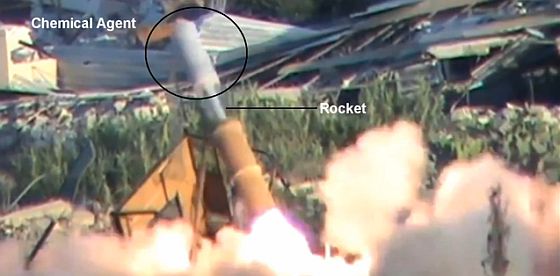
The first thing to note is a gray missile that can be seen at the beginning of the video being delivered to a missile launcher. The missile is about ten feet long with small guidance fins at the right end and a tank at the other that’s roughly 18″ wide and 36″ long. Above the missile is an orange hydraulic hoist that is presumably used to move the missile from the delivery vehicle to the launch vehicle. (The video does not show this happening. We see the launch vehicle without missile and then with missile.)

Aside from noting the dimensions and shape of the missile itself, it’s also worth noting the delivery vehicle: a new Mercedes tractor and trailer with hydraulic lift adds up to an expensive item, way beyond the means of any militia that is struggling just to pay for its bullets.

In a screenshot from an edited copy of the same video, the assumed structure of the missile (seen a fraction of a second after its launch) is highlighted:

As Higgins notes, this is a missile design that has not been observed anywhere outside Syria. Unlike the Hell Cannon, this is not simply an explosive projectile – it is a rocket and as photographs below and the videos above make clear, the missile itself is industrially engineered, its design must have been rigorously tested, and the delivery system costs tens of thousands of dollars — multiple reasons to believe that this was not improvised by rebels.

One of the features of chemical weapons that has been widely noted is that they do not carry high explosives which would destroy the chemical agent only carry a small amount of explosive — they are designed to rip open on impact and as a result much of such a missile can be recovered. As a result a lot of evidence on the form of the missiles has been gathered at the site of the alleged chemical attacks.

One of Higgins’ findings has been that there are at least two forms of the missile linked to the chemical attacks. One believed to be armed with chemical agents and another with high explosives. The video below shows the latter variety in a missile that failed to explode and which is being dismantled by a rebel group in order to salvage the explosives. The shape of the missile corresponds with the one appearing above.

Among those who are skeptical about the claim that the regime would use chemical weapons at this time — a period in which their power seems to be on the rise — a question reasonably posed is this: Why now? What motivation could they have for an attack that would seem to be contrary to their own interests?

Firstly, the presence of rebels in the districts that were under attack has been intractable and poses a real threat to the security of the regime and Damascus. But the question, why now? contains within it what may be a false assumption: that chemical weapons have not already been used with some frequency.

While August 21 stands out because of the death toll, there have been several cases in which chemical weapons are believed to have been used before. The following disturbing video posted on YouTube in early August shows a dog in convulsions and several other dead animals, all of which appear to be victims of a chemical attack. The twisted remains of a missile nearby resemble the structure of the missile shown above, minus the canister casing which would have ripped off on impact.

The use of a design which could carry either high explosives or chemical agents may have been conceived specifically so that the use of chemical weapons could be concealed in the event that the sites of these attacks were later subject to inspection.

What happened on August 21 may have been planned as another routine chemical weapons attack. What might not have been planned and might even have been accidental, was the strength of the chemical agent employed.

Needless to say, none of this amounts to proof about what happened. Nevertheless, this is what I think can reasonably be called evidence-based speculation as opposed to rumor-based speculation of the kind Ray McGovern and others are promoting.

If in due course it becomes established with reasonable confidence (confidence not merely among Obama administration officials but also independent observers and the public at large) that chemical weapons were indeed used by the Assad regime on August 21, does that mean that the United States is both justified and wise in launching an attack on Syria in order to punish Assad and deter future use of chemical weapons?

The Obama administration is pressing its case as though such proof closes the argument. The argument about whether chemical weapons were used thus has less to do with the facts and is instead functioning as a proxy argument. Those who oppose military strikes seem to think they can only do so by questioning who was responsible for the chemical attack — some go a step further and question whether such an attack even took place.

The fundamental problem with this kind of skepticism is that as the administration convinces Americans that a devastating chemical weapons attack took place and that the Assad regime is most likely responsible, then the more solid this position becomes, the more willing people will be to defer to the administration in determining an appropriate response.

What the administration has not even attempted to demonstrate is why its plan for a calibrated attack would have much chance of bringing about its desired effect.

The result may be that the regime simply exercises more discretion in its future use of chemical weapons. It may also periodically make limited use of chemical weapons in order to test American willingness to escalate the conflict.

There is however one outcome from a U.S. attack on Syria that is virtually certain: Syria will become even more inaccessible to journalists and as a result the plight of its people will shift from garnering little American attention to no attention at all.

* A reader has correctly pointed out that McGovern did not describe the alleged opening of the alleged containers containing the alleged chemicals as having occurred accidentally. McGovern wrote: “According to some reports, canisters containing chemical agent were brought into a suburb of Damascus, where they were then opened.” Since it has been widely distributed, I’m assuming that the reports he’s referring to include a report in Mint Press in which a rebel is quoted saying, “unfortunately, some of the fighters handled the weapons improperly and set off the explosions.” Since McGovern didn’t provide links to any of his sources, he has left it to his readers to engage in a certain amount of guesswork.

Facebooktwittermail

Obama’s exit strategy: Congress tied my hands

Bashar al-Assad is probably already planning his victory parade.

First Obama says he’s decided to attack Syria, but then he immediately says he’s seeking authorization from Congress. But then he signals he’ll attack even without the support of Congress. Then AIPAC wheels out its big guns in Obama’s support, but for once it doesn’t look like anyone’s too worried about what the Israel lobby thinks. Even though Israel itself supports Obama, more than anything they just want to see the war in Syria continue. “Let them both bleed, hemorrhage to death: that’s the strategic thinking here,” says a former Israeli diplomat. And now Obama’s latest effort to rally international support has fallen flat — even the French are getting cold feet.

Is the president who likes to lead from behind now ready to lead with on one behind?

Apparently not. The White House isn’t ready to raise the white flag just yet but it’s already signalling that it may soon concede defeat.

Garance Franke-Ruta writes: President Obama does not intend to act in defiance of Congress if it votes down a resolution authorizing the use of force in Syria, White House Deputy National Security Adviser Tony Blinken told Steve Inskeep on NPR’s Morning Edition Friday.

“Has the president decided what he will do if Congress votes no on using force?” Inskeep asked during the short segment.

“You know Steve, when, after the events of August 21, we reached out to Congress and we had conversations with members of Congress across the country,” Blinken replied. “And the one thing we heard from nearly all of them is that they wanted their voice heard and their vote, and their votes counted.”

“The president of course has the authority to act, but it’s neither his desire nor his intention to do, to use that authority absent Congress backing,” Blinken said.

It was the second such signal-sending move of the day, following on the heels of Peter Baker’s report in the New York Times:

Although Mr. Obama has asserted that he has the authority to order the strike on Syria even if Congress says no, White House aides consider that almost unthinkable. As a practical matter, it would leave him more isolated than ever and seemingly in defiance of the public’s will at home. As a political matter, it would almost surely set off an effort in the House to impeach him, which even if it went nowhere could be distracting and draining.

Another way to look at this: If Obama were comfortable acting alone — that is to say, without the support of Congress, the United Nations, NATO, the Arab League, or any major allies save France — to order a strike on Syria, he had the opportunity to do so without going to Congress and requesting that each of its members rouse their electorates and invest political capital in considering and voting on the question for themselves. [Continue reading…]

Facebooktwittermail

Obama officials try to stoke fear in Congress about the risk of delaying Syria strikes

The Wall Street Journal reports: The U.S. has intercepted an order from Iran to militants in Iraq to attack the U.S. Embassy and other American interests in Baghdad in the event of a strike on Syria, officials said, amid an expanding array of reprisal threats across the region.

Military officials have been trying to predict the range of possible responses from Syria, Iran and their allies. U.S. officials said they are on alert for Iran’s fleet of small, fast boats in the Persian Gulf, where American warships are positioned. U.S. officials also fear Hezbollah could attack the U.S. Embassy in Beirut.

While the U.S. has moved military resources in the region for a possible strike, it has other assets in the area that would be ready to respond to any reprisals by Syria, Iran or its allies.

Those deployments include a strike group of the USS Nimitz aircraft carrier and three destroyers in the Red Sea, and an amphibious ship, the USS San Antonio, in the Eastern Mediterranean, which would help with any evacuations.

The U.S. military has also readied Marines and other assets to aid evacuation of diplomatic compounds if needed, and the State Department began making preparations last week for potential retaliation against U.S. embassies and other interests in the Middle East and North Africa.

U.S. officials began planning for a possible strike on Syrian regime assets after the Aug. 21 attack outside Damascus in which the U.S. says Syrian government forces killed over 1,400 people using chemical weapons. The U.S. military has prepared options for an attack and beefed up its military resources in the region, including positioning four destroyers in the Eastern Mediterranean.

That process slowed last weekend when Mr. Obama said he would first seek an authorization for using military force from Congress.

A delay in a U.S. strike would increase opportunities for coordinated retaliation by groups allied with the Assad government, including Shiite militias in Iraq, according to U.S. officials. [Continue reading…]

In the event that the U.S. goes ahead with strikes on Syria, it goes without saying that U.S. interests across the region will be possible targets for acts of retaliation of some kind from a variety of possible sources. So why have U.S. officials chosen to leak this particular classified intelligence on a purported threat from Iran? Is this all part of President Obama’s new found desire to promote transparency in the intelligence community? Unlikely.

Maybe there are some members of the administration who are trying to hit the brakes and want to alert the public to the risks involved in the attacks. Think Benghazi.

But this report isn’t based on whistle-blowing — it’s based on a briefing and the object of the exercise soon becomes clear.

An alarm bell is being rung and the message to Congress is: don’t hold up the strikes on Syria because if you do, you will be responsible for the next Benghazi.

But just a minute! Wasn’t it only last weekend that Obama declared: “our capacity to execute this mission is not time-sensitive; it will be effective tomorrow, or next week, or one month from now.”

It’s not time-sensitive, but the longer the delay, the greater the risks of retaliation.

It’s not time-sensitive, but the delay that’s already taken place through seeking Congressional approval means that the Pentagon is already working on expanding the target list.

But if the White House is now hitting the panic button, this might have less to do with the information its getting from the Pentagon and more to do with the word from Capitol Hill.

Concerted pressure from AIPAC notwithstanding, there is a strong possibility that Congress may this time around pay more attention to public opinion than anything else and as a consequence reject Obama’s plan. Obama will then be on a trajectory to enter his own unique expression of unilateralism: no support from Britain, nor from the UN, nor from Congress, nor the American people. Even George Bush never attempted to go it alone to this degree.

Obama’s already passed the point of no return. He’s committed the U.S. to this operation with or without the support of Congress.

With Libya, Obama led from behind. With Syria, he may be on the brink of leading with no one behind.

Facebooktwittermail

U.S. strike on Syria hasn’t begun but it’s already escalating

Here’s a friendly bit of advice to some Syrians: If you happen to own a small two-axle flatbed truck — the kind you might use for hauling construction materials, produce deliveries or that kind of thing — and you don’t want to get hit by an American cruise missile, you might want keep your truck in a garage for a few weeks.

It’s now reported that the Pentagon is expanding its target list and will be attempting to destroy “equipment used to deploy chemical weapons.” Most Americans probably think that such equipment would be readily identifiable as military equipment, but if the image below is reliable — it’s a screenshot from a video believed to show a missile launcher used for chemical weapons — then the equipment in question, once covered by a tarpaulin, is probably indistinguishable from thousands of trucks being driven around every single day in Syria for perfectly innocent purposes.

On the other hand, let’s give the Pentagon the benefit of the doubt and assume that its intelligence is so strong that it knows exactly which white trucks at which it should aim. Can it be equally confident that none of them will actually be carrying chemical weapons? Can we be sure that the U.S. effort to prevent the further use of chemical weapons will not instead result in the release of more sarin?

The New York Times reports: President Obama has directed the Pentagon to develop an expanded list of potential targets in Syria in response to intelligence suggesting that the government of President Bashar al-Assad has been moving troops and equipment used to employ chemical weapons while Congress debates whether to authorize military action.

Mr. Obama, officials said, is now determined to put more emphasis on the “degrade” part of what the administration has said is the goal of a military strike against Syria — to “deter and degrade” Mr. Assad’s ability to use chemical weapons. That means expanding beyond the 50 or so major sites that were part of the original target list developed with French forces before Mr. Obama delayed action on Saturday to seek Congressional approval of his plan.

For the first time, the administration is talking about using American and French aircraft to conduct strikes on specific targets, in addition to ship-launched Tomahawk cruise missiles. There is a renewed push to get other NATO forces involved.

The strikes would be aimed not at the chemical stockpiles themselves — risking a potential catastrophe — but rather the military units that have stored and prepared the chemical weapons and carried the attacks against Syrian rebels, as well as the headquarters overseeing the effort, and the rockets and artillery that have launched the attacks, military officials said Thursday.

Gen. Martin E. Dempsey, the chairman of the Joint Chiefs of Staff, has said that other targets would include equipment that Syria uses to protect the chemicals — air defenses, long-range missiles and rockets, which can also deliver the weapons. [Continue reading…]

Facebooktwittermail