Category Archives: Editorials

America unhinged

Will January 8, 2011, be remembered as yet another date that will live in infamy?

Rep. Bill Pascrell (D-N.J.) was having a beer and eating pizza at a New Jersey bar when he heard the news via the television. Soon thereafter, he was contacted by his staff and was on the phone with other House members.

“It’s somewhat overwhelming. We are all flabbergasted, stunned,” he said.

While noting the obvious differences between the two events, Pascrell said Saturday reminds him of 9/11.

“I couldn’t believe I was really seeing this. This can’t be real,” he told The Hill in an interview Monday.

A mass shooting in America. No, that’s never happened before.

What’s an American to do when contemplating that danger by the next Glock-wielding gunman? Why, go out and buy a Glock!

After Saturday’s shootings:

Greg Wolff, the owner of two Arizona gun shops, told his manager to get ready for a stampede of new customers.

Wolff was right. Instead of hurting sales, the massacre had the $499 semi-automatic pistols — popular with police, sport shooters and gangsters — flying out the doors of his Glockmeister stores in Mesa and Phoenix.

“We’re at double our volume over what we usually do,” Wolff said two days after the shooting spree that also left 14 wounded, including Democratic Representative Gabrielle Giffords, who remains in critical condition.

As for how to cool down the incendiary rhetoric that supposedly triggered Jared Lee Loughner’s rampage, well, maybe it would be better not just to cool it down but shut it down.

One lawmaker, Rep. Robert Brady (D-Pa.), has said he would introduce a bill to make it a crime to threaten or incite violence against a federal official.

Rep. Louise Slaughter (D-N.Y.) suggested the Federal Communications Commission was “not working anymore,” adding she would look at ways to better police language on the airwaves.

But isn’t it time to get serious about gun control?

The Huffington Post has the improbable headline: “Peter King, Leading Republican, To Introduce Strict Gun-Control Legislation.”

A ray of sanity from the most unexpected place! Unfortunately not. King’s idea of strict gun control is a law against bringing a gun within 1,000 feet of a government official.

Aside from the fact that this would practically speaking be an unenforceable law, what about the rest of us outside government who also like the idea of being able to move around inside a gun-free perimeter?

Facebooktwittermail

Mental health in the United States of Alienation

In his New York Times column, “Climate of Hate,” Paul Krugman writes: “It’s true that the shooter in Arizona appears to have been mentally troubled. But that doesn’t mean that his act can or should be treated as an isolated event, having nothing to do with the national climate.”

Because? Reality is constituted from a complex web of interdependent relationships in which one thing cannot be separated from everything else? Krugman doesn’t really connect the dots and show why Loughner’s violence is inextricably tied to the political climate that is the focus of the column.

The Washington Post, however, provides some background that suggests the gunman’s mind was populated with ideas far removed from the world around him and that his unusual behavior raised grave fears among teachers and classmates.

Referring to his Pima Community College attendance last year, the report said:

A student in the class, Lynda Sorenson, 52, said she was immediately worried about him. She said Loughner sat in class with a crazed-looking grin and she had seen him walking in tight circles, around and around, in the school courtyard. She feared that Loughner might become violent, and she would have to flee – concerns she shared with friends and family in a series of e-mails.

“We do have one student in the class who was disruptive today,” Sorenson wrote on June 1. “He scares me a bit . . . Hopefully he will be out of class very soon, and not come back with an automatic weapon.”

Ten days later, Sorenson was writing about Loughner again: “Class isn’t dull as we have a seriously disturbed student in the class, and they are trying to figure out how to get rid of him before he does something bad.”

Sorenson’s fears grew more acute four days after that, when her e-mail said that “we have a mentally unstable person in the class that scares the living crap out of me. He is one of those whose picture you see on the news, after he has come into class with an automatic weapon. Everyone interviewed would say, Yeah, he was in my math class and he was really weird.”

“I sit by the door with my purse handy,” the e-mail continued. “If you see it on the news one night, know that I got out fast.”

The instructor of the class, Benjamin McGahee was no less concerned. “I always felt, you know, somewhat paranoid,” he said. “When I turned my back to write on the board, I would always turn back quickly – to see if he had a gun.”

McGahee said Loughner disrupted his very first class by yelling, “How can you deny math instead of accepting it?” In later classes, he shouted, listened to his MP3 player and wrote nonsensical answers on his tests. One said “Eat + Sleep + Brush Teeth = Math.”

McGahee said he sought repeatedly for college officials to remove Loughner, but they did not.

“They just said, ‘Well, he hasn’t taken any action to hurt anyone. He hasn’t provoked anybody. He hasn’t brought any weapons to class,’ ” McGahee recalled. ” ‘We’ll just wait until he takes that next step.’ “

Three weeks later Loughner provided the college with what it deemed suitable grounds for action: he publicly denounced the college as “unconstitutional.”

There are two things that are immediately instructive in the college’s action:

  • That it needed a pretext for action that it could easily document — Loughner provided that in the form of his YouTube statements.
  • That the college’s view of an acceptable “solution” to the problem that Loughner presented was to persuade him to go away. In other words, that he could be turned into someone else’s problem.

Behind these two responses are two broader social trends that have had a highly corrosive effect on American society:

  • Where the fear of lawsuits and the coercive effect of social conformity have the combined effect of inhibiting the exercise of individual judgment, those who have the capacity to intervene in situations that demand intervention are more likely to hold back and sidestep the problem. And when they do act, it is with the preference of being able to say, “I had no choice,” rather than to intervene sooner by making a choice which would demand a higher level of personal accountability.
  • The assumption that it is easier and cheaper to physically or chemically restrain this society’s most troubled members than it would be to create the conditions in which their minds might heal.

When America dismantled its antiquated institutional psychiatric system, the result was that for many of the most seriously mentally ill there was little adequate community care — the most likely fate for society’s abandoned members became homelessness or prison.

America now incarcerates a higher percentage of its population than any country in the world and more than half of those in jail have symptoms or a recent history of mental health problems, according to Human Rights Watch.

As a tragic victim of senseless violence and as a prominent public figure, Gabrielle Giffords has been at the center of a story in which she might be more accurately be viewed as a random victim. The fact that Jared Loughner “specifically targeted” her says far less about the Congresswoman than it says about the condition of the gunman’s mind.

Rather than treat the shootings as a threat to American democracy, we should attend to the fact that dangerous thoughts can’t easily result in devastating consequences in the absence of easily available deadly weapons and that troubled minds won’t heal by being ignored.

Facebooktwittermail

The pitfalls of generalizing from the particular — what Jared Lee Loughner does and doesn’t tell us about the state of America

Was the shooting of Representative Gabrielle Giffords an historic moment in American politics?

The media frenzy, a presidential response and now a national moment of silence — all join together to suggest that at 10am on January 8, something happened not just in Tuscon, Arizona, but across the whole of America.

I suppose historic moments are by their nature social fabrications, yet some have a palpable authenticity that others lack.

The Tuscon shootings might have provided an opportunity for some national soul searching on the vitriol that now pollutes American political discourse, but it’s a bit premature to conclude that the wider phenomenon and Saturday’s bloodshed can be reduced to cause and effect.

The idle willingness with which the actions of individuals are treated as representations of the character of social groups is no more justifiable when Jared Lee Loughner is instantly tied to Sarah Palin and the Tea Party, than it is when Major Nidal Malik Hasan is tied to the American Muslim community. Granted, Palin and others on the right should now have pause to reconsider what kind of language and imagery they use, but in trying to understand why Loughner pulled the trigger it seems just as likely that he was motivated by anticipation of the reaction he would provoke as much as anything else.

At Salon, Laura Miller challenges those who want to read a great deal into Loughner’s reading favorites — books that ranged the gamut from Hitler’s Mein Kampf to Herman Hesse’s Siddhartha. She writes:

Loughner is almost certainly insane and, like the countless other mentally disturbed people who send similar ravings to media outlets around the world, his ideas would have been ignored as incoherent and irrelevant if he hadn’t fired a gun into a crowd of people Saturday. The fact that he did fire that gun, however, doesn’t make his delusions suddenly meaningful. It doesn’t make his list of favorite books significant. Crazy people who make headlines and change history are still crazy.

By studying Loughner’s book list for clues to the political leanings that somehow “drove” him to commit murder, commentators are behaving a lot like crazy people themselves. Paranoids are prone to scouring newspaper articles and the monologues of late-night comedians for imaginary coded messages that confirm their “secret knowledge” about the world. But those coded messages aren’t there — it’s just random stuff with no special significance. The truth about mental illness is that it strikes without regard to political affiliation or ideological orientation, and it turns beautiful minds into nonsense factories. We can debate a social order that allows its victims access to firearms and talk about finding better ways to intervene before the minority of mentally disturbed individuals with violent impulses are able to act on those impulses. But trying to find the cause for this disease in politics, ideas or books is just plain nuts.

The willingness of a journalist to glibly write that mental illness “turns beautiful minds into nonsense factories,” says less about the nature of mental illness than it says about the degree to which introspective reflection is undervalued in the contemporary world, fixated as we are on the stuff around us at the expense of our interior life.

It’s easy to marginalize the mentally ill by regarding them as people with broken minds filled with nonsense, but that neither advances a wider understanding of mental illness as it exists within the wild territory of human experience, nor addresses the need to bridge a divide between the mentally ill and the society in which they lack support.

Alienation — which can be described as the feeling of not being heard and of becoming socially invisible — is not a marginal dimension of modern life. On the contrary, the quest for identity in a world where electronic connections increasingly serve as substitutes for physical relationships, is an expression of the degree to which alienation has become so ordinary, universal and normal, that it is also now regarded as natural and thus unworthy of being named.

Mental illness exists on the continuum of alienation and although most people’s experience might not extend so far out on that continuum, those who regard themselves as mentally healthy derive a false comfort in imagining that the Loughners in our world merely reveal the distortions of their own troubled minds and nothing about the world they struggle to inhabit.

Facebooktwittermail

Amateur hour at DHS as anti-Semitism is raised as possible motive in Giffords’ shooting

“Gabrielle Gifford [sic] is the first Jewish female elected to such a high position in the US government.”

This comes from a Department of Homeland Security internal memo obtained by Fox News. Whether no name is attached to the memo or whether Fox wanted to save the author some embarrassment isn’t clear.

Memo to the DHS: Dianne Feinstein and Barbara Boxer are both Jewish US senators and they took office before Gabrielle Giffords had even decided she was Jewish (after visiting Israel in 2001), let alone sought high office.

The DHS memo also links Giffords’ assailant, Jared Lee Loughner, to a rightwing group called American Renaissance. “The group’s ideology is anti government, anti immigration, anti ZOG (Zionist Occupational Government), anti Semitic.”

American Renaissance refutes the accusation: “AR is not anti-government, anti-Semitic, or anti-ZOG, as is clear from the 20 years of back issues that are posted on our website. The expression “ZOG” has never appeared in the pages of AR, and we have has always welcomed Jewish participation in our work. Many of the speakers at American Renaissance conferences have been Jewish.”

The organization’s own testimony might seem less than persuasive but a report from the Southern Poverty Law Center adds some weight this claim. Referring to Jared Taylor, who edits American Renaissance, the report says:

One issue that has proven problematic for Taylor and his foundation [the New Century Foundation] has been anti-Semitism. Taylor, unlike many on the radical right, is known for his lack of anti-Semitism and for including racist Jews in his events. He told MSNBC-TV interviewer Phil Donahue in 2003 that Jews “are fine by me” and “look white to me.” At one point, he even banned discussion of the so-called “Jewish question” from American Renaissance venues, and, by 1997, he had kicked Holocaust deniers and neo-Nazis off his E-mail list. Despite these efforts, Taylor also has continued to allow people like Don Black, the former Klan leader who runs the neo-Nazi Stormfront.org web forum, and Jamie Kelso, a Stormfront moderator, to attend his biannual American Renaissance Conferences. The problem for Taylor is that many of the most active participants at the American Renaissance Conferences and the most committed members of the American radical right are openly and passionately anti-Semitic. To ban them would devastate Taylor’s efforts to make his journal and conferences flagship institutions of American radical right.

However prevalent anti-Semitism might be in the organization Loughner is being linked to, this doesn’t tell us that much about his own views. Even so, when someone attempts to assassinate a Jewish member of Congress one might expect that anti-Semitism would rank high among the possible motives.

Thus far the Anti-Defamation League has resisted suggesting this might be the gunman’s motive, and neither does anti-Semitism seem to have figured much in the vigorous wider debate the shootings have provoked. Is this because anti-Semitism has so frequently been linked to criticism of Israel that if Israel doesn’t enter the picture then neither does anti-Semitism?

Facebooktwittermail

Israeli military tries to cover up killing of an unarmed Palestinian protester

As was widely reported on Saturday, Jawaher Abu Rahmah, a 36 year-old Palestinian woman from Bilin, died after inhaling tear gas at a demonstration in the West Bank village on Friday.

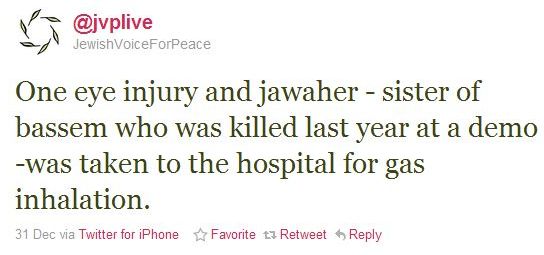
The moment at which Jawaher was evacuated by ambulance from the scene was recorded by Rebecca Vilkomerson Emily Schaeffer from Jewish Voice for Peace who tweeted: “One eye injury and jawaher — sister of bassem who was killed last year at a demo — was taken to the hospital for gas inhalation.”

Israeli Defense Forces officials are now propagating disinformation through a network of right-wing bloggers and stooges in the Israeli press, suggesting the Jawaher did not even attend the demonstration.

One such blogger, The Muqata, who attended an “exclusive” IDF briefing — exclusive, presumably, to bloggers willing to parrot whatever they were told — said: “We have never heard of anyone dying from inhaling tear gas…”

The U.S. Army Center for Health Promotion and Preventive Medicine warns that at a concentration of 2mg per cubic meter, CS gas “is immediately dangerous to life…” The Army advises, in the event of inhalation: “remove the victim to fresh air immediately; perform artificial respiration if breathing has stopped; keep the victim warm and at rest; seek medical attention immediately.”

The goal of the IDF and its apparatchiks is to sow doubt. But as Jerry Haber at The Magnes Zionist writes:

Even an idiot can see that the IDF is using the same “methodology” that Holocaust deniers use to raise questions about the number of Jews killed, or the presence of gas chambers to kill Jews, etc. That methodology is to “raise questions,” to “point out contradictions”, to suggest that the evidence is not convincing, to insinuate that those who make the claims are not to be trusted.

What is equally evident is that at a time when barely a day goes by without new evidence emerging of the racism which is endemic across Israel, the IDF feels acutely vulnerable when its disregard for human life is once again in the spotlight.

Denial is another name for desperation.

Facebooktwittermail

Kissinger’s entire career was a series of massacres and outrages

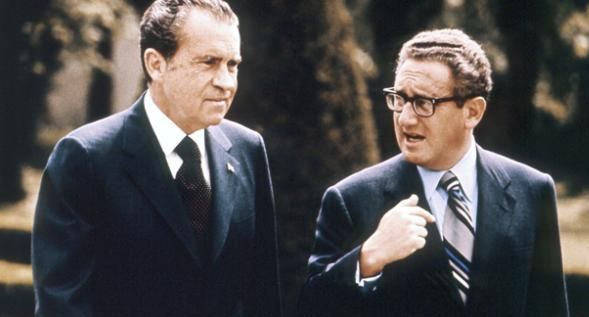
In 1973, moments after the Israeli prime minister, Golda Meir asked President Nixon to press the Soviet Union to permit Jews to emigrate and escape persecution there, Nixon’s national security adviser, Henry Kissinger, addressed the question.

“The emigration of Jews from the Soviet Union is not an objective of American foreign policy,” Kissinger said emphatically. “And if they put Jews into gas chambers in the Soviet Union, it is not an American concern. Maybe a humanitarian concern.”

From the audio tape, it is clear that Nixon was concerned about pressure he would face from the American Jewish community on this issue.

Since the tapes were made public earlier this month, prominent members of the Jewish community have been lining up to speak in Kissinger’s defense — an effort, they say, which is intended to put Kissinger’s callousness in context.

“The Nixon Tapes should not change history’s verdict on the important contributions and ultimate legacy of Henry Kissinger,” said the Anti-Defamation League’s Abraham Foxman.

Christopher Hitchens, having in recent years been distracted by 9/11, returns to the subject of Kissinger, and asks, “what if we did, indeed, accept the invitation to ‘remember the context of his entire life’?”

Here’s what we would find: the secret and illegal bombing of Indochina, explicitly timed and prolonged to suit the career prospects of Nixon and Kissinger. The pair’s open support for the Pakistani army’s 1971 genocide in Bangladesh, of the architect of which, Gen. Yahya Khan, Kissinger was able to say: “Yahya hasn’t had so much fun since the last Hindu massacre.” Kissinger’s long and warm personal relationship with the managers of other human abattoirs in Chile and Argentina, as well as his role in bringing them to power by the covert use of violence. The support and permission for the mass murder in East Timor, again personally guaranteed by Kissinger to his Indonesian clients. His public endorsement of the Chinese Communist Party’s sanguinary decision to clear Tiananmen Square in 1989. His advice to President Gerald Ford to refuse Alexander Solzhenitsyn an invitation to the White House (another favor, as with spitting on Soviet Jewry, to his friend Leonid Brezhnev). His decision to allow Saddam Hussein to slaughter the Kurds after promising them American support. His backing for a fascist coup in Cyprus in 1974 and then his defense of the brutal Turkish invasion of the island. His advice to the Israelis, at the beginning of the first intifada, to throw the press out of the West Bank and go for all-out repression. His view that ethnic cleansing in former Yugoslavia was something about which nothing could be done. Forget the criminal aspect here (or forget it if you can). All those policies were also political and diplomatic disasters.

We possess a remarkably complete record of all this, in and out of office, most of it based solidly on U.S. government documents. (The gloating over Bangladesh comes from July 19, 1971.) And it’s horribly interesting to note how often the cables and minutes show him displaying a definite relish for the business of murder and dictatorship, a heavy and nasty jokiness (foreign policy is not “a missionary activity”) that was by no means always directed, bad as that would have been, at gratifying his diseased and disordered boss. Every time American career diplomats in the field became sickened at the policy, which was not seldom, Kissinger was there to shower them with contempt or to have them silenced. The gas-chamber counselor is consistent with every other version of him that we have.

When in 2001 Hitchens took on the noble if perhaps quixotic endeavor of attempting to have Kissinger put on trial for war crimes and crimes against humanity, who could have anticipated that the polemicist would soon become so severely blown off course, or that almost a decade later the octogenarian would probably outlive his most furious and much younger critic.

The Trials of Henry Kissinger (2002)

Facebooktwittermail

Israel’s central role in ‘the new Cold War’

Even if Britain has yet to enact promised changes to the law in order to protect Israeli war criminals from facing the risk of arrest while visiting the UK, it would appear that some form of understanding is already in place so that Tamir Pardo, the new head of Mossad, will be able to visit in January.

An outline of some of the key issues on Pardo’s agenda when he meets Britain’s intelligence chiefs reveals the depth of Mossad’s operations across the Middle East. It also reveals that Israel sees itself having a pivotal role in what Pardo is branding “the new Cold War” between Russia and the West.

The Daily Telegraph reports:

[Pardo] is expected to brief officials on Mossad’s plans to provide Britain and Nato with increased intelligence over Iran’s nuclear weapons programme. Mossad has a network of undercover agents in the country.

He also intends to increase Mossad’s role in Yemen and to spearhead the hunt for al-Qaeda’s new chief of military operations, Saif al-Adel, who Mossad believe is based in Somalia.

At the same time he wants to expand Mossad’s watch over the SVR, Russia’s foreign intelligence service, which is an increasing presence in Syria and Turkey – and is using both countries as launch pads from which to enter Europe. In his first briefing to senior staff after he took up his new post, Mr Pardo said Mossad had a key role to play in helping the West win what he called “the new Cold War”.

With Mossad conducting operations in Iran, Yemen and Somalia, Israel sees itself as an indispensable partner with the United States in the enduring global conflict through which each nation now defines its identity and upon which each has become economically dependent. No two nations on the planet are more threatened by the possibility of peace.

Facebooktwittermail

Cables reveal Israel welcomed Hamas takeover of Gaza

If mainstream media reports and government statements could be relied upon, the Bush administration and the Israeli governments led by Ariel Sharon and then Ehud Olmert were perpetually of one mind — Washington simply mirrored Jerusalem. But newly-released cables indicate that when it came to views about Hamas’ control of Gaza, there was in 2007 a significant divergence of opinion. While a plan hatched by Elliot Abrams for a US-supported Fatah coup to unseat the democratically-elected Hamas government, was rapidly unraveling, the Israelis said they would be pleased to see Hamas assume complete control of Gaza.

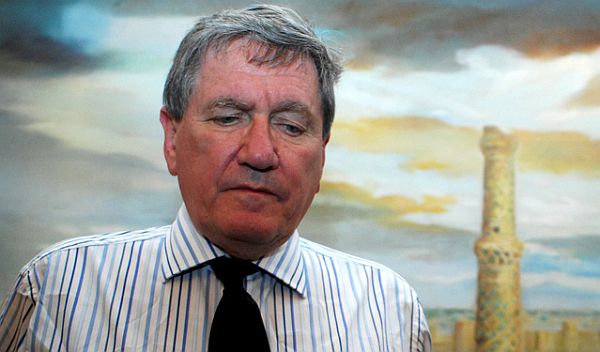
A cable describing a June 12, 2007 meeting between US Ambassador Richard Jones and Israeli Military Intelligence Director Amos Yadlin indicated that Israel regarded Gaza as less of a threat than Iran, Syria or Hezbollah. At the height of the eight-day battle between Hamas and Fatah for the control of Gaza, the cable said:

The Ambassador commented that if Fatah decided it has lost Gaza, there would be calls for Abbas to set up a separate regime in the West Bank. While not necessarily reflecting a consensus GOI [Government of Israel] view, Yadlin commented that such a development would please Israel since it would enable the IDF to treat Gaza as a hostile country rather than having to deal with Hamas as a non-state actor. He added that Israel could work with a Fatah regime in the West Bank. The Ambassador asked Yadlin if he worried about a Hamas-controlled Gaza giving Iran a new opening. Yadlin replied that Iran was already present in Gaza, but Israel could handle the situation “as long as Gaza does not have a port (sea or air).” [Emphasis mine.]

Implicit in Yadlin’s remarks was the view that Hamas’ control of Gaza would make it easier for Israel to control the territory from the air with more frequent missile attacks.

As the US ambassador questioned the Israeli intelligence chief, one has to wonder whether either of them had been briefed on the Abrams plan.

In a report published by Vanity Fair in April 2008, David Rose wrote:

Vanity Fair has obtained confidential documents, since corroborated by sources in the U.S. and Palestine, which lay bare a covert initiative, approved by Bush and implemented by Secretary of State Condoleezza Rice and Deputy National Security Adviser Elliott Abrams, to provoke a Palestinian civil war. The plan was for forces led by [Palestinian Authority National Security Advisor Muhammad] Dahlan, and armed with new weapons supplied at America’s behest, to give Fatah the muscle it needed to remove the democratically elected Hamas-led government from power. (The State Department declined to comment.)

But the secret plan backfired, resulting in a further setback for American foreign policy under Bush. Instead of driving its enemies out of power, the U.S.-backed Fatah fighters inadvertently provoked Hamas to seize total control of Gaza.

Some sources call the scheme “Iran-contra 2.0,” recalling that Abrams was convicted (and later pardoned) for withholding information from Congress during the original Iran-contra scandal under President Reagan. There are echoes of other past misadventures as well: the C.I.A.’s 1953 ouster of an elected prime minister in Iran, which set the stage for the 1979 Islamic revolution there; the aborted 1961 Bay of Pigs invasion, which gave Fidel Castro an excuse to solidify his hold on Cuba; and the contemporary tragedy in Iraq.

Within the Bush administration, the Palestinian policy set off a furious debate. One of its critics is David Wurmser, the avowed neoconservative, who resigned as Vice President Dick Cheney’s chief Middle East adviser in July 2007, a month after the Gaza coup.

Wurmser accuses the Bush administration of “engaging in a dirty war in an effort to provide a corrupt dictatorship [led by Abbas] with victory.” He believes that Hamas had no intention of taking Gaza until Fatah forced its hand. “It looks to me that what happened wasn’t so much a coup by Hamas but an attempted coup by Fatah that was pre-empted before it could happen,” Wurmser says.

The botched plan has rendered the dream of Middle East peace more remote than ever, but what really galls neocons such as Wurmser is the hypocrisy it exposed. “There is a stunning disconnect between the president’s call for Middle East democracy and this policy,” he says. “It directly contradicts it.”

While media reports at that time described the fight between Hamas and Fatah as being a “Hamas coup”, the Israeli intelligence chief did not see Hamas’ attacks as “part of a premeditated effort to wipe out Fatah in Gaza.”

What is transparent in both the Abrams plan and also now revealed in several cables, is that when it comes to the partnerships Israel and the US have backed with the Palestinians, whether Palestinian leaders had political legitimacy or popular support was of little concern — the sole requirement was that Israel/US work with Palestinians willing to place Israel’s interests first. In other words, Israel wanted to back a Palestinian leadership which would be incapable of surviving without Israeli support.

In a June 11, 2007 meeting between the US ambassador and Yuval Diskin, the head of Israel’s internal security service, Shin Bet, the Israeli described a “very good working relationship” with a Palestinian intelligence chief, Tawfik Tirawi, who he described as “psychopathic, cruel, dangerous and prone to extreme mood swings.”

In the West Bank, Diskin said that ISA [Shin Bet] has established a very good working relationship with the Preventive Security Organization (PSO) and the General Intelligence Organization (GIO). Diskin said that the PSO shares with ISA almost all the intelligence that it collects. They understand that Israel’s security is central to their survival in the struggle with Hamas in the West Bank. [Emphasis mine.]

Facebooktwittermail

How a secret gets revealed and then becomes secret again

On November 30, The Express Tribune, Pakistan’s first internationally affiliated newspaper (partnered with The International Herald Tribune – the global edition of The New York Times) reported:

A North Waziristan tribesman, whose brother and teenage son were killed in a drone strike last year, said on Monday that he would sue all those US officials supposedly in control of the predator’s operations in Pakistan.

Karim Khan, a local journalist from Mirali town of the lawless tribal district, had sent a $500 million claim for damages to the US Defence Secretary Robert Gates, CIA chief Leon Panetta and its station head in Islamabad Jonathan Banks.

On December 10, a report appearing in the Miami Herald repeated the same claims:

The lawsuit, which stands little chance of being won, is lodged against the CIA station chief in Islamabad, identified as Jonathan Banks; CIA Director Leon Panetta; and Defense Secretary Robert Gates. There’s speculation that the publicity has compromised the position of the CIA chief in Pakistan. The U.S. Embassy in Islamabad refused to confirm that Banks was the right person.

“What CIA station chief? I can’t talk about employees,” embassy spokesman Alberto Rodriguez said.

But yesterday, the New York Times started reporting like a newspaper that takes directions from the government censors.

Just as in Israel, where secrecy can be imposed through censorship even when the “secret” has been made known everywhere else in the world, the New York Times is now following government directions by refusing to reprint the CIA station chief’s name even though it has been widely reported outside and inside the United States.

The Central Intelligence Agency’s top clandestine officer in Pakistan’s capital, Islamabad, was removed from the country on Thursday amid an escalating war of recriminations between American and Pakistani spies, with some American officials convinced that the officer’s cover was deliberately blown by Pakistan’s military intelligence agency.

The American spy’s hurried departure is the latest evidence of mounting tensions between two uneasy allies, with the Obama administration’s strategy for ending the war in Afghanistan hinging on the cooperation of Pakistan in the hunt for militants in the mountains that border those two countries. The tensions could intensify in the coming months with the prospect of more American pressure on Pakistan.

As the cloak-and-dagger drama was playing out in Islamabad, 100 miles to the west the C.I.A. was expanding its covert war using armed drones against militants. Since Thursday, C.I.A. missile strikes have killed dozens of suspects in Khyber Agency, a part of the tribal areas in Pakistan that the spy agency had largely spared until now because of its proximity to the sprawling market city of Peshawar.

American officials said the C.I.A. station chief had received a number of death threats since being publicly identified in a legal complaint sent to the Pakistani police this week by the family of victims of earlier drone campaigns.

So, before his cover was blown and this cloak-and-dagger drama started playing out, are we to suppose that the CIA station chief was happily cruising round Islamabad in an open-top Cadillac proudly flying the Stars and Stripes on the hood?

Even if the station chief who must now not be named was less exposed before a name which might be his name appeared in print, let’s not pretend he operated in Pakistan with anything less than maximum security.

The Washington Post confirms: “Ordinarily, station chiefs in Islamabad rarely stray beyond the sprawling American diplomatic compound, living and working in a warren of apartments and offices set deep inside the embassy complex’s walls.”

Maybe the issue is not threats to the station chief’s life as much as threats to his liberty. Pakistan’s judicial system, unlike its government, has at times displayed what American officials might regard as an irksome level of independence.

A report in Pakistan’s Daily Mail, published on December 1 (part of which appears below without corrections — the English and editing are rough, but the story is strong), provides interesting background on the legal action being brought by Kareem Khan.
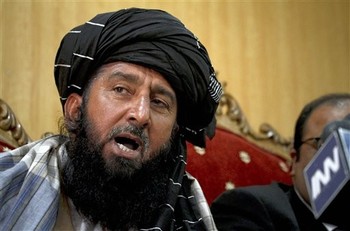
Kareem Khan challenged the precision of drone attacks and specifically questioned the precision of 31st December 2009 attack where in three innocent lives were taken by CIA in a secretive mode. He further challenged that if CIA can establish involvement of any of victims of 31st December attack in terrorism he will pay damages to United States instead.

While talking about the catastrophe he told The Daily Mail how his18 years old son Zaenullah, his young brother Asif Iqbal and a mason who was working on construction of village masque and had came from another village of Khyber Pakhtunkhawa were killed.

Kareem Khan told The Daily Mail that “his family is one of few educated families from the North Waziristan .He himself is M .Phil while his son was employee of Government school in town and his brother was graduate of National University of Modern languages from Islamabad .After compilation of his studies he went back to his town to add his positive contribution in educational uplifting of tribal area. They were innocent Pakistani citizen of Islamic Republic Of Pakistan whose fundamental rights have been guaranteed under the Constitution of Islamic Republic of Pakistan

In the response of one question about the families of victims he told Asif Iqbal left two years old son Muhammad Kafeel and a widow. Mohammad Kafeel has no one to look after as his mother is suffering great emotional and mental trauma. . “I lost my son and brother and now family’s full responsibility is now on me now we are living in uncle’s house waiting for justice or compensation”. He told The Daily Mail

Kareem Khan told the Daily Mail after this tragedy “I went here and there for Justice but all in vain because of undefined and so called system in tribal areas than one of my good friend suggested me to ask for Justice through legal way”. On November 29 2010 I through my lawyer Mirza Shahzad Akbar issued a legal notice to United States Secretary Defence Mr. Robert Gates, Director CIA Leon Panetta CIA Islamabad Station Chief Jonathan Banks for damages of $ 500 Million .he added

He also told that Drone attacks in tribal areas are carried out by CIA in langly, Virginia USA with co-ordination of local intelligence gathered by spies on ground in tribal area. CIA, s Islamabad station Chief, Jonathan Banks coordinates such intelligence through the network of on ground spies, who are paid a hefty amount for pointing out any militant. On these uncorroborated reports, CIA is executing people of tribal areas.

He stated that “CIA Director Leon Panetta has been reported in media saying that ‘Drone attacks are precise and limited in terms of collateral damage’.

“CIA officials are not part of United States armed forces, therefore under international law they are civilians directly participating in hostilities. Furthermore being non-diplomat and non-armed forces members CIA officials, who are operating drone attacks have no immunity and therefore are liable for murder and damages under laws of Pakistan and principles of natural justice throughout the world’ Kareem Khan explained

Kareem Khan also grumbled that media is not playing vibrant role and journalists even don’t bother to find ground realities. Every time we watched in media that numbers of militants are killed in the result of drone attacks. All the time they go for figures they don’t even bother to differentiate the innocent people and militants. Unfortunately they just rely on people who are present there and love to create hype for their own purpose.Kareem Khan gave the example of Hakeem Ullah Mehsood, Jalal Din ,Aimen Alzwari and Sheikh Usamma and told that according to so called reliable sources media published news regarding their, several times deaths . Which is very funny situation because in my limited knowledge a person died once in his or her life .

Shahzad Mirza Akbar ,the legal representative of Kareem khan who was present during the interview told The Daily Mail Drone attacks on house of his client is in clear violation of United Nations declaration of Human Rights ,International Covenant on Civil and Political Rights(ICCRP) and the citizens of Pakistan through the constitution of Islamic Republic of Pakistan .Those who have committed this atrocity are liable to be charged under the Penal Code of Pakistan and no law custom or authority gives CIA the permission to carry out killing in the sovereign territory of another country .So this is illegal act of United States and CIA and cannot be recognized as legal at any judicial or legal forum .The UN special report on extra –judicial ,summery and executions declared in 2004

“Empowering Government to identify and kill “known terrorists” places no verifiable obligation upon them to demonstrate in any way that those against whome lethal force is used are indeed terrorists, or to demonstrate that every other alternative had been exhausted”.

He told Court issued the notice on November 29, 2010 and count down has been started from today .He also talked about next step is to go in American court for justice.

So what’s the story here? Is it about the life of a CIA station chief being placed at risk? Or is it about the struggle among the victims of drone warfare who believe that tribal people should be afforded the same political, legal and human rights and protections as anyone else?

Strangely, the Washington Post and the Wall Street Journal, while acceding to a CIA request not to reprint the station chief’s name, nevertheless provide additional identifying information about him which I have not included here, nor has it appeared in the Pakistani press. That information was, no doubt, provided to them by the CIA!

Facebooktwittermail

In Britain’s effort to crush political dissent, the disabled have become fair game

How dangerous is a man in a wheelchair? British police officers attempting to restore order on the streets of London during recent student protests, decided they couldn’t take any chances when facing the threat posed by 20-year-old Jody McIntyre who suffers from cerebral palsy and is a self-described revolutionary.

In an interview, the BBC’s Ben Brown challenged McIntyre, saying: “There’s a suggestion that you were rolling towards the police in your wheelchair. Is that true?”

McIntyre turns the table on his interviewer by asking: “Do you think that I could have in any way posed a physical threat from the the seat of my wheelchair to an army of police officers armed with weapons?”

On the BBC’s Breakfast News, McIntyre faced similar treatment by interviewers who seemed inclined to believe the police must have been reacting to some form of provocation.

At Open Democracy, Ryan Gallagher notes that the tone of these interviews is:

… typical of how the mainstream media have responded to protests and the policing of them both past and present. Their automatic assumption is that the police are protectors of our best interests, defenders of public order, righteous upholders of the law. Protesters, on the other hand, are automatically perceived as a threat and a potential destructive force – they are folk devils: outsiders, troublemakers and vandals of decency.

The police are therefore at an immediate advantage in the media realm, for they are always given the benefit of the doubt. Officers may have had to crack a few skulls during the fees protests, however only because they were provoked by what [Prime Minister] David Cameron described as “feral thugs”. And it is for this same reason that McIntyre was repeatedly placed on the back foot throughout his BBC interview. Was he a “cyber-radical?” Did he want to build a “revolutionary movement?” The police would never just attack a defenceless disabled man in a wheelchair, would they?

Kira Cochrane spoke to McIntyre about his treatment by the BBC.

Was he surprised by the tone of Brown’s interview? “Not at all,” he says, “because it’s state television. Why do we so heavily criticise state television in other countries and then suggest that our state television would be impartial? I was at a demonstration against the government, and I’m then interviewed on television that works for the government. Why would they question me fairly?”

I ask whether he was scared at any point during the demonstration, and he suggests he has seen much worse recently. At 18, straight after his A-levels, and inspired by Che Guevara, McIntyre decided to travel through South America for three months; after that, he went to Palestine to live in areas including Gaza and Bil’in. “I had Israeli soldiers invading one village every night, shooting at us with live bullets, so a Metropolitan police officer is really not going to pose much of a worry to me. But it was quite humiliating, obviously, to be dragged from my wheelchair.” Was he surprised by the incident? “No, and I don’t know why other people are. To me, it’s as if people must have been asleep all their lives if they don’t realise this is the police’s role at demonstrations – to protect the interests of the government and the state.”

He has been on a lot of protests, on a wide range of issues, and says he has always had a political outlook, which he chronicles on his blog, Life on Wheels (“One man’s journey on the path to revolution”). He isn’t a student himself, but says he cares deeply about the issue both because “acceptance into university should be based on the merit of your grades, not the size of your wallet” and because “education is simply the first target. These cuts, this axe that the government is wielding, is going to affect everyone.”

At the New Statesman, Laurie Penny writes:

The truly fascinating aspect of McIntyre’s story is what it reveals about how the British understand disability: namely, that ‘real’ disabled people are not whole human beings. The attitude is that there are two types of disabled person: there are ‘real’ disabled people, who are quiet and grateful and utterly incapable of any sort of personal agency whatsoever, and ‘fake’ disabled people, people like Jody McIntyre, who are disqualified from being truly disabled by virtue of having personality, ambition, outside interests and, in this case, the cojones to stand up to a corrupt and duplicitous government.

This remarkable Catch-22 clause, whereby the authorities can claim that any disabled person who criticises them on disability issues or any other issues must de facto not actually be disabled, does not only affect how individuals like McIntyre are treated. It directly influences policymaking in the most clinical and ruthless of ways. Bear in mind that, alongside its highly publicised cuts to secondary and higher education funding, this government is also taking away benefits from disabled people: housing benefit, income support, the mobility component of Disability Living Allowance and other vital sources of funding are being decimated or removed entirely.

Facebooktwittermail

The killing spirit in America

“I don’t want to just end the war,” Barack Obama said in January 2008, “but I want to end the mindset that got us into war in the first place.”

That was a line which seduced many a progressive across America during the presidential campaign and it’s one reason so many now feel betrayed. Either Obama later had a change of heart, or he knew at the time that he was cynically making a vacuous statement for the sole purpose of hooking a slice of the electorate — one that might be sufficiently inspired to provide useful foot soldiers in his campaign.

Reflecting some of that sense of betrayal, David Bromwich writes:

It has lately become usual for right-wing columnists, bloggers, and jingo lawmakers to call for the assassination of people abroad whom we don’t like, or people who carry out functions that we don’t want to see performed. There was nothing like this in our popular commentary before 2003; but the callousness has grown more marked in the past year, and especially in the past six months. Why? A major factor was President Obama’s order of the assassination of an American citizen living in Yemen, the terrorist suspect Anwar al-Awlaki. This gave legal permission to a gangster shortcut Americans historically had been taught to shun. The cult of Predator-drone warfare generally has also played a part. But how did such remote-control killings pick up glamor and legitimacy? Here again, the president did some of the work. On May 1, at the White House Correspondents dinner, he made an unexpected joke: “Jonas Brothers are here tonight. Sasha and Malia are huge fans. But boys, don’t get any ideas. Two words: predator drones. You will never see it coming.” The line caught a laugh but it should have caused an intake of breath. A joke (it has been said) is an epigram on the death of a feeling. By turning the killings he orders into an occasion for stand-up comedy, the new president marked the death of a feeling that had seemed to differentiate him from George W. Bush. A change in the mood of a people may occur like a slip of the tongue. A word becomes a phrase, the phrase a sentence, and when enough speakers fall into the barbarous dialect, we forget that we ever talked differently.

I’m not sure about Bromwich’s claim that the turning point was 2003.

Relatively early in America’s expansionist history, the slogan, “Wanted: Dead or Alive,” positioned extra-judicial killing at the center of a conception of justice in which the gun was elevated to the status of a sacred instrument.

It should have come as no surprise a week after the September 11 attacks, that a cowboy in the White House would try shaping the American mindset into one necessary for war, by employing those words.

President Bush said yesterday that he wanted Osama bin Laden, the Saudi exile, “dead or alive” in some of the most bellicose language used by a White House occupant in recent years.

“I want justice,” he said after a meeting at the Pentagon, where 188 people were killed last Tuesday when an airliner crashed into the building. “And there’s an old poster out West that says, ‘Wanted: Dead or Alive.’ ”

He then seemed to temper his remarks by adding: “All I want and America wants is to see them brought to justice. That’s what we want.”

Almost nine years later, Obama’s Attorney General Eric Holder confirmed that the same mindset was still at work — in spite of the Democratic president’s campaign promise — and assured Congress that bin Laden “will never appear in an American courtroom.”

The clichéd phrase, “bring to justice,” even if it might seem to preclude the justice of extrajudicial killing, nevertheless connotes justice as the exercise of power — not the enactment of a legal process that should by definition have an unpredictable outcome.

Which brings us to the American wrath now being directed at Julian Assange. His “crime” — the fact that most Americans wouldn’t be able to say what crime he might have committed hasn’t dampened their desire to see him punished — has I believe less to do with national security or legal statutes than the simple fact that he and WikiLeaks have embarrassed America. How dare a scruffy Australian have the audacity to do that?

Imperial power has no humor and responds to the smallest affront with fierce indignation.

Facebooktwittermail

Holbrooke’s death-bed ‘stop the war’ comment just a joke

The real story is not the one reported. The real story we can only imagine — but it’s buried in here somewhere.

The Washington Post reports that Richard Holbrooke’s final words before entering surgery in which he died yesterday evening, were these: “You’ve got to stop the war in Afghanistan.”

Did Obama’s Af-Pak envoy go seriously off-message in the last moments of his life and reveal his abhorrence for what has become President Obama’s war? And more to the point, was the White House disturbed that this might be Holbrooke’s legacy — right at the moment that the administration was ready to wheel out its stay-on-course message about the war’s progress?

The Washington Post — at who’s behest we’ll probably never know — now provides some clarification. Holbrooke was just joking around while engaged in pre-surgery banter.

In the following account, the Post uses a phrase beloved by its reporters and those at the New York Times: emerged.

News pops up like mushrooms from an invisible mycelium. For a reporter to report on how a story emerges — well that would be unseemly and unnecessary, a distraction from the narrative that is supposedly the reader’s sole interest.

What possible concern could we have in understanding the chain of events that led to an anti-war death-bed story getting airbrushed out of the record?

Thank goodness we now know that Holbrooke was not eager to end the war.

As friends and colleagues from four decades of diplomatic life reflected on the intensity of Richard C. Holbrooke’s dedication, many were not surprised to learn that concerns about the Afghanistan war were apparently among his final thoughts.

Following Holbrooke’s death, The Washington Post, citing his family members, reported that the veteran diplomat had told his physician just before surgery on Friday to “stop this war.”

But on Tuesday a fuller account of the tone and contents of his remarks emerged.

As Dr. Jehan El-Bayoumi was attending to Holbrooke in the emergency room at George Washington University Hospital, she told him to relax and asked what she could do to comfort him, according to an aide who was present. Holbrooke, who was in severe pain, said jokingly that it was hard to relax because he had to worry about the difficult situation in Afghanistan and Pakistan.

El-Bayoumi, an Egyptian-American internist who is Secretary of State Hillary Rodham Clinton’s physician, replied that she would worry for him. Holbrooke responded by telling her to end the war, the aide said.

The aide said he could not be sure of Holbrooke’s exact words. He emphasized Tuesday that the comment was made in painful banter, rather than as a serious exhortation about policy. Holbrooke also spoke extensively about his family and friends as he awaited surgery by Farzad Najam, a thoracic surgeon of Pakistani descent.

Hmmm… Holbrooke’s surgeon was of Pakistani descent… No, I promise, I won’t go there.

Facebooktwittermail

Case against Assange begins to unravel

As much as the mainstream media has willingly promoted the narrative of Julian Assange as a bad-boy rock-star type figure who has innocent groupies throwing themselves at his feet, the fact is, a rebellious enterprise such as WikiLeaks naturally attracts individuals who themselves have a rebellious independent spirit. It would seem likely that this would apply as much the women who accused Assange of sexual impropriety as it would to anyone else involved in WikiLeaks.

Given the way events have unfolded in recent days, one might doubt that these women — however justifiable might be their personal grievances — would now want to serve the interests of WikiLeaks’ enemies. Perhaps that’s one of the reasons why one of them — Anna Ardin — has taken up residence here, in the tiny village of Yanoun in the West Bank, where only one of the 1990 Palestinian inhabitants speaks English.

Australia’s Crikey.com reports (h/t Raw Story):

Anna Ardin, one of the two complainants in the rape and sexual assault case against WikiLeaks editor-in-chief Julian Assange, has left Sweden, and may have ceased actively co-operating with the Swedish prosecution service and her own lawyer, sources in Sweden told Crikey today.

The move comes amid a growing campaign by leading Western feminists to question the investigation, and renewed confusion as to whether Sweden has actually issued charges against Assange. Naomi Klein, Naomi Wolf, and the European group Women Against Rape, have all made statements questioning the nature and purpose of the prosecution.

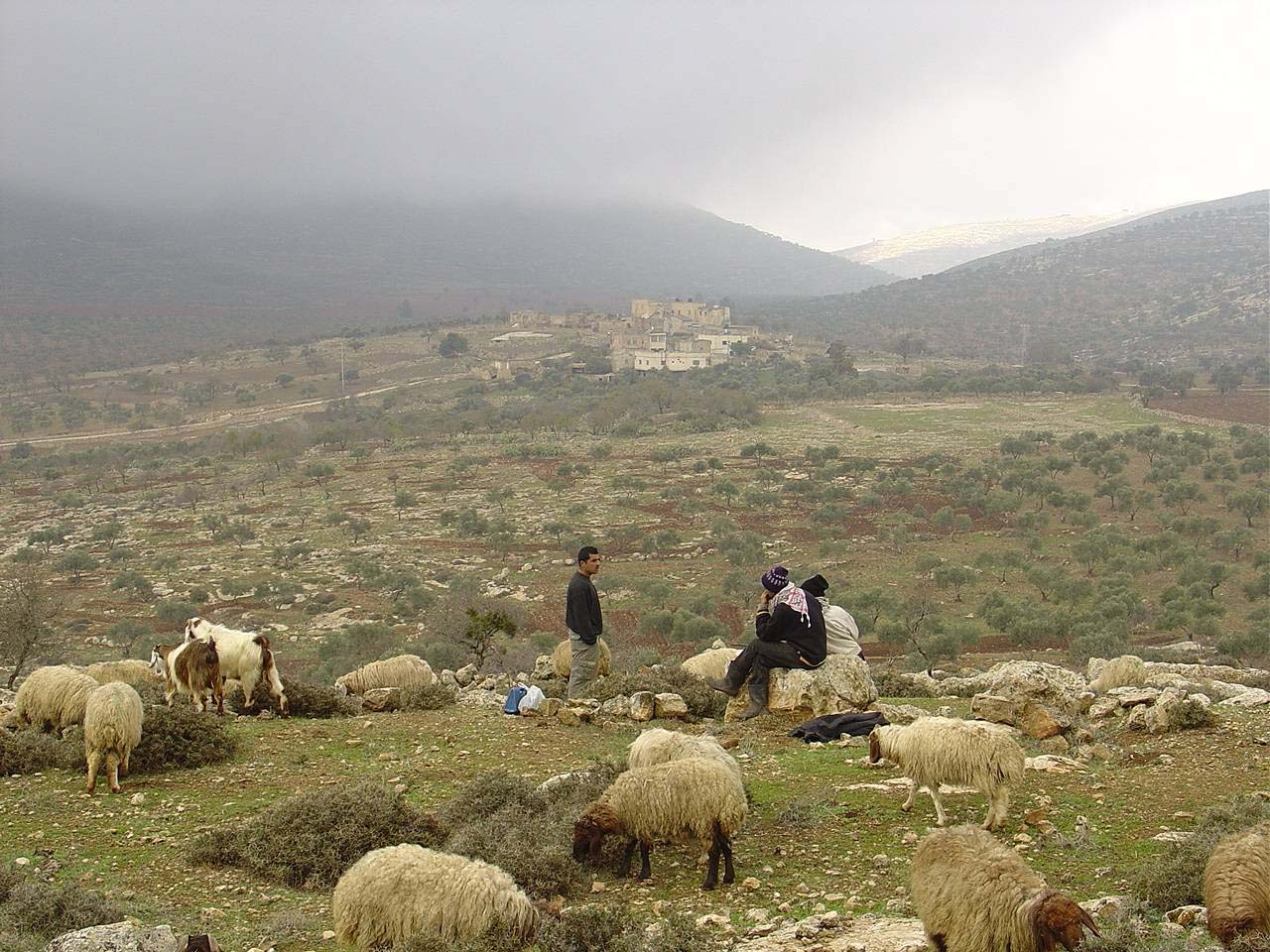
Ardin, who also goes by the name Bernardin, has moved to the West Bank in the Palestinian Territories, as part of a Christian outreach group, aimed at bringing reconciliation between Palestinians and Israelis. She has moved to the small town of Yanoun, which sits close to Israel’s security/sequestration wall. Yanoun is constantly besieged by fundamentalist Jewish settlers, and international groups have frequently stationed themselves there.

Ardin recently mocked her detractors and the press by tweeting: “CIA agent, rabid feminist / Muslim lover, a Christian fundamentalist, frigid & fatally in love with a man, can you be all that at the same time …”

Facebooktwittermail

Secrecy and power

True believers in secrecy know that its most staunch defenders are secrecy’s worst enemies. They know that the inevitable consequence of the rampant proliferation of a secrecy culture, will be to feed doubt that secrecy itself has any legitimacy. The assumption will take hold that secrecy’s one and only function is the protection of power.

Secrecy is maintained by constructing barriers between those who can know and those who can’t. The powers of a Security State have less to do with protecting secrets than with controlling the barriers of secrecy and determining who can be allowed in and who must be kept out. In other words, secrecy ends up having more to do with maintaining inequities in the distribution of power than in protecting the public interest.

In the multitude of ways that the Obama administration has mishandled the WikiLeaks drama, none is worse than the signal it has just sent out to a generation of young Americans: if you have an inquiring mind, don’t bother applying for a job with the US government. If however you are happy to blindly follow orders and have a slavish admiration for institutional authority — who knows, maybe one day you could become president.

Yesterday, TPMMuckraker reported:

The Office of Management and Budget today directed all federal agencies to bar unauthorized employees from accessing the Wikileaks web site and its leaked diplomatic cables.

In an email to federal agencies obtained by TPM, the OMB’s general counsel directed the agencies to immediately tell their employees to “safeguard classified information” by not accessing Wikileaks over the Internet.

Classified information, the OMB notes, “remains classified … until it is declassified by an appropriate U.S. Government authority.” Employees may not view classified info over a non-classified system (i.e., the Internet), the OMB says, “as doing so risks that material still classified will be placed onto non-classified systems.”

Reading a classified document appearing in the New York Times presents the risk that the designation of its secrecy will lose effect in the minds of those who are required to maintain a reverential respect for rubber stamps.

Meanwhile, the State Department, apparently hoping it might be able to lobotomize a few young minds in preparation for government service, sent out some friendly advice:

Students of Columbia University’s School of International and Public Affairs were warned this week not to spread the Wikileak cables online if they ever wanted a job at the State Department.

The warning came through the office of career services, from an unnamed alumnus who now works at State and wanted to pass along the message.

“The documents released during the past few months through Wikileaks are still considered classified documents. He recommends that you DO NOT post links to these documents nor make comments on social media sites such as Facebook or through Twitter,” reads the email, sent by the office of career services. Engaging in these activities would call into question your ability to deal with confidential information, which is part of most positions with the federal government.”

Oh the irony, that any of us could have been so naive as to imagine that the Bush era might be followed by a more enlightened administration. Instead, a cast of colorful characters who were easy to demonize has been replaced by something worse: technocratic zombies who have normalized and solidified the power grabs initiated by their Machiavellian predecessors.

And this is what it has come to under Obama’s leadership: that the surest way of predicting how this administration will act, is simply to ask: what would be the most cowardly course of action? For that is the direction in which we can be sure it will proceed.

If this failing was merely that of a particular president or political party, America might not be in such bad shape, but the test came on 9/11 and America has been failing ever since.

Danger always poses a challenge. Will fear scream so loudly that nothing else can be heard?

“Courage is the ability to follow your principles even when you’re scared to death,” said Lt Cmdr Charles Swift after successfully challenging the Bush administration before the Supreme Court in Hamdan v. Rumsfeld.

Swift appears in Secrecy — a documentary no less relevant now than when it came out in 2008. (If you’re a Netflix subscriber you can “watch instantly.”)

Last year (before WikiLeaks had acquired such prominence), the film’s directors Peter Galison and Robb Moss joined professors Jack Goldsmith (author of The Terror Presidency and former Assistant Attorney General in the Bush administration) and Martha Minow from Harvard Law School, for a discussion on the documentary, moderated by Jonathan Zittrain from Harvard’s Berkman Center for Internet & Society.

Ever since 9/11, protecting America has been the name of the political game, yet there has been no consensus about what constitutes that which is under threat and in need of protection. Global hegemony? Rampant consumerism?

What has gradually become clear is that it is American democracy itself which faces the greatest challenge and if the issue of secrecy is to be addressed in a way that supports rather than undermines democracy, it will be approached using the same principles that shape the whole operation of government, with checks and balances, for these are the principles which if not applied will fall into disrepair, leaving an America armed to protect everything while no longer standing for anything.

Facebooktwittermail

Cables from Beirut

Is WikiLeaks diversifying its cable supply line? As of 8.00PM US Eastern, the WikiLeaks Cablegate site lists just one cable originating from the US Embassy in Beirut.

The Lebanese newspaper Al Akhbar however, has published two other cables from Beirut, here and here. This might imply that WikiLeaks has picked out a handful of cables that it is going to feed to news outlets other than The Guardian, El País, Le Monde, and Der Spiegel.

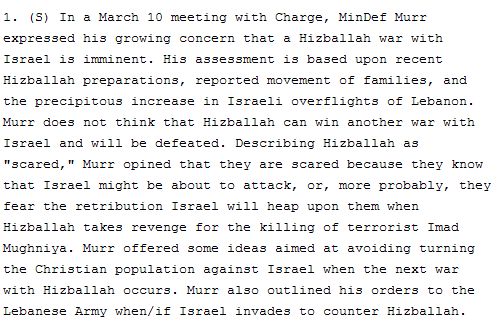
The summary below comes from a March 2008 secret cable and describes a meeting with Elias Murr, then Lebanon’s defense minister and now also deputy prime minister:

Lebanon's Defense Minister Elias Murr told the US the Lebanese army would remain in their bases if Israel launched an assault on Hezbollah

Elias Muhanna on his blog Qifa Nabki, writes:

In the cable mentioned, the Lebanese Minister of Defense Elias al-Murr discusses with U.S. Embassy officials his preparations for an impending war with Israel, which involved sequestering the Lebanese Army in its bases until Hizbullah is destroyed…

What makes this leak especially damning is the fact that al-Murr specifically mentions his meeting with General Michel Sleiman (who, in March 2008, was still the commander of the Lebanese Army, and not yet the President of Lebanon) and talks about sharing his plans with him. Today, al-Murr is considered to be one of the President’s key ministers, so it’s quite possible that the toxic nature of this scandal will spread beyond the Ministry of Defense all the way to the Presidential Palace.

There has been a lot of noise over the past few weeks from March 8 circles to the effect that President Sleiman is no longer considered a “consensual” president (because of his support for Hariri’s bid to table the false witness file until after the STL indictment is released). The Wikileaks scandal is going to provide the perfect excuse for Hizbullah and Aoun to go on the offensive again against the STL and the March 14 camp. I would not be surprised if Sleiman demands al-Murr’s resignation, just to save his own position.

As for whether Hezbollah or anyone else in Lebanon would actually find these machinations surprising, one of Qifa Nabki‘s commenters, “Shai,” is probably right on target when saying:

Seems to me Hezbollah is perfectly happy when the Lebanese Army stays out of the game. What better than to be deemed the sole “defender of Lebanon”? Who could ask such a defender to put down their arms, when the so-called “official army” stays indoors to watch the war on TV?

For Hezbollah, it’s a win-win.

Facebooktwittermail

When lives are at stake and governments choose to guard our ignorance

Gary Anderson, a retired US Marine colonel, says that Julian Assange is an enemy combatant and is “as much an enemy to the United States as any Al Qaeda operative.”

Not long ago an Esquire headline writer posed the question: “Should we execute Julian Assange?” “We” being the national American vigilante?

“Lives are at risk” is one of those fire-alarm imperatives that drains blood from the brain. It sets arms and legs and vocal chords in motion, fixes the mind on red-light conclusions and turns quiet deliberation into an unaffordable luxury.

A few years ago in Reader’s Digest, Michael Crowley rang the same alarm bell when he demanded that life-threatening websites like Cryptome (a sibbling of WikiLeaks) be shutdown.

To understand what nuts and zealots can do with this sort of information [available through sites like Cryptome], recall what happened in the early 1990s when three abortion doctors were killed after pro-life extremists created “wanted” posters displaying the physicians’ names and photographs. A few years later, a website showed pictures of other abortion doctors, and listed the murdered ones with their names crossed out. Eventually the site’s Web server shut it down.

Having been an outlet for State Department and CIA propaganda in the 1940s and 50s, Reader’s Digest was already on shaky ground positioning itself as a champion of public interest, but it was the Department of Justice which revealed that on occasions Reader’s Digest itself had been a source of dangerous information.

A 1997 DoJ report on the availability of bombmaking information made it evident that the necessary know-how was not hard to come by.

Stories of crimes contained in popular literature and magazines also constitute a rich source of bombmaking information. For example, the August 1993 edition of Reader’s Digest contains an account of efforts by law enforcement officers to track down the killer of United States Court of Appeals Judge Robert S. Vance and attorney Robert Robinson. That article contained a detailed description of the explosive devices used by the bomber in committing the murders, including such information as the size of the pipe bombs, how the bombs were constructed, and what type of smokeless powder was used in their construction. According to the Arson and Explosives Division of the Bureau of Alcohol, Tobacco and Firearms, in a bombing case originating in Topeka, Kansas, the devices were patterned after the bomb used to kill Judge Vance. Upon questioning, the suspect admitted to investigators that he constructed the bomb based on information contained in the Reader’s Digest article.

As Daniel Ellsberg notes, in its efforts to clamp down on embarrassing leaks, the government’s first recourse is invariably to declare that “lives are at stake”

That’s a script that they roll out — every administration rolls out — every time there’s a leak of any sort. The best justification they can find for secrecy is that lives are at stake. Actually lives are at stake as a result of silence and lies which a lot of these leaks reveal.

In the latest revelations from WikiLeaks, the dangers of secrecy are no more clearly evident than in what we now learn about the vulnerability of Pakistan’s nuclear stockpiles — an issue we have previously been repeatedly assured poses no immediate risk. Secretly, we now learn, America’s leading diplomats in Pakistan did not share the confidence that the administration wanted to instill among Americans whose ignorance it preferred to guard.

Less than a month after President Obama testily assured reporters in 2009 that Pakistan’s nuclear materials “will remain out of militant hands,” his ambassador here sent a secret message to Washington suggesting that she remained deeply worried.

The ambassador’s concern was a stockpile of highly enriched uranium, sitting for years near an aging research nuclear reactor in Pakistan. There was enough to build several “dirty bombs” or, in skilled hands, possibly enough for an actual nuclear bomb.

In the cable, dated May 27, 2009, the ambassador, Anne W. Patterson, reported that the Pakistani government was yet again dragging its feet on an agreement reached two years earlier to have the United States remove the material.

She wrote to senior American officials that the Pakistani government had concluded that “the ‘sensational’ international and local media coverage of Pakistan’s nuclear weapons made it impossible to proceed at this time.” A senior Pakistani official, she said, warned that if word leaked out that Americans were helping remove the fuel, the local press would certainly “portray it as the United States taking Pakistan’s nuclear weapons.”

The fuel is still there.

It may be the most unnerving evidence of the complex relationship — sometimes cooperative, often confrontational, always wary — between America and Pakistan nearly 10 years into the American-led war in Afghanistan. The cables, obtained by WikiLeaks and made available to a number of news organizations, make it clear that underneath public reassurances lie deep clashes over strategic goals on issues like Pakistan’s support for the Afghan Taliban and tolerance of Al Qaeda, and Washington’s warmer relations with India, Pakistan’s archenemy.

The issue here, however, is more complex than transparency vs secrecy. While the dangers posed by nuclear stockpiles in Pakistan — and for that matter anywhere else — should concern everyone, the overbearing relationship between the US and a client state which it has turned into a theater for remote war, has fed popular and well-founded suspicion about the intentions of the US government. Pakistanis widely believe that the United States is intent on stealing the Islamic republic’s nuclear crown jewels. Those suspicions will now be further compounded as Pakistan’s government struggles to placate competing international and domestic fears.

If transparency is the buzzword of this political moment, maybe it should be seen as a signal that a larger issue is in desperate need of remedying — an issue that WikiLeaks cannot address: that the need for transparency is symptomatic of a global deficit in trust.

We have repeatedly been given reason to expect that government leaders, corporations and other powerful institutions cannot be trusted. WikiLeaks now fuels that mistrust and those who feel threatened can either shrink behind the barricades of secrecy or acknowledge that they must address the monumental task of building confidence in the fragile idea of public service.

Facebooktwittermail

WikiLeaks: good for Israel

I didn’t come up with the headline — it’s from Israel’s pro-settler Arutz Sheva news network. And as their report makes clear, this favorable review of what has been described as a diplomatic 9/11, reflects the views of the Israeli government.

Just as Benjamin Netanyahu on September 11, 2001, said the attacks were a “good thing” for US-Israeli relations and then again in 2008 told an Israeli audience, “We are benefiting from one thing, and that is the attack on the Twin Towers and Pentagon,” it’s likewise reasonable to assume that he is similarly pleased with the repercussions of “Cablegate.” If for the past few days the diplomatic world has been thrown into disarray, the one country that so far remains unscathed is Israel.

WikiLeaks, on the other hand, having placed itself at the vanguard of a movement demanding transparency in global affairs, has so far failed to live up to the standard it is setting for others. They don’t need to jeopardize the security of their own operations, but they do need to explain the inner workings of the editorial process through which by releasing some cables and withholding others they are now feeding a narrative to the global media.

I’ll leave it others to construct elaborate theories on how WikiLeaks could be seen as a Mossad or CIA operation, but whether or not either or both intelligence organizations have played a role in shaping this story, one of its central features echoes the history of Israel and its use of a strategy of “divide-and-survive” across the Middle East.

In The American Interest earlier this year, Benjamin E Schwartz described this policy:

When American diplomats talk about the road to peace, few Israelis dare articulate one awkward truth. The truth is that Israelis have managed their conflict with the Arabs and the Palestinians for half a century not by working to unite them all, but either by deliberately and effectively dividing them, or by playing off existing divisions. By approaching matters in this way, Israelis have achieved de facto peace during various periods of their country’s history—and even two examples of de jure peace. It is because of divisions among Palestinians that Israelis survived and thrived strategically in 1947–48, and because of divisions among the Arab states that Israel won its 1948–49 war for independence. Divisions among the Arabs and divided competition for influence over the Palestinians allowed Israelis to build a strong state between 1949 and 1967 without having to contend with a serious threat of pan-Arab attack. It was because of divisions and the strength of Egypt amid those divisions that Anwar Sadat decided to make a separate peace in 1979. It was because of another set of divisions that King Hussein was able to do the same in 1994.

The results of Israeli statecraft did not produce an American-style comprehensive peace, and it did not produce peace with the Palestinians. It may not even have produced a lasting peace with Egypt and Jordan—time will tell. But it did produce peace in its most basic and tangible form: an absence of violence and the establishment of relative security. This is what peace means for the vast majority of Israelis, most of whom do not believe that their Arab neighbors will ever accept, let alone respect as legitimate, a Jewish state in geographical Palestine. And the way Israelis have achieved this peace is, in essence, through a policy of divide and survive.

Now, thanks to WikiLeaks, we see the Saudi king insulting the president of Pakistan, Egypt insulting Iran, America’s fear of Turkey — suspicions, fear and hostility pushed from the background into the foreground with no consequence more predictable than that these expressions of candor will be divisive and further erode the political authority of every player, except for one: Israel.

Meanwhile, if Israeli officials are discreet enough not to openly celebrate the divisions exposed by WikiLeaks, they have no hesitation in trumpeting their sense of vindication arising from the public display of hostility towards Iran expressed by so many of the region’s autocratic leaders.

Facebooktwittermail

Wikileaks, Israel and assassins in Iran

With only 220 out of 251,287 cables released so far, who knows what surprises lie ahead, but it seems striking and noteworthy that Israel has managed to be the subject of so little attention. Considering the tensions between the Obama administration and the Netanyahu government that have been so widely reported, it’s strange that in the first collection of cables we would see little or no evidence of this discord. At the same time there is an abundance of ammunition provided to those who want to push for war against Iran.

At face value, Wikileaks if not serving can at least be said to have been very obliging in advancing Israel’s agenda — and giving the neocons cause for celebration.

Meanwhile, as the media’s attention is riveted by Wikileaks, assassins — presumably operating under the direction of Mossad — have been active on the streets of Tehran, murdering one nuclear scientist and injuring another.

The Guardian reports:

Assassins on motorbikes have killed an Iranian nuclear scientist and wounded another in identical attacks this morning. They drove up to the scientists’ cars as they were leaving for work and attached a bomb to each vehicle which detonated seconds later.

The man who was killed was Majid Shahriari, a member of the engineering faculty at the Shahid Beheshti in Tehran. His wife was wounded. The second attack wounded Fereidoun Abbasi, who is also a professor at Shahid Besheshti University, and his wife.

They are senior figures in Iranian nuclear science. Abbasi was a member of the Islamic Revolutionary Guards, or Pasdaran, and once taught at the Pasdaran-run Imam Hossein University. He was hailed by Mahmoud Ahmadinejad three years ago as Iran’s academic of the year.

Facebooktwittermail