Category Archives: Editorials

America’s obsession with The Man

The American geopolitical prism is distorted in multiple ways, but none is more consistently evident than the strange idea that the actions of a nation can be understood simply by deciphering the thoughts and intentions of one man — even if we’re not always sure who The Man really is.

Iran — Ahmadinejad or Khamenei? North Korea — Kim Jong-il. Russia — Putin. Turkey — Erdogan. Syria — Bashar al-Assad. Egypt — Hosni Mubarak. Iraq — Saddam. Brazil — Lula. Venezuala — Chavez. Cuba — Castro. North Vietnam — Ho Chi Minh. South Africa — Mandela. Britain — Churchill. Germany — Hitler. Soviet Union — Stalin. China — Mao, Hu or who?

Reduce a nation to a single man and the task of understanding that nation’s cultural and political complexity will often be reduced to a question about how we deal with The Man.

Can he be trusted? Can he be befriended? Can he be bribed? Should he be kept at a distance? Does he need to be contained? Must he be killed?

For a few months in Afghanistan recently, Mullah Akhtar Muhammad Mansour became The Man — a representative of the Taliban offering the US a ticket home. That man turned out to be an impostor, while the word is that the man with one eye and his fellow commanders have no interest in laying down their weapons:

Sayed Amir Muhammad Agha, a onetime Taliban commander who says he has left the Taliban but who acted as a go-between with the movement in the past, said in an interview that he did not know the tale of the impostor.

But he said the Taliban leadership had given no indications of a willingness to enter talks.

“Someone like me could come forward and say, ‘I am a Talib and a powerful person,’ ” he said. “But I can tell you, nothing is going on.”

“Whenever I talk to the Taliban, they never accept peace and they want to keep on fighting,” he said. “They are not tired.”

Where does this obsession with The Man come from? Faith in personal salvation through Jesus Christ? The institution of the regal American presidency? The religion of individualism?

Whatever its origin, it skews America’s relations with the world — a world in which individuals, even those regarded as the authors of history, both shape and mirror the societies, cultures and historical junctures within which they operate. It is that which they mirror, to which we give far too little account.

Facebooktwittermail

The Israelification of America

As the Transportation Security Administration faces a barrage of criticism, some indignant Americans are calling for the “Israelification” of US airports — as though the security procedures used in a tiny Middle Eastern ethnocracy with one international airport could easily be scaled up for America.

Ironically, Israelification is not what we need — it’s what we already have.

Consider the real outrages of the last decade that, simply because they were done in the name of national security, the majority of Americans found tolerable:

  • a global war on terrorism that led to massive increases in defense spending, the creation of multiple new intelligence and security agencies, and Washington’s enslavement to fear-based politics — that was OK;
  • with disregard for international law, the invasion of Iraq on a false pretext — that was OK;
  • the kidnapping, secret imprisonment and torture of individuals most of whom had nothing to do with 9/11 — that was OK;
  • the authorization of warrantless wiretaps — that was OK;
  • the implementation of a remote-controlled assassination program — that was OK;
  • in short, the normalization of war crimes all of which were deemed justifiable because of 9/11 — that was OK;
  • but “don’t touch my junk” — there are limits to what Americans will tolerate.

TSA administrators are no doubt frustrated by the fact that had the new pat-down procedures been implemented in late 2001, they would probably have been welcomed by a population that widely supported the idea of doing “whatever it takes” to stop “the terrorists.”

The problem, then and now, is that air transportation security is imagined to be about catching terrorists. On this count, the TSA seems to have a poor record.

At Slate, Juliet Lapidos notes:

In May, the Government Accountability Office released a report noting that SPOT’s [“Screening of Passengers by Observational Techniques”] annual cost is more than $200 million and that as of March 2010 some 3,000 behavior detection officers [BDOs] were deployed at 161 airports but had not apprehended a single terrorist. (Hundreds of illegal aliens and drug smugglers, however, were arrested due to the program between 2004 and 2008.) What’s more, the GAO noted that at least 16 individuals later accused of involvement in terrorist plots flew 23 different times through U.S. airports since 2004, but TSA behavior-detection officers didn’t sniff out any of them.

Does this imply that the TSA’s BDOs have yet to pinpoint the way a terrorist walks, talks, or dresses? The TSA’s “failure” in this instance might simply mean that the individuals who escaped their attention were not at those times actually doing anything suspicious.

The point is, there are justifiable and unjustifiable grounds to turn a person into an object of suspicion. A system that simply on the basis of religion, ethnicity or nationality, regards a person with suspicion, is unjust and will be ineffective. Indeed, a system which even regards its targets as “the terrorists” conjures up the false notion that it is dealing with a class of people rather than a class of behavior.

Which brings me back to my initial claim that the Israelification of America is already deeply entrenched. Israel’s fear of the Arab world has been transplanted into American consciousness to such a degree that we are moving toward the absurd conclusion that if this country operated even more like Israel than it already does, then we would be able to feel as safe as the Israelis do.

Living inside a fortress and defining ones existence in terms of threats posed by eternal enemies, is a good way of justifying spending more and more on increasingly elaborate fortifications. But those who invest deeply in this mindset and who profit from its perpetuation, have the least interest in exploring what we need to understand most: why our enemies think the way they do. Delve into that question, and the notion of eternal enmity quickly evaporates — thus the perpetuation of the myth that we are under threat not because of what we do but because of who we are.

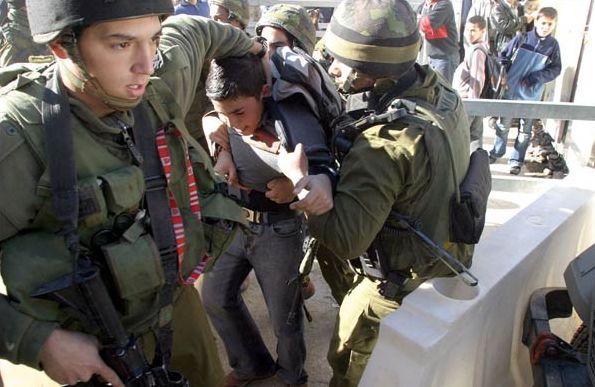
Meanwhile, next time a TSA officer offends your dignity, spare a thought for the Palestinians who while passing through IDF checkpoints suffer vastly worse when attempting no more than to travel from one town to the next.

Facebooktwittermail

From the top there’s only one way forward: down

Mature cosmological systems recognize the cyclical nature of change: that growth is followed by decay and that power gathered is later dispersed. These are not ideas readily embraced by an imperial power and thus America has driven itself into a trap which it cannot back out of without undermining its own image of preeminence.

The trap that a great power falls into as soon as it makes the mistake of using blunt force against an asymmetrical threat is that its opponent has the exclusive ability to make tactical retreats with its pride in tact.

For a decade now, America has been fighting adversaries who operate unwaveringly according to the Maoist principles of guerrilla warfare: “The enemy advances, we retreat; the enemy camps, we harass; the enemy tires, we attack; the enemy retreats, we pursue.”

The war on terrorism, whose sole purpose was to put on display the preeminence of American power, has instead in every possible way demonstrated the limits of American power and yet even now the prospect of defeat cannot be entertained.

The Obama administration, desperate to find a way out of Afghanistan, refuses to admit that it is developing an exit strategy. The plan to end combat missions by 2014 is not an exit strategy; it is a “transition strategy” US envoy Richard Holbrooke claims.

And as if to guard against the risk that Obama might end a second term (if he gets one) with the United States no longer at war, he seems intent on starting a war of his very own — a war whose beginning echoes America’s entry into Vietnam.

The Wall Street Journal reports:

The U.S. is preparing for an expanded campaign against al Qaeda in Yemen, mobilizing military and intelligence resources to enable Yemeni and American strikes and drawing up a longer-term proposal to establish Yemeni bases in remote areas where militants operate.

The developments are part of a U.S. scramble to step up the hunt for members of al Qaeda in the Arabian Peninsula, the terrorist organization behind a recent failed attempt to blow up two planes over the U.S. using bombs hidden in cargo.

Limited U.S. intelligence experience in Yemen has created “a window of vulnerability” that the U.S. government is “working fast to address,” a senior Obama administration official said.

For now, the U.S. gets much of its on-the-ground intelligence from a growing partnership with Saudi Arabia, which shares a border with Yemen and has a fruitful informant network in Yemen’s tribal areas.

In the rush to build up capabilities, the Central Intelligence Agency and other agencies are moving in equipment and personnel from other areas, and over the past year have expanded the size of teams in the U.S. analyzing intelligence on AQAP. The emphasis now is on expanding the number of intelligence operatives and analysts in the field.

There is a debate within the Obama administration and Pentagon about how best to ramp up the fight against AQAP, the Yemen-based terrorist group. Supporters of establishing forward operating bases for Yemeni forces say they would help the weak Yemeni government expand its control and create an opportunity to get a small number of American Special Operations trainers and advisers out of the capital region and into the field.

Facebooktwittermail

Glenn Beck: inspired by Iran or Lyndon LaRouche?

George Soros is a Jewish tycoon and mastermind of ultra-modern colonialism. He is also a thug who is deployed as an economic hitman for the British empire.

The first claim comes from a video produced by Iran’s Ministry of Intelligence which has depicted Soros operating out of the Situation Room in the White House, while the second comes from Hector A Rivas Jr at LaRouchePAC, serving longtime presidential aspirant Lyndon LaRouche.

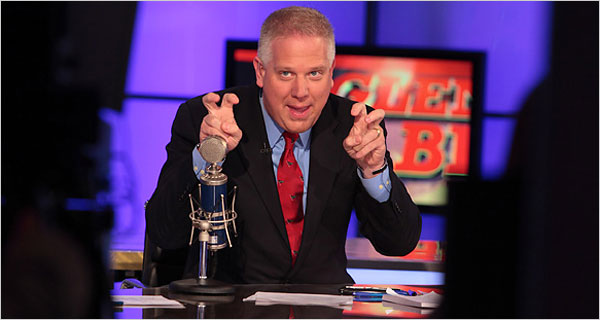
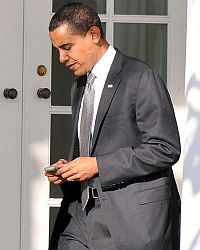
Now comes Glenn Beck, asking ominously about President Obama’s channels of communication: “Have you ever wondered who is at the other end of a BlackBerry?”

Who else but Obama’s puppet master, the omnipotent George Soros.

Soros the macro-managing controller of global events is also the micro-manager of Obama’s daily agenda. He really has taken multi-tasking to a supernatural level as he steers the global financial markets, runs his empire of 501(c)3s, and tells Obama what to do!

Even with his show’s title and images of Soros pulling puppet strings and with puppets dangling from the studio ceiling, Beck still didn’t seem completely confident with his puppet-master metaphor and so needed to make it more literal, the Blackberry supposedly providing the tangible evidence that on a minute-by-minute basis, George Soros has the power and ability to control all of Obama’s actions. But as Beck himself says in his comprehensive disclaimer: “if you take what I say as gospel, you’re an idiot.”

Thus we are presented with the distinctive blend of fear and farce from a man who clearly doesn’t take himself seriously yet who surely lives in a state of constant amazement that his own antics have made him so rich and influential.

In the last year, Glenn Beck’s estimated earnings were $33 million, putting him in second place after Rush Limbaugh ($58.7 million) in Newsweek‘s “Power 50” list which ranks the highest earning political figures in 2010. Bundle the Fox News triumvirate of Beck, Sean Hannity and Bill O’Reilly together and they rank #1 with combined earnings of $75 million. Following the same career trajectory as Beck, Lou Dobbs has just joined Fox, a year after his departure from CNN.

Are Beck and his cohorts now themselves the puppet masters of American politics? Emma Mustich shows how the five-point formula Beck ascribes to Soros just as accurately represents Beck and Fox News‘ methods for gathering and exerting enormous political power.

Meanwhile, Michelle Goldberg writes:

Soros, a billionaire financier and patron of liberal causes, has long been an object of hatred on the right. But Beck went beyond demonizing him; he cast him as the protagonist in an updated Protocols of the Elders of Zion. He described Soros as the most powerful man on earth, the creator of a “shadow government” that manipulates regimes and currencies for its own enrichment. Obama is his “puppet,” Beck says. Soros has even “infiltrated the churches.” He foments social unrest and economic distress so he can bring down governments, all for his own financial gain. “Four times before,” Beck warned. “We’ll be number five.”

It’s true, of course, that Soros has had a hand in bringing down governments—communist, authoritarian governments. Beck seems to be assuming a colossal level of ignorance on the part of his viewers when he informs them, “Along with currencies, Soros also collapses regimes. With his Open Society Fund… Soros has helped fund the Velvet Revolution in the Czech Republic, the Orange Revolution in the Ukraine, the Rose Revolution in Georgia. He also helped to engineer coups in Slovakia, Croatia, and Yugoslavia. So what is his target now? Us. America.”

Beck’s implication is that there was something sinister in Soros’ support for anti-communist civil society organizations in the former Soviet Union. Further, he sees such support as evidence that Soros will engineer a communist coup here in the United States. This kind of thinking only makes sense within the conspiratorial mind-set of classic anti-Semitism, in which Jews threaten all governments equally. And as a wealthy Jew with a distinct Eastern European accent, Soros is a perfect target for such theories.

And in an indication that for the American Jewish community, Beck has indeed crossed a line with his slanderous attack, suggesting that the 14-year-old Soros was a Nazi collaborator, Abraham Foxman, director of the Anti-Defamation League, called Beck’s comments “horrific” and “totally off limits and over the top.” Whether Beck’s antipathy for Soros makes him an anti-Semite, is nevertheless questionable.

For Beck, fear is a commodity in which he has deeply invested in futures — an investment whose value he works on inflating every day. But the fear he trades in is not something he invented. It has long resided in the heart of that predominantly white America which is a nation of islanders, challenged by the inconvenient truth that America is not an island.

Facebooktwittermail

Tribal loyalty versus the integrity of the individual

(Young Jews disrupt Netanyahu at Jewish General Assembly from stefanie fox on Vimeo.)

Human beings are animals, but the aspects of our nature that can most fittingly be called animalistic, most often express themselves collectively. They require the abandonment of a sense of self, a loss of the awareness of individual autonomy and personal integrity as individual will submerges in collective will.

When individuals from Jewish Voice of Peace disrupted Benjamin Netanyahu’s speech in New Orleans yesterday, waves of anger swept through the audience.

Jeff Shapira from San Antonio grabbed one of the protesters by the throat, but when later asked whether he had ever put a woman in a choke hold before, he responded: “Not really. No. I really did not know what was going to happen, I wanted to keep her in check. I was trying to help.”

As can be seen in the video above, a rabbi in the audience performed his own ritualistic denunciation of the protests by tearing and biting one of the protest banners as though he was slaughtering a sacrificial animal.

The collective judgement was, no doubt, that these are all appropriate ways of dealing with “self-hating” Jews — the only type of Jew who can be expected to criticize Israel.

Meanwhile, Alfred Grosser, a Jewish intellectual and Holocaust survivor who is the keynote speaker at a ceremony marking the 72nd anniversary of Kristallnacht in Frankfurt tonight, has similarly been attacked because he describes himself as pro-Palestinian.

In an interview with the Jerusalem Post, Israel’s deputy chief of mission in Germany, Emmanuel Nahshon, said that Frankfurt’s decision to invite Mr. Grosser to speak at the memorial “casts an unfortunate and unnecessary shadow on the event.” He also said that Mr. Grosser’s criticism of Israel was “illegitimate and immoral,” and suggested that his “extreme opinions are tainted by self-hatred.”

The campaign to demean and delegitimize individual Jews by describing them as being afflicted by self-hatred is transparently coercive. There is perhaps a sense that the tribe cannot allow itself to rip itself apart by rejecting any of its members, but those who display what is cast as a form of tribal disloyalty must be neutered and silenced — both as a form of punishment and as a way of signalling to waverers the risks involved in stepping out of line. Rather than the threat of exile, there is the threat of being branded a lesser Jew, a self-hating Jew.

But the phrase itself — self-hating — seems to indicate more. This “self” is a particular form of Jewish identity which recognizes no such thing as a fully autonomous individual identity. A tribal consciousness, which rejects true autonomy, cannot accommodate expressions of personal conscience through dissent. The putative self which is supposedly being hated, exists inside the individual only in as much as the individual mirrors the collective

While social mechanisms such as these stretch all the way back to the origins of primate behavior, in the age of complex, diverse modern societies, they point in a darker direction: this is where fascism finds its base.

The New Orleans protesters later described who they are and why they took their action:

They also released a declaration at Young Jewish and Proud:

A vision of collective identity, purpose and values written by and for young Jews committed to justice in Israel and Palestine. It is an invitation and call to action for both our peers and our elders, launched as a counter-protest at the 2010 Jewish Federation General Assembly in New Orleans. [Read their full declaration.]

Facebooktwittermail

America’s ever-expanding knowledge deficit

At Salon, Justin Elliot reports:

An August Pew poll found that a growing number of Americans — 18 percent — falsely believe that President Obama is a Muslim. Why does that figure keep rising? It’s a difficult question, but it may partly be explained by the remarkable success of videos like this one, which has racked up over 2.5 million views in just three months on YouTube. It’s titled, “”BREAKING NEWS! – Is Barack Obama Really A Saudi / Muslim ‘Plant’ in the White House?”

The thrust of the video, put up by YouTube user ppsimmons, is this: The wife of an American-born Israeli author, Avi Lipkin, monitors the Egyptian media. She saw a broadcast in which the Egyptian foreign minister said that Obama personally told the him that Obama is a Muslim — and that the president is hiding that fact (and also that he is going to betray Israel).

All of this is narrated not by Lipkin, but by an unidentified man (possibly the YouTube user). Lipkin, who sometimes using the alias “Victor Mordecai,” is a former IDF spokesman and current right-wing speaker and writer on Islamic terrorism. He told Salon in an email that the YouTube video is an accurate portrayal of his beliefs.

“My wife, Rachel, has been listening to the Arabic language media from her office in Kol Israel Radio in Jerusalem, and this is just the tip of the iceberg,” he said. “It is ironic, because the whole Islamic world knows the American president is a Moslem. The only ones who don’t know it or want to know it are the Americans, themselves.”

There is no evidence presented that this Egyptian interview ever happened. And the YouTube video itself (which was apparently put up not by Lipkin, but by one of his fans) could well be the product of a lone conspiracy theorist. Which makes it all the more remarkable that it has racked up 2.5 million views.

The video does actually identify its narrator: PCG. That is, Pastor Carl Gallups from the Hickory Hammock Baptist Church in Milton, Florida. Online shoppers who want to accessorize their faith might enjoy visiting the church’s gift shop where they will find a fine line of “CHRISTIAN and GOD AND COUNTRY T-Shirts, Gifts Accessories and Home Items.”

Pastor Gallups was given national attention in late June when he was named as a runner-up in one of Keith Olbermann’s “worst person in the world” lists after the release another popular YouTube video: “EXCLUSIVE! OIL SPILL IN GULF – Hand of God? Connection to Israel?

To the extent that Gallups’ videos have gone “viral” (at least prior to receiving attention from MSNBC and Salon), the pathways of proliferation they have followed seem somewhat predictable. Spreading out from Pastor Gallups’ own congregation, along with listeners to his Freedom Friday show on northwest Florida’s 1330 AM Weby talk radio, these are messages spreading most likely among the already converted. Which is to say, people whose worldview is confirmed — not challenged — by claims such as that the Saudi Arabian monarchy is in control of the US government or that the BP Gulf oil spill was an expression of the wrath of God in reaction to the Obama administration applying pressure on the Netanyahu government.

Are these ideas that can only be accepted by people who have lost any grasp on reason? I think not.

The issue is the boundaries that circumscribe the pool of information that individuals draw upon as they form their understanding of the world. People like Gallups present a view of America and the world that has its own internal logic which holds up through the reinforcement of rigid definitions about what constitute legitimate and illegitimate sources of information.

Progressives, liberals, conservatives, evangelicals, and atheists, all employ the same form of prejudicial review in accessing the credibility of information, which is to attach weight to the source before assessing the value of the information. We attend to who is speaking before we hear what they are saying. Where we differ is in how broad and deep or narrow and shallow is the pool of imputed credibility we draw upon.

This is worth remembering at a time when it’s easy to believe that a wave of irrationality is sweeping across America.

Facebooktwittermail

Anwar al Awlaki: wanted dead, not alive

Patrick Cockburn writes:

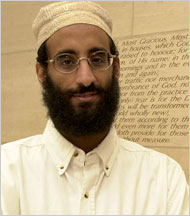
Anwar al-Awlaki, the militant Islamic cleric in hiding in Yemen, was being denounced in the US and Britain last week as an arch-conspirator against the West, leading to hundreds of videos of his speeches and interviews being hurriedly removed from YouTube.

Awlaki, an eloquent preacher, is alleged to have radicalised Roshonara Choudhry, the theology student who stabbed Stephen Timms MP for voting for the Iraq war. Awlaki was also in contact with militant Muslims who later attacked American targets, such as the Nigerian student with explosives sewn into his underpants and the US officer who shot dead 13 of his fellow soldiers at Fort Hood.

On the videos of Awlaki still available on YouTube, often excerpts from his speeches broadcast on US TV, his message remains chillingly clear. In a soft, measured voice he describes how he was born in America, lived there for 21 years and became an Islamic preacher, advocating non-violence until the invasion of Iraq in 2003. This turned him into a supporter of holy war against America: “I eventually came to the conclusion that jihad against Islam is binding for Muslims.”

(That should of course read “jihad against America” and Cockburn’s gaffe should have been caught by the Independent‘s editors.)

The fact that Awlaki is currently being turned into a larger than life figure is highlighted in this report from Yemen, appearing in the Los Angeles Times:

“Anwar Awlaki?”

Mmmmm.

“Is he a doctor? I don’t think I know him.”

Americans may regard the U.S.-born cleric with the beard and hard stare as a new face of terror, but when you mention Awlaki in the Yemeni capital, it’s as if you’ve asked someone to solve a complicated bit of arithmetic. Eyes narrow, faces scrunch.

“I don’t know who he is. I work all day and don’t watch a lot of TV,” said Ibrahim Abdulrab, standing over an ironing board with a pile of shirts at his feet.

The radical preacher is on the CIA’s assassination list and is believed to be hiding with Al Qaeda fighters in Yemen’s mountainous tribal lands. He is implicated in a number of plots, including inspiring a U.S. Army psychiatrist who is charged with killing 13 people a year ago at Ft. Hood, Texas, and the recent attempt to blow up aircraft with packages of concealed explosives.

Internet videos, website manifestos and pundit rhetoric are splicing Awlaki into the American consciousness. But he is largely unknown here or referred to as an apparition hiding in a distant crevice. Even his Al Qaeda in the Arabian Peninsula is scoffed at by many as an invention, a ploy by Washington and Yemeni President Ali Abdullah Saleh to advance larger agendas.

What’s interesting about the way in which Awlaki has rapidly been elevated to the status of latest and greatest threat to America is that his potency as a radicalizing force is clearly being amplified by those who regard him as a threat.

As Cockburn notes: “Most alarming for the US and British governments, Awlaki’s words are directed primarily at English-speaking Muslims. He asks how American Muslims can give their loyalty to a country that is at war with Islam.”

These are the competing narratives of the ideological fight in which Awlaki has been cast as the West’s new nemesis:

On the one hand Western governments claim that the most dire threat to democracy comes from small groups of Islamic extremists, mostly scattered across the Middle East — even while inside these threatened Western countries, life continues largely as normal with little or no evidence that these are nations at war — such as during the US midterm elections where war barely got mentioned.

On the other hand, ideologues such as Awlaki assert that America and its allies are engaged in a war against Islam — that claim being rather strongly reinforced by the fact that the Middle East has been ripped apart by a decade of war in which the overwhelming majority of the hundreds of thousands of casualties have been Muslim men, women and children.

As vehemently as Western politicians might deny the existence of a war against Islam, Muslims do not have to be wild-eyed conspiracy theorists to conclude otherwise.

So this leads to the question of how exactly the threat posed by Awlaki is being measured. Is it, as we have been told, that he has had an instrumental role in planning acts of terrorism? Or is it that he poses an unacceptable risk because he has the capacity radicalize others in the same way that he himself was radicalized and that worst of all, these others are, so to speak, on the wrong side of the border?

If Awlaki can be assassinated because he expresses what have simply been deemed dangerous ideas then we live in an era in which democracy is being destroyed in the name of saving democracy.

The Predator drones now hunting Awlaki are not simply in the business of thwarting future acts of terrorism. Awlaki’s death will ensure that he never goes on trial — a prospect whose improbability is underlined by the fact that he has been selected for assassination even while in the United States no warrant for his arrest has been issued.

Facebooktwittermail

YouTube bows to political pressure and removes Awlaki videos

On Wednesday, The Guardian reported:

Hundreds of videos inciting violence, including some linked to the suspected al-Qaida mastermind of the cargo plane bomb plot, were removed from YouTube today.

The videos were highlighted after the conviction of Roshonara Choudhry for attempting to kill the former [British] government minister Stephen Timms. She was radicalised watching internet sermons by Anwar al-Awlaki, an Islamist cleric now in Yemen who the US suspects masterminded several terrorist plots.

In a private speech in the US last week, the security minister, Lady Neville-Jones, called on the White House to “take down this hateful material” in cases where servers were located within its jurisdiction.

“When you have incitement to murder, when you have people actively calling for the killing of their fellow citizens and when you have the means to stop that person doing so, then I believe we should act,” she said. “Those websites would categorically not be allowed in the UK. They incite cold-blooded murder and as such are surely contrary to the public good.”

Will YouTube also now be looking at videos conveying messages of hate from people like Michael Savage?

When Byron Williams went on a shooting spree in California this summer, his desire to “start a revolution” was inspired in part, it was reported, by Savage’s talk radio rants. Speaking about the ACLU, Savage had warned: “They will kill us all if they’re not stopped.” Williams aimed to do just that by killing the ACLU’s leaders.

In 2006, Savage called for the killing of 100 million Muslims:

There are too many RDDBs [red-diaper doper babies, Savage’s term for people supposedly raised by Marxist parents] in high places and in the media and in the courts for us to stand up to this fanatical enemy. And so unless the RDDB is reined in somehow or taken out of power, we’re going to die as a nation. I swear to God that’s what people are saying to me. And these are intelligent people, wealthy people. They are very depressed by the weakness that America is showing to these psychotics in the Muslim world. They say, “Oh, there’s a billion of them.” I said, “So, kill 100 million of them, then there’ll be 900 million of them.” I mean, would you rather die — would you rather us die than them? I mean, what is it going to take for you people to wake up? Would you rather we disappear or we die? Or would you rather they disappear and they die? Because you’re going to have to make that choice sooner rather than later.

In 2008, after the Mumbai attacks, Savage advocated genocide, referring to the tribal areas of Western Pakistan, saying: “[T]here’s no question that entire region needs to be annihilated and stripped off the earth.”

From Michael Savage, to Pastors John Hagee, Rod Parsley and Terry Jones, America has no shortage of hate-mongers whose words are capable of inciting violence. Should YouTube and other publishers and media outlets be policing their operations so that none of these men can find an easily available platform from which to vent their anger?

Not if we want to protect the First Amendment.

In 1969 in Brandenburg v. Ohio, the Supreme Court ruled that “the constitutional guarantees of free speech and free press do not permit a State to forbid or proscribe advocacy of the use of force or of law violation except where such advocacy is directed to inciting or producing imminent lawless action and is likely to incite or produce such action.” The ruling went on to cite Noto v United States (1961) which said: “the mere abstract teaching … of the moral propriety or even moral necessity for a resort to force and violence, is not the same as preparing a group for violent action and steeling it to such action.”

On this basis, it seems pretty clear that lectures by Anwar al-Awlaki, available on YouTube, and Michael Savage’s talk-radio rants, are both examples of free speech protected by the First Amendment.

Facebooktwittermail

Bill Maher’s fear of Muslims

Upon learning that in the UK last year, Mohammed (including its variant spellings) was the most popular name for baby boys, this was the reaction of comedian Bill Maher:

Am I a racist to feel alarmed by that? Because I am. And it’s not because of the race, it’s because of the religion. I don’t have to apologize, do I, for not wanting the Western world to be taken over by Islam in 300 years?

Maybe Maher thinks that as an expression of cultural integration Muslim parents in Britain should be naming their boys after English football stars like Wayne Rooney or David Beckham (and I dare say some do) but he should hardly be surprised that the name of the Prophet remains a favorite. The racist thought that he dared not utter but surely thought was this: at the rate they’re reproducing, it’s just a matter of time before the Muslims take over.

But Bill Maher — like Pastor Terry Jones — thinks the way to avoid being branded a racist when it comes to expressing ones Islamophobia is to suggest that you have nothing against Muslims, you just don’t like their religion. Thus Maher doesn’t express concern about the size of Britain’s Muslim population — simply the way they are choosing to name their babies.

Maher’s parochiality is most evident however, not simply in the focus of his alarm but because of the context he places it in: the condition of the Western world 300 years from now.

If 300 years ago any of the leading figures of the Enlightenment could have been given a glimpse of the West as it is now, I doubt that any would have felt reassured that Western Civilization had been preserved — least of all when they saw the jokers who have assumed the role of its defenders.

If 300 years hence, civilization exists in any form, humanity will have advanced in ways hard to anticipate. On its current trajectory, the West and the rest of the world is heading in a direction where the names parents choose for their babies should be the least of our concerns.

As for how that parenting task is being engaged now in America, what is striking about the popular choices is not so much the cultural sources of the names as the difference between genders: Old Testament and/or grandiose names for boys and mostly secular names for girls — Jacob, Isabella, Ethan, Emma, Michael, Olivia, Alexander, Sophia, William, Ava, Joshua, Emily, Daniel, Madison, Jayden, Abigail, Noah, Chloe, Anthony, Mia.

I don’t imagine that Bill Maher will be too concerned that among these 2009 top ten names for boys and girls not one of them is a New Testament Christian name, but it’s certainly curious that in a country whose population so strongly identify themselves as Christian, the apostles, their disciples and other prominent figures from Christian scripture have apparently gone out of style. Don’t blame the Muslims.

But here’s what will come as the biggest shock to the Islamophobes: the most popular name for girls in Iran in 2009 turns out to be Maryam — the Arabic and Farsi equivalent of Mary, mother of Jesus. What do you make of that, Bill?

Facebooktwittermail

Broder and Israel’s Goldilocks war against Iran

What kind of institutional entity do the hacks in Washington constitute such that they can have a “dean”?

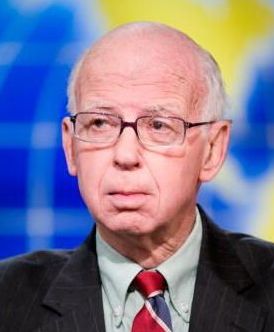
When David Broder is referred to as the dean of the Washington press corps, I guess it’s just a complimentary way of saying the old guy. But Broder’s nine years younger than Helen Thomas. How come she never rose to the same stature? Is baldness a requirement?

In spite of his institutional stature, Broder’s mental capacities have in recent years come into question and his op-ed in the Washington Post on Sunday provides yet another occasion to wonder what is going on inside this man’s brain as he pushes for war against Iran.

He writes:

War and peace influence the economy.

Look back at FDR and the Great Depression. What finally resolved that economic crisis? World War II.

Here is where Obama is likely to prevail. With strong Republican support in Congress for challenging Iran’s ambition to become a nuclear power, he can spend much of 2011 and 2012 orchestrating a showdown with the mullahs. This will help him politically because the opposition party will be urging him on. And as tensions rise and we accelerate preparations for war, the economy will improve.

I am not suggesting, of course, that the president incite a war to get reelected. But the nation will rally around Obama because Iran is the greatest threat to the world in the young century. If he can confront this threat and contain Iran’s nuclear ambitions, he will have made the world safer and may be regarded as one of the most successful presidents in history.

So another war is going to rescue the economy? But just a minute — if war’s such an excellent economic tonic, how come we aren’t already in great shape? A decade of war just hasn’t been quite enough?

It’s easy to mock Broder’s prescription and even to wonder whether he’s lost his grip on reality, but maybe he’s not quite as crazy as he sounds. Read more carefully, this is not actually a call for war — it is a call for the continuously escalating threat of war.

This is indeed the most likely “lesson” that some have drawn from the experience of Iraq: that the best kind of war is the one that has yet to be fought. A war that can be budgeted for, equipped for, and around which politicians can construct their postures of strength, resolution and righteousness. The context is one in which we have been encouraged to think that war is normal. War is in fact so normal that Washington pundits can now present it as a useful economic tool.

Washington’s lead comes from Israel, which has less interest in starting a war with Iran than in promoting the idea that war might be just over the horizon — a kind of Goldilocks war, not too far away and not too close, but just close enough. In this delicately modulated threat of mayhem, Iran itself remains politically and economically boxed in, while issues which merit more urgent attention — namely the intractable Israeli-Palestinian conflict — can be shunted to one side.

Two countries so heavily invested in manufacturing the means for engaging in war, actually have less interest in wars being fought than in a war-footing constantly being maintained. The problem is, a war posture can only be maintained for so long and momentum only be built up so much before a turning point is reached: war either then becomes inevitable or a real alternative has to be pursued.

Only through the hubris which metastasizes inside the brains of those trapped inside the Washington bubble, can anyone fail to see that the process of backing Iran into a corner risks the United States becoming trapped by the narrow logic of its own strategy. War is not normal. It is a failure of imagination.

Facebooktwittermail

Sunshine in America – a tea party with scones

Rally to Restore Sanity and/or Fear
Jon Stewart – Moment of Sincerity
www.comedycentral.com
Rally to Restore Sainty and/or Fear The Daily Show The Colbert Report

Do you want to know why I am here and what I want from you? I can only assure you of this: You have already given it to me. Your presence was what I wanted.

Sanity will always be and has always been in the eyes of the beholder, and to see you here today, and the kind of people that you are, has restored mine.

With these words, Jon Stewart wrapped up his Rally to Restore Sanity in Washington DC yesterday afternoon.

If images of division were at the root of the political malaise of these times, then Stewart’s rally was a suitable palliative. His metaphor of America — the willingness of drivers to give way to one another as they enter the Lincoln Tunnel — fittingly represents the civility of American society. Indeed, many Americans who travel overseas for the first time may well be surprised to discover that despite this country’s reputation for being brash and uncultured, its population turns out to be among the world’s most mild-mannered as they conduct themselves in daily life.

“The country’s 24-hour-politico-pundit-perpetual-panic-conflictinator did not cause our problems, but its existence makes solving them that much harder.”

True.

“If we amplify everything, we hear nothing.”

True.

“The image of Americans that is reflected back to us by our political and media process is false.”

True.

OK. So Americans aren’t doing such a bad job at getting along. And the image of American society ripped apart by political polarization is a distortion. Where do these observations get us?

Another way of saying this is to say that Americans no longer live in a representative democracy. We are not represented in Congress or in the media.

But Stewart says he feels good — good knowing that the America he sees, is radically different from the twisted representation that the media conveys. His rally thus ended as an America-affirmation event with the chants “U-S-A, U-S-A, U-S-A…”

Still, what he, and no doubt many of those gathered with him in Washington yesterday represent, may be a different kind of political malaise: that in which it is possible to make astute observations about the problems we face and yet feel comfortable in doing nothing more than make these observations.

The America that is getting along, dealing with the problems it faces is also an America that has turned away from many of the problems of its own making.

A decade of conflict in which hundreds of thousands have died has persisted precisely because massive slaughter could so easily be shut out of American consciousness.

Assessing the political significance of rallies in Washington invariably comes down to crunching the numbers — doing the body count. The good news from yesterday is that Jon Stewart seems to have much stronger crowd appeal than Glenn Beck — though with New York City so close by, Stewart clearly had a home team advantage.

But for me, another comparison comes to my mind — that being with the only rally I’ve attended in Washington, which happened to be at exactly the same time of year, late October, eight years ago. Fewer than half as many people showed up to protest against an imminent war against Iraq — and that was at a point when the antiwar movement had growing vitality.

How many would show up now to call for American troops to be pulled out of Afghanistan and Iraq? A rally in March drew, by the organizers’ own estimation, a mere 10,000 people.

Is America really at greater risk from the false image that it is being ripped apart by polarization, or, from the fact that its political torpor persists with so little comment?

Facebooktwittermail

The challenge of religious pluralism in America

Legal scholar, Stanley Fish, writes:

The conflict between religious imperatives and the legal obligations one has as a citizen of a secular state — a state that does not take into account the religious affiliations of its citizens when crafting laws — is an old one…; but in recent years it has been felt with increased force as Muslim immigrants to Western secular states evidence a desire to order their affairs, especially domestic affairs, by Shariah law rather than by the supposedly neutral law of a godless liberalism. I say “supposedly” because of the obvious contradiction: how can a law that refuses, on principle, to recognize religious claims be said to be neutral with respect to those claims? Must a devout Muslim (or orthodox Jew or fundamentalist Christian) choose between his or her faith and the letter of the law of the land?

The context in which Muslims in America find their religion under assault is riddled with contradictions. Islamophobia — as The Tennessean reports — has become a profitable business in which fearmongers who profess no expertise on the subject are couching the “threat” from Islam in similar terms to the Red Menace of the 1950s.

“Islam,” says Pastor Darrel Whaley from Kingdom Ministries Worship Center in Rutherford County, Tennessee, “is political; it is ideas and philosophies; it’s not a religion at all… They want to take over America and the whole world.”


(The image in this video freezes after one minute but the audio continues uninterrupted.)

At the same time that Islam is being presented as an ideological threat to America, among those receptive to this message, another message resonates with equal strength: that Americans of faith are threatened by secularists who insist on imposing a separation of church and state.

When Colorado Republican Senate candidate and Tea Party favorite Ken Buck declared: “I disagree strongly with the concept of separation of church and state,” he drew a strong round of applause. Secularism and Sharia are seen by many as a dual threat to the American way of life.

One might imagine that — at least in theory — it would be possible for the embattled faithful, both Muslim and Christian, to find some common ground — at least one would if it were not for the fact that Christianity in America is in so many ways a secularized religion. That’s why the idea of religion shaping the whole life of the faithful is presented as foreign.

Religion in America has less to do with the devotional and ethical practices that circumscribe religious life, than with the experience of belonging to communities of affiliation within which a religious national identity finds expression. It’s about banding together around particular definitions of what it means to be American and taking on battles against those who pose a threat to these definitions.

For that reason, the fight against abortion is a much more popular cause than the fight against adultery. As with most crusades the preferred battleground is not home turf. Religious solidarity comes less through shared practice, than shared animosity.

But before the secularists here (and I include myself) start feeling too smug, Fish makes an important point:

[T]he respect liberalism can accord Islam (or any other strong religion) is the respect one extends to curiosities, eccentrics, the backward, the unenlightened and the unfortunately deluded. Liberal respect stops short — and this is not a failing of liberalism, but its very essence — of taking religious claims seriously, of considering them as possible alternative ways of ordering not only private but public life.

On that basis, it’s easy to adopt a live-and-let-live philosophy — well encapsulated in the COEXIST bumper sticker — in which tolerance is a kind of benign indifference. But coexistence in healthily functioning pluralistic societies must really go much further.

In an interesting talk, Muneer Fareed points out that the challenges America now faces have been addressed before and indeed that Islam in its formation saw its own existence in a pluralistic context.

[The Quran says] If God had so wanted, then all of humanity would be following one way. This is clear unmistakable evidence from the text itself, that Islam is a religion that doctrinally endorses, encourages and accomodates religious pluralism.

The faithful and fearful across America will remain unmoved, convinced paradoxically that this is an argument they cannot win even while truth remains on their side. According to the evangelicals, God does want all of humanity following one way and has chosen men like Pastor Darrel Whaley and Pastor Terry Jones to shepherd us in the right direction.

Facebooktwittermail

Not getting to the promised land

“I just want to do God’s will. And He’s allowed me to go up to the mountain. And I’ve looked over. And I’ve seen the Promised Land. I may not get there with you. But I want you to know tonight, that we, as a people, will get to the promised land!” Dr Martin Luther King Jr, Memphis, Tennessee, April 3, 1968

“[T]oday, I state clearly and with conviction America’s commitment to seek the peace and security of a world without nuclear weapons. I’m not naive. This goal will not be reached quickly — perhaps not in my lifetime.” President Obama speaking in Prague, April 5, 2009

“I do know also that the future holds the possibility of progress, if not in our lifetimes then certainly in our children’s.” Hillary Clinton addressing the American Task Force for Peace in Washington DC, October 20, 2010

Is this the star by which President Obama plots his course: the promise of destinations that others must reach? Realism that just looks like cynicism, or cynicism dressed up as realism?

Just over a year ago, he sounded quite emphatic on the issue of the Middle East conflict — the issue on which Clinton now hints that progress may have to wait a generation.

Israelis must acknowledge that just as Israel’s right to exist cannot be denied, neither can Palestine’s. The United States does not accept the legitimacy of continued Israeli settlements. This construction violates previous agreements and undermines efforts to achieve peace. It is time for these settlements to stop.

I say sounded emphatic, but here’s the clue revealing Obama’s own lack of commitment: he leaves himself out. He is the observer rather than the agent. He doesn’t make demands.

What’s the use of an American president who can see the promised land but has no idea how to get there?

Less than two years after making Middle East peace central to his foreign policy agenda, Obama’s efforts have come to nothing.

The Washington Post reports:

In perhaps the shortest round of peace negotiations in the history of their conflict, talks between the Israelis and Palestinians have ground to a halt and show little sign of resuming.

Israeli Prime Minister Binyamin Netanyahu and Palestinian Authority President Mahmoud Abbas haven’t met since Secretary of State Hillary Rodham Clinton brought the two together on Sept. 15 in Jerusalem, two weeks after President Obama launched the resumption of negotiations on Palestinian statehood in Washington with much fanfare, including the presence of Egyptian President Hosni Mubarak and King Abdullah II of Jordan.

Now, the nearly six-week pause threatens to become permanent.

Pressure to restart the talks eased after the Arab League said it would wait a month – until Nov. 8 – before ending Abbas’s mandate for negotiations, thus pushing the issue beyond the U.S. midterm elections. But if Republicans score big gains, some Israelis argue, that could limit Obama’s ability to pressure Israel to make concessions. U.S. peace envoy George J. Mitchell is supposed to return to the region, but no date has been set.

In a speech Wednesday to Palestinian peace activists, Clinton acknowledged that “I cannot stand here tonight and tell you there is some magic formula that I have discovered that will break through the current impasse.”

While the administration has set a goal of achieving an agreement less than 11 months from now, Clinton at one point suggested a much longer time frame: “The future holds the possibility of progress, if not in our lifetimes, then certainly in our children’s.”

Facebooktwittermail

Torture and terrorism

One of the strange aspects relating to conspiracy theories concerning 9/11 is that they unwittingly obscure something even worse: that the US government foments terrorism not by design but by neglect; that its policies have had a direct and instrumental role in creating terrorists not simply by providing individuals and groups with an ideological pretext for engaging in terrorism but much more specifically by creating the conditions an individual’s political opposition to America’s actions would shift to unrestrained violent opposition.

The key which often unlocks the terrorist’s capacity for violence is his experience of being subject to violence through torture.

Chris Zambelis writes:

There is ample evidence that a number of prominent militants — including al-Qaeda deputy commander Dr. Ayman al-Zawahiri and the late al-Qaeda in Iraq leader Abu Musab al-Zarqawi — endured systematic torture at the hands of the Egyptian and Jordanian authorities, respectively. Many observers believe that their turn toward extreme radicalism represented as much an attempt to exact revenge against their tormentors and, by extension, the United States, as it was about fulfilling an ideology. Those who knew Zawahiri and can relate to his experience believe that his behavior today is greatly influenced by his pursuit of personal redemption to compensate for divulging information about his associates after breaking down amid brutal torture sessions during his imprisonment in the early 1980s. For radical Islamists and their sympathizers, U.S. economic, military, and diplomatic support for regimes that engage in this kind of activity against their own citizens vindicates al-Qaeda’s claims of the existence of a U.S.-led plot to attack Muslims and undermine Islam. In al-Qaeda’s view, these circumstances require that Muslims organize and take up arms in self-defense against the United States and its allies in the region.

The latest revelations provided by Wikileaks show how the war in Iraq — the centerpiece of the Bush administration’s war on terrorism — became not simply a terrorist training ground, but a cauldron in which terrorists could be forged.

FRAGO 242: PROVIDED THE INITIAL REPORT CONFIRMS U.S. FORCES WERE NOT INVOLVED IN THE DETAINEE ABUSE, NO FURTHER INVESTIGATION WILL BE CONDUCTED UNLESS DIRECTED BY HHQ. JUNE 26, 2004

The Guardian reports:

A grim picture of the US and Britain’s legacy in Iraq has been revealed in a massive leak of American military documents that detail torture, summary executions and war crimes.

Almost 400,000 secret US army field reports have been passed to the Guardian and a number of other international media organisations via the whistleblowing website WikiLeaks.

The electronic archive is believed to emanate from the same dissident US army intelligence analyst who earlier this year is alleged to have leaked a smaller tranche of 90,000 logs chronicling bloody encounters and civilian killings in the Afghan war.

The new logs detail how:

• US authorities failed to investigate hundreds of reports of abuse, torture, rape and even murder by Iraqi police and soldiers whose conduct appears to be systematic and normally unpunished.

• A US helicopter gunship involved in a notorious Baghdad incident had previously killed Iraqi insurgents after they tried to surrender.

• More than 15,000 civilians died in previously unknown incidents. US and UK officials have insisted that no official record of civilian casualties exists but the logs record 66,081 non-combatant deaths out of a total of 109,000 fatalities.

The Pentagon might hide behind claims that it neither authorized nor condoned violence used by Iraqi authorities on Iraqi detainees, but the difference between being an innocent bystander and being complicit consists in whether one has the power to intervene. The US military’s hands were not tied. As the occupying power it had both the means, the legal authority and the legal responsibility to stop torture in Iraq. It’s failure to do so was a matter of choice.

Will the latest revelations from Wikileaks be of any political consequence? I seriously doubt it, given that we now have a president dedicated not only to refusing to look back but also to perpetuating most of the policies instituted by his predecessor.

For more information on the documents released by Wikileaks, see The Guardian‘s Iraq war logs page.

Facebooktwittermail

How to deal with Islamophobia in the media

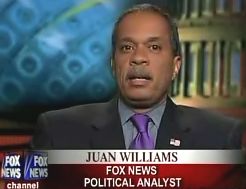
So, as just about everyone now knows, NPR analyst and Fox News contributor, Juan Williams said this to Bill O’Reilly on Monday:

I’m not a bigot… But when I get on the plane, I got to tell you, if I see people who are in Muslim garb and I think, you know, they are identifying themselves first and foremost as Muslims, I get worried. I get nervous.

When someone says, “I’m not a bigot,” we can generally be sure they’re about to say something that we’d expect to come out of the mouth of bigot. We can also infer that they’ve bought into an improbable idea: bigots identify themselves as such. Thus the implausible disclaimer: take my word for it — I’m not a bigot. Err, OK Juan, but I’m sorry. You don’t sound too convincing.

Jeff Bercovici notes:

The notion that “people in Muslim garb are scary” is widespread in America, and its noxious that many people believe as much. Countless people getting on planes have thought the same thing as Mr. Williams. This is exactly the sort of case where airing and logically refuting a bigoted view is better than making it so that it’s an unspoken thing that many people persist in thinking privately.

Thanks to NPR’s knee-jerk reaction, more is now being said about the fact that Williams got fired than the fact that what he said was both prejudiced and dumb. Not only does the debate have the wrong focus but Williams has now been rewarded for his “blunder” by getting a new three-year contract from Fox News worth almost $2 million.

The people with the greatest regrets right now are probably local NPR station managers whose current fundraising efforts have been disrupted by the ruckus.

NPR’s CEO Vivian Schiller says: “This isn’t a case of one strike and you’re out.” They have had “an on-going issue” with Williams.

The problem is, each time a journalist gets fired for making a dumb remark, this doesn’t improve the overall quality of journalism. Instead it means that those journalists who are most disciplined in concealing their views will have a professional advantage over those journalists guilty of the occasional indiscretion. My suspicion is that the well-wrapped bigots are more common than the bigots with loose tongues. Bigots are better clearly labelled than fired.

What consequences should Williams have faced for revealing his Islamophobia? How about mockery on the Daily Show where the evidence that known terrorists do not wear “Muslim garb” would swiftly have exposed the folly behind his fear.

What should really scare Williams and anyone else who wants to play spot-the-terrorist next time they fly is that terrorists can wear business suits, carry US passports and have names like David Headley.

Facebooktwittermail

The post-colonial era is slow coming

“It seems like the ragheads and the Pakis are worrying your dad, but your dad’s favorite food is curry and kebab,” sings Lowkey, summing up the multicultural dilemma facing quite a few white Englishmen.

Peyvand Khorsandi provides another multicultural vignette:

Golborne Road, on the outskirts of Notting Hill in west London, is home to two Portuguese cafés, Stella McCartney, and my favourite burger van, run by two Moroccan men. I’ve been a regular for almost 10 years – the van offers no ordinary fare. A ball of meat goes splat on the griddle as it’s evened into shape while onions sizzle.

Money and Arabic banter are exchanged – when the meat is crispy brown an egg is cracked open, stuffed alongside the patty into a heated bun with a sprinkle of chopped salad, fries and some warm, homemade, tomato sauce (fried prawns optional).

I am usually finishing off my second bowl of soup – they do a mean bean, lentil and pea – when the beaming parcel of beefy goodness is handed to me, smiling as a good burger should.

On Fridays Mohammed and Aziz repair to a mosque in the converted building opposite – customers find the van shut from around 12.30pm to 2pm. Caterers should hold these hours sacred but Mohammed and Aziz, as their prices testify, are not about money. The van’s closes for Ramadan.

The punters are largely Moroccan men but you do see Bohemian non-Moroccan women and men of all ages stopping off for a bite, too.

In the background the magnificent Trellick Tower — a hive of different people and cultures living next-door to, and on top of, each other — literally looks down on the rest of us.

If German Chancellor Angela Merkel’s declaration this weekend that multiculturalism has been an utter failure, was to be reduced to a motto, it might be this: we don’t want you, we just want your stuff.

That stuff includes all kinds of things from food, to cheap labor, to exotic artifacts, to land. But the one thing it excludes is non-native culture in the form of people.

If multiculturalism has failed it is only in as much as it has been conceived as a method for grappling with the legacy of colonialism. The problem with that notion is that colonialism hasn’t ended; it simply can’t be delineated on maps as clearly as it once could.

Meanwhile, out in the state that views itself as the most dangerous outpost of Western civilization, the old-fashioned colonial land-grabbing mindset was never more clearly expressed than it was a couple of years ago by Uzi Arad, currently Benjamin Netanyahu’s national security adviser. When asked whether it was time to abandon the two-state solution (and by implication for Israel to annex the West Bank) he responded: “We want to relieve ourselves of the burden of the Palestinian populations — not territories. It is territory we want to preserve, but populations we want to rid ourselves of.”

If there should be any doubt that we in the West remain shackled to mindsets shaped by colonialism, just look at the ever-widening chasm that separates Barack Obama as the embodiment of hope from Barack Obama, the 44th President of the United States.

The only chance that our multicultural president could be enticed to take an action requiring only a modicum of political daring during his upcoming trip to India — to visit Amritsar’s Golden Temple where head coverings are obligatory — would have been if the Sikh religious custodians of the temple deemed a baseball cap acceptable. The don’t. (As a reader here suggested in jest: “Why can’t he just wear a kippah? It would fulfill the requirement, and he loves sucking up to the Israelis.)

Tunku Varadarajan asks:

[W]hat does this decision to avoid Amritsar tell us about how this White House feels about Americans? Does it feel that ordinary Americans will pillory their president for having associated himself with “ragheads” in Amritsar? Is this a variant of that elite condescension for ordinary folks who are “bitter,” and who “cling to guns and religion”?

That Obama can’t find a way to explain the symbolism of a little square of cloth on his head — placed there by enthusiastic, welcoming Indian hosts who wish him and America well — suggests that he has lost confidence in his own intellect, his own charisma, his own eloquence. A man once celebrated for his promise of change now allows a state visit to be shaped by his fear of the blogosphere — and by his fear of abuse that might come at him from an ignorant subset of the American population. Let’s just call it the pygmification of a president, and lament the gutlessness of this White House.

The operative fears here no doubt include all those Varadarajan lists but he omits the most obvious one, the one that was probably decisive: the reasonable expectation that images of Obama with head covered, showing his respects at a foreign domed temple would feature in GOP attack ads during the 2012 presidential campaign. The political value of such images suggests that the “ignorant subset” this commentator dismisses, penetrate much more deeply into mainstream America than he cares to admit.

Obama’s failing — and it is unforgivable — is that rather than challenge prevailing prejudices he has chosen to accommodate them.

When he meets India’s Prime Minister Manmohan Singh — note that he is a Sikh in a majority Hindu nation — will Obama muster the courage to put his hands together and say namaste?

Facebooktwittermail

Israel’s coma

While most Israelis can’t visit Ariel Sharon in hospital, they can now do the closest thing: go stand next to a life-size model of the former prime minister, propped up in bed, attached to a drip and steadily breathing in an otherwise empty room in a Tel Aviv art gallery.

“Sharon’s still breathing and beating body is an allegory for the Israeli political body — a dependent and mediated existence, self-perpetuated artificially and out of inertia, with open eyes that cannot see,” the gallery’s curator Joshua Simon writes in an introduction to the exhibit, the creation of Israeli artist Noam Braslavsky.

Sharon’s coma mirrors the effect that Israel’s withdrawal from Gaza was intended to have: that it would suspend any real movement towards the creation of a Palestinian state.

But as Henry Siegman made clear, three years ago, the fiction that Israel was responsive to external stimuli began over 40 years ago:

Just one year after the 1967 war, Moshe Dayan, a former IDF chief of staff who at the time was minister of defence, described his plan for the future as ‘the current reality in the territories’. ‘The plan,’ he said, ‘is being implemented in actual fact. What exists today must remain as a permanent arrangement in the West Bank.’ Ten years later, at a conference in Tel Aviv, Dayan said: ‘The question is not “What is the solution?” but “How do we live without a solution?”’ Geoffrey Aronson, who has monitored the settlement enterprise from its beginnings, summarises the situation as follows:

Living without a solution, then as now, was understood by Israel as the key to maximising the benefits of conquest while minimising the burdens and dangers of retreat or formal annexation. This commitment to the status quo, however, disguised a programme of expansion that generations of Israeli leaders supported as enabling, through Israeli settlement, the dynamic transformation of the territories and the expansion of effective Israeli sovereignty to the Jordan River.

In an interview in Ha’aretz in 2004, Dov Weissglas, chef de cabinet to the then prime minister, Ariel Sharon, described the strategic goal of Sharon’s diplomacy as being to secure the support of the White House and Congress for Israeli measures that would place the peace process and Palestinian statehood in ‘formaldehyde’. It is a fiendishly appropriate metaphor: formaldehyde uniquely prevents the deterioration of dead bodies, and sometimes creates the illusion that they are still alive. Weissglas explains that the purpose of Sharon’s unilateral withdrawal from Gaza, and the dismantling of several isolated settlements in the West Bank, was to gain US acceptance of Israel’s unilateralism, not to set a precedent for an eventual withdrawal from the West Bank. The limited withdrawals were intended to provide Israel with the political room to deepen and widen its presence in the West Bank, and that is what they achieved.

Do we really have to wait until Sharon stops breathing before the peace process can officially be declared dead?

Whatever political differences there have been between Barak, Sharon, Olmert and Netanyahu, each Israeli prime minister has shown himself equally adept in the art of living without a solution, “with eyes open that cannot see.”

Facebooktwittermail

Zionism and the war on terrorism both rest on the same hollow foundation

Distilling some of his findings from extensive research conducted at the University of Chicago’s Project on Security and Terrorism, Robert Pape writes:

For nearly a decade, Americans have been waging a long war against terrorism without much serious public debate about what is truly motivating terrorists to kill them. In the immediate aftermath of the 9/11 attacks, this was perfectly explicable — the need to destroy al Qaeda’s camps in Afghanistan was too urgent to await sober analyses of root causes.

But, the absence of public debate did not stop the great need to know or, perhaps better to say, to “understand” the events of that terrible day. In the years before 9/11, few Americans gave much thought to what drives terrorism — a subject long relegated to the fringes of the media, government, and universities. And few were willing to wait for new studies, the collection of facts, and the dispassionate assessment of alternative causes. Terrorism produces fear and anger, and these emotions are not patient.

A simple narrative was readily available, and a powerful conventional wisdom began to exert its grip. Because the 9/11 hijackers were all Muslims, it was easy to presume that Islamic fundamentalism was the central motivating force driving the 19 hijackers to kill themselves in order to kill Americans. Within weeks after the 9/11 attacks, surveys of American attitudes show that this presumption was fast congealing into a hard reality in the public mind. Americans immediately wondered, “Why do they hate us?” and almost as immediately came to the conclusion that it was because of “who we are, not what we do.” As President George W. Bush said in his first address to Congress after the 9/11 attacks: “They hate our freedoms: our freedom of religion, our freedom of speech, our freedom to vote and assemble and disagree with each other.”

Thus was unleashed the “war on terror.”

The narrative of Islamic fundamentalism did more than explain why America was attacked and encourage war against Iraq. It also pointed toward a simple, grand solution. If Islamic fundamentalism was driving the threat and if its roots grew from the culture of the Arab world, then America had a clear mission: To transform Arab societies — with Western political institutions and social norms as the ultimate antidote to the virus of Islamic extremism.

This narrative had a powerful effect on support for the invasion of Iraq. Opinion polls show that for years before the invasion, more than 90 percent of the U.S. public believed that Saddam Hussein was harboring weapons of mass destruction (WMD). But this belief alone was not enough to push significant numbers to support war.

What really changed after 9/11 was the fear that anti-American Muslims desperately wanted to kill Americans and so any risk that such extremists would get weapons of mass destruction suddenly seemed too great. Although few Americans feared Islam before 9/11, by the spring of 2003, a near majority — 49 percent — strongly perceived that half or more of the world’s 1.4 billion Muslims were deeply anti-American, and a similar fraction also believed that Islam itself promoted violence.

The narrative — “it’s not what we do but who we are” — that Americans swallowed after 9/11, came ready-made. It is the narrative that provides the bedrock of Zionism by characterizing opposition to Israel’s creation and expansion as being an expression of anti-Semitism rather than a reaction to colonialism and dispossession.

Palestinians don’t attack Jews because their homes are being destroyed and their land is being taken away; Palestinians attack Jews because Palestinians hate Jews.

Al Qaeda didn’t attack Americans because American governments for many decades have propped up oppressive regimes across the Middle East and supported Zionism; al Qaeda attacked America because al Qaeda hates Americans.

In both Zionism and the war on terrorism, the refusal to deal with political injustice expresses itself through an ideological fixation on security and military solutions.

As Ariel Sharon focused on “dismantling the terrorist infrastructure” in Gaza and the West Bank, George Bush pursued a parallel course across the whole region. Americans and Israelis united in the belief that they were all innocent targets of the same implacable enemy: Islamic extremism.

Our war on terrorism was simply an extension of Israel’s war on terrorism — simply on a much larger scale. Naturally, we would borrow most of Israel’s techniques for tackling “the terrorists” — targeted killing, torture, extrajudicial detention, remote warfare and so forth.

And the underlying imperative was identical: that our righteous victimhood could not be questioned, our innocence was unassailable. Indeed it was our virtue that made us targets for attack.

If we were successful in dismantling the terrorist infrastructure or draining the swamp in which evil festered, we would save the world. We would engage in war without choice, knowing that we did so in the name of peace.

No wonder that on September 11, Benjamin Netanyahu was unable to contain his satisfaction about the way the attacks would help solidify the bond between Americans and Israelis. “It’s very good,” he said and then, quickly realizing his candor might not be well-received, added: “Well, not very good, but it will generate immediate sympathy.” The attack would “strengthen the bond between our two peoples, because we’ve experienced terror over so many decades, but the United States has now experienced a massive hemorrhaging of terror.”

Lies breed unconsciousness because they deprive intelligence of the invigorating effect of experience, thus, as we near the end of a decade of a war on terrorism we now inquire even less as shock has been given way to indifference.

Facebooktwittermail