Category Archives: Issues

How Vladimir Putin feeds Europe’s rabid right

Anna Nemtsova writes: Victor Orban, the right-wing leader of Hungary, offered his people a simple formula: Come and vote in a referendum against allowing in more asylum-seekers and you will be safe from terrorism in your country.

Prime Minister Orban also promised that if people did not show up for the migration referendum on Sunday, Hungary would have wasted more than $36 million, which is what the authorities were spending to organize the vote to reject the European Union quota of 1,229 refugees. That was the price to stop terrorism, according to Orban. (According to critics, that was $30,000 per head of anti-humanitarian spending.)

As often happens in Europe these days, the results were confusing, and unsettling.

Orban had compared migrants to “poison.” Hungary would “give Europe the finger,” he said, vowing to change Hungary’s constitution so the European Union would have no right to impose any rules on the country without its parliament’s approval.

This is the same country, remember, that just a dozen years ago celebrated its membership in the EU. Now it wants to restructure the whole thing. [Continue reading…]

Facebooktwittermail

How Donald Trump ditched U.S. steel workers in favor of China

Newsweek reports: Plenty of blue-collar workers believe that, as president, Donald Trump would be ready to fight off U.S. trade adversaries and reinvigorate the country’s manufacturing industries through his commitment to the Rust Belt. What they likely don’t know is that Trump has been stiffing American steel workers on his own construction projects for years, choosing to deprive untold millions of dollars from four key electoral swing states and instead directing it to China — the country whose trade practices have helped decimate the once-powerful industrial center of the United States.

A Newsweek investigation has found that in at least two of Trump’s last three construction projects, Trump opted to purchase his steel and aluminum from Chinese manufacturers rather than United States corporations based in states like Pennsylvania, Ohio, Michigan and Wisconsin. In other instances, he abandoned steel altogether, instead choosing the far-less-expensive option of buying concrete from various companies, including some linked to the Luchese and Genovese crime families. Trump has never been accused of engaging in any wrongdoing for his business dealings with those companies, but it’s true that the Mafia has long controlled much of the concrete industry in New York. [Continue reading…]

Facebooktwittermail

Alex Jones: ‘Julian Assange is a Hillary butt plug’

Poor Alex Jones. He stayed up all night waiting for Julian Assange — who Jones was hailing as a “true liberal” — to deliver Wikileaks’ long-anticipated “October surprise.” The Hill reports: A Tuesday morning WikiLeaks event in Berlin did not produce an “#OctoberSurprise” to derail the Hillary Clinton presidential campaign that many had expected, but Julian Assange said he would release more documents before Election Day.

“I’ve seen the internet and I understand there is enormous expectation in the United States,” said Assange, the site’s editor, via video conference at the event, celebrating the 10-year anniversary of WikiLeaks held at 10 a.m. Berlin time.

“Some of that expectation will be addressed [when I announce upcoming projects]. But you should understand that if we’re going to make a major publication in relation to the United States at a particular hour, we don’t do it at 3 a.m.”

Many observers believed that Assange had planned to announce a document post with damning evidence of corruption, wrongdoing or other scandal.

On Monday, Trump advisor Roger Stone tweeted “I have total confidence that @wikileaks and my hero Julian Assange will educate the American people soon #LockHerUp.”

Stone has claimed to be in contact with Assange. [Continue reading…]

Facebooktwittermail

Two U.S. diplomats drugged in Russia last year, deepening Washington’s concern

RFE/RL reports: Two U.S. officials traveling with diplomatic passports were drugged while attending a conference in Russia last year, and one of them was hospitalized, in what officials have concluded was part of a wider, escalating pattern of harassment of U.S. diplomats by Russia.

The incident at a hotel bar during a UN anticorruption conference in St. Petersburg in November 2015 caused concern in the U.S. State Department, which quietly protested to Moscow, according to a U.S. government official with direct knowledge of what occurred.

But it wasn’t until a dramatic event in June, when an accredited U.S. diplomat was tackled outside the U.S. Embassy in Moscow, that officials in Washington reexamined the November drugging and concluded they were part of a definite pattern.

The State Department suggested the harassment has become a particular concern in the past two years. [Continue reading…]

Facebooktwittermail

15 years in the Afghan crucible

Carlotta Gall writes from Kabul: There is an end-of-an-era feel here these days. Military helicopters rattle overhead, ferrying American and Afghan officials by air rather than risk cars bombs in the streets. The concrete barriers, guarding against suicide attacks, have grown taller and stronger around every embassy and government building, and whole streets are blocked off from the public.

It has been 15 years since American forces began their bombing campaign against the Taliban and Al Qaeda on Oct. 7, 2001, and sometimes it feels as if we are back to square one, that there is nothing to show for it.

The recent American military drawdown has been drastic — from over 100,000 troops a few years ago to a force of 8,500 today. Thousands of Afghans have been made jobless as bases and assistance programs have closed. Meanwhile tens of thousands of Taliban are on the offensive in the countryside, threatening to overrun several provincial towns and staging huge bombings here in the capital.

Afghan forces have been bearing the brunt, suffering unsustainable casualties. Communities talk of hundreds of coffins returning from the front line. Civilians have suffered no less — thousands of families have been displaced anew by fighting, and aid workers warn that their access is deteriorating. Business executives have been leaving, selling off their property, and whole families have swelled the refugee columns heading to Europe.

The political mood is shifting, too, as Afghans sense the declining American influence and start casting around for new patrons or renewing old alliances. The politicking is intense: “Hot, very hot,” as a former minister described the political climate.

For Afghans, and for many of us who have followed Afghanistan for decades — I have been visiting the country since the early 1990s — the times are reminiscent of the Soviet Union’s withdrawal in 1989 after a 10-year occupation. The Communist government and army that the Soviets left behind survived only three years before they were overthrown by the mujahedeen in 1992. [Continue reading…]

Facebooktwittermail

How the Pentagon paid a British PR firm $500 million for top secret Iraq propaganda

The Bureau of Investigative Journalism reports: The Pentagon gave a controversial UK PR firm over half a billion dollars to run a top secret propaganda programme in Iraq, the Bureau of Investigative Journalism can reveal.

Bell Pottinger’s output included short TV segments made in the style of Arabic news networks and fake insurgent videos which could be used to track the people who watched them, according to a former employee.

The agency’s staff worked alongside high-ranking US military officers in their Baghdad Camp Victory headquarters as the insurgency raged outside.

Bell Pottinger’s former chairman Lord Tim Bell confirmed to the Sunday Times, which worked with the Bureau on this story, that his firm had worked on a “covert” military operation “covered by various secrecy agreements.”

Bell Pottinger reported to the Pentagon, the CIA and the National Security Council on its work in Iraq, he said.

Bell, one of Britain’s most successful public relations executives, is credited with honing Margaret Thatcher’s steely image and helping the Conservative party win three elections. The agency he co-founded has had a roster of clients including repressive regimes and Asma al-Assad, the wife of the Syrian president.

In the first media interview any Bell Pottinger employee has given about the work for the US military in Iraq, video editor Martin Wells – who no longer works for the company – told the Bureau his time in Camp Victory was “shocking, eye-opening, life-changing.”

The firm’s output was signed off by former General David Petraeus – then commander of the coalition forces in Iraq – and on occasion by the White House, Wells said. [Continue reading…]

Facebooktwittermail

Tunisian men detail CIA black site torture involving electric chair and more

The Guardian reports: Two Tunisian men held in secret CIA prisons for more than a year have told a leading human rights organization they were tortured with gruesome and previously unknown techniques.

The men, who were released to Tunisian custody in 2015, described being threatened with placement in an electric chair at a black site prison in Afghanistan in 2002; being beaten with metal batons while their arms were suspended by a bar above their heads; and having their heads pushed into barrels of water.

One of the men, Ridha al-Najjar, was a pivotal detainee for the CIA, which believed him to be a bodyguard for Osama bin Laden. Najjar was the first man taken by the CIA to the black site, which was code-named Cobalt and was where at least one detainee is known to have died. His interrogation became a template for others at the site, according to the CIA inspector general. Najjar said the interrogators forcibly inserted something into his anus.

According to a footnote in the 2014 Senate intelligence committee’s investigation into torture, John Brennan, now CIA director, was among the senior CIA officials briefed in the summer of 2002 on the interrogation plan for Najjar. According to the Senate report, the plan included isolation, “‘sound disorientation techniques’, ‘sense of time deprivation’, limited light, cold temperatures, and sleep deprivation”.

“There was a barrel full of water, and they kept submerging [my head] in the water,” the other Tunisian man, Lotfi al-Arabi El Gherissi, told Human Rights Watch, which shared the two men’s accounts with the Guardian. [Continue reading…]

Facebooktwittermail

The desegregation and resegregation of schools in Charlotte

Clint Smith writes: Recently, protesters and police clashed in the streets of Charlotte, North Carolina, following the killing of Keith Lamont Scott, a forty-three-year-old father of seven, who had recently moved to the city with his wife and family. Scott was shot by officers who were searching for a man with an outstanding warrant. Scott was not that man. Officer accounts claim that Scott had a handgun and refused to comply when he got out of his car. Other witnesses say that Scott was actually holding a book, as he often read while waiting for the bus to return his son from elementary school.

The footage from Charlotte reflected a scene that has become all too familiar over the past several years: police cocooned in riot gear, their bodies encased in bulletproof vests and military-style helmets; protesters rendered opaque by the tear gas that surrounds them, scarves covering their mouths and noses to keep from inhaling the smoke.

These protests happened because of Keith Lamont Scott, but they also happened because Charlotte is a city that has long had deep racial tensions, and frustration has been building for some time. There are many places one might look to find the catalyst of this resentment, nationally and locally. But one of the first places to look is Charlotte’s public-school system.

In 1954, the Supreme Court ruled in Brown v. Board of Education that “separate educational facilities are inherently unequal” and thus unconstitutional. The decision mandated that schools across the country be integrated, though, in reality, little actual school desegregation took place following the ruling. It took years for momentum from the civil-rights movement to create enough political pressure for truly meaningful integration to take place in classrooms across the country.

To understand what happened next, it helps to turn to a book published last year and edited by Roslyn Arlin Mickelson, Stephen Samuel Smith, and Amy Hawn Nelson, “Yesterday, Today, and Tomorrow: School Desegregation and Resegregation in Charlotte.” It uses essays by sociologists, political scientists, economists, and attorneys to illuminate how the city became the focal point of the national school-desegregation debate, with decisions that set a precedent for the rest of the country. [Continue reading…]

Facebooktwittermail

How Donald Trump turned the tax code into a giant tax shelter

James B Stewart writes: Now we know: Donald J. Trump racked up losses so huge in the early 1990s that he wouldn’t have had to pay federal or New York State income tax on nearly a billion dollars in income.

None of this seems to have made the slightest dent in Mr. Trump’s opulent lifestyle over the years. At the nadir of his personal financial crisis in the early 1990s, his lenders put him on a monthly “budget” of $450,000 in personal expenses — more than enough to sustain his lifestyle of lavish homes, private jets, country clubs and golf courses — even as he was using the tax code to avoid paying any federal income tax.

It’s hard to imagine a starker contrast with the vast number of Americans who struggle to both pay taxes and make ends meet, or a more damning indictment of a tax code that makes that possible.

“If it wasn’t clear before, it is now: The tax code is tilted toward the rich in its statutory framework, its exceptions, and in how it is enforced and administered,” said Steven M. Rosenthal, a real estate tax specialist and senior fellow at the Urban-Brookings Tax Policy Center.

“The American public,” he said, “needs to wake up and send a message that the tax code should be written to generate revenue and enforced to collect it, not to favor wealthy real estate developers and other special interests and their lobbyists.”

If Mr. Trump’s pattern of generating losses and using them to offset other income has continued, as seems likely, it’s obvious why he has not released his tax returns: not because he is being audited, or because the returns are too complicated, but because he hasn’t paid any taxes. [Continue reading…]

Facebooktwittermail

Trump’s supporters don’t care about his morals

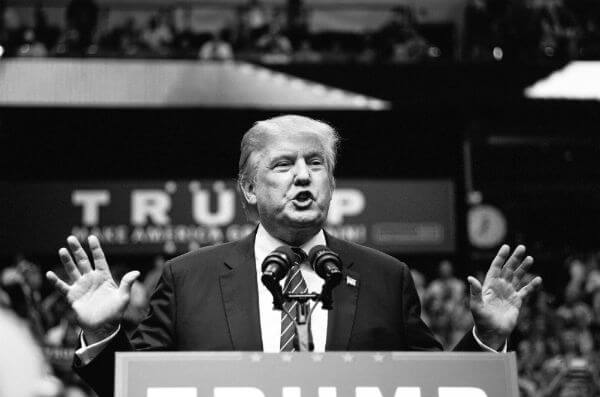
trump-bw

Yoni Appelbaum writes: How can conservative, Christian, values voters back a thrice-married, philandering, candidate for the presidency, who trails a record of stiffed creditors, broken promises, and ruthless practices behind him?

Maybe because communities that feel themselves besieged tend not to look for moral exemplars — instead, they seek out champions.

Saturday night’s report in the New York Times that Donald Trump apparently claimed a $916 million loss on his 1995 tax returns, and may have used it to avoid paying federal income taxes for up to 18 years, is the latest in a long string of revelations that might have doomed any previous Republican nominee. Yet Trump has repeatedly rebounded from these disclosures. That must surely be, at least in part, a testament to the power of partisanship in this increasingly divided age. But that is hardly a sufficient explanation.

“I know our complex tax laws better than anyone who has ever run for president,” Trump tweeted in response, “and am the only one who can fix them.”

That echoes the pitch he made in his acceptance speech at the Cleveland convention:

I have joined the political arena so that the powerful can no longer beat up on people that cannot defend themselves. Nobody knows the system better than me, which is why I alone can fix it. I have seen firsthand how the system is rigged against our citizens.

Ascendant political coalitions can afford to impose litmus tests on their candidates. They look for politicians who not only endorse their favored positions, but embody them. But coalitions that believe the moral consensus is cracking, that see their values under attack, and fear their own eclipse may turn away from candidates whose own lives exemplify a moral vision that the broader society no longer endorses. Instead, they seek out figures who seem strong enough, tough enough, ruthless enough to roll back social change, or at least to hold it at bay. They look for a champion. [Continue reading…]

Facebooktwittermail

The clear and present danger of Donald Trump

In an editorial, the Washington Post says: If you know that Donald Trump is ignorant, unprepared and bigoted, but are thinking of voting for him anyway because you doubt he could do much harm — this editorial is for you.

Your support of the Republican presidential nominee may be motivated by dislike of the Democratic alternative, disgust with the Washington establishment or a desire to send a message in favor of change. You may not approve of everything Mr. Trump has had to say about nuclear weapons, torture or mass deportations, but you doubt he could implement anything too radical. Congress, the courts, the Constitution — these would keep Mr. Trump in check, you think.

Well, think again. A President Trump could, unilaterally, change this country to its core. By remaking U.S. relations with other nations, he could fundamentally reshape the world, too.

Of course, in many areas Mr. Trump would not have to act unilaterally. If he won, chances are Republicans would maintain control of Congress. GOP majorities there would be enthusiastic participants in much of what Mr. Trump would like to do: gutting environmental and workplace regulations, slashing taxes so that the debt skyrockets, appointing Supreme Court justices who oppose a woman’s right to have an abortion. In areas where Republican officeholders such as House Speaker Paul D. Ryan (Wis.) and Senate Majority Leader Mitch McConnell (Ky.) imagine themselves acting as a brake on Mr. Trump’s worst instincts, skepticism is in order. If these supposed leaders are too craven to oppose Mr. Trump as a candidate, knowing the danger he presents, why should we expect them to stand up to the bully once he was fully empowered? [Continue reading…]

Facebooktwittermail

Trump tax records obtained by NYT reveal he could have avoided paying taxes for nearly two decades

The New York Times reports: Donald J. Trump declared a $916 million loss on his 1995 income tax returns, a tax deduction so substantial it could have allowed him to legally avoid paying any federal income taxes for up to 18 years, records obtained by The New York Times show.

The 1995 tax records, never before disclosed, reveal the extraordinary tax benefits that Mr. Trump, the Republican presidential nominee, derived from the financial wreckage he left behind in the early 1990s through mismanagement of three Atlantic City casinos, his ill-fated foray into the airline business and his ill-timed purchase of the Plaza Hotel in Manhattan.

Tax experts hired by The Times to analyze Mr. Trump’s 1995 records said that tax rules especially advantageous to wealthy filers would have allowed Mr. Trump to use his $916 million loss to cancel out an equivalent amount of taxable income over an 18-year period. [Continue reading…]

The Washington Post reports: Dean Baquet wasn’t bluffing.

The New York Times executive editor said during a visit to Harvard in September that he would risk jail to publish Donald Trump’s tax returns. He made good on his word Saturday night when the Times published Trump tax documents from 1995, which show the Republican presidential nominee claimed losses of $916 million that year — enough to avoid paying federal income taxes for as many as 18 years afterward.

Federal law makes it illegal to publish an unauthorized tax return: [Continue reading…]

Facebooktwittermail

Is America becoming a police state?


The Daily Beast reports: Documentary filmmaker Craig Atkinson wants everyone to know he doesn’t hate cops.

Far from it — he’s the loving son of a cop.

“My perception of law enforcement was always very favorable — and I still have a favorable opinion of police officers,” he told The Daily Beast. “I have great respect for my father. Growing up, I had a very biased view of my dad as an officer, and I knew he had a great deal of integrity as an individual. I assumed that all police officers operated in the same way he did.”

Yet Atkinson’s new movie, Do Not Resist — opening Friday at New York’s Film Forum and later nationwide — shows that actually they don’t. It depicts local police departments deploying military-grade equipment, in many cases armored vehicles gifted by the Homeland Security and Defense departments direct from Iraq and Afghanistan, while using brute force to control, and occasionally abuse, economically depressed minority communities.

Atkinson’s movie is especially timely as the Black Lives Matter movement continues to protest this year’s spate of police shootings of African American men — from Ferguson to Tulsa to Charlotte to, most recently, the suburbs of San Diego, where on Tuesday night cops shot Alfred Olango, an unarmed mentally ill person who was wandering in traffic. [Continue reading…]

Facebooktwittermail

Freedom for some requires the enslavement of others

Maya Jasanoff writes: One hundred and fifty years after the Thirteenth Amendment abolished slavery in the United States, the nation’s first black president paid tribute to “a century and a half of freedom—not simply for former slaves, but for all of us.” It sounds innocuous enough till you start listening to the very different kinds of political rhetoric around us. All of us are not free, insists the Black Lives Matter movement, when “the afterlife of slavery” endures in police brutality and mass incarceration. All of us are not free, says the Occupy movement, when student loans impose “debt slavery” on the middle and working classes. All of us are not free, protests the Tea Party, when “slavery” lurks within big government. Social Security? “A form of modern, twenty-first-century slavery,” says Florida congressman Allen West. The national debt? “It’s going to be like slavery when that note is due,” says Sarah Palin. Obamacare? “Worse than slavery,” says Ben Carson. Black, white, left, right—all of us, it seems, can be enslaved now.

Americans learn about slavery as an “original sin” that tempted the better angels of our nation’s egalitarian nature. But “the thing about American slavery,” writes Greg Grandin in his 2014 book The Empire of Necessity, about an uprising on a slave ship off the coast of Chile and the successful effort to end it, is that “it never was just about slavery.” It was about an idea of freedom that depended on owning and protecting personal property. As more and more settlers arrived in the English colonies, the property they owned increasingly took the human form of African slaves. Edmund Morgan captured the paradox in the title of his classic American Slavery, American Freedom: “Freedom for some required the enslavement of others.” When the patriots protested British taxation as a form of “slavery,” they weren’t being hypocrites. They were defending what they believed to be the essence of freedom: the right to preserve their property.

The Empire of Necessity explores “the fullness of the paradox of freedom and slavery” in the America of the early 1800s. Yet to understand the chokehold of slavery on American ideas of freedom, it helps to go back to the beginning. At the time of the Revolution, slavery had been a fixture of the thirteen colonies for as long as the US today has been without it. “Slavery was in England’s American colonies, even its New England colonies, from the very beginning,” explains Princeton historian Wendy Warren in her deeply thoughtful, elegantly written New England Bound, an exploration of captivity in seventeenth-century New England. The Puritan ideal of a “city on a hill,” long held up as a model of America at its communitarian best, actually rested on the backs of “numerous enslaved and colonized people.” [Continue reading…]

Facebooktwittermail

Pattern of unlawful killings by Israeli forces reveals shocking disregard for human life

Amnesty International: Nearly a year on from a bloody spike in violence in Israel and the Occupied Palestinian Territories (OPT) Israeli forces continue to display an appalling disregard for human life by using reckless and unlawful lethal force against Palestinians, Amnesty International said today.

In a memorandum sent to the Israeli authorities on 14 September, the organization has detailed 20 cases of apparently unlawful killings of Palestinians by Israeli forces seeking clarification about the status of investigations. In at least 15 of the cases, Palestinians were deliberately shot dead, despite posing no imminent threat to life, in what appear to be extrajudicial executions. The Israeli authorities have not responded to Amnesty International’s concerns.

“Since the escalation of violence in Israel and the Occupied Palestinian Territories last year, there has been a worrying rise in unlawful killings by Israeli forces, fostered by a culture of impunity,” said Philip Luther, Research and Advocacy Director for the Middle East and North Africa at Amnesty International. [Continue reading…]

Facebooktwittermail

Newsweek suspects hackers crashed website because of negative Trump article

Politico reports: Newsweek suspects that hackers are to blame for the crash of its website on Thursday night, after it published an article about Donald Trump’s company secretly conducting business in Cuba in the 1990s.

“We don’t know everything. We’re still investigating,” Newsweek editor in chief Jim Impoco told POLITICO. “But it was a massive DDoS attack, and it took place in the early evening just as prominent cable news programs were discussing Kurt Eichenwald’s explosive investigation into how Donald Trump’s company broke the law by breaking the United States embargo against Cuba.”

A DDoS attack, or distributed denial of service attack, is when an attacker attempts to overwhelm a website or server with traffic, rendering it unable to function reliably.

As of Friday afternoon, Impoco told POLITICO that the main IP addresses involved in the hack were Russian, but that there was “nothing definitive” about the ongoing investigation. [Continue reading…]

Facebooktwittermail

As America sleeps, Donald Trump seethes on Twitter

The New York Times reports: The tweets started around 3:20 a.m. on Friday. Inside Trump Tower, a restless figure stirred in the predawn darkness, nursing his grievances and grabbing a device that often lands him in hot water.

On his Android phone, Donald J. Trump began to tap out bursts of digital fury: He mocked Alicia Machado, a former Miss Universe and a popular Latin American actress, as a “con,” the “worst” and “disgusting.”

In a final flourish, before the sun came up, the Republican presidential nominee claimed — without offering any evidence — that she had appeared in a “sex tape.”

The tirade fit a pattern. It is when Mr. Trump is alone with his thoughts, and untethered from his campaign staff, that he has seemed to commit his most self-destructive acts.

“There has always been this dangerous part of him that will go too far and do something that backfires,” said Michael D’Antonio, the author of “The Truth About Trump,” a new biography of the real estate mogul.

“His worst impulses,” he added, “are self-defeating.” [Continue reading…]

Facebooktwittermail

Trump promotes debunked conspiracy theory that Google favors Clinton

Does Netflix want Donald Trump to become the next president? Is Google trying to tip the balance in Hillary Clinton’s favor?

The key to understanding the relationships between powerful corporations and governments is to remember that corporations hope to wield influence in their own favor whoever controls Washington.

As institutional entities, corporate boards and their executives commonly hold power for much longer than U.S. presidents. Indeed, still in power after 18 years, individuals such as Larry Page and Sergey Brin have more secure positions than most dictators.

* * *

In 2012, when Robert Epstein discovered that Google was displaying a security warning blocking access to his website, instead of coming to the most obvious conclusion — that, as the warning indicated, his site was infected with malware — Epstein became convinced that he was a target of corporate malfeasance. The technology giant was supposedly out to crush the little guy. Why exactly Google would harbor “malice” against Epstein was unclear.

Maybe Epstein should have discussed the matter with a therapist to explore his paranoia. Just as importantly, he should have hired a security expert to fix his site. Instead, as a psychologist sadly lacking in self-awareness, Epstein embarked on a quixotic crusade against Google — he’s still fighting. His most recent ally in that fight is Donald Trump.

Were it not for the fact that Epstein has some credentials that sound more impressive than they really are — such as a PhD from Harvard and former editor in chief of Psychology Today — he could more easily be dismissed as just another conspiracy theorist. But when a “distinguished research psychologist” can point to his “peer-reviewed” “research study” published in the Proceedings of the National Academy of Sciences of the United States of America, he surely carries behind him the full weight of scientific authority, right? Not really.

Making a claim reminiscent of the plot in the Netflix version of House of Cards, Epstein says that Google is trying to rig the election to help Hillary Clinton win.

That’s a claim that dovetails perfectly into Russia’s disinformation campaign designed to undermine the credibility of democracy in America. It should thus come as no surprise that state-sponsored RT would gladly help promote Epstein’s claims and now Kremlin-backed Sputnik joins the effort.

Likewise, as a candidate blind to his own shortcomings, Donald Trump has happily jumped on the Epstein bandwagon.

As for the scientific basis of Epstein’s research findings, all one needs to understand is the data provides to his research subjects. When provided with search results that had been skewed in favor of one candidate over another, the subjects views shift in the same direction. But here’s the thing: Epstein hasn’t unearthed a secret Google bias algorithm. He simply constructs the skewed data himself by manually rearranging search results.

Then, having observed the effects of such manipulation, he concludes that if Google was to engineer similar manipulation, it could affect an election outcome. That’s probably true. But it’s one thing to describe what’s possible and quite another to analyze what’s actually happening.

Companies such as Google and Facebook are indeed fully immersed in efforts to manipulate the way people think and feel, but just like every other business they are driven by the simple goal of profit.

Unless a political force arises in Washington that poses an existential threat to Silicon Valley, I think it’s reasonable to assume that none of the technology giants will place their business interests in jeopardy by trying to rig elections.

Facebooktwittermail