Joost Hiltermann writes: The jihadist blitz through northwestern Iraq has ended the fragile peace that was established after the 2007-2008 US surge. It has cast grave doubt on the basic capacity of the Iraqi army—reconstituted, trained and equipped at great expense by Washington—to control the country, and it could bring down the government of Prime Minister Nouri al-Maliki, whose eight-year reign has been marred by mismanagement and sectarian polarization. But for Iraqi Kurds, the offensive by the Islamic State of Iraq and Greater Syria (ISIS) and other groups has offered a dramatic opportunity: a chance to expand their own influence beyond Iraqi Kurdistan and take possession of other parts of northern Iraq they’ve long claimed as theirs.
At the heart of these “disputed areas” is the strategic city of Kirkuk, which the disciplined and highly motivated Kurdish Peshmerga took over in mid-June, after Iraqi soldiers stationed there fled in fear of advancing jihadists. A charmless city of slightly less than one million people, Kirkuk betrays little of its past as an important Ottoman garrison town. The desolate ruin of an ancient citadel, sitting on a mound overlooking the dried-out Khasa River, is one of the few hints of the city’s earlier glory. Yet Kirkuk lies on top of one of Iraq’s largest oil fields, and with its crucial location directly adjacent to the Kurdish region, the city is the prize in the Kurds’ long journey to independence, a town they call their Jerusalem. When their Peshmerga fighters easily took over a few weeks ago, there was loud rejoicing throughout the Kurdish land.
But while the Kurds believe Kirkuk’s riches give them crucial economic foundations for a sustainable independent state, the city’s ethnic heterogeneity raises serious questions about their claims to it. Not only is Kirkuk’s population—as with that of many other Iraqi cities, including Baghdad itself—deeply intermixed. The disputed status of its vast oil field also stands as a major obstacle to any attempt to divide the country’s oil revenues equitably. To anyone who advocates dividing Iraq into neat ethnic and sectarian groups, Kirkuk shows just how challenging that would be in practice. [Continue reading…]
Category Archives: Issues
Kurdish forces seize control of two key Iraqi oil fields
The Wall Street Journal reports: Kurdish Peshmerga forces took control of production facilities at two key oil fields near the northern city of Kirkuk Friday, in a politically-charged move that is likely to worsen already frayed relations between the Kurdistan Regional Government and Baghdad.
In statements that cast dramatically opposing views of the event, the central government and KRG confirmed Kurdish Peshmerga forces had taken control of oil fields around Kirkuk on Friday morning, and expelled employees of Iraq’s central-government controlled North Oil Company.
The move places Iraq’s prize northern oil field in the hands of the KRG; the Kirkuk field alone could add 250,000 barrels a day to the region’s oil production capacity. Though Kurdish forces have held control of the disputed and oil-rich town of Kirkuk since insurgents overran the nearby town of Mosul, until now they have not sought control of the oil infrastructure.
However, the KRG claimed it moved to secure control of the oil fields Friday after learning that Baghdad planned to sabotage recently-built infrastructure that could help transport oil from the northern oil fields through Kurdistan to Turkey for export.
“This morning’s events have shown that the KRG is determined to protect and defend Iraq’s oil infrastructure whenever it is threatened by acts of terrorism or, as in this case, politically motivated sabotage,” the KRG said in a statement. [Continue reading…]
Iraq illusions
Jessica T. Mathews writes: The story most media accounts tell of the recent burst of violence in Iraq seems clear-cut and straightforward. In reality, what is happening is anything but. The Islamic State of Iraq and al-Sham (ISIS), so the narrative goes, a barbaric, jihadi militia, honed in combat in Syria, has swept aside vastly larger but feckless Iraqi army forces in a seemingly unstoppable tide of conquest across northern and western Iraq, almost to the outskirts of Baghdad. The country, riven by ineluctable sectarian conflict, stands on the brink of civil war. The United States, which left Iraq too soon, now has to act fast, choosing among an array of ugly options, among them renewed military involvement and making common cause with Iran. Alternatives include watching Iraq splinter and the creation of an Islamist caliphate spanning eastern Syria and western Iraq.
Much of this is, at best, misleading; some is outright wrong. ISIS, to begin, is only one of an almost uncountable mélange of Sunni militant groups. Besides ISIS, the Sunni insurgency that has risen up against the government of Nouri al-Maliki includes another jihadi group, Ansar al-Islam (Supporters of Islam), as well as the Military Council of the Tribes of Iraq, comprising as many as eighty tribes, and the Army of the Men of the Naqshbandi Order, a group that claims to have Shiite and Kurdish members and certainly includes many Sunni Baathists once loyal to Saddam Hussein.
This is a partial list. The important point is that within the forces that have proven so powerful in recent weeks are groups with profound differences, even mutual hatred. ISIS, for example, has turned on al-Qaeda, its parent, for being too moderate, and considers Baathists to be infidels. These disparate groups are fighting together now, yes, but they won’t be together for long. And they have been fighting in places where local populations are friendly to them. It will be a different matter when they meet the tough and motivated Kurdish peshmerga or Shiite forces in the Shiites’ own regions.
The story, which has seemed to be all about religion and military developments, is actually mostly about politics: access to government revenue and services, a say in decision-making, and a modicum of social justice. True, one side is Sunni and the other Shia, but this is not a theological conflict rooted in the seventh century. ISIS and its allies have triumphed because the Sunni populations of Mosul and Tikrit and Fallujah have welcomed and supported them—not because of ISIS’s disgusting behavior, but in spite of it. The Sunnis in these towns are more afraid of what their government may do to them than of what the Sunni militia might. They have had enough of years of being marginalized while suffering vicious repression, lawlessness, and rampant corruption at the hands of Iraq’s Shia-led government.
What is happening now—not its details, but its essentials—was clearly evident at the time of President Bush’s “surge” seven years ago. The premise for the added American troops then was that insecurity in Iraq blocked political reconciliation. If the violence could be reduced, the administration argued, reconciliation would follow—but it didn’t. The important agreements on the eighteen political “benchmarks” specified by the US never were carried out and haven’t been to this day. (They included, for example, laws that were supposed to distribute oil revenue equitably and reverse the purge of Baathists from government.) When a government is wrenched apart, especially an authoritarian one, a struggle for political power immediately fills the vacuum. In Iraq the struggle has been, and continues to be, within sectarian groups almost as much as between them. [Continue reading…]
Israel accused of war crimes in Gaza
Asmaa al-Ghoul writes: Ashraf al-Qadra, the spokesman for the Ministry of Health in the Gaza Strip, confirmed to Al-Monitor that the number of martyrs in the Israeli war on Gaza had risen to 101, in addition to more than 700 injured. He added that the martyrs included 21 children, 19 women and six senior citizens.
The Israeli occupation continued to target civilian houses in various areas of Gaza, and the number of homes completely destroyed by the occupation’s aircraft reached more than 120. Among these was the home of the Hajj family, located in the refugee camp in Khan Yunis. Eight members of the family died at dawn on July 10, in the strike that destroyed their home.
Mahmoud al-Hajj, 27, a relative of the martyrs, told Al-Monitor, “I heard a terrifying explosion. I never expected that [it had hit] my uncle’s home. They are a very normal family, none of the family members are involved in military activity. I ran to the area and found people in a state of hysteria, crying and screaming. I discovered that eight members of my uncle’s family had died under the rubble.” [Continue reading…]
Reuters reports: The United Nations human rights chief on Friday voiced serious doubts that Israeli’s military operation against Gaza complied with international law banning the targeting of civilians, and called on both sides to respect the rules of war.
International law requires Israel to take all measures to ensure that its attacks are proportional, distinguish between military and civilian objects, and avoid civilian casualties, U.N. High Commissioner for Human Rights Navi Pillay said.
“We have received deeply disturbing reports that many of the civilian casualties, including of children, occurred as a result of strikes on homes. Such reports raise serious doubt about whether the Israeli strikes have been in accordance with international humanitarian law and international human rights law,” Pillay said in a statement. [Continue reading…]
Al Jazeera reports: With tearful eyes, the Al-Aqsa TV anchorman announced the death of Palestinian journalist Hamed Shehab on Wednesday evening, hit by an Israeli air strike while driving home on Omar al-Mukhtar street.
Shehab, 27, was working for local press company Media 24. He was driving a car that had the letters “TV” affixed to it in large, red stickers when it was struck by an Israeli missile. The bombing, carried out on one of Gaza City’s busiest streets, has triggered fear and rage among journalists in Gaza.
“Such [an] attack is meant to intimidate us. Israel has no bank of targets anymore, except civilians and journalists,” Abed Afifi, a cameraman for the Beirut-based Al Mayadeen TV channel, told Al Jazeera. [Continue reading…]
Gaza debate: Who’s to blame for escalating violence?
This renewed violence suggests a bleak future for Palestinians and Israelis
Daniel Levy writes: The absence of determined mediation between Israel and Hamas was one reason that Israeli operation Cast Lead against Gaza in the winter of 2008-9 lasted so long: 22 days. Rapid Egyptian and US-led ceasefire efforts in November 2012 helped ensure that the then Israeli operation “Pillars of Defence” would last only eight days and with far less devastating consequences. But that was under President Morsi, who had good relations with Hamas and included high-level Egyptian and Arab League delegations to Gaza, which also helped ease tensions. This time, the Egyptian and Hamas leadership are at loggerheads, inter-Arab divisions are more rife, and hostility to the Muslim Brotherhood (to which Hamas is affiliated) is a defining faultline and mediators are scarce – all of which may embolden Israel further. Any international mediation will need regional interlocutors with good enough ties to Hamas.
And finally there is Binyamin Netanyahu himself. The Israeli prime minister tends to avoid military adventures, but that has more to do with risk aversion than Solomonic wisdom. Netanyahu is sometimes mistakenly credited with being a pragmatist. He is an ideologue. He is also facing a domestic political challenge (mostly from the right) unprecedented since his return to power in 2009. Netanyahu has little to show for his cumulative eight years in office and his endless un-acted-on military threats against Iranians and Palestinians are beginning to ring rather hollow. Netanyahu may decide that the political risks associated with inaction trump all other considerations.
This past April, nine months of US-led peace talks predictably failed. Israel was again not budged from its settlements and occupation. Those talks have now been replaced by a new round of violence and killing. If the alternatives to meaningless talks and tragic violence – namely peaceful resistance, Palestinian recourse to international law and sanctioning of Israel in response to continued occupation – are given short shrift, then expect more of the same and a continued bleak outlook for both Palestinians and Israelis.
What the media isn’t telling you about Israel’s attack on Gaza
Lebanon’s closed doors for Palestinian refugees
IPS reports: Tens of thousands of Palestinians living in Syria have been uprooted since the violent government crackdown on the uprising and the ensuing battles that ensnared their communities. For around 50,000 of them, Lebanon was their only safe route out but now it seems this door is being closed on them.
The family of 19-year-old Iyad was exiled from Palestine in 1948 upon creation of the state of Israel and fled to Yarmouk camp in Damascus, Syria, where they settled but violence and war have once again uprooted their community. Iyad now finds himself on the run from Syria, but his security in Lebanon is far from assured.
Having fled to Lebanon in December last year, Iyad was intent on traveling onto Libya and from there to make the perilous journey to the now renowned Italian island of Lampedusa. However, last month his plans were thwarted when the Lebanese security services detained him, along with 48 other young Palestinian men, as they tried to leave Lebanon through Rafiq Hariri airport in Beirut. [Continue reading…]
Israel’s failure to make the right choices
Noam Sheizaf writes from Tel Aviv: When Hamas or any other organization fires rockets on Be’er Sheva or Tel Aviv, it supposedly doesn’t leave Israel with much choice but to retaliate. At least that’s how the argument goes.
But things also have a certain context that the Israeli public simply ignores. Hamas is weaker than ever. The tunnels to Gaza were destroyed and Egypt closed the border. Israel is preventing Hamas government employees from receiving their salaries, and has even threatened to deport the UN official who tried to solve the latest crisis. In recent weeks, Hamas’ politicians in the West Bank were also arrested.
Hamas isn’t just a militant organization. It is also a movement that represents half of the Palestinian people in the occupied territories and runs the lives of 1.8 million people in Gaza. Leaving Hamas with its back to the wall gives the organization an interest for this kind of escalation, despite the fact that Hamas knows that Palestinians will pay a much greater price than Israelis.
Some questions need to be asked: maybe the months and years of relative calm before this escalation were a good time to lift the siege on Gaza? Perhaps Israel should have recognized the new Palestinian technocratic government? Maybe there was a way for Hamas to undergo a process of politicization, similar to that which Fatah went through?
All these issues were never discussed in Israel; raising them now, in the current atmosphere, is seen as “giving in to terror.”
“They left us no choice” is the ultimate Israeli argument. Yes, it makes sense that when Palestinians hurl stones on Israeli cars at night, in the West Bank or within the Green Line, Israeli security forces will be sent to make them stop, just as they are sent to treat any issue of law and order. When a protester throws a stone at a soldier near the West Bank village of Bil’in, the soldier is left with no choice but to respond. But what was this soldier doing on the village’s confiscated land in the first place?
The West Bank has been relatively calm for the past five years, yet Israel has never bothered to conduct a much-delayed national conversation on ending the occupation. Instead, it waged propaganda wars on the Palestinians, built settlements and confiscated more land.
Almost five years after Operation Cast Lead, Israel’s Gaza policy – from the naval blockade to the “no go zone” it maintains at the edges of the strip – has never been questioned. Five years in which people have been warning this government that things will eventually blow up, and when they finally did, the same government responds with military force, because “we are left with no choice.”
In its latest assault on Gaza, so far Israel has killed 21 children
It’s too soon to know what the ultimate death toll will be from Israel’s current assault on Gaza, but it’s noteworthy that even the Washington Post is paying attention to the number of children getting killed.
If media attention given to the World Cup has provided Netanyahu some extra latitude in conducting this military operation, the welcome escape of watching football offered no safety for one group of fans in Gaza.
As AFP reports:
It was supposed to be an evening of entertainment in Gaza, watching the World Cup semi-final at a cafe, a welcome break from 48 hours of Israeli air strikes.
But the evening was cut brutally short when an Israeli raid flattened the Fun Time Beach cafe in the southern Gaza Strip in the early hours of Thursday, killing nine people and wounding 15.
All that is left of the popular seaside cafe — where dozens broke their Ramadan fast on Wednesday night before settling down to watch Argentina play the Netherlands — is a large crater and a few mounds of sand.
The cafe’s multicoloured sign is still standing, somewhat crookedly, as colourful bunting and canvas windbreakers lay strewn on the floor, torn down by the force of the blast.
The Israeli missile scattered the dead and wounded across the beach, and made a hole so deep that seawater filled it up from underground after impact.
The New York Times adds: Tamer al-Astal, 27, was lying in a hospital bed being treated for shrapnel wounds in his face and leg from the blast on the beach. Mr. Astal, a construction worker, said he lived near the cafe and went there every night.
“We were watching news on the television and waiting for the match to begin,” he recalled. “I heard a terrible boom and felt myself suffocating. I woke up to find myself here in the hospital.”
Three of Mr. Astal’s cousins were among the dead.
Samah Sawalli, 29, said her brothers had been spending their nights at the cafe and coming home at dawn when the daily fast starts in the Muslim holy month of Ramadan.
“They would break their fast there,” she said, wearing a black veil and surrounded by her mother, who was unable to speak, and other women at the family’s home in Khan Younis. Weeping, she recalled their assuring her that Fun Time Beach “was a safe place.”
Rebecca Gordon: A nation of cowards?
It sounded like the beginning of a bad joke: a CIA agent and a U.S. Special Operations commando walked into a barbershop in Sana…
That’s the capital of Yemen in case you didn’t remember and not the sort of place where armed Americans usually wander out alone just to get a haircut. Here’s what we know about the rest of this mysterious tale that surfaced in the U.S. media in early May (only to disappear again shortly thereafter): according to unnamed “American officials,” two armed Yemeni civilians entered that barbershop with the intention of “kidnapping” the Americans, who shot and killed them and were then “whisked” out of the country with the approval of the Yemeni government.
For today, set aside the mystery of what in the world was actually going on in that barbershop and just consider the fact that when “they” do it to “us,” there’s no question about what word to use. It’s kidnapping, plain and simple. When we do it to “them” (even when the they turn out to be innocent of any terror crimes), it’s got a far fancier and more comfortable name: “rendition” or “extraordinary rendition.” When they bust into a barbershop in a tony district in the capital city of Yemen, no question what they have in mind. When we do it in Milan, Benghazi, Tripoli, or other major cities, sometimes with the collusion of the local police, sometimes with the help of the local government, sometimes with no locals at all, we’re just “rendering” our victims to “justice.”
The CIA in particular and more recently U.S. special operators have made global kidnappings — oops, renditions — a regular beat since 9/11. A kind of rampage, actually. As it happens, whatever itcan’t do these days, the “sole superpower” still has the ability to make the global rules to its own liking. So when we wield the “R” word, it couldn’t be more “legal” or at least, as U.S. experts will testify, the only reasonable way to go. Of course, when others wield the “K” word, can there be any question of the nastiness or illegality of their acts? Here’s a guarantee: not a chance. Any judge-jury-and-executioner-rolled-into-one approach to the world (as with, for instance, the CIA’s drone assassination campaigns) is an ugly way to go and will look even uglier when other countries adopt the latest version of the American Way. As with torture (oops, sorry again, “enhanced interrogation techniques”), making global kidnapping your loud and proud way of life is a dangerous path to take, long term, no matter how bad the bad guys are that you may be rendering to justice.
Rebecca Gordon, author of Mainstreaming Torture, a new book on the American way of enhanced interrogation techniques, is here to remind us not only of those facts, but of an even uglier one. While the Obama administration washed its hands of torture (global assassination campaigns being its claim to fame), its top officials didn’t think it worth the bother to dismantle the elaborate torture system created in the Bush years, which means that, with another flick of the switch somewhere down the line, off we’ll go again. Tom Engelhardt
The 25th hour
Still living with Jack Bauer in a terrified new American world
By Rebecca GordonOnce upon a time, if a character on TV or in a movie tortured someone, it was a sure sign that he was a bad guy. Now, the torturers are the all-American heroes. From 24 to Zero Dark Thirty, it’s been the good guys who wielded the pliers and the waterboards. We’re not only living in a post-9/11 world, we’re stuck with Jack Bauer in the 25th hour.
In 2002, Cofer Black, the former Director of the CIA’s Counterterrorism Center, told a Senate committee, “All I want to say is that there was ‘before’ 9/11 and ‘after’ 9/11. After 9/11 the gloves come off.” He wanted them to understand that Americans now live in a changed world, where, from the point of view of the national security state, anything goes. It was, as he and various top officials in the Bush administration saw it, a dangerous place in which terrorists might be lurking in any airport security line and who knew where else.
Dark-skinned foreigners promoting disturbing religions were driven to destroy us because, as President George W. Bush said more than once, “they hate our freedoms.” It was “them or us.” In such a frightening new world, we were assured, our survival depended in part on brave men and women willing to break precedent and torture some of our enemies for information that would save civilization itself. As part of a new American creed, we learned that torture was the price of security.
The FBI’s dirty little secret: The NSA wasn’t the only one snooping on ordinary Americans
Shane Harris writes: Believe it or not, some officials at the National Security Agency are breathing a sigh of relief over Glenn Greenwald’s new exposé on the government’s secret surveillance of U.S. citizens. That’s because it’s the FBI that finds itself in the cross-hairs now, in a story that identifies by name five men, including prominent Muslim American civil rights activists and lawyers, whose emails were monitored by the FBI using a law meant to target suspected terrorists and spies. The targets of the spying allege that they were singled out because of their race, religion, and political views — accusations that, if true, would amount to the biggest domestic intelligence scandal in a generation and eclipse any of the prior year’s revelations from documents provided by leaker Edward Snowden.
After a year in which the digital spies at the NSA have taken unrelenting heat on Capitol Hill and in the media, it’s rare for the FBI to come under scrutiny — and that’s surprising, given the central role that the bureau plays in conducting surveillance operations, including all secret intelligence-gathering aimed at Americans inside the United States. “It’s an important point of distinction that it was the FBI directing this, not the NSA,” said a former senior intelligence official, welcoming the shift in focus away from the beleaguered spy agency to its often-overlooked partner.
Ever since the 9/11 attacks, the FBI has been frequently cast as the judicious and measured army of the war on terror, the home to interrogation experts who know how to coax secrets out of detained terrorists without resorting to the “enhanced techniques” of the CIA. But now, the FBI, and with it the Justice Department, finds itself exposed for spying on Americans who were never accused of any crime, and in the position of having to defend and explain its reasoning for taking that intrusive step. [Continue reading…]
Egypt silent as Israel attacks Gaza
The New York Times reports: Again and again over decades, Egypt has leapt in to play the role of mediator during hostilities between the Palestinians and the Israelis, including the time two years ago when Egypt’s president, Mohamed Morsi, helped broker a cease-fire after eight days of bloodshed in the Gaza Strip.
But in the latest battle, the Egyptians appear to be barely lifting a finger, leaving the combatants without a go-between as the Palestinian death toll mounts.
Officials with Hamas, the Palestinian Islamist movement in Gaza, said on Wednesday they had seen almost no sign of an Egyptian effort to defuse the crisis, in sharp contrast to previous conflicts under Mr. Morsi and President Hosni Mubarak. Making matters worse, according to Palestinian officials, Egypt continued to keep its side of the border all but sealed on Wednesday, barring even humanitarian aid.
Egypt’s apparent willingness to sit out the crisis reflected shifts in its foreign policy under its new president, Abdel-Fattah el-Sisi, who led the military ouster last summer of Mr. Morsi, a leader of the Muslim Brotherhood and a close ally of Hamas. The Brotherhood was outlawed after Mr. Morsi’s ouster, and accused by Egyptian officials of terrorism during a crackdown on the government’s opponents. In various plots against Egypt described by the authorities, Hamas was often cast as the Brotherhood’s menacing accomplice. [Continue reading…]
Palestinians denounce West Bank leadership
Al Jazeera reports: Like every night since the kidnapping and murder of 16-year-old Palestinian teen Muhammed Abu Khdair, a group of young Palestinian men in Bethlehem covered their faces with t-shirts and kuffiyehs (checkered scarves), and headed to their usual positions near the Israeli army post next to Rachel’s Tomb.
Palestinian Authority (PA) forces surveyed the scene from behind the youth, who threw stones and dodged volleys of tear gas, rubber-coated steel bullets, and live ammunition fired by Israeli soldiers from their watchtower.
For many, this non-interference on the part of the PA is a major source of anger, as protests continue to spread across the occupied West Bank, East Jerusalem, and in Palestinian communities in Israel over the military offensive under way in the Gaza Strip.
“The Palestinian police is mercenary of the Israeli occupation; they just watch and do nothing,” said Majdi, a 28-year-old from Deheisheh refugee camp and one of the usual protesters. His friend, Dia, added that: “It’s worse than that,” alleging that Palestinian police document the people who throw stones and pass the information on to Israeli soldiers. [Continue reading…]
Israel’s soft stance on incitement creates tragedy
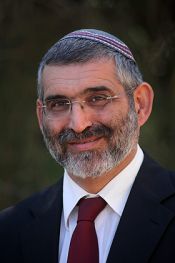
Shlomi Eldar writes: The motto of the racist activists and their various organizations is fanatical hatred of Arabs. But they have not been placed outside the law; on the contrary, their leaders have continued with their daily routine. Most of them were not investigated or indicted for incitement, and no one imposed administrative detention on them or severed them from their sources of influence.Michael Ben Ari
One of the “sources of inspiration” for the far-right Jewish movements is Michael Ben Ari, a former Knesset member of the Ichud Leumi Party. Ben Ari now heads the Otzma LeYisrael movement that did not garner enough votes to pass the electoral threshold in the 2013 elections. Ben Ari and other movement activists are working energetically to disseminate their worldview, based on Kach movement ideology. Ben Ari was one of its activists.
In 1994, the Kach movement was declared a terrorist organization by Israel. It is included in the list of terror organizations of the United States, the European Union and other countries. But its holdovers — including Ben Ari, Baruch Marzel, Itamar Ben Gvir and others — continue to recruit adherents for the same goal: the expulsion of all the Arabs from the territories of “the land of Israel.” [Continue reading…]
Death toll rises past 80 on third day of Israeli assault on Gaza
Al-Akhbar reports: Israel pressed on with an intensive aerial offensive in Gaza for a third day on Thursday, raising the death toll to 81, Palestinian officials said, as Israel indicated a ceasefire was “not on the agenda.”
The Israeli military had no immediate comment on the deadliest single bombing raid since the start of the offensive which killed eight members of a family including five children in a predawn strike. The attack destroyed at least two homes in Khan Younis in southern Gaza while residents were asleep, killing the eight people, the Palestinian Health Ministry said.
At least 81 Palestinians have been killed since the beginning of the Israeli military operation on Tuesday, more than 50 of them civilians, Palestinian health ministry sources said. The ministry of health added that 537 Palestinians have been injured in Israeli attacks since the Tuesday.
The bloodshed is likely to continue unabated, as Israeli Prime Minister Benjamin Netanyahu told Knesset members on Thursday that a ceasefire was not in the plans.
“I am not talking to anybody about a cease-fire right now,” Israeli newspaper Haaretz quoted Netanyahu as saying. “It’s not even on the agenda.” [Continue reading…]
I am a Muslim-American leader, and the NSA spied on me
Nihad Awad writes: As a student at the University of Minnesota decades ago, the more I learned about America’s history, the more I was inspired by our Founding Fathers. They were initially voices of dissent, who stood up and spoke on issues they thought would advance this country, with the understanding that it would not endear them to the powers of the day. This was the foundation for the Bill of Rights and the ideals that every American remains proud to enjoy to this day.
I am saddened, but not surprised, by recent revelations that I am on the list of Muslim-American leaders who have been targets for NSA surveillance. My First Amendment rights have been compromised simply because, over the years, I have expressed my views on issues relevant to public discourse. The fact that I have been individually targeted puts me on a list with very good company.
Rev. Martin Luther King, Jr. was spied on, along with Washington Post columnist Art Buchwald and boxer Muhammad Ali. Earlier this year, it came to light that the CIA had spied on the Senate Intelligence Committee, a Congressional body charged with oversight of the CIA.
Senator Frank Church, who led investigations in the 1970s uncovering FBI, CIA and NSA surveillance and illegal activity targeting minority activists, was spied on. In 1975 Church warned, “If this government ever became a tyrant, if a dictator ever took charge in this country, the technological capacity that the intelligence community has given the government could enable it to impose total tyranny.” [Continue reading…]
IAEA statement on seized nuclear material in Iraq
Following reports that ISIS seized nuclear material used for scientific research at Mosul University, the IAEA issued the following statement:
The IAEA is aware of the notification from Iraq and is in contact to seek further details. On the basis of the initial information we believe the material involved is low-grade and would not present a significant safety, security or nuclear proliferation risk. Nevertheless, any loss of regulatory control over nuclear and other radioactive materials is a cause for concern.