
Just one more year! Good riddance to George W Bush
Arabia is the land of illusion and desert mirages. And as he jetted last week from kingdom to sheikdom, to be regaled with feasts and falcons, jewels and ornamental swords, George Bush might have imagined that all was well with his presidency. But this, his longest and most ambitious trip to the Middle East, will surely be remembered – if it is remembered at all – as a gaudy, irrelevant footnote to a presidency that has long since failed.
Today is a sombre milestone, marking the start of the last of Mr Bush’s eight years in the White House. This being a leap year, exactly 366 days remain until 20 January 2009, when his successor will be sworn into office. It is a time when incumbents look to their legacies. And for this President the view could scarcely be bleaker.
Is he the worst President in US history? Mr Bush faces stiff competition from the likes of James Buchanan, who watched as America slipped towards civil war, or Warren Harding with his corrupt administration, or Herbert Hoover, who failed to halt the slide into the Great Depression, or, more recently, Richard Nixon, the only President to be forced to resign. But in terms of dogmatism, incompetence, ignorance and divisiveness, Mr Bush surely compares with any of the above. [complete article]
Internal memo takes on Obama’s approach to Middle East
A confidential memo questioning Senator Barack Obama’s potential approach to Middle East policy was circulated earlier this month among staffers at a major American Jewish organization.
“The Senator’s interpretation of the NIE raises questions,” wrote Debra Feuer, a counsel for the American Jewish Committee, one day after the Illinois Democrat surged to victory in the Iowa caucus.
Referring to the Israeli-Palestinian conflict, she added that Obama “appears to believe the Israelis bear the burden of taking the risky steps for peace, and that the violence Israel has received in return does not shift that burden.” [complete article]
Editor’s Comment — God forbid the possibility that an American president might have the audacity to attempt an even-handed approach to the Israeli-Palestinian conflict!
The Israel lobby has to tread a fine line in going after Obama. Of course, AIPAC-friendly Clinton is the Democratic candidate of choice, but the lobby needs to hedge its bets. Candidate Obama, who is not AIPAC-unfriendly, could become an unfriendly president to a lobby he saw as being intent on keeping him out of the White House. There’s a stunning irony in the AJC referencing Ali Abunimah’s comments about Obama when Ali himself regards Obama as having shifted to the AIPAC camp. I guess in the eyes of the lobby, it is unforgivable that anyone should ever express any degree of sympathy with the Palestinians.
The Democrats with the greatest Washington expertise — Joe Biden, Chris Dodd and Bill Richardson — have already been driven from the race. And the presidential candidate left standing with the greatest experience by far is Mr. McCain; if Mrs. Clinton believes that’s the criterion for selecting the next president, she might consider backing him. [complete article]
Now that Democrats have voted or caucused in three states in three different parts of the country, it appears there is one crucial voting bloc that will not support Barack Obama: older Americans.
Obama was able to overcome a consistent age gap in Iowa because of an unusually high turnout by young voters who supported him overwhelmingly. And he may be able to carry South Carolina, where roughly half the Democratic primary voters are expected to be African-American.
But Obama’s weak performance so far among older voters substantially increases the odds against him scoring big victories in the slew of states voting on February 5th, “Super Duper Tuesday.” [complete article]
Editor’s Comment — If old America isn’t ready for Obama, what’s young America supposed to do? Wait long enough until it too becomes set in its ways?
The American officers I met were hardly of one mind on how to proceed in Iraq, but they were grappling with decisions on how to try to stabilize a traumatized country with a hard-headed sense that although there have been significant gains, a long and difficult job still lies ahead — a core assumption that has frequently been missing on the campaign trail.
The politicians, on the other hand, seemed more intent on addressing public impatience with an open-ended commitment in Iraq, either by promising prompt withdrawal (the Democrats) or by suggesting that victory may be near (the Republicans).
Anthony Cordesman, a military specialist at the Center for Strategic and International Studies who regularly visits Iraq, put it this way: “You have to grade all the candidates between a D-minus and an F-plus. The Republicans are talking about this as if we have won and as if Iraq is the center of the war on terrorism, rather than Afghanistan and Pakistan and a host of movements in 50 other countries.
“The Democrats talk about this as if the only problem is to withdraw and the difference is over how quickly to do it.” [complete article]
Well, it wasn’t big and it sure wasn’t pretty – in fact it was downright ugly – but Hillary Clinton’s win in Nevada gives her an advantage now over Barack Obama in the Democratic contest.
The effect of the result is perhaps most easily grasped by envisioning the counterfactual. Let’s say Obama had won. In that case, the media would have been full of reports about how the underdog (which he assuredly is) had regained momentum, had knocked the powerful Clinton machine back on its heels a second time, and seemed primed to win next Saturday’s match-up in South Carolina. In that state, and in the 22 states voting on February 5, sit hundreds or thousands of political operatives who, if Obama had won, would be on the phone with one another right now asking if they should go ahead and get with Obama, emboldening one another to buck the mighty Clintons. But now Clinton has held that effect off – at least for a week, perhaps for more, perhaps for good. [complete article]
Leading Democrats to Bill Clinton: pipe down
Prominent Democrats are upset with the aggressive role that Bill Clinton is playing in the 2008 campaign, a role they believe is inappropriate for a former president and the titular head of the Democratic Party. In recent weeks, Sen. Edward Kennedy and Rep. Rahm Emanuel, both currently neutral in the Democratic contest, have told their old friend heatedly on the phone that he needs to change his tone and stop attacking Sen. Barack Obama, according to two sources familiar with the conversations who asked for anonymity because of their sensitive nature. Clinton, Kennedy and Emanuel all declined to comment. [complete article]
Editor’s Comment — At what point does loyal support for one’s spouse turn into a passion for a vicarious (and maybe not so vicarious) third term?



 The case of Irishman Michael Semple, who was acting head of the European Union mission in Kabul, is instructive. The fluent Dari-speaking Semple had spent over 18 years in Afghanistan in various capacities, including with the United Nations and as an advisor to the British Embassy in Kabul, before being expelled last month after being accused of talking to the Taliban. [



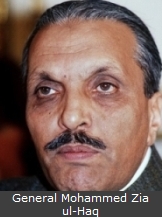 Then, suddenly, in July 1977, Gen. Zia was no longer amusing when his junta arrested Mr. Bhutto and his cabinet, and imposed martial law. There followed more than a decade of military tyranny as Pakistan became, in Salman Rushdie’s phrase, “a nightmarish land.” That era and its sequels would be the setting of Benazir Bhutto’s political career, climaxing in her assassination Dec. 27. She was emblematic of her country’s nightmare, and of the tortuous role the United States played in it. It is a history – forgotten, denied – that haunts us all.
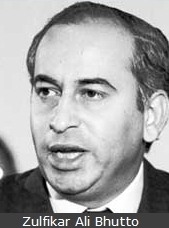 Canny, charismatic, irrepressibly ambitious, U.S.- and Oxford-educated Zulfikar Ali Bhutto was a young civilian minister for the junta in the 1960s, veering between complicity and enmity with the generals in the tangled pattern of Pakistan’s civilian-military politics. He then was an occasional nemesis of Washington, courting Communist China, fiercely bellicose on Kashmir and India. Breaking with the junta and founding his Pakistan Peoples Party in 1967, he inherited power in the 1971 breakaway of Bangladesh, when not even the U.S. could save the generals from the toll of secession, genocide, and another lost war with India.
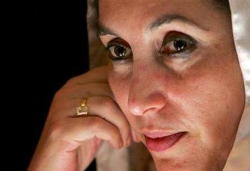 Benazir Bhutto now joined the story, though in ugly anticlimax. While the CIA-Zia combine conducted its Afghan war and associated trade over the 1980s, she worked tirelessly as her father’s chosen successor. This included building furtive ties to the Americans, the CIA covering its bets with subsidies to Ms. Bhutto, some no doubt recycled in paying for her Washington lobbyists.