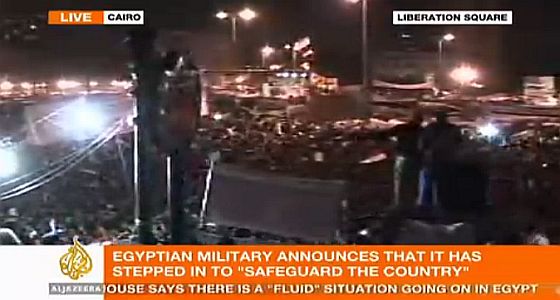
“Ambiguous” statement from military confirms its “commitment and responsibility to safeguard the people and to protect the interests of the nation, and its duty to protect the riches and assets of the people and of Egypt”. Mentioned the demands of the people are “lawful and legitimate”. Understood the military council met separately from Mubarak.
The Egyptian military has secretly detained hundreds and possibly thousands of suspected government opponents since mass protests against President Hosni Mubarak began, and at least some of these detainees have been tortured, according to testimony gathered by the Guardian.
The military has claimed to be neutral, merely keeping anti-Mubarak protesters and loyalists apart. But human rights campaigners say this is clearly no longer the case, accusing the army of involvement in both disappearances and torture – abuses Egyptians have for years associated with the notorious state security intelligence (SSI) but not the army.
The Guardian has spoken to detainees who say they have suffered extensive beatings and other abuses at the hands of the military in what appears to be an organised campaign of intimidation. Human rights groups have documented the use of electric shocks on some of those held by the army.
Egyptian human rights groups say families are desperately searching for missing relatives who have disappeared into army custody. Some of the detainees have been held inside the renowned Museum of Egyptian Antiquities on the edge of Tahrir Square. Those released have given graphic accounts of physical abuse by soldiers who accused them of acting for foreign powers, including Hamas and Israel.
Whether we like it or not, the Muslim Brotherhood – Egypt’s major Islamist group – is going to play a significant, perhaps crucial role in a post-Mubarak Egypt. Too often, American policy makers fall under the illusion that they can somehow have Arab democracy without having the largest opposition groups participate. A “democracy” that excludes a group with hundreds of thousands of members is unlikely to be seen as much more legitimate than the autocracy that came before it.
This brings us back to a critical question: do Islamists, in fact, want to rule Egypt? A careful consideration of the evidence suggests that mainstream Islamists display an odd ambivalence – and even aversion – to executive power. Islamist groups such as the Muslim Brotherhood very rarely run full electoral slates. In a recent article for the Journal of Democracy, I looked at the five countries where Islamist opposition groups contest elections on a regular basis – Egypt, Jordan, Kuwait, Bahrain, Morocco, and Yemen – and found that the average percentage of seats the major Islamist groups contest is a mere 36 percent.
Because they put a premium on self-preservation, Islamist groups go out of their way to avoid provoking the government or the international community. As Islamists themselves will often say, the world is not yet ready for them (they even have a phrase for this: “the American veto”).
This is not to say that the Muslim Brotherhood won’t ever try to win an Egyptian election. It just means that it won’t anytime soon. What then does the group want in the interim? It is worth recalling that the last several years saw one of the most intense periods of anti-Islamist repression since the 1960s. The Brotherhood has had businesses closed, financial assets seized, and thousands of its members imprisoned. Its priority, then, is to slowly rebuild its battered infrastructure, boost membership, and sort out internal frictions between “reformists” and “traditionalists.” The Brotherhood is not a political party, so, presumably, it won’t act like one. For a mass movement whose lifeline is social-service provision, preaching, and educational activities, safeguarding organizational interests takes precedence.
With all of this in mind, the Brotherhood has stayed on message since the protests began, emphasizing the need for a “civil, democratic state.” A civil, democratic state is precisely what will grant it the greatest freedom of movement. On the other hand, advocating for something more “Islamic” or adopting a higher profile would threaten to derail the uprising, which benefits from the perception that it is secular. This is the sort of cautious, calculated strategy that will define the Brotherhood’s approach in the coming years.
Beyond Tahrir Square, beyond the boundaries of the sprawling capital, beyond even the provincial cities where protesters joined the call to topple President Hosni Mubarak, rural Egypt is restless for change.
Scraping a meagre living from the land, farmers and rural workers in Egypt’s agricultural heartland have watched the largely urban uprising that has shaken the ruling system and many back the web-savvy youths who galvanised the nation.
A few have turned up in Cairo in their galabiyas, the robes worn in the fields, although most are too busy trying to feed their families. But many believe it is time for a new era, even if some think Mubarak should stay on a few months more.
“The revolution is good … It will give us stability but the protest should stop and the president should be allowed to stay until the end of his term,” said farmer Fawzi Abdel Wahab, working a field near the Nile Delta city of Tanta.
“If the president doesn’t do as he promised, Tahrir Square is still there and the youth will not die, they can go back,” he said, his wife and daughter nodding in agreement.
The protesters want Mubarak to quit now. Mubarak has said he will step down at the end of his term in September.
The protests may have begun with an educated youth and liberal, urban elite, but a tour of the Nile Delta suggests discontent is more widespread. Mubarak’s government needs to do more than meet the aspirations of the middle class.
“The ideas the youths called for in their revolution express those of all Egyptian people, including farmers and residents of rural areas who, like the rest of Egyptians in big cities, face the same needs and suffering,” said analyst Nabil Abdel Fattah.
Satellite dishes that litter roof tops of small country dwellings or village coffee shops spread the word far and wide.
“New media, mainly satellite channels, have managed to spread the message of the revolution everywhere, including rural areas,” said Abdel Fattah of the Al Ahram Centre for Political and Strategic Studies.
“Never insult the Arabs,” advised Amos Gilead, former head of Israel’s Political-Military Bureau, speaking on Monday at the influential Herzliya national security conference.
But he wasn’t appealing for an improvement in Israeli-Arab relations since he only had a few Arabs in mind — Hosni Mubarak and other leaders “that are supporting stability and are coping with terror and have proven themselves along decades.”
As for Gilead’s views about the advance of democracy in the region, such a prospect presents nothing less than a path to hell.
“If we allow,” Gilead said, then edited himself realizing that democracy should not be presented as something Israel can allow (or forbid) and thus he continued in less instrumental terms, “or if there is democrative process in the Middle East, it will bring for sure — or, let’s say, quite sure — dictatorships which will make this area like hell.”
The Obama administration — which has yet to face any form of governmental pressure it was willing to resist — is now showing itself in much deeper sympathy with those voices who present democracy as a threat than those who claim democracy as their right.
As the Obama administration gropes for the right response to the uprising in Egypt, it has not lacked for advice from democracy advocates, academics, pundits, even members of the previous administration. But few voices have been as urgent, insistent or persuasive as those of Egypt’s neighbors.
Israel, Saudi Arabia, Jordan and the United Arab Emirates have each repeatedly pressed the United States not to cut loose Egypt’s president, Hosni Mubarak, too hastily, or to throw its weight behind the democracy movement in a way that could further destabilize the region, diplomats say. One Middle Eastern envoy said that on a single day, he spent 12 hours on the phone with American officials.
There is evidence that the pressure has paid off. On Saturday, just days after suggesting that it wanted immediate change, the administration said it would support an “orderly transition” managed by Vice President Omar Suleiman. Secretary of State Hillary Rodham Clinton said that Mr. Mubarak’s immediate resignation might complicate, rather than clear, Egypt’s path to democracy, given the requirements of Egypt’s Constitution.
“Everyone is taking a little breath,” said a diplomat from the region, who spoke on the condition of anonymity because he was discussing private conversations. “There’s a sense that we’re getting our message through.”
While each country has its own concerns, all worry that a sudden, chaotic change in Egypt would destabilize the region or, in the Arab nations, even jeopardize their own leaders, many of whom are also autocrats facing restive populations.
Like frogs that refuse to jump out of pot of hot water because its temperature is only rising slowly, those autocrats and their Western allies who now equate stability with their ability to act as a judicious brake on change, have a will to survive that is guiding them down a path of self-destruction.
Slow but sure are the watchwords of the proponents of an “orderly transition” to democracy in Egypt. Yet even as they profess a desire to see democratic change unfold and claim no interest in dictating the outcome of a democratic process, this posture of non-interference is contradicted by a clear intent to dictate the pace of change. The will of the Egyptian people will be respected — but not just yet.
What the West is telling the Arab world is this: be patient living under dictators we like because if you get rid of them you’ll end up being ruled by dictators we don’t like. Now, as ever, the West treats Arabs as being incapable of building their own democracies.
But beneath this veneer of contempt lies a much deeper fear: that a Middle East made up of truly self-governing independent nations fully in control of resources upon which the West depends will no longer bow to Western interests. That’s a prospect the West dreads to contemplate.
Under the Bush administration, in the context of “the global war on terror”, US renditions became “extraordinary”, meaning the objective of kidnapping and extra-legal transfer was no longer to bring a suspect to trial – but rather for interrogation to seek actionable intelligence. The extraordinary rendition program landed some people in CIA black sites – and others were turned over for torture-by-proxy to other regimes. Egypt figured large as a torture destination of choice, as did [newly-appointed Vice President, Omar] Suleiman as Egypt’s torturer-in-chief. At least one person extraordinarily rendered by the CIA to Egypt — Egyptian-born Australian citizen Mamdouh Habib — was reportedly tortured by Suleiman himself.
In October 2001, Habib was seized from a bus by Pakistani security forces. While detained in Pakistan, at the behest of American agents, he was suspended from a hook and electrocuted repeatedly. He was then turned over to the CIA, and in the process of transporting him to Egypt he endured the usual treatment: his clothes were cut off, a suppository was stuffed in his anus, he was put into a diaper – and ‘wrapped up like a spring roll’.
In Egypt, as Habib recounts in his memoir, My Story: The Tale of a Terrorist Who Wasn’t, he was repeatedly subjected to electric shocks, immersed in water up to his nostrils and beaten. His fingers were broken and he was hung from metal hooks. At one point, his interrogator slapped him so hard that his blindfold was dislodged, revealing the identity of his tormentor: Suleiman.
Suleiman’s history should be kept in mind when considering statements he made yesterday. In a thinly veiled threat, he warned that if the protests do not end soon, there will be a coup and “dark bats of the night” will emerge “to terrorize the people.”
Egypt’s anti-government activists called on supporters Wednesday to expand their demonstrations in defiance of the vice president’s warning that protests calling for President Hosni Mubarak’s ouster would not be tolerated for much longer.
Vice President Omar Suleiman, who is managing the crisis, raised the prospect of a new crackdown on protesters Tuesday when he told Egyptian newspaper editors there could be a “coup” unless demonstrators agree to enter negotiations. The protesters insist they won’t talk before Mubarak steps down, which the president is refusing to do.
“He is threatening to impose martial law, which means everybody in the square will be smashed,” said Abdul-Rahman Samir, a spokesman for a coalition of the five main youth groups behind protests in Cairo’s Tahrir Square. “But what would he do with the rest of the 70 million Egyptians who will follow us afterward.”
Suleiman is creating “a disastrous scenario,” Samir said. “We are striking and we will protest and we will not negotiate until Mubarak steps down. Whoever wants to threaten us, then let them do so,” he added.
For the first time, protesters were calling forcefully Wednesday for labor strikes after Suleiman warned that calls by some protesters for a campaign of civil disobedience are “very dangerous for society and we can’t put up with this at all.”
The vice president’s warnings were the latest in a series of confused messages from the government to the protesters. Officials have made a series of pledges not to attack, harass or arrest the activists in recent days, followed by Suleiman’s thinly veiled threat of a new crackdown.
“We can’t bear this for a long time,” he said of the Tahrir protests. “There must be an end to this crisis as soon as possible.” He said the regime wants to resolve the crisis through dialogue, warning: “We don’t want to deal with Egyptian society with police tools.”
He also warned of chaos if the situation continued, speaking of “the dark bats of the night emerging to terrorize the people.” If dialogue is not successful, he said, the alternative is “that a coup happens, which would mean uncalculated and hasty steps, including lots of irrationalities.”
Venice Beach, California, might not be the best place to take the pulse of American opinion. Or is it?
Would Geena and Jenna be relieved or disappointed to learn that Egypt now consumes about as much oil as it produces and that most of the relatively small volume it exports goes to Italy?
Maybe Egypt just belongs to that long list of countries that most Americans know little about and care even less — at least so long as those countries that have it “keep giving us our oil.”
Meanwhile, our Goldilocks president (who thinks Egyptians need more democracy — as though they already have some — and who clearly doesn’t want the freedom spigot turned on too fast) will probably take comfort in the following numbers — a perfect marker of success in centrist politics: that public indifference and ignorance provide a reassuring level of support for a steady-as-she-goes approach on a course going who-knows-where.
Americans do not have a clear point of view about how the massive anti-government protests in Egypt will affect the United States. More than half (58%) say the protests will not have much of an effect (36%), or offer no response or are noncommittal (22%). Of the minority that thinks the protests will have an effect on the U.S., nearly twice as many say their impact will be negative rather than positive (28% vs. 15%).
This lack of agreement notwithstanding, a majority (57%) says the Obama administration is handling the situation in Egypt about right, while much smaller numbers say the administration has shown too much support (12%) or too little support (12%) for the protestors.
As for whether California comedian Kassem G was able to gather a representative sample of American opinion in Venice Beach, Pew’s findings would indicate he was only gathering the views of about half the country: 52% of Americans, during two weeks of media saturation coverage, said that they had heard little or nothing about what’s been happening in Egypt.
Perhaps the phrase, living under a rock, should be changed to, living in America.
To assert that the United States has been poisoning the Middle East for decades might sound like too strong language to the ears of many Americans. Yet what kind of effect can we expect from the long-standing practice of supporting rulers who habitually torture their own people, other than a poisonous effect?
Much as we can celebrate the Egyptian revolution as an expression of the universal human desire for freedom, it is also the beginning of a process through which Egypt must detoxify itself.
The Obama administration still clings to the phrase orderly transition as though the process of change on which Egypt is just embarking might be as seamless as the changeless change which saw George W Bush’s departure from and Barack Obama’s arrival into the White House.
Real change is more disruptive. It can’t be stage-managed by Hosni Mubarak or his deputies.
It had to come. Where, when, and how exactly one of many smoldering sparks in this agonized region might actually burst forth into the present conflagration was unknowable, but tension and anger was palpably rising over a long period.
Where all these uprisings across the region will go is still unknowable, but one thing is clear – the imperative to break the long and ugly pattern of harsh, incompetent, and corrupt rule that sucks optimism, hope, and creativity out of these societies and made them breeding grounds for radicalism.
What the people of the region demand is to be able to take control of their own lives and destinies. But that in turn depends on an end to the constant external intervention of the United States in the region.
In the near term, the prescription is stark – Washington must back off and leave these societies alone, ending the long political infantilization of Middle Eastern populations. We must end our incessant and obsessive efforts to intervene and micromanage the political life of foreign states based on a myopic vision of “American interests.”
Today the Middle East is the last redoubt in the world of regimes bought, maintained, and guided by Washington. Is it any wonder that this region is now the cauldron of numerous rebellions and anti-American expression?
And just why are we maintaining this damaging, hated quasi-imperial role in the Middle East? Is it for the oil? Yet what tin-pot dictator has ever refused us oil? Furthermore, we don’t even rely that much on Middle East oil – Saudi Arabia ranks only number three among our top five providers: Canada, Mexico, Saudi Arabia, Venezuela, and Nigeria.
Or is it perhaps all about Israel? Yet why should that state constitute the seeming touchstone of everything that we do in the region? After all, Israel is overwhelmingly the most powerful military state in the Middle East, acts at will in the Middle East under the protection of American veto, manipulates our own domestic politics in its favor, and is now run by the most inflexible and ultra-right-wing government in Israeli history, while soaking up more American foreign aid per capita than any other state. The US still backs Israel against the Palestinians in an Israeli occupation now into its fifth decade.
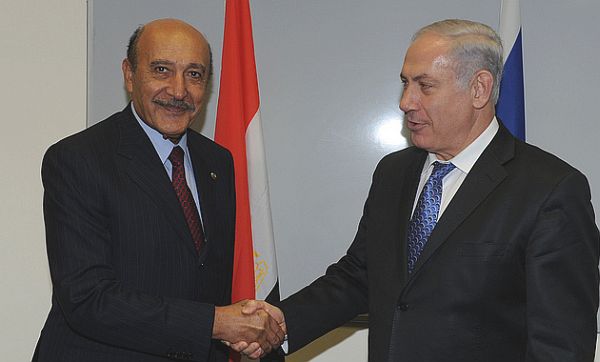
The new vice-president of Egypt, Omar Suleiman, is a long-standing favourite of Israel’s who spoke daily to the Tel Aviv government via a secret “hotline” to Cairo, leaked documents disclose.
Mr Suleiman, who is widely tipped to take over from Hosni Mubarak as president, was named as Israel’s preferred candidate for the job after discussions with American officials in 2008.
As a key figure working for Middle East peace, he once suggested that Israeli troops would be “welcome” to invade Egypt to stop weapons being smuggled to Hamas terrorists in neighbouring Gaza.
The details, which emerged in secret files obtained by WikiLeaks and passed to The Daily Telegraph, come after Mr Suleiman began talks with opposition groups on the future for Egypt’s government.
“The Iranian nation has become a model for the other nations through its resistance and insistence on Islam and Islamic establishment and due to the eye-catching progress it has made on this path throughout the last 32 years,” Ayatollah Khamenei said while addressing a military gathering in Tehran today.
But the Muslim Brotherhood is more interested in expressing its solidarity with its secular co-revolutionaries than its Iranian co-religionists. This isn’t an Islamic revolution, they say — stating the obvious. It’s an Egyptian revolution.
Ikhwanweb, the Muslim Brotherhood’s official English website editor in chief Khaled Hamza has stated that the current uprising in Egypt is a revolution of the Egyptian people and is by no means linked to any Islamic tendencies, despite allegations nor can it be described as Islamic.
Hamza stressed that the revolution is peaceful and calls solely for reform and a democratic civil state initiated by the youth through the social networking service Facebook and is far removed from any Islamist groups.
He criticized allegations and reiterations by some countries that the uprising was Islamic and denounced claims by the Iranian Supreme Leader Mr. Khamenai that the protests are a sign of an Islamic Awakening inspired by the 1979 Islamic Revolution in Iran.
Hamza maintained that the Egyptian protests are not an ‘Islamic’ uprising, but a mass protest against an unjust, autocratic regime which includes Egyptians from all walks of life and all religions and sects.
Anyone in any doubt about the difference between the Khamenei regime and the Muslim Brotherhood’s conservative and pragmatic political movment, should listen to the following from Dr Maha Azzam, Chatham House and Dr Shadi Hamid, Brookings Doha Center:
If in the first days of the Egyptian people’s uprising, the Mubarak regime imagined it could ride out the storm, two weeks later we can see that the revolution is, on the contrary, growing in strength.
The Guardian‘s Jack Shenker describes the scene in Tahrir Square today:
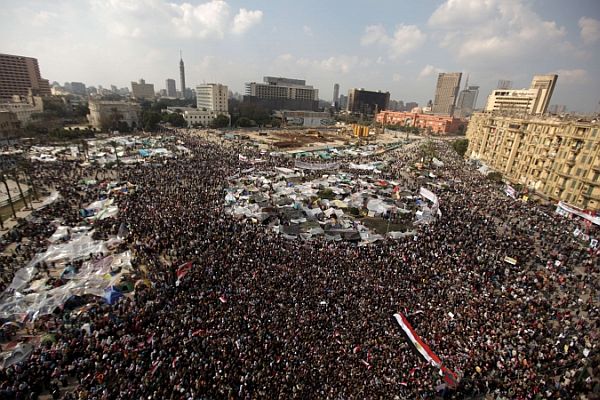
There is more energy and optimism in Tahrir today than almost anything I’ve seen before – an aimless wander through the packed crowds is a dizzying, exhilarating experience, revealing a hundreds of little micro-dramas playing out all over the square.
It’s so difficult to convey the atmosphere of this place through words or images; Tahrir may have dropped down the international media agenda somewhat in recent days, but honestly if you go down there and just stare around you – at the picnicking families, the raucous flag-wavers, the volunteer tea suppliers, the cheery human security cordons, the slumbering bodies curled up in the metal treads of the army’s tanks, the pro-change graffiti that adorns every placard, every tent, every wall space in vision – it’s impossible not to feel as moved as we all did in the very first days of this ongoing revolution.
As the streets appear safer and security more guaranteed, the numbers of those joining queues to enter Tahrir is growing, not falling – dozens told me today they were here for the first time. Politicking at the top may give the impression that the uprising has lost momentum, but clearly for many in Egypt it’s only just getting started.
An Al Jazeera report from Alexandria confirms the nationwide surge in demonstrations that has been driven by the impact of the Wael Ghonim interview broadcast on Egyptian television yesterday. The re-appearance of Ghonim — an activist leader and Google executive who was released from detention yesterday afternoon — “really had an impact on many Egyptians and forced a lot more to come out to the streets. This was the first time Egyptian television showed some of the most graphic images and stories that have happened over the last two weeks. So there’s definitely a surge in the number of pro-democracy, anti-government protests here in Alexandria,” said Jamal Elshayyal.
An emotional television interview given by a young Egyptian Google executive who was arrested after playing a key role in using the internet to spark the uprising against Hosni Mubarak is being hailed as a landmark moment in the ongoing revolt after it struck a chord across Egypt and beyond.
Wael Ghonim, a marketing manager who became a hero to anti-government protestors after he went missing on 27 January, confirmed in the interview following his release that he was behind a highly influential Facebook page that helped lead to what he described as “the revolution of the youth of the internet.”
Before his appearance on Monday on a privately owned Egyptian television channel, the father-of-two was held in repute by many who believed that he was the anonymous activist behind a Facebook page named after a young Egyptian businessman whose death at the hands of police in June set off months of protests.
The page, “We are all Khaled Said”, became one of the main tools for organising the demonstrations that started the revolt in earnest on 25 January.
Click “CC” button (lower right) to turn on English subtitles.
Sayyed Hassan Nasrallah, the leader of Hezbollah, has said that protesters calling for the resignation of Hosni Mubarak, the Egyptian president, are changing the region with their battle for “Arab dignity”.
In his first comments since unrest began in Egypt almost two weeks ago, Nasrallah said on Monday that his Shia movement did not intend to intervene in the “internal business” of protesters, or to influence their decisions.
“Your movement will entirely change the face of our region for the interest of its own people,” Nasrallah said in a televised address to a Beirut conference held in support of the Egyptian protests.
“You are going through the battle of Arab dignity, restoring the dignity of Arab people.”
Will Hosni Mubarak travel to Germany as a patient as part of a graceful exit strategy for the Egyptian president? Plans for a possible hospital stay here appear to be more concrete than previously believed. SPIEGEL ONLINE has learned that a luxury clinic near Baden-Baden is being favored.
The United States government’s scenario for an end to the political chaos in Egypt appears to be this: President Hosni Mubarak travels to Germany for a “prolonged health check” that would offer the 82-year-old a dignified departure. Over the weekend, the New York Times reported that secret talks to that effect were being held between the US government and Egyptian military officials.
According to information obtained by SPIEGEL ONLINE, plans for a possible hospital stay in Germany are far more concrete than had been assumed so far. Talks are already being held with suitable hospitals, particularly with the Max-Grundig-Klinik Bühlerhöhe in the southwestern town of Bühl near Baden-Baden, SPIEGEL ONLINE has learned from sources close to the clinic. The hospital management declined to comment.
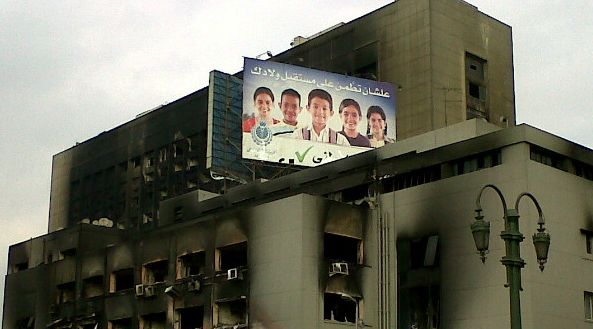
As Egypt’s government tries to minimize the importance of the protests, Girish Juneja, a producer for Britain’s Channel 4 News in Cairo, spotted a remarkable symbol of the ruling National Democratic Party’s determination to hang on to power on Monday. The burned-out ruins of the party’s headquarters in Cairo, which was torched during clashes 10 days ago, is now adorned with a sunny new political poster, calling on Egyptians to rally to the N.D.P. “to ensure the future of your children.”
Al Jazeera’s Ayman Mohyeldin describes his experience while held in detention yesterday by the Egyptian military:
The following video shows Egypt’s much-feared secret police in operation on January 26, the day after the first mass protests took place. At 1 minute 15 seconds into the report a gang of plain-clothes policemen can be seen advancing towards protesters. An individual, who would appear to have been a marked man, is dragged out of the crowd and bundled away.
Some observers believe this to have been Wael Ghonim, the Google executive and prominent Egyptian activist who was reported missing the next day and who has just been released.
Meanwhile, Al Jazeera has released footage showing unarmed protesters being shot, apparently by the Egyptian army and police.
This website or its third-party tools use cookies, which are necessary to its functioning. By closing this banner, you agree to the use of cookies.





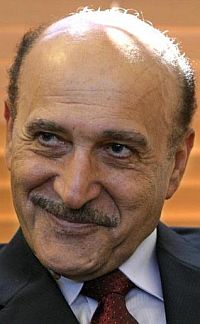 Under the Bush administration, in the context of “the global war on terror”, US renditions became “extraordinary”, meaning the objective of kidnapping and extra-legal transfer was no longer to bring a suspect to trial – but rather for interrogation to seek actionable intelligence. The extraordinary rendition program landed some people in CIA black sites – and others were turned over for torture-by-proxy to other regimes. Egypt figured large as a torture destination of choice, as did [newly-appointed Vice President, Omar] Suleiman as Egypt’s torturer-in-chief. At least one person extraordinarily rendered by the CIA to Egypt — Egyptian-born Australian citizen Mamdouh Habib — was reportedly tortured by Suleiman himself.

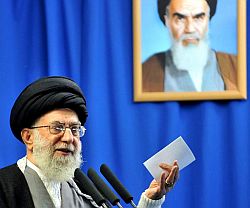 “The Iranian nation has become a model for the other nations through its resistance and insistence on Islam and Islamic establishment and due to the eye-catching progress it has made on this path throughout the last 32 years,”