Benjamin Netanyahu, who endlessly preaches the need for firm action against Iran to prevent it from acquiring nuclear arms, is not lifting a finger to stop Israeli companies and individuals indirectly trading with Iran.
The Ofer Brothers Group may be scurrying into damage control in Israel, Singapore, London and Washington, after the United States blacklisted it for trading with Iran, but Israel seems to be doing nothing to enforce international sanctions on Iran.
Prime Minister Benjamin Netanyahu, who endlessly preaches the need for firm action against Iran to prevent it from acquiring nuclear arms, is not lifting a finger to stop Israeli companies and individuals indirectly trading with Iran.
Nor is he acting against international companies and corporations that operate in Iran, while maintaining huge contracts with Israeli companies – including state bodies like the Electric Corporation and Airport Authority.
This incompetence, bordering on grave deficiency, is causing severe damage to the image of both Israel and its prime minister.
A day after the US State Department announced it would impose sanctions on Israeli company the Ofer Brothers Group for its role in the sale of a tanker to a banned Iranian company, anti-corruption watchdog group Ometz sent a letter to the attorney general asking him to conduct a thorough investigation into the company’s Israeli holdings.
The Ofer Brothers group was identified as one of seven companies facing US sanctions, for its part in a September 2010 transaction that provided a tanker valued at $8.65 million to the Islamic Republic of Iran Shipping Lines.
According to a fact sheet released by the State Department, the Ofer Brothers Group, together with Singapore based Tanker Pacific, “failed to exercise due diligence and did not heed publicly available and easily obtainable information that would have indicated that they were dealing with IRISL.
“By imposing these sanctions, we’re sending a clear message to companies around the world: Those who continue to irresponsibly support Iran’s energy sector or help facilitate Iran’s efforts to evade US sanctions will face significant consequences,” read the statement.
Ofer Brothers Group denied it had knowingly traded with a company that has ties to Iran.
In its letter, Ometz wrote that in light of the potential harm to the company following the sanctions, and due to the fact that the Ofer Brothers Group controls a considerable portion of Israel’s export and foreign trade which might also be affected by the sanctions, it was asking the Attorney General to order a police investigation into all the Ofer family’s companies in relation to the alleged offenses pointed out by the US government, which are also violations of Israeli laws.
While the State Department’s decision caused Israel considerable embarrassment, it was the timing that created the greatest stir. It came soon after Mr. Netanyahu’s friction with Mr. Obama over using the 1967 borders as a basis for solving the Israeli-Palestinian conflict.
“Nobody wants to over-interpret the choice of timing,” said an Israeli official who was speaking on the condition of anonymity for diplomatic reasons, “but there was no objective reason for the State Department to come out with the announcement on that precise day.”
“Does this carry meaning? I am unable to tell you. But you cannot blame anybody for being suspicious,” he said.
The Obama administration dismissed any connection between the sanctions and Mr. Netanyahu’s visit. “These sanctions take months” to work through the Department of Treasury’s vetting process, a senior administration official said. “There is a process.”
Still, the awkward fact remains that a corporation owned by one of Israel’s most prominent business families has been blacklisted for dealings, however indirect, with Iran.
An external enemy is really the only thing that unites Israelis. For that reason, ultimately, nothing poses a greater existential threat to the Jewish state than peace. No wonder Israel’s leaders have such little interest in establishing permanent borders and good relations with their neighbors.
By 2028 an estimated 25 percent of children under 14 will be ultra-Orthodox Haredi Jews and currently 60 percent of Haredi men choose not to work. Even without the strains between Israel’s Jewish and non-Jewish populations, paradoxically, the greatest strain on the state is being imposed from within.
One notable phenomenon in the past decade and a half has been the rapid expansion of the state-funded but independent education system established by the ultra-Orthodox Shas party. Shas is often a pivotal, if not decisive, player in Israel’s governing coalitions, which over the years has given it the power to direct state resources toward the Shas-run school system.
In many provincial Israeli towns and neighborhoods, Shas schools have come to trump the state-school system in the provision of certain services, such as transportation and hot meals (one benefit of the Shas budgetary bargaining power). Even many parents who are not ultra-Orthodox send their children to Shas schools. Over the past 20 years, the number of Jewish primary school students enrolled at ultra-Orthodox schools has grown from just over seven percent to more than 28 percent.
This trend has great implications for Israeli society and its economy: the Shas system and other ultra-Orthodox schools teach a narrowly religious curriculum that is less geared to providing pupils the skills necessary to compete in a modern economy. A combination of state policies and cultural norms has meant that both the Haredi and Palestinian-Arab communities have low rates of labor-force participation: for example, only 40 percent of Haredi men and 19 percent of Palestinian-Arab women work. To further compound the strain on Israel’s economy, Haredi men often spend a lifetime in state-subsidized religious education centers, or yeshivot. A 2009 report by the Metzilah Center, a think tank in Jerusalem, concluded that without a strong state effort to economically and socially integrate these populations, the “rapid growth of two economically weak population groups … Haredim and Muslims … may deal a blow to Israel’s future as a developed and prosperous state.”
If anyone was in any doubt that Capitol Hill is Israeli occupied territory, the adulation Benjamin Netanyahu received from Republicans and Democrats in Congress today makes it obvious where the loyalties of most of our so-called representatives lie.
“In Judea and Samaria [the West Bank], the Jewish people are not foreign occupiers,” Netanyahu declared as members of Congress stood, clapped and cheered.
Well, if that’s what Washington really believes then it’s time to toss the two-state solution out of the window.
Prime Minister Benjamin Netanyahu’s speech before a joint meeting of Congress today had all trappings of a state of the union address by a U.S. president with sky-high approval ratings.
Speaking to a packed House chamber with Speaker of the House John Boehner and Vice President Joe Biden over his shoulders, Netanyahu was interrupted at least 53 times by applause, including at least 29 standing ovations.
To put those numbers in perspective, 29 standing ovations eclipse the total that President Obama received at the State of the Union this year. Obama, in a speech that lasted much longer than Netanyahu’s, garnered 79 applause interruptions, but his remarks were met by only 25 standing ovations.
One of Netanyahu’s biggest applause lines was aimed directly at President Obama.
“Israel will not return to the indefensible boundaries of 1967,” Netanyahu said, prompting a big standing ovation.
Later the prime minister added: “Israel under 1967 lines would be only nine miles wide. So much for strategic depth. So it’s therefore vital — absolutely vital — that a Palestinian state be fully demilitarized, and it’s vital — absolutely vital — that Israel maintain a long-term military presence along the Jordan River.”
As Netanyahu himself pointed out, the President has not called on Israel to return to the exact 1967 borders. The President has said that a peace agreement should be “based on 1967 lines with mutually agreed swaps.”
Nevertheless, Netanyahu speech – and the thunderous bi-partisan response – was a clear challenge to the idea of using the 1967 boundaries – with or without “swaps” — as a basis for a peace deal.
Netanyahu also got big ovations with hard-line statements on two other perennial sticking points to Israeli-Palestinian peace agreements: No right of return for Palestinian refugees, and “Jerusalem will never again be divided. Israel must remain the united Capital of Israel.”
Netanyahu arguably got a warmer reception than President Obama received during his last state of the union and certainly a warmer reception than he’d receive at the Knesset. When the speech was over, he lingered for a while at the podium as it seemed he didn’t want to leave.
Probably the most significant take-away from the past few days of U.S.-Israeli dialog is to shed light on the true intentions of Israeli Prime Minister Benjamin Netanyahu regarding peace with the Palestinians. Although Netanyahu finally allowed the phrase “Palestinian state” to pass his lips for the first time almost two years ago, this past week in Washington provided further confirmation of what had been apparent all along: that whatever conception Netanyahu may have of such a “state,” it is not a formula having any chance of becoming the basis for—to use Netanyahu’s own words from his joint appearance with President Obama on Friday—“a peace that will be genuine, that will hold, that will endure,” or probably even what most of the rest of the world would consider a state. Netanyahu is smart enough to realize this, which is to say he is content to let the status quo endure indefinitely. Israel will maintain that status quo through brute force—military force within the territories, and political force in Washington.
The drop-the-veil moment during this past week was the importunate lobbying by Netanyahu’s government before President Obama delivered his Middle East speech on Thursday at the State Department (and doesn’t that say something right there—where else would one see a foreign government get in the last lobbying licks on a president’s speech, even at the expense of delaying the speech?) to omit any mention of the 1967 borders as the basis for negotiating land swaps and an eventual territorial settlement. The president mentioned that anyway, and in the joint appearance on Friday Netanyahu said nothing about land swaps, instead denouncing the 1967 borders as not being a suitable basis for anything. As Mr. Obama correctly noted in his address to AIPAC on Sunday, there was nothing new in his mention of 1967-borders-with-swaps. It has long been recognized as the only formula that has any hope of being the basis for a successful negotiation. It has been the basis for several official proposals, including one by Israeli Prime Minister Ehud Olmert in 2008. It also has been at the center of several unofficial proposals, including ones from people whose concern for Israel cannot be doubted (such as a plan offered by David Makovsky of the Washington Institute for Near East Policy).
So for Netanyahu, not only is the land allotted to the Jewish state in the UN partition plan of the 1940s not enough, and not only is the larger territory that became the State of Israel with what we call the 1967 borders not enough. Even with land swaps that would extend Israel farther into the West Bank and include the large majority of the settlements Israel has constructed on land seized in the 1967 war, that would still not be enough for him. How much would be enough? One can speculate on what crumbs of land would be left to the Palestinians, but speculation is not required to have an idea based on Netanyahu’s own statements of what such a “state” would entail: Israeli control of the airspace, no military of its own, and, as the prime minister mentioned on Friday, a “long-term” Israeli military presence along the Jordan River. It sounds like a bantustan that would make Bophuthatswana look like a paragon of sovereignty. But trying to envision the details of such an entity is pointless because it is a non-starter very likely intended to be rejected.
In today’s Hebrew Israeli daily Yediot, Yaron London writes:
Few believe in the possibility of making peace within our lifetime, though some imagine that an unwieldy hudna [truce] can be imposed. Our situation among the nations, many believe, is incurably deteriorating. The world is closing in on us, and even the US, our only ally, is losing its patience with us and redefining its map of interests. In a recent poll, one quarter of the Americans support stopping the aid to Israel, and another quarter wish to make the aid conditional upon “progress in the peace process.” Since we are not moving toward peace and since the American Jews are gradually losing their interest in us, it is difficult to hope that the support of our friend is assured.
We dare not think about the collapse of the state due to the pressures that burden it, but there is almost no doubt that the pressures will heighten and place it at great risk. If we do not wish to cling to foolish truisms (“we survived Pharaoh, we’ll survive this too”) or unsubstantiated beliefs (“God will not forsake his people”), it is our duty to think about how we will act if the worst scenario should materialize. The worst scenario means facing the situation of South Africa in the apartheid years: A pariah state, which is under economic boycott and political ostracism. There are already clear signs of this.
If we do not accept the advice of the advocates of compromise, decent right wing politicians should inform us of the price that we will be called upon to pay if we should insist on the positions that they hold. The price will be imposing the rules of conduct of a besieged community: Increasing the strength of the central government, which will be the only one capable of enforcing a strict regime, canceling the free economy and reducing human rights. It is not pleasant to live in such a country, but an unpleasant life is better than putting a stop to life. If we know what lies in store for us, perhaps it will be easier for us to adjust to the unbelievable.
The fear of siege lies in many people’s hearts, but preparation for the worst of all possible situations does not conform to the psychology of the masses, which contradicts the interests of the politicians. They aim their messages to assuage the concerns of the citizens, because concern and frustration are the bread and butter of the opposition. Concerned citizens should send a sharp and clear message to the government: Speak the truth to us.
Mr. Ross is the most senior member of a coterie of American diplomats who have advised presidents stretching back to Ronald Reagan. Unlike many of his colleagues, Mr. Ross has thrived in Republican and Democratic administrations.
“Dennis is viewed as the éminence grise, a sort of Rasputin who casts a spell over secretaries of state and presidents,” said Aaron David Miller, a Middle East expert who has worked with him over several administrations and says he is an admirer. “But in the end, it’s the president who makes the ultimate decisions.”
Denis R. McDonough, the deputy national security adviser, said: “Dennis brings to the discussion a recognition of the vital importance of peace to the parties, but also to the United States. He’s in many ways dedicated much of his professional life to getting there.”
Mr. Ross initially began his tenure in the Obama administration as a senior Iran policy maker at the State Department. But in the summer of 2009, just a few months into his job at State, Mr. Ross moved to the White House, where he kept his Iran portfolio and eventually assumed a broader role that has allowed him to take part in developing Mr. Obama’s response to the upheavals in the Arab world.
His move came as the White House and Mr. Netanyahu were in a standoff over settlement construction. Over time, administration officials say, Mr. Ross took more of a role over Arab-Israeli policy. In September 2009, Mr. Obama abandoned his insistence on a settlement freeze in the face of Israeli recalcitrance.
“If Dennis Ross was in the inner circle in the early days, this administration would not have made that colossal settlements error,” Mr. Foxman said. “He would have said, ‘Don’t go there.’ ”
Once at the White House, Mr. Ross became invaluable, administration officials said, because of his close relationship not only with Mr. Netanyahu, but with the Israeli prime minister’s top peace negotiator, Yitzhak Molcho.
Mr. Ross demonstrated his growing influence last October, when the administration was pressing Mr. Netanyahu to agree to a three-month extension of his moratorium on settlement construction. Mr. Netanyahu balked.
So Mr. Ross devised a generous package of incentives for Israel that included 20 American fighter jets, other security guarantees, and an American pledge to oppose United Nations resolutions on Palestinian statehood. Many Middle East analysts expressed surprise that the administration would offer so much to Israel in return for a one-time, 90-day extension of a freeze.
ROBERT SIEGEL (NPR host): And I’d like to ask you to begin with what has been a major difference between Fatah and your group, Hamas. Ismail Haniyeh, the prime minister of the Hamas government in Gaza, spoke the other day of the Palestinians’, and I quote, “great hope of bringing to an end the Zionist project in Palestine.”
About a week earlier, Hamas leader Khaled Mashaal said in Cairo that the goal of your movement is a Palestinian state in the West Bank and Gaza with Jerusalem as its capital. Which is it that Hamas seeks, a two-state solution alongside Israel or an end to the state of Israel altogether?
GHAZI HAMAD (Deputy Foreign Minister, Hamas): I think there is all kind of contradictions because maybe people understand that the occupation is a reflection of the Zionist movement, and I think the declaration of Hamas is very clear. We accept the state and ’67 borders. This state should be independent. It was chosen as the capital for Palestine and the right of return for the refugees.
But I think that Israel will not accept this because Israel reject all the demands of the Palestinian people because they believe that they have to have a Jewish state and Jerusalem is the capital of Israel and no right of return. So I think we’ll still have a big struggle and big disputes.
SIEGEL: But just to clarify, if Israel were to accept a two-state solution in which Palestine would be in Gaza and the West Bank and have its capital in Jerusalem, is that an acceptable aim that Hamas is striving for, or is that in and of itself insufficient because there would still be a state of Israel?
Mr. HAMAD: Look, we said frankly we accept this state and ’67 borders, but the question now should be directed to Israel. We need clear answer from Israel because Netanyahu said that we will not go back to the ’67 borders. We will not (unintelligible) settlements. So we still the victims of the occupation. (NPR)
The United States slapped sanctions on Syrian President Bashar Assad and six senior Syrian officials for human rights abuses over their brutal crackdown on anti-government protests, for the first time personally penalizing the Syrian leader for actions of his security forces.
The White House announced the sanctions Wednesday, a day before President Barack Obama delivers a major speech on the uprisings throughout the Arab world. The speech is expected to include prominent mentions of Syria.
The Obama administration had pinned hopes on Assad, seen until recent months as a pragmatist and potential reformer who could buck Iranian influence and help broker an eventual Arab peace deal with Israel. (AP)
Tanks shelled a Syrian border town for the fourth day Wednesday in a military campaign to crush demonstrations against President Bashar al-Assad, under mounting Western pressure to stop his violent repression of protesters.
Troops went into Tel Kelakh Saturday, a day after a demonstration there demanded “the overthrow of the regime,” the slogan of revolutions that toppled Arab leaders in Egypt and Tunisia and challenged others across the Middle East.
Assad had been partly rehabilitated in the West over the last three years but the United States and European Union condemned his use of force to quell unrest and warned they plan further steps after imposing sanctions on top Syrian officials. (Reuters)
“While much attention has been focused on rebel efforts in eastern Libya and in the city of Misurata, rebels have held control of most of the Nafusah Mountain region since the unrest began in February,” my colleagues Sergio Peçanha and Joe Burgess explain in the introduction to a fascinating, richly informative graphic on the fighting there.
Last month, after the rebels in these remote mountains made an unexpected show of strength, seizing a border post along the Tunisian frontier, my colleague Scott Sayare reported that “the region’s isolated hamlets were among the first to join the uprising,” fueled by simmering resentment from a Berber community which was neglected by Col. Muammar el-Qaddafi’s Arab nationalist regime.
Despite the fact that even rebel fighters in the region estimate their ranks at just a few hundred ill-equipped and untrained young men, they have someone held off attempts by government forces to reimpose Tripoli’s rule. (New York Times)
NATO kept up its bombing campaign against Libyan leader Moammar Gadhafi over the weekend, hitting missile launchers and other targets around Tripoli. The rebels say they welcome military support, but they would like something more: formal diplomatic recognition for their transitional government.
Some special guests flew in recently for the rebels’ weekly pep rally in Benghazi — delegates from areas of western Libya that are still under Gadhafi’s control. The delegates came to take their seats in the 30-seat National Transitional Council — a kind of proto-parliament.
Eastern Libyans like Mansour Makhlouf are glad to see them.
“Gadhafi’s people are spreading rumors that we are divided. But we’re not divided — we are all brothers,” Makhlouf says. (NPR)
The International Criminal Court’s chief prosecutor has asked a three-judge panel to issue arrest warrants for Libyan leader Muammar Gaddafi, his second-eldest son, Saif al-Islam, and his intelligence chief, Abdullah Senussi.
Luis Moreno-Ocampo described the evidence against the three men as “very strong” in a press conference on Monday and said he believed Libyans eventually would turn them over to the court.
The filing against Gaddafi comes just three months into the uprising against his 41-year rule, which evolved from peaceful protests in major cities to an armed rebellion based out of the east. Gaddafi’s regime has brutally attempted to suppress the opposition movement by shelling rebellious cities, and imprisoning and torturing those who speak out. (Al Jazeera)
For hours and hours, I didn’t know what to make of it: Tribute FM is the first ever English language radio station in Libya. And it sounds just like Magic. Diana Ross . . . the Jackson Five . . . the Temptations . . . some German rap . . . Easy Like Sunday Morning . . . just as you’re nodding along, thinking “this is nice, I wonder if they have a phone-in,” you remember: this is probably the most radical statement of a successful revolution coming out of any radio, anywhere in the world. It is a huge moment for a country in which not just English but most European languages have been invisible for decades.
Before Muhammad, Aman and two others launched Tribute in Benghazi last week, “English wasn’t frowned on, it was completely illegal,” Muhammad tells me by phone. “It was taken out of schools, it got to the point where nothing in English was available in the city. You couldn’t advertise in English, you couldn’t read a newspaper in English.”
It is a measure of how isolating this was for young Libyans that setting up a radio station would be such a priority as the fighting continues, the stream of refugees is unabated and Gaddafi has not, as yet, surrendered. (The Guardian)
During an era in which Israel is used to getting a free ride in the Israel-friendly American press, it’s worth recalling that it wasn’t always like this.
Clifton Daniel went on to become the New York Times‘ managing editor, but back in 1947 he was the paper’s Middle East correspondent and reported from Jerusalem on the Zionists’ rise to power — an ascent that was assured because Western Jews shared the same form of superiority that other Western colonialists exercised in asserting control over the rest of the Middle East, his informants told this reporter.
If Zionists and their allies these days are tireless in declaring that Israel is the historic homeland of the Jewish people, the Jews who actually created Israel were in no doubt that they are engaged in an enterprise of colonization. Jewish settlers, outnumbered by the indigenous population, would only be able to take control of Palestine through a program of Jewish domination. They intended to assert power through persuasion if possible, but by force if necessary.
PALESTINE JEWS MINIMIZE ARABS
Sure of Superiority, Settlers Feel They Can Win Natives by Reason or Force
By Clifton Daniel
Special to THE NEW YORK TIMES
JERUSALEM, March 19 — Palestine’s Zionists are generally confident that relations with their Arab neighbors can be satisfactorily adjusted once the country’s political status has been settled.
If not confident, they rarely allow themselves to be troubled by the problem, being usually preoccupied with issues they consider more urgent. That attitude, which has been manifested in numerous conversations that I have had in the past three weeks with everyday citizens of all degrees, has developed in spite of the fact that the presence of the Arab majority is fundamentally the largest obstacle to the achievement of Zionism’s national aims.
It is an attitude shared by almost everyone, no matter which of the many proposed political solutions he may advocate. A non-party professional man of Rehovoth summarized it when he said: “Give use time, give us peace and give us a policy.”
Surprised at Mention
Talking to Jews in ordinary walks of life — not Zionist leaders — one gets the impression that relations with the Arabs are not among there major concerns. Some were even surprised that in the present circumstances the subject should be discussed.
Their unconcern seems to be the product of several factors. First of all, they feel, although not boastfully, that as a people they are superior to the Arabs in skill and education. “Look at an Arab village and a Jewish settlement side by side,” one of them remarked recently. “There is a difference of 200 or 300 years.”
Another man stated the difference even more bluntly when he described the Western Jew as bearing the same relation to the Oriental Arab as the white man to the native in a colonial system. Some of the chauvinistic youth carry this feeling of superiority so far as to despise the Arab as an inferior.
Whatever the degree of their superiority complex, however, the Jews are certainly confident of their ability to bring the Arabs to terms — by persuasion if possible, by might if necessary. The program of the largest terrorist group, the Irgun Zvai Leumi, is to evacuate the British forces from Palestine and declare a Zionist state west of the Jordan, and “we will take care of the Arabs.”
Some of this confidence may be whistling in the dark. In any case the usual emphasis is not on might but persuasion. There appears to be a sincere belief among Zionists that their settlement in Palestine has conferred large and tangible benefits on the indigenous population. Everyone can cite an example from their own experience.
“I would be deceiving you if I told you that we are consciously thinking about improving the condition of the Arabs all the time,” one man told me. “Naturally we devote our first and best efforts to our own people coming from Europe. We help the Arabs incidentally — largely by example. As a result of our example they are freeing themselves from feudalism.”
Sure Arabs Are Grateful
The Zionists are convinced that the Arabs are grateful for the improvements introduced by Jews and would so express themselves if not incited by the politicians to make a show of hostility.
Wherever Arabs are left to their own inclinations, Zionists frequently tell you, they show themselves friendly. They make a ceremony of welcoming new Jewish settlements, often bringing coffee and food on the first day. They sit side by side with Jews in public markets, work in Jewish enterprises, buy from Jewish stores in spite of the Arabs’ anti-Zionist boycott, and deal with Jewish banks. Their inherent willingness to get along with Jews is the primary article of the Zionists’ faith.
Nevertheless, Arab-Jewish relations are admitted by Zionists to be almost entirely commercial. The relationship is usually one of buyer and seller, employer and employee. The cultural gulf, Zionists say, is such that social relationships are virtually impossible. Simple country Arabs sometimes invite their Jewish neighbors to their traditional festivities but the invitations are admittedly seldom returned.
Look for Common Interests
“Wherever there are common interests relations are good,” one Zionist observed. A young skilled workman who had joined his Arab colleagues in a strike against the Iraq Petroleum Company in Haifa explained his cooperation by saying: “We have common interests.”
There is a belief that areas of common interest would be enlarged if the political irritant could be removed from Arab-Jewish relations.
A leader of the diamond industry in Tel Aviv contended that substantially enlarging the Jewish community in Palestine was the only way of coming to a settlement with the Arabs. His theory was that the Arabs would either ignore or try to crush a numerically inferior community and that immigration was the only means of bettering the Zionists’ bargaining position.
Neither he nor virtually any other Zionist with whom I talked would consider being subject to the Arab majority in Palestine. They wish to feel secure in their culture, religion and economy and to be free to develop a Zionist national home in their own way without restrictions.
Some Jews in Palestine have already attained that feeling of freedom from the restrictive presence of Arabs. In Nevah Ilan the Arab problem did not seem to exist for the young, husky French settlers, mostly veterans of the resistance.
Nevah Ilan, established four months ago, is almost literally up in the clouds, and the Arabs are far below. Eager, enthusiastic and optimistic, the settlers are absorbed in the task of restoring life to a barren but beautiful hill. Almost their only contact with their neighbors has been one visit by an Arab, who showed great interest in their plans and methods.
Tel Aviv Self-Contained
The all-Jewish metropolis of Tel Aviv is self-contained and separated from the rest of the country. The average resident has no daily contact with the majority element of the country — a fact that is probably true of most Jews in Palestine.
Tel Aviv residents do not worry about the Arab problem, a young journalist there said. They do not consider it insurmountable.
“Perhaps we do not have enough contact with the Arabs,” a business man mused somewhat self-reproachingly.
(Thanks to Yousef Munayyer at The Jerusalem Fund for featuring this New York Times article in this post.)
Several people have been killed and scores of others wounded in the Gaza Strip, Golan Heights, Ras Maroun in Lebanon and the Israeli-occupied West Bank, as Palestinians mark the “Nakba”, or day of “catastrophe”.
The “Nakba” is how Palestinians refer to the 1948 founding of the state of Israel, when an estimated 700,000 Palestinians fled or were expelled following Israel’s declaration of statehood.
At least one Palestinian was killed and up to 80 others wounded in northern Gaza as Israeli troops opened fire on a march of at least 1,000 people heading towards the Erez crossing between the Gaza Strip and Israel.
A group of Palestinians, including children, marching to mark the “Nakba” were shot by the Israeli army after crossing a Hamas checkpoint and entering what Israel calls a “buffer zone” – an empty area between checkpoints where Israeli soldiers generally shoot trespassers, Al Jazeera’s Nicole Johnston reported from Gaza City on Sunday.
Sixty years ago in Battir, my small hillside village near Jerusalem, I witnessed the chaotic collapse of the British Mandate administration in Palestine and the beginning of the Nakba.
The previous months had been decisive ones for the fate of Palestine, although we did not yet know it. The Jews, fed up with British procrastination in fulfilling Balfour’s promise of letting them transform our homeland into their “national home,” launched a bloody campaign of terror both against the British and the Arabs. The Jewish militias targeted the British to speed up their departure from Palestine, and hit the Arabs to quell the rising resistance to Zionist colonization. Violence broke out in early 1947, after the British announced that they would leave Palestine by 15 May 1948. When the United Nations passed its partition resolution on 29 November 1947, the violence began to lurch into full-scale war.
Battir’s 1,200 inhabitants were wracked by uncertainty. There were hopes that things would turn out all right, but fear dominated as the atmosphere became bleaker by the day.
I vividly remember the stories of horror which haunted the people of Battir, such as the attack on the railway station in Jerusalem on 21 October 1946. The train was their lifeline to the city where they marketed their produce and bought their supplies. People also walked to Jerusalem and often traveled by car on the unpaved road that ran parallel to the railway line, though that was much harder. A few months earlier a Jewish bomb attack on Jerusalem’s King David Hotel, which served as the British headquarters, killed 91 people and injured dozens. Later, after the partition vote, when the Zionist forces began their armed campaign to seize Palestine, fighting erupted between Arabs and Jews in the land they both claimed.
Electronic Intifada has created an interactive map showing the Palestine villages destroyed in Nakba.
I never heard the word Nakba before the nineties. It was simply not present in the Israeli language, or in the popular culture. Naturally, we knew that some Arabs left Israel in 1948, but it was all very vague. While we were asked to cite numbers and dates of the Jewish waves of immigration to Israel, details on the Palestinian parts of the story were sketchy: How many Palestinians left Israel? What were the circumstances under which they left? Why didn’t they return after the war? All these questions were irrelevant, having almost nothing to do with our history—that’s what we were made to think.
Occasionally, we were told that the Arabs had left under their own will, and it seemed that they chose not to come back, at least in the beginning. Years later, I was shocked to read that most of the notorious “infiltrates” from the early fifties were actually people trying to come back to their homes, even crossing the border to collect the crops from their fields at tremendous risk to their life – as IDF units didn’t hesitate to open fire.
We were made to think they were terrorists…
It’s hard to explain the mechanism which makes some parts of history “important” or some elements of the landscape “interesting.” I can only say that looking back, I understand how selective the knowledge we received was. But there is more to this. I think we all chose not to think about those issues. Even after the New Historians of the nineties made the term Nakba a part of modern Hebrew and proved that in many cases, Israel expelled Palestinians from territories it conquered in ‘48, we were engaged in the wrong kind of questions, such as the debate on whether more Palestinian were expelled or fled. The important thing is that they weren’t allowed to come back, and that they had their property and land seized by Israel immediately after the war (as some Jews had by Jordan and Syria, but not in substantial numbers). Leaving a place doesn’t make someone a refugee. It’s forbidding him or her from coming back that does it.
On hearing the announcement of Senator George Mitchell’s resignation as special envoy for Middle East peace, I skype-messaged the news to a friend in Israel known for her biting sarcasm. Her response was quick in coming and did not disappoint: “Mitchell is still the envoy, who knew?”
There’s been quite a lot happening in the Middle East recently, and the Israeli-Palestinian equation has not been left untouched. Yet the special envoy for Middle East peace has not been to the Middle East since mid-December.
Sen. Mitchell was prone to remind audiences that in his last stint as a peace envoy, working on Northern Ireland, he had “700 days of failure and one day of success.” Resignation day marked Sen. Mitchell’s 842nd day on the Middle East peace beat, but this time around there were no “days of success.” Mitchell’s original appointment came on Obama’s second full day of office and was greeted in certain quarters with some enthusiasm and hope (including by this writer). In 2001, working with a strong back-office, he had produced the Sharm El-Sheikh Fact-Finding Committee Report, noteworthy for its depth and sophistication of analysis. It is hard not to conclude that this time around, Sen. Mitchell has disappointed.
Not all of the blame belongs at Mitchell’s door, of course. Throwing an envoy at a problem, even one with a distinguished record, is no substitute for a smart, strategic policy. Apparently the first misstep of the Obama administration on Mideast peace was its failure to step back and conduct a thorough review of what had already been tried, why things were so stuck, and to look at the structural flaws in the peace process they had inherited.
The Bahraini government has destroyed a number of mosques in continuation of its aggressive crackdown on pro-democracy protesters, a special Al Jazeera investigation has revealed.
At least 28 mosques and Shia religious institutions have been destroyed in the Gulf state since the crackdown on Shia-led protests began in Mid-March, the opposition group, Al Wefaq, told Al Jazeera’s Charles Stratford.
The Justice Ministry, however, said it was tearing down the mosques because they were not licensed. (Al Jazeera)
Adopting what might be called the Qaddafi defense, the head of Bahrain’s military claimed that the country’s brutal crackdown on dissent was entirely justified because the kingdom’s security forces had been confronted by young protesters under the influence of mind-altering drugs.
According to Bahrain’s state news agency, Sheik Khalifa bin Ahmed Al Khalifa said on Wednesday that “young people were given pills which affected their minds and made them do unusual things.” He also claimed “that Bahrain had been the victim [of] a conspiracy involving foreign agents and financing.” (New York Times)
Christopher Stokes writes: In Bahrain, to be wounded by security forces has become a reason for arrest and providing healthcare has become grounds for a jail sentence. During the current civil unrest, Bahraini health facilities have consistently been used as a tool in the military crackdown against protesters.
The muted response from key allies outside of the region such as the United States – which has significant ties to Bahrain, including a vast naval base in the country – can only be interpreted as acceptance of the ongoing military assault, which is backed by the Gulf Co-operation Council.
While the government and its supporters in Bahrain continue to refer to the protesters as rioters, criminals, extremists, insurgents or terrorists, the label that remains conspicuously absent for those who are wounded is “patient”. (The Guardian)
The Obama administration’s special Mideast envoy, former Sen. George Mitchell, is resigning after more than two largely fruitless years of trying to press Israel and the Palestinians into peace talks, U.S. officials said Friday.
The White House is expected to announce that the veteran mediator and broker of the Northern Ireland peace accord is stepping down for personal reasons, the officials told The Associated Press. The officials spoke on condition of anonymity ahead of an afternoon announcement that will follow a White House meeting between Mitchell and President Barack Obama.
There are no imminent plans to announce a replacement for Mitchell, the officials said, although his staff is expected to remain in place at least temporarily.
Mitchell’s resignation comes at a critical time for the Middle East, which is embroiled in turmoil, and the Israeli-Palestinian peace process, which has been moribund since last September and is now further complicated by an agreement between Palestinian factions to share power.
Obama will deliver a speech next Thursday at the State Department about his administration’s views of developments in the region, ahead of a visit to Washington by Israeli Prime Minister Benjamin Netanyahu. Jordan’s King Abdullah II also will travel to Washington next week. (AP)
On Thursday, The Palestinian Central Bureau of Statistics (PCBS) issued a report stating that more than 7000 Palestinians were killed by Israeli soldiers and settlers in the occupied Palestinian territories over the past ten years.
The PCBS said that 7342 Palestinians were killed in the period between September 29, 2000 and December 31, 2010.
The report stated that by the end of 2009, the number of Palestinians killed by Israeli fire arrived to 7235, including 2183 killed by Israeli fire in the West Bank. (IMEC)
Israeli security forces have clashed with Palestinians in several East Jerusalem neighbourhoods ahead of “Nakba Day” or “day of catastrophe” on Sunday.
The anniversary marks Israel’s 1948 declaration of statehood after which more than 700,000 Palestinians fled or were expelled in the war that ensued.
A correspondent for the AFP news agency saw four people hurt as police opened fire with rubber bullets at stone-throwing youths in Silwan. (Al Jazeera)
A 17 year-old was critically injured from live fire in East Jerusalem, and an American protester suffered serious head injury after being hit by a tear-gas projectile shot directly at him from close range.
Israeli military and police forces responded heavy handedly to demonstrations commemorating 63 years to the Palestinian Nakba (catastrophe) of 1948 today all over the West Bank and East Jerusalem. Morad Ayyash, a 17 year old from the Ras el-Amud neighborhood was shot in the stomach with live ammunition. He has reached the Muqassed hospital with no pulse and the doctors are now fighting for his life.
Tension also rose in the East Jerusalem neighborhood of Silwan, where 19 protesters have been injured and 11 were arrested. During the evening hours, large police forces raided houses in Silwan and carried out additional arrests. (Mondoweiss)
Khaled Diab writes: With the world’s attention focused on the tumultuous changes gripping Tunisia, Egypt, Yemen, Bahrain, Libya and Syria, one may be excused for thinking that all is quiet on the Palestinian-Israeli front.
So why haven’t Palestinian youth risen up like their counterparts elsewhere in the region to demand their rights?
Well, it is not for want of trying. Inspired by events in Tunisia and Egypt, and following the date-based example of counterparts elsewhere in the Arab world, a new youth movement dubbed by some as the March 15 movement has emerged in Palestine.
The date refers to the day when organisers employing social media, text messaging and word of mouth managed to draw thousands of protesters on to the streets of Ramallah and other parts of the West Bank, as well as Gaza City.
However, in contrast to other popular uprisings in the region, their demands were not wholesale regime change, despite the undoubted failings of both Fatah in the West Bank and Hamas in Gaza, and the absence of a democratic mandate for both parties.
“Our top priority is to end the divisions within Palestinian society. This is the only way to deal with the occupation,” explained Z, one of the founders of the movement in Ramallah, who wished to conceal his identity for professional reasons.
Some of the others involved in March 15 are also reluctant to reveal their identities, partly as an expression of the decentralised and “leaderless” approach preferred by Middle Eastern protesters tired of authoritarianism, and partly to avoid popping up on the radars of security services run by the PA, Hamas or Israel.
Despite its relative success on 15 March, the movement has not managed to replicate the most successful ingredient of the protests in Tunisia, Egypt, Yemen and Bahrain: constant pressure from the streets. This is partly due to the two-tiered nature of the oppression facing Palestinians, and the restrictions on their movement imposed by the occupation. “Unfortunately, we have two levels of repression in Palestine: Israeli and domestic,” says Z, who is in his early 20s.
In addition, there is the psychological barrier of widespread despair and disillusionment afflicting wide swaths of the population, which the Arab spring is just beginning to chip away at. Most Palestinians I have met since I moved to Jerusalem a few weeks ago speak enthusiastically and excitedly about the Egyptian revolution.
“The problem among Palestinians is that revolutions are nothing new, yet nothing changes or things get worse,” Z observes. “Neither uprisings nor negotiations have worked, Palestinians believe – we’re still under occupation.” (The Guardian)
Khaled Meshaal, the head of the political bureau of the Islamic resistance movement Hamas, said that for the time being Egyptians are not required to march to the Gaza Strip in support of the Palestinian cause.
Egyptian activists had called on Egyptians to march to the Gaza Strip through the Rafah border crossing on 15 May. The event, which has been dubbed “March to Palestine Day”, is intended to mark the 63rd anniversary of the declaration of the State of Israel.
In statements published on the official website of the Muslim Brotherhood in Alexandria, Meshaal said that, “advocating the cause by taking a political stance, sending relief aid, boycotting and sending prayers is a must at the moment. We do not ask you to march.” (Al-Masry Al-Youm)
Libyan state television has aired what it says is a statement by Muammar Gaddafi, in which the Libyan leader denies reports that he has been wounded.
In the audio message, broadcast on Friday evening, Gaddafi said he is alive and well despite air strikes from the NATO military alliance on his Bab al-Aziziyah compound in the capital, Tripoli, on Thursday.
Gaddafi said he is in a place where NATO bombs can not reach him. (Al Jazeera)
Concern is growing over a British-based photographer who has been missing for 39 days after being captured in Libya by forces loyal to Muammar Gaddafi.
Anton Hammerl, an award-winning photographer, was captured on 4 April and his family have had no concrete news about him since then.
The regime has, however, allowed access to three other journalists who were captured with him. (The Guardian)
Thousands of protesters in Syria defied a ferocious crackdown and returned to the streets Friday, even in towns that the military had besieged only days before, in a relentless contest of wills that a leading dissident described as an emerging stalemate.
For successive weeks, Fridays have served as a weekly climax in the challenge to President Bashar al-Assad’s rule. Calls for demonstrations this Friday came after a withering wave of repression that has killed hundreds and detained thousands in towns and cities stretching from the Mediterranean coast to Damascus’s outskirts and the poverty-ridden south.
While some of the country’s most restive locales remained relatively quiet — namely Baniyas on the coast and Dara’a in the south — protesters took to the streets in at least five neighborhoods in Homs, Syria’s third largest-city and a center of the two-month uprising. Activists said protests ranged in numbers from hundreds to thousands, and at least two people were killed when security forces opened fire.
“We don’t like you!” crowds chanted in Homs, referring to the president. “You and your party, leave us!” (New York Times)
Syrian forces carried out raids in towns on the outskirts of Damascus and a besieged city on the coast on Thursday, as the number of detainees surged in a government campaign so sweeping that human rights groups said many neighborhoods were subjected to repeated raids and some people detained multiple times by competing security agencies.
The ferocious crackdown on the uprising, which began in March, has recently escalated, as the government braces for the possibility of another round of protests on Friday, a day that has emerged as the weekly climax in a broad challenge to the 11-year rule of President Bashar al-Assad.
Residents have reported that hundreds of detainees are being held in soccer stadiums, schools and government buildings in various towns and cities across the country, some of them arrested in door-to-door raids by black-clad forces carrying lists of activists. (New York Times)
The neighbors watched helplessly from behind locked gates as an exchange of gunfire rang out at the police station. Then about 80 prisoners burst through the station’s doors — some clad only in underwear, many brandishing guns, machetes, even a fire extinguisher — as the police fled.
“The police are afraid,” said Mohamed Ismail, 30, a witness. “I am afraid to leave my neighborhood.”
Three months after the ouster of Hosni Mubarak, a crime wave in Egypt has emerged as a threat to its promised transition to democracy. Businessmen, politicians and human rights activists say they fear that the mounting disorder — from sectarian strife to soccer riots — is hampering a desperately needed economic recovery or, worse, inviting a new authoritarian crackdown.
At least five attempted jailbreaks have been reported in Cairo in the past two weeks, at least three of them successful. Other attempts take place “every day,” a senior Interior Ministry official said, speaking on the condition of anonymity because he was not authorized to talk publicly.
Newspapers brim with other episodes: the Muslim-Christian riot that raged last weekend with the police on the scene, leaving 12 dead and two churches in flames; a kidnapping for ransom of a grandniece of President Anwar el-Sadat; soccer fans who crashed a field and mauled an opposing team as the police disappeared; a mob attack in an upscale suburb, Maadi, that hospitalized a traffic police officer; and the abduction of another officer by Bedouin tribes in the Sinai.
“Things are actually going from bad to worse,” said Mohamed ElBaradei, the former international atomic energy official, now a presidential candidate. “Where have the police and military gone?” (New York Times)
One of the great bluffs in the foreign policy community in the previous decade was that Israel would have no choice but to attack Iran’s nuclear facilities unless Washington stepped up and took military action first. With predictable frequency since the mid-1990s, reports emerged claiming that Israel was months, if not weeks, away from bombing Iran. And every time a new dire warning was issued, a new rationale was presented to convince the world that the latest Israeli warning was more serious than the previous one. The Israeli threats, however, were bluffs all along. Israel did not have the capacity to take out Iran’s nuclear facilities. But the huffing and puffing ensured that the American military option remained on the table; that Washington would not deviate from the Israeli red line of rejecting uranium enrichment on Iranian soil; and that the Iranian nuclear program was kept at the top of the international community’s agenda.
But the persistent bluffing also carried a price. The Israeli narrative on Iran has grown increasingly alarmist, desperate, and existential over the past 15 years. Inflating the Iranian threat served several purposes domestically. It provided Israeli Prime Ministers Yitzhak Rabin and Shimon Peres a rationale to push for peace with the Palestinians in the 1990s, while more recently Benjamin Netanyahu has used it to resist pressure from Washington to do just that. But the domestic benefits came at the price of limiting Israel’s options and flexibility vis-à-vis Iran. As Israeli politicians built up the Iranian threat and established a near-consensus that Tehran constituted an existential threat, it became increasingly difficult for any Israeli politician to walk back the threat depiction without losing critical political capital at home. As a result, there was a steady escalation of the threat depiction from Iran and no clear ways to de-escalate.
I wrote about this in the Forward in late 2007, pointing out that Israel was suffering from strategic paralysis due to its inability to adjust to the region’s new realities and walk back its alarmist position on Iran. Today, Israel’s strategic position in the region is at even greater risk. In the past few years, for instance, tensions have steadily increased between Israel and Turkey with the friction reaching a boiling point after the Gaza flotilla incident in 2010. As a result, the strategic alliance with Turkey seems to be lost for the foreseeable future. Now, with the fall of the Mubarak regime in Egypt, Israel has lost its most important Arab ally. Thus, the cost of the strategic paralysis is greater today than it was even a few years ago.
NATO carried out its most forceful attacks in weeks in Libya on Tuesday, part of an apparently coordinated push with rebel forces to bring an end to Moammar Gaddafi’s 41-year-long rule.
NATO warplanes pummeled command-and-control targets in four cities, including Tripoli and Gaddafi’s home town of Sirte. U.S. officials said NATO had increased the tempo of its airstrikes throughout the country, and members of the alliance spoke of improved targeting of dug-in loyalist forces, made possible in part by the presence of U.S. Predator drone aircraft.
The new assault appeared to reflect increased cooperation between NATO and the rebel army, allowing the rebels to make modest gains on the ground this week, particularly in and around the western city of Misurata. Although it was too early to tell whether the advances would mark a meaningful turning point in a conflict that has left the country divided since February, the progress “shows where the momentum lies,” said a European diplomat privy to NATO’s internal discussions.
“It is noteworthy that Gaddafi’s forces have not been able to mount a sustained attack for quite some time,” said the official, who spoke on the condition of anonymity to discuss ongoing military operations. He said the rebels’ recent success in Misurata was largely due to the fact that government troops had been forced to abandon entrenched positions, making them vulnerable to ground attack. (Washington Post)
leader Muammar Gaddafi has until the end of May to agree his exile before an arrest warrant from the International Criminal Court is issued, Italian Foreign Minister Franco Frattini said on Wednesday.
‘There are countries that in recent weeks have indicated… a willingness to welcome him,’ Mr Frattini said in an interview with RAI public radio.
‘It’s clear that if there is an international arrest warrant it would be more difficult to find an arrangement for the colonel and his family,’ he said.
‘This will happen by the end of May,’ he added.
Mr Frattini also said he believed there were ‘many defections’ from the regime underway, adding: ‘This shows we have probably arrived at a turning point.’ (AFP)
Three weeks ago, a traveler spotted a man’s body in the farmland on this city’s outskirts, shot twice in the head with his hands and feet bound. He had disappeared earlier that day, after visiting a market.
Ten days later, near the same spot, a shepherd stumbled upon the body of a second man, killed with a single bullet to the forehead. Masked, armed men had taken him from his home the night before, without giving a reason, his wife said.
The dead men, Nasser al-Sirmany and Hussein Ghaith, had both worked as interrogators for Col. Muammar el-Qaddafi’s internal security services, known for their brutality against domestic dissidents. The killings, still unsolved, appeared to be rooted in revenge, the families said, and have raised the specter of a death squad stalking former Qaddafi officials in Benghazi, the opposition stronghold.
The killings have unsettled an already paranoid city, where rebel authorities have spent weeks trying to round up people suspected of being Qaddafi loyalists — members of a fifth column who they say are trying to overthrow the rebels. If the violence continues, it will pose a stern challenge to a movement trying to present a vision of a new country committed to the rule of law, while potentially undermining hopes for a peaceful transition if Colonel Qaddafi surrenders power.
The rebels say their security forces are not responsible for the killings. Prosecutors here say they are investigating at least four attacks, including another murder in March, and they are exploring the possible involvement of Islamists who were imprisoned by the Qaddafi government and are now settling old scores. “It’s our responsibility to protect people,” said Jamal Benour, the justice coordinator for the opposition in Benghazi. “It’s important the killers are punished. The law is most important.”
But some here dismiss talk of Islamists, saying they believe the killings are being carried out by an armed group allied with the rebels, or possibly Qaddafi loyalists pretending to be. (New York Times)
Rebels in the contested western city of Misurata stormed the city’s airport on Wednesday afternoon, swarming over the grounds from the south and east and reclaiming it from the military of Col. Muammar el-Qaddafi.
Seizing the airport in Misurata, Libya’s third-largest city, which has been under siege for nearly two months, marked one of the most significant rebel victories in the Libyan conflict.
The airport and its approaches were the last remaining pieces of significant terrain in the city to be controlled by the Qaddafi soldiers. (New York Times)
Nick Clegg has backed a decision by the home secretary, Theresa May, not to open Britain’s borders to migrants fleeing the turmoil in Libya and North Africa.
Instead the Liberal Democrat leader said Italy should be offered practical assistance in helping those refugees and migrants who manage to complete the dangerous journey from Libya across the Mediterranean.
On Thursday May is to confirm Britain’s rejection of calls to take part in a European-wide “burden-sharing” scheme when she meets EU interior ministers in Brussels to discuss the north African situation. (The Guardian)
Simon Tsidall writes: Given the mad rush to war in Libya, when Britain and others suddenly decided Benghazi risked becoming the new Srebrenica, it is unsurprising that little or no thought was given to the seemingly unrelated question of sub-Saharan migration into the EU. But the law of unintended consequences is inexorable. What began as a quixotic fight in a faraway country has mutated into a life-or-death struggle on the tourist beaches of Europe. Apparently, nobody saw it coming.
The people dying in this war within a war are not Libyans, not the Gaddafi-ites, not the rebels. They are not the endlessly affronted residents of Lampedusa and other Italian and Maltese islands. Nor are they British or other Nato airmen. They are the people who always die first in such situations: the poor, the uneducated, the dark-skinned.
They are people from Eritrea and Somalia, from Chad and Niger, and from other sub-Saharan loser nations. And they are now being washed up daily on Europe’s shores, some just alive, others not so lucky – washed up in their hundreds and thousands, unknowing and blameless, the helpless collateral victims of the high-handed US-British-French decision to rid the world of Colonel Muammar Gaddafi and damn the consequences. (The Guardian)
Secret filming conducted by Al Jazeera has revealed shocking evidence of the brutal crackdown against pro-democracy protesters in the Gulf state of Bahrain.
An undercover investigation conducted by Al Jazeera’s correspondent, Charles Stratford, has unearthed evidence that Bahraini police carried out periodic raids on girls’ schools since the unrest began.
The government of Bahrain deployed security forces onto the streets on March 14 in an attempt to quell more than four weeks of protests.
A three-month “state of emergency” that was declared by King Hamad bin Isa Al Khalifa on March 15, is due to be lifted on June 1.
At the height of the protests, up to 200,000 people rallied against the government. The crackdown was an attempt to end the protests that demanded the end of the despotic rule of the Khalifah royal family.
In an interview “Heba”, a 16-year-old schoolgirl, alleges she, along with three of her school friends, were taken away by the police from their school and subjected to severe beatings while in custody for three consecutive days. (Al Jazeera)
Witnesses say Yemeni security forces and snipers have opened fire on thousands of anti-government protesters marching towars the cabinet building in Sanaa, the capital.
A doctor who treated some of the wounded said that at least one protester had been killed and dozens more wounded.
The doctor, who wished to remain anonymous, said that wounded protesters were still arriving at a field hospital where he was treating patients.
The protesters were calling for the resignation of Ali Abdullah Saleh, the country’s logtime president, when they came under fire on Wednesday. (Al Jazeera)
As Barack Obama continues his campaign of targeted killing — this time with a failed attempt to assassinate the American-born cleric, Anwar al-Awlaki, in Yemen — many Israelis regard this as a vindication of their own approach to eliminating their enemies.
As far as Jerusalem is concerned, President Barack Obama’s decision to assassinate Osama bin Laden constitutes a declared, if delayed, acknowledgment on the part of the Americans of the Israeli argument that targeted attacks on senior members of organizations are a necessary modus operandi in the struggle against terrorism. According to former director of Military Intelligence Maj. Gen. (res. ) Aharon Ze’evi-Farkash, bin Laden’s assassination reflects the administration’s understanding that it is impossible to separate the leader from the operational stratum below him.
The way the operation was carried out in Pakistan also carries significant implications for the objective of deterrence – not only in terms of the meticulous collection of intelligence and the impressive performance by the forces involved, but also with regard to the decision to dispatch a ground force and not carry out a remote-controlled aerial attack. The “close-up” assassination deprived the terrorist organizations, from Hamas to Al-Qaida, of the ability to claim that the West is cowardly and afraid to endanger its people in face-to-face combat. The methods used also helped avoid the killing of noncombatants and, of course, made it possible for the administration to ascertain that bin Laden had indeed been killed, though there will always be those who claim it was an American trick. The United States, for its part, is exempt from at least one Israeli concern: No one is about to send Obama and his officers to The Hague.
Maj.-Gen. Yoav Galant, the former head of the IDF’s Southern Command, spoke this week – for the first time publicly since the government retracted its decision to appoint him chief of staff – about the significance of assassinations in reference to bin Laden’s killing.
“Those who say that these operations don’t have an impact are mistaken,” said Galant, who personally participated in such operations as a longtime navy commando and later as head of the Southern Command. “The liquidation of terror leaders prevents terror attacks and influences the organizations.”
There are two categories of targets killed this way. The first is field operatives, people like Hezbollah’s military commander Imad Mughniyeh, reportedly killed by Israel in 2008 in Damascus, or Ali Mahmoud Mabhouh, the Hamas weapons smuggler reportedly killed by Israel in Dubai in 2010.
Their deaths are believed to have dealt critical blows to their respective organizations, to the point that over three years later, Israel still believes Hezbollah has yet to find an appropriate replacement for Mughniyeh.
Then there are symbolic figures whose assassination can have an effect on a terrorist group. This was the case in 2004 with the assassination of Sheikh Ahmed Yassin, the wheelchair-bound Hamas spiritual leader who was killed by an IAF missile as he left a mosque in the Gaza Strip.
Bin Laden’s death resembles Yassin’s in this respect, since while he was a leader at one point of a clear hierarchical organization, in the years since the 9/11 attacks, he has served more in the position of symbolic figurehead.
The Palestinian factions have reached a power-sharing deal – albeit a fragile one. Regional developments helped, affecting the calculations of both Fatah and Hamas. The role of post-Mubarak Egypt and its emerging independent regional policy cannot be underestimated. Israel’s current government, though, is key to the glue binding Fatah and Hamas together. While the peace process has long been moribund, the Netanyahu government’s refusal to indulge in the make-believe of possible progress rendered obsolete even Fatah’s well-honed capacity to suspend disbelief.
Yet if the deal is to last, the Palestinian factions will eventually have to address substance: their national goals and the strategies to be pursued in attaining them. A real political dialogue will force both Fatah and Hamas out of their respective comfort zones. Fatah will have to elaborate a post-negotiation and (one imagines ) non-violent plan for freedom, and decide how such a plan co-exists or breaks with existing donor and international relations, including coordination with Israel. Hamas will have to confront the requirements of international law (including abandoning the use of violence against civilians ), and ultimately resolve its own verbal acrobatics regarding a Palestinian state alongside Israel – if a serious deal becomes available.
Not surprisingly, unity is also popular in Israel. Israeli unity that is. Palestinian unity has been met with almost blanket condemnation at the political level. But in reacting to Palestinian developments, we Israelis should first of all be asking what the problem is that we need to address. For the Netanyahu government that major problem, apparently, is Israel’s international image and the prospect of pressure being exerted on Israel to advance peace. In the community of nations, Israel’s standing has further plummeted under the tutelage of Foreign Minister Avigdor Lieberman. The intra-Palestinian deal therefore offers a delightful opportunity for Israel to register some big points on the “Who’s to blame for no peace?” scorecard and to fend off any such pressure.
Israel’s challenge, though, goes way beyond public relations. Israel’s challenge is how to adapt, shape and secure its future in this region.
For that reason alone, we would benefit from our own national reconciliation dialogue, one focused on what Israel’s aspirations and strategies should look like.
As tectonic plates shift around us, Israel is clinging to an illusion, namely that when and if the Palestinians are ready, Israel will be able and willing to deliver a dignified two-state solution. The truth is less comforting. Currently there is no political path to an Israeli governing majority that could deliver a mutually acceptable two-state outcome. And there is no status quo: Israel’s predicament is deteriorating, not stable. It is time for Israel to engage in the exercise that Palestinians have begun, and to ask what it is that we really want for ourselves.
Heavy fighting has raged anew in Misurata, leaving at least 25 people killed and at least 71 others critically injured as forces loyal to Muammar Gaddafi gave up more ground inside Libya’s third-largest city.
Libyan Deputy Foreign Minister Khaled Kaim said early on Sunday the army had suspended operations against rebels in Misurata, but not left the city, to enable local tribes to find a peaceful solution.
“The armed forces have not withdrawn from Misurata. They have simply suspended their operations,” Kaim told a news conference in the capital.
If the rebels don’t surrender in the next two days, armed tribesmen will fight them in place of the army, he said. (Al Jazeera)
Moammar Kadafi’s forces came by the thousands with tanks, armored vehicles and rocket launchers to quell an uprising in the forbidding Western Mountains region of Libya.
They left Zintan last month in a rout, rebels and Western journalists say, running through the woods as residents of the rebellious city pursued them using weapons and equipment seized from troops. It was a decisive battle that exposed the far western flank of Kadafi’s security forces.
“What happened here was a beautiful thing,” Milad Lameen, a 59-year-old former Libyan Airlines official and businessman who now serves as a political leader in Zintan, said in an interview conducted over Skype. “The equation was absolutely against us. But his troops and his mercenaries did not have a winning cause. We have a good cause.”
While international attention has been focused on the rebel-controlled stronghold of Benghazi in eastern Libya and the besieged coastal city of Misurata, tens of thousands of Libyans have taken control of a mountainous region stretching about 100 miles from the Tunisian border toward the capital, Tripoli. The provisional government in the far west is in touch with the rebels in Benghazi but not under their authority. (Los Angeles Times)
The international drive to freeze the Libyan regime’s foreign assets is running into stiff resistance in many parts of the world, allowing Moammar Kadafi to dig into a vast hoard of cash that has helped him cling to power as he battles rebel forces.
Although the United States and the European Union have blocked access to more than $60 billion in Libya’s overseas bank accounts and investments, other nations have done little or nothing to freeze tens of billions more that Kadafi and his family spread around the globe over the last decade, according to U.S., European and U.N. officials involved in the search for Libyan assets.
Kadafi has moved billions of dollars back to Tripoli since the rebellion began in mid-February, the officials said. The totals are not clear, in part because investigators believe the Libyan ruler made significant investments in companies and financial institutions that shield his identity.
Kadafi’s ability to skirt sanctions has undermined the Obama administration’s attempts to force his ouster after four decades in power. And his access to ready cash has hampered efforts to persuade his top aides and military commanders to defect as the conflict drags on, officials acknowledged. (Los Angeles Times)
Syrian mourners ‘cut down like weeds’
Al Jazeera’s Cal Perry writes: Every other journalist is trying to get into Syria, but on Saturday I was trying to get out. The government had made it perfectly clear: My visa was expiring and unless I left on April 23, I would “face the full force of the law”.
I had agreed the night before with my cameraman, Ben Mitchell, over a drink that neither of us wanted to discover what “full force of the law” meant. So the debate was really whether I should fly out from Damascus or drive to Amman, Jordan, and fly from there.
The decision was made that he would fly out from Damascus, the Syrian capital, with the gear and I would drive to Amman. I had left my second passport there with a friend. One for Arab countries and the other for Israel. Welcome to 21st century diplomatic relations.
I decided to wait until after noon prayers before setting out south to the border. If the roads were going to be blocked with various pieces of burning detritus, as they had the day before, I wanted to know first. It’s about 125km from Damascus to the Jordanian border – a drive that should only take an hour or so, especially with the way Syrian drivers tend to step on the gas.
I was in a really bad mood on this particular morning as I was by default being expelled from the country. I said very little to the driver as we set out, which is unusual for me. I’ve been grilled in the old school style of journalism: I can still hear the voice of one of my mentors saying “eyes and ears Mr Perry … eyes and ears”.
The only two questions I asked my driver as we left Damascus were his name, and where he was from. “Abdel … from Daraa,” he told me.
“Beautiful city,” I responded.
Truth was: I didn’t know if it was beautiful or not. It was less than four weeks ago when I tried to access the city (which lies right against the Jordanian border in the South) and was turned back by the army. It was my first week in Syria when we tried to cover the initial protests in Daraa. I remember coming across that army checkpoint and two machine-gun positions had been “pre-sighted”.
On the bloodiest day of Syria’s uprising, Rami Nakhle’s fingers drifted over the keyboard in a room silent but for the news bulletins of Al Jazeera, yet filled with the commotion on his computer screen.
As the events unfolded Friday, user names flashed and faded. Twitter flickered with agitprop and trash talk. And Facebook glided past Gmail and Skype as Mr. Nakhle joined a coterie of exiled Syrians fomenting, reporting and, most remarkably, shaping the greatest challenge to four decades of the Assad family’s rule in Syria.
“Can you hear it?” Mr. Nakhle cried, showing a video of chants for the government’s fall. “This is Syria, man! Unbelievable.”
Unlike the revolts in Egypt, Tunisia and even Libya, which were televised to the world, Syria’s revolt is distinguished by the power of a self-styled vanguard abroad to ferry out images and news that are anarchic and illuminating, if incomplete.
For weeks now, the small number of activists, spanning the Middle East, Europe and the United States, have coordinated across almost every time zone and managed to smuggle hundreds of satellite and mobile phones, modems, laptops and cameras into Syria. There, compatriots elude surveillance with e-mailed software and upload videos on dial-up connections.
Their work has ensured what was once impossible.
In 1982, Syria’s government managed to hide, for a time, its massacre of at least 10,000 people in Hama in a brutal crackdown of an Islamist revolt. But Saturday, the world could witness, in almost real time, the chants of anger and cries for the fallen as security forces fired on the funerals for Friday’s dead. (New York Times)
Syrian security forces detained dozens of opposition activists and others in raids Sunday launched less than a week after President Bashar Assad’s regime abolished emergency laws used for decades to crush dissent, a human rights activist said.
In the coastal town of Jableh, meanwhile, witnesses said that army troops and police opened fire from rooftop positions even though no protest was in progress, killing one person and wounding several others. The reports said that angry residents later blocked the main highway linking the cities of Tartous and Latakia to protest the attack.
The police sweeps, which began late Saturday, reinforce opposition claims that the repeal of the nearly 50-year-old state of emergency codes offers no protection against blitz-style detentions by Assad’s forces. (Associated Press)
When Syria’s president visited Iran late last year, he received a heroes’ medal and spoke about unbreakable bonds in a ceremony broadcast on national television.
Now, a nervous leadership in Iran has imposed a media blackout on Bashar Assad’s struggle against a swelling Syrian uprising and Tehran faces the unsettling prospect of losing its most stalwart ally in the region.
The Islamic Republic managed to choke off its homegrown “Green Revolution” after the disputed June 2009 presidential election. But now it is being dragged into the uprisings sweeping across the Middle East and stirring unrest in Syria, and unfriendly neighbor Bahrain. (Associated Press)
Iran’s supreme leader, Ayatollah Ali Khamenei, said Saturday that he remained ready to intervene in the country’s political affairs if the nation’s interests were being “neglected,” continuing a rare public flexing of his power days after a disagreement with President Mahmoud Ahmadinejad flared into the open.
In a speech to supporters in Fars Province that was broadcast live on state television, he praised Mr. Ahmadinejad’s administration. But he said that the country’s religious leadership would remain the ultimate authority. “While the leadership is alive, it will never allow deviation in the movement of the Iranian nation toward its goals,” he said.
The statement came after a week of public tension between the president and Mr. Khamenei over what was seen as an effort by Mr. Ahmadinejad to extend control over the politically sensitive Intelligence Ministry. (New York Times)
Egypt on Saturday ordered former energy minister Sameh Fahmy and six other officials to stand trial on charges related to a natural gas deal with Israel, the public prosecutor said.
The decision is part of a crackdown on graft during the 30-year rule of deposed President Hosni Mubarak by the government appointed by the military generals who now rule Egypt.
A statement from the prosecutor said the officials, who were ordered detained earlier this week, would be tried at a criminal court in Cairo at a date to be decided later.
It said they were charged with “committing the crimes of harming the country’s interests, squandering public funds and enabling others to make financial profits through selling and exporting Egyptian gas to the state of Israel at a low price below international market rates at the time of the contract.”
The statement said the deal in question caused Egypt losses worth more than $714 million and enabled a local businessman, also indicted in the same case but at large, to make financial profits.
Israel gets 40 percent of its natural gas from Egypt under an arrangement put in place after a 1979 peace deal.
Opposition groups have long complained gas was being sold at preferential prices and East Mediterranean Gas (EMG), the company which supplies it, violated bureaucratic regulations. (Reuters)
On a cold Ukrainian winter night in mid-February 2011, a Gaza civil engineer named Dirar Abu Sisi was lying in bed in a railroad sleeper car traveling to Kiev to visit his brother, Yousef, whom he hadn’t seen in 15 years.
Abu Sisi had come to Ukraine as a refugee applying for Ukrainian citizenship. While there, he was staying with his wife’s family, who are Ukrainian natives. Though he was the deputy chief of Gaza’s only power plant, he and his wife, Veronika, increasingly felt that Gaza was an unsafe place to raise their six children. During his stay, he had formally applied for citizenship so that he might resettle his family in Ukraine.
But something strange happened that night on the train. Just outside the village of Poltava, two policemen rousted Abu Sisi from bed and took him away, according to a witness in the bunk under Abu Sisi, who saw the entire incident unfold. This witness, Andrej Makarenko, who was recently discovered by the Ukrainian independent newspaper, Pravda (Russian), also noted that a conductor was present. The latter at first confirmed Makarenko’s story to the press, but later recanted, possibly under pressure from Ukrainian authorities. The Pravda reporter says the conductor has been given extended leave and has disappeared from his home.
Abu Sisi claimed in a prison interview with a Gaza human rights group that he was transferred to a private apartment in Kiev, where he was questioned by Israeli Mossad agents. He was then brought to the airport, placed on a plane and flown to Israel, making this a case of extraordinary rendition.
When Abu Sisi’s wife, who was in Gaza at the time, realized he had disappeared, she smuggled herself through a border tunnel to Egypt and made the same trip her husband had to Ukraine. Once there, she began a desperate search for him together with Yousef. They didn’t hear from Dirar for a week until the end of February, when he finally called from an Israeli prison. During that period of silence, she summoned the Ukrainian press and began accusing the Mossad of kidnapping him.
In early March, a confidential Israeli source reported to me that Abu Sisi was in an Israeli prison. Until that moment, no one knew what had happened after he was kidnapped. A few days after I reported this, and after scouring the Israeli human rights nongovernmental organization (NGO) community, Dalia Kerstein of HaMoked wrote that the Gazan engineer was indeed in an Israeli prison. First, he’d been brought to the Shabak (also known as Shin Bet) detention facility at Petah Tikvah, where he’d been interrogated. Later, he’d been moved to Shikma prison outside Ashkelon. And the entire story was under gag order. [Continue reading…]
This website or its third-party tools use cookies, which are necessary to its functioning. By closing this banner, you agree to the use of cookies.

The Ofer Brothers Group may be scurrying into damage control in Israel, Singapore, London and Washington, after the United States blacklisted it for trading with Iran, but Israel seems to be doing nothing to enforce international sanctions on Iran.




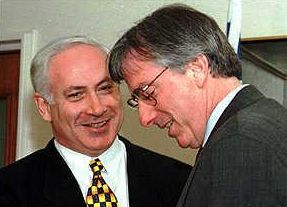 Mr. Ross is the most senior member of a coterie of American diplomats who have advised presidents stretching back to Ronald Reagan. Unlike many of his colleagues, Mr. Ross has thrived in Republican and Democratic administrations.
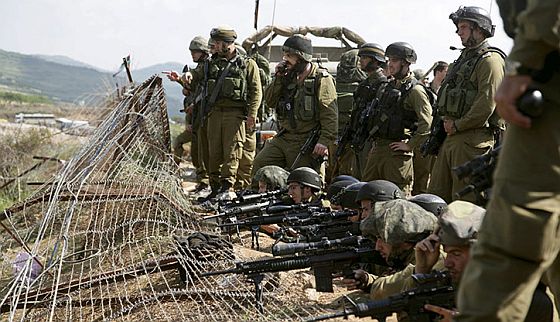

 On a cold Ukrainian winter night in mid-February 2011, a Gaza civil engineer named Dirar Abu Sisi was lying in bed in a railroad sleeper car traveling to Kiev to visit his brother, Yousef, whom he hadn’t seen in 15 years.