Category Archives: Lands

How Shakespeare lives now

Stephen Greenblatt writes: A few years ago, during a merciful remission in the bloodshed and mayhem that has for so many years afflicted Afghanistan, a young Afghan poet, Qais Akbar Omar, had an idea. It was, he brooded, not only lives and livelihood that had been ruthlessly attacked by the Taliban, it was also culture. The international emblem of that cultural assault was the dynamiting of the Bamiyan Buddhas, but the damage extended to painting, music, dance, fiction, film, and poetry. It extended as well to the subtle web of relations that link one culture to another across boundaries and make us, each in our provincial worlds, feel that we are part of a larger humanity. This web is not only a contemporary phenomenon, the result of modern technology; it is as old as culture itself, and it has been particularly dense and vital in Afghanistan with its ancient trade routes and its endless succession of would-be conquerors.

Omar thought that the time was ripe to mark the restoration of civil society and repair some of the cultural damage. He wanted to stage a play with both men and women actors performing in public in an old garden in Kabul. He chose a Shakespeare play. No doubt the choice had something to do with the old imperial presence of the British in Afghanistan, but it was not only this particular history that was at work. Shakespeare is the embodiment worldwide of a creative achievement that does not remain within narrow boundaries of the nation-state or lend itself to the secure possession of a particular faction or speak only for this or that chosen group. He is the antithesis of intolerant provinciality and fanaticism. He could make with effortless grace the leap from Stratford to Kabul, from English to Dari.

Omar did not wish to put on a tragedy; his country, he thought, had suffered through quite enough tragedy of its own. Considering possible comedies, he shied away from those that involved cross-dressing. It was risky enough simply to have men and women perform together on stage. In the end he chose Love’s Labour’s Lost, a comedy that arranged the sexes in distinct male and female groups, had relatively few openly transgressive or explicitly erotic moments, and decorously deferred the final consummation of desire into an unstaged future. As a poet, Omar was charmed by the play’s gorgeous language, language that he felt could be rendered successfully in Dari.

The complex story of the mounting of the play is told in semifictionalized form in a 2015 book Omar coauthored with Stephen Landrigan, A Night in the Emperor’s Garden. Measured by the excitement it generated, this production of Love’s Labor’s Lost was a great success. The overflow crowds on the opening night gave way to ever-larger crowds clamoring to get in, along with worldwide press coverage.

But the attention came at a high price. The Taliban took note of Shakespeare in Kabul and what it signified. In the wake of the production, virtually everyone involved in it began to receive menacing messages. Spouses, children, and the extended families of the actors were not exempt from harrassment and warnings. The threats were not idle. The husband of one of the performers answered a loud knock on the door one night and did not return. His mutilated body was found the next morning.

What had seemed like a vigorous cultural renaissance in Afghanistan quickly faded and died. In the wake of the resurgence of the Taliban, Qais Akbar Omar and all the others who had had the temerity to mount Shakespeare’s delicious comedy of love were in terrible trouble. They are now, every one of them, in exile in different parts of the world.

Love’s labors lost indeed. But the subtitle of Omar’s account—“A True Story of Hope and Resilience in Afghanistan”—is not or at least not only ironic. The humane, inexhaustible imaginative enterprise that Shakespeare launched more than four hundred years ago in one small corner of the world is more powerful than all the oppressive forces that can be gathered against it. [Continue reading…]


Facebooktwittermail

How did we end up here?

Adam Shatz writes: In No Name in the Street, James Baldwin describes how, not long after he settled in France in 1948, he ‘had watched the police, one sunny afternoon, beat an old, one-armed Arab peanut vendor senseless in the streets, and I had watched the unconcerned faces of the French on the café terraces, and the congested faces of the Arabs.’ With a ‘generous smile’, Baldwin’s friends reassured him that he was different from the Arabs: ‘Le noir américain est très évolué, voyons!’ He found the response perplexing, given what he knew of French views about the United States, so he asked a ‘very cunning question’:

If so crude a nation as the United States could produce so gloriously civilised a creature as myself, how was it that the French, armed with centuries of civilised grace, had been unable to civilise the Arab?

The response was breathtakingly simple: ‘The Arabs did not wish to be civilised.’ They, the Arabs, had their own traditions, and ‘the Arab was always hiding something; you couldn’t guess what he was thinking and couldn’t trust what he was saying. And they had a different attitude toward women, they were very brutal with them, in a word they were rapists, and they stole, and they carried knives.’

Aside from ageing veterans of the French-Algerian war, no one in France talks about ‘the Arabs’ any longer. Instead they speak of ‘the Muslims’. But France’s Muslims are the descendants of that Arab peanut vendor – and, all too often, targets of the same racist intolerance. Like the racism Baldwin encountered among his Parisian friends, it often wears an ennobling mask: anti-terrorist, secular, feminist. [Continue reading…]

Facebooktwittermail

New threats rose as U.S. apathy became policy

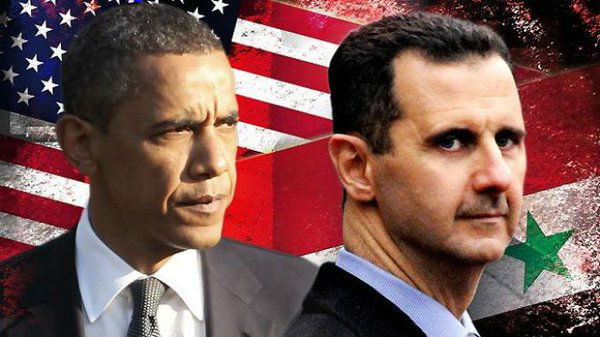
obama-assad

Garry Kasparov writes: The 21st century has been marked by two complementary trends in global security: the rise of new and unexpected threats and the return of old ones. Terrorist organizations have adapted modern technology to deadly purpose and paired it with global ambition. Nineteen well-trained individuals killed more Americans on 9/11 than the entire Japanese fleet killed in Pearl Harbor. Our ubiquitous smartphones and social networks turned out to be agnostic tools, serving both good and evil. They are boons for economic empowerment and cultural exchange, but also allow terror movements to recruit internationally, creating a homegrown terror threat that no border wall or refugee ban will prevent.

The old menaces of the 20th century have reappeared in updated forms. Communism as a political ideology is as bankrupt as ever, but the aggressive despotism that enforced it for decades before the fall of the Iron Curtain and the Soviet Union has returned to the world stage, due largely to Russian President Vladimir Putin. The United States, a global hegemon alternately over-eager or reluctant, has reacted in dramatically inconsistent ways to the new threats while mostly ignoring the resurgence of the old ones.

The checks and balances that frustrate every president domestically do little to prevent the commander-in-chief from wielding the power of life and death all over the world. The overwhelming military might of the United States is inherently agnostic as well. It can be used to attack or to defend, to protect innocent lives or to take them, to remove dictatorships or to support them.

The use of this fearsome power is guided by the American constitution and the founding American values of democracy and freedom. But it is up to the occupant of the White House to follow the Constitution and to live up to those values. The executive has found countless ways to evade checks on his authority, from signing “agreements” instead of treaties, to escalating foreign “police actions” instead of declaring war. American values have been applied selectively as well, as decades of relative unity in containing the Communist threat has given way to a neo-isolationist trend in both major American political parties. Instead of debating how the U.S. should act on the world stage, today’s presidential candidates are arguing about whether or not the U.S. should act at all. The specter of the 2003 Iraq War looms over every potential American action.

Such reflection is commendable, but in the seven years of the Obama administration we have seen that inaction can also have the gravest consequences. Inaction can fracture alliances. Inaction can empower dictators and provoke terrorists and enflame regional conflicts. Inaction can slaughter innocent people and create millions of refugees. We have the horrific proof in Syria, where Barack Obama’s infamous “red line” has been painted over in blood. [Continue reading…]

Facebooktwittermail

China wants to power the world through a global grid

Earth

Adam Minter writes: China’s State Grid Corporation, the world’s biggest power company, is on an impressive buying binge. As Bloomberg News reports, the company is “actively in bidding” for power assets in Australia, hoping to add them to a portfolio of Italian, Brazilian, and Filipino companies. The goal isn’t simply to invest, however. State Grid’s Chairman Liu Zhenya has a plan that he believes will stall global warming, put millions of people to work and bring about world peace by 2050.

The idea is to connect these and other power grids to a global grid that will draw electricity from windmills at the North Pole and vast solar arrays in Africa’s deserts, and then distribute the power to all corners of the world. Among other benefits, according to Liu, the system will produce “a community of common destiny for all mankind with blue skies and green land.”

It’s a crazy idea, of course. And if this so-called Global Energy Interconnection had been proposed by anyone other than the chairman of the world’s wealthiest power company, it wouldn’t deserve much consideration. But the $50 billion in cash generated by State Grid last year gives the company the deep pockets and political standing to put its priorities on the international energy agenda.

Last September, no less than Chinese President Xi Jinping publicly called for talks on establishing a global grid, while leading research organizations — including the Argonne National Laboratory and the Edison Electrical Institute — have participated in conferences looking at what would be needed to establish one. And whether or not it’s ever built, the technologies that underlie Liu’s big idea are already changing how power will be generated and transmitted in coming decades. [Continue reading…]

Facebooktwittermail

‘If we don’t get our country back ourselves, no one will do it for us’

Growing Home ينبتون وطنا : Samer, a displaced Syrian barber, has taken refuge along with his young family in the Zaatari Refugee Camp in Jordan. Despite filling his time with meaningful work, caring for his family and improving his living conditions, the daily distractions cannot diminish his desire to return home.

Subtitles available in English, French and Spanish – turn on CC and select language in Settings

Facebooktwittermail

Europe begins sending people back across the sea, defying human rights outcry

The Washington Post reports: The European Union began offloading its refugee crisis onto its Turkish neighbors Monday, sending back more than 200 migrants in the first stage of a plan to deport thousands that has drawn condemnation from human rights groups.

The returns — carried out at dawn and under heavy security — were intended to send a powerful message to others considering the journey from Turkey to Greece via a smuggler’s rubber raft: Don’t even bother.

Authorities braced for demonstrations or other forms of resistance from those being sent back only days after crossing the Aegean and arriving on European soil in search of a new life — part of a massive migrant wave that has tested Europe’s resources and highlighted the desperation to the east in war zones such as Syria.

But the expulsions were carried out smoothly and quietly; two ferries packed with migrants and E.U. escorts slipped away from the island of Lesbos and charted an eastbound course toward the rising sun along the blue mountains of the Turkish coast.

A third ferry left the island of Chios, bringing the total sent back to 202 by late Monday — nearly all from Pakistan or Afghanistan. Both islands are popular landing spots for refugee rafts.

Under a deal struck with Turkey last month, all refugees and migrants who arrive on Greek shores aboard smugglers’ rafts from March 20 onward will be sent back.

In return, the European Union has said it will accept one Syrian refugee from Turkey for every Syrian who is returned. Germany said Monday that it had accepted its first several dozen Syrians flown from Turkey under the new program. [Continue reading…]

Facebooktwittermail

Endgame for the IMF-EU feud over Greece’s debt

Yanis Varoufakis writes: The feud between the International Monetary Fund (IMF) and the European side of Greece’s troika of creditors is old news. However, Wikileaks’ publication of a dialogue between key IMF players suggests that we are approaching something of a hazardous endgame.

Ever since the first Greek ‘bailout’ program was signed, in May 2010, the IMF has been violating its own “primary directive”: the obligation not to fund insolvent governments. As a result, the IMF’s leadership has been facing a revolt from its staff members who demand an exit strategy arguing that, if the EU continues to obstruct the debt relief necessary to restore the solvency of the Greek government, the IMF should leave the Greek program.
Five years on, this IMF-EU impasse continues, causing a one-third collapse of Greek GDP and fuelling hopelessness to a degree that has made real reform harder than ever.

Back in February 2015, when I first met Poul Thomsen (the IMF’s European chief) in a Paris hotel, a fortnight after assuming Greece’s finance ministry, he appeared even keener than I was to press for a debt write off: “At a minimum”, he told me “€54 billion of Greece’s debt left over from the first ‘bailout’ should be written off immediately in exchange for serious reforms.”

This was music to my ears, and made me keen to discuss what he meant by “serious reforms”. It was a discussion that never got formally off the ground as Germany’s finance minister vetoed all discussion on debt relief, debt swaps (which were my compromise proposal), indeed any significant change to the failed program.

What new light does the leaked dialogue between Thomsen and Delia Velculescu (the IMF’s Greek mission chief) throw on this saga? [Continue reading…]

Facebooktwittermail

Fund run by David Cameron’s father avoided paying tax in Britain

The Guardian reports: David Cameron’s father ran an offshore fund that avoided ever having to pay tax in Britain by hiring a small army of Bahamas residents – including a part-time bishop – to sign its paperwork.

Ian Cameron was a director of Blairmore Holdings Inc, an investment fund run from the Bahamas but named after the family’s ancestral home in Aberdeenshire, which managed tens of millions of pounds on behalf of wealthy families.

Clients included Isidore Kerman, an adviser to Robert Maxwell who once owned the West End restaurants Scott’s and J Sheekey, and Leopold Joseph, a private bank used by the Rolling Stones.

The fund was founded in the early 1980s with help from the prime minister’s late father and still exists today. The Guardian has confirmed that in 30 years Blairmore has never paid a penny of tax in the UK on its profits. [Continue reading…]

BBC News reports: China appears to be censoring social media posts on the Panama Papers document leak which has named several members of China’s elite, including President Xi Jinping’s brother-in-law.

Hundreds of posts on networks such as Sina Weibo and Wechat on the topic have been deleted since Monday morning. [Continue reading…]

Find out more about the Panama Papers.

Facebooktwittermail

Travelling inside ISIS-controlled Syria and Iraq

Jürgen Todenhöfer writes: Abu Qatadah, a German-born Muslim convert, who has brokered our visit to the Islamic State, is almost as wide as he is tall, with a thick, reddish-brown beard. My photographer son Frederic and I load our bags into the bed of the white pickup Qatadah and his driver arrived in. The driver’s head and face are so thoroughly wrapped with a large grey shawl that only his eyes and the contours of his nose are visible. He murmurs a greeting in English in a strikingly rhythmic accent. For security reasons, we can’t use the main roads. The drive to Raqqa takes more than three hours.

Qatadah claims business is booming in Isis. Almost all the shops are open and lots of goods are being sold, above all at the markets. We notice the new construction. “In places that are not being bombed, life goes on as normal,” Qatadah tells us. Then he gives us a short lecture on Isis’s version of sharia.

Christians have to pay jizya, a protection tax. It comes to about $300 (£210) a year for poor people and $600 (£420) for the rich. But then that is the only tax. Christians are among the more prosperous inhabitants of the country. All they have to do is sell a couple of sheep to raise the money to cover the tax. [Continue reading…]

The Daily Beast reports: Two senior intelligence analysts at U.S. Central Command say the military has forced them out of their jobs because of their skeptical reporting on U.S.-backed rebel groups in Syria, three sources with knowledge of their claim told The Daily Beast. It’s the first known instance of possible reprisals against CENTCOM personnel after analysts accused their bosses of manipulating intelligence reports about the U.S.-led campaign against ISIS in order to paint a rosier picture of progress in the war.

One of the analysts alleging reprisals is the top analyst in charge of Syria issues at CENTCOM. He and a colleague doubted rebels’ capabilities and their commitment to U.S. objectives in the region. The analysts have been effectively sidelined from their positions and will no longer be working at CENTCOM, according to two individuals familiar with the dispute, and who spoke on condition of anonymity. [Continue reading…]

Facebooktwittermail

Investigators believe at least 22 suspects are still at large following Brussels and Paris attacks

The Wall Street Journal reports: At least 22 radical Islamists from Europe linked to the terror network behind the Brussels and Paris attacks are suspected to be still at large, putting security services on high alert as they rush to prevent Islamic State from striking again in the region.

Many of the fugitives have been involved in previous Islamic State plots, officials say, and almost all of them have spent months or years fighting in Syria.

Interviews and confidential court documents seen by The Wall Street Journal portray the fugitives as part of an extensive web of young men who developed a deep hatred of the West after embracing radical Islam at underground mosques and clandestine meetings in Molenbeek, a heavily Muslim district in the heart of Brussels. They have since become central to Islamic State’s plans to strike the West, according to investigators, who suspect the Brussels network is behind the movement of battle-hardened operatives from Syria to Europe.

“We see many plots and several cells that we now know are part of the same network,” said Jean-Charles Brisard, president of the Center for the Analysis of Terrorism, a Paris think tank. “They’re already here. The problem is how to find them.”

The 22 men investigators are scrutinizing include those prosecuted in absentia during a major terror trial in Belgium last year, as well as several with links to a foiled plot to kill Belgian police last year. But people familiar with investigations say they believe the reach of the Brussels network extends beyond the group to others from the city who went to Syria and their sympathizers who stayed behind. [Continue reading…]

Facebooktwittermail

British authorities demand encryption keys in case with ‘huge implications’

encryption

The Intercept reports: British authorities are attempting to force a man accused of hacking the U.S. government to hand over his encryption keys in a case that campaigners believe could have ramifications for journalists and activists.

England-based Lauri Love was arrested in October 2013 by the U.K.’s equivalent of the FBI, the National Crime Agency, over allegations that he hacked a range of U.S. government systems between 2012 and 2013, including those of the Department of Defense, the Environmental Protection Agency, the Department of Energy, and NASA.

The U.S. Justice Department is seeking the extradition of Love, claiming that he and a group of conspirators breached “thousands of networks” in total and caused millions of dollars in damages. But Love has been fighting the extradition attempt in British courts, insisting that he should be tried for the alleged offenses within the U.K. The 31-year-old, who has been diagnosed with Asperger’s syndrome, has argued that he would not get a fair trial in the U.S., where his legal team says he could face a sentence of up to 99 years in jail. [Continue reading…]

Facebooktwittermail

Is Mohammed Dahlan likely to replace Mahmoud Abbas as Palestinian leader?

Adnan Abu Amer writes: The most important world capitals that provided Dahlan with this regional and international network are Cairo and Abu Dhabi, where Dahlan enjoys undeniable influence since he is considered the security adviser of UAE’s Crown Prince Sheikh Mohammed bin Zayed Al Nahyan. This position has provided Dahlan with influence that many UAE officials may not enjoy within the state.

Dahlan also enjoys considerable influence in Egypt through his direct ties with Sisi, which allows him to influence Egyptian media. In addition, he has been deploying efforts to buy some news websites in Jordan.

Ahmed Youssef, former political adviser to former Prime Minister Ismail Haniyeh, told Al-Monitor, “Dahlan is welcomed on the regional and international levels. As long as elections are not the only criterion on the Palestinian scene — in light of regional and international pressure to export this leader and sideline others — Dahlan may have better chances at accessing high Palestinian positions than others. This is considering Israel’s [relative] satisfaction with him and his special ties with the UAE, Egypt, Saudi Arabia, Jordan and the Syrian opposition. The international relations that a Palestinian official has may allow him to climb to rungs of the leadership ladder.” [Continue reading…]

Facebooktwittermail

The Panama Papers

The Panama Papers is an unprecedented investigation that reveals the offshore links of some of the globe’s most prominent figures.

The International Consortium of Investigative Journalists, together with the German newspaper Suddeutsche Zeitung and more than 100 other media partners, spent a year sifting through 11.5 million leaked files to expose the offshore holdings of world political leaders, links to global scandals, and details of the hidden financial dealings of fraudsters, drug traffickers, billionaires, celebrities, sports stars and more. [Continue reading…]

The Guardian reports: The Panama Papers reveal:

  • Twelve national leaders are among 143 politicians, their families and close associates from around the world known to have been using offshore tax havens.
  • A $2bn trail leads all the way to Vladimir Putin. The Russian president’s best friend – a cellist called Sergei Roldugin – is at the centre of a scheme in which money from Russian state banks is hidden offshore. Some of it ends up in a ski resort where in 2013 Putin’s daughter Katerina got married.
  • Among national leaders with offshore wealth are Nawaz Sharif, Pakistan’s prime minister; Ayad Allawi, ex-interim prime minister and former vice-president of Iraq; Petro Poroshenko, president of Ukraine; Alaa Mubarak, son of Egypt’s former president; and the prime minister of Iceland, Sigmundur Davíð Gunnlaugsson.
  • Six members of the House of Lords, three former Conservative MPs and dozens of donors to UK political parties have had offshore assets.
  • The families of at least eight current and former members of China’s supreme ruling body, the politburo, have been found to have hidden wealth offshore.
  • Twenty-three individuals who have had sanctions imposed on them for supporting the regimes in North Korea, Zimbabwe, Russia, Iran and Syria have been clients of Mossack Fonseca. Their companies were harboured by the Seychelles, the British Virgin Islands, Panama and other jurisdictions.
  • A key member of Fifa’s powerful ethics committee, which is supposed to be spearheading reform at world football’s scandal-hit governing body, acted as a lawyer for individuals and companies recently charged with bribery and corruption.
  • One leaked memorandum from a partner of Mossack Fonseca said: “Ninety-five per cent of our work coincidentally consists in selling vehicles to avoid taxes.”

[Continue reading…]

Learn more at the International Consortium of Investigative Journalists, Suddeutsche Zeitung, the BBC, and the Guardian.

Facebooktwittermail

China’s rulers possessed by Maoist nostalgia and Leninist-style leadership

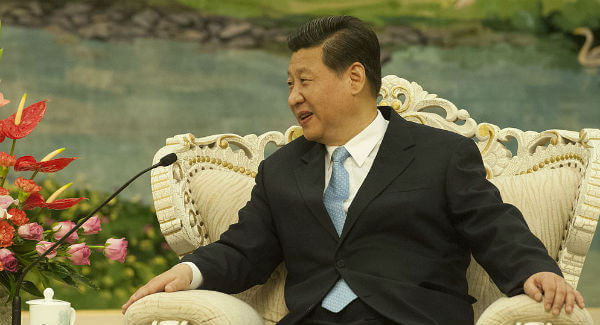
Xi-Jinping

Orville Schell writes: “As a liberal, I no longer feel I have a future in China,” a prominent Chinese think tank head in the process of moving abroad recently lamented in private. Such refrains are all too familiar these days as educated Chinese professionals express growing alarm over their country’s future. Indeed, not since the 1970s when Mao still reigned and the Cultural Revolution still raged has the Chinese leadership been so possessed by Maoist nostalgia and Leninist-style leadership.

As different leaders have come and gone, China specialists overseas have become accustomed to reading Chinese Communist Party (CCP) tea leaves as oscillating cycles of political “relaxation” and “tightening.” China has long been a one-party Leninist state with extensive censorship and perhaps the largest secret police establishment in the world. But what has been happening lately in Beijing under the leadership of Chinese Communist Party General Secretary Xi Jinping is no such simple fluctuation. It is a fundamental shift in ideological and organizational direction that is beginning to influence both China’s reform agenda and its foreign relations.

At the center of this retrograde trend is Xi’s enormously ambitious initiative to purge the Chinese Communist Party of what he calls “tigers and flies,” namely corrupt officials and businessmen both high and low. Since it began in 2012, the campaign has already netted more than 160 “tigers” whose rank is above or equivalent to that of the deputy provincial or deputy ministerial level, and more than 1,400 “flies,” all lower-level officials.1 But it has also morphed from an anticorruption drive into a broader neo-Maoist-style mass purge aimed at political rivals and others with differing ideological or political views.

To carry out this mass movement, the Party has mobilized its unique and extensive network of surveillance, security, and secret police in ways that have affected many areas of Chinese life. Media organizations dealing with news and information have been hit particularly hard. Pressured to conform to old Maoist models requiring them to serve as megaphones for the Party, editors and reporters have found themselves increasingly constrained by Central Propaganda Department diktats. Told what they can and cannot cover, they find that the limited freedom they had to report on events has been drastically curtailed. [Continue reading…]

Facebooktwittermail

Report: The foreign fighters phenomenon in the EU – profiles, threats & policies

International Centre for Counter-Terrorism – The Hague reports: Despite the widespread media attention for foreign fighters in Europe, very little is known about the phenomenon itself, something also evidenced by the lack of a single foreign fighter definition across the EU.

In a study commissioned by the Netherlands National Coordinator for Security and Counterterrorism (NCTV), ICCT addresses this gap by analysing not only the numbers and characteristics of foreign fighters across the EU, but also how the Union and Member States assess the threat of foreign fighters as well as their policy responses regarding security, preventive and legislative measures. The Report also outlines a series of policy options aimed both at the EU and its Member States.

Findings include:

  • Of a total estimated 3,922 – 4,294 foreign fighters from EU Member States, around 30% have returned to their home countries.
  • A majority of around 2,838 foreign fighters come from just four countries: Belgium, France, Germany, and the United Kingdom, with Belgium having the highest per-capita FF contingent.
  • There is no clear-cut profile of a European foreign fighter. Data indicates that a majority originate from metropolitan areas, with many coming from the same neighbourhoods, that an average of 17% are female, and that the percentage of converts among foreign fighters ranges from 6% to 23%.
  • The radicalisation process of foreign fighters is reported to be short and often involves circles of friends radicalizing as a group and deciding to leave jointly for Syria and Iraq.

[Continue reading…]

Facebooktwittermail

EU suspects Russian agenda in refugees’ shifting Arctic route

The New York Times reports from Kandalaksha: So many decrepit Soviet-era cars carried migrants into Europe from this frozen Russian town in recent months that border officials in Finland, who confiscate the rust-bucket vehicles as soon as they cross the frontier, watched in dismay as their parking lot turned into a scrapyard.

To clear up the mess and provide some space for freshly confiscated cars, the Finnish customs service set up a separate dumping ground.

Then last month, as suddenly and as mysteriously as it had started, the parade of migrants in rusty old cars came to an abrupt halt, or at least a pause.

“We don’t know what is going on,” said Matti Daavittila, the head of the ice-entombed Finnish border post near Salla. “They suddenly stopped coming. That is all we know.”

Compared with the hundreds of thousands of people fleeing war or hardship who made the trek to Europe last year through Turkey to Greece, the flow of refugees and migrants on the Arctic route through Russia — first into Norway and later into Finland — is tiny.

But the stop-go traffic has added a hefty dose of geopolitical anxiety, not to mention intrigue, to a crisis that is tearing the European Union apart. It has sent alarm bells ringing in Helsinki, Finland’s capital far to the south, and in Brussels, where European Union leaders, at recent crisis meetings on migration, discussed the strange and ever-shifting Arctic route through Russia. [Continue reading…]

Facebooktwittermail

American inquisition: Training teachers to extract confessions from their students

decay14bw

Douglas Starr writes: About a year and a half ago, Jessica Schneider was handed a flyer by one of her colleagues in the child-advocacy community. It advertised a training session, offered under the auspices of the Illinois Principals Association (I.P.A.), in how to interrogate students. Specifically, teachers and school administrators would be taught an abbreviated version of the Reid Technique, which is used across the country by police officers, private-security personnel, insurance-fraud investigators, and other people for whom getting at the truth is part of the job. Schneider, who is a staff attorney at the Chicago Lawyers’ Committee for Civil Rights Under Law, was alarmed. She knew that some psychologists and jurists have characterized the technique as coercive and liable to produce false confessions — especially when used with juveniles, who are highly suggestible. When she expressed her concerns to Brian Schwartz, the I.P.A.’s general counsel, he said that the association had been offering Reid training for many years and found it both popular and benign. To prove it, he invited Schneider to attend a session in January of 2015.

The training was led by Joseph Buckley, the president of John E. Reid and Associates, which is based in Chicago. Like the adult version of the Reid Technique, the school version involves three basic parts: an investigative component, in which you gather evidence; a behavioral analysis, in which you interview a suspect to determine whether he or she is lying; and a nine-step interrogation, a nonviolent but psychologically rigorous process that is designed, according to Reid’s workbook, “to obtain an admission of guilt.” Most of the I.P.A. session, Schneider told me, focussed on behavioral analysis. Buckley described to trainees how patterns of body language — including slumping, failing to look directly at the interviewer, offering “evasive” responses, and showing generally “guarded” behaviors — could supposedly reveal whether a suspect was lying. (Some of the cues were downright mythological — like, for instance, the idea that individuals look left when recalling the truth and right when trying to fabricate.) Several times during the session, Buckley showed videos of interrogations involving serious crimes, such as murder, theft, and rape. None of the videos portrayed young people being questioned for typical school misbehavior, nor did any of the Reid teaching materials refer to “students” or “kids.” They were always “suspects” or “subjects.”

Laura Nirider, a professor of law at Northwestern University and the project director of the Center on Wrongful Convictions of Youth, attended the same session as Schneider. She told me that about sixty people were there. “Everybody was on the edge of their seat: ‘So this is how we can learn to get the drop on little Billy for writing graffiti on the underside of the lunchroom table,’” she said. One vice-principal told Nirider that the first thing he does when he interrogates students is take away their cell phones, “so they can’t call their mothers.” [Continue reading…]

Facebooktwittermail

Syria cease-fire unravelling as fighting erupts near Aleppo

The Associated Press reports: Syria’s partial cease-fire appeared to be unraveling Saturday as fierce fighting between government forces and opposition fighters, including members of the al-Qaida affiliated Nusra Front, erupted outside the country’s second largest city of Aleppo and other parts in the country’s north.

At least 25 pro-government and 16 opposition fighters died in the clashes south of Aleppo, where the Nusra Front and rebel militias captured a village overlooking a major highway, a Britain-based monitoring group told The Associated Press.

The fighting was the most serious in the area since the cease-fire, engineered by the U.S. and Russia, took effect Feb. 27. The violence in the north, along with heavy government airstrikes that killed more than 30 civilians near Damascus this week, threatened to completely dissolve the truce, which had sharply reduced overall violence across the war-ravaged country.

The rebel advances also risk drawing Russia back into the conflict after it shored up the government’s position through a fierce bombing campaign that wound down nearly three weeks ago. The opposition’s advances threaten to reverse some of the gains made by the government during the Russian campaign. [Continue reading…]

Facebooktwittermail