Is Obama moving to escalate the war in Pakistan?

The United States is at war in Pakistan. It will be up to historians to decide when this war began.

“Drone Strikes Pound West Pakistan” says the headline above a brief report in the New York Times. After the CIA fired 18 missiles resulting in at least 14 deaths on Tuesday, the operation was described merely as “a continuation of the air campaign to degrade the capabilities of Al Qaeda, the Pakistani Taliban and the Afghan Taliban fighters now working together in North Waziristan” (my emphasis).

“Continuation” is another name for escalation when developments that should prompt alarm have already been inoculated with the name “necessity.”

A course of action that if it initiated by George Bush might have been seen as an expression of his intemperate nature, when pursued by no-drama Obama is instead billed as a judicious expansion in the use of force.

But the danger of escalation — now as always — is that the seemingly carefully calibrated expansion of a war has unintended and far-reaching consequences. Only after it’s too late do we learn that the calibration rested on nothing more than wishful thinking.

The logic behind the apparent necessity of expanding the war into Pakistan has been evident ever since the war in Afghanistan began. For Bush, the dangers implicit in crossing the Durand Line seemed to provoke fear, but his successor seems intent on showing he lacks such trepidation. North Waziristan is where Obama gets to prove that he has the steel that Bush lacked — or so the script says.

In this context the Times Square attempted bombing has acquired particular significance. If the lack of a credible endgame in Afghanistan would make it even more difficult to justify expanding the war, then a scare in New York could be useful in prompting a renewed sense of urgency.

In Pakistan’s Dawn newspaper today, Rafia Zakaria writes:

Security experts in Washington have since begun to call Shahzad’s bombing attempt a “game changer” in the war against terror and have been signalling the possibility of an incursion of US forces into Pakistani territory. Several factors point to the fact that such an option is indeed being considered by the Obama administration and Pentagon officials. First, conservative lawmakers on Capitol Hill have long been sounding alarm bells asking for a wider presence in Pakistan to accomplish the goals of the war on terror. Recent hearings held on Capitol Hill have focused on groups such as Jaish-i-Muhammad and Lashkar-i-Taiba that do not operate in the areas currently being targeted by aerial drone attacks.

In a hearing held in March, several US congressmen noted that the Lashkar “had put the world on notice that they intend to escalate the carnage and take it worldwide”. Other analysts have repeatedly pointed to the necessity of expanding drone strikes into Quetta to target the Quetta shura which supposedly runs the Taliban operations. While Shahzad’s connections are not currently traced to groups other than the Taliban, the fact that he spent time in Pakistan bolsters the position of those who insist that a wider military presence in Pakistan is crucial to eliminating the threat to the American homeland.

Second, the problems faced by the highly publicised US/Nato initiatives in Marja and Kandahar in Afghanistan have created a political demand for a more decisive endgame in the region. In the footsteps of the Marja offensive in early April, The New York Times reported that many of the gains made in the area by the US Marines’ costly offensive had largely been reversed and many Taliban had moved back into the area. The Kandahar offensive due to start soon has also been the subject of lowered expectations, with experts saying that the easy absorption of Taliban fighters into the local population and the lack of visible centres of Taliban control make it difficult to win a decisive victory in the area.

The reason why the failure of both offensives — one yet to begin — is relevant to the Pakistan equation is simple: with the beginning of a US withdrawal already announced for 2011, there is immense political pressure on the Obama administration to produce some semblance of victory. The expansion of the Afghanistan war into Pakistani territory would not only be a culmination of the Obama campaign’s slogans of Pakistan being the real problem, it would also provide a visible endgame to the vexing and increasingly intractable issue of whether the war in Afghanistan has really eliminated global terrorism.

If Obama is now a victim of his own campaign logic — the repetition of half-baked slogans must surely be as harmful to those who utter them as it is to those who hear them — this logic is nevertheless looking less persuasive outside the administration.

Noah Shachtman notes that the skepticism once only voiced by counter-insurgency wonks like David Kilcullen and Andrew Exum has now percolated right into the mainstream media.

“If you go into Pakistan and talk to college kids, which is what we did, these drone attacks are feeding this narrative: this is what we [Americans] are aiming to do. We’re aiming to kill Muslims,” Leslie Stahl said today on MSNBC’s Morning Joe.

“Let’s say China was launching drone attacks on Idaho, we would be pretty angry too. We are launching attacking against a people were not at war with, officially,” Joe Scarborough responded. “I would rather us go after the terrorists — individual terrorists — drag ‘em out, interrogate ‘em, get information — instead of dropping bombs that kill four year-old little girls. That dismember grandmoms that happen to be in the family compound. That seems immoral.”

The decision to dramatically escalate the drone war was done behind closed doors, with no public debate about whether the strikes were the best way to smash the jihadist networks based in Pakistan’s tribal wildlands. Perhaps now, we’ll have that discussion.

Visit msnbc.com for breaking news, world news, and news about the economy

Facebooktwittermail

Israel’s dark past arming apartheid South Africa

A new attack on Judge Richard Goldstone is the latest effort in a campaign to direct attention away from his allegations that Israel committed war crimes in Gaza. In this instance though, questions about Goldstone’s record as a judge in apartheid South Africa are overshadowed by the Jewish state’s own role in helping support the racist policies of one of the cruelest regimes of the 20th century.

Israel’s dark past as a secret ally of the cruel apartheid regime in South Africa is revealed in an article by Sasha Polakow-Suransky (the author of a new book on the same subject).

The Israel-South Africa alliance began in earnest in April 1975 when then-Defense Minister Shimon Peres signed a secret security pact with his South African counterpart, P.W. Botha. Within months, the two countries were doing a brisk trade, closing arms deals totaling almost $200 million; Peres even offered to sell Pretoria nuclear-capable Jericho missiles. By 1979, South Africa had become the Israeli defense industry’s single largest customer, accounting for 35 percent of military exports and dwarfing other clients such as Argentina, Chile, Singapore, and Zaire.

High-level exchanges of military personnel soon followed. South Africans joined the Israeli chief of staff in March 1979 for the top-secret test of a new missile system. During Israel’s 1982 invasion of Lebanon, the Israeli army took South African Defense Force chief Constand Viljoen and his colleagues to the front lines, and Viljoen routinely flew visiting Israeli military advisors and embassy attachés to the battlefield in Angola where his troops were battling Angolan and Cuban forces.

There was nuclear cooperation, too: South Africa provided Israel with yellowcake uranium while dozens of Israelis came to South Africa in 1984 with code names and cover stories to work on Pretoria’s nuclear missile program at South Africa’s secret Overberg testing range. By this time, South Africa’s alternative sources for arms had largely dried up because the United States and European countries had begun abiding by the U.N. arms embargo; Israel unapologetically continued to violate it.

As for Goldstone’s record as “a hanging judge”, this is what he told the Jewish Chronicle:

“During the nine years I was a trial judge from 1980 to 1989, I sentenced two people to death for murder without extenuating circumstances.

“They were murders committed gratuitously during armed robberies. In the absence of extenuating circumstances the imposition of the death sentence was mandatory. My two assessors and I could find no extenuating circumstances in those two cases.

“While I was a judge in the Supreme Court of Appeal from 1990 to 1994, all executions were put on hold. However, automatic appeals still continued to come before the Supreme Court of appeal. We sat in panels of three and again, in the absence of extenuating circumstances, some of those appeals failed.”

He added: “It was a difficult moral decision taking an appointment during the Apartheid era. With regard to my role in those years I would refer you to the joint public statement issues in January by former Chief Justice Arthur Chaskalson, the first Chief Justice appointed by President Mandela, and George Bizos, Nelson Mandela’s lawyer and close friend for over 50 years.

In their statement, Chaskalson and Bizos wrote:

Not every judge appointed during the apartheid era was a supporter of apartheid. There were a number among them, including Goldstone, who accepted appointment to the Bench in the 1970s and 1980s in the belief that they could keep principles of the law alive. They included Michael Corbett, Simon Kuper, Gerald Friedman, HC Nicholas, George Colman, Solly Miller, John Milne, Andrew Wilson, John Didcott, Laurie Ackermann, Johann Kriegler and others.

There is a considerable body of evidence that they discharged their functions with courage and integrity. This is recognised in the report of the Truth and Reconciliation Commission, which observed that “there were always a few lawyers (including judges, teachers and students) who were prepared to break with the norm”. Commenting on such judges, it says “they exercised their discretion in favour of justice and liberty wherever proper and possible . . . and [the judges, lawyers, teachers and students referred to] were influential enough to be part of the reason why the ideal of a constitutional democracy as the favoured form of government for a future South Africa continued to burn brightly throughout the darkness of the apartheid era”.

Goldstone was one of those judges. For instance, his decision in the case of S v Govender in 1986 that no ejectment order should be made against persons disqualified by the Group Areas Act from occupying premises reserved for the white group, without enquiring into whether alternative accommodation for such persons was available, was a blow to the apartheid regime and contributed substantially to that legislation becoming unenforceable in parts of the country.

As a judge of the Constitutional Court he concurred in the finding that the first draft of the Constitution of the Republic of South Africa passed by the newly elected Constituent Assembly did not comply in certain respects with the 34 constitutional principles agreed to by the negotiating parties at Codesa.

He was the founding chairperson of the National Institute for Crime Prevention and the Reintegration of Offenders (Nicro), which looks after prisoners who have been released; he exercised his power as a judge (not often used by other judges) to visit prisoners in jail; he insisted on seeing political prisoners indefinitely detained to hear their complaints; and he intervened so as to allow doctors to see them and where possible to make representations that their release be considered.

After the release of Nelson Mandela he played an important role in persuading his colleagues on the Bench to accept the inevitable changes that were likely to take place in the political and judicial structures.

Former president FW de Klerk, with the concurrence of the then-president of the African National Congress, Nelson Mandela, appointed Goldstone as the chairperson of the commission to investigate what became known as hit-squads or third-force organisations within the army and the police.

His reports exposed high-ranking officers, who were obliged by De Klerk to resign, and other ­members of the security forces, and he made findings that police had unlawfully shot at unarmed protesters and recommended that they be charged with murder.

Threats to his life were made, and his name was on the hit list produced in court as part of the state case against the killers of Chris Hani in 1993.

Meanwhile, yesterday was a good day for Israel as it was invited to join the mostly white, Eurocentric, rich nations’ club, the Organization for Economic Cooperation and Development.

Nothing better expresses the apartheid mentality at the heart of Zionism than Israel’s preference to belong to international organizations that are defined by exclusion rather than inclusion.

As Aluf Benn writes today in Haaretz:

Israel has always sought to become a member of international organizations where the Western bloc of nations enjoys a clear advantage. In the vast majority of UN institutions, for example, Israel is isolated and does not belong to any geographic group. So it can’t elect or be elected. But there are no Arab countries in the OECD and the only Muslim member is Turkey, which yesterday voted in support of the unanimous acceptance of Israel into the group.

Joining the OECD bolsters the approach of Netanyahu and Defense Minister Ehud Barak, who consider Israel “a villa in the jungle” – a small island of Western values and development in an Arab and Muslim sea. Now we’re in the club and the Palestinians, Egyptians and even the Saudis aren’t. They’re not even on the waiting list. In the OECD they can’t bother Israel with decisions condemning the occupation.

Facebooktwittermail

America’s latest nemesis

Among the many problems the Obama administration inherited from the Bush administration, none may be more troublesome than the fact that the man once granted the status most dangerous man in the world still remains the most elusive man in the world.

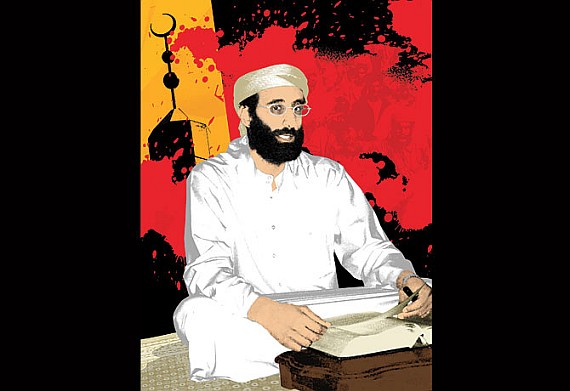
But if Osama bin Laden can’t be tracked down, maybe the alternative is to elevate an easier target to the same status in the hope of being able to claim an equal victory. It appears that the American-born and now fugitive imam, Anwar al-Awlaki, is being groomed for such a role.

This is how the New York Times is feeding the narrative:

One day in August 2001, Mr. Awlaki knocked at the door of Mr. Higgie, his neighbor [in San Diego], to say goodbye. He had moved the previous year to Virginia, becoming imam at the far bigger Dar al-Hijrah mosque, and he had returned to pick up a few things he had left behind.

As Mr. Higgie tells it, he told the imam to stop by if he was ever in the area — and got a strange response. “He said, ‘I don’t think you’ll be seeing me. I won’t be coming back to San Diego again. Later on you’ll find out why,’” Mr. Higgie said.

The next month, when Al Qaeda attacked New York and Washington, Mr. Higgie remembered the exchange and was shaken, convinced that his friendly neighbor had some advance warning of the Sept. 11 attacks.

In fact, the F.B.I. had first taken an interest in Mr. Awlaki in 1999, concerned about brushes with militants that to this day remain difficult to interpret. In 1998 and 1999, he was a vice president of a small Islamic charity that an F.B.I. agent later testified was “a front organization to funnel money to terrorists.” He had been visited by Ziyad Khaleel, a Qaeda operative who purchased a battery for Osama bin Laden’s satellite phone, as well as by an associate of Omar Abdel Rahman, the so-called Blind Sheik, who was serving a life sentence for plotting to blow up New York landmarks.

Still more disturbing was Mr. Awlaki’s links to two future Sept. 11 hijackers, Khalid al-Midhar and Nawaq Alhazmi. They prayed at his San Diego mosque and were seen in long conferences with the cleric. Mr. Alhazmi would follow the imam to his new mosque in Virginia, and 9/11 investigators would call Mr. Awlaki Mr. Alhazmi’s “spiritual adviser.”

The F.B.I., whose agents interviewed Mr. Awlaki four times in the days after the Sept. 11 attacks, concluded that his contacts with the hijackers and other radicals were random, the inevitable consequence of living in the small world of Islam in America. But records of the 9/11 commission at the National Archives make clear that not all investigators agreed.

One detective, whose name has been redacted, told the commission he believed Mr. Awlaki “was at the center of the 9/11 story.” An F.B.I. agent, also unidentified, said that “if anyone had knowledge of the plot, it would have been” the cleric, since “someone had to be in the U.S. and keep the hijackers spiritually focused.”

The 9/11 commission staff members themselves had sharp arguments about him. “Do I think he played a role in helping the hijackers here, knowing they were up to something?” said one staff member, who would speak only on condition of anonymity. “Yes. Do I think he was sent here for that purpose? I have no evidence for it.”

Let’s assume that the suspicions about Awlaki are well-founded. And let’s set aside questions about the legality or morality of Obama’s policy of targeted killing. The question this administration should soberly consider, now that Awlaki has been designated a target for assassination, is whether this influential imam poses a greater threat dead or alive?

Are we really to believe that while Awlaki remains a fugitive in Yemen and is dodging drone attacks, he is also handling an operational role in planning new attacks on the US? After all, one of George Bush’s favorite expressions, “on the run,” did actually have some practical and realistic implications.

And are we really to believe that once granted the status of martyr, Awlaki’s widely disseminated lectures and his iconic status would exert less and not more influence among those most likely to become radicalized in their hostility towards the United States?

In other words, right or wrong, is killing Anwar al-Awlaki really a smart idea?

Facebooktwittermail

The terrorism recruiting myth

After almost a decade of a US-led global war on terrorism, America’s approach to the issue has barely advanced from being a deadly game of Whack-a-Mole.

On CBS, Scott Pelley asked Secretary of State, Hillary Clinton: “I wonder if there’s anything about U.S. foreign policy that needs to change in your estimation to put more pressure on these terrorist groups where they live, like in Pakistan?”

“Well, we are doing that. And we’re increasing it. We’re expecting more from it. This is a global threat. We have probably the best police work in the world. But we are also the biggest target. And therefore, we just have to be better than everybody else,” Clinton replied.

Earlier in the interview she said: “We’ve made it very clear [to the Pakistani government] that, if, heaven forbid, that an attack like this [in Times Square], if we can trace back to Pakistan, were to have been successful, there would be very severe consequences.”

The US will start bombing Pakistan? Special Forces will start conducting operations in North Waziristan? Clinton would not specify what form these severe consequences might take.

In response to the Times Square incident, Richard Clarke, former counter-terrorism coordinator for the Bush administration writes:

The reason such attacks are hard to stop is rooted in the identity of the attackers. They often seem to be successful or well-educated members of society, uninvolved in any form of radicalism. But then, the drip-drip of terrorist propaganda — either on the Internet or circulated through friends — has its effect. They quietly make contact with radical groups overseas, perhaps even traveling abroad for training and indoctrination. They throw away the life they have made in the West and agree to stage an attack. Faisal Shahzad, the alleged Times Square terrorist, fits that profile, as have others in the United States and Europe.

For U.S. intelligence and law enforcement authorities, these newly minted terrorists are the hardest to stop. They may not be part of any known cell; there is no reason for their phones or e-mail accounts to come under surveillance. When they buy rifles, handguns, tanks of propane gas or fertilizer, they are doing nothing out of the ordinary in American society.

If they succeed in inflicting harm on us with terrorist acts designed to rivet media and public attention, our political debate may once again be as wrongheaded as it will be predictable. Some elected officials will claim that their party would have done a much better job protecting the country. Critics of America’s Middle East policy — or our energy policy, or our foreign policy writ large — will also fault whatever administration is in power.

Likewise, in a 60 Minutes report that aired last night, the prism through which the issue is filtered is one in which individuals are turned into the tools of a deadly ideology. Vulnerable young men are in jeopardy of being recruited by merciless ideologues and terrorist planners.

But as Scott Atran points out, the idea that Shahzad and those like him have to be recruited, does not fit the evidence.

Shahzad was also apparently inspired by the online rhetoric of Anwar al-Awlaki, a former preacher at a Northern Virginia mosque who gained international notoriety for blessing the suicide mission of the failed Christmas airplane bomber, Umar Farouk Abdulmutallib, and for Facebook communications with Major Nadal Hasan, an American-born Muslim psychiatrist who killed thirteen fellow soldiers at Fort Hood in November 2009. Although many are ready to leap to the conclusion that Awlaki helped to “brainwash” and “indoctrinate” these jihadi wannabes, it is much more likely that they sought out the popular Internet preacher because they already self-radicalized to the point of wanting reassurance and further guidance. “The movement is from the bottom up,” notes forensic psychiatrist and former CIA case officer Marc Sageman, “just like you saw Major Hasan send twenty-one e-mails to al-Awlaki, who sends him back two, you have people seeking these guys and asking them for advice.”

The CBS report, stuck on the track that recruitment is a central issue, homes in on the role of the internet. The would-be terrorist is someone whose deadly intent is sure to be triggered by something he sees online.

Phillip Mudd, who until a few months ago was the senior intelligence advisor to the FBI and its director says:

They’re seeing images, for example, of children and women in places like Palestine and Iraq, they’re seeing sermons of people who explain in simple, compelling, and some cases magnetic terms why it’s important that they join the jihad. They’re seeing images, and messages that confirm a path that they’re already thinking of taking.

CBS helpfully provides such an image, but predictably neglects to add any commentary.

What are we seeing? An Israeli soldier terrorizing a Palestinian mother and her two girls.

And there we have it: exactly the kind of image the foments terrorism.

Viewed through the American counter-terrorism lens, the problem lies with the propagation of the image and the violent reaction such an image can provoke. Why? Because any serious consideration of the foreign policy issues that the image signals is still off-limits.

But here’s what everyone in the Middle East sees: An Israeli Jew brandishing an American-made weapon, serving America’s closest ally in the Middle East, is threatening a Muslim family. This is the narrative that no amount of spin or cleverly fought battles in a war of ideas, can undo.

Yet here is the foreign policy dilemma for Washington: How can the United States adopt a posture in the Middle East that acknowledges the role America has played in fueling terrorism, without appearing to capitulate to terrorist demands?

The answer is to trust in the universally recognized truth: actions speak louder than words.

What Obama does in Pakistan matters more than what he said in Cairo.

In April 2003, the Bush administration made a step in the right direction when it withdrew American troops from Saudi Arabia. The moved turned out to be of little consequence since it was triggered by utterly false expectations about the war in Iraq. Yet there was an implicit recognition: the presence of American soldiers in close proximity to Islam’s holiest sites sends an ugly message to the Muslim world.

Seven years later, as the Obama administration puts increased pressure on the Pakistani government to launch a major offensive in North Waziristan — an operation that would yet again result in the displacement of tens of thousands of civilians — and as the CIA continues to expand a drone war that has resulted in hundreds of civilian deaths, what kind of signal is this sending to those who might now contemplate following in the footsteps of Faisal Shahzad?

Facebooktwittermail

To See If I Am Smiling

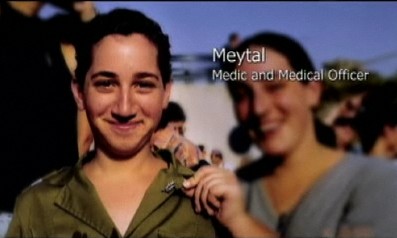
In the documentary, To See If I Am Smiling (released in 2007), six young Israeli women recount their experiences of military service in the occupied Palestinian territories.

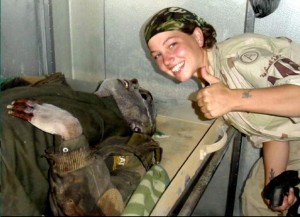
The title comes from a story told by Meytal, a medic and medical officer. Having described how cleaning the corpses of Palestinians after they had been brutalized by Israeli soldiers had become a routine part of her job, she goes on to recount a particular moment that still haunts her: when she posed for a photograph next to a corpse.

I’m not sure when it was, but at some point I became very ashamed of that picture. And I didn’t tell anyone about it, that it existed. I forgot about it a little. But I would like to see it. To see if I look different. I want to see if I’m still smiling.

The photograph is not shown in the documentary, but in the mind’s eye of most Americans it probably evokes memories of Abu Ghraib.
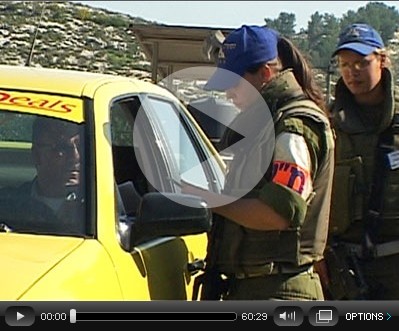
Such images are iconic because they capture the moment in which a soldier discovers that he or she has become the very thing they fear. The dehumanized other is a vortex from which there is no escape.

If a nation can have such a thing as a soul, To See If I Am Smiling, reveals how profoundly Israel’s soul has been scarred by 43 years of occupation. A fully militarized society has shackled itself to a conviction — we have no choice — whereby each individual can then bury their own awareness of complicity and moral responsibility under a collective weight of irresistible necessity.

But even among Israelis who are comfortably indifferent to the plight of Palestinians, one has to wonder: how do they account for what they have done to their own sons and daughters?

As a nation struggles to avoid looking at itself, no wonder the fury and passion with which it attacks those who hold up a mirror.

Watch this 60-minute documentary.

Tamar Yarom, the film’s director, gave the following interview in 2008 at the ZagrebDox international documentary film festival:

(H/t to Marsha Cohen.)

Facebooktwittermail

IAEA set to focus on Israel

The Associated Press reports:

Israel’s secretive nuclear activities may undergo unprecedented scrutiny next month, with a key meeting of the International Atomic Energy Agency tentatively set to focus on the topic for the first time, according to documents shared Friday with The Associated Press.

A copy of the restricted provisional agenda of the IAEA’s June 7 board meeting lists “Israeli nuclear capabilities” as the eighth item — the first time that that the agency’s decision-making body is being asked to deal with the issue in its 52 years of existence.

The agenda can still undergo changes in the month before the start of the meeting and a senior diplomat from a board member nation said the item, included on Arab request, could be struck if the U.S. and other Israeli allies mount strong opposition. He asked for anonymity for discussing a confidential matter.

Even if dropped from the final agenda, however, its inclusion in the May 7 draft made available to The AP is significant, reflecting the success of Islamic nations in giving concerns about Israel’s unacknowledged nuclear arsenal increased prominence.

Facebooktwittermail

Israel still might not dodge a human rights threat from Britain

“Sighs of relief will have been heard in Israel’s London embassy on Friday morning as it emerged that Britain’s Liberal Democrat party had failed to capitalize on a surge in pre-election opinion polls,” Haaretz reported.

Cleggmania might have proven to be short-lived — or at least not translated well in a parliamentary system that disregards the size of the vote. Still, I’d says those breaths released in relief should probably have been held in. An Israeli nightmare might still come to pass: Foreign Secretary Nick Clegg in a coalition government. As of Friday afternoon, that outcome is still in the cards.

But why should Israel be so afraid of Britain’s newest political star?

Clegg is bad news for Israel,” one official here said. “His party is running on a human rights platform, and the atmosphere is hostile to Israel. We remind the Liberal Democrats of South Africa during apartheid. Even if Clegg decides not to take the foreign portfolio, the very fact that Liberal Democrats sit in the cabinet is likely to mean trouble for us.”

Israel’s Lieberman-run ministry of foreign affairs might make a mockery of diplomacy, but it should never be faulted for its bluntness: Good for human rights; bad for Israel. There’s a slogan to remember!

Facebooktwittermail

Lieberman’s TEA party and dual loyalty

Joe Lieberman’s Terrorist Expatriation Act is designed to strip the constitutional rights from any American who is accused of supporting terrorism, but the political sentiment he’s tapping into is simply, America first. Does Lieberman have no concern about where this might go?

How about this New Yorker who Max Blumenthal interviewed recently? Presumably she’s an American citizen, but it sounds like she puts Israel first:

As for where Lieberman is finding support, it isn’t coming from the White House but other Democrats have spoken favorably:

Several major Democratic officials spoke positively about the proposal, including Secretary of State Hillary Rodham Clinton. Noting that the State Department already had the authority to rescind the citizenship of people who declare allegiance to a foreign state, she said the administration would take “a hard look” at extending those powers to cover terrorism suspects.

“United States citizenship is a privilege,” she said. “It is not a right. People who are serving foreign powers — or in this case, foreign terrorists — are clearly in violation, in my personal opinion, of that oath which they swore when they became citizens.”

Speaker Nancy Pelosi said she supported the “spirit” of the measure, although she urged caution and said that the details of the proposal, like what would trigger a loss of citizenship, still needed to be fleshed out.

Interesting comment from Clinton… Makes me wonder: how does she feel about Rahm Emanuel serving in the Israeli Defense Force? I know that doesn’t count as an infraction of the law because Israel is not a country hostile to the US, but there’s no avoiding the fact that serving in the Israeli military is serving a foreign power.

As for the “spirit” of the measure, I guess Pelosi will have to explain what she means, but Megan McArdle is not alone in finding this spirit hard to discern:

Can someone explain to me–hopefully using graphs, and small words–why Joe Lieberman is willing to share the precious blessing of American citizenship with Charles Manson, Gary Ridgeway, and David Berkowitz, but wants citizenship stripped from a guy who strapped some firecrackers to a bag of non-explosive fertilizer?

Indeed. And if even Glenn Beck and Chuck Schumer both doubt the wisdom of Lieberman’s bill, that might be a hint that this truly is an act of idiocy.

Facebooktwittermail

An arrest warrant needs a name on it; a death warrant needs none.

In the narrative that sketches the legality of the war on terrorism, the tribal nature of the “battlefield” is the pretext used to justify killing people instead of attempting to arrest them. Counterterrorism experts scoff at the notion that FBI agents (or Pakistani law enforcement officials for that matter) could possibly waltz into a village in South Waziristan and handcuff a Taliban or al Qaeda suspect. The logistics of such an operation would indeed be daunting.

But here’s the thing: The United States is now killing people when it doesn’t even have a legal basis for even initiating their capture.

In the US — and most other legal jurisdictions — an arrest warrant needs to show probable cause connecting a crime that has been committed to the person named on the warrant.

In Pakistan, the CIA can target someone for assassination without knowing their name, without witnessing them commit a crime — simply on the Orwellian pretext that their “pattern of life” can be deemed a threat to the United States.

The Los Angeles Times reports:

The CIA received secret permission to attack a wider range of targets, including suspected militants whose names are not known, as part of a dramatic expansion of its campaign of drone strikes in Pakistan’s border region, according to current and former counter-terrorism officials.

The expanded authority, approved two years ago by the Bush administration and continued by President Obama, permits the agency to rely on what officials describe as “pattern of life” analysis, using evidence collected by surveillance cameras on the unmanned aircraft and from other sources about individuals and locations.

The information then is used to target suspected militants, even when their full identities are not known, the officials said. Previously, the CIA was restricted in most cases to killing only individuals whose names were on an approved list.

The new rules have transformed the program from a narrow effort aimed at killing top Al Qaeda and Taliban leaders into a large-scale campaign of airstrikes in which few militants are off-limits, as long as they are deemed to pose a threat to the U.S., the officials said.

At a time when Faisal Shahzad — a name that might not evoke much terror — is a name uppermost in many people’s minds, it’s worth remembering Mir Aimal Kasi.

In 1993 he too had conducted a pattern of life analysis, having noted the turn lane that directed traffic into the CIA’s Langley headquarters. In his targeted killing operation, he too had found the high-value targets of his choice — James Woollsey and Robert Gates — were too illusive and so he opted to shoot CIA employees whose names he didn’t know.

Soon before receiving a death sentence in 1998, Kasi told Salon:

“I am not against the USA or the American people. I am against the policies of the U.S. government toward Islamic countries or toward Muslims.”

“A lot of young people in Pakistan,” he said, “think mostly the same.”

Whoever follows in the footsteps of Faisal Shahzad may have less interest in constructing a Rube Goldberg type contraption than in causing mayhem the America way — as did Mir Aimal Kasi, John Allen Muhammad, and Nidal Malik Hasan.

“This is a blow back. This is a reaction. This is retaliation. And you could expect that,” Pakistani Foreign Minister Mahkdoom Qureshi told CBS News after the Times Square bombing attempt. “Let’s not be naive. They’re not going to sort of sit and welcome you eliminate them. They’re going to fight back.”

Facebooktwittermail

The Israeli exception

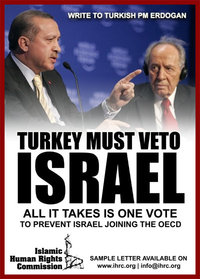
At Foreign Policy in Focus, John Feffer draws attention to the contradiction between Israel’s behavior as a rogue state and the fact that it is about to be granted the privileged status of membership in the Organization for Economic Cooperation and Development — unless, that is, a country such as Turkey steps up and exercises its right to cast a veto.

North Korea and Israel have a lot in common.

Neither is a signatory to the Nuclear Non-Proliferation Treaty (NPT), and both employ their nuclear weapons in elaborate games of peek-a-boo with the international community. Israel and North Korea are equally paranoid about outsiders conspiring to destroy their states, and this paranoia isn’t without some justification. Partly as a result of these suspicions, both countries engage in reckless and destabilizing foreign policies. In recent years, Israel has launched preemptive strikes and invaded other countries, while North Korea has abducted foreign citizens and blown up South Korean targets (including, possibly, a South Korean ship in late March in the Yellow Sea).

And they’re both exceptions in their regions: Israel is a Jewish state in an Arab region; North Korea is an old-style feudal dictatorship in an Asian region marked by relative prosperity and political openness. But the two countries often behave as if they are exceptions to all other rules as well. For instance, they both share an antipathy toward human rights organizations that attempt to hold them to international standards. Witness the recent attacks by Israel (and its hard-right supporters) of Human Rights Watch because of reports critical of Israel’s human rights record. North Korea also routinely rejects human rights inquiries as a challenge to its sovereignty. (For a proposal on a better strategy to engage North Korea on human rights issues, check out my latest piece Starting Where North Korea Is.)

Despite these similarities, these two roguish powers haven’t had a great deal of interaction. Between 1992 and 1994, Israel secretly negotiated a billion dollar buy-out of North Korea’s missile export program to the Middle East, and the United States intervened to nix the deal (only to explore a similar option with North Korea at the end of the Clinton administration). In 2007, Israel bombed a suspected nuclear facility in Syria that may or may not have been built with North Korean assistance. Otherwise, the two countries maintain their innocence and distance.

And yet one country is an official rogue and the other country only plays one on Arab TV. The difference in designation owes much to U.S. policy. One of the perks of world domination is the chance to make like Adam in Genesis and name all the animals. North Korea, according to Washington, is beyond the pale. Israel, however, is “one of us”: firmly ensconced in the Judeo-Christian tradition, accorded honorary European status, and even considered worthy of membership in the Organization for Economic Cooperation and Development (OECD).

Meanwhile, The Guardian reports:

Britain has refused to allow Israel’s Mossad secret service to send a representative back to the country’s London embassy following the row over the killing of a Hamas operative by agents using forged UK passports.

Israel’s Yediot Aharonot newspaper reported yesterday that the Foreign Office is digging in its heels because Israel is refusing to commit itself not to misuse British passports in future clandestine operations.

Facebooktwittermail

Afghanistan: is it time to talk to the Taliban?

In The Guardian, Jonathan Steele writes:

Eight years after they were overthrown by US air power, a drumbeat is starting to sound across Afghanistan in favour of talking to the Taliban, the country’s once-hated former rulers. An idea that used to seem absurd, if not defeatist, is coming to be seen as the only credible way to end an ever-widening war. Moreover, the proposed agenda of negotiations is not a Taliban surrender, but an offer to share power in Kabul.

President Hamid Karzai and other senior Afghan politicians support the idea. So too do a growing number of foreign governments, including Britain’s – at least tentatively – now that British troops are being killed at twice the rate they were in early 2009.

Perhaps most surprisingly, even among Afghanistan’s small but determined group of woman professionals, the notion of making a deal with the ultra-conservative men who forced them into burkas and denied them the right to work outside the home is no longer anathema. A desperate desire for peace is trumping concern over human rights.

Facebooktwittermail

The myth of Talibanistan

Pepe Escobar’s analysis is interesting as always — though one note of warning: In writing about Baitullah Mehsud I think Escobar is actually referring to Hakimullah Mehsud. Reports that Baitullah was killed last August, have, as far as I’m aware, not been disputed. It was Hakimullah who reemerged this week after he was reported to have been killed in January.

What is never mentioned by US corporate media is the tremendous social problems Pakistan has to deal with because of the mess in the tribal areas. Islamabad believes that between the Federally Administered Tribal Areas (FATA) and NWFP, at least 1 million people are now displaced (not to mention badly in need of food aid). FATA’s population is around 3.5 million – overwhelmingly poor Pashtun peasants. And obviously war in FATA translates into insecurity and paranoia in the fabled capital of NWFP, Peshawar.

The myth of Talibanistan anyway is just a diversion, a cog in the slow-moving regional big wheel – which in itself is part of the new great game in Eurasia.

During a first stage – let’s call it the branding of evil – Washington think-tanks and corporate media hammered non-stop on the “threat of al-Qaeda” to Pakistan and the US. FATA was branded as terrorist central – the most dangerous place in the world where “the terrorists” and an army of suicide bombers were trained and unleashed into Afghanistan to kill the “liberators” of US/NATO.

In the second stage, the new Obama administration accelerated the Predator “hell from above” drone war over Pashtun peasants. Now comes the stage where the soon over 100,000-strong US/NATO troops are depicted as the true liberators of the poor in Af-Pak (and not the “evil” Taliban) – an essential ploy in the new narrative to legitimize Obama’s Af-Pak surge.

For all pieces to fall into place, a new uber-bogeyman is needed. And he is TTP leader Baitullah Mehsud, who, curiously, had never been hit by even a fake US drone until, in early March, he made official his allegiance to historic Taliban leader Mullah Omar, “The Shadow” himself, who is said to live undisturbed somewhere around Quetta, in Pakistani Balochistan.

Now there’s a US$5 million price on Baitullah’s head. The Predators have duly hit the Mehsud family’s South Waziristan bases. But – curioser and curioser – not once but twice, the ISI forwarded a detailed dossier of Baitullah’s location directly to its cousin, the Central Intelligence Agency. But there was no drone hit.

And maybe there won’t be – especially now that a bewildered Zardari government is starting to consider that the previous uber-bogeyman, a certain Osama bin Laden, is no more than a ghost. Drones can incinerate any single Pashtun wedding in sight. But international bogeymen of mystery – Osama, Baitullah, Mullah Omar – star players in the new OCO (overseas contingency operations), formerly GWOT (“global war on terror”), of course deserve star treatment.

Facebooktwittermail

Drone strikes like “canon fire”

CNN reports:

Drone-launched missiles are now hitting lower-level al Qaeda and Taliban personnel, camps, training areas, bomb makers, buildings and other targets in the remote region.

“You’ve had an expanded target set for time now, and given the danger these groups pose and their relative inaccessibility, these kinds of strikes — precise and effective — have become almost like the cannon fire of this war. They’re no longer extraordinary or even unusual,” the official said.

The US counterterrorism official who likened Hellfire missile attacks to cannon fire, reached for a comparison which though perhaps ill-conceived is also revealing. If drone warfare is meant to epitomize precision, nothing represents blunt force more than a cannon.

As for the claim that big-name targets have now given way to an expanded range of lower level targets, US officials who still insist that there have been no more than a handful of civilians killed in drone attacks might be posed a basic challenge: How often can they even name the dead?

Facebooktwittermail

Drone attacks provoke calls for revenge

In a report on the CIA’s campaign of drone warfare in Pakistan, the Los Angeles Times recounts the stories of some of the civilian victims of the attacks.

Many of the boys that Zaman Khan grew up with in the South Waziristan town of Shakai eventually joined the Taliban. He knew they had become militants, but he never thought it odd to have them over for tea.

Whether it was because of Taliban visits or the proximity of a regular Taliban meeting place 30 yards away, Khan’s house became a target March 15, 2008.

The missile struck while everyone slept, killing Khan’s brother, Wazir Khan, 40; Wazir’s wife, Zara Bibi, 30; and their 4-year-old son, Irshad. The left half of Wazir’s body had been sheared off. Zara’s and Irshad’s bodies were charred from head to toe.

Wazir’s two other children, Noor Rehman, 10 at the time, and Ishaq Khan, 3, survived. Physically, they recovered but suffer from psychological problems, Zaman Khan said.

“Ishaq doesn’t talk at all,” Khan said. “He can’t recognize his family, and he drinks only if someone helps him.”

Three weeks after that strike, a house full of civilians in the same neighborhood was struck, instantly killing cousins Sher Maan, 20, and Azeem Ullah, 30, and Azeem’s wife, Gul Anama, 25.

“It was a huge blast that shook the ground,” said Amin Ullah, 20, a Shakai farmer.

“I believe that most of the victims of these drone attacks are innocent people,” Ullah said. “Pakistan should be carrying out these attacks. Pakistan knows the terrain, knows its people and knows the militants.”

Andrew Exum, a former Army officer in Afghanistan and Iraq, has declared the drone program counterproductive and called for an end to it. In an analysis published last year, Exum and David Kilcullen, a former counterinsurgency advisor to the head of U.S. Central Command, Army Gen. David H. Petraeus, dismissed drones as technology substituting for strategy.

“Every one of these dead noncombatants represents an alienated family, a new desire for revenge, and more recruits for a militant movement,” they wrote.

Drones have proved invaluable in Afghanistan, where they focus on surveillance, intelligence-gathering and watching over coalition troops, Exum said in an interview. But in Pakistan, the U.S. and the government in Islamabad need to make the case that the attacks are part of a joint strategy supporting Pakistani policy, he said.

“I’m not saying drones can’t be part of the solution, but right now I think they’re part of the problem,” Exum said.

Drone attacks have enraged men such as Momin Khan. On a September morning last year, Khan heard the thunderclap of a drone strike in Machis, his village in North Waziristan, and ran to see what had happened.

As he joined other villagers running down a dirt road, the 50-year-old unemployed teacher saw black smoke and flames curling out of a house about 60 yards away. The missile had killed two people there. As he ran closer, a second missile strike shook the ground.

Shrapnel from the blast cut into his shoulder and legs. He woke up in a hospital.

Four people were killed in the second strike, he said. Although Taliban militants have often used Machis as a haven, Khan said he was sure the house initially targeted had only civilians in it.

“These drones fly day and night, and we don’t know where to hide because we don’t know who they will target,” he said. “If I could, I would take revenge on America.”

Philip Alston, the United Nations special representative on extrajudicial, summary or arbitrary killings, said that without full disclosure of the CIA drone program, “the opportunities for abuse are immense.”

“The CIA is running a program that is killing a significant number of people, and there is absolutely no accountability in terms of the relevant international law,” he said.

Scott Horton, while considering some of the legal issues surrounding the program notes:

No weapons system remains indefinitely the province of a single power. Drone technology is particularly striking in this regard, because it is not really all that sophisticated. It seems clear that other powers have this technology–Israel and Iran have each been reported to be working with it, Russia and China could obviously do so easily if they desired, and the same is probably true for Britain, France, and Germany, not to mention Japan and Taiwan, where many of the cutting-edge breakthroughs in robotics actually occur. The way America uses this technology is therefore effectively setting the rules for others. Put another way, if it’s lawful for America to employ a drone to take out an enemy in the desert of Yemen, on the coast of Somalia, in a village in Sudan or Mauretania, then it would be just as lawful for Russia, or China–or, for that matter, for Israel or Iran. What kind of world is this choice then creating? Doesn’t it invariably lead us closer to the situation in which a targeted killing will be carried out in a major metropolis of Europe or East Asia, or even the United States? And doesn’t that move us in the direction of a dark and increasingly lawless world?

This is not idle speculation. The choices the United States has made are being studied very closely in capitals around the world. In Russia, for instance, national-security analysts have noted the American drone strikes with a measure of approbation, because they see such strikes as justifying lethal countermeasures of their own against perceived terrorist enemies. A number of enemies of the Russian government who were critical of policies or actions connected with the Second Chechen War have recently met violent death, often after Russian authorities linked them to Chechen terrorist groups. The Polonium poisoning of Aleksandr Litvinenko in London, for instance, or the assassination of Umar Israilov in Vienna, which Austrian prosecutors linked earlier this week to a Putin-protégé, the president of Chechnya, are two examples that suggest that Europe may have been cleared as a theater for targeted killings by a great power. The 2004 killing of former Chechen President Zelimkhan in Qatar is an example of another Russian targeted killing in the Gulf. The recent likely Israeli assassination of Mahmoud al-Mabhouh in Dubai is another instance. Targeted killings of this sort have always been with us, of course, but with the Bush-era “War on Terror” they are making a strong comeback and are gaining in claims of legitimacy and legality. The drone technology promises to take targeted killings to a whole new level.

My point here is a simple one. The United States cannot assume exclusivity in this technology, and how it uses the technology will guide others. The United States has to decide now whether it wants to legitimize a broader right of sovereign states to assassinate their enemies using drones. The consequence of such a step to the world as a whole will be severe. This also points to the danger of the United States using drones for targeted killings and keeping silent about the process, which invites the view that the practice involves an arbitrary and capricious use of power. If the United States elects to continue on its current path, it also owes the world a clear accounting for its use of drones as a vehicle for targeted killings.

Facebooktwittermail

Predator warfare blowback

“Looks like you just lost that bet, Mr. Woodward. I’ll be waiting for your apology,” a reader said after I wrote on Sunday, “if I was to place a bet on who did this, I’d go with someone whose sympathies are probably more Tea Party than Taliban.”

Indeed I was wrong, though I’m not sure what I’m being asked to apologize for. Having engaged in premature speculation or having entertained the suspicion that there could be among the ranks of the Tea Party crowd anyone crazy enough to try and set off a bomb in Times Square?

Even if I and others were mistaken in suggesting that the Times Square incident might be connected to the Tea Party movement, the movement itself needs to engage in a bit of self-examination if it wants to understand its image problem — not pretend it’s simply the victim of unfair criticism.

Moving on, Noah Shachtman reports:

Federal agents have made an arrest in the Times Square bombing attempt. And YouTube may have provided some clues to the investigators.

Faisal Shahzad was attempting to board a plane for Dubai when he was apprehended at New York’s JFK airport. Law enforcement officials believe the Connecticut resident recently bought the 1993 Nissan Pathfinder that was rigged with explosives and fertilizer and left smoldering in Times Square.

One “clue in the investigation is a video posted online early Sunday morning by persons in Connecticut, who may have been involved in the bomb attempt and are being sought by law enforcement,” ABC News reports.

The video (below), features the voice of Qari Hussain Mehsud, the “Pakistani Taliban master trainer of suicide bombers,” according to the Long War Journal. The clip congratulates fellow Muslims for the “jaw-breaking blow to Satan’s USA.” “The attack a revenge” for the slaying of extremist leaders in Iraq and Pakistan, the video continues, and is a response to “the recent rain of drone attacks.”

If Faisal Shahzad was the best recruit the Pakistani Taliban could find, the threat they pose to the United States is probably limited, but DHS Secretary Janet Napolitano’s initial assessment that this was a “one-off” operation is clearly premature. Indeed, if the intense campaign of drone warfare in Pakistan has triggered enough outrage among a few Pakistani Americans to seek revenge in Times Square, then there is one word that this administration should now be thinking about seriously: blowback.

President Obama seems to pride himself in having been less hesitant to take the war to Pakistan than was his predecessor, yet as the reappearance of Hakimullah Mehsud should make clear, the successes of the drone campaign have not been as great as the CIA has often claimed, while the costs have just as frequently been understated.

Killing innocent people “over there,” inevitably elevates the risk that innocent people will again end up dying here.

The bomb-making abilities on display in Times Square may have made some observers respond dismissively — and I am guilty of having done so — but the Taliban’s threat to bring the war to the United States can no longer be regarded as empty rhetoric.

Facebooktwittermail

“I call this a Rube Goldberg contraption”

That’s a description of the Times Square incendiary devise provided by James M Cavanaugh. He spoke to the New York Times and is a former bomb expert with the federal Bureau of Alcohol, Tobacco, Firearms and Explosives who investigated car bombs and tracked the Unabomber, Theodore J Kaczynski, and Eric R Rudolph, the bomber of abortion clinics and other sites.

Now that a “person of interest” has been identified who is said to be a naturalized American citizen originally from Pakistan, it seems that those of us who were quick to point a finger of suspicion at the Tea Party crowd were wrong.

But, let’s imagine that this Rube Goldberg contraption had in fact been put together by a rightwing nut — or a group of them. The construction of the bomb would be taken as an indication of the severity of the threat. Which is not to say that the threat would be treated as insignificant, but neither would it be overstated.

Now the picture has turned international we will instead be encouraged to believe: first comes the Rube Goldberg contraption; next a dirty bomb or a nuclear weapon.

Add the jihadist element and suddenly the sky’s the limit.

Facebooktwittermail

The sadistic logic behind Israel’s siege of Gaza

The Israeli human rights group, Gisha, has taken the Israeli government to court in an effort to force Israel to reveal information on the import controls through which Gaza is being held under siege.

Rules that allow the importation of cinnamon but not coriander might seem arbitrary and it’s unlikely that further documentation from the Israelis will show otherwise. But there does appear to be a sadistic logic at work here. Nothing more effectively reinforces a sense of powerlessness in a population than for the minutiae of everyday life to be under the constant, arbitrary and callous control of an invisible and inaccessible power. This is the logic and practice of subjugation. It is an exercise in the crushing of human will.

Gisha’s director, Sari Bashi, says she is no security expert, “but preventing children from receiving toys, preventing manufacturers from getting raw materials – I don’t see how that’s responsive to Israeli security needs.”

And she says that some of the prohibitions appear to be absurdly arbitrary: “I certainly don’t understand why cinnamon is permitted, but coriander is forbidden. Is there something more dangerous about coriander? Is coriander more critical to Gaza’s economy than cinnamon? This is a policy that appears to make no sense.”
She argues that if there is a logic behind such decisions, the military should reveal what it is.

Now, after several months’ waiting, the state has given its response to the court, in a written submission, seen by the BBC.

It throws a small pool of light on the process behind the blockade.

The overall rationale is set out, in bold type: “The limitation on the transfer of goods is a central pillar in the means at the disposal of the State of Israel in the armed conflict between it and Hamas.”

The Israeli authorities also confirm the existence of four documents related to how the blockade works: how they process requests for imports into Gaza, how they monitor the shortages within Gaza, their approved list of what is allowed in, and a document entitled “Food Consumption in the Gaza Strip – Red Lines” which sets out the minimum calorie intake needed by Gaza’s million and a half inhabitants, according to their age and sex.

This paper was however, the state insists, just a draft power-point presentation, used for “internal planning work”, which “never served as a basis for the policy of the authority”.

But while the first three documents promise a great deal of detail, that detail is not delivered.

In each case, the state argues that disclosure of what is allowed in and why would, in their words, “damage national security and harm foreign relations”.

Facebooktwittermail

A view of life in Gaza

In a bloggingheads.tv interview, Robert Wright speaks to Bassam Nasser, who works for the Catholic Relief Services in Gaza. Though Wright’s questions tend to be somewhat uninformed and predictable, Nasser’s responses provide a much richer and more nuanced view of life under siege and Israeli occupation than can be gleaned for standard news reports.

Facebooktwittermail