
From the Los Angeles Times (and don’t be put off by the author!):
For the Saudis, concern about Iran’s nuclear ambitions, which Riyadh sees as a longer-term threat, has taken a back seat to its concern about the lack of perceived progress in solving the Israel-Palestinian struggle.
Riyadh’s growing unease about the effect of this protracted conflict on the kingdom and on Iran’s hegemonic ambitions was conveyed to Adm. Michael G. Mullen, chairman of the Joint Chiefs of Staff, in meetings in the region last month with senior Saudi and other Arab officials, according to a senior U.S. military official.
Initially, the kingdom’s concern about the plight of the Palestinians was mostly lip service. While Saudi Arabia and other Arab oil states bankrolled the Palestine Liberation Organization and rhetorically endorsed the Palestinians’ right to a state of their own and a theoretical return to the lands of Palestine, Jerusalem in particular, the lack of a settlement and the perpetuation of the status quo following the 1973 Arab-Israeli war jeopardized neither vital Saudi nor Arab interests.
Today, however, concern about the rise of militant Palestinian Hamas, Palestinian political disarray and the growing political despair of Palestinians under Israeli occupation — if not those in the refugee camps of Jordan, Syria and Lebanon — seems widespread within the kingdom, for practical, self-serving reasons. The Saudi government has come to see the festering wound of Palestine as a primary source of the radicalization of its own population and, hence, of the extremism that threatens the kingdom’s stability and plays directly into Iranian hands.
Because Saudi Arabia is overwhelmingly young — more than 75% of Saudis are under 30 — most of the country’s citizens have no memory of a time when an Arab-Israeli peace seemed not only possible but likely. The 1991 Madrid peace conference, the 1993 Oslo accords, the Arab-Israeli handshakes on the White House lawn — all are now ancient history. Instead, Saudis, and young Saudis in particular, see Israelis not as potential partners in peace but as brutal occupiers.
The Arab media and the exponential growth of the Internet have reinforced among Saudis a sense of humiliation, injustice and outrage over Israel’s incursions into Lebanon and the Gaza Strip. Al Jazeera and the thousands of websites that Saudis avidly monitor have brought the once-distant suffering of Palestinians directly into their living rooms, giving their plight an immediacy and resonance it once lacked.
Everyone I talked to on a recent trip to Riyadh — from princes to merchants to bloggers — mentioned the Palestinian cause, rather than Iran, as their top foreign policy concern (an impression supported by recent opinion polls). Saudi royals and government officials know well that Al Qaeda and other “jihadi” groups exploited the Palestinian cause not only to help recruit the Saudi “muscle” for the 9/11 attacks — 15 of the 19 hijackers were Saudis — but also for subsequent attacks on the kingdom itself.



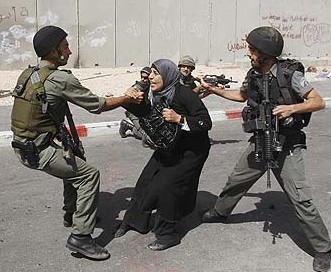
 The siege of Gaza, which Israeli tightened when Hamas took control in June 2007, makes women’s lives much more complicated.
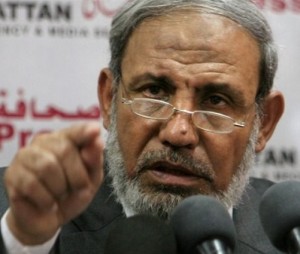 Hamas strongman Dr. Mahmoud al-Zahar on Saturday night slammed the Palestinian groups firing rockets at Israel. Zahar told the Iranian al-Alam television station that the rocket fire was a “suspicious action aimed at allowing the enemy to gain points in its favor in the public opinion and divert the attention from its crimes in the territories.”
 Netanyahu summed up his core thinking in his 1993 book, A Place Among the Nations: Israel and the World, when he said it was naive for Israelis to believe that “Arabs loathed war as much as they themselves.” He derided Israelis who thought of peace as “a kind of blissful castle in the clouds, a Jewish never-never land in which the Jews will be able finally to find a respite from struggle and strife.”
 Hamas has designated this day, in this place, its

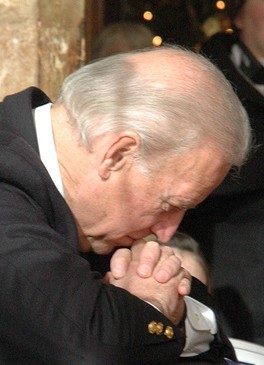 Has the vice president gone missing? Or is he hiding in a secure undisclosed location?


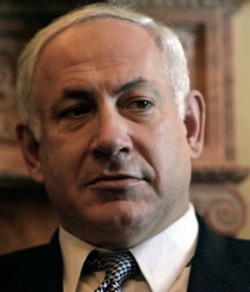 As Bill Clinton
 On January 16, two days after a killer earthquake hit Haiti, a team of senior military officers from the U.S. Central Command (responsible for overseeing American security interests in the Middle East), arrived at the Pentagon to brief JCS Chairman Michael Mullen on the Israeli-Palestinian conflict. The team had been dispatched by CENTCOM commander David Petraeus to underline his growing worries at the lack of progress in resolving the issue. The 33-slide 45-minute PowerPoint briefing stunned Mullen. The briefers reported that there was a growing perception among Arab leaders that the U.S. was incapable of standing up to Israel, that CENTCOM’s mostly Arab constituency was losing faith in American promises, that Israeli intransigence on the Israeli-Palestinian conflict was jeopardizing U.S. standing in the region, and that Mitchell himself was (as a senior Pentagon officer later bluntly described it) “too old, too slow…and too late.”
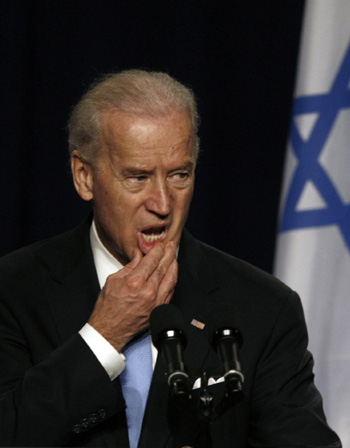 The apology offered by Prime Minister Benjamin Netanyahu and Interior Minister Eli Yishai recalls the joke about the servant who pinched the king’s bottom. En route to the gallows, the servant apologized: He thought it was the queen’s bottom.