Category Archives: Editorials

Bergdahl must tell his own story

Sooner or later, mistrust of government can lead some Americans to some untenable and absurd positions.

Statements coming from the White House, the Pentagon and the Intelligence Community can never be taken at face value. I have no problem with that kind of skepticism. After all, officials all have political and institutional interests that they endeavor to protect; decisions are often made in haste; people with great power can be badly informed, short-sighted, and petty.

But in the growing hysteria surrounding the release of U.S. Army Sgt. Bowe Bergdahl, the latest “bombshell” being devoured by those who never waver in their conviction that the government always lies, comes from a private spying outfit run by Duane R. (“Dewey”) Clarridge, a former CIA senior operations officer, who was on trial on seven counts of perjury and false statements in Iran-Contra before being pardoned by President George H.W. Bush.

“EXCLUSIVE: Bergdahl declared jihad in captivity, secret documents show,” shouts the headline at Fox News in a story based on claims coming from Clarridge’s firm, the Eclipse Group.

Amidst the voluminous praise that Edward Snowden and Glenn Greenwald have received for revealing the inner workings of the NSA, perhaps the most negative impact resulting from this is the fact that nowadays most people seem to think that secrets are concealed truths.

In reality, secrets are very often rumors, pieces of speculation, or information whose factual basis or significance has yet to be verified.

The findings made by Eclipse were no doubt recorded in secret documents, but at this point, it’s anyone’s guess how much truth those reports reveal.

The documents obtained by Fox News show that Eclipse developed and transmitted numerous status reports on the whereabouts of the errant American soldier, spanning a period from October 2009, roughly three months after Bergdahl reportedly walked off his base in Afghanistan and fell into custody of the Haqqani network, up through August 2012.

At one point — in late June 2010, after Bergdahl succeeded in one of his escape attempts — the Haqqani commanders constructed a special metal cage for him, and confined him to it. At other points, however, Bergdahl was reported to be happily playing soccer with the Haqqani fighters, taking part in AK-47 target practice and being permitted to carry a firearm of his own, laughing frequently and proclaiming “Salaam,” the Arabic word for “peace.”

Who knows whether this information came from reliable sources or whether Eclipse may at times have become entangled in some Haqqani psyops operations that purposefully wanted to feed the U.S. conflicting pictures of Bergdahl’s intentions and the conditions of his captivity.

The CIA once prized Humam Khalil Abu-Mulal al-Balawi as one of its most valuable informants — until, that is, he conducted a suicide attack on Camp Chapman in 2009.

“Personally I would like to be able to talk to the guy and ask him why did this,” says former Army Spc. Gerald Sutton, who served in Afghanistan with Bergdahl.

This is Bergdahl’s story and hopefully some day we’ll hear it from his own lips. In the meantime, the media will milk it for all its worth.

Facebooktwittermail

The attack at the Jewish museum in Belgium highlights what?

Following the arrest of Mehdi Nemmouche, a French citizen who is suspected of killing four people at a Jewish museum in Belgium two weeks, the “big eye-opener … is that he had recently returned from Syria,” writes Jason Ditz at Antiwar.com.

Seemingly, the oft-repeated predictions that Western Muslims, radicalized in Syria, are destined to come home and terrorize their fellow citizens, are coming true.

The Jerusalem Post reports:

French President François Hollande confirmed that a suspect had been arrested and repeated his country’s determination to do all it could to stop radicalized youths from carrying out attacks.

French media reports said Nemmouche was also suspected of having stayed with jihadist groups last year while in Syria, where Islamist insurgents have been playing a major part in the three-year uprising against President Bashar Assad.

Muhammad Merah, the Franco- Algerian who died in a police shootout in Toulouse in March 2012 after killing three soldiers and four Jews, three of them children, also had links with Islamist insurgents. His sister, Souad, has since disappeared and is believed to be in Syria with a companion and her four children.

Far-right National Front leader Marine Le Pen said that “there must be a lot of Merahs coming back [to France] from Syria.”

According to intelligence specialists, the largest number of European jihadists is in Belgium, a country with a sizable number of North African Arab immigrants.

It’s disturbing that the perspective of some members of the antiwar movement, the Western political mainstream, and the anti-immigrant European far right have come into such close alignment.

But buried in the Jerusalem Post report is a detail that should have garnered more attention: Nemmouche’s own attorney’s explanation about the radicalization of his client.

Salifa Badaoui said that Nemmouche “was not frequenting the mosque [and] was not talking about religion at all….He became radical only in jail, after falling into minor criminality during his adolescence.” Nemmouche served time in prison in 2009 and 2012.

In other words, if we are to understand the process of radicalization that may have led to the murders in Brussels, we should be giving as much if not more attention to Nemmouche’s experiences in France rather than those in Syria.

Last year, Reuters reported:

In France, the path to radical Islam often begins with a minor offence that throws a young man into an overcrowded, violent jail and produces a hardened convert ready for jihad.

With the country on heightened security alert since January when French troops began fighting al Qaeda-linked Islamists in Mali, authorities are increasingly worried about home-grown militants emerging from France’s own jails.

But despite government efforts to tackle the problem, conditions behind bars are still turning young Muslims into easy prey for jhadist recruiters, according to guards, prison directors, ex-inmates, chaplains and crime experts interviewed over the last few months by Reuters.

“I have parents who come to me and say: ‘My son went in a dealer and came out a fundamentalist’,” said Hassen Chalghoumi, imam of the mosque in Drancy, a gritty suburb north of Paris.

As petty criminals become radicalized in jail, the society to which they return is inclined to reinforce their experience of alienation and solidify their ideological conclusions.
In 2012, France 24 reported:

French Muslims have become the target of a marked increase in Islamophobic violence and actions, as well as incendiary statements by politicians, over the last two years, according to a report by a leading anti-racism observatory.

The number of racist acts against Muslims in France is increasing “alarmingly”, according to the country’s National Observatory of Islamophobia, whose president has called for overt Islamophobia to be taken as seriously as anti-Semitism, which is a criminal offence in France.

According to a report by the Observatory, which claims to fight “all forms of racism and xenophobia”, “in 2011 the number [of anti-Muslim attacks] was up 34% on the previous year … but what is happening in 2012 is alarming. Between January and the end of October there were 175 reported Islamophobic acts, a 42% increase compared with the same period in 2011.”

The report highlighted the occupation of a building site of a new mosque in Poitiers, near Paris, by 74 members of the extreme-right splinter group “Generation Identity”, who chanted hostile “warlike” slogans against Islam and Muslims.

The Observatory’s President Abdallah Zekri told FRANCE 24 that the rise in anti-Muslim sentiment in France could be partly explained by “the tense socio-political atmosphere in France being driven by a resurgence of the far right”.

The huge success of Le Pen’s National Front in this May’s elections suggests that European leaders have less reason to highlight the threat posed by jihadists returning from Syria than they should fear the huge wave of xenophobia now sweeping the continent.

Facebooktwittermail

The war on terror has been a total failure, so it must continue

“For the foreseeable future, the most direct threat to America, at home and abroad, remains terrorism,” President Obama said at West Point last week.

If the war on terror was conceived as a never-ending war, then I guess its continuation can be regarded as a success in the sense that relentless war has been normalized.

But the success for which neither the current nor previous administration will take credit is that the U.S. government, through its actions over the last thirteen years, has been instrumental in transforming al Qaeda from an organization into a movement.

Obama’s proudest accomplishment — overseeing the killing of Osama bin Laden — turned out to be the hollowest victory. For the sake of grabbing a bloody trophy, a genuine historic opportunity was sacrificed: the open trial of the al Qaeda leader.

The failure of the war on terror was built in from its conception. A refusal to address the political dimensions of terrorism has guaranteed that the ideological questions are only being raised and answered by one side, thereby reinforcing a perception that the U.S. and the West fight from an indefensible position.

Since relatively few Americans are willing to admit that 9/11 triggered a national psychosis and a foreign policy debacle, the sentiment now, in the face of failure, is that what is called for is persistence.

I’m reminded of a story about Mullah Nasrudin:

Nasrudin is sitting outside an Arabian spice shop. He’s sitting beside a huge basket of red hot ‘dynamite chillies’. Nasrudin’s eyes are filled with tears as he takes chillies from the basket and bites into one after another. His friend comes along and sees Nasrudin sweating and crying. “Nasrudin what are you doing. You’re crying and sweating. Why are you chewing on those chillies?” Nasrudin answers, “I’m trying to find a sweet one.”

Meanwhile, the Associated Press reprises the narrative of a never-ending threat that necessitates a never-ending fight:

Al-Qaida has decentralized, yet it’s unclear whether the terrorist network is weaker and less likely to launch a Sept. 11-style attack against the United States, as President Barack Obama says, or remains potent despite the deaths of several leaders.

Obama said in his foreign policy speech last week that the prime threat comes not from al-Qaida’s core leadership, but from affiliates and extremists with their sights trained on targets in the Middle East and Africa, where they are based. This lessens the possibility of large-scale 9/11-type attacks against America, the president said.

“But it heightens the danger of U.S. personnel overseas being attacked, as we saw in Benghazi,” he said, referring to the September 2012 attack on a U.S. diplomatic outpost in Libya that killed the U.S. ambassador and three other Americans.

Experts argue that this restructured al-Qaida is perhaps even stronger than it has been in recent years, and that the potential for attacks on U.S. soil endures.

“We have never been on a path to strategically defeat al-Qaida. All we’ve been able to do is suppress some of its tactical abilities. But strategically, we have never had an effective way of taking it on. That’s why it continues to mutate, adapt and evolve to get stronger,” said David Sedney, former deputy assistant secretary of defense for Afghanistan, Pakistan and Central Asia.

Decentralization does not mean weakness, he said. [Continue reading…]

Facebooktwittermail

Cynicism is toxic

Cynics fool themselves by thinking they can’t be fooled.

The cynic imagines he’s guarding himself against being duped. He’s not naive, he’s worldly wise, so he’s not about to get taken in — but this psychic insulation comes at a price.

The cynic is cautious and mistrustful. Worst of all, the cynic by relying too much on his own counsel, saps the foundation of curiosity, which is the ability to be surprised.

While the ability to develop and sustain an open mind has obvious psychological value, neurologists now say that it’s also necessary for the health of the brain. Cynicism leads towards dementia.

One of the researchers in a new study suggests that the latest findings may offer insights on how to reduce the risks of dementia, yet that seems to imply that people might be less inclined to become cynical simply by knowing that its bad for their health. How are we to reduce the risks of becoming cynical in the first place?

One of the most disturbing findings of a recent Pew Research Center survey, Millenials in Adulthood, was this:

In response to a long-standing social science survey question, “Generally speaking, would you say that most people can be trusted or that you can’t be too careful in dealing with people,” just 19% of Millennials say most people can be trusted, compared with 31% of Gen Xers, 37% of Silents and 40% of Boomers.

While this trust deficit among Millennials no doubt has multiple causes, such as the socially fragmented nature of our digital world, I don’t believe that there has ever before been a generation so thoroughly trained in fear. Beneath cynicism lurks fear.

The fear may have calmed greatly since the days of post-9/11 hysteria, yet it has not gone away. It’s the background noise of American life. It might no longer be focused so strongly on terrorism, since there are plenty of other reasons to fear — some baseless, some over-stated, and some underestimated. But the aggregation of all these fears produces a pervasive mistrust of life.

ScienceDaily: People with high levels of cynical distrust may be more likely to develop dementia, according to a study published in the May 28, 2014, online issue of Neurology®, the medical journal of the American Academy of Neurology.

Cynical distrust, which is defined as the belief that others are mainly motivated by selfish concerns, has been associated with other health problems, such as heart disease. This is the first study to look at the relationship between cynicism and dementia.

“These results add to the evidence that people’s view on life and personality may have an impact on their health,” said study author Anna-Maija Tolppanen, PhD, of the University of Eastern Finland in Kuopio. “Understanding how a personality trait like cynicism affects risk for dementia might provide us with important insights on how to reduce risks for dementia.”

For the study, 1,449 people with an average age of 71 were given tests for dementia and a questionnaire to measure their level of cynicism. The questionnaire has been shown to be reliable, and people’s scores tend to remain stable over periods of several years. People are asked how much they agree with statements such as “I think most people would lie to get ahead,” “It is safer to trust nobody” and “Most people will use somewhat unfair reasons to gain profit or an advantage rather than lose it.” Based on their scores, participants were grouped in low, moderate and high levels of cynical distrust.

A total of 622 people completed two tests for dementia, with the last one an average of eight years after the study started. During that time, 46 people were diagnosed with dementia. Once researchers adjusted for other factors that could affect dementia risk, such as high blood pressure, high cholesterol and smoking, people with high levels of cynical distrust were three times more likely to develop dementia than people with low levels of cynicism. Of the 164 people with high levels of cynicism, 14 people developed dementia, compared to nine of the 212 people with low levels of cynicism.

The study also looked at whether people with high levels of cynicism were more likely to die sooner than people with low levels of cynicism. A total of 1,146 people were included in this part of the analysis, and 361 people died during the average of 10 years of follow-up. High cynicism was initially associated with earlier death, but after researchers accounted for factors such as socioeconomic status, behaviors such as smoking and health status, there was no longer any link between cynicism and earlier death.

Facebooktwittermail

Jihadist advises those coming to Syria: ‘Don’t bring your hair curlers’

Earlier this week, Leslie Gelb wrote: “senior administration officials tell me that Obama has been modifying his objective and is now prepared to work with Assad, to some degree, along with the moderate rebels, against what the White House finally has come to see as the real and major threat — the jihadists.”

The same day, the New York Times reported on the death of Abu Huraira al-Amriki who had carried out a suicide truck bombing in the northern province of Idlib — what is believed to be the first case of an American being involved in such an attack.

The media, echoing the Obama administration, is ratcheting up fears of Western jihadists returning from Syria to terrorize the U.S. or other countries where they once lived.

I could understand if the prospect of young people going off to die in a foreign land might raise fears that some of their peers might see them as martyrs and be inspired to seek the same fate. The one thing about which there can be no doubt, however, is that any Americans who die in Syria will thereafter pose no threat to anyone.

If there is a danger of some kind of violent blowback from Syria, it seems more likely that it might result from witnessing Western political leaders who not long ago pronounced in unison that Assad “must go” and yet who now, even after denouncing the Syrian regime’s use of chemical weapons, appear increasingly willing to see Assad remain in power. That’s the kind of duplicity which will certainly fuel anti-Western sentiment among radicals who believe it is their duty to fight in defense of Islam.

And yet, having said that, the assumption that the experience of war will inevitably prime those young jihadists who survive to later bring the violence home, seems questionable.

The New York Times reports:

On Sept. 11, 2001, Abu Sumayyah [a British jihadi now fighting in Syria] and Abu Muhajir [who is believed to be either American or Canadian] were teenagers interested in video games, sports and the start of college. But both men said they were deeply affected by the subsequent invasion of Afghanistan and Iraq and the American drone strikes in Pakistan and Yemen. They came to question the Western world they lived in, and their role in it.

“I saw our brothers in Afghanistan, and I realized that there is something very wrong that is happening in society,” Abu Sumayyah said. “I saw this taking place in front of my eyes, so I had to do something about it, otherwise I would feel sinful.”

Both men said they were in rebel-controlled northern Syria.

Abu Muhajir trained as a sniper and guards the city of Shaykh Najjar, north of Aleppo. He usually holds the front line for three days, followed by three days of rest. He was fearless in the beginning, he said, but soon got a taste of war. “To be honest I didn’t used to get scared, only after I got an injury,” he wrote. “Shrapnel in the arm.”

He is an avid user of social media, to pass the time. People ask him for advice on going to Syria: how to get there, the cost of a gun, where to buy camouflage gear. He said he responded cautiously.

He has also received marriage proposals, which he declines. One woman asked whether electricity was working in Syria so she could bring a hair curler. “Advice to people who want to come is, Don’t bring your hair curlers,” he said.

Abu Sumayyah is a gunman who works shifts every two weeks, based in Raqqa, a stronghold of ISIS. On his days off, he studies military tactics and trains with other weapons.

Syria changed him, he said. “In Britain and in Europe we are living in a bubble, living in dreamland, that everything is O.K.”

Whatever threat Syria-hardened jihadists might pose to the West in the future, we can be fairly sure that neither there nor here will they be flying around in helicopters dropping barrel bombs. That system for delivering death is monopolized by the Assad regime and since the victims are all Syrian, no one in Washington regards this as a real or major threat.

Facebooktwittermail

Obama’s program to prolong the war in Syria

Last August, shortly after the chemical attacks outside Damascus, the military strategist, Edward Luttwak, wrote in the New York Times:

[A] decisive outcome for either side [in Syria] would be unacceptable for the United States. An Iranian-backed restoration of the Assad regime would increase Iran’s power and status across the entire Middle East, while a victory by the extremist-dominated rebels would inaugurate another wave of Al Qaeda terrorism.

There is only one outcome that the United States can possibly favor: an indefinite draw.

By tying down Mr. Assad’s army and its Iranian and Hezbollah allies in a war against Al Qaeda-aligned extremist fighters, four of Washington’s enemies will be engaged in war among themselves and prevented from attacking Americans or America’s allies.

Last night’s edition of Frontline, broadcast on PBS, reported on a covert CIA program to arm the rebels in Syria, giving every indication that President Obama has taken Luttwak’s advice to heart.

A small training program combined with a trickle of weapons and ammunition — none capable of challenging Assad’s air supremacy — seems designed to have no effect other than prolong the war.

A rebel commander interviewed by Frontline said this about the Americans he had been trained by:

“The impression I got from their support is that they don’t actually want us to defeat the regime, but they don’t want the regime to defeat us either.”

“They told us they would train 30 to 40,000 men. I asked them: ‘How can you ever train that many if our training courses are limited to 85 recruits at a time?” In a year you can only train a thousand recruits. You would have to keep training men for 30 or 40 years. Is the revolution going to go on for that long?'”

Watch the complete Frontline report, “Syria: Arming the Rebels.”

Facebooktwittermail

The language of life

vegetables

Within the mechanistic worldview that shapes the way most of us view life, each human being and other living organism is seen as a discrete entity — a form that possesses and is animated by its own life.

Lives come into existence, go out of existence, and between times interact with each other, while all along retaining autonomy in varying degrees.

Human beings, as creatures whose powers have been extended and amplified through technology, supposedly possess the highest degree of autonomy, living lives steered by the exercise of our freewill.

Having become so full of ourselves we have mostly lost the sense of life forming a seamless whole. We fail to see that human being is a conceptual construct fabricated through a leap of imagination.

But this thing called life is unfathomably complex and the more we learn about it, the more we discover its interactive nature.

Just as people talk to each other and those conversations produce societies, it turns out that inside our bodies another kind of conversation — this one through molecular exchanges facilitated by exosomes — allows plant cells to “talk” to our cells and thereby regulate the homeostatic foundations of health.

GreenMedInfo reports: A groundbreaking new study published in Molecular Nutrition & Food Research titled, “Interspecies communication between plant and mouse gut host cells through edible plant derived exosome-like nanoparticles,” reveals a new way that food components ‘talk’ to animal cells by regulating gene expression and conferring significant therapeutic effects. With the recent discovery that non-coding microRNA’s in food are capable of directly altering gene expression within human physiology, this new study further concretizes the notion that the age old aphorism ‘you are what you eat’ is now consistent with cutting edge molecular biology.

This is the first study of its kind to look at the role of exosomes, small vesicles secreted by plant and animal cells that participate in intercellular communication, in interspecies (plant-animal) communication.

The study explained the biological properties of exosomes as follows:

“Exosomes are produced by a variety of mammalian cells including immune, epithelial, and tumor cells [11–15]. Exosomes play a role in intercellular communication and can transport mRNA, miRNA, bioactive lipids, and proteins between cells [16–19]. Upon contact, exosomes transfer molecules that can render new properties and/or reprogram their recipient cells.”

While most of the research on exosomes has focused on their role in pathological states such as tumor promotion, they were recently found to play a key role in stimulating regeneration within damaged cardiac tissue, and are known to be found in human breast milk, further underscoring how irreplaceable it is vis-à-vis synthesized infant formula. [Continue reading…]

Facebooktwittermail

Who decides what remains secret? Greenwald or Assange?

Michael Kinsley and the New York Times provoked outrage this week through a critical review of Glenn Greenwald’s new book, No Place to Hide.

Kinsley raised an important question, made some sound observations, but drew a self-contradictory conclusion. He wrote:

The Snowden leaks were important — a legitimate scoop — and we might never have known about the N.S.A.’s lawbreaking if it hadn’t been for them. Most leaks from large bureaucracies are “good” leaks: no danger to national security, no harm to innocent people, information the public ought to have.

Yet he concluded that the final say over the release of government secrets is a decision that “must ultimately be made by the government.”

So, Kinsley is all in favor of “good” leaks but believes that in a democracy these need to be government-approved leaks.

That doesn’t make any sense.

Once government decides to reveal a secret, it’s no longer a secret and there is no leak.

The whole idea of whistleblowing is that it challenges specific government claims that secrecy is serving a public interest.

On one side the government is asserting that the public is being protected by its ignorance, while on the other side the whistleblower is revealing information which he or she believes the public needs to know.

The beauty of this ad hoc mechanism is that we, the public, then get to decide who has made the stronger claim: the government or the whistleblower?

Yet Kinlsey raises an important question: who can be entrusted with the decisions about which secrets should be exposed?

It seems clear, at least to me, that the private companies that own newspapers, and their employees, should not have the final say over the release of government secrets, and a free pass to make them public with no legal consequences.

Kinsley thinks we should defer to government yet fails to explain how he envisages there will ever be any more good leaks in this scenario. Are we to imagine a government that blows the whistle on itself?

On this much, Kinsley is emphatic: “Someone gets to decide, and that someone cannot be Glenn Greenwald.”

One can view that statement as an expression of antipathy towards Greenwald, yet it is also a response to the fact that when it comes to the Snowden revelations, Greenwald has been the central decision-maker.

His judgement and that of his confidants, has not gone uncontested.

This week we saw what looked suspiciously like a contest for the limelight. Julian Assange challenged The Intercept’s apparent deference to government pressure when it concealed the identity of a whole country whose cellular communications are being recorded by the NSA — “country X” as The Intercept reported, or Afghanistan as Assange claimed.

What neither side did was provide much detailed information about the process through which they had made their determination about what to conceal or reveal. That lack of transparency bore an uncanny resemblance to governments which say, trust us, we know what we’re doing.

For those of us who are not inclined to trust the government, it’s not altogether clear why we should trust the judgement of either Glenn Greenwald or Julian Assange.

In the age of Wikileaks and Snowden and the release of large volumes of classified information, it might look like whistleblowing has become a form of civil disobedience which challenges the very legitimacy of secrecy. Indeed, an argument can be made that the concept of secrecy is quickly becoming an anachronism.

Yet as things stand now, it seems worth trying to answer Kinsley’s question — who decides? — by reviving a more traditional view of the role of the whistleblower, there being no better example than that provided by Daniel Ellsberg.

Ellsberg had no legal authority to release the Pentagon Papers, but he had the moral authority. He decided that these documents must not remain secret and he was willing to face the full consequences of that decision. On June 28, 1971, as he publicly surrendered to the U.S. Attorney’s Office for the District of Massachusetts in Boston, Ellsberg said:

I felt that as an American citizen, as a responsible citizen, I could no longer cooperate in concealing this information from the American public. I did this clearly at my own jeopardy and I am prepared to answer to all the consequences of this decision.

When determining what should remain secret, Ellsberg neither deferred to the government nor entrusted that decision to a journalist.

Invariably, the whistleblower is claiming the authority to make a decision that would preferably never be left to one person. But if such an individual feels unqualified to determine what information should be made public and what should remain secret, there is also reason to question how he is going to make the determination about who instead is capable of making those decisions.

The fact that Snowden lacked the confidence to be a decision-making whistleblower doesn’t mean he should have kept quiet, but what he should have done is spread that responsibility more widely.

Should Glenn Greenwald decide? is a question that should never have needed asking.

Facebooktwittermail

Wikileaks exposes secret which The Intercept wanted to hide

Earlier this week, The Intercept reported:

Documents show that the NSA has been generating intelligence reports from MYSTIC surveillance [a voice interception program] in the Bahamas, Mexico, Kenya, the Philippines, and one other country, which The Intercept is not naming in response to specific, credible concerns that doing so could lead to increased violence.

Note that the report while acknowledging that its redaction of “country X” came in response to “credible concerns,” it did not reveal who expressed those concerns.

If a similar report had appeared in the Washington Post or the New York Times we would expect slightly more transparency — something along the lines that in response to concerns expressed by administration officials, the publication had agreed to withhold the name of this particular country. And we could also expect that this would be the kind of practice that Glenn Greenwald would characterize as an example of the mainstream media’s subservience to government. When The Intercept operates in a similar way, however, we’re supposed to see this as responsible behavior.

From his perch inside the Ecuador embassy in London, I imagine that Julian Assange has a cynical view of the Greenwald/Omidyar operation. While Assange is paying the price for publishing secret documents, Greenwald is reaping handsome rewards. And as Assange pointed out today, when claiming that “country X” is Afghanistan, the idea that sustaining the secrecy of the NSA’s mass surveillance program there might prevent increased violence, is highly debatable.

We know from previous reporting that the National Security Agency’s mass interception system is a key component in the United States’ drone targeting program. The US drone targeting program has killed thousands of people and hundreds of women and children in Afghanistan, Pakistan, Yemen and Somalia in violation of international law. The censorship of a victim state’s identity directly assists the killing of innocent people.

There’s a bit of a charade going on here with The Intercept guarding a secret and Wikileaks insisting that the truth must come out, because assuming that Afghanistan is indeed “country X” it’s very hard to imagine that many people there will be surprised to learn about the existence of this NSA program, least of all will it come as a surprise to many of the individuals whose activities and locations are of greatest interest to the NSA.

As The Intercept reported in February:

[T]argets are increasingly aware of the NSA’s reliance on geolocating, and have moved to thwart the tactic. Some have as many as 16 different SIM cards associated with their identity within the High Value Target system. Others, unaware that their mobile phone is being targeted, lend their phone, with the SIM card in it, to friends, children, spouses and family members.

Some top Taliban leaders, knowing of the NSA’s targeting method, have purposely and randomly distributed SIM cards among their units in order to elude their trackers. “They would do things like go to meetings, take all their SIM cards out, put them in a bag, mix them up, and everybody gets a different SIM card when they leave,” the former drone operator says. “That’s how they confuse us.”

The real story here is not about the NSA surveillance program in Afghanistan; it’s about the internal workings of The Intercept.

Suppose Greenwald is having some discreet conversations with NSA officials about what The Intercept will or won’t publish. No doubt that would cause some anguish across Greenwald’s fan base and it would undermine the adversarial image that he strives to sustain. But it would also demonstrate a capacity to operate as an adult who is not so preoccupied about his image.

Journalists shouldn’t make themselves subservient to government officials but neither should they be afraid of revealing that their work often demands that they communicate with officialdom. Talking doesn’t necessitate kowtowing.

Facebooktwittermail

After #FreeHappyIranians get arrested, Khamenei says ‘Be angry with us and die in your anger’!

After authorities arrested six young men and women who produced a Tehran version of Pharrell Williams’ “Happy” video, Iran’s Supreme Leader Ayatollah Khamenei’s message at a graduation ceremony of miltary cadets was, “Be angry with us and die in your anger.”

Iran’s President Rouhani, in a reflection of his trademark smile, is perhaps better aligned with Tehran’s happy youth.

Following the video makers’ arrests, IranWire reports:

The group appeared on state television’s evening news broadcast, grouped in a row facing Tehran Chief of Police Hossein Sajedinia, and confessed to being deceived into appearing in the clip by an unnamed man and woman. Sajedinia advised the young people during the broadcast not to be deceived into appearing in corrupt film productions, and with a smile complimented the swift reaction of his security forces. “These [agents] were able to identify [these young people] within two hours, and within six hours had arrested them all,” he said.

While complimenting the speed of his forces, Sajedinia neglected to mention during the broadcast that the clip has been on YouTube for a month, had over 100,000 views. Though at the time of their arrest access to the clip in Tehran had been disrupted.

IranWire reached a source informed about the nature of the arrests. “All of the young producers received phone calls informing them that a friend had suffered a car accident and required their help. When they arrived at the address they had been given over the phone, security forces were waiting to arrest them.” Security forces have also allegedly threatened the families of those arrested that if they speak to any media about the detentions, their children will not be released.

The source said that each family has paid a bail of 30 million toman, the equivalent of $10,000, and been told if they comply with the demand not to speak to any media outlets, their children will be released tomorrow, Wednesday.

Among some quarters of the anti-Western anti-imperial left, I imagine this story will be deemed unnewsworthy. Perhaps there will even be suggestions that — as Iranian authorities claim — the videomakers were duped. If you believe that, you might as well get all your news on Iran from Press TV.

Some people think they have to shout in anger to change the world, but the shouts more often come from those who have a clearer view of what they want to destroy than a vision of what they want to create.

No doubt the #FreeHappyIranians wanted to have fun, but they also knew they were pushing boundaries. Theirs was an act of joy, defiance and courage.

Negar Mortazavi, an Iranian freelance journalist based in Washington, D.C., told Mashable that she wasn’t surprised the six people were arrested. When Mortazavi first saw the video, she thought it was dangerous to upload it online, considering its content. “Not wearing hijabs and dancing, boys and girls together — that’s three big red flags,” she said.

But being happy, wanting to dance, finding joy in life — these are not trivial indulgences of a Westernized elite or symptoms of a corrupted youth. These are universal human desires.

Ayatollah Khamenei might hold the most power in Iran, but six young men and women whose names we might never know seem to better represent a nation that too often gets reduced to crude stereotypes by its enemies — and its own leaders.

Update: Rouhani just slipped on his dancing shoes:

Facebooktwittermail

‘I’m kinda glad to see Vlad poking Uncle Sam in the eye’

The headline comes from a comment that appears under an article by Chris Floyd that appears on his site, Empire Burlesque.

Floyd writes that while he lived in Russia in the mid-1990s:

…the general public had already come to regard “demokratsia” as a dirty word, synonymous with the endemic corruption, ruin and violence that the Western-backed elites had visited upon the country. This cynicism was confirmed by the election of 1996 — my last hurrah in Moscow — when a half-dead Yeltsin, supported vigorously by the West, miraculously overcame a 2 percent popularity rating to win “re-election.” The price of this pyrrhic victory was the final surrender of the state to the oligarchs and security apparatchiks who, along with their American campaign operatives, had engineered the outcome. Flush with victory, they proceeded to push the country into yet another major crash in 1998, when life expectancy rates plummeted to the lowest levels since the famine years of the 1930s.

This is the rotten foundation upon which the increasingly ugly regime of Vladimir Putin is built. A culture, a country, a people savaged over and over through a century of unprecedented upheaval and violence were once again subjected to a firestorm of chaos that killed 3 million innocent people and left millions more stripped of hope, of opportunity, of meaning. Now Putin, who emerged from the dark nexus of power blocs that saved Yeltsin, fills this moonscape with empty symbols that play upon the fears and resentments of a battered people: hysterical nationalism, cartoon history, blustering machismo, fake religiosity, and “traditional values” more aligned with American Tea Party tropes than anything that has actually existed in Russian culture. He rails against the West but he rules a mirror image of it: a violent, militarized crony-capitalist pigsty that degrades and deceives its own people while directing their anger and confusion toward outsiders. In many ways, it’s the American Cold Warriors’ dream come true: we have finally turned the Russians into us.

The conflict in Ukraine has many causes — not least the meddling of American apparatchiks and oligarchs to engineer the overthrow of the elected government and destabilize the region. But if Western governments find themselves puzzled by the motives and moves of the Russian regime that now vexes them, they need only look in the mirror, and it will all become clear.

So there you have it: Post-Soviet Russia is a Frankenstein’s monster created by the West and thus for whatever Putin does, he bears little responsibility. The West, with its imposition of a brutal capitalist agenda combined with NATO’s relentless eastward expansion makes Russia a victim and like all cornered victims, it must do whatever it needs to survive.

Within this perspective there is some wistfulness — a hint that the collapse of the Soviet Union might not have been such a good thing after all.

What is missing is any recognition that what Russia has become is just as much a product of what the Soviet Union was — that people who wield totalitarian power will always look for new ways to exploit that power even as many of the structures once provided by the state are modified.

A totalitarian system is inherently corrupt and corruption is endlessly adaptive and thoroughly pragmatic.

Those in the West who ostensibly believe in social justice and yet also find the forces of oppression in Russia, or Syria, or China, or Iran, somehow excusable — excusable because the oppressive nature of the governments in each of these countries is eclipsed by the rapacious demands of their overbearing adversary: Western capitalism — are effectively saying that the political freedoms which exist in Western democracies have little intrinsic value. Free speech, a free press, freedom of assembly — none of those freedoms apparently mean very much. They are perhaps nothing more than baubles which serve to distract a suitably docile citizenry with an illusion of freedom.

Ultimately, this perspective strikes me as nihilistic and self-serving. It conjures an image of a world in which we are all powerless individuals who can do no more than quixotically rail against malevolent forces utterly beyond our control. We can wallow in our self-righteous indignation, comforted by the thought that what might look like inertia is simply realism.

When opposition becomes a way of life and a relentless focus on the things you stand against overshadows a clear sense of what you believe in and what you affirm, then paradoxically a nominal allegiance to justice can gently glide towards the accommodation of tyranny.

Facebooktwittermail

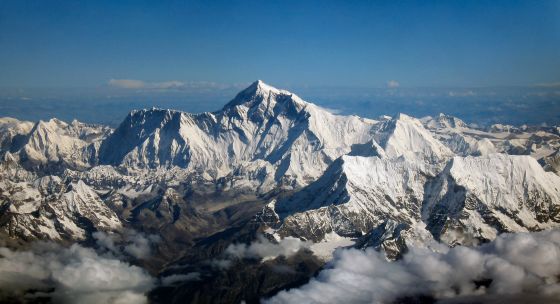
The challenge of Everest, where vanity overshadows courage

everest

Two days after 16 Sherpas lost their lives in the service of a party of Everest-climbing tourists, Jon Reiter, one of the climbers, wrote on his blog:

This is a tough time for everyone here on the mountain but accidents, and even death, are part of the deal. If climbing Everest were easy and risk free, I suspect we’d all take a hike to the top of the world. The price that has been paid over the last 24 hours is a large price indeed. I guess the climbing Sherpa as well as all of us western climbers need a few moments or days to re-evaluate what’s worth what in this life.

Early this morning I read a comment written about me where the author said, “I hope he finds what he’s looking for up there.” I appreciated that notion because it got me to thinking about what am I looking for, and I think I have found it whether I see the summit of Everest or not. I’m looking for an adventurous life. I want to see the whole world and all of its people. I want to lay in my death bed and know that I did and saw all that I wanted to in the time I spent spinning through space on this ball of mud. I want to know that I lived fully! So far in this life the things that I regret the most are the things I didn’t do; the things I didn’t have time for; the situations that scared me to much. I want to push myself to do and see until I can’t anymore. I want to inspire my two boys to aim high, to take from this world and give to mankind more than they can imagine now. I hope I have a lot of life left to live and I hope I keep finding what I’m looking for. I’m glad my friend brought this topic up because I needed to remember today just why I’m here.

I’m so flattered that so many of you are following this adventure. It’s awesome that I get to follow my dreams and I remember everyday that all of this would be hollow and meaningless without all of you being part of my life.

Please send positive thoughts or prayers to the families of our fallen Sherpa brothers.

Reiter might be an experienced climber, yet like his companions who had paid $48,500 each to be guided up the world’s tallest mountain, he approached this adventure with the mindset of a tourist.

“We were moving up to Camp 1 just after dawn when we heard that ‘crack,’” said Reiter, 49. “I thought ‘wow, that’s a big one.’ My first thought was to film it, and I reached for my camera. But the Sherpa yelled to get down.”

Freddie Wilkinson describes how almost a century ago the first fatalities occurred on Everest:

On a bright afternoon in June of 1922, the Mount Everest pioneer George Mallory was leading a group of 17 men tied together in three separate rope teams toward the North Col of the mountain when he heard an ominous sound, and turned to see an avalanche fracturing the steep slope above them.

Mallory and his rope mates were spared the brunt force of the slide, but the two teams following them — comprising 14 porters from Darjeeling, India — were swept down the mountain. Seven died. Mount Everest had claimed its first known victims.

One of Mallory’s companions, Howard Somervell, would later write, “I would gladly at that moment have been lying there dead in the snow, if only to give those fine chaps who had survived the feeling that we had shared their loss….”

On Friday, about 6:30 in the morning, another avalanche rumbled down Everest. This one caught a group of 25 climbers at 19,000 feet near the top of the notorious Khumbu Icefall, a frightful jumble of seracs and crevasses, killing at least 12 as of Friday in the worst reported disaster in the mountain’s history.

Although commercially organized groups make up the overwhelming majority of Everest expeditions today, not a single international client or guide was caught in the avalanche. The victims were Nepalese. They were carrying supplies to aid their employer’s clients, who pay commercial outfitters tens of thousands of dollars to get to the top of the world’s tallest mountain.

Today, as was the case in Mallory’s day, it is these professional climbing Sherpas who bear a disproportionate amount of the risk of Himalayan climbing. In fact, the odds may be worse for them than they were in the days of those grand British expeditions.

Mallory was racked with guilt over the 1922 tragedy and resolved never to let a team of porters climb without a British mountaineer sharing the same rope. Eric Shipton, another legendary British alpinist whose 1951 reconnaissance pioneered the route through the icefall, paving the way for the first ascent of the mountain two years later, found it ethically questionable to ask the climbing Sherpas to venture into the icefall to help Westerners make it to the top.

At least when Edmund Hillary and Tenzing Norgay became the first two men to reach the summit in 1953, Hillary was gracious enough to immortalize that moment in history with a photograph of Tenzing rather than himself.

But implicit in the very idea that this could be viewed as a human accomplishment is the suggestion that it would never have happened without the adventurous spirit of Western pioneers — men such as Hillary who would proclaim afterwards, “we knocked the bastard off,” another of nature’s challenges having been duly conquered.

What was one to infer about the fact that the people who had lived at the foot of the mountain for centuries, had not on their own initiative taken on the venture of its ascent?

Certainly, neither Hillary nor any other foreign mountaineer has been able to climb Everest without relying on the courage, perseverance, and strength of Sherpas.

Was the only thing the Sherpas lacked, equipment?

Maybe.

But maybe they didn’t lack anything at all.

Maybe the Sherpas possessed something that the Westerners lacked: a sense that Everest could be appreciated as much, or even more, from below rather then above — that the mountain called for reverence rather than conquest.

After all, what kind of man would pretend he is greater than a mountain?

Update: Ed Marzec, 67, a retired lawyer from Los Angeles who is currently at base camp, writes:

The Sherpas have voted to cancel all summit attempts of Everest this year as a memorial to the worst Everest disaster yet. I, along with many other climbers, believe this to be a proper memorial even though I have been working on this summit for 2 years, I am willing to abide by their decision since I am only a guest here. However, although the big American commercial tour operators have agreed to follow the vote of the Sherpas, they are working everyday to change the vote and wait until they think the Sherpas will get over it…..sounds so familiar. I am shamed by our greed and embarrassed by our lack of compassion.

Facebooktwittermail

Snowden, Putin, Wyden, and Clapper

Imagine the tension inside the studio on Russian state television when Vladamir Putin was confronted by Edward Snowden. How would Russia’s president handle a direct challenge from the world’s most famous whistleblower?

Was the most powerful man in the world going to cower like DNI James Clapper did a year ago and wipe sweat from his forehead as he nervously tried to evade pointed questions from his interrogator?

It turned out the Putin remained as calm as the Buddha.

I guess it’s hard having the same impact when you can’t ask any follow-up questions, the person being questioned has no fear of perjuring himself, and he enjoys the popular support of a 71% approval rating.

The Moscow Times reports:

Most of the more than 2.5 million questions that were sent via telephone, web and text message concerned social policy, housing and infrastructure. But most of the show was occupied by questions about the ongoing crisis in eastern Ukraine and Russia’s recent annexation of Crimea.

Since Snowden’s question was among the 81 questions that made the cut, it’s safe to say that Putin and his handlers recognized that it would serve their interests. In Putin’s posture of speaking “spy to spy” there was no hint of the merciless way he deals with defectors.

The investigative journalist Andrei Soldatov, welcomed Snowden’s appearance:


Whether a debate of any consequence in Russia ensues, remains to be seen:


And while Snowden might want to applaud his own challenge to Putin, Soldatov reminded the American of an invitation he has yet to accept:


Speaking to the Washington Post, Soldatov explained why Putin’s denials on mass surveillance don’t stand up to scrutiny.

In fact, Soldatov says, Russia even has its own version of PRISM, the clandestine mass electronic surveillance program that Snowden uncovered. It’s called SORM, and has been around since 1995. During Putin’s 14 years in Russian leadership, the scope of SORM has been expanded numerous times.

Soldatov argues that there were three key points made by Putin, each of which was a half-truth or a lie. First, Soldatov says, Putin argued that the FSB, the successor agency to the Soviet era’s KGB, needs to get a warrant from a court before surveillance can begin. This is true in theory, Soldatov admits, but in practice the warrants are not required to be shown: Telecoms agencies and Internet providers do not have the necessary security clearance to view the warrants, in any case.

Secondly, Putin seemed to suggest that the Russian legislature, the Duma, has oversight over the FSB. This is not true, Soldatov says, arguing that while the State Duma does have a Special Committee for Security, it has no actual oversight for secret services.

Finally, Putin argued that Russia doesn’t have the “hardware and money the United States has.” Soldatov says this is “not entirely correct.” The biggest limitation on FSB’s spying is that Russian communication systems – for example, the social network VKontakte – are rarely used abroad, unlike U.S. systems (for example, Google and Facebook). This gives the U.S. a clear advantage in international surveillance, but it is mostly irrelevant for the discussion of domestic mass surveillance, Soldatov argues.

Facebooktwittermail

Former intelligence officials and false flags

In May 2008 I received an email from a former senior intelligence officer who I was working with at that time. The subject line: “same senario like in iraq/big lies.”

Naturally, I was eager to see the details in what turned out to be an analysis of the photographic evidence on the alleged Israeli strike on an alleged nuclear facility in Syria in September 2007.

I had followed this story closely since it was first reported and initially had been very skeptical about the idea that Syria would take the risk of attempting to develop nuclear weapons.

By late April 2008, however, it seemed to me (and many other independent observers) that the evidence supporting most of the allegations was thoroughly convincing. At that time I wrote:

As someone who voiced great skepticism about the initial claims that Israel destroyed a nuclear facility in the Syrian desert on September 6, 2007, I’ll be the first to admit that the evidence provided in the DNI background briefing presents proof that Syria was in fact close to completing the construction of a Calder-Hall type of nuclear reactor producing plutonium.

Even if one was to have dismissed all the intelligence as having been misinterpreted or fabricated, the fact remained that when Syria had the opportunity to demonstrate to the world that it was the innocent victim of an unprovoked act of aggression by its neighbor, Israel — IAEA inspectors could have immediately been called in to certify that the recently bombed site was “clean,” showing no evidence of nuclear materials or construction of a reactor — instead of calling in inspectors, Assad sent in the bulldozers to cover up the remains.

Nevertheless, athough in my mind it seemed like the case was closed, then as always, I was open to consider new evidence — especially if it was being passed on to me by someone who had served and advised at the most senior levels of government and been privy to the highest levels of classified information.

So what kind of “intelligence” did this email contain?

It was an article from a website and the first red flag jumped straight out: Rense.com.

For those who have never come across this site, it’s run by an American radio talk-show host called Jeff Rense. It is notorious for promoting conspiracy theories and the article in question, “Another Fake Syria Nuclear Site Photo?”, was no exception.

The article’s author was a man called Ted Teietmeyer. My immediate reaction to his method of analysis was that he seemed to be approaching this subject in the way someone might argue that the moon landings were faked. Sure enough, Teietmeyer believes that NASA faked the 1969 lunar landing.

Had the former intelligence official been taken in by what to my eye was transparently a bogus piece of analysis, or did he think that I could easily be duped? I’ll never know, because as soon as I told him this was a piece of nonsense he dropped the subject.

What I have observed over the intervening years is that this former intelligence official’s allegiances have become increasingly transparent and this perhaps explains why he sent me that article. He can at this point be fairly described as a loyal supporter of Bashar al-Assad. That’s not a slur — it’s an objective assessment.

Now let’s consider another former intelligence official. This one left a comment here on Tuesday evening. I recognized his name. He used to be a CIA analyst, now has his own blog and based on his style of writing comments, I think he can reasonably also be described as a “troll.”

His comment appeared under the post “Seymour Hersh as Dorian Gray,” where I had written that had such a thinly-sourced report as Hersh’s latest been written by anyone else, the London Review of Books (LBR) wouldn’t have touched it.

Since I have no intention of feeding this troll, his comment will remain in moderation — why should I or anyone else approve being addressed in this way? I did however write directly to the author using the email address he provides on his blog and he swiftly confirmed that he had indeed left the comment. The former intelligence official had commented:

You are a moron. Thinly sourced? Quoting from an actual Top Secret document, which the LRB thoroughly fact checked, is quite a distance from thinly sourced. Further evidence that you are a frigging tool is to assert that Hersh’s article is somehow pandering to the left and Obama supporters. Really? If you had actually read the article you would understand why the left hates him — it is a devastating indictment of Obama as a liar and a fraud.

The first thing I would say to anyone who wants to sustain the brand value of “former intelligence official” is this: It’s probably better to refrain from throwing around insults in public. It detracts from the authoritative voice most people associate or want to associate with those who have been entrusted to maintain national security.

I’ll break down what this former CIA analyst said both in order to address the specifics, but perhaps more importantly to show that when assessing the credibility of what someone says, we should never allow ourselves to be dazzled by their credentials.

I’ll leave it to others to decide whether I’m a moron and move on to the question of sourcing. Hersh, the former CIA analyst says, is “Quoting from an actual Top Secret document, which the LRB thoroughly fact checked” — that’s “quite a distance from thinly sourced.” Right? Not really. Here’s why.

Firstly, to say that this document was thoroughly fact-checked by the LRB implies that the fact checkers were able to confirm that the document was what Hersh claims it to be: a highly classified five-page ‘talking points’ briefing for the DIA’s deputy director, David Shedd.

All that the fact checkers appear to have been able to establish is that the DNI says: ‘No such paper was ever requested or produced by intelligence community analysts.’

Moreover, as the CIA analyst may not be aware but as Hersh revealed in an interview on Tuesday, the LRB did not use its own fact checkers — it relied on fact checkers who came with Hersh from The New Yorker.

However celebrated the latter publication’s fact checking process might be, for the LRB to outsource fact checking in this way seems to defeat its purpose.

During the interview, Hersh brandished the “actual Top Secret document” but since he’s only revealed 134 words from its five pages, I don’t believe that he has in fact advanced much distance from thinly sourced. Wafting around a few sheets of paper hardly compares to reading their contents.

Whoever provided the veteran investigative journalist with this intelligence should be perfectly capable of determining how it might need to be redacted in order to preserve his own anonymity while also protecting national security.

Hersh’s choice to act as an intelligence gatekeeper raises reasonable doubts about whether he’s withholding information that might undermine his own narrative. Only by being able to review the document will we be able to determine whether he cherry-picked his quotations or used the information in a misleading way. Likewise, information he left out including dates, could turn out to be significant. Moreover, only by putting the document in the public domain will it be possible to determine whether it is genuine.

As for the former CIA analyst’s reference to “the left and Obama supporters,” anyone who has read my posts would know that I have not spoken once about Obama supporters. The former analyst’s comment seems to emanate from someone firmly stuck inside the Beltway who imagines that all of politics revolves around Democrats and Republicans.

Finally and significantly, the former analyst who jumped in here belongs to a group that has been promoting a false-flag narrative about the chemical attacks since soon after they occurred.

Like many former officials, they seem to engage in a practice commonplace among people who find it difficult to reconcile themselves with their own diminished status once outside government. They would have their audience believe that even if they no longer hold any positions in any government agency, their informal ties to the intelligence community and the Pentagon, provide them with a level of access and insight into the current workings of government, to which others are not privileged.

The secret that the former whatevers are often most reluctant to reveal is that the former commonly says much more than the whatever.

Those who were once inside the loop but are now stuck on the outside, can contrive all sorts of ways of resuscitating their insider status.

Consider for instance the Veteran Intelligence Professionals for Sanity (VIPS), the group I alluded to above.

On September 6, this group of former intelligence officials took it upon themselves to offer President Obama a briefing about what really happened on August 21 near Damascus.

In several interviews Hersh has portrayed the president as a victim of his own power. Which is to say, everyone around the president only tells him what he wants to hear.

It would appear that VIPS were assuming a role as what might be called intel elders, who hoped they could break through the bubble and inform Obama about what was really going on.

We regret to inform you that some of our former co-workers are telling us, categorically, that contrary to the claims of your administration, the most reliable intelligence shows that Bashar al-Assad was NOT responsible for the chemical incident that killed and injured Syrian civilians on August 21, and that British intelligence officials also know this. In writing this brief report, we choose to assume that you have not been fully informed because your advisers decided to afford you the opportunity for what is commonly known as “plausible denial.”

Now here’s the strangest element in this appeal for sanity. The members of this group supposedly alerting the president, also apparently believed that the United States was implicated in the false flag operation about which they were alerting him.

In their September 6 memorandum to the president, VIPS wrote:

[O]n August 13-14, 2013, Western-sponsored opposition forces in Turkey started advance preparations for a major, irregular military surge. Initial meetings between senior opposition military commanders and Qatari, Turkish and U.S. intelligence officials took place at the converted Turkish military garrison in Antakya, Hatay Province, now used as the command center and headquarters of the Free Syrian Army (FSA) and their foreign sponsors.

Although these former intelligence officials say they wrote this, it would appear to be more accurate to say they repeated it.

The original author was Yossef Bodansky. In “Did the White House Help Plan the Syrian Chemical Attack?” published on August 28, he wrote:

On August 13-14, 2013, Western-sponsored opposition forces in Turkey started advance preparations for a major and irregular military surge. Initial meetings between senior opposition military commanders and representatives of Qatari, Turkish, and US Intelligence [“Mukhabarat Amriki”] took place at the converted Turkish military garrison in Antakya, Hatay Province, used as the command center and headquarters of the Free Syrian Army (FSA) and their foreign sponsors.

It turns out that Bodansky, an Israeli-American who has served as a Defense Department consultant (as did one of Hersh’s sources) also has links to the Assad family.

Foreign Policy reported last September:
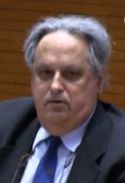
Yossef Bodansky

Yossef Bodansky

Bodansky is an ally of Bashar’s uncle, Rifaat al-Assad — he pushed him as a potential leader of Syria in 2005. Rifaat is the black sheep of the Assad family: He spearheaded the Syrian regime’s brutal crackdown on the Muslim Brotherhood in the early 1980s, but then was forced into exile after he tried to seize power from his brother, President Hafez al-Assad, in 1983. Despite his ouster, however, Rifaat is just as hostile to a Sunni Islamist takeover as other members of the Assad family — a position Bodansky appears to share. Ending Alawite rule in Syria, Bodansky wrote on another pro-Assad website, “will cause cataclysmic upheaval throughout the greater Middle East.”

While for Hersh, his narrative may seem to go back no further than one or two seemingly well-informed former intelligence officials, the story may in fact trace all the way back to Damascus, not as the center of events but to a factory of a kind; not one in which sarin is produced but one in which “intelligence” gets fabricated.

(Thanks to Clay Claiborne and Scott Lucas.)

Facebooktwittermail

Seymour Hersh as Dorian Gray

The following piece by Louis Proyect is the sixth article I’ve posted in response to Seymour Hersh’s “The Red Line and the Rat Line” which appeared in the London Review of Books on Sunday.

How can one article merit this amount of attention and criticism?

In terms of its substance, it does not. Had such a thinly-sourced report been written by anyone else, the LRB wouldn’t have touched it — it would more likely have appeared somewhere like Mint Press or Alex Jones’ Infowars.

But whenever the byline “Seymour Hersh” appears in the media, shock-waves ripple across the planet. His latest blockbuster always commands that governments respond. Within hours official statements get circulated to the press.

It’s an unfortunate effect because this reaction to Hersh lends his reporting more gravity than its most recent examples deserve. Moreover, the fact that he can prompt such swift responses reenforces the perception that this is a man who through telling the truth, has the power to shake the establishment. Thus, there seems all the more reason to treat his “revelations” as authoritative.

However, for me (and a few others) the reason Hersh’s work demands attention at this time, is because it reveals a malaise on the Left.

A fear of “Islamic terrorists” or “jihadists” which a decade ago served as the fuel powering the neoconservative enterprise, has since then percolated across the political spectrum and turned into a widely accepted means to delegitimize the Syrian revolution.

It is now not uncommon to hear people suggest that after Bashar al-Assad has killed tens of thousands of his own people and turned cities to rubble, for him to remain in power would be the lesser of two evils.

It’s either Assad or the wild men who eat human hearts for breakfast, many on the Right and the Left now believe.

Islamophobia which used to reside on the Right has now acquired a veneer of cosmopolitan “realism.”

This is why the attention I’m giving to Hersh is not all about the veteran investigative reporter. He merely highlights a much wider corruption of thought.

Louis Proyect’s choice of metaphor is both provocative and appropriate.

Proyect writes: Like his last article for the London Review of Books, Seymour Hersh’s latest continues to demonstrate that he is no longer a trenchant and truthful investigative reporter. Instead the portrait of a decaying and sloppy propagandist is taking shape, just as damning as the one that caught up with Dorian Gray. While Gray recoiled in horror from what he saw, it is likely that Hersh will persist in his ways since so many of his fans are also committed to demonizing the Syrian rebels and rallying around the “axis of good” in Syria, Iran and Russia. With this 77 year old reporter so badly in need of correction, it is almost tragic that none will be made.

To start with, he likens Barack Obama to George W. Bush as if the rhetoric about “red lines” were to be taken seriously. Hersh believes that he was held back by “military leaders who thought that going to war was both unjustified and potentially disastrous.” I often wonder if people like Hersh bother to read the NY Times or — worse — read it and choose to ignore it.

In fact there was zero interest in a large-scale intervention in Syria in either civilian or military quarters. All this is documented in a NY Times article from October 22nd 2013, written when the alarums over a looming war with Syria were at their loudest, that stated “from the beginning, Mr. Obama made it clear to his aides that he did not envision an American military intervention, even as public calls mounted that year for a no-fly zone to protect Syrian civilians from bombings.” The article stressed the role of White House Chief of Staff Dennis McDonough, who had frequently clashed with the hawkish Samantha Power. In contrast to Power and others with a more overtly “humanitarian intervention” perspective, McDonough “who had perhaps the closest ties to Mr. Obama, remained skeptical. He questioned how much it was in America’s interest to tamp down the violence in Syria.” In other words, the White House policy was and is allowing the Baathists and the rebels to exhaust each other in an endless war, just as was White House policy during the Iran-Iraq conflict.

These pacifist military leaders, Hersh assures us, were suffering sleepless nights over Turkey’s bellicose role in the region.

‘We knew there were some in the Turkish government,’ a former senior US intelligence official, who has access to current intelligence, told me, ‘who believed they could get Assad’s nuts in a vice by dabbling with a sarin attack inside Syria — and forcing Obama to make good on his red line threat.’

With all these unnamed military leaders and spooks at his beck and call, who are we to question Hersh’s analysis? I don’t know, maybe it’s just me, but I don’t put much store in unnamed inside-the-beltway sources after putting up with Judith Miller’s “reporting” in the NY Times back in 2003:

Having concluded that international inspectors are unlikely to find tangible and irrefutable evidence that Iraq is hiding weapons of mass destruction, the Bush administration is preparing its own assessment that will rely heavily on evidence from Iraqi defectors, according to senior administration officials.

I understand that most people on the left are willing to take Hersh’s word at face value but I suppose that is to be expected when they are also partial to RT.com and Iran’s PressTV. Like the Obama voter who takes Rachel Maddow by the loving spoonful, these “radicals” find their bliss in media outlets that do not pass the smell test. [Continue reading…]

Facebooktwittermail

Russia resuscitates ‘Greystone in Ukraine’ story

The Guardian reports: Ukraine’s leaders have shown unusual restraint in the face of multiple Russian provocations during and since last month’s seizure of Crimea. But their restraint is unlikely to survive an attempt by Moscow to provoke a similar separatist insurrection in south-east Ukraine, which officials in Kiev believe may already be under way. An escalating confrontation in the east could in turn draw in the western powers.

On Tuesday, Ukraine’s fightback began. The acting interior minister, Arsen Avakov, deployed police special forces to eastern cities where pro-Russian activists have occupied government buildings and appealed for Russian military intervention. And yet even now Kiev is exhibiting extraordinary self-control. Demonstrators in Kharkiv were arrested but protests in Lugansk, Mariupol and Donetsk were allowed to continue unmolested.

Ukraine’s calibrated approach contrasts with that of Moscow, which quickly denounced the arrests in Kharkiv as confrontational. The official news agency Ria Novosti claimed that the official Ukrainian deployments included Right Sector radical nationalists and freelance American Blackwater (Greystone) mercenaries. There was no independent confirmation of this claim. [Continue reading…]

As shameless practitioners in disseminating disinformation, the Russians know exactly what they are doing. Promote the story about Greystone (which is actually the rebirth of an earlier conspiracy theory), knowing that it will prompt a swift denial:

“We do not have anyone working in Ukraine nor do we have any plans to deploy anyone to the region,” said Coreena Taylor, a Greystone representative at the company’s headquarters in Chesapeake, Va.

Those who are receptive to the idea that the U.S. might be intervening in Ukraine in this way, will of course dismiss Greystone’s statement. Likewise any statements from the State Department will be disregarded.

A resolute unwillingness to believe anything coming from any American speaking in an official capacity, now gets coupled with a stunning willingness to take seriously virtually any claim coming from Russia.

No doubt the representatives of Western governments bear the primary responsibility for the fact that they have come to be viewed with such suspicion, but everyone is responsible for sustaining and refining their own critical awareness.

There’s no value in learning how not to be fooled by your own government if you then easily get fooled by another government.

Facebooktwittermail

Does Seymour Hersh understand how hexamine fits into Syrian sarin?

On Democracy Now! today, Amy Goodman provided Seymour Hersh with an opportunity to summarize the contents of his article which appeared at the London Review of Books yesterday.

The only juncture in the interview where Goodman challenged Hersh on the substance of his claims, came when she cited a post written by Scott Lucas which appeared at EA Worldview yesterday. In that post, Lucas reiterated a point he had made last December in response to Hersh’s first article on the chemical attack, referring to one of the many reasons that the scale of the attack was an indication that only the regime had such capabilities:

Reports on the day and subsequently indicated that 7-12 sites were attacked with chemical agents at the same time. In other words, whoever was responsible for the attacks launched multiple surface-to-surface rockets with chemical payloads against opposition-held towns in East Ghouta and one town in West Ghouta, near Damascus.

In part of his response to this challenge, Hersh said:

You have a UN report, you have this independent report, saying [the missiles used in the chemical attack] went no more than one or two kilometres and so I don’t know why we are talking about multiple launched rockets. These were homemade weapons and it seems very clear to most observers, as I say even to the UN team that did the final report — the UN because of whatever rules they have, wasn’t able to say that, who fired what, they could just say, they could just describe the weapons and never make a judgement, but I can tell you, I quote somebody from inside that investigation unit who was very clear that the weapons [that] were fired were homemade and were not Syrian army. This was asked and answered.

Hersh has a habit of making stronger claims in interviews than he is willing to make in writing.

Although on Democracy Now! he said “I quote somebody from inside that investigation unit” in the article itself he merely quotes a “person with knowledge of the UN’s activities.”

If this person was actually inside the investigation unit, why didn’t Hersh put that in print?

In the interview, Hersh says this person “was very clear that the weapons [that] were fired were homemade and were not Syrian army,” yet quoting this individual he wrote: “Investigators interviewed the people who were there, including the doctors who treated the victims. It was clear that the rebels used the gas.”

Note: Hersh’s source refers to “investigators,” not “our investigation” — a suggestion that the source was not in fact inside the investigation — and the source makes no direct reference to the construction method of the weapons.

In tune with the interests of his audience, Hersh prefers to tell political stories. Technicalities serve as nothing more than stage props and for this reason, it should come as no surprise that his televised engagements are generally solo performances, which is to say, he doesn’t get interviewed alongside experts who could quickly expose the weakness of his arguments.

For instance, a pillar of the argument that Hersh is making about the chemical attacks in Ghouta was that the weapons and the sarin they contained were homemade.

hexamineNow if Amy Goodman had wanted to pose a really tough question to Hersh she could have asked: How do you explain the presence of hexamine found on the remains of the missiles used in the chemical attacks?

That’s not the kind of question Hersh is likely to have thrown at him by Goodman or any other interviewer since neither he nor the interviewer would be likely to understand its significance.

Still, when the subject is chemical weapons and the media is able to see whether Hersh’s claims can withstand expert analysis, then that is exactly how his reporting should be tested.

It’s safe to assume that Hersh will never divulge the identity of any of his sources and so their credibility cannot be separated from his credibility. But Hersh’s assertion that the weapons and warheads used in the attack were homemade and that they lacked the identifying characteristics of Syrian army weapons, is a substantive claim that has to be supported by evidence.

The only physical evidence Hersh cites is sarin collected by Russian military intelligence operatives and passed on to British military intelligence at Porton Down.

This is worthless. For Hersh to attest to the reliability of this evidence by citing his own source’s claim that “the Russian who delivered the sample to the UK was ‘a good source – someone with access, knowledge and a record of being trustworthy’” is a joke.

Russia is an ally of Syria. The whole point of having UN weapons inspectors gathering evidence is that they are international and independent.

Dan Kaszeta, a former US Army and US Secret Service specialist on chemical, biological, and radiological defense, last year laid out the reasons why neither al Nusra nor any other non-state actor would have the capabilities to produce sarin in the quantity used in the Ghouta attacks.

Having presented the technical reasons why rebel-produced sarin was highly implausible, Kaszeta went on to make an important discovery about a unique feature of the sarin produced by the Assad regime — something that has never been observed before: the use of hexamine.

Sarin used in chemical weapons contains hydrogen flouride — “one of the most corrosive chemicals in existence.” Although hexamine has a diverse array of applications, Kaszeta suspected that Syria was using it as the acid reducer in sarin to mitigate the corrosive effects of hydrogen flouride. That suspicion was confirmed by the UN/OPCW inspection mission.

Ake Sellstrom, the head of the mission, was interviewed by CBRNe World magazine in February and asked:

CBRNe World: Why was hexamine on the list of chemical scheduled to be destroyed – it has many other battlefield uses as well as Sarin? Did you request to put it on the list or had the Syrian’s claimed that they were using it?

Sellstrom: It is in their formula, it is their acid scavenger.

To summarize:

  • The Syrian government has never claimed that it lost control of any of its CW arsenal.
  • It has acknowledged that hexamine was part of its formula for producing sarin.
  • Nobody else has previously used hexamine as a sarin additive.
  • Hexamine was found in the field samples collected by CW inspectors in Ghouta after the attacks.
  • Syria included 80 tons of hexamine in its declared inventory for CW destruction.

Add these facts together and there can be little doubt that, as Dan Kaszeta says, “the Assad regime did the wicked deed.”

Then again, who wants to hear about hexamine when instead they can listen to Seymour Hersh spinning tales about false flags?

Facebooktwittermail

Seymour Hersh’s alternate reality

The Pulitzer Prize winning veteran investigative journalist Seymour Hersh was once a regular contributor to the New Yorker. He also wrote for the Washington Post. No more.

Last December he had to turn to the London Review of Books to publish, “Whose sarin?” and his latest piece on Syria appears at LRB today.


A truth-teller shunned by the American mainstream media!

I have little doubt Hersh revels in the image — it plays so well among those who revere him.

But just pause for a minute to think about this: Is Hersh’s reporting so radical, such a threat to the political establishment, that he couldn’t get published by Rolling Stone, or Vanity Fair, or the Boston Review, or Mother Jones, or any of the dozens of new long-form online publications that don’t seem lacking in boldness or creativity?

I doubt it. On the contrary, I think the image of a journalist-in-exile is simply Hersh’s latest vanity.

But if it turns out that there really is no publication this side of the Atlantic that will touch his work, maybe that would say less about a decline in the standards of American journalism and a lot more about the demise of Hersh’s credibility.

When it comes to Hersh’s reporting on Syria, one story that really deserves deeper investigation is whether he has become a stooge for Michael Maloof, a former senior security-policy analyst at the Pentagon who helped gather the bogus intelligence that lay the foundations for the war in Iraq. The fact that both of them have been spinning such similar yarns in recent months seems like more than a coincidence

The most inexcusable feature of Hersh’s reporting is that he effectively functions as his own source. In other words, for readers smitten by his reputation, what he reports is treated as fact for no other reason than the fact that he reported it.

Each time he comes out with a new piece, it’s like Moses coming down from the mountaintop. No one dare ask whether he really heard the voice of God, because no one questions Moses.

For his latest piece, Hersh’s primary source is a “former intelligence official.”

I can picture the two leaning against a bar somewhere in DC as the old hack furiously takes notes. What makes this former official’s word unimpeachable, we’ll never know — suffice to know is that just as Hersh unquestioningly believes his source, we are supposed to believe Hersh, without corroborating sources, without any hard evidence.

Just by chance, a few days ago, Bashar Ja’afari, Syria’s ambassador to the U.N., sent a letter to the Security Council on March 27, saying:

The competent Syrian authorities intercepted a wireless communication between two terrorists in the Jawbar area of Damascus governorate. In that communication, one of the terrorists said that another terrorist named Abu Nadir was covertly distributing gas masks. The authorities also intercepted another communication between the two other terrorists, one of whom is named Abu Jihad. In that communication, Abu Jihad indicates that toxic gas will be used and asked those who are working with him to supply protective masks.

This information … confirms that armed terrorist groups are preparing to use toxic gas in Jawbar quarter and other areas, in order to accuse the Syrian government of having committed such an act of terrorism.

“Terrorists” talking about gas masks who knows when and this “confirms” another gas attack is on the way.

The false flag industry remains as busy as ever — or so the Syrian government’s interlocutors would have you believe.

Those who find Hersh persuasive will probably find the ambassador’s warnings equally persuasive, but in each case it’s not that either is presenting a compelling case. On the contrary, they merely know how to feed their target audience exactly what it wants to hear.

Facebooktwittermail