Category Archives: Issues

The Siddiqui sentence: 86 years for pointing a weapon

The details of a bizarre incident at an Afghan National Police facility in Ghazni, eastern Afghanistan, on July 18, 2008, are still in dispute. Even so, the woman at the center of the story will probably spend the rest of her life in jail.

Without any evidence being produced that she had fired a shot from a gun she reportedly grabbed while being held under arrest, Dr Aafia Siddiqui, an MIT-educated Pakistani neuroscientist, was convicted of attempted murder in February. On Thursday, District Court Judge Richard Berman sentenced the 38-year-old to 86 years in prison. In response, protesters took to the streets in Pakistan.

The jury found that Siddiqui acted without premeditation. But in a four-hour sentencing hearing, Judge Richard Berman repeatedly termed her acts premeditated. Her defense lawyers argued for a minimum sentence of 12 years, saying that Siddiqui is severely mentally ill.

Needless to say, the case now goes to appeal.

Defense attorney Charles Swift said that government authorities never made available the U.S. military reports on the incident. He said the report, which was declassified by the government after it was published this year on the WikiLeaks website, does not mention Siddiqui as having fired the gun. It said only that she pointed a weapon. He said he believes there was a further in-depth investigation of the incident by the military that has also been withheld from the defense.

“I think there’s real concern over the government’s obligation to turn over exculpatory evidence,” he told reporters. “And I don’t blame the prosecution in this case. What I’ve found in national security cases like this is they have as big a battle trying to get evidence as anyone does. But the United States, to do justice, has to do it credibly and has to produce all the documents. And that’s one of three or four huge ongoing appellate issues.”

If Charles Swift sounds like a familiar name it’s because he has the rare distinction of having stood up and successfully defended his country while its Constitution faced attack from the Bush administration. In Hamdan vs Rumsfeld, Swift won a major victory for the rule of law.

The case of Dr Siddiqui exposes a moral fallacy that has haunted America throughout the war on terrorism. It is this: that injustice is something that can only be done to the innocent.

We have abandoned what used to be the universally recognized foundation of a just legal system: that it treats the guilty and the innocent with fairness and impartiality.

(For fascinating background on the Siddiqui case, read Declan Walsh’s November 2009 report in The Guardian.)


Facebooktwittermail

The myth of Israeli democracy

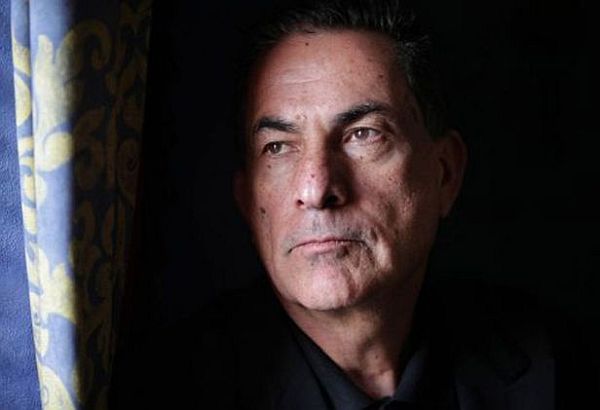
Johann Hari interviews Gideon Levy: “the most hated man in Israel — and perhaps the most heroic.”

Any conversation about the region is now dominated by a string of propaganda myths, [Levy] says, and perhaps the most basic is the belief that Israel is a democracy. “Today we have three kinds of people living under Israeli rule,” he explains. “We have Jewish Israelis, who have full democracy and have full civil rights. We have the Israeli Arabs, who have Israeli citizenship but are severely discriminated against. And we have the Palestinians in the Occupied Territories, who live without any civil rights, and without any human rights. Is that a democracy?”

He sits back and asks in a low tone, as if talking about a terminally ill friend: “How can you say it is a democracy when, in 62 years, there was not one single Arab village established? I don’t have to tell you how many Jewish towns and villages were established. Not one Arab village. How can you say it’s a democracy when research has shown repeatedly that Jews and Arabs get different punishments for the same crime? How can you say it’s a democracy when a Palestinian student can hardly rent an apartment in Tel Aviv, because when they hear his accent or his name almost nobody will rent to him? How can you say Israel is a democracy when? Jerusalem invests 577 shekels a year in a pupil in [Palestinian] East Jerusalem and 2372 shekels a year in a pupil from [Jewish] West Jerusalem. Four times less, only because of the child’s ethnicity! Every part of our society is racist.”

“I want to be proud of my country,” he says. “I am an Israeli patriot. I want us to do the right thing.” So this requires him to point out that Palestinian violence is – in truth – much more limited than Israeli violence, and usually a reaction to it. “The first twenty years of the occupation passed quietly, and we did not lift a finger to end it. Instead, under cover of the quiet, we built the enormous, criminal settlement enterprise,” where Palestinian land is seized by Jewish religious fundamentalists who claim it was given to them by God. Only then – after a long period of theft, and after their attempts at peaceful resistance were met with brutal violence – did the Palestinians become violent themselves. “What would happen if the Palestinians had not fired Qassams [the rockets shot at Southern Israel, including civilian towns]? Would Israel have lifted the economic siege? Nonsense. If the Gazans were sitting quietly, as Israel expects them to do, their case would disappear from the agenda. Nobody would give any thought to the fate of the people of Gaza if they had not behaved violently.”

He unequivocally condemns the firing of rockets at Israeli civilians, but adds: “The Qassams have a context. They are almost always fired after an IDF assassination operation, and there have been many of these.” Yet the Israeli attitude is that “we are allowed to bomb anything we want but they are not allowed to launch Qassams.” It is a view summarised by Haim Ramon, the justice minister at time of Second Lebanon War: “We are allowed to destroy everything.”

Read the complete interview.

Facebooktwittermail

Beyond the brink of a diplomatic fiasco

After coming away from a dinner hosted by American Jewish leaders for Mahmoud Abbas, Roger Cohen comes away “convinced the United States is on the brink of a diplomatic fiasco.”

Less than a month after President Obama put the imprimatur of a White House ceremony on renewed Israeli-Palestinian talks, the negotiations are close to breakdown. If that happens, as Netanyahu and Abbas know, Obama would look amateurish.

The two leaders need the United States, an incentive to avoid humiliating Obama. But with just a couple of days to the expiration Sunday of an Israeli freeze on settlement construction in the West Bank, both sides are digging in. Despite Obama’s public plea to Netanyahu — “It makes sense to extend that moratorium” — the Israeli government seems to have rejected a formal extension.

That would be a terrible mistake. Obama should fight it until the last minute. His international credibility is on the line.

Cohen regards Netanyahu’s decision on whether he will call for a three-month extension of the settlement “freeze,” “a test case of Israeli seriousness about peace.”

Really?

This is how serious the settlement freeze has been so far.

In the third quarter of 2009, before the restrictions were imposed last November, there were 2,790 settlement homes in various stages of construction, according to Israel’s Central Bureau of Statistics. The number rose to 2,955 in the last quarter of 2009, reflecting a last-minute surge of housing starts in the days leading up to the freeze.

In the first quarter of 2010, with the freeze in full effect, the number stood at 2,517.

That means that even months into the halt, the number of homes under construction had declined by only about 10 percent.

So, the continuation of a modest slow down in settlement expansion for three months will prove Netanyahu’s serious about peace?

Who knew peace could come be promised that easily?

Facebooktwittermail

What if peace talks “succeed?”

At Al Shabaka, Nadia Hijab writes:

Many commentators expect the direct talks between Israelis and Palestinians to fail. But there is a much worse scenario: What if they “succeed?” The United States appears determined to push for a framework agreement within a year and both Israeli prime minister Benjamin Netanyahu and Mahmoud Abbas, President of the Ramallah-based Palestinian Authority (PA), are aiming for that goal. Such an agreement, U.S. peace envoy George Mitchell explained in a September 2 press conference, would be more than a declaration of principles but less than a peace treaty. In it, the two sides would reach the “fundamental compromises” necessary for a peace accord. Like its predecessor, the Obama administration has already indicated that the accord would still have to be fleshed out and then implemented over the course of several years – which virtually ensures that it will be delayed if not derailed as happened to past peace accords.

If the Palestine Liberation Organization (PLO) and PA were unable to secure a sovereign state and rights through U.S.-brokered negotiations with Israel between 1993 and 2000, when they were in a much stronger position, they are highly unlikely to do so today with such a badly skewed Israeli-Palestinian power dynamic. Instead, next year is likely to see a grand ceremony where Palestinian leaders will sign away the right of return and other Palestinian rights in an agreement that would change little on the ground. The plan of the PA’s appointed prime minister, Salam Fayyad, to declare a Palestinian state in 2011 could unwittingly contribute to this outcome by providing the appearance of an “end of conflict” while the reality remains unchanged. If the rest of the world sees that the government of “Palestine” is satisfied with international recognition and a U.N. seat, they will be happy to move on to other problems leaving the Palestinians at Israel’s mercy.

Such a scenario could sound a death-knell for Palestinian human rights. The Palestinian people have shown a remarkable capacity to regenerate resistance and evolve new strategies after suffering harsh setbacks over the past century. But there may be no recovery this time around. A “peace agreement” would end the applicability of international law to the resolution of the conflict; permanently fragment the Palestinian people; and demobilize Arab and international solidarity.

Facebooktwittermail

Terrorist group gets support from US Congress

At Foreign Policy, Patrick Disney writes:

It’s been over two months since the toughest Iran sanctions ever approved by Congress were signed into law, three months since the UN’s latest resolution, and 15 months since Iran’s post-election demonstrations began. Despite all of this, Iran’s clerical government is not crumbling, nor has Iran shown any sign of giving in to the West on its nuclear program.

Recent weeks have seen a renewed discussion of military options for stopping Iran’s nuclear program – kicked off by Jeffrey Goldberg’s cover article in the Atlantic. But there is also a campaign underway to promote a different option on Iran: regime change, via Iranian dissidents in exile.

Members of Congress led by Rep. Bob Filner (D-CA) have introduced a resolution calling on the Secretary of State and the President to throw the support of the United States behind an exiled Iranian terrorist group seeking to overthrow the Iranian regime and install themselves in power. Calling the exiled organization “Iran’s main opposition,” Filner is urging the State Department to end the blacklisting of the Mujahedin-e Khalq (MEK) — a group listed by the State Department as a Foreign Terrorist Organization (FTO). The resolution currently has 83 cosponsors and is gaining significant ground.

This follows a call for US military action against Iran, made by a prominent Republican senator.

Sen. Lindsey Graham of South Carolina said Monday that the United States must be prepared to use military force to prevent Iran from acquiring a nuclear weapon — and added that the last-resort step should be taken with the goal of overthrowing Iranian President Mahmoud Ahmadinejad.

Graham, a military lawyer and a senior Republican on the Senate Armed Services Committee, became the first senator to support direct U.S. military intervention in Iran, saying it should not involve ground troops but be launched by U.S. warplanes and ships.

“If you use military force against Iran, you’ve opened up Pandora’s box,” Graham told the American Enterprise Institute in Washington. “If you allow Iran to get a nuclear weapon, you’ve emptied Pandora’s box. I’d rather open up Pandora’s box than empty it.”

Graham’s unusual public support for overturning Ahmadinejad and the ruling council of Shiite Muslim clerics that he nominally heads recalled President George W. Bush’s controversial policy of regime change to invade Iraq in 2003 and overthrow dictator Saddam Hussein.

Facebooktwittermail

Obama’s war of political necessity

Candor cost Gen Stanley McChrystal his job as US commander in Afghanistan, while President Obama was credited with a political masterstroke — replacing the general with a loose tongue with a general with a golden tongue.
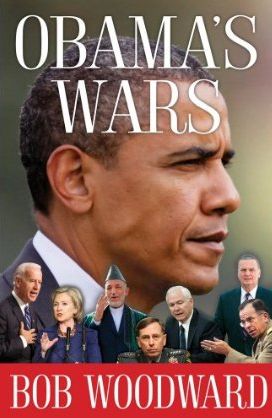
But maybe Bob Woodward’s new book, Obama’s Wars, would not be treated as a source of revelations if more attention had been paid to what McChrystal said than the way he said it.

The renegade general’s portrayal of a president who “didn’t seem very engaged,” suggests that Obama’s claim as both candidate and president — that Afghanistan was a war of necessity — was a political posture that would eventually prove to be untenable.

In June, Michael Hastings wrote:

Even though he had voted for Obama, McChrystal and his new commander in chief failed from the outset to connect. The general first encountered Obama a week after he took office, when the president met with a dozen senior military officials in a room at the Pentagon known as the Tank. According to sources familiar with the meeting, McChrystal thought Obama looked “uncomfortable and intimidated” by the roomful of military brass. Their first one-on-one meeting took place in the Oval Office four months later, after McChrystal got the Afghanistan job, and it didn’t go much better. “It was a 10-minute photo op,” says an adviser to McChrystal. “Obama clearly didn’t know anything about him, who he was. Here’s the guy who’s going to run his fucking war, but he didn’t seem very engaged. The Boss was pretty disappointed.”

Bob Woodward (no relation to me) now portrays a commander in chief intensely focused on getting out of Afghanistan and surrounded by advisers who fought with each other.

The president concluded from the start that “I have two years with the public on this” and pressed advisers for ways to avoid a big escalation, the book says. “I want an exit strategy,” he implored at one meeting. Privately, he told Vice President Joseph R. Biden Jr. to push his alternative strategy opposing a big troop buildup in meetings, and while Mr. Obama ultimately rejected it, he set a withdrawal timetable because, “I can’t lose the whole Democratic Party.”

But Mr. Biden is not the only one who harbors doubts about the strategy’s chances for success. Lt. Gen. Douglas E. Lute, the president’s Afghanistan adviser, is described as believing that the president’s review did not “add up” to the decision he made. Richard C. Holbrooke, the president’s special representative for Afghanistan and Pakistan, is quoted saying of the strategy that “it can’t work.”

Obama’s problem: either an exit strategy was a necessity or the war was a necessity but he couldn’t argue for both.

Besides, whatever he might actually believe, he had already boxed himself in by pursuing a political strategy that hinged on his ability to portray himself as an opponent to the war in Iraq who was not an opponent of war per se.

The war in Afghanistan was Obama’s shield against Republican attacks. “I am not opposed to all wars. I’m opposed to dumb wars,” he said in 2002 when laying out his credentials as an un-antiwar Illinois State Senator.

If Obama as a candidate and as president was to have been more candid, he might have expanded on a theme he touched on only briefly — his affinity with Ronald Reagan but more specifically their apparent shared belief that American wars are best fought in secret using mercenaries.

While the reporting on Woodward’s book is likely to focus on the infighting surrounding a president who appears to lack conviction, the New York Times report also has new details on a covert war in which it seems likely that the Durand Line (dividing Afghanistan and Pakistan) means as little to the US government as it does to the Pashtun people.

[Obama’s Wars] reports that the CIA has a 3,000-man “covert army” in Afghanistan called the Counterterrorism Pursuit Teams, or CTPT, mostly Afghans who capture and kill Taliban fighters and seek support in tribal areas. Past news accounts have reported that the CIA has a number of militias, including one trained on one of its compounds, but not the size of the covert army.

I guess they couldn’t call them the neo-mujahadeen — or what might be even more fitting: the Afghan Contras.

As a Journeyman TV report revealed earlier this year and as has been demonstrated many times before, US-backed militias often end up becoming death squads.

Update: Justin Elliott at Salon picks up the same theme and includes a paragraph that appeared in an earlier version of the New York Times report:

Mr. Woodward reveals the code name for the CIA.’s drone missile campaign in Pakistan, Sylvan Magnolia, and writes that the White House was so enamored of the program that Mr. Emanuel would regularly call the CIA director, Leon E. Panetta, asking, “Who did we get today?”

The White House chief of staff sounds just like former President Bush with his adolescent, comic-book conception of push-button warfare. Hellfire missiles don’t indiscriminately shred human bodies and destroy homes — they “get” targets and the targets can be chalked up on a scoreboard.

Did an editor at the New York Times decide that the man who might be hoping to become the next mayor of Chicago should be saved some embarrassment?

Facebooktwittermail

Israel now in proximity talks with the US

Ever since — with much fanfare in Washington — Israel entered into direct talks with the Palestinian team led by acting president Mahmoud Abbas, the Palestinians have insisted that the continuation of the talks would hinge on a continuation of a nominal settlement freeze due to expire on Sunday. Thus far, Israeli Prime Minister Netanyahu has yet to agree to extend the so-called freeze. (With East Jerusalem excluded and work continuing on 3,000 housing units, it was never an actual freeze.)

The New York Times now reports that the Israelis want to cut a deal: that the US should release the infamous Israeli spy Jonathan Pollard in exchange for a three-month extension of the freeze. An Israel Army Radio report is cited which “said a private individual had been asked to try to gauge the potential of such an offer ‘discreetly and informally’ with American officials.”

Why are the Israelis being so coy as to require the use of an intermediary at a time when Israeli and US officials are in constant direct communication?

Since 1987, Pollard, a US citizen who became an Israeli citizen in 1995, has been serving life in prison for spying on behalf of Israel. Israeli leaders and the Israel lobby in the US have subsequently engaged in a long-running campaign for his release. In 2007 Benjamin Netanyahu made a campaign pledge that if he became prime minister he would seek Pollard’s release.

At the end of the nineties there were hints, Israelis claimed, that Bill Clinton, at a critical juncture during Israeli-Palestinian peace negotiations, might be willing to yield to their requests. The US intelligence community immediately voiced strong objections.

As Seymour Hersh reported in 1999:

The President’s willingness to consider clemency for Pollard so upset the intelligence community that its leaders took an unusual step: they began to go public. In early December, four retired admirals who had served as director of Naval Intelligence circulated an article, eventually published in the Washington Post, in which they argued that Pollard’s release would be “irresponsible” and a victory for what they depicted as a “clever public relations campaign.” Since then, sensitive details about the secrets Pollard gave away have been made public by CBS and NBC.

In the course of my own interviews for this account, the officials who knew the most about Jonathan Pollard made it clear that they were talking because they no longer had confidence that President Clinton would do what they believed was the right thing — keep Pollard locked up. Pollard, these officials told me, had done far more damage to American national security than was ever made known to the public; for example, he betrayed elements of four major American intelligence systems. In their eyes, there is no distinction between betraying secrets to an enemy, such as the Soviet Union, and betraying secrets to an ally.

Officials are loath to talk publicly about it, but spying on allies is a fact of life: the United States invests billions annually to monitor the communications of its friends. Many American embassies around the world contain a clandestine intercept facility that targets diplomatic communications. The goal is not only to know the military and diplomatic plans of our friends but also to learn what intelligence they may be receiving and with whom they share information. “If a friendly state has friends that we don’t see as friends,” one senior official explained, sensitive intelligence that it should not possess — such as that supplied by Pollard — “can spread to others.” Many officials said they were convinced that information Pollard sold to the Israelis had ultimately wound up in the hands of the Soviet Union.

Pollard has now served 23 years in jail. Let’s suppose President Flexibility likes the chiropractic manipulation the Israelis now want to give him. What does the US get in return?

The charade of Israeli-Palestinian talks gets dragged on until after the mid-term elections. Maybe during that time the administration can get a marginally useful story about how it’s advancing the peace process.

But let’s be even sunnier in our outlook. Let’s suppose that after an extension, the US then wins an unimaginable victory: an Israeli agreement to a permanent settlement freeze.

Big deal.

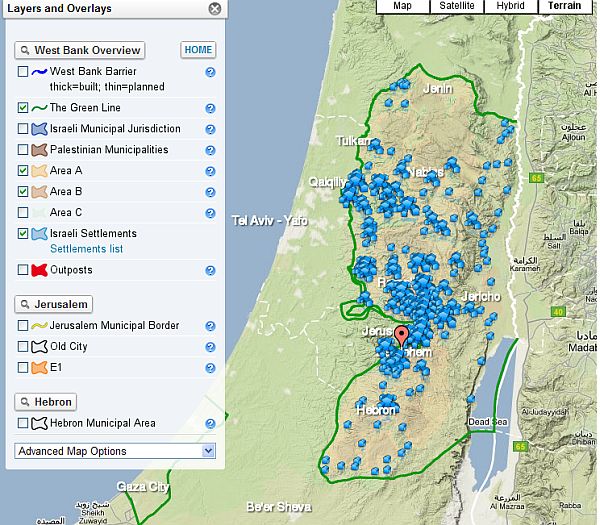
As a new map produced by Americans For Peace Now makes clear, Israelis already have their feet firmly planted throughout the occupied West Bank. Freezing settlement growth really does nothing to end the occupation.

Facebooktwittermail

The sustainability of injustice

Phil Weiss caught this remark from Secretary of State Hillary Clinton as she headed for a meeting with Israel’s President Shimon Peres in Jerusalem last week:

[Peres] understands better than most the fundamental reality facing the State of Israel, that the status quo is unsustainable — now, that doesn’t mean that it can’t be sustained for a year or a decade, or two or three, but fundamentally, the status quo is unsustainable — and that the only path to ensure Israel’s future as a secure and democratic Jewish state is through a negotiated two-state solution, and a comprehensive regional peace.

As Jesus is reported to have said, fundamentally “the meek shall inherit the earth.” He declined to say when.

And as Dr Martin Luther King Jr said: “the arc of the moral universe is long but it bends toward justice.” It might bend in that direction, but will it actually get there? Or is it more like a rainbow bending towards a pot of gold?

Israelis — and anyone else who lives outside the US — probably balk at the idea that Americans can teach them lessons on the principle of sustainability. As a nation that is home to more cars than people and whose 5% of the global population consume 25% of the world’s energy resources, we’re hardly in a position to say we understand much about sustainability.

Still, when it comes to this assertion — that the status quo is unsustainable, what might at this point be called the signature of Obama’s approach to the Middle East conflict — what is worse is that a deceptive catch phrase has been received as though it carries real diplomatic weight.

Firstly, to say that the status quo is unsustainable obscures the fact that the Israel has always rejected the status quo. Expansionism views the status quo as something that can be perpetually modified to ones advantage.

Secondly, this image of unsustainability hints at some kind of moral universe bending towards a two-state solution. The unsustainable must give way to the sustainable in accordance with a natural ordering process, right?

Maybe in a cosmic sense — maybe with the same inevitability with which the meek shall inherit the earth.

Meanwhile, the struggle for justice in this world, is a struggle against deeply entrenched injustice — injustice largely deaf to the appeals and concerns of its critics.

The arc of history bends more easily towards acquiescence than justice. Grievances are less often rectified than they are soothed. Thus Israel has less interest in peace with the Palestinians than it has in the pacification of a restless and sometimes violent population.

Justice, won rather than found, has less to do with the status quo being unsustainable than it has with the defiance of those unwilling to tolerate injustice.

Facebooktwittermail

Lieberman wants Israel to become a Jews-only state

AFP reports that Israel’s foreign minister hopes to complete the process of ethnic cleansing that began in 1948 and push Israel’s remaining Palestinian population out of the Jewish state:

Israeli Foreign Minister Avigdor Lieberman on Sunday proposed that in a future peace deal the Palestinians should take his country’s 1.3 million Arabs and let Israel keep its West Bank settlements.

“Our guiding principle in negotiations with the Palestinians must not be ‘land for peace’ but an exchange of territories and populations,” Lieberman told reporters as he arrived for Sunday’s weekly cabinet meeting.

Meanwhile, Associated Press reports on Jews emigrating from Israel to Germany.

Nirit Bialer, granddaughter of Holocaust survivors, welcomes listeners in Hebrew to a one-hour radio show of music, talk and interviews. The setting isn’t her native Israel but a radio station in the heart of the German capital — and hundreds of Israeli Berliners are tuning in.

The city from which Hitler unleashed the genocide of 6 million Jews is now attracting a small but growing community of Jews from Israel for whom it embodies freedom, tolerance, and an anything-goes spirit.

“Berlin has become a real magnet for Israelis — everybody wants to move here,” said Bialer, 32, whose Friday noon “Kol Berlin,” Hebrew for “the voice of Berlin,” started three years ago and is something of an institution for young Israelis in Berlin.
[…]
The Israelis who come to stay are looking to work, study, party and make art, and don’t seem to care much about the Nazi past. They arrive on student visas, overstay tourist permits or have German or other European ancestry that entitles them to citizenship. Many start families with German partners, far from the tensions of the Middle East.

“I love Israel, but I just couldn’t live there anymore — it’s like a small village and so militaristic,” explained Lea Fabrikant, a photography student who arrived two years ago.
“Most of all, I needed freedom and space, and I found it here.”

Ahmed Moor writes:

Israel’s ambassador to the U.S., Michael B. Oren, argues in his Sept. 15 Times Op-Ed article that Israelis want peace, and I believe him. They’ve said so often enough. But the Israelis want lots of other things too.

For instance, they want the West Bank and East Jerusalem. In addition, they want the Palestinian aquifers situated beneath the West Bank, and they want to preserve their racial privilege in the Jewish state. They also want to shear the Gaza Strip from Palestine.

Most of all, the Israelis want Palestinian quiescence in the face of Israeli wants. Those wants have made the two-state solution impossible to implement.

For decades, the Israelis have taken what they want from the Palestinians. Consequently, there are about 500,000 settlers in Jewish-only colonies in the West Bank and East Jerusalem. Today, the Israelis are discovering that what one wants and what one can afford sometimes diverge.

Some Israelis — but apparently not Oren — are beginning to realize that the deep, irreversible colonization of territory comes with a price: the end of the Jewish state as it is. It’s a painful lesson to learn, especially after decades of superpower indulgence. America’s obsequious coddling turns out to have been a curse for the Jewish state. Serious cost-benefit analyses around occupation policies — collectively, apartheid — were evidently never conducted.

Facebooktwittermail

American public opinion and the special relationship with Israel

John Mearsheimer writes:

There is no question that the United States has a relationship with Israel that has no parallel in modern history. Washington gives Israel consistent, almost unconditional diplomatic backing and more foreign aid than any other country. In other words, Israel gets this aid even when it does things that the United States opposes, like building settlements. Furthermore, Israel is rarely criticized by American officials and certainly not by anyone who aspires to high office. Recall what happened last year to Charles Freeman, who was forced to withdraw as head of the National Intelligence Council because he had criticized certain Israeli policies and questioned the merits of the special relationship.

Steve Walt and I argue that there is no good strategic or moral rationale for this special relationship, and that it is largely due to the enormous influence of the Israel lobby. Critics of our claim maintain that the extremely tight bond between the two countries is the result of the fact that most Americans feel a special attachment to Israel. The American people, so the argument goes, are so deeply committed to supporting Israel generously and unreservedly that politicians of all persuasions have no choice but to support the special relationship.

The Chicago Council on Global Affairs has just released a major study of how the American public thinks about foreign policy. It is based on a survey of 2500 Americans, who were asked a wide variety of questions, some of which have bearing on Israel. Their answers make clear that most Americans are not deeply committed to Israel in any meaningful way. There is no love affair between the American people and Israel.

Facebooktwittermail

Washington Post comes late to the Stryker ‘kill team’ story

The Washington Post reports:

The U.S. soldiers hatched a plan as simple as it was savage: to randomly target and kill an Afghan civilian, and to get away with it.

For weeks, according to Army charging documents, rogue members of a platoon from the 5th Stryker Combat Brigade, 2nd Infantry Division, floated the idea. Then, one day last winter, a solitary Afghan man approached them in the village of La Mohammed Kalay. The “kill team” activated the plan.

One soldier created a ruse that they were under attack, tossing a fragmentary grenade on the ground. Then others opened fire.

According to charging documents, the unprovoked, fatal attack on Jan. 15 was the start of a months-long shooting spree against Afghan civilians that resulted in some of the grisliest allegations against American soldiers since the U.S. invasion in 2001. Members of the platoon have been charged with dismembering and photographing corpses, as well as hoarding a skull and other human bones.

The subsequent investigation has raised accusations about whether the military ignored warnings that the out-of-control soldiers were committing atrocities. The father of one soldier said he repeatedly tried to alert the Army after his son told him about the first killing, only to be rebuffed.

Two more slayings would follow. Military documents allege that five members of the unit staged a total of three murders in Kandahar province between January and May. Seven other soldiers have been charged with crimes related to the case, including hashish use, attempts to impede the investigation and a retaliatory gang assault on a private who blew the whistle.

Army officials have not disclosed a motive for the killings and macabre behavior. Nor have they explained how the attacks could have persisted without attracting scrutiny. They declined to comment on the case beyond the charges that have been filed, citing the ongoing investigation.

But a review of military court documents and interviews with people familiar with the investigation suggest the killings were committed essentially for sport by soldiers who had a fondness for hashish and alcohol.

The accused soldiers, through attorneys and family members, deny wrongdoing. But the case has already been marked by a cycle of accusations and counter-accusations among the defendants as they seek to pin the blame on each other, according to documents and interviews.

The Army has scheduled pre-trial hearings in the case this fall at Joint Base Lewis-McChord, home of the Stryker brigade. (The unit was renamed the 2nd Stryker Brigade, 2nd Infantry Division, when it returned from Afghanistan in July.) Military officials say privately that they worry the hearings will draw further attention to the case, with photos and other evidence prompting anger among the Afghan civilians whose support is critical to the fight against the Taliban.

Does the Washington Post share the military’s concern about the effects of publicity around this case? It has certainly taken the newspaper a long time to get around to covering this story.

The case was reported by the Seattle Times in early June.

A June 16 report said:

Premeditated murder, the crime that the soldiers are charged with, is the most serious of four murder charges that can be levied under the military code of justice, according to Eugene Fidell, who teaches military law at Yale University. It carries the death penalty.

In cases involving multiple soldiers, military prosecutors, like their civilian counterparts, may sometimes cut deals with some defendants to gain evidence against other defendants.

“The prosecutors’ door is likely to open, and they may have to make some wrenching decisions about whom to make a deal with to gain evidence,” Fidell said.

There are hints that the Washington Post itself may now be part of just such a prosecution process as indicated by the weight its report gives to the testimony of Spc. Adam Winfield, one of the accused soldiers.

Facebooktwittermail

The advance of the anti-Muslim movement across America


(Glenn Beck interviews Frank Gaffney, president of the Center for Security Policy.)

Shariah: The Threat to America, a report released by the Center for Security Policy in Washington DC on Wednesday, is an attempt to provide a veneer of seriousness in support of the hysterical ravings of people like Pamela Geller.

The fact that Washington’s foreign policy establishment won’t take the report seriously is beside the point since Islamophobia needs neither the consent nor the interest of the establishment or the mainstream media in order to continue its advance across America.

The fact that 52% of Republicans believe that President Obama supports the imposition of shariah is sufficient evidence that a new McCarthyism has already gained a firm grip on this country while opposition to this movement has barely begun to solidify.

Under a heading, “The Enemy Within,” the new manifesto for Islamophobes warns: “a massive demographic shift has brought adherents to shariah — a doctrine that, by definition, opposes all others — deep into the non-Islamic world. [p.127]”

Although the report describes shariah as “the crucial fault line of Islam’s internecine struggle,” with moderates on one side and Islamists on the other, the authors decline to express any opinion about which side of this “fault line” most American Muslims reside. Indeed, the focus on shariah merely seems to be a ploy through which Islam as a whole can be attacked by those who profess no hatred for Muslims.

At the very same time, shariah is likened to a disease — a disease spread by Muslims.

The growth of Muslim populations in the West augurs the inexorable spread of shariah into Western societies — less by violence than by dint of natural procreation, unchecked immigration, and the incessant demands of an aggressive minority that refuses to assimilate. Logic should tell us, then, that the growth of shariah in the West threatens Western-style liberty: threatens freedom of expression, freedom of conscience and upends religious and sexual equality. [p.130]

For those willing to shun evil, a path to redemption is laid out: “… every effort should be made to identify and empower Muslims who are willing publicly to denounce shariah…”

But there’s also a call for a Muslims-keep-out sign at the border: “Immigration of those who adhere to shariah must be precluded, as was previously done with adherents to the seditious ideology of communism.”

Is it possible that America could succumb to the folly that the Islamophobes are demanding?

Well, it’s worth considering the fact that two decades after the end of the Cold War and more than fifty years after the passing of McCarthyism, the US Immigration and Naturalization Service still scrutinizes prospective citizens to see if any communists are trying to sneak into this country.

In fact, Sharia presents about the same threat to America as that posed by the Bible. Had America’s founders stuck to the principle “render unto Caesar the things which are Caesar’s,” it seems unlikely that the colonies would ever have sought independence. It wasn’t Christ who objected to taxation without representation.

Thomas Jefferson rightly believed:

…that our civil rights have no dependence on our religious opinions any more than our opinions in physics or geometry, that therefore the proscribing any citizen as unworthy the public confidence, by laying upon him an incapacity of being called to offices of trust and emolument, unless he profess or renounce this or that religious opinion, is depriving him injuriously of those privileges and advantages, to which, in common with his fellow citizens, he has a natural right…

Ironically, the Islamophobes manifesto that Frank Gaffney is now promoting, cites the Virginia Statute for Religious Freedom (in which the passage above appears), even while doing exactly what Jefferson condemned: proscribing American citizens as unworthy of public confidence unless they denounce their religion.

Maybe these fear- and hate-mongers should pay more attention to the principles upon which America was founded and worry less about Islam.

Facebooktwittermail

Corruption isn’t just Karzai’s problem

Fred Kaplan writes:

It’s tempting to skip over the recent news stories about fighting corruption in Afghanistan. (“Of course there’s corruption,” you might have muttered while turning the page.) But resist the urge; go back and read them. They’re just as important as the stories about fighting the Taliban in Kandahar — maybe more so.

In a counterinsurgency war, such as the one we’re waging in Afghanistan, the legitimacy of the host government, in the eyes of its own people, is key to the prospects for success. And legitimacy is nearly unachievable if the government is blatantly corrupt.

Kaplan is right in suggesting that the topic of corruption in Afghanistan is one that does not evoke much intense interest, but I think we look at it from the wrong perspective when considering it as a local problem and a problem that should only concern Americans in as much as it impacts an American war.

The problem of corruption is in many ways, the political problem of this era — the corruption in Afghanistan merely happens to be one of the worst manifestations.

In as much as we think of the issue in terms of ballot rigging, involvement in the drugs trade, the exchange of bribes and so forth, we tend to overlook the fundamental nature of corruption. Whether or not it involves cash in brown paper bags, what political corruption is all about is misrepresentation.

A politician presents himself as serving one set of interests when in reality he serving a different set of interests.

Washington and Kabul are much more alike than we care to see. The difference is in the degree to which the victims of misrepresentation feel aggrieved.

In our obsessive focus on counter-terrorism and counter-insurgency, we give nearly all our attention to the ways in which people react to their grievances and amazingly little to the origins of their grievances.

From Cairo to Kabul, the United States props up corrupt governments and the people ruled by those governments think we bear some of the responsibility for the misery in their lives.

And yet somehow a fiction still has currency — that the source of most of the problems in the Middle East is people who hate freedom.

Facebooktwittermail

Arming the insurgencies of the future

Guns are very durable — ownership tends to be transient.

The New York Times examines a weapons cache which provides a snapshot of the arsenal that the Taliban in Marja — the part of Helmand Province that has seen the most sustained fighting of 2010 — have been using against US marines.

In this collection, a third of the weapons are bolt-actions rifles from World War II or earlier.

The photograph above shows a 1915 Lee Enfield rifle — a gun that was manufactured in the millions to defend the British Empire.

Did the manufacturers have the slightest idea that they were making weapons that would outlast an empire?

What does the fact that the US military is now locked in a stalemate against an irregular force with vastly inferior weaponry say about the return American taxpayers are getting from a defense budget that dwarfs all others?

Would the Marines be significantly worse off if they too carried Lee Enfields?

But here’s the serious question:

When Britain was amassing an arsenal to defend its empire, it spent a tiny fraction of what the US now spends producing an array of weapons far less potent than those the Pentagon now requires.

If we assume that, just as was the case for the British, the American arsenal far outlasts the American empire, what kind of world will we see a hundred years from now when America is a shadow of its former self and fighters across the planet are wielding M16 rifles instead of Lee Enfields?

The defense of America leads inexorably to the weaponization of the planet.

Facebooktwittermail

What would Cheney say?

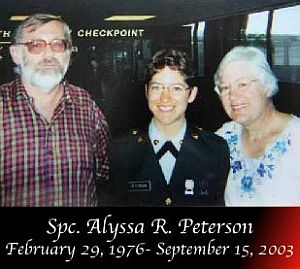
Greg Mitchell reports (parts one and two) on the suicide of Spc. Alyssa Peterson, one of the first women soldiers to die in Iraq. She took her own life exactly seven years ago after being reprimanded for showing empathy for Iraqi prisoners who were undergoing interrogation. All records of the techniques being used have been destroyed but there seems little doubt that the Iraqis were being tortured.

The 27-year-old’s parents didn’t even know their daughter was in Iraq until they were informed of her death. The fact that she committed suicide was concealed by the military for several more years — the most likely reason for the cover-up being that it was Peterson’s unwillingness to participate in torture that drove her to take her own life.
Kayla Williams, a US Army sergeant who served with Peterson, described the impact of participating in interrogations which she could see clearly contravened the Geneva Conventions.

Fellow soldiers, echoing then vice-president Dick Cheney, told the young sergeant that “the old rules no longer applied because this was a different world. This was a new kind of war.” But Williams said: “it really made me feel like we were losing that crucial moral higher ground, and we weren’t behaving in the way that Americans are supposed to behave.”

“It also made me think,” Williams says, “what are we as humans, that we do this to each other? It made me question my humanity and the humanity of all Americans. It was difficult, and to this day I can no longer think I am a really good person and will do the right thing in the right situation.”

As the famous Milgram experiment demonstrated, individuals who choose to do the right thing — especially when that demands defying authority — are usually in a minority. The much more prevalent tendency is a willingness to follow orders and suspend ones own moral judgment — even when that involves participating in torture.

Should Alyssa Peterson have been turned away from the military on the grounds that she was too humane, her conscience too strong, for her to serve in the US Army? She ended up being reprimanded for showing empathy to Iraqi prisoners. As the official investigation of her death revealed: “She said that she did not know how to be two people; she… could not be one person in the cage [where prisoners were apparently tortured] and another outside the wire.”

Suppose before she took her life, Dick Cheney had had an opportunity to council her, what would he have said? Or suppose Cheney was now to speak to her father, what would he say?

Empathy is a liability in wartime? Americans need to set aside their humanity when they put on a uniform?

Peterson’s ability to empathize with Iraqi prisoners was no doubt in large part an expression of her character and her humanity, yet to an extent it must also have resulted from the humanizing effect of understanding and speaking Arabic. In spite of the dehumanizing effect of seeing men stripped of their dignity, she must also have been able to see beyond that and through their words seen not mere “terrorist” suspects, but fathers with daughters and sons with parents.

Recognition of humanity is not something we can pick up or discard whenever it seems expedient — whenever cast aside it henceforth becomes increasingly difficult to rediscover.

The choice to cross over to the “dark side” is a choice that may prove impossible to reverse. At 27 Alyssa Peterson seems to have understood that. As far as we can tell, Dick Cheney has not even attempted to find the way back.

Facebooktwittermail

What really shapes Muslim perceptions of America

As American politicians, administration officials, military leaders and commentators from across the political spectrum denounced a plan to burn Qurans in Florida, preeminent among the reasons given for this condemnation was that such an act would cast the United States in a very unfavorable light and expose American soldiers to greater danger — that it would lend strength to those radical voices who insist that America is hostile to Islam.

The US has spent most of the last decade at war in Muslim countries, as a result of which hundreds of thousands have died and millions been forced to abandon their homes, but it’s as though these facts alone would not have been sufficient to color Muslim perceptions of America.

Occupations in Iraq and Afghanistan, drone attacks in Pakistan, missile strikes in Yemen and Somalia, thinly veiled threats against Iran, Abu Ghraib, Guantanamo, secret prisons, renditions and torture — all of these merely raised doubts about US intentions. It was Pastor Terry Jones who had the power to solidify anti-American hostility across the Muslim world.

I guess if you believed that, then it would also somehow make sense that two recent reports about the actions of American soldiers in Afghanistan and Iraq have been given so little attention in the media.

The Seattle Times reports:

As part of one of the widest-ranging U.S. war-crime cases to emerge from the conflict in Afghanistan, charging documents released Wednesday allege soldiers took finger bones and other body parts cut from Afghan corpses.

The documents provide new public details of the cases against a dozen soldiers who served a year in southern Afghanistan with a Western Washington-based Stryker infantry brigade.

The most serious charges involve the alleged slayings of three Afghans in January, February and May. Five soldiers, all stationed at Joint Base Lewis-McChord, are accused of involvement in one or more of the murders. They face penalties that range up to life imprisonment or death.

Meanwhile, Robert Fisk, in an article on the brutal practice of ‘honor’ killing refers to terrible stories of gang rape by United States personnel in Abu Ghraib.

You hear this repeatedly in Amman, and a very accurate source of mine in Washington — a man who deals with military personnel — tells me they are true. This, he says, is why Barack Obama changed his mind about releasing the photographs which George W Bush refused to make public. The pictures we saw — of the humiliation of men — were outrageous enough. But the ones we haven’t seen show Americans raping Iraqi women.

Lima Nabil, a journalist who now runs a home for on-the-run girls, sips coffee as the boiling Jordanian sun frowns through the window at us. “In Abu Ghraib,” she says, “women were tortured by the Americans much more than the men. One woman said she witnessed five girls being raped. Most of the women in the prison were raped — some of them left prison pregnant. Families killed some of these women — because of the shame.”

Obama’s refrain has been that we need to look forward, not back — that it’s time to turn the page — but the past lingers. Turning away usually simply means that we are choosing to ignore the ways in which the past is still present.

In an interview with Paul Jay from the RealNews Network, David Gardner, foreign affairs editor at the Financial Times talks about the UK’s ongoing investigation into the war in Iraq and some of the ways history may be repeating itself as the West confronts Iran.

Facebooktwittermail

Scapegoating-psychology and rising xenophobia in America

Peter Beinart compares the mood in America with the hysteria that provoked the Palmer Raids in 1919 and the anti-Communist fearmongering of McCarthyism that began in the late 1940s.

Ever since 9/11, according to opinion polls, Republicans have worried more about terrorism than have Democrats. Initially, this fear translated into overwhelming support for military action abroad. But as Republicans (like everyone else) have grown tired and embittered by America’s wars, they have turned their anxiety inward, lured by the same idea that attracted Palmer and the McCarthyites: that America could guarantee its safety on the cheap by ferreting out the real threat, which resides within.

Has, we must fight them over there so we don’t have to fight them here, been turned into, why fight them over there when we can fight them here?

I don’t believe the driving force here is, as Beinart suggests, a desire to guarantee safety on the cheap. Rather, this is about age-old scapegoating-psychology and the political opportunities this crude dynamic opens up.

In a period of economic depression, with high unemployment and a pervasive sense that the nation is heading in the wrong direction, many Americans are experiencing a growing sense of powerlessness. Through scapegoating, they can foster the illusion that they are reclaiming control over our own lives. They can focus their animus on a clearly identifiable enemy — Islam.

In scapegoating, by definition, the enemy must be weaker than those on the attack — which is why even at the height of the financial crisis, popular anger at bankers never became as strong as current Islamophobia. It’s the same as the way a guy who’s treated as a drudge at work then finds his “strength” by abusing his wife.

The more that Muslims can be made to feel like outsiders, the more those who have defined them as other can feel empowered.

Meanwhile, with the emerging visceral sense that American renewal can be delivered by purging this country of its “foreign” elements, a political horizon is opening for conservatives such as Newt Gingrich — a man who has no apparent compunction about harnessing popular power even when delivered from the ugliest source.

Gingrich clearly smells presidential opportunity in rising xenophobia and is channeling this into an attack on President Obama whose “foreignness” derives from his Kenyan ancestry and even the fact that he grew up in Hawaii!

Gingrich claims that Dinesh D’Souza has provided “stunning insight” into Obama, in a Forbes cover story, where the president is characterized as “a Luo tribesman.”

David Frum, a neoconservative and former speech writer for George W Bush, sees Gingrich’s perspective as now providing the foundation for the White Party’s political platform.

With the Forbes story and now the Gingrich endorsement, the argument that Obama is an infiltrating alien, a deceiving foreigner — and not just any kind of alien, but specifically a Third World alien — has been absorbed almost to the very core of the Republican platform for November 2010.

Rush Limbaugh has been claiming for almost 2 years that President Obama is bent upon “redistribution” and “reparations.” Following D’Souza, Gingrich has now stepped up to suggest that this redistribution is motivated by anti-white racial revenge. If Obama wants to expand health coverage, tighten bank regulation, and create government make-work projects it’s not because he shares the same general outlook on the world as Walter Mondale or Ted Kennedy or so many other liberals, living and dead, all of them white and northern European. No, Obama wants to do what he does because he thinks like an African, and not just any kind of African but (in D’Souza’s phrase) “a Luo tribesman.”

It is to vindicate this African tribal dream that Obama wishes to raise the taxes of upper-income taxpayers and redistribute money away from these meritorious individuals. D’Souza contends that Obama is acting to vindicate his father’s supposed dream of overthrowing the global order and ending the global domination of the white race over other peoples.

If only it were true, the anticolonialist in me facetiously says. This global reordering must surely eventually come, but I have my doubts whether Obama will have much if any role in bringing it about.

Much more significant in the current context is the fact that an event which two years ago was seen as a reflection of America’s political maturity — the election of an African-American president — is now serving as a opportunity for America to regress into some of the ugliest recesses of its past.

Facebooktwittermail