Pakistan retains Afghanistan within its sphere of influence, India retains Kashmir, while al Qaeda loses its foothold in the region — this is the potential resolution to a war over which the US and its allies now have little control, writes William Dalrymple.
Internally, the war is viewed primarily as a Pashtun rebellion against a Tajik, Uzbek and Hazara-dominated regime, which has only a fig leaf of Pashtun window-dressing in the person of Karzai. For although Karzai is a Pashtun, under his watch Nato installed the Northern Alliance in Kabul and drove out of power Afghanistan’s Pashtun majority.
In this way we unwittingly took sides in the Afghan civil war that began in the 1970s – siding with the north against the south, the town against the country, secularism against Islam, and the Tajiks against the Pashtuns. We installed a government and trained up an army that in many ways discriminated against the Pashtun majority, and whose top-down constitution allowed for little federalism or regional representation. No matter how much western liberals may dislike the Taliban, they are in many ways the authentic voice of rural Pashtun conservatism, whose wishes are ignored by the government in Kabul and who are largely excluded from power.
Externally the war has now turned, like Kashmir, into an Indo-Pak proxy war in which Nato is really a bit player. Under Karzai, India has established increasing political and economic influence in Afghanistan, opened four regional consulates and provided reconstruction assistance amounting to about $662m. The Pakistani military establishment, already terrified of India turning into a new economic superpower, has always believed it would be suicide to accept an Indian presence in what they regard as their strategic Afghan backyard, and is completely paranoid about the still small Indian presence, rather as the British used to feel about Russians in Afghanistan in the days of the Great Game.
According to Indian diplomatic sources there are still less than 3,600 Indians in Afghanistan, almost all of them businessmen and contract workers; there are only 10 Indian diplomatic officers as opposed to nearly 150 in the UK embassy. Yet The horror of being squeezed in an Indian nutcracker has led the ISI to risk its internal security and coherence – as well as Pakistan’s relationship with its main strategic ally, the US – in order to keep the Taliban in play and its leadership under watch and ISI patronage in Quetta. Indeed the degree to which the ISI has been controlling the Afghan Taliban has only just emerged. A report by Matt Waldman of the Carr Centre for Human Rights at Harvard, based on interviews with 10 former Taliban commanders, documented how the ISI “orchestrates, sustains and strongly influences” the Taliban, and that the ISI are even “represented as participants or observers on the Taliban supreme leadership council, the Quetta Shura”.
Karzai’s new deal with the Pakistanis, and his obvious intention to try to reach some accommodation with the Haqqani wing of the Taliban through Pakistan’s mediation, therefore represents a major strategic victory for the Pakistani military and a serious diplomatic defeat for India – though it remains to be seen if the ISI really can deliver the Taliban, who today were proclaiming their unwillingness to negotiate with Karzai. It also remains to be seen whether the Pakistani military can defend their own country from the jihadi Frankenstein’s monster they have created.
This dangerous new situation does offer some opportunities. Until now India, relishing its ever-growing international status, has understandably and angrily resisted any linkage between an Afghan settlement and Indo-Pak peace, which would involve finding a final agreement on Kashmir. Yet the linkage is already there, and there are many clear benefits for India if it is prepared to accept ground realities and negotiate.
The stage is now open for a deal whereby India could agree to minimise its presence in Afghanistan – which it could accept as Pakistan’s sphere of influence – in return for Pakistan withdrawing its longstanding sponsorship of the Kashmir jihad, which it could accept as India’s domain. To satisfy Nato, an undertaking by Pakistan to drive al-Qaida from the region would also need to be included.
At least, this might be the shape of a deal unless Gen David Petraeus and Senator Carl Levin have their way.
The new American military commander in Afghanistan, Gen. David H. Petraeus, is pushing to have top leaders of a feared insurgent group designated as terrorists, a move that could complicate an eventual Afghan political settlement with the Taliban and aggravate political tensions in the region.
General Petraeus introduced the idea of blacklisting the group, known as the Haqqani network, late last week in discussions with President Obama’s senior advisers on Pakistan and Afghanistan, according to several administration officials, who said it was being seriously considered.
Such a move could risk antagonizing Pakistan, a critical partner in the war effort, but one that is closely tied to the Haqqani network. It could also frustrate the Afghan president, Hamid Karzai, who is pressing to reconcile with all the insurgent groups as a way to end the nine-year-old war and consolidate his own grip on power.



 It takes just a week to train young Israeli women in the latest form of remote killing.
 The CIA has lost one of its most valued former spies.



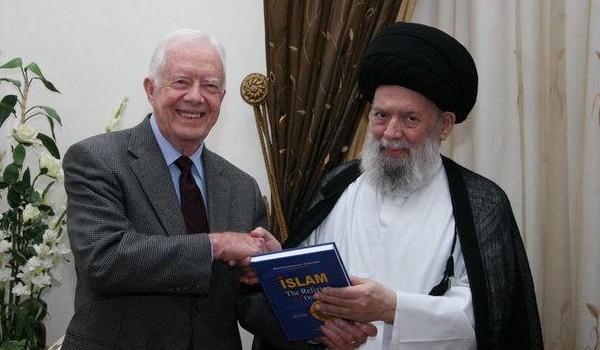

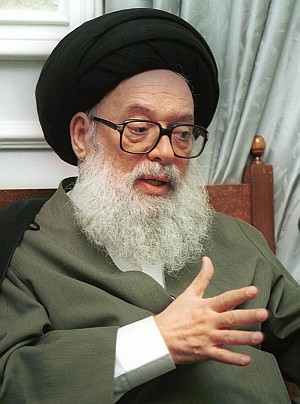 When you visited him you could be sure of a real debate, a respectful argument and you knew you would leave his presence feeling a better person. That for me is the real effect of a true man of religion; leaving an impact on everyone he meets, no matter what their faith. Sheikh Fadlallah passed away yesterday. Lebanon is a lesser place the day after but his absence will be felt well beyond Lebanon’s shores. I remember well when I was nominated ambassador to Beirut, a muslim acquaintance sought me out to tell me how lucky I was because I would get a chance to meet Sheikh Fadlallah. Truly he was right. If I was sad to hear the news I know other peoples’ lives will be truly blighted. The world needs more men like him willing to reach out across faiths, acknowledging the reality of the modern world and daring to confront old constraints. May he rest in peace.
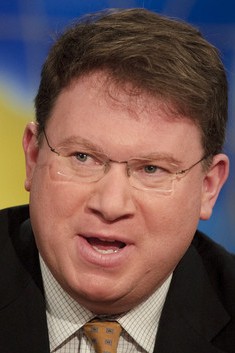 After an exchange between the UAE ambassador to the US Yousef al-Otaiba and Jeffrey Goldberg on Tuesday we learn that “the UAE would sooner see military action against Iran’s nuclear program than see the program succeed” — at least that’s what Goldberg says.