With one of the most significant revelations from Cablegate being the enthusiasm several Arab leaders express in favor of military strikes against Iran, it will be interesting to see what if any are the repercussions.
Marc Lynch writes:
The Arab media thus far is clearly struggling to figure out how to report them, something I’ll be following over the next week. One of the points which I’ve made over and over again is that Arab leaders routinely say different things in private and in public, but that their public rhetoric is often a better guide to what they will actually do since that reflects their calculation of what they can get away with politically. Arab leaders urged the U.S. to go after Saddam privately for years, but wouldn’t back it publicly for fear of the public reaction. It’s the same thing with Iran over the last few years, or with their views of the Palestinian factions and Israel. But now those private conversations are being made public, undeniably and with names attached.
So here’s the million dollar question: were their fears of expressing these views in public justified? Let’s assume that their efforts to keep the stories out of the mainstream Arab media will be only partially successful — and watch al-Jazeera here, since it would traditionally relish this kind of story but may fear revelations about the Qatari royal family. Extremely important questions follow. Will Arab leaders pay any significant political price for these positions, as they clearly feared? Or will it turn out that in this era of authoritarian retrenchment they really can get away with whatever diplomatic heresies they like even if it outrages public opinion? Will the publication of their private views lead them to become less forthcoming in their behavior in order to prove their bona fides — i.e. less supportive of containing or attacking Iran, or less willing to deal with Israel? Or will a limited public response to revelations about their private positions lead them to become bolder in acting on their true feelings? Will this great transgression of the private/public divide in Arab politics create a moment of reckoning in which the Arab public finally asserts itself… or will it be one in which Arab leaders finally stop deferring to Arab public opinion and start acting out on their private beliefs?
Now those are interesting questions.
UPDATE: thus far, most of the mainstream Arab media seems to be either ignoring the Wikileaks revelations or else reporting it in generalities, i.e. reporting that it’s happening but not the details in the cables. I imagine there are some pretty tense scenes in Arab newsrooms right now, as they try to figure out how to cover the news within their political constraints. Al-Jazeera may feel the heat the most, since not covering it (presumably to protect the Qatari royal family) could shatter its reputation for being independent and in tune with the “Arab street”. So far, the only real story I’ve seen in the mainstream Arab media is in the populist Arab nationalist paper al-Quds al-Arabi, which covers the front page with a detailed expose focused on its bete noir Saudi Arabia. Meanwhile, the details are all over Arabic social media like Facebook and Twitter, blogs, forums, and online-only news sites like Jordan’s Ammon News. This may be a critical test of the real impact of Arabic social media and the internet: can it break through a wall of silence and reach mass publics if the mass media doesn’t pick up the story?
Meanwhile, Pakistan’s The News reports:
Relations between Pakistan and Saudi Arabia, two of the most important Islamic countries, appeared headed towards a serious crisis as secret cables unveiled by Wikileaks on Sunday quoted Saudi King Abdullah calling President Asif Ali Zardari as “the greatest obstacle to Pakistan’s progress”.
As part of millions of documents dumped on the Internet, Wikileaks put one cable, which gave details of what King Abdullah really thought about President Zardari.Talking to an Iraqi official about the Iraqi PM Nuri Al-Maliki, King Abdullah said: “You and Iraq are in my heart, but that man is not.”
“That man” was Asif Zardari. The king called the Pakistani president as “the greatest obstacle to that country’s progress. “When the head is rotten,” he said, “it affects the whole body.”The scathing remarks by the Saudi King explain why relations between Pakistan and the Saudi kingdom have remained cool and almost frozen during the current rule of the PPP.



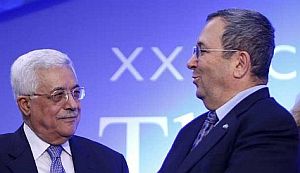 If he was confident that that was the case, why would Bibi draw attention to the fact? Perhaps because he knew that some of the leaks would serve his interests in multiple ways, not the least of which being that they further damage the credibility Mahmoud Abbas as top political representative of the Palestinian people. In other words, they would help reinforce Abbas’ position as a leader possessing enough authority to negotiate but not enough to make a deal.
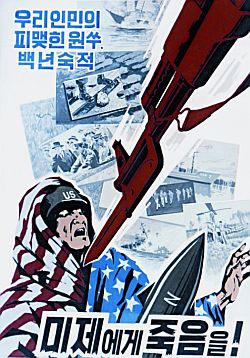 This country really has nothing else with which to inspire its people with pride than shows of military or nuclear strength… North Korea has enshrined the military-first principle in the constitution. It has deleted the word communism from the constitution, as well. So this regime is looking at this military-first paradigm for the long haul, in other words.
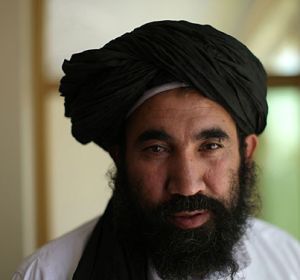 Zaeef is now a prolific writer and speaks five languages fluently. According to many Taliban insiders, if there are any negotiations between the Taliban and the Americans they will go through him.