Author Archives: Paul Woodward

Omar Suleiman: Egypt’s torturer-in-chief threatens to unleash “dark bats of the night… to terrorize the people”

Lisa Hajjar writes:

Under the Bush administration, in the context of “the global war on terror”, US renditions became “extraordinary”, meaning the objective of kidnapping and extra-legal transfer was no longer to bring a suspect to trial – but rather for interrogation to seek actionable intelligence. The extraordinary rendition program landed some people in CIA black sites – and others were turned over for torture-by-proxy to other regimes. Egypt figured large as a torture destination of choice, as did [newly-appointed Vice President, Omar] Suleiman as Egypt’s torturer-in-chief. At least one person extraordinarily rendered by the CIA to Egypt — Egyptian-born Australian citizen Mamdouh Habib — was reportedly tortured by Suleiman himself.

In October 2001, Habib was seized from a bus by Pakistani security forces. While detained in Pakistan, at the behest of American agents, he was suspended from a hook and electrocuted repeatedly. He was then turned over to the CIA, and in the process of transporting him to Egypt he endured the usual treatment: his clothes were cut off, a suppository was stuffed in his anus, he was put into a diaper – and ‘wrapped up like a spring roll’.

In Egypt, as Habib recounts in his memoir, My Story: The Tale of a Terrorist Who Wasn’t, he was repeatedly subjected to electric shocks, immersed in water up to his nostrils and beaten. His fingers were broken and he was hung from metal hooks. At one point, his interrogator slapped him so hard that his blindfold was dislodged, revealing the identity of his tormentor: Suleiman.

Suleiman’s history should be kept in mind when considering statements he made yesterday. In a thinly veiled threat, he warned that if the protests do not end soon, there will be a coup and “dark bats of the night” will emerge “to terrorize the people.”

Egypt’s anti-government activists called on supporters Wednesday to expand their demonstrations in defiance of the vice president’s warning that protests calling for President Hosni Mubarak’s ouster would not be tolerated for much longer.

Vice President Omar Suleiman, who is managing the crisis, raised the prospect of a new crackdown on protesters Tuesday when he told Egyptian newspaper editors there could be a “coup” unless demonstrators agree to enter negotiations. The protesters insist they won’t talk before Mubarak steps down, which the president is refusing to do.

“He is threatening to impose martial law, which means everybody in the square will be smashed,” said Abdul-Rahman Samir, a spokesman for a coalition of the five main youth groups behind protests in Cairo’s Tahrir Square. “But what would he do with the rest of the 70 million Egyptians who will follow us afterward.”

Suleiman is creating “a disastrous scenario,” Samir said. “We are striking and we will protest and we will not negotiate until Mubarak steps down. Whoever wants to threaten us, then let them do so,” he added.

For the first time, protesters were calling forcefully Wednesday for labor strikes after Suleiman warned that calls by some protesters for a campaign of civil disobedience are “very dangerous for society and we can’t put up with this at all.”

The vice president’s warnings were the latest in a series of confused messages from the government to the protesters. Officials have made a series of pledges not to attack, harass or arrest the activists in recent days, followed by Suleiman’s thinly veiled threat of a new crackdown.

“We can’t bear this for a long time,” he said of the Tahrir protests. “There must be an end to this crisis as soon as possible.” He said the regime wants to resolve the crisis through dialogue, warning: “We don’t want to deal with Egyptian society with police tools.”

He also warned of chaos if the situation continued, speaking of “the dark bats of the night emerging to terrorize the people.” If dialogue is not successful, he said, the alternative is “that a coup happens, which would mean uncalculated and hasty steps, including lots of irrationalities.”

Facebooktwittermail

“Keep giving us our oil”

Venice Beach, California, might not be the best place to take the pulse of American opinion. Or is it?

Would Geena and Jenna be relieved or disappointed to learn that Egypt now consumes about as much oil as it produces and that most of the relatively small volume it exports goes to Italy?

Maybe Egypt just belongs to that long list of countries that most Americans know little about and care even less — at least so long as those countries that have it “keep giving us our oil.”

Meanwhile, our Goldilocks president (who thinks Egyptians need more democracy — as though they already have some — and who clearly doesn’t want the freedom spigot turned on too fast) will probably take comfort in the following numbers — a perfect marker of success in centrist politics: that public indifference and ignorance provide a reassuring level of support for a steady-as-she-goes approach on a course going who-knows-where.

Americans do not have a clear point of view about how the massive anti-government protests in Egypt will affect the United States. More than half (58%) say the protests will not have much of an effect (36%), or offer no response or are noncommittal (22%). Of the minority that thinks the protests will have an effect on the U.S., nearly twice as many say their impact will be negative rather than positive (28% vs. 15%).

This lack of agreement notwithstanding, a majority (57%) says the Obama administration is handling the situation in Egypt about right, while much smaller numbers say the administration has shown too much support (12%) or too little support (12%) for the protestors.

As for whether California comedian Kassem G was able to gather a representative sample of American opinion in Venice Beach, Pew’s findings would indicate he was only gathering the views of about half the country: 52% of Americans, during two weeks of media saturation coverage, said that they had heard little or nothing about what’s been happening in Egypt.

Perhaps the phrase, living under a rock, should be changed to, living in America.

Facebooktwittermail

Time for the United States to stop poisoning the Middle East

To assert that the United States has been poisoning the Middle East for decades might sound like too strong language to the ears of many Americans. Yet what kind of effect can we expect from the long-standing practice of supporting rulers who habitually torture their own people, other than a poisonous effect?

Much as we can celebrate the Egyptian revolution as an expression of the universal human desire for freedom, it is also the beginning of a process through which Egypt must detoxify itself.

The Obama administration still clings to the phrase orderly transition as though the process of change on which Egypt is just embarking might be as seamless as the changeless change which saw George W Bush’s departure from and Barack Obama’s arrival into the White House.

Real change is more disruptive. It can’t be stage-managed by Hosni Mubarak or his deputies.

Graham Fuller writes:

It had to come. Where, when, and how exactly one of many smoldering sparks in this agonized region might actually burst forth into the present conflagration was unknowable, but tension and anger was palpably rising over a long period.

Where all these uprisings across the region will go is still unknowable, but one thing is clear – the imperative to break the long and ugly pattern of harsh, incompetent, and corrupt rule that sucks optimism, hope, and creativity out of these societies and made them breeding grounds for radicalism.

What the people of the region demand is to be able to take control of their own lives and destinies. But that in turn depends on an end to the constant external intervention of the United States in the region.

In the near term, the prescription is stark – Washington must back off and leave these societies alone, ending the long political infantilization of Middle Eastern populations. We must end our incessant and obsessive efforts to intervene and micromanage the political life of foreign states based on a myopic vision of “American interests.”

Today the Middle East is the last redoubt in the world of regimes bought, maintained, and guided by Washington. Is it any wonder that this region is now the cauldron of numerous rebellions and anti-American expression?

And just why are we maintaining this damaging, hated quasi-imperial role in the Middle East? Is it for the oil? Yet what tin-pot dictator has ever refused us oil? Furthermore, we don’t even rely that much on Middle East oil – Saudi Arabia ranks only number three among our top five providers: Canada, Mexico, Saudi Arabia, Venezuela, and Nigeria.

Or is it perhaps all about Israel? Yet why should that state constitute the seeming touchstone of everything that we do in the region? After all, Israel is overwhelmingly the most powerful military state in the Middle East, acts at will in the Middle East under the protection of American veto, manipulates our own domestic politics in its favor, and is now run by the most inflexible and ultra-right-wing government in Israeli history, while soaking up more American foreign aid per capita than any other state. The US still backs Israel against the Palestinians in an Israeli occupation now into its fifth decade.

Facebooktwittermail

Muslim Brotherhood rejects Khamenei’s attempt to hijack the revolution

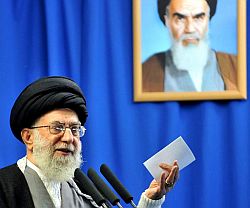
“The Iranian nation has become a model for the other nations through its resistance and insistence on Islam and Islamic establishment and due to the eye-catching progress it has made on this path throughout the last 32 years,” Ayatollah Khamenei said while addressing a military gathering in Tehran today.

But the Muslim Brotherhood is more interested in expressing its solidarity with its secular co-revolutionaries than its Iranian co-religionists. This isn’t an Islamic revolution, they say — stating the obvious. It’s an Egyptian revolution.

Ikhwanweb, the Muslim Brotherhood’s official English website editor in chief Khaled Hamza has stated that the current uprising in Egypt is a revolution of the Egyptian people and is by no means linked to any Islamic tendencies, despite allegations nor can it be described as Islamic.

Hamza stressed that the revolution is peaceful and calls solely for reform and a democratic civil state initiated by the youth through the social networking service Facebook and is far removed from any Islamist groups.

He criticized allegations and reiterations by some countries that the uprising was Islamic and denounced claims by the Iranian Supreme Leader Mr. Khamenai that the protests are a sign of an Islamic Awakening inspired by the 1979 Islamic Revolution in Iran.

Hamza maintained that the Egyptian protests are not an ‘Islamic’ uprising, but a mass protest against an unjust, autocratic regime which includes Egyptians from all walks of life and all religions and sects.

Anyone in any doubt about the difference between the Khamenei regime and the Muslim Brotherhood’s conservative and pragmatic political movment, should listen to the following from Dr Maha Azzam, Chatham House and Dr Shadi Hamid, Brookings Doha Center:

Listen!

If in the first days of the Egyptian people’s uprising, the Mubarak regime imagined it could ride out the storm, two weeks later we can see that the revolution is, on the contrary, growing in strength.

The Guardian‘s Jack Shenker describes the scene in Tahrir Square today:

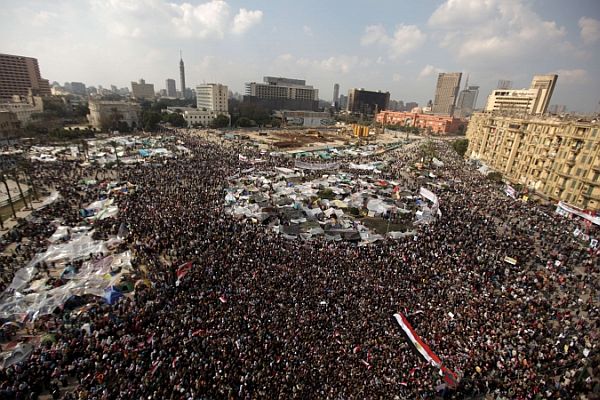
There is more energy and optimism in Tahrir today than almost anything I’ve seen before – an aimless wander through the packed crowds is a dizzying, exhilarating experience, revealing a hundreds of little micro-dramas playing out all over the square.

It’s so difficult to convey the atmosphere of this place through words or images; Tahrir may have dropped down the international media agenda somewhat in recent days, but honestly if you go down there and just stare around you – at the picnicking families, the raucous flag-wavers, the volunteer tea suppliers, the cheery human security cordons, the slumbering bodies curled up in the metal treads of the army’s tanks, the pro-change graffiti that adorns every placard, every tent, every wall space in vision – it’s impossible not to feel as moved as we all did in the very first days of this ongoing revolution.

As the streets appear safer and security more guaranteed, the numbers of those joining queues to enter Tahrir is growing, not falling – dozens told me today they were here for the first time. Politicking at the top may give the impression that the uprising has lost momentum, but clearly for many in Egypt it’s only just getting started.

An Al Jazeera report from Alexandria confirms the nationwide surge in demonstrations that has been driven by the impact of the Wael Ghonim interview broadcast on Egyptian television yesterday. The re-appearance of Ghonim — an activist leader and Google executive who was released from detention yesterday afternoon — “really had an impact on many Egyptians and forced a lot more to come out to the streets. This was the first time Egyptian television showed some of the most graphic images and stories that have happened over the last two weeks. So there’s definitely a surge in the number of pro-democracy, anti-government protests here in Alexandria,” said Jamal Elshayyal.

Facebooktwittermail

The Egyptian iron fist

Al Jazeera’s Ayman Mohyeldin describes his experience while held in detention yesterday by the Egyptian military:

The following video shows Egypt’s much-feared secret police in operation on January 26, the day after the first mass protests took place. At 1 minute 15 seconds into the report a gang of plain-clothes policemen can be seen advancing towards protesters. An individual, who would appear to have been a marked man, is dragged out of the crowd and bundled away.

Some observers believe this to have been Wael Ghonim, the Google executive and prominent Egyptian activist who was reported missing the next day and who has just been released.

Meanwhile, Al Jazeera has released footage showing unarmed protesters being shot, apparently by the Egyptian army and police.

Facebooktwittermail

America’s feudal friends

As the saying goes, a man is known by the company he keeps. President Obama’s choice of Frank Wisner as his special envoy to Cairo shows that corruption has become so deeply institutionalized in Washington that it cannot be exposed — it is so commonplace, so much regarded as an inherent dimension of politics that politics and corruption are indivisible. The fact that bundles of unmarked bills in brown paper bags are rarely exchanged for political services is not evidence of a clean political system. On the contrary: it is evidence that corruption has been legalized.

Robert Fisk writes:

Frank Wisner, President Barack Obama’s envoy to Cairo who infuriated the White House this weekend by urging Hosni Mubarak to remain President of Egypt, works for a New York and Washington law firm which works for the dictator’s own Egyptian government.

Mr Wisner’s astonishing remarks – “President Mubarak’s continued leadership is critical: it’s his opportunity to write his own legacy” – shocked the democratic opposition in Egypt and called into question Mr Obama’s judgement, as well as that of Secretary of State Hillary Clinton.

The US State Department and Mr Wisner himself have now both claimed that his remarks were made in a “personal capacity”. But there is nothing “personal” about Mr Wisner’s connections with the litigation firm Patton Boggs, which openly boasts that it advises “the Egyptian military, the Egyptian Economic Development Agency, and has handled arbitrations and litigation on the [Mubarak] government’s behalf in Europe and the US”. Oddly, not a single journalist raised this extraordinary connection with US government officials – nor the blatant conflict of interest it appears to represent.

Mr Wisner is a retired State Department 36-year career diplomat – he served as US ambassador to Egypt, Zambia, the Philippines and India under eight American presidents. In other words, he was not a political appointee. But it is inconceivable Hillary Clinton did not know of his employment by a company that works for the very dictator which Mr Wisner now defends in the face of a massive democratic opposition in Egypt.

So why on earth was he sent to talk to Mubarak, who is in effect a client of Mr Wisner’s current employers?

Patton Boggs states that its attorneys “represent some of the leading Egyptian commercial families and their companies” and “have been involved in oil and gas and telecommunications infrastructure projects on their behalf”. One of its partners served as chairman of the US-Egyptian Chamber of Commerce promoting foreign investment in the Egyptian economy. The company has also managed contractor disputes in military-sales agreements arising under the US Foreign Military Sales Act. Washington gives around $1.3bn (£800m) a year to the Egyptian military.

Mr Wisner joined Patton Boggs almost two years ago – more than enough time for both the White House and the State Department to learn of his company’s intimate connections with the Mubarak regime. The New York Times ran a glowing profile of Mr Wisner in its pages two weeks ago – but mysteriously did not mention his ties to Egypt.

Nicholas Noe, an American political researcher now based in Beirut, has spent weeks investigating Mr Wisner’s links to Patton Boggs. Mr Noe is also a former researcher for Hillary Clinton and questions the implications of his discoveries.

“The key problem with Wisner being sent to Cairo at the behest of Hillary,” he says, “is the conflict-of-interest aspect… More than this, the idea that the US is now subcontracting or ‘privatising’ crisis management is another problem. Do the US lack diplomats?

“Even in past examples where presidents have sent someone ‘respected’ or ‘close’ to a foreign leader in order to lubricate an exit,” Mr Noe adds, “the envoys in question were not actually paid by the leader they were supposed to squeeze out!”

While the rationalization provided by so-called political realism ascribes US support for Mubarak to the need for “stability” in an unstable region, he also belongs to the class of leaders America has always preferred to support: those unburdened by ideological affiliations whose insatiable greed makes them dependable US allies. In other words, the US government likes rulers who are so rotten they can be trusted — which is to say, trusted to serve US interests.

What does this tell us about American values and the American view of the world?

That every man can be bought — it’s just a matter of finding the right price.

It’s not a mentality one would hope to find in the cradle of modern democracy but hardly surprising to be seen prevailing in a nation built on slavery.

There is of course nothing uniquely American in this mentality — it’s the way imperial powers have always extended their reach, but as Barack Obama said on the day of his inauguration, “the world has changed and we must change with it.”

Indeed. But, if his response to the Egyptian revolution provides a reliable measure, we have yet more evidence this president lacks the will to become the agent of such change.

Salwa Ismail writes:

There is a lot more behind Hosni Mubarak digging in his heels and setting his thugs on the peaceful protests in Cairo’s Tahrir Square than pure politics. This is also about money. Mubarak and the clique surrounding him have long treated Egypt as their fiefdom and its resources as spoils to be divided among them.

Under sweeping privatisation policies, they appropriated profitable public enterprises and vast areas of state-owned lands. A small group of businessmen seized public assets and acquired monopoly positions in strategic commodity markets such as iron and steel, cement and wood. While crony capitalism flourished, local industries that were once the backbone of the economy were left to decline. At the same time, private sector industries making environmentally hazardous products like ceramics, marble and fertilisers have expanded without effective regulation at a great cost to the health of the population.

A tiny economic elite controlling consumption-geared production and imports has accumulated great wealth. This elite includes representatives of foreign companies with exclusive import rights in electronics, electric cables and automobiles. It also includes real estate developers who created a construction boom in gated communities and resorts for the super-rich. Much of this development is on public land acquired at very low prices, with no proper tendering or bidding.

Facebooktwittermail

A chanted revolution

Much has been made of the role of the internet and social media in the revolutions in Tunisia and Egpyt, but even more potent has been the human voice, unmediated, led in chants.

This video, posted on January 15, was taken at a protest by political opposition activists and citizens at the Press Syndicate in down town, Cairo. The most prominent chant was “revolution revolution until victory, revolution in Tunisia, and revolution in Egypt!”

Philip Rizk, describing the following video, writes: “Following Friday prayers on January 28 we joined protesters marching through the streets of Imbaba in Cairo, Egypt. The crowd of 100 that we joined kept increasing and continuously joined with other marches in the same quarter North West of downtown Cairo. By about 1pm the protesters numbered around 15,000 marching towards Galaa Square and attempting to get across the Nile to Tahrir Square, downtown Cairo.”

In a video posted on YouTube yesterday, protesters chanted: “Hosni has gone mad. Condoleeza, Condoleeza, find Mubarak a visa.”

“Oh Mubarak get lost. Let the nation see the light.”

Girl leading chants at Tahrir Square:

Boy leading chants:

“We’ll come tomorrow, and bring our friends! The day after that we’ll bring our neighbors.”

Facebooktwittermail

WikiLeaks cables reveal Suleiman’s efforts to demonize the Muslim Brotherhood

Reuters reports:

Egypt’s new vice president, Omar Suleiman, has long sought to demonize the opposition Muslim Brotherhood in his contacts with skeptical U.S. officials, leaked diplomatic cables show, raising questions whether he can act as an honest broker in the country’s political crisis.

U.S. Embassy messages from the anti-secrecy WikiLeaks cache of 250,000 State Department documents, which Reuters independently reviewed, also report that the former intelligence chief accused the Brotherhood of spawning armed extremists and warned in 2008 that if Iran ever backed the banned Islamist group, Tehran would become “our enemy.”

The disclosure came as Suleiman met on Sunday with opposition groups, including the officially banned Brotherhood, to explore ways to end Egypt’s worst political crisis decades.

Meanwhile, Channel 4 News reported on today’s protests in Tahrir Square:

Facebooktwittermail

The mind of a dictator

Robert Fisk writes:

In his novel The Autumn of the Patriarch, Gabriel Garcia Marquez outlines the behaviour of a dictator under threat and his psychology of total denial. In his glory days, the autocrat believes he is a national hero. Faced with rebellion, he blames “foreign hands” and “hidden agendas” for this inexplicable revolt against his benevolent but absolute rule. Those fomenting the insurrection are “used and manipulated by foreign powers who hate our country”. Then – and here I use a precis of Marquez by the great Egyptian author Alaa Al-Aswany – “the dictator tries to test the limits of the engine, by doing everything except what he should do. He becomes dangerous. After that, he agrees to do anything they want him to do. Then he goes away”.

Hosni Mubarak of Egypt appears to be on the cusp of stage four – the final departure. For 30 years he was the “national hero” – participant in the 1973 war, former head of the Egyptian air force, natural successor to Gamal Abdel Nasser as well as Anwar Sadat – and then, faced with his people’s increasing fury at his dictatorial rule, his police state and his torturers and the corruption of his regime, he blamed the dark shadow of the country’s fictional enemies (al-Qa’ida, the Muslim Brotherhood, al-Jazeera, CNN, America). We may just have passed the dangerous phase.

Twenty-two lawyers were arrested by Mubarak’s state security police on Thursday – for assisting yet more civil rights lawyers who were investigating the arrest and imprisonment of more than 600 Egyptian protesters. The vicious anti-riot cops who were mercifully driven off the streets of Cairo nine days ago and the drug-addled gangs paid by them are part of the wounded and dangerous dictator’s remaining weapons. These thugs – who work directly under ministry of interior orders – are the same men now shooting at night into Tahrir Square, killing three men and wounding another 40 early on Friday morning. Mubarak’s weepy interview with Christiane Amanpour last week – in which he claimed he didn’t want to be president but had to carry on for another seven months to save Egypt from “chaos” – was the first hint that stage four was on the way.

Political analysis prefers to suspend psychological analysis. The fact that we cannot know what’s going on inside Mubarak’s mind right now is turned into a reason for treating his thoughts and feelings as in some way peripheral to the unfolding events — yet of course they are central.

There is a pathological trend in most forms of acquisition of power — a tendency through which those who acquire power see inequity as the reflection of a natural order; an order that implies forms of consent where no such consent actually exists.

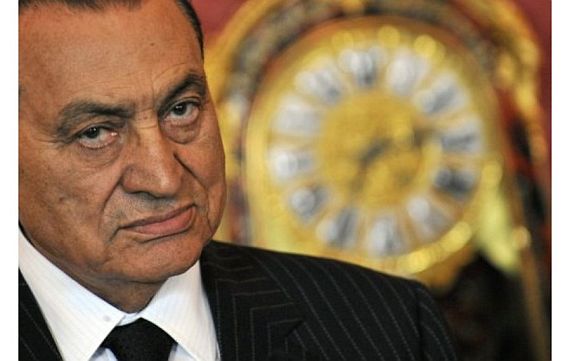
Mubarak has come to identify himself as the father of Egypt and to react to a people’s revolt by claiming that it is the result of foreign agitation. This is not simply a political ploy; it is an unwillingness to accept the legitimacy of a face of Egypt which invalidates Mubarak’s conception of himself and of the country he rules. To the extent that he has witnessed an uprising (and one must wonder exactly what picture he has had, since it seems unlikely he’s been watching Al Jazeera), he has struggled to see this as a reflection of the will of the Egyptian people.

For Mubarak to resign, rather than be forced out of power, would require a radical reshaping of his own identity — something that happens rarely if at all in an individual’s life, least of all at an age where the mind and heart have in so many ways become rigid.

Facebooktwittermail

The Muslim Brotherhood bogeyman

Nicholas Kristof writes:

Maybe my judgment is skewed because pro-Mubarak thugs tried to hunt down journalists, leading some of us to be stabbed, beaten and arrested — and forcing me to abandon hotel rooms and sneak with heart racing around mobs carrying clubs with nails embedded in them. The place I felt safest was Tahrir Square — “free Egypt,” in the protesters’ lexicon — where I could pull out a camera and notebook and ask anybody any question.

I constantly asked women and Coptic Christians whether a democratic Egypt might end up a more oppressive country. They invariably said no — and looked so reproachfully at me for doubting democracy that I sometimes retreated in embarrassment.

“If there is a democracy, we will not allow our rights to be taken away from us,” Sherine, a university professor, told me (I’m not using full names to protect the protesters). Like many, she said that Americans were too obsessed with the possibility of the fundamentalist Muslim Brotherhood gaining power in elections.

“We do not worry about the Muslim Brotherhood,” Sherine said. “They might win 25 percent of the votes, but if they do not perform then they will not get votes the next time.”

Sherine has a point. Partly because of Western anxieties, fundamentalist Muslims have rarely run anything — so instead they lead the way in denouncing the corruption, incompetence and brutality of pro-Western autocrats like Mr. Mubarak. The upshot is that they win respect from many ordinary citizens, but my hunch is that they would lose support if they actually tried to administer anything.

For example, in 1990s Yemen, an Islamic party named Islah became part of a coalition government after doing well in elections. As a result, Islah was put in charge of the Education Ministry. Secular Yemenis and outsiders were aghast that fundamentalists might brainwash children, but the Islamists mostly proved that they were incompetent at governing. In the next election, their support tumbled.

It’s true that one of the most common protester slogans described Mr. Mubarak as a stooge of America, and many Egyptians chafe at what they see as a supine foreign policy. I saw one caricature of Mr. Mubarak with a Star of David on his forehead and, separately, a sign declaring: “Tell him in Hebrew, and then he might get the message!” Yet most people sounded pragmatic, favoring continued peace with Israel while also more outspoken support for Palestinians, especially those suffering in Gaza.

I asked an old friend here in Cairo, a woman with Western tastes that include an occasional glass of whiskey, whether the Muslim Brotherhood might be bad for peace. She thought for a moment and said: “Yes, possibly. But, from my point of view, in America the Republican Party is bad for peace as well.”

Little does she seem to know: the Democratic Party is no better.

Let the Islamists share in governance — then they’ll lose their popularity.

It’s easy to see why this argument appeals to many an American liberal. Strangely, an equally persuasive argument — let them govern, they might govern well — has yet to gain any traction, at least in the US.

But look at Turkey. Are we supposed to believe that the success of the AKP has come in spite of them being Islamists, or, is it possible that lack of corruption presents such a stark contrast with politics-as-usual that the success of the Islamists has more to do with their integrity than anything else.

If the contest is not between Sharia and democracy, but between integrity and corruption, shouldn’t we be rooting for integrity, irrespective of the banner it might carry?

Hannah Allam reports:

[T]he Brotherhood said earlier this week that it would recognize all of Egypt’s international treaties, a thinly veiled reference to the country’s longtime peace agreement with Israel.

To many observers, the reference signaled a willingness by the Brotherhood to negotiate with Western powers. Still, the Brotherhood eventually would like to put Egypt’s pact with Israel on the ballot in a national referendum, which would all but assure its rejection.

Israeli leaders have long professed the desire for peaceful relations with all their neighbors — as though the Egyptian people and the Jordanian people counted for nothing, Mubarak and King Abdullah being the sole peace contractors.

The fictitious peace that may soon be in jeopardy has merely been secured by American bribery, without the consent of the American taxpayer. Shouldn’t we be demanding a real peace and shouldn’t Israelis want such a peace — one that does not hinge on the “stability” of dictatorial rule?

Facebooktwittermail

Slavoj Zizek and Tariq Ramadan on the future of Egyptian politics

Many American academics and pundits from thinktankland should study the way Slavoj Žižek expresses himself. Passionate, emphatic, uninhibited, eccentric, and humorous — above all, a man who knows what it means to speak your mind. This is a display that shows that deep analysis does not need the protection of cover-your-ass-caveats or manicured sobriety. It can be an act of genuine self-expression.

The pre-condition though is that to speak your mind, you must know your mind and that is a dangerous enterprise.

In relation to Žižek’s central point — that the loss of the Left has come at a hefty price — it’s worth considering the pernicious influence of the sporting metaphor as it shapes American political thinking. Which is to say: the effect of the assumption that that which is defeated must by its nature be inferior; that those who lose are lesser. Guided by such thinking, we would have no reason to be concerned about the loss of species or the loss of cultures. As though the perfect condition would be one of victorious homogeneity.

And note: if democracy was by its nature something truly Western, would we now witness so much Western ambivalence about the birth of Egyptian democracy? On the contrary, the West’s ambivalence exposes the degree to which universal and socialist values have been marginalized in the West. As though we should have reason to doubt that human solidarity is a good thing.

Facebooktwittermail

Mubarak’s day of departure? Live upates

WATCH AL JAZEERA LIVE

Sarah A. Topol says:

Many ask me about America, puzzling over the Obama administration’s comments about the protests. There’s a lot of frustration, but most say they want the United States to butt out.

“This revolution is an Egyptian revolution against Mubarak and his policies—we don’t want another client regime. We are capable of doing things without America. I don’t need America to teach me about democracy or human rights,” Amira Howeidy, a journalist, told me. A fluent English speaker, Amira got worked up, and then apologized. “I’m not trying to be combative,” she said as I tried to redirect the conversation.

Others just can’t figure it out. “Does Obama really want democracy in Egypt?” one woman wearing a niqab asked me.

The Guardian:

Egyptian blogger @suzeeinthecity has tweeted what she says are the seven demands of the protesters (see the four drawn up by youth groups we detailed at (5.05pm)

1. Resignation of the president
2. End of the Emergency State
3. Dissolution of The People’s Assembly and Shora Council
4. Formation of a national transitional government
5. An elected Parliament that will ammend the Constitution to allow for presidential elections
6. Immediate prosecution for those responsible of the deaths of the revolution’s martyrs
7. Immediate prosecution of the corrupters and those who robbed the country of its wealth.

Jack Shenker has been speaking to people within the youth movement in Egypt, mainly based online, who have told him they have four very specific demands. They do not represent everyone but they do constitute an important part of the opposition:

• the removal of Hosni Mubarak and the “whole apparatus of the Mubarak regime”;
• a committee which will appoint a transitional government, the committee to be made up of 6 named senior judges, six representatives from their youth movement and two members of the military
• a council to draw up a new constitution, which would then be put to the people in a referendum
• elections at national and local level in accordance with the constitution.

One of Egypt’s youngest revolutionaries!

The Guardian reports:

The Cairo office of al-Jazeera was ransacked by pro-government “thugs” today, as the Arabic language news channel also said its news website had come under attack by hackers.

Al-Jazeera said its office had been stormed by a “gang of thugs” who burned equipment, on a day of reports of escalating violence against journalists covering the Egyptian uprising.

Brian Whitaker provides this constitutional reading on the political train of events on the horizon:

Whatever happens to Mubarak, there has to be a presidential election no later than September. The [Muslim] Brotherhood have said they will not contest that. In the absence of any inspirational leaders who can galvanise popular opinon, my feeling is that the presidency will probably be won by a compromise candidate — the one regarded as least objectionable by the largest numbner of people.

There is no requirement for parliamentary elections until 2015, since a new parliament was (fraudently) elected last year for a fixed term of five years. To dissolve the parliament legally before 2015, there would have to be a national referendum.

This means that Egypt may be lumbered for several years with a parliament that is overwhelmingly dominated by Mubarak’s NDP party. One option would be to investigate the fraud in last year’s election and disqualify some of the NDP members, presumably triggering by-elections in their constituencies.

For the Brotherhood to have any prospect of becoming the largest party over the next few years, therefore, either parliament would have to be dissolved by referendum or a very large number of NDP members would have to be disqualified and their vacant seats won by the Brotherhood.

The Economist says:

“[D]espite the ugly scenes mid-week, the developments in Egypt should be welcomed. A downtrodden region is getting a taste of freedom. In the space of a few miraculous weeks, one Middle Eastern autocrat has fallen, and another, who has kept the Arabs’ mightiest country under his thumb for 30 years, is tottering. The 350m-strong Arab world is abuzz with expectation; its ageing autocrats are suddenly looking shaky. These inspiring events recall the universal truth that no people can be held in bondage for ever.

For some in the West, which has tended to put stability above democracy in its dealings with the Middle East, these developments are disturbing. Now that the protests have sucked the life out of Mr Mubarak’s regime, they argue, the vacuum will be filled not by democrats but by chaos and strife or by the Muslim Brothers, the anti-Western, anti-Israeli opposition. They conclude that America should redouble its efforts to secure a lengthy “managed transition” by shoring up either Mr Mubarak or someone like him.

That would be wrong. The popular rejection of Mr Mubarak offers the Middle East’s best chance for reform in decades. If the West cannot back Egypt’s people in their quest to determine their own destiny, then its arguments for democracy and human rights elsewhere in the world stand for nothing. Change brings risks—how could it not after so long?—but fewer than the grim stagnation that is the alternative.

Washington Post: Israel contemplates a prospect it dreads — inserting its forces into the narrow Philadelphia corridor between Egypt and Gaza.

David Corn describes the Congressional mechanics involved in the US cutting off military aid to Egypt — a decision yet to be made.

Justin Elliot on one of Washington’s most vocal Mubarak cheerleaders, Leslie Gelb.

London-based, Master Minz — a female rapper from Casablanca, Morocco — sings BACK DOWN MUBARAK!

Lost world we are the solution
This shit don’t smell like a flower
It’s the rise of people power

Larry Diamond writes:

Hosni Mubarak’s exit from power under the pressure of volcanic popular protests will have wide repercussions throughout the Arab world. It will accelerate the momentum of democratic change in the region, and open the possibility of electoral democracy emerging in the Arab world’s largest and most influential country. If Mubarak can be induced to exit peacefully and soon, and the way can be paved to a free and credible presidential election in September, the authoritarian exceptionalism of the Arab world may begin drawing to an end.

Sarah Carr, whose mother is Egyptian and father British and who didn’t feel safe going out yesterday because her “mother’s genes seem to have been on strike when I was formed,” describes how state-sponsored xenophobia briefly took hold of the streets:

The worst thing about this is how very un-Egyptian it is. Much is made of the legendary Egyptian hospitality, and for good reason. Egyptians take care of their guests. Which is not to say that xenophobia or racism doesn’t exist, and doesn’t exist in its worst forms. But very generally speaking I’ve felt safer and more looked after in Egypt than anywhere else in the world.

The descent into murky hatred coincides with a concerted state media campaign against foreigners and sinister “foreign agents” who are behind the Tahir protests, a continuation of previous campaigns against foreigners which have targeted e.g. Palestinians, religious minorities, gays, Shias…etc. State media is an extension of the regime. Add this to a security vacuum and the withdrawal of the police and a desperate regime and uncertainty and you get this, another highly convenient instance of manufactured discontent.

Brian Whitaker comments on Amr Moussa’s presence in Tahrir Square today:

Moussa’s unexpected appearance in Tahrir Square is interesting, and perhaps significant.

He served Mubarak for many years as Egypt’s foreign minister before becoming head of the Arab League. There were suggestions at the time that Mubarak had kicked him sideways because the president was becoming jealous of Moussa’s popularity (he was generally regarded as adopting a fairly tough position regarding Israel).

About the time of his removal from the foreign minister, a pop song containing the line “I hate Israel and I love Amr Moussa” became a hit in Egypt.

In 2009, Moussa hinted that he might run for the Egyptian presidency in the 2011 election. In February last year, he also had a meeting with Mohamed ElBaradei which aroused a good deal of speculation.

3.15PM — Gregg Carlstrom: “Inside Tahrir Square, protesters have a ‘press officer’ helping journos. Outside, thugs ransacked AJA’s Cairo bureau. #jan25 #egypt”

2.25PM (local) — Sharif Kouddous: “On a balcony now with birds-eye view. Tahrir is an ocean of people. This is simply massive. #Egypt”

Facebooktwittermail

Where goes the revolution?

“This is a revolution without leaders. Three Million individuals choosing hope instead of fear and braving death on hourly basis to keep their dream of freedom alive. Imagine that.”
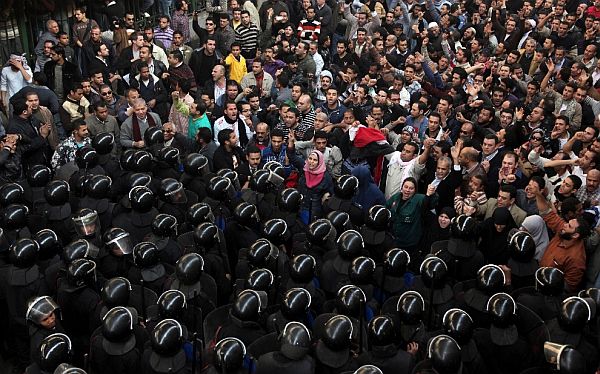
“Bleak outlook for the future of Egypt should revolution fail (god forbid),” wrote the Egyptian blogger, Mahmoud Salem, author of Sandmonkey this morning. His website later went down and he was arrested.

As gunfire rang out around Tahrir Square last night, the prospects for Egypt’s pro-democracy movement did indeed look precarious.

It turns out Salem’s detention was brief — he was roughed up but was able to escape and is now on the run.

Robert Springborg, a professor of national security affairs at the US Naval Postgraduate School, argues that events of the last 24 hours “show us just how clever and experienced [Mubarak] truly is.” Springborg concludes: “The game is, thus, more or less over.” He lays out a compelling argument that the military high command is successfully executing a transfer of power that will ensure Egypt remains under military control. He predicts: “The military will now enter into negotiations with opposition elements that it chooses. The real opposition will initially be ignored, and then possibly rounded up. The regime will do all possible to restore a sense of business as usual.”

For those whose cynicism has led to a belief in the unassailable power of the state, it will be easy at this juncture to see Egypt’s revolution withering. This is indeed a moment that separates those who believe in their own power to shape the future and those who live lives of resignation.

In an interview on Al Jazeera last night, one protester was asked why she and others gathered in Tahrir Square would not go home now they know Mubarak will stand down. “Why,” she responded, “should we believe a government that is trying to kill us. If we leave we now we will then be hunted down, one by one.”

Ayman Mohyeldin reports that the attitude among protesters today is that Tahrir Square is not just the symbolic center of the revolution but has become territory that they will guard and defend until the revolution has been won. Mubarak has underestimated the strength of his own people.

Shortly before his arrest, Mahmoud Salem wrote the following post (thankfully saved and reposted by Lisa Goldman before the Egyptian’s blog went down):

I don’t know how to start writing this. I have been battling fatigue for not sleeping properly for the past 10 days, moving from one’s friend house to another friend’s house, almost never spending a night in my home, facing a very well funded and well organized ruthless regime that views me as nothing but an annoying bug that its time to squash will come. The situation here is bleak to say the least.

It didn’t start out that way. On Tuesday Jan 25 it all started peacefully, and against all odds, we succeeded to gather hundreds of thousands and get them into Tahrir Square, despite being attacked by Anti-Riot Police who are using sticks, tear gas and rubber bullets against us. We managed to break all of their barricades and situated ourselves in Tahrir. The government responded by shutting down all cell communication in Tahrir square, a move which purpose was understood later when after midnight they went in with all of their might and attacked the protesters and evacuated the Square. The next day we were back at it again, and the day after. Then came Friday and we braved their communication blackout, their thugs, their tear gas and their bullets and we retook the square.

We have been fighting to keep it ever since.

That night the government announced a military curfew, which kept getting shorter by the day, until it became from 8 am to 3 pm. People couldn’t go to work, gas was running out quickly and so were essential goods and money, since the banks were not allowed to operate and people were not able to collect their salary. The internet continued to be blocked, which affected all businesses in Egypt and will cause an economic meltdown the moment they allow the banks to operate again. We were being collectively punished for daring to say that we deserve democracy and rights, and to keep it up, they withdrew the police, and then sent them out dressed as civilians to terrorize our neighborhoods. I was shot at twice that day, one of which with a semi-automatic by a dude in a car that we the people took joy in pummeling. The government announced that all prisons were breached, and that the prisoners somehow managed to get weapons and do nothing but randomly attack people. One day we had organized thugs in uniforms firing at us and the next day they disappeared and were replaced by organized thugs without uniforms firing at us. Somehow the people never made the connection.

Despite it all, we braved it. We believed we are doing what’s right and were encouraged by all those around us who couldn’t believe what was happening to their country. What he did galvanized the people, and on Tuesday, despite shutting down all major roads leading into Cairo, we managed to get over 2 million protesters in Cairo alone and 3 million all over Egypt to come out and demand Mubarak’s departure. Those are people who stood up to the regime’s ruthlessness and anger and declared that they were free, and were refusing to live in the Mubarak dictatorship for one more day. That night, he showed up on TV, and gave a very emotional speech about how he intends to step down at the end of his term and how he wants to die in Egypt, the country he loved and served. To me, and to everyone else at the protests this wasn’t nearly enough, for we wanted him gone now. Others started asking that we give him a chance, and that change takes time and other such poppycock. Hell, some people and family members cried when they saw his speech. People felt sorry for him for failing to be our dictator for the rest of his life and inheriting us to his Son. It was an amalgam of Stockholm syndrome coupled with slave mentality in a malevolent combination that we never saw before. And the Regime capitalized on it today.

Today, they brought back the internet, and started having people calling on TV and writing on facebook on how they support Mubarak and his call for stability and peacefull change in 8 months. They hung on to the words of the newly appointed government would never harm the protesters, whom they believe to be good patriotic youth who have a few bad apples amongst them. We started getting calls asking people to stop protesting because “we got what we wanted” and “we need the country to start working again”. People were complaining that they miss their lives. That they miss going out at night, and ordering Home Delivery. That they need us to stop so they can resume whatever existence they had before all of this. All was forgiven, the past week never happened and it’s time for Unity under Mubarak’s rule right now.

To all of those people I say: NEVER! I am sorry that your lives and businesses are disrupted, but this wasn’t caused by the Protesters. The Protesters aren’t the ones who shut down the internet that has paralyzed your businesses and banks: The government did. The Protesters weren’t the ones who initiated the military curfew that limited your movement and allowed goods to disappear off market shelves and gas to disappear: The government did. The Protesters weren’t the ones who ordered the police to withdraw and claimed the prisons were breached and unleashed thugs that terrorized your neighborhoods: The government did. The same government that you wish to give a second chance to, as if 30 years of dictatorship and utter failure in every sector of government wasn’t enough for you. The Slaves were ready to forgive their master, and blame his cruelty on those who dared to defy him in order to ensure a better Egypt for all of its citizens and their children.

After all, he gave us his word, and it’s not like he ever broke his promises for reform before or anything.

Then Mubarak made his move and showed them what useful idiots they all were.

You watched on TV as “Pro-Mubarak Protesters” – thugs who were paid money by NDP members by admission of High NDP officials- started attacking the peaceful unarmed protesters in Tahrir square. They attacked them with sticks, threw stones at them, brought in men riding horses and camels- in what must be the most surreal scene ever shown on TV- and carrying whips to beat up the protesters. And then the Bullets started getting fired and Molotov cocktails started getting thrown at the Anti-Mubarak Protesters as the Army standing idly by, allowing it all to happen and not doing anything about it. Dozens were killed, hundreds injured, and there was no help sent by ambulances. The Police never showed up to stop those attacking because the ones who were captured by the Anti-mubarak people had police ID’s on them. They were the police and they were there to shoot and kill people and even tried to set the Egyptian Museum on Fire. The Aim was clear: Use the clashes as pretext to ban such demonstrations under pretexts of concern for public safety and order, and to prevent disunity amongst the people of Egypt. But their plans ultimately failed, by those resilient brave souls who wouldn’t give up the ground they freed of Egypt, no matter how many live bullets or firebombs were hurled at them. They know, like we all do, that this regime no longer cares to put on a moderate mask. That they have shown their true nature. That Mubarak will never step down, and that he would rather burn Egypt to the ground than even contemplate that possibility.

In the meantime, State-owned and affiliated TV channels were showing coverage of Peaceful Mubarak Protests all over Egypt and showing recorded footage of Tahrir Square protest from the night before and claiming it’s the situation there at the moment. Hundreds of calls by public figures and actors started calling the channels saying that they are with Mubarak, and that he is our Father and we should support him on the road to democracy. A veiled girl with a blurred face went on Mehwer TV claiming to have received funding by Americans to go to the US and took courses on how to bring down the Egyptian government through protests which were taught by Jews. She claimed that AlJazeera is lying, and that the only people in Tahrir square now were Muslim Brotherhood and Hamas. State TV started issuing statements on how the people arrested Israelis all over Cairo engaged in creating mayhem and causing chaos. For those of you who are counting this is an American-Israeli-Qatari-Muslim Brotherhood-Iranian-Hamas conspiracy. Imagine that. And MANY PEOPLE BOUGHT IT. I recall telling a friend of mine that the only good thing about what happened today was that it made clear to us who were the idiots amongst our friends. Now we know.

Now, just in case this isn’t clear: This protest is not one made or sustained by the Muslim Brotherhood, it’s one that had people from all social classes and religious background in Egypt. The Muslim Brotherhood only showed up on Tuesday, and even then they were not the majority of people there by a long shot. We tolerated them there since we won’t say no to fellow Egyptians who wanted to stand with us, but neither the Muslims Brotherhood not any of the Opposition leaders have the ability to turn out one tenth of the numbers of Protesters that were in Tahrir on Tuesday. This is a revolution without leaders. Three Million individuals choosing hope instead of fear and braving death on hourly basis to keep their dream of freedom alive. Imagine that.

The End is near. I have no illusions about this regime or its leader, and how he will pluck us and hunt us down one by one till we are over and done with and 8 months from now will pay people to stage fake protests urging him not to leave power, and he will stay “because he has to acquiesce to the voice of the people”. This is a losing battle and they have all the weapons, but we will continue fighting until we can’t. I am heading to Tahrir right now with supplies for the hundreds injured, knowing that today the attacks will intensify, because they can’t allow us to stay there come Friday, which is supposed to be the game changer. We are bringing everybody out, and we will refuse to be anything else than peaceful. If you are in Egypt, I am calling on all of you to head down to Tahrir today and Friday. It is imperative to show them that the battle for the soul of Egypt isn’t over and done with. I am calling you to bring your friends, to bring medical supplies, to go and see what

Mubarak’s gurantees look like in real life. Egypt needs you. Be Heroes.

Yesterday, Sandmonkey gave the following phone interview with the American conservative blogger, Roger L Simon:

Update: This afternoon, Salem was interviewed by CBS News and described being attacked by police: “People were grabbing rope and telling us they would lynch us. It was a horrific experience.”

Facebooktwittermail

The Egyptian opposition is ready to lead an orderly transition to create a democratic republic

President Obama has promoted the lie that Hosni Mubarak as the capacity to lead an orderly transition towards a democratic Egypt. Mubarak’s thugs, by spilling the blood of Egyptian people on the streets of Cairo today, have exposed the lie.

It’s time for Obama to stop hiding from the press and come out and call for Mubarak to resign now.

Mustafa el-Gindy, a former independent member of the Egyptian parliament and current member of the opposition, presents the opposition’s plan through which the opposition in concert with the army can lead the the post-Mubarak transition.

Facebooktwittermail

The assault on Tahrir Square — live updates

WATCH AL JAZEERA LIVE

White House hiding from the press — David Corn: “WH journos send letter to Gibbs protesting that WH has shut out press in past 2 days, not able to ask POTUS/Gibbs Qs re #Egypt.”

CNN’s Anderson Cooper describes being attacked by pro-Mubarak thugs.

Robert Fisk on yesterday’s March of Millions: “It was a victory parade – without the victory.”

Rime Allaf:

[T]he U.S. had a recent history of backing popular movements in a wide range of countries, in a rainbow of colors, and in an eclectic mix of monikers and symbols. From Georgia to Iran, the will of the people was supported, marketed and managed by Washington as it berated authoritarian regimes and glorified the democratic aspirations of the secular masses.

This noble approach came to a screeching halt on January 25, when like the Tunisians before them, Egyptians took massively to the streets with no banners, no colored wristbands and no slogans other than “the people want the fall of the regime.”

Taken yet again by surprise, Washington pretended to look the other way until the protesters swelled to millions in mere days, while Egypt was cut off from the Internet and mobile calls. Unenthusiastically, US officials mumbled generalities about basic rights to non-violent demonstrations and to communication. And when President Obama addressed his nation personally last night, all he could muster was a patronizing compliment to the Egyptian army and a vague call for an “orderly transition.” Orderly for whom, however, was not specified.

11.02 — @Sandmonkey: “Pro Mubarak people are throwing molotov cocktails on the egyptian museum and setting it on fire. #jan25”

10.57 — Nicholas Kristof: “It’s not quite right to describe what’s happening in #Tahrir as “clashes.” These are attacks by #Mubarak thugs.”

Laura Rozen:

Council on Foreign Relations Egypt expert Steve Cohen said the army’s behavior Wednesday suggested complicity and a possible pretext for imposing martial law.

“How will the military restore order if they are involved in this, if by only standing aside and issuing warnings?” Cook said by e-mail.

“It’s clear that Mubarak, [Vice President Omar] Suleiman and the senior command are still in charge,” he said. “This may provide a pretext for the army to intervene, restore order, and reconstitute the political order.”

“It was massive unrest that ultimately led to the Free Officers’ coup in 1952,” he said. “People will be relieved when order is restored. Sound familiar?”

10.36 — CNN’s Ben Wedeman: “People in Tahrir square begging Obama to intervene. They are terrified a bloodbath is about to occur. #Jan25 #Egypt”

MSNBC on America’s friend and Egypt’s torture chief Omar Suleiman — interview with Rashid Khalidi.

Mob supporters on Fox News.

10.17 — Nicholas Kristof: “I tried to interview a young woman who was surrounded and bullied by Mubarak’s thugs. She stood her ground.heroically.” “Then the mob prevented me from talking to her, and she slipped away. It’s #Mubarak thugocracy on #Tahrir.”

Laura Rozen:

The descent into seemingly regime-orchestrated mob violence put the Obama administration under increasing pressure to accelerate Mubarak’s departure.

“This is exactly what we have been saying: that the longer this went on, the more chance of violence,” the Carnegie Endowment for International Peace’s Michele Dunne told POLITICO Wednesday. “I am pretty sure that these ‘pro-Mubarak demonstrators’ are organized by the security forces, who have always used plainclothes thugs to intimidate demonstrators and to turn peaceful demonstrations violent.” …

Dunne said that the Obama administration should privately press Egypt’s military to “restore stability to the country. That is going to mean Mubarak leaving office now and the military negotiating transition arrangements with the opposition.”

10.09 — Nicholas Kristof: “Pro-Mubarak thugs everywhere have same talking points, same signs, same hostility to journalists. An organized crackdown.”

10.05 — Mondoweiss: “Even NBC’s Brian Williams pronounces pro-Mubarak forces ‘recruited and compensated'”

9.59 — BBC: “Prime Minister David Cameron condemns violence in Egypt in joint statement outside Downing Street with UN Secretary General.”

9.59 — Obama administration official handwringer: “We are concerned about detentions and attacks on news media in #Egypt. The civil society that Egypt wants to build includes a free press.”

9.57 — Nicholas Kristof: “Pro-#Mubarak thugs at #Tahrir v hostile to journalists. Several journalists attacked. I was threatened but am fine.”

As’ad AbuKhalil writes: “There are a lot of similarities already between Iran of 1953 and Egypt of 2011. Don’t forget what happened in 1953 in Iran? The CIA then hired armed goons and thugs to defeat the pro-democracy movement. This time around, the armed goons are hired by the regime itself. Mubarak state TV is now showing “pro-Mubarak” demonstrations all over Egypt. These scenes will only fool Obama and his team.”

9.45 — Nicholas Kristof: “In my part of Tahrir, pro-#Mubarak mobs arrived in buses, armed with machetes, straight-razors and clubs, very menacing.”

Facebooktwittermail

Mubarak’s campaign of state terrorism

So much for President Obama’s ability to steer an orderly transition of power in Egypt. When he laid out his vision last night, it’s no wonder he had so little to say about Mubarak’s response. That Mubarak acknowledged the status quo is unsustainable and change must take place, said nothing about his intentions to realign the balance of power.

As the Egyptian president took the call from the White House, two facts must have been uppermost in his mind: the fact that preparations were already in place through which his thugs could unleash chaos on the streets, and the fact that he was being addressed by a spineless American president.

“I urge the [Egyptian] military to continue its efforts to help ensure that this time of change is peaceful,” Obama said last night. Well, as Al Jazeera is now showing, mayhem has been unleashed on the streets around Tahrir Square and the army has done nothing to intervene.

All those in the last few days who have warned about the dangers of mob rule should take note: the mob is on your side.

Facebooktwittermail