Category Archives: US government

Social media and the internet as an arena for revolutionary fantasy

On Friday, Andrew Sullivan — who heralded Iranian unrest 18 months ago as the Twitter revolution — was quick to dub the popular uprising in Tunisia a “WikiLeaks revolution” :

There seems little doubt that the Wikileaks-released cable describing the opulence of now former president Ben Ali’s lifestyle played a key part in bringing him down.

But what did WikiLeaks reveal?

In a July 2009 cable published by The Guardian on December 7, US Ambassador Robert F. Godec wrote:

The problem is clear: Tunisia has been ruled by the same president for 22 years. He has no successor. And, while President Ben Ali deserves credit for continuing many of the progressive policies of President Bourguiba, he and his regime have lost touch with the Tunisian people. They tolerate no advice or criticism, whether domestic or international. Increasingly, they rely on the police for control and focus on preserving power. And, corruption in the inner circle is growing. Even average Tunisians are now keenly aware of it, and the chorus of complaints is rising. Tunisians intensely dislike, even hate, First Lady Leila Trabelsi and her family. In private, regime opponents mock her; even those close to the government express dismay at her reported behavior. Meanwhile, anger is growing at Tunisia’s high unemployment and regional inequities. As a consequence, the risks to the regime’s long-term stability are increasing.

Average Tunisians were keenly aware of the corruption of their rulers, hated the president’s wife and his family and were expressing growing anger about unemployment — and all of this put the regime at risk. And yet — here’s the inexplicable element — somehow, all of these observable facts once encapsulated in a cable from the US embassy and then leaked by WikiLeaks became a “revelation” confirming what the average Tunisian already knew.

Tunisia is a small country that usually garners little international attention, so WikiLeaks can be given some credit for enlightening the rest of the world about the political instability of this Arab backwater, but to claim that WikiLeaks “played a key part” in bringing down the Tunisian president seems a bit of a stretch.

If the cable did include an important revelation, it was one unlikely to fuel Tunisians’ revolutionary fervor: that the Obama administration was being advised by it embassy to be less openly critical of the regime than the Bush administration had been.

For several years, the United States has been out in front — publicly and privately — criticizing the GOT [Government of Tunisia] for the absence of democracy and the lack of respect for human rights. There is a place for such criticism, and we do not advocate abandoning it. We do recommend a more pragmatic approach, however, whereby we would speak to the Tunisians very clearly and at a very high level about our concerns regarding Tunisia’s democracy and human rights practices, but dial back the public criticism.

In other words, the United States under Barack Obama’s presidency, would not stray from the longstanding American approach which attaches a higher value to stability than democracy — that sees US interests deeply invested in the continuity of autocratic rule in most of the Arab world’s so-called “moderate” states.

If dictators in the Middle East are seen as the bulwark preventing the rise to power of Islamists, then the US will nod in the direction of the oppressed by making calls for “democratic reform” even if the prospect of democracy is nowhere in sight. Indeed, democratic reform rather than being a stepping stone towards democracy is more likely seen as a preferable substitute, since democracy itself opens the door to those dreaded Islamists.

If the current administration preferred a “pragmatic” approach towards Tunisia and the instrumental role of WikiLeaks has been overstated, what about the influence of social media? Yesterday, Ben Wedeman from CNN tweeted: “No one I spoke to in Tunis today mentioned twitter, facebook or wikileaks. It’s all about unemployment, corruption, oppression.”

Jamal Dajani, who was in Tunis at the beginning of the month, writes:

It is very easy, but over-simplistic and naive to decide on a social media interpretation for the Jasmine Revolution, as we have been witnessing by many bloggers and self-appointed Middle East experts, many of whom neither speak Arabic nor have spent an extended period of time in the Middle East. They desperately want to convince us that Tunisians needed an external technological Western invention in order to succeed. A Twitter revolution of some sorts, as they previously labeled the Iranian Velvet Revolution, as though Arab masses were not capable on their own of saying “enough is enough.”

Certainly social media was used as a communication tool for Tunisians to air their frustrations with the economy, unemployment, censorship, and corruption. But many factors lead to its success, such as a well organized trade unions movement, and the most potent weapon in the Arab world, the youth.

Likewise during the 2009 summer uprising in Iran, Twitter only had a very minor role. In the London Review of Books, James Harkin notes:

In 2009, according to a firm called Sysomos which analyses social media, there were 19,235 Twitter accounts in Iran – 0.03 per cent of the population. Researchers at al-Jazeera found only 60 Twitter accounts active in Tehran at the time of the demonstrations, which fell to six after the crackdown.

Also, to the extent that the internet and social media did serve as revolutionary tools in Iran, they also served as a means to thwart the revolution.

Evgeny Morozov writes:

As we know from the post-protest crackdown in Iran, the Internet has proved a very rich source of incriminating details about activists; the police scrutinized Facebook groups, tweets, and even email groups very closely. Furthermore, the Iran government may have also analyzed Internet traffic and phone communications related to the opposition.

Now, Tunisia is no in Iran. Its long-ruling dictator is now gone and the new government is unlikely to engage in repressions on the same scale. Yet if Ben Ali’s regime didn’t fall, it appears certain to that the authorities would be brutally going after anyone who has ever posted a damning Facebook post or an angry email. As we have seen in the few weeks leading to Ali’s exit, the Tunisian cyber-police have proved to be far more skilled in Internet repression than their counterparts abroad: it’s safe to assume they would have dug as much evidence as the Iranians.

This brings me to a somewhat depressing conclusion: if the dictator doesn’t fall in the end, the benefits of social mobilization afforded by the Internet are probably outweighed by its costs (i.e. the ease of tracking down dissidents – let alone organizers of the protests).

It’s easy those of us in the West to celebrate a distant revolution from the comfort of an armchair, facing no risk of getting shot or being imprisoned, yet experiencing an illusion of participation through the immediacy of social media.

Swiftly named the Jasmine Revolution and now viewed as a domino that might lead to the collapse of authoritarian regimes across the region, it’s too early to know whether this is indeed a revolution.

AFP reports that Prime Minister Mohammed Ghannouchi:

… held consultations with the leaders of the main opposition parties in Tunis on the formation of a national unity government to fill the power vacuum left by Ben Ali’s abrupt departure after 23 years in power.

Two parties banned under Ben Ali — the Communist party and the Islamist Ennahdha party — have been excluded from the government talks.

Whatever the eventual outcome of the turmoil now raging in Tunisia, it may end up causing as much alarm on the Arab street as it does among the autocratic rulers. As Stephen Walt warns:

Tunisia’s experience may not look very attractive over the next few weeks or months, especially if the collapse of the government leads to widespread anarchy, violence and economic hardship. If that is the case, then restive populations elsewhere may be less inclined to challenge unpopular leaders, reasoning that “hey, our government sucks, but it’s better than no government at all.”

Brian Whitaker notes the fallout from Tunisia has already spread to Libya where demonstrators have clashed with security forces.

Will it develop into anything bigger? A month ago, I would have said the likelihood of that was zero. Post-Tunisia, though, it’s difficult to be quite so sure..

We can expect to see many more incidents like this over the coming months in various Arab countries. Inspired by the Tunisian uprising, people are going to be more assertive about their grievances and start probing, to see how far they can push the authorities. In the light of Tunisia we can also expect a tendency, each time disturbances happen, to suggest (or hope) that they are the start of some new Arab revolution. The reality, though, is that almost all of them will quickly fizzle out or get crushed. But one day – who knows when? – another of them will grow wings and bring down a regime.

Contrary to what many people imagine, protests and even large-scale riots are not uncommon in the Arab countries. They occur mostly in marginalised regions or among marginalised sections of the population and, normally, they pose no great threat to the regime.

Last month – one day before the trouble started in Tunisia – there was a Sunni-versus-Shia riot in the Saudi city of Medina. Eight hundred people are said to have taken part; windows were smashed and dozens of cars damaged or destroyed. Outside the kingdom, hardly anyone noticed.


Facebooktwittermail

State Department clueless on Tunisia

The mystique of American power is sustained in no small measure by the ability of US government officials to convey the impression that they understand global affairs. In the last 48 hours the State Department has clearly shifted into overdrive in an effort to portray the US as being fully engaged with and attuned to fast moving events in the Arab world. “We’re ahead of the game,” the overarching message seems to be.

Hence the Christian Science Monitor provides this on-message piece of reporting under a headline emphasizing the prescience of the secretary of state: “Events in Tunisia bear out Hillary Clinton’s warning to Arab world”:

A day after Secretary of State Hillary Rodham Clinton warned Arab states that they risked “sinking into the sand” if they did not clean up corruption and quicken their glacial pace of political and economic reform, those sands took one of the Arab world’s long-reigning leaders.

Tunisia’s President Zine El Abidine Ben Ali on Friday fled the North African country he ruled in autocratic fashion for 23 years, chased away by a month of street protests that started in provincial cities but engulfed the capital, Tunis, this week. The country’s prime minister, Mohammed Ghannouchi, assumed temporary power. [Temporary turned out to mean for a day. He’s now been ousted and replaced by speaker of parliament, Fouad Mebazaa.]

In a statement Friday afternoon, President Obama hailed the “courage and dignity of the Tunisian people,” and said the United States joined the rest of the world in “bearing witness to this brave and determined struggle.” He called on the Tunisian government to “hold free and fair elections in the near future that reflect the true will and aspirations of the Tunisian people.”

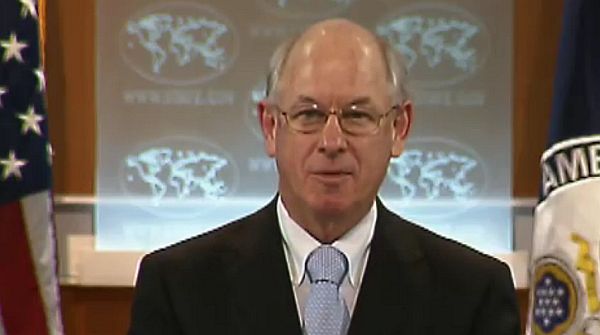
Eleven days ago, State Department spokesman PJ Crowley didn’t make it sound like the US was paying close attention to what was happening in Tunisia. This was how he covered the issue on January 4:

QUESTION: On Tunisia, there’s continued, sort of, civil unrest there, and I was just wondering –

MR. CROWLEY: What country?

QUESTION: Tunisia. Tunisia. And I was wondering what you made of the situation there.

MR. CROWLEY: Actually, I didn’t get updated on Tunisia today. So we’ll save that question –

QUESTION: When was the last time you did get updated on Tunisia? (Laughter.)

The next day, Crowley seemed surprised that questions about Tunisia were still being raised. The sum of the State Department’s concern seemed to be the extent to which unrest might affect American travelers.

QUESTION: Do you have any reaction to the recent unrest in Tunisia?

MR. CROWLEY: Tunisia makes an appearance for the second day in a row. I mean, last month, there were some demonstrations that occurred in Tunisia over a several-day period. They appeared to us to be triggered by economic concerns and not directed toward Westerners or Western interests. As we do in various places around the world where we have concerns about the safety of our citizens, we did put out a Warden Message right at the end of the year urging Americans to be alert to local security developments, but – and it’s best to avoid these demonstrations, even ones that can appear peaceful.

QUESTION: But aren’t you concerned about economic reforms in Tunisia, or –

MR. CROWLEY: That is something that is part of our ongoing dialogue with Tunisia.

I guess the first question for Crowley on Monday should be: does the US still have an ongoing dialogue with Tunisia, or is it now simply in what has so often been the Obama administration’s default position — closely monitoring the situation?

That this administration expends so much of its energy making feeble gestures to demonstrate that it is on top of the situation, reflects a bigger problem — as one former State Department official recently noted in a different context — “which is that of a dysfunctional administration in which no one is in charge.”

Facebooktwittermail

The gun — preeminent symbol of the impotence of the American citizen

A paradox embedded in many popular symbols of power is that their greatest appeal is often found among those who perceive themselves as the most weak. Nowhere is this marriage of power and weakness more evident than in the American fetish of the handgun.

Jared Lee Loughner is apparently none too enamored with the US Constitution (though chooses right now to seek its protection), but if in the coming weeks he reveals more about the inner workings of his mind, it should come as no surprise if it turns out that he targeted Representative Gabrielle Giffords not solely because of what she represented politically but also in part because she was a woman. For an alienated young man in America, it is all too easy for sexual frustration to seek violent release through the culturally-validated possession and use of a gun.

Predictably there will now be renewed calls for stronger forms of federal gun control, though if she recovers, whether Giffords will modify her own position on gun control seems doubtful. She believes gun ownership is a constitutional right and an “Arizona tradition” and like her assailant, owns a Glock handgun.

The rational arguments in favor of tight restrictions on gun ownership are so numerous and so easy to grasp, the one thing their lack of traction makes clear is that thanks to the efforts of the gun lobby, “gun rights” has been turned into such an emotive issue that it has effectively been sequestered from rational debate.

Were any other major country to suddenly declare that it was going to adopt the American way and provide its citizens with ready access to weapons and ammunition, most observers — including most Americans — would surely recognize this as an act of national lunacy.

Gun rights in America rest solely on the claim that they represent a dimension of America’s national heritage and the character of its people. In other words, the right to bear arms can be reduced to a reason impervious to reason: because we are Americans — the Second Amendment is just a fig leaf.

But in spite of this rational dead end, I still can’t help wonder whether some leverage might be derived from linking the issue to other aspects of the American way of life which are regulated by law with little protest.

There is as far as I’m aware no movement defending the right of Americans to drive their automobiles without a licence or insurance — even though nothing underpins the American way of life more clearly than the right to drive.

If this American right can nevertheless by girded by legal restrictions, why should there not be limitations at least as equally rigorous on the ownership of guns?

If the use of a car is potentially so dangerous that it cannot be allowed without insurance, why shouldn’t someone who wants to own a lethal weapon also be required to have insurance? If legislators can’t agree on the risks involved in gun ownership, I doubt that insurance actuaries would suffer the same problem.

And if someone driving a car is required to carry a photo ID showing that they are licensed to drive, why shouldn’t every American who owns a gun?

When Arizona last summer made it legal to carry a concealed weapon without a permit, one of the cockeyed arguments among the proponents of the law was that armed Arizonans would be able to defend themselves when under attack.

It turned out yesterday in Tuscon that only one man had taken full advantage of the new law: Jared Loughner.

Facebooktwittermail

Arizona has become ‘the Mecca for prejudice and bigotry’

The New York Times reported:

The shooting of Representative Gabrielle Giffords and others at a neighborhood meeting in Arizona on Saturday set off what is likely to be a wrenching debate over anger and violence in American politics.

While the exact motivations of the suspect in the shootings remained unclear, an Internet site tied to the man, Jared Lee Loughner, contained antigovernment ramblings. And regardless of what led to the episode, it quickly focused attention on the degree to which inflammatory language, threats and implicit instigations to violence have become a steady undercurrent in the nation’s political culture.

Clarence W. Dupnik, the Pima County sheriff, seemed to capture the mood of the day at an evening news conference when he said it was time for the country to “do a little soul-searching.”

“It’s not unusual for all public officials to get threats constantly, myself included,” Sheriff Dupnik said. “That’s the sad thing about what’s going on in America: pretty soon we’re not going to be able to find reasonable, decent people willing to subject themselves to serve in public office.”

Facebooktwittermail

U.S. subpoenas Twitter over WikiLeaks supporters

The New York Times reports:

Prosecutors investigating the disclosure of thousands of classified government documents by the anti-secrecy group WikiLeaks have gone to court to demand the Twitter account activity of several people linked to the organization, including its founder, Julian Assange, according to the group and a copy of a subpoena made public late Friday.

The subpoena is the first public evidence of a criminal investigation, announced last month by Attorney General Eric H. Holder Jr., that has been urged on by members of Congress of both parties but is fraught with legal and political difficulties for the Obama administration. It was denounced by WikiLeaks, which has so far made public only about 1 percent of the quarter-million confidential diplomatic cables in its possession but has threatened to post them all on the Web if criminal charges are brought.

Dozens of Pentagon and State Department officials have worked for months to assess the damage done to American diplomatic and military operations by the disclosures. In recent weeks, Justice Department officials have been seeking a legal rationale for charging Mr. Assange with criminal behavior, including whether he had solicited leaks.

The move to get the information from five prominent figures tied to the group was revealed late Friday, when Birgitta Jonsdottir, a former WikiLeaks activist who is also a member of Iceland’s Parliament, received an e-mail notification from Twitter.

In the message, obtained by The New York Times, the company told her it had received a legal request for details regarding her account and warned that the company would have to respond unless the matter was resolved or “a motion to quash the legal process has been filed.” The subpoena was attached.

The subpoena was issued by the United States attorney for the Eastern District of Virginia on Dec. 14 and asks for the complete account information of Pfc. Bradley Manning, the Army intelligence specialist awaiting a court martial under suspicion of leaking materials to WikiLeaks, as well as Ms. Jonsdottir, Mr. Assange and two computer programmers, Rop Gonggrijp and Jacob Appelbaum. The request covers addresses, screen names, telephone numbers and credit card and bank account numbers, but does not ask for the content of private messages sent using Twitter.

Some published reports in recent weeks have suggested that the Justice Department may have secretly impaneled a grand jury in the Eastern District of Virginia, which often handles national security cases, to take evidence in the WikiLeaks inquiry. But the subpoena, unsealed by a Jan. 5 court order at the request of Twitter’s lawyers, was not issued by a grand jury.

In Twitter messages, WikiLeaks confirmed the subpoena and suggested that Google and Facebook might also have been issued such legal demands. Officials for Facebook declined to comment, and Google did not immediately respond to an inquiry.

Meanwhile, WikiLeaks tweeted: “WARNING all 637,000 @wikileaks followers are a target of US gov subpoena against Twitter, under section 2. B http://is.gd/koZIA”

I’m not going to hold my breath waiting for an email notification from Twitter. As for the silence from Google and Facebook — that speaks volumes.

Facebooktwittermail

Secrecy is the original sin

From Truthout:

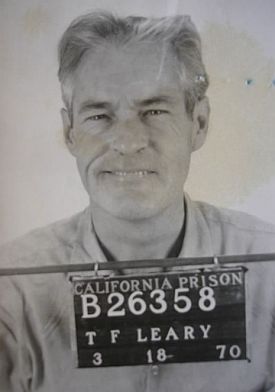
Largely because of his advocacy of psychedelic drugs, Tim Leary became a high-profile political prisoner whom Nixon called “the most dangerous man in America” (the same label Nixon used to describe Daniel Ellsberg). Leary was sentenced to ten years in prison for possession of .0025 grams of cannabis.

After escaping from prison in 1970, he became the object of an international manhunt. Finally captured in Afghanistan, he was kidnapped by the CIA – there was no extradition treaty between the two countries – and brought back to face four more years in prison, including long stretches in solitary confinement, before he was released in 1976. The following is an excerpt from a text he wrote in maximum-security Folsom Prison, California, in May 1973. — Michael Horowitz

Timothy Leary writing at the time of Watergate:

When you think about it, secrecy is the cause of the whole flap. Ellsberg and Russo published some secrets. Leaks in the White House. The plumbers steal Ellsberg’s psychiatric secrets. And bug the Democrat’s phone calls. The entire White House is involved in cover-up. The hearings center on cover-up of the cover-up.
Secrecy is the enemy of sanity and loving trust. If you keep secrets, you are an insane paranoiac. Concealment is the seed source of every human conflict. Secrecy is always caused by guilt or fear. [Gordon] Liddy’s parents were guilty about sex. And Nixon’s parents. It drives them crazy when he secretly suspects that she’s keeping secrets so he hires a private detective and vice versus.

Let’s break out of the huddle. Before [FBI Director] J. Edgar Hoover there were no secret police in this country. Before World War II there was no C.I.A. and America was amazingly unconcerned with secrecy. The hidden sickness has become lethally epidemic in the last forty years.

Now comes the electronic revolution. Reveal-ation. Bugging equipment effective at long distances is inexpensive and easily available. Good. Liberals want stiff laws against bugging. It’s the wrong move. Legalize everything. Legalize bugging. Let’s forget artificial secrets and concentrate on the mysteries.

I can tell you bugging is nothing to worry about. I’ve been tapped, surveilled, tailed for ten years. In Algeria everyone knew of at least three taps on all international calls — Algerian, French and C.I.A. The Algerians knew every move we made. That’s why they liked us. I was called in once by the Swiss Secret Service about some threats on my life. They offered me body guards. I looked at the chief agent and laughed. “Moi! Merci, non.” The agent laughed with me. “Professor, the Swiss police never sleep. We watch over you twenty-four hours a day.” Any real true intimate secrets are preserved in the tender codes of love. Privacy is woven with electric threads of contact that cannot be INTERCEPTED. Love has nothing to hide.

Secrecy is the original sin. Fig leaf in the Garden of Eden. The basic crime against love. The issue is fundamental. What a blessing that Watergate has been uncovered to teach us the primary lesson. The purpose of life is to receive, synthesize, and transmit energy. Communication fusion is the goal of life. Any star can tell you that. Communication is love. Secrecy, withholding the signal, hoarding, hiding, covering up the light is motivated by shame and fear, symptoms of the inability to love. Secrecy means that you think love is shameful and bad. Or that your nakedness is ugly. Or that you hide unloving, hostile feelings, Seed of paranoia and distrust.

Those who love have no need to hide their actions. As so often happens, the extreme wing is half right for the wrong reasons. They say primly: if you have done nothing wrong, you have no fear of being bugged. Exactly. But the logic goes both ways. Then F.B.I, files, and C.I.A. dossiers, and White House conversations should be open to all. Let every thing hang open. Let government be totally visible. The last, the very last people to hide their actions should be the police and government.

We operate on the assumption that everyone knows everything, anyway. There is nothing and no way to hide. This is the acid message. We’re all on cosmic T.V. every moment. We all play starring roles in the galactic broadcast: This Is Your Life. I remember the early days of neurological uncovering, desperately wondering where I could go to escape. Run home, hide under the bed, in the closet, in the bathroom? No way. The relentless camera “I” follows me everywhere. We can only keep secrets from ourselves.

And none of the legal experts get the point of Watergate. [Special prosecutor Archibald] Cox chasing leaks from his own staff.

We recall the classic political scandals involving secrets: Dreyfus, Alger Hiss, the Rosenbergs. The heroic figures around whom Watergate revolves, Tony [Russo] and Dan [Ellsberg]. Brave Russian dissenters uncovering the secret that everyone knows about Soviet repression.

I laugh at government bugging. Let the poor, deprived, bored creatures listen to our conversations, tape our laughter, study our transmissions. Maybe it will turn them on. Perhaps they’ll get the message our love-shine transmits: there is nothing to fear.

From Neuropolitics, 1977.

Facebooktwittermail

Lockheed Martin: the shadow government

Yahoo Tech Ticker reports:

Too big to fail?

That’s been the key question asked of Wall Street’s biggest banks since the September 2008 collapse of Lehman Brothers, which sent shock waves through the global financial system and led to the worst recession this country has seen since the Great Depression.

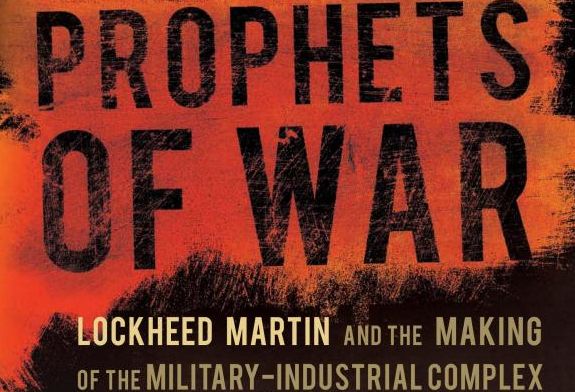
But, there is another firm far from the circles of Wall Street for which that same question should be asked, says William Hartung, author of the new book Prophets of War. The subtitle of his book says it all: Lockheed Martin and the Making of the Military-Industrial Complex.

With $40 billion in annual revenue, Lockheed Martin is the single largest recipient of U.S. tax dollars. The company receives about $36 billion in government contracts per year. In 2008, $29 billion of that was for U.S. military contracts – a dollar figure 25% higher than its competitors Boeing Co. and Northrop Grumman.

What does that mean for you, the U.S. taxpayer? According to Hartung, each taxpaying household contributes $260 to Lockheed’s coffers each year!

Facebooktwittermail

Taliban not quite twelve feet tall

The theory behind President Obama’s Afghan surge (beyond the moronically simplistic “if it worked in Iraq, it should work in Afghanistan”) was the notion that after “sustained pressure,” “a more robust approach” — or whatever euphemism one chooses for an operation designed to kill more people — the US and Nato would be in a better position to try and negotiate an end to the war.

Now comes an unofficial Nato assessment: in spite of the surge, the Taliban are standing tall. In fact, when presenting a resistance to foreign forces at a ratio of 1:12, you have to wonder what the Pentagon, fielding its million-dollar-a-year soldiers, is learning from the Taliban in terms of the economics of warfare.

The Associated Press reports:

The Taliban are pitted against about 140,000 ISAF troops — two-thirds of them Americans — and over 200,000 members of the government’s security forces.

This gives the allies a numerical advantage of at least 12:1 — one of the highest such ratios in modern guerrilla wars. At the height of the Vietnam War, the U.S. and its allies had an advantage of between 4-5 to 1 over their Communist foes.

When one Afghan fighter with no body armor and little more than an AK-47 can effectively stand up to a dozen modern soldiers (obviously not all of whom are actually on the battlefield), even the war’s most stalwart defenders should be paying attention to the fabulous waste of money. The allies so-called numerical advantage means that for every dollar the Taliban spends, the Pentagon is wasting several hundred.

For how many more decades can the Pentagon continue fighting wars that it is incapable of winning — and draining the US economy in the process — before the knuckleheads across America who have been spellbound by the words “national security” finally wake up and say, enough?

Facebooktwittermail

The tyranny of the national security state

Andrew Bacevich writes:

American politics is typically a grimy business of horses traded and pork delivered. Political speech, for its part, tends to be formulaic and eminently forgettable. Yet on occasion, a politician will transcend circumstance and bear witness to some lasting truth: George Washington in his Farewell Address, for example, or Abraham Lincoln in his Second Inaugural.

Fifty years ago, President Dwight D. Eisenhower joined such august company when, in his own farewell address, he warned of the rise in America of the “military-industrial complex.” An accomplished soldier and a better-than-average president, Eisenhower had devoted the preponderance of his adult life to studying, waging, and then seeking to avert war. Not surprisingly, therefore, his prophetic voice rang clearest when as president he reflected on matters related to military power and policy.

Ike’s farewell address, nationally televised on the evening of January 17, 1961, offered one such occasion, although not the only one. Equally significant, if now nearly forgotten, was his presentation to the American Society of Newspaper Editors on April 16, 1953. In this speech, the president contemplated a world permanently perched on the brink of war—“humanity hanging from a cross of iron”— and he appealed to Americans to assess the consequences likely to ensue.

Separated in time by eight years, the two speeches are complementary: to consider them in combination is to discover their full importance. As bookends to Eisenhower’s presidency, they form a solemn meditation on the implications—economic, social, political, and moral—of militarizing America.

Facebooktwittermail

Once a terrorist, always a terrorist — unless you’re an Israeli

David Cole challenges the Supreme Court’s idiotic ruling on the definition of “material support” offered to designated terrorist organizations.

Did former Attorney General Michael Mukasey, former New York Mayor Rudolph Giuliani, Tom Ridge, a former homeland security secretary, and Frances Townsend, a former national security adviser, all commit a federal crime last month in Paris when they spoke in support of the Mujahedeen Khalq at a conference organized by the Iranian opposition group’s advocates? Free speech, right? Not necessarily.

The problem is that the United States government has labeled the Mujahedeen Khalq a “foreign terrorist organization,” making it a crime to provide it, directly or indirectly, with any material support. And, according to the Justice Department under Mr. Mukasey himself, as well as under the current attorney general, Eric Holder, material support includes not only cash and other tangible aid, but also speech coordinated with a “foreign terrorist organization” for its benefit. It is therefore a felony, the government has argued, to file an amicus brief on behalf of a “terrorist” group, to engage in public advocacy to challenge a group’s “terrorist” designation or even to encourage peaceful avenues for redress of grievances.

Don’t get me wrong. I believe Mr. Mukasey and his compatriots had every right to say what they did. Indeed, I argued just that in the Supreme Court, on behalf of the Los Angeles-based Humanitarian Law Project, which fought for more than a decade in American courts for its right to teach the Kurdistan Workers’ Party in Turkey how to bring human rights claims before the United Nations, and to assist them in peace overtures to the Turkish government.

But in June, the Supreme Court ruled against us, stating that all such speech could be prohibited, because it might indirectly support the group’s terrorist activity. Chief Justice John Roberts reasoned that a terrorist group might use human rights advocacy training to file harassing claims, that it might use peacemaking assistance as a cover while re-arming itself, and that such speech could contribute to the group’s “legitimacy,” and thus increase its ability to obtain support elsewhere that could be turned to terrorist ends. Under the court’s decision, former President Jimmy Carter’s election monitoring team could be prosecuted for meeting with and advising Hezbollah during the 2009 Lebanese elections.

At the heart of the Supreme Court justices view of terrorism is that it can be defined more in terms of who terrorists are than in what they do. In essence, it declares: once a terrorist, always a terrorist (unless the US government decides otherwise).

This view has become almost a religious orthodoxy in the United States over the last decade. Hence, it is only among hardcore advocates of human rights that the fact that men now being imprisoned primarily because of fears about what they might do in the future, is seriously being challenged.

But if this once-a-terrorist-alway-a-terrorist view was actually applied with rigor, how could the United States justify its support for Israel? Former prime minister Menachim Begin was a terrorist. Tzipi Livni’s parents were terrorists. Terrorism played a vital role in the creation of Israel. And yet material support from the US government to Israel flows in abundance. Different strokes for different folks, I guess.

Facebooktwittermail

Psychologists protest ‘inhumane, harmful’ treatment of Bradley Manning

Raw Story reports:

A psychologists’ group has sent a letter to Defense Secretary Robert Gates asking him to “rectify the inhumane, harmful, and counterproductive treatment” of the Army private accused of being WikiLeaks’ source for the US State Department cables.

In a letter dated Monday, Psychologists for Social Responsibility (PsySR) argued that PFC Bradley Manning, who has been held in solitary confinement at the Marine Corps brig in Quantico for the past five months, may be the victim of political retribution. The group also suggested that the psychological damage Manning may be suffering from spending 23 hours a day alone may ruin his bid for a fair trial.

“History suggests that solitary confinement, rather than being a rational response to a risk, is more often used as a punishment for someone who is considered to be a member of a despised or ‘dangerous’ group,” the letter stated. “In any case, PFC Manning has not been convicted of a crime and, under our system of justice, is at this point presumed to be innocent.”

Facebooktwittermail

2010, the year of assassination by drones

The Asian News International news agency reports:

As many as 2,043 people, mostly civilians, were killed in US drone attacks in northwestern parts of Pakistan during the last five years, a research has revealed.

The yearly report of Conflict Monitoring Centre (CMC) has termed the CIA drone strikes as an ”assassination campaign turning out to be revenge campaign”, and showed that 2010 was the deadliest year ever of causalities resulted in drone-hits in Pakistan.

According to the report, 134 drone attacks were reported in Pakistan’s FATA region in 2010 alone, inflicting 929 causalities. December 17 was the deadliest day of 2010 when three drone attacks killed 54 people in Khyber Agency.

Regarding civilian causalities and attacks on women and children, the report said: “People in the tribal belt usually carry guns and ammunition as a tradition. US drone will identify anyone carrying a gun as a militant and subsequently he will be killed.”

“Many times, people involved in rescue activities also come under attack. The assumption that these people are supporters of militants is quite wrong,” The Nation quoted the CMC report, as stating.

The document cited the Brooking Institute”s research, which suggested that with every militant killed, nearly ten civilians also died.

It also mentioned a related research report of Campaign for Innocent Victims in Conflict (CIVIC), which underlined that at least 2,100 civilians were killed and various others injured during 2009, in the ongoing war on terror and drone attacks.

The CMC report, “2010, The Year of Assassination by Drones,” can be read here [PDF].

Facebooktwittermail

Bradley Manning and the case against solitary confinement

Lynn Parramore lays out the reasons why solitary confinement is a form of torture.

The degree of civilization in a society can be judged by entering its prisons.
~Fyodor Dostoevsky

In the earliest days of our Republic, a group of well-meaning Philadelphia Quakers set out to reform the prison system. The idea was to remove convicts from the mayhem and corruption of overcrowded jails to solitary cells where sinners would return to mental and spiritual health through reflection. In the Walnut Street Jail, no windows would distract the prisoners with street life; no conversation would disturb their penitence. Alone with God, they would be rehabilitated.

There was a small problem. Many of the prisoners went insane. The Walnut Street Jail was shut down in 1835.

But the word penitentiary became part of the language, and the idea of placing prisoners in solitary confinement did not die. It seemed so reasonable – so much better than chain gangs or public stocks. New prisons opened to test the theory that solitude might bring salvation to criminals.

Charles Dickens had a keen interest in prison conditions, having witnessed his father’s detention in a Victorian debtor’s prison. When he heard about the latest American innovation in housing convicts, he came to see for himself. At Philadelphia’s Eastern State Penitentiary, the wretches he found in solitary confinement were barely human spectres who picked their flesh raw and stared blankly at walls. His on-the-spot conclusion: Solitary confinement is torture. [Continue reading.]

Facebooktwittermail

Don’t be distracted by body scanners: government spying and the Fourth Amendment

Martin Lijtmaer writes:

On December 15, Bill of Rights Day, the uproar over body scanners had brought the Fourth Amendment to the front of the public debate. There are legitimate reasons to be upset over invasive, costly and arguably ineffective measures adopted in the guise of protecting national security. But the call to arms over body scanners is a distraction.

First, it’s debatable whether body scanners violate the Fourth Amendment. There is a plausible argument that such security measures are reasonable in light of potential hijacking threats. With 9/11 still etched in our national psyche, it’s hard to imagine that courts would deem body scanners unconstitutional.

Second and more important, the uproar over body scanners distracts us from far more egregious constitutional violations routinely committed by our government.

The Fourth Amendment explicitly prohibits authorities from conducting “unreasonable searches and seizures” and requires judicially authorized warrants based on “probable cause” that “particularly describ[es] the place to be searched and the persons or things to be seized.” Thanks to the Fourth Amendment, police must reasonably suspect criminal activity before conducting a stop and, absent rare exceptions, must secure a warrant, signed by a judge, before conducting a search.

However, in the wake of 9/11, federal agencies have fully ignored these constitutional restraints.

Let’s take, for example, the rampant use of national security letters (NSLs) by the FBI. NSLs are requests for information targeting an individual, but issued to third parties, such as Internet service providers, financial institutions or libraries. The Fourth Amendment requires that such information be obtained through a search warrant signed by a judge, supported by probable cause and specifically describing both the target of the warrant and reason for it.

However, the FBI employs NSLs unrestrained by any of these constitutional requirements. In other words, the FBI can access your highly personal and private information on a whim. And it has not used this power sparingly.

Facebooktwittermail

‘Disappeared’ Pakistanis — innocent and guilty alike — have fallen into a legal black hole

Without a single reference to President Obama’s drone war in Pakistan, extrajudicial detention of prisoners at Guantanamo, the torture of suspected terrorists, CIA-run secret prisons, rendition, presidential authorization to assassinate US citizens, or the United States’ long history of supporting governments that use their power to suppress political dissent by making their opponents “disappear,” the New York Times reports:

The Obama administration is expressing alarm over reports that thousands of political separatists and captured Taliban insurgents have disappeared into the hands of Pakistan’s police and security forces, and that some may have been tortured or killed.

The issue came up in a State Department report to Congress last month that urged Pakistan to address this and other human rights abuses. It threatens to become the latest source of friction in the often tense relationship between the wartime allies.

The concern is over a steady stream of accounts from human rights groups that Pakistan’s security services have rounded up thousands of people over the past decade, mainly in Baluchistan, a vast and restive province far from the fight with the Taliban, and are holding them incommunicado without charges. Some American officials think that the Pakistanis have used the pretext of war to imprison members of the Baluch nationalist opposition that has fought for generations to separate from Pakistan. Some of the so-called disappeared are guerrillas; others are civilians.

“Hundreds of cases are pending in the courts and remain unresolved,” said the Congressionally mandated report that the State Department sent to Capitol Hill on Nov. 23. A Congressional official provided a copy of the eight-page, unclassified document to The New York Times.

Separately, the report also described concerns that the Pakistani military had killed unarmed members of the Taliban, rather than put them on trial.

Two months ago, the United States took the unusual step of refusing to train or equip about a half-dozen Pakistani Army units that are believed to have killed unarmed prisoners and civilians during recent offensives against the Taliban. The most recent State Department report contains some of the administration’s most pointed language about accusations of such so-called extrajudicial killings. “The Pakistani government has made limited progress in advancing human rights and continues to face human rights challenges,” the State Department report concluded. “There continue to be gross violations of human rights by Pakistani security forces.”

Facebooktwittermail

WikiLeaks’ gift to Robert Mugabe

The political and media establishment’s assault on WikiLeaks has had the unfortunate effect of creating two camps — one for which WikiLeaks is a band of cyber-terrorists and the other in which WikiLeaks’ embattled status fosters a sense that all challenges are unwarranted.

At this point, I still believe that WikiLeaks’ actions pose a legitimate challenge to the cancerous growth of secrecy in the West’s nominal democracies. If however I was living under the oppressive rule of the Mugabe regime in Zimbabwe, I don’t think I’d have a favorable view of Julian Assange and his cohorts. Indeed, in this instance, I’d say WikiLeaks fucked up — perhaps catastrophically.

Christopher R. Albon writes:

Last year, early on Christmas Eve morning, representatives from the U.S., United Kingdom, Netherlands, and the European Union arrived for a meeting with Zimbabwean opposition leader Morgan Tsvangirai. Appointed prime minister earlier that year as part of a power-sharing agreement after the fraud- and violence-ridden 2008 presidential election, Tsvangirai and his political party, Movement for Democratic Change (MDC), are considered Zimbabwe’s greatest hopes for unseating the country’s long-time de facto dictator Robert Mugabe and bringing democratic reforms to the country.

The topic of the meeting was the sanctions imposed on Zimbabwe by a collection of western countries, including the U.S. and E.U. Tsvangirai told the western officials that, while there had been some progress in the last year, Mugabe and his supporters were dragging their feet on delivering political reforms. To overcome this, he said that the sanctions on Zimbabwe “must be kept in place” to induce Mugabe into giving up some political power. The prime minister openly admitted the incongruity between his private support for the sanctions and his public statements in opposition. If his political adversaries knew Tsvangirai secretly supported the sanctions, deeply unpopular with Zimbabweans, they would have a powerful weapon to attack and discredit the democratic reformer.

Later that day, the U.S. embassy in Zimbabwe dutifully reported the details of the meeting to Washington in a confidential U.S. State Department diplomatic cable. And slightly less than one year later, WikiLeaks released it to the world.

In Zimbabwe’s The Standard, Nqaba Matshazi writes:

The recent WikiLeaks cable releases could have afforded President Robert Mugabe ammunition to call for elections next year, with his main argument that his coalition partner, Morgan Tsvangirai was in bed with the West.

For years now, Mugabe has claimed that Tsvangirai was a pliant tool for Britain and America and revelations that the Prime Minister called for the West to maintain sanctions against Zimbabwe will only strengthen the veteran leader’s resolve to hold elections.

The removal of sanctions is listed as one of the priority issues in the Global Political Agreement (GPA) and hawks in Mugabe’s Zanu PF party are already screaming treason and are using the cables as an excuse to call for the end of the inclusive government.

Political analysts last week told The Standard that the leaked cables were fitting well into Zanu PF’s agenda and they would use them to confront the government.

Trevor Maisiri said Zanu PF would now use the cables as an excuse to call for the end of the inclusive government charging that they were getting rid of imperialist influences in the government.

“Zanu PF will obviously see these leaks as a bonus to their already rubber-stamped position of early elections,” he said.

“What Zanu PF may then do is craft their message upon the urgency of having election so as to retire the MDC-T out of government and thereby ensure that there is a blockade of the USA influence in Zimbabwean affairs.”

South Africa’s Business Day reports:

Zimbabwean government’s threat to investigate treason charges against Prime Minister Morgan Tsvangirai over his confidential talks with US diplomats disclosed by WikiLeaks was Zanu (PF)’s opening salvo ahead of proposed elections next year, analysts said yesterday.

The South African government yesterday refused to speculate on how new treason charges, if instituted against Mr Tsvangirai, would affect President Jacob Zuma ’s mediation efforts.

Siphamandla Zondi, executive director at the Institute for Global Dialogue, said the WikiLeaks revelations would hurt Mr Tsvangirai’s political stature, and were likely to be exploited by President Robert Mugabe to discredit him and reinforce negative perceptions spread by Zanu (PF) that the Movement for Democratic Change (MDC) was “the political surrogates and puppets” of western powers.

The attorney-general, Johannes Tomana, reportedly said he intended appointing a commission of five lawyers to examine whether recent disclosures amounted to a breach of the constitution.

Facebooktwittermail

State Dept spokesman P J Crowley is a liar

Richard Silverstein writes:

On February 25, 2010, State Department spokesperson Philip Crowley lied when he told a press conference that he wasn’t aware of any request from Dubai for assistance in tracking the Mossad killers of Mahmoud al-Mabouh. To those who say that Wikileaks hasn’t told us anything we didn’t already know–think again.

Wikileaks has just released a February 24, 2010 cable in which the embassy relays the specific credit card numbers used by 14 of the 27 known Mossad suspects to State with a request for assistance from authorities investigating the killing, and confirms that the UAE foreign minister made the exact same request directly to Secretary Clinton on February 23rd:

On the margins of a meeting with visiting Secretary [of Energy] Chu, on Feb 24 MFA Minister of State Gargash made a formal request to the Ambassador for assistance in providing cardholder details and related information or credit cards reportedly issued by a U.S. bank to several suspects in last month’s killing of Hamas leader Mahmoud Al-Mabhouh in Dubai. According to a letter Gargash gave the Ambassador (which transmitted details of the request from Dubai Security authorities to the UAE Central Bank), the credit cards were issued by MetaBank, in Iowa.

Comment: Ambassador requests expeditious handling of and reply to the UAEG request, which was also raised by UAE Foreign Minister Abdullah bin Zayed in a February 23 meeting with Secretary Clinton in Washington.

Given that the State of Israel’s role in the assassination of Mahmoud al Mabhouh and in the theft and fraudulent use of British and other passports, it comes as no surprise that as these facts become matters of public record, the new chief of Mossad is about to issue an apology to the British government and promise not to commit such crimes in the future. This is not to suggest that either the Israelis or the British are opposed to similar assassinations being conducted in the future — merely that Mossad is expected operate its death squads in such a way that Israel’s allies can be saved from embarrassment.

Facebooktwittermail