Learning from nature

Human beings have great skill and ingenuity in building machines, yet to the extent that we see ourselves as machine-builders and tool-users, we easily lose touch with the reality that we are organisms that can only exist because we coexist in an incredibly complex set of relations with constellations of other organisms.

Through a fixation on our capacities as agents of change, we see ourselves as distinct, individual, and set apart, yet in fact each of our bodies is really a society in which the cells we claim as our own are vastly outnumbered by bacteria that are not only essential for the assimilation of nutrients but also regulate our immune systems and even affect neurotransmitters in the brain. Our sense of autonomy is pure fiction.

When scientists re-engineer bacteria (see “Redesigning nature”), they are not simply making alterations to the DNA. They are also imposing the machine-builder’s mentality on the natural world. They are assuming that if nature can be shaped in accordance with human designs, it can be improved.

Patrick Blanc is a French botanist and creator of vertical gardens.

I just stumbled across Blanc’s work, so I actually have no idea what he thinks, yet his vertical gardens seem to be an expression of the opposite of the bioengineers’ orientation.

Turning the stark face of a building into a vibrant garden seems like a good way of showing that nature offers vastly more to the human world than we can produce by “enhancing” nature.

Instead of figuring out how we can redesign nature — as though we are its masters — we need to be informed by nature, that we might become better students.

L'Oasis d'Aboukir

L'Oasis d'Aboukir, Paris

Facebooktwittermail

Redesigning nature

One does not need to believe in a deity animating the natural world, in order to disturbed by the idea of manufactured organisms.

For the first time, scientists have created an organism with a new genetic code. We are told that recoded bacterium will be converted into:

… a living foundry, capable of biomanufacturing new classes of “exotic” proteins and polymers. These new molecules could lay the foundation for a new generation of materials, nanostructures, therapeutics, and drug delivery vehicles…

Treating DNA as a construction material involves a kind of hubris that glosses over what would seem to be inevitable: that there will be unintended consequences. By definition, we do not know what these will be.

SciTechDaily reports: Scientists from Yale and Harvard have recoded the entire genome of an organism and improved a bacterium’s ability to resist viruses, a dramatic demonstration of the potential of rewriting an organism’s genetic code.

“This is the first time the genetic code has been fundamentally changed,” said Farren Isaacs, assistant professor of molecular, cellular, and developmental biology at Yale and co-senior author of the research published October 18 in the journal Science. “Creating an organism with a new genetic code has allowed us to expand the scope of biological function in a number of powerful ways.”

The creation of a genomically recoded organism raises the possibility that researchers might be able to retool nature and create potent new forms of proteins to accomplish a myriad purposes — from combating disease to generating new classes of materials.

The research — headed by Isaacs and co-author George Church of Harvard Medical School — is a product of years of studies in the emerging field of synthetic biology, which seeks to re-design natural biological systems for useful purposes.

In this case, the researchers changed fundamental rules of biology. [Continue reading…]

Facebooktwittermail

American terrorism: ‘Will I be next?’ Drone strikes in Pakistan

Amnesty International:

I wasn’t scared of drones before, but now when they fly overhead I wonder, will I be next?
– Nabeela, eight-year-old granddaughter of US drone strike victim Mamana Bibi

On a sunny afternoon in October 2012, 68-year-old Mamana Bibi was killed in a drone strike that appears to have been aimed directly at her. Her grandchildren recounted in painful detail to Amnesty International the moment when Mamana Bibi, who was gathering vegetables in the family fields in Ghundi Kala village, northwest Pakistan, was blasted into pieces before their eyes. Nearly a year later, Mamana Bibi’s family has yet to receive any acknowledgment that it was the US that killed her, let alone justice or compensation for her death.

Earlier, on 6 July 2012, 18 male laborers, including at least one boy, were killed in a series of US drone strikes in the remote village of Zowi Sidgi. Missiles first struck a tent in which some men had gathered for an evening meal after a hard day’s work, and then struck those who came to help the injured from the first strike. Witnesses described a macabre scene of body parts and blood, panic and terror, as US drones continued to hover overhead.

The use of pilotless aircraft, commonly referred to as drones, for surveillance and so-called targeted killings by the USA has fast become one of the most controversial human rights issues in the world. In no place is this more apparent than in Pakistan.

The circumstances of civilian deaths from drone strikes in northwest Pakistan are disputed. The USA, which refuses to release detailed information about individual strikes, claims that its drone operations are based on reliable intelligence, are extremely accurate, and that the vast majority of people killed in such strikes are members of armed groups such as the Taliban and al-Qa’ida. Critics claim that drone strikes are much less discriminating, have resulted in hundreds of civilian deaths, some of which may amount to extrajudicial executions or war crimes, and foster animosity that increases recruitment into the very groups the USA seeks to eliminate.

According to NGO and Pakistan government sources the USA has launched some 330 to 374 drone strikes in Pakistan between 2004 and September 2013. Amnesty International is not in a position to endorse these figures, but according to these sources, between 400 and 900 civilians have been killed in these attacks and at least 600 people seriously injured. [Continue reading…]

See Amnesty’s 76-page report, ‘Will I be Next?’ U.S. Drone Strikes in Pakistan.

Facebooktwittermail

Caught between a drone on one side and al Qaeda on the other

A 97-page report produced by Human Rights Watch examines six US targeted killings in Yemen, one from 2009 and the rest from 2012-2013. Two of the attacks killed civilians indiscriminately in clear violation of the laws of war; the others may have targeted people who were not legitimate military objectives or caused disproportionate civilian deaths.

Facebooktwittermail

The U.S. government’s secrecy problem just got worse

Elizabeth Goitein writes: It is no secret that the United States government has too many secrets. Long before Edward Snowden’s revelations about mass surveillance by the National Security Agency, experts and government insiders were raising alarms about “overclassification.” The Public Interest Declassification Board, an independent advisory committee created by Congress, reported in November 2012 that “present practices for classification and declassification of national security information are outmoded, unsustainable and keep too much information from the public.” Two weeks ago, the Department of Justice’s inspector general issued a review of the department’s classification practices, concluding that “DOJ is susceptible to misclassification.”

At least some of the secrecy tidal wave can be attributed to an explosion in the amount of information — of all kinds — that the government generates. Since the beginning of the modern classification system in 1940, officials have classified documents unnecessarily, whether by rote or to hide embarrassing information. In the era of typewriters and carbon copies, however, the amount of secret paperwork generated was comprehensible in scale. Today, any individual item of classified information may generate hundreds or even thousands of classified emails or intranet posts. When combined with the dramatic growth of the U.S. national security establishment, the data revolution has turned overclassification into a multi-petabyte problem. In fiscal year 2012 alone, there were more than 95 million decisions to classify information.

But the increase in secrecy is not simply quantitative; it is qualitative, too. The government has begun to advance bold new justifications for classifying information that threaten to erode the principled limits that have existed — in theory, if not always in practice — for decades. The cost of these efforts, if they remain unchecked, may be the American public’s ability to hold its government accountable. [Continue reading…]

Facebooktwittermail

Security check now starts long before you fly

The New York Times reports: The Transportation Security Administration is expanding its screening of passengers before they arrive at the airport by searching a wide array of government and private databases that can include records like car registrations and employment information.

While the agency says that the goal is to streamline the security procedures for millions of passengers who pose no risk, the new measures give the government greater authority to use travelers’ data for domestic airport screenings. Previously that level of scrutiny applied only to individuals entering the United States.

The prescreening, some of which is already taking place, is described in documents the T.S.A. released to comply with government regulations about the collection and use of individuals’ data, but the details of the program have not been publicly announced.

It is unclear precisely what information the agency is relying upon to make these risk assessments, given the extensive range of records it can access, including tax identification number, past travel itineraries, property records, physical characteristics, and law enforcement or intelligence information.

The measures go beyond the background check the government has conducted for years, called Secure Flight, in which a passenger’s name, gender and date of birth are compared with terrorist watch lists. Now, the search includes using a traveler’s passport number, which is already used to screen people at the border, and other identifiers to access a system of databases maintained by the Department of Homeland Security.

Privacy groups contacted by The New York Times expressed concern over the security agency’s widening reach.

“I think the best way to look at it is as a pre-crime assessment every time you fly,” said Edward Hasbrouck, a consultant to the Identity Project, one of the groups that oppose the prescreening initiatives. “The default will be the highest, most intrusive level of search, and anything less will be conditioned on providing some additional information in some fashion.” [Continue reading…]

Facebooktwittermail

The DIA needs to know what’s happening everywhere at all times

This did not appear in The Onion — maybe that’s who WTOP’s J.J. Green writes for in his spare time.

It’s 9:51 a.m. on Aug. 23 at the Defense Intelligence Agency headquarters.

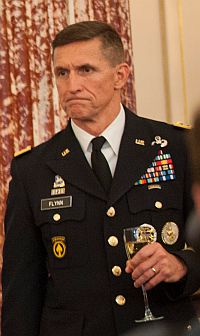
Army Lt. Gen. and DIA Director Michael T. Flynn surprises everyone in the room when he stands up and tells his staff, “Twenty minutes and I’ll be back.”

“Yes, sir — got it,” responds one of his aides.

DIA Director Michael T. Flynn cools off when suffering from information overload.

DIA Director Michael T. Flynn cools off when suffering from information overload.

With several staffers trailing him, Flynn then sets out with this reporter for a secret place that no journalist has ever seen.

“I want to show you a place, because it will give you an impression … of our ability to watch the world,” Flynn says.

The fast-paced, unprecedented walk through one of the most secretive places in the intelligence community is punctuated by the fact that an audio recording device is allowed to capture it all.

“You’re moving from the new building, which is — we’re on Bolling Air Force Base — and you’re moving to the old building,” says Flynn as the tour progresses. Layer by layer, he unveils the DIA’s enormous global responsibility, which boils down to one thing: preventing the U.S. from being blindsided by strategic surprise.

This mission breaks down into further areas of focus, Flynn says.

“There’s something called tactical surprise, something called strategic surprise and there’s clairvoyance,” he says, keeping a steady pace and walking briskly toward the agency’s situation center.

Negotiating a series of elevator rides, floors, twists and turns in the building, Flynn points out the difficulty of clairvoyance.

“You just can’t predict the classic black swan or aw-shucks moment that occurs when you wish you knew what was going to happen,” he says.

Flynn believes in order to avoid tactical and strategic surprises, the agency has to be able to operate within and understand what’s happening in any given environment.

He points out that when looking at the ever-changing intelligence enigma that is today’s world, there often are missing pieces the DIA has to account for in its analytical efforts.

Dealing with “strategic surprise for me, it’s kind of like every day we’re trying to put together this 5,000-piece (jigsaw) puzzle but we don’t have the box top to look at,” Flynn says.

“As something begins to build up — it may be the underpinnings of an insurgency or the thriving or lack of or the hopelessness within a society — (those elements) start to tell us things about something that may happen or not happen in a particular environment.”

The DIA needs to know what’s happening everywhere at all times, so the agency has thousands of personnel spread out across 142 countries, in multiple war zones and simmering hot spots. This means there is a constant blast of information and threats flowing back to Flynn, and just as many decisions that have to be made.

Nearing the entrance of the situation center, he is asked how he keeps up with it all.

“Really trusting the leaders that we have” and rising very early each day, he says.

“It starts probably about 4:30 every morning,” Flynn says. “It’s like eating five meals a day instead of sitting down at dinner. It’s constantly being fed to you. I have to discipline myself in what I call my own battle rhythm.”

As the door to the agency situation center begins to slowly open, the rhythm he speaks of is clearly present inside this top-secret world.

Facebooktwittermail

Without chemical arms, Syrian weaponry still fearsome

Reuters reports: On Sunday, September 29, President Bashar al-Assad declared to the world, via an interview on Italian television, his resolve to clear Syria of chemical weapons – accepting a Russian-brokered deal to avert punitive U.S. action.

That same morning his forces appear to have dropped some of the most powerful conventional weapons yet used in the civil war, in the rebel-held town of Raqqa. Evidence at the scene and witness testimony led Human Rights Watch to conclude that the 14 dead, many of them children, were killed by “vacuum bombs”.

As his government works with U.N. inspectors to destroy its chemical weapons, the scale of Assad’s remaining arsenal – and faltering supplies to his enemies – suggest he need not fear giving up poison gas shells of the kind that killed hundreds in rebel areas two months ago and prompted threats from Washington.

Relative armed strength is hard to estimate and is only one factor that may decide a war that has divided Syria on sectarian lines and drawn in rival foreign powers. But Assad’s use of such powerful weaponry while international attention is on his chemical disarmament underlines the difficulties facing the rebels – and their Western allies who want to force him out.

Air traffic data suggesting Qatar may have stopped shipping arms to Assad’s opponents, and other evidence of supply problems for the rebels despite a U.S. pledge to help, may also help explain recent government gains. Western fears of Islamists in rebel ranks complicates efforts to arm other opposition groups.

“As worries grow over Islamist influence, the rebels seem to be struggling more than they were to get supplies,” said David Hartwell, an analyst at IHS Jane’s. “At the same time, the government are throwing in everything they’ve got.”

Thermobaric or fuel-air explosives, known as vacuum bombs, are a small but fearsome part of the conventional array of artillery, tanks and aircraft Syrian troops have deployed since hostilities broke out in the wake of street protests in 2011.

Like much of Assad’s equipment, experts believe the bombs that hit Raqqa were Russian-made. Similar to devices in U.S. stocks, they detonate a cloud of vapor above the ground with a massive blast that sucks in oxygen from a wide area. That kills people in a variety of ways, including by rupturing their lungs. [Continue reading…]

Facebooktwittermail

The gradual rehabilitation of Syria’s Assad

Abdelbari Atwan writes: After two and a half years of brutal war the international community has reached a consensus that rehabilitation of Assad is preferable to the deep uncertainties of any alternative. There are many indicators and reasons:

First: the Americans and Europeans are prepared, not only to contemplate Assad’s candidacy in next summer’s presidential elections, but even to extend his current term by a further two years, postponing elections until 2015 with the excuse that security problems will make organizing the ballot extremely difficult, particularly in areas outside government.

Second: the erosion of international and regional isolation of the Syrian regime, following Assad’s agreement to sign up to the Chemical Weapons Convention and allow inspectors from the Organization for the Prohibition of Chemical Weapons (OPCW) to oversee the destruction of his arsenal. All of these factors enhance the legitimacy of the Assad regime.

Third: US-Iranian rapprochement has already seen John Kerry in one to one talks with his Iranian counterpart, foreign minister Mohammad Javad. Do not be surprised if Kerry meets Syrian foreign minister Walid Muallem in the coming weeks.

Fourth: the revival of Palestinian diplomatic relations with the regime after two and a half years of estrangement. Two days ago, Abbas Zaki, the personal envoy of President Mahmoud Abbas, met with President Assad. At the same time, a Hamas delegation, led by Mohammed Nasr, a member of the political bureau, visited Tehran and the two sides agreed to normalize their relationship again and mooted the return of Hamas to its base in Damascus – Khaled Meshaal uprooted it in April this year, breaking with the Assad regime, a long term supporter of the Palestinian resistance.

Fifth: rapid normalization of relations between the new government of Egypt led by Abdel Fattah El Sisi and its Syrian counterparts, and deteriorating relations between Egypt and the Obama administration which has suspended military aid to the junta estimated at more than $1.5 billion annually.

Sixth: there are indicators that the Government of Recep Tayyip Erdogan in Turkey is shifting its stance under mounting US pressure and Syrian allegations that it is supporting “terrorism” over the border in Syria. Turkey is starting to impose restrictions on the movement of jihadist groups across Turkish territory and has frozen some bank accounts belonging to known extremist groups.

Turkey also fears an explosion of sectarian and ethnic conflicts at home, mirroring those already tearing Iraq and Syria apart (the latter also shares Turkey’s Kurdish ‘problem’).

Seventh: widening gaps between the various elements within the Syrian opposition, and the lack of a unified universally representative umbrella. The armed opposition is now dominated by armed jihad groups and riven with division; there are frequent clashes between the Free Syrian Army and the Islamic State in Iraq and Syria. [Continue reading…]

Facebooktwittermail

Prince Bandar distances Saudis from U.S. over policies in Syria, Iran and Egypt

The Wall Street Journal reports: Saudi Arabia’s intelligence chief told European diplomats this weekend that he plans to scale back cooperating with the U.S. to arm and train Syrian rebels in protest of Washington’s policy in the region, participants in the meeting said.

Prince Bandar Bin Sultan al-Saud’s move increases tensions in a growing dispute between the U.S. and one of its closest Arab allies over Syria, Iran and Egypt policies. It follows Saudi Arabia’s surprise decision on Friday to renounce a seat on the United Nations Security Council.

The Saudi government, after preparing and campaigning for the seat for a year, cited what it said was the council’s ineffectiveness in resolving the Israeli-Palestinian and Syrian conflicts.

Diplomats here said Prince Bandar, who is leading the kingdom’s efforts to fund, train and arm rebels fighting Syrian President Bashar al-Assad, invited a Western diplomat to the Saudi Red Sea city of Jeddah over the weekend to voice Riyadh’s frustration with the Obama administration and its regional policies, including the decision not to bomb Syria in response to its alleged use of chemical weapons in August.

“This was a message for the U.S., not the U.N.,” Prince Bandar was quoted by diplomats as specifying of Saudi Arabia’s decision to walk away from the Security Council membership.

Top decisions in Saudi Arabia come from the king, Abdullah bin Abdulaziz al Saud, and it isn’t known if Prince Bandar’s reported remarks reflected a decision by the monarch, or an effort by Prince Bandar to influence the king. However, the diplomats said, Prince Bandar told them he intends to roll back a partnership with the U.S. in which the Central Intelligence Agency and other nations’ security bodies have covertly helped train Syrian rebels to fight Mr. Assad, Prince Bandar said, according to the diplomats. Saudi Arabia would work with other allies instead in that effort, including Jordan and France, the prince was quoted as saying. [Continue reading…]

Facebooktwittermail

Saudi Arabia stands out for its extraordinarily high levels of repression

Human Rights Watch: Other countries should use the rare opportunity for scrutiny of Saudi Arabia’s human rights record on October 21, 2013, to press for concrete steps to end abuses. Country representatives gathering in Geneva for the United Nations Human Rights Council’s periodic review of Saudi Arabia should press for actions that include the immediate release of Saudi activists jailed over the past year solely for peacefully advocating reform.

Saudi Arabia has convicted seven prominent human rights and civil society activists since the beginning of 2013 – including Abdullah al-Hamid, Mohammed al-Qahtani, Mikhlif al-Shammari, and Wajeha al-Huwaider – on broad, catch-all charges, such as “trying to distort the reputation of the kingdom,” “breaking allegiance with the ruler,” and “setting up an unlicensed organization.” Saudi courts are currently trying others, including the human rights lawyer Waleed Abu al-Khair, on similar charges and authorities have harassed and placed travel bans on dozens more.

“Many countries have problematic records, but Saudi Arabia stands out for its extraordinarily high levels of repression and its failure to carry out its promises to the Human Rights Council,” said Joe Stork, deputy Middle East director. “Countries should use this opportunity to send a strong, unified message that Saudi Arabia needs to make critical human rights reforms.” [Continue reading…]

Facebooktwittermail

Obama administration’s talk on Syria is based mostly on wishful thinking

McClatchy reports: At a public talk this month, a European Union official eschewed the bland language of diplomacy and told some hard truths about Syria: that the West had ignored Arab leaders’ warnings that President Bashar Assad wouldn’t go easily, that the opposition is in no shape to negotiate and that humanitarian aid reaches only a fraction of the needy.

“Wishful thinking harms people,” warned Kristalina Georgieva, the EU commissioner for international cooperation, humanitarian aid and crisis response, speaking at the New America Foundation, a public policy institute in Washington. “Because of wishful thinking, people die.”

Yet blunt assessments of the situation in Syria are still rare in Washington, where Obama administration officials cling to the dream that a moderate opposition can coalesce, beat back al Qaida extremists and shape Syria into a pluralistic democracy after Assad exits via a negotiated transition.

In reality, none of the ground conditions for such an outcome are in place, according to analysts who monitor the country’s civil war, which is in its third year with a death toll of more than 115,000. And with al Qaida and other militant Islamists dominating the rebel side, it’s unclear whether there’s even the political will anymore to see the opposition carry out the stated U.S. policy goal of toppling Assad.

“Anyone paying attention to the rise of radicals has to be coming to these conclusions. Assad is better for America than a jihadist win,” said Joshua Landis, the director of the Center for Middle East Studies at the University of Oklahoma and the author of the blog Syria Comment.

Though U.S. officials privately acknowledge many of the obstacles that Georgieva raised in her talk, there’s little such discussion in public. At White House and State Department briefings, in congressional hearings and at think tank events, U.S. officials keep pushing a message that the Syrian opposition is becoming more unified, moderate forces will prevail and Assad must go. There’s seldom an answer to the crucial question of who or what would replace him.

Day after day, the State Department gives updates on preparations for a long-delayed peace conference in Geneva, even though opposition leaders have said they won’t attend. [Continue reading…]

Facebooktwittermail

Syria’s citizen journalists

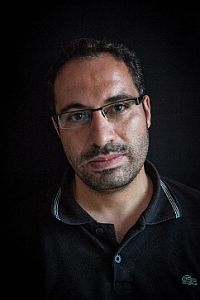
Matthew Shaer writes: Of all the citizen reporters I met, Jameel Salou was the closest to a traditional journalist. He was also the only one to encourage me to use his real name. “I have nothing to hide,” he told me.

Jameel Salou

Jameel Salou

Salou, who is 33, had served several stints in jail. In 2000, he and some friends were arrested for running a popular news website, Eye on Syria. They spent five years in Sednaya Prison, where Salou was beaten so badly by the guards that he lost sight in his left eye. Later, he was falsely accused of planting a bomb in a Damascus square and held captive by a branch of the military security services for 40 days. “Before we went to jail, we hated the regime and we hated its corruption,” Salou, who is slouchy and round with thinning black hair, told me. “After being in jail, we wanted to try hard to topple it.”

In 2010, Salou reopened Eye on Syria, recruiting activists he had met in Sednaya. But in 2011, the office was shelled and all of the equipment was destroyed, so Salou set up a new operation called the Free Syrian News Agency.

He has since built a large network of unpaid informants. Using cheap Sony Cyber-shot cameras, they have documented the spread of the fighting from Damascus toward Aleppo and Homs. He is perhaps best known for his precise documentation of the Ghouta chemical attack, where he and 13 colleagues were able to identify many of the victims long before the United Nations arrived on the scene.

Although many of his colleagues cover the revolution only from the rebel side, Salou insists on broadcasting rebel misdeeds as well those perpetrated by the regime. When a rebel unit was accused of summarily executing Syrian army soldiers, the Free Syrian News Agency carried a report on the alleged crime.

Last year, Salou held a conference for female revolutionaries in the city of Rakka. The site of the conference was controlled by the opposition, but the fact that women were included rankled members of ISIS, who later grew angry with Salou for his efforts to tally the number of regime soldiers killed by rebels. Salou was arrested for the third time in his life, although “kidnapped” may be a more accurate term, since ISIS has no authority to arrest anyone. He was released only when an FSA commander intervened on his behalf.

In July, Salou fled Syria for the Turkish city of Antakya with his wife and children. He has received death threats, and in Reyhanli, where he travels regularly for work, he said that he has been trailed by ISIS sympathizers. “I’m sentenced to death from both sides,” he said. “By the regime and by ISIS. If either finds me, they will kill me.”

Unlike foreign journalists, who have the option of covering the civil war, many Syrian citizen journalists told me that they felt the war had been thrust upon them—that if they don’t publicize its atrocities, no one will. “Other people might forget, but we can never forget,” Salou told me. “Our duty is to be witnesses.” [Continue reading…]

Facebooktwittermail

How the U.S. poisoned Iraq

MSNBC reports: Between 2002 and 2005, U.S. forces shot off 6 billion bullets in Iraq (something like 300,000 for every person killed). They also dropped 2,000 to 4,000 tons of bombs on Iraqi cities, leaving behind a witch’s brew of contaminants and toxic metals, including the neurotoxins lead and mercury. Mozhgan Savabieasfahani, an Iranian-born toxicologist at the University of Michigan School of Public Health, is studying the health impact, and her early findings are worrying. Last year, in a study published with Iraqi colleagues, she reported staggering increases in birth defects in the heavily bombarded cities of Basrah and Fallujah. The increases started in the early 90s, after the bombings of the first Gulf War, and continued right through 2011.

In Basrah, the group’s analysis of hospital records revealed 16-fold increase in birth defects among babies delivered between 1994 and 2003 (from 1.4 to 23 per 1,000 live births), and another 48% rise between 2003 to 2009 (from 23 to 48). Likewise, a survey of 56 families in Fallujah showed a 50% increase in birth defects between 1991 and 2010, along with an eightfold increase in miscarriages. Neurological defects are now pervasive in both cities. And though the causes are still uncertain, Savabieasfahani has cited lead and mercury as likely culprits. In Basrah, she found that teeth from malformed children contained three times more lead than teeth from normal ones. In Fallujah, children with birth defects harbored five times more lead than normal kids from the same city, and six times more mercury.

“The explosion of bombs creates fine metal-containing dust particles that linger in the air and can be inhaled by the public,” Savabieasfahani wrote in an essay for Al Jazeera last week. “Metals are persistent in the environment and metal-containing fine dust may be re-injected into the air periodically as a result of wind and air turbulence. Iraq is well known for its strong and frequent sandstorms, which can easily render contaminated dust airborne. Since war debris and the wreckage from ammunition and bombs remain unabated in the environment, the weathering process facilitates continuous metal release into the environment.”

Are Basrah and Fallujah just sentinels of a wider crisis? In an initial effort to find out, the World Health Organization has helped Iraq’s health ministry sample birth-defect incidence across eight regions of the country. The survey is reportedly finished, but the findings are still under review in Baghdad. (Our calls to the health ministry weren’t returned.) Whatever the survey turns up, Savabiesfahani is deeply worried about the trends already documented in Basrah and Fallujah. “We can’t wish this away,” she says. “We need immediate efforts to identify and clean up the sources of hazardous waste. We can’t let this fester the way Agent Orange did in Vietnam.” [Continue reading…]

Facebooktwittermail

Oil companies are sued for burning off natural gas

The New York Times reports: In the sharpest challenge yet to the surge in flaring of natural gas in the Bakken shale oil field, North Dakota mineral owners this week filed 10 class-action lawsuits seeking millions of dollars in lost royalties from some of the nation’s largest oil companies.

Roughly 1,500 fires burn above western North Dakota because of the deliberate burning of natural gas by companies rushing to drill for oil without having sufficient pipelines to transport their production. With cheap gas bubbling to the top with expensive oil, the companies do not have an economic incentive to build the necessary gas pipelines, so they flare the excess gas instead.

Flaring is environmentally less harmful than releasing raw natural gas into the atmosphere, but the flared gas still spews climate-warming carbon dioxide into the atmosphere. The quantities of gas burned are so large that the fires rising above wheat and sunflower fields look like a small city in NASA photographs taken from satellites.

Flared gas has nearly tripled in the last two years in North Dakota, with almost 30 percent of the output in the state burned at wells, producing emissions equivalent to more than two medium-size coal-fired power plants. [Continue reading…]

Facebooktwittermail

No NSA poster child: The real story of 9/11 hijacker Khalid al-Mihdhar

The ACLU’s Michael German writes: Since whistleblower Edward Snowden exposed the incredible scope of the government’s domestic spying programs, two different narratives are moving forward in Congress.

One, expressed most recently by Sen. Dianne Feinstein, D-Calif., in the Wall Street Journal, argues that the government’s collection of all Americans’ calling data “is necessary and must be preserved if we are to prevent terrorist attacks.”

The other, offered by Sen. Ron Wyden, D-Ore., Rep. James Sensenbrenner, R-Ohio, and others is that the Justice Department, National Security Agency and FBI have repeatedly misled members of Congress and the public about the nature of their spying programs, as well as their effectiveness, and they need to be reined in to protect Americans’ rights.

Unfortunately for Feinstein, a simple review of the facts she marshals to support her position reveals a total reliance on dubious intelligence community statements that have already been widely debunked. The actual facts make clear that the NSA doesn’t need an enormous database of everyone’s phone records to track a discrete number of terrorists — the NSA just needs to use the traditional tools it has to investigate its targets. [Continue reading…]

Facebooktwittermail